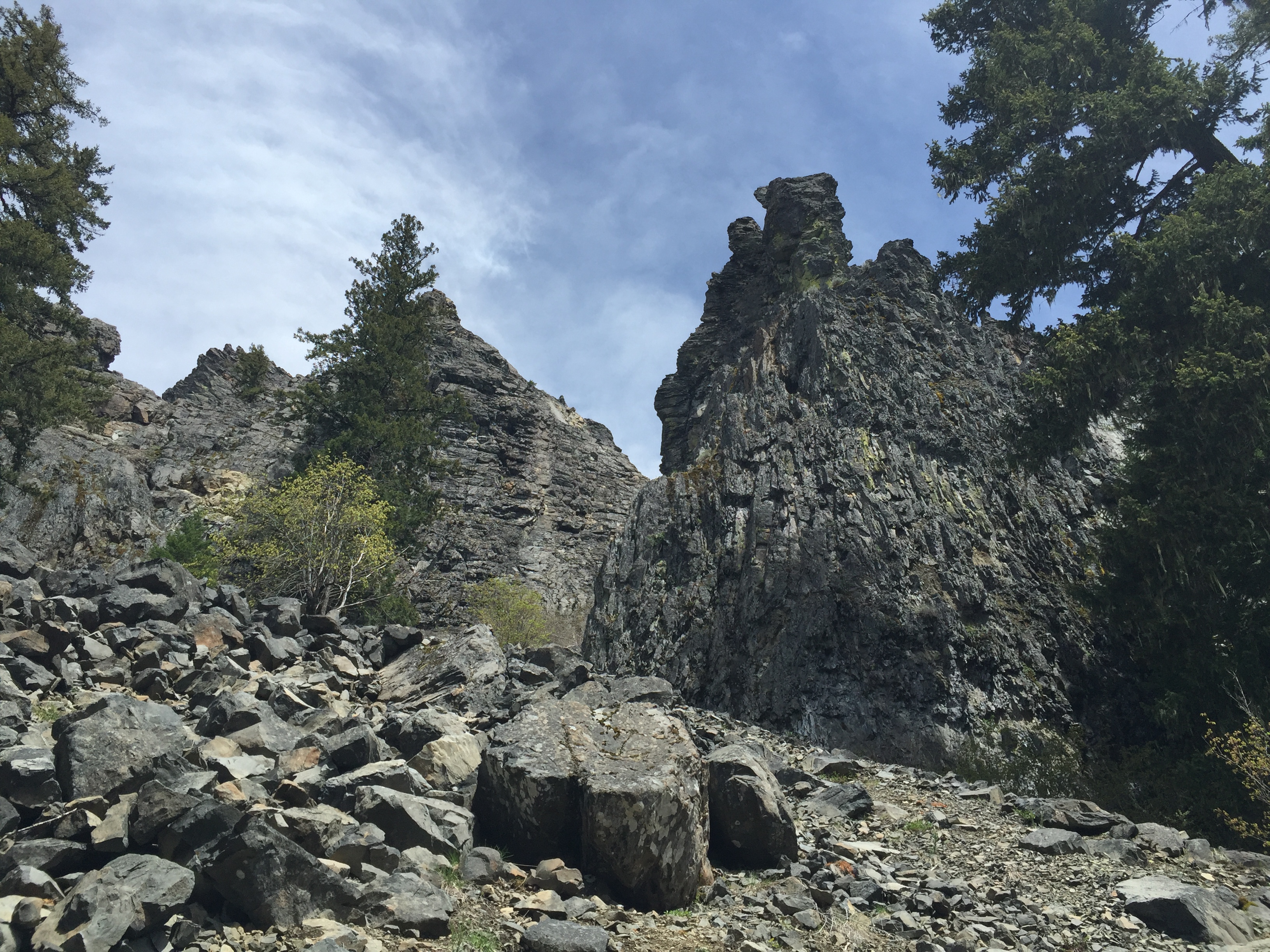
I reached Young’s Rock after an hour’s hike with a half-mile elevation gain from Camper’s Flat, 25 miles south of Oakridge, and promptly ran into snow on the north side. While the snow wasn’t deep, I had the first inkling that I might not be able to reach Moon Point. I continued a quarter mile further until three large logs, covered in snow, blocked my way.
The first I could cross, the second was more than three feet in diameter, too big to climb over, nowhere to go under, the downhill bypass involving a steep drop I didn’t want any part of. Going uphill offered wet snow, was slippery, steep, and impassable.
I turned around. I didn’t spend much time thinking about it, I just reversed course. Even if I could have gotten through, the trail was going to have more snow, and I had to do the log crossings on the return, doubling the probability of having a problem. Moon Point was not going anywhere; I would try again. Six weeks later, I made it, and I led the hike three months after that, but from road FS 2129, a full thousand feet above Camper’s Flat, making the trek more reasonable.
It wasn’t the first time I had turned around because of obstructions. Years earlier, snow stopped me just short of the summit of Mt. Wrightston in the wilderness of the same name in southern Arizona. This was one of my favorite hikes, rising four thousand feet from the valley, but because there was no safe way to cross one stretch without my being at significant risk for sliding 50 or more feet. I failed to reach the summit, with its splendid views. I still had a morning off work, got to hike in deep snow in southern Arizona, and returned safely to work later that day, wet feet and all. It was great.
Sometimes it isn’t what is on the ground but what is coming down that changes plans. I led a late season hike to Crescent Mountain in November 2015. I thought we would miss the rain, but I was wrong, and the steep trail had small waterfalls all the way to the beginning of the meadow, about 1300 feet vertical above Maude Creek. There we encountered wind, snow, and fog. We were still warm, if wet, but it didn’t seem like a great idea to go to the summit for nonexistent views. We turned around, and back at the parking lot tried unsuccessfully to dissuade two young women from starting out, especially with their wearing running shoes with their feet in plastic bags.
This year, I cut short both a snowshoe and a ski attempt to deal with my adopted winter trails, the 9.5 mile trek on the PCT from Willamette Pass to Maiden Peak Saddle and Tait’s Trail. I was too exhausted both times to finish, and it took me fewer than ten seconds to make the decision to turn around early. I had no regrets, other than not having the stamina. Winter trips are dependent upon snow conditions, and either the wrong equipment or the wrong snow (or both) will make for an arduous, perhaps unsuccessful outing. I finally completed the loop, checking and replacing the blue diamonds as needed, but it was April and excellent snow conditions before I succeeded.
In late spring 2009, I turned around at Bridalveil Creek in Yosemite, because I wasn’t sure I could get across the springtime flow safely. I looked and looked, finally said no, not worth the risk, and reversed course with no regrets.
See you on the trail. If a trail is unknown, especially in early season, consider that snow, downed logs, streams, weather, or physical ability may stop you. Turning around is not failure; stuff happens. Listen to your gut. If you are uncomfortable, turn around. You know the way back. Hiking should be enjoyable.
Young’s Rock; Blowdowns, April 2016

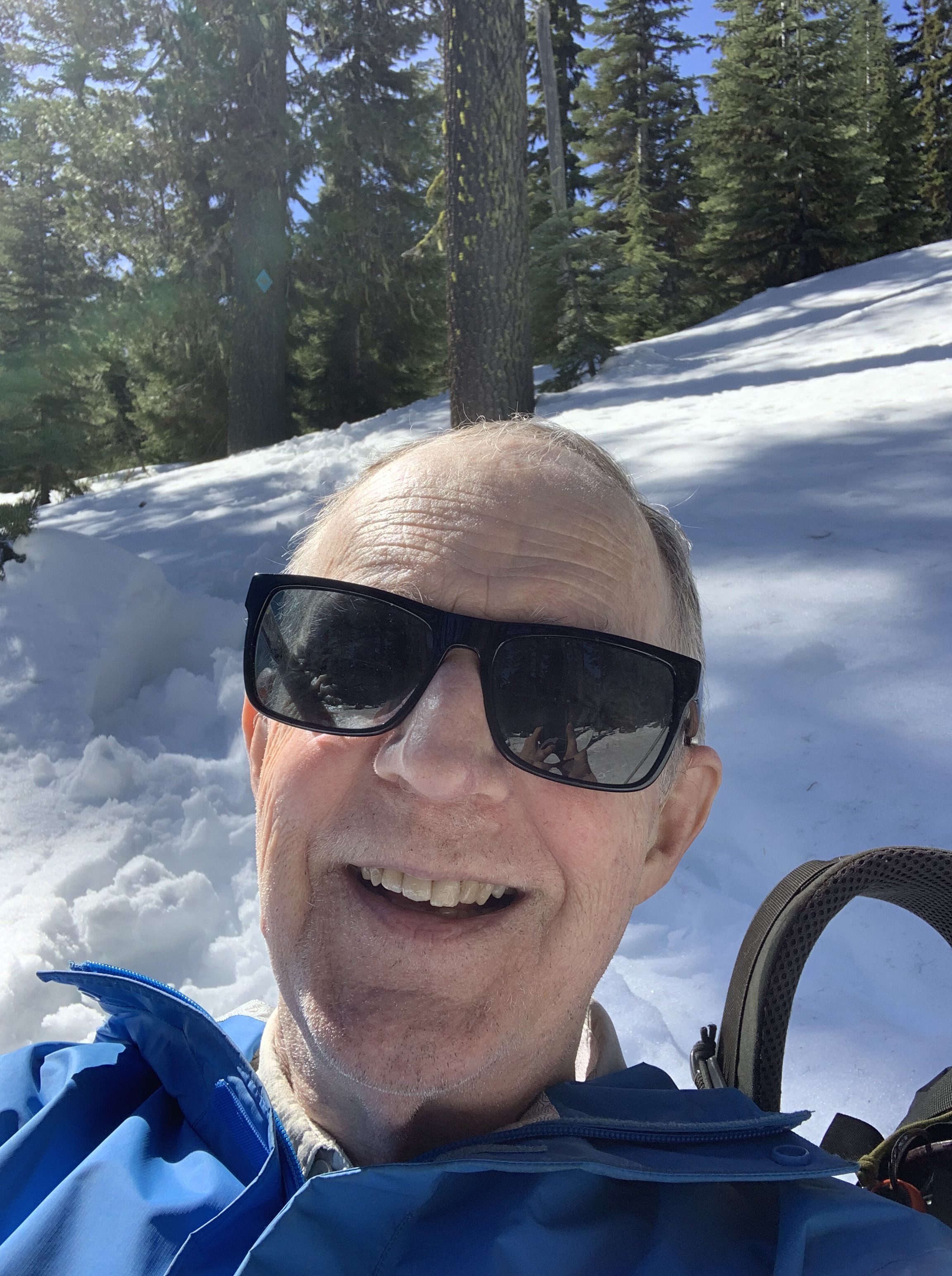
Bottom of Tait’s Tie Trail. Now just 2.5 miles to snowshoe out. March 2024.
Tags: hiking
 Boreal B[l]og
Leave a comment