The brief but intense sting on my left palm from the force of my axe striking dense heartwood was another reminder the day wasn’t going well. Nine of us were logging out Horse Creek trail in the Three Sisters Wilderness, entering by a log bridge over Horse Creek itself that one needs to carefully cross, 1500 feet of climbing over 3 miles with gear to get to our spot, the second time this year I had been to this point. The trail climbs further and we needed to clear it to a trail junction 5 miles in.
The 17 inch diameter log angled over the trail with the end some 60 feet up the hill, giving it significant end bind, meaning the saw blade was grabbed due to force coming from above down the log. Plastic wedges only keep the cut or kerf open if the saw is deep enough to drive one into the kerf or cut, and we were nowhere near that. It took several of us more than two hours to dispose of this blocking log, and there were 16 more of various sizes and difficulty in the next half mile to Roney Creek.

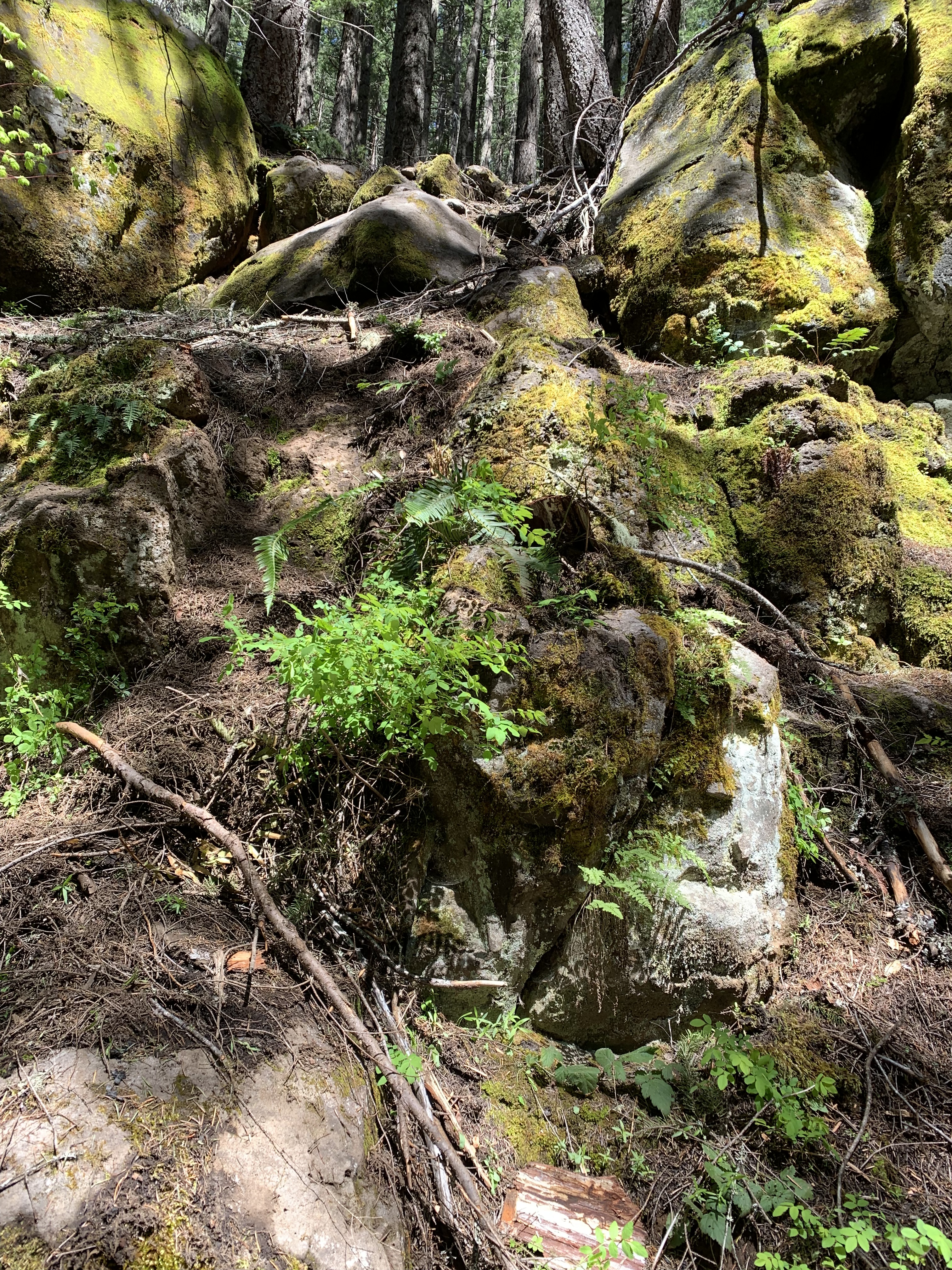
We had been on Horse Creek a month earlier, on a cold, rainy day, reaching this point with two logs, both with end bind, right together. We worked on one, then left it for another time, since the upper trail still had snow and it was getting late in the day with a long hike out. Today was the next time. I thought my sawing the previous outing was decent, considering my arms were not in saw shape, but on this day it seemed like every log had an unusual problem, either in the cutting or the disposal. I was on my hands and knees clearing debris from the trail, most of it still holding water from the deep snow that had only recently melted. There was another log angled about 40 degrees up a cliff, requiring my partner and me to climb part way up the cliff to pry it loose, where it eventually became a side rail along the trail.
I was too hard on myself, I realized later, after we reached Roney Creek and could turn around to hike back out, arriving back at the trailhead after 5 pm with a long drive home. I was the crew leader for the day, the 21st time I have been one, only the third time, however, on a logout. The crew leader doesn’t need to be the most experienced person, and I am not. I have been on over a hundred days of logouts, but I seldom make the decision how to cut a big log. I like to think about it a little, but there are plenty who know right away what they want to do, others who think they do and discuss their thoughts aloud, throwing words like branches into the air. Lot of egos in the woods, like the rest of society.
My role as crew leader was to make the arrangements online, file a comms or a communication problem with the Forest Service, and be at the meeting spot in Springfield early when we met in town to make sure everybody was there. As it happened, one we were going to meet in the mountains showed up in town, and we didn’t have room in the vehicles. I made the quick decision to drive myself so we didn’t have to cram everything and everybody into two full vehicles.
Usually on logouts, we leapfrog each other, skipping a few so each crew works on several logs in a defined area then moves on past the other. I made the decision before the day started to send 3 of the 9 of the group, the strongest, up the trail 3 miles to start logging from there. They would cut their way to the end, informing me by radio of their progress. The rest of us had to deal with left over logs that were not used for sawyer certification plus the remainder to Roney Creek. There were 4 B/ C certified sawyers among us, including me; I elected not to lead a saw crew but to float, so one of the other B certs would have a crew. He was stronger and more adept at reading logs than I.
I knew the people, the trail, I the conditions, that several logs we had left for certification uses were probably still there, and that further up at least one log, maybe more, would take an unusual amount of time. I hoped that the three I sent beyond could clear the trail from the creek to the end, a possibility since unlike us, they would not work in a burn area, where we would be, and could expect fewer blowdowns.
I have a good sense of time on the trail, and when I called in to the Forest Service from the trailhead, said we would plan checking out at 1700, or 5 pm. It would be a long day.
We removed logs that had been left, along with nearby brush on the trail. I then heard from the lead group that he had seen what was ahead of us and would start clearing from the creek,, ,so we wouldn’t have to go past it. After we finished the original certification logs, we hiked up to work the problem logs. By lunch, we were ready to make the final push to the creek; the upper group was about 1.3 miles from the end.
I bring other skills to the group, neither easily seen nor commented upon. I removed several smaller logs by myself on the way up. It’s part of the job. I knew how far we were from the creek, thought we had a decent chance of making it there by 3, which would get us back at the trailhead about 5. I also knew four of the people came together in one vehicle and when we finished, they could go down the trail and leave. I doubt others had those thoughts, but I did.
We reached Roney Creek after we cut out the last two logs. I got a call from the lead group telling me they were near the junction. I gave the go ahead to start hiking out, and when I was a half mile from the trailhead ninety minutes later heard from the now trailing group that they were at the creek. We got the trail cleared and were at the trailhead not long after 5. No way we could have done this by leapfrogging each other.
I radioed the Forest Service that we were done, drove home, and that night wrote the report and credited the crew with their hours. Horse Creek had been cleared for another year.

Tags: hiking
 Boreal B[l]og
Leave a comment