I saw a small white larva on my hardhat when I took it off for a break on Bunchgrass Trail. The creature was maybe 2 mm long. Normally, I might have blown it off the plastic with one breath, but one had to appreciate where I was. Something up here was actually alive.
Bunchgrass Trail burned two years ago in the Cedar Creek Fire. Where we were working had burned hot, 100% death of trees as far as I could see. I hiked the trail in 2021, before the fire, and it was beautiful woods. When the Forest Service allowed us to be the first group to work there, I jumped at the chance, I wanted to see the area and to help restore it.
Fifteen miles east of Oakridge, we drove up bumpy Eagle Creek Road 9 miles to the trailhead, entering the burn the last mile. The first thing I noted when I stepped out was the quiet. It is autumn; most life is are starting to shut down, but the forest before me was quiet, black, stark, and dead.
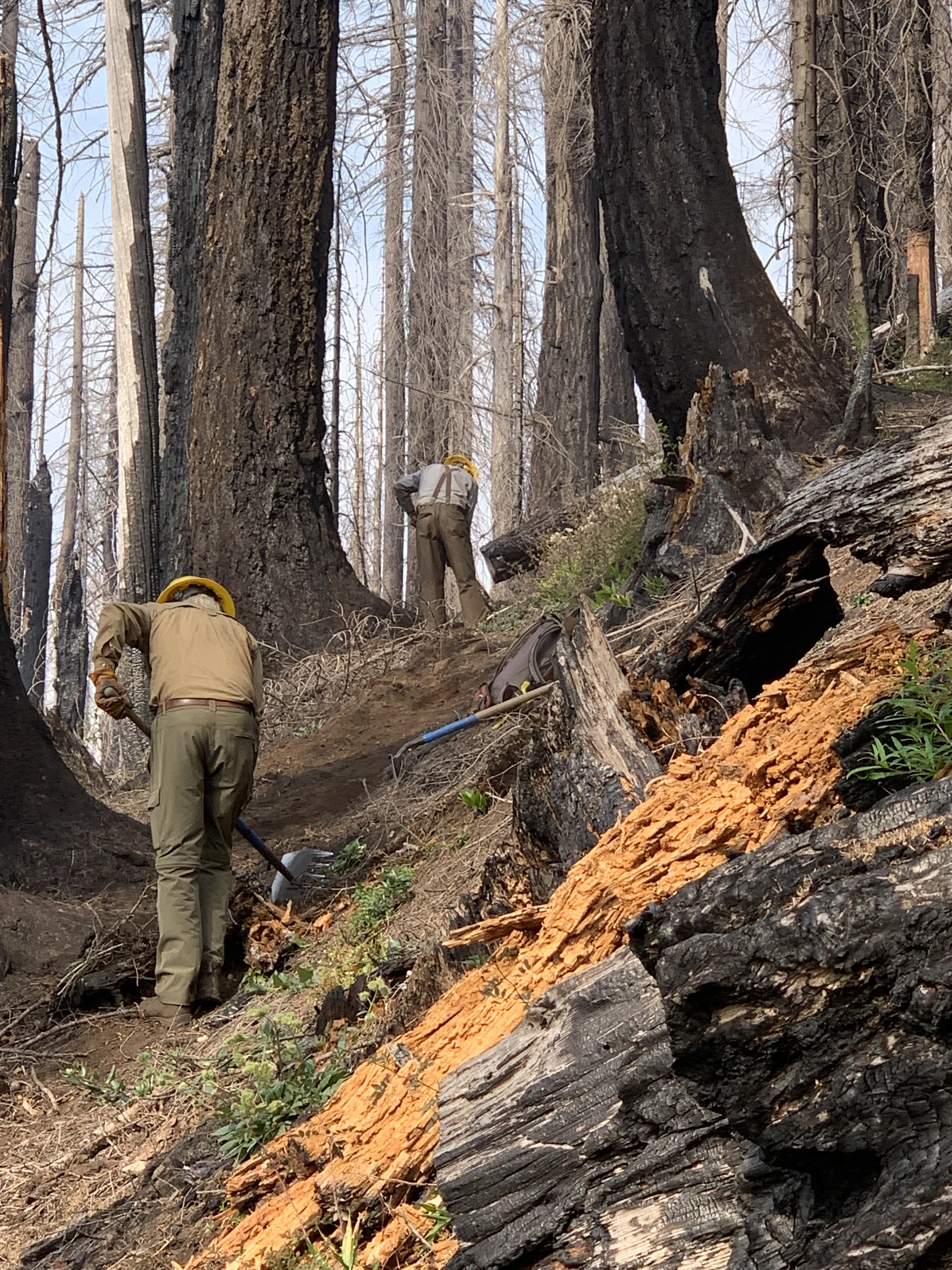
A Forest Service crew had recently logged out downed trees over the trail, and they wanted us to work on the tread as part of restoring this mountain biking trail favorite. We had a longer than usual tailgate safety session before we started. Post burn areas are dangerous: branches or whole trees may suddenly and quietly fall, there are unexpected holes, tripping hazards, many sharp objects to impale the unwary. We expected places with no trail at all, planning to restore maybe a few hundred feet a day. As we worked, the trail was easily found, a gray, soft, thick powdery surface over firmer bottom. The soil appeared mostly sterile, much like I have seen in older burns on Patjens Lake or Hand Lake trails. Trees had burned into different shapes. Other than a slight breeze, it was silent. Even when I threw dead logs and branches off the trail, they sounded different when they hit the ground. They sounded dead. Or hollow, if I hit another log. This place was what people think of after a forest fire; other post burn areas, however, like Terwilliger, Horse Creek or Rebel, have a mosaic of burned, partially burned, and spared trees. Not here. Here, the colors were of gray, black, brown, and rare green along the trail.
And a white larva.
Each of us had a trail tool to chop away at the inner, soft trail wall, dust and dirt flying into the air, the slight breeze ensuring we were coated. I used a McLeod—hoe on one side, tined rake on the other. We needed to make the trail 18 inches wide, including spots with little room to do that, since the ground sloped steeply downhill some 200 vertical meters to another road. Each foot of the trail was addressed.
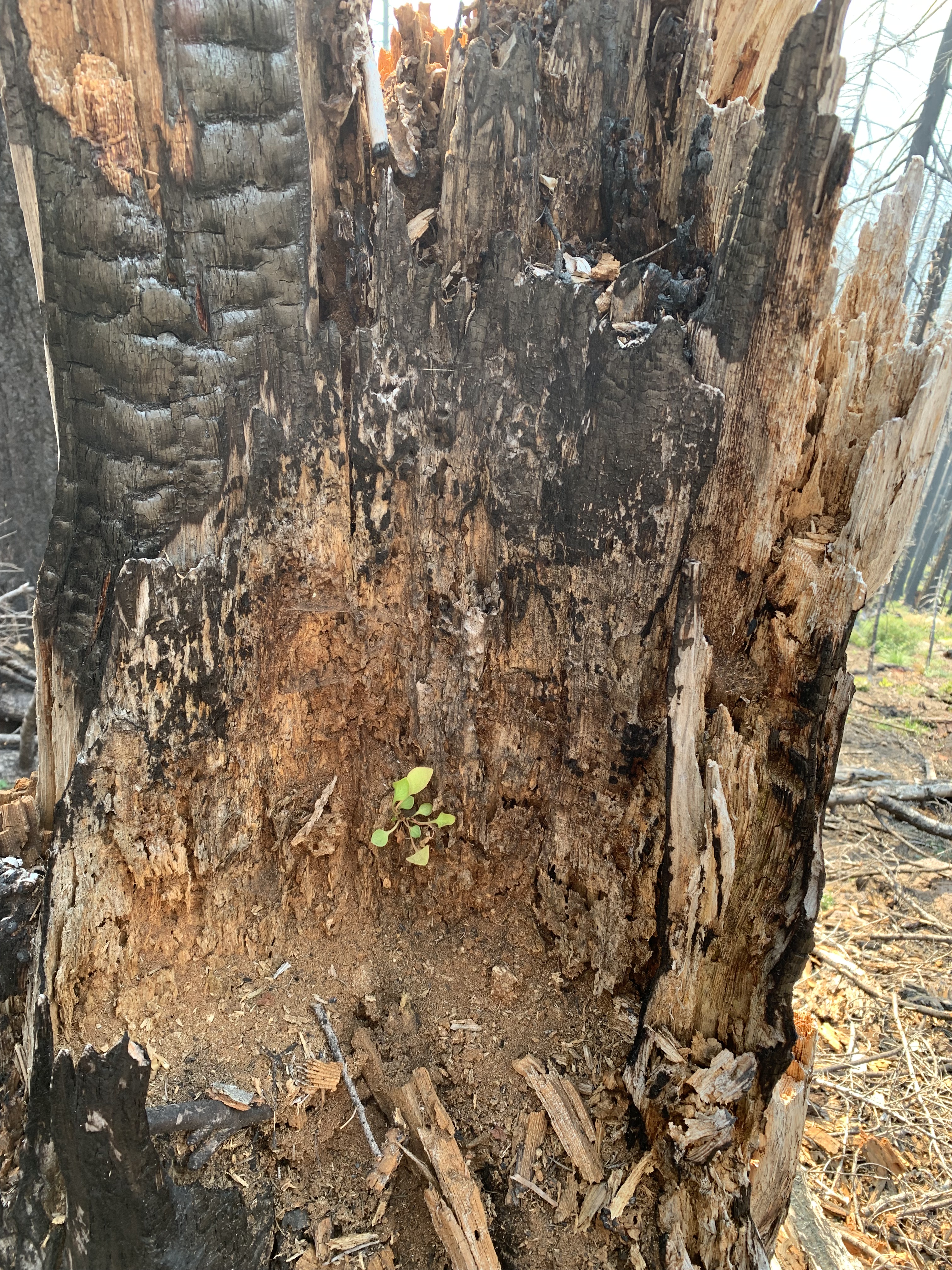
Here and there were some plants, thimbleberry and ferns, rare fireweed, and to my surprise, bleeding hearts, since these are springtime flowers in the lowlands and early summertime blooms here. Ironically, we had to remove greenery encroaching upon the trail; still, I drew the line with a few patches of Miner’s Lettuce with white blooms. I transplanted rather than removing them.
I decided to see if I could move the larva without crushing it, so I found a small leaf and made the transfer. It’s remarkable how such an action, so small in the scheme of the day, was for a few seconds my function. One larva. But it was alive. Other than that and a Northwest Centipede finding a spot behind a large rock, there weren’t even ants. Below me, I saw the first bird of the day fly quickly through the blackened trees.
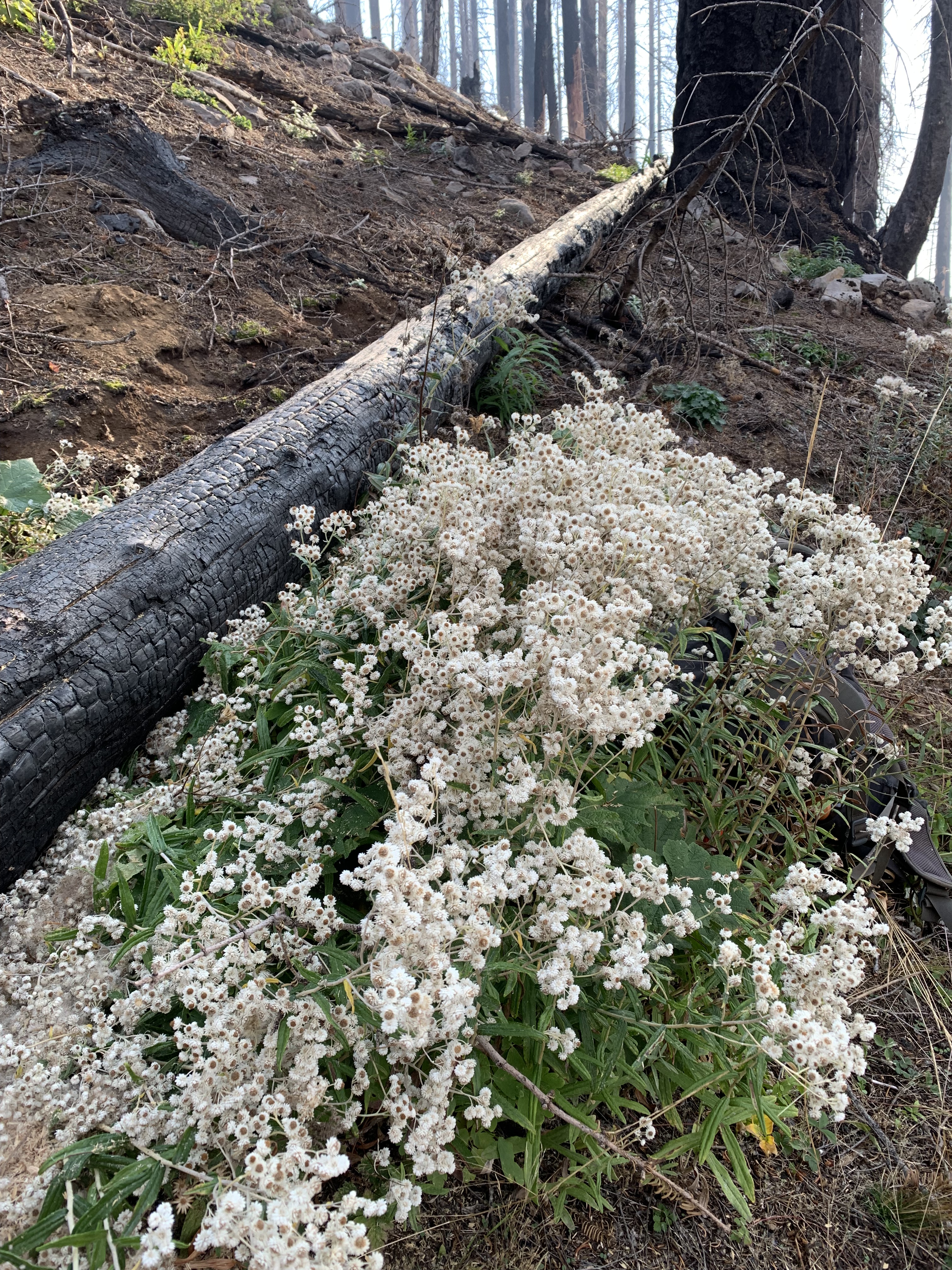
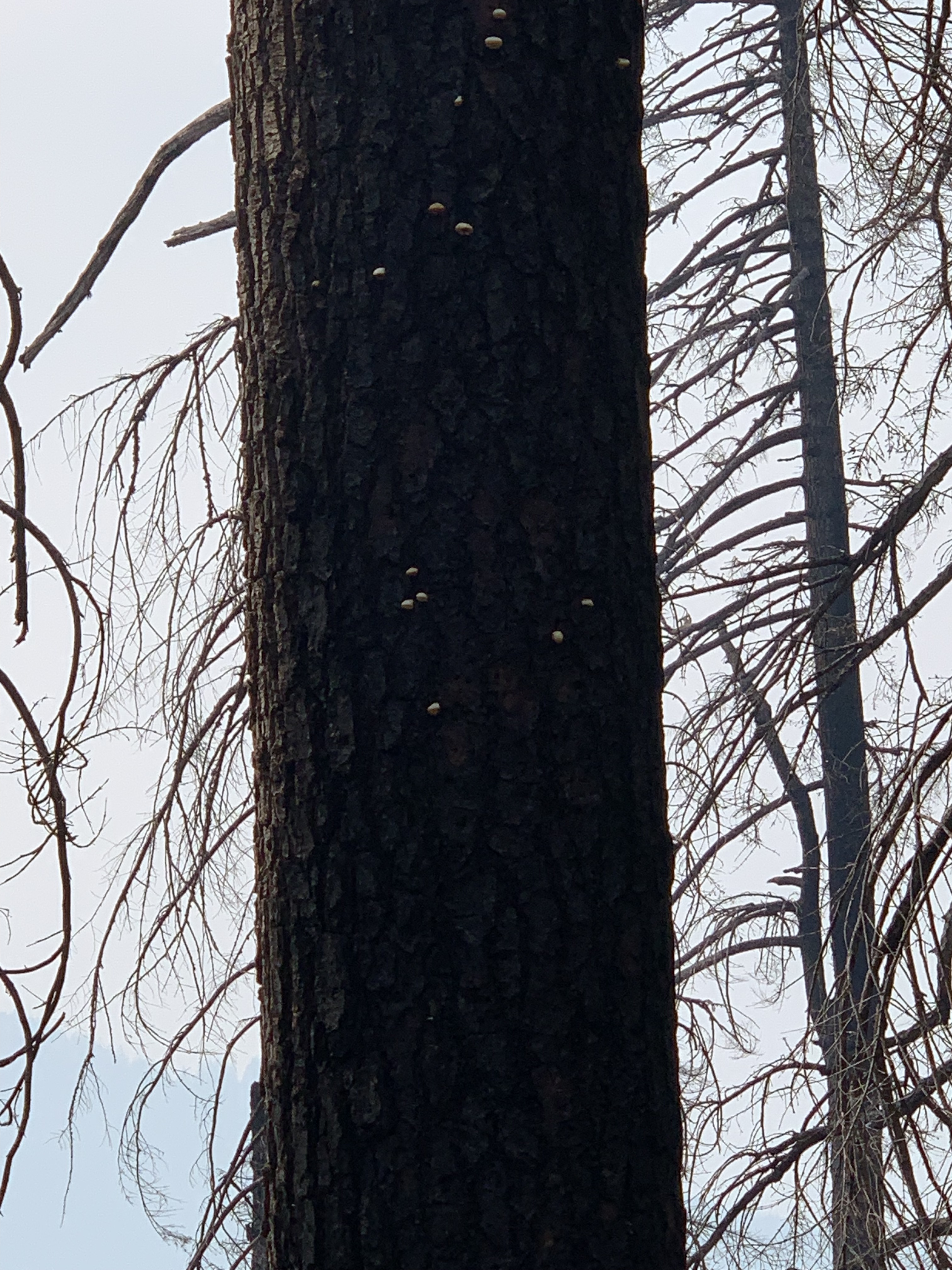
I sat down and rested my back from the work with the McLeod, which was effective if heavy. Above, I saw something flying, then two somethings, looking like buteos, probably red tail hawks. They wouldn’t be here if there weren’t something for them to hunt. Further up the trail were Pearly Everlastings, white flowers that had gone to seed. The ones in the trail had to go; others escaped the McLeod when I moved the flexible stems away from the trail. At lunch, I saw several small mushrooms growing out of a standing tree high above the forest floor.
When we began to hike back to the trailhead that afternoon, I was amazed how covered in dirt everybody was. Clothes had changed color, faces had dark blotches. Every time I took my hands out of my gloves, they were dirty. Being dirty is like age; you think other people are subject to it and you aren’t, until you look in a mirror.
In two work days, we cleared just over a mile of trail (1.66 km). We are half way to the next trailhead, but with significant rain with snow forecast at our elevation. It might not be possible to work up here until next June. The trail will be restored first; the forest will take far longer.


 Boreal B[l]og
Leave a comment