“Glad to get that off my shoulder,” I said to the trail, the nearby trees, and a woodpecker I could hear but not see. I put Brad’s chain saw down on the ground by the junction of the Betty Lake Trail and its north spur to the lake. Lunch time.
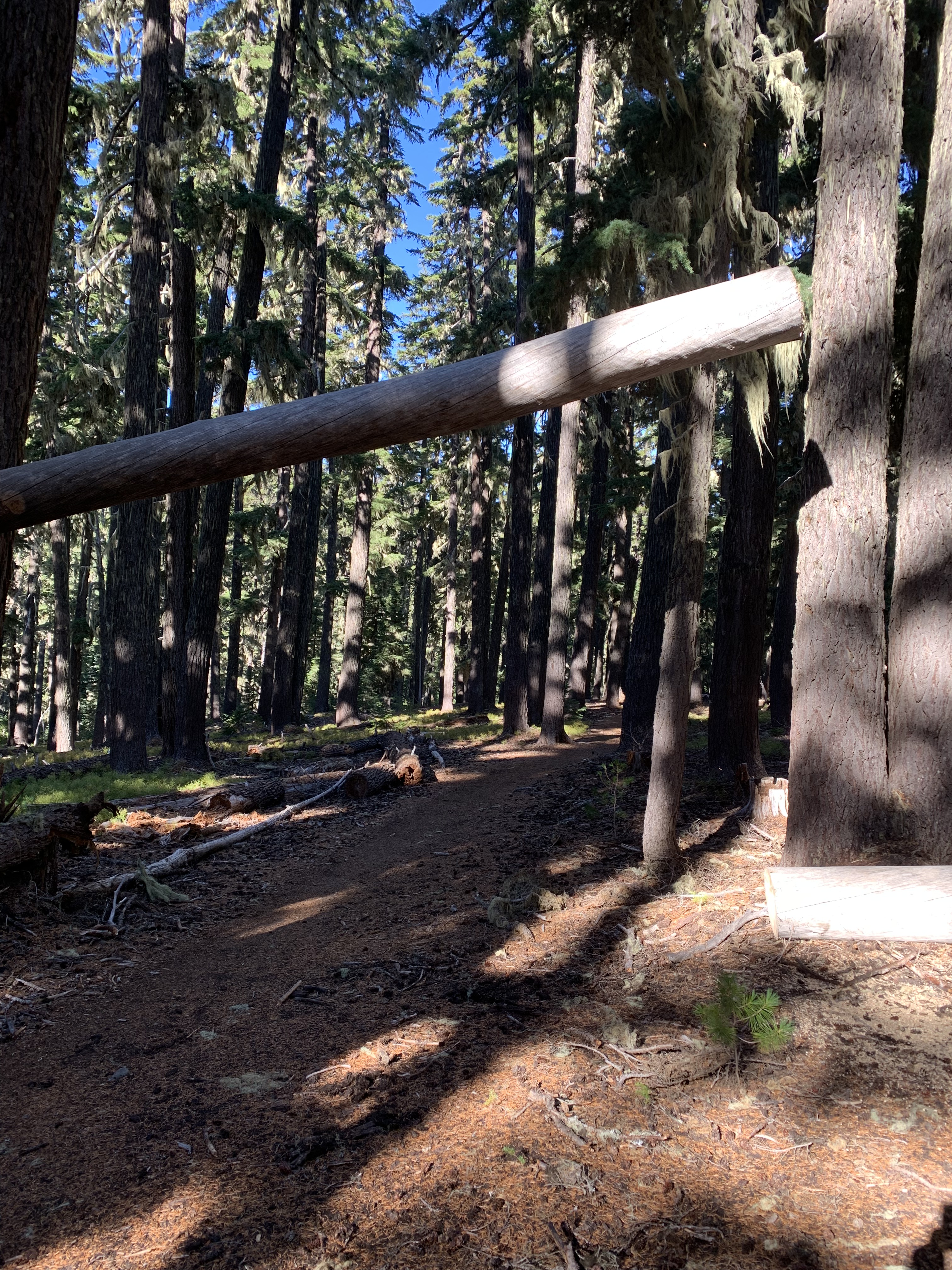
An hour earlier, Brad and I were a mile further west at the fourth of six logs we had to remove on the Betty Lake Trail, an all season path near Waldo Lake, joining Waldo Lake Road to the 20 mile Jim Weaver Trail that circles the lake. Our first log was head high over the trail and held in a notch of a pair of trees. When the log was cut, it went up like a teeter-totter. You find entertainment where you can when working trail. The current log was 20-22 inches diameter, a straightforward cut. Standing on the opposite side of the log, I noted a rock right about where Brad’s cut was headed. As the cut came lower, I stepped over in front of Brad, waving my hands to get his attention.
“Rock!” I pointed down.
He looked over, gave me a nod, and later we finished the cut with a hand saw, which if it scraped the rock would be no big deal. Saw chains do not like rocks. He told me later he hadn’t seen it. I was in much better position to see it and spoke up as is my job as swamper. Every part of trail work has had a steep learning curve for me, and swamping has perhaps been the most difficult for me.
Swampers, (the verb to swamp) are words for helping someone who is operating equipment deal with carrying it, fuel, clearing space, safety and emergencies. Swampers for power sawyers are a pair of second eyes for obstructions or issues the sawyer might not appreciate, such as overhead dangers, hikers, or movement of nearby logs because of the current cut. The sawyer is concentrating on the cut; the swamper must be watching out for everything else in the surroundings, staying clear yet being aware of the cut’s progress.
Two years back, a log lay across the Vivian Lake Trail a quarter mile from the trailhead. The log, nothing unusual, went uphill 30-40 feet where it disappeared in brush. There, a second log similar size was perpendicular to and lying on it. I wondered whether the second log was a potential problem. Maybe. Maybe not.
The sawyer arrived, and as he planned his cut, I called over: “Note the log on top of this one. It might not do anything, but I want you to be aware of it.” My second pair of eyes was not confident in calling out what logs will do. But now there was a second brain involved.
The sawyer nodded, changed position so he faced me and further away. As he cut through the log over the trail, it dropped. The perpendicular log was suddenly free, started to roll, had a low friction surface, the log we had just dropped, and accelerated, crossing the trail in seconds, going over the edge with a loud crash below.
“Thank you!”
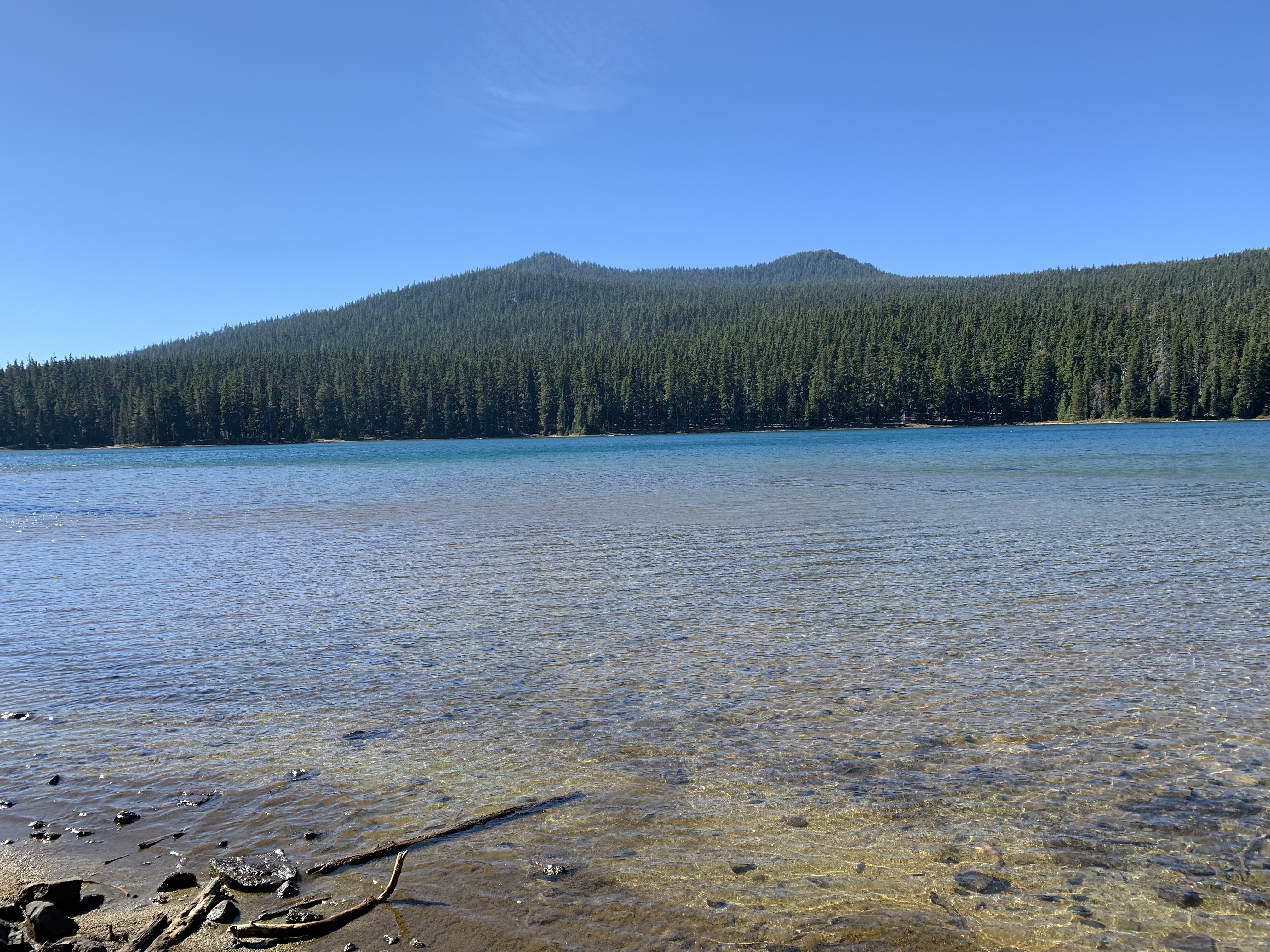
Brad and I ate lunch at Betty Lake, each of us finding an appropriate spot. I don’t sit on logs when eating but rather the ground, often leaning against a tree. Trail work has two lunch seasons: we had months of the summer one, where I looked for shade. We had just entered winter lunch season, where now I sought out sunlight. I ate, all the while looking out at the 40 acre lake.
The south shore across from me was a quarter mile away, the west end a similar distance to my right. A few whitecaps were visible, pushed my way by the south wind. The sky over the distant trees was as deep blue as it gets. Somewhere out on the lake, I ate lunch one winter day when I snowshoed in nearly six miles from Highway 58 and sat on a pad in bright sunshine, my black pants absorbing the heat. I then snowshoed back out.
I’ve watched plenty of water from a Navy ship on multiple trans-Pacific crossings, and up close on a hundred canoe trips Up North. Never get tired of looking.
It’s when I have to move after watching water that has changed. I used to stand right up. I now have a couple of false starts, hear some cracking, and gradually change position. Eventually succeeding, it was time to put the saw back up on my shoulder, make my back unhappy, rejoin the trail, and return to the trailhead.

 Boreal B[l]og
Leave a comment