
Archive for October, 2009
FLAP STATE 90!
October 6, 2009HOT SPRINGS NP, 2008
October 6, 2009This is an urban/suburban park around and in Hot Springs, AR. It made for my being in all 50 states, never having found much reason to go to Arkansas. The Park itself has surprisingly good hiking on a ridge that is several miles long with some climbing. Much of the hike goes through hardwood forest before coming out on a road.
There is plenty of sulfur-smelling water that people bring jugs to fill up with. I dispensed with the baths, but the hiking was a pleasant surprise and there were very few people present in the “backcountry”!
KENAI FJORDS NP, 2008
October 5, 2009OK, so I cheated. But I was on my way up to Fairbanks and from there to ANWR, so I was pressed a bit for time. I flew into Anchorage, rented a car, and drove down to the Kenai Peninsula. I was able to enter Kenai Fjords NP and walk part way up the snowy, watery, dangerous hill toward Exit Glacier. I figured that my exiting was a good idea, and I spent the rest of the morning at the moraine and seeing where the glacier had once been.
I thought about taking one of the boat tours, but 40 degree weather and rain didn’t really appeal to me. Maybe it should have. We didn’t get much rain up in ANWR, and what we did was at night. It would be a different story in 2009.
That afternoon, I day hiked to Crescent Lake, outside of the Park. I think I was too cavalier about the idea of running into bears. I didn’t, but it is easy to forget when one is in boreal forest.
WIND CAVE NP/BADLAND NP, 2007
October 5, 2009Jan and I went through Badlands after we were married in 1971. At the time, it was a monument. I went up to see Wind Cave and decided to pay another visit to Badlands. This entailed a flight to Rapid City, SD and driving down through Wind Cave NP, where I saw the cave, small, but very interesting. There are a lot more caves in the national parks than Carlsbad Caverns and Mammoth Cave!
I stayed in Hot Springs, fortunately having missed by one day a group of desperadoes who drove through here on their way to shutting down nearby Chadron, NE! They were fortunately caught.
The next morning, I day hiked about 15 miles through the park east of the cave. There were lovely views of the plains from the Black Hills. I saw and heard numerous elk and even had one bound right out in front of me!
The following morning, I went over to Badlands and hiked about 10 miles in the backcountry, seeing Big Horn sheep and getting to the car about five minutes before it really dumped!
One animal note: I am a cat person. I didn’t start out that way, but cats seemed to have their own ideas. We have several. My wife saves them, and they adopt me. Well, there were two kittens at the hotel I was staying at who were obviously feral. I bought some food for them and the next day paid a visit to the vet/animal control. They were trapped, which brought the cops to the hotel to question me. The kittens were taken to the local humane society/shelter, which I supported with a check. I try to do that in every nearby town where there is a national park I visit. I can’t save the world, but maybe I can help part of it!
Wind Cave NP pictures:
The cave itself and surrounding trails/views:
Badlands pictures:
ECLIPSE TRIPS
October 4, 2009First trip: 11 July 91 to the Baja to see the 6 1/2 minute total solar eclipse. We didn’t plan on seeing any others, but about a year later PBS had a special on that eclipse, and we both asked, “when and where is the next one?” That’s a sign one is getting hooked!
Second trip: 3 November 94 to Sevaruyo, Bolivia. We called that the trip where every other night we had a bed. I was altitude sick for a day in La Paz, and then we took the train south to get into the track. Most memorable moment (and remember, this is 1994): the train stops in the middle of nowhere in the middle of the night. Somebody asks, “Where are we?” Simultaneously, about 5 people say “18 degrees South 64 degrees west.” Totally correct and completely useless!
Third trip: 24 October 95 to western India. This eclipse was a guarantee on weather for days before. We saw birds roost about 10 minutes before totality. Because totality was so brief, we saw the chromosphere (the inner atmosphere) of the Sun for the whole time. It was a lovely lavender. I would put the shot on here, but my cable release broke prior and using my finger caused some blurring. It may have been the prettiest I’ve seen.
Fourth trip: 9 March 97 to Siberia. That is described elsewhere in this blog.
Fifth trip: 26 February 98 to Aruba. We went to the south end of the island, where it started to rain. We went back north and saw it in cloudy but adequate skies. Had we stayed put, we would have been just fine.
Sixth trip: 21 June 01 to Zambia. Jan had broken her humerus and had external pins in. I could have been a nice husband and stayed home to help her. Or I could have gone to the eclipse, which I did. We saw totality about 50 miles north of Lusaka, the capital. It was the only eclipse trip I was on where everybody in the group was silent. That in of itself was probably the weirdest experience of all!
Seventh trip: 23 November 03 over Antarctica. We flew to Punta Arenas Chile, then took a couple of days to see Torres del Paine, a remarkable formation of climbable (not ever by me!) rocks. We then took a Lan Chile flight with open cockpit (meaning you could look over the pilot’s shoulder, especially when he was taking pictures himself), getting totality somewhere around 73 degrees south latitude. We then flew over the South Pole from an alititude of 2500 feet. We came back over the Presidential range, flew around Vinson Massif twice and came back to Punta Arenas. It was a 14 1/2 hour flight. Next afternoon, we caught flights to Santiago, Lima, LAX and finally Tucson.
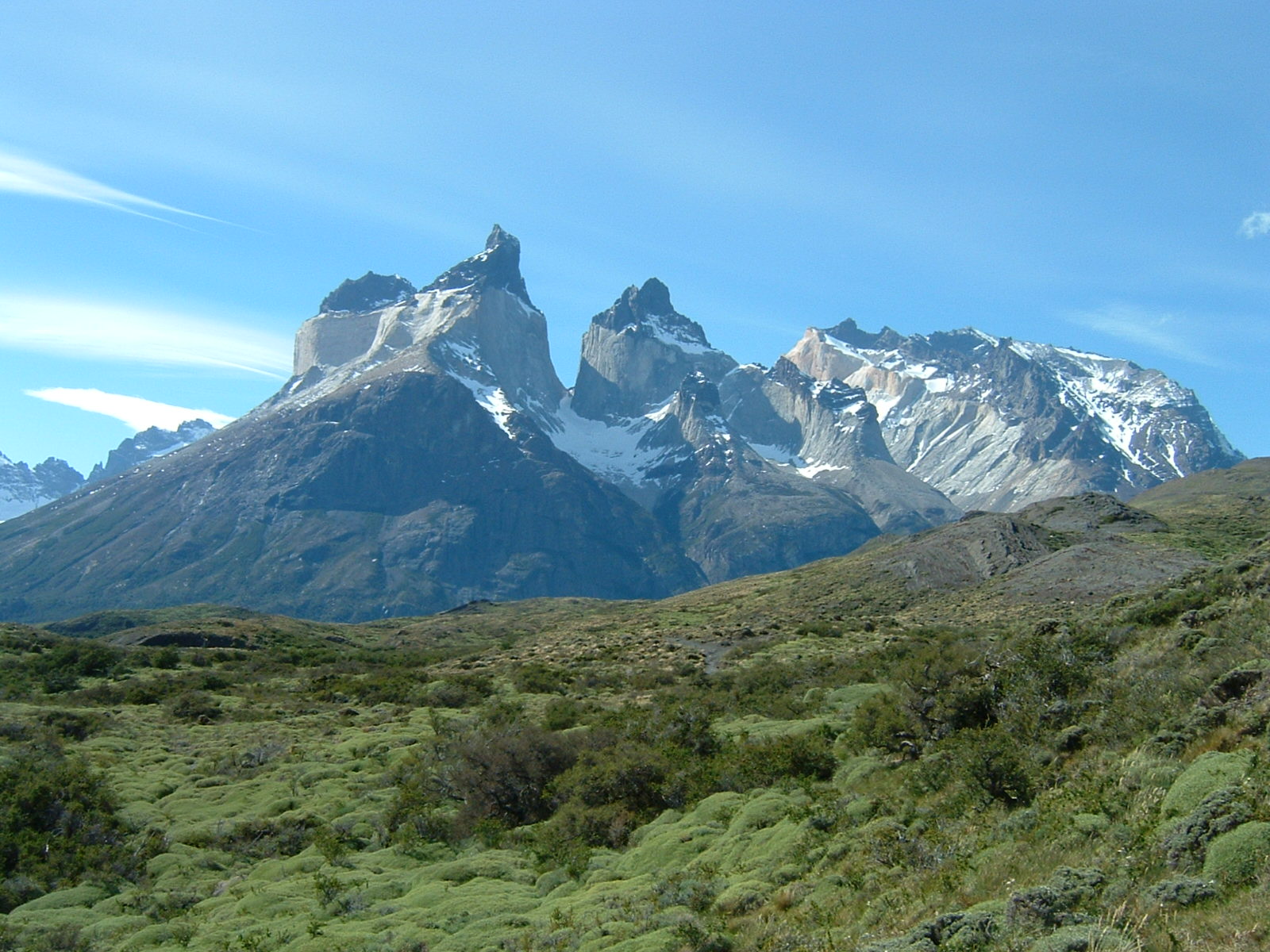
Torres del Paine:
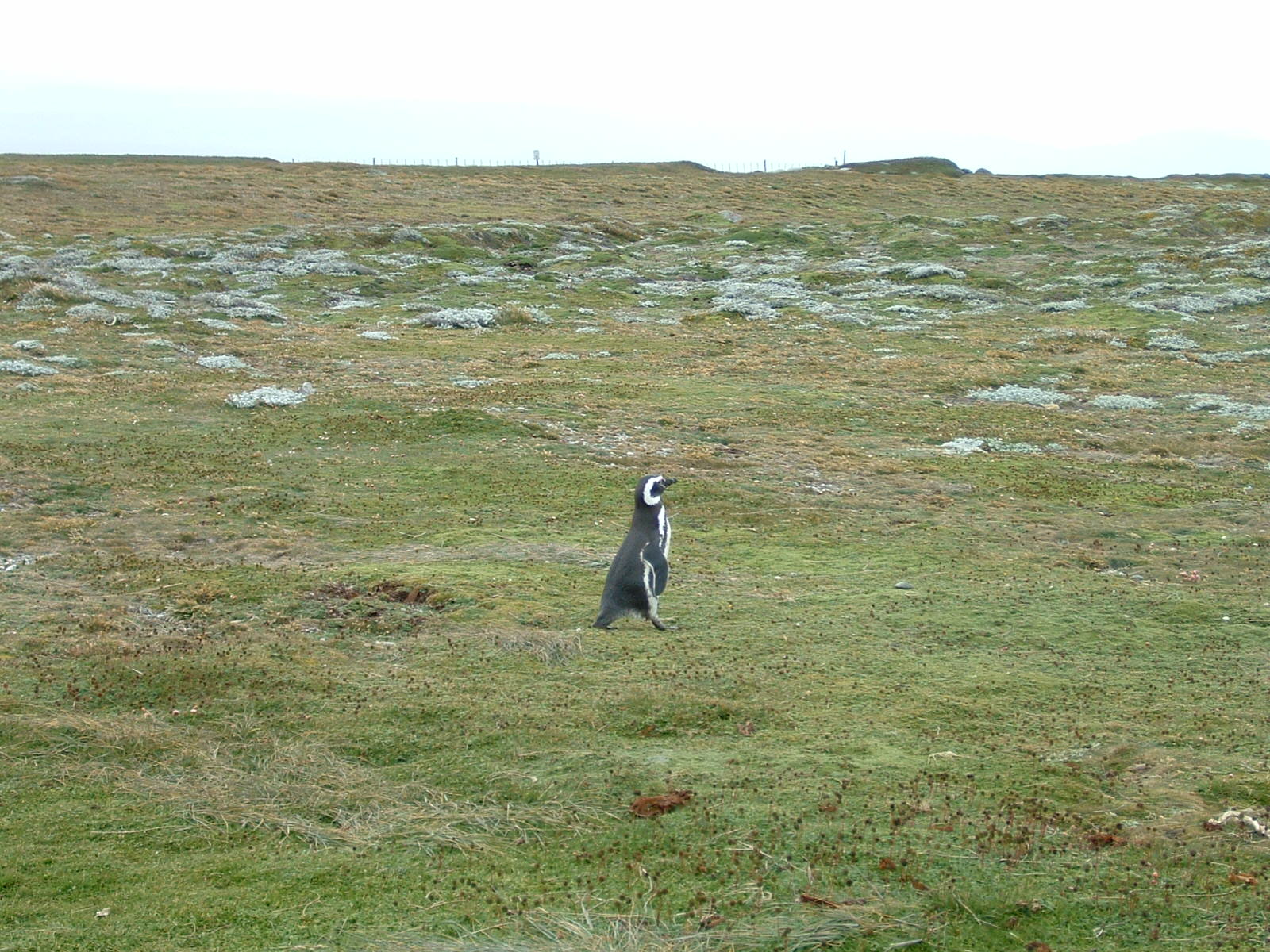
Magellanic Penguin:
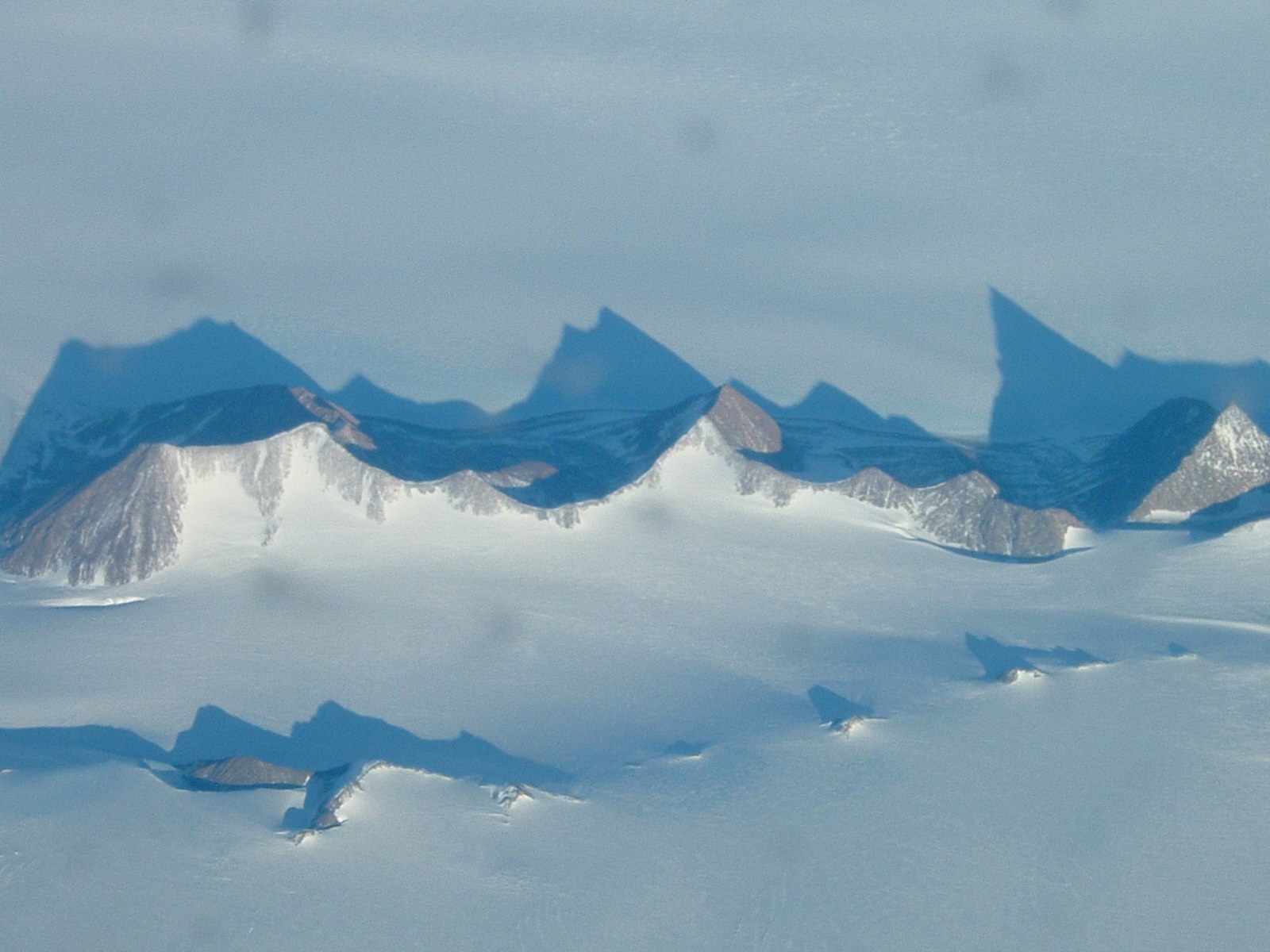
Antarctica Mountains: The clarity of the air and the starkness of the shadows were remarkable.
Below is the South Pole station. While we flew over (two passes), a C-130 cargo plane took off. The contrail at the surface was incredible to see. 
Vinson Massif, highest mountain in Antarctica:

Eighth trip: 8 April 2005 to the South Pacific. We flew to Tahiti, took a cruise by Pitcairn and Easter Islands, then ended in Callao/Lima.
This is right after totality. The dark clouds are the departing Moon’s shadow.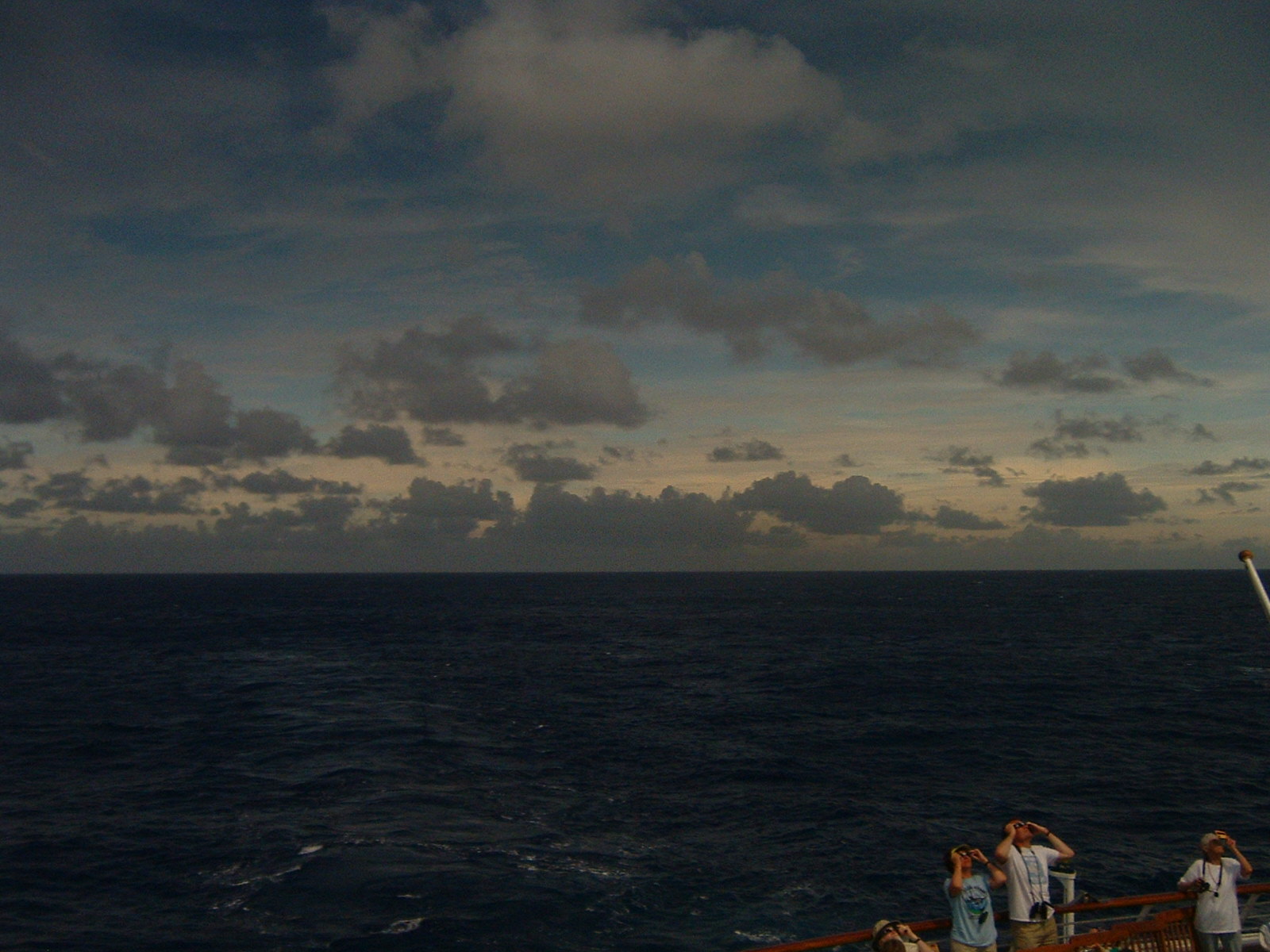
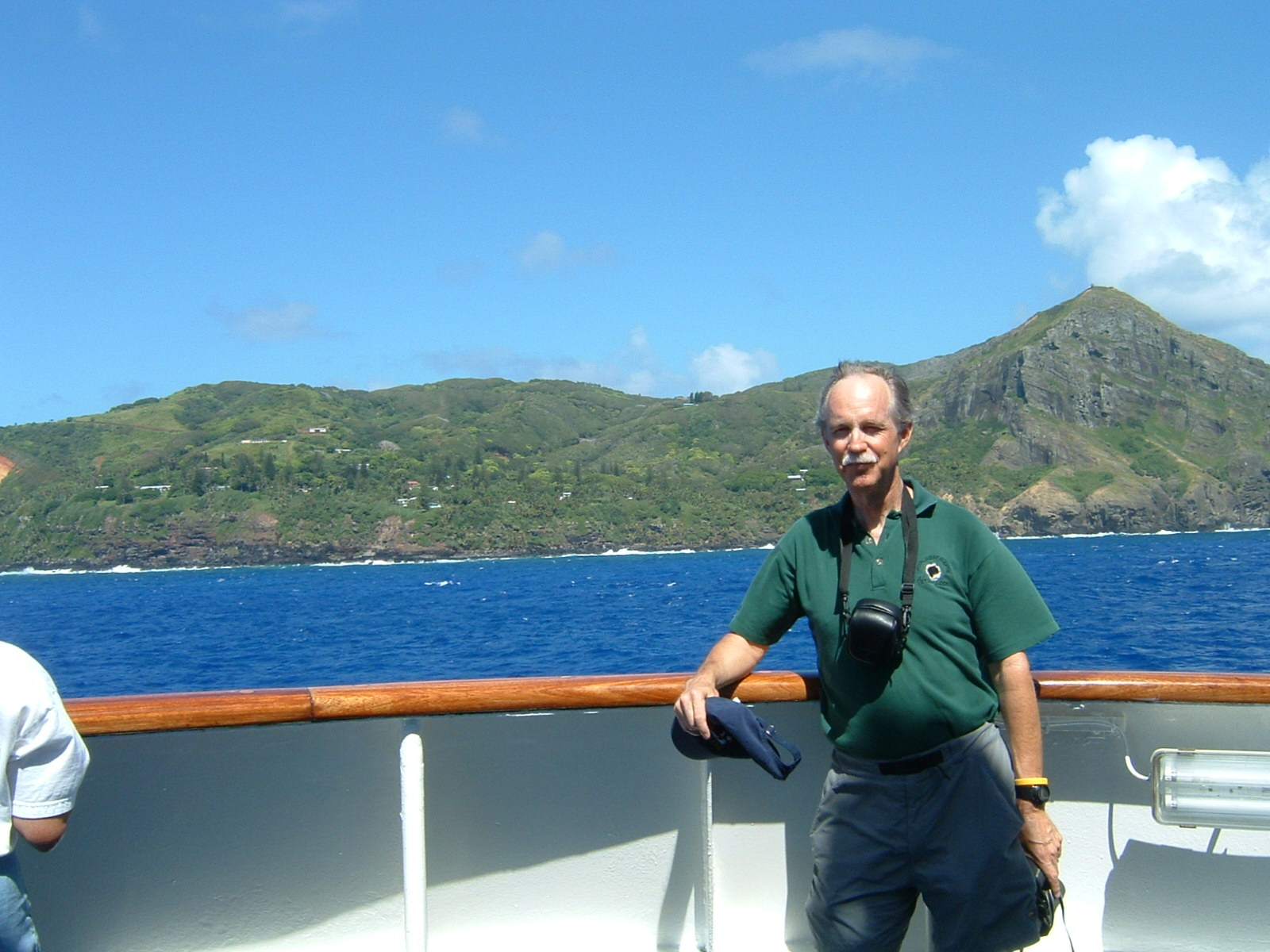 The author, with Pitcairn Island in the background. It was too rough to land. We really lucked out with this eclipse, because a low pressure system suddenly strengthened to our south. Meteorologist Jay Anderson had the captain move us further northeast along the track the night before.
 This is Tongariki, where the Moai were ordered. I found that and Anakena interesting, but the quarry was to me the real Easter Island (below).

Ninth trip: 29 March 06 in Libya. We flew to Genoa, Italy and cruised to Naples, Syracuse, Alexandria, and landed at Tobruk, where we saw the eclipse inland. As you can hear in the video, when totality occurred, a bunch of Libyans in cars came honking across the desert like a modern day Lawrence of Arabia.
Tenth trip: 1 August 08 in the high arctic, by air. Unfortnately, our window was very icy, and our view was significantly degraded. Efforts to try to find out why this occurred were totally stonewalled, which I think is unfortunate. Still, we did see totality, and anybody who goes to Eliot Schechter’s web site will see a shot of totality taken from the plane at 36,000 feet (11,000 meters).
Here is our shot of the North Pole:
And proof of sorts:
Eleventh trip: 22 July 09, south of Shanghai China. This is about as close to missing one without actually doing it. After days of high humidity and record temperatures, a front sagged south on eclipse day. We moved south, but alas, the front followed us, and while we had good views of the Sun 2 hours before, it clouded over until 2 minutes before totality. Then we got this: Not impressive, but we did see the corona. Because of the thick clouds and the length of this eclipse, we had a wide shadow and it got dark. Really, really dark. Eclipses normally drop the light to late twilight. Not this one. It was NIGHT!
11 July 2010: See the related post on this one. We were supposed to fly and then the plane got cancelled. We got one clear day in the austral winter and got one great eclipse!
WHY I CHASE ECLIPSES
October 3, 2009Why have I traveled all over the world, at least to six continents and have flown over both poles, to view a total solar eclipse? Because I caught the bug back in 1991, July 11 to be exact, when the 6 minute and 27 second spectacle was visible from our hotel. I have the comments on tape somewhere, and I remember that I uttered sounds I didn’t think I could make. This is a brief You Tube video of the last seconds before totality, the Diamond Ring, and early totality from Libya in 2006. I have a better video of the recent 2010 eclipse from Argentina (link here or at end of this post).
People are changed by the experience. Some cry. I was a bit frightened during my first four when I saw the Sun disappear. This is primal stuff. But it is beautiful. The most beautiful sight in nature? Maybe. It is certainly for me in the top three.
After a little bite is taken out of the Sun (first contact) by the Moon, the show progresses very slowly at first, until suddenly one realizes that sunglasses are no longer needed and that the light has changed to a weird yellowish cast. As the light continues to slowly dim, one’s shadow becomes very stark–each hair on your head can be discerned. Holes through leaves in trees become crescents, hundreds of crescents.
Then, with a few minutes to go, there appears a dark wall in the west as if a silent thunderstorm were approaching. This is the approach of the shadow of the Moon. The light diminishes to where there are discontinuities where the limb of the Moon, which is not perfectly spherical, but has mountains and valleys, lets some light through and blocks other light. These are the Bailey’s beads. Finally, one bead is left, one brilliant last bit of sunlight, with the beginnings of seeing a black hole around a bright light and silvery fine corona. This is the diamond ring, and usually people shout it out. Finally, the sun light is extinguished, somebody yelling, “Filters off!” since it is now safe to look with the unaided eye. And there is the corona and the black hole in the sky, a total solar eclipse. I’ve traveled half way around the world to India for 43 seconds of totality; I’ve traveled to the South Pacific for 33 seconds. I’ve traveled to South Africa only to be clouded out at the last hour. And in China, last July 22, we were thought to be clouded out when, with 2 minutes to go until totality, a small hole appeared, giving us a view of the corona. Click on the pictures below to see them fully round, rather than oblong!
Why do I go to these? Because I can’t imagine not going!
Above:  Just before the diamond ring (Aruba, 26 February 1998). Below shows totality with the corona. There is an inner and outer corona that show up depending upon exposure of the camera. I don’t film these any more, but if you want to see some really good shots, my good friend Eliot Schechter, a nationally known photographer, has some great shots on his Web site. His picture of a totally eclipsed Sun with the dark Moon’s shadow taken from a jet was the 1 August 2008 eclipse over the high arctic.
There are also annular, or ring, eclipses, where the Moon does pass in front of the Sun but is too far away from the Earth to cover the Sun completely. Both the Moon and Sun vary in their distance from us; the Sun’s variation is only about 3%, but the Moon’s is 12%. This changes their apparent size in the sky, and that is all it takes to turn totality into annularity, darkness to a little less bright. Still, annular eclipses are beautiful to see. The above was taken in Bisbee, AZ 10 May 1994. The lower was in San Diego 4 January 1992. We were told by several that annular eclipses weren’t worth a trip to San Diego. I believe the word was “Big Deal.” We left Tucson in the rain, and got to San Diego with partly cloudy skies. We parked ourselves on top of Mt. Cube and watched the fully annular eclipsed Sun drop into the Pacific Ocean. Maybe it wasn’t total, but it was one of the most lovely sights I’ve ever seen. Two hours later, it was pouring rain. We lived right!

The most exciting of all was the Siberian eclipse of 9 March 1997. That’s right, Siberia in March. We went the long way around via Salt Lake, NYC, Moscow and an all night flight to Irkutsk. After a couple of days on frozen Lake Baikal, we took the Trans-Siberian railroad to Chita, which even our guide referred to as a “hole.” While it had been clear the night before, it was totally socked in at Chita. Thoroughly bummed, the 12 of us took a bus to the eclipse site. As we got closer, the clouds thinned and the Sun rose higher. We got to the site with a clear view of the Sun! What I remember most was watching the approach of the Moon’s shadow, the “Eye of God.” approaching. I have never seen anything so dark. And then to watch four planets, a comet and the eclipsed Sun for just under 2 minutes. I tried photographing it, but the below zero temps froze the camera. I just dropped it in the snow and looked. That was better! Let the pros do the shooting. I’ll do the looking! Very few saw this one; we were among the lucky!

Next total solar eclipse: 14 November 2012 in northeastern Australia and SW Pacific basin. The above picture was the Moon’s shadow leaving our site in Libya 29 March 2006. It is noon, if you can believe it!
The recent annular eclipse of 15 January 2010 is on another post with both pictures and a video. We’ve gone to Spain and Costa Rica for annulars (picture to right taken through a filter of the 3 October 2005 eclipse from Javea, Spain) but usually don’t travel long distances for them. But I got the bug for this one, the longest annular in the third millenium (over 8 minutes), and Kenya provided a great excuse, since I had never been to East Africa and never thought I would get there. The next annular eclipse, 20 May 2012, has a track from northern California through Nevada, southern Utah/northern Arizona, New Mexico, ending in west Texas.
Visit the post for the recent 11 July 2010 eclipse from Patagonia, Argentina. In a word, we were lucky!
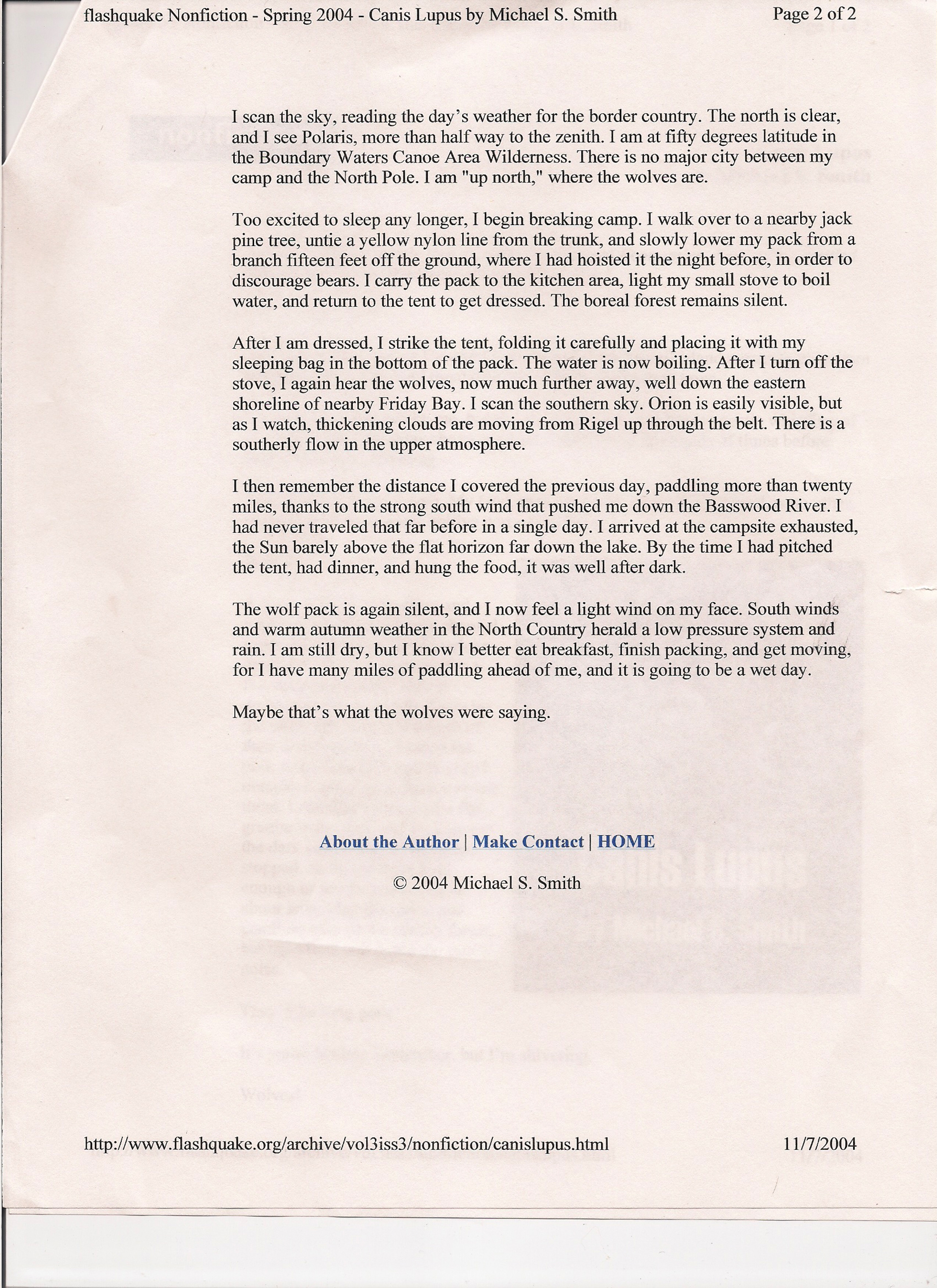
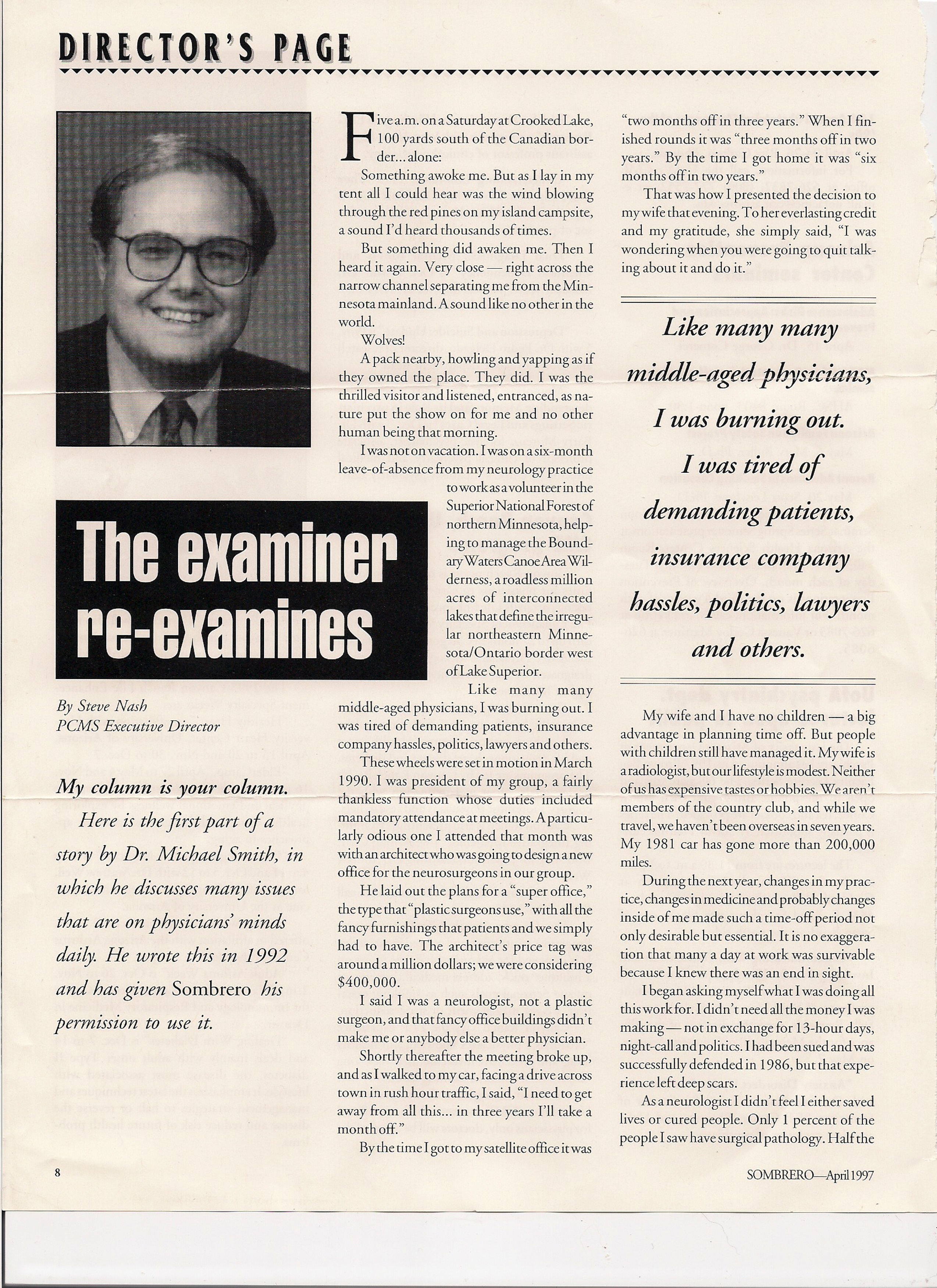
CANIS LUPUS
October 3, 2009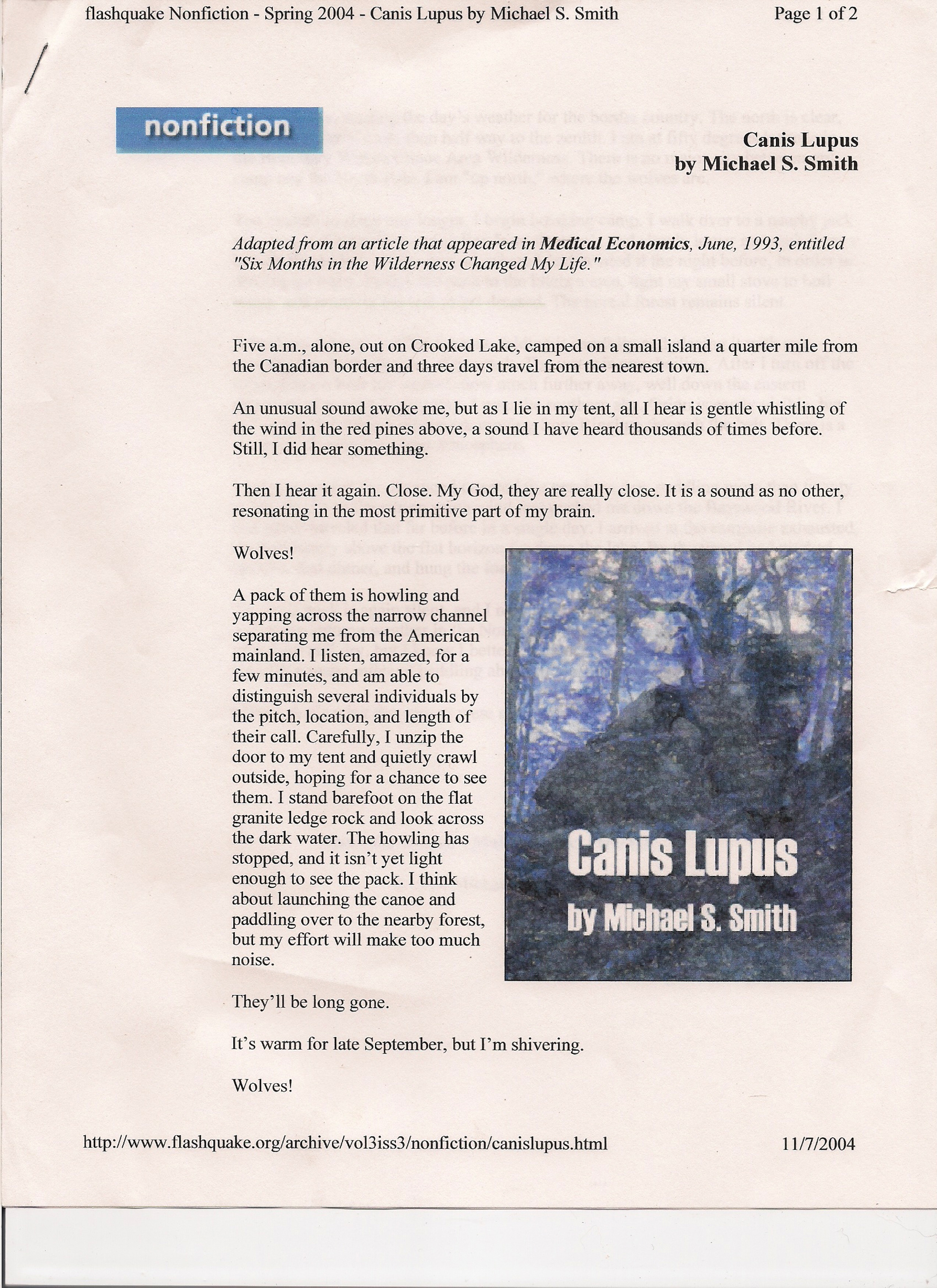



BWCAW 2009, LAKE INSULA
October 2, 2009This may have been my favorite trip to Insula. We had the best travel day in, with an early start, changing sides frequently so that we wouldn’t stress our elbows, and with my boots and Jan’s gaiters, she didn’t have to climb over packs to get in and could get out sooner. Loading and unloading went well, portaging went well, the water was calm, and we got to the point site in Museum Bay by 2 p.m. We saw not one other group for 5 days, which is remarkable even in September. Four of those days were with near perfect weather. I actually swam, we day tripped there and to the north end of the lake, saw an eagle, mergansers and a moose. The latter sloshed and clopped his way along the shore one evening, which was one of the more memorable sightings, even if the picture wasn’t good. Two days later, we went by to look at the tracks and found fresh wolf scat plus urine!
Day 5 was cloudy but cleared, so we stayed another night, and then got the frontal passage the day we left. The rain mostly held off until we hit the Insula portage. We got another hit on Lake Four and had lunch under the tarp. We took the same point site on Lake Three that two women (from Arizona, no less) were vacating, and then had high winds and rain all night. We came out with 30 knot head winds gusting to 40. Lake Two was pretty epic, and Lake One was no piece of cake either. But hey, this is Minnesota in September and this sort of stuff happens. My watch barometer was right on target with a 30 millibar drop, so while the weather stayed decent, the drop concerned me, and I knew something was due. It finally came. I have now spent 32 nights on Lake Insula, which is a real blessing.
On the slide show, notice the two consecutive sunsets and how far south the second one has moved. At the equinox, the Sun is moving either north or south the most rapidly. The Sun set nearly three minutes earlier each night. Up in Alaska, they lose about 8 minutes of daylight each day this time of year!
BWCAW 2007, LAKE INSULA
October 2, 2009This was the year we reviewed all the campsites on INsula. We immediately got hammered with rain and wind after we left the Lake One landing, so instead of getting an early start on the campsites, we made it maybe a mile into Lake One! Still was a good decision. Next day was better, and we got to Insula. We did some of the west end sites and then set up on an island site. We went out in the afternoon and got a few more sites done before increasing winds made us get back to camp. The next day, we did sites in between storms–sort of. I recall leaving one site in sunshine and within 5 minutes, we had sleet and high winds on the high seas of the lake! We had one last day to do the whole northern half of the lake–20 sites. We got an early start and went hard all day, using a tape recorder and talking to each other about the kitchen, the landing, the tent pads, the bear hang, the latrine trail and other amenities. We finished late, and I would later have tennis elbow from all the paddling that lasted about 6 months. It was still worth it. We picked up Site 2 on the way out, wrote it up, and it appeared as a 20 page article in the Boundary Waters Journal winter 2007-8.
Funny follow up, along the extreme makeover campsite. Site 37 was on one map and not another. We looked all along the shore for it and found nothing except one sawn log. I landed in brush, bushwhacked up the hill and found a firegrate, one tentsite, and about the emptiest latrine one will ever find in the BW. We called it the worst site on the lake, don’t stay on it unless it is the last one, and even then don’t stay there. We day tripped to the site in 2009 and could see it from the lake! The firegrate was surrounded by a rockpile, there was a decent landing, and while I still wouldn’t stay there, somebody from the USFS had obviously done a great deal of work. Nice to know we probably made a difference!
 Boreal B[l]og