Archive for April, 2010

HELPING THE NEXT GENERATION

April 29, 2010

I’m a lucky guy–I’ve canoed the Quetico/Superior since 1981, and while I’ve camped from Alaska to Algonquin, northern Minnesota is my favorite destination.  In 1992, I spent 5 months as a volunteer wilderness ranger in Ely, the most content I have been in my life.  But one of my more memorable trips was a recent solo up and back to Pipestone Bay, lasting barely 5 hours.  It was Earth Day and the first time I ever canoed in April.

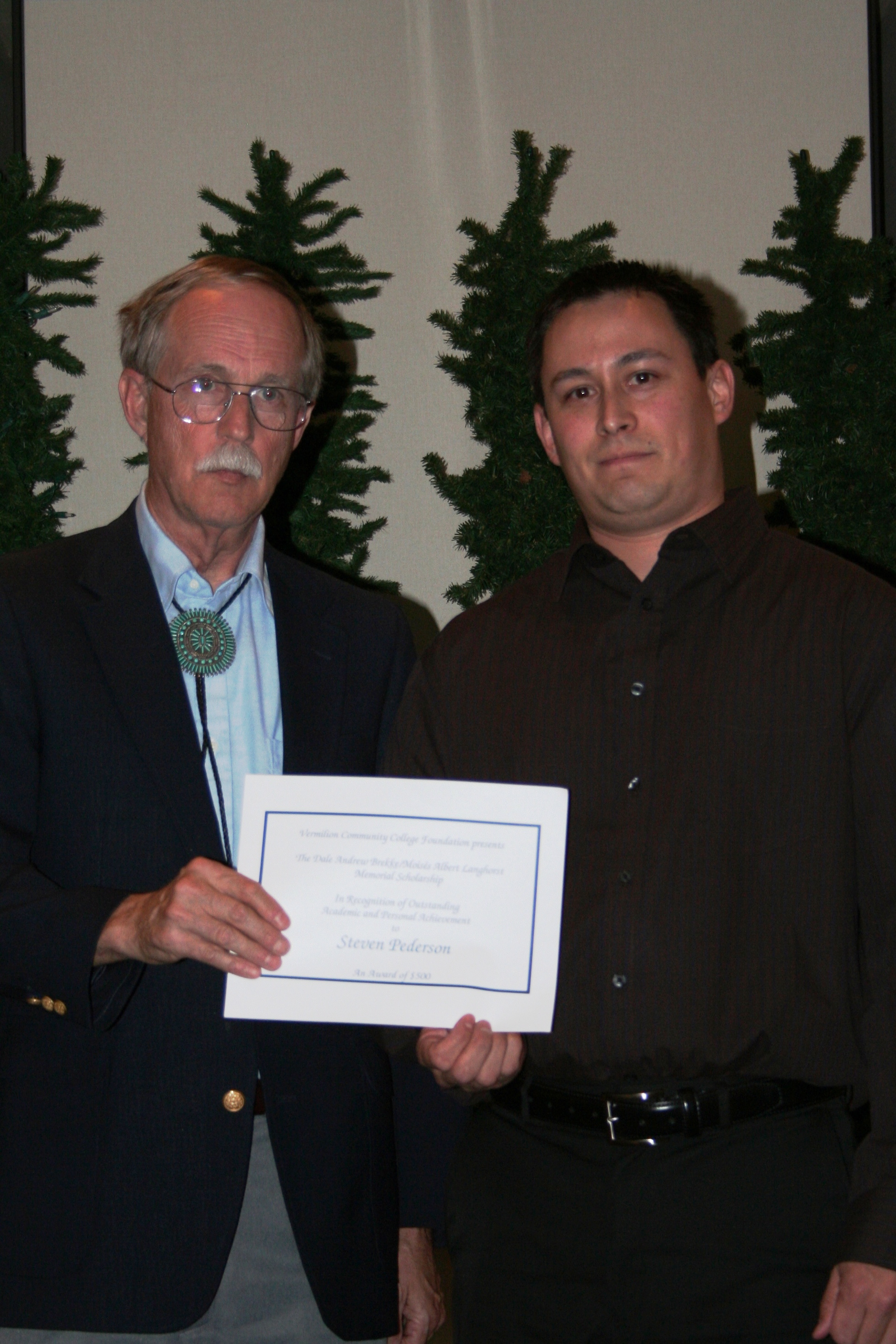
I went to Ely for the annual Vermilion Community College Foundation scholarship banquet.  For 5 years, my wife and I have sponsored a scholarship for a student selected by the College who is studying environmental or wilderness course work leading to a career in those fields.  I try to attend the banquet to present the scholarship.  It’s our legacy to a town and wilderness we deeply love.

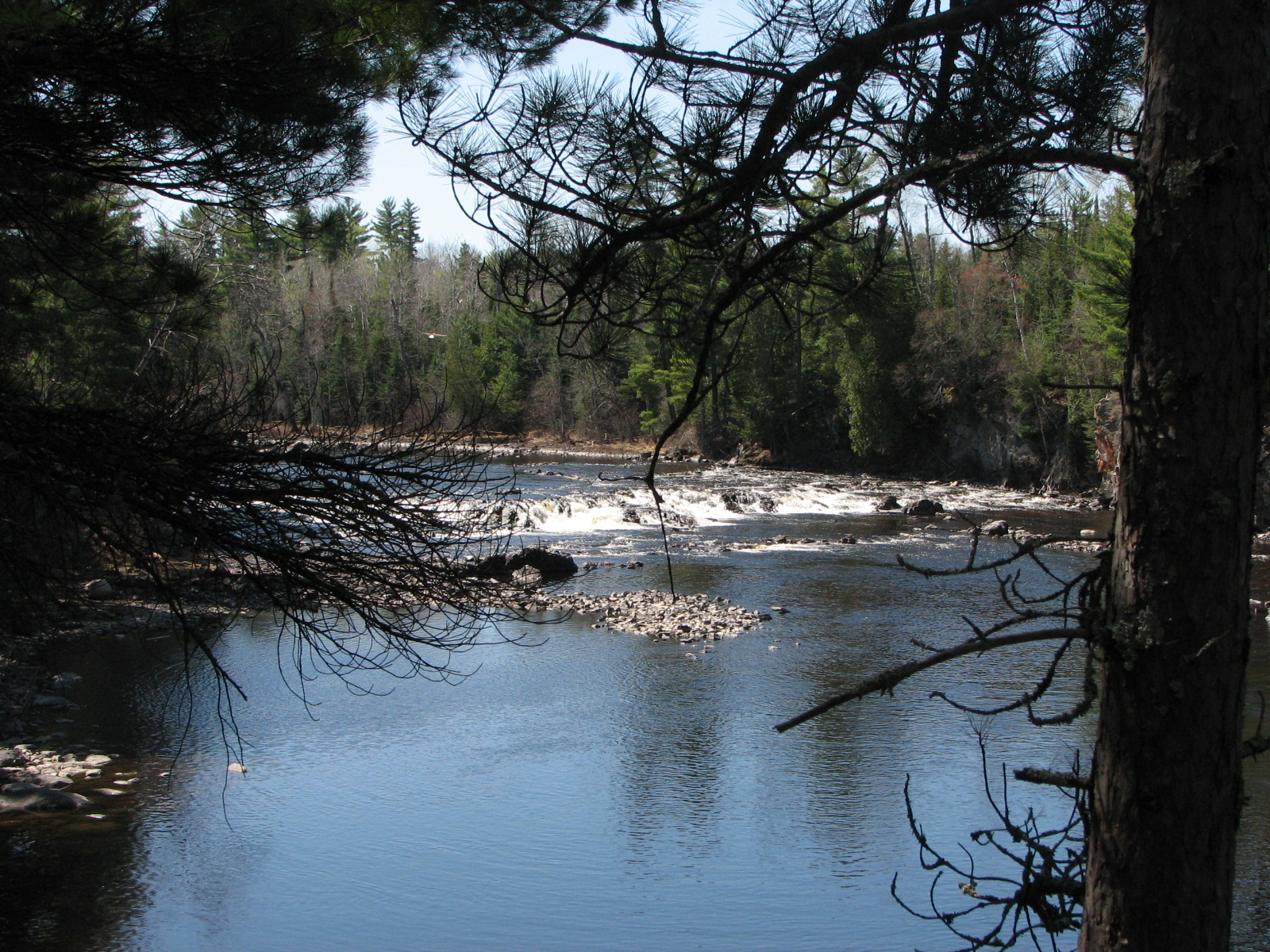
Two days before leaving I realized that if I arrived in Ely early in the day, I could rent a canoe and get on the water.  I was thrilled at the prospect (my wife said, “Why am I not surprised to hear this?”) and made arrangements.  I arrived in Ely at 9 on a perfect traveling day, got the canoe and drove out to Fall Lake.  I quickly shed every layer except for a shirt and PFD, and I could have taken the shirt off as well.  I wore neoprene gloves but really didn’t need them.  I saw nobody, except mergansers, a loon and several immature eagles at the south end of Pipestone Bay. I sat in the sun, enjoying a better view of the falls than I’ve had on the 30-plus times I have hurriedly crossed that portage.  Here’s a video of the falls and a few soaring immature eagles (they are immature because of their lack of a white head and general mottling.)
I contribute to three scholarships:  the amount of money the Foundation annually disburses has doubled since 2005.  I worked with the Friends of the Boundary Waters to create a scholarship in 2008; they and I jointly fund it.  I would also present that scholarship at the banquet, which pleased me no end–an Arizona guy who brought two fine Minnesota organizations together to create something good.

Up on Pipestone, I shot video of immature eagles soaring in a cloudless sky.  After lunch on Newton, I portaged back to Fall, paddling by the campsite where my wife and I stayed on 9/16/2001:  we started that trip on 9/11, unaware of events, heard the next day on Basswood River “the country was shut down,” but had few details and were nervous what we would learn when we exited.  On every trip since, we always note the presence of aircraft.

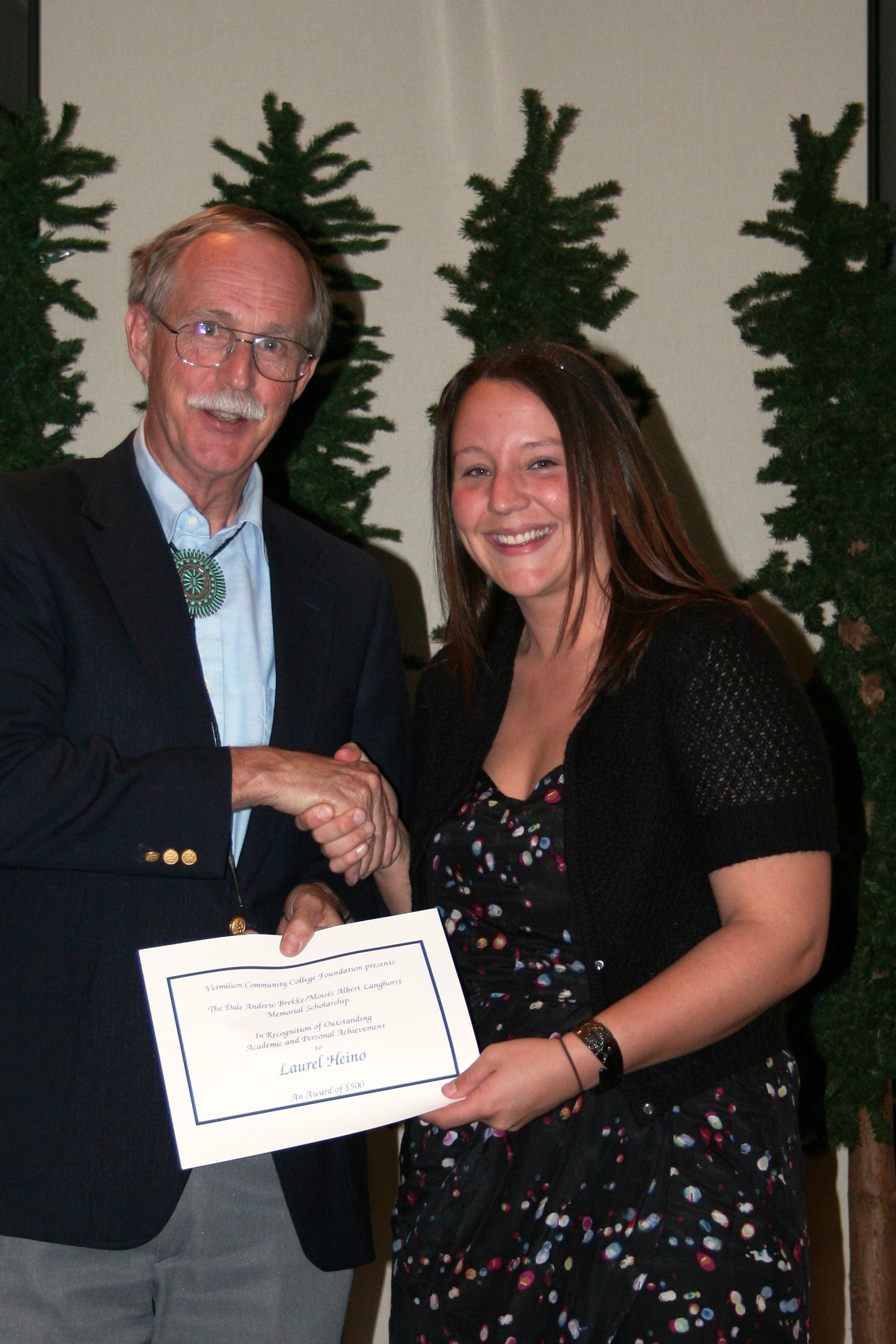
As a Navy veteran, a shipboard medical officer, I had long wanted to establish a scholarship for veterans, whom I feel should get free education.  Patti Zupancich of the Foundation worked with the Brekke and Langhorst families to allow me to contribute to an existing scholarship in memory of two young Moose Lake cousins who died in Iraq, 6 months apart.  Their aunt would attend the banquet but declined to present the scholarship because she knew how emotionally difficult it would be.  Patti suggested that I present the award, which was met with immediate approval.  I was grateful both families allowed me to contribute; I was deeply moved by their additionally allowing me to present it, one of the greatest honors I’ve ever received.

At 3 p.m., I came off the water, tired, sore and happy to have used muscles that had forgotten what paddling and portaging entailed.  It felt good to do J-strokes, scull, sweep, avoid rocks and portage again.  It felt right to solo in the wilderness.  But it felt odd to know in an hour, I would change from canoe clothes to coat and tie.  I had never done that before.

The banquet is always festive, which must be difficult for those who give memorial scholarships–a gold star family from Wisconsin presents one each year, too.  There is also one in memory of “Jackpine” Bob Cary, given by his daughter.

The recipient of our scholarship was there with his parents.  I enjoyed seeing how happy the three of them were.  The recipient of the Friends scholarship had taken people on tours to Listening Point.  One of the Brekke-Langhorst recipients had spent 4 years in Iraq; his father was also a veteran, and we had an interesting conversation.  The other recipient, a young woman, was ex-Navy; both of us have sailed many tens of thousands of nautical miles on the same seas in different eras.

As expected, presenting the Brekke-Langhorst scholarship was emotional, and I wanted everything to be proper.  The brave young men’s aunt thanked me, but I felt I received more than the recipients.
Every time I give, I seem to receive more.  I’m hoping the Friends get enough support to sponsor a second scholarship.  I hope some of my fellow wilderness travelers will remember those students in Ely, at the edge of the wilderness and on the edge of poverty.  If giving money is not possible, haul out a lot of trash on your next canoe trip.  Do something good for this special wilderness.

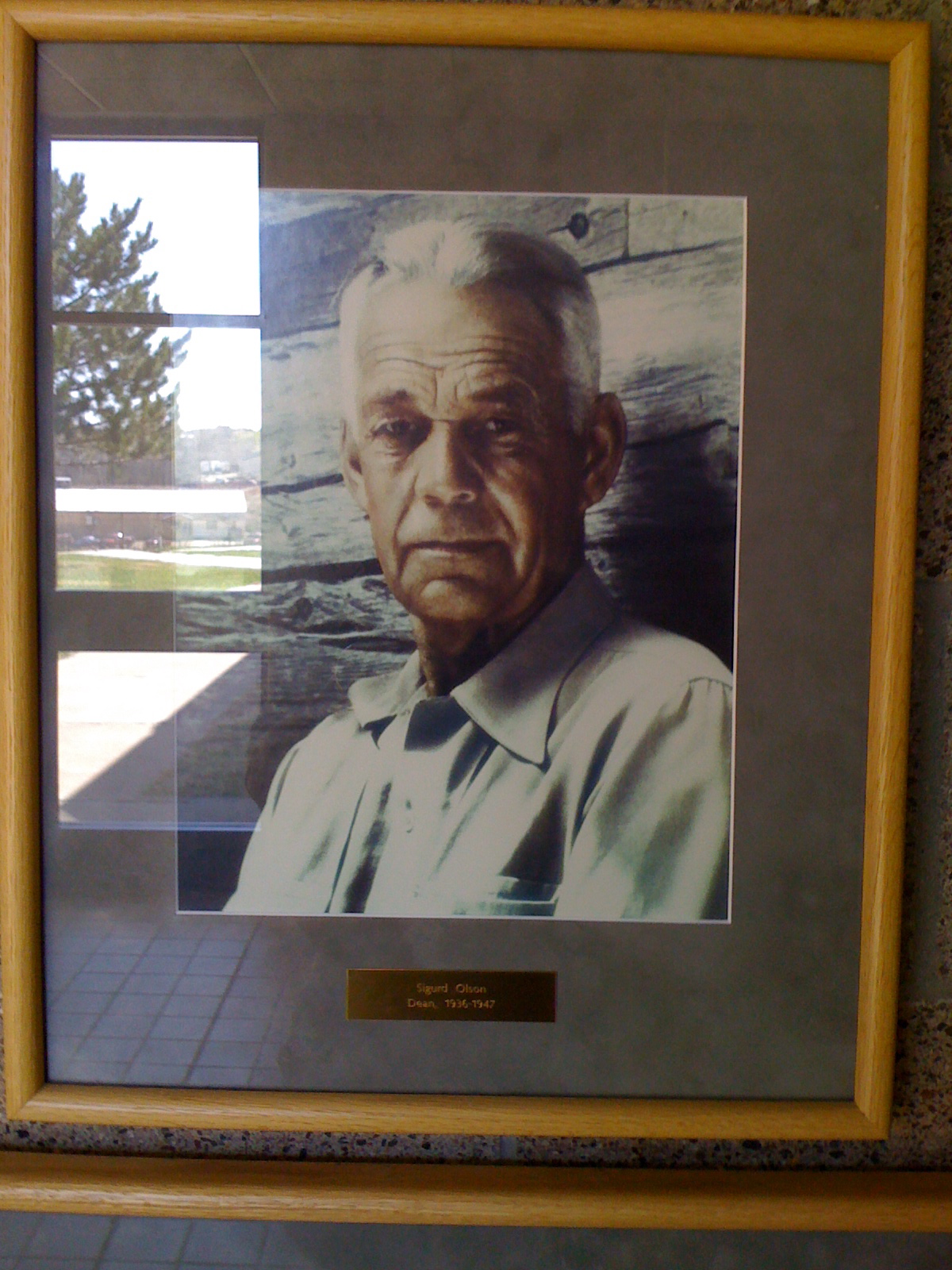
In 1938, Sig Olson, Dean of what was then called Ely Junior College, wrote “Why Wilderness?”, stating exactly how I feel on the trail:  the need for “sweat and toil, hunger and thirst, and the fierce satisfaction that comes only with hardship.”   Sig referred to hardship on the trail, not financial hardship.  There’s a scholarship in his name, too, which I want to honor by ensuring hardship stays only where it belongs.
SAVE EDUCATION BEFORE SAVING PAR

April 18, 2010

Last week, I volunteered to teach an adult education course at Heritage Highlands.   Regrettably, few people showed, because a golf tournament occurred simultaneously.

That epitomizes Arizona’s attitude towards education.  Sports matter.  Schools and learning don’t.  Look at the space devoted to each in the media.  Compare salaries of coaches and teachers, then ask who influences more individuals.  Having been both a substitute teacher and a classroom volunteer on successive days in the same school, I know what teachers do.  Rich retirees need to volunteer in the schools, teach reading or otherwise give back to the community, in addition to playing golf.  Make no mistake, nearly all of us receive more from America than we give, Social Security heading the list.  The exceptions are those public servants and military who risk and give their lives.  And only 7% of us are veterans.

If ever a time to prove it takes a community to educate a child, this is the time.  If ever America needed an educated citizenry to compete in a fiercely competitive world, this is the time.  If ever education needed money and volunteers, this is the time.  If ever we needed parents to make education a priority for their children, motivating them to study, dress, speak and write well, this is the time.  The teenage brain matures later than the body.  We must recognize that fact and understand that teachers alone cannot mandate proper behavior.

We need to pay for education with money and time.  An educated society wouldn’t have tolerated keeping Iraq war spending off budget.  I don’t recall the anti-tax crowd, most of whom supported the war in 2003, serving or demanding fiscal honesty and responsibility from the previous administration.  But suddenly they are using precisely that reason to destroy public education.   How many dollars we need for education depends upon how many of us are willing to volunteer.  Regardless, I want my taxes go to education rather than to unwinnable wars and impossible nation building started by old men who never served one single day abroad in uniform.

It’s time to embrace what Horace Mann wrote 172 years ago:  the public should no longer remain ignorant; education should be paid for and controlled by an engaged society; classroom diversity is important; schools should be non-sectarian; children should be taught the values and spirit of a free society; and there must be well trained professional teachers.

Sales tax raise?  Absolutely.  Triple it for luxury items.  Income tax?  We need a marginal tax rate of 90% for income over $3 million, comparable today to the 90% rate over $400,000 under Eisenhower, a Republican.  It might decrease greed.  Saving Arizona and America is more important than saving par.  We must spend whatever required to ensure we graduate students who meet reasonable standards to move to the next level.  Cutting education funding is about as stupid as it gets.  But that’s Arizona.  And that is why we’ll leave.  Enjoy your golf.

TOUCHING OTHERS

April 8, 2010

I never knew Jamalee Fenimore or Stephne Staples.  Nobody who reads this knew them, either.  Both of them loved the Sandhill Cranes, as do I.  Both have a viewing blind named for them at Rowe Sanctuary in Gibbon, Nebraska, at the southern bend of the Platte River.

Every spring, the Sandhill cranes and the Whooping cranes, the most and least common of the 15 worldwide crane species, begin their 5000-7000 mile migration to the subarctic in North America and Siberia.  Their final staging area is on the Platte River.  They go to the Platte because there is food nearby–formerly small animals but now mostly corn–and because of the safety that one of the largest braided rivers in North America offers.  They feed in the adjacent fields by day and roost in the river by night, where the shallow water allows them to hear predators approach.  Before the Platte was dammed and water used for irrigation, recreation and drinking, it was a mile wide and an inch deep, too thick to drink, too thin to plow.

Now, the Platte in many areas contains less water and has invasive species and many trees growing nearby, limiting the habitat to 50 usable miles from the formerly 200.  Rowe Sanctuary owns 4 miles of river and 1900 adjacent acres, which has been preserved as habitat.  Every night in March, up to 600,000 Sandhill cranes, 90% of the world’s population, roost in the river.  And every morning, they leave.  It is a spectacle that Jane Goodall has called one of the world’s best.  I’ve been fortunate to have seen many great sights in nature.  This one is in my top three, seeing a solar eclipse and a wolf in the wild being the other two.  I love seeing it so much that I volunteer at the Sanctuary, along with dozens of others, helping the full time staff of four–that’s right, four–show visitors the cranes from viewing blinds, for cranes are hunted in every one of the 17 states they pass through except Nebraska.

Many talk about the cranes that migrate to Arizona.  I just say, “You don’t understand.”  And you can’t, until you witness the occasional flocks of fifty thousand cranes, darkening the sky.

Stevie Staples mentored one of the Rowe Staff and lived 74 years, dying in 2006 from cancer.  She was a former canoe racer and a real character.  I once raced canoes, and I would have loved to have discussed racing with her.  She touched the people at Rowe.  She knew that, for she did live to see a beautiful picture of a Sandhill Crane in flight with her volunteer tag with “9 years of service” on it, because a picture of her receiving the picture is on a desk of the person she mentored.

Jamalee Fenimore grew up in Nebraska and practiced veterinary surgery in Washington state.  She died of cancer far too young at 49, donating her estate to Rowe.  Nobody at Rowe knew or remembered her being there.  But obviously, she was touched by the river, the cranes and the sanctuary.  We volunteers learn that we may touch visitors in ways we never know.

When I volunteer at Rowe, I work 17 hour days, sleeping on the floor in the sanctuary so I can hear the cranes on the river in the middle of the night.  I guide people to the viewing blinds, I clean toilets, paint, greet people, and now am setting up “Nature by the Numbers,” where we hope to show teachers and students how math and science are used in the real world, so we don’t lose our connection to nature.  The escaped, illiterate slaves used the North Star on the Underground Railroad.  How many of you readers can find the North Star?  How many of you have slept under the stars, how many bird species or constellations can you identify?  What is the Moon’s phase tonight?  How many large mammals, excluding deer, have you seen?

On my last tour, I took a disabled person to Stevie’s blind in an electric golf cart.  Had he been able to walk, all of the group would have gone to Strawbale blind, which was the plan.   But we still saw many cranes, American white pelicans, and unusual behavior.  My rider loved the view and tried to tip me, which I of course refused, asking him to put the money in the container at the sanctuary.  I planned to talk to other clients, because as the lead guide, I hadn’t spent time with them.  But I spent time with this man.  He was originally from Singapore; when I told him I had been there twice, his first comment was “Thank you for saving my country.”  I’ve never heard that before, and it did me good.  I hope I and Rowe did him good.

We touch each other in ways we may never know.  Good people spread kindness throughout their world.  The lucky ones receive that kindness or are those who live long enough to discover that their kindness was deeply appreciated and honored.  But all who spread kindness are fortunate that they have the ability to do so.  Stevie knew in her final days that her kindness was appreciated.  I hope Jamalee Fenimore did, too.  But if not, I know she knew she was doing the right thing.  I deeply appreciate what she did.  And every time I guide people to either of the two blinds, I tell them the story. Both women deserve to be remembered.  And to have a viewing blind named for you on a river where a half million cranes visit every March is a wonderful honor.  It also reminds me of my duty.

SANDHILL CRANES+2 WHOOPERS, 2010, PART II

April 7, 2010

This site is still under construction, but the You Tube videos are worth seeing:  the first shows a brief version of a pair dancing.  This is to release stress, to bond and to release hormones.  I can’t help but think it is just pure joy as well.  The second is at http://www.youtube.com/watch?v=vLQTOIt_gBM and shows the first plus about eight more minutes of the birds calling.

I went to Rowe for the beginning of the crane season, but it was a very cold winter and the birds didn’t show up until March 1.  I had a few great views, but left before the season really got going.  I felt like I had unfinished business on the Platte and went back at the end of the month.  I worked 17 hour days, slept on the floor in the gift shop (so I could hear the cranes on the nearby river when I woke up), cleaned toilets, led and assisted on viewing blind tours, washed dishes, and basically did whatever needed to be done at Rowe Sanctuary.  Even ran the Crane cam one night, which is on Rowe’s home page.  I haven’t felt so alive in a long time.  Rowe has a full time staff of only 4; there are many local volunteers and folks like me who come from a long way off to help in any way they can.  I felt blessed and very fortunate.  Also saw two whooping cranes at a long distance, so the pictures aren’t great.  But I saw them.