Archive for September, 2013

SOLO

September 30, 2013

For well over a decade, my wife and I have taken an annual canoe trip into the Boundary Waters.  We have everything planned.  Day 1, we stay north of  Minneapolis, where we have drinks at a country bar, dinner, and ice cream afterward.  The next day, we hit the shopping center in Cloquet, get our food, and drive up to Ely.  We pack that night, and the third morning, go across the street to a coffee shop that opens early and serves good scones, too. We drive out to the jumping off point and head in to the woods for a week.

My wife wants a picture of me in that coffee shop this year.  She won’t be there with me.

I knew at some point, circumstances would prevent our going up there.  I just hoped it wouldn’t be “this year”, but “this year” always comes.  Always.  I was under orders to go.  My wife knows the clock in my head.  In 2004, on the river into LaCroix, we saw an old guy paddling and floating downstream, mostly floating.  Mind you, he was about 75, but he was in the woods.  I don’t see many 75 year-olds in the woods.  My wife said, “That’s you in 20 years.”

Nine have now passed.

In 2005, I soloed into Kawnipi Lake for one more look.  I have thought about going back to it, perhaps the most beautiful lake in the Quetico-Superior.  I’ve seen Kawnipi six times, however, I am turning 65 in 9 weeks, and seeing Kawnipi again with high mile days is no longer as important to me as it once was.  Damn, I loved those high mile days.  I can still see myself powering into a nasty headwind on the west side of Agnes, trying to make it to the Silence Lake inlet.  Oh yeah, it was raining like stink, too.

We used to go into Lake Insula, but in 2011, the Pagami Creek Fire burned the whole route in. We could have done it last year, because with decent weather, we can paddle the 7 portage route in as many hours, get to our favorite campsite, not burned, for a late lunch.  Neither of us, however, wanted to see the fire scars.  We both know fire is necessary, and that the area will heal, but we want to remember Insula the way it was, not the way it is now.

We started camping on Basswood Lake, looking for the ideal spot.  The first two years, we found good sites, but they weren’t what we wanted.  Last year, on a day trip, we found one, a little further in.  This was going to be our destination this year.

Except illness and bad crap happen.

I’m going to try to go there solo. I say try, because the intervening nine years at my age is a lot different from intervening nine years thirty years ago.  Last April, I solo hiked into the BW.  I couldn’t make it safely to Angleworm Lake because of deep snow, and the concern that I would get too fatigued or hurt.  I turned back and found a place to camp.  It wasn’t ideal, but it was nice enough.  I was in the woods, alone, and winter camped, which I had not done in 30 years.  Not only was it a good trip, it was the smartest I had camped.  Oh, I got cold at night, and I didn’t do everything right.  But the big decisions were sound–I turned around, I found a good spot, I stayed warm enough, and I ate well.

I’m going in solo again, by canoe.  It will be familiar….  I have soloed more than 20 times.  I talk to myself.  I give myself pep talks, the most important one at the jumping off point, where I tell myself not only to be careful, but to go with the flow.  “It’s just physics,” is one phrase I use, so when I drop food or trip over a root I don’t complain.  I don’t run.  I never deviate from my route that both my wife and outfitter know.  If I am late, I want people to know where I am….and where I am NOT.

I once published an article in a magazine about solo trips.  It was accepted, but the editor added a picture of a waterfall with the caption, “While solo tripping can be good, these sights can’t be shared with one you love.”  That annoyed me.  I wrote that solo trips aren’t for everyone; indeed, only a few of us seek out this solitude.  We do it because we have to.  Maybe we’re selfish, but there are times we want to see things alone and be by ourself.  In society today, that may be strange; I find it nearly sacred.

I won’t go in solo to think about the course of my life, the state of the world, or the next article I will write.  Nope, I will say that, but in the end, I will spend a few hours contemplating a campfire, trying to find that loon that is calling, walking along the shore and see what’s growing on land or in the water, follow a path from the site until it deadends, wondering why it deadends.  I will watch caterpillars, ants, mergansers, not analyzing anything.  If it is nice, I’ll lie on my back and look up at the sky.  I’ll usually watch an eagle soaring and wonder what he’s seeing.

I will return in 4 days to the same place I started.  The canoe, paddles, and PFD will be the same.  The person, however, will be different.  Oh, he will look the same, other than being cut up in a few places, a little stiffer, blisters on his hands, sunburn where he should have been more careful.  But the real difference lies deeper.  He’s been out in the woods and saw whatever it was he needed to see.   He won’t be able to explain it, but those who seek out wilderness and make it part of their life understand.  So will his wife, who will see him and immediately know he went where he needed to.

FISHIN’ STORY

September 29, 2013

I never forgot that summer day at Crow Lake, nearly six decades ago, when I landed my first smallie, 13 inches and a pound.  Over the years, I’d catch perch, sunnies, rock bass, pike, largemouth and other smallies (smallmouth bass), always happy, but of course never quite recapturing the thrill that I had with the first one.  I can still see the rock under water where I caught him, the tug on the rod,  bending almost in two.  One has to understand this thrill to fully understand what’s coming next.  I’m writing about fishin’, no “g”, because every fisherman knows that.  You go fishin’.  I guess a few folks from the Cities go fishing, but the rest of us go fishin’.  We use leeches and crawlers, the latter being nightcrawlers, or earthworms that come out at night, after we water the lawn during the day.  These are “live bait,” which a segment of the fishin’ population considers the only way to fish.  It’s a bit religious, although we’ll use lures like Raps, spinners, jitterbugs, and spoons, ‘cause some places don’t allow live bait, because of contamination concerns.

Oh, we don’t use the metric system, either.  My bass was not 33 cm long and 0.45 kg.  Give me a break.  My heavens, nobody here would know what the hell you were talking about if you said that.  I’m vegetarian now, but I eat fish, because I’m willing to catch, kill, clean and cook them.  While I don’t fish any more, there will always be a soft spot in my heart for fishin’.

I hadn’t planned on soloing into the Boundary Waters this September, because my wife and I usually go together.  Illness entered our house this year, however, and while she was doing well, canoeing was out of the question. Stuff happens.  She told me to go.  I felt a bit guilty, but I get over it quickly.  I think she’s glad to have me gone for a while.  I come back better for the trip.
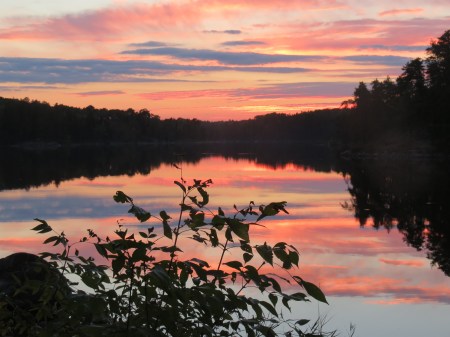
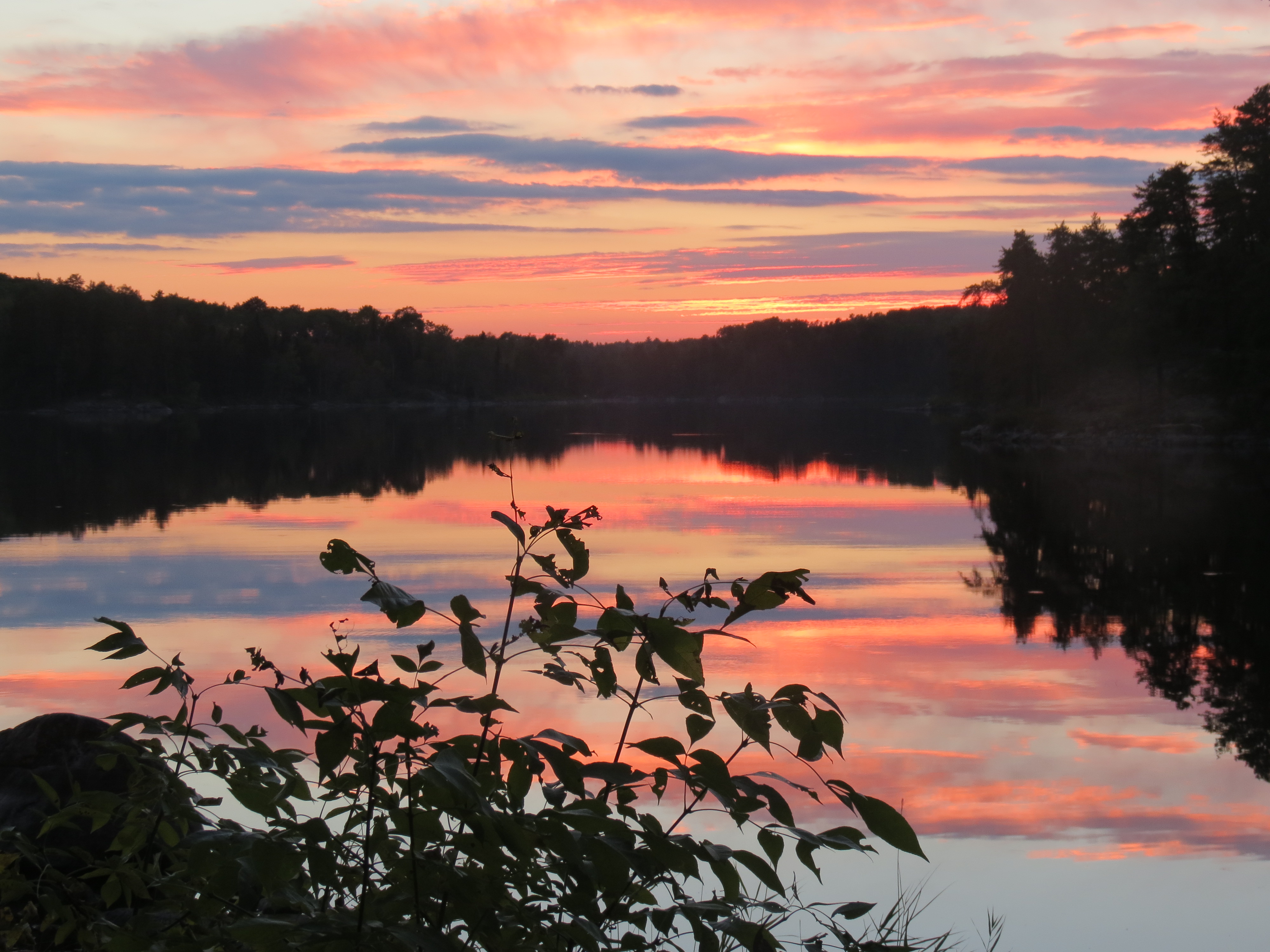
Sunset, Basswood Lake, top of Pipestone and Jackfish Bays.

Red Maple leaf.

I’ve soloed into the Boundary Waters on the good side of twenty times.  I usually go with the plan that I will think a lot about my life, family, place in the world, all the heady stuff people believe is important.  Usually, though, I end up fascinated with what most would call trivialities.  I round the corner of an island, and an immature Bald Eagle takes off in front of me. Or I’m lazing under a few jack pines on a cliff and see a dozen mergies diving in unison. Or, if I’m lucky, I see a Pileated Woodpecker fly back and forth across the bay out front, a real treat.  The world’s problems, my own, tend to wait.  A red tree leaf on the trail  is highly significant,  as is morning mist on the lake, an incredible sunset  or a rising last quarter Moon, with a loon calling, when I take my midnight break.

I process what I see and hear slowly, so it might take hours or days to discover what is truly meaningful.  Readers of my post “Dreams”, should know that I left that men’s room without the slightest thought of writing about what had just transpired.  By the time I got home, 12 hours later, the story wrote itself.

My first night out, I was on a campsite my wife and I had discovered last year.  We were camped in the motor zone on Basswood and found this one out of the zone.  We should have moved, but we didn’t.  There are many lovely tent sites, quiet bays, and lots of room.  She couldn’t see it this year; I decided if my 64 year old arms could do it, I’d go in 14 miles for a couple of nights.  I got there in 4 hours, which I thought decent.  And so the first night, I sat on a fallen Norway and started to write about the day.

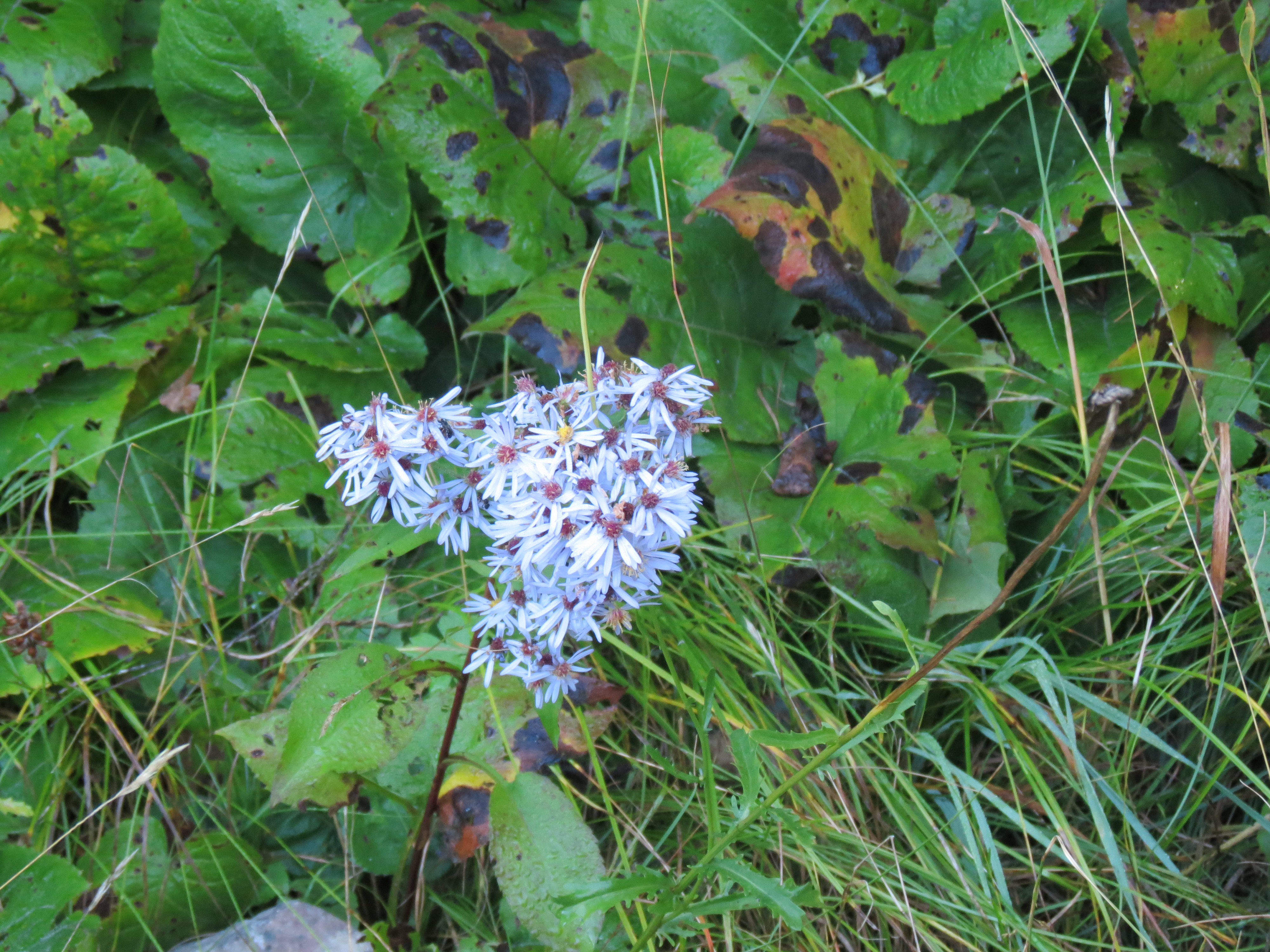
What surprised me was that my thoughts were not of the eagle perched by Newton Falls, nor the Aster

Aster plant, end of portage from Newton to Pipestone Bay.

Aster plant, end of portage from Newton to Pipestone Bay.

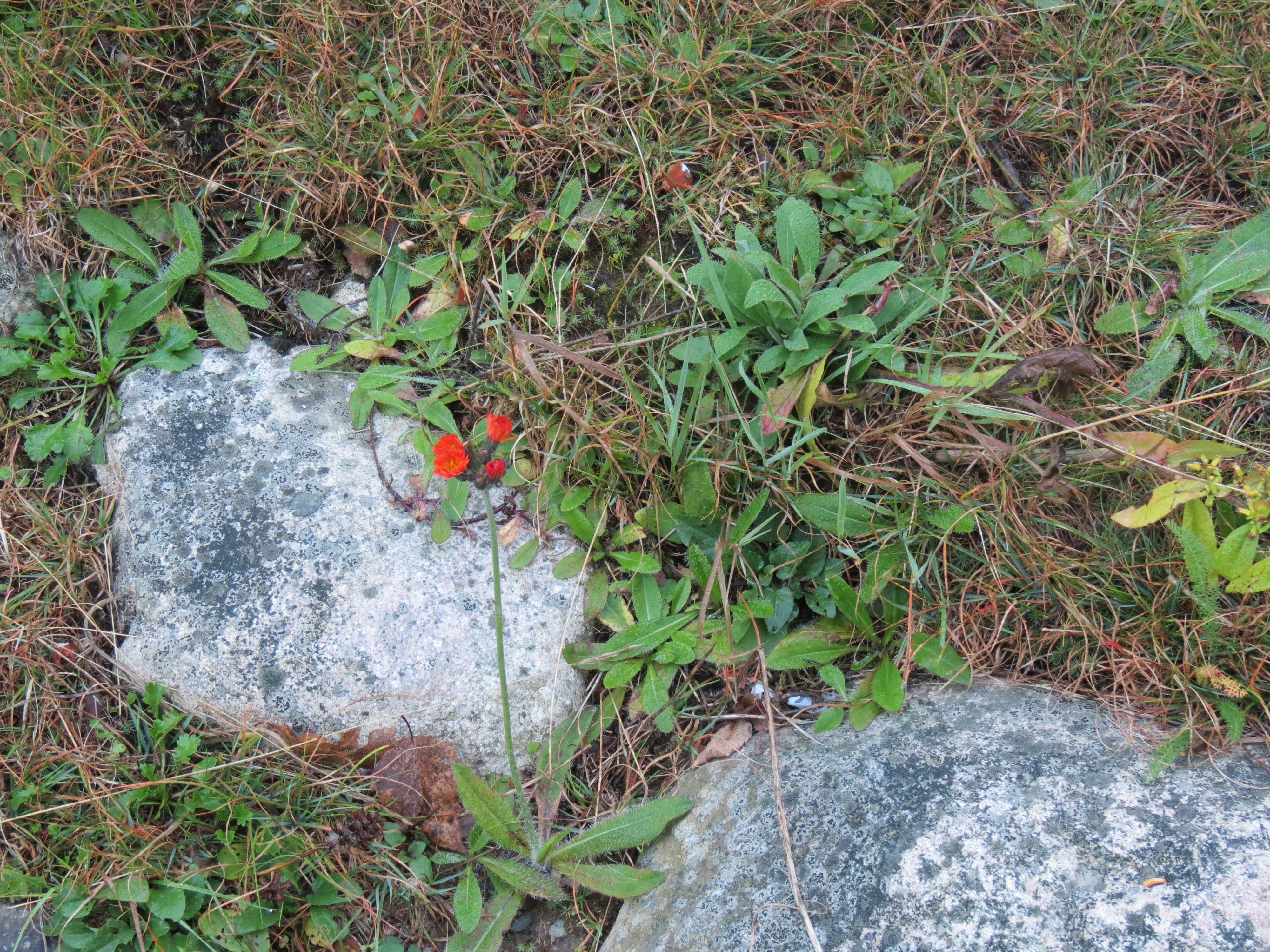
and Hawkweed blooms

Orange hawkweed.  This is worth kneeling down to smell.

Orange hawkweed. This is worth kneeling down to smell.

by Pipestone Bay, near the end of the portage.  It wasn’t even the site itself, which was better than I remembered.

Nope, it was a fishin’ story I heard that morning, back in Ely.  Yep, fishin’.

I heard the fishin’ story because I went to a bakery the morning of my departure into the woods.  My wife asked me to go to that bakery, because we always had gone there together before heading out.  We got coffee and a scone, one of her fondest memories of the trip.  We remember these things every year with hopes next year will be the same.  Except at some point, next year won’t work out.  Always.  It is the way of the world.  Not working out happened to be 2013, a bummer.  But I still went to the bakery, got my coffee and scone from the same woman, who was helped by a man I hadn’t seen before.  I don’t know their relationship, and it doesn’t particularly matter.  I was there for scones and coffee; I was about to get a lot, lot more than I paid for, and fishin’ stories ought to be told in the present tense.

A second customer comes in, and the man who is helping the woman starts talking about a fishin’ trip he guided the prior week.  OK, now I understand the relationship.  They have a bakery, and he works as a guide.  Oh yeah, he works holding ducts, too.  That came up in the conversation:  “It’s about 30 hours of work, and while I know nothing about ducts, I can hold them.”  This is Ely, where they measure jobs by hours they will last, not salary, bonuses, or bennies, which are non-existent.  But that’s for another time.  I’m telling a fishin’ story now.

The man is guiding out on a lake that I know well, but will remain unnamed, because guides do not tell ordinary people where good fishing is, and as a listener, it is completely unethical for me to mention the name.  Guides do a lot of “water time” to find the honey holes that help them live.  When you put in a lot of “water time,” you don’t give it away.  The guide talks about a day trip that he and his charges took. Wow.  I’ve done that day trip, and it’s a haul.  I’m starting to listen closely, for while I’ve been in 300 lakes up here, camped out as many nights, this guy knows fishin’ and this country a lot better than I.  If you haven’t figured that out, I’ve just paid him a hell of a compliment.

I’m still sitting at the window looking out on Sheridan Street but turn around when the guide says, “I caught the biggest walleye in my life last week–32 1/2 inches.”  I look at him as he continues, “took a picture and let her go.  She was old, had a big head, and I could see the unusual coloration on her.”  Big walleyes are breeders, and they should all be thrown back after a quick picture. If a good guide sees you keeping one of these for dinner, he will quietly direct the fishin’ elsewhere to make sure you don’t catch anything more. I heard that from an expert. Good sportsmen practice catch and release. Good sportsmen, however, often don’t do what this guide does next.

“She comes belly up about 100 yards away.  I went over, because the gulls were circling.  She was alive, so I worked her gills for a few minutes, made sure they were going, and let her go.  She dived deep and was gone.”  Working the gills means move the fish back and forth, so the dissolved oxygen can fix to the hemoglobin on the gills.

My story that first night was right before my eyes. I wanted to write something profound, and here it was: I spread my hands about 32 1/2 inches apart and dreamt of having that on my line.  Wow.  Best fishin’ story I’ve heard in a long time.  Nothing trivial about this.  Not when you know fishin’.

That guy is a real sportsman, too, and it’s a helluva fishin’ story.  I respect him.  He gets it.  He knows how to take people fishin’.  I like the bakery.  I left a decent tip when I got my order; I decided I would stop in and grab another one of those scones when I came back before the long drive to the Cities.  I doubt I will hear another fishin’ story, because maybe the guy is holding ducts.  Still, maybe it will be my lucky day.  I will leave a lot bigger tip for the woman, not just for the scone but for the fishin’ story.  I bet she knows a lot of fishin’ stories.  My wife doesn’t believe half of mine.  Bet she believes his.  He’s a guide.  He knows fishin’.

Well, I’m in the woods for a few days, cover some miles, see some sunsets, eagles, fall colors, and spend 30 minutes watching an ant move a pine needle.  Yes, trivial stuff.  Unless one is an ant.  Did you ever watch an ant carry something 10 times longer than he is?  I was fascinated.  Anyway, I finally came out of the woods 3 hours before a big boomer pounded the land.  Temperature dropped like a stone, but I had a September trip where I never wore my rain clothes and slept without a hat on.  That’s a great trip.

It got better.

I had breakfast at the Moose (The Chocolate Moose) at the corner of Sheridan and Central in Ely, and I’m ready to leave town, when I go by the bakery for the blueberry scone and coffee.  The scone is to die for.  I’m normally pretty shy, but four days alone in the woods makes me talkative, so I just ask the woman how big the walleye was, ‘cause I like to have my facts right.  She immediately asks the man to come out.  It really is my lucky day–dry trip, blueberry scone, and I’m going to talk to the man himself, a guy who knows fishin’.

He is a guide.  Name is Don Beans, and he runs  Jasper Creek Guide Service in Ely.  He’s on Facebook.  I got the brochure.  I started with a real dumb question:  “Where did you catch it?”  Completely nonplussed, Don answered, “Not saying.”  I was embarrassed as hell with my faux pas, forgetting that no guide ever divulges his secrets, but hey, I haven’t been fishin’ for a while.  I replied saying the lake began with one of two letters, and named the letters.  The first one was correct.  I told him I was familiar with that lake, having spent time with the Forest Service.  He must have thought I was for real, so we both talked about a secret lake that we both knew well.  I ain’t telling you the name of the lake.  No way.  You want to know, take a trip with Don.

Then I told him about back in ’92 when Steve Cochran and  I were out working, when we spent an evening jiggin’ for walleyes on Pipestone Bay, where I had just been.  Cochran, a Forest Service worker, guided on his days off.  Don is a guide who probably does bakery and duct work on his days off.  Probably does any other work he can, too.  Bet he’s good at it.  Doesn’t ask dumb questions, the way I do.

“Lot of water time to find that hole,” Don said, when I told him about the school of walleyes we were jigging into.  I had never caught a walleye before and pulled in 8 that night.  Threw them all back.  I told Don that I was impressed with his throwing the fish back and then going out to rescue it from the gulls.  I liked his response:

“What else could I do?”

Not “it was the right thing to do,” which implies that one has a choice, but the implication was clear: the right thing is one’s only action.  This is a good guide. Come to think of it, this is a good person, too.  I’m writing a 2100 word fishin’ story, and Don Beans has summarized the jist of it in 5 words.  He’d probably be a good editor, too.  His next 5 words were even better.

“Want to see a picture?”  he asked.  That was like asking me if I wanted a lifetime supply of blueberry scones.  Oh man, did I strike gold today.  First the scone, then the story in depth, and now a picture.

I saw Don with the fish.  I don’t have to spread my arms 32 1/2 inches.  I’ve seen what it looks like.  That walleye is a treasure in American waters, thanks to Don.  She won’t be around much longer, but she has done her job in nature.  Wow, what a fishin’ story.

And the whole thing is true.  Makes me want to take up fishin’ again.

If I do, I know who will guide me,  where that secret lake is, and what I’m having for breakfast that first morning.  I may ask dumb questions, but I ain’t stupid.
TICK, TOCK

September 10, 2013

Tick, tock, TICK, TOCK.  In the past year, my internal clock has been ticking louder.  It’s telling me get out in the woods more, do the things I want to do, see the things I want to see, now, soon, this year, maybe next, but not put them off.  The sound is reminding me again there are no guarantees in either longevity or health.

I’ve always had a clock, but I didn’t hear it much for many years, when I had my neurology training.  I saw sudden catastrophic neurological conditions, many times in people who had just retired.  I started to hear the clock again.  Two young colleagues died in accidents within a few weeks of each other back in ’92, and the sound became louder.  An inner voice told me, “There’s a cost to taking a leave of absence to work for the Forest Service in the canoe country, Mike, but there is a cost to waiting. Go now.”  I didn’t wait until was 65, which I will soon be. I went early and never regretted it.

The same time, I made “The List,” years before “bucket lists” and “1000 places to see before you die,” many of which I neither need nor want to see.  The List is for me.  Others don’t need or want one.  That’s fine. I do.

In my 30s, life was busy, too busy.  I practiced medicine, chronically fatigued, interrupted, sued, and hurried until I finally got out at 43.  I had other jobs, went back to school, got a degree, couldn’t make a living at it, and started volunteering, to give my life more meaning.  I tutored math for 9 years, taught a man to read, led birding tours in the neighborhood, and removed buffelgrass.  I published articles.

One day, I happened to see The List, which had languished in a drawer.  The first item was “See the Sandhill Crane Migration in Nebraska.” I had put that one off for a decade. In 2004, I  told my wife and father that I was going, and they were welcome to accompany me, but Nebraska weather in March was unpredictable.  We all went and had a good time; I was transformed.  I am now a volunteer tour guide at Rowe Sanctuary and for 6 years have showed others the migration.  It is one of the top 4 sights I’ve had in nature (total solar eclipse, seeing a wolf in the wild, and Katmai bears are the other three.)

I chased a few eclipses in some unusual places, and indeed, seeing the next total solar eclipse became a permanent member of The List.  In 2005, I added a new item:  see all the national parks.  In December, I drove 550 miles to Guadalupe Mountains NP and climbed Guadalupe Peak the same day.  I was told it would be too windy up there and too dark before I got down.  I went anyway.  For 15 minutes, I was alone and atop Texas.  It was dead calm.  I got down just as it got dark.  Great hike. Eight years later, I have eight parks left to see.  The 19 trips I’ve taken, my odyssey, has been one of the best things I have ever done, carrying me into 13 states and 23 new national parks.

In the winter of 2007, the ticking became really loud, as it does when I fail to get outdoors enough, so I looked at The List and read: “See the Arrigetch Peaks”.  Oh yeah.  That one. These mountains, some of the most unusual in the world, are in the Brooks Range of northern Alaska.  I was 58; I wasn’t going to be backpacking forever.  I have a neck I have to take care of, and anything else could suddenly fail.  I wasn’t expecting problems, but I heard the clock:  GO!!  I  went the next summer.  The hike was the toughest 20 miles I have ever done, but I saw the Arrigetch.  It is one of the top items on my “Outdoor Resume,” which I keep for myself, although others may certainly look at it.  I am not competing with anybody, only fulfilling my dreams.

After that,  I planned my trips on a regular basis.  Hiking the entire Appalachian Trail is on The List, but I don’t plan to do it; there is too much else, and the AT requires too much time.  I’ve walked the southern 528 miles and hiked 20 miles in a day (another list item) 9 times, once 3 days in a row.  Damn, that was fun.  Maybe I should reconsider.

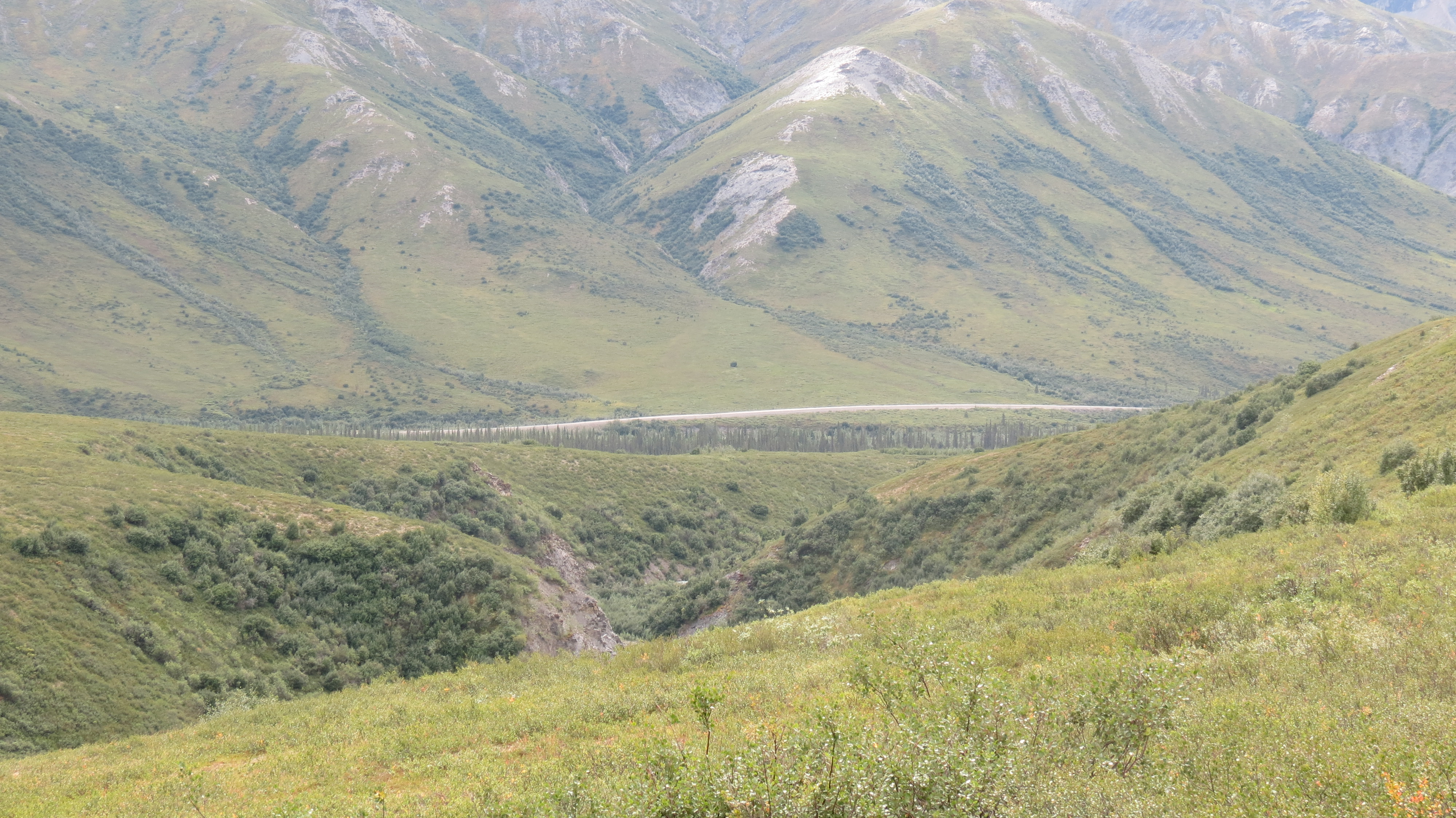
High above the Dalton Highway, just south of Atigun Pass.

Dall Sheep, Aichilik River headwaters, ANWR, Alaska.

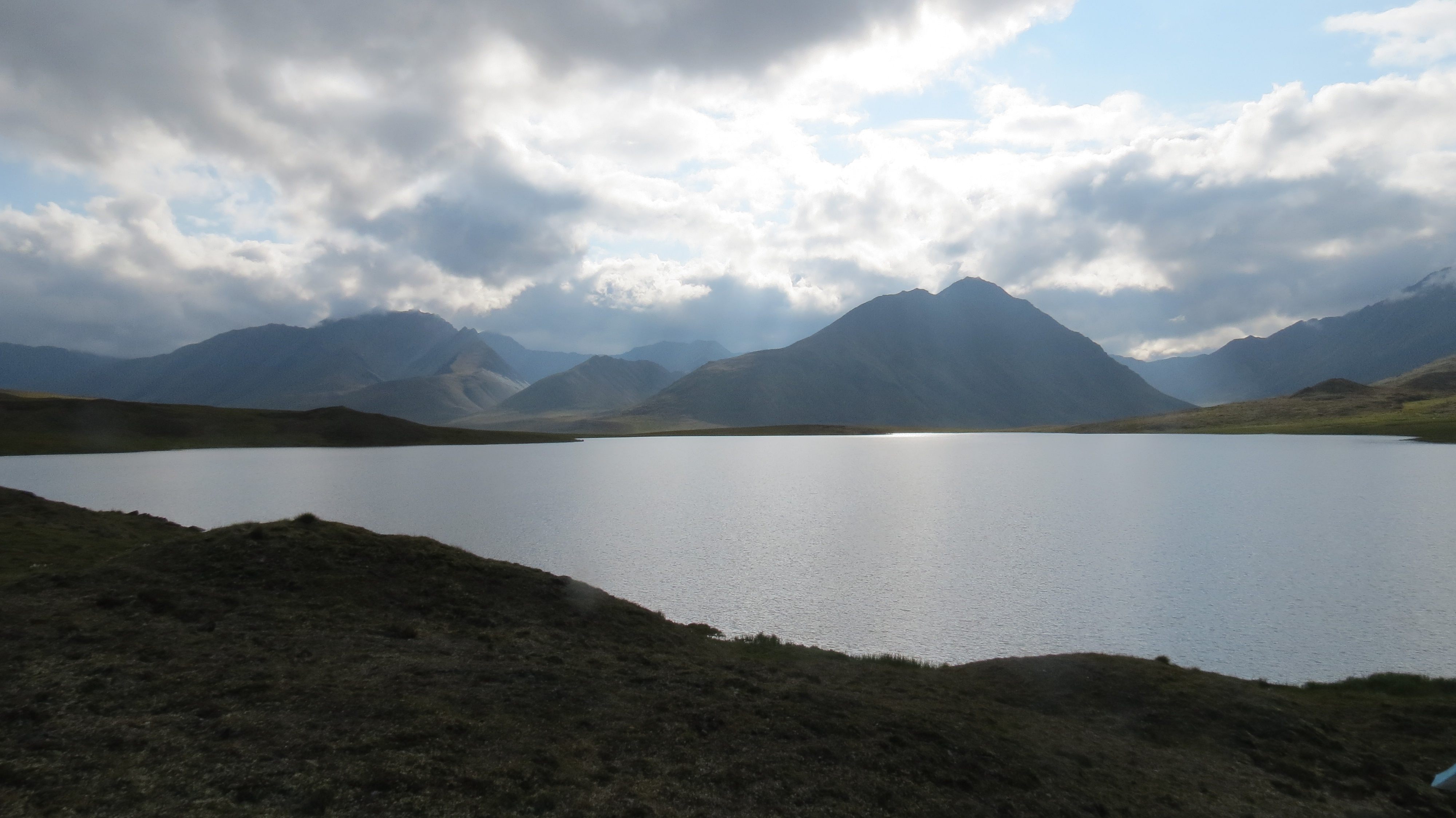
TICK TOCK. I wanted to see the eastern “Gates”, Gates of the Arctic NP.  My guide and I bushwhacked in from the Dalton. I carried 75 pounds up a monster hill with a 20% grade, went over Oolah Pass two days later

Oolah Pass and Lake

Oolah Pass and Lake

in a cold, pouring rain, up other steep hills, in rivers,over moraines, through incredible valleys, to Summit Lake.  We got picked up by float plane.  Hiking is better, but to fly over this country is incredible.  We flew between Frigid Crags and Boreal Mountain, the “Gates” of the Arctic”, named by Bob Marshall.

Summit Lake, Gates of the Arctic NP, on the continental divide (1200 m)

Summit Lake, Gates of the Arctic NP, on the continental divide (1200 m)

I now think that perhaps this hike was harder than the Arrigetch.  I thought it would be my last backpacking trip, but my guide told me about doing ANWR again. I remembered the wildlife on the  in 2009, got that faraway look in my eyes that said I needed to go back, know I won’t be happy unless I do, and that is on for 2014.

TICK TOCK.  Mike, you saw Alaska, but you need to see those parks.  This year, I took three week-long road trips.  I love planning these.  They were tough, but I did what I set out to do in each one.  The first one took me to Mammoth Cave, KY; I spent time with the Friends of the Boundary Waters in Minneapolis, went to Ely, winter camped solo, gave three scholarships at Vermilion Community College and came home.  The clock’s ticking was quieter.  I got into the woods.  Alone.  In snow.  And did fine.  It was one of the smartest hikes I had ever done, probably because I knew I had little margin for error.

My footprints in Kobuk Valley NP Sand Dunes (greater)

Noatak River, near the western edge of Gates of the Arctic National Park. Looking east.

Three months later, I saw four Alaska national parks.  I spent three nights after 1 a.m. in the Anchorage airport to do so, but I flew into Kobuk Valley National Park,  drove 7 hours to Wrangell-St. Elias and back, flew to Katmai and later to Lake Clark.  Great trip, but I missed hiking with a pack. Go back to ANWR one more time, Mike, go while you can.  If you’re lucky, you can raft the Killik, Nigu, Hulahula or Kongakut Rivers some day, to add to your paddling the Alatna and the Noatak.  Maybe do all of them.  Tick Tock.

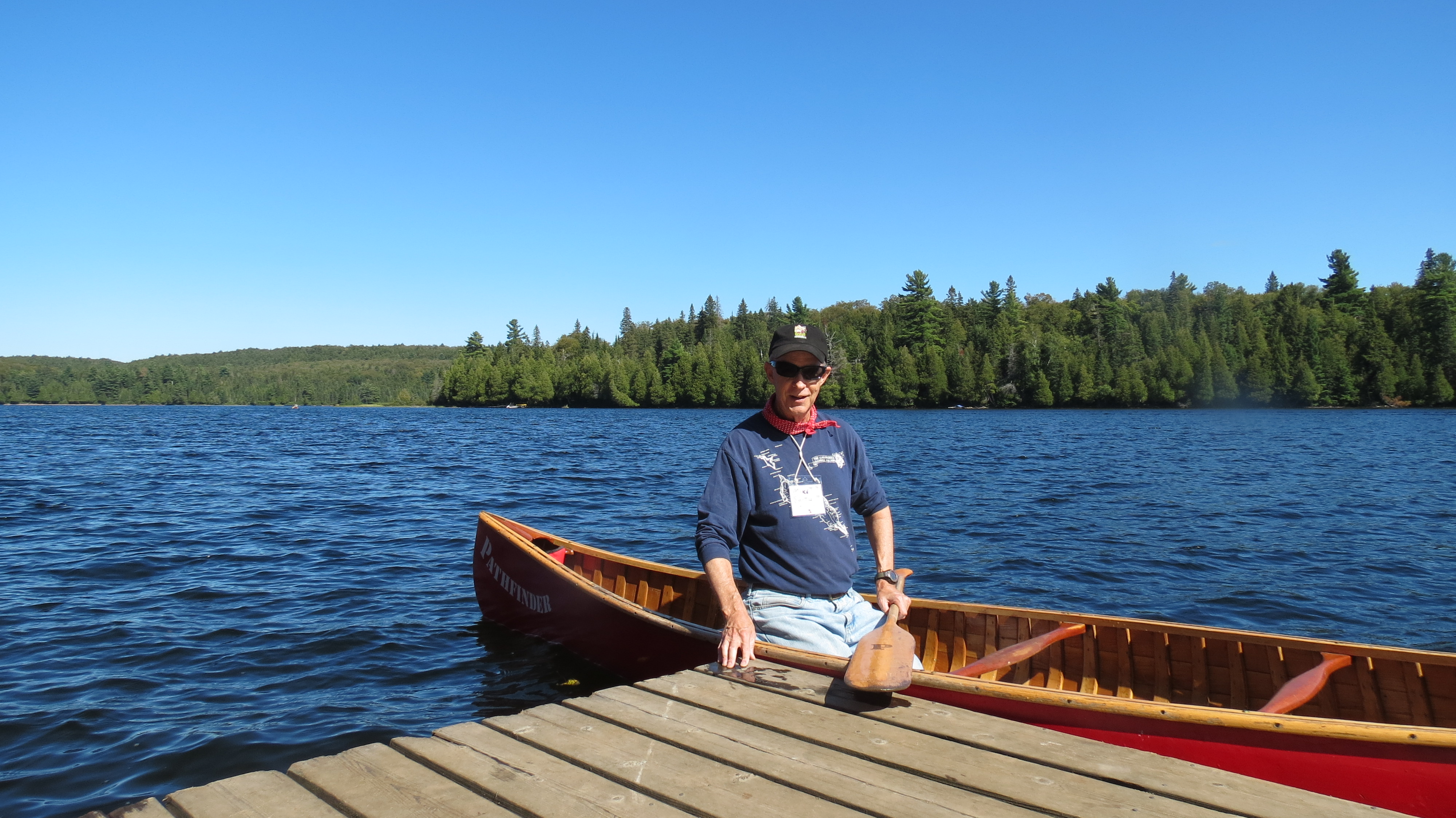
A month later, I flew to Rochester, New York, my home town, to see it one more time.  The next day I was in Cleveland, seeing Cuyahoga Valley National Park.  With a bad case of the GIs that night, and beginning a nasty cold, I drove from there to Algonquin Park, Ontario, for Camp Pathfinder’s 100th anniversary, where I learned to canoe, and did a day loop trip in Algonquin.  Being underway in a red canoe

Red canvas canoe that Pathfinder uses.

Red canvas canoe that Pathfinder uses.

that dented my knees  from kneeling on the ribs and planking was part of the thrill.  Pathfinder bowmen didn’t sit in the bow seat.  I even carried the red canoe a mile.  I texted that feat to my wife, and she simply replied, “Why?”  It mattered.

Day trippers at Little Island Lake, Algonquin Provincial Park, Ontario. I camped at this site 50 years earlier. I am in the blue in the back.

I didn’t know if I could get the 90 pounder on my head, but wisdom is more important than strength, and the canoe went right up. Then, of course, I had to carry it the whole way.  It’s not a man thing; it’s a Pathfinder thing.  I wore red there; to wear red and carry again was deeply satisfying. After Pathfinder, I drove to Ottawa to see a good friend.  He took me over the Chilkoot twice, introduced me to the big waters of the Far North, the Yukon and Nahanni Rivers, and we’ve been in the Quetico.  Lot of water under our keel.  He’s got me interested in seeing Western Australia, and he is nearly 70.  Tick tock.

Tick, tock, tick, tock.

I’m trying to learn two languages, too.  Tick, tock.  Will you ever be functionally fluent in German and Spanish, Mike?  Tick tock.  Are you getting out enough?  Tick tock.  Do you notice how easy it is to get stiff and sore?  Tick tock.  Do you remember your miserable illness in 2009, when you almost were housebound for 4 months?  Tick tock.  Are you teaching enough?  Tick tock.  Are you loving your wife enough?  Tick tock.  Are you caring for your animals?  Tick tock.  Do you look at the maps on the wall and wonder how you are ever going to see all that country before you die?  Tick tock.  Does it matter, if you can just get to the places you love again?  Tick tock.  Are you able to say every day, “If I drop dead now, I will have lived, loved, done good, and been worthy of calling myself a human being?”

Tick tock.

ELDERS

September 1, 2013

“We have a Michael Smith booked tonight, but he’s from Washington.  We don’t have a reservation for you.”

It was 11 p.m. in Anchorage, and I had been looking forward to a quick shower and getting to bed, after the flight down from Kotzebue through Nome.  I had a seat mate who kept jabbing me, her husband fell asleep (lucky him) and she didn’t want to leave the row at deplaning.  I got behind two women who were slow going up stairs, and each took one side, together blocking the stairwell.  It had been a long day.

The women were elderly, and I said nothing.  At my hotel, I was stunned at the news, and all other rooms were booked in the city. The night manager had no suggestions.  I looked outside for a place to sleep, but I camp in the woods or tundra, not cities.  I finally thought of one place where people sleep without being arrested–the airport.  I took the shuttle back to the airport, and the young woman driver was a bit sharp with me.  When she spoke, I was slow to respond, because I was tired, trying to solve problems, not create a scene.  Her loud: “Hellooo?” didn’t help.

It was a long, short night.  I heard: “It’s one thirty,” “two thirty,” and “four thirty” on the loudspeaker.  I got up at 5 to the sound behind me of people shuffling in line to check in at a counter.  Embarrassed, I collected my gear and went to the men’s room to clean up.  Fortunately, I slept in my clothes; unfortunately, I really needed a shower.  I called the hotel to send the shuttle, and the same young woman came to pick me up.

“Do you have a room?” she asked.

“Nope.”

“Then why did you call the shuttle?” Her tone was angry.

“Because I felt like it.”  I replied, a little annoyed.  She knew that I had been at the hotel and might have a reason to go back.  I was thrice her age; I didn’t know if this was power over somebody, gender, race, my age, or she was just having a bad day.  I was wise enough to stay silent.  As a 64 year-old guy who just got 1 hour of sleep on the floor in the Anchorage airport, with a 7 hour drive ahead of me, I tried to be polite.  Treating elderly people with respect mattered when I was a kid, and I resent it when young people treat me with disrespect.

I am more than elderly.  I consider myself an elder, and the women at the airport who went up the stairs slowly I considered elders, too, which is why I didn’t yell at them to move faster.  Elders have lived long, have wisdom, listen a lot, and are willing to change their beliefs in the face of new evidence.  I qualify on all counts.  Some call it “being young,” which is fine.

When I got to the hotel, I was given a room, then asked to pay for it–full freight–until check out time 5 hours later.  I almost signed the sheet, not because I would pay for it, but it was going to be billed to the other Michael Smith, the guy from Washington.  But that wouldn’t have been honest. Elders must be honest, too.

The manager of the hotel was present and let me use of the room and shower for free.  I used two towels, leaving the room otherwise untouched. Subsequently, I spent two more nights there, in a nice room with a big discount.  That is why that woman is a manager.  She problem solves and knows that a customer who gets treated well after a bad outcome is likely to choose that place to stay the next time.  Indeed, I shall.

She was an elder, too.

I think the Native Alaskans were on to something.  Not only did the they clearly adapt their lives to the seasons, far better than we do, and existed a lot longer than we; their belief system respected elders.

I grew up told to respect elderly people, not all of whom were elders, but many were.  I was to listen and be polite.  Many elders taught me; I would have learned more if I hadn’t been a know it all kid, although I wasn’t a total loss.

I respected my parents, and my mother, a feminist before the word existed, and against segregation long before most of the country was, told me to treat all people with respect.  Making my parents proud of me was important. I didn’t always succeed. but I did when they began to die, and I had to become a parent to them.  They were not only my parents, but elders, people who taught me, people who deserved respect.  I had to help them exit this world with dignity, which I did, the second best thing I ever did in my life (marrying my wife was the best).

Yes, the Native Alaskans got it right.  The picture below was taken in the Headquarters for Kobuk Valley National Park.  The building is in Kotzebue; the Park 100  air miles east, barely reachable by water, not at all by land or roads, so I went by air.  It is noted for its sand dunes, which came from wind funneling between two glaciers millions of years ago, picking up silt and depositing it. I saw it, my 45th Park, and was thrilled to walk on the dunes.

But what I did not anticipate was far more important: to understand better what an elder is and the responsibility they have to pass their wisdom to the next generation. I needed to see Kobuk Valley, the Visitor’s Center, have a hotel reservation cancelled, and sleep on an airport floor for all this to happen.

Kobuk Valley Visitor’s Center; Kotzebue, Alaska