Archive for March, 2014

RESPITE

March 31, 2014

When I volunteer at the crane migration in March, I guide morning and evening.  I like seeing cranes, I’ve learned a lot, and I especially enjoy watching people get as excited as I, at seeing a few, a score, a hundred, or … twenty thousand simultaneously in the air.
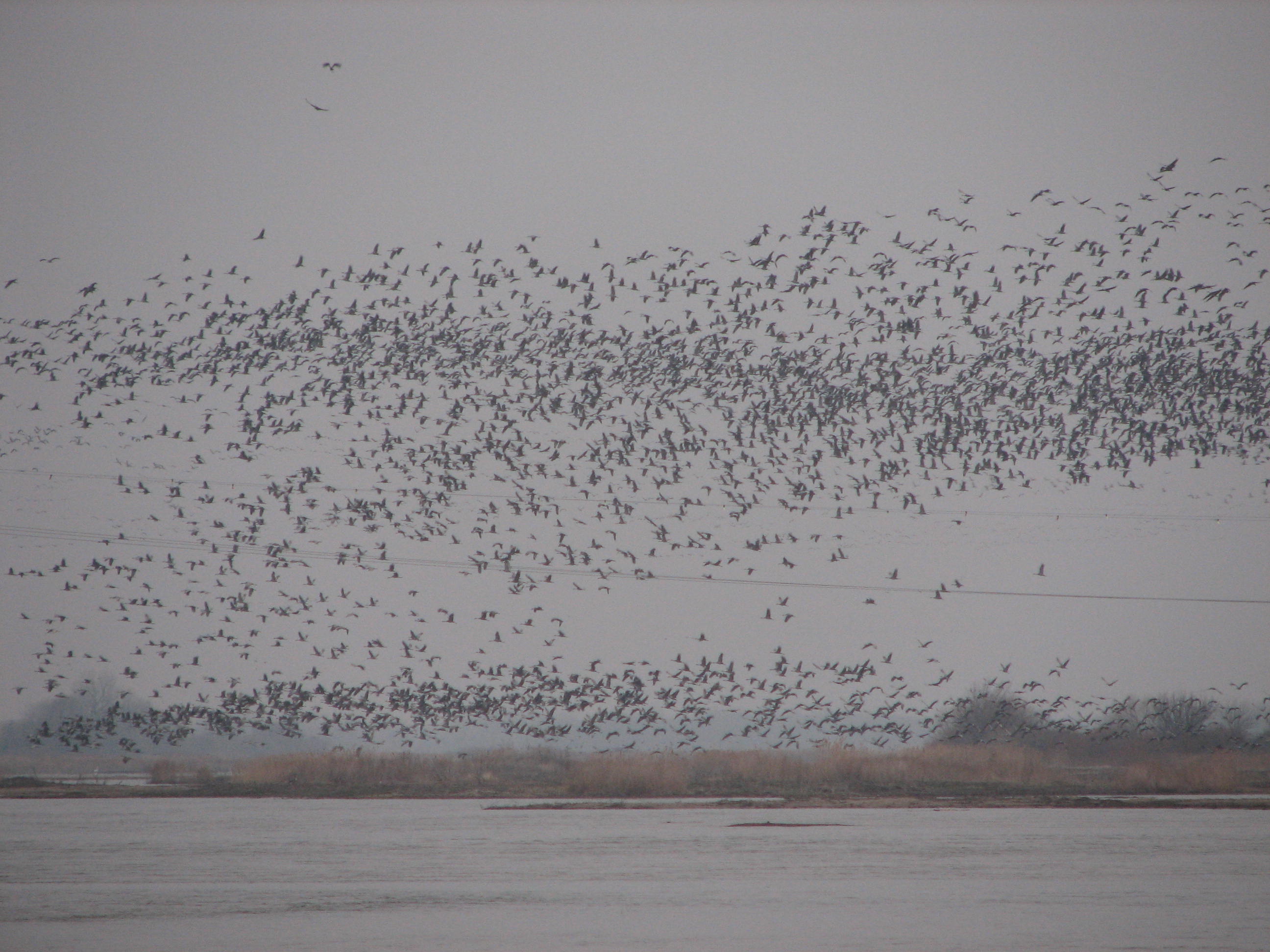
 

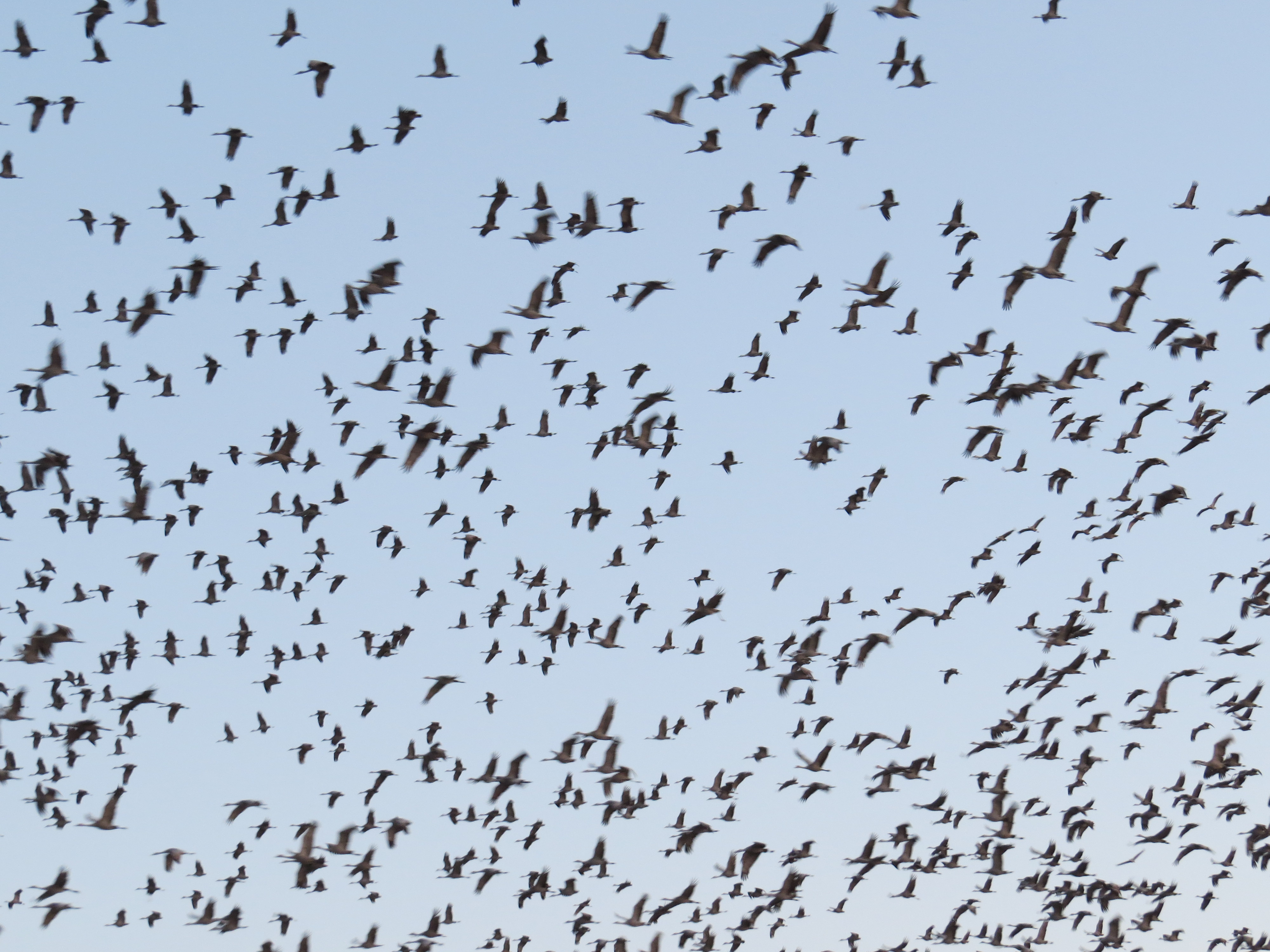
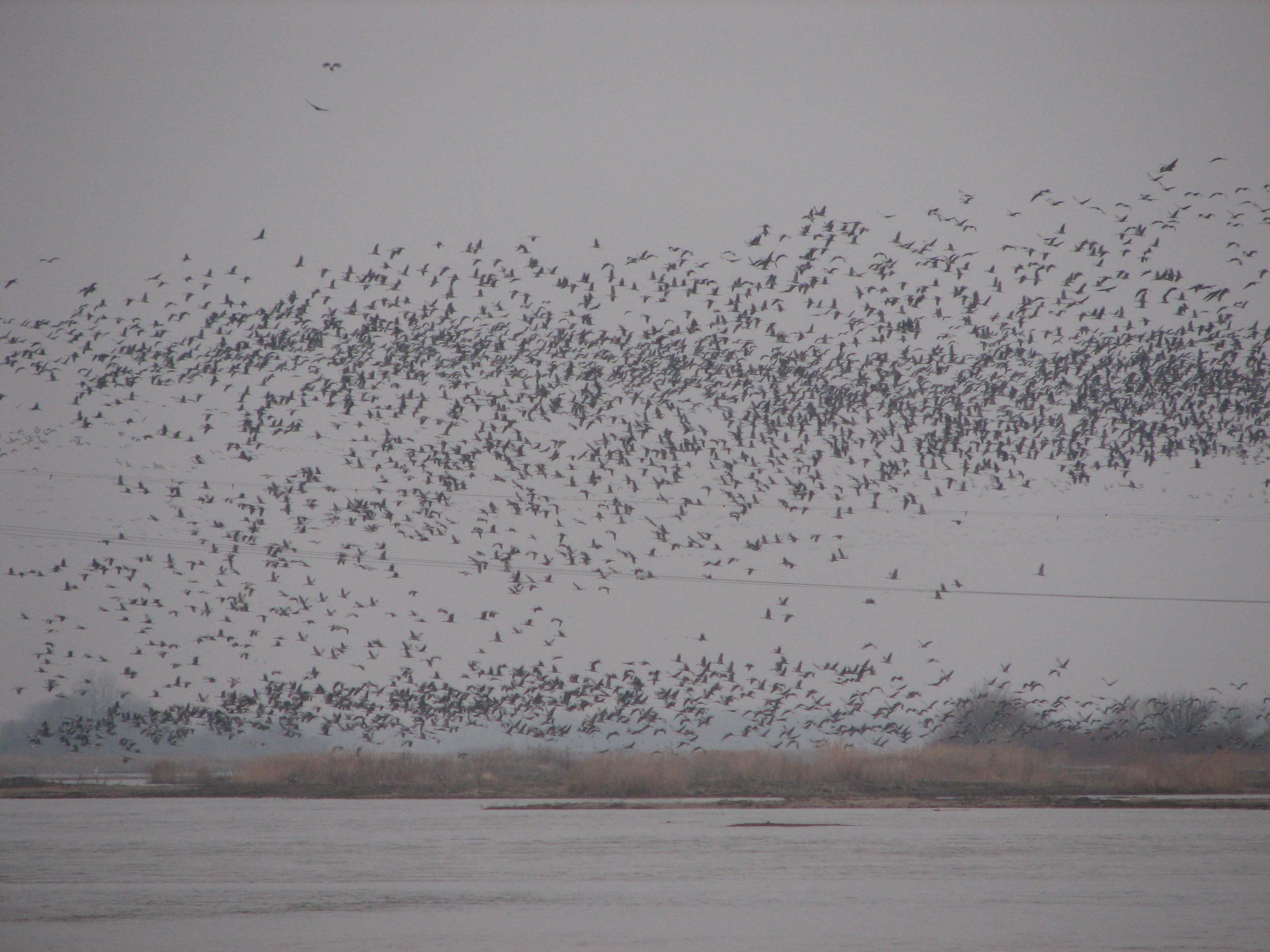
PART OF 20,000 CRANES SEEN OVERHEAD.  ROWE SANCTUARY, 2011
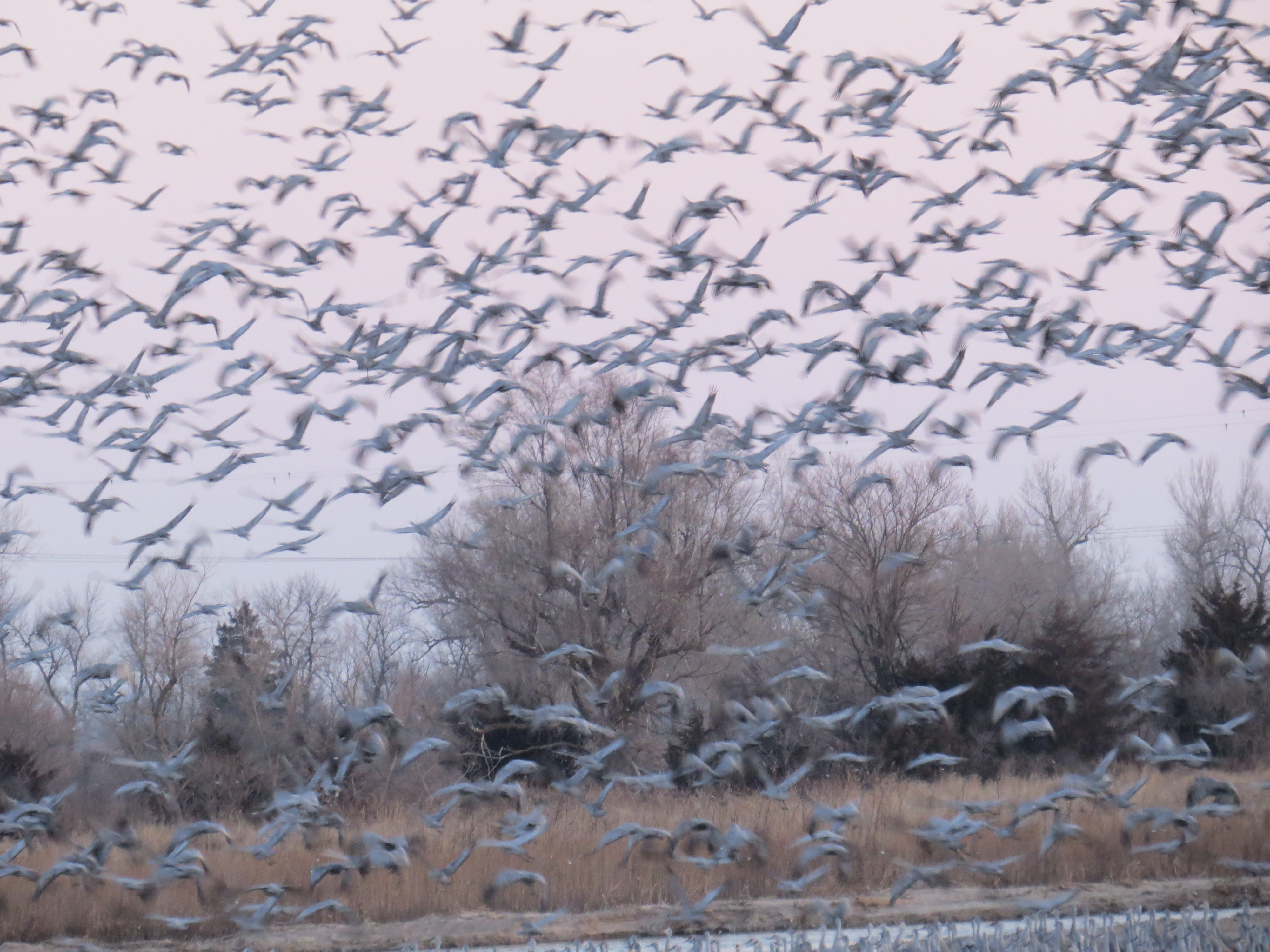
PART OF 20,000 CRANES SEEN OVERHEAD. ROWE SANCTUARY, 2011


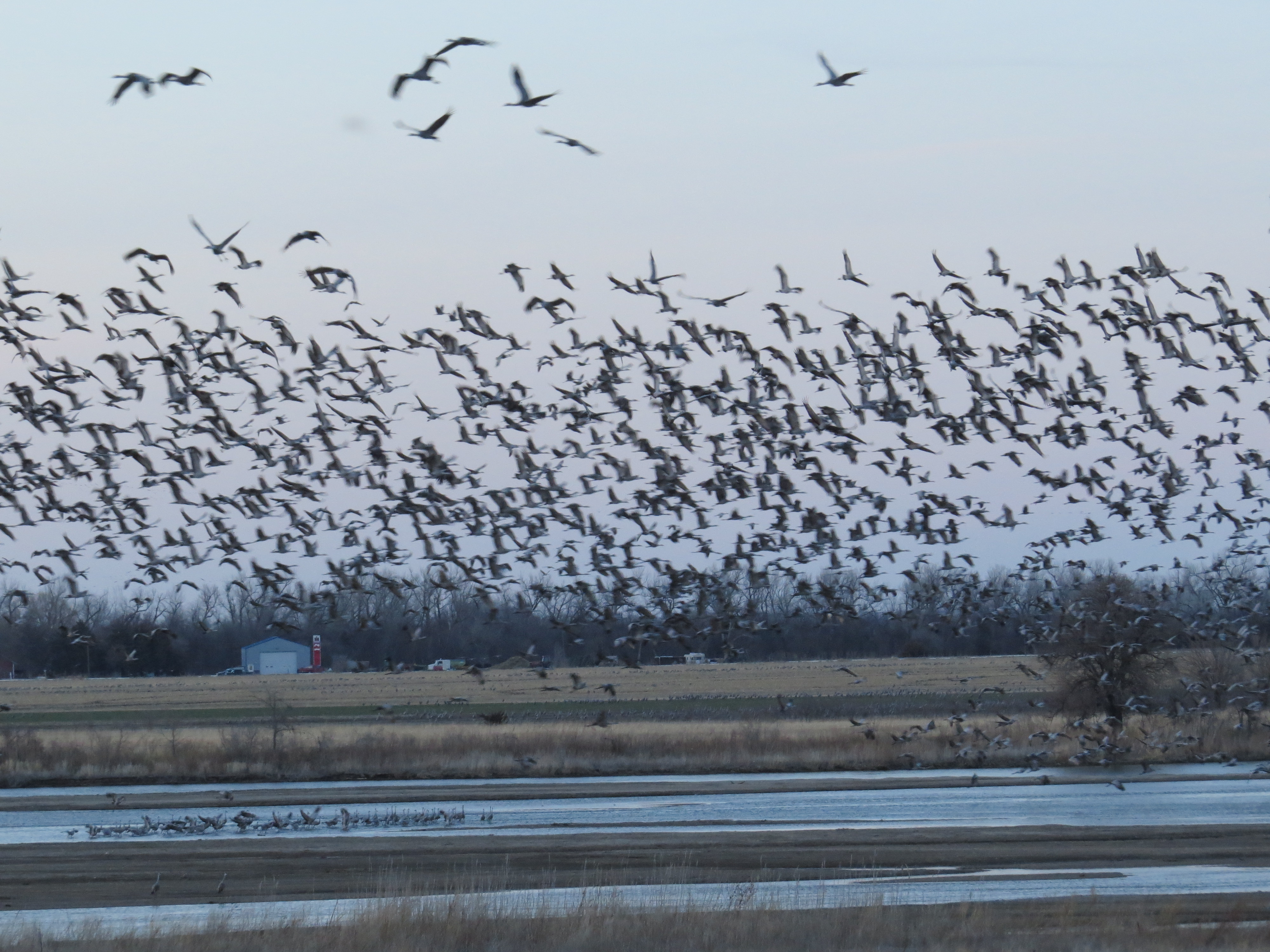
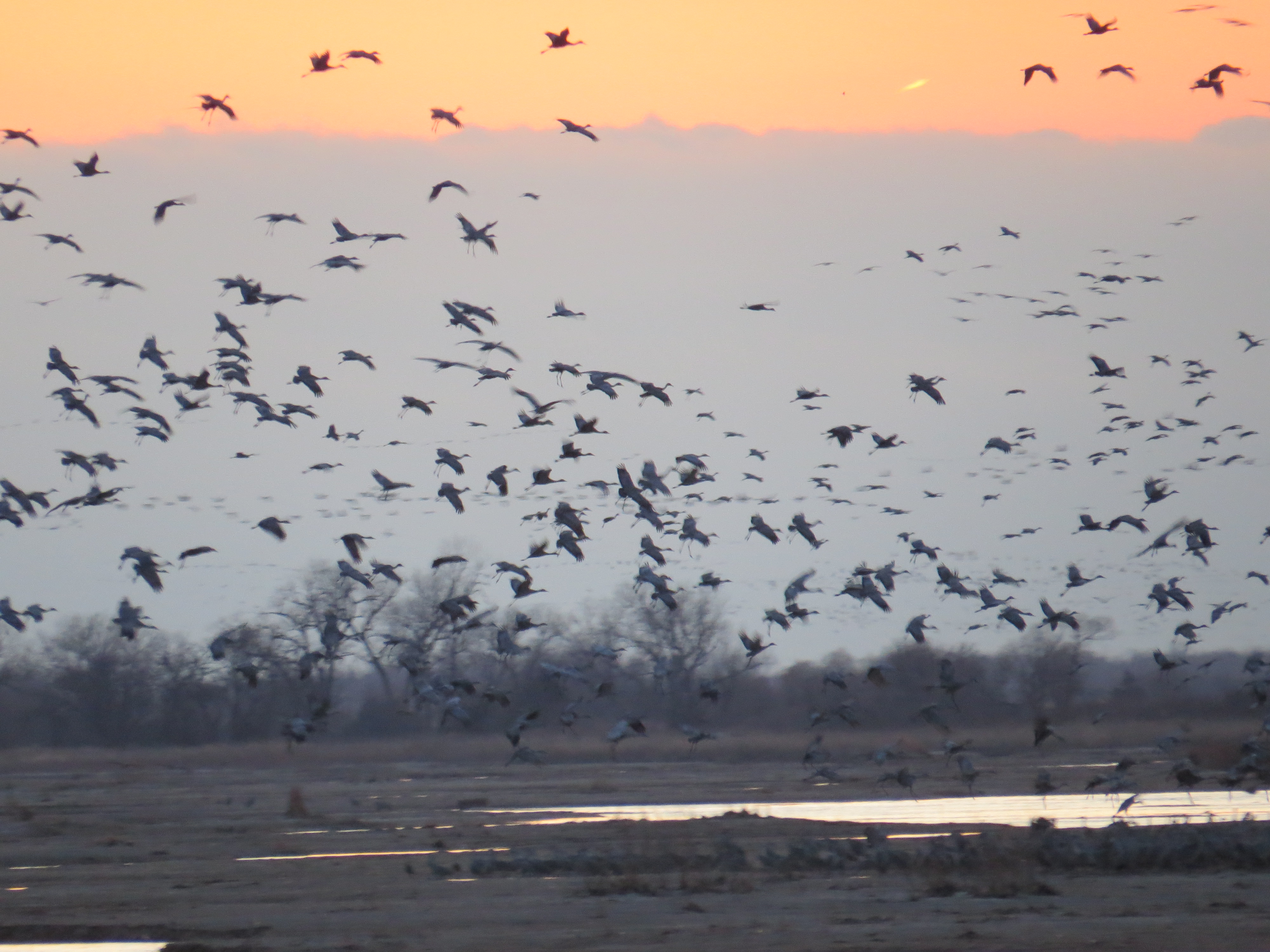
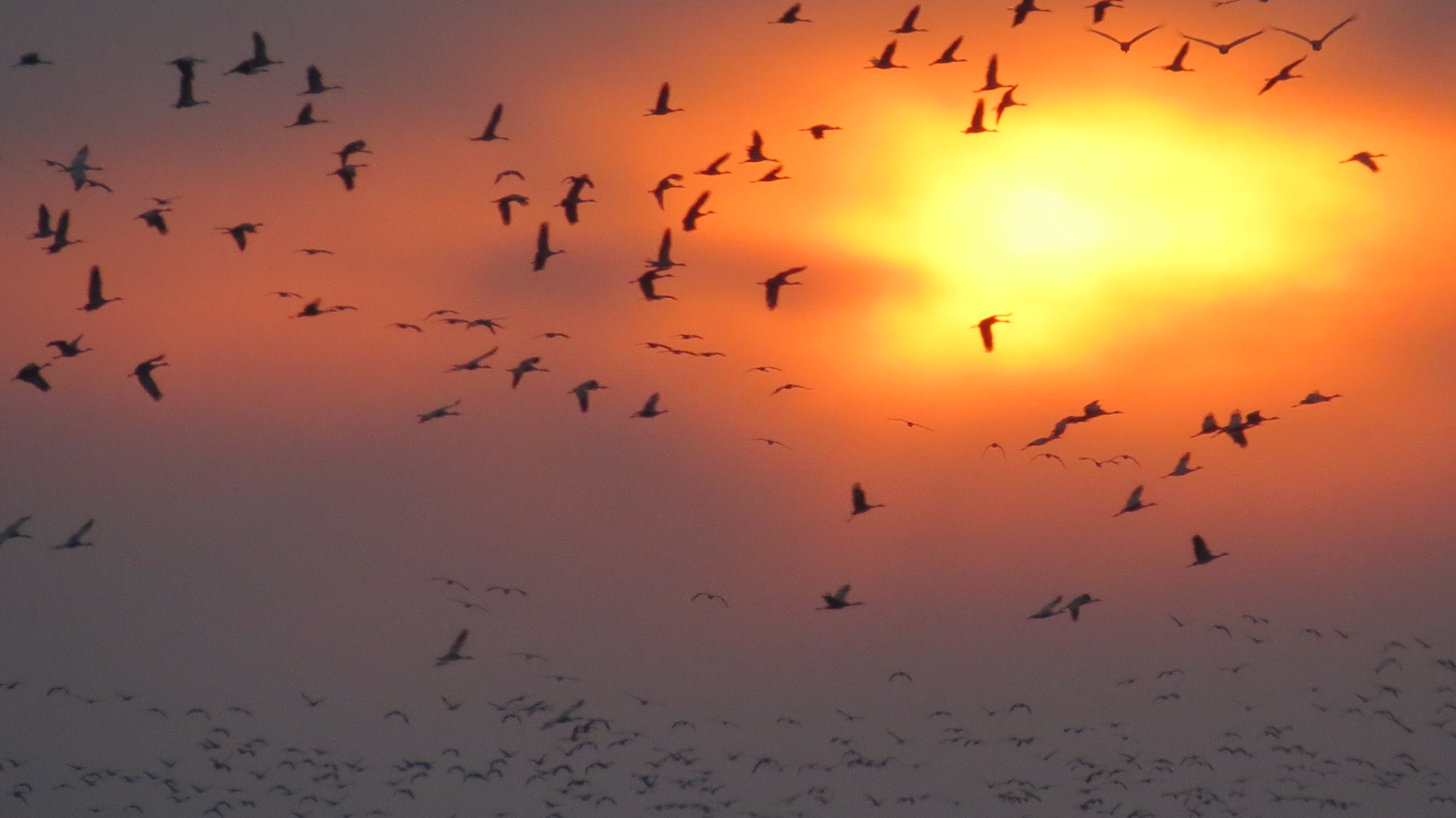
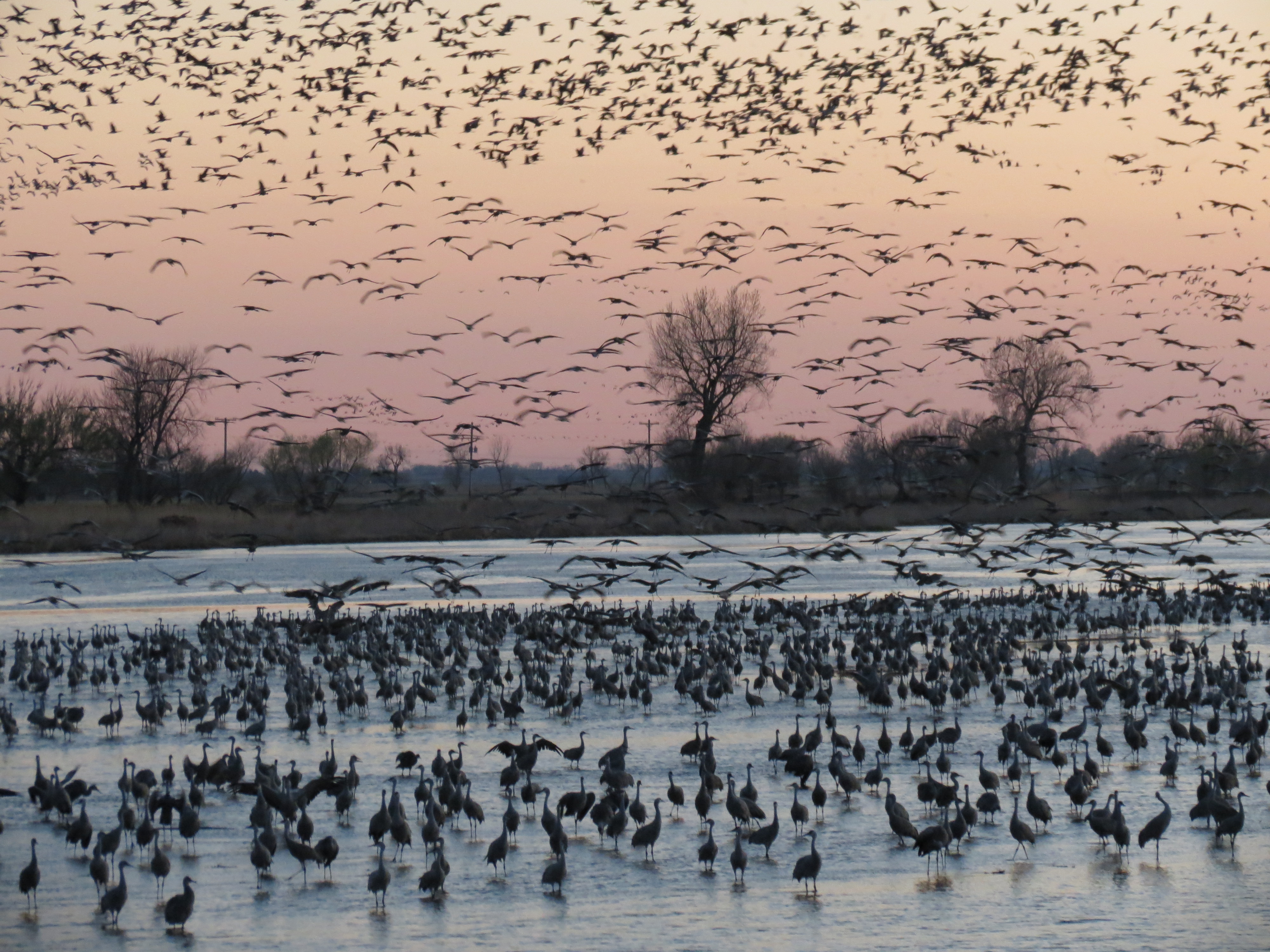
CRANES LANDING AT EVENING, ROWE SANCTUARY, 2014

CRANES LANDING AT EVENING, ROWE SANCTUARY, 2014

When I talk about the birds before we leave for the viewing blinds, I have everybody’s attention.  I am enthusiastic describing the migration, the distances the cranes travel, why they come to the Platte, and that it is one of the great sights of nature.  I am careful not to tell them what to expect, except they will see “cranes, plural.”  I tell them that we are not in control of the view; the cranes are.  I tell them that I’m going to learn something in the blinds:  I will learn about cranes, people, or myself, sometimes one, sometimes all three.


The last night I guide for a season is bittersweet.  I enjoy the trips, but I am physically exhausted.  I get up at 0440, make coffee, spend a little quiet time eating breakfast, for in 30 minutes, all the morning staff at the visitor’s center will be there.  Within an hour, there will be more than 100 people present, 85 of them tourists.  After the morning trip, I may be a roving naturalist, talking to people, I may be cleaning toilets, picking up people who went to the photo blinds, using an ATV, or running errands in Kearney.  I will get lunch and a 10 minute nap, answer questions.  Before I know it, the evening group is there.


My last evening, I was groggy from a longer than usual nap, a sign I was very tired.  When my group appeared for the short drive to Tower Blind, I told each of the 6 cars where we were going, and where we would park.  It is a short drive and a short walk, but I didn’t say much else other than to introduce myself.


When we parked, I let my co-guide talk.  She is a sharp Nebraskan who knows her stuff.  She quickly laid out what the birds were doing, completely in sync with me about what was and was not allowed.  I was beginning to get less groggy, and the evening air, full of the haunting sound of cranes, was starting to energize me: last tour of the year, my 101st time in the blinds. I spent the first four with my father and wife, others alone, in pre-season, when I have been alone with a hundred thousand birds in the vicinity, shivering with the cold and wind that the Nebraska plains throws at one, but also with excitement, too.


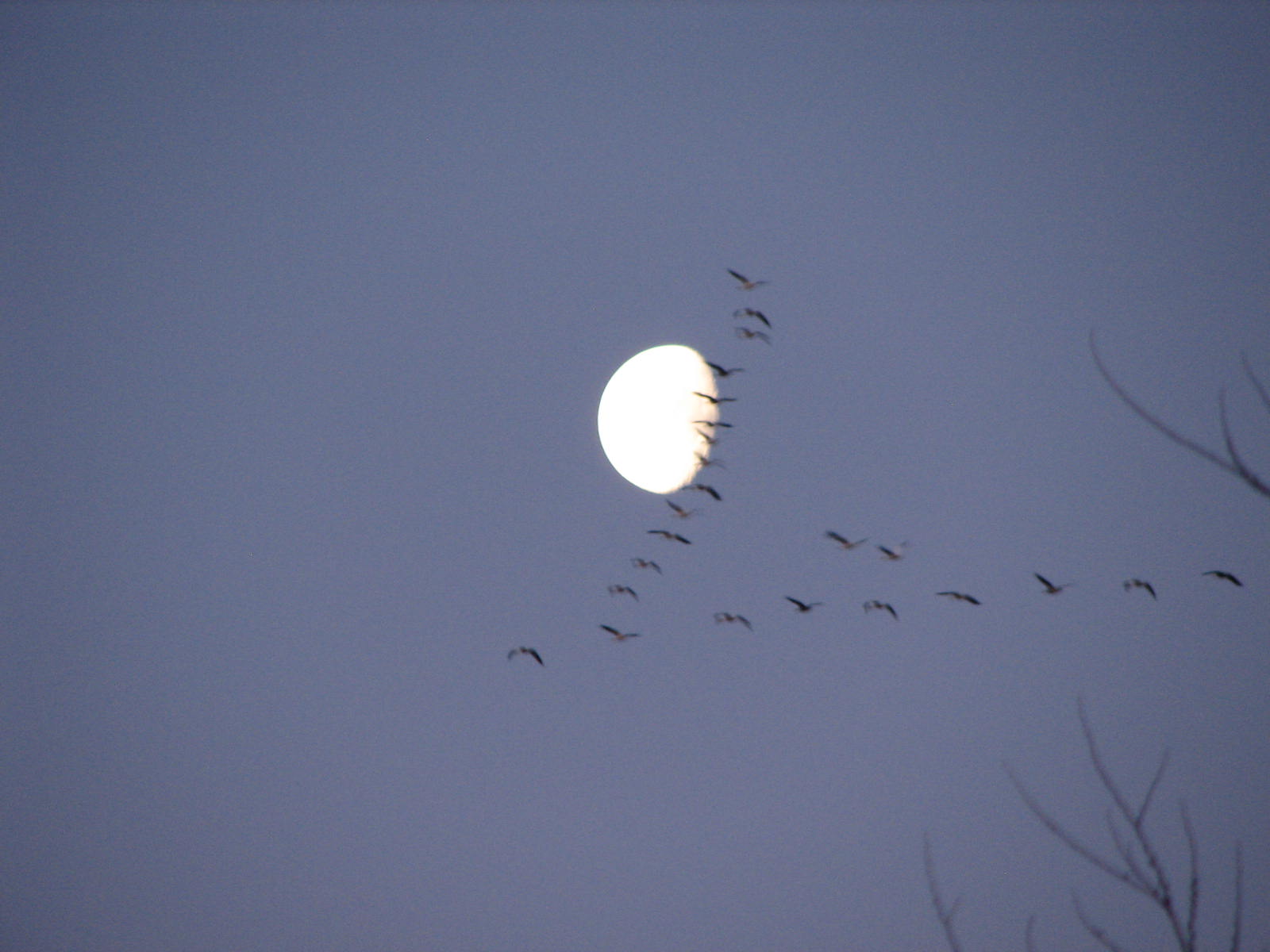
ONE OF MY TRIPS ALONE IN THE BLINDS, FEBRUARY 2010.  "CRANE MOON"

ONE OF MY TRIPS ALONE IN THE BLINDS, FEBRUARY 2010. “CRANE MOON”

We parked and walked 500 yards through a field and woods to 2-story Tower Blind, overlooking the Platte, back from the river, affording a panoramic view the other blinds didn’t.  I had been there three times that week; the other two OK, but spotty for cranes.  I was hopeful, however, for the previous night I was at East Blind, a mile upstream, no cranes landed there, but down near Tower, because of nearby eagles, which spook cranes.  I’m not responsible for the quality of the show, but I want my clients happy.  In any case, I will spend time by the river, see cranes, and I be outside.  That isn’t bad.
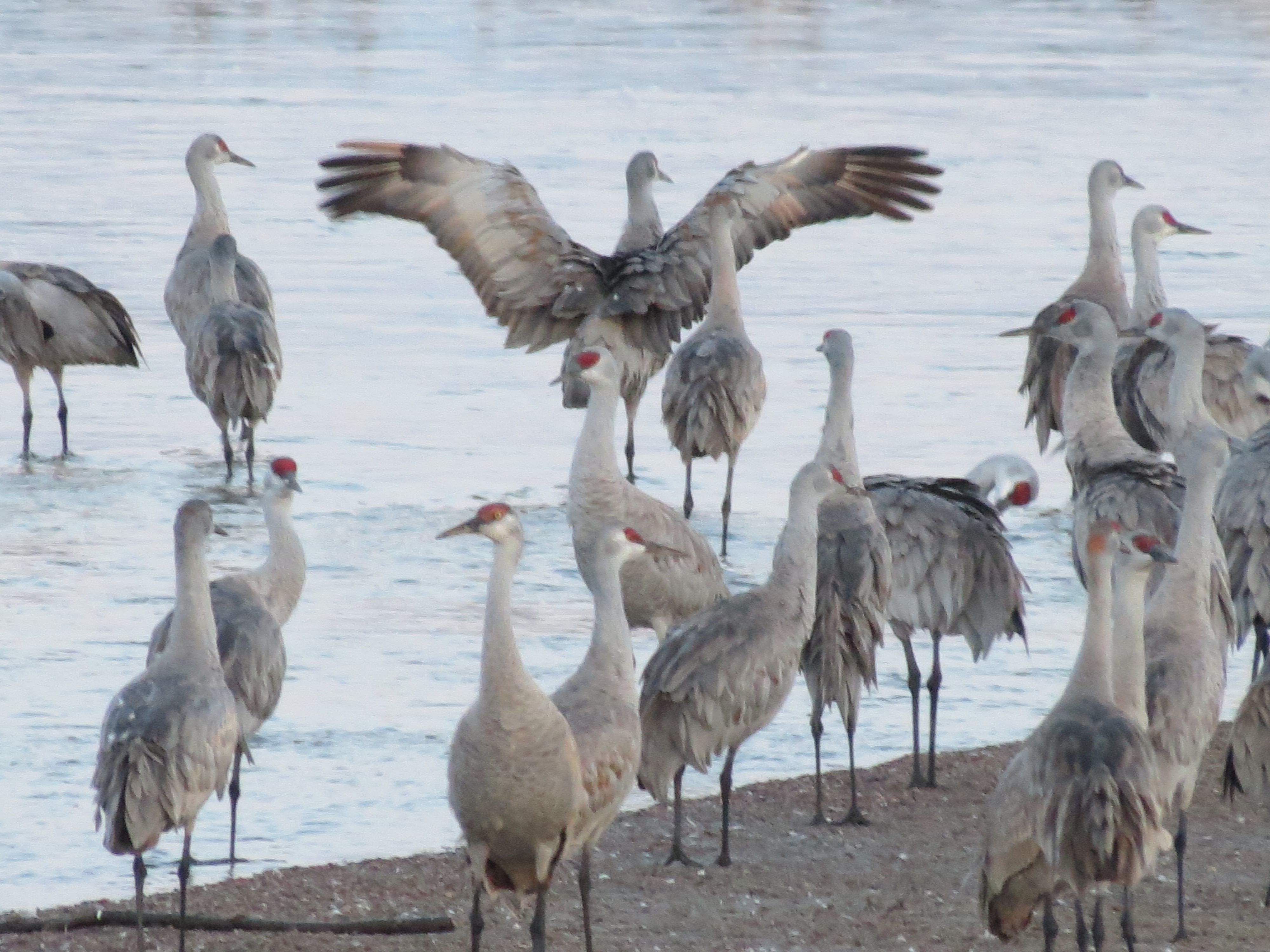
DANCING CRANE. THEY DO THIS TO RELEASE HORMONES.  CRANES HAVE THE SAME NEUROTRANSMITTERS WE HAVE.  LEARNING HAS BEEN PROVEN.

DANCING CRANE. THEY DO THIS TO RELEASE HORMONES. CRANES HAVE THE SAME NEUROTRANSMITTERS WE HAVE. LEARNING HAS BEEN PROVEN.


I had time to point out the flight of the cranes flying in, the group learning the asymmetry, a slow downbeat with a faster upbeat of the wings, so distinctive to these aerodynamically marvelous creatures, who may fly a quarter of a million miles in their lifetime and can, in 4 months, make a nest, lay eggs, incubate them for a month, and have the chicks flying several thousand miles south.  I found myself poetic that night, calling cranes “other nations, with senses, abilities, and feelings we will never have, experiences we will never share, and a language we can only begin to understand.”  I was getting people interested, and with cranes flying overhead, I am in my element.  I was getting energized.
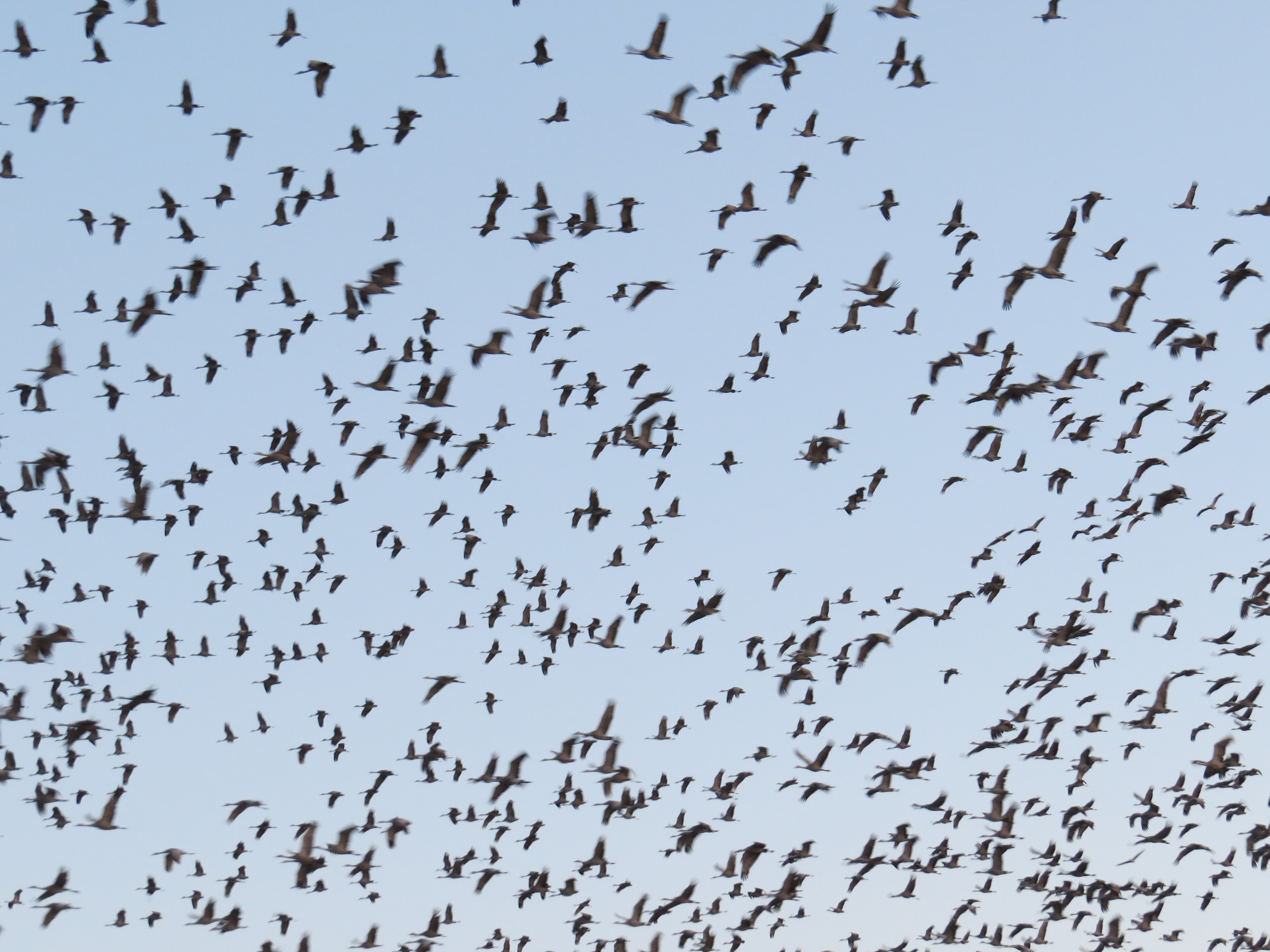
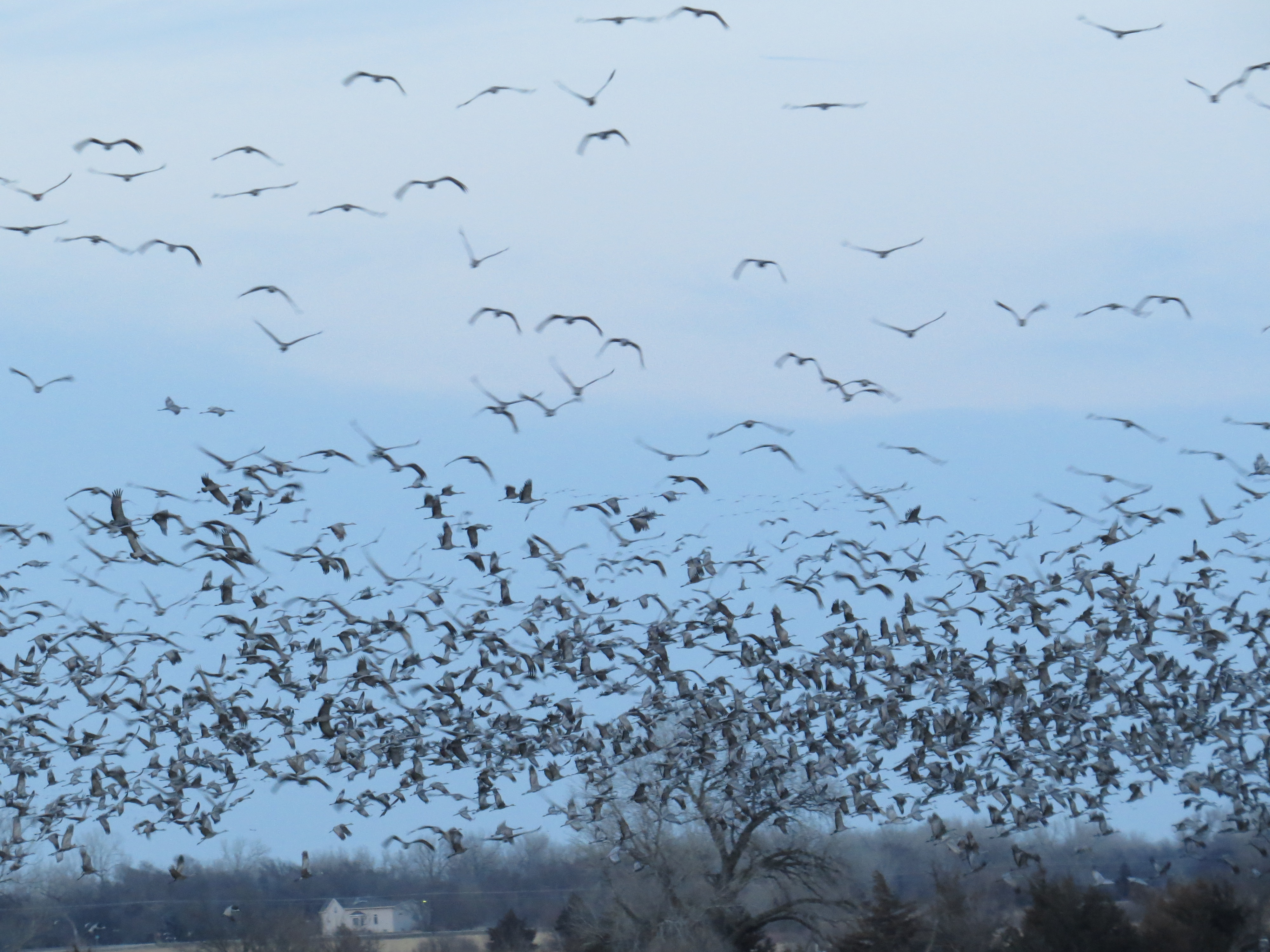
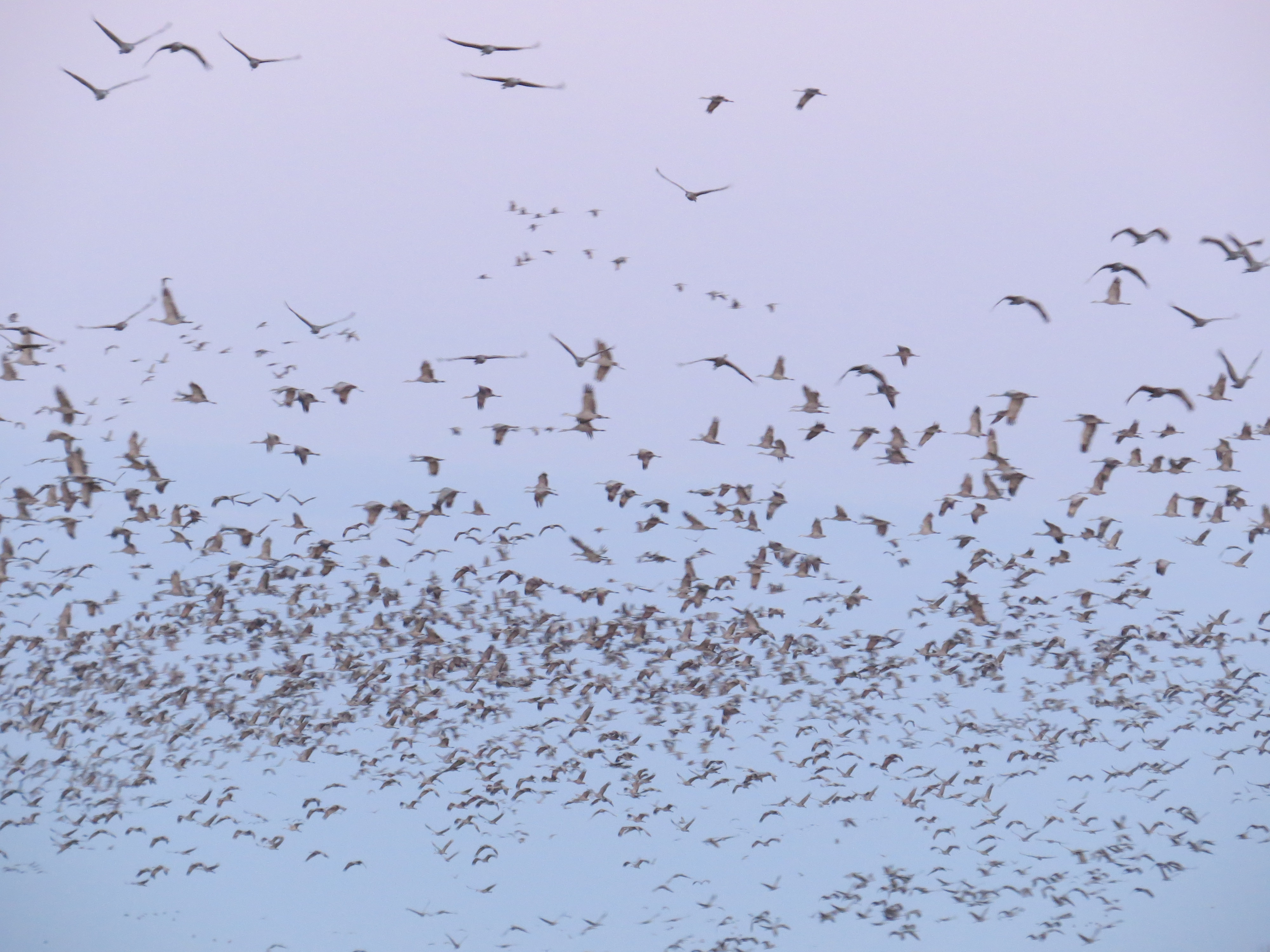
CRANES OVERHEAD. THIS IS LIMITED ONLY BY THE CAMERA'S VIEWFINDER

CRANES OVERHEAD. THIS IS LIMITED ONLY BY THE CAMERA’S VIEWFINDER


“Mike, turn down your voice.  They’re on the river.”  My co-guide, more observant than her talkative partner, had noted the first birds landing at 7:25, 30 minutes earlier than I had seen all week,  I shut up and let nature put on the show.
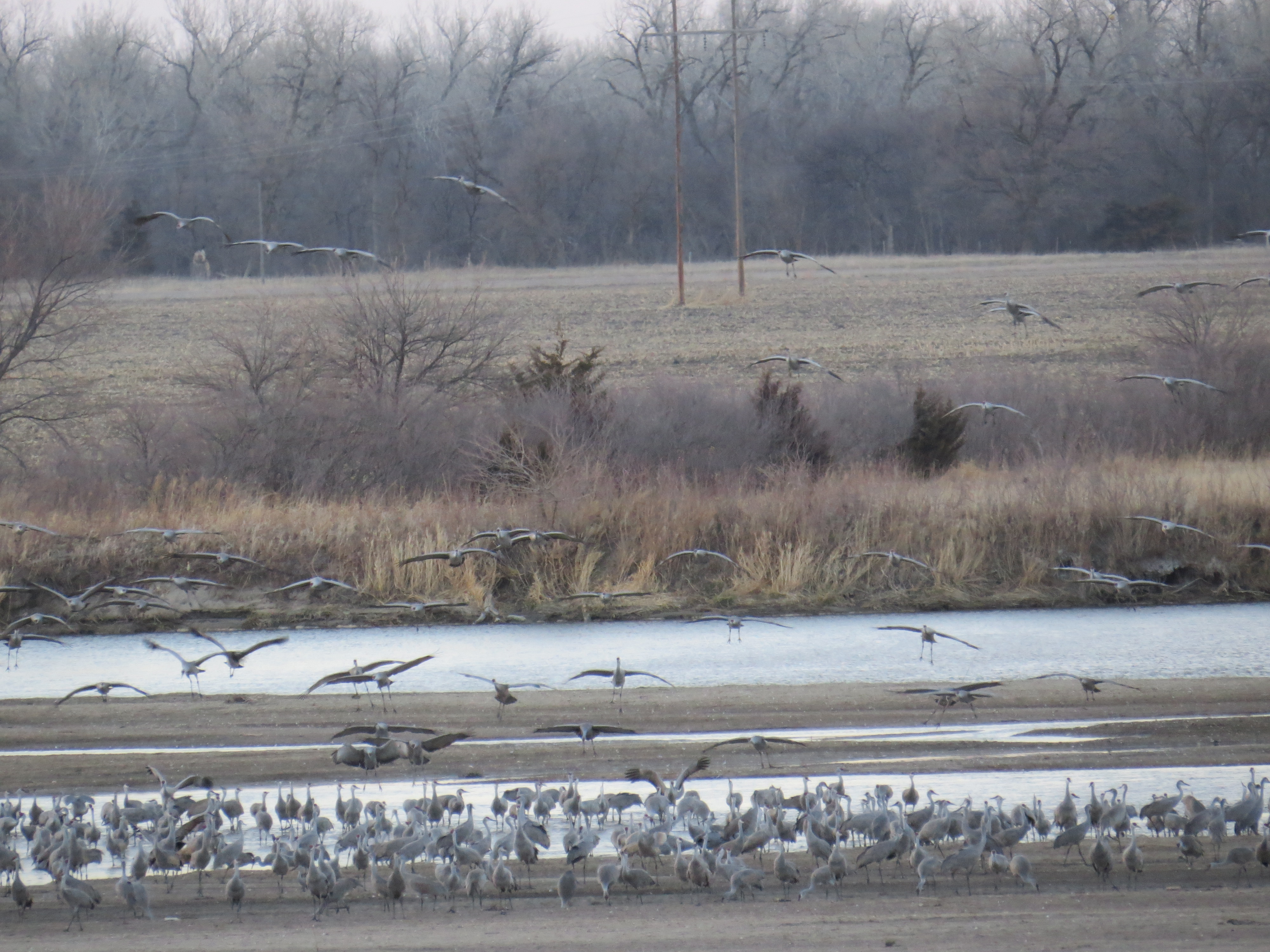
CRANES LANDING, FROM TOWER BLIND, 2014

CRANES LANDING, FROM TOWER BLIND, 2014


The birds arrived in enormous numbers, clumped in gray islands on the river, each with thousands of cranes, from the Gibbon Bridge to well upstream of us.  Twice, they flew off, perhaps spooked by an eagle.  That’s common morning behavior; to see it at night is special.  There were cranes everywhere, the noise, echoing across 9 million years cranes have graced the Earth, was essential to the visual show.  Like the loon, the call of the crane is every bit as important to the experience.
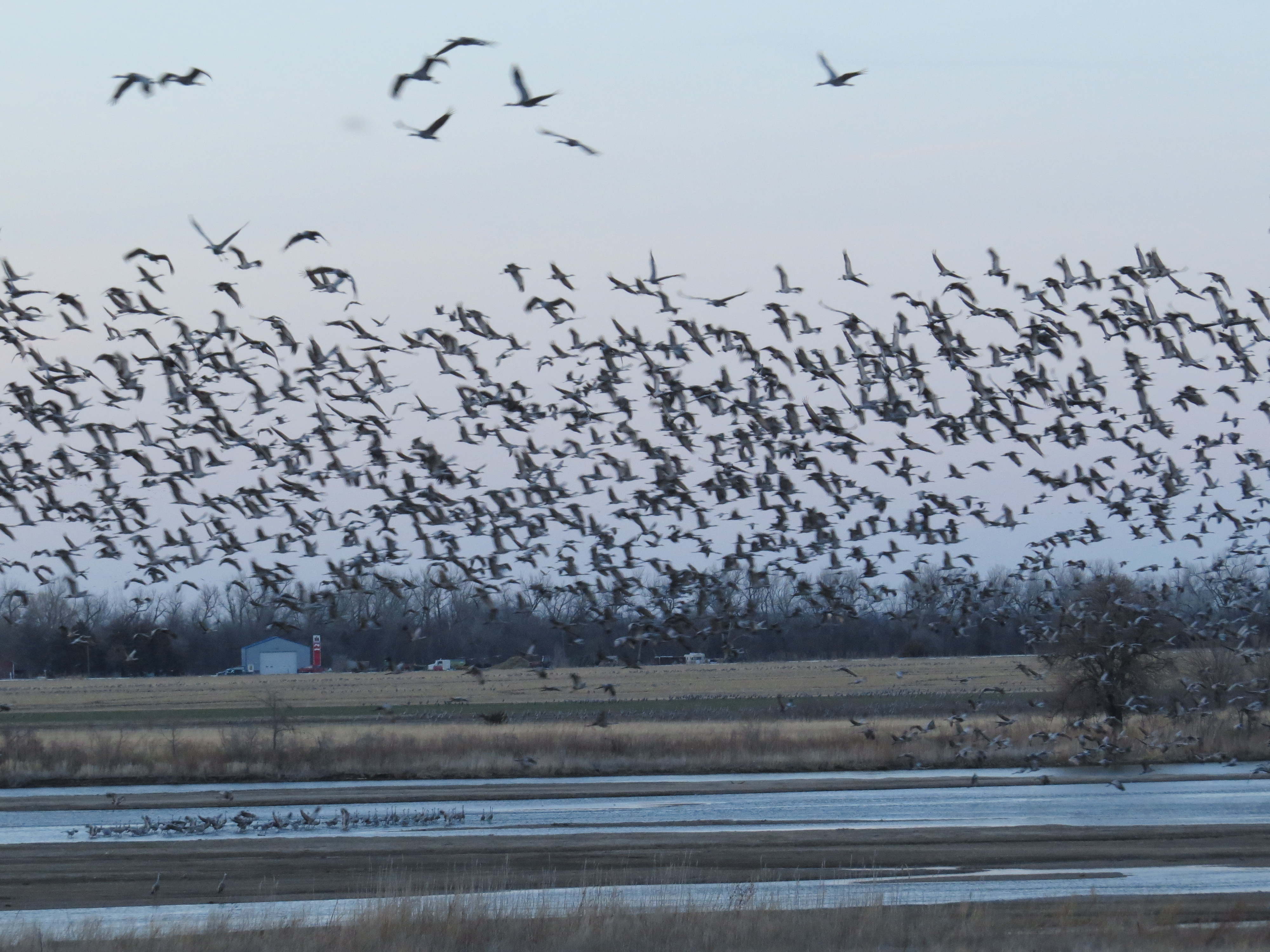
ENORMOUS NUMBERS.  I HAVE SEEN FAR MORE, BUT I NEVER TELL THE CLIENTS THAT.  THIS IS WHAT I CONSIDER "A GOOD NIGHT".

ENORMOUS NUMBERS. I HAVE SEEN FAR MORE, BUT I NEVER TELL THE CLIENTS THAT. THIS IS WHAT I CONSIDER “A GOOD NIGHT”.

When dark, we quietly left the blind, walking to the vehicles.  I was in the rear with a couple my age, discussing the show.  They were thrilled, asking me what I once did.  I told them I once practiced neurology, and they discussed their aging parents, 90 and 87, the same age as mine, when they died.  Their parents were demented; when I mentioned how I hoped might volunteer, not just to show people the beauty of life, but to give others help for the decision making how to die, the man said, “You’re preaching to the choir.”  We were almost back to the vehicles, when his wife said they were here for a respite from their caregiving.  Their gratitude for both the show and what came after on the walk was palpable.


The couple has a long road ahead of them, like the cranes. The road will not be easy for both;  one in twelve cranes will not return in 2015.  But the couple had seen something remarkable, life and hope, saw it together, glad they came, knowing they had a special memory to fall back upon during the hard times ahead.


I don’t usually say that a blind is “The best I’ve ever seen it,” to clients. But I said it about Tower that night. Paul Johnsgard’s “special conjunction of spring, the river, and a bird” mirrored my conjunction of learning about myself, others, and Sandhill cranes.


Godspeed to the cranes, on their way north, far from the Platte Valley, for it is time they must go.  Godspeed to the parents of the couple, on their way out of a long life, for it is time they, too, must go.  In the past, I helped many leave life with dignity; today, I helped others see the cranes on their way north to create new life.


I couldn’t have asked for a better ending to my guiding season.
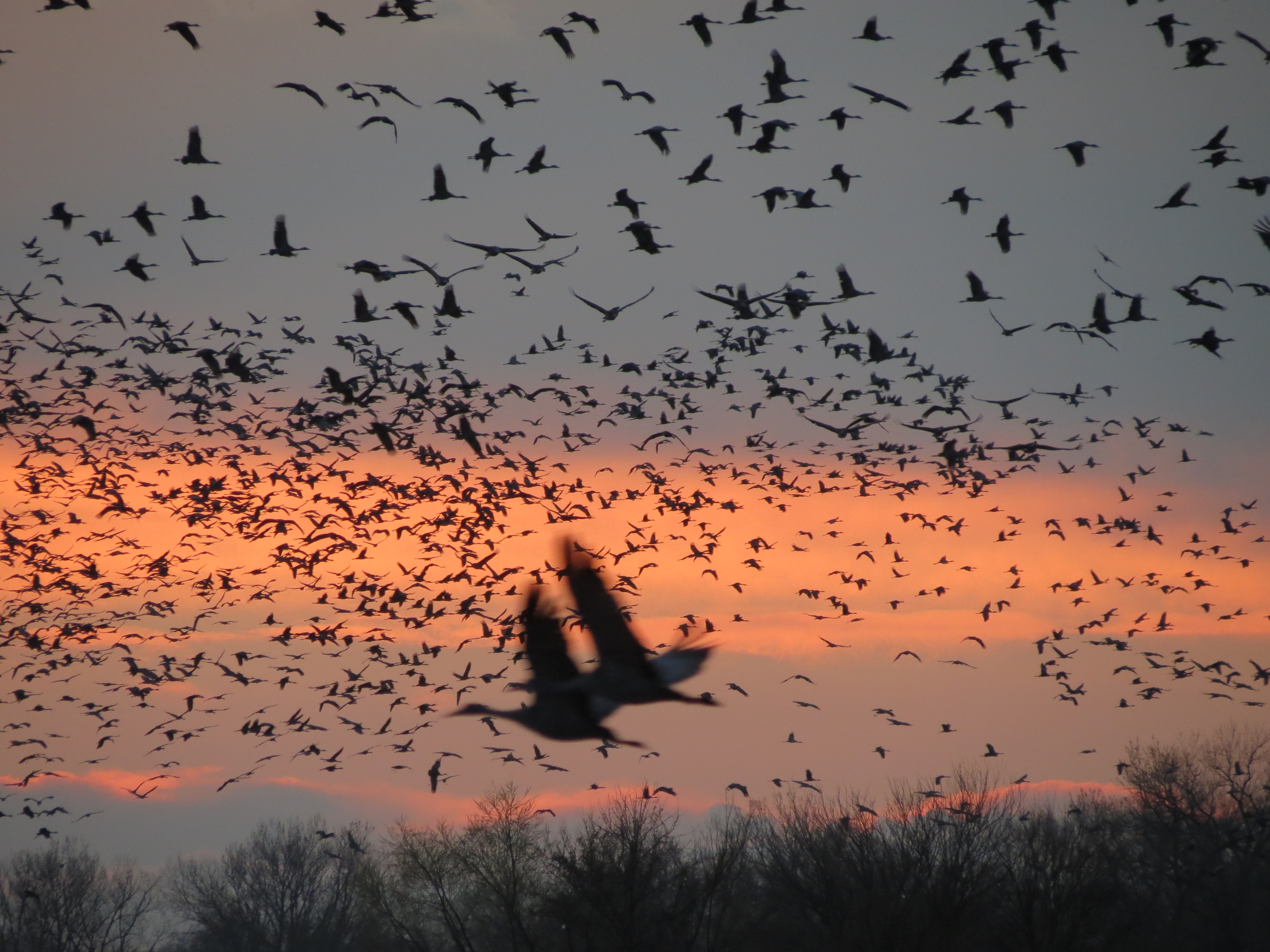
 

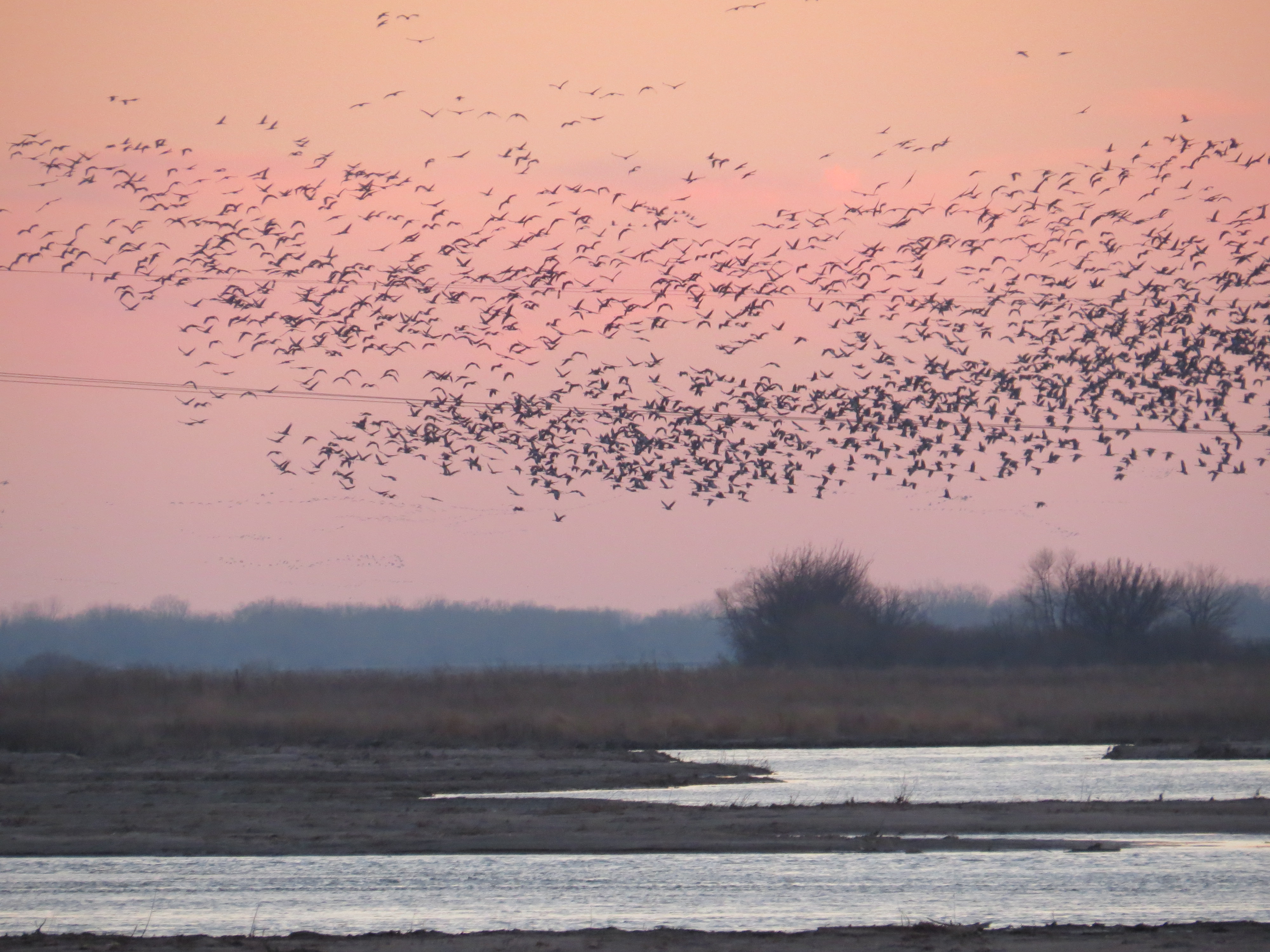
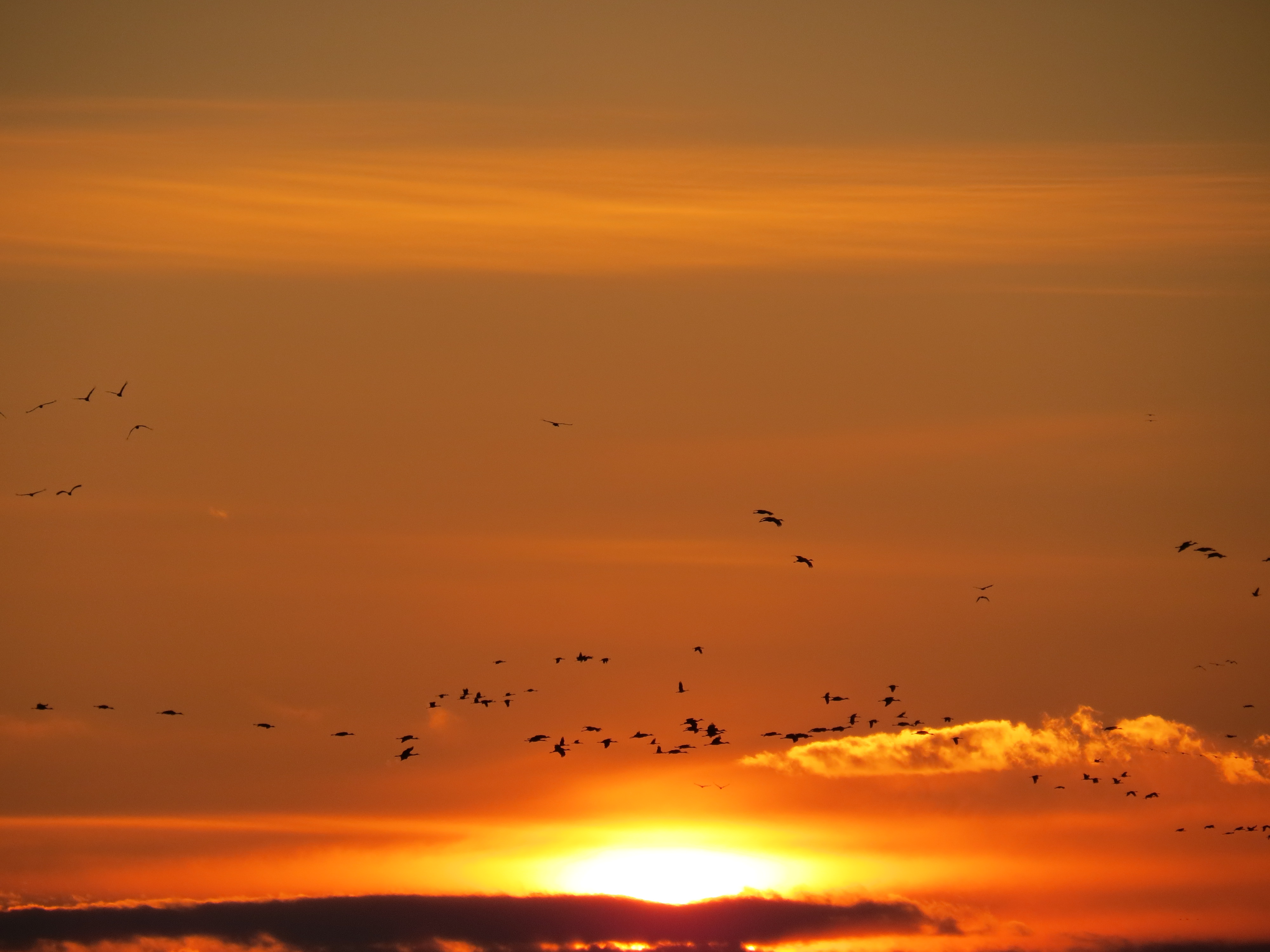
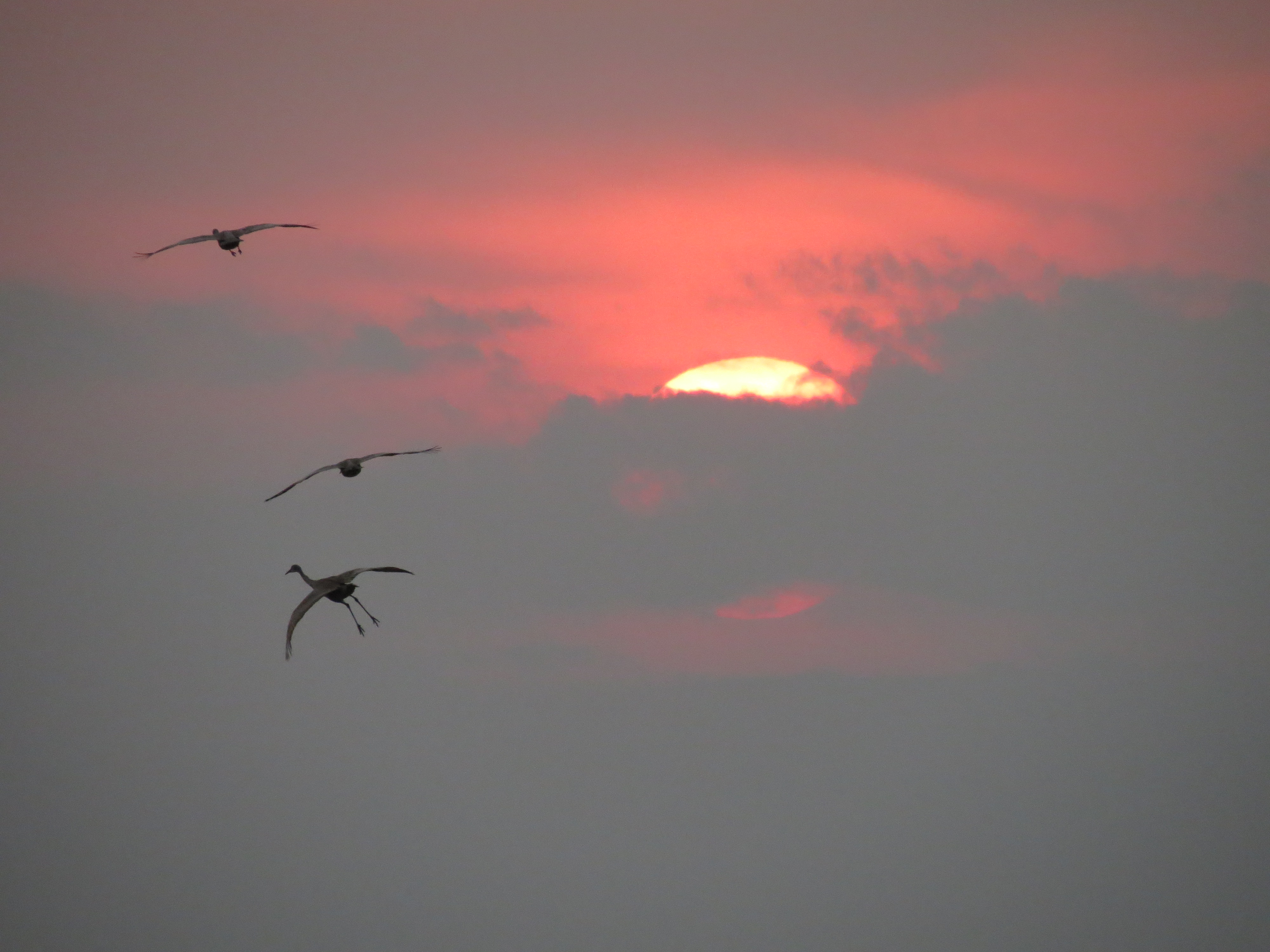
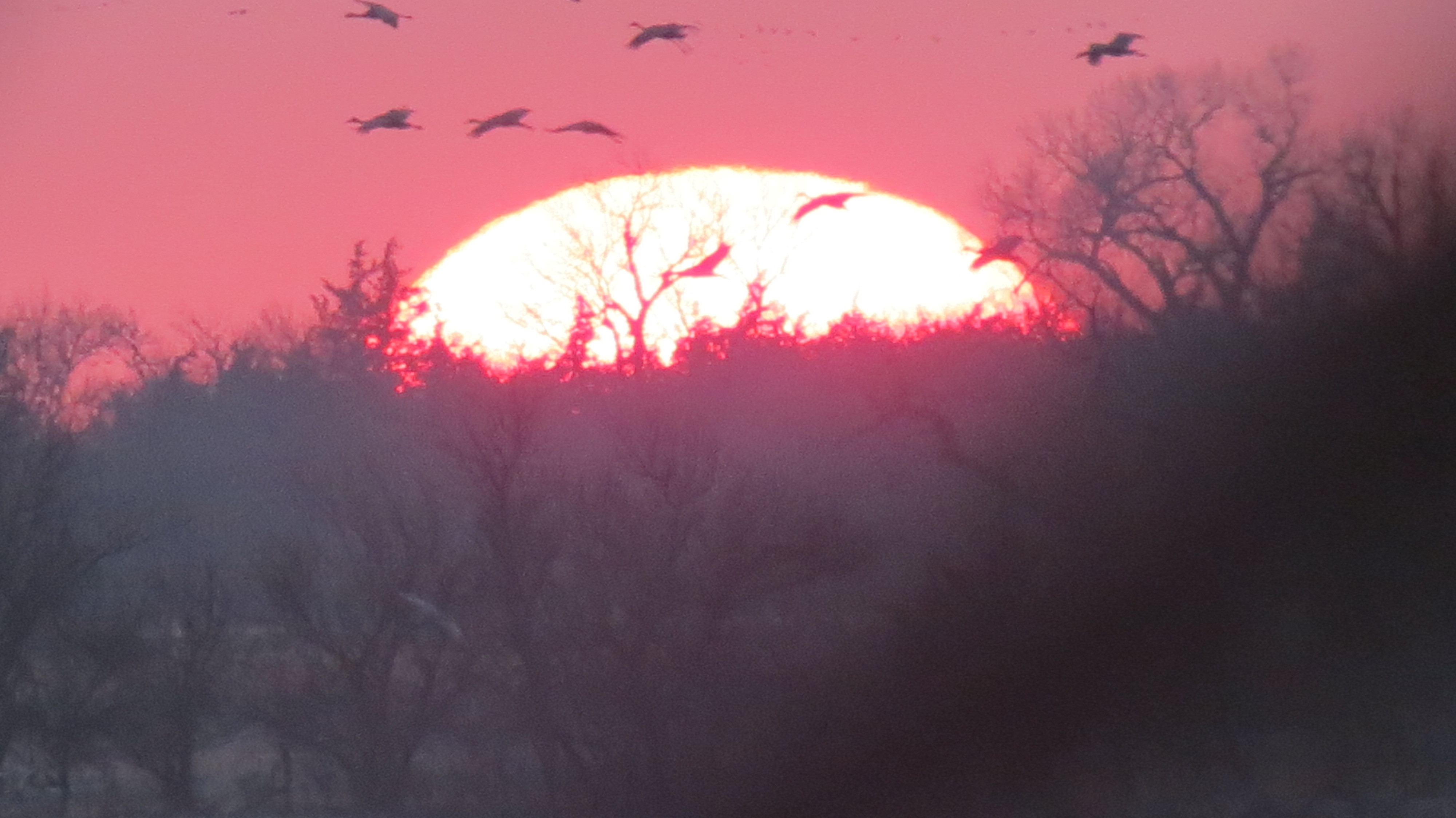
NEBRASKA SUNSET AND CRANES.  ROWE SANCTUARY.
NEBRASKA SUNSET AND CRANES. ROWE SANCTUARY.
BREAKING SOME OF THE RULES

March 31, 2014

I guide visitors to see the Sandhill Cranes in Nebraska, where in March evenings, they come to the Platte River in extraordinary numbers, leaving for the fields the following morning.  The birds are unable to perch, so they live on the ground, in the air, or in the water.  The latter acts as an alarm system, so no predator may get close to them.  The Platte, one of the most maligned rivers in US history, is perfect habitat, because it is shallow, with many channels, a braided river.

Cranes in the air.  This is a common sight in the morning or evening.

Cranes in the air. This is a common sight in the morning or evening.


I’ve guided for 5 years, and the rules for taking people to the blinds are strict.  Noise must be kept to a minimum.  I tell people if they can’t whisper, that is fine, just don’t talk.  Camera flashes are taped down in spite of “it’s turned off.”  That phrase is like “he never did that before,” when a person’s dog bites you.  The difference is whereas biting bothers me, a flash can spook ten thousand cranes into the sky, some injuring themselves fatally.  We also tape over the laser sensor, since that emits light, and at infinity focus, it isn’t necessary.  Nearly all are pleasantly compliant.  We put post-its over the display screen, to limit light reflection off one’s face out to the river.  We have strict rules about camera equipment.  We don’t allow automatic multiple exposures, for the sound detracts from the experience of hearing tens of thousands of cranes closeby.

Platte Sunset.  The river and sky are a mass of cranes.

Platte Sunset. The river and sky are a mass of cranes.


Yes, we are paranoid.  We walk out in groups with one guide’s leading and the other’s trailing.  We limit noise in the blind.  I tell client medical emergencies and their safety are my top priority, but when it comes to inconvenience, such as being cold, hungry, or bored (crane viewing isn’t for everybody), we stay put until such time as we may safely leave.  People may not leave when they choose.

Viewing Jamalee Blind from Stevie. These are memorials to Dr. Jamalee Fenimore and Stephne (Stevie) Staples.

Viewing Jamalee Blind from Stevie. These are memorials to Dr. Jamalee Fenimore and Stephne (Stevie) Staples.  There are 38 people in Jamalee, which is much larger than seen here.


We accommodate those with disabilities.  I took a man with significant Parkinson’s by golf cart to a viewing blind.  The carts are quiet, and the man had a set of photography equipment as advanced as anybody’s I’ve seen.  I helped him carry his equipment into the blind, and when the light was right, he set it up himself, quietly. He took his pictures and told me later, on the way back, it took him 26 years to finally get a sequence of crane dancing correct.  It hangs in the visitor’s center at Rowe.


We allow golf carts to two of the five blinds; the third one, East, does NOT allow for golf cart transport.  It is too exposed in the morning and the path too bumpy to make golf cart transport easy.  The other two blinds are near each other, so we can do multiple trips if necessary.


I sleep on the floor in the visitor’s center, awake at 4:40 seeing to what blind I am assigned.  I found I was going to East but we had two people needing a golf cart.  This was a mistake and a problem.  I discussed the matter with one staff member at 5:15.  She was concerned, too, and we thought about moving people from one blind to another.  That wasn’t going to work.  Another staff member made what I call a “command decision.”  I would take one man in a golf cart to East, parking it some distance from the blind.  This was breaking a rule, but we felt the situation called for it. I thought the solution good; I would quietly lead the group out in the cart, my co-guide keeping everybody behind me together.


East often didn’t have “good cranes,” as we guides call it, because some left very early in the morning, not allowing for pictures.  Indeed, the prior day, the guides got there too late for the “blow off,” which occurs if all cranes leave at once, such as being spooked by an eagle, a coyote, a dog, or some loud noise.  I heard that story, so I kept my morning briefing in the center…..brief.  It gets light in Nebraska early by late March, and I was in a hurry.  As my group entered, I taped all the cameras appropriately, explaining my reasons.  I told them this was the proper time to use the toilets in the center, so they would be ready to leave when I was.

Cranes at Sunset, North Blind, across the River.  They often secondarily stage (land) in the field here, coming in from several miles away from the river, where they fed on waste corn during the day.

Cranes at Sunset, North Blind, across the River. They often secondarily stage (land) in the field here, coming in from several miles away from the river, where they fed on waste corn during the day.

I told the group what the birds were, where they were coming from, migrating up to 7000 miles (one way).  They were feeding and putting on fat for the trip north, where they would build nests near Great Slave Lake; Bettles, Alaska; Siberia;  the Hudson Bay watershed.  I’ve seen cranes north of the Arctic Circle.  I told the 30 there it was one of the great sights in nature, one of Jane Goodall’s top ten, one of my top four.  I told them I was a volunteer, and I wanted them to have a wonderful time.

Then I told them the “don’t”s, including keeping body and camera parts inside the blind.

I didn’t ask for questions. I said we would talk in the blind later.  Some guides go into great depth.  I do, too, in the evening, when we have time.  In the morning, I want to reach the blinds early.  So do the clients, too.


Then we left, and I took the man needing the golf cart, the rest of the group in tow.  On the way out, the man told me he had leukemia and had just finished chemotherapy.  He wanted to see the cranes this year, even a few.  He hoped he would be back again.  I did, too, but leukemia is leukemia.  Then again, at my age, I start talking in terms of “if I am still around.”  This man may not be, and we both knew it.

East Blind was great. Cranes were on the river right out in front of it.  Ten minutes later, they all blew off into the orange sky of a Nebraska sunrise.  The man saw it.

In order to take a man with leukemia to East blind, I’ll bend the rules.  Had he asked to use a flash, I would have said no.

I hope he’s back again and again.  We’ll just be sure if he needs a cart, he goes to the other two blinds.

IMG_0402 IMG_0397 IMG_0399 IMG_0400


Crane sunset.

Crane sunset.

IMG_0137

Sky dark with cranes

Sky dark with cranes

PAGE 107

March 31, 2014

Despite difficulties with the Affordable Health Care Act, I have had no problem with Medicare, “big government” medicine.  I have, however, had problems with one private insurance company.  I will call it “X,” to avoid any semblance of libel, although I am not telling an untruth.  Part D was enacted by the Bush administration, and while a step forward, I expected perfection, since Bush was a Republican.  I did not expect a “doughnut hole,” cost overruns, and failure to negotiate with pharmaceutical companies.

Anyway, I signed up online with X and a local pharmacy for my two prescription medications.  I used my Arizona address, because at the time I lived there. I soon discovered that I got what I paid for.

I take Drug “A,” 2 mg, 2 pills twice a day, 240 mg monthly.  Drug A has 3 sizes:  2, 5, and 10 mg.  Representatives from company X told me that Medicare regulations limited the number of pills per month to 90, in order to prevent falls, a potential side effect.  This restriction was not true, I later learned.  Rather than to ask my physician for an emergency authorization to take my usual dosage, I procured a prescription for 5 mg, 60 a month, although I needed to take my daily dosage in a different fashion.  It wasn’t ideal, but I could live with it.  Notice that I could take 300 mg a month.  That was a tipoff that Medicare restrictions were not the issue, private business restrictions were.

I called a special number to X and had a 3-way conversation with their clinical pharmacist and their sales representative.  I had no problem with Medicare’s restriction; I did have an issue with the monthly allowed dose, which made no sense.  Knowing the answer, I asked my next question:  How many 10 mg pills may I take a month?  They both answered: “120”.

I continued:  “So, I can’t take 120 pills of the 2 mg dosage a month, or a total monthly dosage of 240 mg, right?”  They agreed.

“But,” I continued, “I can take 120 pills of the 10 mg dosage a month, 1200 mg total, 6 2/3 times the allowed 2 mg dosage, right?”  I teach high school math; I knew this stuff when I was about 6.

There was sudden silence on the line, then, “we need to talk to our supervisors.”  In other words, apparently somebody at X realized the restriction of dosage for the smaller amount did not obviate the issue of prescribing a larger number of pills for the larger dosage.

That is Part 1.  On 7 March, I went to the pharmacy to get my prescription, only to be told I had been “disenrolled” from X on 28 February.  No reason was given.  Nobody at X answered the telephone on the weekend, so now I was without Part D coverage.  Suppose I were 75, on chemotherapy, needed a key anti-arrhythmic, didn’t have money, and had moderate dementia?  These things occur, even to elderly Republicans.

Becoming concerned about coverage, I called AARP-recommended United Health Care, spoke to a person, and enrolled, effective 1 April.  I will have no coverage during March.  Fortunately, I have enough medication.  If I didn’t, and the medication were expensive, I would be in trouble.

One may change address for coverage of drugs under Part D, and I planned in March to inform X that starting in April, I would be living in Eugene, not Tucson.  I don’t know how X got my Eugene address, except private information is easy to find nowadays.  Amazon, most of West Africa, and every medical organization worldwide appears to have mine.

On 14 March, I received a letter from X, dated 7 March, saying “Your Prescription drug coverage ends soon” .  In fact, when I got the letter, I was already two weeks without coverage; when the letter was written, I was already a week without coverage. Given the letter was written in the future tense, I wonder how X treats the past.

I quote part of the letter, my comments in bold:

“Thank you for letting us know about your change of permanent address”  (I didn’t.  I would have in March, had I not been disenrolled.)

“You now live outside X Prescription Drug Plan service area. To be a member of our plan, you must live in X’s service area, although you may be out of the service area temporarily for up to 12 months. How did you know the address wasn’t temporary? For that reason, we’ll disenroll you from X’s Prescription Drug Plan on 02/28/14.  “Because” is a better word than “for” in this instance.  The tense was wrong, they waited several days to send the letter, it was dated a week after the fact and took 7 days to travel 2000 miles.  

X did nothing illegal.  On page 107 of my coverage document, the wording was quite clear.  It wasn’t in fine print, but I wonder how many people go through these documents word by word, especially elderly folks, who may not understand a lot of these terms.   The individuals involved at X did not appear to know the English language, judging by the tenses; further, they did not mail the letter in a timely fashion, I had no chance to appeal, and without warning, I lost my coverage.  That was not mentioned on page 107.

While the Affordable Health Care Act has become a whipping boy for all that is wrong with medicine, this is an insurance company issue. The one organization that has worked is Medicare.  I suggested two decades ago that we would do well to expand Medicare to cover everybody:  It would be a one page bill, solving many problems. Costly?  Sure.  What cost can one place on not having insurance and being ill?  A lot of people pay that cost, especially the ill person.  Is that what America is about?

Perhaps X is a good company.  In my experience, however, they drop people suddenly, then later use the future tense.  I teach English online to people in 90 different countries and know the difference between the past perfect and future.  Their letter was signed:  “The X Enrollment Team.”  I am old enough to remember the jokes about “the 20 Mule Team.”  This would be funny, if it weren’t so potentially dangerous to the elderly.

I must be careful; “scorn or ridicule” are part of the definition of libel.


HOOFING IT THROUGH THE DENVER AIRPORT

March 27, 2014

I was really pissed when I opened my e-mail in Portland, a month ago, as my wife and I were getting ready to fly back to Tucson, after a trip to Eugene. “Your flight to Kearney has been cancelled.” The online travel agency didn’t offer a suggestion, only a telephone number to call. This was not what I needed to hear in the morning. The good news was that I could get to Kearney that same day from Denver, in order to volunteer to help out with the Sandhill Crane migration at Rowe Sanctuary. The bad news was that I would land at about 4:45 p.m., 20 miles from Rowe, with the evening tours beginning at 6.

My stay this year was already shorter, because we were in the middle of a move, and I was lucky I could even go. But, I was about to lose an evening in the viewing blinds, which is my selfish reason to go. I guide people to the viewing blinds at Rowe Sanctuary, because the cranes may only be seen close up if people are hidden. Nebraska is the only state where they are not hunted. If I am not a guide, I will “tag along,” to be in the blind, if a space at a window opens up. One always does. I admit it, I am selfish. But I clean toilets, do odd jobs, make morning coffee, act as a roving naturalist, and sleep on the floor in the gift shop. In past years, I taught a beginning course on Cranes for interested tourists. I have taken people out to the photography blinds and brought them back, cleaning up the “chamber pots” they use during their all night stay along the river. That may sound gross, but I enjoy driving out and back, and almost everybody who goes there loves it. I’m not religious, but when I hear somebody say, “I feel closest to God when I am by the river with fifty thousand cranes,” I understand the spirituality. Yeah, I wanted to get to Rowe early in the day, and it wasn’t going to happen.

I found the flight had been cancelled, but I went on line two days before I left, discovering it hadn’t been cancelled, so I tried to get on it. No such luck. I would be leaving in the afternoon, getting there in early evening. The day I left, I arrived in Denver, at 1030, knowing the Kearney flight departed from a different concourse at 1035. But, as I walked from the far end of B concourse, I glanced at the first monitor, looking for the Kearney flight. “Whadda know,” I said to myself, glancing at the yellow “delayed” on the screen, “let’s give this a try.” I didn’t really think I had a prayer of making the plane, but I doubled my pace, weaving through the crowds like an expert slalom skier. “It never hurts to try,” is one of my mottos; another is “All they can do is say no.”

I was seriously hoofing it, so much so that I got on the moving walkway, in order to add another mph to my speed. When a walkway wasn’t working, I took it, because nobody else was on it, and I had a long empty straightaway. I caught the airport train perfectly, got to the A concourse, and blasted up the stairs so fast that the guy in front of me doing two at a time was in my way. I blew by him, not even running, and turned on the gas at the A concourse. I went downstairs to where the small plane check in counter was, asking if the plane were still there. It was, planned departure at 1100.

It was 1055.

I had gone from the plane, through 2 long concourses, a connection, a train ride, and some stairs in 25 minutes. This is hoofing. I jog-walked the last 300 yards to the gate, asking, a bit breathless when I got there if I could get on, assured I could. I then asked if I had time to go to the restroom, although that was really pushing my luck, but again, all they could do was say no. I had enough time to make the calls I needed to arrange a pick up in Kearney and send an SMS to my wife.

This isn’t the first time I’ve done this. I had an 8 a.m. flight to Dallas one time, and as I started walking to the gate, I noted a monitor that said the 8 a.m. flight was delayed. I saw there was a 7 a.m. flight not cancelled, and it was 6:45. I literally walked to that gate, getting on board the 7 a.m. flight, with more time for my connection in Dallas, which was tight to begin with. Lucky? Yes. Very. But I made my luck, too. I thought fast, looked at options, and asked unabashedly.

Much success in life is luck: a photographer who has a person bankroll a book he writes, becoming famous as a result. An amateur astronomer who happens to discover a comet, because he happens to be looking in the sky for one, was out on the right day, in the right weather, and looked in the right place. Some have become famous as a result of their luck. But they made their luck, too. They didn’t bemoan their failures or their work. They put themselves in the situation where the probability numerator might increase with the denominator. When both increase the same, the overall probability increases. It is a mathematical fact.

I could have just as easily sat in the airport and waited the 4 hours for my flight. Instead, I looked at the monitor, knowing these small planes are often delayed because of weather or not having enough pilots or flight attendants. I had nothing to lose by looking, except the few calories by hoofing. I made my luck. Life doesn’t often work out the way we want, but sometimes there are opportunities that arise, taylor made for those who aren’t quite ready to call it quits and are willing to go for the long shot. To most people, getting on that earlier flight wouldn’t have made a bit of difference. To me, it did.

Later, I learned the flight I would have taken was delayed 4 hours.


Cranes over the setting sun.

Cranes over the setting sun.


Evening cranes

Evening cranes

Morning crane "blowoff" from the Platte River.

Morning crane “blowoff” from the Platte River.

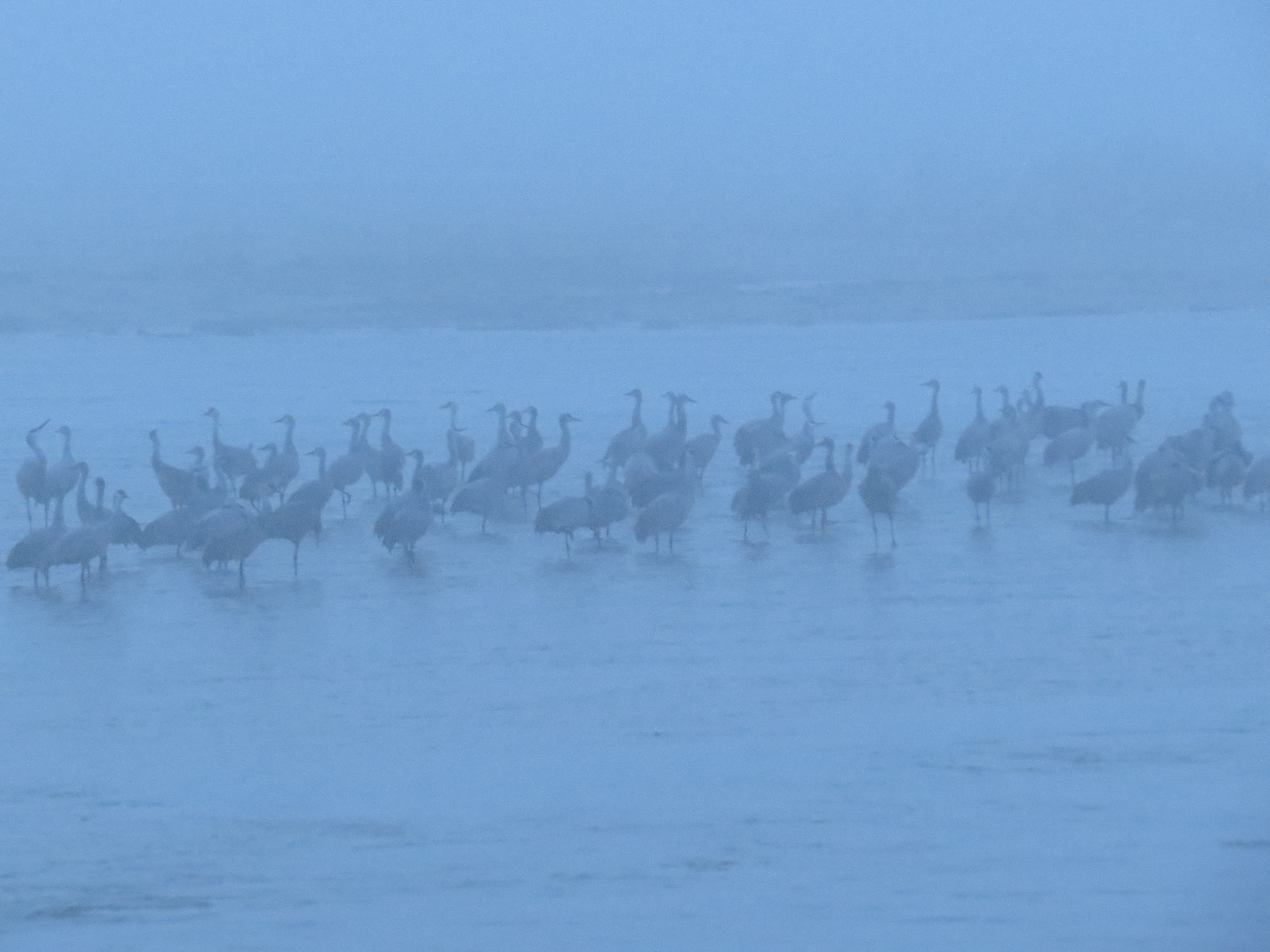
Fog cranes.

Fog cranes.

SNEAKER WAVE

March 19, 2014

Occasionally, I do something really dumb and wonder how I could have been so clueless.  Sadly, doing stupid things has not disappeared with age. I don’t usually state my major blunders in public, but my latest mistake is one from which some might learn.  Three years ago, two young men from Eugene were not so fortunate and drowned.  I wasn’t in danger, but I did something foolish, ruining my camera in the process.

I am new to the West Coast.  I am exploring Oregon by hiking; while I have extensive experience in the woods of northern Minnesota and the high country of Arizona, Oregon is different.  I have hiked in Washington State before, and I know about slippery rocks, need to carry rain gear, and taking the usual essentials before setting off alone.  Indeed, when I drove west to Sweet Creek Falls Trail, near Mapleton, I left a note on the kitchen counter, where I was going, what I expected to do, and the fact that the barometric pressure was steady when I left.  Rain was forecast for later the day.  I always leave notes when I hike alone. It makes searching for my remains easier.

The hike was pretty, not difficult, along a lovely river, with only a few areas where I needed to be careful.  However, I never forgot that a classmate in medical school died in 1973 when he fell on a rock in a stream and hit his head.  Bad things may happen, and may happen suddenly.  A slight misstep can become life-threatening or very inconvenient.  I got a lesson in the latter this day.

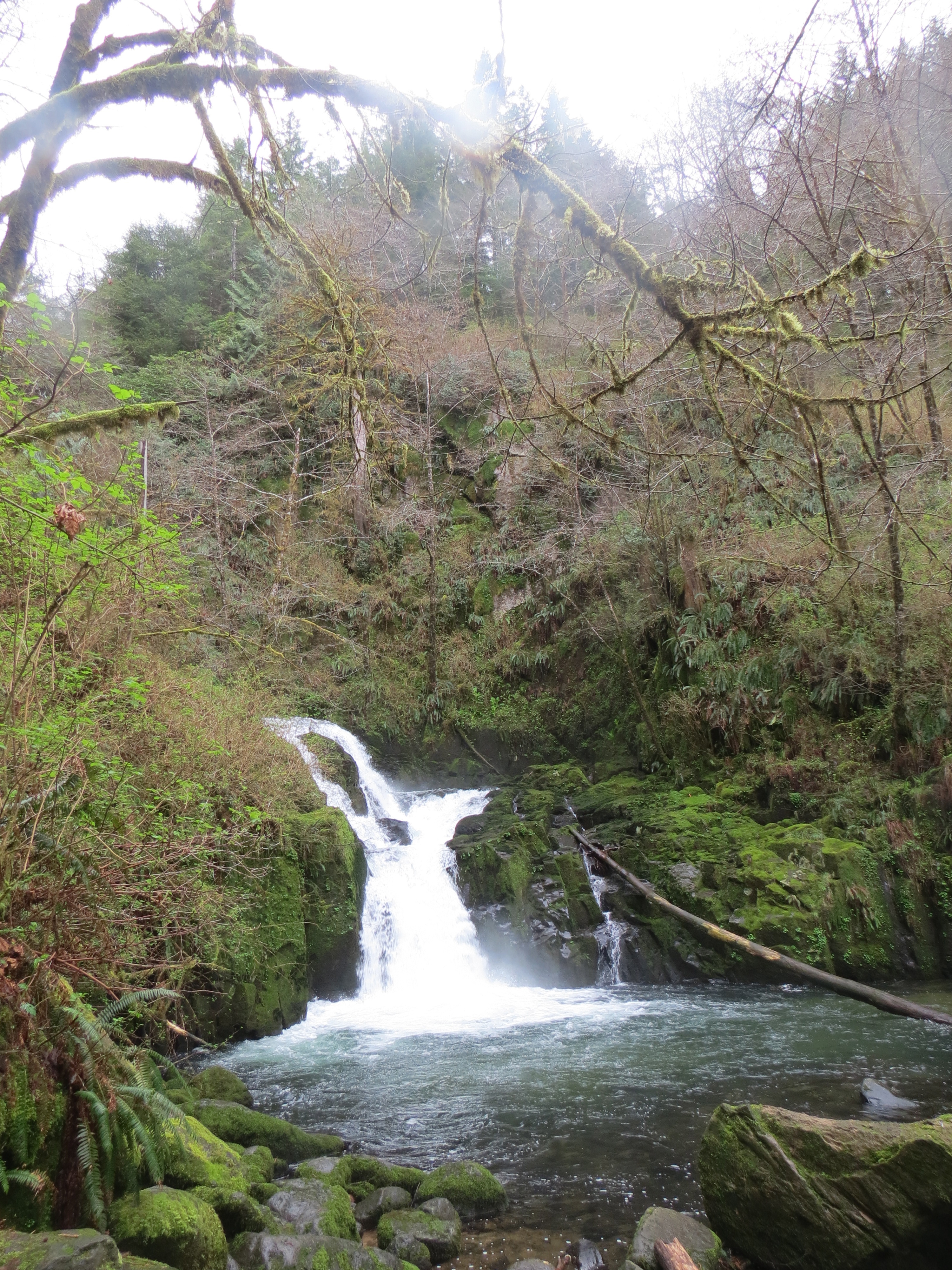
Sweet Creek Falls trail

Sweet Creek Falls trail

Sweet Creek Falls

Sweet Creek Falls

When I finished the hike, I decided to drive to the coast.  It was only 20 miles, and I thought it worth visiting the coast of my new home state.  When I arrived at the long stretch of  dunes, south of Florence, I found a deserted parking lot and texted my wife where I was.  I had deviated from my planned route, and any time I do such, I MUST communicate.  In the canoe country, I cannot, so if I am alone, I NEVER deviate from my route.  This is smart; what I did later wasn’t.

I went over the dunes, walking down to the nearly flat beach.  The waves were high, but there was a lot of wet beach that waves did not come up to often.  But wet beach=water, and I did not appreciate that obvious sign.  Suddenly, one wave appeared quickly.  I started to walk, but the wave overtook me, water reaching mid-calf and into my boots.  I laughed, thought it fun, as the shore was relatively flat, and wet feet weren’t going to ruin my day.  The ocean had warned me.  Nature warns, but we have to listen.  I did not.

Ten minutes later, I sat on a log down the beach, wringing out my socks, when another wave quickly appeared, but less powerful.  I raised my legs, the water went on both sides of the log, and I stayed dry.  I had been warned again.  The ocean was saying, “these are sneaker waves.”

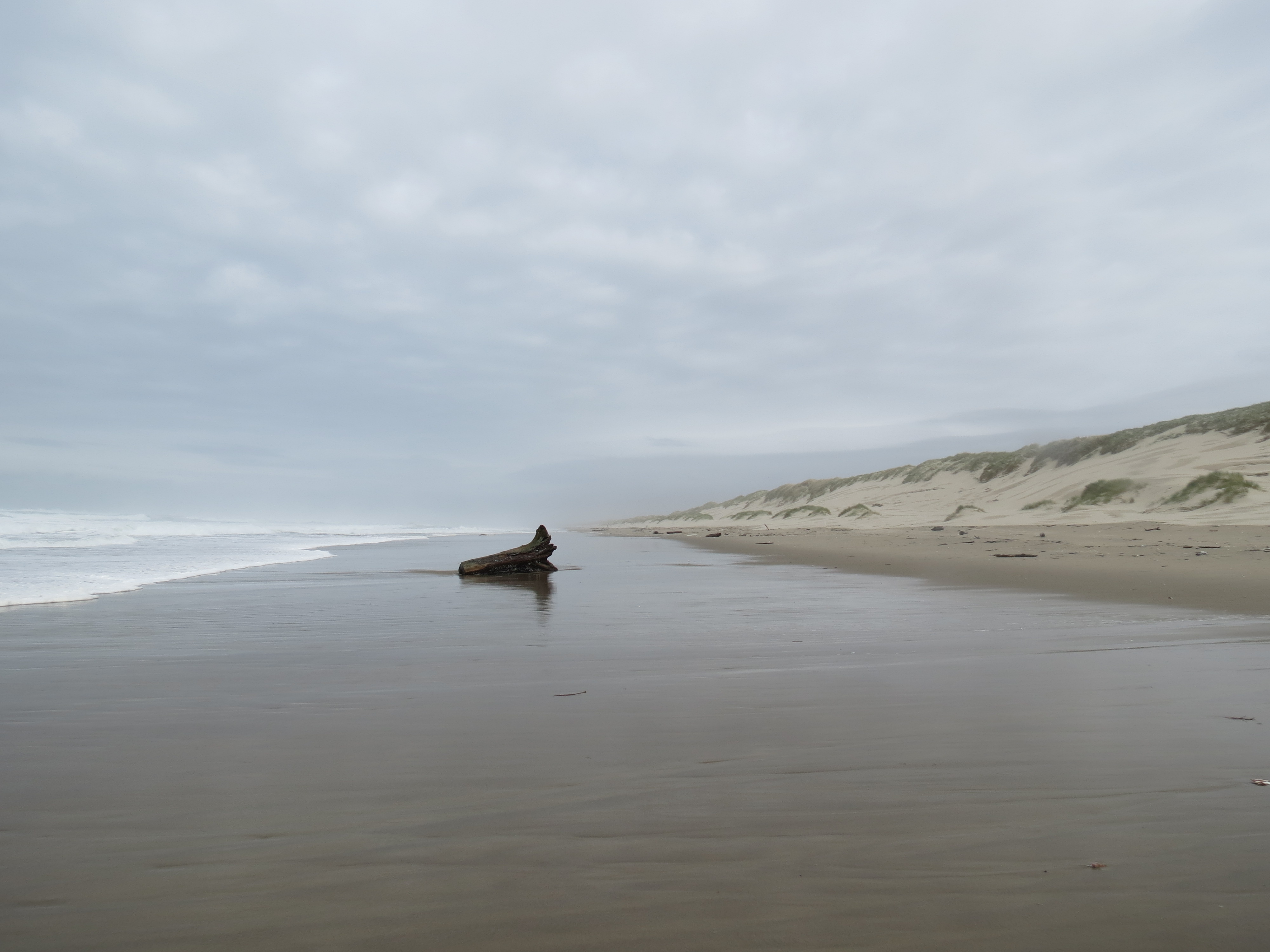
Footprints in the sand.

Footprints in the sand.

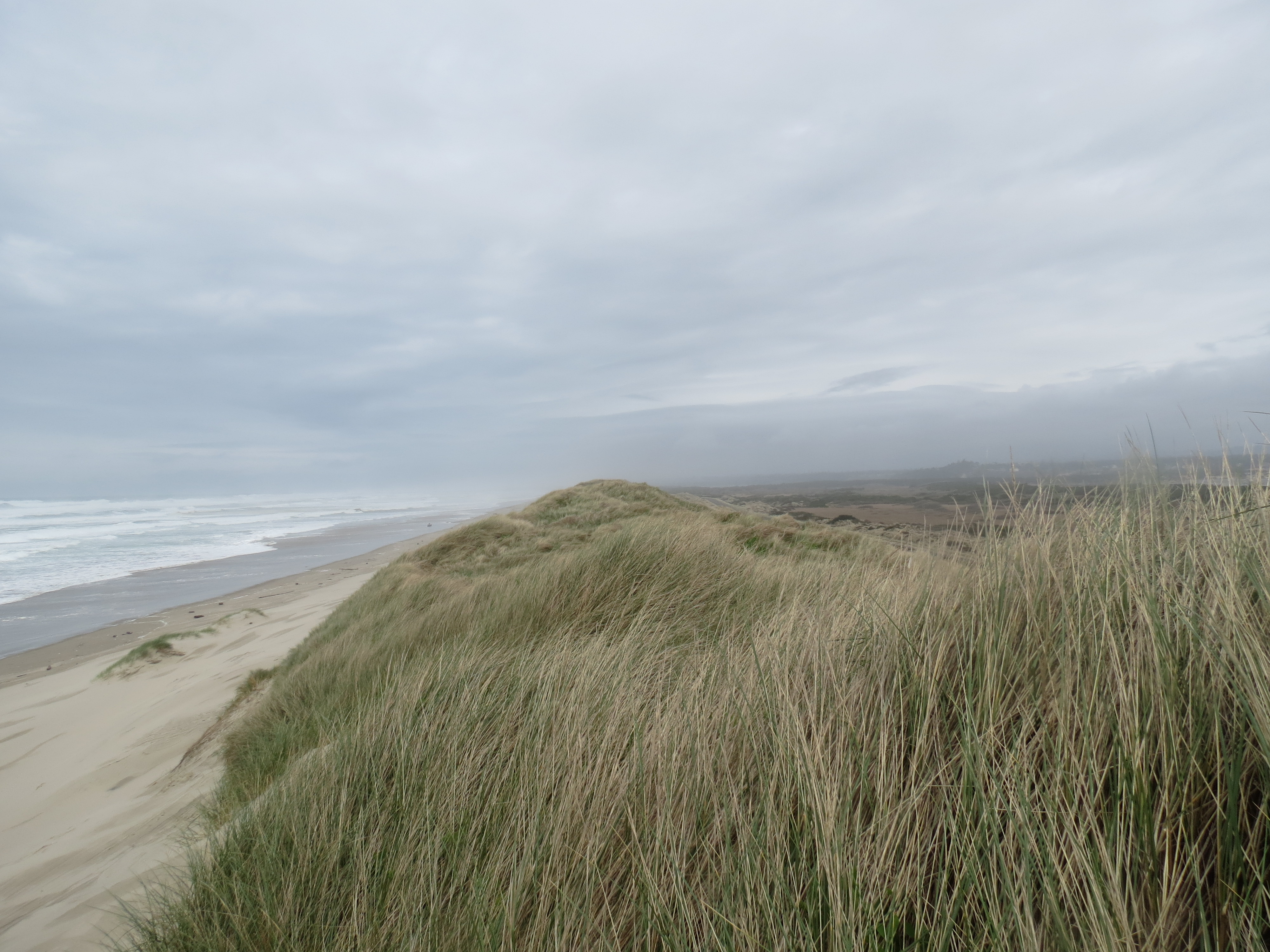
View at top of dunes, 50 ft (15 m) above ocean.

View at top of dunes, 50 ft (15 m) above ocean.

IMG_4166

View of the ocean from the dunes. The small log where I sat is left of center, on the beach.

I continued further south along the beach, climbing into the dunes, taking pictures of the ocean, the dark clouds that would herald rain later, and returned to where I came into the beach.  I constantly monitor the sky, I am less good about monitoring the ocean. I saw a large log, 18 inches in diameter and several feet long, with perhaps a foot wide flat surface on top.  I stood on the log, timed the swells, curious as how often a big wave would come in.  Nearly all waves crested about 50 yards away.

IMG_4174

Soon to be a sneaker wave. No way to tell, except no water was flowing back into the ocean at the time.  Last picture taken from my camera.

The log where I stood

The log where I stood,  Notice how far up the water was capable of going.

Suddenly, one large one came in.  I felt safe on the log, above the water, but I had forgotten something I really should know–the power of moving water.  Two feet can float a car.  The water wasn’t that deep, but it was moving at 5 mph.  I could outrun it easily, but I could not walk faster than it.  Nine inches of water, 5 mph, and a 8 foot log is struck by 45 cubic feet of water a second–nearly a ton and a half.  This is equivalent to 3 defensive line football players running and hitting the log.

The force knocked me into the shallow, flowing stream.  I saw my camera under water; I took my phone out of my upward facing pocket, stunned, as I always am, when “this can’t be happening to me”  happens to me.  I got up, upset at myself, deeply embarrassed, muttered, “you really should know better,” and returned to the car.  I was soaked.

I started the car, turned on the heat, began drying my phone.  The phone worked later, as did the SD card in the camera; the camera itself did not.  I was alive; other than a lot of sand and wet clothes, I would eventually clean myself, the car, the garage, and those few places in the house I had tracked sand.

Thirty-seven months earlier, two young men from Eugene were standing on rocks out in the ocean near Yachats when a sneaker wave threw both into the cold ocean.  The rocks were too slippery to climb out; they died from hypothermia.

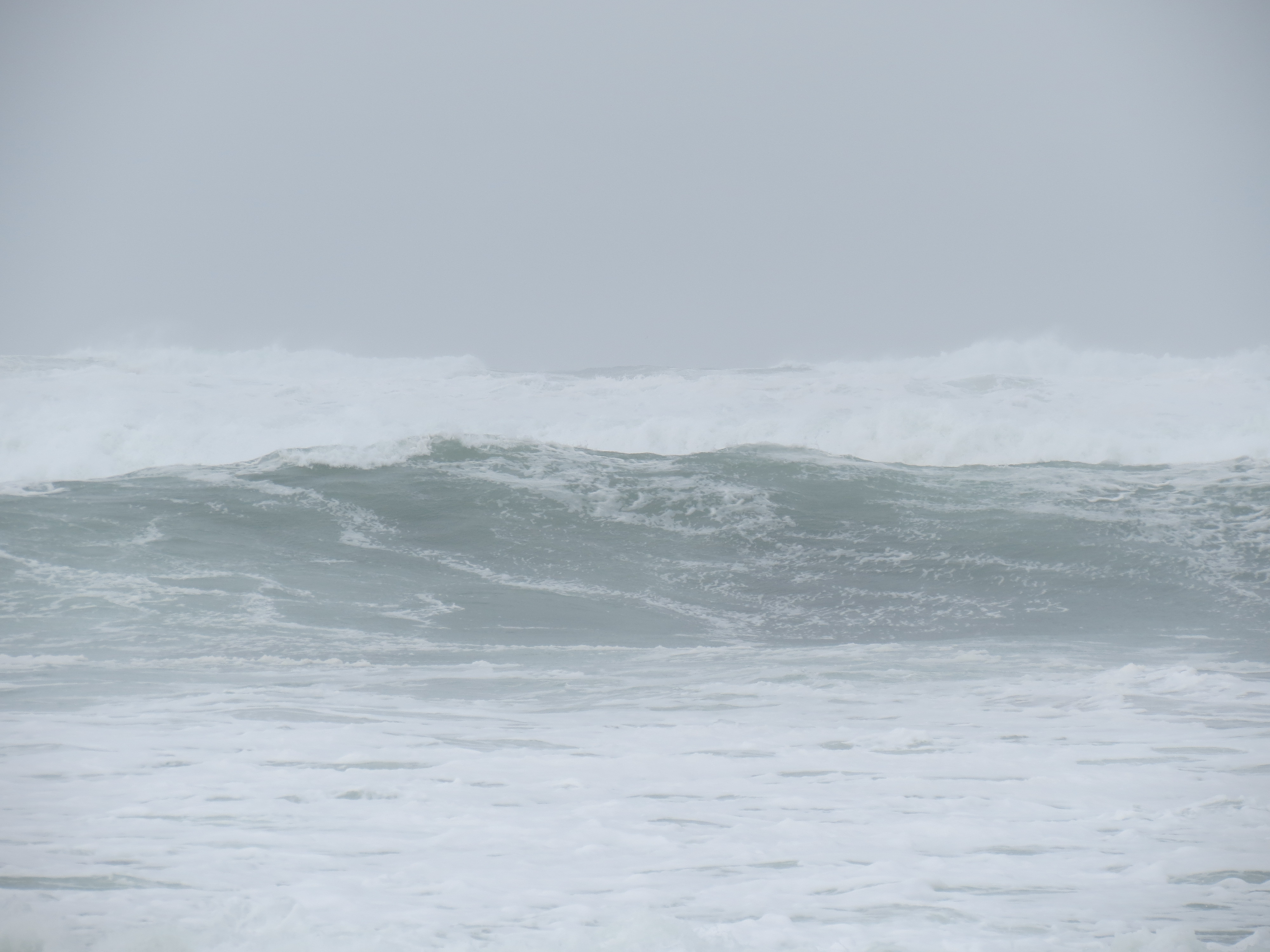
Sneaker wave.

There are some things we have to learn for ourselves, despite what people tell us.  Nature speaks, but we have to listen carefully to her language.  In 1991, I was ejected from a canoe when solo, I misjudged the force of current in Basswood River.  I didn’t, however, shoot the rapids a mile upstream, where 22 years later, an elderly man and his wife would.  She lived; he didn’t.  They had shot the rapids before, not ever recommended, and the water was unusually high, requiring they use a different route.  They were suddenly in extremely fast cold water with no canoe.  I was in warm, slow water next to my canoe.  I think all of us probably said, “This can’t be happening to me.” 

We all make mistakes, be it going up on a ladder when we shouldn’t, being outside when there is lightning, shooting rapids, or getting too close to the ocean.  What we must keep in mind are potential dangers and how rapidly things can go south.  Sneaker waves?  I know what they are…now.  I got away lucky.  I won’t get caught again.  Ever.

I wonder what the next stupid thing I will do will be.   Or whether I will be lucky.

KEY WORDS SPANNING THE AGE DIVIDE

March 17, 2014


When I was a first year medical student, I worked for a neuroanatomy professor 31 years my senior, who became a good friend.  He was still the professor, however.  When I once became upset, he became stern and calmed me down.  When I called a co-worker  “Little man,” (a college nickname), the professor, with the same last name as I, took me aside, told me my comment was demeaning and never to use it again.  I haven’t.

I offered suggestions in his research but never corrected him otherwise. Dr. Stuart Smith greatly influenced me, never knowing he was a big reason I became a neurologist. In 1981, I sent him a card announcing the opening of my practice.  His widow wrote me he had died two weeks earlier, at 63, from a ruptured aortic aneurysm. I wished I had written sooner. I can still hear his booming laugh.

I am now older than he lived to be and have had different experiences with those in their 20s.  One posted an article on Facebook about a scientist who had found a possible breakthrough that “might” help Alzheimer’s patients.  The individual wrote that the man deserved the Nobel Prize, hoping a grandmother, afflicted with the disease, would be helped.

I posted that the key word was “might,” and there was a long way from the lab to clinical practice.  I was measured in my response, not commenting, as I could have, that my grandmother also had Alzheimer’s, my mother died of a rapidly progressive dementia, and that doctors like the limelight, too, so any possible breakthrough is often taken directly to the press, rather than waiting to see whether it will work.  I didn’t add that I had evaluated thousands of Alzheimer’s patients and had seen many possible “cures” appear and disappear.  In short, I tried to inject a dose of needed reality into hope. Taking away hope is bad; giving false hope is worse.

The young person quickly retorted, “No, MIKE (caps added), the key word is hope.”

I am fairly informal about being called by my first name, but the Internet has allowed the young to call elders by their first name and slam them, because it is easier to write something nasty than to say it directly to somebody 40 years your senior.  On the bus, I am often called “Sir”; that is rare online.  I chose to remain silent, showing both restraint and wisdom.  I found the comment disrespectful and am not particularly eager to communicate again with the individual, whom I suspect would not notice.  I was once that age; the person has not been mine.

I never would have dreamt to correct Dr. Stuart Smith by using his first name and thinking I knew more than he did. He would have slammed me verbally, and he was one of the best English grammarians I ever met. Times have changed.

Many scientists want to report they have discovered a possibility that may lead to a possibility that possibly some day might possibly help somebody.  The use of the same base word here is deliberate, for new, safe, effective drug production is a long process.  There are few “miracle drugs” in medicine.  In my training, I learned an adage: “to write anything positive about treatment of multiple sclerosis is a good way to ruin your career.”  Forty years later, the adage is not far off the mark.  I have no doubt we will eventually prevent, stop, or cure MS, but that day is not yet visible to me.

The young person might feel I was too sensitive to take the comment as an insult. As both as a neurologist and as an older person who has seen and experienced far more, I was insulted.  Hope mattered a lot to the person, which I understand; realistic hope, however, based upon a great deal of experience, matters more to me.  Others in their 20s have said worse to me, but they were from other cultures, not familiar with mine, so I gave them more leeway when they said or did things I found appalling.

I can count on the fingers of both hands the numbers of patients in my practice I called by their first name.  I was formal.  I used “Mr.”, “Mrs.”, “Ms.” or “Dr.”    Thirty-five years after I met him, I still call the retired chairman of neurology where I trained, “Doctor.”  I always will. My parents resented being called by their first name.  I was furious when my dying father had a chest X-Ray performed by a technician, referring to Dad as “buddy.”  My father began his career as a science teacher and became superintendent of schools in three cities.  He wrote two science textbooks and could fix cars.  At 90, he was interested enough to see the Sandhill Crane migration; the following year, he explained to two young women why a lunar eclipse occurred and traveled alone to his 70th college reunion.

I think a key difference today is that the young have equal access to information that I have.  They don’t, however, have the same life experiences as I; many do not have critical thinking skills necessary to carefully analyze “breakthroughs.”  In my youth, every cashier could correctly make change, not now.  We learned grammar and how to hold a pen and write, uncommon today.  We called adults “Mr.” or “Mrs.”, less now.

Perhaps I should have apologized for being too old, sensitive and experienced to write what I considered a careful response.  I certainly know how to apologize, but felt then what I did was appropriate.  If not, I’ve had a lot of practice apologizing.  That comes from age, too.

Also from my parents, my wife, and Dr. Stuart Smith.


BEFORE THIS GAME, WILL THE VETERANS PLEASE STAND, THEN EVERYBODY, THEN SILENCE, THEN SING

March 13, 2014

A recent Facebook post from a Republican-leaning group showed the picture below:

Screen Shot 2014-03-06 at 8.13.35 PM

Here is what I suggest be done, and it requires only about 4 minutes:

  1. “Ladies and gentlemen, will all veterans present, and only those veterans, please stand for one minute.  All others remain seated.” 
  2. One minute later: “Now, will everybody stand for 1 minute of silence honoring those who died for America, both at home and abroad.”
  3. A minute later: “Now, let us all sing our national anthem.”

I served this country in uniform abroad, deployed on a ship as the sole physician for an 8 month and a 3 month deployment.  I serve America as an individual every time I volunteer, help somebody, follow the laws, and try to be a good citizen.  I know the words of the National Anthem.  When played, I face the flag, come to attention, remove my hat, stay silent, and sing quietly.  When it is finished, I sit down. 

When asked to pledge allegiance to the flag, I face the flag, put my hand over my heart, and say the words with meaning, especially “to the REPUBLIC for which it stands, ONE nation,” then the next two words, added in 1954, (they weren’t Francis Bellamy’s original ones), with especial emphasis on “INDIVISIBLE, with LIBERTY and JUSTICE FOR ALL.”

Rote pledging and rote singing lessens value:  I’ve seen shabby treatment of the Pledge by both students and teachers in schools.  Every time I hear the national anthem, I am distracted by someone on a cell phone, people walking by me to find their seat, the guy in front of me with his hat on, or my neighbors chatting.  I don’t know if they are Republicans or Democrats.  They are likely both…and rude.

Before the national anthem, I find the nearest flag. Then, when the music starts, I look at the top star on the left, Delaware, the first state, where I grew up.  I look at the thirteen stripes, remembering 13 colonies winning independence against heavy odds, we fought the bloodiest war in our history to keep the Union intact from those who fought to divide us, what has happened so often in Europe. The Union is our strength, even the parts I don’t like, parts that are now patriotic, but fought us 150 years ago under another flag.

I look at the red stripes, meaning courage.  I remember the Americans who died at Bunker Hill, Belleau Wood, Corregidor,  Midway, Guadalcanal, Chosin Reservoir, in the skies over Europe, Okinawa, Da Nang, Hue, Fallujah, or Kabul; every one of these places should be known by every American, regardless of how necessary the conflict was. “I have not yet begun to fight;” “Retreat?  Hell no, we just got here;” and “Nuts” should be taught in the schools. I bet kids would enjoy learning where they came from.

The white stands for honor and purity: the Marshall Plan, counting our dead. The Flag and Pledge deserve respect, regardless of one’s feelings.  So does the office an elected official holds.  One may dislike the holder, but the office deserves respect. I disliked the senators in the state where I once lived, but I dressed appropriately and was polite if I went to their offices to complain.   Disagreeing with the Pledge, Flag, or Anthem is a right; that is what America is about.  So is respect and honor.

The blue stands for justice, the most difficult of the three, which is why I emphasize the word when I recite the Pledge.  If I don’t like a law, I work to change it, not willfully violate it.  We are a REPUBLIC, not a free-for-all, pick and choose society.

  • The flag should be lighted at all times, either by sunlight or by an appropriate light source.  
  • The flag should be flown in fair weather, unless designed for inclement weather use.       
  • The flag should not be used as part of a costume or athletic uniform, except that a flag patch may be used on the uniform of military personnel, firemen, or policemen.  Sports teams may have individuals of their sponsors contribute to any number of veterans organizations or the USO (my words). 
  • When the flag is lowered, no part of it should touch the ground or any other object.  To store the flag it should be folded neatly and ceremoniously. [Try to do that properly sometime.  It is difficult.] 
  • When a flag is so worn it is no longer fit to serve as a symbol of our country, it should be destroyed by burning in a dignified manner.

In 2005, I was one of 300 correcting AP Statistics Papers in Lincoln.  At one meeting, all the veterans in the audience were asked to stand.  I was pleasantly honored, but there weren’t many of us.  Maybe this is how we get children to serve.  Some day, maybe they want to stand up and out from the crowd.  Before the minute of silence, I suggest the organizers dedicate the time to honor those Americans, here or abroad, who fought with weapons or words.  The choice should be respectful, meaningful, and educational, not jingoistic.

“Tonight, a minute of silence preceding the singing of the national anthem will be to remember the courageous Marines who served and died at Belleau Wood, Chosin Reservoir and Guadalcanal.”  Every American ought to know these places.  Yes, every.

“Tonight’s minute of silence is dedicated to those who kept West Berlin free during the Berlin Airlift, their honor and courage a proud moment in our history.”

“Tonight’s moment of silence is dedicated to those who died in the continuing struggle for Civll Rights in this country, seeking justice under the law.”  Some in the South might object; the African-American players they idolize would not.

“Tonight’s moment of silence is dedicated to those who stood up for science against tremendous pressure and saved American lives, like Dr. Frances Kelsey (banned thalidomide) or Dr. Richard Feynmann (Challenger disaster).”

Then, we can sing the national anthem with meaning, proud of who we are as a people.

I don’t care what we pick, so long as it is American.  Controversial?  Use judgment. Perhaps a young boy will Google “Guadalcanal” and learn about Henderson Field, the Sullivan Brothers, “The Slot,” and Ironbottom Sound.  Or remember another Philadelphia, in a southern state, that I’ve never forgotten.

Perhaps some man will be at a business meeting the next day and hear, “We can’t do that in fewer than two weeks.”

He might reply, “They said that about the USS Yorktown, but fixed her in 48 hours.  She was sunk at Midway, but her planes helped sink all 4 Japanese carriers, and stopped Japanese expansion in the Pacific.”

Click yes if you think that teaching Americans at sporting events what this country stands for is a good idea.  Might even be a step towards getting people to serve her and bring us together again.

RESERVATION DOCTOR ON THE LITTLE BIGHORN

March 12, 2014

Crow Fair, 1973.  My wife and I are medical students working on the Crow Indian Reservation in southeastern Montana.  We live in a small house on the reservation, near the small hospital, on the banks of the Little Bighorn River, yes, THAT Little Bighorn River, 5 miles from where Custer met his end in 1876.

This was our second summer there, so people knew us in Crow Agency.  We saw patients from Lame Deer, on the Northern Cheyenne Reservation; Lodge Grass, Wyola and Pryor. We worked at the hospital, delivering babies, helping with surgery, suturing wounds, treating emergencies, and learning to do what few medical students learn:  how to give shots.

One day, I heard a man had collapsed in the dry riverbed of the Little Big Horn, downstream from our small, orange house.  I was told to go to see what happened.  I can still remember walking down the mud bank, alone, to the body of an elderly Crow man lying supine, seeing sand on his corneas.  It was the first time I had pronounced a man dead.  There would be thousands more in my career, but they would all be in technology-laden hospitals, with people around me, not alone with a man, probably  born about 20 years after Custer’s demise.

I still remember the names of the two women on whom I first scrubbed in surgery, the  the man upon whom I passed my first nasogastric tube.  I remember the first time I was called “Doc,” by a man, whose foley catheter I changed, not really having any idea what I was doing by injecting air into the balloon.  Nobody was present; I was expected to do it. I did fine, got thanked, took a deep breath, and returned to the nurse’s station.

Our equipment was rudimentary: We had an X-Ray machine and small lab.  This was before CT.  Major emergencies were sent to Billings, 70 miles away, now on Interstate 90, but earlier on US 212, now called the Hardin Road, or old US 87 (it  was US 212 in 1970, when I first drove it), a two lane paved road rutted from use.  I hit a deer on it one night, doing about 65, smashing the windshield.  We were lucky it didn’t come into the car.  Sadly, it was not dead, and we had to kill it.  The next day, the Crows told me to drive around with the windshield smashed, like all the other cars there.  We got it repaired, instead.

Crow Fair was an annual celebration in August, a major gathering of tribes from all over the western United States.  There was a lot of work that week in the hospital.  We were among the few whites there, but we were members of the community, and while many Crows remained aloof, I never remember feeling unwelcome.  The only thing we weren’t allowed to do was learn the language.  Many said they would teach us, but they never did, and when we used words that we knew both the meaning and the pronunciation,  they acted like they didn’t understand.  Later, that happened to me in France, and my French was a lot better than my Crow.  The white man had taken nearly everything they had; they weren’t going to give him their language, too.  We named one of our first cats “Saba,” which was Crow for “What?” if the word is dragged out.  The other cat was “Busby,” a town on the Northern Cheyenne Reservation.

During the Fair, I was in the emergency room when a man walked in, with a 15 cm gash in his forehead, after being gored by a bull.  “Hurry up, doc,” he said, “I’ve still got time for the second round.”  I can’t say I did the best suturing job in the world, but after two summers there, I was good at it.  He returned to the rodeo.  These people were tough.  Yet, times were rough.  In 1971, there was a diphtheria epidemic on the reservation.  Yes, diphtheria.

I don’t remember who got the idea to dress me up and have me ride in Crow Fair.  Those two summers were the only time in my life I ever rode a horse.  We first rode near Billings, at a ranch where part of “Little Big Man” was later filmed.  A real doctor there and his wife had horses, so we rode at Crow Agency as well.  My wife now has 5  and rides; then, we were newlyweds, and I learned to ride, although I would not continue.

The morning of the parade, I was given an honor that I have never forgotten:  I was the only white man riding.  The only white man.  I rode a horse named “Mare,” who was one.  She was perfect for me; nothing fazed her.  I wore a white coat with “Reservation Doctor” written on the back, along with a tepee with a few symbols, drawn by a member of the tribe.  My black bag was on the saddle’s horn; for 15 minutes, I was part of the parade that rode around the rodeo grounds.  Many laughed, but with me, not at me.  I was totally welcome.

I still have the white coat and the black bag.  Many times, cleaning out the garage, I wondered whether it was time to throw the white coat away.  I haven’t worn it in 41 years, but after the picture posted here, I put it on again, just to do it.  I will never part with it.  The jacket has no intrinsic value; after I die, will it be thrown away.  Only my wife knows the story behind it, “Mare,” and saw me ride with the the white coat.  Today, we would be probably post a video on YouTube or Facebook.  Then…and now, what we have are memories.  The memories may be wrong.  I wouldn’t trade those imperfect memories for a clear video on YouTube, a powerful statement that those too young to remember a time without YouTube might consider.

The white coat signified the summer I was a “reservation doctor.”  I rode in the Crow Fair parade, near the Little Bighorn, the only white man riding among Indians, and survived, honored, a far better outcome than Custer and his men, 97 years and 2 months earlier.  

It has remained one of the most special moments in my life.

Reservation doctor.  I felt in the pocket, and I found an old cup of "silly putty."That dates the jacket as clear as Iridium dates a meteor strike.

Reservation doctor. I felt in the pocket, and I found an old cup of “silly putty.”That dates the jacket as clear as Iridium dates a meteor strike.

GAMMA DELTA IOTA

March 9, 2014

Fall 1967, and fraternity rush is on for Dartmouth sophomores.  As I walked quickly to the first fraternity I wanted to visit, I was excited.  I was going to be a frat man!!  My plan was to visit several houses I felt would be good fits (not party houses, football player houses, or far from campus).  I visited 7 houses that night, trying to talk to members and to get my name known, although this wasn’t and isn’t a skill of mine.  I looked forward to being invited back the next night for a second visit, and ultimately “sinking,” later in the week, becoming a pledge.  This was a big deal to me, and I think that I wanted to have bragging rights with my friends.  

The next afternoon, I stayed in my dorm room as required; after an hour, I heard a knock. I opened the door, and two men came in from Psi U.  “We enjoyed having you last night, and thank you for considering us, but we don’t think you would fit in.  But any time you want, stop in on a weekend and have a beer.”  They shook my hand.

I thanked them, and as they left, I didn’t feel too badly.  Psi U wasn’t my first choice.  I waited for the next knock.

It never came.

I often wondered that year whether I was the guy referred to at Phi Tau about whom, when discussed at the member meeting, nobody said anything.  Then upstairs, a toilet flushed, everybody laughed, and moved on to the next guy.

I became a GDI.  A Goddam Independent.  I was crushed.  I had been turned down for dates by girls before, but this was real rejection with a capital “R”.  I was a decent guy, a good student, and felt I would have been an asset to a fraternity.  So I thought.  I thought wrong.  My parents sent me a Peanuts cartoon, showing a character saying, after being rejected, “It’s their loss, not mine.”

I got turned down at a second fall rush, too, one more chance, and I never tried again. Being rejected became one of the best things that happened to me. I visited two fraternity houses on a weekend the remainder of my three years at Dartmouth.  I wasn’t upset with them; I had moved in other directions.  I have no ill feelings.  I do think drunken and sexual misconduct that occurs in some is a problem.  I question their relevance today, but I’m not in college, and I simply don’t know.

I had a successful, good career at Dartmouth.  I got a few citations for excellent course work, graduated summa cum laude, Phi Beta Kappa as a junior, and had highest distinction in Chemistry, publishing my first article ever in the Journal of Organic Chemistry.  I took three graduate level courses in the subject.  My senior year, I met the woman who would become my wife. That winter, I skied 3 afternoons a week for free, because I was doing a lot of independent work and could schedule my time.  I took 18 lab courses at a school where many took none in the 36 courses they had.  Dartmouth counted courses, not credit hours.  Dartmouth taught me to write and how to research a paper, which in my medical training was incredibly valuable.  More importantly, Dartmouth taught me how to think.

I give to the alumni fund every year but am not a die-hard alumnus who follows sporting events.  I’m proud I went there, I think it is the best school in the country, and I came back in 1995 for my 25th reunion, enjoying the stay, but not needing to return.

Forty years after graduation, looking at Eugene as a place to live, I remembered my chemistry advisor got his Ph.D. there, so I e-mailed him, which I had never done before.  He immediately wrote me back, still believing I had the potential to get a Ph.D. in organic chemistry.  That’s Dartmouth.  My advisor had helped me with my senior thesis; when I defended it, one of the attendees said the questions I was asked were more difficult than several Ph.D. defenses he had seen.  I almost decided to get a Ph.D. in organic in Eugene, but there is too much else I want to do.

I don’t plan on going back to Dartmouth again; I might, but it isn’t important.  Many things important when you are young are no longer so important as you get older.  Dartmouth is for the new generation, not me.  I hope all get as much out of the College as I did.  For those who get turned down at all fraternities, I’m here to say it really doesn’t matter.  It won’t matter that year, the rest of your college career, or for the rest of your life, if you choose to move on.

Perhaps it was their loss, not mine.


THE ANNUAL CONJUNCTION OF SPRING, A SPECIAL RIVER, AND A SPECIAL BIRD

March 7, 2014

It’s late in the evening in March on the Platte River, bone-chilling cold in the viewing blind, where I stand alone.  I am in the center of what many call “fly over” country, about to witness one of the greatest scenes in nature.  It is one of my top four, but don’t take my word for it: Jane Goodall lists it in her top ten.

I hear the whining noise that sounds like a jet engine, but this sound is a lot closer.  It is the sound of thousands–no, tens of thousands–of Lesser Sandhill Cranes, coming into the river for the night.  Fly over country, indeed.  I am in fly over country; the birds are flying over the blind, in circles around the blind, at the blind, at me.  I am freezing cold, shivering with thrill, holding the video camera, exclaiming words I don’t usually say:

“I have never seen anything like this in my life.  The sky is black with birds.”

It is not often I post before I have completed what I want to say, but crane season is now, and I want to get some pictures up and some videos as well.

IMG_2729 IMG_3978

Platte evening

Platte evening

I’ve been in the viewing blinds 90 times, alone, with other clients, which I once was, and with clients whom I now guide to the blinds.  I have been in the blinds in 80 and 15 degree weather, thunderstorms and snow, gorgeous sunsets and with a biting wind that only Nebraska can dish out in March.  There is not one single time I have failed to learn something, about the birds, people, or myself in the blinds.

I am proud to be a Rowe Sanctuary volunteer.

IMG_2471 IMG_2920

Rowe was established forty years ago, now having a lovely visitor’s center, made of recycled wood from Nebraska schools, insulated with straw, and microphones to pipe in the sound of the cranes at night, which few hear, except in scattered farm houses along the river.  There are other buildings to house volunteers, with all sorts of tools and vehicles.  They now have a Crane Cam, too, which once I help put up, far upstream, so that when one “runs” the camera at night, the individual is showing the entire world the sight.

IMG_2809

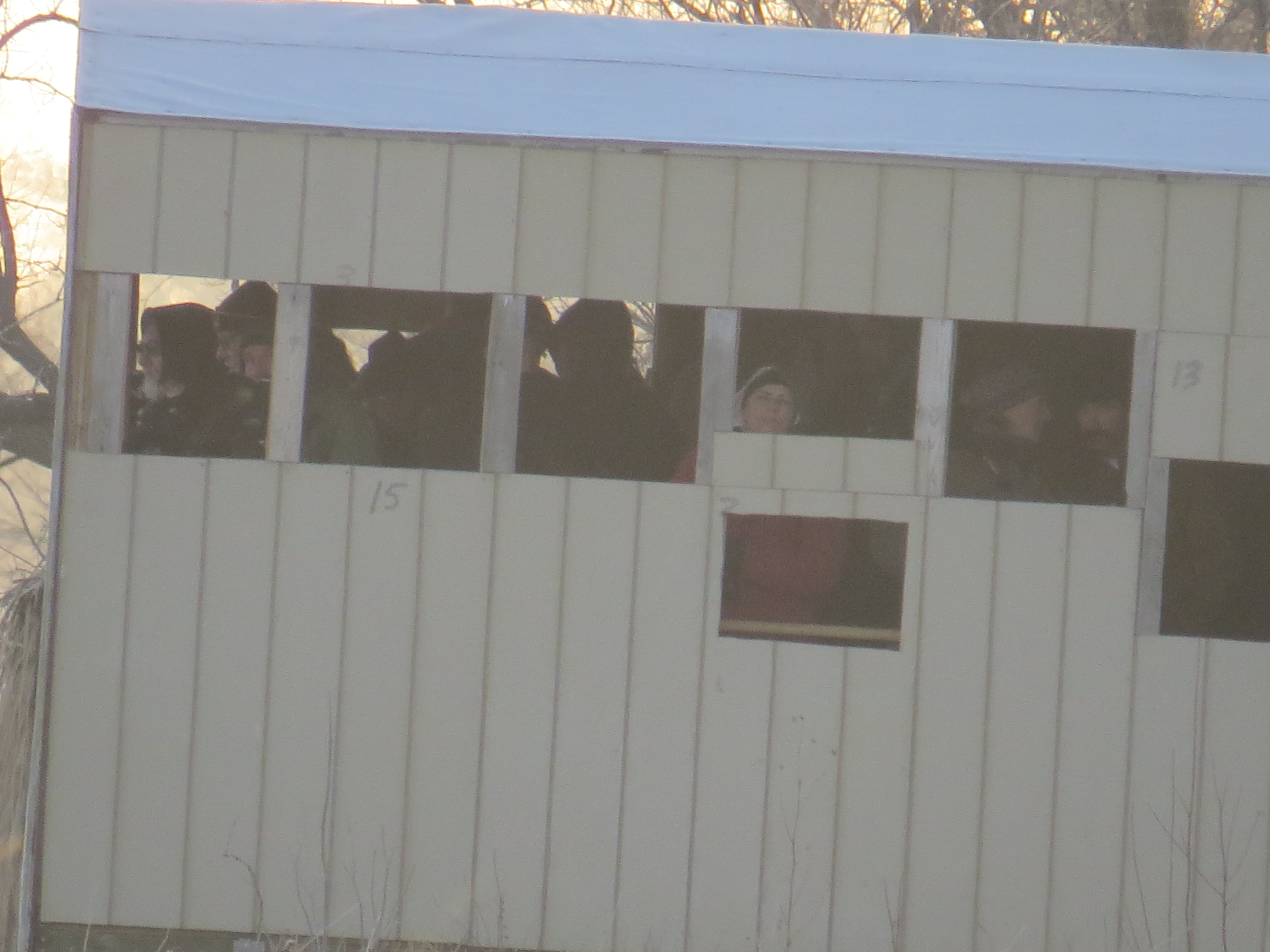
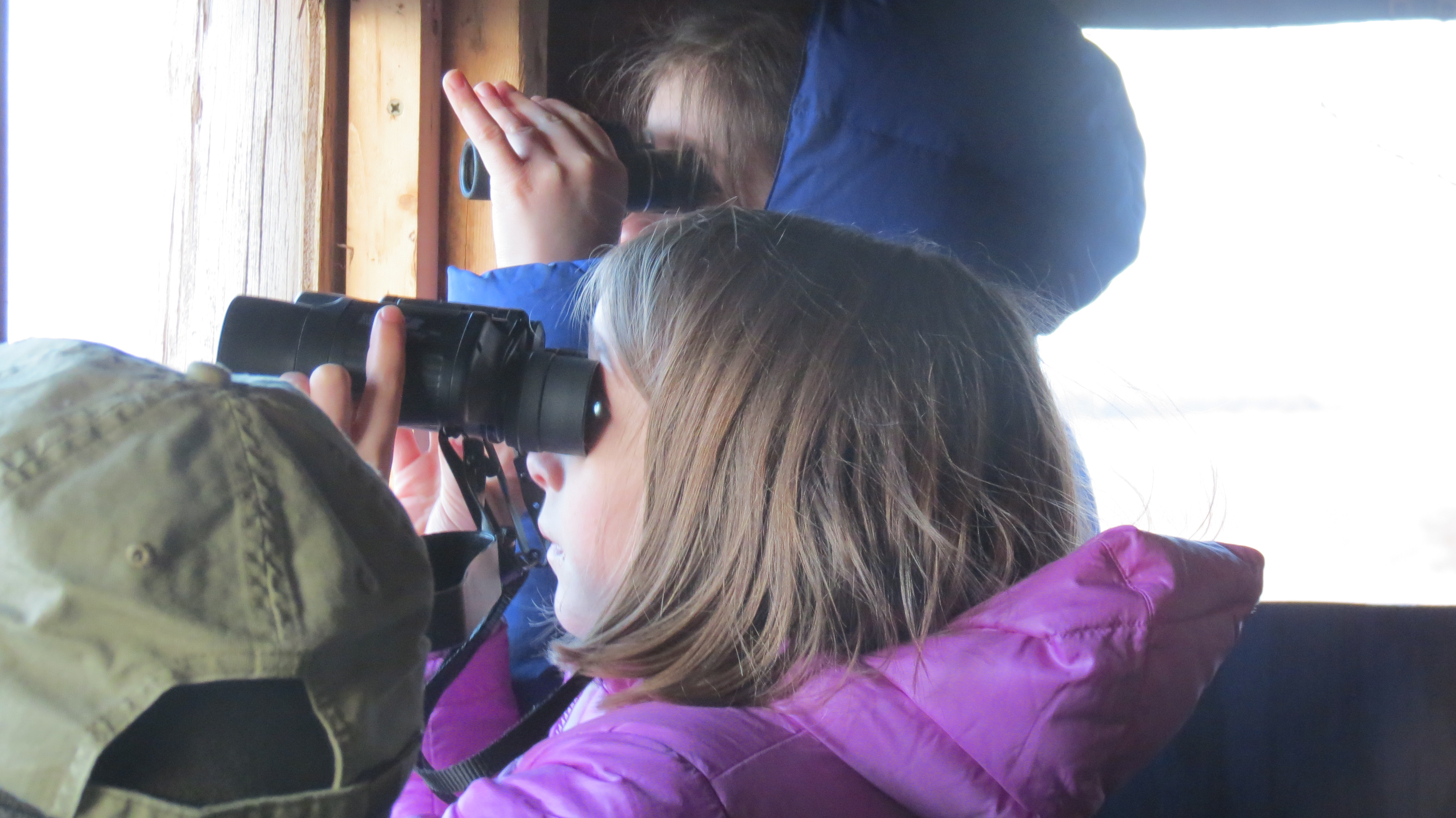
A big reason why I volunteer. It is for the children, so they will learn to love nature and the beauty of the world. Tower Blind.

Far more briefly than what I tell people, the cranes winter in the southern states and migrate to Arctic Canada, Alaska, and Siberia.  I have seen them in Bettles, north of the Arctic Circle. They do their final staging for their migration in the southern bend of the Platte.  They cannot perch in trees, so they live on the ground, in the air, or in shallow water, which keeps them safe from predators at night.  During the day, they feed on waste corn primarily in the fields near the river.  They go to the river at night for safety.  They gain 15% of their body weight in this period of time, the Platte’s becoming the largest single bar in the world for Sandhill Cranes.

Crane Moon

Crane Moon, 2010

From my bed, on the floor in the visitor’s center at night, I hear the cranes before I drop off into a brief sleep, for I will be awake at 4:30, getting Rowe ready for the 6 a.m. blind tours.  I may go as a guide, I may go to help a guide, but I will go.  The morning is different, because one arrives in darkness, hearing only cranes, or sometimes nothing, complete quiet, itself a rarity in this country today.  As the river wakes up, the cranes start to move.  Some “dance,” better than the stage, one lady told me, and they do it for courtship, pair bonding, and likely for fun.  Occasionally, all the birds leave at once, and one can see 25,000 in the air simultaneously.

Platte sunset.  So many nights I never thought I would see a good sunset.  So many nights I was wrong.

Platte sunset. So many nights I never thought I would see a good sunset. So many nights I was wrong.

The evenings are when the birds return.  They may stage in fields and wait until after dark.  One evening, I told a group we would leave a few minutes late.  “They are nearby in the field over there,” I said.  Two minutes later, several thousand erupted before us.  It made the tour.

large group on river

large group on river

The colors at sunset are remarkable

The colors at sunset are remarkable

Birds and setting sun.

Birds and setting sun.

nother evening, I counted approximately 10,000 in 30 minutes. coming from one direction.  I’ve seen two flocks of 10,000 meet overhead.  I cannot describe the sight or the sound.   They come across the Sun, too.

IMG_2878

IMG_2955

When I became a neurologist, I learned that birds have “basal ganglia” brains, their behavior programmed, just like our walking, so we don’t think about it.  Last year, however, I learned the avian brain is configured differently.  The same neurotransmitters are present, and that was a tipoff maybe I could deal with my cognitive conflict: how can a bird with automatic behavior may appear to have fun.

The answer lay in the fact that birds can learn.  This has been seen and documented by a couple in Fairbanks, Alaska, who see the same pair of cranes return each year.  They see the cranes teach their young to fly.  A young crane who died was visited by the parents and sibling, who pulled grass over the body.  I don’t know what that means, and I am not even going to speculate, but I don’t think this is basal ganglia behavior.

Pair close by.  The red patch is featherless.  It becomes larger, should the bird be angry or aroused in any way.

Pair close by. The red patch is featherless. It becomes larger, should the bird be angry or aroused in any way.

I think my learning neurology forty years ago assumed things were later questioned.  Others may disagree with me, but they are disagreeing with a human neurologist who has seen pictures of how the avian brain is constructed, and has left, shaking his head, saying, “That is why they look like they are having fun.  They are.”

I have also learned how much fun I have, when I am at Rowe.  I work 17 hour days, occasionally with breaks to upload pictures or talk to people who visit–except that is supposedly work.  I clean toilets, drive ATVs to take people to the special photography blinds, expensive, but these are booked far in advance, and nobody ever complains about being cooped up in a 4 x 8 piece of plywood over night with a 4 foot high roof, 4 windows, and a chamber pot, not allowed to leave for any reason until morning pick up.  I’ve brought these folks back to the sanctuary, dirty, sleepy, and happy, with stories of what they have seen.  I’d be jealous, but I have seen most of this, too.  I am happy for them.

Tours run morning and evening, about 25-30 in a blind.  All tours are different, and sometimes a two minute period makes the day, or the week; the video I uploaded was 2 minutes, after about 2 hours of watching a pleasant river.

I meet volunteers from around Nebraska, with a few from neighboring states.  These people teach me common sense, how to work with tools, how to be a better person.  We don’t always agree, but we do whatever we can for each other.  Seldom have I had this experience anywhere else.  Last year, a 75 year-old woman taught me how to back a trailer.  She had been doing it since she was 8.

The cranes?  During the day, I have stopped driving the pick-up with the Buffalo or Hall County license plate, gotten outside, and looked up, sun reflecting off their wings of cranes, soaring at 500, 1000, or 2000 feet.  In late spring, they rise like a giant beehive, waiting to catch the south wind at 1600 meters, spread their wings, and as one volunteer put it, “Godspeed,” as they go to the Canadian Arctic, Alaska, or even Siberia to nest.   I’ve seen them migrate south over the Boundary Waters, and Hilt, California, the most northerly city in the state.

The few weeks a half million spend on the river are beyond compare.  I never tell people what they will see except “Cranes, plural.”  It is not my show, it is the birds’ show.  Almost everybody likes it, a few are changed a bit, and a lucky few, like me, are forever transformed, looking forward to the special time of year when as Paul Johnsgard puts it, the season, the river, and the bird all come into conjunction.

Spring, the Platte, and the Lesser Sandhill Crane.  All are needed.  All are sufficient.