Archive for March 31st, 2014

RESPITE

March 31, 2014

When I volunteer at the crane migration in March, I guide morning and evening.  I like seeing cranes, I’ve learned a lot, and I especially enjoy watching people get as excited as I, at seeing a few, a score, a hundred, or … twenty thousand simultaneously in the air.
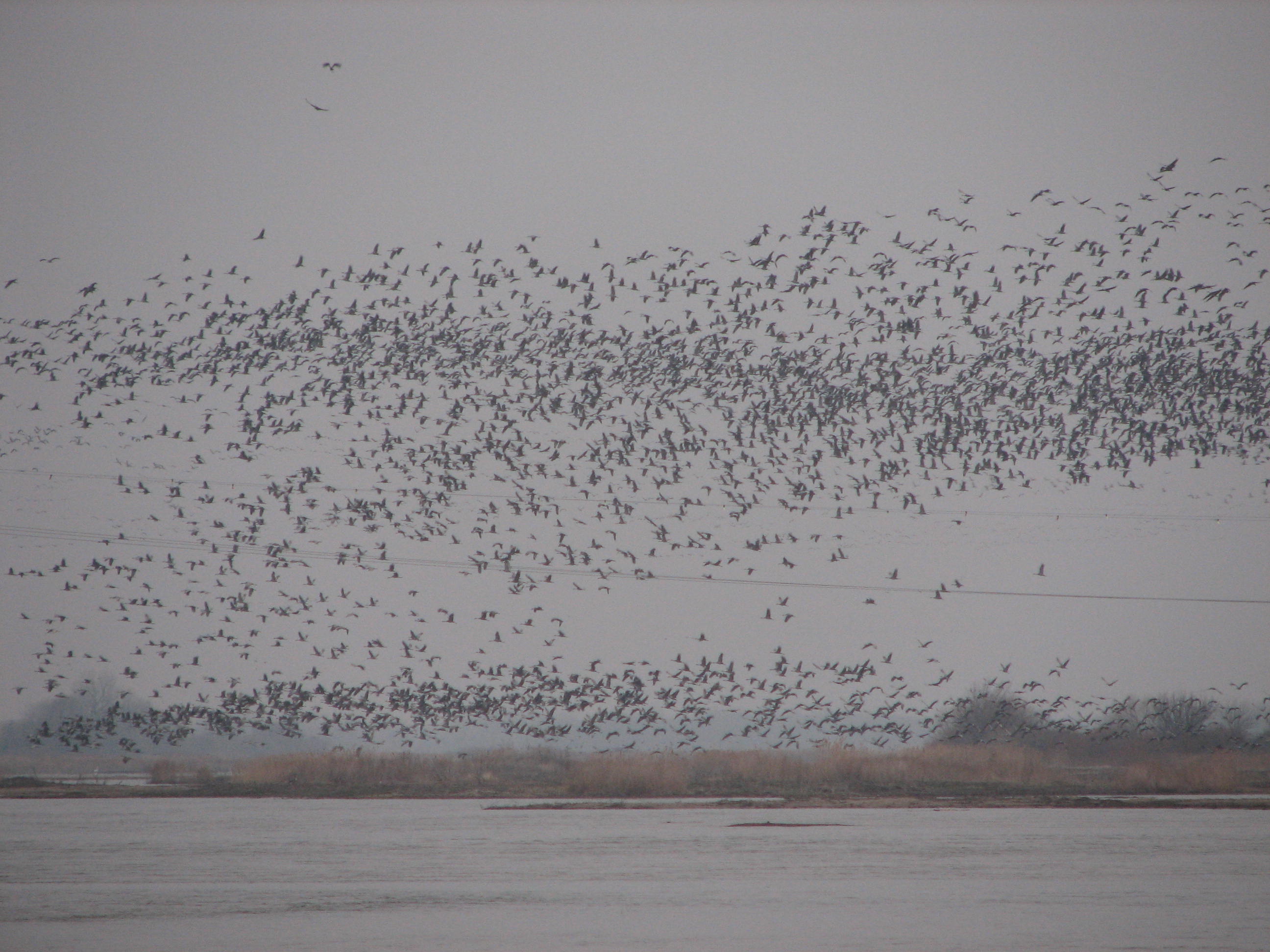
 

PART OF 20,000 CRANES SEEN OVERHEAD.  ROWE SANCTUARY, 2011
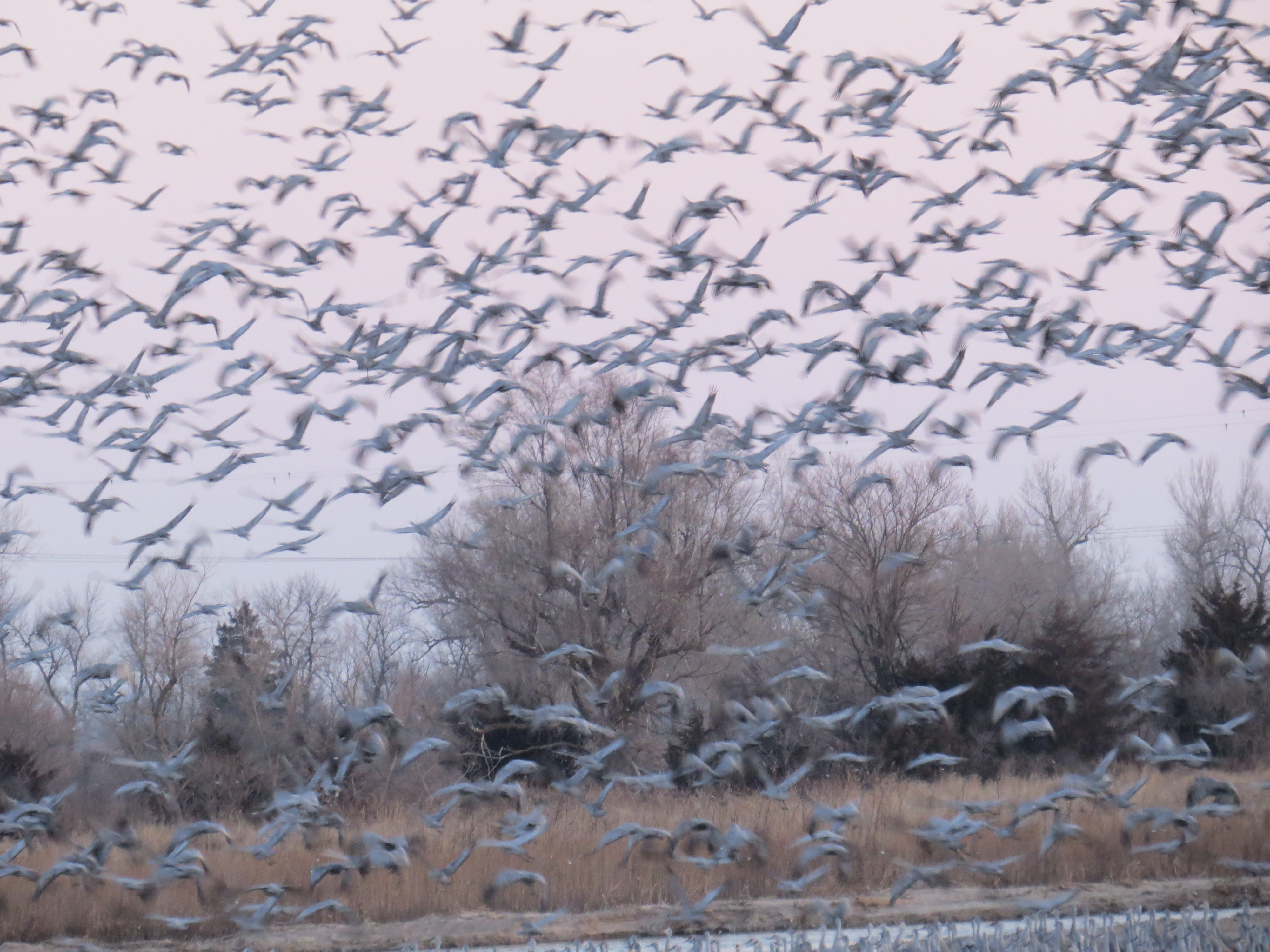
PART OF 20,000 CRANES SEEN OVERHEAD. ROWE SANCTUARY, 2011


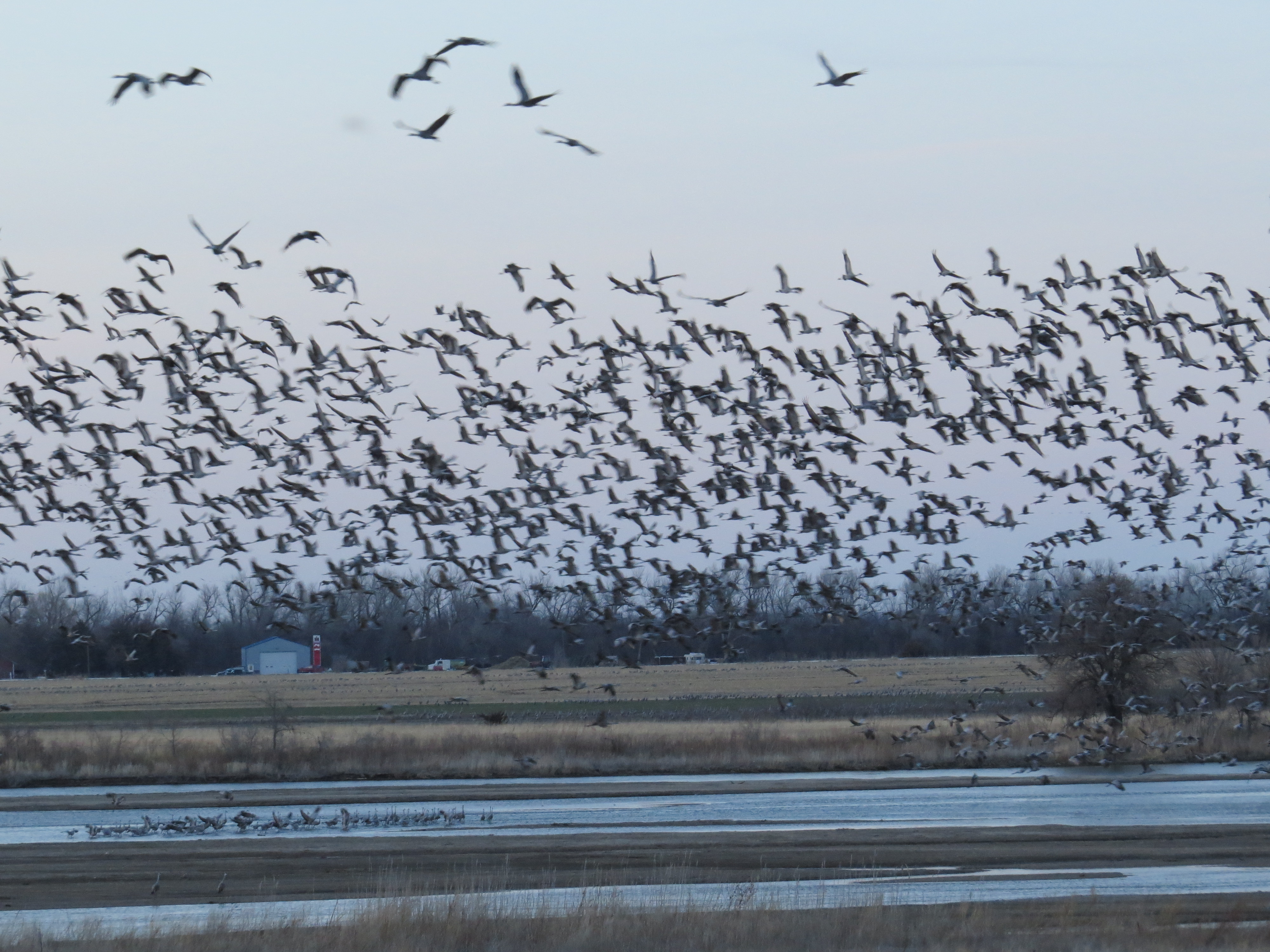
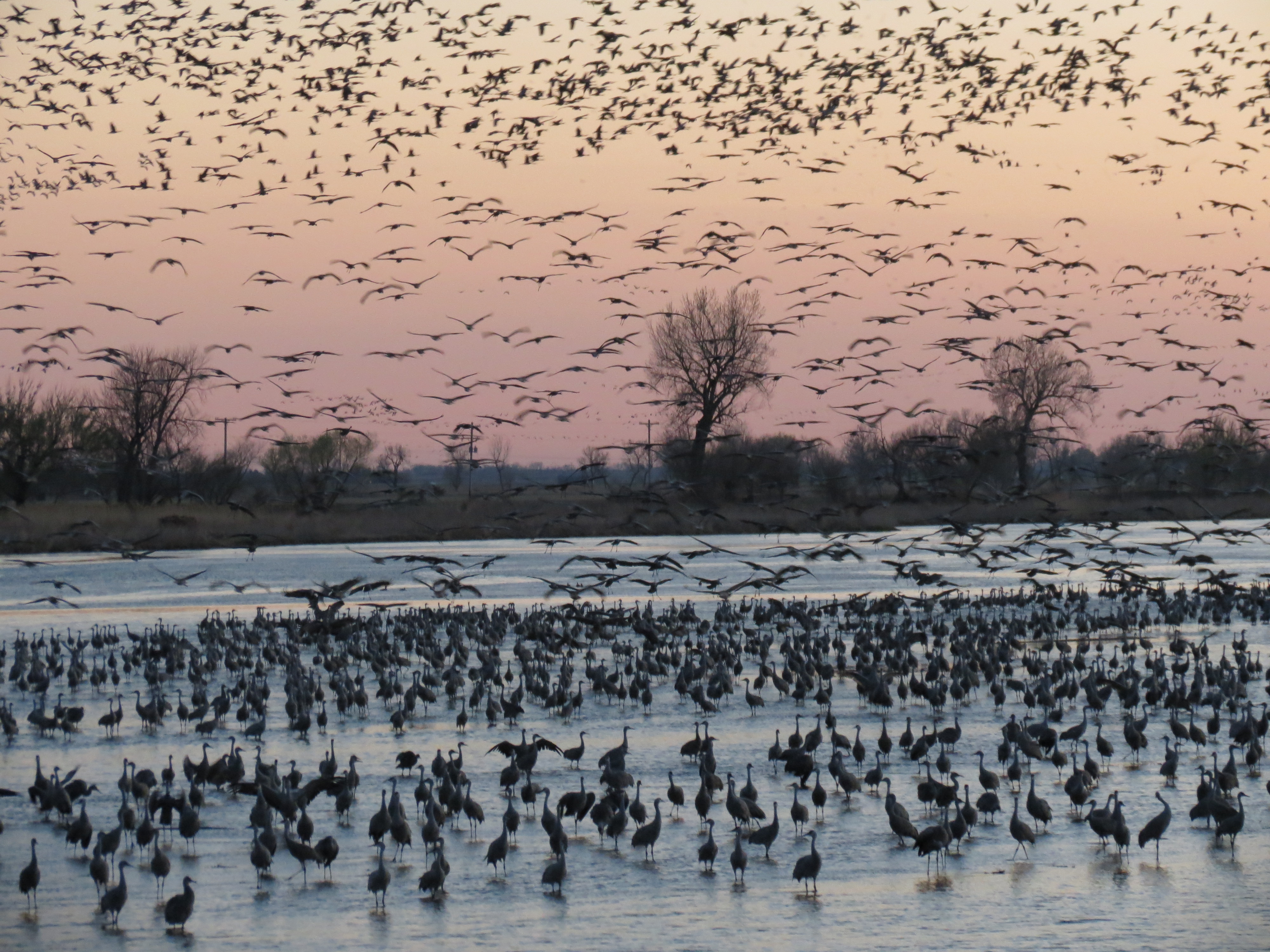
CRANES LANDING AT EVENING, ROWE SANCTUARY, 2014

CRANES LANDING AT EVENING, ROWE SANCTUARY, 2014

When I talk about the birds before we leave for the viewing blinds, I have everybody’s attention.  I am enthusiastic describing the migration, the distances the cranes travel, why they come to the Platte, and that it is one of the great sights of nature.  I am careful not to tell them what to expect, except they will see “cranes, plural.”  I tell them that we are not in control of the view; the cranes are.  I tell them that I’m going to learn something in the blinds:  I will learn about cranes, people, or myself, sometimes one, sometimes all three.


The last night I guide for a season is bittersweet.  I enjoy the trips, but I am physically exhausted.  I get up at 0440, make coffee, spend a little quiet time eating breakfast, for in 30 minutes, all the morning staff at the visitor’s center will be there.  Within an hour, there will be more than 100 people present, 85 of them tourists.  After the morning trip, I may be a roving naturalist, talking to people, I may be cleaning toilets, picking up people who went to the photo blinds, using an ATV, or running errands in Kearney.  I will get lunch and a 10 minute nap, answer questions.  Before I know it, the evening group is there.


My last evening, I was groggy from a longer than usual nap, a sign I was very tired.  When my group appeared for the short drive to Tower Blind, I told each of the 6 cars where we were going, and where we would park.  It is a short drive and a short walk, but I didn’t say much else other than to introduce myself.


When we parked, I let my co-guide talk.  She is a sharp Nebraskan who knows her stuff.  She quickly laid out what the birds were doing, completely in sync with me about what was and was not allowed.  I was beginning to get less groggy, and the evening air, full of the haunting sound of cranes, was starting to energize me: last tour of the year, my 101st time in the blinds. I spent the first four with my father and wife, others alone, in pre-season, when I have been alone with a hundred thousand birds in the vicinity, shivering with the cold and wind that the Nebraska plains throws at one, but also with excitement, too.


ONE OF MY TRIPS ALONE IN THE BLINDS, FEBRUARY 2010.  "CRANE MOON"

ONE OF MY TRIPS ALONE IN THE BLINDS, FEBRUARY 2010. “CRANE MOON”

We parked and walked 500 yards through a field and woods to 2-story Tower Blind, overlooking the Platte, back from the river, affording a panoramic view the other blinds didn’t.  I had been there three times that week; the other two OK, but spotty for cranes.  I was hopeful, however, for the previous night I was at East Blind, a mile upstream, no cranes landed there, but down near Tower, because of nearby eagles, which spook cranes.  I’m not responsible for the quality of the show, but I want my clients happy.  In any case, I will spend time by the river, see cranes, and I be outside.  That isn’t bad.
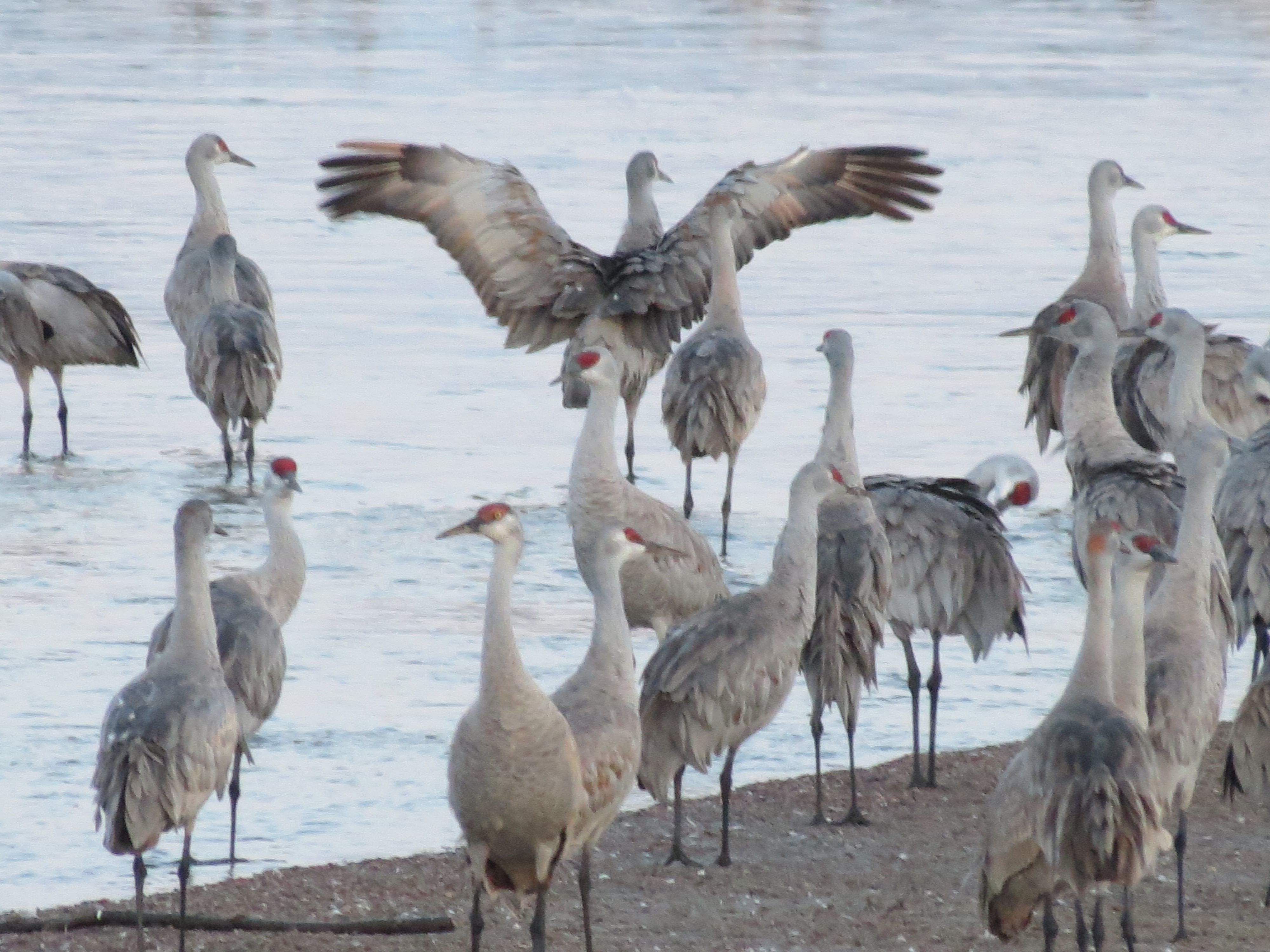
DANCING CRANE. THEY DO THIS TO RELEASE HORMONES.  CRANES HAVE THE SAME NEUROTRANSMITTERS WE HAVE.  LEARNING HAS BEEN PROVEN.

DANCING CRANE. THEY DO THIS TO RELEASE HORMONES. CRANES HAVE THE SAME NEUROTRANSMITTERS WE HAVE. LEARNING HAS BEEN PROVEN.


I had time to point out the flight of the cranes flying in, the group learning the asymmetry, a slow downbeat with a faster upbeat of the wings, so distinctive to these aerodynamically marvelous creatures, who may fly a quarter of a million miles in their lifetime and can, in 4 months, make a nest, lay eggs, incubate them for a month, and have the chicks flying several thousand miles south.  I found myself poetic that night, calling cranes “other nations, with senses, abilities, and feelings we will never have, experiences we will never share, and a language we can only begin to understand.”  I was getting people interested, and with cranes flying overhead, I am in my element.  I was getting energized.
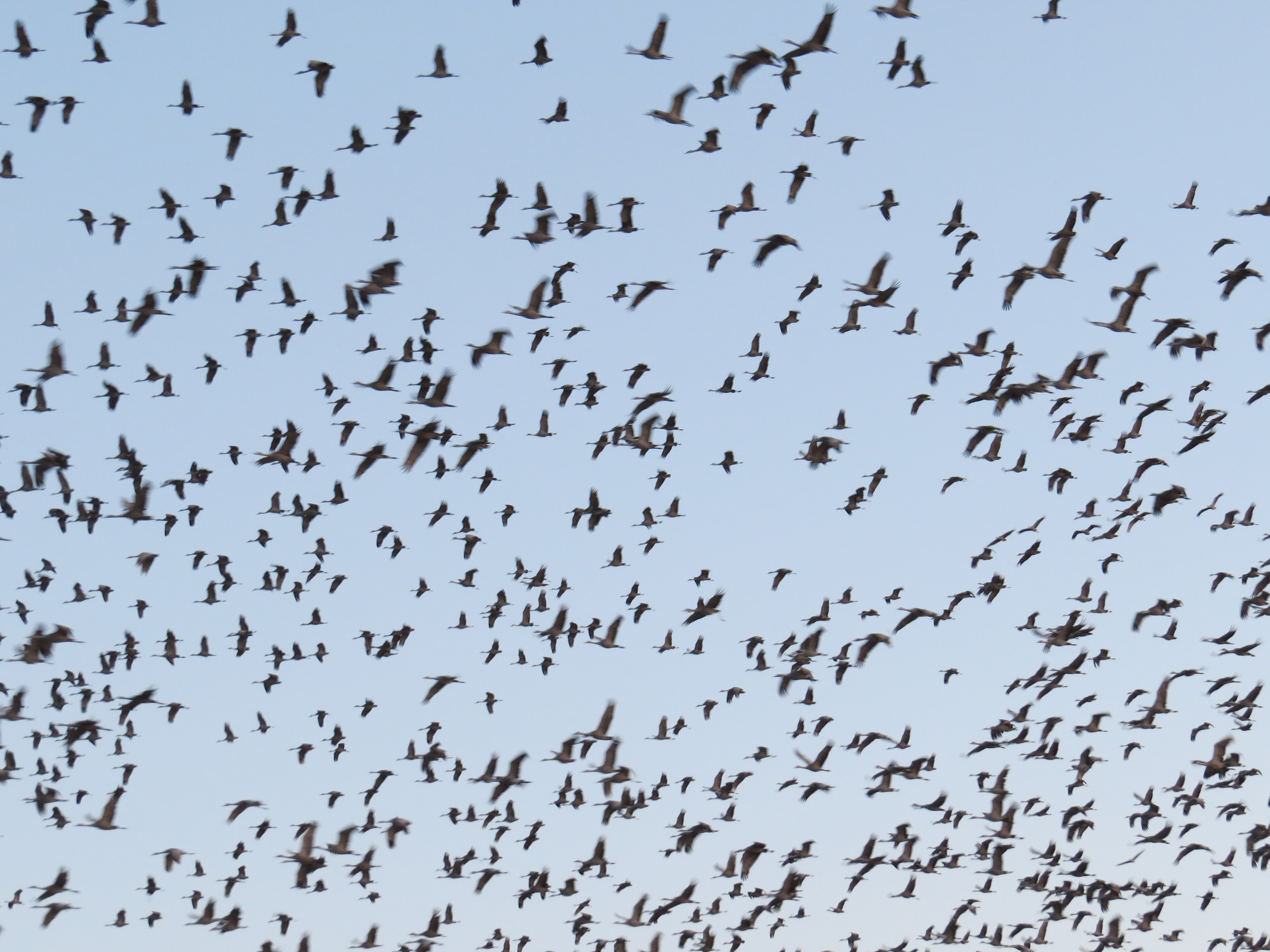
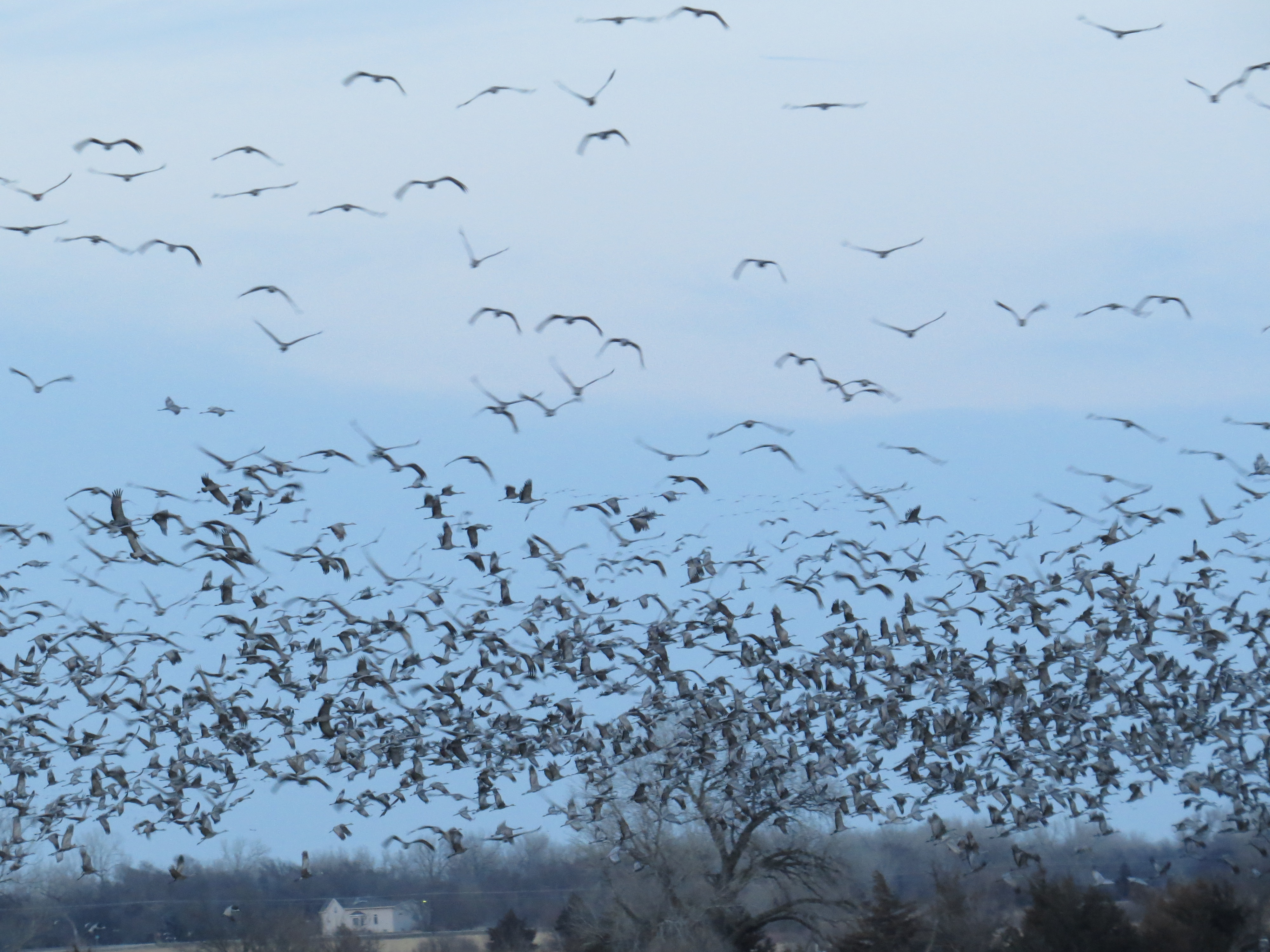
CRANES OVERHEAD. THIS IS LIMITED ONLY BY THE CAMERA'S VIEWFINDER

CRANES OVERHEAD. THIS IS LIMITED ONLY BY THE CAMERA’S VIEWFINDER


“Mike, turn down your voice.  They’re on the river.”  My co-guide, more observant than her talkative partner, had noted the first birds landing at 7:25, 30 minutes earlier than I had seen all week,  I shut up and let nature put on the show.
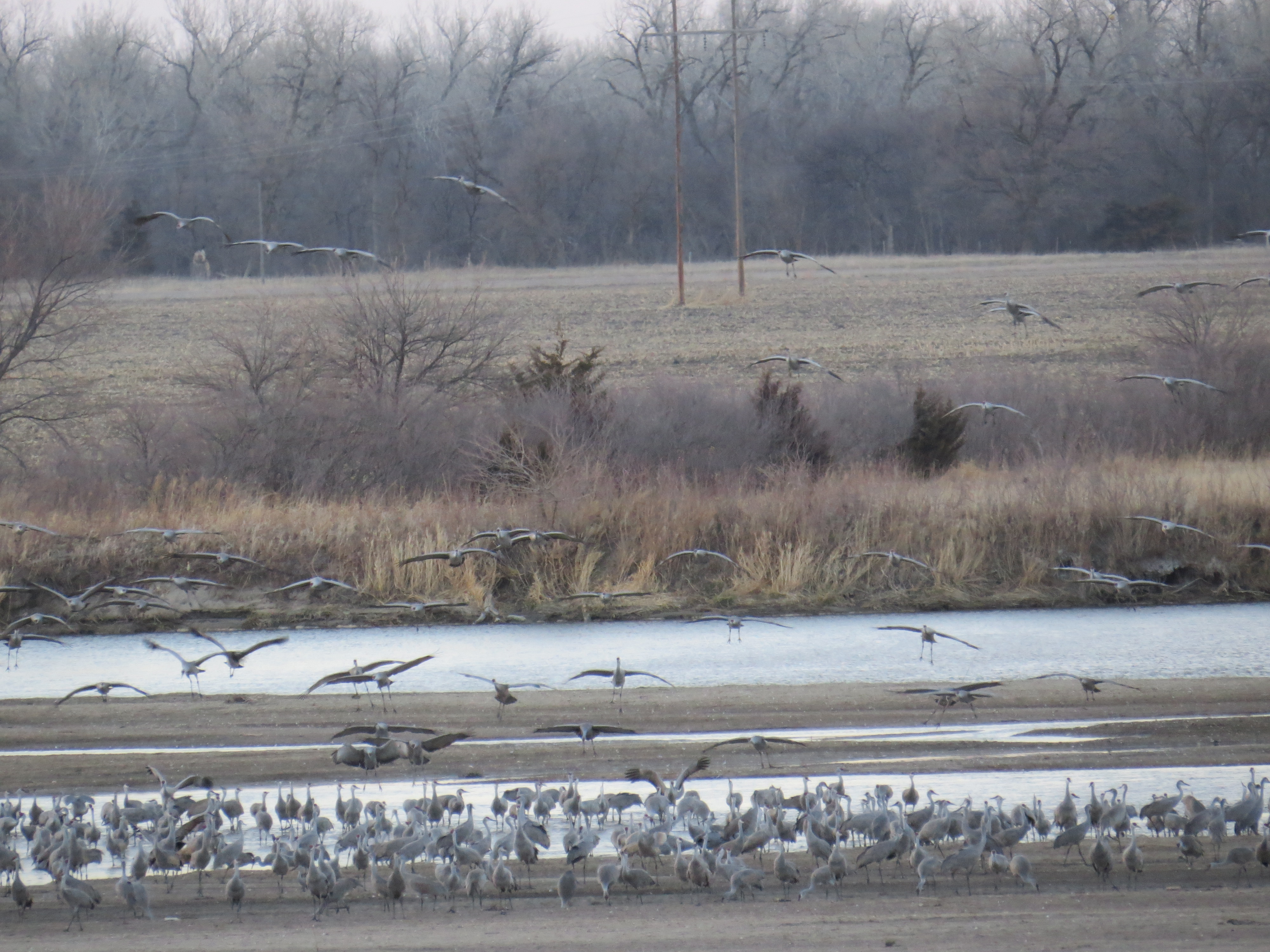
CRANES LANDING, FROM TOWER BLIND, 2014

CRANES LANDING, FROM TOWER BLIND, 2014


The birds arrived in enormous numbers, clumped in gray islands on the river, each with thousands of cranes, from the Gibbon Bridge to well upstream of us.  Twice, they flew off, perhaps spooked by an eagle.  That’s common morning behavior; to see it at night is special.  There were cranes everywhere, the noise, echoing across 9 million years cranes have graced the Earth, was essential to the visual show.  Like the loon, the call of the crane is every bit as important to the experience.
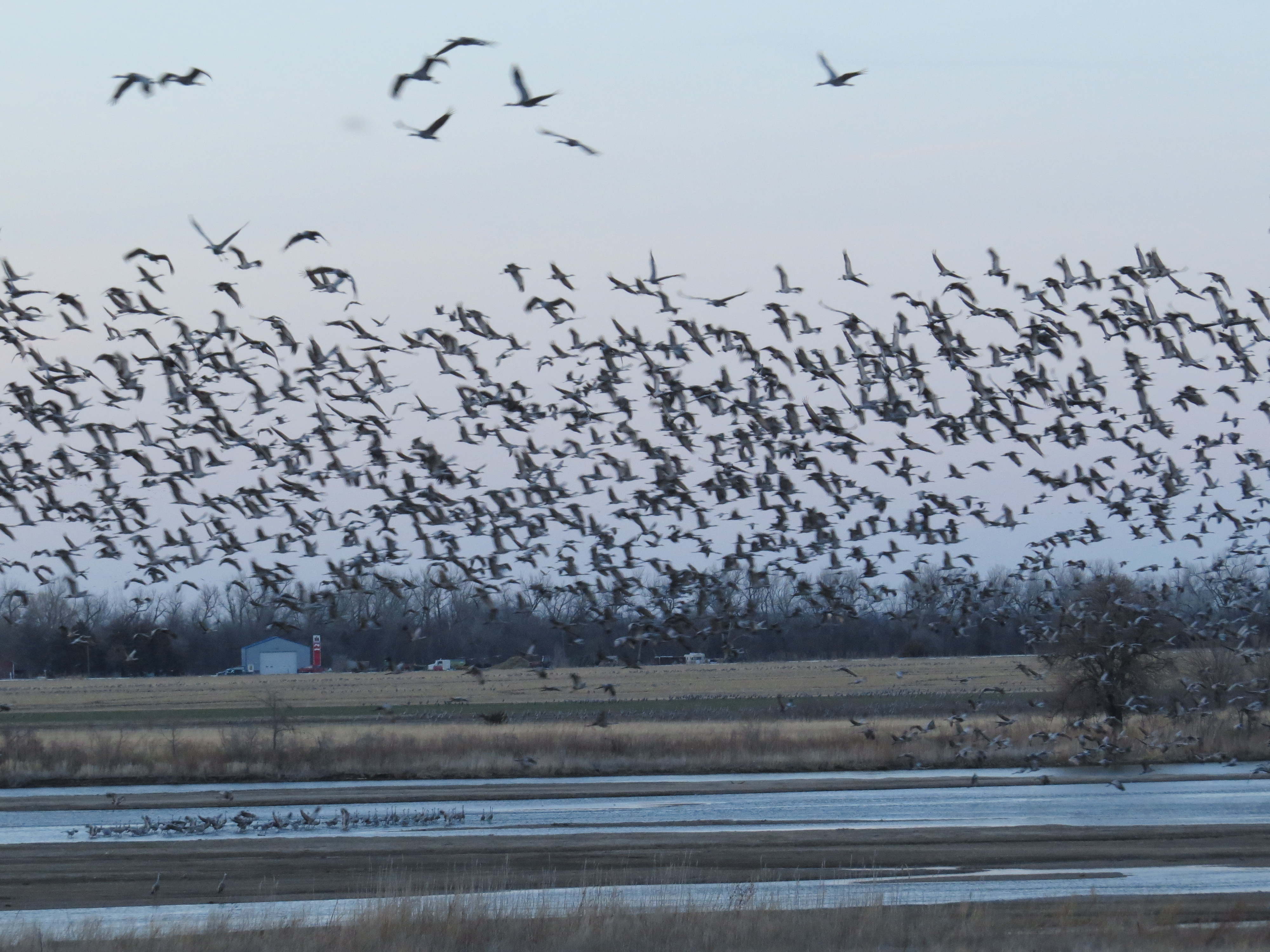
ENORMOUS NUMBERS.  I HAVE SEEN FAR MORE, BUT I NEVER TELL THE CLIENTS THAT.  THIS IS WHAT I CONSIDER "A GOOD NIGHT".

ENORMOUS NUMBERS. I HAVE SEEN FAR MORE, BUT I NEVER TELL THE CLIENTS THAT. THIS IS WHAT I CONSIDER “A GOOD NIGHT”.

When dark, we quietly left the blind, walking to the vehicles.  I was in the rear with a couple my age, discussing the show.  They were thrilled, asking me what I once did.  I told them I once practiced neurology, and they discussed their aging parents, 90 and 87, the same age as mine, when they died.  Their parents were demented; when I mentioned how I hoped might volunteer, not just to show people the beauty of life, but to give others help for the decision making how to die, the man said, “You’re preaching to the choir.”  We were almost back to the vehicles, when his wife said they were here for a respite from their caregiving.  Their gratitude for both the show and what came after on the walk was palpable.


The couple has a long road ahead of them, like the cranes. The road will not be easy for both;  one in twelve cranes will not return in 2015.  But the couple had seen something remarkable, life and hope, saw it together, glad they came, knowing they had a special memory to fall back upon during the hard times ahead.


I don’t usually say that a blind is “The best I’ve ever seen it,” to clients. But I said it about Tower that night. Paul Johnsgard’s “special conjunction of spring, the river, and a bird” mirrored my conjunction of learning about myself, others, and Sandhill cranes.


Godspeed to the cranes, on their way north, far from the Platte Valley, for it is time they must go.  Godspeed to the parents of the couple, on their way out of a long life, for it is time they, too, must go.  In the past, I helped many leave life with dignity; today, I helped others see the cranes on their way north to create new life.


I couldn’t have asked for a better ending to my guiding season.
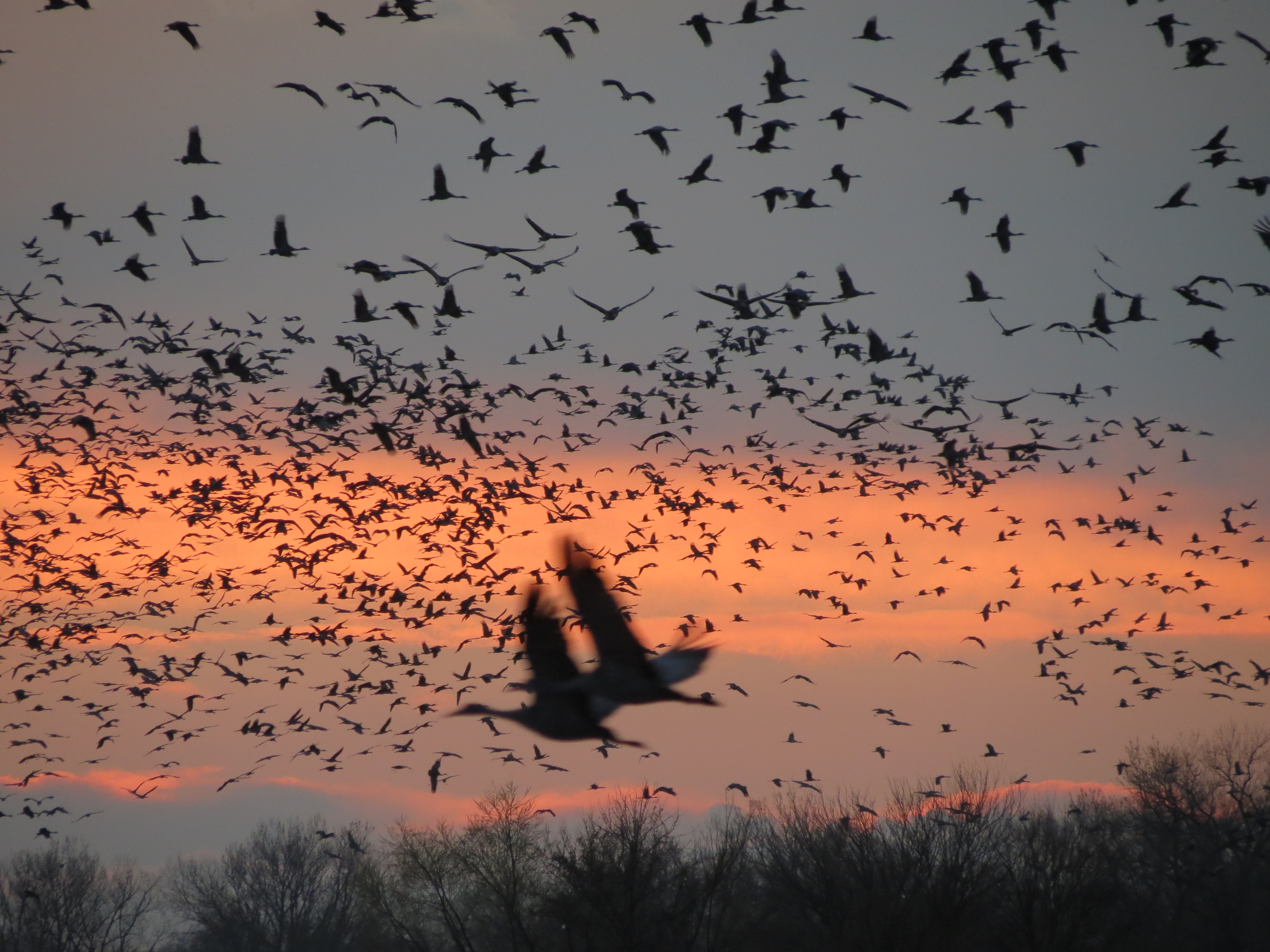
 

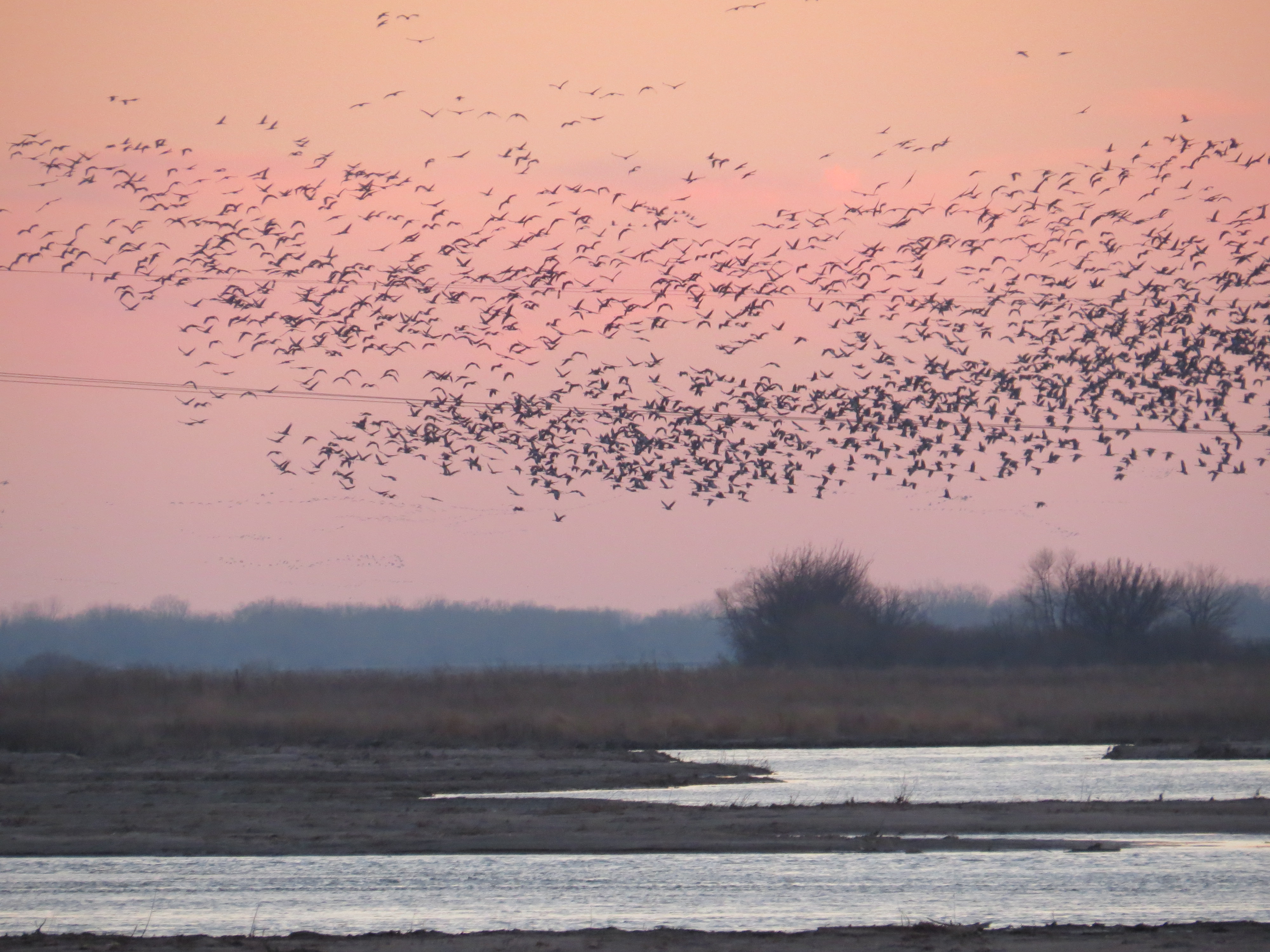
NEBRASKA SUNSET AND CRANES.  ROWE SANCTUARY.
NEBRASKA SUNSET AND CRANES. ROWE SANCTUARY.
BREAKING SOME OF THE RULES

March 31, 2014

I guide visitors to see the Sandhill Cranes in Nebraska, where in March evenings, they come to the Platte River in extraordinary numbers, leaving for the fields the following morning.  The birds are unable to perch, so they live on the ground, in the air, or in the water.  The latter acts as an alarm system, so no predator may get close to them.  The Platte, one of the most maligned rivers in US history, is perfect habitat, because it is shallow, with many channels, a braided river.

Cranes in the air.  This is a common sight in the morning or evening.

Cranes in the air. This is a common sight in the morning or evening.


I’ve guided for 5 years, and the rules for taking people to the blinds are strict.  Noise must be kept to a minimum.  I tell people if they can’t whisper, that is fine, just don’t talk.  Camera flashes are taped down in spite of “it’s turned off.”  That phrase is like “he never did that before,” when a person’s dog bites you.  The difference is whereas biting bothers me, a flash can spook ten thousand cranes into the sky, some injuring themselves fatally.  We also tape over the laser sensor, since that emits light, and at infinity focus, it isn’t necessary.  Nearly all are pleasantly compliant.  We put post-its over the display screen, to limit light reflection off one’s face out to the river.  We have strict rules about camera equipment.  We don’t allow automatic multiple exposures, for the sound detracts from the experience of hearing tens of thousands of cranes closeby.

Platte Sunset.  The river and sky are a mass of cranes.

Platte Sunset. The river and sky are a mass of cranes.


Yes, we are paranoid.  We walk out in groups with one guide’s leading and the other’s trailing.  We limit noise in the blind.  I tell client medical emergencies and their safety are my top priority, but when it comes to inconvenience, such as being cold, hungry, or bored (crane viewing isn’t for everybody), we stay put until such time as we may safely leave.  People may not leave when they choose.

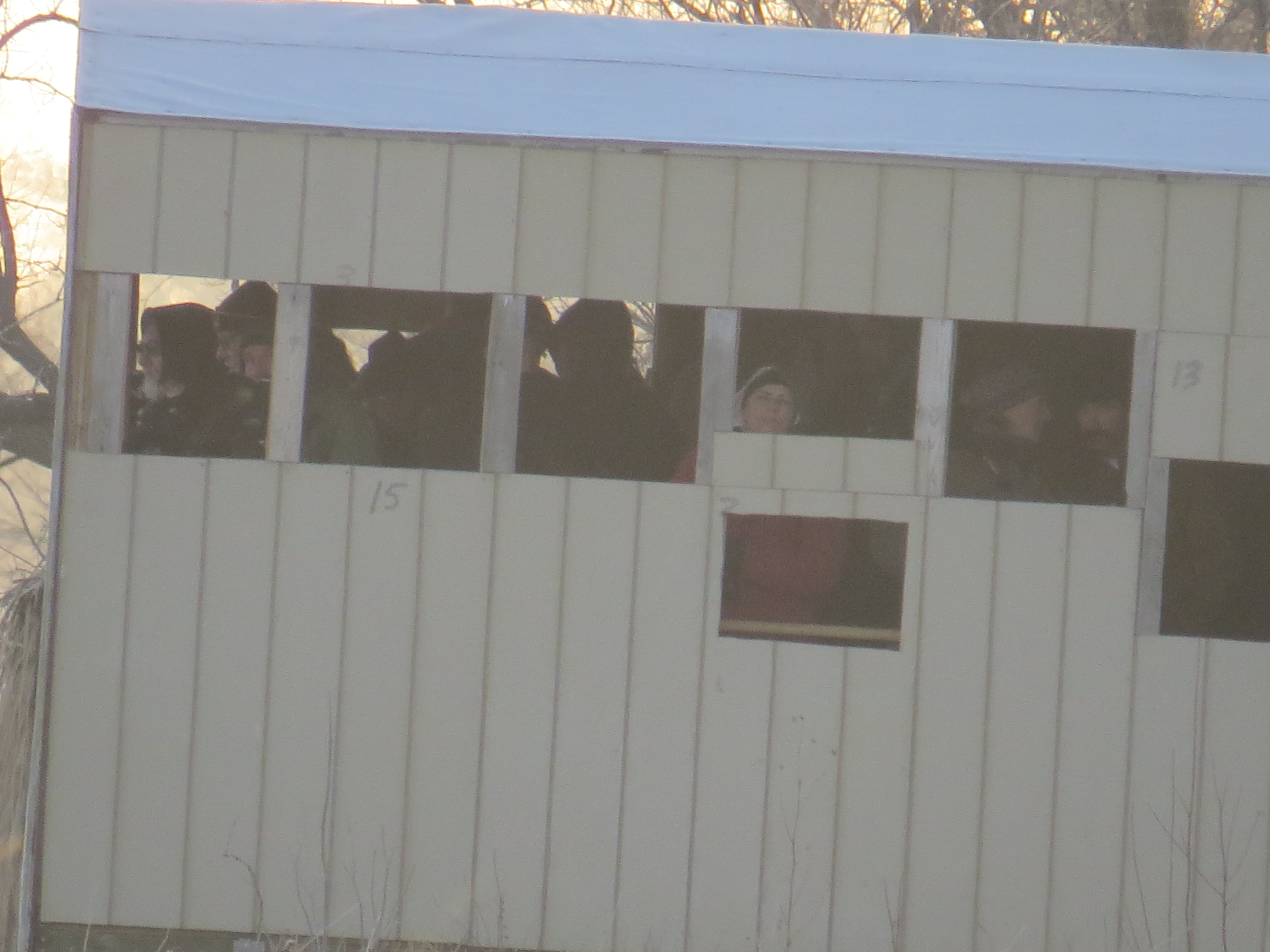
Viewing Jamalee Blind from Stevie. These are memorials to Dr. Jamalee Fenimore and Stephne (Stevie) Staples.

Viewing Jamalee Blind from Stevie. These are memorials to Dr. Jamalee Fenimore and Stephne (Stevie) Staples.  There are 38 people in Jamalee, which is much larger than seen here.


We accommodate those with disabilities.  I took a man with significant Parkinson’s by golf cart to a viewing blind.  The carts are quiet, and the man had a set of photography equipment as advanced as anybody’s I’ve seen.  I helped him carry his equipment into the blind, and when the light was right, he set it up himself, quietly. He took his pictures and told me later, on the way back, it took him 26 years to finally get a sequence of crane dancing correct.  It hangs in the visitor’s center at Rowe.


We allow golf carts to two of the five blinds; the third one, East, does NOT allow for golf cart transport.  It is too exposed in the morning and the path too bumpy to make golf cart transport easy.  The other two blinds are near each other, so we can do multiple trips if necessary.


I sleep on the floor in the visitor’s center, awake at 4:40 seeing to what blind I am assigned.  I found I was going to East but we had two people needing a golf cart.  This was a mistake and a problem.  I discussed the matter with one staff member at 5:15.  She was concerned, too, and we thought about moving people from one blind to another.  That wasn’t going to work.  Another staff member made what I call a “command decision.”  I would take one man in a golf cart to East, parking it some distance from the blind.  This was breaking a rule, but we felt the situation called for it. I thought the solution good; I would quietly lead the group out in the cart, my co-guide keeping everybody behind me together.


East often didn’t have “good cranes,” as we guides call it, because some left very early in the morning, not allowing for pictures.  Indeed, the prior day, the guides got there too late for the “blow off,” which occurs if all cranes leave at once, such as being spooked by an eagle, a coyote, a dog, or some loud noise.  I heard that story, so I kept my morning briefing in the center…..brief.  It gets light in Nebraska early by late March, and I was in a hurry.  As my group entered, I taped all the cameras appropriately, explaining my reasons.  I told them this was the proper time to use the toilets in the center, so they would be ready to leave when I was.

Cranes at Sunset, North Blind, across the River.  They often secondarily stage (land) in the field here, coming in from several miles away from the river, where they fed on waste corn during the day.

Cranes at Sunset, North Blind, across the River. They often secondarily stage (land) in the field here, coming in from several miles away from the river, where they fed on waste corn during the day.

I told the group what the birds were, where they were coming from, migrating up to 7000 miles (one way).  They were feeding and putting on fat for the trip north, where they would build nests near Great Slave Lake; Bettles, Alaska; Siberia;  the Hudson Bay watershed.  I’ve seen cranes north of the Arctic Circle.  I told the 30 there it was one of the great sights in nature, one of Jane Goodall’s top ten, one of my top four.  I told them I was a volunteer, and I wanted them to have a wonderful time.

Then I told them the “don’t”s, including keeping body and camera parts inside the blind.

I didn’t ask for questions. I said we would talk in the blind later.  Some guides go into great depth.  I do, too, in the evening, when we have time.  In the morning, I want to reach the blinds early.  So do the clients, too.


Then we left, and I took the man needing the golf cart, the rest of the group in tow.  On the way out, the man told me he had leukemia and had just finished chemotherapy.  He wanted to see the cranes this year, even a few.  He hoped he would be back again.  I did, too, but leukemia is leukemia.  Then again, at my age, I start talking in terms of “if I am still around.”  This man may not be, and we both knew it.

East Blind was great. Cranes were on the river right out in front of it.  Ten minutes later, they all blew off into the orange sky of a Nebraska sunrise.  The man saw it.

In order to take a man with leukemia to East blind, I’ll bend the rules.  Had he asked to use a flash, I would have said no.

I hope he’s back again and again.  We’ll just be sure if he needs a cart, he goes to the other two blinds.

IMG_0402 IMG_0397 IMG_0399 IMG_0400


Crane sunset.

Crane sunset.

IMG_0137

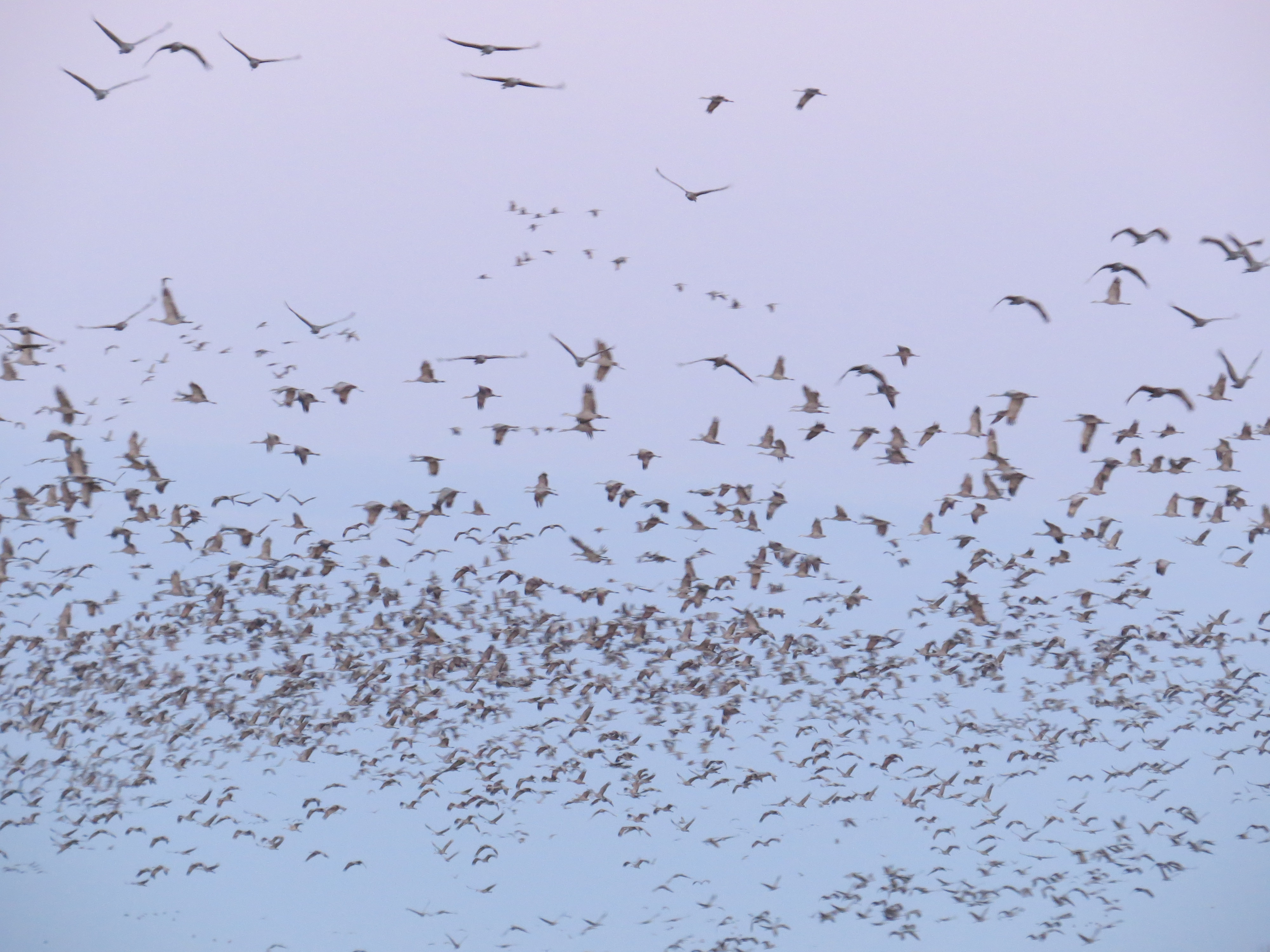
Sky dark with cranes

Sky dark with cranes

PAGE 107

March 31, 2014

Despite difficulties with the Affordable Health Care Act, I have had no problem with Medicare, “big government” medicine.  I have, however, had problems with one private insurance company.  I will call it “X,” to avoid any semblance of libel, although I am not telling an untruth.  Part D was enacted by the Bush administration, and while a step forward, I expected perfection, since Bush was a Republican.  I did not expect a “doughnut hole,” cost overruns, and failure to negotiate with pharmaceutical companies.

Anyway, I signed up online with X and a local pharmacy for my two prescription medications.  I used my Arizona address, because at the time I lived there. I soon discovered that I got what I paid for.

I take Drug “A,” 2 mg, 2 pills twice a day, 240 mg monthly.  Drug A has 3 sizes:  2, 5, and 10 mg.  Representatives from company X told me that Medicare regulations limited the number of pills per month to 90, in order to prevent falls, a potential side effect.  This restriction was not true, I later learned.  Rather than to ask my physician for an emergency authorization to take my usual dosage, I procured a prescription for 5 mg, 60 a month, although I needed to take my daily dosage in a different fashion.  It wasn’t ideal, but I could live with it.  Notice that I could take 300 mg a month.  That was a tipoff that Medicare restrictions were not the issue, private business restrictions were.

I called a special number to X and had a 3-way conversation with their clinical pharmacist and their sales representative.  I had no problem with Medicare’s restriction; I did have an issue with the monthly allowed dose, which made no sense.  Knowing the answer, I asked my next question:  How many 10 mg pills may I take a month?  They both answered: “120”.

I continued:  “So, I can’t take 120 pills of the 2 mg dosage a month, or a total monthly dosage of 240 mg, right?”  They agreed.

“But,” I continued, “I can take 120 pills of the 10 mg dosage a month, 1200 mg total, 6 2/3 times the allowed 2 mg dosage, right?”  I teach high school math; I knew this stuff when I was about 6.

There was sudden silence on the line, then, “we need to talk to our supervisors.”  In other words, apparently somebody at X realized the restriction of dosage for the smaller amount did not obviate the issue of prescribing a larger number of pills for the larger dosage.

That is Part 1.  On 7 March, I went to the pharmacy to get my prescription, only to be told I had been “disenrolled” from X on 28 February.  No reason was given.  Nobody at X answered the telephone on the weekend, so now I was without Part D coverage.  Suppose I were 75, on chemotherapy, needed a key anti-arrhythmic, didn’t have money, and had moderate dementia?  These things occur, even to elderly Republicans.

Becoming concerned about coverage, I called AARP-recommended United Health Care, spoke to a person, and enrolled, effective 1 April.  I will have no coverage during March.  Fortunately, I have enough medication.  If I didn’t, and the medication were expensive, I would be in trouble.

One may change address for coverage of drugs under Part D, and I planned in March to inform X that starting in April, I would be living in Eugene, not Tucson.  I don’t know how X got my Eugene address, except private information is easy to find nowadays.  Amazon, most of West Africa, and every medical organization worldwide appears to have mine.

On 14 March, I received a letter from X, dated 7 March, saying “Your Prescription drug coverage ends soon” .  In fact, when I got the letter, I was already two weeks without coverage; when the letter was written, I was already a week without coverage. Given the letter was written in the future tense, I wonder how X treats the past.

I quote part of the letter, my comments in bold:

“Thank you for letting us know about your change of permanent address”  (I didn’t.  I would have in March, had I not been disenrolled.)

“You now live outside X Prescription Drug Plan service area. To be a member of our plan, you must live in X’s service area, although you may be out of the service area temporarily for up to 12 months. How did you know the address wasn’t temporary? For that reason, we’ll disenroll you from X’s Prescription Drug Plan on 02/28/14.  “Because” is a better word than “for” in this instance.  The tense was wrong, they waited several days to send the letter, it was dated a week after the fact and took 7 days to travel 2000 miles.  

X did nothing illegal.  On page 107 of my coverage document, the wording was quite clear.  It wasn’t in fine print, but I wonder how many people go through these documents word by word, especially elderly folks, who may not understand a lot of these terms.   The individuals involved at X did not appear to know the English language, judging by the tenses; further, they did not mail the letter in a timely fashion, I had no chance to appeal, and without warning, I lost my coverage.  That was not mentioned on page 107.

While the Affordable Health Care Act has become a whipping boy for all that is wrong with medicine, this is an insurance company issue. The one organization that has worked is Medicare.  I suggested two decades ago that we would do well to expand Medicare to cover everybody:  It would be a one page bill, solving many problems. Costly?  Sure.  What cost can one place on not having insurance and being ill?  A lot of people pay that cost, especially the ill person.  Is that what America is about?

Perhaps X is a good company.  In my experience, however, they drop people suddenly, then later use the future tense.  I teach English online to people in 90 different countries and know the difference between the past perfect and future.  Their letter was signed:  “The X Enrollment Team.”  I am old enough to remember the jokes about “the 20 Mule Team.”  This would be funny, if it weren’t so potentially dangerous to the elderly.

I must be careful; “scorn or ridicule” are part of the definition of libel.