Archive for March, 2014

BEING MADE OF STAR STUFF IS SPECIAL: TIME TO ACT LIKE IT

March 5, 2014

13 February 1988, West Anklam Road, Tucson, 6 a.m. I’m standing with an ICU nurse looking at Saturn and Uranus in conjunction, the same longitude in the sky, near the hospital where we worked.  “They’re in Sagittarius,” I pointed to the “handle of the teapot,” noting the bright star Nunki, guide star for the Voyager 2 spacecraft, to pass near Neptune a year later.

“No,” J. replied. “They’re in Capricorn (sic).”

“No, there are the two, and they are in the constellation Sagittarius.”

“But astrologically, they are in Capricorn (sic).” (It’s “Capricornus”)

“Well,” I sighed, “you can say they are in the Big Dipper, if you want.”  This was the last conjunction I would see of the two planets, unless I live to 83.

The Dartmouth Alumni Magazine recently profiled a man, a professional astrologer.  The astrologer  stated  his beliefs; the first thing I do in these “last page” articles is to check the “fine print.”  He left Dartmouth before completing his studies; no reason was given.  That colored my opinion.  Yes, Robert Frost left Dartmouth without finishing, but to paraphrase Lloyd Bentsen in his 1988 debate with Dan Quayle, “You’re no Robert Frost.”

7  December 1972 shot of the Earth.

I’ve posted the above picture before, and it’s worth re-posting.

What month is this?

What constellation is the Sun in?

What are constellations, anyway?

What can you learn from this picture?

Notice Antarctica illuminated by the Sun, so it must be near the Austral summer solstice.    The actual date was 7 December.  The Sun is in the constellation Ophiuchus on this date, meaning that if one could see the Sun from space, where the light isn’t scattered by air molecules, it would appear against the background stars in that constellation, an arbitrary grouping of stars with arbitrary boundaries, not in Scorpius (the proper spelling) or Sagittarius, the astrological constellation for this date.

Notice the white comma, a major anticyclone, or storm, off the southeastern coast of Africa, and the large clusters of thunderstorms in the southern equatorial region of Africa, consistent with migration of the Intertropical Convergence Zone (ITCZ) this time of year.

What predictions did the astrologer make?  In 1986, Bank of America was going to have problems.  He claimed he knew by looking at the rocks in the foundation; I would have looked at the internal books as a better foundation.  He said that the 50th degree of longitude, “that bisects the Persian Gulf,” would become a major factor in the world, and that the 35th parallel through the southern US would become very important.

Wow. The 51st meridian (or 27th parallel, another bisector, which was omitted) bisects the Persian Gulf better than the 50th.  Given the Gulf’s importance (he didn’t mention the Gulf of Oman and Somalian coastal waters), this prediction is not surprising.  All degrees of latitude in the US may be important; he omitted Kirtland and Edwards AFBs, near 35 N., but important Los Angeles is not.  What does “important” mean?  A chemical explosion, a nuclear weapon, or a great discovery?
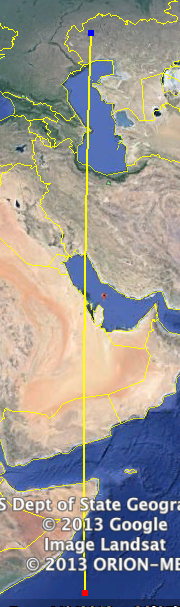
50 E. longitude.  This might be considered important in the coming years.

50 E. longitude. This might be considered important in the coming years. This goes through oil-rich Baku, near Dagestan, through Iran, the Persian Gulf, the Gulf of Oman,  the Horn of Africa, and Somali waters.

I limit my issues about Astrology to four:  first, my “sign” of Sagittarius is defined by my birthday, not the Sun’s location when I was born. There are fourteen (not 12) constellations through the Sun may “travel.”  While it was in Sagittarius on my birthday 3000 years ago, it is now in Ophiuchus, north of Scorpius (the correct spelling).  I have no classical astrological sign.  Astrologers use celestial longitudes to try to deal with this fact, but they haven’t factored in precession; the Sun passes through 14 constellations during a 26,000 year cycle.  In 1991, $10,000 was offered to anybody’s showing the July 11 eclipse of the Sun against the background stars of then astrological Cancer, not the actual Gemini.  No takers.
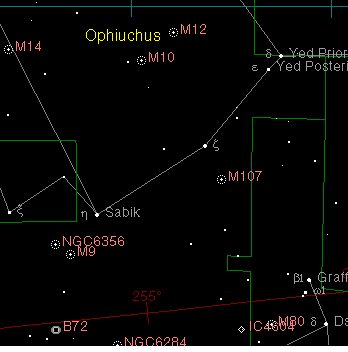
Ophiuchus.  Scorpius is in the lower right; the curved red line with 255 on it is the Sun's path, 255 being the number of days after the vernal equinox.

Ophiuchus. Scorpius is in the lower right; the curved red line with 255 on it is the Sun’s path, 255 being the number of days after the vernal equinox.

Second, there is no proof why astrology works.  What happened before 1781, when Uranus was discovered?  How can a planet’s position affect us? It can’t be gravity, because I have more gravitational attraction with my car than I do with Saturn.  Gravitational force decreases with the square of distance.  I would like to know the reason using terms that a layman can understand. I practiced neurology, and it was my job to explain what I knew to people, not hide it to make money.

Third, lines of latitude and longitude are dimensionless, so there must be some “wiggle room,” or error.  How much?  Why?  We are 95% confident global warming is occurring.  If we ran 100 simulations, 95 of them would not contain zero.  Where is astrological uncertainty, required for any prediction?
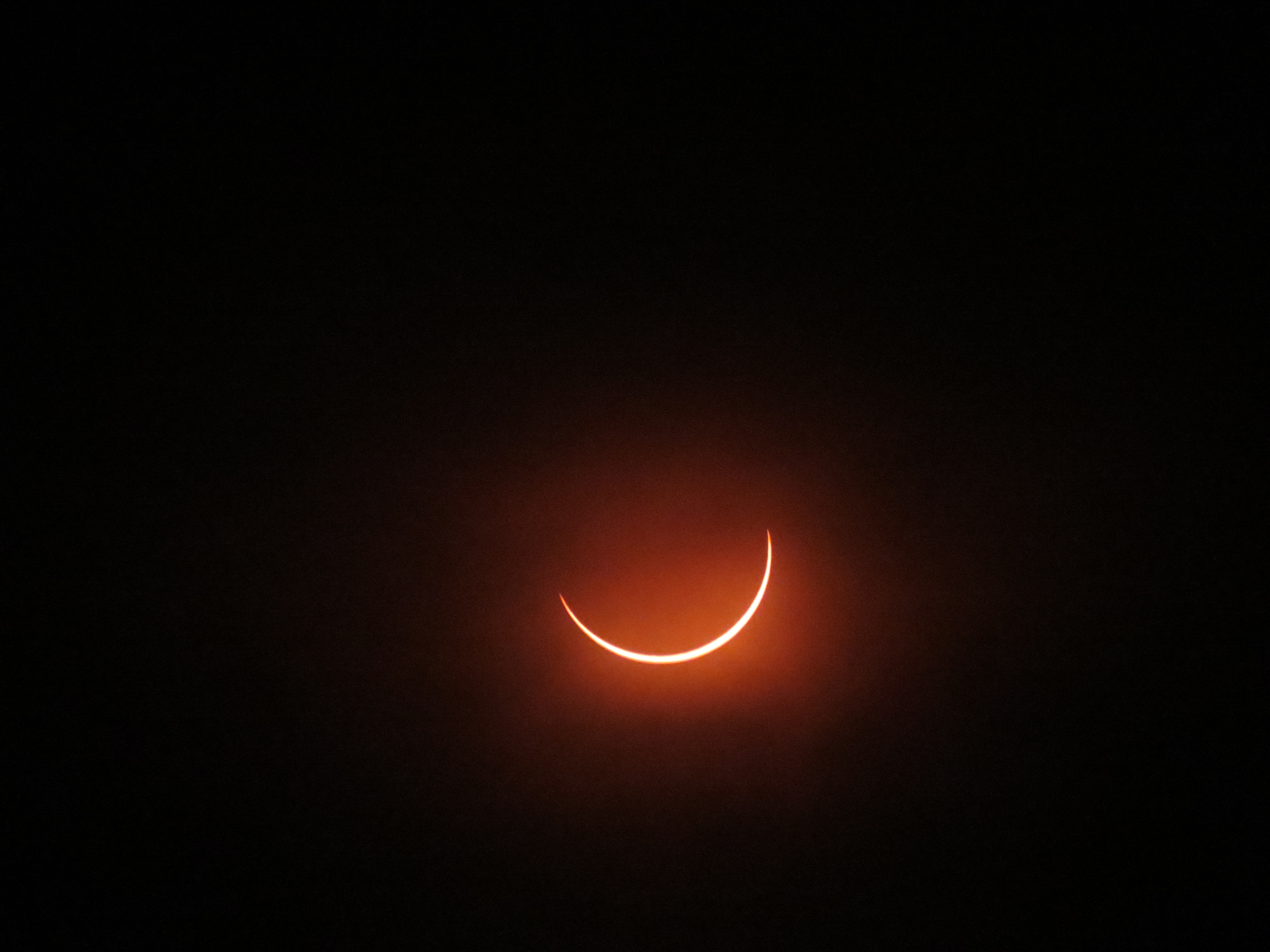
Just after 3rd contact or totality, Uganda, 3 November 2013. We had to be in a path 18 km wide to view 19 seconds of totality.  This path was known decades in advance, because we understand orbital mechanics.

Just after 3rd contact or totality, Uganda, 3 November 2013. We had to be in a path 18 km wide to view 19 seconds of totality. This path was known decades in advance, because we understand orbital mechanics.

Finally, too many never learn the actual sky, far more beautiful and fascinating.  I can tell time, date, and latitude by looking at the sky, and I can teach it.  Why seasons? The poles point in the same direction as the Earth’s orbits the Sun; sometimes they point towards the Sun (summer, more direct Sun); sometimes they point away (winter, less direct Sun).  I can predict full Moons and eclipses of the Sun and Moon; so can anybody, should they wish to learn.  It is science, not vague words.  Science has allowed me to see 20 central eclipses from all over the world.

Contrast that to my horoscope today, “You may want to let go of plans and let your spontaneous personality take over.”   “May”?  Why?  What is “spontaneous personality”?  All “plans” or some?

I once showed a minister the sky.  I scuffed my feet in the desert that night, explaining where the silicon in the sand came from–a star.  The iron in our blood came from a large star that accumulated iron in its core, which cannot be fused.  The star first implodes, gravity taking over when fusion ceases.  The ensuing explosion, equal to the Sun’s energy output during its whole existence, produces heavier elements.  The gold in a ring came from a star.  The magnesium in the pyrrole ring of chlorophyll came from a star, the carbon, nitrogen and sulfur in our bodies came from a star. The calcium in our skull came from a star.

Now, if the contents of that skull could appreciate this beauty, direct efforts towards improving the world, rather than making a buck through magical thinking, our life would be improved on this once-part-of-a-star world.
THIS JOB MATTERS

March 2, 2014

 In a Starbucks somewhere at Sea-Tac, I’ve seen an older man, around my age, working the counter. I go through Sea-Tac annually, if I am lucky, because I am on my way to Alaska and to the remotest country I know.  When I come out of the Brooks Range, I take the red eye back to Seattle, get 3 hours’ sleep, and head straight for a bagel and coffee, before the next flight south.  I’m getting a bit old for these trips, but there is a lot of country I still want to see.

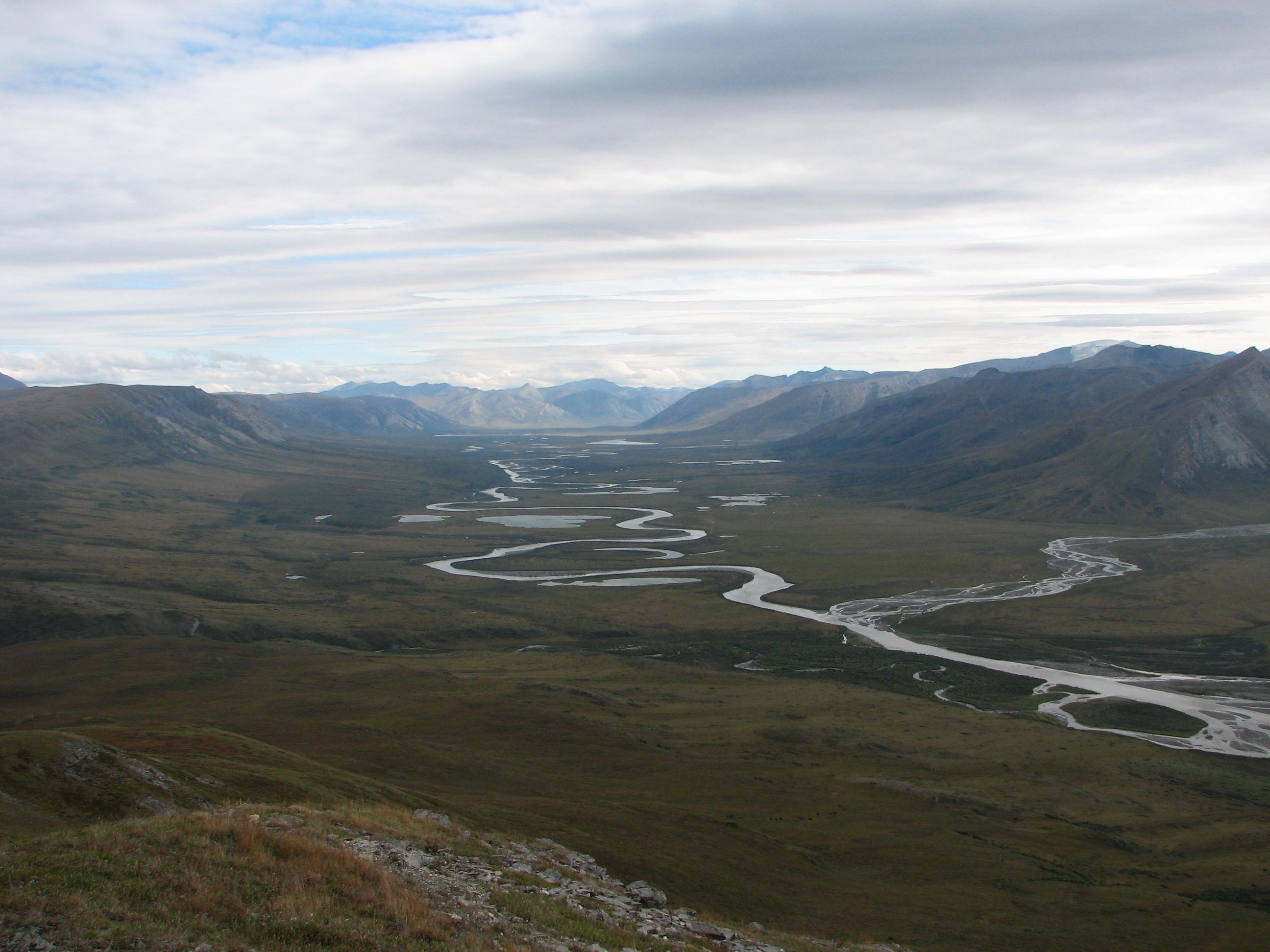
Noatak River, looking east, some of the most remote country in North America.

Noatak River, looking east, some of the most remote country in North America.

Dall Sheep above the headwaters of the Aichilik River.  This was one of the most beautiful areas to hike that I have ever been.

Dall Sheep above the headwaters of the Aichilik River. This was one of the most beautiful areas to hike that I have ever been.  This is in ANWR: to those who say this is a desolate place, I simply reply: “Hike the 120 miles there I have, and see what you think.”


The man works with many younger people.  He could be their grandfather. I know nothing about him: he could be lonely, a millionaire, and wants to be around people. Or he could be lonely, poor, needing every quarter people put in the tip jar.  I put in bills, because the workers divide the tips.  Divisors are fixed, but if the dividend increases, so does the quotient, a dividend in another meaning of the word.

What I do know is the man is dead serious about his job. He takes my order, and I sense I would be doing him a big favor if I were clear what I wanted and paid promptly with little hassle.  He doesn’t say this, of course, but his demeanor is no-nonsense.  He has a job, considered menial by many who walk through Sea-Tac catching a plane, but it is clear that doing the job well matters to him.

When I enter Hirons, a local drug store, I am greeted by a woman who recognizes both me and my wife.  “You back again?” she says, cheerfully.  Hirons is the only drug store I know where I had to ask directions how to find the pharmacy: I once got lost in there, overwhelmed by the inventory.  Just in time inventory doesn’t work in Hirons, and B-school students ought to visit to see how a place ought to run.  You don’t go online, like Amazon, you go there.   You walk in wanting Advil, you come out with it, a pair of lights to make walking at night safer, an Oregon shirt, maybe a mug, a dust pan, and a holder for soap in the shower. That’s how you move inventory, by having it available,  I once asked if they made keys.  That was stupid, but hey, I was new in town.

I called Hirons, because I need to move my Part D drug benefit pharmacy: three guesses what the answer was, the first two not counting.  Stupid call.  Now I can walk over there to buy a lot of other stuff along with the meds I need to pick up. Companies need to value employees who can remember customers.  It has no dollar value, or maybe it does, because people like to be remembered, and they will return.  I will of course use Hirons in the near future, like when I need a Dutch Brothers fix, at the kiosk nearby, at the EMX stop at Walnut.

Yeah, Dutch Brothers, with the red white and blue flags flying.  I don’t know how these places survive.  They do, in all likelihood, because when I arrive, there is music playing I normally wouldn’t listen to but end up liking.  There are two or three college students in there with personalities I wish I had been born with.  They could care less how I look.  They greet me warmly; people like this make me ask how they are, too, which I haven’t done for most of my life.  Not only do I ask them, I get a reply.  I get hot chocolate or coffee, and there are about 10 different kinds of both.  They work quickly and efficiently, their banter is interesting, they stamp my card, which means after 10 trips there, I get a free drink, so I will come again.  Think I tip them well?  Duh.  I go on my way, along the Willamette River, under the tracks, over Knickerbocker Bridge into Alton Baker Park, checking out the birds in the river.  My wife has never seen me so happy.

Autzen Bridge, over the Willamette River.  Hat reads Kobuk Valley, the most remote National Park in North America, and a real gem.

Autzen Bridge, over the Willamette River. Hat reads Kobuk Valley, the most remote National Park in North America, and a real gem.

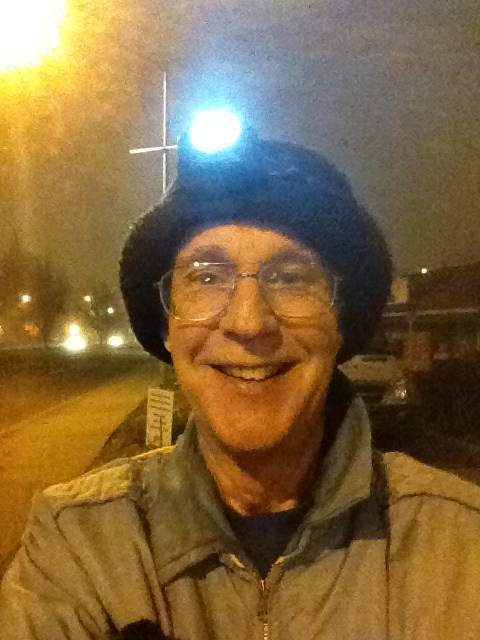
Foggy night; bought the light at Hirons, behind me to my right.  Think it was $7.95.  They should charge more.

Foggy night; bought the light at Hirons, behind me to my right. Think it was $7.95. They should charge more.

Maybe later, I will go to Evergreen’s, where they serve north and south Indian food.  I usually have a Nikasi Beer with dinner.  Yeah, for a dollar more, I get something brewed in Eugene, and I really like it.  A waitress and the owner herself recognize me, both knowing what I want.  I know the owner’s son’s name, birthday and age.  We were once immediately recognized after an absence of 9 months.  That’s impressive.  Think they get good tips from me?

Everybody knows places like the ones I described.  My late father-in-law went to Asquino’s, an East Providence institution with incredible Italian food.  They knew him, and if he had ever forgotten his wallet, I bet he would have eaten for free.  Asquino’s is no longer there. The world and families change.  These businesses are worth a great deal to customers, worth that doesn’t make the bottom line.  That’s the problem with bottom lines: they measure money, which people must make (teachers can’t eat “satisfaction,” my father, an educator, once said) but not customer satisfaction, ability to recognize repeat customers, and to have things the customer doesn’t realize they want.  I would bet much that “happiness” and “ability to recognize faces” is not on ExxonMobil”s bottom line.  Damage to the environment isn’t, which does have a dollar cost.

No money can buy good service and a pleasant person who remembers me, helping me have a better day.  I saw happier people in Ely, Minnesota, who worked half time, than my former partners, who made a half mil a year.  It was a rough life in Ely, but they were a lot nicer.  The average wage at Costco is double that of Wal-Mart.  The net worth of the CEO of Costco is 10% that of the CEO of Wal-Mart.  Throw in the rest of the Walton Family, and it is 1.3%.  The salary ratio between the worker and the CEO is still too large; when I practiced, the ratio was 1:7; 1:3 when hours worked were factored in.  Call me a socialist, but I lived comfortably.

I hope the man at Sea-Tac works to stay busy, but these days, that’s not likely.  I hope the Eugene places stay in business for a long time, along with Track Town Pizza, which hosts German Stammtisch Tuesday evenings. The whole lot are a 30 minute walk from my house.  I wonder how I got so lucky.  

Salary ratios ought to be on the bottom line; important things that can’t be measured ought to be mentioned, too.  Not everything in life has a dollar value.

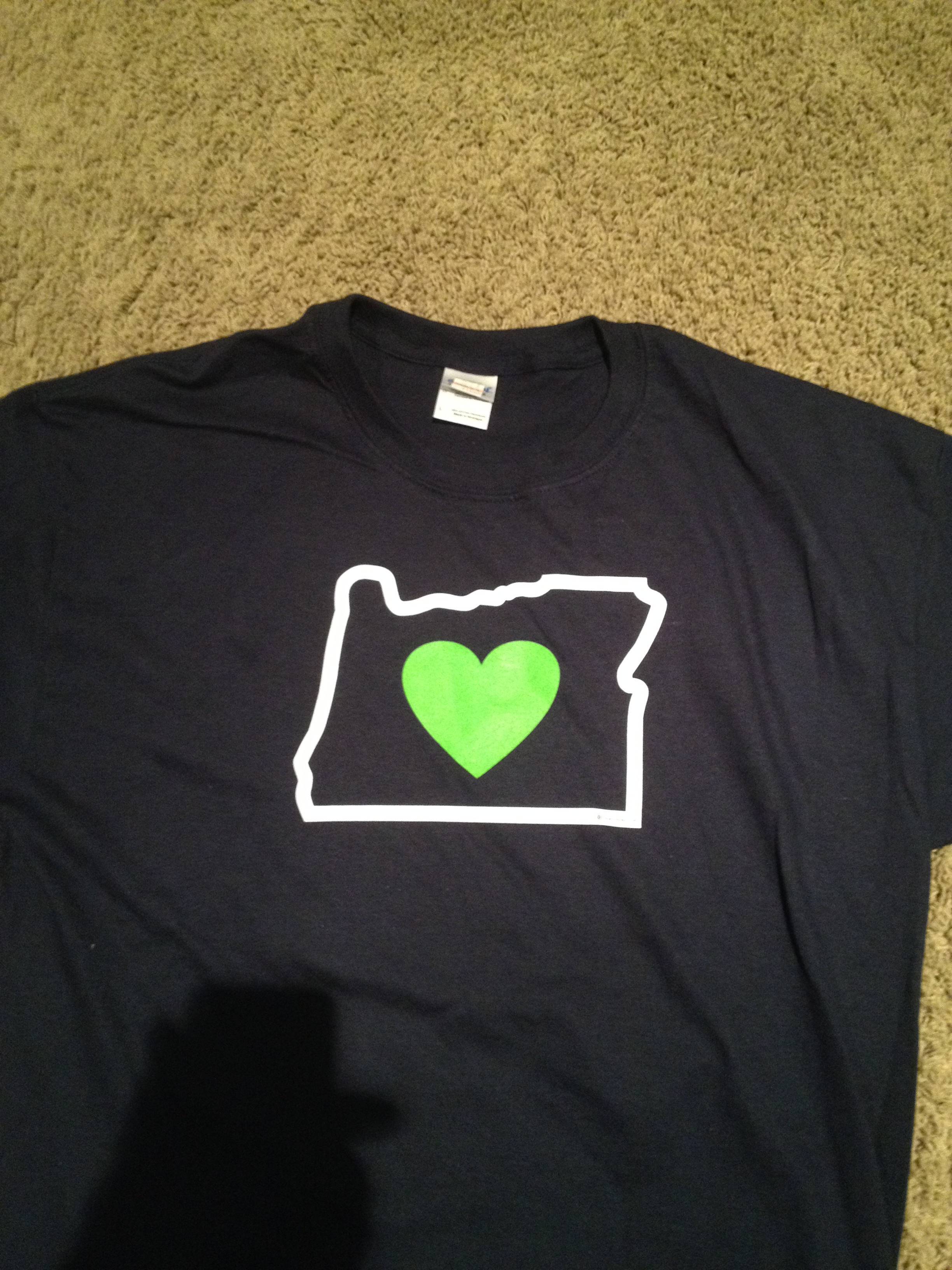
Designed in 2003:  Follow your heart; it will lead you home.  Hirons charges more for this.  I really didn't need it.  No, I really did need it, for I have done what it means.

Designed in 2003: Follow your heart; it will lead you home. Hirons charges more for this. I really didn’t need it. No, I really did need it, for I have done what it means.

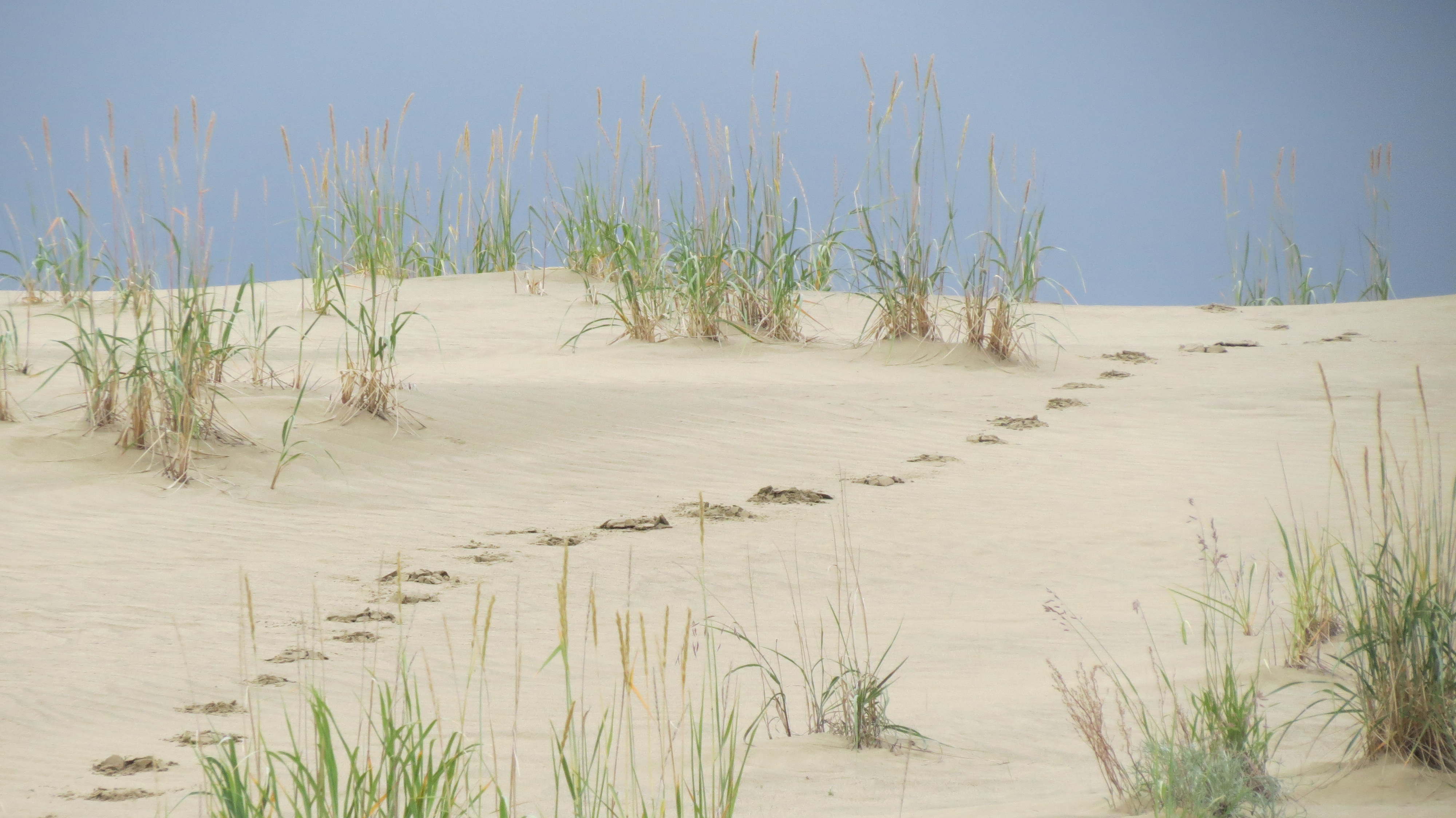
My footprints in the sand dunes at Kobuk Valley NP. It was one of those things that really is too expensive for the time spent, unless one factors in how much it meant to me, which was priceless.  What a lovely, quiet place.

My footprints in the sand dunes at Kobuk Valley NP. It was one of those things that really is too expensive for the time spent, unless one factors in how much it meant to me, which was priceless. What a lovely, quiet place.