Archive for March, 2017

TRUE FRIEND

March 30, 2017

I got another one of those “copy and paste, don’t share” posts on Facebook from somebody who was trying to send a message against cancer.  I was told that “the true friends of mine” would be the ones who did that.

Initially, I felt the urge to do something.  After all, who among us turns down a chance to be a true friend?  Then the feeling turned into annoyance, and I started to wonder how well I knew this person, whom I do see every week.  It is emotional blackmail, and I don’t like it.  I practiced medicine for 20 years, was in the medical field for about 35, and diagnosed and treated many people with cancer.  I allowed many to die without prolonging their pain.  I lost a brother to esophageal cancer, and I treated thousands of people who had various neurological conditions affected by cancer.  That was my contribution.  I won’t be copying and pasting to my profile. The best message we could send would be to protest the billion dollar cut to the NIH, the current budget of which is the net worth of each of four Waltons. Stated another way, if each Walton donated his or her entire net worth, they could fund NIH for a year. Mathematically, that is a $1000 a second for a year.  That would do more to further cancer research than pasting a post.

I don’t do certain things on Facebook, such as to share whatever somebody tells me. I’ve shared three things in the eight years I’ve been on it.  I don’t put likes on pages where somebody wants a certain number of likes.  I don’t contribute money to undoubtedly good charities when asked; I have my own list.  I don’t post certain pictures, even ones of nature, for somebody’s collection.  I comment where I should and try not to comment where I shouldn’t.  I delete a lot of my comments.  The most likes I’ve had came from a comment I almost later deleted, because it sounded too hokey, about being a third generation American whose maternal grandfather came over from Ireland. I wrote that I while I was proud of my heritage, I was prouder that I served America as a shipboard naval officer, even though I didn’t do much more than fill a billet on an amphibious cargo ship in the Western Pacific for twenty-three months.  Sure, I did two appendectomies at sea, one by myself, probably reassured some on board, and maybe because of my presence a few slept better at night, but it wasn’t like I was “In Country,” that being Vietnam, which I was 25 miles off the coast of one night, but not in a combat role.  Anyway, that comment got 285 likes and a lot of thanks for my service, which I neither wished nor frankly deserved, since most of us had to serve back when I was in my 20s.

I’m not going to be a “true friend,” because true friends don’t ask others to do something to show their friendship.  Someone I call a good friend was chewed out at the hiking club’s executive meeting for having organized the first trail clearing we did after the ice storm devastated the city and the trails. Several of us showed up, including club board members, and we all worked together, nobody nominally in charge.  We took safety precautions, with hard hats, didn’t do things we weren’t comfortable doing, and cleared a lot of debris.

The head of the trail maintenance committee chewed my friend out at a board meeting, without involving me or two others who “led” trail clearing hikes.  That wasn’t fair.  My friend, one who did every hike he could, stopped hiking so much and started hiking in the closed area, since we had already knew what the trail condition was like.  The closed area was filled with dog walkers and trail runners, and the signs stating closure were poorly visible with no enforcement.  The club wasn’t hiking there, but one snowy morning, my friend called me and asked if I wanted to do a “rogue hike,” as he called it, up the mountain.  I was game, so I went by bus as far as I could, he picked me up, we went to the trailhead and up the mountain.  Frankly, it was the best hike I’ve ever done there, and I’ve done it well north of 100 times.  He later posted that I was a “true friend,” and I had I guess a warm feeling, but  I was more in it for myself.  I haven’t quite felt the same about the club ever since.  We did nothing wrong, and while I will participate in hikes and continue leading, both will be much fewer in number.  That’s too bad. I don’t look at some of my other friends there in quite the same light after this event.

There are people I know never read my posts.  No reason they should.  I’ve been unfriended twice, both from Germans; I prefer to block offending posts or offending people without unfriending them.  Each to his or her own; life is too short to argue about such matters.

I just got back from Nebraska where I had the honor, privilege and pure joy to take several hundred people over the space of eight days out to the viewing blinds where they could see the arrival of the Sandhill cranes at the Platte River at night and their departure in the morning.  I’m selfish there, too.  I go to Rowe Sanctuary because I want to see Sandhill cranes.  I get a big charge out of watching 25,000 birds lift off the river, or land that night.  If that means I have to staff the gift shop, clean toilets, or run the information desk, so be it. I will. I like doing those jobs, too. I like to teach, and I can tell people in all three places, including the toilets, why the cranes are there, where they came from, how long they will stay, and where they are going.

Yesterday on Facebook one of my friends said that after viewing my pictures and videos, his wife said they ought to go to Nebraska next year.  I replied that I don’t use the word “should” in the second person, for I find that too judgmental.  I simply wrote that I found the place unique and magical.  No volunteer at Rowe would dispute those two words.  Not one.  Most would add several other terms, like spectacular, mind-blowing, jaw-dropping, or once in a lifetime.  I hope he and his wife come there next year, but I won’t push it, any more than I am pushing people to see totality in August.

Good friends offer information and suggestions when asked, show up when they are needed.  Otherwise, they offer support rather than advice, don’t keep score or quote a price.
IMG_8447.JPG

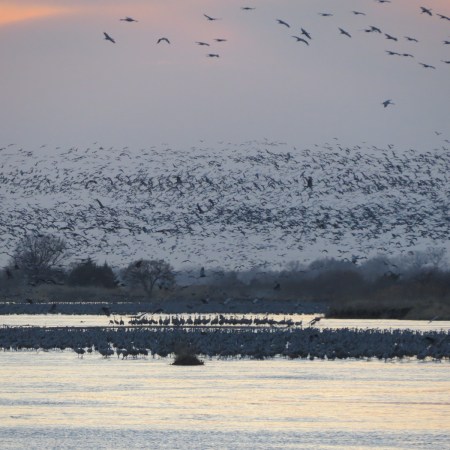
Sunset on the Platte, March 2017.  Sandhill Crane migration.
 

IMG_5215.jpg

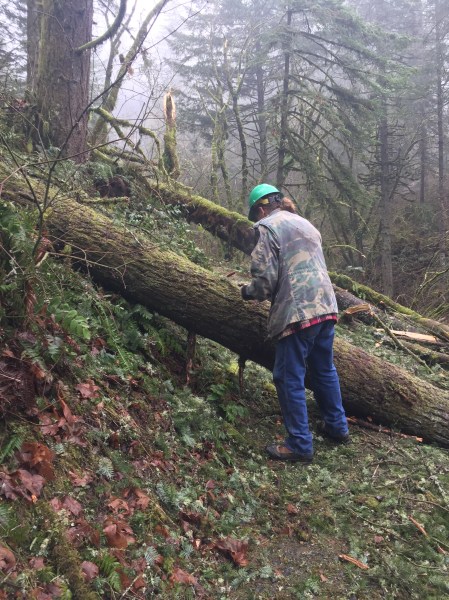
My friend tackling a downed tree after the ice storm.
A LA CARTE

March 16, 2017

“Politics is not just about power and money games, politics can be about the improvement of people’s lives, about lessening human suffering in our world and bringing about more peace and more justice.”  Paul Wellstone

I miss Paul Wellstone.  The American Health Care Act (AHCA) was pushed through the House at lightning speed.  Fortunately, House bills don’t go directly to the President.  There is the Senate.  The idea, however, was to get this bill passed, so the representatives could go back to their districts without dealing with angry constituents.

Oh, there will be some angry confrontations to be sure, but unlike the roll out of the Affordable Care Act, there will be no debate at town halls.  Then representative Gabrielle Giffords had raucous ones, including one that ended rather quickly when a firearm fell out of a guy’s pocket.  This was, after all, Arizona.  I’d say that Giffords was shot by Tea Party activists, but that isn’t true, not that the truth matters much in today’s America.  No, she was shot by a mentally ill individual who had access to a gun (another story that is going to likely happen again in today’s America, but I won’t discuss that issue here).  The Tea Party was thrilled, I’m sure, since they have no shame, and they are thrilled that the hated “Obamacare” is again repealed.

It is obvious that the Republicans had no health care plan ready for rollout, or they would have had it on the table 3 January, had it passed and to the Senate on 21 January, if they worked on Saturday, which many of “the little people” do.  This bill was cobbled together with little input from many, including other Republicans, who are likely going to be wrong about the anger of their constituents, since the Senate will not pass this bill as it stands.  There appear to be three groups of Republicans: those who like the bill, those who think it didn’t go far enough, and a small, but important few who think what we had was worth preserving.

There is a lot about the AHCA that I could address, but I will stick to five comments.  First, what people call it is important.  A significant number think Obamacare and the ACA are different, and the Republicans succeeded in making “Obamacare” a hated name.  Shame goes to the Democrats and journalists who bought into that.  Currently, there is some effort to tell us not to label the AHCA “Trumpcare,” which Paul Krugman says we should.  I agree with him, even if I have to use the name.  I prefer Voldemort.

Second, the bill has a mandate that if somebody lets his or her insurance lapse, they must pay a 30% increase in premiums to get covered again.  This mandated tax—let’s call it what it is—will hurt many, those who don’t understand insurance, don’t get, open, or understand their mail, and may throw things out without realizing how important they are.  These very people—and there are many of them— stand to be hurt by an increase in premiums, and I suspect their health is normally not very good.  A lot them are poor, elderly, people of color, uneducated, unemployed or underemployed, who won’t be able to understand their coverage.

Third, the notion of à la carte insurance presupposes people know what medical problems they will have in their lifetime.  I’m a neurologist who trained until he was 32, knew a great deal about disease, and I would not have guessed the things I’ve had that I wouldn’t have suspected.  We don’t know what medical conditions we will have. Individuals don’t have that knowledge, Mr. Ryan. When they get ill, they want help and treatment, not to shop to compare insurance companies and enjoy a “free market” with “competition,” comparing plans in the comfort of their trailer home which isn’t paid for, and may not have food or heat.  People don’t have the knowledge to know what the insurance company is offering and more importantly not offering.  Those Mr. Ryan thinks will benefit from competition won’t, because they can’t understand the complexity of medical care.  No, I don’t want people trying to choose what medical conditions they want to cover. They can’t and shouldn’t.

Finally, catastrophic care should be covered, even if it once failed to pass, because it would have taxed only the elderly.  My late father, the epitome of a rational person, became totally unglued about the Catastrophic Care Act of 1988.  I didn’t dare mention it in his presence. Such conditions strike at any age and are almost by definition unpredictable. The biggest killer of people 15-44 is unintentional injury (read: accidents), double that of suicide, homicide, cardiac disease, and cancer, all of which are about the same.  The common causes of ED visits are fever, otitis media, open wounds, contusions, sprains and strains: 1 in 5 in the ED were not insured (in 2010), and given the heavy use of CT and MRI imaging, injuries are expensive to treat.

À la carte coverage, like insuring oneself for what one thinks he will need, should be banned.  As for those who believe men shouldn’t have to pay for women’s health care, this is a slippery slope for people like me who might say I shouldn’t have to pay for people who don’t eat right, smoke, chew, drink, have guns in their homes, don’t wear seat belts, are overweight, don’t exercise, take recreational drugs, and aren’t vegetarian, for a start.  It doesn’t work. We can vary premiums a little, but when we start treading into areas that people are genetically or physically unable to control, we are asking for trouble.  No, I can never get pregnant, but a woman can’t get prostatitis and has a lower incidence of cardiovascular disease than I do.  As for paying for birth control, I can’t think of many better cost-effective remedies, since fewer unwanted children takes pressure off young families, schools, jobs, and the whole health care system.  We ought to pay women for taking birth control pills and tax men who use anti-ED drugs, since we need fewer sperm floating around.

Finally, we need a single payer system, like the one John Conyers introduced again, as he has since 2003.  This would decrease overhead percentage dramatically, allow for standardization where it matters, require negotiation for drug costs, and track illnesses, treatment, quality, and yes—errors.  A single payer system wouldn’t cover everything, but it would cover what Medicare does.  It wouldn’t cover abortion, but it would cover contraception.  It would cover what is scientifically known and rapidly cover what appears to be known. Insurance companies could sell supplementals with varying deductibles, for those who wish them to cover those conditions not necessarily covered under the standard policy, ED drugs being my favorite for non-coverage, but hey, I’m willing to bargain.

My bottom line: repealing the ACA before knowing how many million would lose coverage  was heartless. People will die because of this bill, should it become law. Long term thinking would say providing medical care to the whole country would save money in the long run and be in keeping with our ideals.

At least the ideals we once had.

WHY REPLACE THE PLANETARIUM PROJECTOR?

March 10, 2017

“I have a question for you!”  I looked down at the four-year old girl, accompanied by her mother.  I had just finished an afternoon planetarium show at The Science Factory, a local children’s hands-on museum, and I got down on my knees so our heads were at the same level, and asked what her question was.

“Who named the stars?”

“What a great question!” I answered.  The mother was a little embarrassed, I think, but the little girl demanded an answer.  “Why, they were named by the ancient Arabs, the Persians, and the Greeks,” I said, “who lived in places where it was clear at night and real, real dark, because there was no electricity.  I find some of the names beautiful, like Shaula, Adhara, Albireo, Nunki, and Denebola. What do you think?” She was fascinated but liked Regulus the best. She liked lions.   I think her mother enjoyed the interchange, too. The question made my day.  Maybe I made both of their days, too.

Examples like this are the reason I am writing in support of replacing the planetarium projector, which finally burned out, and I am willing to back up my support as a four figure donor, which information I normally don’t give out, but times are hard.

I’ve used a planetarium show to point out that escaped slaves on the Underground Railroad knew how to find the North Star, whereas very few Americans today can find Polaris.  Knowing how to find north mattered.  Nowadays, a large plurality of Americans would rather study astrology than find north.  I can think of three other ways to find north—without a compass.  Many think Polaris is the brightest nighttime star.  Nope.  It ranks 49th; Sirius is the brightest.  You learn that in the planetarium. I’ve discussed, during and after a show, how one can learn her way around the night sky, treating it like a map of a city, going from the major streets to the minor ones.  It’s easy in the planetarium, when all the major landmarks are on the dome above you, exactly as they appear in the night sky on any date, time or place in the world we choose.

I have volunteered in the planetarium the past two years. The Science Factory needs it as an anchor and Eugene needs it as a tourist attraction.  When I lived in Tucson, Flandrau Planetarium was an excellent astronomy museum, but it was on the University of Arizona campus, where parking was difficult. The Science Factory is easy to find in Eugene, parking is 100 yards from the facility, and a good planetarium is a major attraction, where parents and children together can learn science and the night sky.  The planetarium can inspire questions, teach people how to find the bright stars and planets and learn about the effects of light pollution on our ability to see the night sky.  We could use lectures, I suppose, but the ability to take people on a tour of the night sky in daytime can’t be done anywhere else but in a planetarium.  I’ve had fun turning the calendar forward 10,000 years to see what the sky would look like.  Or change the latitude and longitude and pretend I’m in New Zealand, where back in ’86 I was under some of the darkest skies I ever have seen, on the main road on the west side of South Island by Lake Moeraki.  I wrote two columns about the fabulous Southern sky down there.

I find it ironic that this year, when a long-awaited, exceedingly rare total solar eclipse will race across Oregon, the loss of the current projector makes some on the Board consider closing the planetarium. Boards don’t like to spend money or make tough decisions, I guess.  Boards like things simple, I think. I’m not sure, because other than medical societies, I’ve never been asked to serve on a Board.  I’m not an important person, except when it comes to donating money.  Then I’m courted by many.  But when it comes to ideas, experience, doing something differently, taking some risks, well, we need important people to do that, not some retired science nerd without connections.

Of course we need a planetarium in Eugene, and indeed, the eclipse this August makes it an excellent time to have a fund drive to replace the projector. Normally, I don’t tell people how much I am willing to donate, but since most of the good I’ve done in life appears to have been donations, I figured I would put my money where my mouth is and tell those important people on the Board what I was willing to donate, after I wrote a shorter, more polite, version of the above, so they knew that I had a brain and knew astronomy, planetariums, and the night sky, besides having money to donate.

I continued, writing I found it additionally ironic that literally in the shadow of Autzen Stadium, where no dollar is spared for athletics, we might let The Science Factory—and Eugene–lose an important educational and tourist attraction that will influence people far more and far longer than a football game.  The last coach was fired with about $10 million left on his contract.  The new coach’s strength coordinator, on the second day of the job, put three players in the hospital with rhabdomyolysis, caused by an over strenuous workout likely hurting their renal function permanently, since two of them stayed for nearly a week.  You need to be diuresed when this happens, in order to try to save the kidneys.  For all I know, they might have even had temporary dialysis.  Another assistant coach was paid $61,000 before being fired for driving drunk and hitting another car, two weeks on the job.  The first game isn’t until September.  The last president at the University had a million dollar severance package when he was let go early.  I’m not Mr. Personality, but I have more people skills than this guy had. I’m sure the Duck Athletic Fund Board and the Regents are full of important people, but with all due respect, I think their financial management and judgment could be improved. Who knows, maybe a nobody like me might actually make better decisions.  Mind you, I didn’t say all that in the letter, but I left a lot of lines to read between.

I ended my letter with the answer I gave the girl’s question, rather than putting it in the body.  I wanted them to read wondering who named the stars. Not knowing something is good for people.  It takes them out of their comfort zone, so they have to wonder.  I like having to wonder.  It leads to thinking, asking, or looking it up, all a reminder that none of us is as smart as we think we are.

I later wrote my contact at The Science Factory to count me in as a donor for the planetarium and a volunteer projectionist when she needs me.  But I won’t give one red cent to the Duck Athletic Fund.

Priorities.

QUITTING BRIDGE…AGAIN

March 5, 2017

I like bridge, but I have found many who play it often less than charitable to those of us not skilled.  I started reading the bridge column fifteen years ago, read a few books about the game, liked it, and on a cruise ship to the 2005 eclipse, played a little. During the last few months of my father’s life, I played with him and his group.

I played “party bridge,” often disparaged by those who play duplicate, members of the American Contract Bridge League (ACBL) who get Master’s Points from tournaments, hoping some day to become a Life Master. I would be careful to disparage party bridge.  Good players can be anywhere, and dissing one style of play is like my saying that somebody who just learned basic algebra doesn’t know real math, because I know much more.  Good for the learner.  They learned something.

I wasn’t good at bridge.  Occasionally, I would do the right thing, because bridge is a game of probabilities, and sometimes the stars align.  With time, I did a few more good things, meaning I was learning, but too many people with whom I played were neither helpful nor nice.  “Four points?  I’ve never seen a response with four points.” I had four trumps, a side ace, and distribution, for those who know the game.  Or “Why didn’t you bid xxxx?”  There are a lot of mistakes one can make in bridge, and there is no shortage of critics, many of whom are dead wrong.  They have to be, because I was criticized on the same hand and being told contradictory things.  That happened a lot when I played basketball in city league, too, and I found it annoying.

At the beginning of the session, the head of the club said that comments about play were not to be offered unless asked for.  It was a nice thought, but it failed in practice.  One man was particularly nasty.  I didn’t understand his bidding, and he always had to have his style followed.  One day, he finessed me correctly for the king of hearts, knowing that eventually he would capture it.  I had 4 cards in hearts, including the king, and rather than not playing the king last, played it on the third round.  He took it and continued his play, rather surprised when I turned up with the missing heart at the end, sinking his contract.  I had learned through reading the technique of playing a “dead” honor sooner than expected.  I remained silent.  He hadn’t counted trump.

The last day I played at the club, my partner made a bid that I misinterpreted.  Had she passed, which she should have (she preempted over a preempt, for those who know the game, and one doesn’t do that), I would have defeated the contract four tricks.  Instead, my misinterpretation cost us being set two.  I was loudly criticized by the other three people at the table and never returned.

I read the bridge column every day; my wife and I occasionally deal out hands and play them.  These allow me time to safely think and process.

After a seven year hiatus, on a cruise to the 2016 eclipse in Indonesia, I decided to play on board, not surprisingly finding myself the worst player in the room.  Bridge is a sedentary game, and while I try not to be too judgmental, many there needed to do more physical activity.  I played duplicate bridge three afternoons, calling it quits after the third.  I was paired with a different person each day, and with a partner one doesn’t know, bridge is even more difficult. I wasn’t the only one who made mistakes, and the tone of voice may not have sounded critical to the owner, but it did to me, whether I was being criticized or somebody else.  There is a way to correct people that works, and good teachers know it.  Unfortunately, there are not many good teachers.

I ran into my last partner later in the cruise.  He had played for years and explained bridge players clearly, so clearly I wondered why I never figured it out.  You see, the irony is that I am good at numbers, probability, and have a decent memory, which should make me a great bridge player.  But I have a big deficit: I process slowly, bridge is a timed game, and most play it even faster.  I can’t keep track of cards when they are played quickly.  My partner simplified matters: “The best bridge players are options traders: they have to be quick with numbers and risk averse.”  That doesn’t describe me at all.

There are those who teach bridge, but I am reluctant to seek them out, because frankly, not many are good at teaching.  I am. I understand different styles of learning, I understand that not everybody knows something as well as I, and I try to be patient.  I do this when I tutor math, show people the night sky, or explain medical conditions.  I’m enthusiastic, not critical.

What I need is a bridge hand where everything is played slowly.  I need a chance to figure out who has what and decide what to play next, being gently guided with tips how to keep track.  The bridge I have played isn’t this way.  I know it exists somewhere, but not where I’ve been.  In a sense, bridge reminds me of learning German.  I was always in a group of better speakers, but I couldn’t find one who would work with me to make me better.  It is why after 3 years I eventually gave up trying to be fluent, yet can understand it well enough to teach beginners how to go about learning it, because the teachers and online methods I know are insufficient.

I will return to reading books on bridge and watching German videos alone. I enjoy both.  I will continue to devote efforts to volunteering as a math tutor both at the community college and online, where the comments about my teaching are “You are awesome,” or “Thank you for explaining everything so clearly <3.”

I understand math.  I understand that people have different learning styles, so I teach to the person.  Perhaps most importantly, I realize that many don’t “get” math the way I do and never will.  I am neither a language person nor a bridge person.  I can improve, but I am no longer going to hit my head against a wall trying to be something I cannot be.

Better I break down math walls and save some heads.  I’ll avoid options trading, too.

GO YOUR OWN WAY

March 2, 2017

Returning through the woods from the lava fields at Clear Lake, I came upon a lovely seasonal stream that was flowing downhill from a nearby hillside through the thick Douglas fir forest.  I had seen the stream on the way out a few hours earlier and decided I would stop on the way back to look more closely at it.  Had we been doing a loop around the lake, I might have stopped right then, for I’ve decided while hiking that if there is any question I should take a closer look or a photograph, I do it.

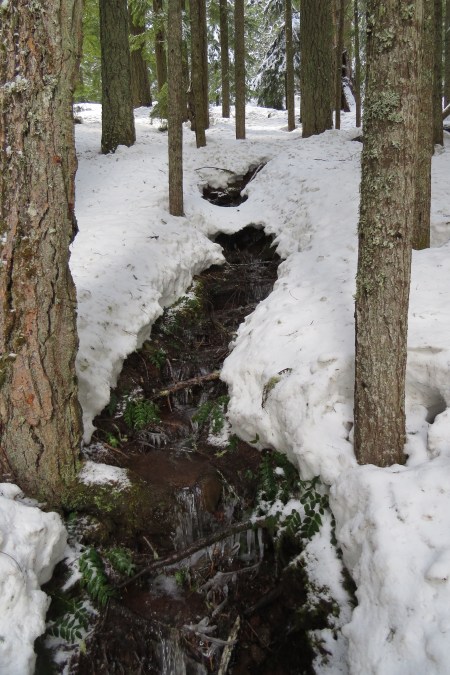
The stream had a snow bridge, nice flowing water, and when I looked a little more carefully in front of me, a few icicles as well.  The noise was pleasant, and the knowledge that in a few weeks this place would be dry reminded me how dynamic nature is.

IMG_8229.jpg

Tributary of Clear Lake, Oregon.

I posted those comments, and a good friend wrote that if I traveled more slowly I would see a lot more.  He’s not the first to tell me that, and he won’t be the last. He’s right, in a way. I think many have the sense I go through life in a big hurry and miss seeing things that others see.  Perhaps, it is true.  My father was always in a hurry, and I emulated him.  I have distinct recollections of those times in my life I was hurried to do things that weren’t a rush.  I became a hurried, harried practitioner, and the more I hurried, the less benefit I got from it.  Little I did seemed to me to be soon enough, right enough or timely enough.

What is seeing a lot more?  Why am I out in the woods anyway?  I go my own way, and to me, there is so much to see and so little time to see it.  When I spent the summer of 1992 in the canoe country of Minnesota, I wanted to see every lake I could.  It was impossible, of course, but I got into more than three hundred.  I saw plenty—eagles, otter, beavers, moose, bear—but a big reason that I went was to cover ground or water, lots of it, every day.  It mattered to me.  Why?  It did.  Sure, I could have paddled four miles and found inlets with all sorts of interesting plant and animal life.  Occasionally, I did that, but the long days under pack and paddle was part of fulfilling my need.  I have wonderful memories of the 18 mile day in a cold October rain, where I saw nobody for the fourth consecutive day, a day that took me to Little Saganaga Lake, or the push the following day down to Alice, where I encountered a blizzard, solo, in October.  That trip has stayed in my mind as one of my great ones.  I went six days without seeing another soul.

I did the 26.6 mile McKenzie Trail hike last year, setting a good pace and finishing it in under 9 hours of walking.  The purpose was to hike the whole trail, my kind of hike, and I enjoyed it.  I did the 23 mile Duffy Loop, which carried me through an awful stretch burned over by the B and B fire 13 years earlier, solo.  I won’t go back, but I know what is out there.  There is no blank spot on a map when I look at it.  On the Noatak River, from near the headwaters by Mt. Igepak to Lake Matcharak, I know what that country looks like.  I’ve trod the ground, paddled the water.  I saw a lot of griz, caribou, and even a wolverine.

To me, the hard work, the long distances covered matter.  I have awakened and seen Orion’s reflection on a lake, the sunrise through thick fog, watched a smallmouth jump out of the water with my lure, and watched an osprey dive deep into a lake to come away with a fish.  It all mattered.  Speed on the trail is something I like.  I’m not the fastest, never could be, never would want to be.  I process nature as I go, and I process very slowly.  It is often later when I realize what a special scene I had encountered.  I saw it, and I spent as much time as I wanted to.  Then I moved on.  On the out and back trips, I remember certain areas as special to view, and as I return, the processing primes me for these views.

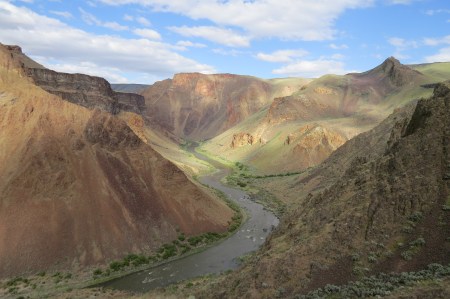
I posted a greatly abbreviated summary of the above, and then realized I needed to continue.  I was on the Owyhee River last year, where distance covered was not under my control, except on day hikes, and one of those I got dropped by a the guide and three other clients.  I realized finally that I couldn’t keep pace, and I didn’t much like the uphill bushwhacking that we did.  I stopped, said no more, and turned towards the river, taking the best pictures I took the whole trip.  Had I kept going uphill, I would have seen more and from higher.  But I went, which is what mattered, and I saw something very nice, by myself.

IMG_7096.JPG

Owyhee River, Oregon

Those who say I miss too much often don’t share the my values.  I don’t tell people what they should or shouldn’t see.  One clear night on the Owyhee, we had an opportunity to see the night sky from one of the darkest places in the contiguous states.  Almost nobody was interested.  I am encountering people who are not interested in seeing the total eclipse this summer, and almost nobody viewed the transit of Mercury that I had in my telescope last May.  These are all interesting, beautiful, and to me special.

IMG_6742.JPG

Transit of Mercury, 9 May 2016; large sunspot in upper center, with Mercury at the 4 o’clock position.

I could go as far as to say that if one is not interested in any of these, one is going through life too fast. But I don’t.  I want others to go through life at their own pace, listening to Nature, listening to the Earth, but listening more to themselves, always learning.

IMG_5809.jpg

Sunrise over Odell Lake, Oregon; 2 March 2017