Archive for October, 2024

INTO THE BLACKNESS

October 19, 2024

I saw a small white larva on my hardhat when I took it off for a break on Bunchgrass Trail. The creature was maybe 2 mm long. Normally, I might have blown it off the plastic with one breath, but one had to appreciate where I was. Something up here was actually alive

Bunchgrass Trail burned two years ago in the Cedar Creek Fire. Where we were working had burned hot, 100% death of trees as far as I could see. I hiked the trail in 2021, before the fire, and it was beautiful woods. When the Forest Service allowed us to be the first group to work there, I jumped at the chance, I wanted to see the area and to help restore it.

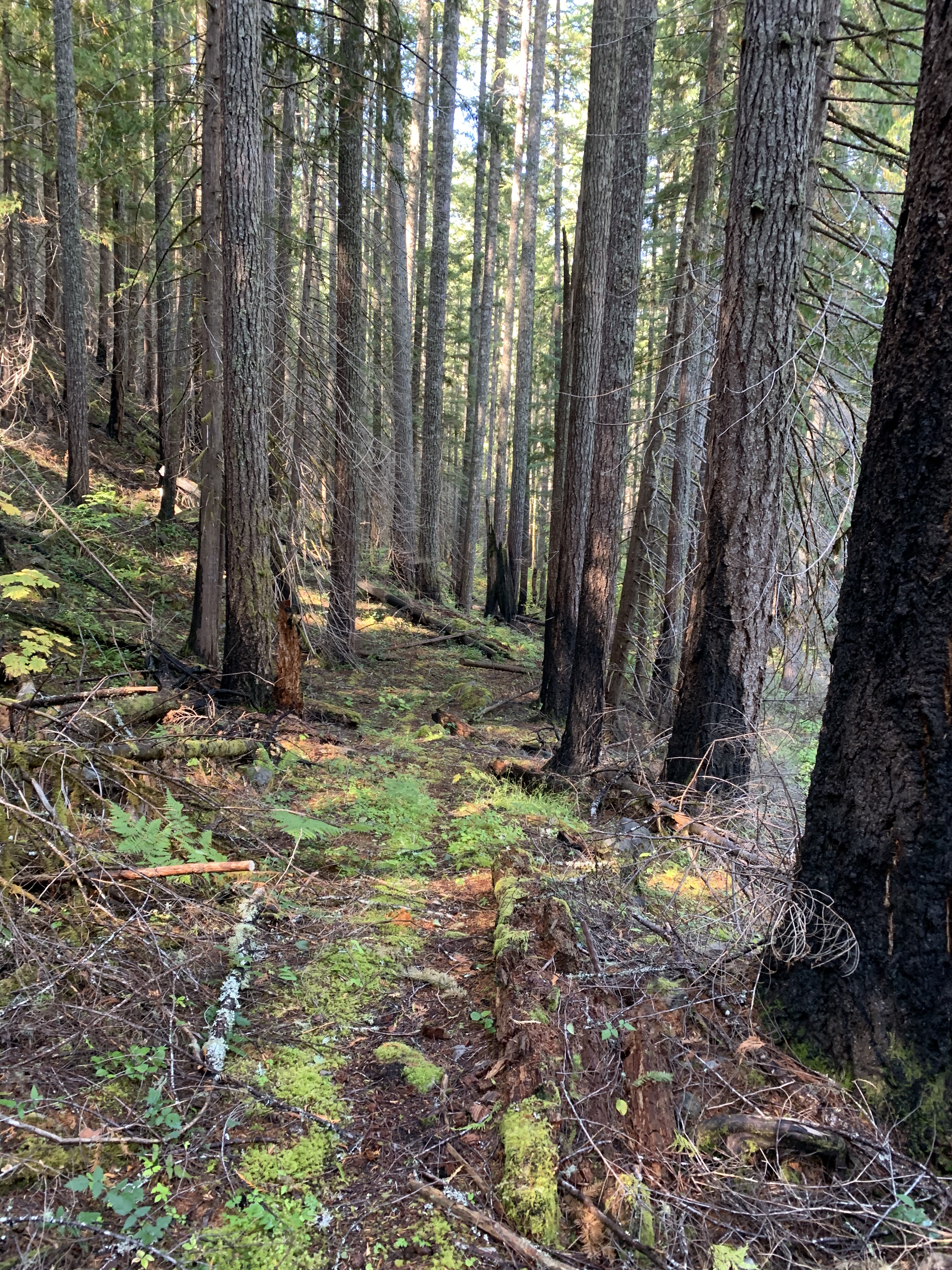
Fifteen miles east of Oakridge, we drove up bumpy Eagle Creek Road 9 miles to the trailhead, entering the burn the last mile. The first thing I noted when I stepped out was the quiet. It is autumn; most life is are starting to shut down, but the forest before me was quiet, black, stark, and dead

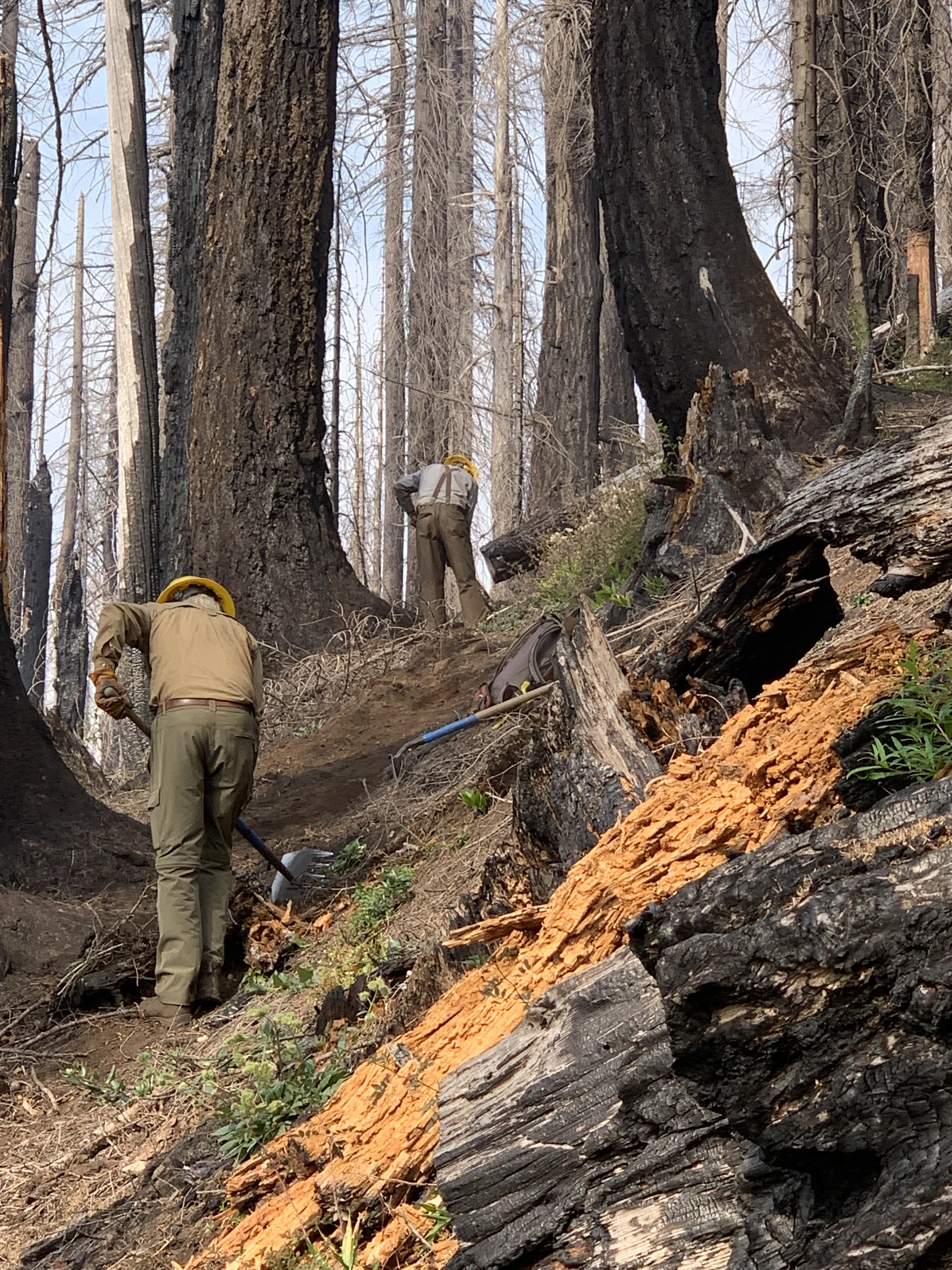
A Forest Service crew had recently logged out downed trees over the trail, and they wanted us to work on the tread as part of restoring this mountain biking trail favorite. We had a longer than usual tailgate safety session before we started. Post burn areas are dangerous: branches or whole trees may suddenly and quietly fall, there are unexpected holes, tripping hazards, many sharp objects to impale the unwary. We expected places with no trail at all, planning to restore maybe a few hundred feet a day. As we worked, the trail was easily found, a gray, soft, thick powdery surface over firmer bottom. The soil appeared mostly sterile, much like I have seen in older burns on Patjens Lake or Hand Lake trails. Trees had burned into different shapes. Other than a slight breeze, it was silent. Even when I threw dead logs and branches off the trail, they sounded different when they hit the ground. They sounded dead. Or hollow, if I hit another log. This place was what people think of after a forest fire; other post burn areas, however, like Terwilliger, Horse Creek or Rebel, have a mosaic of burned, partially burned, and spared trees. Not here. Here, the colors were of gray, black, brown, and rare green along the trail.

And a white larva.  

Each of us had a trail tool to chop away at the inner, soft trail wall, dust and dirt flying into the air, the slight breeze ensuring we were coated. I used a McLeod—hoe on one side, tined rake on the other. We needed to make the trail 18 inches wide, including spots with little room to do that, since the ground sloped steeply downhill some 200 vertical meters to another road. Each foot of the trail was addressed. 

Here and there were some plants, thimbleberry and ferns, rare fireweed, and to my surprise,  bleeding hearts, since these are springtime flowers in the lowlands and early summertime blooms here. Ironically, we had to remove greenery encroaching upon the trail; still, I drew the line with a few patches of Miner’s Lettuce with white blooms. I transplanted rather than removing them.

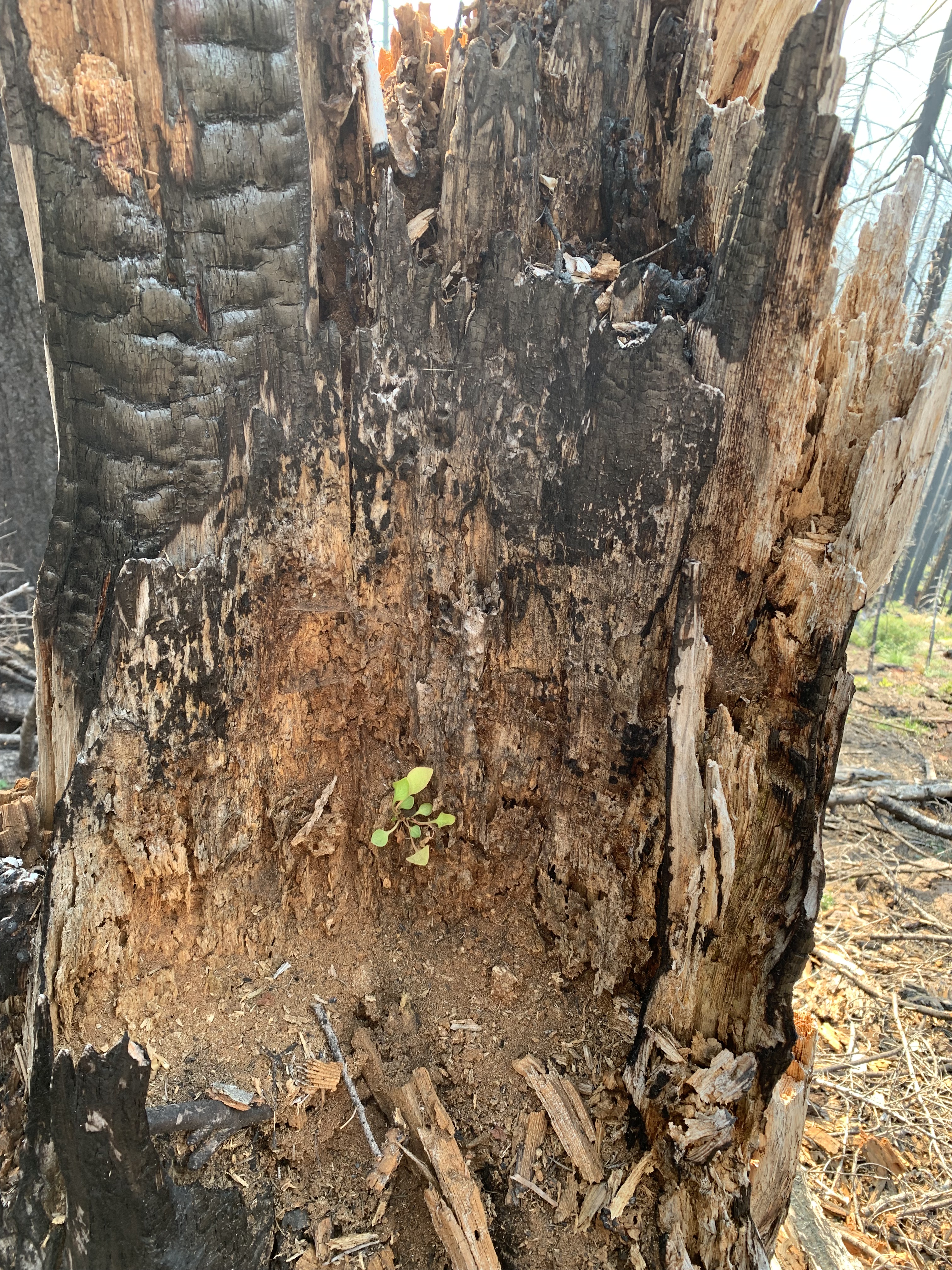
I decided to see if I could move the larva without crushing it, so I found a small leaf and made the transfer. It’s remarkable how such an action, so small in the scheme of the day, was for a few seconds my function. One larva. But it was alive. Other than that and a Northwest Centipede finding a spot behind a large rock, there weren’t even ants. Below me, I saw the first bird of the day fly quickly through the blackened trees. 

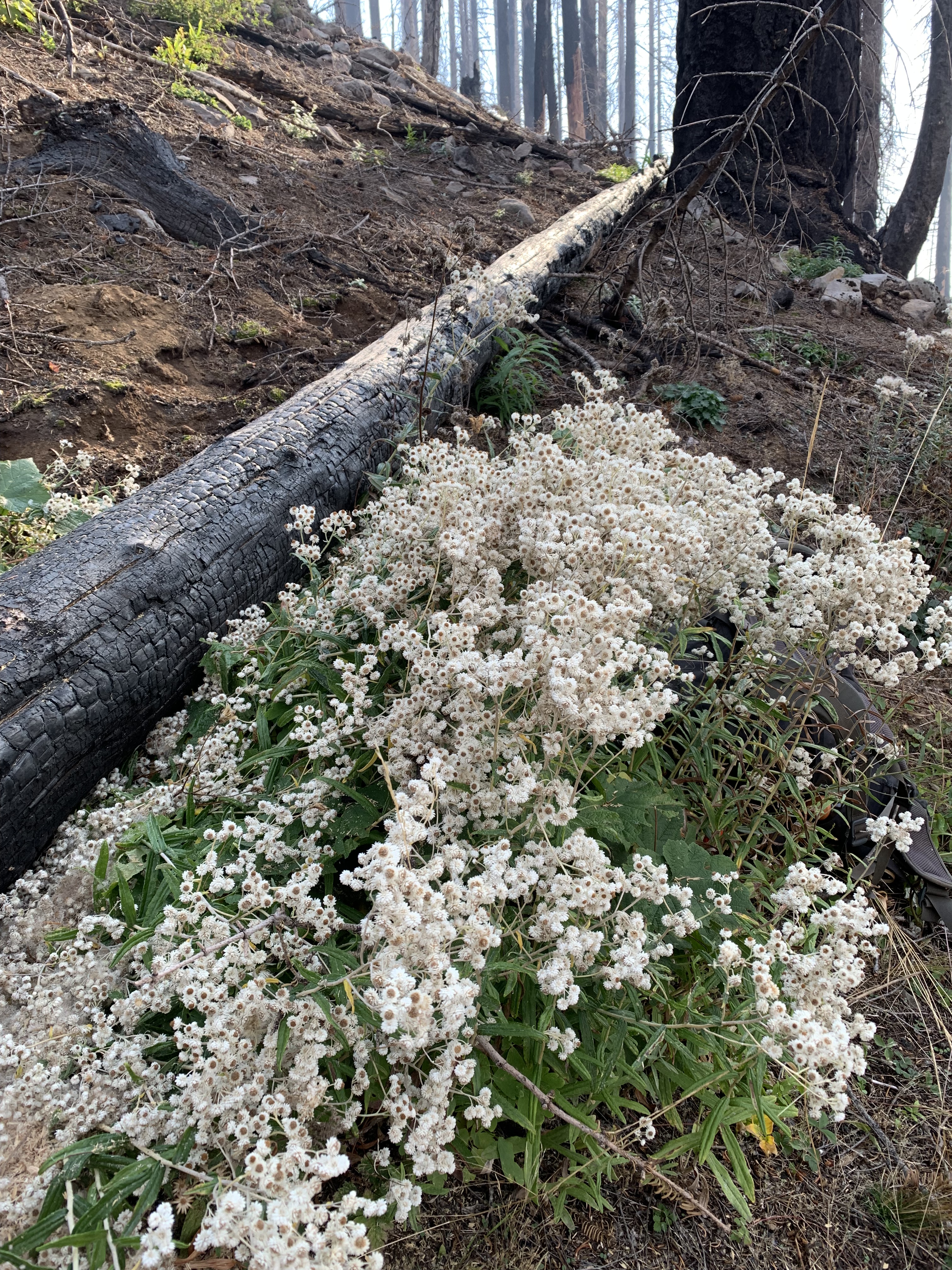
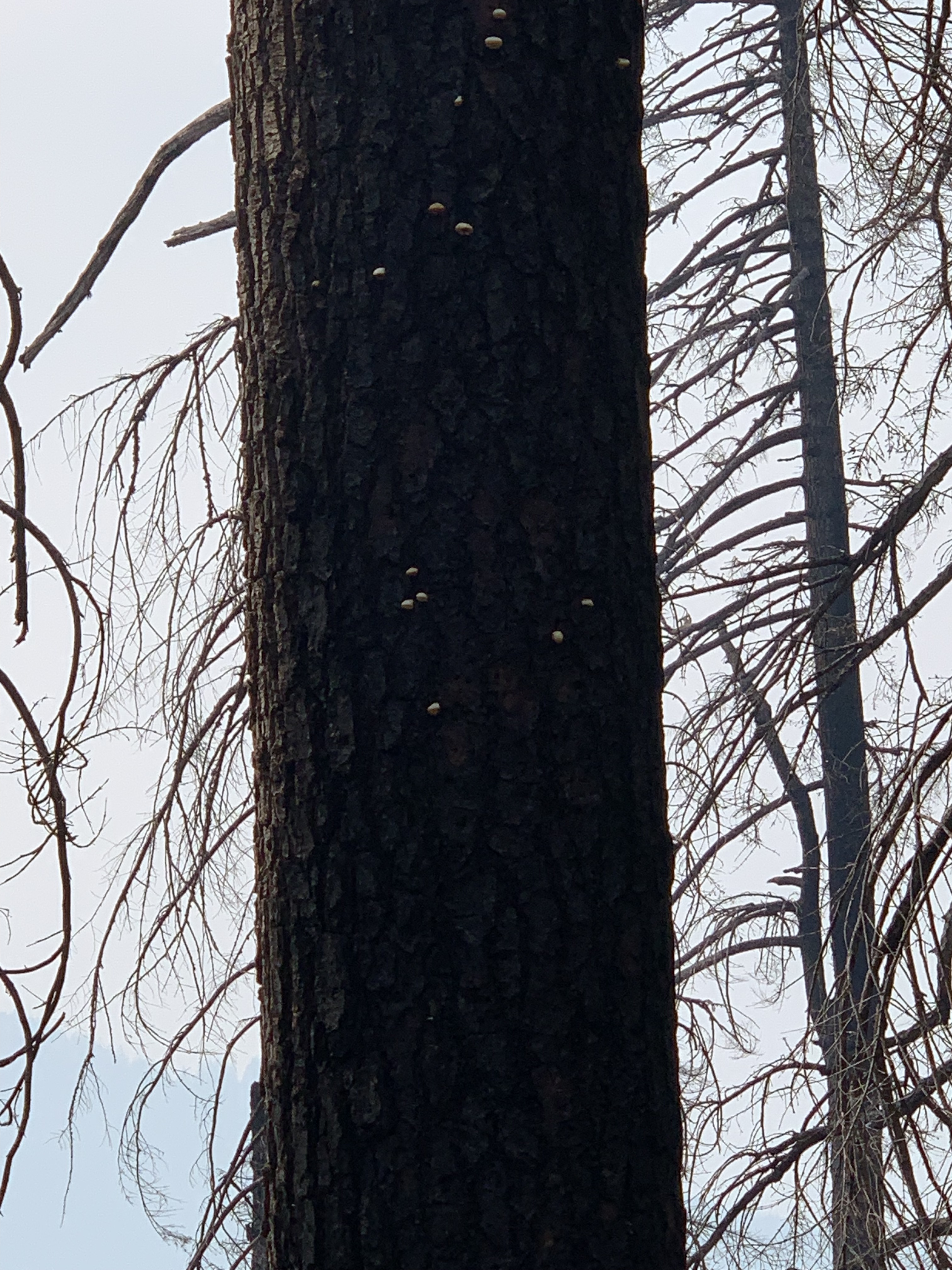
I sat down and rested my back from the work with the McLeod, which was effective if heavy. Above, I saw something flying, then two somethings, looking like buteos, probably red tail hawks. They wouldn’t be here if there weren’t something for them to hunt. Further up the trail were Pearly Everlastings, white flowers that had gone to seed. The ones in the trail had to go; others escaped the McLeod when I moved the flexible stems away from the trail. At lunch, I saw several small mushrooms growing out of a standing tree high above the forest floor. 

When we began to hike back to the trailhead that afternoon, I was amazed how covered in dirt everybody was. Clothes had changed color, faces had dark blotches. Every time I took my hands out of my gloves, they were dirty. Being dirty is like age; you think other people are subject to it and you aren’t, until you look in a mirror.

In two work days, we cleared just over a mile of trail (1.66 km). We are half way to the next trailhead, but with significant rain with snow forecast at our elevation. It might not be possible to work up here until next June. The trail will be restored first; the forest will take far longer.

NOT WHAT I EXPECTED ON OLALLIE MOUNTAIN

October 4, 2024

On the last push to the summit of Olallie Mountain, Jeff asked me what I thought the reds were on a distant mountain to our northwest, across the Three Sisters Wilderness. I wasn’t sure if they were maples and even mentioned the possibility of a local die off of conifers where the orange needles can look red from a distance.  

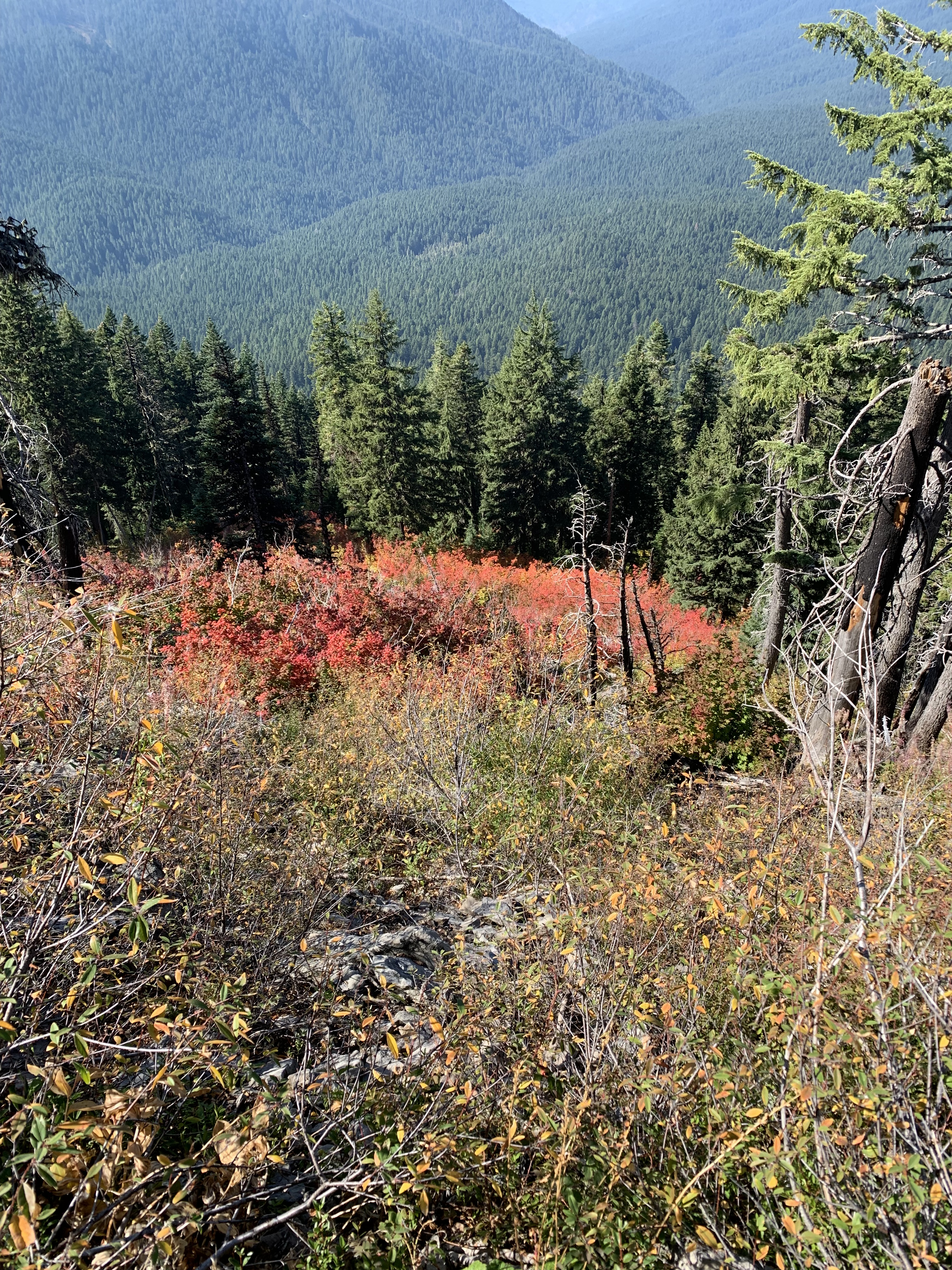
A hundred yards later, carrying packs, saws, and other trail working tools, hiking on a narrow trail where I definitely did not want to trip, I discovered a third possibility.  Below us were large patches of huckleberry plants, vivid red.  I quickly averted my gaze, however, not wanting to tempt my body to go where my vision was.  Huckleberries are often part of trail work, because they are a common plant we cut out in order to work on a log we want to remove. The berry season had been over for a good month, but I had fond memories of being first to the bottom of Lowder Mountain a month ago, after our log out there, not because I was the fastest hiker—I am closer to the back these days—but because I left the top before anybody else.  I knew there were huge berries at the trailhead and wanted at them. They were delicious. My job is to support the crew, but huckleberries are another matter. The crew’s founder, the late Ron Robinson, told me he loved his huckleberries. 

Earlier that day, fireweed, few pink blooms remaining, now with either seed pods ready to open or already spilling seeds into the air, had red leaves as well. It reminded me to take a few so I could try making fireweed tea, which I had once done in ‘85 but as it turned out not the proper way.

After summiting earlier than expected, due to another trail crew’s prior log out of some of the top trail, we hiked back out. I stopped to take pictures of the huckleberry plants I had just seen. Well down past the junction, re-entering the forest, where I planned to take a short rest before the final mile, I was on a stretch of trail that drops off steeply to the east. Out of the corner of my eye, something red caught my attention. I looked and saw a small maple far below, completely red.

Before the outing, I thought my recollection of the day would be the work I did on the mountain, pushing logs off trails, cutting out small stuff, using the big saws on the larger logs, and a tough hike.

Nope. The memory will be of all the red I saw.

FRENCH PETE

October 1, 2024

The large German Shepherd in front of me on the trail informed me someone was nearby. 

“You fire or trail?” I stopped cold, never having been asked that dichotomous question.

“Trail.” With my orange hard hat and carrying tools, I could almost be working fire, but I was not wearing Nomex and the last fire here was seven years ago.

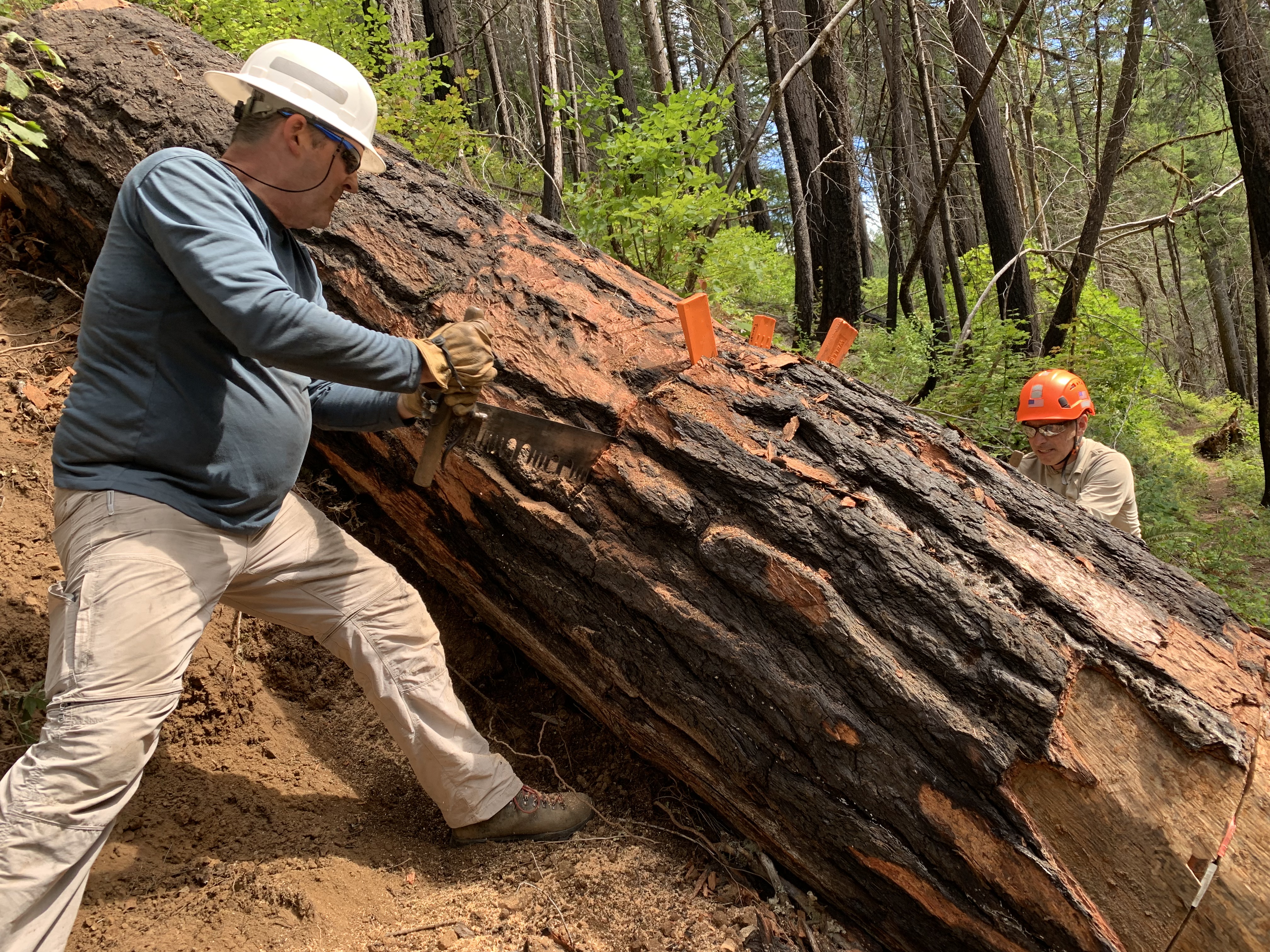
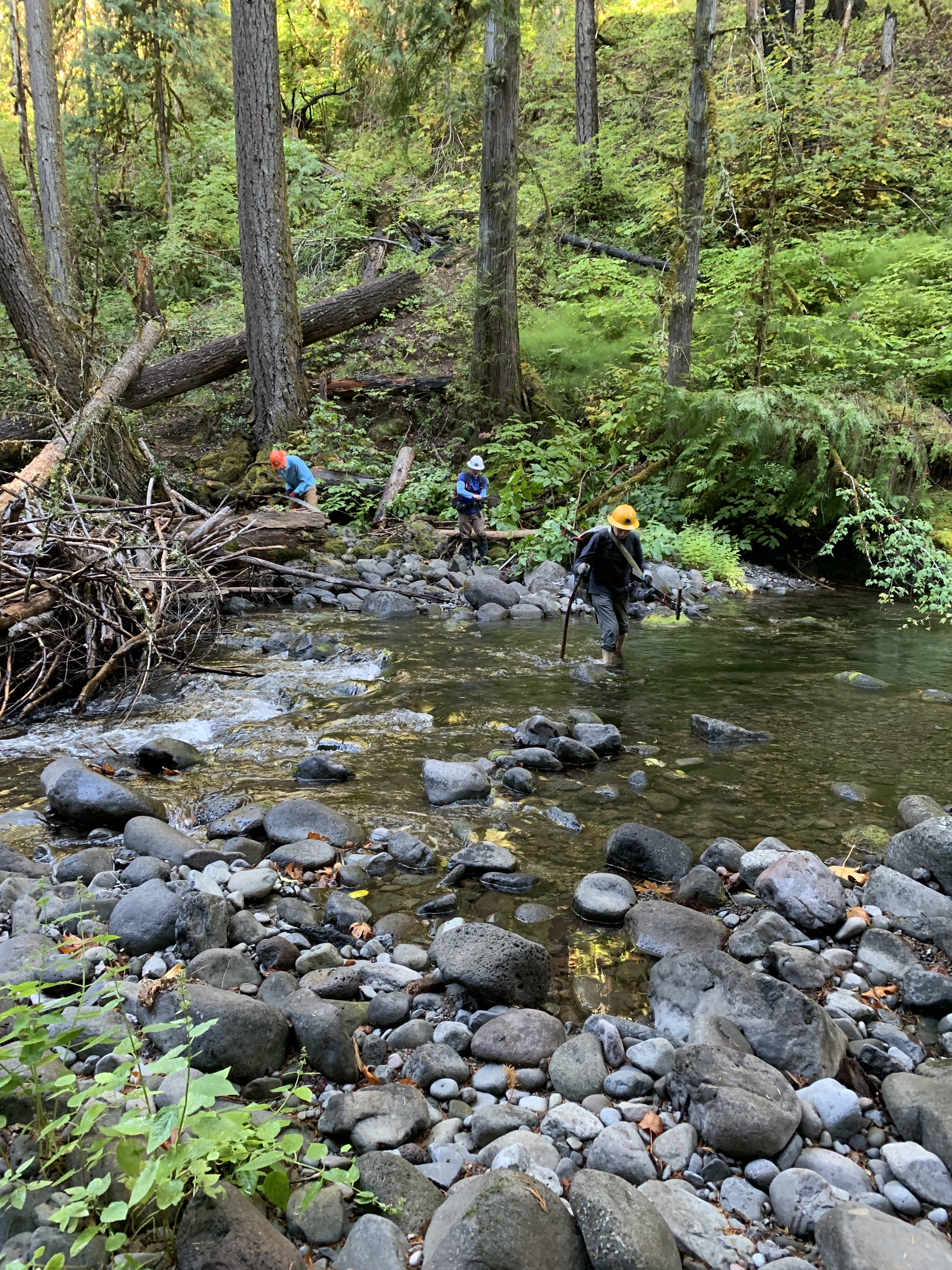
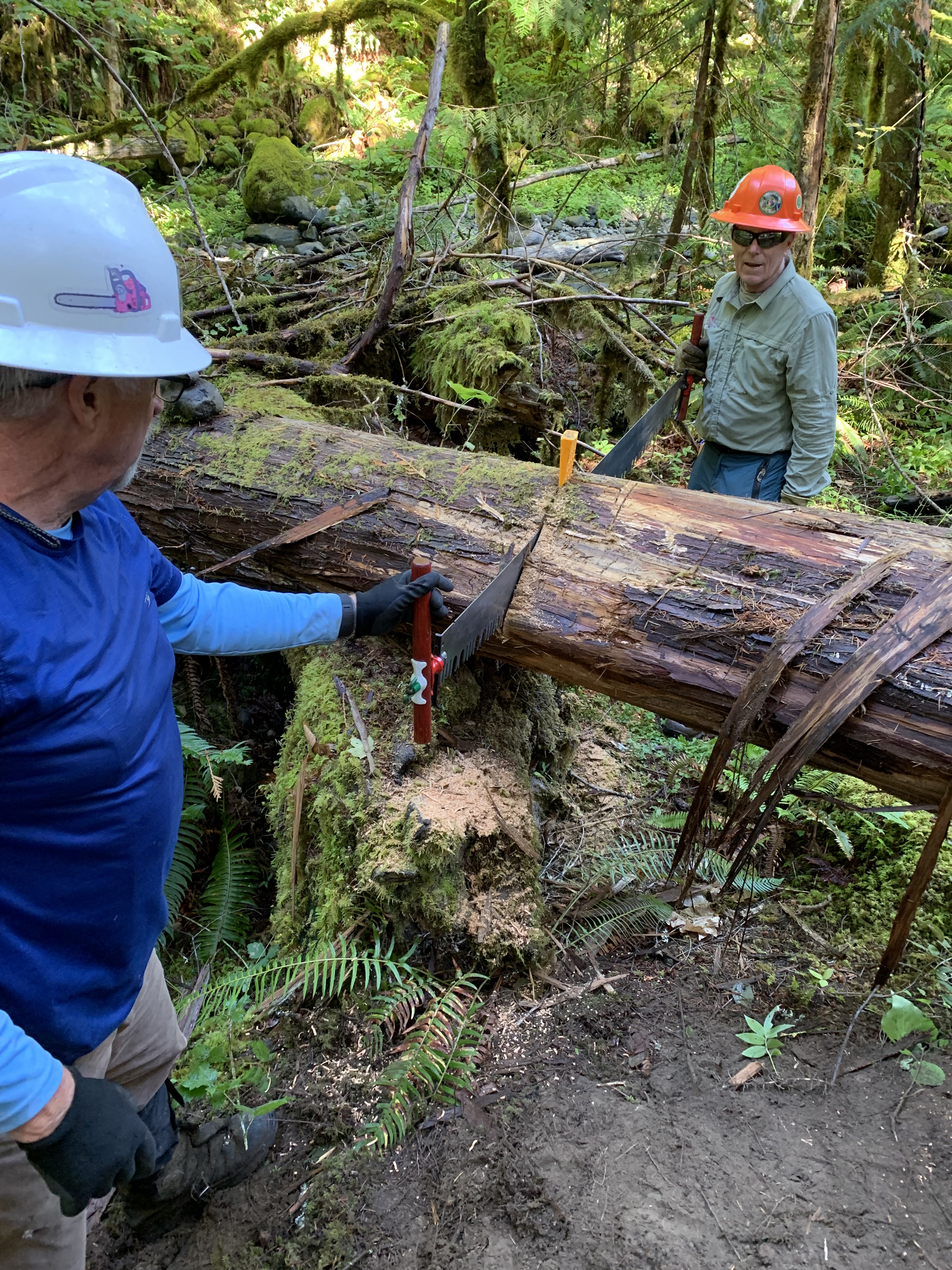
I was part of a crew hiking out the French Pete Trail in the Three Sisters Wilderness. Six of us had hiked in nearly 2 miles, forded a stream, and then worked another mile clearing encroaching brush, repairing and widening the tread, cutting out large logs over the trail using two person 6 foot crosscut saws. It was our third week here, the first two visits spent removing a 34 inch diameter log on a slick slope. No power saws are allowed in the wilderness.

I carried a moderately heavy pack with my first aid kit, the remains of the 3 liters of water, a 500 mm folding KatanaBoy saw, a 14-inch Corona, a radio, the remains of my lunch, a rain jacket, axe in one arm, Pulaski in the other, other items in my pockets, plastic wedges to keep saw cuts or kerfs open preventing saws from binding while we cut a log, my GPS, a strap to pull logs off the trail, a small hand saw, so I didn’t have to remove my pack to cut something under 3 inches diameter. I also had my phone; I tried to remember taking pictures of the crew at work. Occasionally, I’d get a video of cut logs rolling downhill into a stream. I had several of those on Fall Creek during our clearing of the Fall Creek Trail, which promptly burned over a year later, thanks to an unattended campfire in July.

“Can I ask you something?” A woman with piercing blue eyes and short hair, maybe in her early sixties, looked at me. My judgment on how to cut a log could use improvement, but it is far better than guessing a woman’s age.

“Sure,” as I put down the ten pounds of hardware my arms had carried the last mile.

“Is Lowder Mountain open?” The dog came up to her side. 

“Yes,” I replied. “We cleared it a month ago or so. Took us two days,  Nice hike.” One of those days was spent cutting out another 34 inch diameter monster with end bind, which meant it was on an angle across the trail, and wherever we cut, compression from above would pinch the saw. The following week we finished the rest of the trail, but it was foggy on top, so there were no views of the central Cascades.

“I hope you aren’t trying to get there from here.” She wasn’t. It was theoretically possible but the middle four miles of this trail needed to be marked and cleared. We talked for a few minutes about the route, which followed the creek until there was a crossing about 2 miles in. Some changed to light shoes for the crossing. I’m a lifelong canoeist and many time Alaska hiker. Wet feet don’t bother me. I wore gaiters and took 8 water steps each way across. My feet were damp, but the boots weren’t squishing. I was fine, other than being tired, and at 75, I would need a full day to recover from this outing.

I told the woman there was a spur trail about 1500 meters ahead. “Oh, she will love getting down to the water,” pointing to the dog.

We parted, I walked under two large logs higher over the trail, which were no problem as is, up a hill, and continued back to the vehicles.

See you on the trail.