Archive for the ‘BWCAW 2009’ Category

CLOPETY SPLASH

September 10, 2023

A gray October morning, third day out without seeing anybody, and I was trying to make up time because of my staying put in the tent the prior day because of a pouring rain. I needed to make decent miles before the early sunset and hoped the weather would hold, although cloudy skies showed little promise. I had paddled perhaps five of the eighteen miles I needed to go and was moving up Spoon Creek, when I suddenly sensed something ahead.

Right around the corner were a moose and calf.  Right there. Fortunately, unlike four months earlier, when I passed a moose and newborn calf on a lake, needing to out paddle a swimming angry cow, this calf was larger and the cow just stared at me. I had my paddle in the water, using it to brake, but I couldn’t back up or move to the side if she charged me. She didn’t, and the two quietly left. I was on schedule later that afternoon. That night, geese awoke me as they flew south towards a Hunter’s Moon. The following day, I paddled in dense fog, the day after in a blizzard, and before I finished would see three more moose and no people.

On the canoe trips my wife and I took, we had a joke that I was ”expected” to find a moose, and nature often delivered. Still, I never go into the wild expecting to see something. I try to put myself in the right place and hope I will get lucky. I certainly have been. Showing up in the wilderness and showing up in life are important parts of success.

On one trip, our moose sighting was a bull seen on a back road on our way to the jumping off point to Lac La Croix in the western Quetico. We encountered one on a portage coming into Basswood Lake, where I kept the canoe on my head a lot longer than planned so my wife could join me and see it 10 yards away. There was the last day out on a trip, previously moose-less, when I went down to the lake to get water, looked down the shore, and saw a cow standing in the lake 50 yards away.  I got my wife’s attention and motioned her to come down. The country had delivered its annual moose sighting. 

We saw our ’96 moose at the end of the first of what would be 15 portages on a day we took the Frost River to Cherokee Lake.  Eight years later, we saw one swimming across a lake towards us, initially impossible to identify because there were so many branches stuck in his antlers that he looked like a motorized floating tree.  

In 2010, we were at our favorite campsite on Lake Insula, what would be our last time there, a year before the Pagami Creek fire. The site was at the head of a quiet bay, and few ever left the main travel channel through the lake to go there. It was serene, views in all directions, lovely ledge rock of Canadian Shield.  After dinner, I walked over to look out on the bay and the sunset. I always carry binoculars just in case I see something; If I stayed past dark, I could check out the Double Cluster in Perseus or Andromeda Galaxy.

It was calm and well into nautical twilight, where the light is too dim to read by, and the first stars are visible, when I heard a distant, odd sound with two components.  I looked with my binoculars then quickly ran to get my wife. There was a bull moose on the far shore, walking right at the water’s edge, clopety, splash, clopety, splash. Water carries sound well. I didn’t realize it at the time, but the noise was in phase with the sight from our viewpoint, because the moose was walking at precisely the speed so that we heard the prior splash when he was making the next step into water. 

We listened to the distant clop, splash for two minutes in deepening darkness until he turned into the woods and both he and the sound disappeared. 

See you on the trail. Any wildlife sighting is a gift.
RAIN GETS A BAD RAP

December 22, 2017

I arrived home from the hardware store just in time for the rain.  Note: I didn’t say I just beat the rain home, but rather I arrived home in time to enjoy the rain.

Rain has a bad rap, and since I like rain, it means that once again I am on the wrong side of  conventional likes and dislikes in society.  I live in the city but love the wilderness, but I don’t fully belong in either.  I am an introvert in a society that extols extroverts.  I don’t like the idea that everything has to be set to music, which puts me at odds with conventional likes. The other day, I was sent a YouTube video of the Geminid meteor shower, which was a collage of pictures set to music.  I commented:  “Nice.  Nicer without music.”

I think summer is overrated, too.

I’ve felt this way most of my life about rain.  I enjoy being inside reading a book, while listening to the rain.  But lest one think that being indoors is somehow cheating, I love nothing better than being warm in my sleeping bag and listening to the rain on the roof of the tent.  Oh, I’m sure I will have to get up in the middle of the night and go out in it, but then it’s that enjoyable to be able to go back inside and hear it as I again get warm.

I led a hike to Heckletooth Mountain outside of Oakridge, Oregon, last October, when we had an atmospheric river hit us the night before.  An AR is a plume of moisture spreading from places like Hawai’i, Saipan, or Japan all the way in a continuous feed to the Northwest US.  Recipients can get several inches of rain.  I had some cancel that morning, calling me to say how they were staying home and not coming.  I initially envied them a little, but when we started hiking, the rain gear worked just fine (October hikes are great for testing rain gear), fall colors were beautiful, and while we were wet on the outside, we were warm.  Sure, we had to be careful about hypothermia, but hiking uphill helps warm one up, and so long as one hikes back down steadily, cold is not a problem.  Great hike.

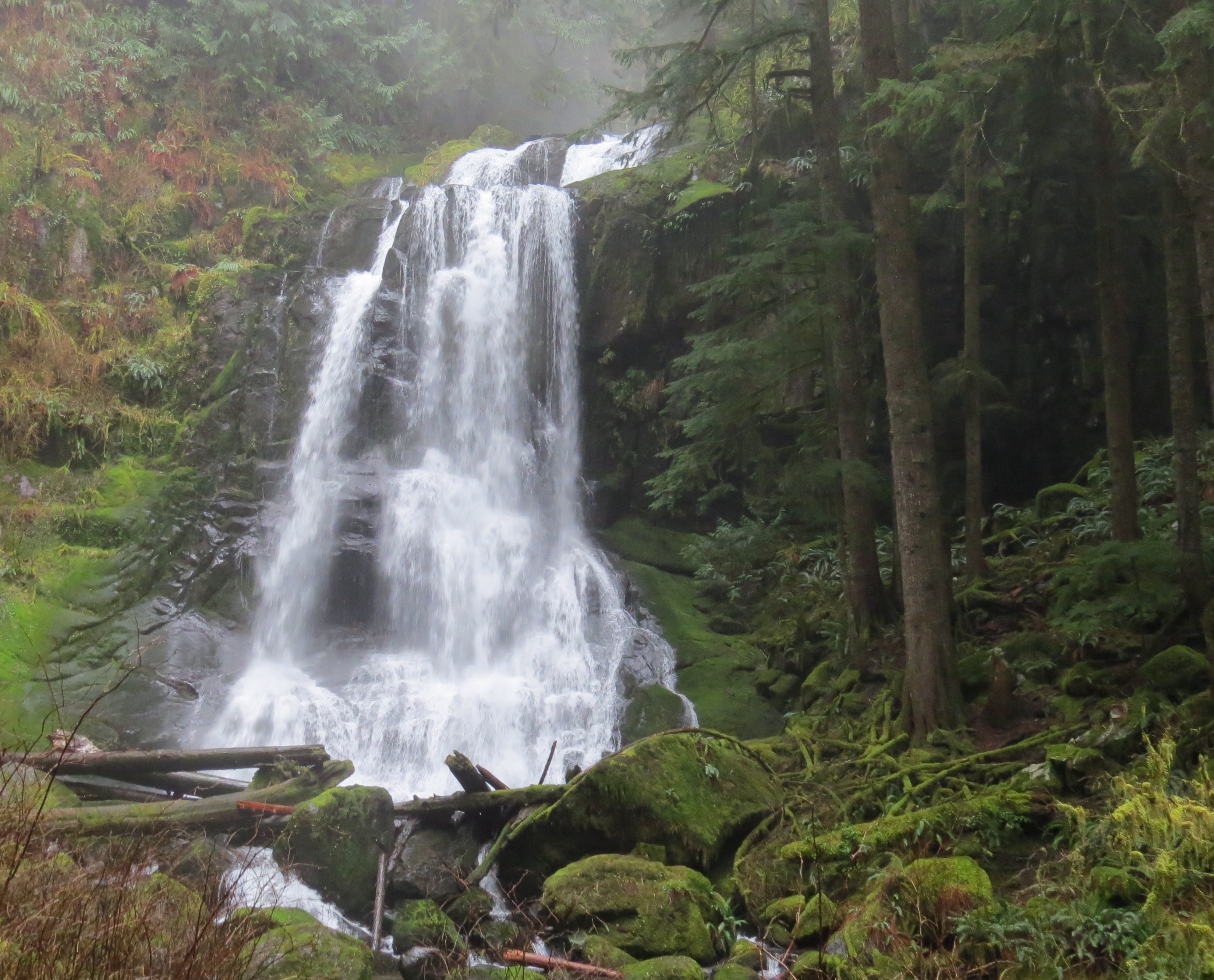
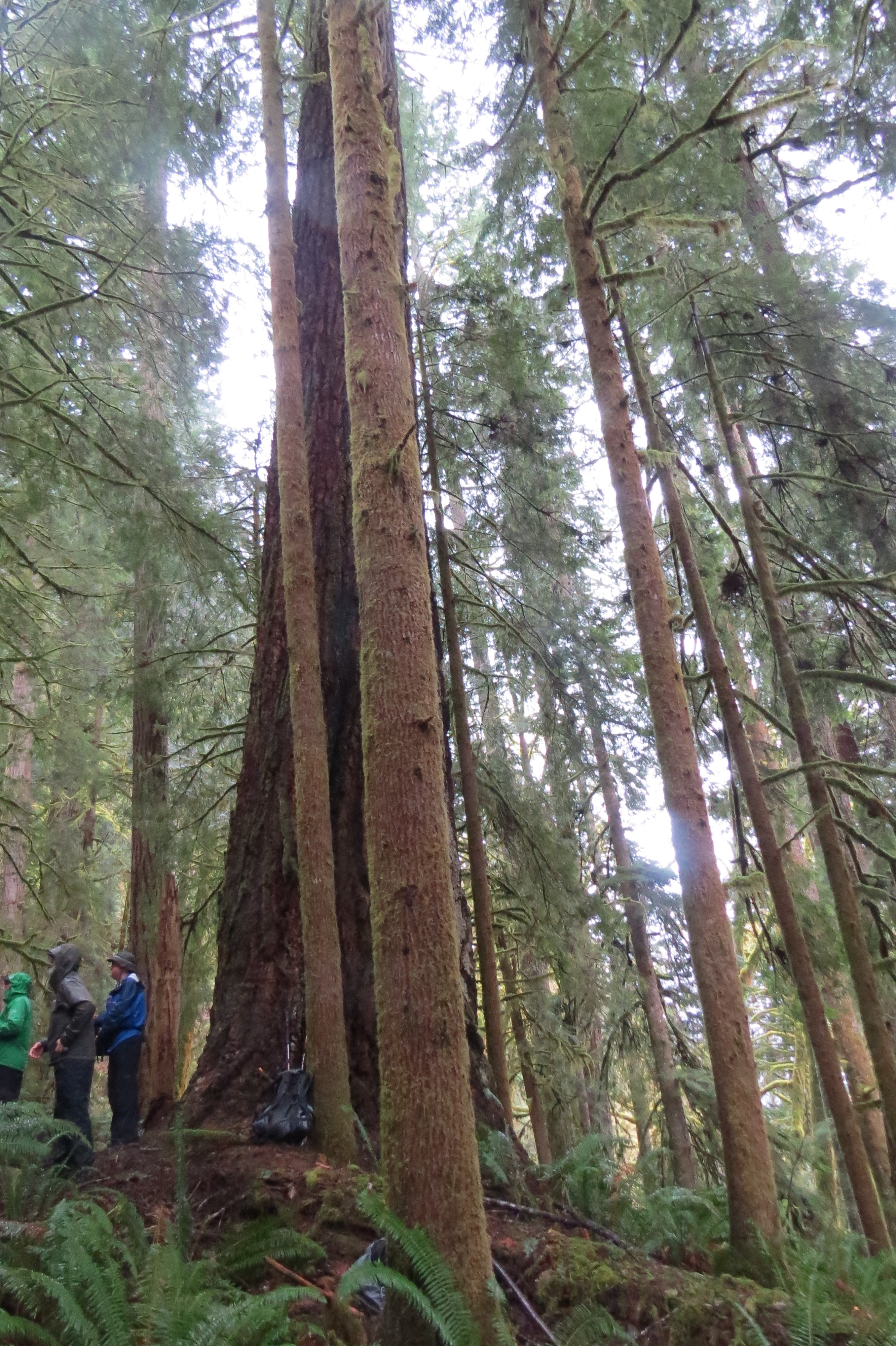
Several of us hiked into to Kentucky Falls last January on what has been the wettest hike I’ve been on in Oregon.  We ate lunch standing up, in rain that managed to get to the forest floor through 600 year-old Douglas fir trees.  Hiking back out, we were totally soaked, and I loved it.  I knew I would dry off eventually, I wasn’t going to get hypothermia, and we were getting what we needed in winter—a long, cold rain.

IMG_8168.JPG

Part of the Kentucky Falls area

IMG_8173.jpg

Eating lunch by a 600 year-old Douglas fir

IMG_8175.JPG

Kentucky Falls, one branch.  I stayed so long that when I turned to leave, the rest of the group was long gone.  Rain makes for beautiful waterfalls.

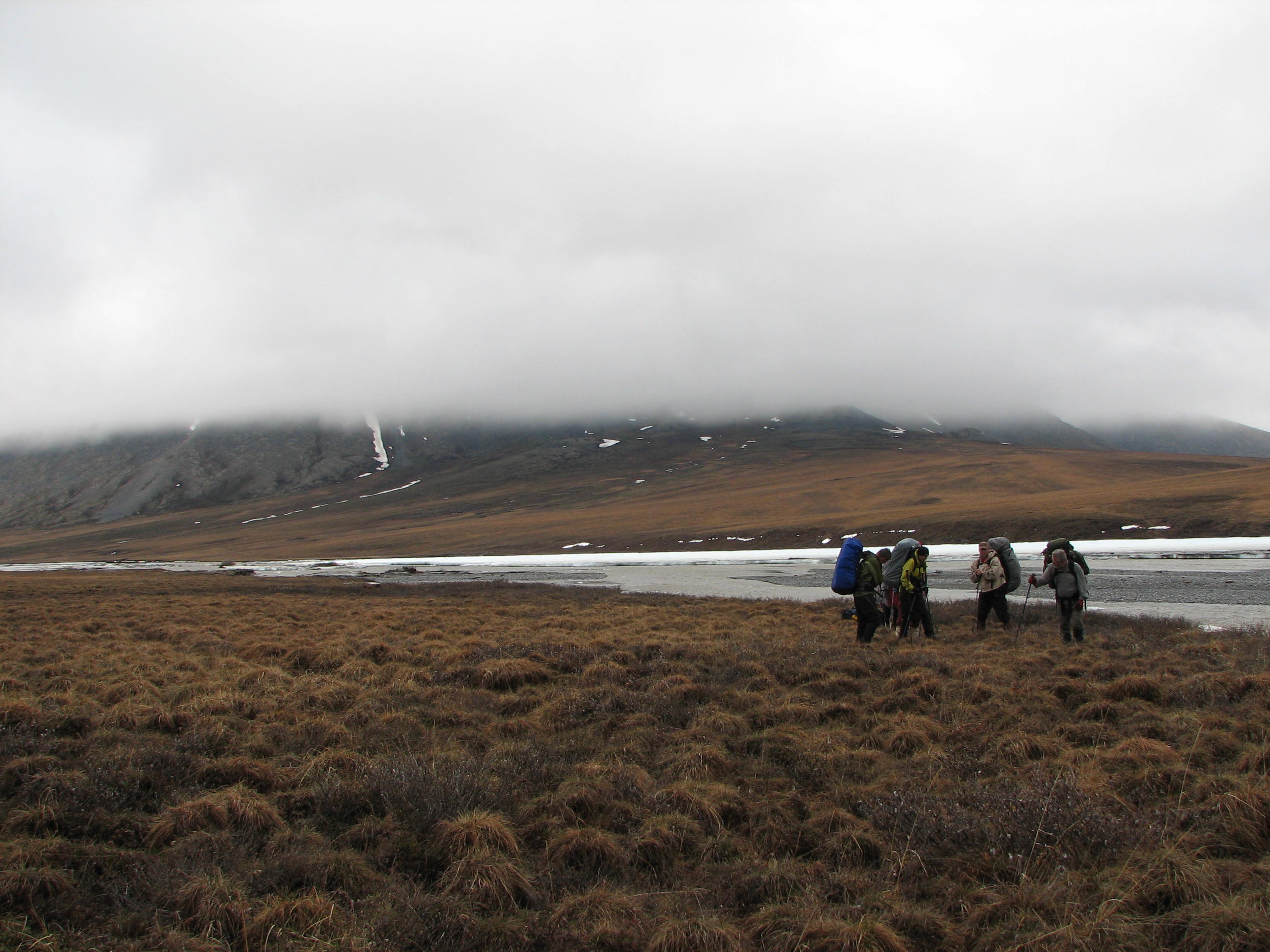
I’ve backpacked during a 6 day rainy spell in Alaska’s ANWR when the temperature never went past 40, our boots were completely wet, our tents, too, but we stayed warm by hiking, then pitched those wet tents and got into our mostly dry clothes.  The cook tent we set up had enough shelter for eating.  We saw snow on Bathtub Ridge in Drain Creek in June.  Yes, I had to put on wet wool socks first thing, but it was only cold for a few minutes, then my feet were warm.

IMG_1050.JPG

Alaska’s North Slope, ANWR, shortly after being dropped off to hike south through the Brooks Range (2009).

IMG_1167.JPG

Hiking through fog.

IMG_1336.JPG

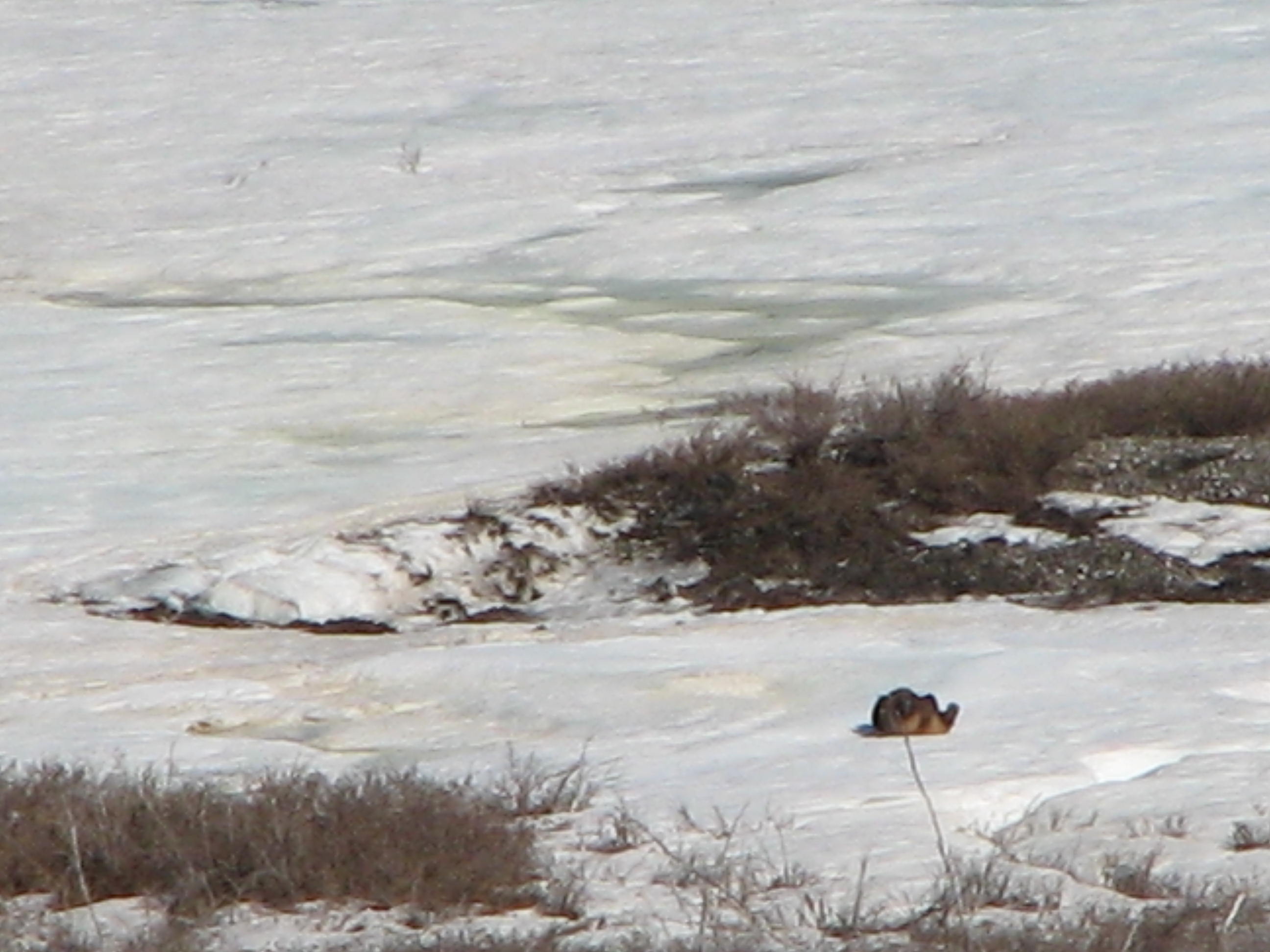
Brown bear rolling on ice, Drain Creek, ANWR.

IMG_1344.JPG

Snow on distant Bathtub Ridge, after climbing out over a pass.  The prior picture was taken far down the valley and to the right.  

Years ago in the Boundary Waters, out on the waters of Crooked Lake, just south of the Canadian border, I got packed up, while everything was dry, then on the lake got hit with a downpour  I had to pull ashore on an island to empty water from the canoe, and I was really wet, but since I was paddling and portaging the whole day I stayed warm enough.  Once I reached my campsite, I had a dry tent—at least briefly—and dry clothes awaited me.  I had a quick dinner and got into bed, staying warm, listening to the gentle, steady rain.

I remember rainy days on the trail better than sunny ones.  I remember the cold rain in Temegami, when rain gear wasn’t as good, but our young bodies were able to deal with cold. I wasn’t as happy with it back then.  A quarter century later, and ago, I remember the Fourth of July week on Basswood Lake with the Forest Service, where it rained every day, and I worked to have dry socks each morning.  The woods were empty that weekend, the lakes were beautiful, and we patrolled a vast wilderness alone. That was the weekend I learned how to stay fairly dry during days of rain.

I missed the rain when I lived in Arizona.  We had summer thunderstorms, and if I were lucky, we had at least one nighttime boomer, where I could watch the lightning, hear the thunder, and hope the desert would soak up the water.  I hate droughts, and the 22 year one in Arizona was something I complained about often.  The few times it did rain, I heard weathermen and newscasters say that it was a “bad day,” as if we could live our lives with no water at all.

Before I moved to Oregon, I was at a party talking to somebody who heard I was moving.  He began berating me about its climate.  “It rains all the time up there!” he said.

“Yeah,” I replied.  “Great, isn’t it?”

After I moved, we were in a drought for 18 months.  I heard how it would rain all winter, but we got a third of what we needed.  When it was 80 in the mountains in January, an acquaintance told me how “spectacular” the weather was. I stayed quiet. I was told that March could be rainy, but it wasn’t, and that spring could be very wet, which it wasn’t, either. I was told that hot weather was not common, but that summer we broke the record for number of days over 90.  In October, my neighbor asked me how I was, and I replied, “nothing that 10 inches of rain can’t fix.”  In December, the “fix” came, not all at once, and never for 24 consecutive hours.

In November, a woman said on the radio that soon it would be cold, but it wouldn’t last long, and before we knew it March would be back, then spring, and then summer.  We had just gone through a summer with multiple days over 100, no rain for three months, wildfires that burned a quarter of the huge Three Sisters Wilderness and the Gorge, 20 days of bad air quality in Eugene, requiring special masks.  No thanks.  I can wait a long time for summer.  It’s overrated, at least in the American West, where it starts a month or two sooner than formerly, lasts a month or two longer, drier, and with more fires.  Arizona and southern California now have 12 month a year fire seasons.

I like rain.  I know it’s possible to get too much of it, but I have not had that experience in decades.  I had forgotten how many different shades of green there are in the Pacific Northwest.  In the desert, green is washed out by comparison.  I like flowing water, just to watch it, in the wild, not in some fountain.  I like the Sun when it comes out after a good long rain.  Then it is nice.  I enjoy it.

But only for a while.

IMG_4908.JPG

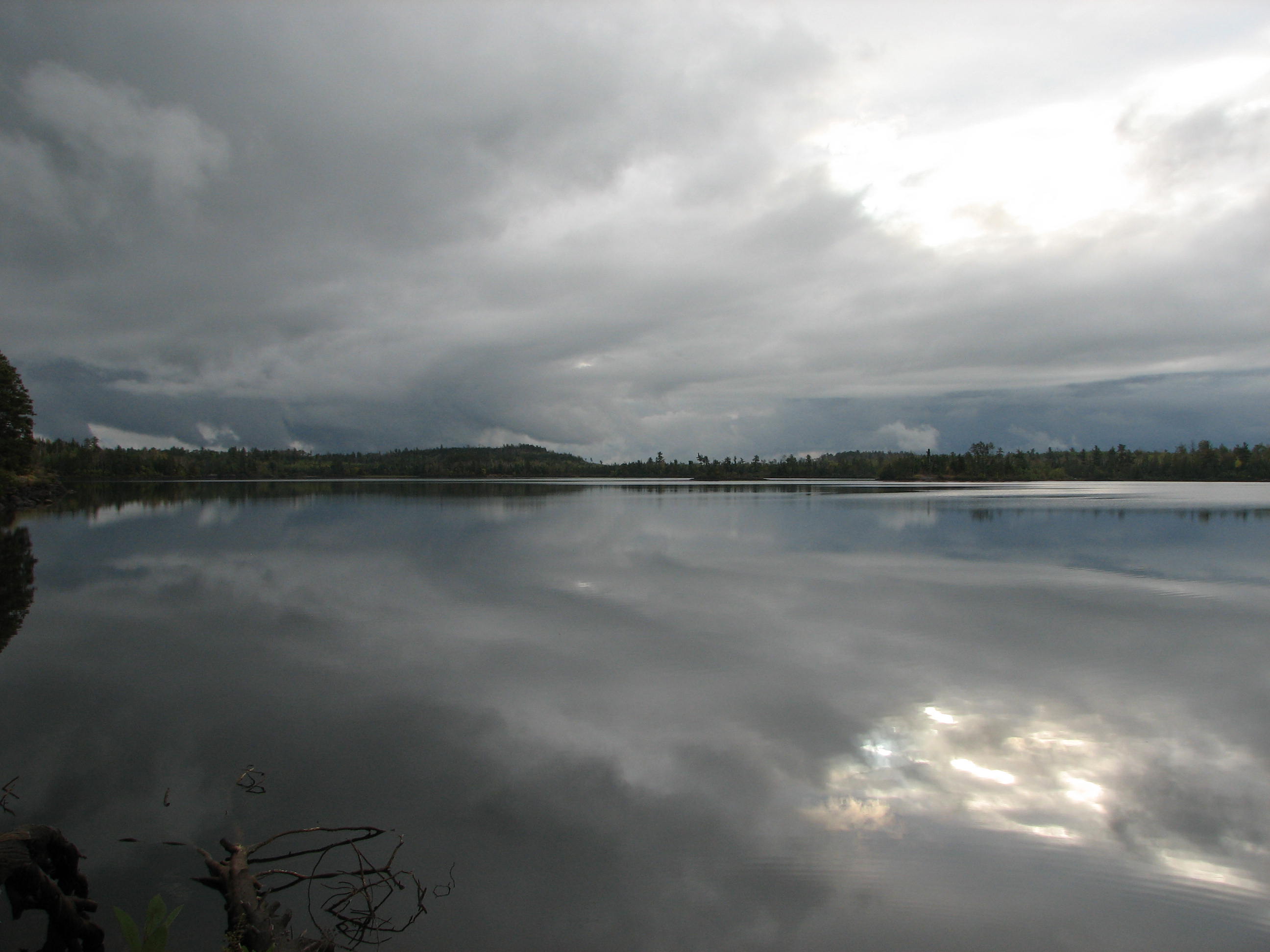
Storm coming in, Lake Insula, BWCA, 2009

IMG_4952.JPG

After the storm, next morning.

BWCAW 2009, LAKE INSULA

October 2, 2009

This may have been my favorite trip to Insula.  We had the best travel day in, with an early start, changing sides frequently so that we wouldn’t stress our elbows, and with my boots and Jan’s gaiters, she didn’t have to climb over packs to get in and could get out sooner.  Loading and unloading went well, portaging went well, the water was calm, and we got to the point site in Museum Bay by 2 p.m.  We saw not one other group for 5 days, which is remarkable even in September.  Four of those days were with near perfect weather.  I actually swam, we day tripped there and to the north end of the lake, saw an eagle, mergansers and a moose.  The latter sloshed and clopped his way along the shore one evening, which was one of the more memorable sightings, even if the picture wasn’t good.  Two days later, we went by to look at the tracks and found fresh wolf scat plus urine!

Day 5 was cloudy but cleared, so we stayed another night, and then got the frontal passage the day we left.  The rain mostly held off until we hit the Insula portage.  We got another hit on Lake Four and had lunch under the tarp.  We took the same point site on Lake Three that two women (from Arizona, no less) were vacating, and then had high winds and rain all night.  We came out with 30 knot head winds gusting to 40.  Lake Two was pretty epic, and Lake One was no piece of cake either.  But hey, this is Minnesota in September and this sort of stuff happens.  My watch barometer was right on target with a 30 millibar drop, so while the weather stayed decent, the drop concerned me, and I knew something was due.  It finally came.  I have now spent 32 nights on Lake Insula, which is a real blessing.

On the slide show, notice the two consecutive sunsets and how far south the second one has moved.  At the equinox, the Sun is moving either north or south the most rapidly.  The Sun set nearly three minutes earlier each night.  Up in Alaska, they lose about 8 minutes of daylight each day this time of year!