Archive for the ‘COLUMNS IN "REALITY CHECK"’ Category

IN ANOTHER LIFE? NOPE, GOTTA BE THIS ONE.

March 11, 2010

“In another life, I would have been a good math teacher,” I once told a teacher friend.  I don’t believe in another life, but I still have this one and realized I can become a good math teacher.  I now substitute; based on my training and experience I ought be allowed to teach full-time.

I’ve often felt I never belonged in medicine.  Indeed, looking back on what has given my life meaning, medicine ranks a distant fifth–yes, fifth–behind my wife, allowing my parents to die the way they wanted, the companion animals I’ve taken in and my experiencing the beauty of nature all over the world.

I did belong in medicine, just not here.  I belonged in medicine where physician training was geared towards dealing with patients typically seen in practice. Surgeons are trained in and do surgery; radiologists interpret images; ED physicians field emergencies; dermatologists treat skin disorders.

I mistakenly thought that neurologists were consultants who treated neurological disease.  Nearly half of my new patients had limb pain, spine pain, dizziness and headache.  I counted.  In my training, I learned little about headache and spine pain and nothing about dizziness and limb pain.  Yes, we need to learn rare diseases, but we also need to learn how to treat the common ones.  I had learn it myself.  Too many patients with carotid artery disease were sent directly to surgeons, bypassing me.  Yet, in 1984, I had city-wide data showing a 15% major complication rate for carotid endarterectomy (CEA), much worse than medical management.  I sent my referrals to the only surgeon whose outcomes beat medical treatment.  Locally, the complication percentage didn’t change during the next decade.  I counted.  I used outcomes data years before it was a buzzword and got blasted by my colleagues for using it to help my patients. I diagnosed and successfully treated depression a decade before it was mainstream, when still equated with being “crazy.”  Got blasted for that, too, by patients, expecting a deadly neurological disease (which it is).

Much of my practice consisted of patients with normal tests, post-surgical disasters and chronic pain; the last I was unable to help.  I was not taught how to diagnose irreversible brain injury, discontinue support and deal with families.  While I was trained to treat epilepsy, most of the seizures I saw were psychogenic.  I counted.  In 1982, I proved statistically that perceived I’m-not-at-fault injuries dramatically increase the likelihood of chronic pain.

I belonged in medicine where counting was valued, not mocked, and we tracked important matters, like CEA morbidity and clean case surgical wound infections.  I developed a non-discoverable reporting system for errors, so we could learn from and not hide mistakes.  More legislators backed my bills than doctors; had the bills passed, we would have advanced the cause for liability reform, because they were primarily about helping patients, not decreasing premiums.  Ironically, four immediate family members have suffered consequences of medical errors.

I was frequently asked “Are you busy?” but never “Are you happy?”  Yes, I was busy–and no, I was not happy, because I was rushed, interrupted, and chronically tired, three classic setups to make errors, in order to pack in another “emergency,” an overused term increasing stress, cost, shortcuts and mistakes.  Some ED clerks were instructed to call every neurological consult “stat.”  I accepted that many neurological conditions couldn’t be helped; I grew weary of the many conditions neither diagnosable nor treatable. It took me too long to realize I could quit.  I never regretted doing so.

In a better medical world, we would fix the numerous faulty processes that decrease quality, increase costs and suck the fun out of life. We would review every hospital death to see if a medical error occurred.  With appropriate sampling, we would have a decent estimate, not the old, inaccurate infamous “100,000 deaths.”  I once thought my experience in practice, administration, quality, statistics and writing would make me a valuable local resource.  I was as mistaken, as those at GM who pushed for Japanese style quality outside of NUMMI.

My local and state medical societies should demand real-time data on breast and other cancer incidence, not difficult, rather than 4 year-old results (look it up).  We should have city/state-wide standardized checklist approaches to central line insertion/care, ventilators and pre-op antibiotics, to name just three.  Public health committees should discuss important issues they could influence: obesity in the young and annual motor vehicle deaths, the latter unnecessarily killing more local teens than Mad Cow, West Nile, mercury, terrorism, autism or kissing bugs combined.  My challenge to the committee to change its approach received one letter of support; I resigned.  Surveys, which I randomized for free, should take a quarter of a year, not a quarter of a decade, to complete.  Yes, 2.5 years.

My solutions aren’t perfect, but every one is better than what we have.  Waiting for perfection is like waiting for Godot.  I’m not a shaker but a mover, moving so far ahead I’m no longer visible.  In my lifetime, I will teach math, but in my lifetime I will neither develop nor see the medical changes that would have been so easy, effective and necessary.


LILLIPUTIAN LESSONS

February 7, 2010

Foregoing the elevator, I went to the stairwell at the Nairobi Intercontinental, ascending to my third floor room.  When I reached the spacious second floor, there were a dozen hotel workers taking a break.  When I appeared, an old white western guy, the scene got–shall we say–awkward.  Their conversation stopped.

I smiled and said, “Jambo,”  an all purpose Kenyan greeting, one from the heart, my guide, Danson, told me several days later.  I heard several “Jambo’s” in return, and tension left the stairwell like air from a popped balloon.  I continued up the stairs, and they continued their conversation.  Trying to speak the language in another country is a sign of respect.  “Jambo,” told the men that I was cool with the situation, I knew a little KiSwahili and was a guy who respected Kenyans as people, not former colony inhabitants.

One of my big regrets in life is never having learned any foreign language well.  Still, within 12 hours of arriving in Nairobi, I could count, say please and thank you, and “Jambo,” which I used a great deal, along with “Hakuna Matata,” the Kenyan version of “Don’t sweat it.”  My French in France was not appreciated.  But my Spanish worked in Spain (and not badly in Italy, either), and the Filipinos absolutely loved it when I spoke Tagalog, 35 years ago.   I blew one vendor away with my “Hindi ako kumakain nang barbeque dito,” essentially stating I wasn’t interested.

At Lake Nakuru, I showed several lodge staff the annular solar eclipse through solar filtered binoculars, the eclipse being the reason I traveled to Kenya.  I love eclipses, and I love showing them to people and explaining the phenomenon.  Many were flat out amazed a guest would take an interest in making sure they could see something that almost certainly they will never see again (the November 2013 eclipse will be partial in Kenya).  In the short time I was there, many called me “Mr. Mike,” an appellation I particularly like, since it simultaneously shows respect and liking.  I told one waiter my age was sitini na moja, (look it up!)  It took him a few seconds, but he got it, and later (in English) talked to me at length about the lodge.  Danson later told me that I had made a big impression on the staff, one of the nicest compliments I received.

People are people.  Just like me.  The Kenyans have a life, a far more difficult one than I can imagine, but they are still people.  Unlike us, they have a beautiful memorial site for their disaster of 7 August 1998. Also unlike us their cellphones work everywhere.  I texted the eclipse phenomenon in real time back home. My text immediately went through from Jomo Kenyatta airport; it didn’t from Houston’s Intercontinental.  Not infrequently, I get “No Service” from Campbell and Skyline.  So who is Third World?

When I left practice in 1992 to take a leave of absence, I received many notes, cards and letters.  The one I remember the most was from a dietitian, who was also leaving to go to pharmacy school.  She said, “You respected the little people.”  I tried to.  I was taught at a very young age not to beat up on those who can’t defend themselves (nurses, custodians, aides), which I have done and for which I have been ashamed.  I’ve seen too many physicians and others in power who beat up on people, and I remember taking the brunt of it when I was an intern scrubbing on a bypass case.  It was difficult to hold the retractor properly when my eyes were filled with tears.  I was thanked only 5 of the 12 times I scrubbed with those two surgeons.  I was the little people, and I never forgot that treatment.  It was so bad, I got blisters on my hand from learning how to take a hemostat off a piece of wet kleenex with one hand without tearing the kleenex, so I wouldn’t get yelled at in the OR.  And I mean yelled.

I finally got some revenge.  On a later case, with the pair, I had my thumb too far through a hemostat.  “Don’t hold your instruments like that, Smitty,” one yelled (a term I detest), “you don’t hold your silverware like that, do you?”

“I don’t use silverware,” I retorted.  “I use my fingers.”  That was the end of that conversation.  When they quizzed me on anatomy, which I happened to know cold, I spat the correct answer back at them.  After three correct answers in a row, they left me alone.  One later had a nervous breakdown; both must have been incredibly unhappy people.

I always thanked nurses for helping, I tried to clean up after myself, and if you read Code Team on my blog, you will discover what other things I cleaned up in the hospital.  But occasionally I lost my cool.  We all do.  I just tried to remember to apologize when I did.  And if one is polite most of the time, he or she can easily be forgiven for a lapse.  There just can’t be too many of them, and an apology,must be coupled with a change in behavior.

When you’ve been at the bottom as many times as I have–undergraduate, medical school, internship, residency, graduate school and now teaching, you understand a lot better what it’s like being the little people.  That gives you two choices:  to haze those below you or to break the cycle.  I’ve tried to choose the latter.

WEARING RED

January 7, 2010

“For them is sweat and toil, hunger and thirst, and the fierce satisfaction that comes only with hardship.” Sigurd F. Olson (1938)

Forty-five years ago, after three summers at Camp Pathfinder, a canoe tripping camp in Ontario’s Algonquin Park, I became staff, “third man”  on canoe trips.  Being staff was different.  I no longer knelt in the bow, looking for rocks and setting the pace; I was in the stern, responsible for steering, orders and keeping up with the other canoes.  When we reached the portage,  I flipped the 90 pound canoe over my head, carrying it anywhere from a few yards to four miles.

I no longer had to wash dishes, only chop wood and help cook.  But I had difficulty with my new role.  I abused my new power by excessively bossing campers.  So, on my second trip I was third man under a second man who had never been a camper with my experience.  That hurt.  On my third trip, 14 difficult days, I struggled so much that I didn’t ask what my rating was.  Instead, I snuck in the cabin one night where the ratings were kept, and saw mine:  “He needs a LOT more tripping experience.”  I never forgot the pain of seeing those words by flashlight.  They were true.

The next year, I was 17, stronger, and vowed to do better.  I was sent out as second man, paddling and carrying well, kinder to campers.  I realized that my job was to ensure they had a good time on the trip, even as they worked hard, for hard work is what makes a canoe trip so satisfying.  On the first day of one trip, the head man and third man were hung over from a previous day off, and I had to keep telling my two canoe mates to slow down so we wouldn’t lead the trip.  When we reached the dreaded 1 1/2 mile Iris-Alder portage (named for the lakes it connected), I was allowed to go first.  I blasted over the wooded, rocky, swampy, hilly trail in 20 minutes, canoe on my head, well ahead of everybody.  I was second man for 3 more trips that summer.

There was a hierarchy of neckerchiefs worn by the staff.  It was an unwritten rule that nobody but a head man wore red, second men blue.  Pathfinder was and is known for its challenging trips and its red canoes, which today are part of their e-mail address.  That summer in 1966, I wore blue.  To entertain the campers, I thought up games like tree golf (I won’t describe it) and told scary ghost stories around the campfire.  When a camper’s asthma flared up on one trip, the head man and third man took him to help, several hours away.  I was left in charge, nervous, but thrilled to have the responsibility.

My ratings were good, and my last summer, I was promoted to head man on short trips.  I bought my red neckerchief, proudly put it on, and at 18, took 8 other lives under my care into South Tea Lake.  I navigated, carried canoe and a pack together, chose the campsite and cooked the meals.  The trip was only three days, and I was familiar with the area so that navigation wasn’t a problem, but I was in charge of two other staff and six pre-teen boys—no adults anywhere.   Even today, I am amazed that I was given such responsibility at my age.

Command changes one’s perspective.  When the campers swam, I counted heads, over and over again.  If I didn’t see one, I got everybody to stop playing until I was certain.  As head tripper, I had to decide the menu, time the meal right, and make special goodies, like fudge, which was how everybody rated a head man.  And every night in the tent, I listened to every sound, anybody crying out, responsibility weighing heavily on me.

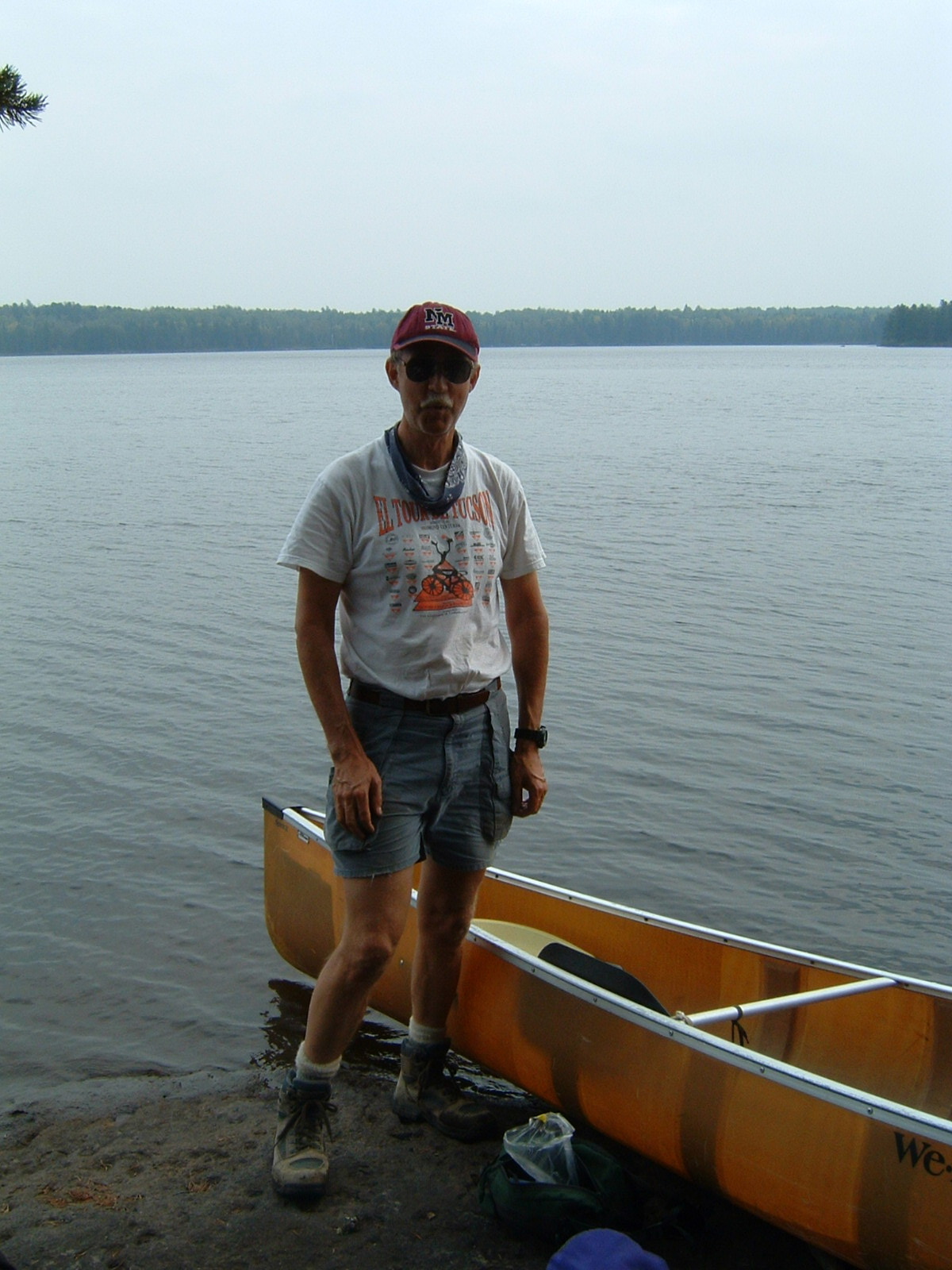
Back in camp, I wore the red proudly, the way an airliner captain wears four stripes, or the commander of a naval vessel wears the five pointed star in a circle on their right chest pocket signifying current command at sea (left pocket for former command).  I took a second trip as head man, the responsibility still weighing heavily on me.  Two days after that trip, I went out as second man on a better trip, just like a pilot of a 737 becoming a co-pilot on a 747.  I put my blue neckerchief back on, helped outfit, did my job well, and made sure the campers had a good time.  I never wore blue again.  In late summer, my fourth trip as guide, I took six men six days on a super trip to Pine River farm and Big Trout Lake.  I didn’t remember all of these trips, but Pathfinder’s Web site lists them going back to my era.  My fondest memory of my final trip was a day a camper couldn’t carry his pack, so I carried it and my canoe—at least 140 pounds—a half mile with no trouble along the slippery shoreline of the Tim River.  To this day, I have worn the red neckerchief on nearly all the 60 additional canoe trips I’ve taken. Occasionally, I put on the blue as a reminder of the days I wasn’t in charge and what I had to do to earn red.  I have no other colors in my collection of neckerchiefs.

I practiced medicine for 20 years, a hierarchy if ever there was one, but I never once thought about the red neckerchief.  I wish I had.  For the past eight years, I have been a volunteer math tutor at two high schools, never being as busy or as in demand as I had hoped.  So this year, I set up a program to be an on-call volunteer substitute math teacher, teaching when the substitute was unable to do so.  I have taught twice, and that is a huge step up from tutoring, like being staff.  But I still felt I was wearing blue, not red.  I wanted to be in charge, to take full responsibility for running a class, even if only for an occasional day.  I got my substitute certificate and waited.  One day my call came from a statistical colleague, wanting me to teach AP statistics, sports statistics and his algebra 1 class.  I looked at his lesson plans, made modifications that I felt might help, and went to school to teach–by myself, no certified substitute in the room.  I put my red neckerchief on the desk beside me.  No student noticed it, but I looked at it frequently.  As expected, I made some mistakes that first day, but one of the students left the class saying, “You’re the best sub we’ve had all year.” I won’t take the neckerchief every time I’m called, but I will take it often, to remind me of what being in charge means—the responsibility, the worry, the challenge, the chance to do well.  Most importantly, I will remember where I have worn red:  on the lakes and rivers of the Canadian Shield, from Algonquin to ANWR, and many places in between.  I will remember the rain and sun, bugs, moose, fish and loons.  I will remember those days at Pathfinder, the eyes of my fellow travelers reflecting the light of campfires from Little Island Lake to Big Trout, my being in charge of the whole trip.  I earned the red once, and I have earned it again, doing different work, once again in charge.

AFTER ALL, THESE THINGS HAPPEN

January 3, 2010

A 52 year-old woman lies in extremis in ICU following a gastric perforation discovered after contrast is put through an NG tube. So what?  These things happen.  Yep, they sure do.  Here’s how this particular one happened.

The woman had an Upper GI four months earlier showing a paraesophageal hernia, where the esophagus went through.  The report mentioned the hernia, it didn’t mention its prediposition to gastric volvulus.  While one can’t mention every possibility in a report, it might have been useful to mention this particular fact.

Four months later, the woman presented with abdominal pain.  Her initial CT of the abdomen and pelvis mentioned the hernia and an ovarian cyst, but no comment was made about gastric distention or the type of hiatal hernia.  Unfortunately, the prior study wasn’t re-evaluated during the reading.  That was unfortunate, but many studies today contain a thousand images; indeed, a radiologist may encounter 100,000 images a day.  An NG tube was passed, and a second scan, with contrast, showed the perforation – really well.  Fatigue, the volume of images, hospital and referring physician demand for quick reads, compensation for number of studies (not images) viewed, make errors more possible.  Reviewing past studies is not compensated, so there is less of a  tendency to do so.  What do clinicians do if they receive a huge chart when a new patient arrives, inconveniently booked into a follow up slot?  Compensation is based on a numbers game; what game is played dictates what gets done well, what gets done, and what doesn’t.  Having been on both sides of the medical fence, I can easily spot a distracted, harried and hurried physician.  All three of these are a setup for cognitive errors, the single biggest type of mistake a physician can make.

The patient developed peritonitis.  Perhaps if fewer CT scans were ordered, it would be easier to routinely evaluate prior studies as part of the reading process.  Once having practiced neurology, I believe, and the literature supports, a person with intact cortical function, no neck pain, no tenderness to palpation and no neurological deficit doesn’t need a cervical spine CT after an injury.  Whole body scans are often done when clinical judgment would suffice.  Besides being a radiation issue, it is a time issue affecting emergency department throughput (we patients call it waiting), a money issue, because these studies are expensive, and a quality of care issue.  After my bicycle accident, I had several studies, but nobody took off my shirt to look at the road rash on my back.  Nobody palpated my entire body, since severe pain in one place may mask a significant injury elsewhere.  Those additions take perhaps thirty seconds.

Worse, if little clinical history is provided, it affects the type of study and the radiologist’s approach.  Differentiating PE from dissection makes a big difference in timing of the scan after contrast.  “Chest Pain” is not helpful to the radiologist.  Yes, you are in a hurry.  I was too.  But I always put clinical information on my neuroimaging requests.  The radiologists appreciated it.  I got better reports.  It helped my patients.

This woman survived.  The medical community ought to learn from this, rather than copping out and saying “these things happen,” “nobody’s perfect,” or “who made you the quality expert?”  “Nobody’s perfect” doesn’t cut it if a person dies from something preventable, either in or out of medicine.  You don’t hear the civilian or military aviation community say that.  They learn from the mistakes, and they publicize them.  Read a few sometime, and you would be surprised how much we could take away from their field, rather than the mantra, “We’re doctors.  We’re different.”

Rheumatic fever, polio and gas gangrene used to happen; 30 years ago auto accidents killed twice as many people per capita, anesthesia deaths were once far more common.  Sean Elliott and Alonzo Mourning would have died from uremia the way actress Jean Harlow did.

Excessive workload increases the likelihood of a radiologist’s not reviewing past studies and not dictating, “Paraesophageal hernias can lead to gastric volvulus.”  What does workload do to you in your field?  There ought to be a way that physicians can do a decent job, make decent money, learn from their mistakes and those of others, have a life and not fear lawsuits.  Here are a few thoughts:

It’s time we had community standards for common, high risk procedures that lend themselves to standardization: hyperalimentation, ventilator management, pre-op antibiotic delivery and central lines.  We can standardize and still respect individual differences.  It’s time disciplines who function together, like emergency medicine and radiology, work together.  It’s time to have legislation mandating a free from discovery error reporting system which I proposed in 2001 and which failed the legislature in 2004 and 2005; the hospital association worked to  kill it.  It’s time to have liability reform so physicians aren’t treated like criminals when they err.  Maybe if we did the first two and supported the third, we could get the fourth.  Along the way, we might additionally work towards complete medical coverage for childhood up to at least age 18 – with real-time data on outcomes and costs.  We might start having a better system.  Maybe we could expand age 18 to all.

And perhaps see fewer cases of preventable peritonitis.

“I NEVER KNEW HOW IMPORTANT THAT WAS TO YOU”

December 18, 2009

I had a depressing holiday season.  Too much death.  Not in my family but in the families of two people that I know.  The three of us were once riding buddies, but after my bad accident in 2006, I gave up the sport, and while we stayed in touch, calls became less and less frequent.  I basically let the friendship go.

Shame on me.  I kept the friendship alive with Mike Manlove from my days in the Forest Service by stopping by every time I was in Minnesota.  Mike died at 52; I had visited him two weeks prior to his sudden death and he expressed his gratitude for my coming by.  It was important to him that night.  And to me.  But at the time I didn’t realize how very important it was.

The first death was Don’s son, in an accident.  I’ve known Darrell for 8 years.  When my mother was dying, in 2002, I had to bring her and my father back from Oregon.  I had to fly up to Portland, get their car and bring it back.  On his own, Don told me he would pay for his flight up and help me drive back.  I was astounded that anybody would do that.  But that’s the kind of friend Don is.  So, when I read about his son’s death in the paper and called Don, I didn’t know what to say, except that my wife and I never forgot what he did for us, and we were going to be there in any way we could for him.  I reminded him of our 1500 mile old guy road trip, and got him to laugh, even briefly.  Don has many friends, so there wasn’t much I could do to help except attend the funeral, where I saw several other people I knew.

One of them was Rick, the oldest of the three of us,  fifteen years my senior, and a nationally ranked cyclist in his age group who could outride me on flat road any day of the week.  Rick and Don are really tight.  They and their wives had dinner together every week.  But a month earlier, Don told me that Rick’s wife was dying from cancer.  I didn’t know Rick as well as I had Don, but I still should have called him.  I didn’t.  At the funeral, I had to not only express my sadness at his wife’s illness but apologize for my behavior.

Right in the pew, I gave Rick a hug and in tears told him how sorry I was about his wife and how much I appreciated his support for me back in late 2005, when my father was dying.  Back then, I was running ragged with visits to the hospital and then to his care facility.  One Sunday, Rick called me and said, “Hey Mike,” in his great booming voice, “you need a break.  We’ve got a bike ride with your name on it.  Come out with us.”  I don’t remember much of the ride, except that once again Rick whupped me.  But I never forgot the fact he had called me.  Such a little thing.  But in relationships, the little things are the big things.  I owed Rick big time.  But good friends never keep score, they just find a way to help each other when it matters.

Four days after the funeral for Don’s son, Rick’s wife died.  Don was the one to call me.  One can only imagine how he was feeling, given how close he and Rick were.  I asked when it would be appropriate to call Rick.  “He’s sleeping, now, Mike,” Don said, “but he really wants you to call him tomorrow.”  I suddenly felt like a friend again.  Somebody needed me, and I needed to step up.

I called Rick the next day expressing my condolences.  Yes, it was a blessing his wife died quickly, but she was still dead.  He then asked, “Do you have a few minutes?”  I had all day if he wanted it.  For a half hour he went through the last few weeks of his wife’s illness, the support he received from his children and his closest friends.  I just listened, because I knew enough that all he needed was somebody just to listen.  But he then blew me away:  “I never knew that day when I asked you to do that ride how much it meant to you.”

“Rick,” I said, “it meant the world to me.  I was so grateful to you.”  We had a good conversation and agreed to meet later in the holiday season.  Out of this hell will come a rekindling of a friendship that I let go.  I really bumbled, but one of the things I’m good at is not ignoring people after a death.  I also try to say something specific about the person who died.  I’ve long known how much those small details mean to the bereaved.  You see, small to you may not be small to somebody else.  What appears to be a few insignificant trite-sounding words to you may make somebody else’s day.  Sometimes, you never find out how important those words mean.  Other times, it may take four years to discover that what you said really mattered to somebody, as it did with Rick.  Don’t ever forget that.

I have every thank you note a patient ever wrote me.  When I left Ely, Minnesota, after my leave of absence from practice in 1992, I didn’t get to say goodby to my boss, because he was helping in Florida after Hurricane Andrew.  But I later got a post-it note from him, along with a framed picture of a two man handsaw, a hardhat,  Pulaski, pack, radio gloves and a broom leaning up against a tree.  They symbolized what I did as a trail crew volunteer in the Boundary Waters for six months, and I still view the picture fondly.  But what I never have thrown away after 17 years was that single yellow, small square post-it note:

All it said was, “Thanks a lot for your help, Mike!”

Such a little thing.  Such a big thing.

HORSE SENSE, MEDICAL SENSE. BET ON THE ONE WITH THE MOST LEGS

December 10, 2009

A friend of my wife, who still rides horses at age 79, recently had a breast biopsy that showed cancer, estrogen receptor positive, nodes negative.  She had breast cancer 28 years ago, but no recurrence, so this is almost certainly a second cancer.  She was placed on Tamoxifen, appropriate for this condition.

A week back, she was told she needed to be seen immediately by her oncologist.  I’ve not had cancer, but every time I see a physician, I fear the worst.  My vision changed recently, and I started thinking of cataracts and macular degeneration, even though I saw perfectly through a pinhole, a classic manifestation of astigmatism.  I’m starting a cataract in my right eye; my maculae are fine, so I have garden variety astigmatism.  This woman and my wife were thinking bad scenarios and wondering why nobody told her what was going on a lot sooner.  Wouldn’t you worry and wonder why nobody said anything sooner?

So, my wife brought a bunch of papers back from the barn, all dealing with genetic markers in the tumor and risk of recurrence.  I’m amazed at how far medicine has progressed since I practiced.  I’m less impressed by how well medical personnel deal with statistics.  The woman was told she needed to start chemotherapy immediately.  That’s obviously bad.  It is worse, however, because she is absolutely phobic about chemotherapy.  Don’t laugh.  Any neurologist who has given intrathecal cisternal Amphotericin B to a patient with cocci meningitis knows that when the physician (conditioned stimulus) arrives for the injection, there is a conditioned response of vomiting by the patient.

This woman had a recurrence score of 35.  That is based on 21 genetic markers, and the score goes from 0 to 100.  It is not a ratio scale, so 35 isn’t 7 times worse than 5.  If you want the details, go to:http://www.oncotypedx.com/ and look under Healthcare Professionals.

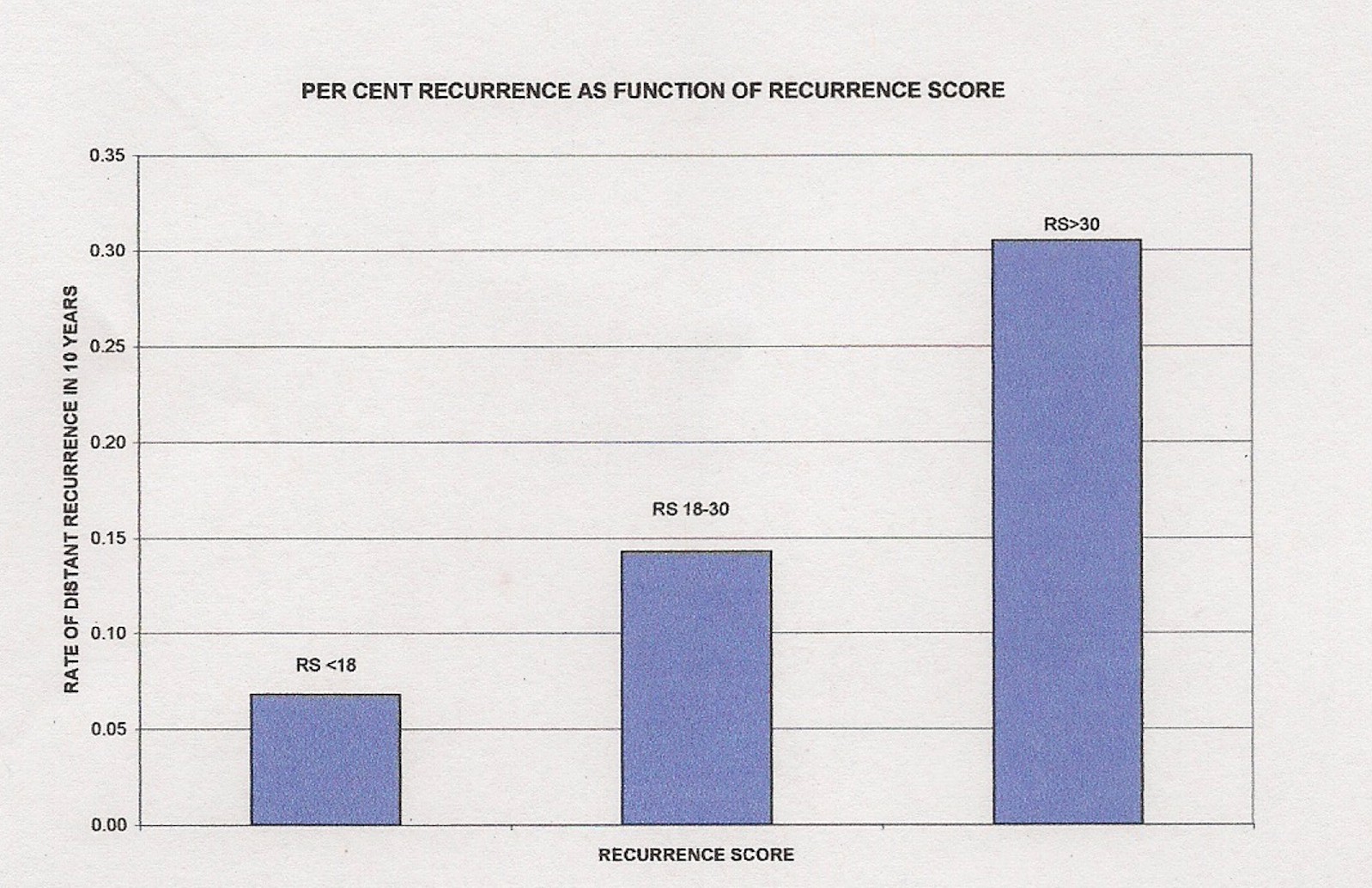
Several studies were quoted, and while the science was good, the writing was less so, which made ferreting out facts difficult.  One study said that she had a 24% risk of recurrence in 10 years on Tamoxifen alone.  In 10 years, this woman will be 90; her current life expectancy is 9 years.  Another study quoted a 14% risk on the new chemotherapy and 42% risk without it, differences clearly statistically significant:

After looking at the paper more carefully, two further graphs suddenly put everything into clear focus, even given my astigmatism.  A bar graph showed the absolute percentage of increased risk with and without chemotherapy.

Because this woman had a RS of 35, she was told she needed immediate chemotherapy.  This bar covers RS from 31 to 100, not stated in the article, and this woman is at the low end of that range.  So, I wondered, is she not being grouped with a lot sicker patients?  I then went to the line graph, specifically looking at node negative cancers (black line at the bottom):

While difficult to read, a RS of 35 means a 15% of distant recurrence (bad), with 95% confidence intervals of (11%, 19%).  That means we don’t know her exact risk, but we are highly confident it lies between those values.  Note, however, where the y-intercept is:  where RS is 0, her risk is 5%.  Therefore, I think her increased risk is 10%, not 15%.  Note that if she had a RS of 25, she would have a 10% risk.  I think the Web page should have commented on this.

Finally, go back to the first graph.  The curves don’t diverge until at least 2 years, and because the sample size is small for RS >30 (47), I suspect statistical significance wasn’t reached for at least four years.  This woman is nearly 80.  Summarizing, she has a 15% chance of distant recurrence in 9 years and a life expectancy of 9 years.  The increased risk of distant recurrence doesn’t kick in until 3-4 of those years.  Her increased absolute risk is under 10%, not 28%.

Should she get chemotherapy?  That is her decision, not the oncologist’s, the insurance company’s, or mine.  But what she needs is a clear statement of the potential risks and benefits.  The risks are chemotherapy in an elderly lady who is likely more sensitive to the side effects, including difficulty using her fingers and walking and fatigue, making it impossible to ride her horse for 6-12 months.  We are now getting into the “art” of medicine, which is important, but must follow giving the patient the information she needs to make an informed decision.

I believe she needed an appointment, but the “come in immediately,” approach was unfortunate (my wife used “appalling”).  Testimonials should also be removed from the science portion of company Web pages.  Busy physicians need better summaries of data, and if studies are mixed, there needs to be unusually clear writing.  Summaries are good, but the information that significance kicked in after 4 years in this lady’s group was important in this instance and found only after a lot of work.  A scatter plot of RS and outcome would have been helpful, since grouping data throws away information.  What we need is somebody who understands statistics, medicine, and knows how to write clearly.  I know an individual who can do that.

We should treat patients as unique individuals who are anatomically and physiologically similar and respond in similar ways pathologically.  Each of us has emotional, occasionally irrational approaches to life.  In medicine, these responses may be detrimental but must be validated.  When I practiced, data were my friend.  I told patients the risks and benefits of procedures, like carotid surgery.  I told them the two ways I could be wrong (recommend a bad thing, not recommend a good thing), tell them what the literature showed, give them my opinion, and then allow them to make what I felt was an informed decision, based on my use of the history, physical, lab, knowledge of the individual and known risks and benefits.

It is a shame that in the face of good data, that this woman was put through a death scare.  I have long felt medicine needs clinical statisticians who know how to communicate, which is why I took time, effort and money to get my statistics degree in addition to my medical degree.  This instance tells me that despite the disinterest I encountered, there is still a need.  I worry what may be happening in other instances.

Over the years, most of my statistical consulting was for free.  This was, too.  But never have I felt as useful to a patient as I have here.  She was not going to go through chemotherapy and worried it was the wrong decision.  I helped her realize that for her, the decision made a great deal of sense.  And that’s what informed consent is all about.

CONTINUING ON IN THE FACE OF SOME REALLY BAD S—

December 10, 2009

Well before the Cessna Grand Caravan cleared the mountains near Fairbanks, Nancy, a vivacious fortyish woman next to me, started talking.  We were traveling to Arctic Village, 235 miles northeast; from there I would fly over the Brooks Range in a smaller plane, landing along the Aichilik River on Alaska’s North Slope, near the Arctic Ocean.

Nancy told me that she and her husband, Jim (both names changed), who was dozing in the single seat on the other side of the aircraft, were going to a different river on the North Slope for their trip.  As she talked, I realized they were as familiar with this country as I was with the Boundary Waters, except “their country” was 20 times bigger and vastly more remote; the last road we would see for two weeks was behind us.

I noted that her husband looked not just older, but his hair was patchy and almost ravaged.  I didn’t say anything, and Nancy soon elicited from me that I had once practiced neurology.  Jim was an exceedingly smart geologist who several years earlier had been diagnosed with a left hemispheric astrocytoma and forced to retire.  These tumors are malignant, and at a young age grow slowly.  But they eventually get nastier and will kill in 5-10 years.  Jim was treated at Duke, which is about as far from Fairbanks as London is from New York.  She was remarkably upbeat for somebody who had gone through a hell I hope I never will, and they were doing the trip while they still could.  I was sitting next to a saint.

“He has some trouble word-finding,” she said, but with a smile that would light up an Arctic winter, added, “he just loves this country, and I do, too.  We’re going as long as we can.”

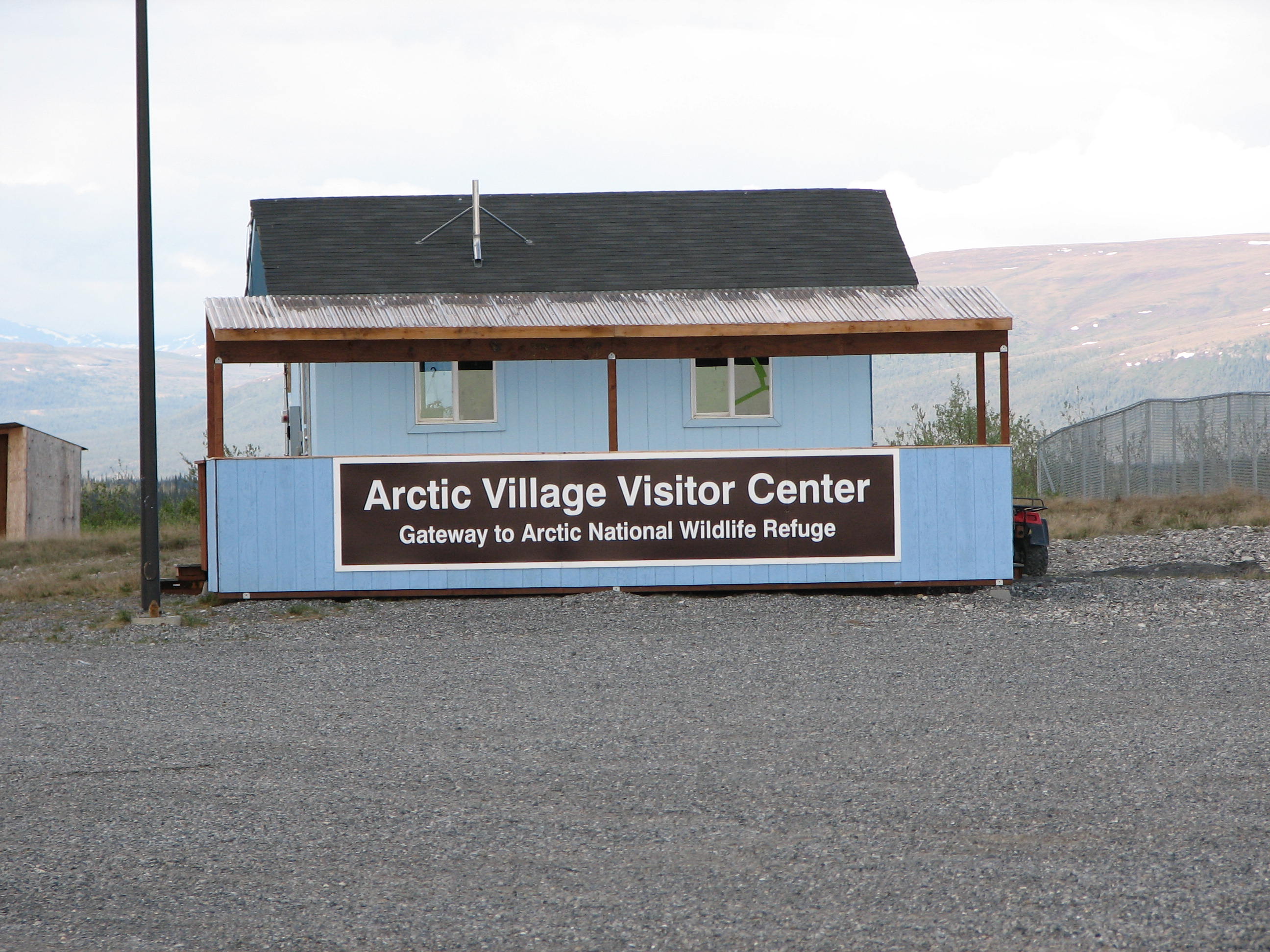
We talked about Alaska, the time passed quickly, and we soon landed on the dirt strip at Arctic Village.  The weather over the Brooks Range was poor, and many of us to be shuttled in.  Jim and Nancy would go in the mid-afternoon; I was in the last group and wouldn’t depart for 8 hours.  We put all our gear by a small building, new from the previous year, unstaffed and christened “Arctic Village Visitor Center.”  One hour took care of seeing the village; when I returned Jim and Nancy were inside, looking at a large map of the Refuge and nearby Yukon.  Jim was pointing out, with minimal but noticeable dysphasia, some of the areas where he had traveled.   I looked with awe and envy at his travels.  I was never going to see that incredible country and he had.  On the other hand, I’ve seen sixty, and he would likely not see fifty-five.

Later that afternoon, Nancy suggested Jim and I walk across the airport to a nearby lake.  Jim had a quick pace, was able to identify a lot of plants and birds, and soon, like his wife, asked me what I had done.  When he heard I was a neurologist, he said, “I have this s— growing in my brain.”

This was one of those difficult moments where one has to quickly decide whether to lie, tell the truth, change the subject, or just run away.  I knew what Jim had, but he didn’t know I knew.  I didn’t want to act curious; I just wanted to be somewhere else.  God, I thought.  What do I do?  Just then a couple of loons called in the distance, so I took option number 3:  I quickly changed the subject to loons.  I felt like a coward.  Whether Jim noticed, I’ll never know, but during the rest of the walk, we didn’t discuss his medical condition.  We birded, spending about a half hour sitting beside one of the many lakes that surround Arctic Village.  Jim pointed out the plants to me, and I just worked like mad keeping the subject off astrocytomas.  I’ll never know what he thought of me, but I sure learned much about the local flora.

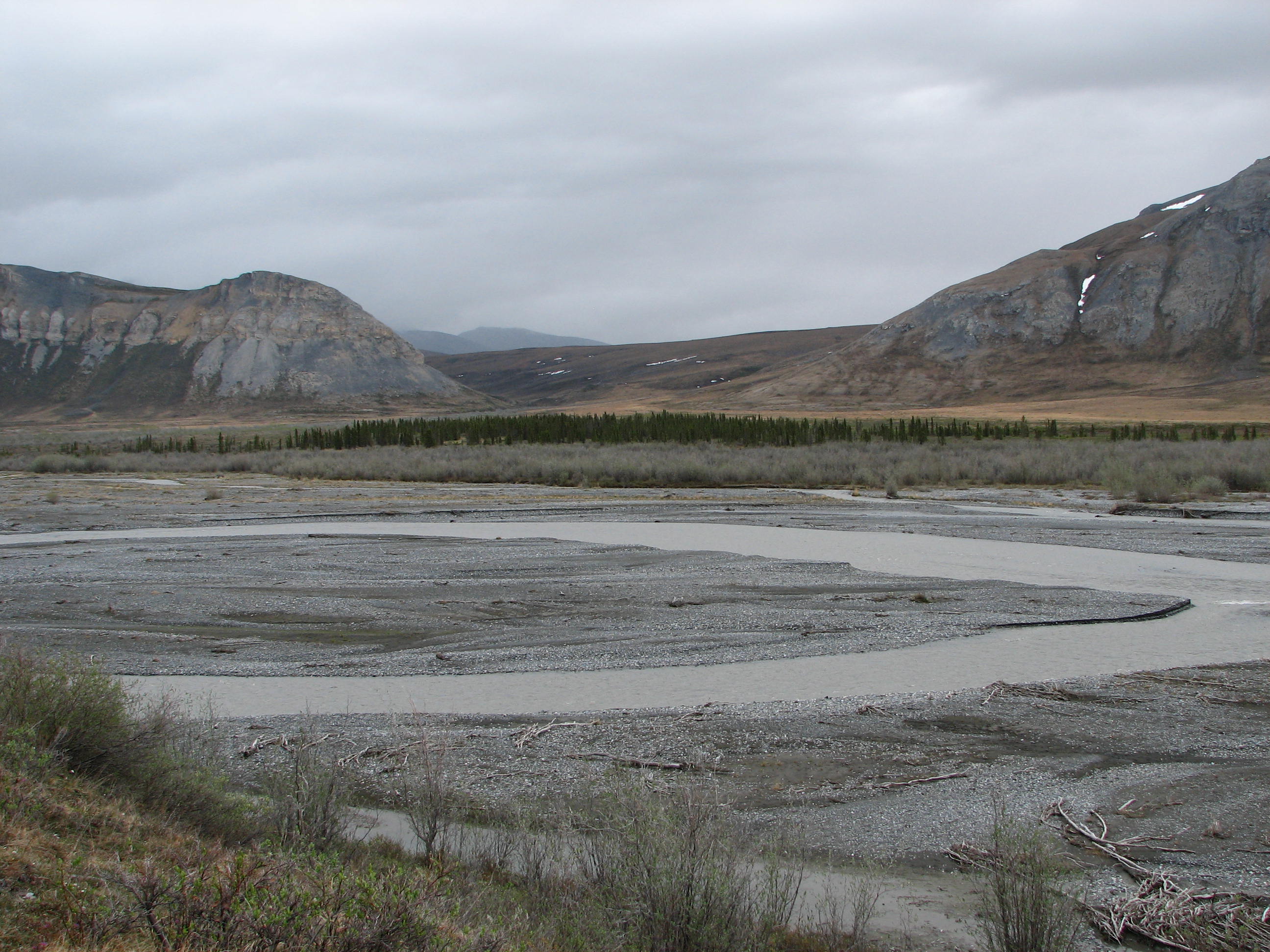
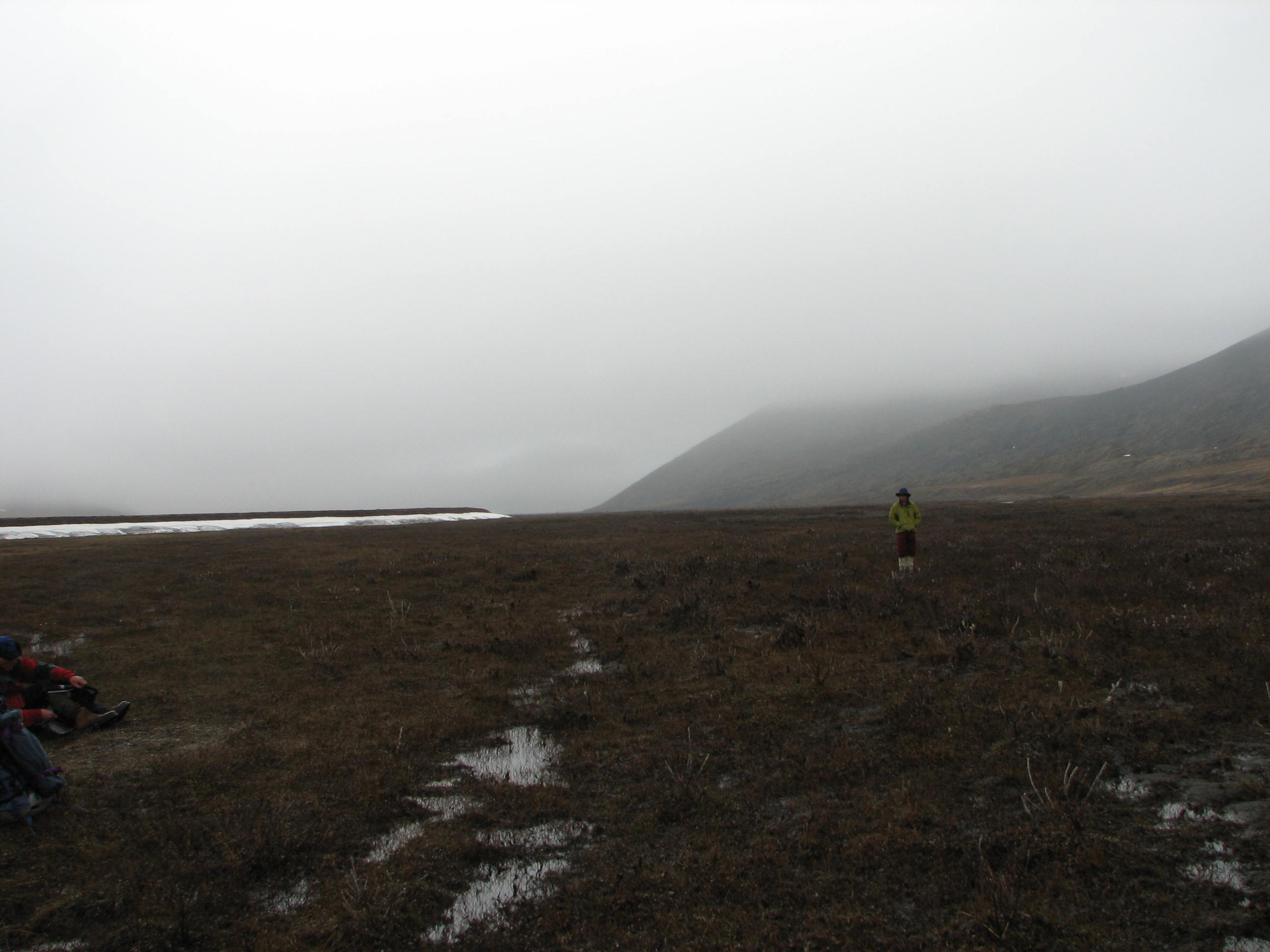
We eventually returned to the airport, and later, Jim and Nancy left for their trip.  At 7 p.m., the guide, Aaron; I; and pilot Kirk Sweetsir, a Rhodes Scholar (in another life, as he puts it), finally departed.  When we saw the wall of black ahead over the Continental Divide, Kirk turned around and set us down in ANWR, along the Sheenjek River, half way to our destination. We had the stove, dinners, breakfasts, and a dry place to camp.  The other group that did get to the North Slope that day had none of those four things.

But all of us had functioning brains and bodies that would get us through eleven tough days in ANWR and hopefully for many, many years after.  But there are no guarantees.  Jim is one of the reasons why I go when I can.  Bad stuff – s—, if you will – happens, and it can happen to anybody, good or bad, young or old.  I’ve had some nasty medical problems, but compared to Jim, I’ve had nothing.  He’s still going while he can, able to carry gear, navigate and love his wife, who copes with a grace I wish to emulate.  Both of them have and will continue to see country that few will ever see.  They are special people, truly living fully while they can, as we all should.

A DAY IN A TEACHER’S SHOES

December 3, 2009

After 7 years as a volunteer math tutor at a local high school, I was allowed to be an on-call volunteer math teacher, meaning I teach with a certified substitute present.  I address the occasional problem when a teacher is absent and a fully qualified math substitute is unavailable.  On my first day, I was given a lesson plan for algebraic inequalities and prepared one for geometry.  While I don’t find these subjects difficult, understanding a subject is far different from teaching it. 

I arrived at 7 a.m. with water bottle, lunch and objects needed to explain the material, for good teachers don’t parrot the textbook.  The official substitute took attendance, introduced me and I began teaching.  Fortunately, I had no problems with student behavior, because the teacher for whom I substituted is an exceedingly good disciplinarian, knowing when and how to act with words, inflection and body language.  My experience could easily have been worse. 

What’s it like to teach for a day?  I was on my feet nearly continuously for 7 hours.  I needed a bathroom break at 10:30, but preparing for the class before lunch took priority, and I nearly sprinted to the men’s room an hour later.  Other than a few swallows of water, I ate nothing until I finished at 2:20.  I left at 3:45 and wasn’t the last teacher leaving.  That evening, I relaxed, not having to grade homework or prepare the next day’s lesson. 

My parents were both hard-working teachers, and I frequently heard, “You can’t eat dedication.”  I’ve taught exactly one day and didn’t deal with problem students, parental e-mails, after school tutoring, worth $40/hr, but freely offered by many teachers or faculty meetings.  I’m 61 and want to teach math.  I can afford to; many of our best and brightest teachers, with whom I’ve had the honor and pleasure to be associated, struggle to pay their student loans.  Summers off?  Many teach summer school out of necessity. 

A properly educated populace won’t solve all our problems.  But it is a necessary condition if we ever hope to address them sensibly.  Arizona ranks last in per capita spending for what is arguably the highest yield and lowest risk investment of all – education.  Nationally, we invest far more in low yield/high risk unwinnable wars and impossible nation building.  Those whose high risk complex financial instruments devastated our economy receive annual bonuses greater than a teacher’s lifetime earnings.  Important, difficult jobs requiring significant training and long hours deserve appropriate compensation, which is how we attract and keep good people.  As a former neurologist, I was paid well for my training, work and hours.  Teachers are not paid commensurate with their extensive training, hours and immense responsibility preparing the next generation.  Teaching math, or any other subject, to 35 teenagers who’d rather be elsewhere is difficult:  doubters should try it – assuming they have the skills to do so.  Increased funding for teachers and education is one of the best investments Arizona and America can make.  Our future depends upon it. 

Michael Smith, retired physician and statistician, has been a grader for the AP Statistics examination.

FRUMPY

November 27, 2009

It’s 7 a.m. on a Saturday, and I’m hauling 60 pound jugs of water through thick sand about 100 yards to a picnic area along Sabino Creek.  The water spills on me, and in 50 degree temperatures, the warming I get from carrying quickly dissipates.  In an hour, 80 girl scouts are showing up, and I sure hope there will be a lot of adults with them.  I volunteered to be a birding leader, and I’m wondering what I got myself into. 

The scouts will spend an hour hacking out giant reeds that are a desert invader, sucking up 20 times the water of a cottonwood, an hour learning GPS so that the plants removed can have their root systems identified, an hour at the riparian habitat, since there is a small pool of water still present, and an hour birding with one of us four leaders. 

Everybody shows up, and there is a great deal of singing, energy and all the things young girls do.  I’m now really wondering what I got myself in to.  We start, and the birding is not what it might be, even for early morning.  I’m hearing several species, but hearing birds and seeing them is very different for these girls.  The cool morning and the trails are certainly nice to be out in, the girls are having fun playing with the binoculars, but it would have been nice to be seeing something more than a few nests.  But that’s birding.  Sometimes you see birds, sometimes you don’t.  On the other hand, there is a dead fox near a log, and I am amazed to see how many young girls went up to take a close look at it.  I really expected a very different response.  But, as I was beginning to learn that morning, I was quite prejudiced towards my experience with these girls. 

I had earlier noted a young scout, obviously paraparetic, needing significant assistance to walk.  She came on my third trip, and we didn’t walk too far because of her difficulty moving.  The girl was dysarthric, and looking at her gums, I figured probably took phenytoin as an anti-epileptic.  I diagnosed her in five seconds, and I thought this would be a tough hour, but I was wrong about both the hour and the girl. 

She soon was picking up seeds from the reed, and saying, “Mr. Mike,” look at this.  I didn’t realize where the seeds were in the giant reed.  She had.  Ten minutes later, “Mr. Mike, look at my rocks.”  She showed me a collection of 5 pretty rocks.  “I have one thousand two hundred eighty at home.” 

“One thousand two hundred and eighty-five, now,” replied her mother, as the girl came up and gave me a hug. 

I can count on the past unbroken fingers of my right hand (that would be three), the number of people besides myself who count things just because they can be counted.  I counted the license plate tabs on New York state cars in early 1957.  I know that, because I still have my diary for that year and read it.  I know fairly closely the number of miles I have driven a car.  The night on Isle Royale, when the wolf made it wise for me to leave my campsite and hike 10 miles in the dark, I counted 1000 steps, then every other step 1000 times, every third step 1000 times up to every 9th step 1000 times.  People think this weird.  I do it naturally, just like whenever I hear a four digit number, like a hospital page, I multiply the first two and second two numbers.  I can outdo any calculator multiplying a pair of two digit numbers.  So to know a girl is counting the number of rocks she has was a real treat.  Bet she wouldn’t have thought counting steps weird.  Or seeing a wolf, for that matter.  She taught, too.  One of the other girls wondered if mica came from trees.  My disabled friend, and I use the word disabled cautiously here, told her no, pointing out more of the rock in the wash. 

She made my morning.  At the end of the four sessions, I was putting all the binoculars back in their cases.  I then heard “Mr. Mike!” again.  I looked across the table, and the girl gestured for me to come over.  In a water bottle, with a fern, she had a caterpillar.  I hadn’t seen any ferns or any caterpillars, but obviously she had.  I think I’m a decent observer; after all, I had diagnosed this girl.  Only I had let my prejudice get in the way of seeing what else was inside this girl – a curiosity about the natural world, an ability to see things in the world that many did not, and to collect and categorize them.  I finally admitted to myself that I wasn’t sure what her medical situation was, but that this was an incredibly interesting girl who I hope will have a chance to be fully educated.  My advice to teenage guys is to marry a woman smarter than they are.  Fortunately, I continue, that won’t be difficult.  I hope some guy looks beyond the physical impairments of this girl, because he will find an incredibly fascinating smart brain in her head. 

The caterpillar’s name, by the way, was Frumpy.

BODY BETRAYAL

November 26, 2009

I remember a time when I “owned” the ICU.  I had eight patients – eight – who were severely brain damaged, irreversibly brain damaged, or brain dead.  I don’t remember all the diagnoses, but they included aneurysms, intracerebral hemorrhages, ischemic strokes, hypoxic encephalopathies and a bad surgical outcome. 

During my ownership stage, the MICU staff were absolutely great in using my time, as they shepherded me from one family group to another.  It is easy to get jaded when one faces bad, irreversible or total brain damage in eight patients that one needs to see a few times a day.  I tried not to be, but I don’t know how successful I was.  Taking time to talk to families is often a real pain, but it is necessary, deeply appreciated and what physicians get paid for.  Do it.

If I returned to medical practice, which I won’t, I would be a far more compassionate physician than I was during the twenty years I did practice.  Mind you, I think I did a good job.  I allowed patients to die at the right time with dignity and less stress on the families.  When it came time for my parents to die, I did everything I promised them, and neither lived more than eight weeks from the time they started to die. Ensuring the quiet, painless dignified deaths of my parents was one of the best things I’ve ever done in my life. 

If you want to read about how I dealt with the change in my relationship with my father, after he was widowed, read A Wise Owl.    That is probably the best thing I will ever write. 

But having lived through their deaths and several personal infirmities, I look at life a good deal differently.  I could now tell families how it is normal to feel guilty when it is time to stop life support.  I could tell them how one will miss having that loved one to talk to, all the conversations that one would want to have in the coming years.  I could tell them how the relationship between children and surviving parent would change.  I would really be compassionate, because I have been there.

 I’ve had two major infirmities of my own in the past decade.  The first was getting buggered when a Buick turned in front of my bicycle up in Durango.  I went down and hit my fortunately helmeted head on the bumper.  Remarkably optimistic (some would say stupid), I got back on the bike, not realizing I had broken my right femoral head, the coronoid process of my left elbow, my fifth right metacarpal, and had a comminuted fracture of my right index finger.  I actually rode the bike six miles with these injuries, hobbling 100 yards into the school where the group was staying to take a shower.  While I was drying myself, the bench on which I was sitting collapsed.  It was a totally crappy day. 

Denial wore off when the adrenaline did, and I was operated on that night.  I had one functioning limb for about three weeks, and I was pretty damn miserable.  But I healed.  Still, I know what it is like to need a handicapped parking spot, have kids say “Mommy, what’s wrong with him?” have people hold doors and yet not wanting to be treated like a invalid.  I was a full-time graduate student then and teaching basic stats to college students. 

More recently, I had a nasty non-life threatening miserable infection for several months.  Without getting into details, I really didn’t want to live with it, which put me into counseling and from there into self-hypnosis.  Once, I might have been skeptical of self-hypnosis, but desperation changes one’s mind set, and it is amazing what hope and practice can do.  I can now get myself into a deep altered state and become pretty comfortable. 

During this infirmity, I went on the Internet and learned a good deal about the condition.  As much of a scientist as I want to be, there was simply no way I was going to try one thing at a time for a few weeks and see what happened.  I was too uncomfortable.  Rather, I tried a few things, had hope, lost hope, wondered what else I could do, figured out something new and kept going. 

My advice?  Do your research.  Hope your doctor is willing to work with you.  Write down questions, which is something I always hated patients doing.  Hope your doctor calls you back when you have an occasional question.  Try things.  Try other things. 

I took sleeping pills every night for a month, because getting sleep was one thing that really helped.  My condition didn’t affect my ability to exercise; indeed, exercise seemed to alleviate it.  So I tried to stay in shape.  I canceled a volunteer trip to Nebraska to help out with the Cranes.  It broke my heart, but it was the right decision.  Two other trips on the chopping block were at the moment salvaged by great people who knew me and gave me a bit more time on paying the final deposit. 

I’d be so much more understanding of patients with chronic conditions today.  I’d be a wonderful doctor.  Too bad it took me so long to figure it out.  Don’t you make the same mistake.