Archive for the ‘UNPUBLISHED OUTDOOR WRITING’ Category

STARLIGHT, MOONLIGHT AND FIREFLY LIGHT

October 11, 2009

“We don’t claim to be sane,” said Spur as he and Silvermoon left the Hogback Ridge Shelter at 9 p.m., heading north on the Appalachian Trail towards Erwin, Tennessee.  They arrived at the 3-sided wooden shelter as I finished my macaroni and rice dinner.  For the last two hundred miles, we had leapfrogged each other.  They were about to jump ahead.

A month earlier, the pair decided to hike the entire 2160-mile AT, as hikers referred to the footpath, in one season — a thru-hike.  We didn’t know each other’s names in the outside world, but that didn’t matter on the AT.  I had learned they were from Atlanta.  Spur, his trail name coming from his spur-of-the-moment thru-hike decision, ran a business.  Silvermoon was a florist.  I was “Voyageur.”  Trail names were accepted social convention on the AT.  Every long distance hiker had one; some additionally had creative logos.

Shelters occurred every 8-15 miles along the Trail.  While comfortably sleeping a dozen, an adage was “there’s always room for one more,” especially in a cold, driving rain, a frequent occurrence in the mountains.  Unfortunately, most shelters harbored large populations of well-fed, pack-smart mice that ran over sleeping hikers.  I usually pitched my tent nearby or stayed somewhere else.  Indeed, one night near Hot Springs, I camped on the Trail itself — in poison oak as I later discovered — when rain and darkness beat me to the next campsite.

Shelters were a source of Trail news.  There was usually a logbook present, left by a hiker, containing instructions to mail it, postage guaranteed, when the book was full.  Reading the past three months of entries was a pleasant way to spend an evening and to learn about diversity of hiker goals, opinions, adventures, and equipment.  In addition, because of travel in both directions, one heard about upcoming terrain and obtained reviews of the nearest town, emphasizing food, cost, and lodging, in that order.

That evening, I was in the middle of a 300-mile hike from the Great Smoky Mountains to Virginia.  The previous year, I had walked from northern Georgia to the Smokies.  I was humbled by thru-hikers, who planned to walk seven times my distance.  But only one in ten who wrote “GA→ME” in the logbook actually succeeded, able to overcome the frequent physical and mental breakdowns associated with the effort.  Still, after several hundred miles of hiking, one’s efficiency increased dramatically.  Nothing in a thru-hiker’s pack was superfluous.  Extra food was eaten; running out of food was incentive to get to the next town quickly.

I stuck my head outside the small tent to see how well their headlamps worked.  Seemed interesting.  While the two were hiking under a waxing gibbous Moon, it was often cloudy in the Appalachians, so that bright moons usually weren’t helpful.

Probably more relevant, however, the AT was a green tunnel.  A few days earlier, in a large rhododendron patch, I started to remove my sunglasses because of the darkness.  I then realized they had been off for some time.  I arrived on the Trail with a full body tan.  After hiking in just shorts for two weeks, my tan faded.

Hogback was in dense, hardwood forest, dark even by AT standards.  Still, the idea of a night hike was intriguing, but not after my long day of climbing.  My pack was lighter than the previous year, and I was far more efficient, but high humidity in the South made hiking — especially the climbing — difficult.  I soon learned that clothing dried only when worn.  One could either wear wet, clean clothing or dry, smelly clothing.  Usually, it ended up both wet and smelly.

Nevertheless, I missed out on a real treat.  I should have gone with them, even after 21 miles that day and even without a headlamp.

Three days later, I caught up with the two at a restaurant in Erwin.  They were staying at Johnny’s hostel near where the Trail emerged from the mountains by the Nolichucky River.  At Johnny’s, hikers could shower, sleep in a real bed, obtain food, supplies, and transportation into town.  Everybody on the AT in Tennessee knew about Erwin and Johnny’s by reading the logbooks.  Word traveled fast on the ridgeline telegraph.  Hikers were good listeners in restaurants, since their mouths were used to eat rather than to talk.  I was no exception.  Sitting down at a table across from Silvermoon, I rapidly spooned a quart of chocolate ice cream into my fat-starved frame, seldom looking up during the process.  It was really good.  Every long distance hiker did this sooner or later, mostly sooner.

Silvermoon was still excited about their night hike.  While speaking, she kept rubbing her long, brown hair, enjoying that it was clean for the first time in about 100 miles.  “After we left you,” she said, looking at my rapidly diminishing pile of ice cream with some envy, “we descended into Low Gap and climbed in pitch darkness up to Big Bald.”  The AT in the South has numerous descents into gaps and climbs to balds, grassy mountaintops.  On a clear day, the views were spectacular from a bald.  On a rainy one, the experience and view were comparable to being inside a car wash.

“Once we were on Big Bald, it was just us and fireflies everywhere, with lots of stars and a bright Moon.  We didn’t need our headlamps, so we turned them off.  It was even better then.”  I actually stopped eating, visualizing the scene, having been there hours after they were.

“The miles just slipped by, with little flashes of light everywhere we looked.  We finally slept up there in the open, with twinkling lights above, below, and around us.  It was magical.”  Silvermoon smiled, then delivered the coup de grace:  “And so much nicer than that dark hole where you were.”

UNDER THE STARS

October 11, 2009

On a pleasantly cool and quiet night, we parked under a mesquite tree in the high grasslands of southeast Arizona.  We were well off the highway, the only sound being the occasional chirp of a nighthawk high overhead.  Only a glow on the horizon showed us the lights of Tucson, Sierra Vista and Nogales.  It was astronomical twilight, the Sun having set well north of Mt. Wrightson in the Santa Rita Mountains an hour earlier. 

We were going to sleep under the stars. 

I’m an amateur astronomer and own two telescopes, but there are times it is better to view through my 1X eyes.  With no difficulty, I saw all the dim constellations of spring — Corona Borealis, Hercules, Libra, Serpens Caput, Corvus, Hydra, Crater, and even Lupus, far to the south.  The constellations looked the way they were supposed to, not washed out by artificial lighting.  The sky was full of stars, and when I lay down, I felt as if I were in a large bowl.  I really was, and I felt part of the universe.  Not many Americans have ever been under a truly dark sky. 

Around 10, a large cloud appeared in the east.  At least, it looked like a cloud.  But it had been clear with no chance of rain.  I’ve camped in plenty of places where I went to bed under a clear sky and awoke with rain on my face.  But out here, if it is clear in the evening, it will be clear in the morning.  We looked at the cloud a little more carefully.  Yes, it was a cloud, but it wasn’t a few miles up in the atmosphere.  It was a few hundred trillion miles away. 

We were seeing the Milky Way rise. 

How many of us today ever see the Milky Way, our island home in the universe?  How many have ever seen the stars the way they are supposed to be seen — in darkness?  The stars are as much our heritage as is the Grand Canyon, the black bear, the old growth forests, the Sky Islands surrounding us and water that can be drunk, unfiltered, from a lake.  As long as we have that heritage, we connect to our forebears.  And if we lose that heritage, what do we have left as a people? 

I pondered all that as I watched the galaxy rise, saw Vega and Altair appear, and remembered Tanabata, that delightful Japanese holiday in July where people learn about the star crossed lovers that were separated by the river that astronomers call The Great Rift.  Stars have meant something to people for thousands of years.  The stories are different, the meaning changes, but mankind has always found significance among the stars. 

We dozed for a while, awakening later in the night when the waning gibbous Moon rose over the Whetstones, a day from last quarter.  We don’t often see this phenomenon because we don’t spend whole nights out among the stars.  It’s worth doing.  The Moon appeared flat on top and was orange, a consequence of the horizon haze allowing more red to be seen than usual. 

But I didn’t think about atmospheric refraction and dust particles scattering light.  I just looked.  We saw the summer constellations – Scorpius, Ophiuchus, Serpens Cauda, Sagittarius, Corona Australis – dimmed by moonlight as the grasslands around us lit up with the glow.  Neither of us said much, and when we spoke, we whispered.  Physically, it seems impossible for sound to affect vision, yet loud talk or loud music does damage views, because we don’t just see, we experience, and the two are interlinked.  We could have viewed the same stars from the highway, but it wouldn’t have been the same.  The quiet seemed to make the stars and the Moon appear closer. 

We awoke several times that night, each time noting the change in the Moon and watching new stars rise and old ones set as our Earth slowly turned.  Morning twilight awoke us for good, and we watched the eastern sky gradually brighten and the Earth’s shadow slowly disappear into the western horizon.  I can see the Earth’s shadow every evening and every morning from Tucson, but out there the shadow was far more impressive. 

In my “must things to do” during my lifetime, sleeping under the stars was one of the earliest ones to get checked off.  Occasionally, I still do it.  Many times in Sky Island country, I’ve experienced the “outdoor triad,” wilderness, dark skies and total silence.  On first glance it doesn’t appear to make much sense, but I think that by getting away from people in the outdoors and being alone with the stars I feel more connected to humanity.

THE LIST (NORTH DAKOTA STYLE)

October 11, 2009

I puffed my way up the last of the steep climb to the Petrified Forest Plateau, the forest itself several miles and several millennia behind me.  It must have been quite a sight, given the size of the stony logs and stumps, still so realistic, they needed to be touched to prove their composition was inorganic. 

The plateau was a sea of short-grass prairie, a small remnant of the original.  I walked south on the Maah Daah Hay trail, 13 miles from Medora, North Dakota and 86 miles from its northern terminus along the Little Missouri River.  This was Roughrider Country, and I was in wilderness that bore the name of the 26th president. 

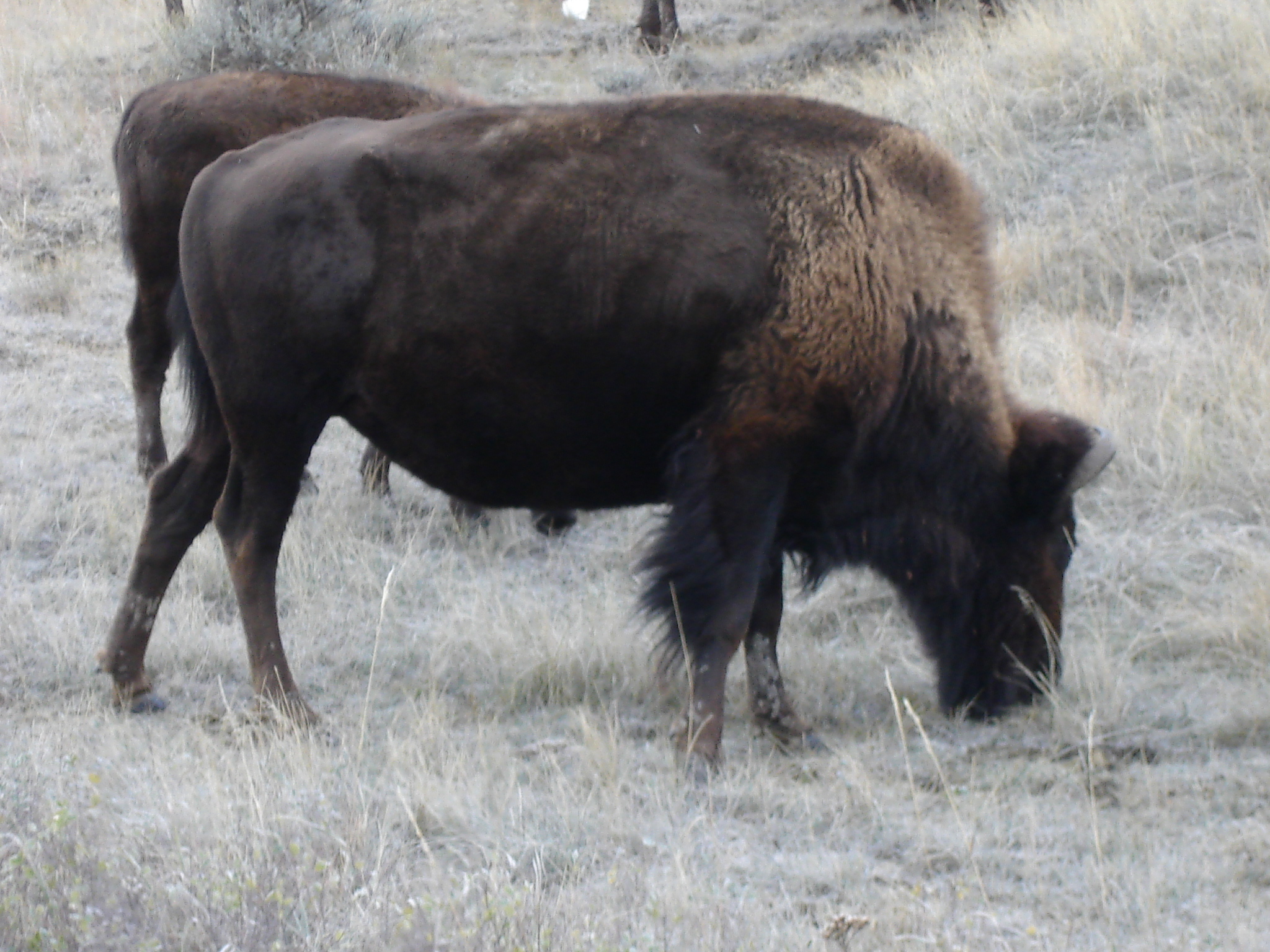
The hiking itself was easy for one who is used to mountains.  The pool-table flat prairie afforded views into the eroded hills with juniper trees on their north facing slopes and sparse grass on the warmer, drier southern facing ones.  Trail markers were visible a mile away, allowing me to easily detour when I encountered bison.BISON IN THEODORE ROOSEVELT NP 

I had long wanted to see this area, which was on “The List,” affording it special status in my life.  “The List” currently contains 29 items, places to see or things to do in my life.  It is dynamic.  Each year, an item or two gets put on it.  Each year, if all goes well, a few items are checked off.  This year was particularly good — I saw Isle Royale and Theodore Roosevelt National Parks, and a wolf in the wild, the last having been at the top of “The List” for many years.  “The List” is the most deeply personal thought I publicize.  Because it is so personal, I don’t believe in the “1000 places to see before you die” concept.  That is somebody else’s list.  Mine is mine.  If you have one, which I hope you do, yours is yours. 

“The List” began as a figure of speech many years ago.  In my forties, I wrote it down, becoming more aware of life’s lack of guarantees.  A neurologist, I saw too many people disabled or dead before they did or saw what they wanted to.  When I reached my fifties, the realization hit me that much of “The List” contained wilderness areas that required good health and good physical condition.  I almost put off the trip to Dakota for another year, but I knew if I went now I wouldn’t be kicking myself next year if something came up.  Indeed, a bicycle accident in July left me with a broken scapula and three broken ribs, all of which healed but were a stark reminder of what can happen. 

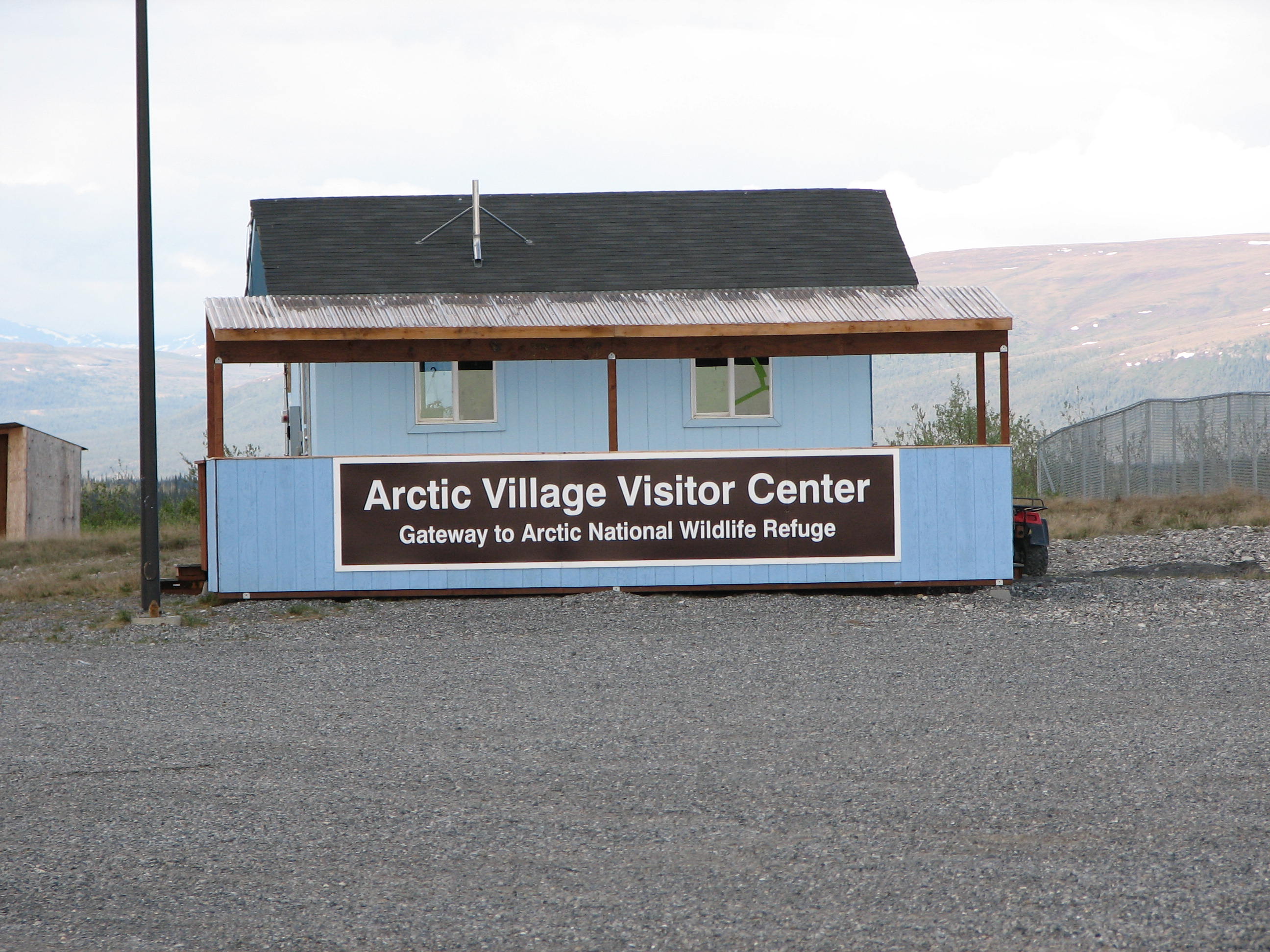
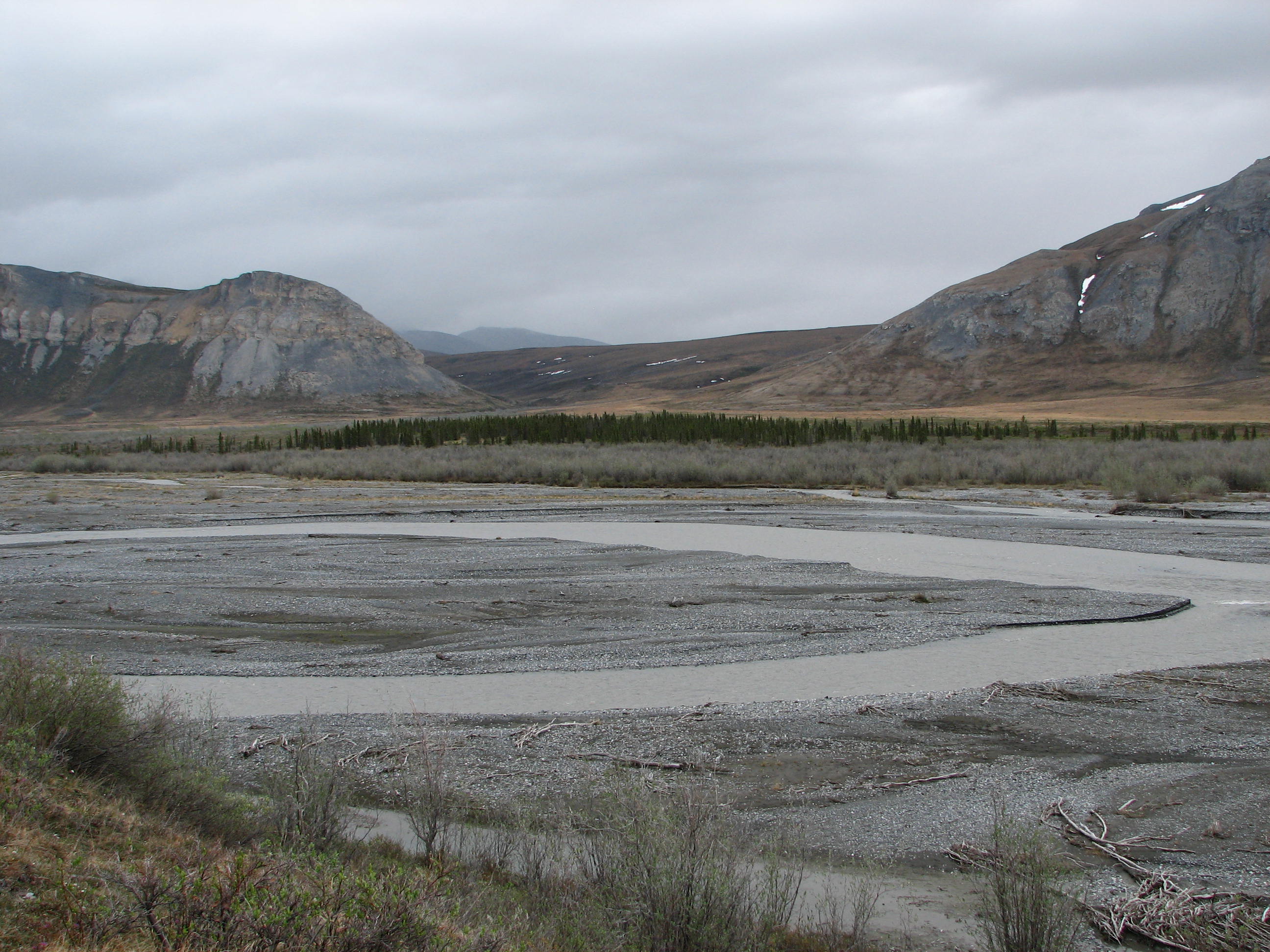
Occasionally, I delete an item, but only if I am really no longer interested.  Namibia’s Skeleton Coast and Etosha Park remain, but it’s a long trip, and I’ve been fortunate enough to have traveled twice to South Africa.  I don’t know if I’ll ever finish the 1500 miles of the Appalachian Trail I haven’t hiked.  Nevertheless, finishing the AT is on the list.  Some items are easier — I want to show my wife Hawaii, and I want to spend a night camped out in the Rincons.  Right now, the Arrigetch Peaks in Gates of the Arctic are at the top.  I’m going next summer, while I still can. 

“The List” is not completely rational.  North Cascades is on it; the Everglades are not, although I do want to see them.  “The List” is a written reminder not to squander good years.  We have to make a living, but we ought not forget things outside of work that are important to us.  I’m not a city person, but seeing London is one of the items. 

I day hiked in North Dakota.  I had never done a trip like that before and found it rewarding.  I covered serious mileage each day because I carried less.  Water is an issue there, and bison are dangerous, both good reasons not to camp in the backcountry.  It was also nice to sleep in a bed when the temperature was in the low 20s.  In addition to bison, I saw pronghorn, wild horses, deer as well as hearing and seeing bugling elk, a real treat.  But time in wilderness usually gives me more than visual memories.  I generally come out of the area looking at the world differently.  I left Billings County with a surprising sense of optimism, given the current state of the world.  Theodore Roosevelt came to the area in 1882 as a young man.  An avid hunter, he realized the uniqueness of that particular era and envisioned a time when the bison were gone and the prairie no more.  He said, “What makes our country great is not what we have but how we use it.”  Three days after another September 11, ’01 – 1901 – he became president, the first interested in conservation.  It’s difficult to travel in Roughrider Country without encountering:  “I never would have become president had it not been for my experiences in North Dakota.”  I think he would be pleased to know the bison are still around, and the area he loved became first a memorial to him and then a national park.  He worked to save what he could, and it changed America.  Those of us who do our part can change America as well. 

And while you change America, don’t forget your list.

THE OUTDOOR TRIAD

October 11, 2009

Two a.m., north Tonto platform, Grand Canyon, between Phantom Ranch and Clear Creek.

We awaken to silence, total silence, no wind, no sound from the river, no mouse rustling through our gear, no music, no cell phone ringing and no engine noise from aircraft.  It is so quiet our ears ring.  My wife and I speak in whispers, for to speak aloud would be a travesty.  Carefully, we crawl out of the tent and stand on the rocky trail, for we are camped at large, and a wide spot on the trail was as good a place as any.  Above us, we see the night sky clearly, the dim circlet of Pisces easily visible without optical aid.

Periodically, I go into the woods to get away from people and society.  If I am lucky, not only will I be in the wilderness, but perhaps I will have clear, dark skies and spectacular star viewing the way our forebears did.  Much as I might wish, I don’t expect the third and rarest of the “outdoor triad” — total, complete silence.  Think about it.  Most of us find the wilderness quiet but seldom soundless.  But occasionally, you get lucky.  Perhaps the silence may even awaken you.  If fortunate enough to have this experience, you find yourself speaking in whispers.  When it is really quiet, you don’t want to disturb it.

I’ll take total silence over dark skies if I have a choice.  Last year, I finally decided it was time to camp out overnight in the Santa Catalina Mountains, which I’ve day hiked for years.  I hauled my aging frame and overnight gear eight miles and four thousand vertical feet to the top of Mt. Kimball.  I’m fortunate that I can actually walk out my back door in Tucson and under my own power hike to the top of a mountain.  To my surprise and pleasure, I again awoke in the middle of the night to total silence, with the town of Oro Valley spread out nearly a vertical mile below me.  Yes, it was cold, and yes, my legs almost gave out the next day after descending four miles of twenty per cent grades with a heavy pack.  But because of the experience of total silence, I might do it again.  Well, maybe with less gear and a good light, so I could make it a day — and evening — hike.

One advantage to growing old is that my hearing is gradually deteriorating.  As a result, I find myself in an advantageous state:  I hear well enough to keep myself safe, identify birds, and not get my wife too upset that I missed what she said.  At the same time, I am finding a few more opportunities to experience total silence.

Don’t get me wrong — given my druthers, I’d rather not be losing any hearing.  It took me many, many years before I realized how “auditory” I am.  More than once, I’ve recognized somebody only by their voice and not their face.  But these days, I find myself less tolerant of society’s noise.  It’s polluting, it’s harmful, it’s annoying, and much of it unnecessary.  While earphones or soundproofing can produce total silence, that isn’t the same any more than walking in the city is the same as walking, miles from the trailhead.  And as Sig Olson wrote, being in the wilderness is only part of the experience.  The work entailed to get there matters just as much.

In the Information Age, there is a lot to be said for under stimulating ourselves, not only because it’s healthier, but allows us to appreciate the stimuli that later occur.  Part of what makes total silence so memorable is hearing the enhanced suddenness of the sound ending it.  That night in the Canyon, it was a slight breeze carrying the distant sound of water rushing down Clear Creek Rapids.  Once in the Boundary Waters, it was a loon wailing from far down the lake.  Another time in the Canyon, it was the kraaak of a Raven, followed by hearing the flap of his wings echoing off the Redwall.

It’s worth experiencing the triad while you still can.  The best way is to work hard getting to a place then choosing the campsite carefully, being patient and most of all staying quiet.  It won’t be what you see, and it certainly won’t be what you hear.  It will be what you don’t hear.