Archive for the ‘UNPUBLISHED OUTDOOR WRITING’ Category

CAPILLARY ACTION

February 28, 2025

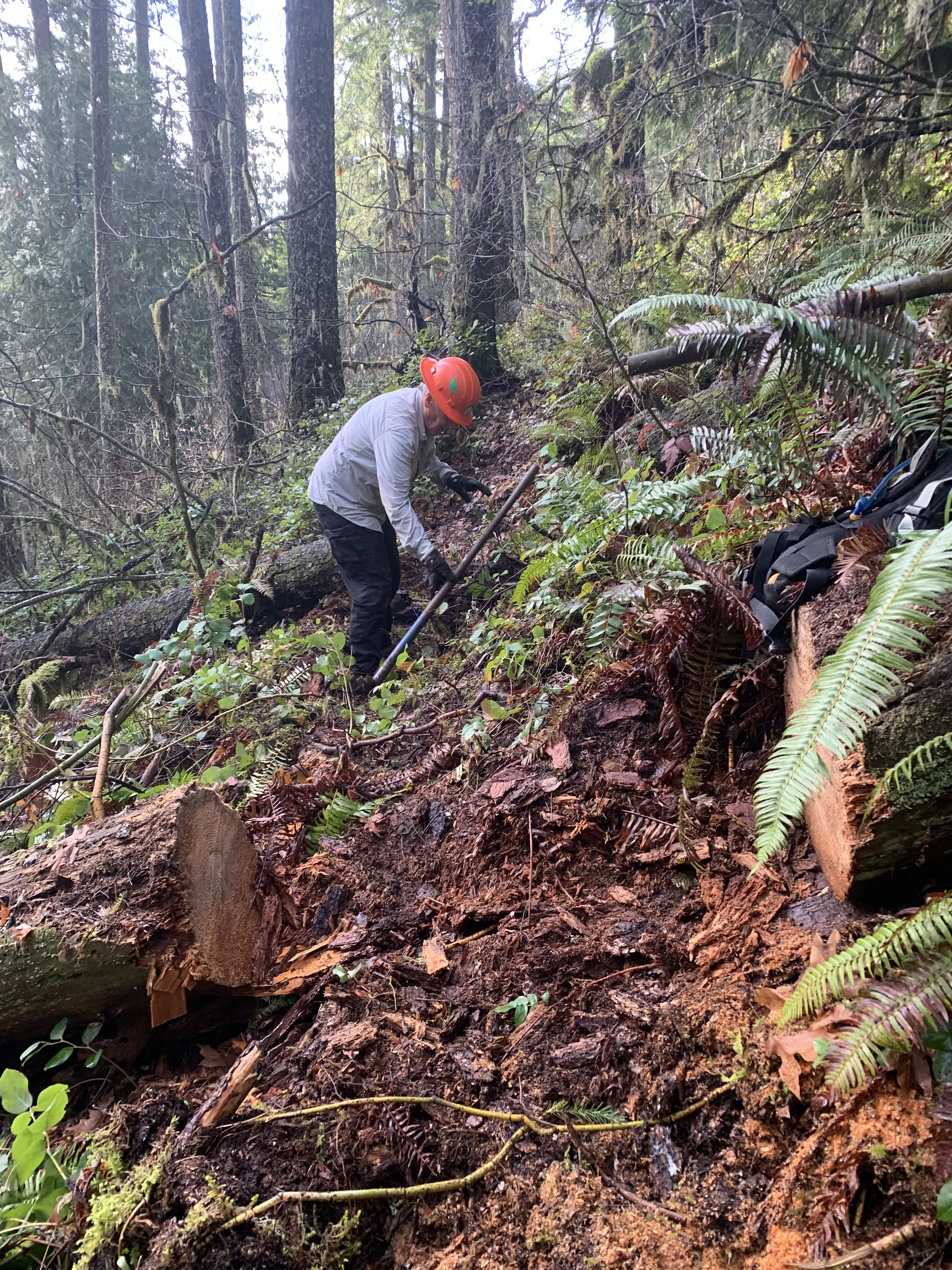
The rocks seemed like they would never end. I was digging into the lighter brown mineral soil, small rocks kept appearing which we didn’t want on the trail.

The Crew was working in Cloverpatch, five on the third bridge, which now had stringers across Tire Creek, rushing after the  recent rain, seven on the trail to the fourth and last bridge site. The stringers weren’t ready to walk across, so I waded through foot deep water quickly to the other side. My gaiters worked well; I had no sensation of wetness. 

I took the group a quarter mile further to work on the trail that had been flagged to the last bridge, a half mile further. Flagging meant someone had bushwhacked and put small flags on metal rods in the ground, marking a proto-trail, eventually to become a mountain bike trail. To make the actual trail, we had to remove large brush to get access to the ground, then plants so that the tread would be a yard wide, cut out roots and branches with hand saws, loppers, or tread tools, then scrape away organic detritus to the mineral subsoil, pushing the former off the trail. Digging uncovered rocks, some we couldn’t remove, others could be after several minutes, but many smaller ones kept appearing. The week before, eight of us cleared a couple hundred yards. I doubted seven of us today would get nearly that far.

The trail went uphill and side hilled, sometimes constraining the width sub-optimally. We then dug into the hillside, encountering more rocks, more dirt, and more plants.

I had noted rotten logs in the trail under which I was able to work a tread tool to lift parts of them out.  In the logs, I noted long stems of plant life, parallel to the grain. It was one of those new, odd things that I saw before moving on. I was bent over, and sometimes, to be easier on my back, I knelt on the trail to have better ability to use the Rinehart tool to move the organic duff and pick out rocks by hand. 

But I kept seeing rotten logs and roots. Finally, taking a longer, closer look, I saw how the stems had split the log longitudinally with smaller roots intertwined, like capillaries, with the rotten, still wet, wood. Cellulose and lignin are the two most common organic compounds in wood. These are glucose polymers—chains of connected glucose molecules— containing carbon, hydrogen, and oxygen. The non-cellulose parts have proteins, built with amino acids, organic acids with an amine group at the alpha-carbon, the one that is not the acid (-COOH ) portion. Glycine, the simplest, is vinegar (CH3COOH) with a methyl hydrogen replaced by an amino (-NH2) group. Twenty different amino acids are found in our proteins, 9 essential or required in our diet. Cells in rotten wood contain potential nutrients: nucleic acids have nitrogen, sulfur, and phosphorus. Other minerals are magnesium, essential for chlorophyll, potassium, and calcium.

Capillary is both a noun and an adjective. Capillary action is the ability of water to rise in a narrow tube due to attraction between the water molecules and the sides of the tube. It is an important way to transport water upwards through the xylem along with transpiration pull from the leaves.

By kneeling on the ground and moving much of it, I learned about the two forms of capillary and how the minerals present were being used to form new organic compounds that will appear in many phyla in both plants and animals in the area.

See you on the trail. Unless you are working trail, please leave no trace.

digging trail

COLD RELATIONSHIP

February 16, 2025

“Why are you wearing rain pants?”

I wanted to reply, “Why does it matter?” I simply said rain pants kept my legs warm. The questioner looked about 40 years younger. I have been his age; he has not been mine.

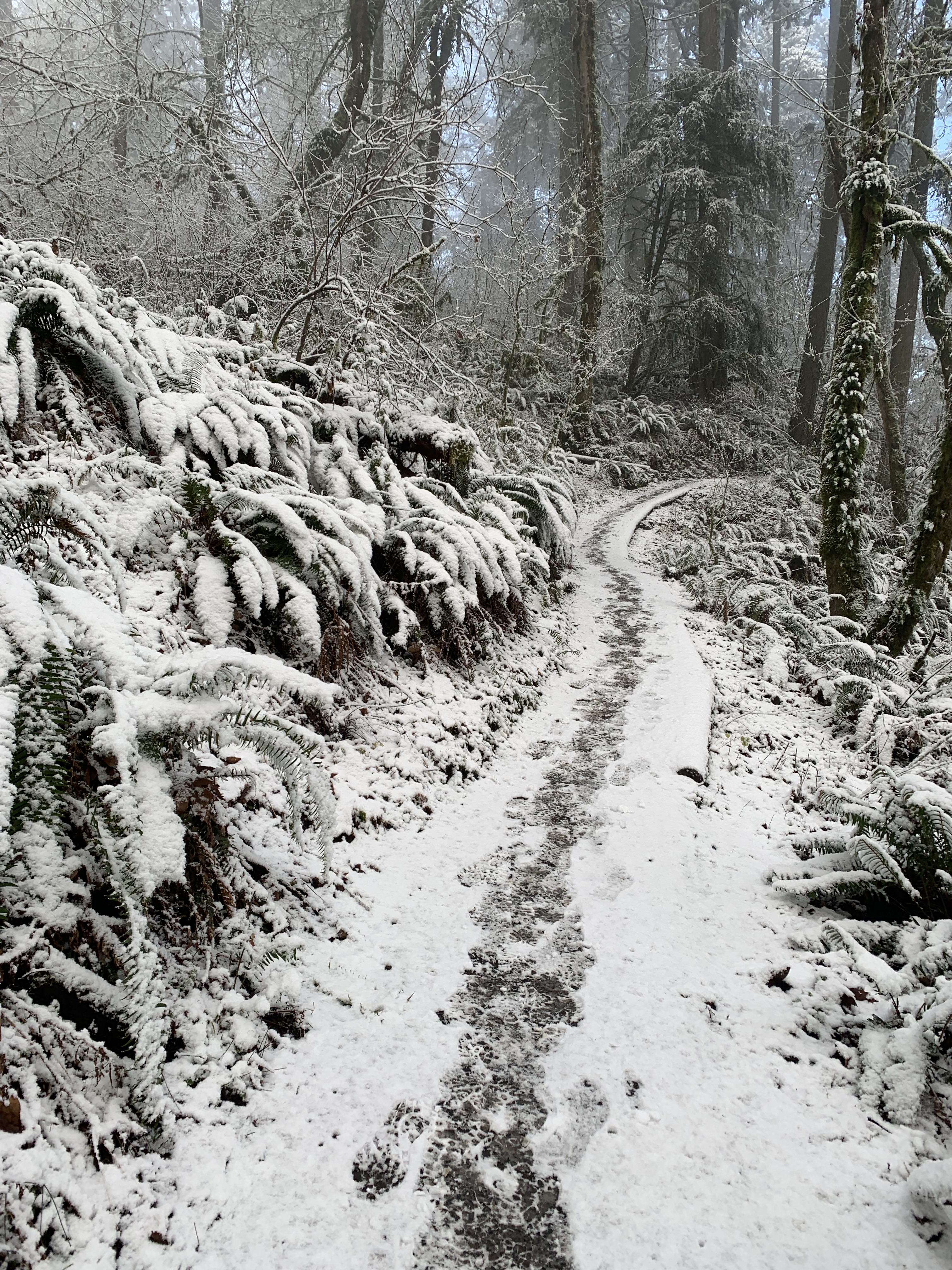
I recently hiked, avec pants, 5 miles upstream from Sand Prairie between the Middle Fork and FS 21. It was maybe upper thirties, partly cloudy, the first half mile exposed with a few inches of snow cover in the campground. Briefly, I wondered if I should have brought snowshoes, but soon the trail had only patchy snow, enough in places to slow me but not a problem. 

My feet not surprisingly felt cold, but the rest of me warmed up, although I never did take off my rain jacket. I wasn’t that warm, except for my hands, so I removed my gloves.

I reached FS 21 and decided to hike back on the road. The Sun was close to culmination (due south) and felt good on my back. I hiked a mile then found a sunny spot for lunch. Fifteen minutes later, having had sunlight on my black rain pants, my legs were warm, but when I stood up, I was stiff…and cold.  Lunch time has changed for me the past few years. I am definitely colder and stiffer afterwards and again need to warm up.

My entire relationship with cold has changed, sadly in the direction of less tolerance. I canoe tripped into my late fifties wearing shorts. I swam in September in northern Minnesota even later. Those days are gone. After years of starting cold and letting a hike warm me, my body is telling me to put more on. Three days after the Middle Fork hike, I went up Spencer Butte on a clear 20 degree day. I wore 3 layers above the waist, two below; I had gloves, a hat, a balaclava and the jacket hood up. For the first mile I was cold, especially my fingers, then felt more comfortable, actually removing my gloves, the hood, and partially unzipping my windbreaker. After two miles, I wondered whether I should take it off altogether but decided not to.

On the steps, the Sun was out but the wind cold. The gloves came back on, the windbreaker zipped up, the hood back up. On top, I placed the pack so the pad would get some sun and become warmer. I went behind a rock to sit out of the wind, using a glove between my back and the cold rock. No longer moving, I started to get cold and didn’t see any reason to stay up there. I put the pack, which hadn’t warmed, on, felt the awful sensation of cold sweat on my back, and started down. 

I never got warm. We burn a third the calories descending 10% grades compared to ascending. My gloves, hat, and hood stayed on the whole time. At the bottom, I drove to get coffee, the car’s heater on full. While warmer, I put my hands around the coffee cup. I was tempted to put my fingers in it.

When I got home, considering myself warm, I had lunch, read for awhile, then finally showered. Only then did I realize I was now finally normal.

See you on the trail. Wear what works for you.

Spencer Butte

WARMTH

February 13, 2025

I didn’t want to move from my spot in the tent. It wasn’t that I was comfortable, I wasn’t. I could have been warmer, but I at least wasn’t getting wetter, I wasn’t shivering; I just didn’t want to move.  We had just finished hiking the Chilkoot Trail from Dyea, Alaska, to Lake Bennett, in the Stikine Region of northern British Columbia. Far down the huge lake to the north was the 60th parallel and Yukon Territory. 

What I had brought for rain gear was not good, and kicking myself would not have been a bad idea, for if I kicked myself long enough, I might have gotten warmer. When we reached the lake we had paired up in canoes that had been previously stashed, and in the rain, paddled 2 or 3 miles north on the 26 mile long lake, camping on the west shore. We were following the Gold Rush trail, which began earlier back in Skagway, climbed historic Chilkoot Pass, the symbol of the Yukon, despite its being the border between Alaska and BC, glissaded down the snow on the north side and finished the 33 mile trail the fifth day. 

I heard some talking outside down by the shore. My partner and I had pitched our tent on the gravel well back from the water and dumped our gear inside out of the rain. He left; I stayed, like a worthless lump. A while later, I heard a crackling sound and smelled woodsmoke. That got my interest. There was a fire burning, and now I had motivation to move.

I went outside in the rain and saw a huge bonfire on the gravel beach. The lake was dead calm, rain droplets visible on the surface. I grabbed my wet gear and as I approached the blaze, there was a blast of oh so lovely heat and instant dryness. It was raining around us, but we were in a rain free cone zone by the fire.  I had undoubtedly been mildly hypothermic, and I stayed put for 2 hours, drying everything I could.  Life was better. Tomorrow, we would paddle a full day down the middle of the lake, the shore a mile away on either side, distance so vast that in an hour it did not appear like we made any progress compared to the nearby mountains. We would eat lunch at Boundary Island and camp further north on the east shore. The following day, with a south wind, we would lash two canoes together, use a tent fly attached to the paddles, held by each bowman, as a sail, and get a free ride to the north end at the small town of Carcross. After being windbound a day on Nares Lake, we paddled on through Tagish Lake to the beginning of the Yukon River and to Whitehorse, the capital, where the trip would end.

I recall similar life-restoring fires, like the one we had in Redwall Cavern on the Colorado River in the Grand Canyon one cold May day, when a spring storm put snow on the rim, caused beautiful waterfalls everywhere around us, but we were unappreciative because our provided rubberized rain gear leaked. For the first time, I had experienced shivering to the point of near exhaustion, taking me 3 hours by another big fire to become fully warm. We camped in the cave, against regulations, because of shelter from the rain and the unseasonable cold, slept dry, and made sure the next morning there was absolutely no trace of our stay.

See you on the trail. Leave no trace of any fire when you break camp. Even warmth in the fire bed must not remain.

STAR MAGIC

January 28, 2025

I was outside in Tucson one May moonless evening well after sunset, armed with a digital watch, preparing to see if I could do some magic. In the northeast, Pontatoc Ridge stood silent, an oblique black line sloping downward from the lower part of the Santa Catalina Mountains to the east, as if to tell me there was nothing to see. Well, not yet. I looked at the time: one minute to go. The spring stars of Arcturus and Spica were well above the horizon.

I looked again at my watch with my red light, Ten seconds to go, then as I looked towards the ridge, I said aloud, “Four, three, two, one, RISE!” The star Vega suddenly appeared.

Wow, like magic. It wasn’t, of course, but still pretty cool.

I like Vega. It’s bright, high overhead in summer, and in the beautiful constellation Lyra the Harp, which contains a globular cluster M56 and the famous Ring Nebula, M57, a picture of which Trekkies saw on the USS Enterprise. Vega conveniently rose over an sharply defined horizon, rather than the flat horizon, where obstructions, refraction, and thickness of looking through more atmosphere make exact timing difficult.

Two nights earlier, I noted Vega shortly after its rising and decided the following night to look earlier to get the exact time. I did just that. The stars rise about 4 minutes earlier each night or two hours earlier each month. Multiply 2 hours by 12 months, and the cycle begins anew. With the exact time of Vega’s rising, I went out the third night to see if the rising was 3 minutes 56 seconds earlier, a more exact time. It was. May in Arizona often allowed three consecutive clear nights.

The stars rise and set because of the Earth’s rotation, but the Earth, with its tilted axis, revolves about the Sun, which changes where and when the sun rises. The stars are so much further away they are essentially fixed in position, no matter where we are in our orbit. Vega is 1.6 million times further away than the Sun. From one rising to another of Vega—or any other nighttime star—is the 360 degree rotational period of the Earth, the sidereal day. It’s 3 minutes and 56.1 seconds less than our 24 hour solar day, our clock time, 366 sidereal days in a 365 day year.

Do the math: There are 1440 minutes in our solar day. Three minutes 56.1 seconds earlier a day over 366 days is 1440.01 minutes.

Do it yourself: find a star near a building or some other fixed terrestrial reference. Find when it appears or disappears, and prove it does that a little fewer than four minutes earlier each day. Command it to rise, like I did, if you wish.

A SECOND PAIR OF EYES

December 30, 2024

“Glad to get that off my shoulder,” I said to the trail, the nearby trees, and a woodpecker I could hear but not see.  I put Brad’s chain saw down on the ground by the junction of the Betty Lake Trail and its north spur to the lake. Lunch time.

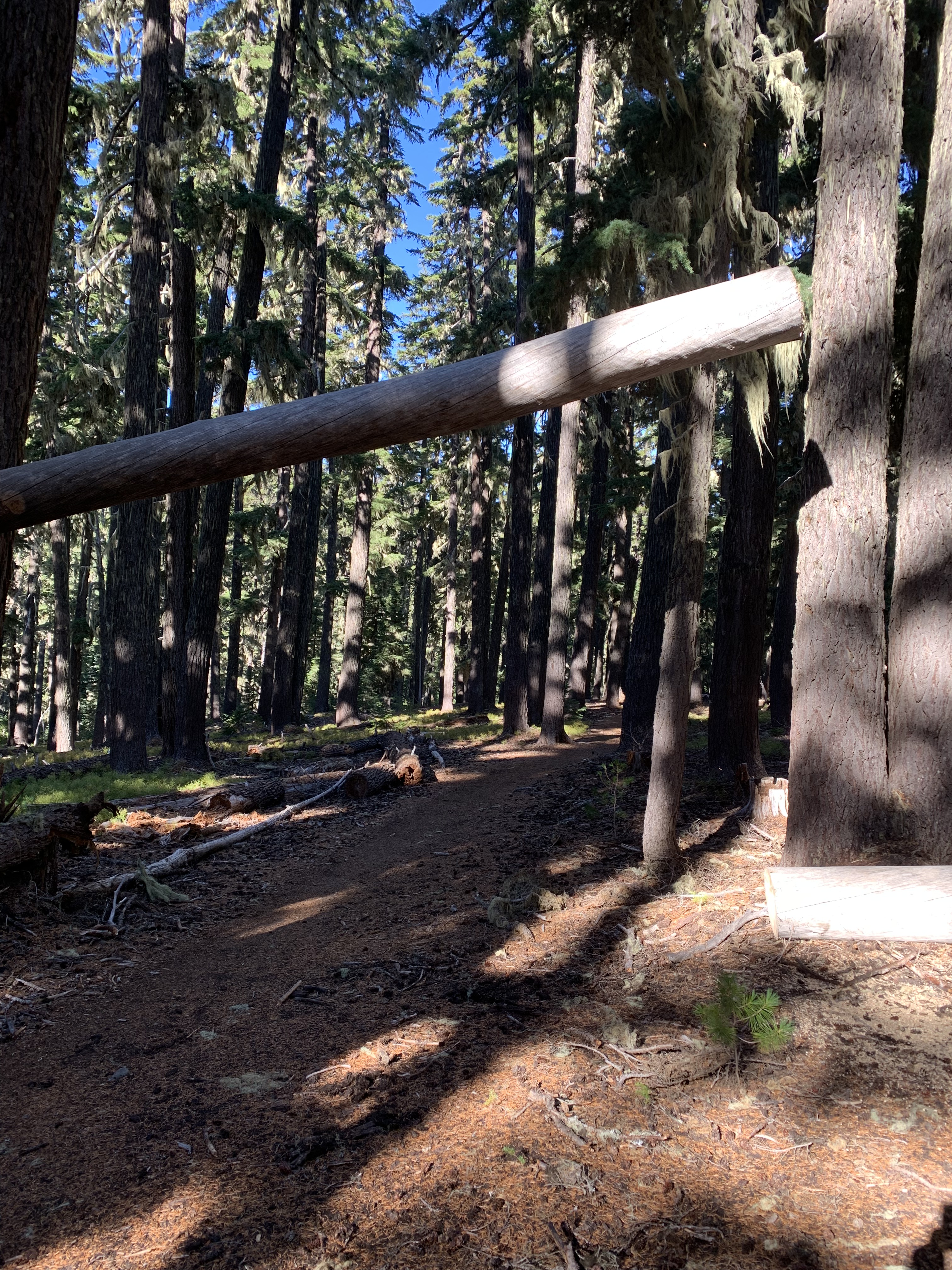
An hour earlier, Brad and I were a mile further west at the fourth of six logs we had to remove on the Betty Lake Trail, an all season path near Waldo Lake, joining Waldo Lake Road to the 20 mile Jim Weaver Trail that circles the lake. Our first log was head high over the trail and held in a notch of a pair of trees. When the log was cut, it went up like a teeter-totter. You find entertainment where you can when working trail. The current log was 20-22 inches diameter, a straightforward cut. Standing on the opposite side of the log, I noted a rock right about where Brad’s cut was headed. As the cut came lower, I stepped over in front of Brad, waving my hands to get his attention.

“Rock!” I pointed down.

He looked over, gave me a nod, and later we finished the cut with a hand saw, which if it scraped the rock would be no big deal. Saw chains do not like rocks. He told me later he hadn’t seen it. I was in much better position to see it and spoke up as is my job as swamper. Every part of trail work has had a steep learning curve for me, and swamping has perhaps been the most difficult for me.

Swampers, (the verb to swamp) are words for helping someone who is operating equipment deal with carrying it, fuel, clearing space, safety and emergencies. Swampers for power sawyers are a pair of second eyes for obstructions or issues the sawyer might not appreciate, such as overhead dangers, hikers, or movement of nearby logs because of the current cut. The sawyer is concentrating on the cut; the swamper must be watching out for everything else in the surroundings, staying clear yet being aware of the cut’s progress.

Two years back, a log lay across the Vivian Lake Trail a quarter mile from the trailhead. The log, nothing unusual, went uphill 30-40 feet where it disappeared in brush. There, a second log similar size was perpendicular to and lying on it. I wondered whether the second log was a potential problem. Maybe. Maybe not.

The sawyer arrived, and as he planned his cut, I called over: “Note the log on top of this one. It might not do anything, but I want you to be aware of it.” My second pair of eyes was not confident in calling out what logs will do. But now there was a second brain involved.

The sawyer nodded, changed position so he faced me and further away. As he cut through the log over the trail, it dropped. The perpendicular log was suddenly free, started to roll, had a low friction surface, the log we had just dropped, and accelerated, crossing the trail in seconds, going over the edge with a loud crash below.

“Thank you!” 

Brad and I ate lunch at Betty Lake, each of us finding an appropriate spot. I don’t sit on logs when eating but rather the ground, often leaning against a tree. Trail work has two lunch seasons: we had months of the summer one, where I looked for shade. We had just entered winter lunch season, where now I sought out sunlight. I ate, all the while looking out at the 40 acre lake. 

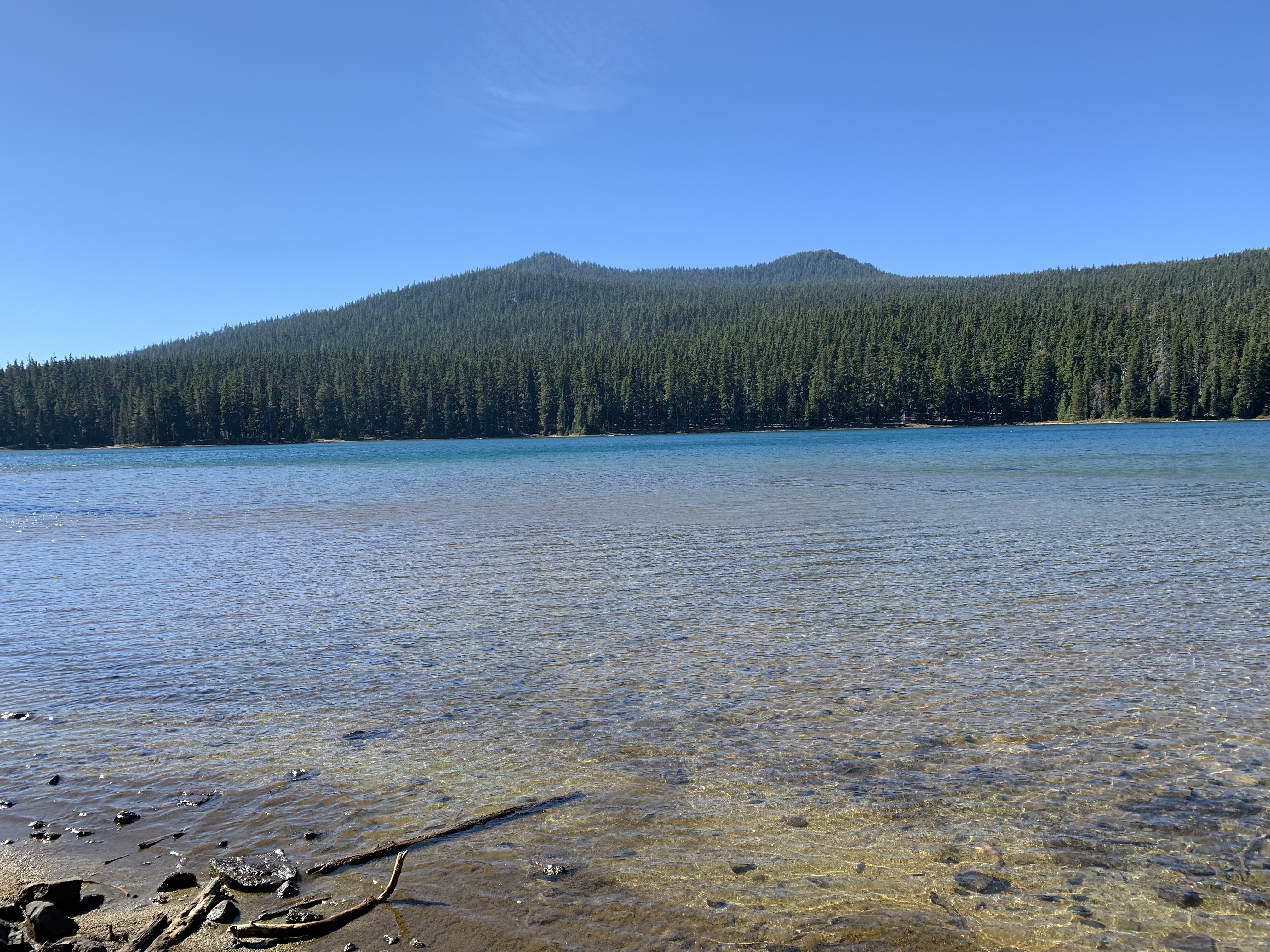
The south shore across from me was a quarter mile away, the west end a similar distance to my right. A few whitecaps were visible, pushed my way by the south wind. The sky over the distant trees was as deep blue as it gets. Somewhere out on the lake, I ate lunch one winter day when I snowshoed in nearly six miles from Highway 58 and sat on a pad in bright sunshine, my black pants absorbing the heat. I then snowshoed back out.

I’ve watched plenty of water from a Navy ship on multiple trans-Pacific crossings, and up close on a hundred canoe trips Up North. Never get tired of looking. 

It’s when I have to move after watching water that has changed. I used to stand right up. I now have a couple of false starts, hear some cracking, and gradually change position. Eventually succeeding, it was time to put the saw back up on my shoulder, make my back unhappy, rejoin the trail, and return to the trailhead.

OH, INDEED I DO

December 15, 2024

Smoke started curling out of the hole where I was drilling. The drill hadn’t seemed to work right from the start, requiring my pushing it more than I should have. Finally, my effort produced no further movement but plenty of smoke, so I pulled the drill out, noting removal was easy. 

“Something’s wrong with the drill,” I said.

“Try this one,” Sig gave me another drill. I had no trouble at all.

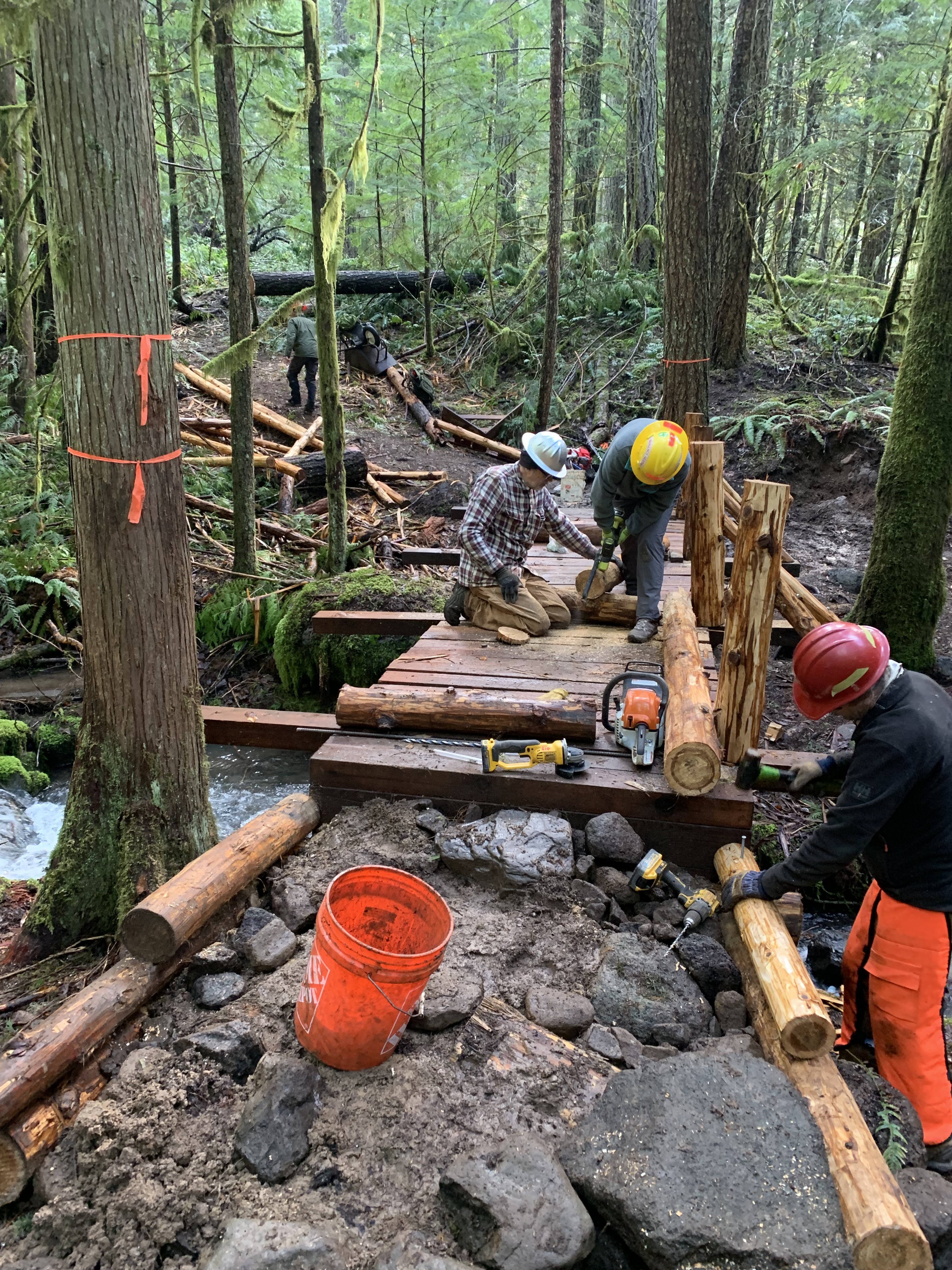
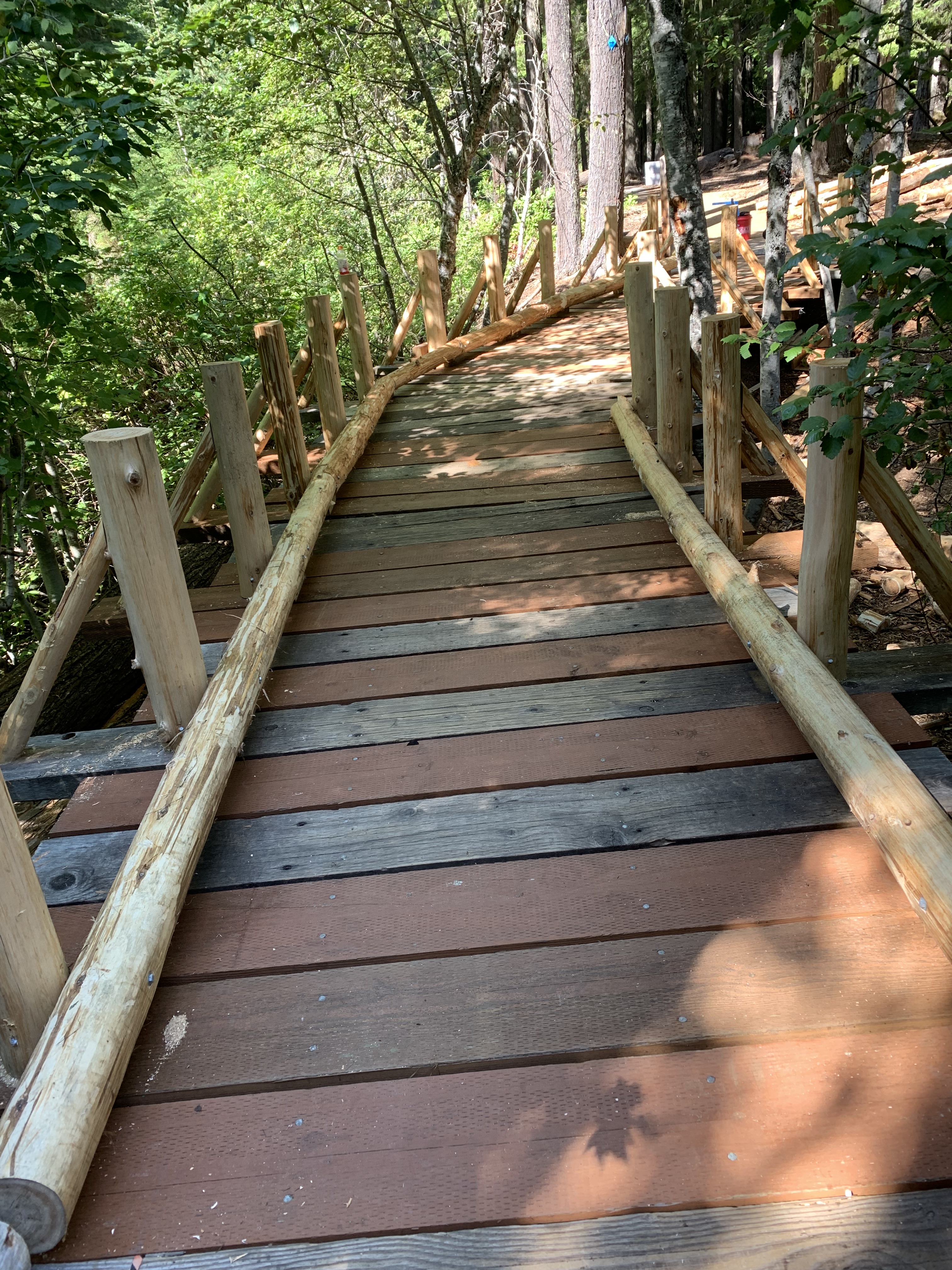
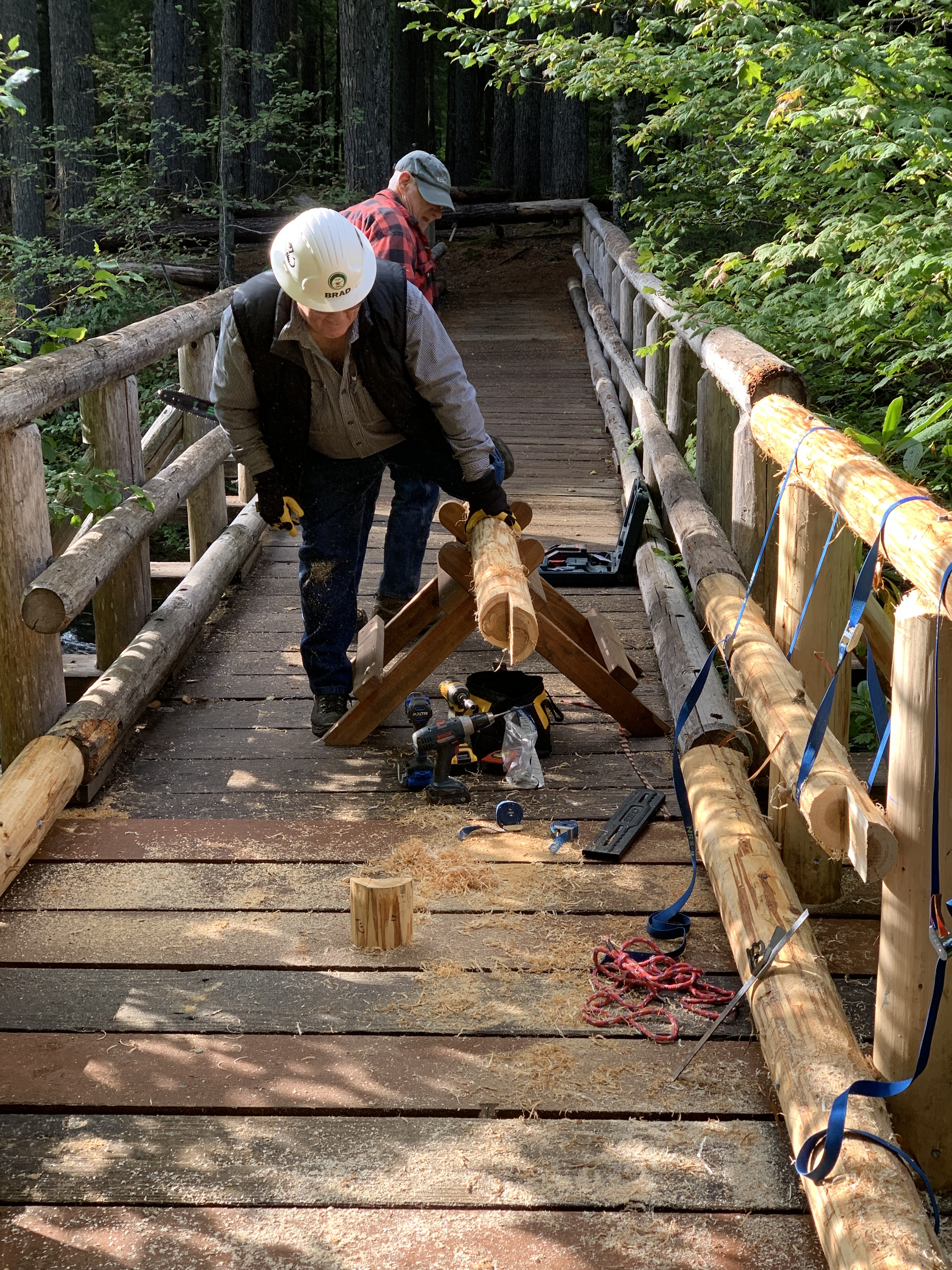
We were working on the bridge over Salt Creek not far from the falls. The bridge was about 60 feet long with a 45 degree curve on the west side. This bridge construction I worked on more than our first one at Indian Creek along the Middle Fork, where I did necessary grunt work of moving logs and debarking cedars. Here, I cut the rails, drilled holes for the posts and support structures, and using a high noise impact driver to put in the screws and toe nails holding everything together.

We had cut the logs down in the valley, where there was Western redcedar, covered the logs near the road with boughs to hide from poaching until we got a trailer from the Forest Service, then eventually moved 35, minus 3 or 4 that were stolen anyway, into a trailer.  We drove 20 miles up to the falls, where we unloaded them by the parking lot. I moved thirty of them one day a couple hundred yards to the work site, using a dragger Jim had rigged up. Some logs I just put over my shoulder and carried. My step counter showed 7 miles’ hiking that day without ever leaving a circle of 200 yards radius. I worked closely with Jim and Sig, learning about bridge construction during the nine outings I had there.

There was nothing wrong with the drill. It ran just fine. But it was in reverse and I as I pushed it in, the friction became intense enough to ignite the wood. I suspect Sig knew but didn’t want to embarrass me. Before using a drill again, I had discovered the little button that changes gears and turned the drill on briefly to ensure it was turning clockwise. It was a rookie mistake. I later graduated to where I had to figure out how to remove and replace the battery without asking anybody or taking too long.

Bridge work is a team effort.

About a year later, I volunteered in Cottage Grove for Huerta de la Familia, developing the seventh garden in the region for Hispanic families to grow their own food. My first trip there, the group was putting in fence posts, My job was to fill a wheelbarrow with gravel and take it to each of 35 such holes, where the gravel was mixed with the ever present mud to surround the post. There was another outing there recently, and I decided to go, despite the accurately forecasted rain, in full rain gear which I define as wearing enough clothing that one can’t tell if it is raining.

I was first to arrive, low clouds, spitting rain, not getting lost like I had the first time, and as I went out on the plot, Gloria, as she introduced herself, held a Ridgid cordless 18V power drill.

“Hi,” she said. “Do you know how to use this?”

Music to my ears. Oh, indeed I do, Before Salt Creek, I might have asked what it was. Nonchalantly, I said, “Yes, no problem,” as if I had that, a few yellow DeWalts, and a Stihl power brusher 25.2 cc one cylinder motor in my garage next to my Husky saw. Gloria didn’t need to know my past ignorance. It reminded me of being abroad on an overnight flight when the crew needed English speakers to sit by the emergency exit, which happened to have great seats. The flight attendant looked at me, and asked, “Do you speak English?” 

Oh, indeed I do. “Like a native,” I replied, drawing out all the words.

My job in the rain was to remove the multiple screws that held the planks and slats of several elevated garden plots so we could remove them. The job would require removal of upwards of 75 brass PowerPro brass Torx screws, many of which were so tightly bound I had to use the whole drill as a screw driver just to break them loose. I didn’t notice the rain, only my gloves getting progressively wetter. I was one with the Ridgid. I even helped Jean change a bit; all I had to do was vigorously unscrew the chuck.


The job was right up my alley, for all I had to do was to remove screws, so I used reverse the entire time.  Piece of cake.

See you on the trail

FOUR GOOD DECISIONS AFTER ONE BAD ONE

December 11, 2024

“When you have played basketball for a while…[Y]ou develop a sense of where you are.”

So wrote John McPhee about Bill Bradley, Princeton ’65, senator for 18 years, a remarkable man. 

When Bradley was playing college ball, I was in high school, and my best friend played for our high school team. He and I shot baskets out in his backyard, talking about girls and other things teenage guys did. That year, I went from an awful 30% free throw shooter to a decent 65-70%, taking his advice to shoot each one the same way and not let a bad shot change my mood. He told me to use the backboard for my jump shots, because it made bad shooters fair and fair shooters good.

Thirty-one years later, Jon Krakauer saved his own life on Mt. Everest while descending in a snowstorm by recognizing parts of the route he had taken up. He had a sense of where he was, trail memory. 

Backcountry navigation is having a sense of where you are, a sense that can be developed, using aids that make a bad navigator fair, a fair navigator good, and a good navigator excellent.

***

I pushed off from Wolf Creek into Burntside Lake, heading towards Crab Lake in the Burntside Unit of the Boundary Waters, a separate area of the wilderness I hadn’t yet explored that summer. It was a pleasant September afternoon, and my plan was to go north 2-3 miles and then I would be “on the map” I had in a plastic bag by my knee.  I was lacking the actual map of my starting point, but it was so close to the edge of the maps I did have I didn’t see any problem. North was in front of me. 

About a mile out, I could still easily see where I had launched and began looking for islands I would use for markers on the maps with me. There were several, and at first I thought I had found one, but the long axis wasn’t right, so I looked at a couple more. They weren’t right, either. This was bothersome, until I found an island that looked possible, now about 2 miles away from where I had pushed off. I started to look to the west, where I planned to go, but what I saw didn’t match the map.

I then continued, paddling, making the rookie mistake by “making” another island “fit” to where it should be for me to be where I thought I was.  That wasn’t working either. As a general rule, you can’t remake the surroundings, put the Sun in a different part of the sky, or change the shape of an island.

Finally, I did the first smart thing I had done since I had pushed off.  I stopped, drifting in the calm lake.

The second smart thing I did was to speak aloud, as I have done on other occasions, countable in number, I have been in this situation. I think it better if one speaks aloud. It sounds more honest, more compelling, more urgent.

“You do not know where you are on this lake.” I said to the waves and to the foam near the canoe. “You don’t need help, but you need to go back. Now.” Aloud, the words had power. I did a couple of draw strokes behind me to pull the stern to starboard and the bow to port, then did a figure of eight motion ending in a power stroke, this time moving forward again, south, towards the distant shore where I had begun, the third smart thing I did. Even without binoculars I could see where I had started. 

And where today’s trip would end.

When I got back to shore, I put the canoe on the car and drove back into town to look carefully at the maps of the lake. I easily needed to go another mile just to get on the maps I had.  

I then bought the map, the fourth smart thing of the day. It took four smart actions to deal with one dumb one. It seems like a bad ratio, but if you survive unhurt, except for your pride, the ratio is fair enough.

The following day, I returned to Burntside from a different jumping off point and into the Unit for three nights. I had no navigation problems. I had a mile portage in and back out. One night in there was my Outdoor Triad of wilderness, total quiet, and completely dark skies.  I took a long way back around to the starting point. With a good map, it was simple. The fall colors were beginning, I saw a bunch of duck decoys on the water in one place and got out of there fast. That was smart, too.

That experience occurred well before GPS. Today, I require two of the following: map, GPS, and trail memory. Having a compass is mandatory. Not often I’ve used one, but more often than my tourniquet.

INTERCONNECTION

November 19, 2024

I left my campsite on Conmee Lake, deep in the Canadian Quetico, on a day threatening rain, a long paddle and some tough portages ahead of me. As I left the bay, I paddled by a tiny 18 inch tree growing out of a crack in the granite along the shore. Its few leaves absolutely loaded with color, as if to say, “I’m small, I don’t have great soil, but I am the most colorful spot on this shore.” It was.

On Bunchgrass Trail this past fall, 2 years after the Cedar Creek fire, part of the in-progress-for-a-long-time  Eugene to (Pacific) Crest Trail, I saw a tiny spot of green on a burned out stump several feet off the ground.  I stopped and looked more closely. Yes, it was real. Just a few centimeters of plant, growing out of wood, eight small leaves. All the green I had previously seen on Bunchgrass was scattered plant life by the trail. Everything else was black, brown, gray or whitish gray, sterile. 

Bunchgrass Trail, elev.1620m’.

Plant life on dead trees means bacteria are present to break down wood to recover nitrogen needed for amino acids and subsequent protein synthesis. Not everything was sterile here.

Two months later, I planted a white oak in Bethel Park. It had two leaves, each patchy green and yellow, but next year there will be several more. I thought about chlorophyll and took an intellectual adventure similar to the one I had last year when I studied tides, learning about the remarkable relationship among tides, gravity, and centripetal force, each inversely proportional to the radius cubed, squared, and first power, respectively.

Chlorophyll is life giving.  It is comprised in part of four pyrrole rings, a porphyrin, containing carbon, hydrogen, oxygen, and nitrogen, with a magnesium atom present in the center, essential for photosynthesis. When chlorophyll degenerates in autumn, aromatic flavonoid and anthocyanin remain and we see their color. 

Across the divide to animals, oxygen carrying is done by heme in vertebrates or hemocyanin in earlier phyla. Heme, part of the substance hemoglobin, is another such porphyrin complex, the complex itself chemically identical to chlorophyll, except iron, rather than magnesium, is the central metal. Iron carries oxygen, to a lesser extent carbon dioxide, and has great affinity for carbon monoxide, CO, which is why we have smoke alarms, since CO displaces oxygen in heme.

Hemocyanin has a different type of chemical ring, still 5 sided, with another nitrogen, and copper is a the central metal chelated here. When copper combines with oxygen, it turns blue, explaining the blue blood of arthropods and mollusks.

There is another metal: cobalt. When it is present in similar metalloporphyrin complexes, we have methyl cyanocobalamin, the synthetic version we call Vitamin B12, essential for our existence. Here are chemical rings chelated with four different metals. I knew about magnesium and iron; l didn’t know about copper and cobalt. In some bacteria nickel has been involved, zinc chelation is an organic photosensitizer, and metalloporphyrins are extensively studied.

Iron is fascinating stuff. The Sun will never make iron, ending up ultimately as carbon and oxygen white dwarf. Larger and hotter stars, however, fuse smaller elements all the way to nickel, which quickly degenerates to iron. Fusion ends here; iron is stable.  Star size is a balance between heat expansion and gravitational contraction; when fusion stops, expansion stops, the star core collapses upon itself and explodes, a supernova, releasing energy that will fuse the other 66 natural elements. That’s where the iron in our blood came from. The Sun is not a first generation star; we are, as Carl Sagan said, made of starstuff.

The plant on Bunchgrass was a small speck of green, a magnesium electron transfer engine, made of star stuff, to make sugars and other carbon based compounds. There is a remarkable interconnected beauty of the universe and us.

And a small plant at five thousand feet.

See you on the trail.

The plant, with some green in the background
White oak

Hypomyces lactifluorum

November 11, 2024

The red mushrooms on the side of the trail stopped me. I had scouted Winberry Tie Trail two and a half miles to the divide, a height of land between Winberry Creek and the Middle Fork of the Willamette River watersheds. I had hiked uphill, through maples and mountain ash, to where the trail joined the the mile long divide trail connecting an abandoned road on the west to FS 5821 to the east. I scouted that, too.  Scouting is looking for logs or brush that need removal, checking the tread for erosion or other problems, in order to plan a future outing to address them. This trail was well known to me; I had just passed a rock wall we built near a rootball hole we filled in. It had rained that day and was muddy. I then encountered the mushrooms.

Lobster Mushrooms

We recovered the trail three years ago, barely able to find it, after fifteen visits to clear logs (“logging out”), remove encroaching brush, repair tread, fix turnpikes, which elevate a trail above a wet area. We also logged out a dirt road which the trail crosses twice. I still remember being on my knees digging out every inch of a side wall of the trail for a hundred yards in a cold rain-snow mix, removing salal and Oregon grape.  I know this place. One visit this year with two power brushers and a power saw crew would have the trail in good shape for the next season, assuming, of course, no trees fall on it in the meantime. The tread was excellent, although there was new growth of salal. Nature is trying to restore the trail, too, to look like its surroundings.

I couldn’t identify the mushrooms, but I saw similar ones at the Pisgah Arboretum’s recent annual mushroom festival. I took a picture and continued to the Forest Service road, hiking back to the vehicle, noting no logs needing removal.

I’m no mycologist. In another life, I could find myself interested in mushrooms to learn their names, like I did wildflowers. My first identification was a Western Cauliflower mushroom (Sparassis crispa) on Crescent Mountain nine years ago on a wet, cold hike. They are distinctive.

Western cauliflower mushroom on Crescent Mountain, 2015.

I wrote to a Steve, a crew member, asking whether these were Giant Lobster mushrooms (Hypomyces lactifluorum).  He assiduously collects mushrooms on autumn trail work outings, putting them in a pack cover to carry home for dinner.

His answer was brief: where exactly are they? That was easy, I replied, since we had both used power brushers in this area. I told him he could drive to the upper trailhead and from there it was about a quarter mile up the trail, on the right. I could have said the west side, but that’s nitpicking. Keep it simple. 

The Arboretum show was excellent. I commented to one of the volunteers about the Western Cauliflower mushroom they displayed, and he lit up. You could see it in his eyes. It’s the look one has when asked questions about their field. I’ve seen that look in climbers, birders, pilots, athletes, botanists, and know if I am asked about math or eclipses, I light up like they do, becoming a different person. 

The man said, “I made a dressing for a stroganoff by replacing the bread with the mushroom,” using his hand like a ladle. He whispered conspiratorially, “It was the BEST dressing I have ever tasted.”

See you on the trail. If you forage, know what you are doing.

Log on Winberry Tie Trail that will need to be removed.

INTO THE BLACKNESS

October 19, 2024

I saw a small white larva on my hardhat when I took it off for a break on Bunchgrass Trail. The creature was maybe 2 mm long. Normally, I might have blown it off the plastic with one breath, but one had to appreciate where I was. Something up here was actually alive

Bunchgrass Trail burned two years ago in the Cedar Creek Fire. Where we were working had burned hot, 100% death of trees as far as I could see. I hiked the trail in 2021, before the fire, and it was beautiful woods. When the Forest Service allowed us to be the first group to work there, I jumped at the chance, I wanted to see the area and to help restore it.

Fifteen miles east of Oakridge, we drove up bumpy Eagle Creek Road 9 miles to the trailhead, entering the burn the last mile. The first thing I noted when I stepped out was the quiet. It is autumn; most life is are starting to shut down, but the forest before me was quiet, black, stark, and dead

A Forest Service crew had recently logged out downed trees over the trail, and they wanted us to work on the tread as part of restoring this mountain biking trail favorite. We had a longer than usual tailgate safety session before we started. Post burn areas are dangerous: branches or whole trees may suddenly and quietly fall, there are unexpected holes, tripping hazards, many sharp objects to impale the unwary. We expected places with no trail at all, planning to restore maybe a few hundred feet a day. As we worked, the trail was easily found, a gray, soft, thick powdery surface over firmer bottom. The soil appeared mostly sterile, much like I have seen in older burns on Patjens Lake or Hand Lake trails. Trees had burned into different shapes. Other than a slight breeze, it was silent. Even when I threw dead logs and branches off the trail, they sounded different when they hit the ground. They sounded dead. Or hollow, if I hit another log. This place was what people think of after a forest fire; other post burn areas, however, like Terwilliger, Horse Creek or Rebel, have a mosaic of burned, partially burned, and spared trees. Not here. Here, the colors were of gray, black, brown, and rare green along the trail.

And a white larva.  

Each of us had a trail tool to chop away at the inner, soft trail wall, dust and dirt flying into the air, the slight breeze ensuring we were coated. I used a McLeod—hoe on one side, tined rake on the other. We needed to make the trail 18 inches wide, including spots with little room to do that, since the ground sloped steeply downhill some 200 vertical meters to another road. Each foot of the trail was addressed. 

Here and there were some plants, thimbleberry and ferns, rare fireweed, and to my surprise,  bleeding hearts, since these are springtime flowers in the lowlands and early summertime blooms here. Ironically, we had to remove greenery encroaching upon the trail; still, I drew the line with a few patches of Miner’s Lettuce with white blooms. I transplanted rather than removing them.

I decided to see if I could move the larva without crushing it, so I found a small leaf and made the transfer. It’s remarkable how such an action, so small in the scheme of the day, was for a few seconds my function. One larva. But it was alive. Other than that and a Northwest Centipede finding a spot behind a large rock, there weren’t even ants. Below me, I saw the first bird of the day fly quickly through the blackened trees. 

I sat down and rested my back from the work with the McLeod, which was effective if heavy. Above, I saw something flying, then two somethings, looking like buteos, probably red tail hawks. They wouldn’t be here if there weren’t something for them to hunt. Further up the trail were Pearly Everlastings, white flowers that had gone to seed. The ones in the trail had to go; others escaped the McLeod when I moved the flexible stems away from the trail. At lunch, I saw several small mushrooms growing out of a standing tree high above the forest floor. 

When we began to hike back to the trailhead that afternoon, I was amazed how covered in dirt everybody was. Clothes had changed color, faces had dark blotches. Every time I took my hands out of my gloves, they were dirty. Being dirty is like age; you think other people are subject to it and you aren’t, until you look in a mirror.

In two work days, we cleared just over a mile of trail (1.66 km). We are half way to the next trailhead, but with significant rain with snow forecast at our elevation. It might not be possible to work up here until next June. The trail will be restored first; the forest will take far longer.