Posts Tagged ‘hiking’

WHITE FLOWERS AND UNDERBUCKING

June 8, 2025

I love queen cup flowers. Six separate white petals, not tall, they bloom in the sixth month of the year, following the five petal Oregon anemones, which bloom in the fifth month of the year. I noted them along with a few five petal wild blackberry flowers on the half mile Frissell Crossing Trail from the South Fork Trail in the Three Sisters Wilderness to the campground, effectively unusable because of blowdowns. At least 20 logs were over, on, and blocking the trail.

The Crew had split into two groups this Saturday, an unusual day to be out, but we had several interested who could come out only weekends. I came along fully expecting to clear brush at the far end of the wilderness trail, but I was assigned to a group cutting out logs outside of the wilderness. That was fine by me. My foot bothered me a bit, and I wouldn’t be hiking as far.

The first log was a teaching moment for another Mike, retired Forest Service, a crosscut saw expert with a wealth of information. He sharpens saws, a job that he says takes about ten years before a person does it properly. The classic saws we use are about a century old, with as many teeth as years, along with terms like rakers, gullets, guards, and made of high carbon steel, not requiring sharpening often but very brittle. The saw teeth should never touch dirt, and woe unto anybody who lets that happen. The handles may be removed or rotated 90 degrees. Once while bucking in a different crew where nobody knew me, I fastened a saw handle about as quickly as possible with gloves on. That doesn’t usually happen, and it meant something that day to have someone see it.

We soon had a couple pair of logs that had to be dealt with, plenty of work for everybody. I had done one logout earlier this year, so my arms were ready for another day’s handling of a saw. Along the trail the trilliums were now gone at our elevation about 3000 feet. It was about 60, comfortable, some stream noise in the distance from the South Fork of the McKenzie River and no bugs. Good day to be out.

I misjudged what one log was going to do and didn’t recognize a couple of things we could do on one that the other Mike pointed out. I wasn’t feeling good about myself thinking after more than 7 years out here and 120 plus days logging out, I wasn’t progressing, just getting old.

After lunch, we worked on a series of three logs that required six cuts, opening another section of trail. We encountered the last log about 12 inches in diameter, high over the trail, caught in the V of two trees on one side. My turn to say what to do. Nobody else was talking. 

I have visualized this sort of problem at night and tried to figure out how to deal with it.

I said we should go to the far end away from the V where the log was closer to the ground and cut it there. It had bottom bind, meaning it was bowed upward; a cut will have tend to have the log go upward and maybe come apart (like explode), with a great deal of force. Such logs are under a lot of tension on top with compression below. We started with a top cut, a small mistake but maybe not having been seen by others. The log started talking to us by cracking, and I told my partner to stop sawing and to move the saw underneath to underbuck, cutting from below. I like to do this anyway, but I should have done this right away.  If we cut into compression, the tendency of the log to explode when the tension is cut will be minimized so it won’t slab off, carry the saw into the air, or throw a Pulaski 30 feet, all of which I’ve seen. Earlier that day, I had underbucked  twice with the right offset so when the cut round fell, the saw stayed in the fixed part, completely protected.  That’s pretty cool if one is interested in this sort of stuff.

We underbucked maybe an inch into the log and then went back to the top. There was more noise, and I had us again underbuck about three inches away from the first time. We returned to the top and this time cut all the way through. The log dropped.

Perfectly. It didn’t slab, and it was now just below waist height. Wonderful. The V it had been hanging in was pulled apart just enough to keep the log off the ground. We cut through it and were done.

On the way back, I thought I saw a trillium, but the three sepals were white along with the rest of the flower. Trilliums have green sepals. When we got back to the vehicles, there was a whole group of these flowers growing nearby, and I took a closer look. They were Oregon Iris. It can be—and here it was—white.
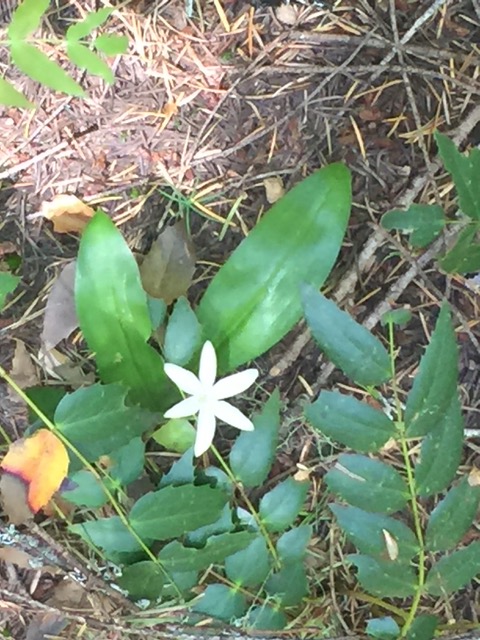
Queen’s cup

Oregon anemone

NOT WHAT I EXPECTED ON OLALLIE MOUNTAIN

October 4, 2024

On the last push to the summit of Olallie Mountain, Jeff asked me what I thought the reds were on a distant mountain to our northwest, across the Three Sisters Wilderness. I wasn’t sure if they were maples and even mentioned the possibility of a local die off of conifers where the orange needles can look red from a distance.  

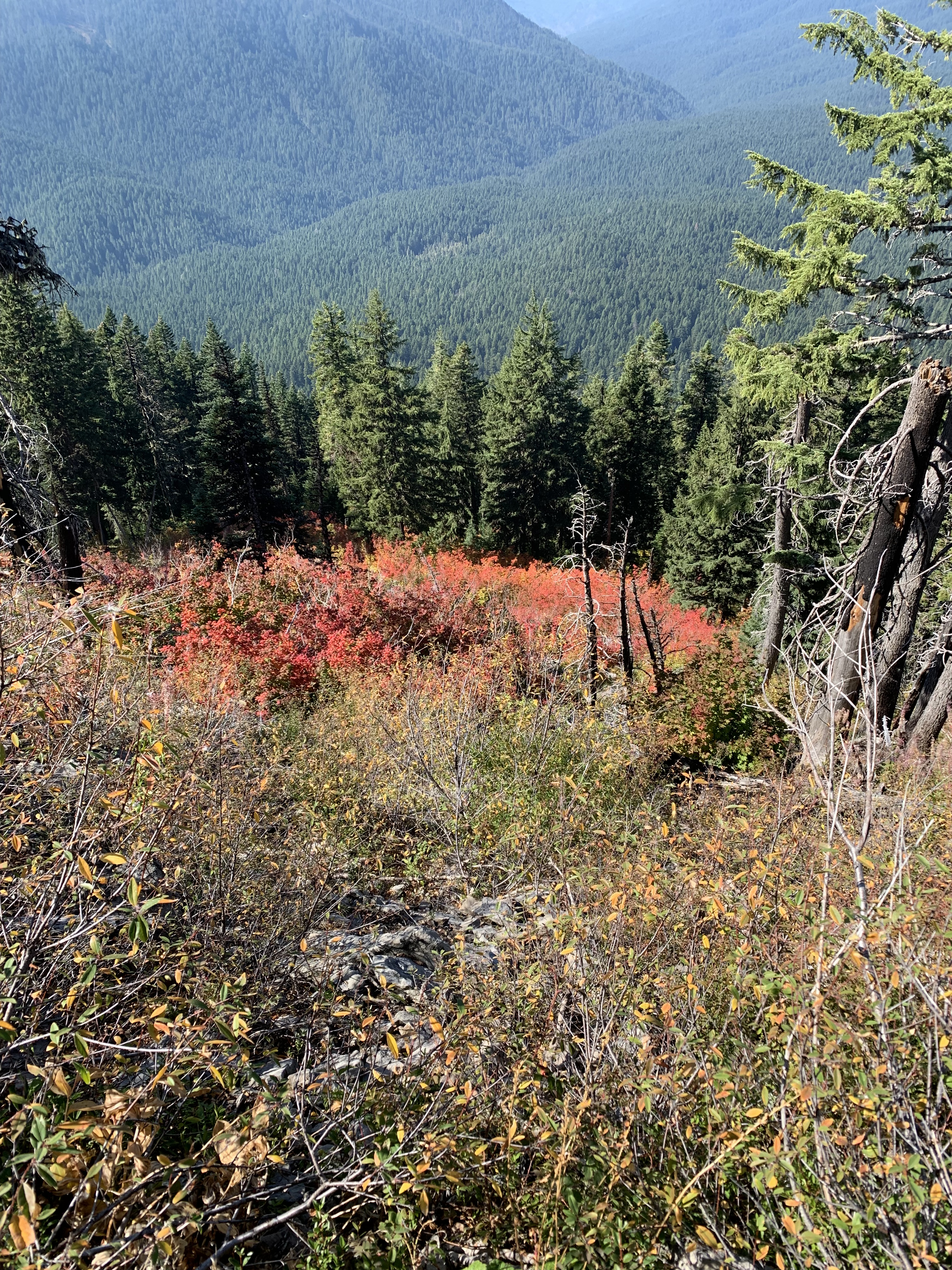
A hundred yards later, carrying packs, saws, and other trail working tools, hiking on a narrow trail where I definitely did not want to trip, I discovered a third possibility.  Below us were large patches of huckleberry plants, vivid red.  I quickly averted my gaze, however, not wanting to tempt my body to go where my vision was.  Huckleberries are often part of trail work, because they are a common plant we cut out in order to work on a log we want to remove. The berry season had been over for a good month, but I had fond memories of being first to the bottom of Lowder Mountain a month ago, after our log out there, not because I was the fastest hiker—I am closer to the back these days—but because I left the top before anybody else.  I knew there were huge berries at the trailhead and wanted at them. They were delicious. My job is to support the crew, but huckleberries are another matter. The crew’s founder, the late Ron Robinson, told me he loved his huckleberries. 

Earlier that day, fireweed, few pink blooms remaining, now with either seed pods ready to open or already spilling seeds into the air, had red leaves as well. It reminded me to take a few so I could try making fireweed tea, which I had once done in ‘85 but as it turned out not the proper way.

After summiting earlier than expected, due to another trail crew’s prior log out of some of the top trail, we hiked back out. I stopped to take pictures of the huckleberry plants I had just seen. Well down past the junction, re-entering the forest, where I planned to take a short rest before the final mile, I was on a stretch of trail that drops off steeply to the east. Out of the corner of my eye, something red caught my attention. I looked and saw a small maple far below, completely red.

Before the outing, I thought my recollection of the day would be the work I did on the mountain, pushing logs off trails, cutting out small stuff, using the big saws on the larger logs, and a tough hike.

Nope. The memory will be of all the red I saw.

CREW LEADER FOR A DAY

June 22, 2024

The brief but intense sting on my left palm from the force of my axe striking dense heartwood was another reminder the day wasn’t going well. Nine of us were logging out Horse Creek trail in the Three Sisters Wilderness, entering by a log bridge over Horse Creek itself that one needs to carefully cross, 1500 feet of climbing over 3 miles with gear to get to our spot, the second time this year I had been to this point. The trail climbs further and we needed to clear it to a trail junction 5 miles in.

The 17 inch diameter log angled over the trail with the end some 60 feet up the hill, giving it significant end bind, meaning the saw blade was grabbed due to force coming from above down the log. Plastic wedges only keep the cut or kerf open if the saw is deep enough to drive one into the kerf or cut, and we were nowhere near that. It took several of us more than two hours to dispose of this blocking log, and there were 16 more of various sizes and difficulty in the next half mile to Roney Creek.

Bridge entering Three Sisters Wilderness

We had been on Horse Creek a month earlier, on a cold, rainy day, reaching this point with two logs, both with end bind, right together. We worked on one, then left it for another time, since the upper trail still had snow and it was getting late in the day with a long hike out. Today was the next time. I thought my sawing the previous outing was decent, considering my arms were not in saw shape, but on this day it seemed like every log had an unusual problem, either in the cutting or the disposal. I was on my hands and knees clearing debris from the trail, most of it still holding water from the deep snow that had only recently melted. There was another log angled about 40 degrees up a cliff, requiring my partner and me to climb part way up the cliff to pry it loose, where it eventually became a side rail along the trail.

Small cliff where log was present.

I was too hard on myself, I realized later, after we reached Roney Creek and could turn around to hike back out, arriving back at the trailhead after 5 pm with a long drive home.  I was the crew leader for the day, the 21st time I have been one, only the third time, however, on a logout. The crew leader doesn’t need  to be the most experienced person, and I am not. I have been on over a hundred days of logouts, but I seldom make the decision how to cut a big log. I like to think about it a little, but there are plenty who know right away what they want to do, others who think they do and discuss their thoughts aloud, throwing words like branches into the air. Lot of egos in the woods, like the rest of society.

My role as crew leader was to make the arrangements online, file a comms or a communication problem with the Forest Service, and be at the meeting spot in Springfield early when we met in town to make sure everybody was there. As it happened, one we were going to meet in the mountains showed up in town, and we didn’t have room in the vehicles.  I made the quick decision to drive myself so we didn’t have to cram everything and everybody into two full vehicles.

Usually on logouts, we leapfrog each other, skipping a few so each crew works on several logs in a defined area then moves on past the other. I made the decision before the day started to send 3 of the 9 of the group, the strongest, up the trail 3 miles to start logging from there. They would cut their way to the end, informing me by radio of their progress. The rest of us had to deal with left over logs that were not used for sawyer certification plus the remainder to Roney Creek. There were 4 B/ C certified sawyers among us, including me; I elected not to lead a saw crew but to float, so one of the other B certs would have a crew. He was stronger and more adept at reading logs than I.

I knew the people, the trail, I the conditions, that several logs we had left for certification uses were probably still there, and that further up at least one log, maybe more, would take an unusual amount of time. I hoped that the three I sent beyond could clear the trail from the creek to the end, a possibility since unlike us, they would not work in a burn area, where we would be, and could expect fewer blowdowns. 

I have a good sense of time on the trail, and when I called in to the Forest Service from the trailhead, said we would plan checking out at 1700, or 5 pm. It would be a long day. 

We removed logs that had been left, along with nearby brush on the trail. I then heard from the lead group that he had seen what was ahead of us and would start clearing from the creek,, ,so we wouldn’t have to go past it. After we finished the original certification logs, we hiked up to work the problem logs. By lunch, we were ready to make the final push to the creek; the upper group was about 1.3 miles from the end.

I bring other skills to the group, neither easily seen nor commented upon. I removed several  smaller logs by myself on the way up. It’s part of the job. I knew how far we were from the creek, thought we had a decent chance of making it there by 3, which would get us back at the trailhead about 5. I also knew four of the people came together in one vehicle and when we finished, they could go down the trail and leave. I doubt others had those thoughts, but I did.

We reached Roney Creek after we cut out the last two logs. I got a call from the lead group telling me they were near the junction. I gave the go ahead to start hiking out, and when I was a half mile from the trailhead ninety minutes later heard from the now trailing group that they were at the creek. We got the trail cleared and were at the trailhead not long after 5. No way we could have done this by leapfrogging each other. 

I radioed the Forest Service that we were done, drove home, and that night wrote the report and credited the crew with their hours. Horse Creek had been cleared for another year.

TURNING AROUND

May 12, 2024

I reached Young’s Rock after an hour’s hike with a half-mile elevation gain from Camper’s Flat, 25 miles south of Oakridge, and promptly ran into snow on the north side. While the snow wasn’t deep, I had the first inkling that I might not be able to reach Moon Point. I continued a quarter mile further until three large logs, covered in snow, blocked my way.

The first I could cross, the second was more than three feet in diameter, too big to climb over, nowhere to go under, the downhill bypass involving a steep drop I didn’t want any part of. Going uphill offered wet snow, was slippery, steep, and impassable.

I turned around. I didn’t spend much time thinking about it, I just reversed course. Even if I could have gotten through, the trail was going to have more snow, and I had to do the log crossings on the return, doubling the probability of having a problem. Moon Point was not going anywhere; I would try again.  Six weeks later, I made it, and I led the hike three months after that, but from road FS 2129, a full thousand feet above Camper’s Flat, making the trek more reasonable.

It wasn’t the first time I had turned around because of obstructions. Years earlier, snow stopped me just short of the summit of Mt. Wrightston in the wilderness of the same name in southern Arizona. This was one of my favorite hikes, rising four thousand feet from the valley, but because there was no safe way to cross one stretch without my being at significant risk for sliding 50 or more feet. I failed to reach the summit, with its splendid views. I still had a morning off work, got to hike in deep snow in southern Arizona, and returned safely to work later that day, wet feet and all. It was great.

Sometimes it isn’t what is on the ground but what is coming down that changes plans. I led a late season hike to Crescent Mountain in November 2015. I thought we would miss the rain, but I was wrong, and the steep trail had small waterfalls all the way to the beginning of the meadow, about 1300 feet vertical above Maude Creek. There we encountered wind, snow, and fog. We were still warm, if wet, but it didn’t seem like a great idea to go to the summit for nonexistent views. We turned around, and back at the parking lot tried unsuccessfully to dissuade two young women from starting out, especially with their wearing running shoes with their feet in plastic bags.

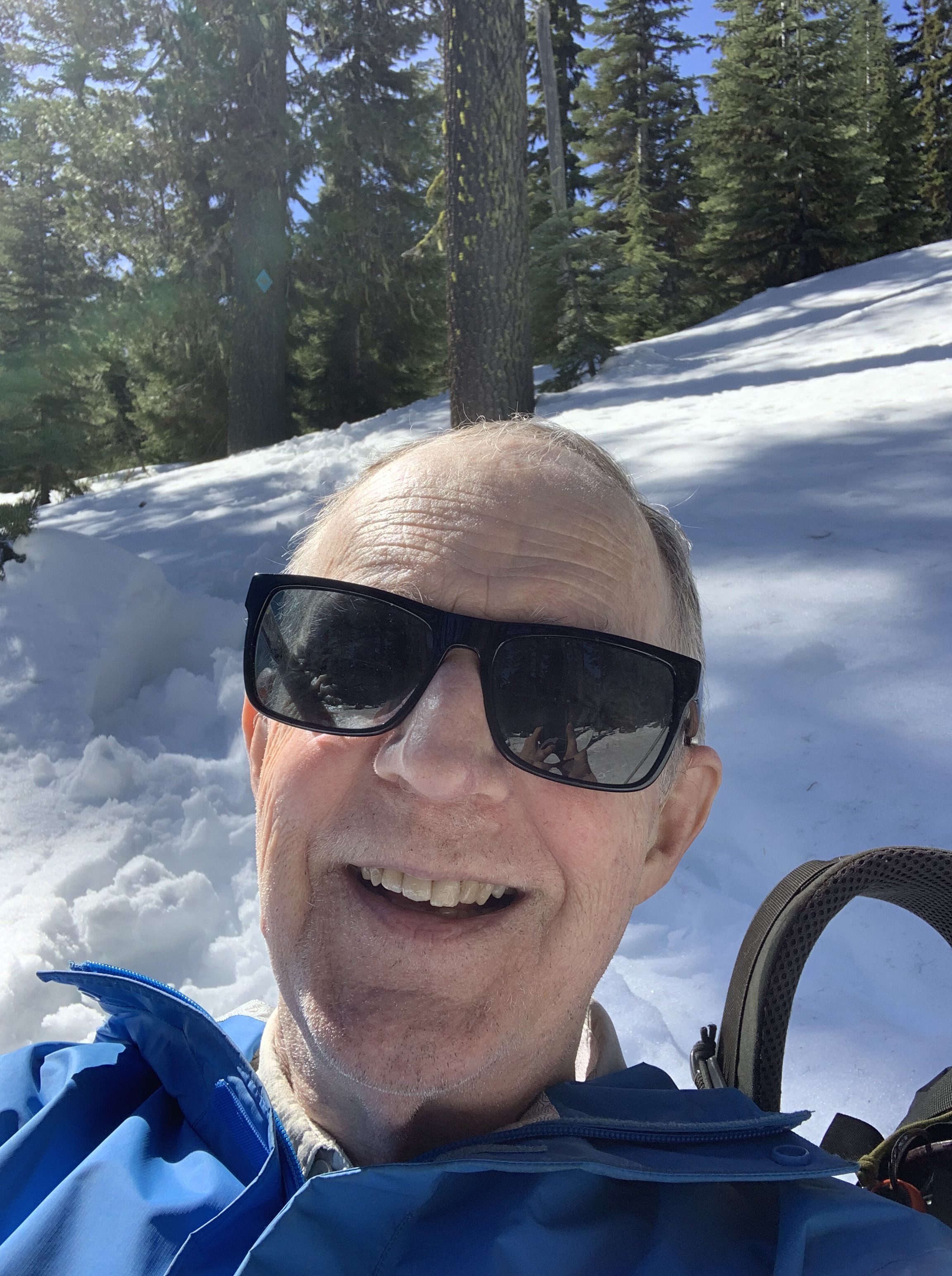
This year, I cut short both a snowshoe and a ski attempt to deal with my adopted winter trails, the 9.5 mile trek on the PCT from Willamette Pass to Maiden Peak Saddle and Tait’s Trail. I was too exhausted both times to finish, and it took me fewer than ten seconds to make the decision to turn around early. I had no regrets, other than not having the stamina. Winter trips are dependent upon snow conditions, and either the wrong equipment or the wrong snow (or both) will make for an arduous, perhaps unsuccessful outing.  I finally completed the loop, checking and replacing the blue diamonds as needed, but it was April and excellent snow conditions before I succeeded.

In late spring 2009, I  turned around at Bridalveil Creek in Yosemite, because I wasn’t sure I could get across the springtime flow safely. I looked and looked, finally said no, not worth the risk, and reversed course with no regrets.

See you on the trail. If a trail is unknown, especially in early season, consider that snow, downed logs, streams, weather, or physical ability may stop you. Turning around is not failure; stuff happens. Listen to your gut. If you are uncomfortable, turn around. You know the way back. Hiking should be enjoyable.

Young’s Rock; Blowdowns, April 2016

Bottom of Tait’s Tie Trail. Now just 2.5 miles to snowshoe out. March 2024.