Posts Tagged ‘Outdoor writing’

DON’T FORGET THE LITTLE GUYS

May 31, 2010

(The Echo, Sierra Club, Grand Canyon Chapter’s quarterly paper).

I’m deep in a channeled wash for at least the sixtieth time, alone, removing buffelgrass along the concrete berms and anywhere else I find it.  It is nasty, difficult and dangerous work, since rattlers are out.  I duck under a mesquite, noting its thick, luxuriant growth, put the shovel into the deep soil, and lever out another plant, a thorn nailing my arm again.  I will remove between 200 and 300 plants today, bag them, tie the bags, and with great difficulty haul them out of the wash, because there is so little traction on the berms.  Dig, bag, tie and haul.  Over and over again.

Buffelgrass is like Kudzu.  It was imported from Africa to Mexico as cattle forage about 70 years ago, and has spread like wildfire.  And that’s the literal truth.  Buffelgrass grows and burns hot–1500 degrees–and uses the heat to spread seeds.  The Sonoran desert is adapted to fire, but not fire that hot, so if buffelgrass crowds a cactus or a mesquite and burns, the native growth dies.  I don’t know if we can eradicate it from the entire American Southwest–Sonora is a lost cause–but many of us think we can, and in addition to my adopted wash, I help monthly on another section with other people.  I’ve taken out at least 11,000 plants, and as a side benefit, I’m getting a good upper body workout.

In one five day stretch, I dug out 1400 plants, using over 120 bags.  I gained maybe 50 yards up the wash.  Probably less.  In the past six months, I’ve worked my way about a quarter mile, slow going, as I hack, bag, tie and haul.  But I’m noticing changes.  First, if there is no buffelgrass around mesquites, there will be no hot fire if lightning strikes.  That will save a tree.

Second, I’m noticing native vegetation moving in where the buffelgrass stands once were.  We finally got average winter rainfall, and it helped.  Third, I am amazed at the deep soil that has washed down from the mountains; there are shade trees, quail, white-crowned sparrows, pyrrhuloxias, and black-tailed gnatcatchers.  Lately, the black throated sparrows have arrived.  They are difficult to see, but I hear many of them.  This wash with its thick growth is a park; an oasis, with condos, roads, and people just above the fence.  The above walkway is frequently used by joggers, cyclists and dog walkers, all enjoying the quiet, the green, and the lack of people below them.  Maybe it isn’t a greenbelt, but it is a green garter.

I could do without the trash; a sign reads a fine of $2500 for littering, but I wonder if anybody has ever been fined for doing it.  Some of the litter ends up in the trash bags with the buffelgrass.

This wash would need a rain we will likely never see again to flow bank to bank.  But it does get some water coming off the berms and from the west end of the nearby Catalina Mountains.  And even in Arizona, it won’t be developed, so if I can remove the invasive buffelgrass, there can be a dense growth of mesquites and palo verdes, good habitat desperately needed; an island of calm in a noisy sea of stucco and steel.

We must preserve the major rivers in this state–the Colorado, the Verde, the Salt and the San Pedro.  But washes abound, and they are part of the riparian network, too.  Visit one some cool morning, before the snakes wake up, and walk where you can.  Dress appropriately, because the mesquites are thick.  You may find you can’t even go far because of the growth.  That’s just great, because the fewer people disturb the area, the more wildlife can live.

Never thought I would adopt a wash, clean it up, and enjoy it so much.  Never realized how much life was in one.  Remember the little guys.
HELPING THE NEXT GENERATION

April 29, 2010

I’m a lucky guy–I’ve canoed the Quetico/Superior since 1981, and while I’ve camped from Alaska to Algonquin, northern Minnesota is my favorite destination.  In 1992, I spent 5 months as a volunteer wilderness ranger in Ely, the most content I have been in my life.  But one of my more memorable trips was a recent solo up and back to Pipestone Bay, lasting barely 5 hours.  It was Earth Day and the first time I ever canoed in April.

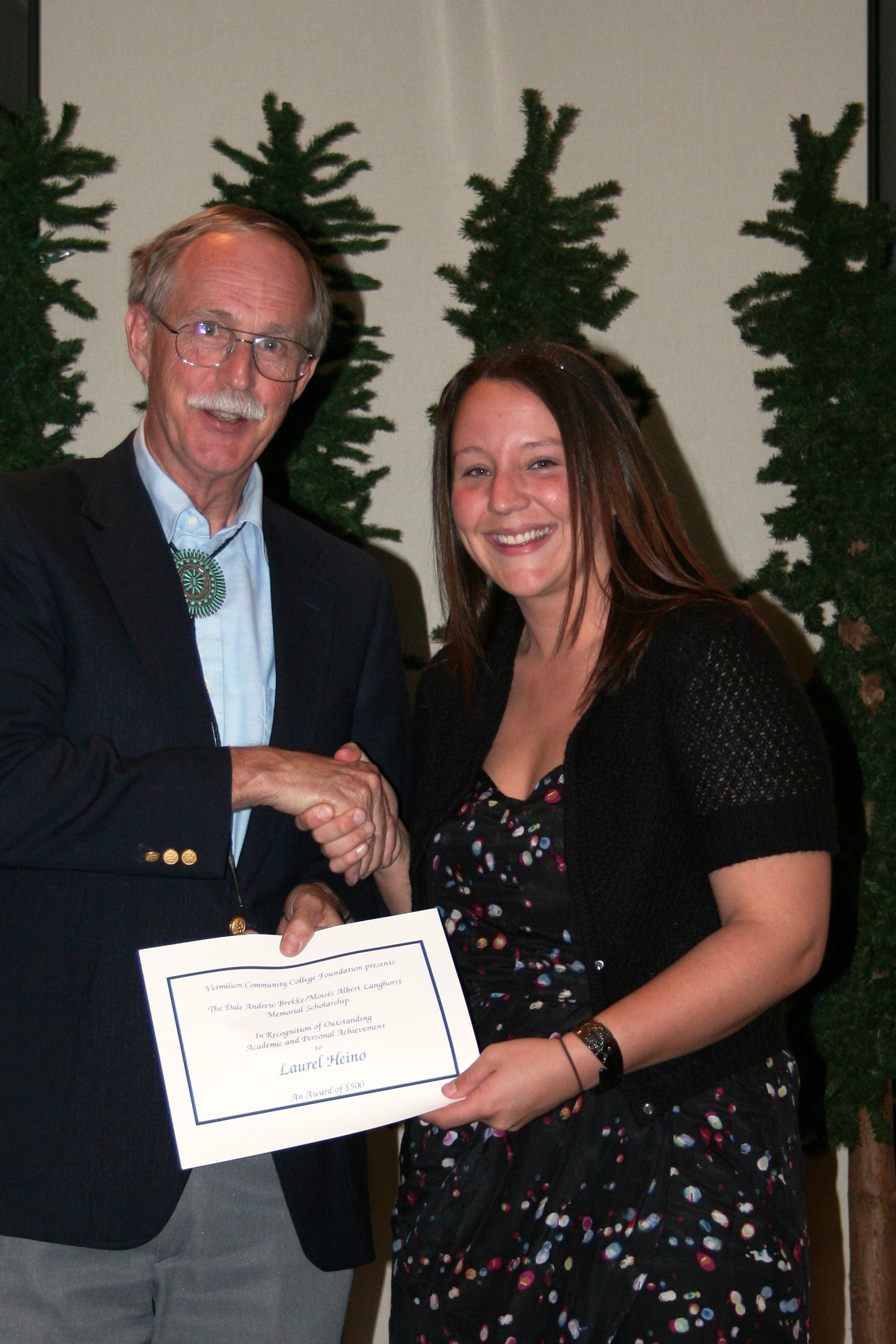
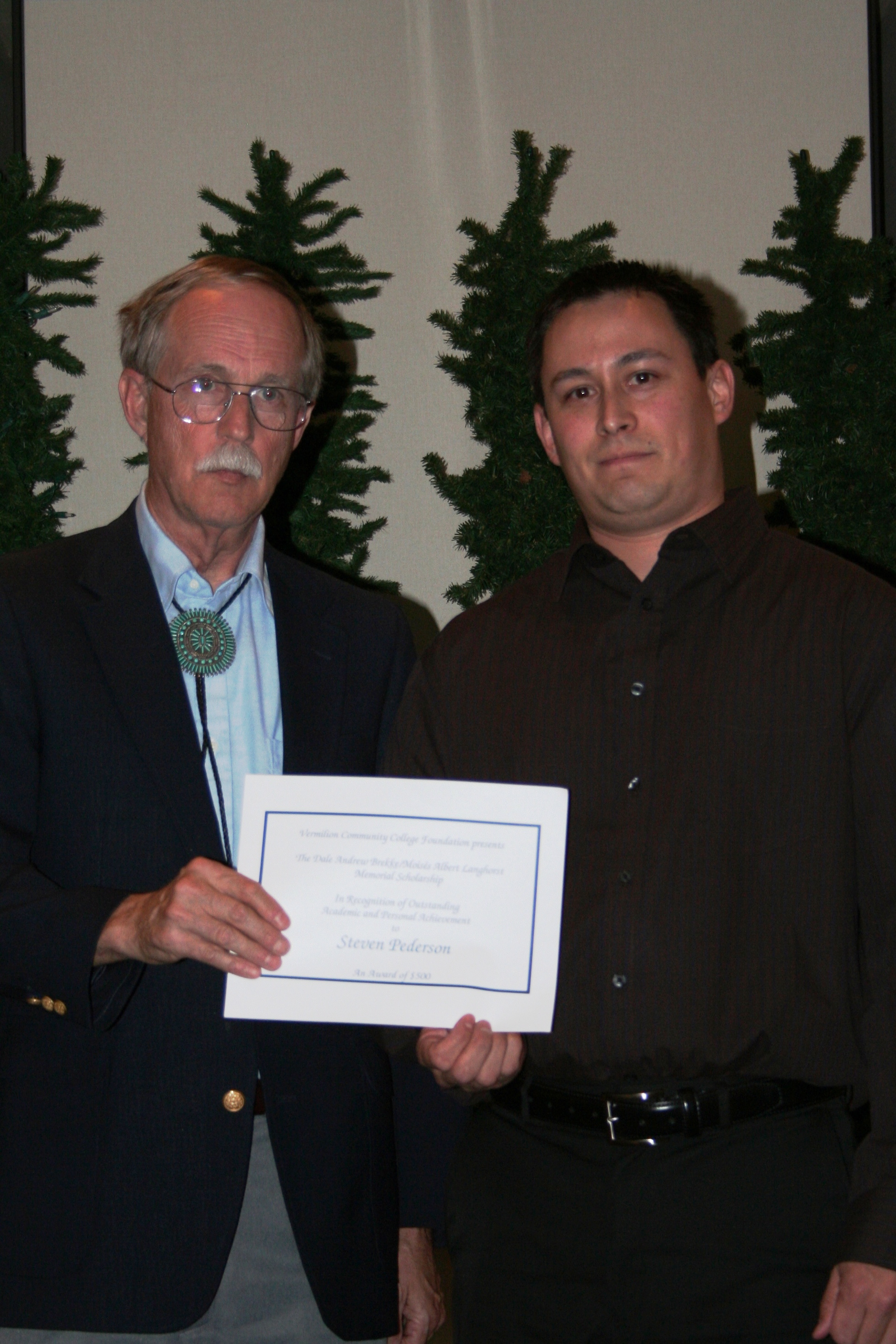
I went to Ely for the annual Vermilion Community College Foundation scholarship banquet.  For 5 years, my wife and I have sponsored a scholarship for a student selected by the College who is studying environmental or wilderness course work leading to a career in those fields.  I try to attend the banquet to present the scholarship.  It’s our legacy to a town and wilderness we deeply love.

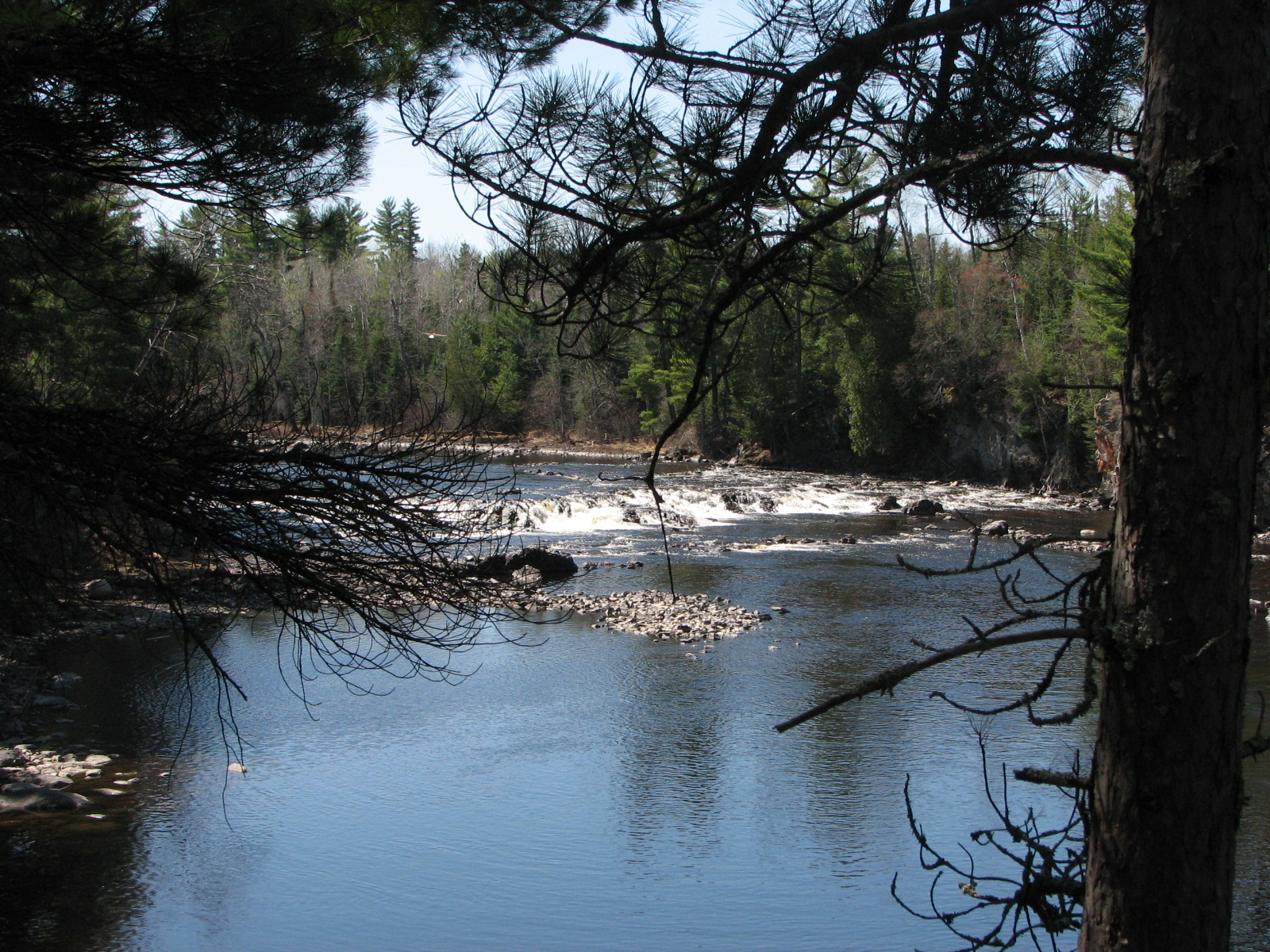
Two days before leaving I realized that if I arrived in Ely early in the day, I could rent a canoe and get on the water.  I was thrilled at the prospect (my wife said, “Why am I not surprised to hear this?”) and made arrangements.  I arrived in Ely at 9 on a perfect traveling day, got the canoe and drove out to Fall Lake.  I quickly shed every layer except for a shirt and PFD, and I could have taken the shirt off as well.  I wore neoprene gloves but really didn’t need them.  I saw nobody, except mergansers, a loon and several immature eagles at the south end of Pipestone Bay. I sat in the sun, enjoying a better view of the falls than I’ve had on the 30-plus times I have hurriedly crossed that portage.  Here’s a video of the falls and a few soaring immature eagles (they are immature because of their lack of a white head and general mottling.)

I contribute to three scholarships:  the amount of money the Foundation annually disburses has doubled since 2005.  I worked with the Friends of the Boundary Waters to create a scholarship in 2008; they and I jointly fund it.  I would also present that scholarship at the banquet, which pleased me no end–an Arizona guy who brought two fine Minnesota organizations together to create something good.

Up on Pipestone, I shot video of immature eagles soaring in a cloudless sky.  After lunch on Newton, I portaged back to Fall, paddling by the campsite where my wife and I stayed on 9/16/2001:  we started that trip on 9/11, unaware of events, heard the next day on Basswood River “the country was shut down,” but had few details and were nervous what we would learn when we exited.  On every trip since, we always note the presence of aircraft.

As a Navy veteran, a shipboard medical officer, I had long wanted to establish a scholarship for veterans, whom I feel should get free education.  Patti Zupancich of the Foundation worked with the Brekke and Langhorst families to allow me to contribute to an existing scholarship in memory of two young Moose Lake cousins who died in Iraq, 6 months apart.  Their aunt would attend the banquet but declined to present the scholarship because she knew how emotionally difficult it would be.  Patti suggested that I present the award, which was met with immediate approval.  I was grateful both families allowed me to contribute; I was deeply moved by their additionally allowing me to present it, one of the greatest honors I’ve ever received.

At 3 p.m., I came off the water, tired, sore and happy to have used muscles that had forgotten what paddling and portaging entailed.  It felt good to do J-strokes, scull, sweep, avoid rocks and portage again.  It felt right to solo in the wilderness.  But it felt odd to know in an hour, I would change from canoe clothes to coat and tie.  I had never done that before.

The banquet is always festive, which must be difficult for those who give memorial scholarships–a gold star family from Wisconsin presents one each year, too.  There is also one in memory of “Jackpine” Bob Cary, given by his daughter.

The recipient of our scholarship was there with his parents.  I enjoyed seeing how happy the three of them were.  The recipient of the Friends scholarship had taken people on tours to Listening Point.  One of the Brekke-Langhorst recipients had spent 4 years in Iraq; his father was also a veteran, and we had an interesting conversation.  The other recipient, a young woman, was ex-Navy; both of us have sailed many tens of thousands of nautical miles on the same seas in different eras.

As expected, presenting the Brekke-Langhorst scholarship was emotional, and I wanted everything to be proper.  The brave young men’s aunt thanked me, but I felt I received more than the recipients.

Every time I give, I seem to receive more.  I’m hoping the Friends get enough support to sponsor a second scholarship.  I hope some of my fellow wilderness travelers will remember those students in Ely, at the edge of the wilderness and on the edge of poverty.  If giving money is not possible, haul out a lot of trash on your next canoe trip.  Do something good for this special wilderness.

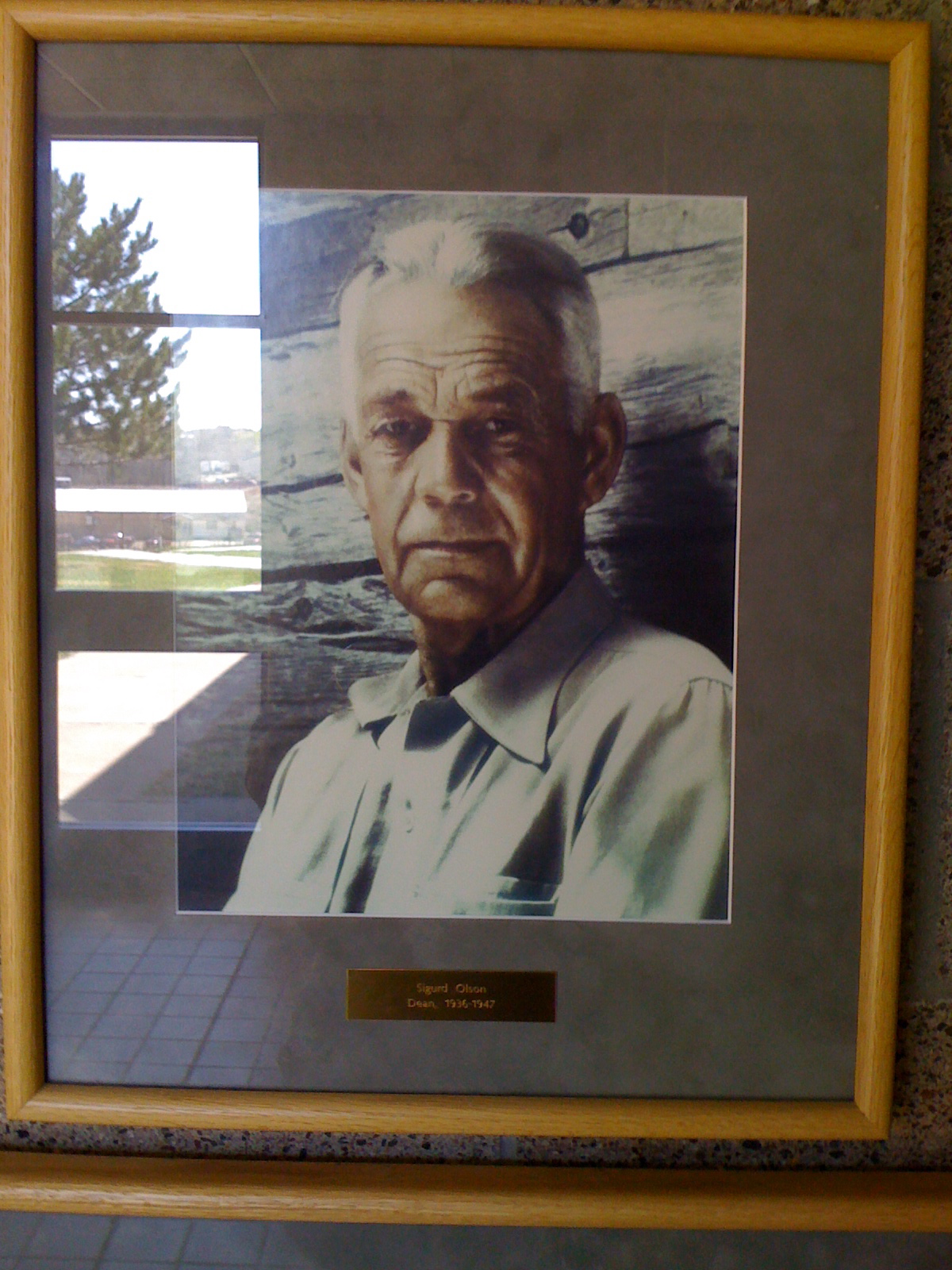
In 1938, Sig Olson, Dean of what was then called Ely Junior College, wrote “Why Wilderness?”, stating exactly how I feel on the trail:  the need for “sweat and toil, hunger and thirst, and the fierce satisfaction that comes only with hardship.”   Sig referred to hardship on the trail, not financial hardship.  There’s a scholarship in his name, too, which I want to honor by ensuring hardship stays only where it belongs.

TOUCHING OTHERS

April 8, 2010

I never knew Jamalee Fenimore or Stephne Staples.  Nobody who reads this knew them, either.  Both of them loved the Sandhill Cranes, as do I.  Both have a viewing blind named for them at Rowe Sanctuary in Gibbon, Nebraska, at the southern bend of the Platte River.

Every spring, the Sandhill cranes and the Whooping cranes, the most and least common of the 15 worldwide crane species, begin their 5000-7000 mile migration to the subarctic in North America and Siberia.  Their final staging area is on the Platte River.  They go to the Platte because there is food nearby–formerly small animals but now mostly corn–and because of the safety that one of the largest braided rivers in North America offers.  They feed in the adjacent fields by day and roost in the river by night, where the shallow water allows them to hear predators approach.  Before the Platte was dammed and water used for irrigation, recreation and drinking, it was a mile wide and an inch deep, too thick to drink, too thin to plow.

Now, the Platte in many areas contains less water and has invasive species and many trees growing nearby, limiting the habitat to 50 usable miles from the formerly 200.  Rowe Sanctuary owns 4 miles of river and 1900 adjacent acres, which has been preserved as habitat.  Every night in March, up to 600,000 Sandhill cranes, 90% of the world’s population, roost in the river.  And every morning, they leave.  It is a spectacle that Jane Goodall has called one of the world’s best.  I’ve been fortunate to have seen many great sights in nature.  This one is in my top three, seeing a solar eclipse and a wolf in the wild being the other two.  I love seeing it so much that I volunteer at the Sanctuary, along with dozens of others, helping the full time staff of four–that’s right, four–show visitors the cranes from viewing blinds, for cranes are hunted in every one of the 17 states they pass through except Nebraska.

Many talk about the cranes that migrate to Arizona.  I just say, “You don’t understand.”  And you can’t, until you witness the occasional flocks of fifty thousand cranes, darkening the sky.

Stevie Staples mentored one of the Rowe Staff and lived 74 years, dying in 2006 from cancer.  She was a former canoe racer and a real character.  I once raced canoes, and I would have loved to have discussed racing with her.  She touched the people at Rowe.  She knew that, for she did live to see a beautiful picture of a Sandhill Crane in flight with her volunteer tag with “9 years of service” on it, because a picture of her receiving the picture is on a desk of the person she mentored.

Jamalee Fenimore grew up in Nebraska and practiced veterinary surgery in Washington state.  She died of cancer far too young at 49, donating her estate to Rowe.  Nobody at Rowe knew or remembered her being there.  But obviously, she was touched by the river, the cranes and the sanctuary.  We volunteers learn that we may touch visitors in ways we never know.

When I volunteer at Rowe, I work 17 hour days, sleeping on the floor in the sanctuary so I can hear the cranes on the river in the middle of the night.  I guide people to the viewing blinds, I clean toilets, paint, greet people, and now am setting up “Nature by the Numbers,” where we hope to show teachers and students how math and science are used in the real world, so we don’t lose our connection to nature.  The escaped, illiterate slaves used the North Star on the Underground Railroad.  How many of you readers can find the North Star?  How many of you have slept under the stars, how many bird species or constellations can you identify?  What is the Moon’s phase tonight?  How many large mammals, excluding deer, have you seen?

On my last tour, I took a disabled person to Stevie’s blind in an electric golf cart.  Had he been able to walk, all of the group would have gone to Strawbale blind, which was the plan.   But we still saw many cranes, American white pelicans, and unusual behavior.  My rider loved the view and tried to tip me, which I of course refused, asking him to put the money in the container at the sanctuary.  I planned to talk to other clients, because as the lead guide, I hadn’t spent time with them.  But I spent time with this man.  He was originally from Singapore; when I told him I had been there twice, his first comment was “Thank you for saving my country.”  I’ve never heard that before, and it did me good.  I hope I and Rowe did him good.

We touch each other in ways we may never know.  Good people spread kindness throughout their world.  The lucky ones receive that kindness or are those who live long enough to discover that their kindness was deeply appreciated and honored.  But all who spread kindness are fortunate that they have the ability to do so.  Stevie knew in her final days that her kindness was appreciated.  I hope Jamalee Fenimore did, too.  But if not, I know she knew she was doing the right thing.  I deeply appreciate what she did.  And every time I guide people to either of the two blinds, I tell them the story. Both women deserve to be remembered.  And to have a viewing blind named for you on a river where a half million cranes visit every March is a wonderful honor.  It also reminds me of my duty.

SANDHILL CRANES+2 WHOOPERS, 2010, PART II

April 7, 2010

This site is still under construction, but the You Tube videos are worth seeing:  the first shows a brief version of a pair dancing.  This is to release stress, to bond and to release hormones.  I can’t help but think it is just pure joy as well.  The second is at http://www.youtube.com/watch?v=vLQTOIt_gBM and shows the first plus about eight more minutes of the birds calling.

I went to Rowe for the beginning of the crane season, but it was a very cold winter and the birds didn’t show up until March 1.  I had a few great views, but left before the season really got going.  I felt like I had unfinished business on the Platte and went back at the end of the month.  I worked 17 hour days, slept on the floor in the gift shop (so I could hear the cranes on the nearby river when I woke up), cleaned toilets, led and assisted on viewing blind tours, washed dishes, and basically did whatever needed to be done at Rowe Sanctuary.  Even ran the Crane cam one night, which is on Rowe’s home page.  I haven’t felt so alive in a long time.  Rowe has a full time staff of only 4; there are many local volunteers and folks like me who come from a long way off to help in any way they can.  I felt blessed and very fortunate.  Also saw two whooping cranes at a long distance, so the pictures aren’t great.  But I saw them.

“I NEVER KNEW HOW IMPORTANT THAT WAS TO YOU”

December 18, 2009

I had a depressing holiday season.  Too much death.  Not in my family but in the families of two people that I know.  The three of us were once riding buddies, but after my bad accident in 2006, I gave up the sport, and while we stayed in touch, calls became less and less frequent.  I basically let the friendship go.

Shame on me.  I kept the friendship alive with Mike Manlove from my days in the Forest Service by stopping by every time I was in Minnesota.  Mike died at 52; I had visited him two weeks prior to his sudden death and he expressed his gratitude for my coming by.  It was important to him that night.  And to me.  But at the time I didn’t realize how very important it was.

The first death was Don’s son, in an accident.  I’ve known Darrell for 8 years.  When my mother was dying, in 2002, I had to bring her and my father back from Oregon.  I had to fly up to Portland, get their car and bring it back.  On his own, Don told me he would pay for his flight up and help me drive back.  I was astounded that anybody would do that.  But that’s the kind of friend Don is.  So, when I read about his son’s death in the paper and called Don, I didn’t know what to say, except that my wife and I never forgot what he did for us, and we were going to be there in any way we could for him.  I reminded him of our 1500 mile old guy road trip, and got him to laugh, even briefly.  Don has many friends, so there wasn’t much I could do to help except attend the funeral, where I saw several other people I knew.

One of them was Rick, the oldest of the three of us,  fifteen years my senior, and a nationally ranked cyclist in his age group who could outride me on flat road any day of the week.  Rick and Don are really tight.  They and their wives had dinner together every week.  But a month earlier, Don told me that Rick’s wife was dying from cancer.  I didn’t know Rick as well as I had Don, but I still should have called him.  I didn’t.  At the funeral, I had to not only express my sadness at his wife’s illness but apologize for my behavior.

Right in the pew, I gave Rick a hug and in tears told him how sorry I was about his wife and how much I appreciated his support for me back in late 2005, when my father was dying.  Back then, I was running ragged with visits to the hospital and then to his care facility.  One Sunday, Rick called me and said, “Hey Mike,” in his great booming voice, “you need a break.  We’ve got a bike ride with your name on it.  Come out with us.”  I don’t remember much of the ride, except that once again Rick whupped me.  But I never forgot the fact he had called me.  Such a little thing.  But in relationships, the little things are the big things.  I owed Rick big time.  But good friends never keep score, they just find a way to help each other when it matters.

Four days after the funeral for Don’s son, Rick’s wife died.  Don was the one to call me.  One can only imagine how he was feeling, given how close he and Rick were.  I asked when it would be appropriate to call Rick.  “He’s sleeping, now, Mike,” Don said, “but he really wants you to call him tomorrow.”  I suddenly felt like a friend again.  Somebody needed me, and I needed to step up.

I called Rick the next day expressing my condolences.  Yes, it was a blessing his wife died quickly, but she was still dead.  He then asked, “Do you have a few minutes?”  I had all day if he wanted it.  For a half hour he went through the last few weeks of his wife’s illness, the support he received from his children and his closest friends.  I just listened, because I knew enough that all he needed was somebody just to listen.  But he then blew me away:  “I never knew that day when I asked you to do that ride how much it meant to you.”

“Rick,” I said, “it meant the world to me.  I was so grateful to you.”  We had a good conversation and agreed to meet later in the holiday season.  Out of this hell will come a rekindling of a friendship that I let go.  I really bumbled, but one of the things I’m good at is not ignoring people after a death.  I also try to say something specific about the person who died.  I’ve long known how much those small details mean to the bereaved.  You see, small to you may not be small to somebody else.  What appears to be a few insignificant trite-sounding words to you may make somebody else’s day.  Sometimes, you never find out how important those words mean.  Other times, it may take four years to discover that what you said really mattered to somebody, as it did with Rick.  Don’t ever forget that.

I have every thank you note a patient ever wrote me.  When I left Ely, Minnesota, after my leave of absence from practice in 1992, I didn’t get to say goodby to my boss, because he was helping in Florida after Hurricane Andrew.  But I later got a post-it note from him, along with a framed picture of a two man handsaw, a hardhat,  Pulaski, pack, radio gloves and a broom leaning up against a tree.  They symbolized what I did as a trail crew volunteer in the Boundary Waters for six months, and I still view the picture fondly.  But what I never have thrown away after 17 years was that single yellow, small square post-it note:

All it said was, “Thanks a lot for your help, Mike!”

Such a little thing.  Such a big thing.

FRUMPY

November 27, 2009

It’s 7 a.m. on a Saturday, and I’m hauling 60 pound jugs of water through thick sand about 100 yards to a picnic area along Sabino Creek.  The water spills on me, and in 50 degree temperatures, the warming I get from carrying quickly dissipates.  In an hour, 80 girl scouts are showing up, and I sure hope there will be a lot of adults with them.  I volunteered to be a birding leader, and I’m wondering what I got myself into. 

The scouts will spend an hour hacking out giant reeds that are a desert invader, sucking up 20 times the water of a cottonwood, an hour learning GPS so that the plants removed can have their root systems identified, an hour at the riparian habitat, since there is a small pool of water still present, and an hour birding with one of us four leaders. 

Everybody shows up, and there is a great deal of singing, energy and all the things young girls do.  I’m now really wondering what I got myself in to.  We start, and the birding is not what it might be, even for early morning.  I’m hearing several species, but hearing birds and seeing them is very different for these girls.  The cool morning and the trails are certainly nice to be out in, the girls are having fun playing with the binoculars, but it would have been nice to be seeing something more than a few nests.  But that’s birding.  Sometimes you see birds, sometimes you don’t.  On the other hand, there is a dead fox near a log, and I am amazed to see how many young girls went up to take a close look at it.  I really expected a very different response.  But, as I was beginning to learn that morning, I was quite prejudiced towards my experience with these girls. 

I had earlier noted a young scout, obviously paraparetic, needing significant assistance to walk.  She came on my third trip, and we didn’t walk too far because of her difficulty moving.  The girl was dysarthric, and looking at her gums, I figured probably took phenytoin as an anti-epileptic.  I diagnosed her in five seconds, and I thought this would be a tough hour, but I was wrong about both the hour and the girl. 

She soon was picking up seeds from the reed, and saying, “Mr. Mike,” look at this.  I didn’t realize where the seeds were in the giant reed.  She had.  Ten minutes later, “Mr. Mike, look at my rocks.”  She showed me a collection of 5 pretty rocks.  “I have one thousand two hundred eighty at home.” 

“One thousand two hundred and eighty-five, now,” replied her mother, as the girl came up and gave me a hug. 

I can count on the past unbroken fingers of my right hand (that would be three), the number of people besides myself who count things just because they can be counted.  I counted the license plate tabs on New York state cars in early 1957.  I know that, because I still have my diary for that year and read it.  I know fairly closely the number of miles I have driven a car.  The night on Isle Royale, when the wolf made it wise for me to leave my campsite and hike 10 miles in the dark, I counted 1000 steps, then every other step 1000 times, every third step 1000 times up to every 9th step 1000 times.  People think this weird.  I do it naturally, just like whenever I hear a four digit number, like a hospital page, I multiply the first two and second two numbers.  I can outdo any calculator multiplying a pair of two digit numbers.  So to know a girl is counting the number of rocks she has was a real treat.  Bet she wouldn’t have thought counting steps weird.  Or seeing a wolf, for that matter.  She taught, too.  One of the other girls wondered if mica came from trees.  My disabled friend, and I use the word disabled cautiously here, told her no, pointing out more of the rock in the wash. 

She made my morning.  At the end of the four sessions, I was putting all the binoculars back in their cases.  I then heard “Mr. Mike!” again.  I looked across the table, and the girl gestured for me to come over.  In a water bottle, with a fern, she had a caterpillar.  I hadn’t seen any ferns or any caterpillars, but obviously she had.  I think I’m a decent observer; after all, I had diagnosed this girl.  Only I had let my prejudice get in the way of seeing what else was inside this girl – a curiosity about the natural world, an ability to see things in the world that many did not, and to collect and categorize them.  I finally admitted to myself that I wasn’t sure what her medical situation was, but that this was an incredibly interesting girl who I hope will have a chance to be fully educated.  My advice to teenage guys is to marry a woman smarter than they are.  Fortunately, I continue, that won’t be difficult.  I hope some guy looks beyond the physical impairments of this girl, because he will find an incredibly fascinating smart brain in her head. 

The caterpillar’s name, by the way, was Frumpy.

A WEEK AT ROWE SANCTUARY

October 11, 2009

(Appeared in Tucson Audubon Society’s Vermilion Flycatcher)

6 a.m. on the Platte.  It’s dark and it’s cold. 

Upstream, I hear a sound like a jet engine warming up.  The high pitched whine gets louder and closer until it reaches me, and I begin to distinguish crane and geese calls among tens of thousands of birds simultaneously lifting off the river.  Because it was still early, and because I’m more auditory than visual, the intensity of the sound caught me by surprise. 

This was my third trip to see the crane migration and my first year as a volunteer at Rowe Sanctuary.  The Iain Nicolson Audubon Center has five permanent staff aided by many volunteers.  I’m selfish.  I wanted to see Cranes every chance I got, so I forged the following schedule:  early morning, while still dark, I snuck into a blind.  Trying not to freeze, I watched the birds gradually increase their activity, until the engine noise and the sudden explosion into the air. 

During the day I’d paint, dig holes for posts, set up rooms, take down rooms, hang things, fix what I could, try not to break what I couldn’t fix, run errands and wash dishes.  My dish washing ability seemed to be appreciated more than anything else.  If I got a chance to work outside, I could see flocks of cranes and geese overhead, with an occasional eagle and red-tailed hawk.  One day the redwing blackbirds suddenly appeared.  In the evening, I’d rush back to the house they put me up in, quickly eat dinner, and then return to one of the blinds where I would see the reverse, with the backdrop of a three or four layered colored sunset.  Once, I counted 10,000 cranes in a half hour, from only one direction. 

On the drive from the house to Rowe, I got used to seeing thousands of cranes in nearby fields, where they were eating waste corn.  Near the end of my stay, I spotted a large flock coming from the east.  High overhead they flew, spanning a quarter of the sky, sunlight reflecting off their feathers giving them a grayish-white cast.  Acting like a first time viewer, I stopped and got out to watch the flock pass, their primitive-sounding calls easily heard.  Cranes do that to me. 

Rowe takes good care of their volunteers.  Next year, after I tag along four times with certified field trip guides I will become one myself.  Am I lucky or what?  I will show people cranes and see the birds at the same time.  I was even interviewed for the Grand Island Independent:  “I love the cranes,” I was quoted.  “They’re large and they’re loud.  The first time I saw it I was in awe of the experience.  And I still am.”

The pictures not only show cranes but some of the most beautiful sunsets I’ve ever encountered.  South central Nebraska in March.  It’s a must see!

BACK OF BEYOND

October 11, 2009

(Appeared in Sky Island Alliance publication)

Wilderness … is real and this they do know; when the pressure becomes more than they can stand, somewhere back of beyond, where roads and steel and towns are still forgotten, they will find release.                                   Sigurd Olson (1938) 

You might have seen me at a gathering, standing alone in a corner, periodically looking outside, toward the mountains, wild country where I feel more comfortable than in a crowd of people. 

But if you approached me and began a conversation about wilderness, you’d see a dramatic transformation.  My eyes would light up and my voice rise, for I love the American backcountry.  I’m two-thirds through my odyssey to visit all 57 national parks.  These are our crown jewels, our most spectacular places, ranking just behind our experiment in liberty as our great contribution to the world.  As a veteran, I served America, but I serve her better by speaking up for these places, remnants of the frontier, often under appreciated and under attack. 

I might excitedly tell you about the wolf – a wolf! – in my campsite on Isle Royale, 12 feet away, ten trail miles from the nearest other person.  Or Alaska’s Brooks Range, containing the granite spires of the Arrigetch and large rivers with names like Kongakut, Killik, Koyukuk, Sheenjek and Alatna.  Traveling this country, by pack and paddle through vast valleys, home to caribou, Dall sheep and grizzly, is life-altering.  I’ve been next to a herd of elk at Wind Cave, and the next day seen bighorn in South Dakota’s Badlands.  Now a different individual from that guy in the corner, I tell of hearing loons in the Boundary Waters, drinking water directly from a lake and paddling solo by a moose, five days from town, during an October blizzard.  I’ve seen moisture laden wind hit cliffs on Big Bend’s South Rim, rise and condense, at eye level, the same orographic lift that produces clouds and rain in our Sky Islands.  I might recall the backcountry triad of wilderness, completely dark skies and total quiet, deep down on the Grand Canyon’s Tonto platform.  Or how early one morning on Mt. Kimball, I saw the shadow profile of the Catalinas etched out over Oro Valley.  I would be released from shyness as I spoke of the release I found back of beyond, still out there, still unspoiled. 

If you stuck around, I might wave my arms describing central Nebraska in March, mornings where tens of thousands of Sandhill Cranes simultaneously took off from the Platte in a visual and auditory mélange that nearly defies description.  We still see this show because Americans with foresight preserved sixty miles of braided river the way it was before Manifest Destiny.  Our wild country:  America, still the beautiful. 

If you wondered how a loner could talk so much, I would reply it is because I have been fortunate enough to hear what the wild country out there, the back of beyond, had to say.

STARLIGHT, MOONLIGHT AND FIREFLY LIGHT

October 11, 2009

“We don’t claim to be sane,” said Spur as he and Silvermoon left the Hogback Ridge Shelter at 9 p.m., heading north on the Appalachian Trail towards Erwin, Tennessee.  They arrived at the 3-sided wooden shelter as I finished my macaroni and rice dinner.  For the last two hundred miles, we had leapfrogged each other.  They were about to jump ahead.

A month earlier, the pair decided to hike the entire 2160-mile AT, as hikers referred to the footpath, in one season — a thru-hike.  We didn’t know each other’s names in the outside world, but that didn’t matter on the AT.  I had learned they were from Atlanta.  Spur, his trail name coming from his spur-of-the-moment thru-hike decision, ran a business.  Silvermoon was a florist.  I was “Voyageur.”  Trail names were accepted social convention on the AT.  Every long distance hiker had one; some additionally had creative logos.

Shelters occurred every 8-15 miles along the Trail.  While comfortably sleeping a dozen, an adage was “there’s always room for one more,” especially in a cold, driving rain, a frequent occurrence in the mountains.  Unfortunately, most shelters harbored large populations of well-fed, pack-smart mice that ran over sleeping hikers.  I usually pitched my tent nearby or stayed somewhere else.  Indeed, one night near Hot Springs, I camped on the Trail itself — in poison oak as I later discovered — when rain and darkness beat me to the next campsite.

Shelters were a source of Trail news.  There was usually a logbook present, left by a hiker, containing instructions to mail it, postage guaranteed, when the book was full.  Reading the past three months of entries was a pleasant way to spend an evening and to learn about diversity of hiker goals, opinions, adventures, and equipment.  In addition, because of travel in both directions, one heard about upcoming terrain and obtained reviews of the nearest town, emphasizing food, cost, and lodging, in that order.

That evening, I was in the middle of a 300-mile hike from the Great Smoky Mountains to Virginia.  The previous year, I had walked from northern Georgia to the Smokies.  I was humbled by thru-hikers, who planned to walk seven times my distance.  But only one in ten who wrote “GA→ME” in the logbook actually succeeded, able to overcome the frequent physical and mental breakdowns associated with the effort.  Still, after several hundred miles of hiking, one’s efficiency increased dramatically.  Nothing in a thru-hiker’s pack was superfluous.  Extra food was eaten; running out of food was incentive to get to the next town quickly.

I stuck my head outside the small tent to see how well their headlamps worked.  Seemed interesting.  While the two were hiking under a waxing gibbous Moon, it was often cloudy in the Appalachians, so that bright moons usually weren’t helpful.

Probably more relevant, however, the AT was a green tunnel.  A few days earlier, in a large rhododendron patch, I started to remove my sunglasses because of the darkness.  I then realized they had been off for some time.  I arrived on the Trail with a full body tan.  After hiking in just shorts for two weeks, my tan faded.

Hogback was in dense, hardwood forest, dark even by AT standards.  Still, the idea of a night hike was intriguing, but not after my long day of climbing.  My pack was lighter than the previous year, and I was far more efficient, but high humidity in the South made hiking — especially the climbing — difficult.  I soon learned that clothing dried only when worn.  One could either wear wet, clean clothing or dry, smelly clothing.  Usually, it ended up both wet and smelly.

Nevertheless, I missed out on a real treat.  I should have gone with them, even after 21 miles that day and even without a headlamp.

Three days later, I caught up with the two at a restaurant in Erwin.  They were staying at Johnny’s hostel near where the Trail emerged from the mountains by the Nolichucky River.  At Johnny’s, hikers could shower, sleep in a real bed, obtain food, supplies, and transportation into town.  Everybody on the AT in Tennessee knew about Erwin and Johnny’s by reading the logbooks.  Word traveled fast on the ridgeline telegraph.  Hikers were good listeners in restaurants, since their mouths were used to eat rather than to talk.  I was no exception.  Sitting down at a table across from Silvermoon, I rapidly spooned a quart of chocolate ice cream into my fat-starved frame, seldom looking up during the process.  It was really good.  Every long distance hiker did this sooner or later, mostly sooner.

Silvermoon was still excited about their night hike.  While speaking, she kept rubbing her long, brown hair, enjoying that it was clean for the first time in about 100 miles.  “After we left you,” she said, looking at my rapidly diminishing pile of ice cream with some envy, “we descended into Low Gap and climbed in pitch darkness up to Big Bald.”  The AT in the South has numerous descents into gaps and climbs to balds, grassy mountaintops.  On a clear day, the views were spectacular from a bald.  On a rainy one, the experience and view were comparable to being inside a car wash.

“Once we were on Big Bald, it was just us and fireflies everywhere, with lots of stars and a bright Moon.  We didn’t need our headlamps, so we turned them off.  It was even better then.”  I actually stopped eating, visualizing the scene, having been there hours after they were.

“The miles just slipped by, with little flashes of light everywhere we looked.  We finally slept up there in the open, with twinkling lights above, below, and around us.  It was magical.”  Silvermoon smiled, then delivered the coup de grace:  “And so much nicer than that dark hole where you were.”

UNDER THE STARS

October 11, 2009

On a pleasantly cool and quiet night, we parked under a mesquite tree in the high grasslands of southeast Arizona.  We were well off the highway, the only sound being the occasional chirp of a nighthawk high overhead.  Only a glow on the horizon showed us the lights of Tucson, Sierra Vista and Nogales.  It was astronomical twilight, the Sun having set well north of Mt. Wrightson in the Santa Rita Mountains an hour earlier. 

We were going to sleep under the stars. 

I’m an amateur astronomer and own two telescopes, but there are times it is better to view through my 1X eyes.  With no difficulty, I saw all the dim constellations of spring — Corona Borealis, Hercules, Libra, Serpens Caput, Corvus, Hydra, Crater, and even Lupus, far to the south.  The constellations looked the way they were supposed to, not washed out by artificial lighting.  The sky was full of stars, and when I lay down, I felt as if I were in a large bowl.  I really was, and I felt part of the universe.  Not many Americans have ever been under a truly dark sky. 

Around 10, a large cloud appeared in the east.  At least, it looked like a cloud.  But it had been clear with no chance of rain.  I’ve camped in plenty of places where I went to bed under a clear sky and awoke with rain on my face.  But out here, if it is clear in the evening, it will be clear in the morning.  We looked at the cloud a little more carefully.  Yes, it was a cloud, but it wasn’t a few miles up in the atmosphere.  It was a few hundred trillion miles away. 

We were seeing the Milky Way rise. 

How many of us today ever see the Milky Way, our island home in the universe?  How many have ever seen the stars the way they are supposed to be seen — in darkness?  The stars are as much our heritage as is the Grand Canyon, the black bear, the old growth forests, the Sky Islands surrounding us and water that can be drunk, unfiltered, from a lake.  As long as we have that heritage, we connect to our forebears.  And if we lose that heritage, what do we have left as a people? 

I pondered all that as I watched the galaxy rise, saw Vega and Altair appear, and remembered Tanabata, that delightful Japanese holiday in July where people learn about the star crossed lovers that were separated by the river that astronomers call The Great Rift.  Stars have meant something to people for thousands of years.  The stories are different, the meaning changes, but mankind has always found significance among the stars. 

We dozed for a while, awakening later in the night when the waning gibbous Moon rose over the Whetstones, a day from last quarter.  We don’t often see this phenomenon because we don’t spend whole nights out among the stars.  It’s worth doing.  The Moon appeared flat on top and was orange, a consequence of the horizon haze allowing more red to be seen than usual. 

But I didn’t think about atmospheric refraction and dust particles scattering light.  I just looked.  We saw the summer constellations – Scorpius, Ophiuchus, Serpens Cauda, Sagittarius, Corona Australis – dimmed by moonlight as the grasslands around us lit up with the glow.  Neither of us said much, and when we spoke, we whispered.  Physically, it seems impossible for sound to affect vision, yet loud talk or loud music does damage views, because we don’t just see, we experience, and the two are interlinked.  We could have viewed the same stars from the highway, but it wouldn’t have been the same.  The quiet seemed to make the stars and the Moon appear closer. 

We awoke several times that night, each time noting the change in the Moon and watching new stars rise and old ones set as our Earth slowly turned.  Morning twilight awoke us for good, and we watched the eastern sky gradually brighten and the Earth’s shadow slowly disappear into the western horizon.  I can see the Earth’s shadow every evening and every morning from Tucson, but out there the shadow was far more impressive. 

In my “must things to do” during my lifetime, sleeping under the stars was one of the earliest ones to get checked off.  Occasionally, I still do it.  Many times in Sky Island country, I’ve experienced the “outdoor triad,” wilderness, dark skies and total silence.  On first glance it doesn’t appear to make much sense, but I think that by getting away from people in the outdoors and being alone with the stars I feel more connected to humanity.