Posts Tagged ‘Philosophy’

LOOK HOW WE TURNED OUT

October 3, 2014

The other day, I saw this picture followed by a lot of negative comments about American education, including, “We didn’t do this and we turned out good (sic).” (it should be well, an adverb modifying “turned out”, and exactly how well did you turn out?)

What do you think?

IMG_2971

I looked at the picture and commented this is how I do mental subtraction.  A different example:  What is 427-78?  Can you do that mentally by “borrowing”? Perhaps, but with difficulty.   Here is how the above would work: They begin with the premise that subtraction is the difference between one number and another.  To get from 78 to 427, one adds 2 to get to 80, 20 more to get to 100 (22 so far), 300 more to get to 400 (322 so far) and 27 more to get to 427 (349, the answer).  I do that mentally.  I follow a basic mathematical principle:  I TURN ONE PROBLEM INTO SEVERAL SIMPLER PROBLEMS.  It is easier to add than to subtract.  I happen to go from 78 to 100 directly (22), add 327 (349) and am done.

If I do it mentally, I may also subtract 100 from 427 and add back 22.  I can subtract 78 by subtracting 100 (easy) and adding 22 (easy).

The other part of the complaint was that this is how children are learning subtraction.  Yes, but this is the “counting up method,” not the only way to subtract.  I suspect there are other methods taught.  Some children might want to use the borrowing approach; others might want to use the counting up method.  The fact I do it mentally by counting up suggests perhaps my way is easier.  It wasn’t taught back then.

I was disturbed by a comment that said, “I just want my kid to be on a horse and learn his ‘ABC’s’ .”  That isn’t going to cut it in the 21st century.  Math is everywhere; failure to understand math and science, where math is used extensively, will destroy the competitiveness of this country faster than illegal immigration, jihads, and even overpopulation, itself a math issue.  Want to ride the range?  You need to know cost of fencing and feed, cattle price per pound, per cent loss of herd, weather forecast interpretation, taxes, and transportation costs.

The doubling time for money/debt is 72/rate of interest in per cent.  This is a basic rule that everybody should know, but few do.  Borrow money on a credit card?  Invest the money you make ranching?  Need math.*

I could continue with dozens of examples of what needs to be learned by many who weighed in negatively on the above.  We need students to have an open mind and be good critical thinkers.  Most of the comments were poorly written by native speakers.  Good writing matters in the 21st century, as it always has.  Children need to learn how to write and the ability to discern the validity of information on the Internet.  Anecdotes, photoshopped pictures, astrology, and weird notions about the body abound.  California’s water crisis?  Blame it on the silver smelt, rather than poor conservation, limited rainwater harvesting, growing crops where they shouldn’t be grown, climate change, lack of water meters, not making fixing leaks a priority, allowing golf courses in the desert, 30 minute showers, brushing teeth with the faucet on, and not charging what water is truly worth.

Pray for rain?  That is silly.

A problem is I have just used 49 words to summarize, and not completely, the water crisis.  I would need several hundred more to give specific facts on water use for Fresno vs. Tucson, what is going on in the Colorado River Basin, and how much water usage occurs for things we want.  People want “the bottom line”; they are busy.  Just tell them “it’s a damn fish,” and it is all over Facebook with ten thousand likes.

Lack of critical thinking means 2-5 word simplistic solutions influence many: “boots on the ground,” “damned liberals,” “tree huggers,” “climate change is a hoax,” “drones will work,” “less government.”  We live in an extremely complex world; the ability to deal with multiple conflicting issues and make sense out of them is desperately needed in society today.  Do we arm rebels who may some day use the arms against us?  Do we understand that Kurdistan may want to be its own nation in return for helping?  Do we understand that carving out Kurdistan will impact at least 5 other nations?  How many Americans even know roughly where Kurdistan is?  Think defeating ISIS is difficult?  What happens if Hong Kong blows up now? The Ukraine and Gaza?  What about Ebola in the US?  How are we going to deal with extreme weather statistically likely to be due to climate change?  Congress ought to be in permanent session, looking for solutions with the president, doing the country’s work.

Unfortunately, it is getting worse.

America is in trouble when in 2014 we still have climate change debates, Bill Nye the Science Guy is debating the Earth’s age with a creationist, a third of Americans believe in astrology, three-quarters of adults don’t know why we have seasons, 9th graders in one school couldn’t divide 3 into 12 without using a calculator, writing skills have deteriorated, not one high school senior I asked while teaching knew the approximate size of an acre (so how do we teach an acre foot of water?), and a MATH TEACHER could not prove why Celsius=Fahrenheit at minus 40.

I taught English to a 23 year-old woman from Kurdistan, an engineer, who wants my advice whether her government-funded Master’s abroad should be in England or the US.  She is going beyond the ABCs and riding a horse. Europeans are moving ahead on renewable energy; we still are basically stuck on oil.

We will hang on for a while.  We have good universities with a lot of smart, young students in them, and we still have an innovative culture.  Unfortunately, we have tens of millions of students who are not doing well; educational debt and lack of skills will hurt our ability to compete.  Riding the range isn’t going to fund retirement.

I know how to subtract.  I saw immediately what the page showed.  The person who posted it could not, and that disturbed me.  Comments discussing past bad teachers, sympathy that kids today have to learn this awful stuff, and how bad the educational system is speaks to a culture gone awry.  Yes awry.  We are destroying public education then blaming it for failing.  We are creating for-profit charter schools, doing home schooling, where too many parents think they can teach their children or other children, and we disparage science and math, even as the former has allowed me to survive this long to write and the latter has been the foundation of my entire life.

By the way, the tripling time of money is 110/interest rate, 3 strokes on a calculator, although I assume people can divide 8 into 110.  Let’s see: 80 is 10 “8”s, 24 is three more, so 104=13 “8”s.  So it is 13 6/8 years, or 13 3/4 years.  Those who don’t learn math are going to face a world with a lot of locked doors.  Don’t blame me when you retire, poor.  I won’t be around, and it won’t be my fault.  I tried.

How did I turn out?  You decide. I couldn’t compete against the charismatic charlatans who told you what you wanted to hear, rather than what you needed to hear, but that didn’t make me less right.

*The Rule of 72: P=Principal at the end; Po=Principal at the beginning. P=Po exp(rt);  P/Po=exp (rt) and ln(P/Po)=rt.  When P is twice Po, ln (2)=rt; ln 2=0.693.  Change the interest from 0.08 (for example) to 8%, and 69.3=rt.  But 72 is an easier number to use, because it is divisible by so many other numbers, and we use it here.  All one needs to know is that 72/24=3, and the doubling time of credit card debt at 24% interest is 3 years.  The question that concerns me is whether people can divide 24 into 72 in their heads.  They should; it is the number of hours in 3 days.
FOOTBALL MATTERS; WOMEN, MINIMUM WAGE WORKERS, SQUIRRELS NEED NOT APPLY

September 22, 2014

This past week, the current Heisman Trophy winner (football’s best player last season) was seen and heard outside on campus shouting obscenities related to a woman’s anatomy.  This was well documented, as most shocking events are, and he was suspended for the first half of the next football game.

A half game suspension.  You might need him the second half.  Football matters.

There is a code of student conduct at this university, and the spokesman assured the media they would investigate to see if the player’s behavior required greater sanctions.

It did.  Two days prior to the game, the player was suspended for the whole game.  Wow. The coach’s name was not part of the signatures on the suspension document, and he had no comment, the significance of such not clear.

The press reported more:

  • At the news conference following the incident, the player said, “I have to tone it down.”  TONE IT DOWN?  To what?  Using proper medical terms?  This is a man in the public eye; a downside of which is having to control one’s speech and behavior better than the rest of us. If I swear loudly in public, I am told to shut up.  If I continue, I get arrested.  I won’t make the news.  This person is one of the best football players in the country, a role model, yet he feels that outrageous, obscene behavior in public needs only to be “toned down”?
  • While playing baseball for the same university, he was suspended 3 games plus community service after stealing $32.72 of crab legs.  This is theft.  Does the university have sanctions about students who steal?  I noted he didn’t steal a textbook.
  • A student complained he assaulted her in 2012.  The state attorney declined to pursue the case, which is not necessarily wrong.  The location, type, and evidence of the assault may or may not be easily prosecuted, and if you were that woman, would you take on a famous football player in court?  It would require immense courage. The university is reported to be still investigating.  Two years later?  Why the delay?  Until the end of football season?
  • He is under investigation for another 2012 incident where he broke 13 windows in a “BB gun battle”.   How long does it take to decide innocence or guilt and bring justice?  Admittedly, my medical background biases me, because I didn’t have two years to figure out what was wrong with a patient.  Sometimes, I had only two minutes.
  • He was held at gunpoint by campus police for shooting squirrels on campus.  The year wasn’t mentioned, but this behavior is not only sociopathic (shooting squirrels on campus is not equal to hunting deer), but animal abuse, which correlates highly with sociopathy and human abuse, bringing me back to his comments about and behavior towards women.  There is a short step between screaming obscenities and assaulting women. Oh, he did allegedly assault a woman, so that step was likely taken, unless the university finally finishes their investigation.  When does he go from abuse of women, BB gun fights, and shooting squirrels to shooting people?  How much warning does the university need to conclude this man is trouble?
  • A Burger King employee called police because the player stole soda. The media did not mention what happened, but I suspect a minimum wage working person’s comment against a Heisman Trophy winner’s behavior was not going to carry much weight.  Crab legs are more expensive than soda, but theft is theft.
  • The university in question was becoming “less tolerant” towards this person’s behavior.  That is encouraging to know:  apparently in this southern state, there are limits: assault, shooting animals, a BB gun fight, theft on two occasions, breaking windows, and screaming obscenities is enough to decrease tolerance.  My mother’s tolerance for my behavior was making me pay and apologize for stealing a 3 cent fireball when I was 8 and washing my mouth out with soap when I swore.  Yeah, nearly 60 years later, I still remember that.

The student-athlete, since that is what the NCAA calls him, was suspended for one game.  The concern has been raised that such behavior will affect his professional career in football.  Wow.  He’s a sociopath with access to firearms.  My concern is that he will some day injure and perhaps kill a woman, a minimum wage worker, companion animals or have his name on another US shooting rampage, and everybody will wonder how this could have happened.  I won’t. I will know that the university considered football; money from it and alumni donors were more important than dealing with an armed sociopath, and I say that term as a 1982 diplomate of the American Board of Psychiatry and Neurology.

As a neurologist, I have issues with football:  it damages the brain, but people love the game.  There is a tremendous amount of money involved, none goes to the “student athletes” or to scholarships, other than athletic ones.   Far too many alumni still have their lives revolve around the team’s record.  It was sad in Friday Night Lights that many who played high school football felt that was the high point in their lives.

I believe compensation for football-related brain injuries was overdue, if not overdone.  However, I believe if the game is not changed, those who now play it are voluntarily choosing to do something dangerous. I don’t feel I should be taxed to pay for their medical care, should it be related to multiple concussions. Let the NFL, the highly paid players, or the coaches pay.

I admit it: I believe those who make millions playing with a ball should be taxed at a higher rate than the rest of us. I am not jealous.  I live comfortably on far less.  I don’t believe “He who dies with the most toys wins.”  I believe my retirement should be spent volunteering in my community.  America is the land of opportunity, not outright greed and outrageous behavior by stars and willingness by many to buy their apparel, pay big bucks to see games, pay coaches in the glory sports 6,7, or 8 figures, yet pay assistant coaches in other sports (track and field, for example) $20-$40 K.

Let the market decide?  NO.  The markets have not been shown to self-regulate, any more than physicians or any other group.  If we self-regulated ourselves, there would be no litter on the roads, limitation on campaign donations, and those who pass on the right and cut in front of you, when the right lane is closed ahead, would not exist.  You have seen them, I’m sure.

America is the land of opportunity, not unbridled greed or uncontrollable behavior.  It is an opportunity for the university to stand up for what is right, regardless of the cost. Justice for all?  Yes, for those who were harmed by the player’s words and actions, and for those who will be spared harm by removing him from the society until or unless he shows his remorse through appropriate actions.

You see, I don’t listen to what people say.  I watch their feet.

“DEAD AIR” vs. A SINGLE SQUARE INCH: SILENCE

September 20, 2014

Maxwell Butte is a 5 mile hike into the Jefferson Wilderness, climbing 2500 vertical feet to the top, just over 6200 feet.  From the Butte, one can see the high Cascades from Mt. Hood to Broken Top.  On a clear day, one might see Diamond Peak, too.  It is a steady climb, and good trail work by the Obsidian Hiking Club, of which I am a member, has made the big gouge in much of the trail a resting place for downed trees, in an effort to stem erosion.

The best part of the hike came when I least expected it.  That usually happens.  It did not come when I reached the top, nor did it come when I had a great view of Three-fingered Jack right in front of me.  It wasn’t the fact that I was alone, but that was getting close.  It had been windy all the way up, but as I came down, the wind subsided.  Completely.

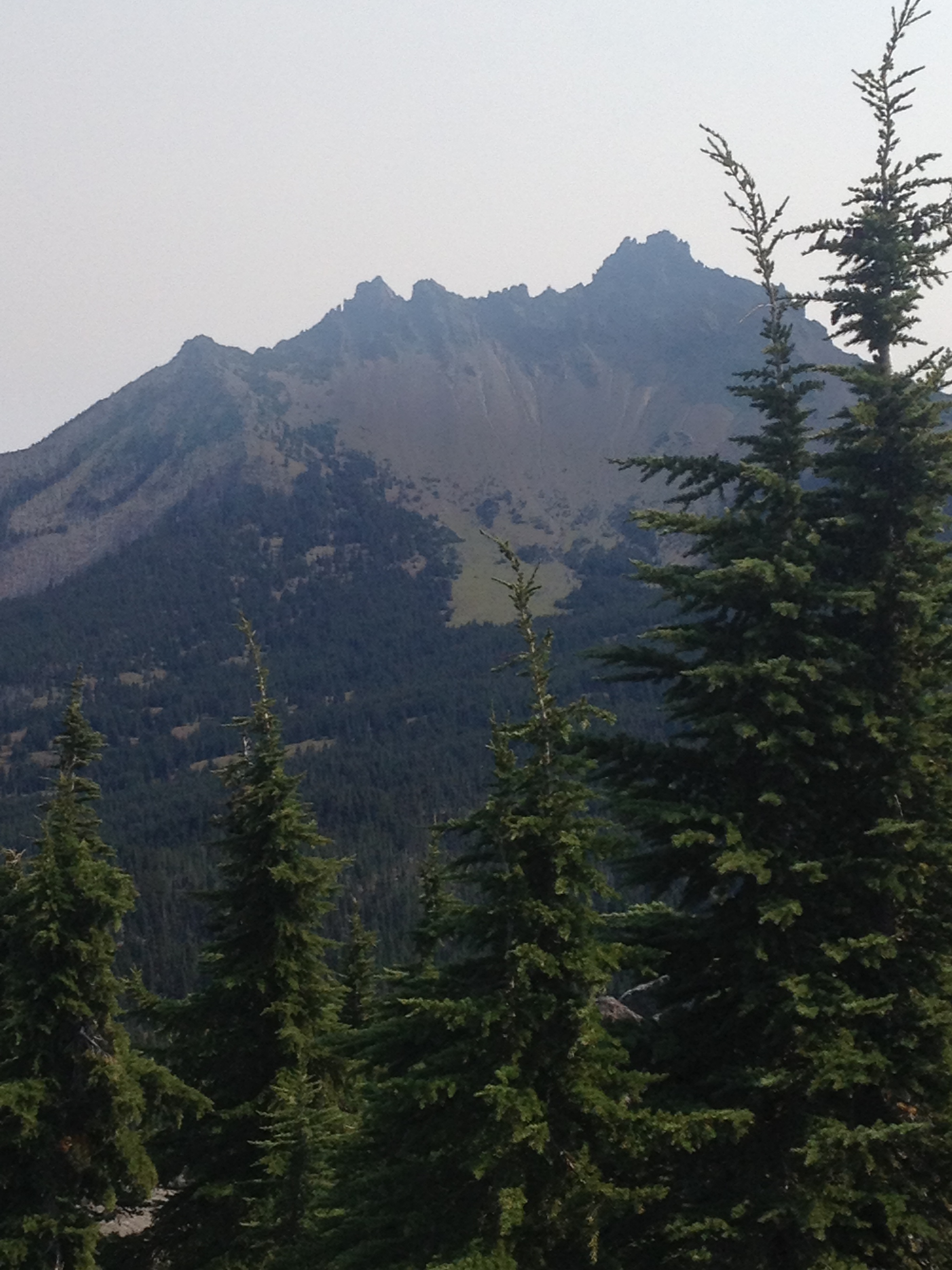
THREE-FINGERED JACK

THREE-FINGERED JACK

Outside the wilderness, in deep forest, Douglas firs dominant, with a few Silver Firs,  I was still alone.  But, I now, I appreciated something that I had not yet experienced on this hike.

SILENCE.

I mean QUIET.  NO NOISE.

There wasn’t any wind, no sound from a bird, a squirrel, a car, another person, or a plane overhead.  There was NO SOUND.  My ears rang, it was so quiet.

I know my hearing is gradually worsening.  But the silence was not due to my hearing problems.  There was no sound, and in America today, that is a rarity.  True, one can be in a sound-proofed room or wear sound canceling headphones, but silence in the wilderness is special, for there usually is some noise in the woods.  I’ve experienced total silence in the Grand Canyon, the Boundary Waters, and the Brooks Range.  Usually, the lack of sound has come at night, but on the Maxwell Butte trail, it was in daylight.

I sat there and listened….TO NOTHING…and thought, because without sound one starts to think…..about the Silver Fir near me, the name of which I learned only the prior week on Lowder Mountain.  I thought about the soil beneath me, the beauty of the trees, hundreds of years old, the fact that I was here, had trod these woods, and nobody was near me.  I reveled in my good fortune: SILENCE, NO NOISE.

I didn’t think of the dropped cup in the coffee shop earlier that week, where the acoustics made the noise hurt.  Or how somebody moved a cart by me as if they wanted to make as much noise as possible, as often seems the case today.

I enjoy music, but there are times I don’t want to hear it.  I don’t want to hear ANYTHING, not a beep with more information that often clutters my life.  To be outdoors in silence, away from people, is special beyond words. I believe, albeit without proof, that people need this sort of silence, yet we have countered with a barrage of sound, believing constant information is what everybody needs.  It isn’t. Multi-tasking is overload.  Many of our schedules are overloaded.  I believe there is harm from the constant beeping of messages, many unimportant, programmed voices in a car, sports announcers that feel they have to keep talking, or 24 hour a day television, where “dead air” is something to  be avoided and filled with comments, whether valuable or garbage.  Why can’t we shut up for a few minutes?

A man was once separated from a tour  group in Mammoth Cave, Kentucky.  He was found 36 hours later, alive and relieved.  In the cave, there is not one lumen of light.  If the cave is dry, there is no noise at all.  The man said what bothered him the most was the silence.  He cracked rocks together to make noise.  Darkness was a problem, but silence was difficult.   I don’t know if I would feel the same way, but I do label wilderness, total silence, and totally dark skies the “outdoor triad.”  We live less fulfilling lives, I believe, because many people never experience one of these three, let alone all of them together.

Mammoth Cave, Kentucky

Mammoth Cave, Kentucky

Light pollution has been a problem for years, affecting nature and man in nature, too.  We have lost our night sky heritage; the National Parks are trying to deal with light pollution.  Sound pollution is more insidious.  Europe doesn’t have places like the Olympic Peninsula, where the One Square Inch Project is occurring.  Excessive sound damages our hearing.  This is a fact.  It hurts other animals.  That is a fact, too.  It isn’t good for us, and the damage it does to our thinking, the believed necessity to process more information, which I don’t think healthy, is poorly recognized and the consequences not completely understood.

Eventually, a high flying jet broke the spell that I was in.  Jet engines at any altitude can be heard on the ground.

I will eventually live in a silent world, should I remove the hearing aids I will some day need to wear.  What I want now is to periodically spend time in places where there is silence, where no sound is transmitted to my cochleae.

I don’t know why at that particular moment I decided to sit on the log.  Perhaps silence ironically called me.


View from the log.  SILENT

View from the log. SILENT

http://www.utne.com/mind-and-body/search-for-silence-quiet-art.aspx?PageId=7#ArticleContent

CHALLENGER MOMENT

September 14, 2014

“The goal of the (backcountry responsibility) code…would be to encourage simple things like speaking up when someone is doing something unsafe….”  Outside magazine, article dealing with avalanche safety.

“I don’t like this!” I called, and stopped hiking.

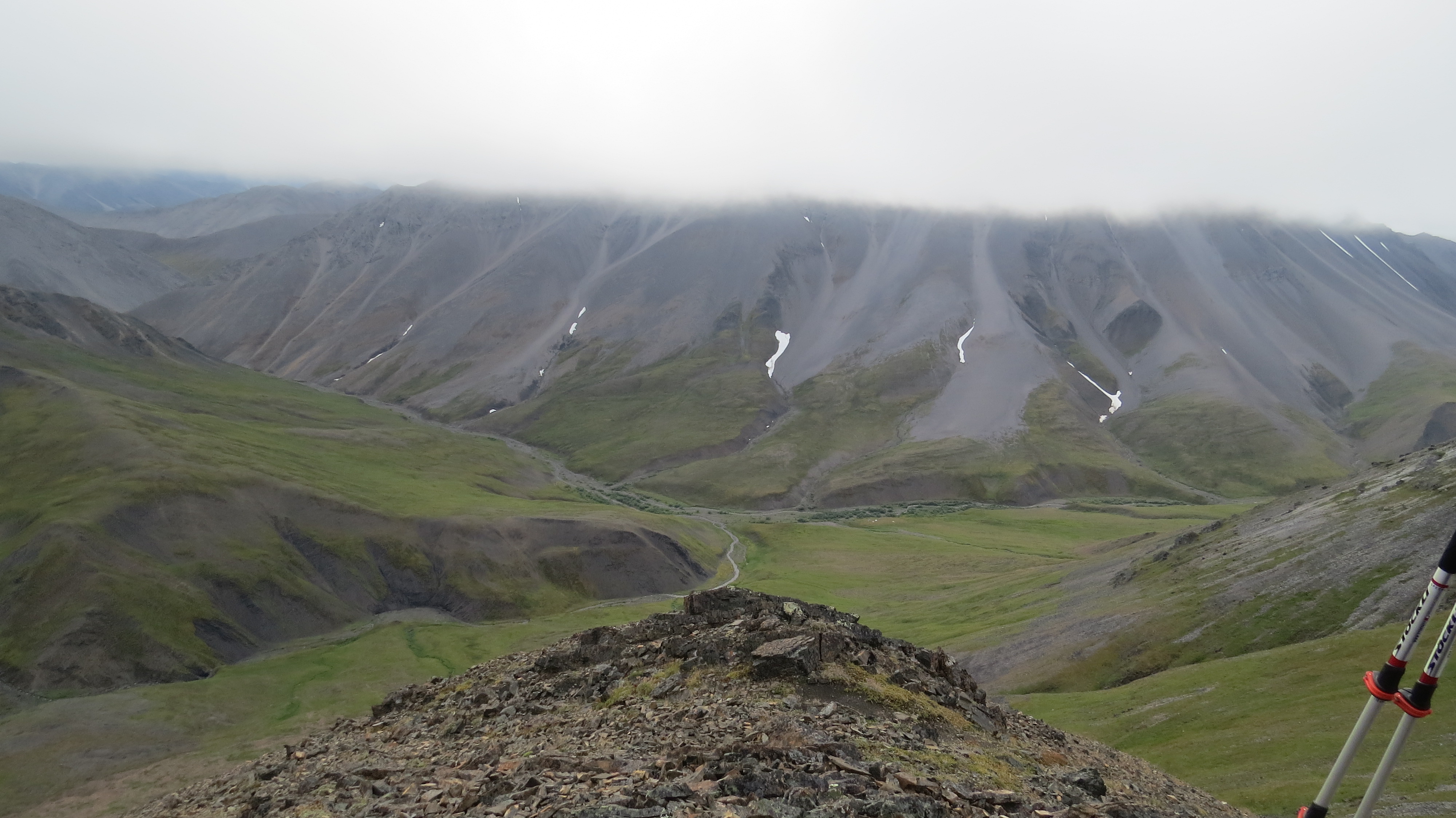
The day hike we took on the third day of the Wulik Peaks backpack trip was going to be easy.  The whole trip had been.  While hiking in Alaska is seldom synonymous with the word “easy,” the abundance of caribou trails, low water in creeks, and hard ground made 2.5 mph possible, triple what I had been used to in my five previous trips to the Brooks Range.  My feet had stayed dry, and in my prior 50 days of backpacking in the Brooks, never had I ever finished one with dry feet.

We camped early, had lunch, then took a day trip up a long valley, over a pass, into a second valley, climbing to a ridge overlooking two mountains and a beautiful green cirque.  The Sun was out, the air clear, the wind light, and the way to the high ridge overlooking our camp easy.

People reaching summit of unnamed mountain in fog.  This one was safe.

People reaching summit of unnamed mountain in fog. This one was safe.


Cirque at top of second valley.

Cirque at top of second valley.


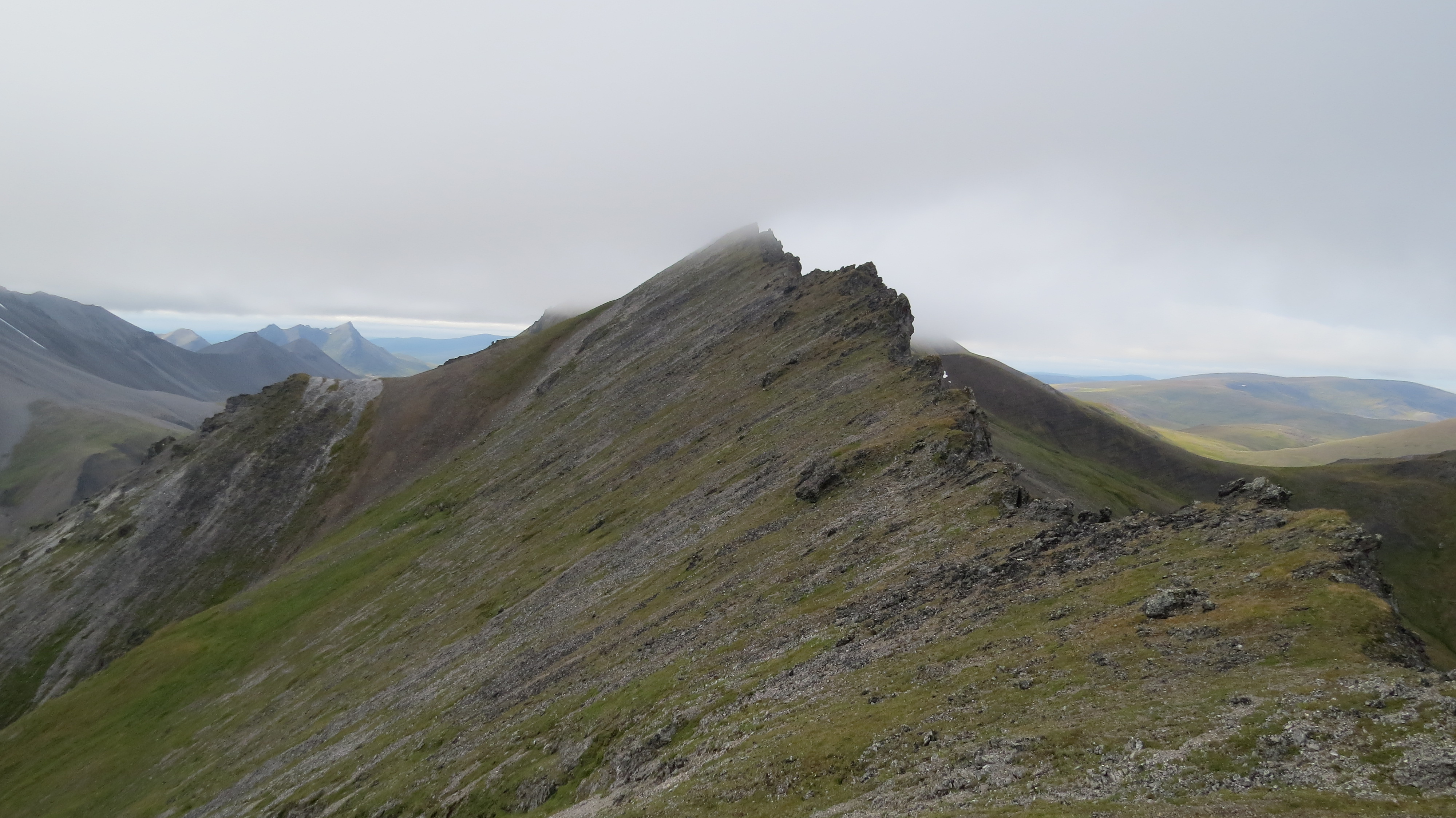
Once on the ridge, however, we realized we had to skirt a large slope of rock scree at about a forty-five degree angle.  There was the hint of a caribou trail there, but then the guide went one way, and I did not want to follow.  I saw no good route, and while falling on the rocks would not likely been considered life-threatening, in remote Alaska, there is no such thing as a “minor injury”.  This wasn’t the South Col, but it was more than I had bargained for on this hike.

I promise my wife before each trip that I will be careful, and I broke my promise.  I got away with it this time, much like the Space Shuttles got away with O-ring problems before Challenger didn’t, on 28 January 1986.

The guide called back, “It is only 100 feet around.”  A hundred feet means a lot of different things, and vertical vs. horizontal is a big difference.  I took it as meaning very short, without considering what modifiers “short” had.


Top of the ridge, after the crossing.

Top of the ridge, after the crossing.


Where the ridge turned from rocky to grassy.

Where the ridge turned from rocky to grassy.

I replied about my not being one of Outside magazine’s world class climbers. Every other person on the trip seemed comfortable, but one offered to go back with me.   Against my promise, and therefore against my better judgment, I went forward.  I reached the bottom of a 25 foot steep climb up to the guide.  I took large steps, stayed close to the mountain, being told by the guide I was going too fast.

I don’t like criticism, and I spend most of my life trying to do well to avoid it.  I ignored him, wanting very quickly to get to the top.  The guide had convinced me to do something I didn’t think safe and then criticized how I did it.  I said nothing about the event then or for the rest of the trip.  We had been required to hike single-file, and I didn’t like having to set my pace with another person’s.  When there are sharp-pointed walking sticks involved, people can easily get hurt, if they aren’t paying attention, and follow too closely.  I erred there, too, because I did not mention that problem at the outset of the trip, and I should have brought it up.  But the guide and another client had far more Alaska experience than I.

After the trip, when I got to a telephone, I told my wife about the incident and apologized.

Up on the ridge, I should have turned around and gone back.  The fact that I made it safely did not mean it was safe.  This concept is poorly appreciated by many, who feel if one “gets away with something,” it is safe.  No, one played the probabilities and succeeded, but the probabilities significantly predicted a bad outcome, and we read about those in newspapers.

In the Alaskan bush, one has already taken significant risks.  There is simply no reason to cross a potentially dangerous ridge that does not need to be crossed.  Going back around would have been safe and taken 30 more minutes.  Big deal.  But we didn’t do it.  I didn’t go back; I got caught up in “Group think,” and I didn’t want to disappoint anybody.  As it was, I felt like I was the worst hiker on the trip, as if it mattered, as if I were going to see any of these people again.  I disappointed myself, breaking a promise, because of a bunch of rocks.

The guide erred, and I erred, too, by not pointing it out to him.  He should have told me to turn around, rather than say, “It’s good that you know your limits” before making me violate them.  He should have decided to either have people look before proceeding or deciding on his own not to do the traverse.  That is what a guide really gets paid for, not for cooking a meal or leading a single-filed group of 6 on caribou trails in northwestern Alaska.

It is one thing to know a person’s limits.  It is quite another to respect and not violate them.

I suspect the rest of those on the trip have either forgotten the incident or thought I was a sissy.  I didn’t make a stink.  I moved on. But I didn’t forget it.  If I am a sissy, so be it.  I’m alive to hear the words.

Many of us don’t like to say anything negative on a subsequent survey, especially if either our name is known or our identity obvious from the response.  Those who survey should remember that their questions may not capture significant complaints.  People must feel safe to report problems, straddling a fine line between wanting to state their case without getting somebody in trouble with their bosses, many of whom do not have the gift of constructive criticism. I did not feel safe commenting.  The guide erred. I erred twice, when I didn’t turn back and when I did not discuss the issue with him, out of earshot of others.  That would have been best.

It is one matter to wrench a knee during a necessary stream crossing; it is inexcusable to risk injury on a day hike to a ridge.  The former is a significant problem, but stream crossings are a necessary part of Alaska hiking. Crossing hazardous ridges on day hikes were not necessary on this trip.  Had I fallen and broken a few ribs, at 65, my life would have been in jeopardy.  Day hikes are not necessary; often, they are treated with less, rather than more, care.

I regret my silence and not turning around.  Fortunately, I am alive to regret it.

BE AFRAID; BE VERY AFRAID

August 26, 2014

“Tanks at the Ukrainian Border.  World War III?” was posted, and I just shook my head.  Today, it was “Hamas style tunnels going under the Mexican-US border.”  There is so much fear out there, I wonder why only 7% of Americans have served in the military.  It sounds like we all ought to be conscripted, for terrorists appear to be everywhere.

We have become a nation of fear, afraid of the boogeyman, who will bring nuclear weapons across the southern border, infect the country with Ebola, blow up our nuclear plants, abduct thousands of children a year, drive millions of Americans out of work, raise a black flag over the White House, take over our land, allow Russia to run unchecked, ISIS to control the whole Middle East, Iran to have nuclear weapons, which they will use on Israel, and Texas targeted by North Korea (which it actually was, although the missile blew up shortly after launch and didn’t have the range).  Every time Mr. Obama speaks, people buy guns to add to the 310 million in the country, yet if any gun has been taken away illegally by the Feds, I have yet to see credible evidence.  How many guns do we need in this country?  A half billion?  A billion?  Ten billion?  A trillion?  Is there a top number?

The President has created fewer national monuments than his predecessors, yet the Organ Mountain Monument was a “federal land grab.”  I AM the federal government.  ALL OF US are.  I LIKED the monument.  I DON’T LIKE people’s grazing cattle on federal land for free, then calling for people to fighting against “them.”  I AM THEM.  I don’t eat meat, and I pay land use fees.

Make no doubt: inciting fear wins elections.  George W. Bush won in 2004 by campaigning on fear, when most Americans still believed 9/11 was caused by Saddam Hussein. Perhaps most of Americans still do believe it.  Iraq kept Bush in power, until the war became costly, “dead enders” were very much alive, and more Americans came home permanently maimed or in body bags.  Congress changed; the response to Hurricane Katrina, which was scary, was a contributing cause.  Who but the federal government would have rebuilt New Orleans, or Joplin?  We saw what happened without a decent FEMA in 2005 and with a decent FEMA in 2012.

I have fears, but nothing on the above list.  Almost anything is possible, but I can think of a many things that would easily wreak havoc in this country that nobody has mentioned; I won’t mention them here, except for rolling back safety nets.  Get rid of Medicare, Social Security, food and water inspections, and we will be the newest member of the Third World.  I find that scary.  We know enough about Ebola and other infectious diseases that we bring our living soldiers in the infection war home alive to be treated.  I can understand one’s wanting to have the body of a loved one returned home; to decry bringing a living infected body home for treatment is a contradiction.  The probability of a child’s dying from a motor vehicle accident is over 10 times that of their being abducted by a stranger, yet I see no ads for strong enforcement of child safety restraints in cars.  Scary news sells.  In 1979, during the Iran crisis, the media showed screaming protesters outside the embassy.  A block away, all was quiet.  

Muslims in America are not about to take over the country, except maybe in mathematics, where Dr. Mirzakhani, a 37 year-old Iranian citizen, full professor at Stanford (at 31), won the prestigious Fields Medal in mathematics.  Our high schools are full of students who can’t do basic division, don’t know their multiplication tables or how to write an English sentence, let alone cursively,  have no idea where Canada is, let alone Iran.  I fear ignorance.  We don’t teach critical thinking, so people are easily swayed by rumors deliberately fomented by good-looking people, nice sounding “news” outlets.  Ten children families scare me. We are straining our resources and our space.  I hear no, and I mean no, comments about that.

Russia will do what it wishes, and there is not much we can do about it.  The world has changed; American troops are not the answer to problems that can be created by a few thousand people using complex armaments supplied them by developed nations (like us).  As I write this, I am flying in an aircraft over a foreign country, but I’m not worried about being blown out of the sky.  The very notion of war continues to change. 

ISIS is controlling land, but radical Islam, Christianity, and Judaism, scare me more, especially Christianity’s influence here.  If people want to pray, fine. It is scary—and insulting— when a Congressman sends a Bible, a book with hundreds of contradictions and false interpretations, to other Congressmen. The constant use of “God” and “prayer” in speeches scares me, rather than offering ideas open to modification.  God sells here; ideas that take time to articulate are ignored. “Just give me the bottom line” is one of the scariest phrases I hear.  Major problems, like immigration, public education and the national debt, can’t be summarized in 30 seconds.

I do not know whether Iran will develop nuclear weapons.  Pakistan has them, and yes, that is scary.  So is the environmental catastrophe about to engulf China, in the name of our “requiring” a completely unsustainable 10% annual growth.  That statement is on a par with “the stock market always goes up,” based on 60 years of data. What scares me is that we in the US will do nothing about climate change, despite 650,000 years of data, until nature gives us—and forgive the term:  a “come to Jesus” moment.  

I am not scared of illegal immigration.  I am scared of drug runners, who will bypass any fence we can build, but I worry less about being shot by them than being in the wrong place at the wrong time in my city.  I am more scared that we are trying to take in much of the world.  I am not scared that Spanish will become a second language; I am more scared that Americans are not working to become fluent in another language—any language.  I am not worried that the dollar will no longer be the reserve currency in the world, but German’s becoming the lingua franca in central Europe ought to give us pause, along with the oft-cloudy nation’s out-producing us in solar power.  The world likes a lot about America, when they stop laughing at us long enough to look.

It’s time to cool it on “disaster is right around the corner,” or “We’re Number One.”  We aren’t.  If one believes all is Obama’s fault, then run for office.  If the opponents win, I give them 90 days to fix everything, since they believe the world is simple. More helpful would be quietly working to improve justice in the world, addressing population control, and dealing with climate change.  There are a few others I would throw in, but the current attention span is limited until the next tweet or upcoming disaster posted on Facebook.  Messenger is probably beeping right now, so I  better go.

WHEN AGE DOES AND DOESN’T MATTER

August 3, 2014

“Hardesty Hardcore,” intrigued me: an annual loop race through 3 trails in the Cascade foothills, open to anybody, with a 4 hour time cut off.  The route is 14 miles and begins with a 3000 foot climb in the first 4.5 miles.  I had hiked it once in the opposite direction, without hurrying,  in 5 hours, with a lunch stop. I thought I could do it in four, so I went out to try.  I am in good hiking shape, having hiked nearly 40 times in Oregon the past 4 months and frequently climbing well over a thousand feet, occasionally over two thousand.

I started by walking fast—too fast— becoming slightly short of breath and uncomfortable.  I slowed, and finished the initial climb in 1 hour 36 minutes.  That is pretty good for a guy my age, but at that pace I wasn’t going to finish in 4 hours, either.

I came down Eula Ridge, much steeper, so I had to watch my foot placement.  I finished that stretch two 2 hours and 45 minutes in, averaging 3.1 miles per hour, well below 3.5 mph I needed to average to make the cutoff.  The last 5.5 miles was on a trail between the two, but not at all flat; it climbed another 1000 feet, difficult on a humid day, when I had finished my water and food.  I got in just under 4 1/2 hours.

With cooler weather, an earlier start, a lighter pack, and running shoes for the last part, I might be able to make the cut.  But I don’t want to race.  I’m not sure I want to subject myself again to that stress, despite being in excellent hiking shape.  I am good but not great.  The fact that I can walk uphill on a 30% grade at 2.5 mph is nice, but I need to average 4 mph for this race, and I am not likely to do it:  I’m too old, but more importantly, it doesn’t matter.

When I was in my 30s, I got in a canoe, bound for lakes and portages I had never seen.  I camped in some of the most beautiful country imaginable, woke early, paddled hard the whole day, camped late.  I could carry pack and canoe together, and I never got sore.  Seeing the country mattered.

In my 40s, I did the same, the only difference being that I took anti-inflammatories before and after each day’s paddle.   For the first time, however, I had a neck problem, a pinched nerve, but that subsided, and I was able to continue.

In my 50s, I stopped carrying a canoe and a pack simultaneously.  I had nothing to prove and a lot I could hurt.  I started base camping, which I liked, but I still enjoyed seeing new territory.  I didn’t go as far as formerly, but I enjoyed practically every mile.


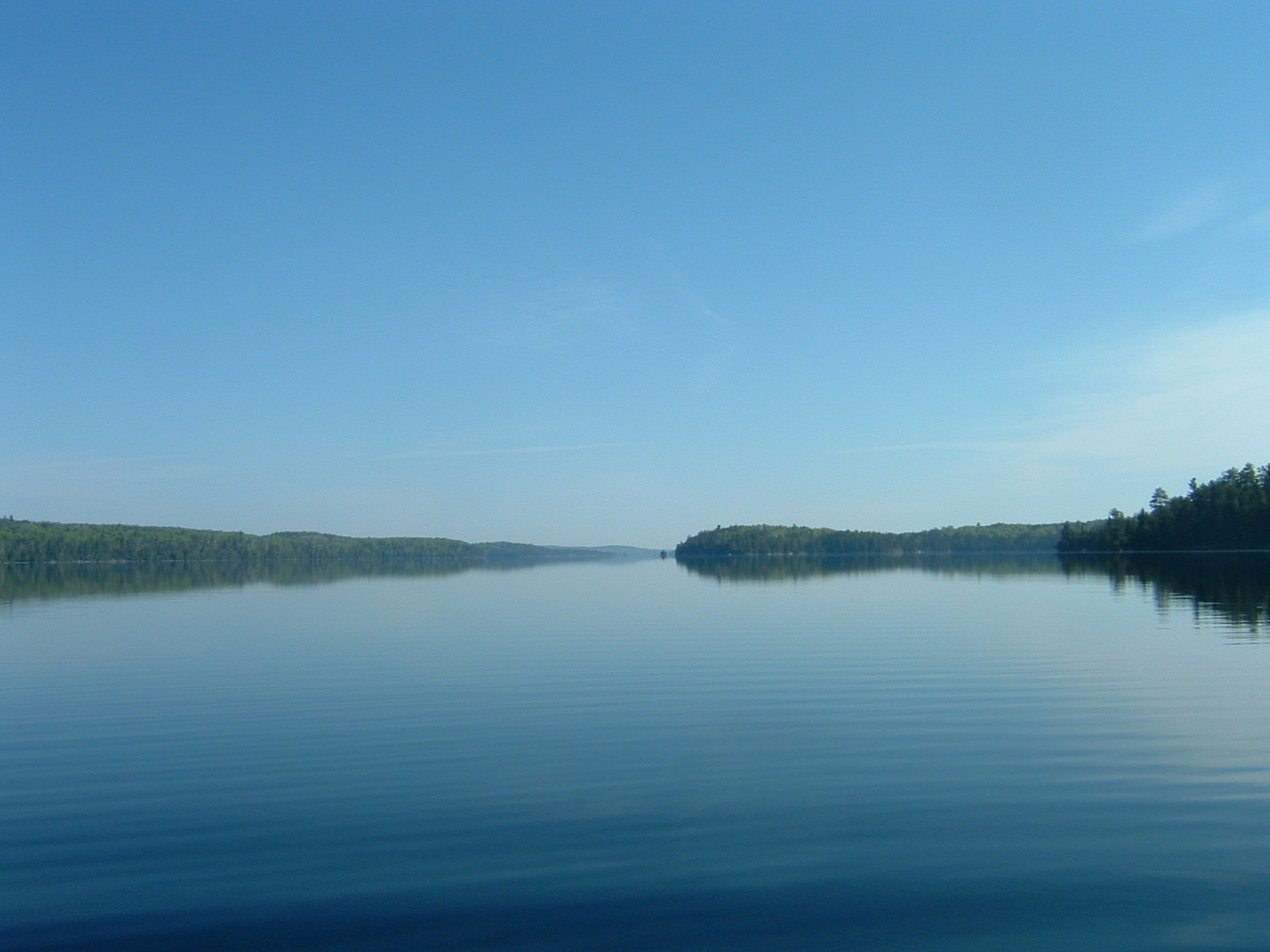
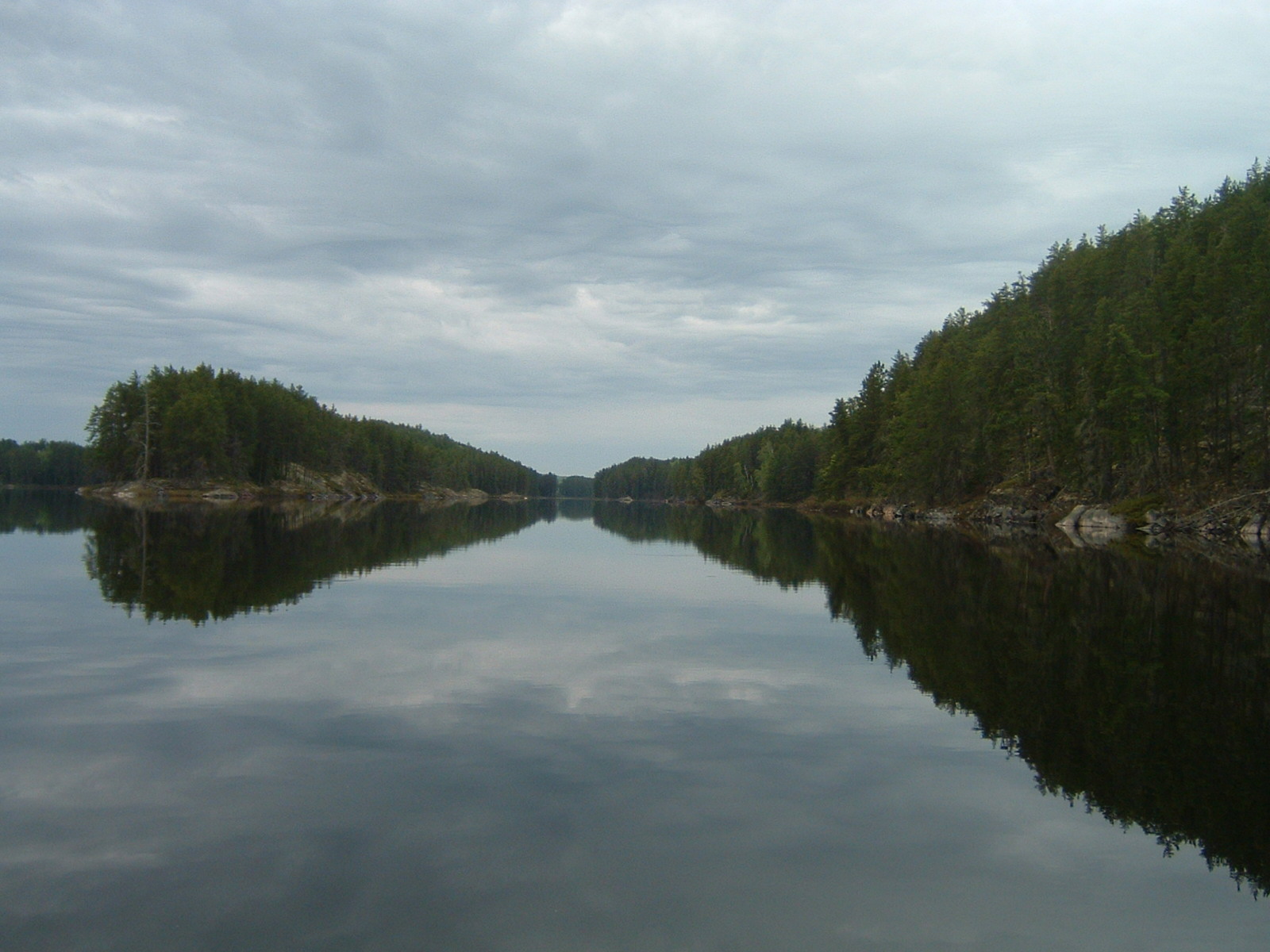
Agnes Lake, on my last trip into Kawnipi Lake, Quetico Provincial Park, 2005, age 56.

Agnes Lake, on my last trip into Kawnipi Lake, Quetico Provincial Park, 2005, age 56.  I have not been back.  I do not expect to see Kawnipi again.  It mattered that I saw it that year.  Agnes?  Seeing this picture makes me wonder….


Kawnipi Lake, 2005.  The most beautiful lake in the Quetico to many people. I have been there six times.  That matters.

Kawnipi Lake, 2005. The most beautiful lake in the Quetico to many people. I have been there six times. That matters.


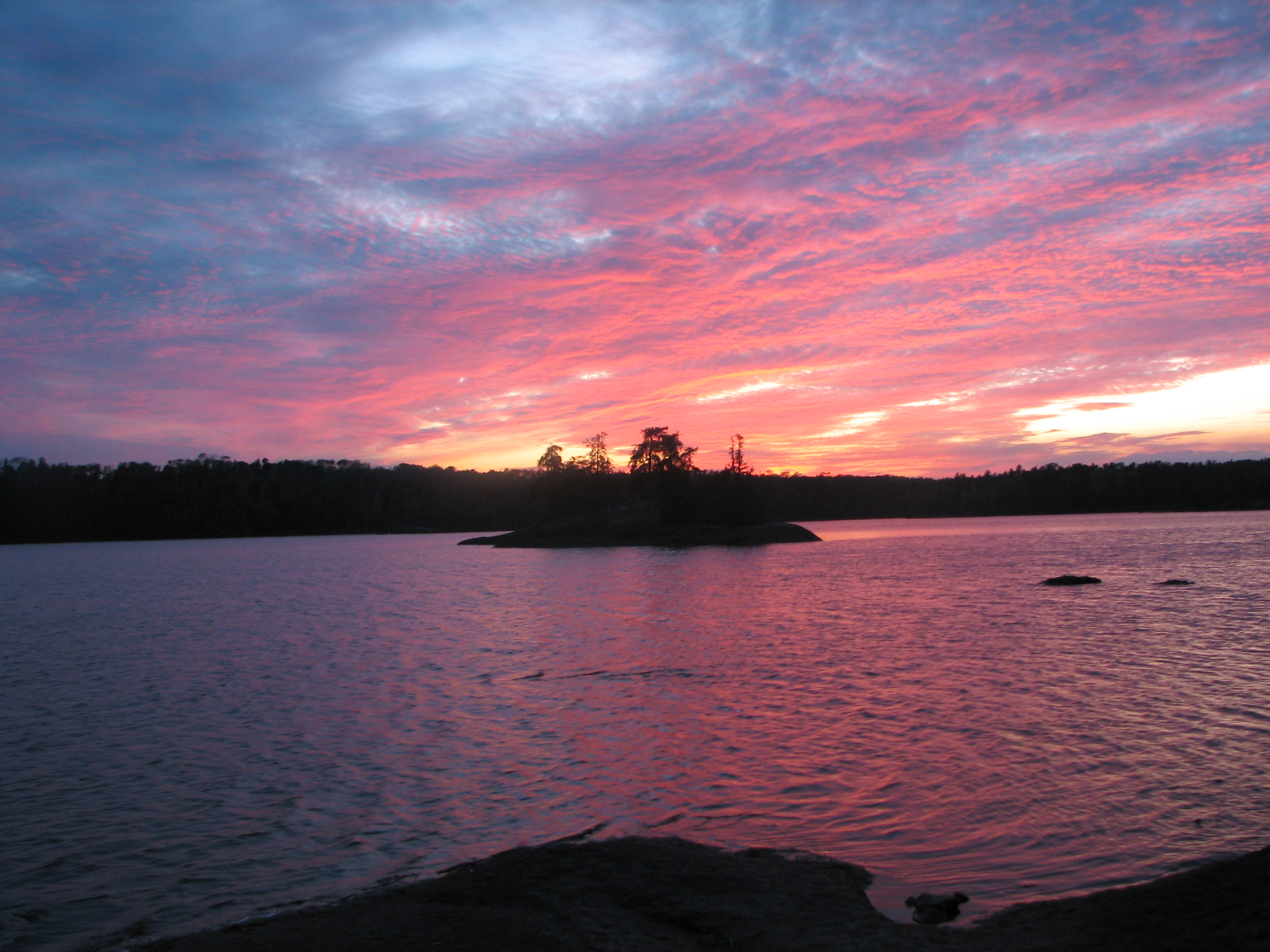
Lake Insula sunset.  Having spent more than 30 nights on this beautiful lake matters.

Lake Insula sunset. Having spent more than 30 nights on this beautiful lake matters.

In my 60s, things have changed.  Many tell me that age is a number.  Those people who do are always younger than I, where one believes that the world will continue unchanged.  I still can solo trip, but I do it and base camp.

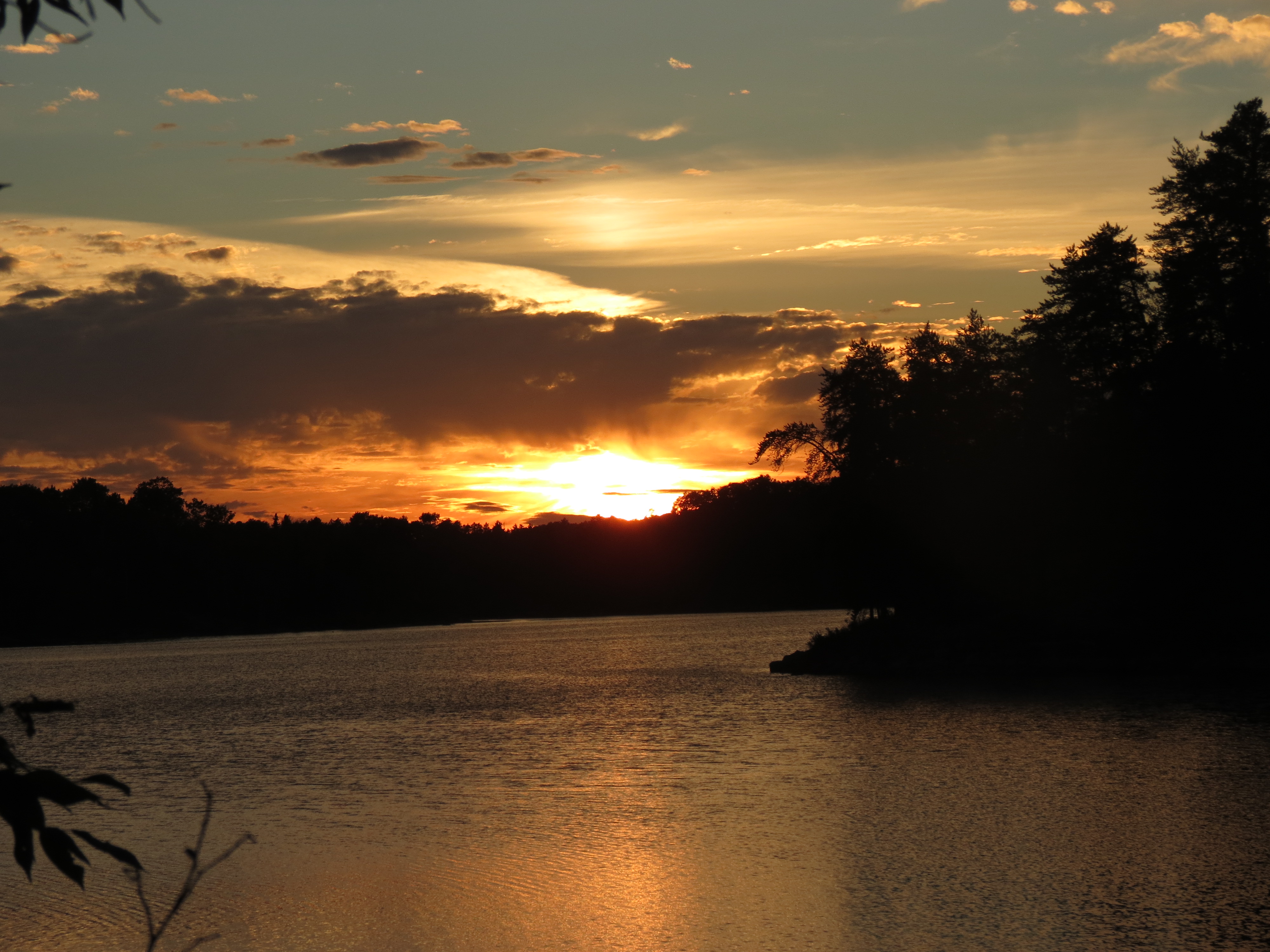
Sunset on my bay campsite, September 2013, solo.  Age 64.

Sunset on my bay campsite, September 2013, solo. Age 64.


I can make the miles if I have to, but I don’t feel the pressure to do so, either.  It doesn’t matter.  The year I turned 60, my wife and I aborted the first day’s paddle into Lake Insula, one we could normally do in 7 hours, where 40 year-olds we had spoken to said they needed three days.  We aborted the paddle in because of heavy rain.  We stopped, pitched the tent and stayed comfortable. Making Insula that day in 7 hours didn’t matter.  We made it easily the next day.  It was a great trip.

Twenty years earlier, I would have bulled on through.  Indeed, over our 25th wedding anniversary, we paddled 110 miles in 11 days with a day of rest.  One day, I portaged a canoe 15 times, a record for me.  Those trips mattered.

What will happen the next decade, if I make it that far?  I don’t know.  Perhaps the distance may stay the same, if my arms and legs are still working well, but I suspect it will decrease, and it won’t matter.  I still hope to be in the woods, away from people, enjoying the quiet, the Pileated Woodpecker’s crossing the lake by the campsite, loons, sunrise, sunset, and full Moon.

What about backpacking?  There, the clock ticks louder.  As I write this, I will soon leave for my sixth multi-day trip to the Brooks Range.  On my fifth, I carried 75 pounds with difficulty, but I did it.  I wasn’t sure I would do a sixth.  But then you see there was this trip offered to the Wulik Mountains in the far west Brooks, country I hadn’t seen, wonderful, wild country, and maybe I had one more trip in me after all.  Or two more, since I want to see ANWR’s Sheenjek’s River drainage.  Each year, backpacking requires more training.  Six weeks prior, I start carrying 25 pounds around the neighborhood, then 35, the 50, and finally 60.  This year, after hiking a lot more in spring, I started at 50 pounds, and I’ve carried that weight the past month.  I can comfortably walk 3 miles with it, essential if I want to complete the trip and enjoy it.  Ten years ago, I didn’t need to train.  Now I do.

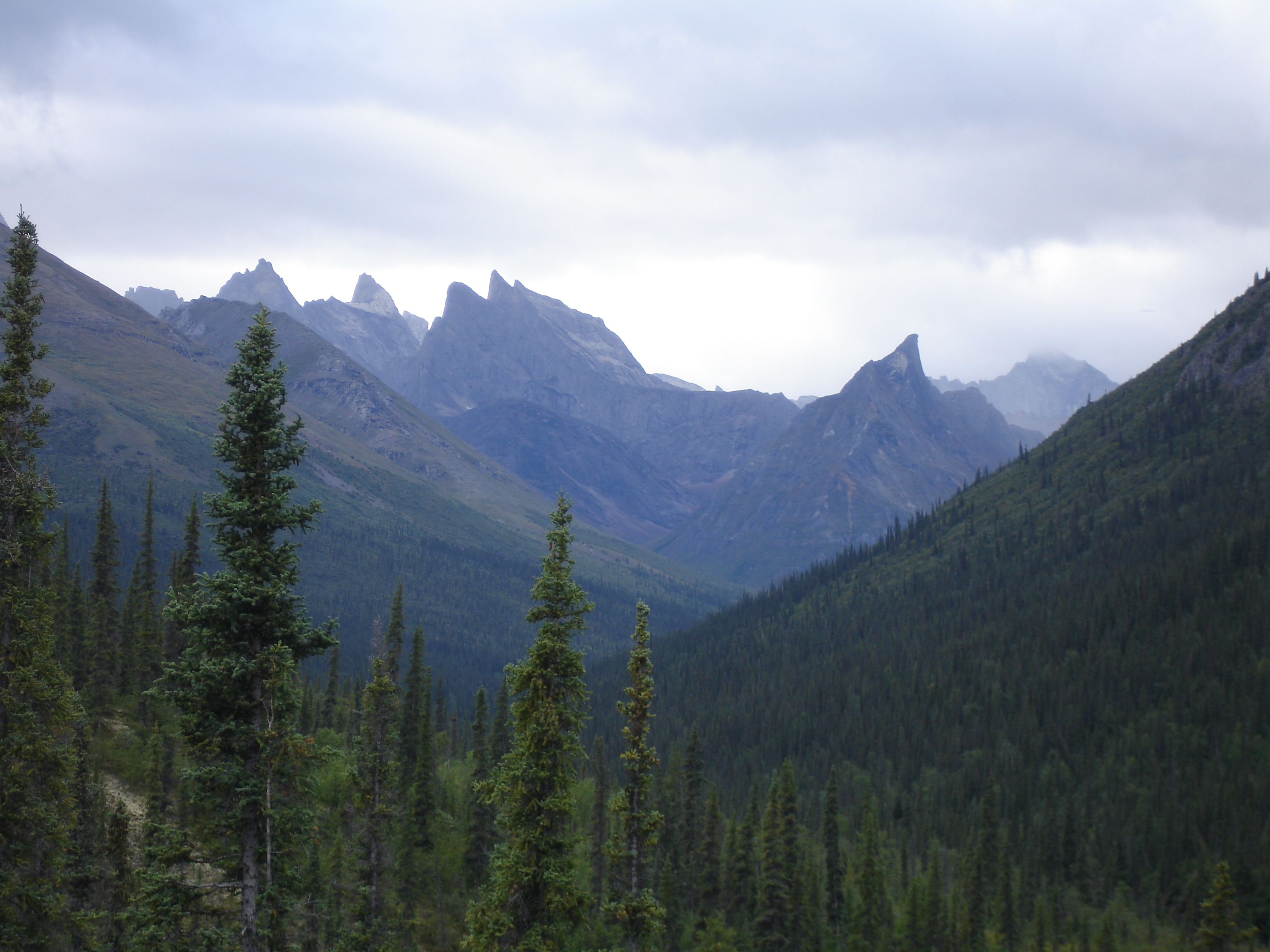
Arrigetch Peaks on my way out of the area, August 2007, age 58

Arrigetch Peaks on my way out of the area, August 2007, age 58.  It mattered that I see these peaks, which had fascinated me for decades.

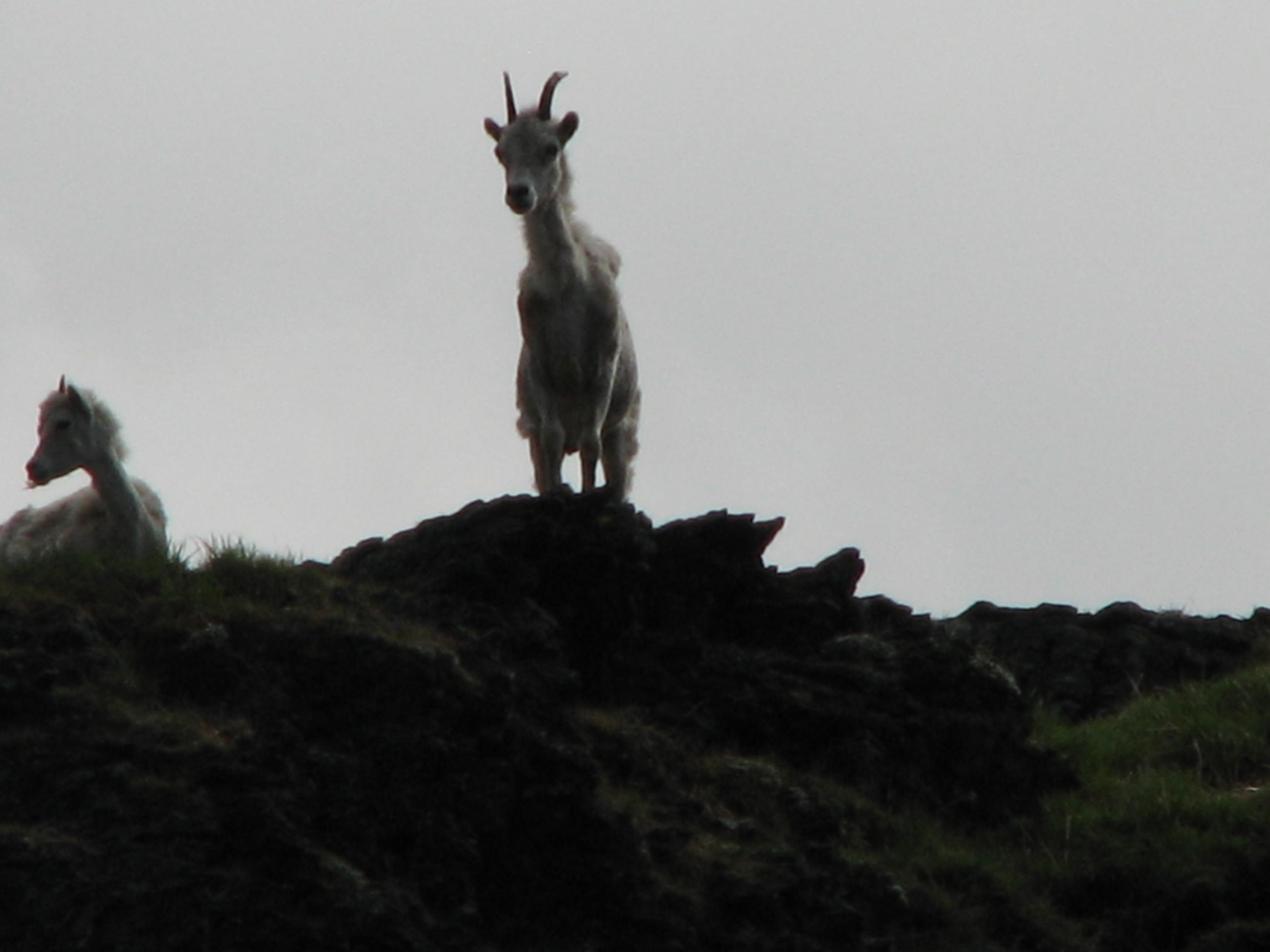
Dall Sheep, Aichilik River, ANWR, June, 2009.  Age 60. This afternoon mattered.

Dall Sheep, Aichilik River, ANWR, June, 2009. Age 60. This afternoon mattered.

Cubs, Noatak River campsite, August 2010, age 61. This day mattered

Cubs, Noatak River campsite, August 2010, age 61. This day mattered


Fording the Noatak, August 8, 2010. Age 61.  My guide said that day, "I hope I can do this when I am 61."  He was 51.

Fording the Noatak, August 8, 2010. Age 61. My guide said that day, “I hope I can do this when I am 61.” He was 51.

Gates of the Arctic, 2012, carrying 75 pounds.  This trip mattered. Age 63

Gates of the Arctic, 2012, carrying 75 pounds. This trip mattered. Age 63

My body isn’t betraying me, but changing, and my brain with its desires is fortunately changing, too.  I rely more upon experience than brute strength.  I read the weather well, pack dry in a pouring rain without leaving the tent, then striking the tent and quickly finish, putting the pack cover on a dry pack.  Alaska just is, with a lot of rain, mosquitoes and tussocks.  Fortunately, I know how to hike there.  That itself is probably worth 25 years of age.

My guess is that I will slow down in the next decade but will still enjoy what I do.  I look back fondly on the times when I was really good, especially the difficult trips, for that is what one remembers.  Age does matter.  I am grateful for what I can do, hope I will like it just as much during the coming changes, as I add more to my wonderful wilderness portfolio.

You see, I feel blessed.  Not a lot of guys my age can hike the Hardesty Loop.  I did it for time.  That’s pretty cool.  The fact I tried did matter.

It only hurt a little that night.

TIME TO TEACH ABOUT MONEY

July 28, 2014

I saw a Dave Ramsey quotation: “Identify your motivation and your passion.  Find what you’re good at and become world-class in that area.”

The term “world class” is overused, and I think harmful, making average people like me feel they are failures.  Indeed, most of us are average.  World class should apply to Olympians, bicycle riders in Le Tour de France, Nobel laureates, best seller writers, and those young people who competed at the IAAF Track Meet I saw today, a few young people who truly are at the top of what they do.

Mr. Ramsey would have done well to have removed the words and replaced them with something like “the best you can possibly be”.  That is achievable.  World class is not.  In standardized math tests when I was young, I was at the 99th percentile.  That is fine, except that if there were 10 million students, 100,000 of them were as good or better than I, making me hardly world class.

Where Mr. Ramsey does help is with people who hate their jobs and are poor.  Suze Orman does the same thing.  Both are good; both are rich; both are famous and charismatic.  It would be nice to be charismatic, but one has to have the wiring.  It isn’t in me.  What I am wired for, however, is math, and I am very opinionated about what we ought to be doing about it.

Key issues today are student loans, houses underwater, insufficient retirement savings, and too many having to live on Social Security, which it was never intended to do.  A frightening number of people go bankrupt each year, because we have a subpar health insurance and medical care system in this country.  Very few hospitals are “world class,” and saying “Centers of Excellence” does not bring it.  Having been on the medical quality front lines, I think I have a notion of what world class might mean, and we are a long, long way from there at the moment.  But we can address the financial issues that people face.

We ought to be starting early, in the schools.  That won’t cure the problem, but in a generation or two, it would help a lot.  Dealing with finances means dealing with ….uh oh…..numbers and math.  Yes.  If one cannot understand numbers and math, basic math, there is no way one can understand finance.  This means that students must be held back from moving to the next grade until they understand the math necessary for the current grade level.  If that means that we slow down education to a crawl, and people howl, then let it be so.  Let’s do it right, learning one basic lesson of math right away:  if you grade children and adults on certain measures, there will be attempts to game the system and make the person or school look good.  This happened in Atlanta.  If 80% of the students coming to a local community college, which happened in Tucson, have to take remedial math, what exactly were we—and they and their parents— doing for the prior 12 years?

It is time to be honest with math (and other subjects, too).  If students can’t pass basic arithmetic, let’s figure out how to get them to learn enough to pass, not game the system, from the teacher’s side and not play “how clever can I be?” from the tester’s side.  Certainly, we ought to have enough smart people in academics who know what should be mastered at each grade level.  Students are going to need algebra and geometry, too, but basic arithmetic is absolutely fundamental to understanding algebra, and math builds on itself.  Fail at the bottom, and there is no way anybody is going to suddenly jump to the top.  Other subjects build, too, but few as strongly as does math.

What good does it talk about an emergency fund of $1000, if the concept of a thousand is not understood?  Indeed, one of the big problems we face in this country is that few in Congress can comprehend what a billion or trillion is.  Comprehension of these numbers is not easy, but it is both essential to know and may be learned.

Students need to learn about interest, where the formulas come from, then simple rules for remembering them.  Trust me, one will use it.  They need to learn the difference between “the rate of increase” is slowing and “it is decreasing”.  These two are not understood by the majority of students I have taught.  They need to know the difference between an average and a median. They MUST be able to work with multiplication tables automatically.  This cannot be given over to a calculator or be googled.  One has to memorize it.  Learn something well, and it is no longer memorized.  It becomes innate.

I don’t have the answers to learning math.  I do know, however, one place where math would become interesting to students and worthwhile: dealing with finance.  Everybody wants money.  Everybody wants things.  Dealing with money requires dealing with numbers.  Frankly, if we could teach children enough math so that they could deal with basic finance, we’d be way ahead of the concepts we think we should be teaching them.  I could live without teaching many kids algebra if they knew enough division that they knew that 24% interest rates on credit cards led to doubling of debt in 3 years.   If they could multiply by 52, they could figure out how much money they spend annually by eating out once a week.  If they could multiply by $2000, they would know what dollars per hour wages equalled in a year.

This isn’t and should not be America’s goal for teaching math in the 21st century.  We have to go far beyond what I have stated.  But if the millions of kids who can’t make change, can’t comparison shop, don’t know what a mortgage is, or understand the basics of investment can learn to deal with these matters, even on a rudimentary level, we would be a lot better off than we are today.  I would rather see an improvement for millions than wait for perfection that will never come.  No, Mr. Ramsey, these millions aren’t anywhere near world class.  They just need to pass the class of basic material THAT EVERY CITIZEN SHOULD KNOW.

Want kids to understand math?  They need to work with, and understand, numbers.  To me, the best place to start is with finance.

SADLY, FACEBOOK IS NOT FACE-TO-FACE

July 21, 2014

I read a post in Facebook saying that doctors hid cures in order to make money.  I posted back:  “How dare you!!  I practiced for 20 years and wanted nothing more than to see a cure for the stream of patients with headaches, backaches, limb pain, dizziness, Workmen’s Compensation cases and depression (back when depression, a treatable disease, was not a mainstream diagnosis, and people equated the disorder with being crazy).  I actively de-marketed my practice.  Yes, I wanted to see fewer patients.”

Then, I deleted the post.

The two best things I’ve done on Facebook are:

1.  Been silent.

2.  Deleted a post shortly after I wrote it.

Over time, I have seen people disappear from Facebook for a month or so, a so-called “digital vacation”.  The idea is tempting, and with a trip to Alaska coming in the near future, I may just add a couple of weeks to my disappearance.

Facebook has been helpful in that it has allowed me to know about the few family members I have left.  I know about my nieces, whom I would otherwise not, and I connected with a camp where I guided canoe trips in 1967.  The late Steve Pawlowski, whom I unfortunately never met in person, was part of the Arizona Water Sentinels; his posts about the drought in the West and climate in general were excellent.

Unfortunately, there is a great deal of other stuff I have seen on Facebook which doesn’t sit well with me.  I’m sure some of my posts don’t sit well with others.  Research has shown that looking for certain posts can be beneficial, but “Facebook surfing” is correlated with depression. That is my impression.

Each of us approaches Facebook differently.  The attitudes of others aren’t necessarily wrong; however, they are not likely to be consonant with mine. I don’t, for example, agree with all the “fluff” sayings I see, like if one just tries hard enough, one can succeed at anything.  Indeed, I find that cruel, for it implies that if one fails, he just didn’t try hard enough.  It ignores the possibility that maybe one was not suited for the task, did not have the physical or mental ability, or could not devote his entire life to the task.  For me, wisdom is knowing when to quit, to give up, to stop.  Some disagree.  Having failed to change medicine after five years didn’t make me want to continue a sixth.  I found that a wise decision.

The lack of face-to-face interaction, ironic for the name “Facebook,” allows people to easily insult others, the young to insult the old, which I find rude, and to post comments I find reprehensible, racist, in bad taste, ignorant, and poorly written.  People don’t ask themselves, “Do I really want to say that in public?”   Face-to-face, many of these posts would not be said.  De facto anonymity is on Facebook; a third of my “friends” I have never and will never see; most of the others I will not see in the next year.

The worst posts, the most depressing, have been clips from right-wing news sources.  It took me too long to figure out that I could selectively block these sites and still see other posts from the rational side of the poster.  Facebook for many is an outlet for spiteful comments directed towards people who view the world the way I do:  I see posts on politics that may or may not be true, comments written by Americans who are either ignorant of the English language or don’t proofread what they write.  If something bad happens, it is my fault, or “the government’s fault” (the Democratic Party part, that is), showing lack of awareness that we are the government; any of us can run for office to fix things.  People I have never heard of and never will meet say astoundingly horrible things.  An American Mormon posted, “we ought to nuke all of Mexico.”  Wow, that is really godly behavior.  On a language web site, an Algerian saw my profile and told me it was a shame that as a non-Muslim, I would be going to hell.  Both would have done well to be silent.  I was.

Two young women, each a third my age, who insulted me got no rejoinder, only permanent silence.  Defriending is too strong and noticeable.  Silence is…..silence.

Many of these posts and comments deserve to be called out on their nastiness, spite, vitriol, and outright falsehood or looseness with the truth. But what’s the point?  Those who post these “news” items will not be influenced by anything I write.  They see their posts as truth, espousing simple solutions to complex problems, getting many “likes” from similar-minded people.

I am at a disadvantage in answering, because I process slowly, writing better when I have time to think about what I say, before I allow others to read it.  Many would do well to follow my example.  There is no sense becoming embroiled in a climate change debate with one who believes that everything is fine, that it is a plot by environmentalists, uses poor or no statistical evidence, and makes no predictions as to what will happen in the near future.  I won’t influence them.  I am capable of being influenced, but not by unscientific, hateful comments.

The best comments are short; long missives aren’t going to be read, any more than a bumper sticker on a car that tries to say too much will be.

Shortness works on Facebook.  Humor works.  Well written comments work.  Silence works really well.  I’ll make my posts here, because I have as much time as I need to try to say what I want.  Even then, I won’t always get it right.


NOT WHAT WE WANT TO HEAR

July 14, 2014

Years ago, soon after I began practicing, a colleague brought his wife to see me.  After a workup, I diagnosed her with probable MS.  About a month later, the colleague somewhat gleefully called, telling me he had his wife seen at University Hospital by an expert, who felt she did not have MS.  I don’t remember my reply.  I probably was quiet, concerned I had erred.

At a medical meeting dinner, years later, this same colleague was seated at the same table as I, and he told someone aloud about his wife’s treatment at UCLA for “MS.”  I stayed quiet; he didn’t show any sign of having made a faux pas. I was wise enough not to remind him. Being right doesn’t require one to say it.  My mistake that first day?  I told both of them what I thought was wrong, not what they wanted to hear.

Ted Cruz said the President was acting outside the law on immigration, when in fact Mr. Obama’s actions are in accordance with a 2008 law, signed by Mr. Bush, requiring deportations from countries other than Canada and Mexico to be processed here.  The Central American refugees came through not only a hole in the border but a hole in a law Mr. Cruz and his colleagues are in charge of making.  Mr. Boehner won’t move any law on immigration through this year.  He has the power to do something great, but he won’t.

DML News tells listeners what they want to hear: “we’re screwed,” bad immigration stories, things wrong in Washington, nuclear material missing, how Obama is destroying the country and wasn’t born here (which has become really tiresome), Benghazi an impeachable offense, and we should take action in Iraq.  The big problem in Iraq didn’t happen this year; it happened when we invaded it.  Remember Colin Powell’s “Pottery Barn” comment?  Remember the horrible year, 2006?  No, that is ancient history, and people don’t like to hear about inconvenient history.

Mr. Obama inherited two wars, an economy in shambles, a banking system almost shut down, an incipient depression, a horrible deficit (the war funding was kept off budget) and a divided Congress.  If one doesn’t want to hear that, I’m telling it anyway, because I tell people what I think, if it is truthful.  Surprise:  Obama hasn’t fixed everything yet.   Surprise:  He has had nearly zero Republican support.  If Ted Cruz or Rick Perry becomes President, by golly, we will have everything fixed and right with America in 100 days, max.

To those who believe that, please comment in detail exactly what needs to be done, and send to me, because I‘m curious.  Please address the following: how we will balance the budget, give every American health insurance, deal with immigration, the EU, Iraq, Iran, Palestine, North Korea, Russia, China, fix infrastructure, schools, and climate. I want details.  Please, tell me how we should deal with California’s water crisis using knowledge of what an acre foot is.  In this blog, I have addressed the budget, Iraq, schools, climate, and California’s water crisis.  It isn’t what a lot of people want to hear.  I may be wrong, but I used facts and offered detailed suggestions.  An acre foot is about 325 K gallons of water, by the way.

People don’t want to hear about climate change, because it bothers them.  People want politicians to tell the truth, until they do, and then vote for the opponent, because the truth is so unappealing.  The world is not simply a matter of US troops fixing what is wrong.  Superheroes don’t exist.  We cut FEMA to save money but then complained when government wasn’t immediately present after Katrina.  Remember Katrina?   Remember Sandy?  Who was president during each, how was the response and in what year did each occur?  If you are an American and can’t answer at least 7 of those 8 questions, shame.

Tell me how we fix unfairness that gives the Deep South more government money than they send, yet has taken a trillion dollars from New York State in the last 20 years.  Yes.  Look it up.  Incredibly, the South gets money from big government, hates same, and many of its states rank 45th or below in major health care indicators compared to the rest of the country.  What gives?

We live in a complex world, unable to be simplified in 30 seconds.  Immigration is no exception. I think overpopulation is the most significant issue we face, along with consequential environmental degradation and climate change.  In my lifetime, not likely to be more than a decade or two, I will survive. People, like Ted Cruz, in their 40s, are going to reap the wind they have helped sow.

I am a strong believer in public education, not only because people with education get good jobs, they have fewer children.  Complex problems are not addressed with simple answers: it is easy for Mssrs. Flake and Cruz, who don’t have to run the country, tell people what they want to hear.  Like my doctor colleague, they blast guys like me who conclude something else.  You are wrong, they say, and yes, I might be, words not one of them has used.  I have been right on evolution, climate change, the stock market bubble and Iraq, not because I am particularly brilliant, but because my education taught me to think about issues, open my mind, look at all sides, and draw conclusions, which subsequently I may change.  

We need good ideas about immigration; we need skilled workers who are legally here.  The 2008 law needs to be changed, and Mr. Cruz should be leading, not using his charisma and debating ability to tell people what they want to hear.  We must deal with illegal immigration, not win a debate, and there is no perfect solution.  Nobody wants to hear that.  Nobody is even saying it.

Nobody can balance the budget or pay for everything we want without raising taxes.  This is a mathematical truism.  Instead, politicians tell us what we want to hear:  “I will protect America’s elderly and borders, we will have a strong military, and I will do it without raising taxes.”  If we believe that, we are either downright stupid or believe in magical thinking.

I was sorry the woman had MS.  I was sorry for all the families to whom I told a loved one was either brain dead or irreversibly brain injured.  I am sorry for the people whom I told had metastatic cancer to the brain or carcinomatous meningitis.  I told the truth.  Many of my colleagues disliked me, for I said things that people didn’t want to hear.  Many referred patients elsewhere, not to me.

What interested me was that a dozen of these physicians—I counted— brought themselves or their family members to me, even though they sent neurological consults to the other guy.


PULLING UP THE FOOTBALL

July 4, 2014

In the famous Peanuts cartoon, Charlie Brown is running to kick the football, when Lucy pulls it up, and Charlie kicks at air, falling down.  Every time, he thinks the result will be different, and every time, he is wrong.  That is the famous definition of insanity.

So maybe I am insane.  I’m getting better, but it has taken me a long, long time to do so, because I still kick at air.

Last summer, I got a call from a younger alumnus from a canoe tripping camp that I attended in the ‘60s, both of us going to the camp’s reunion in August.  There was a special request to create a special endowment for this centennial year, and I planned to give.  I thought that was obvious, since I give financial support to young people who cannot afford the camp’s fees.

Yes, fifty years ago, I was in a select group of canoe trippers that canoed Temagami Provincial Park in northern Ontario.  It was a difficult trip; I still remember my knees hurting from kneeling in the bow in 2-3 foot waves.  We were never allowed to sit in the bow seat.  We knelt. In the stern, the staff man sat. To this day, if I am in the bow of a canoe, I kneel.  Every day on that trip it rained, but it was a good trip. We saw remote country, and while I never will see Temagami again, the memories of places called Lady Evelyn, Ostergut, Makobe, and Fat Man’s Misery Portage are part of me.  I have trod that country.

The caller was interested in my subsequent canoeing experience, and I gave him a brief rundown of my outdoor water resume:  the Nahanni, the upper Yukon Basin from Lake Bennett to Carmacks, the Alatna and Noatak Rivers in Alaska, and 32 years canoeing the Boundary Waters-Quetico.  I have been blessed.  The caller had canoed Labrador, which I thought cool, but he especially wanted to see my Nahanni pictures, a trip he had always wanted to do.

Yep, sooner or later, it came to money, and I told him I would contribute, as I had planned to.  The conversation ended soon afterwards, and I felt a little used, but hey, maybe he was busy, and we would learn at the reunion about each other’s trips.  Maybe. These things almost never pan out:  the call was about money, interspersed with feigned interest of what I had done.  People seldom call me curious about what I’ve done.  The calls are usually about money or medical advice.

I arrived a day early for the reunion in late August, back on a lake where I spent 6 summers, and I got to see the island, 46 years later, with relatively few people present.  The next day, the rest arrived; I was present at the dock where they came in.  I heard the name called of the individual who had phoned me, and I went over to introduce myself. He greeted me semi-warmly then saw somebody else he knew and disappeared.  For good.

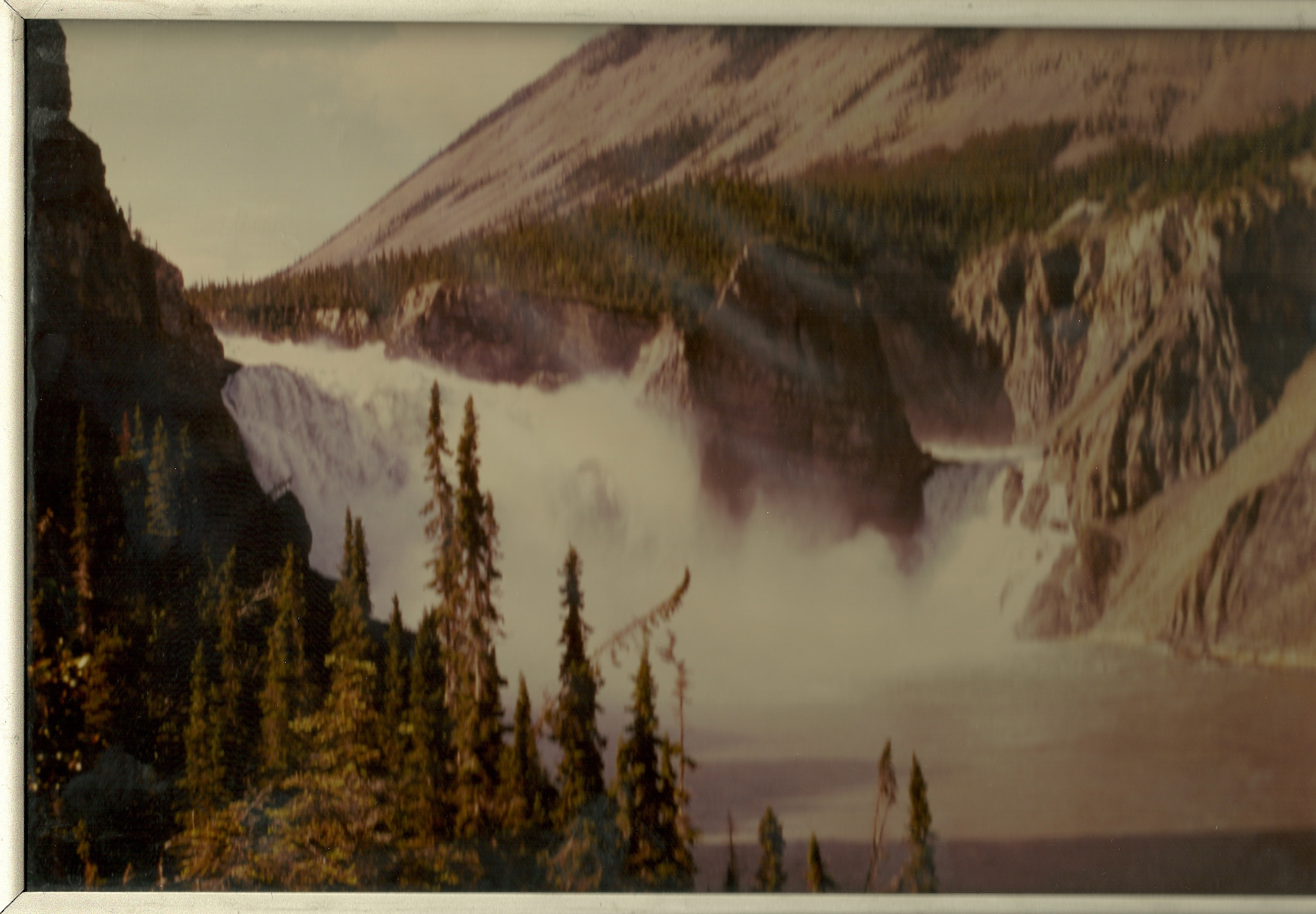
The football had been pulled up.  I had the Nahanni slides with me, for we took slides in 1985.  I had lost the roll of film, wrote Parks Canada, saying it might be in the campground at Fort Simpson, where we had stayed on our last night.  Incredibly, six weeks later, the roll was sent to me.  Canadians do those sorts of things.  I had pictures of a remarkable area very few people will ever see.  After arriving at Fort Simpson, we flew to the Nahanni in a Twin Otter with 6 people and 3 canoes, landing on a sandbar.  The Nahanni was a difficult trip through Class III rapids, the worst mosquitoes I have ever seen—and I have seen more than most— but I saw the highest waterfall, Virginia Falls, in North America.  I paddled through four canyons almost as deep as the Grand Canyon itself, sat in some natural hot springs, came out on the Liard River and saw the great Mackenzie.  The Nahanni was pure wilderness.  It is the crown jewel of my outdoor water resume.


Virginia Falls, South Nahanni River, NWT, July, 1985.

Virginia Falls, South Nahanni River, NWT, July, 1985.


I should have known better than to bring the slides.  Getting money from me was the issue, not what I did or who I was.  I’ve felt that way a lot, these past 16 years, after I left medicine.  I give on my own terms to those I wish.  I do what I can, hope to make a difference, and wish some day one of my ideas will be accepted, improved, and have a significant impact.  I had many such ideas in medicine.  My wish to be a busier volunteer in the public schools has yet to be granted.  We ought to have paid universal mandatory national service, which would give young people a sense of purpose and direction, lessening the likelihood of student debt catastrophes.  We ought to be saving water every way possible.  We should ban companion animal breeding.  I have written about all of these in this blog.

We should have had incremental single payer medical care, starting with the very young.  This would have been easier, cheaper, and less likely to have been voted against.  We should have tracked a whole host of quality issues in medicine.  We need free, unbiased, end-of-life counseling to elderly people to help them understand what “all those tubes” mean, and what their options are.  By ignoring the elderly, we ignore elders, wasting resources I can’t begin to fathom.  In short, we need incremental changes, keeping both the enemies of change and the perfectionists at bay.

I wish I hadn’t brought the pictures of the Nahanni back up to the country where they were taken.  I knew he would not be interested, but I persevered, hoping, like Charlie Brown, it would matter. People are busy, too busy for guys like me.  I tried to travel light, and those pictures and his call were excess baggage.

But I was lucky.  I have seen the Nahanni, drunk the water, know what’s out there. There is no blank spot on my map.  While it’s on my resume, far more importantly, it is in my brain.  I can call it up any time I want:  the magnificent falls, Fourth through First Canyons, Pulpit Rock, and the Gate. Wow. I was there!  I got back up to the camp one last time, and I don’t ever need to go again.  I have taken my last look.  Yeah, the football was pulled up, but I had a soft landing.

It was his loss, not mine.  That line is in Peanuts, too.