Posts Tagged ‘Philosophy’

BEFORE THIS GAME, WILL THE VETERANS PLEASE STAND, THEN EVERYBODY, THEN SILENCE, THEN SING

March 13, 2014

A recent Facebook post from a Republican-leaning group showed the picture below:

Screen Shot 2014-03-06 at 8.13.35 PM

Here is what I suggest be done, and it requires only about 4 minutes:

  1. “Ladies and gentlemen, will all veterans present, and only those veterans, please stand for one minute.  All others remain seated.” 
  2. One minute later: “Now, will everybody stand for 1 minute of silence honoring those who died for America, both at home and abroad.”
  3. A minute later: “Now, let us all sing our national anthem.”

I served this country in uniform abroad, deployed on a ship as the sole physician for an 8 month and a 3 month deployment.  I serve America as an individual every time I volunteer, help somebody, follow the laws, and try to be a good citizen.  I know the words of the National Anthem.  When played, I face the flag, come to attention, remove my hat, stay silent, and sing quietly.  When it is finished, I sit down. 

When asked to pledge allegiance to the flag, I face the flag, put my hand over my heart, and say the words with meaning, especially “to the REPUBLIC for which it stands, ONE nation,” then the next two words, added in 1954, (they weren’t Francis Bellamy’s original ones), with especial emphasis on “INDIVISIBLE, with LIBERTY and JUSTICE FOR ALL.”

Rote pledging and rote singing lessens value:  I’ve seen shabby treatment of the Pledge by both students and teachers in schools.  Every time I hear the national anthem, I am distracted by someone on a cell phone, people walking by me to find their seat, the guy in front of me with his hat on, or my neighbors chatting.  I don’t know if they are Republicans or Democrats.  They are likely both…and rude.

Before the national anthem, I find the nearest flag. Then, when the music starts, I look at the top star on the left, Delaware, the first state, where I grew up.  I look at the thirteen stripes, remembering 13 colonies winning independence against heavy odds, we fought the bloodiest war in our history to keep the Union intact from those who fought to divide us, what has happened so often in Europe. The Union is our strength, even the parts I don’t like, parts that are now patriotic, but fought us 150 years ago under another flag.

I look at the red stripes, meaning courage.  I remember the Americans who died at Bunker Hill, Belleau Wood, Corregidor,  Midway, Guadalcanal, Chosin Reservoir, in the skies over Europe, Okinawa, Da Nang, Hue, Fallujah, or Kabul; every one of these places should be known by every American, regardless of how necessary the conflict was. “I have not yet begun to fight;” “Retreat?  Hell no, we just got here;” and “Nuts” should be taught in the schools. I bet kids would enjoy learning where they came from.

The white stands for honor and purity: the Marshall Plan, counting our dead. The Flag and Pledge deserve respect, regardless of one’s feelings.  So does the office an elected official holds.  One may dislike the holder, but the office deserves respect. I disliked the senators in the state where I once lived, but I dressed appropriately and was polite if I went to their offices to complain.   Disagreeing with the Pledge, Flag, or Anthem is a right; that is what America is about.  So is respect and honor.

The blue stands for justice, the most difficult of the three, which is why I emphasize the word when I recite the Pledge.  If I don’t like a law, I work to change it, not willfully violate it.  We are a REPUBLIC, not a free-for-all, pick and choose society.

  • The flag should be lighted at all times, either by sunlight or by an appropriate light source.  
  • The flag should be flown in fair weather, unless designed for inclement weather use.       
  • The flag should not be used as part of a costume or athletic uniform, except that a flag patch may be used on the uniform of military personnel, firemen, or policemen.  Sports teams may have individuals of their sponsors contribute to any number of veterans organizations or the USO (my words). 
  • When the flag is lowered, no part of it should touch the ground or any other object.  To store the flag it should be folded neatly and ceremoniously. [Try to do that properly sometime.  It is difficult.] 
  • When a flag is so worn it is no longer fit to serve as a symbol of our country, it should be destroyed by burning in a dignified manner.

In 2005, I was one of 300 correcting AP Statistics Papers in Lincoln.  At one meeting, all the veterans in the audience were asked to stand.  I was pleasantly honored, but there weren’t many of us.  Maybe this is how we get children to serve.  Some day, maybe they want to stand up and out from the crowd.  Before the minute of silence, I suggest the organizers dedicate the time to honor those Americans, here or abroad, who fought with weapons or words.  The choice should be respectful, meaningful, and educational, not jingoistic.

“Tonight, a minute of silence preceding the singing of the national anthem will be to remember the courageous Marines who served and died at Belleau Wood, Chosin Reservoir and Guadalcanal.”  Every American ought to know these places.  Yes, every.

“Tonight’s minute of silence is dedicated to those who kept West Berlin free during the Berlin Airlift, their honor and courage a proud moment in our history.”

“Tonight’s moment of silence is dedicated to those who died in the continuing struggle for Civll Rights in this country, seeking justice under the law.”  Some in the South might object; the African-American players they idolize would not.

“Tonight’s moment of silence is dedicated to those who stood up for science against tremendous pressure and saved American lives, like Dr. Frances Kelsey (banned thalidomide) or Dr. Richard Feynmann (Challenger disaster).”

Then, we can sing the national anthem with meaning, proud of who we are as a people.

I don’t care what we pick, so long as it is American.  Controversial?  Use judgment. Perhaps a young boy will Google “Guadalcanal” and learn about Henderson Field, the Sullivan Brothers, “The Slot,” and Ironbottom Sound.  Or remember another Philadelphia, in a southern state, that I’ve never forgotten.

Perhaps some man will be at a business meeting the next day and hear, “We can’t do that in fewer than two weeks.”

He might reply, “They said that about the USS Yorktown, but fixed her in 48 hours.  She was sunk at Midway, but her planes helped sink all 4 Japanese carriers, and stopped Japanese expansion in the Pacific.”

Click yes if you think that teaching Americans at sporting events what this country stands for is a good idea.  Might even be a step towards getting people to serve her and bring us together again.

GAMMA DELTA IOTA

March 9, 2014

Fall 1967, and fraternity rush is on for Dartmouth sophomores.  As I walked quickly to the first fraternity I wanted to visit, I was excited.  I was going to be a frat man!!  My plan was to visit several houses I felt would be good fits (not party houses, football player houses, or far from campus).  I visited 7 houses that night, trying to talk to members and to get my name known, although this wasn’t and isn’t a skill of mine.  I looked forward to being invited back the next night for a second visit, and ultimately “sinking,” later in the week, becoming a pledge.  This was a big deal to me, and I think that I wanted to have bragging rights with my friends.  

The next afternoon, I stayed in my dorm room as required; after an hour, I heard a knock. I opened the door, and two men came in from Psi U.  “We enjoyed having you last night, and thank you for considering us, but we don’t think you would fit in.  But any time you want, stop in on a weekend and have a beer.”  They shook my hand.

I thanked them, and as they left, I didn’t feel too badly.  Psi U wasn’t my first choice.  I waited for the next knock.

It never came.

I often wondered that year whether I was the guy referred to at Phi Tau about whom, when discussed at the member meeting, nobody said anything.  Then upstairs, a toilet flushed, everybody laughed, and moved on to the next guy.

I became a GDI.  A Goddam Independent.  I was crushed.  I had been turned down for dates by girls before, but this was real rejection with a capital “R”.  I was a decent guy, a good student, and felt I would have been an asset to a fraternity.  So I thought.  I thought wrong.  My parents sent me a Peanuts cartoon, showing a character saying, after being rejected, “It’s their loss, not mine.”

I got turned down at a second fall rush, too, one more chance, and I never tried again. Being rejected became one of the best things that happened to me. I visited two fraternity houses on a weekend the remainder of my three years at Dartmouth.  I wasn’t upset with them; I had moved in other directions.  I have no ill feelings.  I do think drunken and sexual misconduct that occurs in some is a problem.  I question their relevance today, but I’m not in college, and I simply don’t know.

I had a successful, good career at Dartmouth.  I got a few citations for excellent course work, graduated summa cum laude, Phi Beta Kappa as a junior, and had highest distinction in Chemistry, publishing my first article ever in the Journal of Organic Chemistry.  I took three graduate level courses in the subject.  My senior year, I met the woman who would become my wife. That winter, I skied 3 afternoons a week for free, because I was doing a lot of independent work and could schedule my time.  I took 18 lab courses at a school where many took none in the 36 courses they had.  Dartmouth counted courses, not credit hours.  Dartmouth taught me to write and how to research a paper, which in my medical training was incredibly valuable.  More importantly, Dartmouth taught me how to think.

I give to the alumni fund every year but am not a die-hard alumnus who follows sporting events.  I’m proud I went there, I think it is the best school in the country, and I came back in 1995 for my 25th reunion, enjoying the stay, but not needing to return.

Forty years after graduation, looking at Eugene as a place to live, I remembered my chemistry advisor got his Ph.D. there, so I e-mailed him, which I had never done before.  He immediately wrote me back, still believing I had the potential to get a Ph.D. in organic chemistry.  That’s Dartmouth.  My advisor had helped me with my senior thesis; when I defended it, one of the attendees said the questions I was asked were more difficult than several Ph.D. defenses he had seen.  I almost decided to get a Ph.D. in organic in Eugene, but there is too much else I want to do.

I don’t plan on going back to Dartmouth again; I might, but it isn’t important.  Many things important when you are young are no longer so important as you get older.  Dartmouth is for the new generation, not me.  I hope all get as much out of the College as I did.  For those who get turned down at all fraternities, I’m here to say it really doesn’t matter.  It won’t matter that year, the rest of your college career, or for the rest of your life, if you choose to move on.

Perhaps it was their loss, not mine.


THIS JOB MATTERS

March 2, 2014

 In a Starbucks somewhere at Sea-Tac, I’ve seen an older man, around my age, working the counter. I go through Sea-Tac annually, if I am lucky, because I am on my way to Alaska and to the remotest country I know.  When I come out of the Brooks Range, I take the red eye back to Seattle, get 3 hours’ sleep, and head straight for a bagel and coffee, before the next flight south.  I’m getting a bit old for these trips, but there is a lot of country I still want to see.

Noatak River, looking east, some of the most remote country in North America.

Noatak River, looking east, some of the most remote country in North America.

Dall Sheep above the headwaters of the Aichilik River.  This was one of the most beautiful areas to hike that I have ever been.

Dall Sheep above the headwaters of the Aichilik River. This was one of the most beautiful areas to hike that I have ever been.  This is in ANWR: to those who say this is a desolate place, I simply reply: “Hike the 120 miles there I have, and see what you think.”


The man works with many younger people.  He could be their grandfather. I know nothing about him: he could be lonely, a millionaire, and wants to be around people. Or he could be lonely, poor, needing every quarter people put in the tip jar.  I put in bills, because the workers divide the tips.  Divisors are fixed, but if the dividend increases, so does the quotient, a dividend in another meaning of the word.

What I do know is the man is dead serious about his job. He takes my order, and I sense I would be doing him a big favor if I were clear what I wanted and paid promptly with little hassle.  He doesn’t say this, of course, but his demeanor is no-nonsense.  He has a job, considered menial by many who walk through Sea-Tac catching a plane, but it is clear that doing the job well matters to him.

When I enter Hirons, a local drug store, I am greeted by a woman who recognizes both me and my wife.  “You back again?” she says, cheerfully.  Hirons is the only drug store I know where I had to ask directions how to find the pharmacy: I once got lost in there, overwhelmed by the inventory.  Just in time inventory doesn’t work in Hirons, and B-school students ought to visit to see how a place ought to run.  You don’t go online, like Amazon, you go there.   You walk in wanting Advil, you come out with it, a pair of lights to make walking at night safer, an Oregon shirt, maybe a mug, a dust pan, and a holder for soap in the shower. That’s how you move inventory, by having it available,  I once asked if they made keys.  That was stupid, but hey, I was new in town.

I called Hirons, because I need to move my Part D drug benefit pharmacy: three guesses what the answer was, the first two not counting.  Stupid call.  Now I can walk over there to buy a lot of other stuff along with the meds I need to pick up. Companies need to value employees who can remember customers.  It has no dollar value, or maybe it does, because people like to be remembered, and they will return.  I will of course use Hirons in the near future, like when I need a Dutch Brothers fix, at the kiosk nearby, at the EMX stop at Walnut.

Yeah, Dutch Brothers, with the red white and blue flags flying.  I don’t know how these places survive.  They do, in all likelihood, because when I arrive, there is music playing I normally wouldn’t listen to but end up liking.  There are two or three college students in there with personalities I wish I had been born with.  They could care less how I look.  They greet me warmly; people like this make me ask how they are, too, which I haven’t done for most of my life.  Not only do I ask them, I get a reply.  I get hot chocolate or coffee, and there are about 10 different kinds of both.  They work quickly and efficiently, their banter is interesting, they stamp my card, which means after 10 trips there, I get a free drink, so I will come again.  Think I tip them well?  Duh.  I go on my way, along the Willamette River, under the tracks, over Knickerbocker Bridge into Alton Baker Park, checking out the birds in the river.  My wife has never seen me so happy.

Autzen Bridge, over the Willamette River.  Hat reads Kobuk Valley, the most remote National Park in North America, and a real gem.

Autzen Bridge, over the Willamette River. Hat reads Kobuk Valley, the most remote National Park in North America, and a real gem.

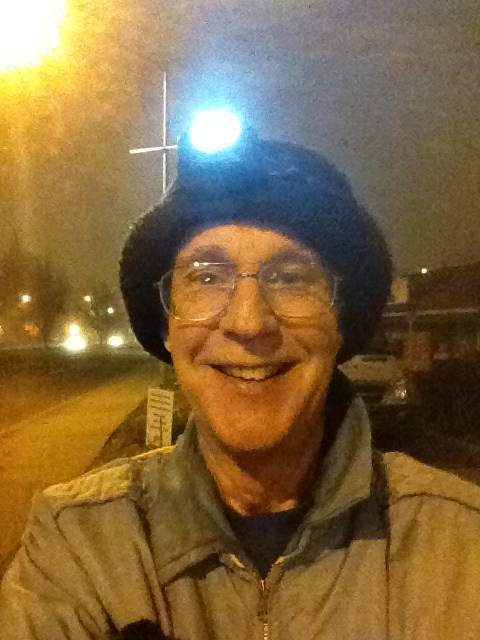
Foggy night; bought the light at Hirons, behind me to my right.  Think it was $7.95.  They should charge more.

Foggy night; bought the light at Hirons, behind me to my right. Think it was $7.95. They should charge more.

Maybe later, I will go to Evergreen’s, where they serve north and south Indian food.  I usually have a Nikasi Beer with dinner.  Yeah, for a dollar more, I get something brewed in Eugene, and I really like it.  A waitress and the owner herself recognize me, both knowing what I want.  I know the owner’s son’s name, birthday and age.  We were once immediately recognized after an absence of 9 months.  That’s impressive.  Think they get good tips from me?

Everybody knows places like the ones I described.  My late father-in-law went to Asquino’s, an East Providence institution with incredible Italian food.  They knew him, and if he had ever forgotten his wallet, I bet he would have eaten for free.  Asquino’s is no longer there. The world and families change.  These businesses are worth a great deal to customers, worth that doesn’t make the bottom line.  That’s the problem with bottom lines: they measure money, which people must make (teachers can’t eat “satisfaction,” my father, an educator, once said) but not customer satisfaction, ability to recognize repeat customers, and to have things the customer doesn’t realize they want.  I would bet much that “happiness” and “ability to recognize faces” is not on ExxonMobil”s bottom line.  Damage to the environment isn’t, which does have a dollar cost.

No money can buy good service and a pleasant person who remembers me, helping me have a better day.  I saw happier people in Ely, Minnesota, who worked half time, than my former partners, who made a half mil a year.  It was a rough life in Ely, but they were a lot nicer.  The average wage at Costco is double that of Wal-Mart.  The net worth of the CEO of Costco is 10% that of the CEO of Wal-Mart.  Throw in the rest of the Walton Family, and it is 1.3%.  The salary ratio between the worker and the CEO is still too large; when I practiced, the ratio was 1:7; 1:3 when hours worked were factored in.  Call me a socialist, but I lived comfortably.

I hope the man at Sea-Tac works to stay busy, but these days, that’s not likely.  I hope the Eugene places stay in business for a long time, along with Track Town Pizza, which hosts German Stammtisch Tuesday evenings. The whole lot are a 30 minute walk from my house.  I wonder how I got so lucky.  

Salary ratios ought to be on the bottom line; important things that can’t be measured ought to be mentioned, too.  Not everything in life has a dollar value.

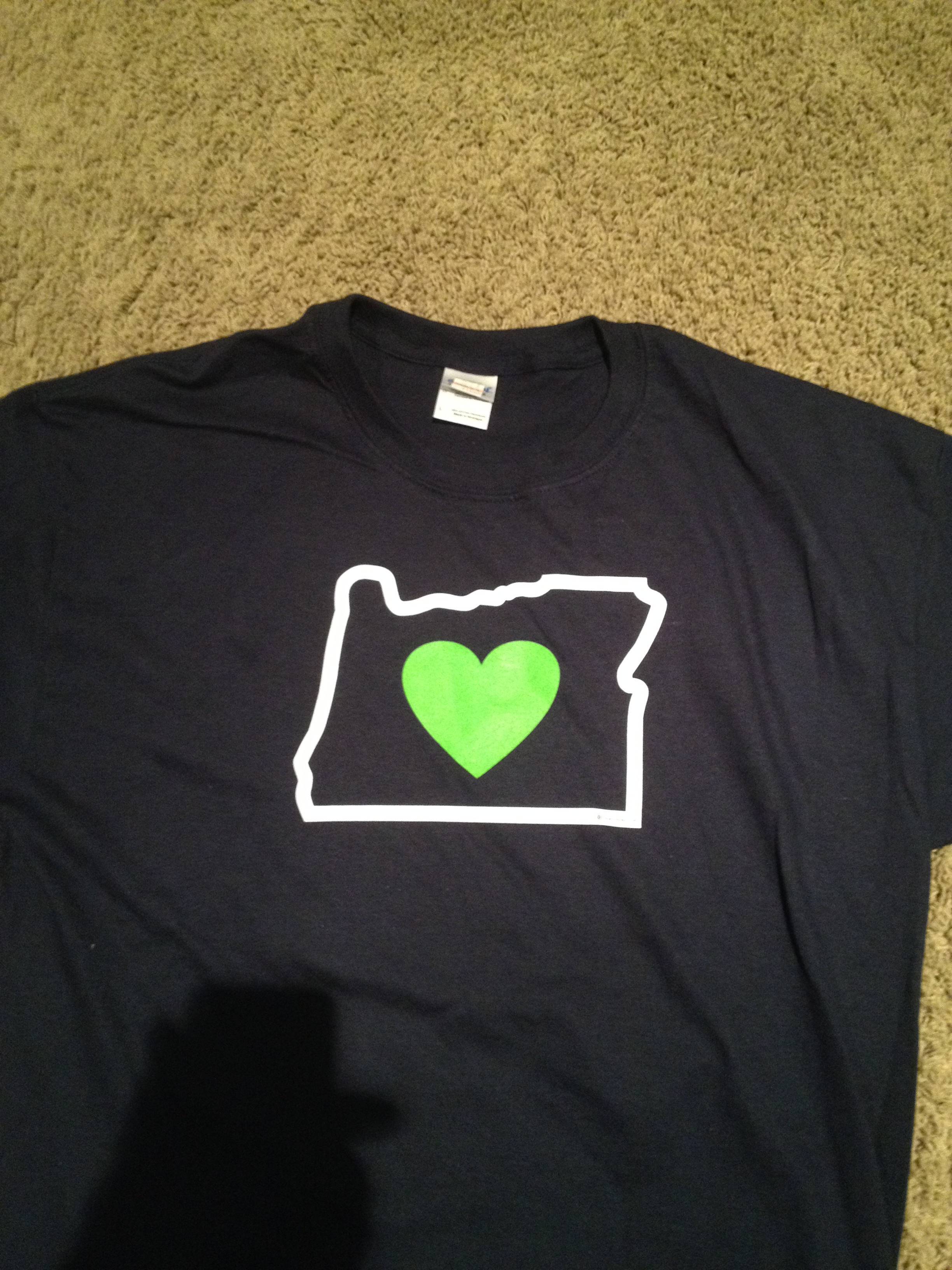
Designed in 2003:  Follow your heart; it will lead you home.  Hirons charges more for this.  I really didn't need it.  No, I really did need it, for I have done what it means.

Designed in 2003: Follow your heart; it will lead you home. Hirons charges more for this. I really didn’t need it. No, I really did need it, for I have done what it means.

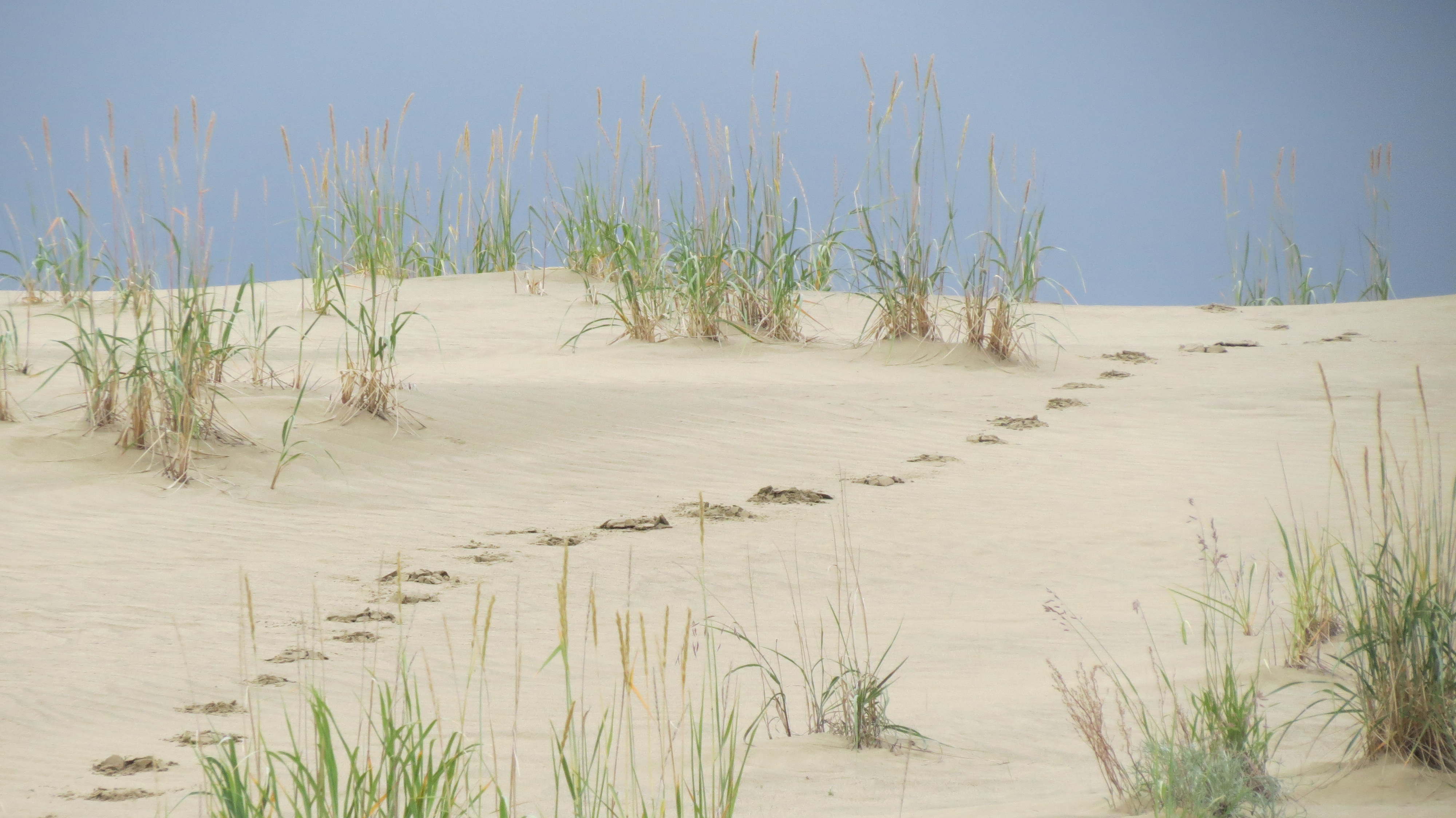
My footprints in the sand dunes at Kobuk Valley NP. It was one of those things that really is too expensive for the time spent, unless one factors in how much it meant to me, which was priceless.  What a lovely, quiet place.

My footprints in the sand dunes at Kobuk Valley NP. It was one of those things that really is too expensive for the time spent, unless one factors in how much it meant to me, which was priceless. What a lovely, quiet place.

THE DAWN OF MAN

February 28, 2014

I love watching the first 7 minutes of “2001, a Space Odyssey,” especially at 5:27 where the ape-man suddenly has an idea, one of the greatest in history: use of a femur as a weapon. The music with the scene is perfect, capturing the full joy of the meaning.

Let’s fast forward 50,000 years to a new continent and speech:  “You don’t have a hitch.  That attachment is an ornament.  You hook a trailer to that, and your bumper is going to fall off.”  That is how we first heard Ms. D. in action, and U-Haul ought to pay her a lot, for she knows a lot more than how to run a cash register.  The next customer wanted to drop a truck off in the Portland area; after naming about a dozen places and directions to each, this wonderful lady said, “Oh, just call this number when you arrive.  They’ll tell you where to take it.”  She laughed.  We did, too.

When it was our turn, Ms. D. told us, “I once had a guy come in here and order $500 worth of packing supplies.  When we took it out to his vehicle, he was driving a Mini Cooper.  Not just any Mini, the smallest.  What was he thinking?”  She shook her head, and we laughed again.  She didn’t know that her business had solved a problem that had kept my wife awake nights thinking about it.  We were like the ape-man sitting among a pile of bones, trying to find something to eat.

We were moving to a two story house in Eugene, deathly worried what our many cats, all used to one story, would do with the low railing on the second floor well above the ground floor.  Many think cats always land on their feet (they don’t) or can fall from large heights without injury (also not true).  My wife had looked at 176 different cat barriers online.  She was worried. Neither of us dreamed the solution would lie with U-Haul and two chance occurrences.

The first was when I had recently used a U-Haul trailer to bring my clothes from Tucson in two wardrobe containers.  I emptied the containers in the garage and left them there, intact, because I was too lazy to break them down.  Alone, they stood, waiting….The Sun was just peeking over the monolith and the music started.

I looked at a piece of cardboard from another container in my hand.  The ape picked up a femur.  I thought of the 3 x 3 foot gap in the railing, with posts between which a cat could squeeze.  I brought the cardboard in, placed it over the gap, and called downstairs to my wife, asking her what she thought of cardboard blocking part of the gaps.  She liked it.  The ape starting to break the small bones.

Fortunately, my wife, like me, is open to ideas.  She remembered the wardrobe containers in the garage, each 2 feet square on the bottom, and if opened up, stood about 5 feet tall.  Six of these containers, taped together, would offer a barrier, that while not necessarily impregnable to felines (little is), would at least slow down chases through the upstairs ending up in a long free fall on to an unforgiving carpet. The ape starts breaking bigger bones, then, arm high overhead, at the climax of the music, smashes the skull to smithereens.

Our solution wasn’t with companies selling metal or cloth barriers.  It was with U-Haul and Ms. D.  We had a Camry, not a Mini, and our purchase was only $30, not $500.  We had no problem fitting the boxes in the car, took it back to the house, and constructed a barrier.  Our idea wasn’t saving humanity from starvation, but how often have you had an idea just hit you perfectly at the right time?  Look at the expression on the ape-man’s face at 6:28 and 6:45: pure joy at having thought up something innovative. 

We were thrilled.  The solution lay with a company that never once appeared on our radar. They had seen femurs for their whole lives and never thought once about using one as a weapon.  

A half century ago, my father and I were moving a boat hoist into the lake, for the summer.  We pushed and pushed and nothing happened.  Thirty yards away was a woodpile.  I walked over, got six logs, and we put them under the boat hoist.  The first time we pushed, it went twenty feet with minimal effort.  My father laughed.  I was like the ape-man, arms in the air.  I had thought of something my father hadn’t.  

The people whom I respect are those who suggest alternatives, using phrases like “you could consider,” “have you thought about?”  “what if you did this?” “here is another thought”.  All of these open the door to thinking, idea generation, femurs, ending with a good solution.  I never thought I would write about Mrs. D.; I smile thinking about her.

We need a lot more of this at the national level. Maybe we need to think more like ape-men, rather than not thinking at all.  We need to sit in a pile of bones, sit there, think, muse, then play with them and see what happens.  It requires open thinking, willingness to make mistakes, and to look for workable solutions.  The America I grew up in once did that. An ape-man once did that.  U-Haul in Springfield is one of those places.  A Congress full of Mrs. D.s would be a fun place.  Better for the country, too.  

We all sit in a pile of bones sometimes.  Maybe we should quit complaining about the lack of meat and see what good might be right in front us.

5% of the cost. Twice as effective.

5% of the cost. Twice as effective.

View from below: the gaps were the original area covered. the initial breaking of the small bones.

View from below: the gaps were the original area covered. the initial breaking of the small bones.


THE OTHER SIDE OF THE DIVIDE

February 23, 2014

I live in Eugene near the freeway dividing it from Springfield:  two cities, two different worlds.  Most have heard of Eugene:  the University of Oregon. Springfield is poorer.  One immediately notices the change upon crossing the McKenzie River.  The houses are smaller, there are strip joints, pawn shops, bars for loggers, but no sign of the University of Oregon.  One of the high schools is for problem students. There are no IB (International Baccalaureate) high schools or even Duck Stores in Springfield.  Eugene has three of each.

There is a divide even in Eugene, evident when one rides the bus, which I often do.  A neighbor has lived here for decades and has never ridden it.  In a week, I had been all over both cities.  I know many schedules, the routes, and never am concerned if I get lost, because I will learn something.

Many poor people ride the bus, because it is far cheaper than having a car:  insurance costs alone are more than a year’s fare.  I’d say 90% of riders have some type of pass.  I do. I see single mothers hauling large bags of groceries, maybe with a child or two in tow.  There are students, with no other way to travel, the disabled, who can easily get on the bus and strapped in. The bus allows cheap, efficient mobility for many who would otherwise have no way to get what they needed.

The riders are polite.  I’ve never been yelled at, nor have I seen unruly behavior, although it must exist.  Daily, I see a lot worse from vehicle drivers. People who take the bus often strike up a conversation when I meet them at a bus stop or on the bus.  They thank the driver when they get off.  They are ordinary people: young and old, male and female, poor and …. poor.  They call me “Sir” and offer a seat, which I politely decline.  They are trying to get by.  I see many of these same people when I pick up my medication at Wal-Mart. I find myself becoming more polite and tolerant in the presence of those who have little, perhaps because I realize how much I have.  I made it to 65; Steve Jobs didn’t make it to 60, or even 57.  I struggle to learn German; but millions of people would give much to speak English the way I do.

Recently, on a rainy day, I decided against taking the bus home, walking instead. I got some hot chocolate at Dutch Brothers, chatted with the clerk, and left a decent tip:  a year ago, I would not have done any of the three. Columnist “Dear Prudence” once wrote how important tips are to service workers.  It matters. I walked home along the Willamette River, in flood, spotted a man, stopping to talk.  This is difficult for me to do; last year I would have continued walking. Lately, however, many on the other side of the fortune divide have become easier for me to talk to, this man’s being no exception.  His face had a lot of miles on it; he had ridden his bike from Springfield, in the rain, just to watch the river.

We talked about the water’s going to the sea, rather than California, which needs it, or to storage, where it could be used later in a variety of ways. He told me that the large, empty, moss-covered pipe behind me was once going to be used to pump water elsewhere.  What happened, he didn’t know.  I had wondered about that pipe. I wonder how many rich folks looked at the river, really high, the whole character different.  If you are a mover and a shaker, you often don’t have time for these sorts of things.  Charisma, looks, ability to pitch ideas, money, and business plans are on one side of the divide.

I’m on the other side: I am old, neither good looking, charismatic nor a businessman.   But on my side is an intense curiosity about the world.  Perhaps if others came across, they would discover useful ideas from a curious old man: a safe way to report and learn from medical errors, how to conserve resources, especially fresh water; how to count outcomes of high risk medical procedures; the need for mandatory national service; keeping public schools open evenings and weekends for tutoring, by volunteers like me, who know how to make the material relevant.  We also need to get kids outside to see nature, the rhythms of the sky, listen to the music of the spheres, smell, and touch the Earth. I keep trying to open the door to my side of the divide.

The man from Springfield listened, as I computed aloud the approximate volume of water passing us.  I mused if we could build an oil pipeline across Alaska, we could build a waterline to Lake Shasta, in northern California.  I called fresh water 21st century oil, which he thought interesting.  We have enough water; we must use it better.  He listened.  Maybe he didn’t understand me; maybe I didn’t, either, but we both knew a big opportunity was being lost.  He and I were on the same side of the curious-not curious divide, the side where one lives usually decided in early childhood by whether parents allow kids to be curious. I was lucky; I grew up in a household where you could ask three questions about a topic at the dinner table.  I was taught to be curious, and that curiosity required asking good questions.

Crossing a few divides has made me happier, perhaps because I am more grateful for what I have.  I smile more, which others return.  They talk, thank me for allowing them to sit, or tolerating their child.  I’m not part of their side of the divide, but traveling there has taught me compassion.


WATER HOURS

February 19, 2014

“Damn it!  The snipes turned the water off just as I got soaped up!!”  The First Lieutenant on my ship (head of the Deck Department) had been in the shower when the engineers (we called them “snipes”) had suddenly instituted “water hours”; fresh water was no longer available for the crew.  

In the Navy, fresh water was required for our two steam boilers that turned the screw and provided power.  Toilets used salt water.  When the boilers had enough fresh water, then it was made available for the crew.  If we were short on fresh water, we had “water hours,” restricting water for a few hours a day.  I took “Navy showers,” where I turned the water on, got wet, then turned it off.  Then I soaped up, quickly turned on the shower, and rinsed.  End.  My wife tells me I take infinitesimally short showers.  I do.  I was a Navy shipboard doc for 2 years: Forty years later, I still say “Sir,” wear my hair short, line up my shirt and zipper, and take Navy showers.

My showers last 1 minute, 90 seconds tops.  Counting waiting for hot water, I use 2-3 gallons per shower.  I can’t imagine a 10 minute shower. Using low flow shower heads to cut use from 30 to 15 gallons to me is ludicrous.  We ought to be using 5. Brushing teeth with the tap running (10 gallons) is unbelievably wasteful.  I use 1 gallon per week.  My breath is fine, and I see a dentist twice a year.  I use an electric shaver; when I use blades, my water use is a pint, not a gallon.

Over time, in the desert, we learned “when it’s yellow, be mellow; when it’s brown, flush it down.”  I flushed the toilet once daily.  As the drought intensified and became semi-permanent in the southwest, we did more: we collected the cold water when we turned on the shower, waiting for it to warm, using it to water trees outside that shaded the house.  We collected gray water from the washing machine, realizing how much we used, watering the trees.  Our sewer bill decreased, too.  In addition to garbage barrels collecting water from the roof, I installed gutters and bought a 200 and three 65 gallon containers.  We were rainwater harvesting before the term was coined.

I found a leak under the main road to our house where water came up through the pavement. Nobody else called it in, although hundreds drove over it daily.  I saved well over a million gallons.  That is 3 acre-feet, a number that everybody ought to know: 1 acre flooded to 1 foot is 325,000 gallons.  That’s easy high school math.  Here is more: There are 7.5 gallons in a cubic foot; 100 cubic feet= 1 CCF=750 gallons= 43.5 CCF per acre foot.  It is our water use for a year, and we conserve.  You can’t understand water problems without understanding numbers and math.  Water hours.

Last summer, I noted a little water running down the street.  I traced it to a house where the family was away.  Stuck sprinklers watered an unnecessary lawn (all lawns in the desert should be banned), wasting 9000 gallons a day, 3 months of our use, until I called that in, too, and their water was turned off.  Water hours.  Yet, the more we did, the more was wasted.  A golf course used regular water, not reclaimed; golf in the desert should be severely restricted, use reclaimed water, and cost much more to play, especially on private courses.  Water hours.

Half of the water used in Phoenix, where water bills are less than Boston (look it up), is for landscaping and swimming pools.  I’d ban new pools and severely limit the landscaping to drip irrigation and shade trees that cool houses.  Water hours.

The Central Arizona Project loses 4.4% of its water annually, nearly 100,000 acre-feet, due to evaporation and leaks.  Covering it would have quadrupled the cost, then $4.4 billion.  Maybe we should begin covering it with solar panels. India and the Netherlands do it.  Given that an acre-foot of water for many fruit trees is worth about $2000, farmers can buy it for $500 and sell it to developers for nearly $6000, Arizona could be losing $50-200 million a year. Covering the Canal starts looking reasonable.

Driving through California’s Central Valley, one sees many signs protesting water use laws and blasting politicians.  California is in an historic drought, yet people act as if the supply is unlimited.  Why is the per capita water use in Fresno five times that of Boston?  Why do restaurants automatically serve water?  California needs water hours, not voluntary cutbacks.  Fresh water is 21st century oil, and if we treated oil this way, one low monthly payment for fuel would entitle one to as much gas as he wanted.  This is crazy; however, half the homes in Sacramento have no water meters. California is a huge producer of food, leading the nation in irrigated acres, using about 33 million acre feet a year, 40 million state-wide.

Some forms of agriculture produce high cash value crops, like almonds; others don’t require as much, like some vegetables.  Alfalfa is water intensive, transpiring a great deal; 70% is fed to cattle to make milk products. When a place has too many people, too few regulations, and tries to grow plants that don’t belong in a place that gets 10-11 inches in a good year (3-5 in a bad), there is a recipe for trouble.  There is a lot of waste.  Water hours.

Water harvesting should be mandatory for new houses.  An inch of rain on 1000 sq ft of roof produces 600 gallons of soft water. My homeowners association was upset about “unsightly” water collection devices.  This is absolutely inane.  A square mile of roofs, about 16,000 normal size houses, in a place with 12 inches of rain a year, produces 1000 acre feet.  Not enough.  But triple that, using more houses and large  buildings, and increase it 69 fold, to deal with all cities of more than 100,000 in California, and you have 207,000 acre feet.  Add in other cities, and the number could be a third of a million.  The average family uses 80 gallons a day for “bathing”.  That should be fewer than 40.  Fifteen million families?  Six hundred million gallons, nearly 2000 acre feet, just by restricting water use a little. Mandatory rationing cut St. Helena’s use by a third….in 2 weeks.  Water hours. 

Given that people kayak in Phoenix, and misters are used to cool people at restaurants, misuse of water is not likely to disappear. I saw them running at a Tucson restaurant 6 hours before opening.  If that is self-regulation, then they should be banned.  Water hours.

Drip irrigation saves water and increases tomato yield.  While labor intensive, I am looking at long term, not short term.  Many in California are hoping March storms will save them, not at all likely, rather than having instituted mandatory cuts 9 months ago. I saw irrigation in Kern County last October that was watering barren field and a nearby roadway near Wasco.  Time, date and place upon request.  Water hours.

Fix leaks.  On board ship, leaks cost us 80 gallons a day.  A faucet losing a drop a second loses 2000 gallons a year.  Think we have a few of those around?  A hundred and sixty waste an acre foot annually.  Think there might be a million of them in LA?  That’s 6000 acre feet.  Ten million in California?  60,000 acre feet.  Stuck flapper valves in a toilet waste water.  Hire people to check toilets in all municipalities.  Fresno had unlimited water use with flat rate billing until 2010; drop per capita consumption to national levels, and one city alone would save 90,000 acre feet.  Water hours.

In a state where another million acre feet of water is desperately needed, I have outlined a way to get perhaps half.  I bet my estimations are lowball.  Utilities should price water appropriately, not raise rates when demand drops, as some do.  Keep rates high for excessive and truly unnecessary water use:  golf courses, misters, families with lawns in arid climates, those with pools, those who won’t fix leaks.  Agriculture needs to be realistic about what can and cannot be reasonably grown in arid climates.  Water use needs to be regulated.  That’s politics, but people will not regulate themselves, unless  one is having a wet dream, pun intended.  

We need 21st century thinking on water, rather than those born in the 20th century thinking in terms of the 19th. We are all on a ship, and fresh water is limited.

Time for water hours.

FRESNO

February 18, 2014

In my moves to Oregon, I  travelled through California, staying overnight, since I drove alone.  Going up, I stopped in Fresno; on the way back, at Bakersfield.  Hauling a trailer, it was a difficult two days, and I was tired, not always in the best mood when I arrived.  I had awakened early, driven well over 700 miles, and had the same ahead of me the following day.

At one hotel, the lobby was full of friends of the night clerk, who was wearing a Fresno State sweatshirt.  That was fine, I thought; maybe she is going to school there and working nights.  The room, however, was not so fine.  As a matter of fact, it hadn’t been made up, something I have encountered before.  It’s very disconcerting. Once, I was told that wasn’t possible. That’s not smart to say to a customer.

I returned to the lobby and asked for another room, explaining the problem.  There was a look of disbelief, but I bit my tongue and stated the facts.  I was given another room, actually more convenient, on the ground floor, but the key didn’t work in the door.  Problem 2.  Now, I was getting annoyed.  I had been on the road about 13 hours, and I just wanted a room.  Finally, I got a key to work, but the handle was stuck.  I returned yet again, and finally got in the room.

There were no apologies, no sense of embarrassment, and no sense of realizing I was a stranger in their town.  That happens too often, even when–or perhaps because–a person is old, like I am.

The next day, I checked out, and nobody asked me anything.  I didn’t say anything, either.  In a way, I understand the lack of interest.  Many who work the night shift, and I have, aren’t paid well, chronically poor, and are trying to get by.  They aren’t in any better mood than I am.  In a sense, their whole life is full of 750 mile daily drives with a trailer, except they are going nowhere.  I try to keep that in mind when I eat at Denny’s, leaving a larger than usual tip, even for poor service, because these people need the money, and I can afford the extra $2 that might just make their day.  Dear Prudence, a Slate columnist, taught me that, when some stockbroker wrote her and said people didn’t deserve great tips.  She ripped him a new one as only Dear Prudence can.

Fast forward a few months, and I am back in Fresno, now at a different motel, because I vote with my wallet. I had the sense to stop early at a Denny’s in Bakersfield for dinner.  The manager had a problem customer at the cash register, who couldn’t figure out his discount and answered “none” for tip. Yes, he was rude, but she should have asked somebody to seat me sooner.  I waited a long time, but the waitress was good and quick.  When I wanted to pay, I could have done without the customer ahead of me using a $100 bill, so the waitress had to find the manager to get change.  Still, I gave the waitress a good tip and arrived in Fresno more rested, but still tired.  I parked the car and trailer where I could, and as I walked to the reception, a woman ran up to me, asking me if I were checking in.  I said I was, and she opened the door for me.  She had checked on another room.  She might have even made it up.

The young woman asked me whether I wanted upstairs or downstairs. That I appreciated, as was the chance to move the car-trailer closer to the room.  I noted her pleasant accent, thought she was South Asian, and asked where she was from: India.  We started talking about India and her life.

Her father wanted her to marry some rich man who would care for her.  She didn’t like that idea and came here in 2007.  She has earned a BSN, now working on her MSN.  Because of regulations, she is not allowed to teach English, although hers is impeccable.  I can understand keeping jobs for locals, but we need many more good English teachers.  I had the same drive, the same stress, but I spent 15 unnecessary, but interesting minutes with the check in clerk. She felt her job was important, because it was a job, and jobs mattered.  She was going to be successful, and if she stayed here, America will do well by her.

The only problem with my stay was a stuck flapper valve in the toilet the next morning, which I adjusted.  Had the same woman been on duty, I would have told her when I checked out.  Alas, somebody took my key and only said good by.

Thoughts to the American hotel industry:  Talk to your customers. Show some interest in them using body language and tone of speech.  I taught myself to watch body language, and I can spot interest or disinterest in me in a moment.  I also can effectively use my body language to say things I wouldn’t dare say verbally. Tell your employees to learn to read and to use body language; it is far more important than “Have a nice day.”

Thoughts to American business:  Stop your “3-4 minute” surveys. I’m not interested, and I doubt most are. They are statistically invalid and poorly written. You want to make the customer happy?  Fix broken systems.  Every time a customer complains, you have a broken system. Fix the system, and listen to your employees, too, for they likely know a lot more about your customers and systems than you might think. You ought to ask every customer one question, only one absolutely essential question:

“How could we have helped you better?”  Trust me, people will speak.

THE RAINBOW BRIDGE

February 14, 2014

It was the eighth time I have done this, bringing a cat in a cage to the vet’s office, knowing that the cage would be empty on the return trip.

Harry had been with us for more than 12 years, ever since he was spotted around our house, looking eerily like another stray we had adopted a year earlier.  Unlike the other, however, Harry was aloof, not letting us near him.  I knew he was a male; I saw him mark the territory one night.

He was right about marking it, more right than either he or I expected.

We left food out, and it disappeared.  But he never came near us.  He wanted nothing to do with humans.

I was in the office, with my wife, both of us with red faces and barely trying to stop sobbing.  Lisa, the vet tech, knew us, and we sat down, as a woman paid her bill.

We put a trap out and kept it open, gradually starting moving food closer and closer to the trap.  Harry, who of course, wasn’t yet named, ate the food but avoided the trap. Finally, after 2 months, we put the food in the trap but left it open.  Harry could come and go into the trap, and he did.  Finally, we set the trap; my wife slept inside, on the other side of the door, a classic “bait and switch” maneuver.

BAM, CRASH; 1 a.m. the trap, plus one very upset large black cat, was on the ground.  My wife picked up the spitting and growling “prize,” putting it in the trunk of the car.

A little boy came up to the cage, and said, “Is that a kitty?”  Fortunately his mother said, “Honey, it is not a good idea to be around other animals here.  They aren’t feeling well.”  I silently thanked her.  

Harry was hauled to the vet, who gave him ketamine through the bars of the trap, since there was no other way to anesthetize him.  Jupiter would completely orbit the Sun before Harry would receive it again.  After neutering, I brought him home, putting him in the back room, where he tried to jump out a closed window, hitting glass.  We figured we wouldn’t keep him, but we waited to see what happened.

We were then taken in a room and sat down.  I had to tilt the cage to get Harry out, because he was at the far end of it.  

In three days, I had Harry purring.  In a week, he was out in the house.  At night, he was  kept in the room, door open, a gate with polyethylene bars blocking exit–we thought.  One night, he appeared in the hallway outside the room, as if the bars didn’t exist.  Two of bars apparently were loose, like station 9 3/4, where he could go right through a door, like Harry Potter, whom J.K. Rowling had recently introduced to the world.  All our cats–we’ve had 18–named themselves.  He would be Harry P., then just Harry.  He remained aloof and his coat was coarse, but  never again was he interested in the outdoors.

I lifted Harry into my arms, stroking his thin frame, every bone easily palpable, his coat so thin that skin was showing.  He buried his head in my elbow.

We had three black strays and wondered if they were related.  Jack arrived on a hot summer day in 1991, appearing on the front porch with one eye swollen and blind.  Nine years later, B.C., (Black Cat) appeared and accepted house life as well.  We didn’t think Jack would survive.  He lived 15 years.  We hoped B.C. would live 15 years; in 2006, he suddenly dropped dead in the hallway one night.

As we signed the permission slip, we asked about the sedative, which we hadn’t used before.  “We have started doing that, lately. Renal failure veins are often small to get into.” Sedation sounded fine, as I continued to stroke Harry, now calmer.

Over time, Harry became fat, 24 pounds, losing weight after one of his buddies died, when less food was available.  His coat became more silky, he stopped biting us, still remaining a little aloof.

“I’ll inject the sedative.”  Harry moved a little, but he quickly settled down.

As time passed, Harry became more sociable, but last year, we noted that he was thinner, 5 1/2 pounds lost in a year.  We thought it was age, but the vet found an abscessed tooth, needing difficult surgery. How that must have hurt, but cats hide pain. We learned then his creatinine was 7, a sign of serious renal failure.

Harry was fully relaxed in my arms now.  What a good boy you have been, Harry P.  Thank you for gracing our lives.

For nine months, we gave Harry fluids under the skin twice a day, with a phosphate binder injected into his mouth.  My wife did most of the work; I figured out how to get the binder into a syringe.  We didn’t think Harry would survive a week, but he made it through summer.  He became more sociable,too; indeed, he was a different cat, losing weight, but nicer.

“I think we’re ready now,” said the vet.  “He’s almost asleep.”  Thank you, Harry, for everything you gave us.  I’m so sorry I wasn’t nicer when you didn’t eat, because I didn’t know how to handle grief.  Boys are taught not to cry, when they should, but they have to direct their emotion elsewhere, and I directed mine towards anger.  I’m learning, Harry.  Thank you for teaching me. 

The vet put a rubber band around the right front leg, cutting a little of the beautiful black hair Harry had over the now visible vein. 

How many times we thought Harry wouldn’t survive a week, when the next day he ate a can of food!  He started chasing one of the other cats, which we loved to see.  His weight, however, relentlessly fell, below 12 pounds, then 11, then to 10.  It took 5 or 6 different cans of food some days for him to eat anything.  It was more difficult.

“I think we are ready.”  The lavender solution was pretty.  I couldn’t look at Harry’s eyes. I have seen life leave eyes before.  It’s incredibly sad, but it taught me compassion. 

Finally, nine months after Harry’s illness, one morning he ate nothing and went away.  My wife appeared, and I said, quietly, “Today or tomorrow.”  She hugged me, both of us in tears, and said, “Today.”  We had trouble finding him.  We blocked hiding places, but he still found a good one.  When cats start to hide, they are saying they are looking for a place to die.  We listened.

As the solution went into Harry’s vein, I felt no movement.  He had been relaxed for several minutes before the solution was injected.  It was over.  In tears, I picked him up, put him on the blanket, curling him up the way he always had slept.  I kissed him, thanked him again, saying, “I will see you at the Rainbow Bridge.

Image

Harry with his buddy, Ace.

Image

He liked Gryffindor, too. This has been on my Phone for years.

QUITTING

February 5, 2014

February 1956:  Speculator Ski Area, Adirondack Mountains, New York State.

I was a 7 year-old boy who herringboned up to the rope tow, grabbed the rope, and didn’t let go, until my skis hit the edge of a rut, 50 yards later, and I fell.  Unlike the 100 prior times, however, I got back up, grabbed the rope, immediately falling  head first.  A third time, I went another 100 yards, the fourth, I fell again, but on the fifth. I finally made it to the top, letting go, jubilant.  For the first time, I had made it to the top of the hill. I later became an expert technical skier, but I never forgot that 7 year-old boy.

July 1960:  Massawepie Boy Scout Camp, also in the Adirondacks, on the swim dock, final test for my Lifesaving Merit Badge.  I failed to rescue the instructor, double my weight, on my first attempt.  The second time, I grabbed the skin of his armpit to hang on.  He yelled, “oh, you learned that trick!” throwing me off.  I should have kept trying, but I quit. I earned the merit badge back home.  I always regretted quitting that day.

I saw a “fluff” post on Facebook: “You can’t fail if you don’t give up.”  Not true. Moreover,   quitting is not invariably wrong. Sometimes, one is better off giving up and failing.  Sometimes, one is not better off by succeeding.  Our society believes that hard work is always rewarded and that continuous trying a virtue and quitting a vice.  Sometimes it is true, other times, it is not:

1. Margaret Mitchell tried 38 times to get Gone with the Wind published; J.D. Salinger and Agatha Christie’s works were also rejected before finally accepted.

2. The inventor of the intermittent windshield wiper switch, Robert Kearns, persevered and won $30 million for patent infringement.  His wife divorced him and he spent $10 million in the 14 year process.  He didn’t quit and was vindicated.  Having spent more time with lawyers than I would like, I’m not sure a 14 year battle with lawyers and divorce was worth the $2 million a year he made was worth it, but others may disagree.   I cannot put a dollar cost on a divorce and years spent in acrimonious debate.

For every successful athlete, singer, and entertainer there are hundreds who worked as much, maybe more, and never made it.  One may say, “Yes, but the next time, they might have succeeded.”  Perhaps.  To me, there are few things sadder than those who persevered when they should have quit:  Michael Jordan and Joe Paterno come to mind.  Age is real, and the infirmities that come with it.

Is quitting bad?  Is it worth throwing good money after bad, good time after bad?  At what point ought one give up?

I failed as a statistical consultant, because I knew nothing about marketing.  I then became interested in patient safety and medical error reporting, but after 5 years of trying to develop a confidential reporting system, writing legislation introduced in the Arizona House for two years, I quit. In retrospect, I had no chance, medicine wasn’t ready to learn from errors; perhaps we will some day.

What happened as a result of my failing?  When my parents’ health declined, I was there for them.  When I decided to see places in the world that meant a lot to me, like the Sandhill Crane migration, Isle Royale, the Arrigetch Peaks, total solar eclipses, and the National Parks, I did.  I worked on my writing, won two awards, and asked to write for the medical society, which I did for 9 years.  Those writings are here on the blog, my later articles better than my earlier ones. I became a better writer because failure gave me time to write, time to discover writing was my way to both relax and communicate.

I failed to write a book in 1983, 720 pages, typewritten, about a my experiences serving aboard a Naval ship.  The Naval Institute Press was tentatively interested, asking me to revise it.  Sadly, after my revision, they turned me down; concurrently, a young man named Tom Clancy was submitting material to them.  I quit writing and concentrated on my medical practice, where I succeeded so long as I subjected myself to unreasonable hours, malpractice suits, hurry, arguments about compensation, and constant interruptions.  At 43, I decided to quit, one of the best decisions I ever made.

I worked for the Forest Service in Minnesota for six months, more content than I ever dreamed possible, returning to become medical director of a hospital, a new world, until I quit again, five years later, to become a graduate student in statistics.  When I left medicine, I lost money, power, and influence.  I obtained my Master’s, although had I known I would fail as a statistician, perhaps I might have quit.  From failure, I entered a new world, not only writing, but volunteering, becoming a substitute math teacher, teaching English on line to people in 90 countries, and learning German.

Stopping aggressive treatment of dying patients was my greatest contribution to medicine.  I knew how and when to end life support for patients with irreversible brain injury, long before hospice and The Hemlock Society.  Some doctors save lives, but others know when it is time for a patient to die. Germans call it “ein schöner Tod;” we call it a good death.  I used the word “die,” not “pass on” or “expire,” because DIE is the strongest verb, the only one that belongs with “death.”  I knew when it was time to let go, but I also respected the wishes of those who opted to continue.  Recovery from coma depends upon age, length of time, and cause. There are specific indicators that highly predict irreversible brain injury.

It is not euthanasia to quit treating; indeed, it is dying naturally, rather than with feeding tubes inserted into the abdomen, treating pneumonia, urinary catheters, bed sores, with no possible chance of returning to a normal life.  Many spouses didn’t know they had a choice and were relieved when I gave them one.  How did I know?  I had studied the neurological literature extensively about coma when I trained.  I knew the probabilities, I talked to patients and their families, heard often “he never wanted to be like this,” and discontinued life support, without discontinuing dignity or caring.  There was a sense in medicine that once a tube was placed, it had to stay.  I had no trouble removing tubes when I was certain of the prognosis and the family agreed.  The act was neither easy for the families, nor for me, but I knew how important this final decision was for families.  When my parents reached this stage, when “the door out” opened, I allowed them to go through; I kept my promise to them.  I knew when to quit.

Hanging on to a rope tow or a drowning person is worth persevering; knowing when and when not to persevere is a definition of wisdom.  Perhaps that should have been posted on Facebook.

SURVEYING THE DOMAIN…AND THE RANGE

February 2, 2014

“You have been selected at random….”  I do not enjoy hearing these six words.  A survey.  Two more often used here that push my buttons are “team” and “professional.”

Customer satisfaction has taught at B-schools for a long time, although businesses have done a lot to hurt it, such as the average experience one has calling a business, or just in time inventory, which isn’t (“that will be here in 3 business days.”)  Surveys are now frequent.  I don’t like the questions or the choices; while I buy the product, I don’t buy the inferences they might make from a survey.

Recently, I got three.  Two were from Comcast, following as many calls during an e-mail outage.  If I agree to complete a survey, I get through faster to a human being.  Try it some time. I contacted Comcast twice, later receiving two surveys, answering the second.  By not responding to the first I hurt the assumption of randomness, required for a decent survey.

Comcast told me the survey would take 2 minutes.  There were questions about my satisfaction, having my the question answered, professionalism (undefined, desperately in need of definition today), offering the Website as a source of information (incredibly dumb, if there is an Internet outage), and others.  I hung up at 2 minutes.  They said two minutes, and I gave them two. The other was from Peace Health, which I almost tossed, but decided to fill it out.  There were about 35 questions, too many, so a 3 or a 4 on a Likert Scale didn’t matter a whit to me.  I don’t like averaging Likert scales, either.  Two “5”s and two “1” s average to an “average,” but it suggests there are huge differences in customer satisfaction.

Twenty years ago, medical director of a hospital, I learned we spent $100,000 annually on quarterly surveys, arriving on glossy paper, with nice colors, like a dressed up pig:  pretty, but still a pig.  Only I read them.  I know that, because I went to the Executive Meetings at the hospital and asked a good question:  “How many have read this?”  And a second:  “Has anything changed as a result?”  Answers: No, and nothing, respectively.  The survey asked patients whether their food was hot.  If a patient had 10 meals and 7 were hot, what should they answer?  The survey asked whether the physician or nurse was professional, whatever that means, especially if the patient had several of each.  The return rate was about 5%, and even before I got my stats Master’s, I knew the figure was meaningless.

I proposed a different approach:  we hire one person, far less than $100K including benefits, ditch the company, and call 100 discharged patients every month, picked at random, with all replying, or the non-reply would be considered the worst possible.  This is worthwhile and it conservatively estimates how well one is doing.  We asked three questions:

  1. Did you like the care?  Yes/No.
  2. Would you recommend us to a friend?  Yes/No
  3. What suggestions do you have?

We didn’t learn about hot food, but care results could now be inferred to all patients, and we received good suggestions, too. People will toss most 6 page surveys; three questions from a human might be answered.

I tried this at a hospital in Las Cruces, told that time made a difference when you surveyed, whether the day of discharge or 6 weeks later.  I countered: if people didn’t respond to a random sample, or responded to a call 6 weeks later, the results were worthless.  I lost.

I tried it with the medical society, where we had success. We randomly surveyed primary care physicians about colonic cancer screening with two dichotomous questions, only two.  We used 90% confidence intervals and margins of error of 10%.  This wasn’t Bush v. Gore; this had to do with recommending screening for colon cancer.  The large margin of error and the small confidence interval decreased the needed sample size to about 70, manageable, and we had the finite population correction factor, which helped further.  The latter means that if the sample is a large enough percentage of the population, the sample itself is a significant part of the population: less error.

Confidence intervals are given in percent.  A 90% confidence interval means one is 90% confident the true value is contained in the interval.  The true value (parameter) is unknown and unknowable; the interval either does or does not contain it, so probability is irrelevant.  A 100 similar samples generate 100 confidence intervals, 90 contain the parameter.  Which 90?  We don’t know.

We sent the questionnaires by mail and called those offices or physicians who didn’t reply.  It worked.  We got all but 1 response, worthwhile.  We made inferences to all primary care physicians in the Medical Society with high confidence and reasonable error. Cost?  Small.

A decade later, I was asked to help in a survey about insurance companies.  Unfortunately, too many questions were asked, because “all were important.”  They weren’t. The response rate to the survey was poor, and physicians who were supposed to call their colleagues didn’t. I was asked to call; I replied as the statistician, I was not carrying the flag for what I considered a suboptimal survey, which should have taken a quarter year to complete but instead a quarter of a decade.  Really.  When I performed two sample proportion tests, a physician asked me whether it were the right test.  I resisted asking him if he performed the right tests on his patients.

If you want a good survey, randomize, ask 1 or 2 questions, use 90% confidence intervals and high margins of error.  Randomize a thousand or a a hundred thousand people, sample 100, obtain all responses, and you will have 90% confidence that the true result for the million is within 8-9% of your point estimate, your sample result. I can prove it mathematically. Do you need 80% +/- 2%?  Or can you live with 60% +/- 9%?  I submit the latter is useful.  Want more information? Ask two more questions and survey another 100 at random. The expected value is 1 in 10,000 will be called twice.

Sampling is an incredibly powerful technique, but it has to be used carefully.  Read a newspaper article sometime and note how percentage of respondents gradually becomes percentage of people.  That is incorrect.

Please act on the results.  If the survey sits in an office unread, it wastes time and money.  Asking for suggestions is useful to generate good ideas. If you want to call everybody afterwards, don’t ask how professional their people are.  Ask only how you can do better.  Trust me, you will hear a lot.  People like to answer that question.  Then it is your turn.

Act on the suggestions.