Archive for May, 2012

UPCOMING SOLAR ECLIPSES

May 29, 2012

Here are the central eclipses (total and annular, where the axis of the Moon’s shadow touches the Earth) through 2025.

2013:  9-10 May:  Annular from northern Australia through the Solomons crossing the Equator well south of Hawaii.

2013: 3 November:  Total (hyrbid, actually, with annular at both ends) from western Atlantic south of the Azores, into Africa.  While the eclipse is not far from the East Coast of the US, it is a few seconds of totality and an extremely narrow (<5 km wide) path.  Ships will be seeing this one; I hope somebody decides to fly it from the Azores, where it is fewer than 700 km and 1m20s total.

2014:  29 April:  Annular touching the southern tips of both ends of the Australian continent.

(2014:  23 October:  Partial eclipse of US and Canada, about 40-65%, more to the north.)

2015:  20 March.  Total beginning SW of Iceland, passing south of the island, passing north of England and west of Scandinavia, over Svalbard, and ending at the North Pole.

2016:   9 March:  Total beginning over Sumatra, Borneo, misses New Guinea, ends about 700 km NW of Oahu, 2m15s, nearly a two minute penalty from the maximum over the open ocean.

2016:  1 September:  Annular crossing Africa north of Kinshasha, northern Mozambique, and Madagascar.

2017:  26 February.  Annular, extremely narrow, from Patagonia to Angola.

2017:  21 August.  Total, long-awaited, in US, from Oregon to South Carolina.  It is maximum (2m40s) in the Evansville, Indiana region (bordering states), still 2m38s in Nebraska, 2m8s in Oregon, and 2m35s as it exits the US.

2019:  2 July:  Total, Open ocean eclipse ending in northern Chile and Buenos Aires at sunset.

2019:  26 December.  Annular from Saudi Arabia, southern India, Sumatra, and Borneo.

2020:  21 June:  Annular from Congo, Saudi Arabia, Kashmir, China, and Taiwan.

2020:  14 December:  Total, crossing southern Chile and south central Argentina, well north of where the 2010 eclipse occurred.  This will have its maximum of 2m9s over land.

2021:  10 June.  Annular, from Canada to Siberia.  The Canadian portion begins at the northern tip of Lake Superior on a line to about Winnipeg and then heads due north.

2021:  4 December.  Total, over Argentina, but unlike the previous one in the series, the path will be within about 2000 km from Buenos Aires, rather than 4000 km from Punta Arenas during the last visit of  this Saros.

2023:  20 April.  Hybrid, touching the northwestern tip of Australia and going through the neck of Irian Jaya.  The Australian portion is about 1 minute in length.

2023:  14 October.  Annular, from Oregon to South America, passing through Texas, the Yucatan, Costa Rica, Colombia, and Brazil.

2024:  8 April.  Total, from south Texas (Del Rio area, Dallas, Little Rock, through Indianapolis, Cleveland, Rochester NY and Maine).  Toronto and Montreal are also included.

2024:  2 October:  Annular from open ocean south of Hawaii to Patagonia.

Honorable Mention:

2026:  12 August.  Total, with Reykjavik and northern Spain and Mallorca on the path.

2027:  2  August:  Total, Saros 136, at 6m22s maximum, from Gibraltar (both sides of the strait, through northern Libya, central Egypt, and Djibouti.

2033:  Total in northern Alaska.

2034:  Total crossing Honshu.

THE POWER OF “THANK YOU”

May 27, 2012

Richard DeBernadis founded El Tour de Tucson, a nationally known bicycle race, nearly 200 km around Tucson.  There are 3 shorter races, too, and a kids race.  Every November, the Saturday before Thanksgiving, El Tour takes place, rain or shine, often with wind.  One year it snowed.  And 5000 people showed up.  I was there one year with a starting temperature about 0 C., And 10,000 others were with me.

The Perimeter Bicycling Association of America (PBAA), which encourages riding around things, like cities or mountains, sponsors several events a year.  When I rode, I did all of them, including the Cochise County Classic, where I did the second longest ride (270 km) one year, in 8 hours and 20 minutes.  I was sixth.  Twenty of us rode.  It was an incredible experience.

The Tour of the Tucson Mountains is a late April event. One year, when I rode as Bike Patrol, Richard saw me before the race and asked if I could direct traffic at a “T” intersection, showing people where to park, to free him up.  Richard is a lot more important than I, so I directed traffic that year and the following year.  After my last bike accident, I gave up riding.  I left the cycling community.

But each year, for 2 hours one day in late April, I get up at 3:30 a.m., drive to Marana, and direct traffic.  As the cars come by, sooner or later Richard shows up, and for a brief second, his arm comes out the window, he shakes my hand, and says four words:  “Thank you so much.”

That action and those words are why I still volunteer, although now the race has been cancelled.  I directed traffic for eight years.  Richard thanked me every year, for two measly hours doing something anybody can do (although I was pretty good at it!)

For nearly a decade, I volunteered in the public schools.  I did so, because I strongly  believe in public education.  My parents were  both educators in public schools, and I believe strongly in Horace Mann’s six principles.

I stopped volunteering, primarily because I wasn’t busy enough, and I found, quite by accident, that I could have more influence if I became a substitute teacher.  Perhaps that is because when you charge for your services, it appears (I can’t prove it, but it sure does appear) that your services are more valuable.  I got thanked more as a well-off practicing physician than I did as a doctor on a Navy ship, one of those “government doctors,” who took care of 600 people, who got their care for free, often alone in a three quarters of a million square nautical miles of ocean.  And yes, those numbers are correct.

It was interesting.  The one teacher who really didn’t need me, for he was so good with students, always made it a point to thank me for coming and how helpful I was.  Others were different:  in one class, I volunteered during lunch, so the teacher could eat in the teacher’s lounge, have some privacy, and still offer tutoring.  She never once thanked me.  In another school, I got thanked once in a year by a teacher, for whom my presence on the day I came allowed him to do other things while I answered questions the students had.  Another teacher thanked me three times that year.  People are busy, but the busiest teacher was the one who thanked me each time I came.  I don’t think that is a coincidence.

I volunteered because I love teaching, and I am really good at math.  Indeed, I could offer areas where math is used outside the classroom, where many teachers could not. Being older, I had a little other wisdom to impart as well, about how to take tests, what to study, and what to ask.  Being thanked is one of those things in life that can’t be asked for, like love.  It has to be spontaneous, or it is meaningless.  Some people don’t particularly care whether or not they are thanked; I do.  I dress informally, and I am informal about what people call me.  But I am exceedingly formal when it comes to manners and grammar.

Thanking people, especially when they are thanked for specific actions, are very powerful.  Richard knew that.  I learned it when I was a child.  So did my only cousin, who married a Swiss ambassador and lived all over the world .  “Please and thank you go a long way in any language,” she once told me.

Indeed, specific comments at the right time are incredibly powerful.  I was one of three people to send a sympathy card to a prominent nurse, whose husband died in a flash flood in the Rincon Mountains in 1978.  I must have shown surprise on my face, because her next comment was that she thought that people were afraid of death.

When I send sympathy cards, I always try to add something specific about the person.  When David Goldblatt, the editor of A Wise Owl, on this blog and the best thing I ever wrote, thanks to him, died, I wrote his widow and told her how much David meant to me and the specifics of our relationship, things she did not know.  She later wrote me and said of all the people who wrote her, and David was one of the most well-known neurologists in the country, those words from me meant the most to her.

I have kept every thank you note a patient every wrote me, and some of them are now 40 years old.  I seldom look at them, but I am not about to throw them out.  They mean something, during those days when I am hammered by my detractors or wonder why I even bother.  In my case, one harsh criticism can ruin a day….or a week. But one really good thank you note can make my day.  It has to be from the heart, and it can’t be forced.  I’ve known people who overuse them.  But I’ve learned the power of the right words at the right time, and if I can learn this, so can others.

Richard DeBernardis knows that I came back because he thanked me.  I was sure to tell the PBAA how much his words meant to me.  I’m sure he knew they did, but my making sure he knew probably made his day.  He made mine.

ARE WE FIGHTING A WAR ON SCIENCE?

May 24, 2012

I have become very discouraged lately.  We appear to be fighting a war on science even as we enjoy the tools and the improved health science has given us.  Without doubt, I would be dead if it were not for science.  I had strep throats when I was younger, and without penicillin, I likely would have had rheumatic fever and rheumatic heart disease, the surgical treatment of which back then was far less effective than it is today.  In 20 years of practice, I never once saw rheumatic fever.

We have a vaccine rate that in Arizona is scary.  About 85% of public school students are vaccinated; 50% in charter schools.  There are many who are convinced vaccines cause autism, because of the Thimerosal in the vaccine.  This has been disproven.  Indeed, some of the research stating such was shown to be fabricated.  A recent guest on Science Friday said she did not vaccinate her children, in part because they get a third more vaccines than people like me did.  Is this wrong?  If so, do we have good data and a good analysis of those data?

Let me talk about the past…60 years ago.  Back then, we had iron lungs for polio victims (my brother had polio), and kids didn’t spend summers in crowds, because we were convinced we would get polio, we were so scared.  Today, at a clinical pathological conference in the United States, asymmetric paralysis of a limb might well be misdiagnosed, for polio is so rare.  The Salk Vaccine trial was stopped early, because it was so effective.

We don’t need vaccines, some say, because these diseases are no longer present.  They are not present because we vaccinated against them.

“UCD”–usual childhood diseases–used to be on a patient’s chart.  What are the usual childhood diseases?  I had rubella.  When was the last time somebody saw a deaf child, because the mother had rubella during pregnancy?  My wife has a cousin, who lives with his mother as an adult, because his mother had rubella during pregnancy.  Today, if we vaccinate against rubella, we will never see this happen.  Rubella is a very mild disease, and it is possible not to know one is ill.  I had rubeola (measles), and I can still remember the dark room and the sickest I have ever been.  Measles kills 1 in a 1000 people and is extremely contagious.  It is now news when there is a small epidemic.  When I grew up, everybody had measles.

Varicella, or chickenpox, was a rite of passage, a time one had to stay home from school but felt perfectly fine.  Mumps caused orchitis, or testicular swelling.  When was the last time one saw a person who had mumps?  My other brother had mumps meningitis.

Hemophilus influenzae meningitis was a common disease in young children.  What happened to it?

Diphtheria killed thousands in my parents’ generation.  In 1972, Native Americans on the Crow Reservation were still getting it.  I know.  I was there.  When was the last time anybody heard of a case in the US?

Pertussis affected my mother.  This disease has lately come back, often in adults, and has caused deaths. That scares me, because this disease may be eliminated, as we have done with smallpox.  I have a smallpox vaccination scar; most Americans do not have one.  I saw one case of tetanus in my life….in Malaysia, when I was in the Navy.

Do we really want to take the chance these diseases will come back?  Maybe I am wrong, so I will make a prediction.  In Arizona, there will be a major epidemic of a preventable childhood disease in the next 10 years.

Science gave us safer automobiles.  We have a death rate from motor vehicle accidents half of what it was in 1980.  This is due to several factors, but seat belts and airbags have been the major ones, along with a push to decrease drunken driving, better highways, and better automotive design.

Science has given us better food safety, too.  We don’t see brucellosis from unpasteurized milk, although there are many who drink it and want the right to do so, as espoused by Ron Paul, during his campaign.  Prediction #2:  we will see at outbreak of brucellosis or milk-caused tuberculosis in the next 10 years.  I can be wrong, so I think it is only fair I make predictions….and hope I am wrong.

Science gave us better aviation safety.  When I grew up, airliner crashes were frequent.  We have often gone years without a major commercial aviation accident.  There are many factors:  Doppler radar, knowledge of windshear (change in wind direction with altitude), and the ability of pilots to safely report mistakes without retribution are among them.  Doctors would do well to learn from pilots; my medical safety reporting system was drawn up 11 years ago and went nowhere.  We don’t know how many people die from medical errors, but four members of my small family have suffered from their consequences.  The crash on Mt. Weather in the 1970s occurred, because pilots did not realize where the summit was on the approach to Washington, D.C.  Six weeks earlier, pilots on another airline noted that the summit was a potential danger point.  Because there was no safe way to report that fact, nearly 100 people died.  That issue is no longer present–in aviation.

Science has given us the ability to look up things we want to know about.  I remember encyclopedia salesmen and still have Bartlett’s book of quotations.  Why do I need it?  If I want to know something, I go to the Internet.  The problem with the Internet is that one can find any counterargument to any topic, because there is no peer review.  All technology has a downside.

Science has given us evolutionary theory, which has been politicized (court cases as to whether it should be taught in school would to me qualify as politicized), which over time has better–not worse–explained how we arrived on the Earth.  Our DNA is nearly 99% in common with some primates, and yet we still have a large number of people who disagree that we evolved.  For the record, we did not descend from monkeys; we descended, the evidence shows, which to me appears sound, from a common ancestor to both of us, that no longer exists.

The vast majority of climate scientists have concluded, with high confidence, that man has caused climate change and warming of the Earth, both terms must be used.  Instead of a fair discussion of the data, this issue has become one of the most polarizing topics I can think of, and it is sad.  I wrote a column on the subject for the Medical Society, when I was an invited writer, and I got absolutely hammered in the letters column.  I did my best to argue from facts, and try not to get caught up in the personalization of the arguments, which is so easy to do.

Here are some of the facts that I have looked at that helped me make my decision.

The Earth is clearly warming, we know that from long term trend analysis and we know that from the fact that nearly all (there are exceptions) glaciers are retreating, and the ocean is rising 3.2 mm a year (from satellite measurements, which is astounding that we can do that).  A recent downturn was explained by flooding in Australia and Amazonia.  The Earth goes through cycles of warming and cooling, so there have been questions raised as to whether this is cyclical.

Carbon dioxide levels have risen since the Industrial Revolution.  We know this from ice core analysis, and we are dealing with CO2 levels that have never been this high in the history of mankind.  In addition, the oceans are acidifying at a rate not seen in the past several million years.  The oceans are buffering CO2, but nobody knows for how long they will do so, or what the current 30% increase in hydrogen ion concentration will do to shellfish, coral, and a million other species in the ocean.  CO2 is a potent greenhouse gas, although water vapor is more common, and it would seem reasonable to think that this is the cause.

Correlation is not always causation, but it can be.  Tobacco correlated highly with lung cancer, and this was enough to remove advertising from TV (yes, that once occurred).  When carcinogens were discovered in tobacco smoke, then the correlation became causal.  The high correlation of [CO2] with global temperature rise to me is strong evidence, given that CO2 is a greenhouse gas.

Around the world, people are seeing climate changes they have never before have  seen, especially in the high latitudes and high altitudes, where the changes are much greater.  If the permafrost melts, methane, an extremely potent greenhouse gas, will  become a factor.

Is this a certainty?  No.  But there is high confidence such is occurring.  Do we assume it is wrong?  We have to balance the risks of changing our lifestyles with the risk that climate change is truly occurring.  If we are wrong on the front end, we have spent money we didn’t need to spend to change how we get our energy.  On the other hand, an oil or coal driven economy cannot continue indefinitely.

If we are wrong on the other end, we have changed the planet, perhaps irrevocably.  I think Americans who argue climate change should use Fahrenheit and not Celsius, so as to honestly keep the numbers fair.  Celsius is 55% of Fahrenheit, and 3 C. does not sound as bad as 5.4 F.  Warming of 1.4 F. of the Earth, which has occurred in the past 130 years, is not insignificant.  A month 1.4 F. warmer than normal is quite noticeable to people.  A month 6 F. warmer is a record.

What I do not understand is why Americans, almost alone in the world, have such low percentages of belief that climate change/global warming is occurring.  Only 12% are “alarmists,” to quote a poll, and roughly the same number are at the opposite end.  Most of the middle is concerned, but think we have a lot of time.  Interestingly, about 90% of  Europeans believe in global climate change.  Are we smarter?  Educational results wouldn’t seem to agree.  Is it because we live in a temperate climate, where we don’t see the changes, and many Europeans live at a Canadian latitude?  Why has this issue become politicized?  I simply don’t know, but on Facebook and among people I am around,  the issue is incredibly polarizing.

In part, I wonder whether it is because science education has become poorer in this country.  More people believe in astrology, which has been soundly shown not to be the true, then know why we have seasons.  My late father edited two high school science books 60 years ago, and his explanation of seasons is still the best I have ever seen.  Many of us cannot find Polaris, although uneducated slaves on the Underground Railroad knew it well, as they fled north 150 years ago.  Only a minority know what a year represents.  Many do not know how to compute the doubling time of money (72/interest rate), feet per second a car goes at 60 mph (88), number of feet in a mile (5280), or the weight of water (8.3 pounds per gallon), the latter of which perhaps explaining why so many people get in trouble, when they try to cross running water in an automobile.  All of the above have everyday applications.  Science works, and its predictions in many instances may be verified.  Perhaps that is why there is so much resentment of science; it predicts things–bad things–accurately.  Carl Sagan called science a “candle in the darkness,” a statement I particularly like.

I was asked to debate this issue in the medical society and declined to debate. Doctors would do well to debate how we are going to improve health care access and quality, not climate science.  Yet many of my colleagues do not believe in evolution, which I have to admit I find astounding, given the evidence.  Then again, many believed surgery on asymptomatic carotid artery stenosis was beneficial, even when the data overwhelmingly showed it was harmful where I practiced.  I was unable to change something where we had clear, easy to understandable data; I don’t expect I am going to change something where the data are less understandable.

Lately, the hot button issue has been calling the issue climate change and not global warming.  That puzzles me.  Climate change occurs when our cities absorb so much heat that the nighttime temperatures rise and rainfall patterns change.  Climate change occurs when dust from Chinese coal plants lands in the Rockies, and the absorption of sunlight causes an early melting of snow and a change in runoff.  Climate change has occurred when 3/5 ths of the bird species in the Christmas Bird Count have the center of their range at least 160 km (100 miles) further north.   Climate change occurs when there are major changes in rainfall patterns.  Climate change occurs when a long standing lake in Gates of the Arctic National Park can no longer be used as a landing strip, because it is too shallow, from melting of the permafrost.  Many, many Alaskans are well aware of climate change.

The fact that nearly every climate scientist believes we are changing the climate does not, of course, mean they are right.  Science moves in fits and starts and is not based on what the majority believe.  It would appear, however, that the science behind the discussion is, if anything, under-predicting the severity of the issue.  A recent article I reviewed on Facebook used regression to show the Earth had cooled since 2002.  The regression line was not significantly different from zero, and the assumptions underlying the regression were not met.  That alone did not disprove climate change, of course, but all data used have to be subject to scrutiny by both sides, and poor data needs to be removed from the discussion.

Could my mind be changed?  Yes.  If my own city had 2 years in a row with normal temperatures–even 1 degree above normal would be acceptable–I might rethink my position.  If the Arctic Ice Cap increases in size every year for the next decade, the global temperature falls every year for the next decade, and the ocean rise stops, I would rethink my position.  I would have to.

The questions I do have are these:

Can you argue your position without personalizing it?  This is extremely difficult, but the subject is climate, not Al Gore, cap and trade, big government, conspiracy theorists or environmentalists.  It is about science.  I don’t think it is fair to state the numbers of scientists who believe there is no climate change when the vast majority do believe.  But again, science is not about majority rule; it is about facts and interpretation of facts.

Can you offer statistical evidence that shows confidence intervals that include zero (no change) or fail to include zero (a change), a p-value >0.05 (or any other value you think is worthwhile).

Can you state what it would take for you to change your mind, so that you are offering predictions as to what is going to happen to the climate?  This way, we can test your predictions versus other predictions.  If nothing will change your mind, then it is senseless to discuss the subject.

Can you state fairly what will happen to the Earth should you be wrong?  If you reply you cannot be wrong, then you are saying you can predict completely accurately the future of a complex system that we do not completely understand.  Nobody I know can do that.

It is high time we approached this issue sensibly, using the science that brought us vaccines that saved my life, transportation and food safety that keep us alive, moving and comfortable, and technology that makes our lives so much easier.  Science was at its best with Hurricane Irene last year.  With time, the models were revised and revised, so that the predictions were better and better.  If instead, we choose a path that Governor Rick Perry chose with Hurricane Rita, to pray that it stop and turn around, we are going to kill a lot of people.  We can choose to have an honest look at the science behind global climate, and look at the models, or we can choose a path that Congress did, passing a resolution, which denied climate change.  Resolutions don’t affect the climate; many factors do affect it, and we know many of them.  Right now, most scientists believe the factors are significant.  If they are wrong, we should know fairly soon.  The problem is that if they are right, then by the time there is convincing evidence for every person, it is going to be too late.  I guess that puts me in the “alarmist” camp, and I really want to be  in the “I was wrong” camp, hearing, rather than saying, “I told you so.”
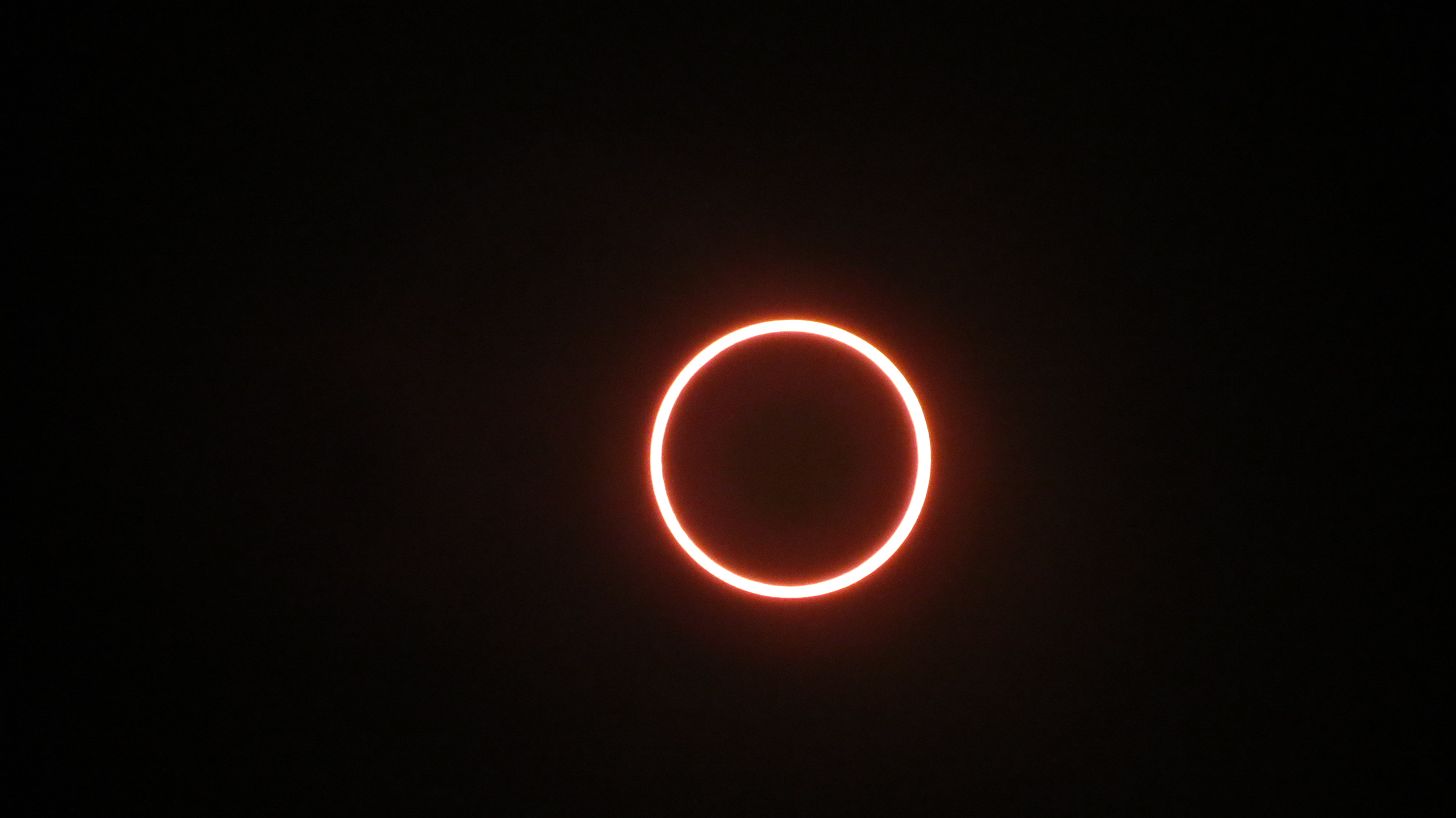
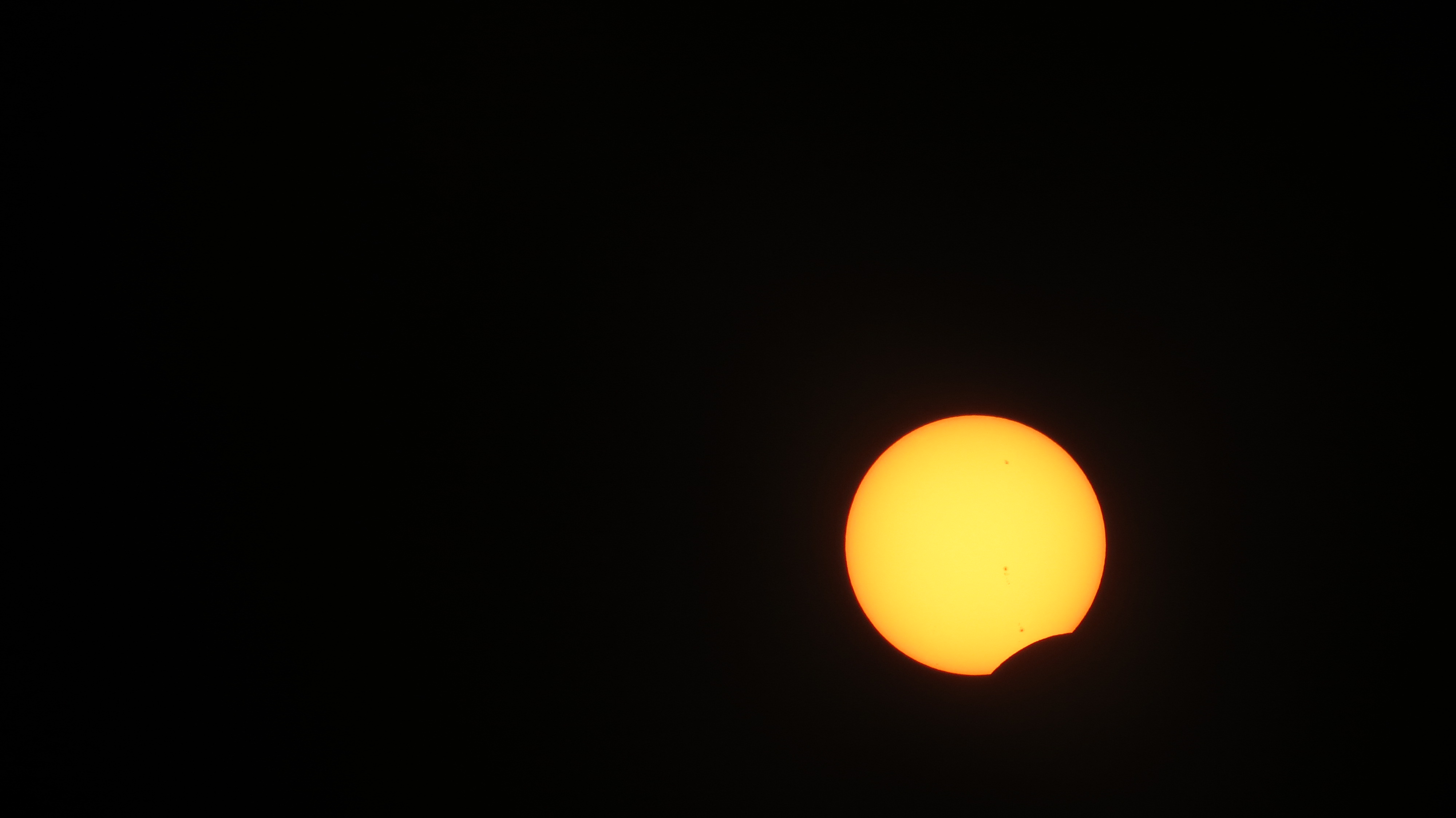
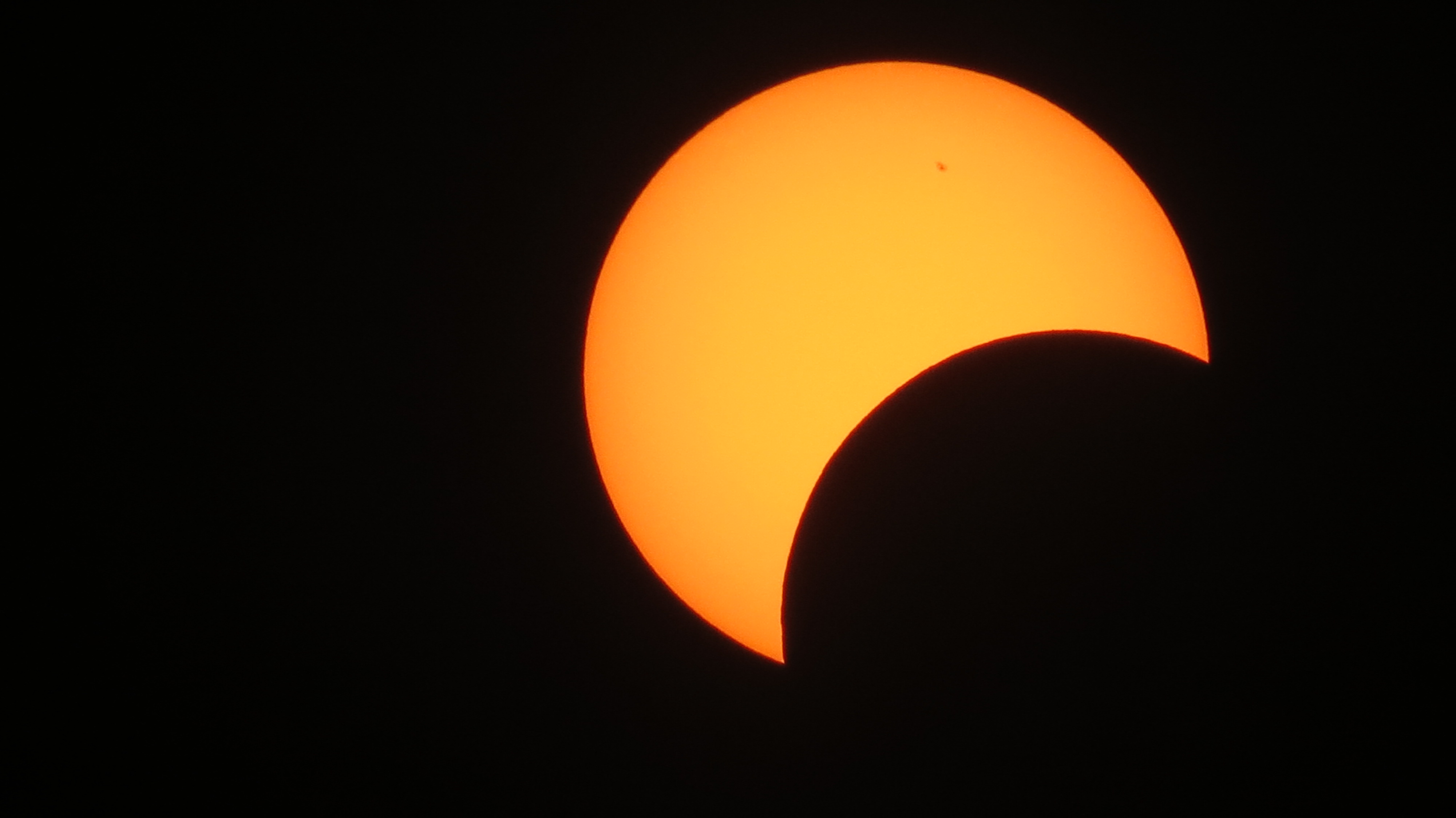
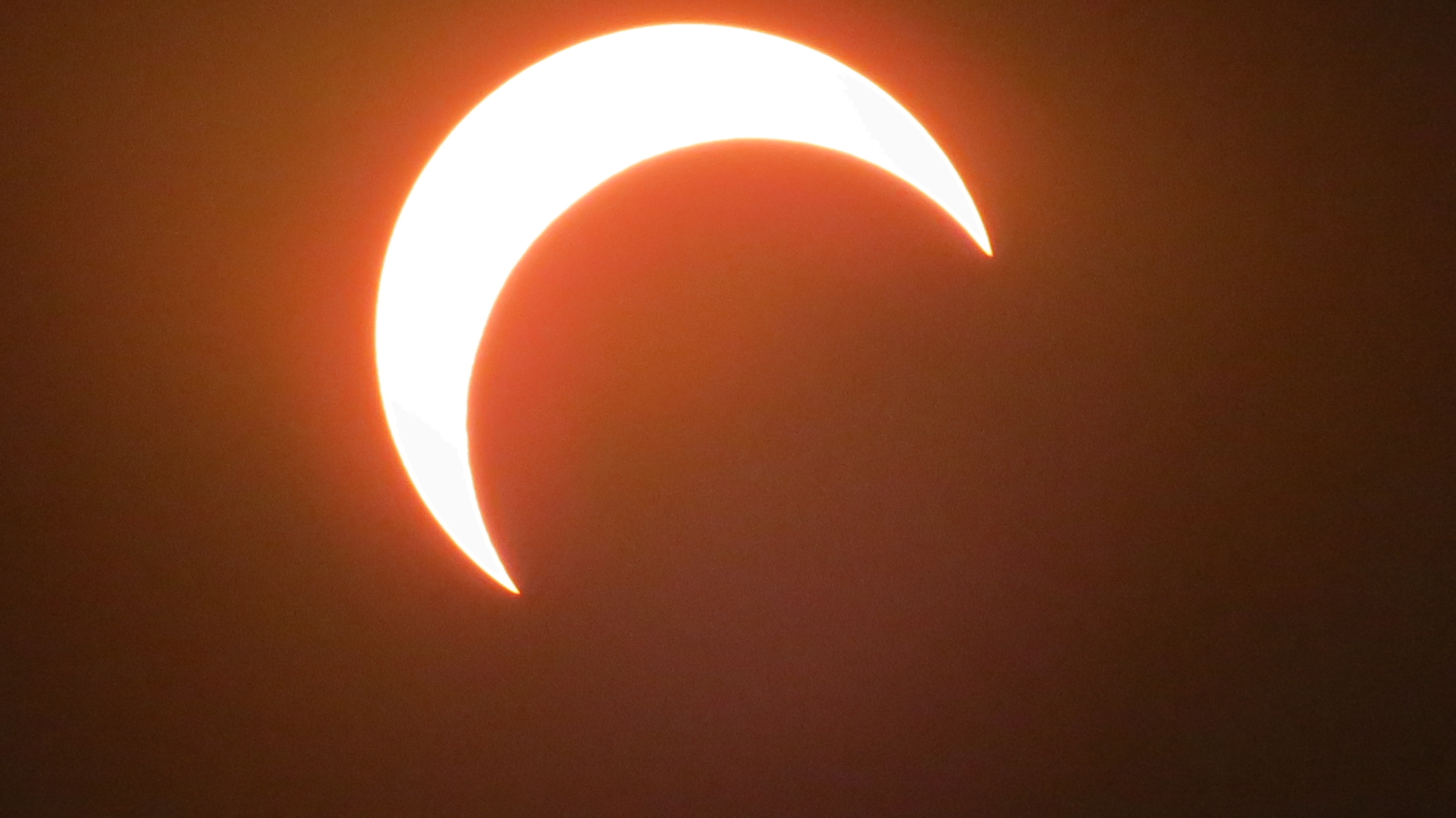
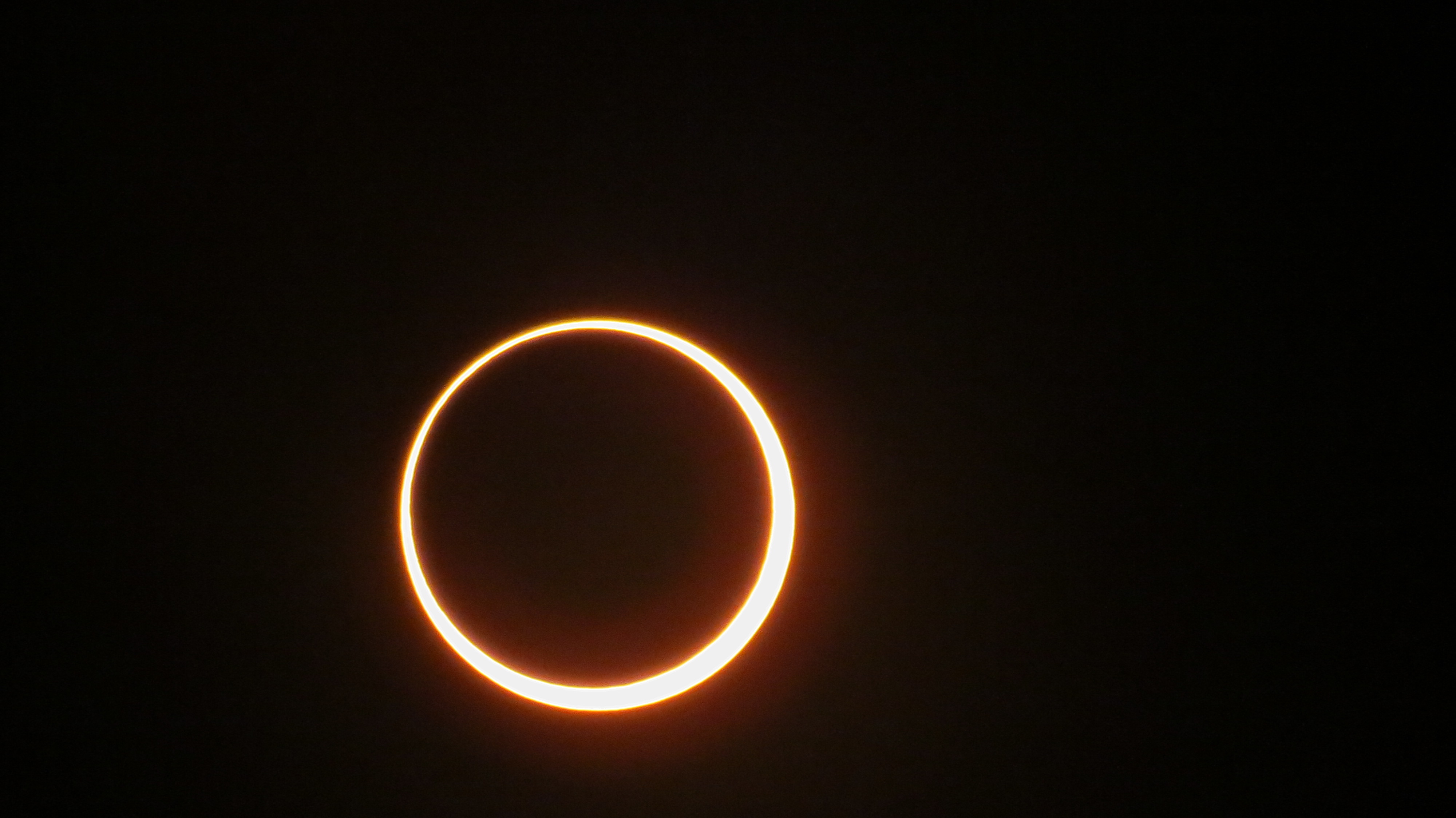
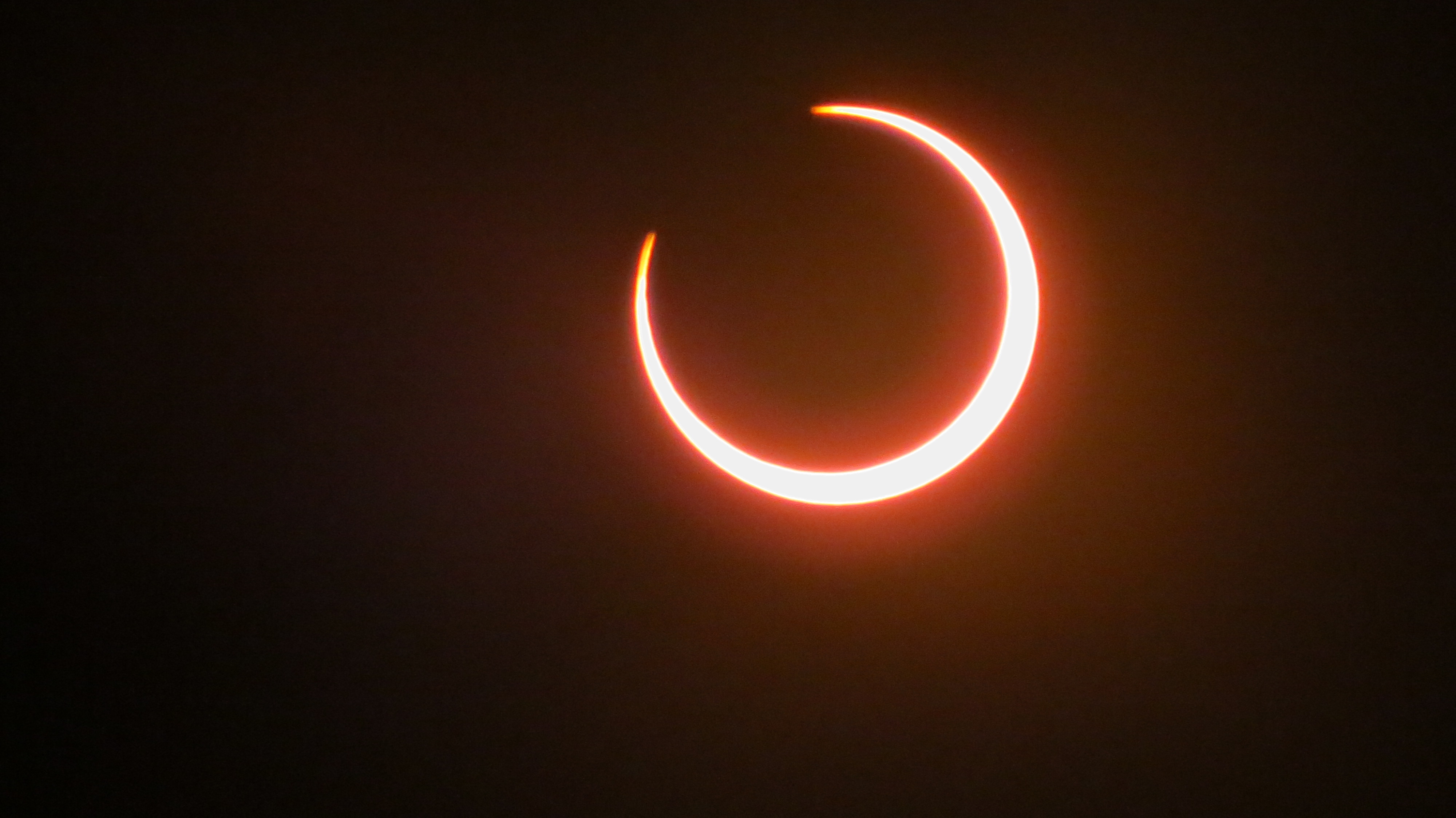
ANNULAR SOLAR ECLIPSE; PAGE, ARIZONA, 20 MAY 2012, SAROS 128, #58 OF 73 IN THE SERIES

May 21, 2012

Finally!  An eclipse we could drive to, for the first time since the previous member of this family of eclipses 10 May 1994!  Saros 128, the member of this family, returns to the Earth every 18 years 10.3 days.  Last time around, it was a morning eclipse.  This time, it was a late afternoon eclipse, further north.

We spent 2 days at the South Rim of the Grand Canyon and then drove north to Page on eclipse day.  The distance is about 230 km (140 miles).  We found a place at the back of a motel which had a perfect view of the western horizon, including the Kaibab Plateau, the Vermillion Cliffs, and Lake Powell.  This time, I set up the C* telescope I was able to bring, attached the solar filter, and used that for views.  The sunspots were striking!

I then set up a video camera at about 25 x and a filter, so it would run during annularity with minimal effort on my part to adjust it.  I had a camera with 35x optical, and I put a solar filter over the lens and took pictures periodically.  Annular solar eclipses do darken the sky a little, there is an “eclipse wind,” and the temperature cooled 5.8 C, or about 10.5 F.  The sun was starting to set, but obviously the eclipse had an effect on the temperature, since 5 p.m to 6:30 p.m.temperature drops are usually less than half that.

We had a nice group with us, with two men from the UK next to us, many German tourists, so I could practice my German, a motel, where they did not mind our using their cold water and toilet facilities, and a place to park right next to our gear!  My wife helped rescue two Swiss women who were on the balcony of their room and were locked out.  For that, she got some Swiss chocolate!!

We left page at 7:30 p.m.,, drove past the unbelievable crowd of cars at the site overlooking Horseshoe Bend in the Colorado River, and returned to the South Rim at 2200!  Video of the eclipse is here.  All pictures of the eclipse and the Grand Canyon are here.

Mid-annularity

Just after “First Contact”

Mid-annularity

WE NEED JOBS–STEVE JOBS

May 7, 2012

“The difficult we do immediately. The impossible takes a little longer.” (Seabees)

Years ago, as a young neurologist, I made a midnight call to Detroit to tell a mother her beautiful 21 year-old daughter would not survive a rollover accident.  I can still hear the screaming “NOOOOOOO”. I treated uninsured young men who were severely brain-damaged from motorcycle accidents, some existing years in nursing homes.  I saw families torn apart by conflicts over what an elderly member with irreversible brain injury would have wanted.  Preventable deaths, high cost care without insurance and too few people with living wills are among the many flaws of our medical system.

It’s shameful.

The most important function I had as a physician was not curing patients but knowing when it was time to stop treatment and to allow people–including my parents– to die with dignity. If the Supreme Court or Congress overturn what is best called “Romney-Obamacare,” these issues–insufficient preventive care, uninsured young people, not enough advance directives– will return in full force.

Health insurance has been far from optimal: pre-existing conditions, lack of portability, lack of choice, changing rules, and a pharmaceutical morass come to mind.  Yet, without it, care is unaffordable for almost any significant condition.  Why should a 25 year-old become bankrupt if he develops appendicitis?  How does a single mother pay for her child with meningitis?  What about the unlucky young father with metastatic cancer?  Do we let them suffer or die in pain? Do we allow uninsured motorcycle accident victims to die at roadside?   Without doubt, we waste money in medical care: executive salaries, not learning from errors, and not applying current knowledge are just three examples.  Expansion of Medicare to cover pregnancy and children under 10 would be a good investment, and the bill would be a lot fewer than 2700 pages.

This years’ election is about all 3 branches of government.  We can choose to keep defense well funded and cut decades-old safety nets.  We can make changes to health care unconstitutional for the next half century, for the next presidential term will likely see 2 or 3 Supreme Court vacancies. I’m hoping we will find a Steve Jobs for medical care: someone who will push us to do great things we never thought possible.  Will fixing the system be expensive?  Yes. So was Iraq.  Will some think it not fair?  Yes.  But remember this:  each of us is one aneurysm, one drunk driver, one blocked vessel, one virus, and one malignant cell away from medical catastrophe.  Insurance is about all of us, for we are all, at varying levels of non-zero probability, at risk.  I am fortunate to so far have been healthy.  Most of the less fortunate are not lazy.  Many are women and children, unlucky, poor, and ill.  Each of us is a catastrophe away from joining them.

If we elect those who take us backward, suicide by poverty or suicide by ill health will join suicide by cop as part of the lexicon.  Perhaps, as Scrooge said, that will decrease the surplus population.

 (submitted to the Arizona Daily Star as an opinion piece)

WHAT IF?

May 6, 2012

A person in their twenties lies in extremis with what appears to be a post-appendectomy intussusception.  The appendectomy was routine, although costs for appendectomies these days are probably well into five figures.

The individual, a marathon runner, died two days later.  Yes, in America, previously healthy people in their twenties can die from appendectomies.  I could go on that we need to learn what happened, so we can drive the mortality from appendicitis closer to zero, but I have long since given up on our learning from medical mistakes.  It is nearly 11 years since I offered a solution, strongly supported by the person in charge of the FAA’s Aviation Safety Reporting Program, that was blown off by 60 different medical organizations or leaders.  I count things.  No, today I’ll discuss the “what ifs” in life, which lead to buying insurance to protect ourselves from “what ifs”.

Did this person have insurance?  No idea.  It is clear that the likelihood of insuring all Americans will have as much success as my error reporting program.  One side:  “I’ve got mine, and the hell with you.”  The other side:  “I’ve got mine, and you need to be helped.”  It is a law that every driver must carry insurance.  Is it perfect?  Nope–only some of are drivers.  All of us are patients, sooner or later.

What if somebody T-bones me at Campbell and River some day?  Not likely, but it sure can happen, and I can be critically injured even by doing everything right except the location and the timing.  What if I have an ACA (anterior communicating artery aneurysm) that blows out, not killing me, but putting me in a nursing home for the rest of my life (blissfully short, since I have addressed this sort of thing in my living will.  Have you?)  ?

What if I slip and fall on a solo canoe trip, strike my head, and drown in 3 cm of water?  That happened to a classmate of mine in medical school.  This stuff happens.  What if I don’t need hospitalization, but I need long term at home medical care, like hyperalimentation, or chemotherapy, or palliative care?

You see, it isn’t just a matter of growing old.  All age does is increase the probability of bad things happening to a person.  But that probability is not zero at any age.

I wear seat belts because they improve the probability I will survive a car crash.  I don’t smoke, and  I am vegetarian.  None of these will protect me from things they don’t help.  All I can do is try to do the right things and hope those things that are really bad don’t strike me.  I don’t expect to live to 90 and then die in my sleep.  I suspect I will get more and more disorders, and if I live long enough, a lot of things will come crashing down, hopefully quickly, the way they happened to my father, whose grandfather’s greatgrandson knew enough to let nature take its course.

What or how each person insures, of course, is up to them.  How they pay for it, and how much the government should be involved should be a matter of discussion, and I happen to be one of those pointy headed liberals who has his and thinks others deserve a chance, too.  And yes, as a percentage of income, I am wayyyyy beyond Mitt Romney, 50% more taxes, for more than 99% less income.

What if I eliminate all my policies?  Wow, the dollars I would save would be great.  But what if?  It goes back to Dirty Harry, whom I wrote about many years ago in these pages.  “I know you’re thinking, did he fire five shots or six? How lucky do you feel?”

The problem is that most of us during our lifetime only have to be moderately unlucky to have a five figure medical bill before we are 50.  When a third of the people in an emergency department get some sort of multiple imaging procedures, the cash register rings up really, really quickly.

And where does the money come from for paying for the care?  Or do we do what Dr. Ron Paul, revered by many, said at a debate?  If a 25 year-old doesn’t have the money, he dies.  Many of the young love Ron Paul, because in part they think they are immortal.  They are a car crash or an aneurysmal blow out away from real problems, and the former has a higher probability for them than it does me.  A nurse I had dinner with one night once said those without insurance ought not to crowd our emergency rooms.  Yes, a nurse.  If you read Harry Potter, you know she and Dr. Paul are Dementors.  They suck the happiness out of others.

I am really analytical.  I can do things with numbers in my head that you cannot believe, like squaring 3 digit numbers ending in 5 or squaring any number that is all “9”s.  But I had one saying I used a lot as a medical director:  “Count what is important and countable.  Honor what is important and not countable.  And know the difference.”

How much does my insurance cost me?  In dollars, I know.  But how much is it worth to me to sleep each night, knowing my wife won’t be bankrupted by my medical care?  How much is it worth to be knowing that if I have long term care needs, there will be coverage?  How much is it worth to the country, and to the people affected, to have coverage?  You see, not everything has a dollar value, and the Dementors out there are missing that point.  Doing the right thing is worth something; I just don’t know how much it is worth.  What if it is worth a lot?  What if we actually did something?


*Squaring numbers end in 5.

The last two digits are 25.

The first two digits are the number before the 5 multiplied by 1 plus that number.


(x+5)  [a number ending in 5]  (x+5)= X^2 +10x +25.  (x^2 +10x)=x(x+10), and x+10 is simply the number before the 5 (which is a tens) plus one.


**Squaring numbers that are all 9.  Look at the pattern.

9*9=81

99*99=9801  9 in front, eight, zero, one (one less nine than what is squared)

999*999=998001  (two nines, eight, two zeros, one)

999999*999999=999998000001   (five nines, eight, 5 zeros, one).


RESIGNED TO MY FATE

May 1, 2012

I just resigned from my column “Reality Check” in the medical society magazine, Sombrero, after nearly a decade of writing.

I wrote about 80 columns during my tenure, and it is sad that I will write no more.  The writing made me better, for one needs to practice to write well.  And that is the primary reason I left.  There is now a counterbalance column, so to speak, to my  column.  The primary issue is not that the writer has a far right wing perspective, but that he writes poorly.  The magazine deserves the best writing possible.

This individual had his first column published a few months ago, and I was not told, as an invited columnist, that he would be a regular.  That was unfortunate.  The first column  was about climate change being not true, using evidence from 3 cold days last winter and a cold winter in Iceland as examples.  This to me showed an inability to distinguish climate from weather.  At the same time he wrote, northern Scandinavia experienced temperatures nearly 13 degrees F. (7 C) above normal throughout the autumn, and while I won’t say the presence of Sandhill Cranes over winter in Nebraska is due to climate change, any more than 3/5s of the bird species in the Christmas Bird Count have the center of their range at least 160 km (100 miles) further north, it is suggestive. Nearly every climate scientist thinks manmade climate change is occurring, and most of those who don’t believe the Earth is warming.  Those who believe neither are truly on the fringe.  Of course, the fringe might be right, but everything we are seeing suggests under predicting of the effect.  It isn’t just warming, it is the rapidity at which it is occurring, that is an issue.

Conrad Anker, the world famous climber, who is going to take a group of physiologists up Mt. Everest, says the change in the high altitudes is incredible.  Routes that were snow covered 35 years ago no longer are.  I can speak to changes in the high latitudes.  As Mr. Anker put it, if one plays golf in Kansas, one doesn’t see climate change.  But if one is at high latitudes or elevations, or happens to live in the Seychelles or Bangladesh, where the oceanic rising is occurring, it is another story.

The writer was in favor of drilling in the Arctic National Wildlife Refuge (ANWR), calling it a “god-forsaken place” where only “Birkenstock clad hikers go.”  I have been to ANWR twice, I think it is one of the most beautiful places on Earth, and I fail to see what hikers wear (I don’t have any Birkenstock outfits) has to do with climate change.  How much oil is in ANWR is a controversial subject; what is clear is that we should use every conservation method possible before even beginning to consider drilling in what many call the “American Serengeti.”

The editor of the magazine is libertarian-right wing, and has consistently argued many times about what I have said, yet he did not check these climate statements out.  The heat island effect is the simplest proof of manmade climate change; the rapid acidification of the oceans (pH has fallen 0.1 unit, which is nearly a 30% increase in hydrogen ion concentration) is a quiet problem that is going to devastate world food supplies, should there be an interaction between acidity and oceanic warming, which many scientists feel there is.  An interaction means that the sum of two variables is greater than simple addition.

Today, the new writer’s fourth column appeared; 8 column inches longer than mine, rambling, and with false statements, such as he paid $500,000 into SSI, when the current rate is about 5% on $106,000.  He said it would take him until age 137 to get that money out, when in fact if he started at age 70, it would take him 17 years to obtain $500,000.  This shows a lack of attention to detail, unwillingness to check important numbers for validity.

Edmund Burke once said, “All that is necessary for the triumph of evil is that good men do nothing.”  I have done plenty, without much to show for it.  In any case, it is up to the medical society to decide whether they want a writer who writes 1200 words of vitriol and doesn’t check facts.  It is not up to me to respond.  I will continue to post on my blog, where I will fire salvos when I think necessary, but pay attention to detail as well.

Would I return?  It is difficult to say.  I would have several requirements, and I don’t see any of them being met.  I am leaving quietly, with no fanfare, no final column, no goodbys.  It is the same way I will be leaving Tucson, when the time comes, now getting sooner.  I will leave quietly with no fanfare and goodbys to perhaps five people.

There are few things worse than staying too long, be it as a guest, a writer, a worker, or a sports star.  The best stop sooner, rather than later.  I won’t say I am the best, but I think I made a few people think.