Archive for September, 2012

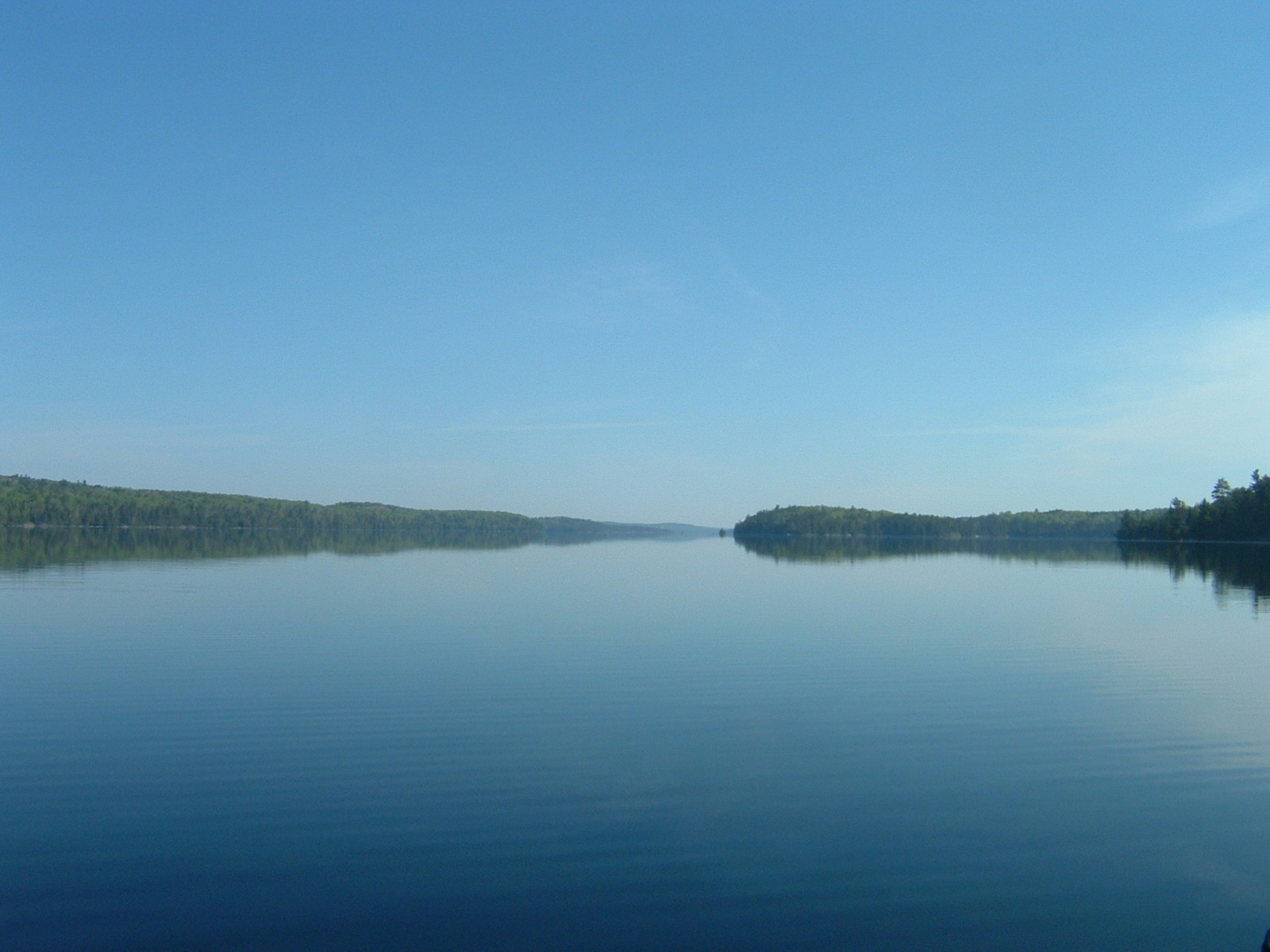
SPAMMED ON JACKFISH BAY

September 27, 2012

My wife and I got spammed on Jackfish Bay on our last canoe trip.  No, I didn’t have a computer; I saw a plastic bag in the forest behind the campsite, and it had three full cans of SPAM, the real deal.  Minnesota is the Spam capital of the world; for those who don’t know the etymology, it is shoulder of pork and ham.  When I first canoed, 50 years ago, Spam tasted pretty good.  Then again, in the woods, most things taste good, even pine needles.

On the same campsite were two empty beer cans and a burned out can in the fire area.  We carried all of this garbage out, along with our trash. The white pine in the center of the campsite had dozens of scars from people who had to chop at it.  Despite that, the tree was tall and had no signs of blister rust, unusual for a tree this age.  White pines are the most beautiful tree in the woods; the wood from them is prized.  Why anybody would deliberately chop at a tree that was likely a sapling when the Voyageurs came through 225 years ago is beyond me.

White pine (Pinus strobus), scarred by prior campers.

But, give a guy (usually a guy) an axe, and everything in the woods becomes fair game.

On the way out of the woods, we passed a campsite where somebody had cut a few dozen balsam pine boughs for a mattress.  There was a time, half a century ago, when we cut balsams down for tent stringers, used their boughs for mattresses, put cans in the campsite can pit (or in the lake), and threw axes at trees.  These days I thought were gone.  Having cleaned some 500 campsites in the Boundary Waters, those days are not gone.  Note to campers:  aluminum foil does not burn completely in campfires.  No, it does not.

The Wilderness Act of 1964 establishing the Boundary Waters (BW), made most of it, except for a few lakes, including Basswood, non-motorized.  Cans were not allowed, green trees were not allowed to be cut (they don’t burn, and there is no reason to do so), permits were required (and were free for more than three decades), and the number of people who could congregate at one spot was limited to 9.  The BW was and is the largest roadless area in the contiguous states.  This did not sit well with some, and Sig Olson, one of the first great wilderness writers, was burned in effigy in his hometown of Ely.

Sig knew, far before many, that wilderness was no longer something to be conquered or to be lived off but something to be protected.  It was a massive shift in thinking that many still have not embraced.

We now have lightweight and safer gear: air mattresses, chairs, small saws, rain suits, good tents, barbless hooks, food packaged in plastic, but not metal, that it ought to be easy to travel in the wilderness without harming it.

I write this to those who do not know the rules but wish to abide by them; I hope maybe a few of the others might think about what they are doing as well.  The BW is not pristine America post-glacial era.  Most has been logged, about a century ago, and it has been burned by natural and human-caused fires.  I’ve seen a third of the campsites with hot ashes or frankly burning fires and no inhabitants.  I’ve seen many other fires built outside the fire area.  Given the dryness of the soil–dig a latrine, as I have and you realize this fact–fires can spread underground.  Fire is a natural phenomenon, lightning sparked fires, such as the Pagami Creek Fire last year, clear the forest for new growth.

The debate should be about whether we let naturally caused fires to burn.  There should be no debate whether somebody should be allowed to leave an unattended campfire.

The BW is open to fishing and hunting.  Fishing has to change too, from a half century ago.  Catching large stringers of fish–or one huge fish, a breeder–has to stop, and catch and release, except for a meal, with barbless hooks should be done.  Is this inconvenient?  Sure.  But what about the upcoming generations?  BW lakes are not sterile, but the northerly climate makes them far less productive of fish than many lakes at lower latitudes in the US.

The world changes.  We are no longer voyageurs with canoes in an unmapped wilderness.  We are a quarter million annual visitors in the wilderness the size of Rhode Island.  While there is much room, large numbers of people put pressure on the wilderness with human waste, human trash, and other impacts.  Humans belong in the BW, but as our numbers increase, our impacts must lessen.  Even the best camper may break rules when caught out in severely inclement weather.  I’ve seen hundreds of pounds of abandoned gear.  The late Mike Manlove referred to this as “being out of one’s comfort zone.”

Wilderness is not only subject to attacks from within but from without.  Fish have mercury, lakes become acid.  Water quality may deteriorate from sources far from the wilderness.  Careless boaters can transfer invasive species from one infected lake to a previously normal one.   Heavily log or burn much of the forest, and streams and lakes will become muddy.  This affects fishing.  Eventually, such damage may clear.

Mining, on the other hand, is forever.  A sulfide mine, planned near the wilderness, is a huge concern.  Communities need jobs, but sulfide mines are particularly toxic to watersheds, and the BW is a watershed if ever there was one.  Another pillar of the local economy is tourism.  Destroy the watershed, and tourism will disappear.  I am told the mine will be safe; things tend to be “safe” until they are suddenly not safe.  Then, everybody is sorry, the money made, the rich folks gone.

One hundred fifty years ago, the virgin pine stands of northern Minnesota were thought to be inexhaustible.  Forty years later, the state was importing lumber.  Log enough, and the jobs eventually end, along with the forest.  Mine enough, the jobs eventually end, along with the surrounding area.  If we have an unemployment problem, one good solution would be for many families to have a lot fewer children.  The US population has more than doubled in my lifetime; we have one of the highest birth rates in the industrialized world.

This is the 21st century, and we need natural resources, wise use of land, and a lot fewer people than we are producing.  If we continue to act the way we did in the 18th century, nearly exterminating the beaver, the 19th century (the buffalo and the forest), and the 20th (treating wilderness like a playground), there will be a large emptiness in the 21st.

Nature can recover, but within limits, and often with very different outcomes than even the best biologists can predict.  Enjoy the wilderness, carry out what you brought in, and maybe a little stuff that others brought in, too.
SEASONS OF THE CANOE COUNTRY….AND LIFE

September 25, 2012

“Come on in,” called Dorothy Molter, as I had paddled up to shore on her island home on Knife Lake and knocked at the door.  Dorothy was a legend on Knife Lake.  She left nursing and Chicago around 1930 and lived on an island in Knife Lake, which straddles the border between Minnesota and Ontario.  Called “The loneliest woman in America,” Dorothy had hundreds of visitors every year.  She was grandfathered (or mothered) and allowed to live the rest of her life on Knife Lake after the Wilderness Act of 1964 required resorts to be taken down, power boats removed, limits on numbers of people who could go in, and even how low planes could fly overhead.

Dorothy was a legend.  She gave me some of her famous root beer, and as we talked, I commented that it was a little more difficult to canoe trip when I was 32 then it had been when I was 18, guiding canoe trips in Algonquin Park, wearing the coveted red neckerchief that only guides wore.

“Yes,” Dorothy replied, completely straight-faced, “I don’t paddle and carry as well as I once did, either.”  Dorothy had forty years on me and she would live for 5 more, her statement a lovely put down to my complaint about age.  I never forgot that.

In the ensuing 31 years and twice as many trips I have taken into the Quetico-Superior, not exactly easy from Arizona, I can count lots of things–wildlife sightings, fish caught, bear charges (1), aurorae seen.  What has fascinated me the most, however, has not been the three seasons in which I have paddled, but the changing seasons of my life with the canoe country.

I first put a canoe on my head 50 years ago, in the spring of my life.  I was an apprentice guide, and I carried wooden Old Towns, slept in canvas tents or under a canoe.  Nobody practiced Leave No Trace camping.  We had can pits, cut live balsam for tent stringers every night, and washed dishes in the lake.  I carried up to 140 pounds, dragged reluctant canoes down rivers, and fought waves so large they hurt, when the bow crashed down on the other side.

In my 30s and 40s, in the summer of my life, I discovered and then explored the Quetico-Superior, covering as much distance as I could.  I had a map on the wall in my office, and after each trip there was new ink on the blue and green splotches.  Miles mattered, new routes mattered, single carrying portages mattered.  I was up early, paddled hard all day, and slept well at night?  Rain?  I got wet.  Headwinds?  I worked.  Portages?  They were a chance for me to show what I had.

When I was 43, I volunteered in Ely for the Forest Service, spending six months away from my medical practice and 100 days in the woods between mid-May and mid-October.  I was a third again older than the guy who visited Dorothy Molter, in far better shape, but I now learned about the trees and the plant life that I had walked by, cut, and burned.  I learned that giving back to the wilderness was more important than having my own personal proving ground.

As I approached 50, I brought my wife along, a previous non-camper, and taught her how to travel.  She in turn taught me how to enjoy the woods–together.  I stopped single carrying portages in 2001, when I was 52.  I had nothing to prove and a lot I could hurt.  I enjoyed walking back in the woods for a second trip.

When I was 56, I soloed into Kawnipi Lake one more time.  Many of us who ply the canoe routes of Hunter’s Island feel Kawnipi is the most beautiful lake on either side of the border.  I may go back again, but it doesn’t matter now whether I do.  I have been there six times, love the place, and am thankful for what I’ve seen there.

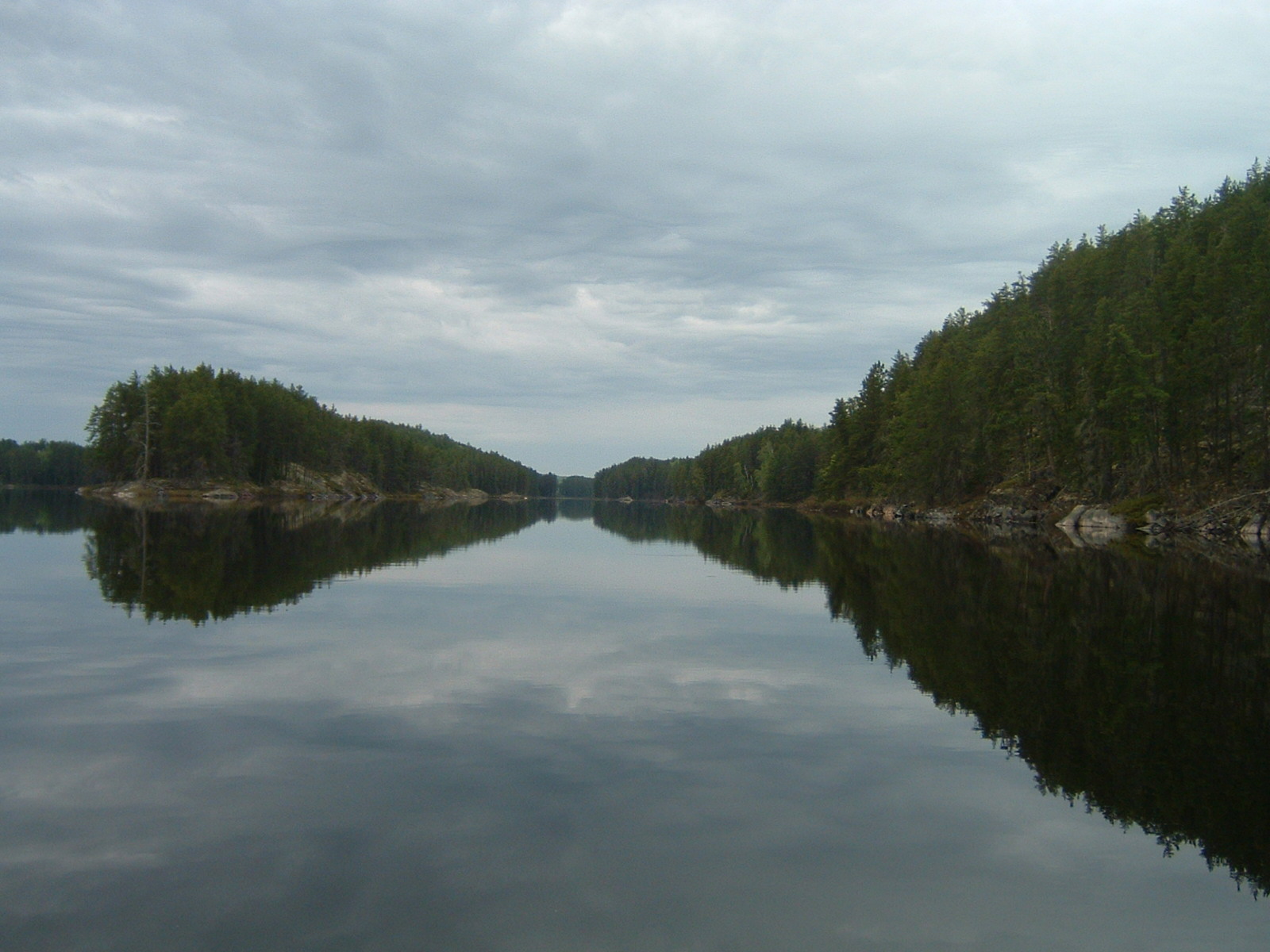
“Bowling alley.” Kawnipi Lake.

The northern sweep of Agnes Lake, on the way to Kawnipi.

The year after, my wife and I sponsored a scholarship at Vermilion Community College (VCC).  We have no formal tie to the school, but Ely has given both of us a great deal, and we get great pleasure from helping the next generation of wilderness enthusiasts, many of whom not only live at the edge of wilderness but at the edge of poverty.  These young–and older–men and women are doing great work, and each year at the spring banquet, I meet them and hear their stories.

After 2003, my wife and I started base camping in Lake Insula.  I never thought I would base camp, but I enjoy the day trips where we explore side bays, sometimes finding trails that lead to interesting views.  It is nice not to have to set up camp every night and break it down every morning.  Do I miss the long days and the multi-lake trips?  No, I look back on them with fondness.  My pictures have faded; neither the diaries nor my memories have.

We’re now well into our 60s, the autumn of our lives, and every autumn we come up and base camp somewhere else.  We find a nice place, explore, relax, and forget about the “road, steel and towns” that Sig Olson wrote about.  We are in his “back of beyond.”  We enjoy canoeing and we work well together.  The lakes are old friends; the campsites second or third homes.  Every year we can come up is a gift–one more chance, one more trip, a few carries, the automaticity with which I put a canoe on my head, or deal with a 2 foot chop.  I have watched with great joy my wife become an excellent canoe tripper who also loves the woods, and helps me make a comfortable camp, in all sorts of weather.

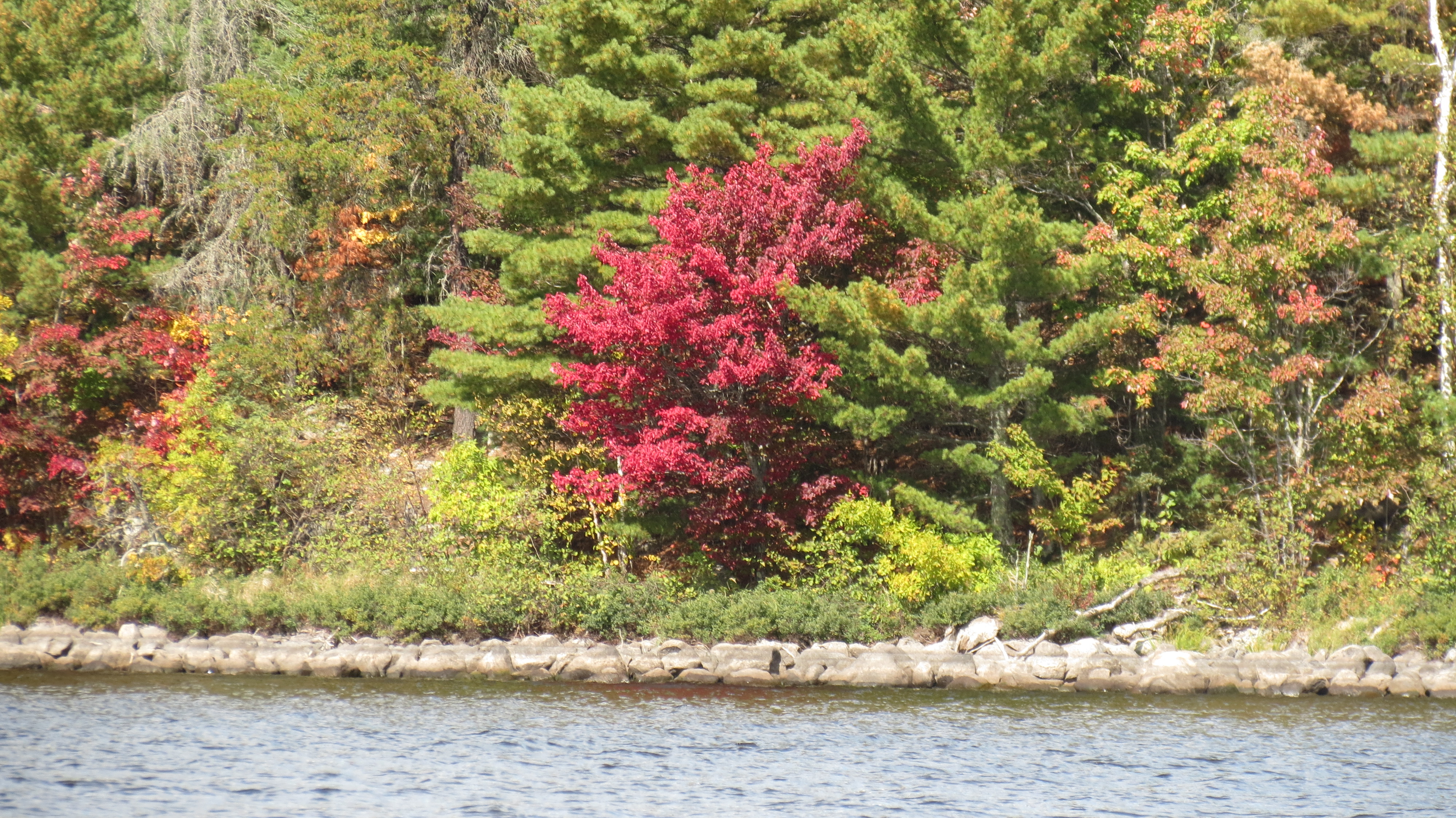
Fall colors on Jackfish Bay.

We established a second scholarship at VCC and contribute to a third.  VCC has become family.  I come up for the banquet in April and take a solo trip for a day or two.  I don’t go far, I just want to be out there, alone, thankful for those who saved this wilderness from damming, clear cutting, and roads.  In the autumn of my life, I get to see others in the spring of their lives and canoe in spring, too.

We don’t know how long we will be able to canoe.  The autumn is a brilliant time in Ely, and it is a brilliant time in our lives.  This past trip, I saw Lesser Sandhill Cranes fly high over me on Pipestone Bay.  Next March, I will be in Nebraska, at Rowe Sanctuary, showing people these same birds during their spring stopover along the Platte, one of the two great North American migrations.

We will camp as often as we can in the Boundary Waters.  We know there are no guarantees reagarding ability or longevity.  We hope to canoe into our 70s.  I dream of going out in the winter of my life when I am 80; I took my father into the Quetico when he was 78.  We hope there will be enough of those with sense to guarantee the future of this region to those whose lives are not only drawing to a close, but those whose lives have yet to begin.

Eventually, we will die, like every living organism we have seen in the wilderness.  Our ashes will be spread in the area, finally being part of the wilderness we have travelled, loved and supported.

GOLDEN PEARLS AND DIE LIBELLE

September 15, 2012

One of the interesting experiences about learning is a new language is the new world that opens up to one who can read books written in that new language and listening to videos narrated by speakers of that language.  Translations are important, but there really is a difference when one reads a book written in the original language.

Reading several German books has nearly doubled my vocabulary in the past six months, for while I can understand the meaning of a book, it is essential to look up specific words I do not know.  This flies in the face of some advice, to learn words in context, but when I took my PSAT exam years ago, my contextual definitions were often wrong.  From that day forward, if I am uncertain what a word means, I look it up.  I have multiple different lists, and I memorize….daily.

I am not going to use all those words, but if I am to understand German–.and now Spanish, too, for I am learning that — I need to know what those other words mean, for while I may not say them, others will.  I am continually amazed by words I thought I would never need to know that were said a few days later.  I learned “die Libelle,” dragonfly, and wondered when I would ever to use it.  A week later, on German radio, there was a description of research done about die Libelle, and I immediately thought “wow, something is going on about dragonflies”.  The something was how they caught die Stubenfliege, fly.  Every word that I can understand gives me more pieces of the puzzle that is called conversation.

My experience with German is one person’s.  I am mostly self-taught, because there have been few with whom I have been able to speak or write on a regular basis.  Good grammar books are not common.

German videos have shown me all parts of the world.  Many are from Germany itself, so I have seen the large cities and the northern coast–North and East Seas–separated by the Danish peninsula.  I have seen parts of Bayern–Bavaria–that I did not have time to see when I was in München.

Still other videos have shown me, narrated in German, apricot harvests in Turkey;  nomads in the high arctic of Russia, dealing with the “gas rush”; salt mining in Bolivia; tree houses for research in Costa Rica; research on the Andean Condor in the Argentinian Patagonia; a women’s co-op in Yemen and water filtration in Peru.  One was about Portland, Oregon, describing the lifestyle.  Another in the US showed homeless eking out a living in the California desert, living in conjunction with snowbirds.  A third showed Detroit beginning to turn into a farming city, using empty neighborhoods to grow crops.  I miss some meaning, but I don’t miss much.  A lot of the translations are slow, and I know enough Spanish and French to know when there is not a full translation into German.  That is a lot of fun to recognize.

A recent video was about harvesting pearls in the Philippines, off the coast of Palawan, the long island at the western end of the Archipelago.  I never saw Palawan, but I have spent a lot of time in the Philippines.  I was struck by not only the way pearls were harvested, but the science being used to run genetic crossing of the mussels, trying to produce the most valuable golden pearls.

There are other problems, too, that I hear about.  Virtually every video that discusses the environment comments on climate change, viewed from the local perspective. On these videos, I have not heard one word saying that climate change is a hoax.  Perhaps the videos are biased; perhaps not.  Coral reefs are bleaching, which is not news.  The northern end of Palawan is too warm (32 C., or nearly 90 F.) for growing mussels.  The oceans are getting warmer.  This is a fact, not fiction, not a hoax.  They are also growing more acidic, which is also a fact, due to carbon dioxide.  For those who say that man is not changing the environment, ocean acidification is the smoking gun that says we are.  This has made the news in the last several months; I knew about acidification in 2006.

Water vapor is, of course, the most prevalent greenhouse gas.  As air warms, there can be more water vapor present, because warming makes gas molecules move faster, keeping them from condensing.  Air at 31 C, all else equal, may contain 2 grams more water per cubic meter than air at 30 C.  The amount of air over the tropical ocean would best be measured in millions of cubic kilometers.  Does it prove anything?  Perhaps not, but there is a lot of circumstantial and non-circumstantial evidence to suggest we have a problem.  Water expands with heat, with a coefficient of expansion of about 0.0002/degree C.  Warm water 1 degree C. and the worldwide 110 million square kilometers of ocean surface plus a significant depth expand a lot, when multiplied by 0.0002/C.  Add glacial melt, and we get ocean rise, which is well documented to the tenth of a millimeter per year.  This rise will be at least 70 cm this century, but some think maybe a meter, and can easily flood a coastline where there is a shallow angle from sea to land.  In addition, salt can easily contaminate the water table.   If you live in Kansas, that is no big deal, unless we prove that the drought of 2012 was due to climate change.  It may not be.  Or, it may be.  The question goes back to Clint Eastwood in “Dirty Harry”:  “How lucky do you feel?”

What continues to interest me is how nearly every place these videos are shot has an environmental overtone.  Water in Peru is a problem because of the receding glaciers.    Drought in Yemen is the cause of decreasing biodiversity, which is important both for the planet, and for humans, because many of our ideas for new medications or molecules come from natural compounds.  There are just too many of us, and the planet is showing signs of big signs of wear.  I haven’t heard much about this in English, but I sure am hearing about it in German.

ALL MODELS ARE BAD; SOME ARE USEFUL

September 10, 2012

On a recent science podcast, climate models were being discussed, one conclusion of which was that droughts like the 2011 one in Texas were 20 times more likely to occur today then they were 50 years ago, and that this was due to climate change.  However, floods that devastated Bangkok recently were felt not to be due to climate change, but rather a cyclical issue that was worsened by the way Bangkok had built since the last such flood.

There was a call from a listener, and as soon as I heard the tone of voice, I said to myself, “Uh oh.”  Some listeners call in with questions, some give speeches.  This one did both.  He wanted to know if the models were so good, what the temperature was going to be in a certain city in the Midwest next July 4 and for the following 3 July 4ths.

He had a very angry, challenging tone of voice.

Climate models are not the same as weather prediction.  We cannot predict the weather accurately more than a few days in the future.  Does that make the GFS, ECWMF, NAM, AVN and other models wrong?  Yes….and No.  As a statistician, I learned the following:  “All models are bad.  Some are useful.”  Weather forecasts are based on atmospheric models, which differ according to initial conditions and the relative weight of the known variables.  I remember 50 years ago, when weather forecasting was done by a non-meteorologist on television, and the forecasts were not very good.  We have gotten a lot better; short-term forecasts, in the 24 hour range, are exceptionally good; I use the GFS 9 day model as a rough idea of what to expect in the coming days, but I know matters will change.

Climate forecasting is another science altogether, taking into account different long range variables.  From 40 years ago, when climate scientists, unaware of key variables, thought there might be cooling, to now, where virtually all believe warming is highly confident (95% being considered highly confident), there has been much research and ability to get information about the past.  The fact that a confidence interval is used means that statistical techniques have been taken into account, and while the conclusion may be wrong, it is highly unlikely that it is.

Let me explain a confidence interval:  it is NOT a probability, or it would be called such.  It is a range, based on the evidence, of where the parameter (the true measurement) is expected to be.  The parameter is unknown and unknowable, so that the interval either contains or does not contain the parameter.  This makes no sense with probability, so we call it confidence.  If we are able to repeat the experiment 100 times, we would expect 95% of the intervals generated to contain the parameter.  We would not know, of course, which 95 would.  The fact that models are not perfect is taken by far too many to allow them to take the other view, that they are wrong.  One may, of course, choose to do so, but it behooves those who disagree to come up with their own margin of error, p-value, and confidence interval, so the data can be appropriately discussed.  To say,”models are wrong,” is inappropriate for a scientific discussion.  Of course they are.  Statistics as a predictor is wrong, but good statistics state the likelihood an error of a defined amount will occur.

Probability is forecasting the future.  There is almost nothing complex in our world that we can forecast perfectly.  There must be some error.  Every responsible scientist quantifies that error in some manner; to do otherwise is to say that one can predict with absolute certainty what the future will bring.  We don’t do this with temperatures in Iowa on July 4th, where the next hurricane will form, or even its 10 day path.  Nor do we say, with absolute certainty, that the Earth is warming.  But the range that the models are giving us does not include zero or a negative number with high confidence, and that means the conclusion is, based on the current data, that the Earth is warming.

While correlation does not equal causation, there may be factors that make such causal.  Because we know that one greenhouse gas has increased (carbon dioxide), that another, in the face of warming, has increased (water vapor), a third and fourth (nitrogen oxide and methane) are increasing, we have reason to believe that the conclusions are not in error, and that there is a causal factor.

Anybody who follows hurricane forecasts is familiar with the cone of uncertainty, and the fact that the cone changes with time.  We saw this with Irene last year, and we saw the gradual westward shift of Isaac this year, as the initial forecasts showed Isaac to strike Tampa.  With time, the models showed a westerly drift of the hurricane’s expected path, and for it to ultimately strike New Orleans.  The models were constantly updated, and the gradual change was noted.  What did not happen was that the hurricane dissipated, it curved into the western Atlantic, or it went south into the Caribbean.  The models were good.  They were not perfect, but they were very good, and three days before Isaac made landfall, it was predicted to hit very close to where it eventually did.

Nate Silver says that the cone of uncertainty for hurricanes was 700 miles in diameter 25 years ago and 200 miles in diameter today.  He is studying models to understand why some work and others do not.  But the poster child for good models is weather and climate science.

Models to some have become the new “Bad Boy” of climate science.  Every responsible scientist develops models, if it is all possible.  Indeed, the dawn of simulation was about 15 years ago, and I remember running simulations in graduate school in 1998.  We are now able to do this so much better than we once did.  Debate should be over what models are used, their initial factors, the variables, and the conclusions, not whether or not we should use them.