Archive for November, 2012

TOTAL SOLAR ECLIPSE OVER AUSTRALIA, 14 NOVEMBER 2012

November 22, 2012

This eclipse was not going to be a high probability one to see on the continent.  Saros 133, which is the name of this family member, last seen in South America 3 November 1994, would again visit the Earth 18 years and 11 1/3 days later, this time a third of the way around the world, beginning east of Darwin, crossing the Gulf of Carpentaria, then Queensland, near Cairns and Port Douglas, before heading out into the South Pacific Ocean north of New Zealand.  One per cent of the Earth would be covered by totality, but only a small part of that one per cent would be visible over land.

Cairns, on the northeast coast, is in the tropics, about 17 degrees South latitude.  The tropics have a good deal of convective rain showers, and Cairns had about a 50% probability of one’s seeing the eclipse.

We wanted to see Australia, and if I saw the eclipse, it would be the seventh continent I had seen an eclipse on and over.  But more importantly, it would be another chance–my thirteenth–to see one of the most spectacular shows in the world.  We eclipse chasers are addicted to the sight.

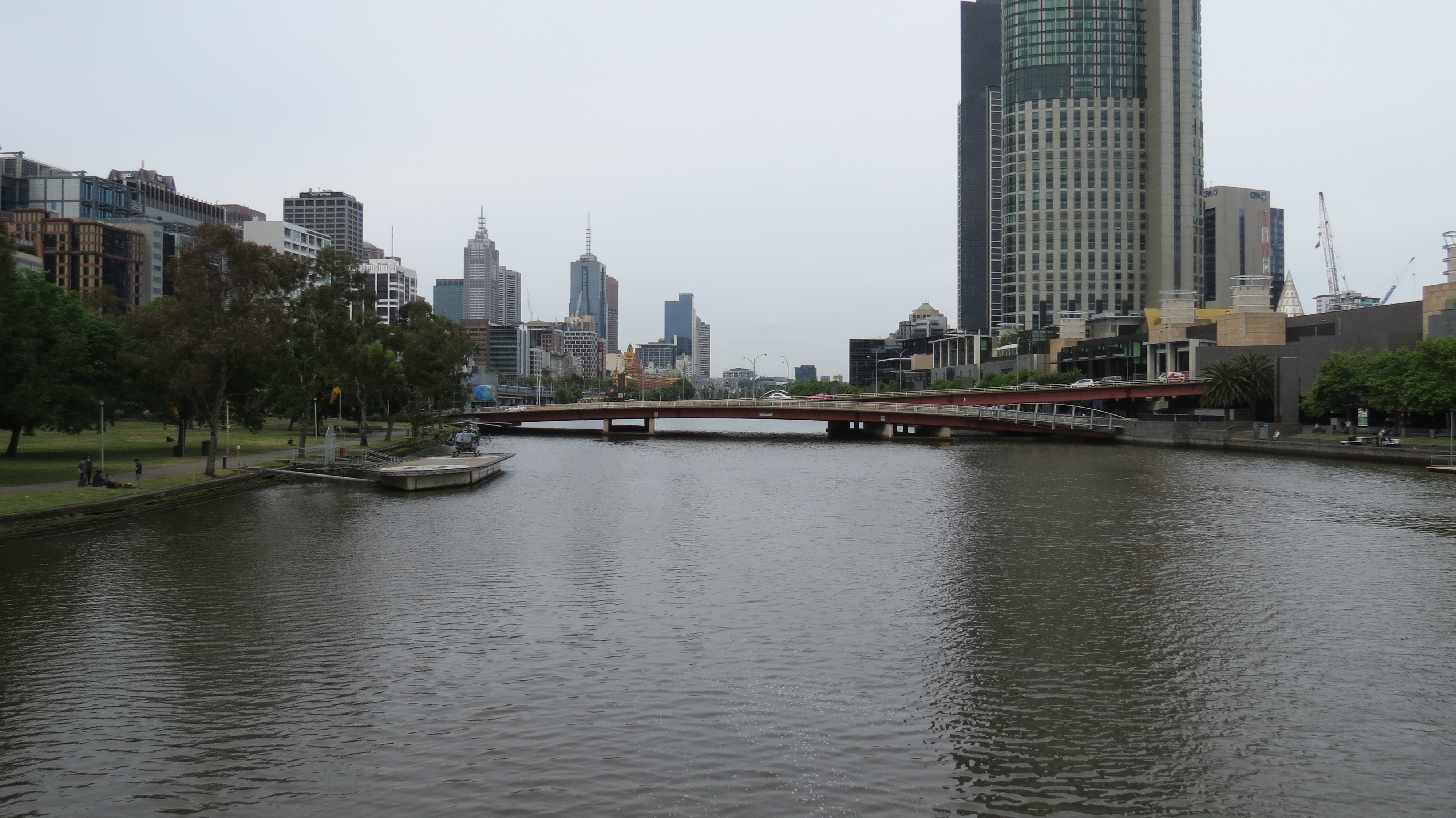
We flew to Melbourne, stayed there for 2 days, getting to know the city, and meeting up with two friends from Germany, one of whom I had met before at the last eclipse, over Patagonia, Argentina, 28 months earlier.  Every eclipse, I meet people from prior eclipses, and this one was no exception.
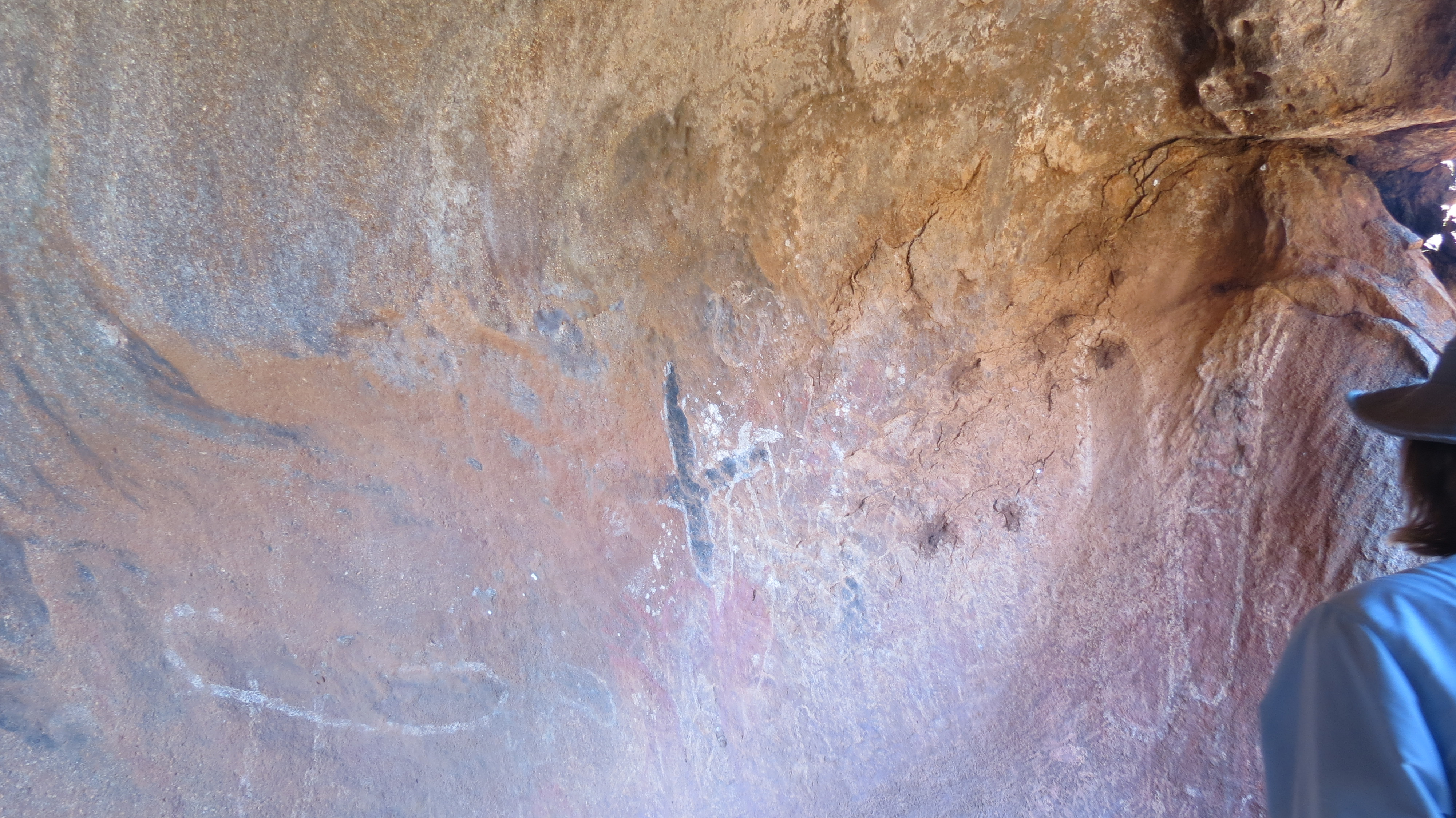
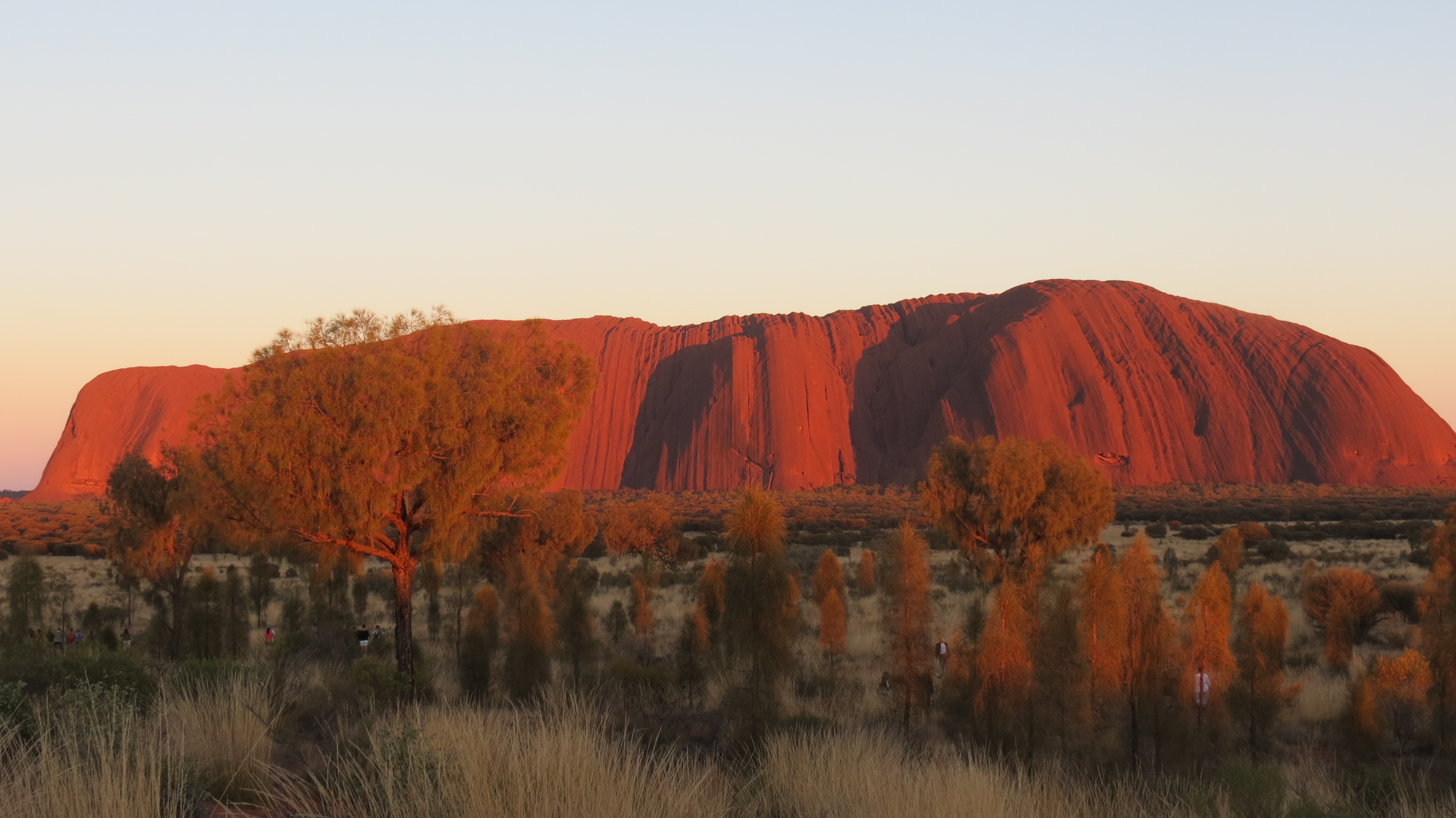
We then flew to Ayers Rock (Uluru) by way of Alice Springs, and visited the monolith at sunrise and sunset, along with a walking tour, so we could see the caves, the petroglyphs, the sandstone, appreciating that for 60,000 of the 350 million years, people have marveled at this place, making it a sacred spot.
We then left, and flew to Cairns by way of Alice Springs again, this time having time for a tour of the town that is virtually in the center of the continent.

The following morning, Cairns was cloudy, except for a nice hole in the sky, that would have been 15 minutes late, had the eclipse occurred that day.  We went out to Green Island, noting that it seemed to be clearer, although the locals said that it had a similar climate to Cairns.  But it didn’t.  Cairns is deeply recessed from the Coral Sea, with an eastern peninsula that was catching moisture from storms to the south and spilling over those of us in town.

We had decided not to get up at 1 a.m. to go out to Green Island for the eclipse, figuring we wouldn’t have mobility.  The problem was we didn’t have mobility in Cairns, either, to go inland or to Port Douglas, both of which might have been better spots to view the spectacle.

My wife suggested I e-mail meteorologist Jay Anderson, who has achieved fame as an eclipse climatologist and meteorologist.  I have been on several eclipses with Jay, knew he was on a cruise ship for this eclipse, but figured he wouldn’t have time to write me back.  Still, what did I have to lose?

As it turned out, it was the best decision I made during the trip.  Jay gave me a weather synopsis and said succinctly at the end of his e-mail:  “If you can, get offshore.”

In the meantime, I met two Russian friends.  Sergey and Tatiana were at the annular eclipse in Kenya in January 2010.  Sergey works for an oil company in Luanda, Angola, and Tatiana is a travel agent in Slovenia.  Sergey was also at the annular eclipse in the US last May, and we saw it together in Page, Arizona.  Sergey was doing automatic eclipse filming, using programs that were far beyond my comprehension.  He was going to stay on land and hope.  Tatiana would do the same, and she had to fly out of Cairns about 2 hours after totality.  Cairns was flooded with eclipse chasers for several days.

So, at 1 a.m. on 14 November, eclipse day, we awoke and caught the 2:30 a.m. boat to Green Island, setting up on the northeast beach at 3:30.  The sky above us was clear, and darker clouds were behind us, back towards Cairns.  It was easiest the clearest skies we had seen so far on the tirp.  We had great views of the Southern Cross, the Magallenic Clouds, alpha and beta-Centauri, and upside down Orion.

There were clouds on the horizon, but we could see sunrise, and first contact, where the Moon begins to cover the Sun.  As the Sun rose, the clouds increased, and so did the tide, which was due to rise 3 meters 2 hours after totality, at 6:38.  We figured we were safe from the tide, but it rapidly appeared that this would not be the case, so we moved well up on shore.

As the Sun rose further, the clouds began to become a little larger and darker–typical convection in the tropics.  We saw several clouds–one in particular–that were worrisome, when we were only 7 minutes from totality.  But then convection shut down due to atmospheric cooling of 3.5 C from the eclipse itself.

This eclipse had a wonderful diamond ring at both ends (do any not?), with a very delicate corona extending about two solar diameters to the east of the Sun.  It was not a dark eclipse, and there was little red along the horizon, but like the family member I saw in Bolivia, the shadow was visible in the morning sky.  Trees on Green Island prevented us from seeing the shadow arrive, but I had no difficulty seeing it depart.  And two minutes later, the eclipse was over, just like that.

Easily three hundred people saw this from the end of Green Island.  There were experienced chasers and many first timers.

Every eclipse is different, but it is difficult to say whether one is more special than another.  Each person sees something a little different, and each person who is fortunate enough to have seen more than one sees something different.  I try to go through a checklist of things to see with each eclipse, but like my camera and video plans, it usually is forgotten at the critical moment, which lasts on average of 2 minutes, but feels like 8 seconds.  We are left asking….”When is the next one?”  It will be 3 November 2013 in the South Atlantic, ending in Ethiopia.  Getting to that one will be difficult….but not impossible.  We have a connection in Africa–Sergey–who has been to Kampala three times and thinks Uganda is a decent possibility to see 24 seconds of totality–yes, 24 seconds–next year.  We discussed the trip, and several other eclipses coming up, including the long-awaited 2017 eclipse in the US, when we met at Sydney a few days later.

Fifteen seconds of fame:  I was interviewed by Australian TV after the eclipse, while on the boat back from Green Island.  I have no idea if anything appeared on TV.  And while lying in bed that night, I got a call on my cell phone beginning with “44” .  A journalist from CNN in London wanted to interview me about my experience, that I published on CNN iReport.  What is interesting–and discouraging to me–about iReport is that most of the featured pictures were of the crescent Sun.  Few showed the total eclipse itself, which is far more beautiful.  Indeed, the difference between totality and a partial eclipse (even 99%), is the difference between day and night.

Eclipse families:

Currently, there are 13 total eclipses in every 18 years 10 or 11 1/3 days, depending upon leap years and time zones.  Each one of the 13 total eclipses is a member of a family that begins at either the north or south poles and moves the opposite direction over nearly 1300 years or 70-75 eclipses.  Some of these start off as total; most begin as partial, become total or annular for many “visits” and then end as partial.

The reason for this repetition is the 3 requirements for a total eclipse:

Synodic period–New Moon–every 29.530589 days.  The Moon has to be in line with the Earth and Sun.                                                    223 New Moons = 6585.3213 days.

Draconic Period–every 27.21222 days.  The Moon’s orbit is inclined 5.1 degrees to the plane of the Earth’s orbit, and the nodes, where it crosses the Earth’s orbit, are constantly moving.  The Moon has to be near a node when it is new.  This particular eclipse was near the ascending node, where the Moon was near crossing the plane of the Earth’s orbit.                                                  242 Draconic periods=6585.3572 days.

Anomalistic period–every 27.554550 days.  The Moon and Sun are nearly the same angular size in the size, but the Moon’s size can change 12% from our view depending upon whether it is near the Earth or far from it.  The Sun-Earth distance changes about 3% every year.  The Moon has to be close enough to the Earth to appear larger than the Sun.                                                                    239 Draconic periods=6585.5376 days.

The first two determine a central eclipse, where the long axis of the Moon’s conic shadow reaches the Earth.  They occur every 6585.3213 days.  Eighteen years are 6570 days, and 4 leap years, or 5, make the period between successive eclipses in a family 18 years and 10.32 or 11.32 days.  The third of a day is important, because it shifts the path of the eclipse about a third of the way west around the world. This eclipse was seen in South America in 1994 and Australia in 2012.  It will be seen in the South Atlantic and Africa in 2030.

While the periods are almost alike, they are not exact.  There is a 0.03 day difference.  This seems minor, but over time, the Moon arrives at the node 2 hours later each cycle.  The Moon doesn’t have to be exactly at the node for a total eclipse to take place, but eventually, the Moon will arrive too late and the eclipse will not happen.

This particular Saros, 133, is an ascending node eclipse that began in 1219 and had its first total eclipse near Prague in 1544.  In the 19th century, it generated eclipses greater than 6 minutes, long for an eclipse.  In 1850, an eclipse was 6m50s, the longest this particular Saros would generate, and it occurred in the eastern tropical Pacific Ocean, north of the equator.  The last total eclipse of this family will be in 2373, and the last eclipse of the Saros will be in 2499.    Because these cycles are not perfect in their lining up, eventually the Moon will miss the node when new, and the eclipse family will die.  But at the same time, one new one will reach the node at the right time, and a new Saros will be born.  I find the workings of the Saros cycle as beautiful as the sight I saw from the Great Barrier Reef last 14 November.
ULURU

November 19, 2012

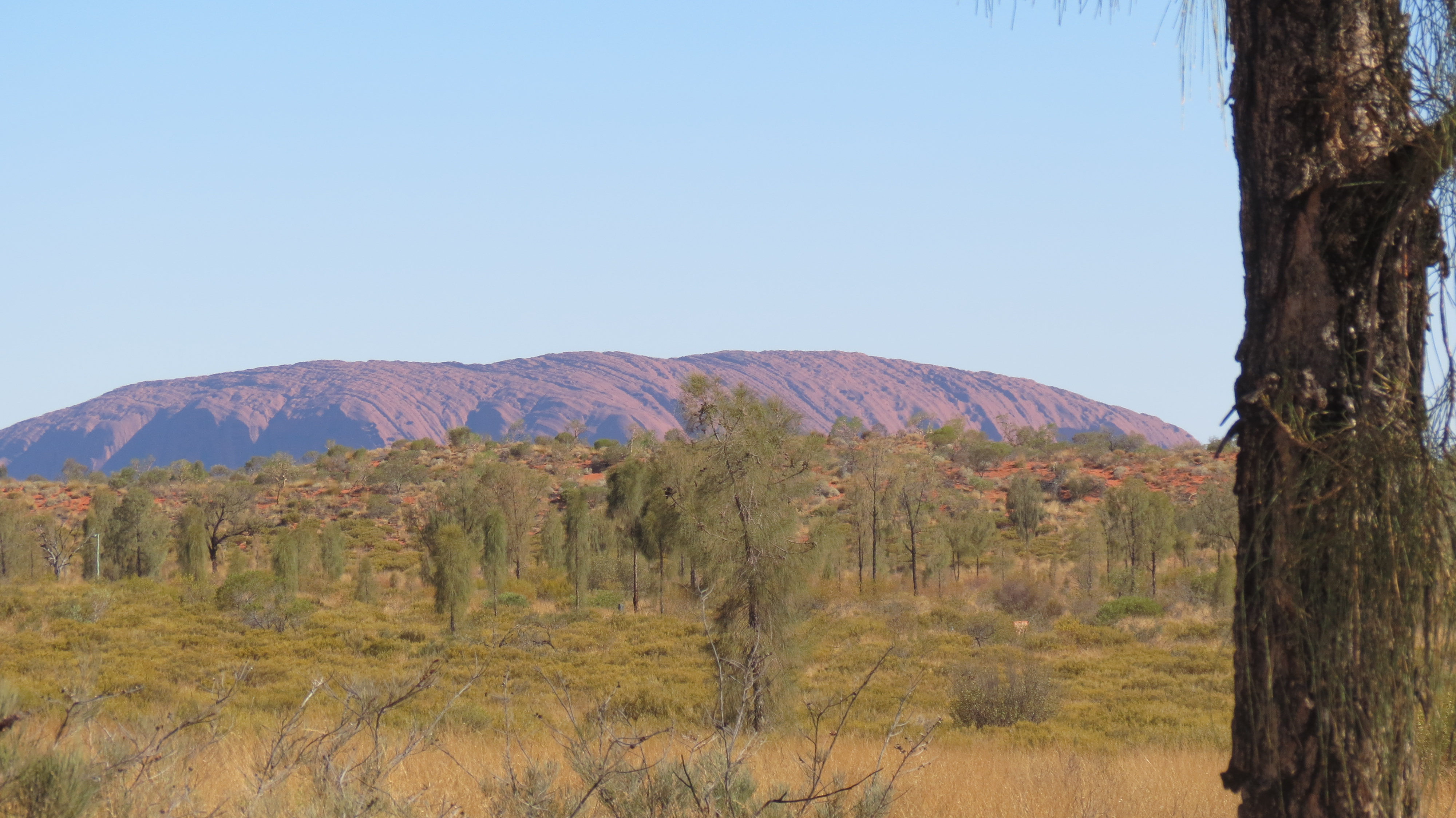
From 20 km, I finally saw the monolith, Uluru (Ayers Rock), that for years had been at the top of “The List,” of things I have wanted to see or do ever since I saw a wolf on Isle Royale, six and a half years previously.


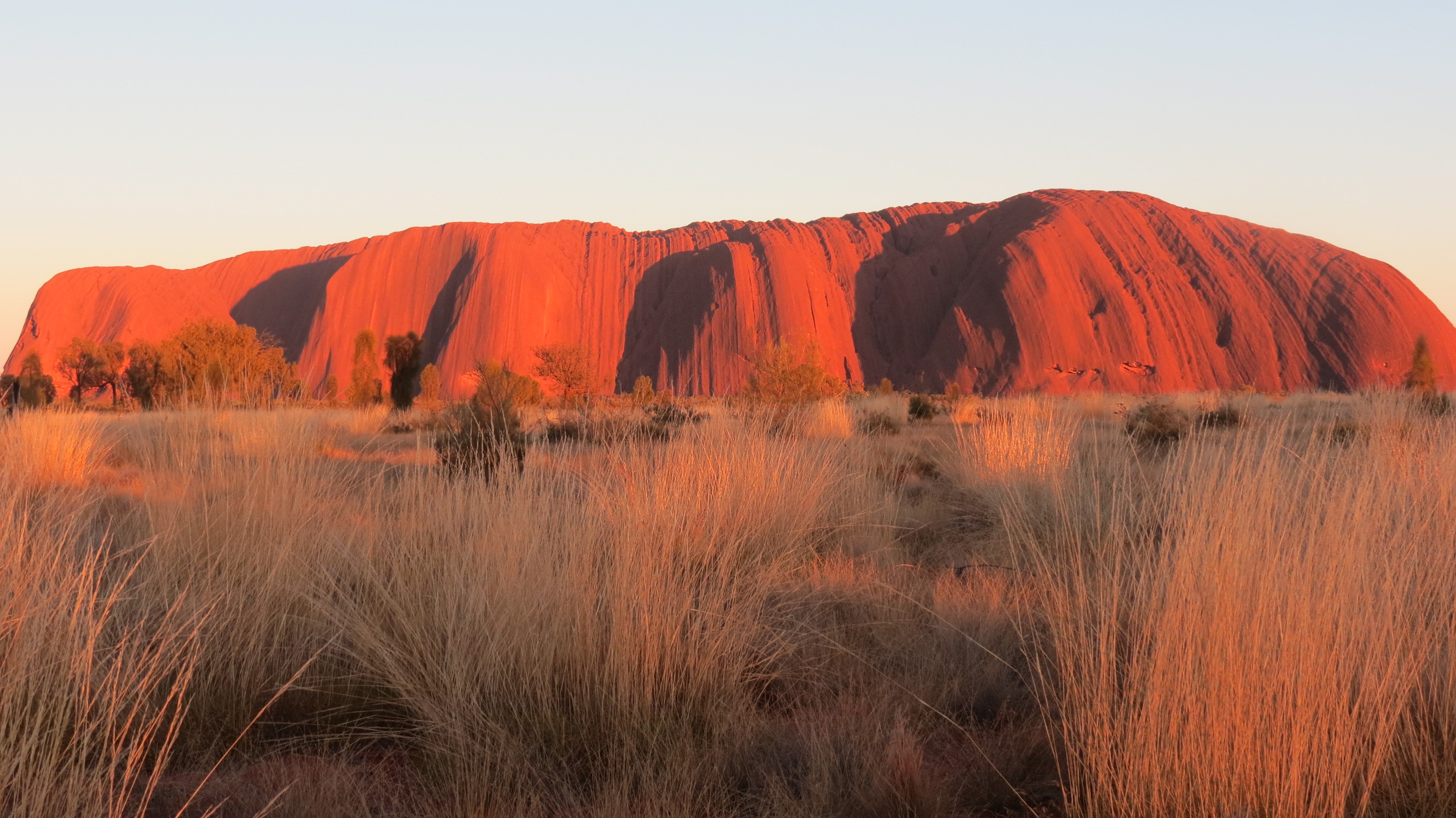
The day after we flew in, we took a sunrise tour, where we saw the low rays of the Sun, in a few days to be briefly eclipsed by the Moon, strike the sandstone.  Then we approached it.


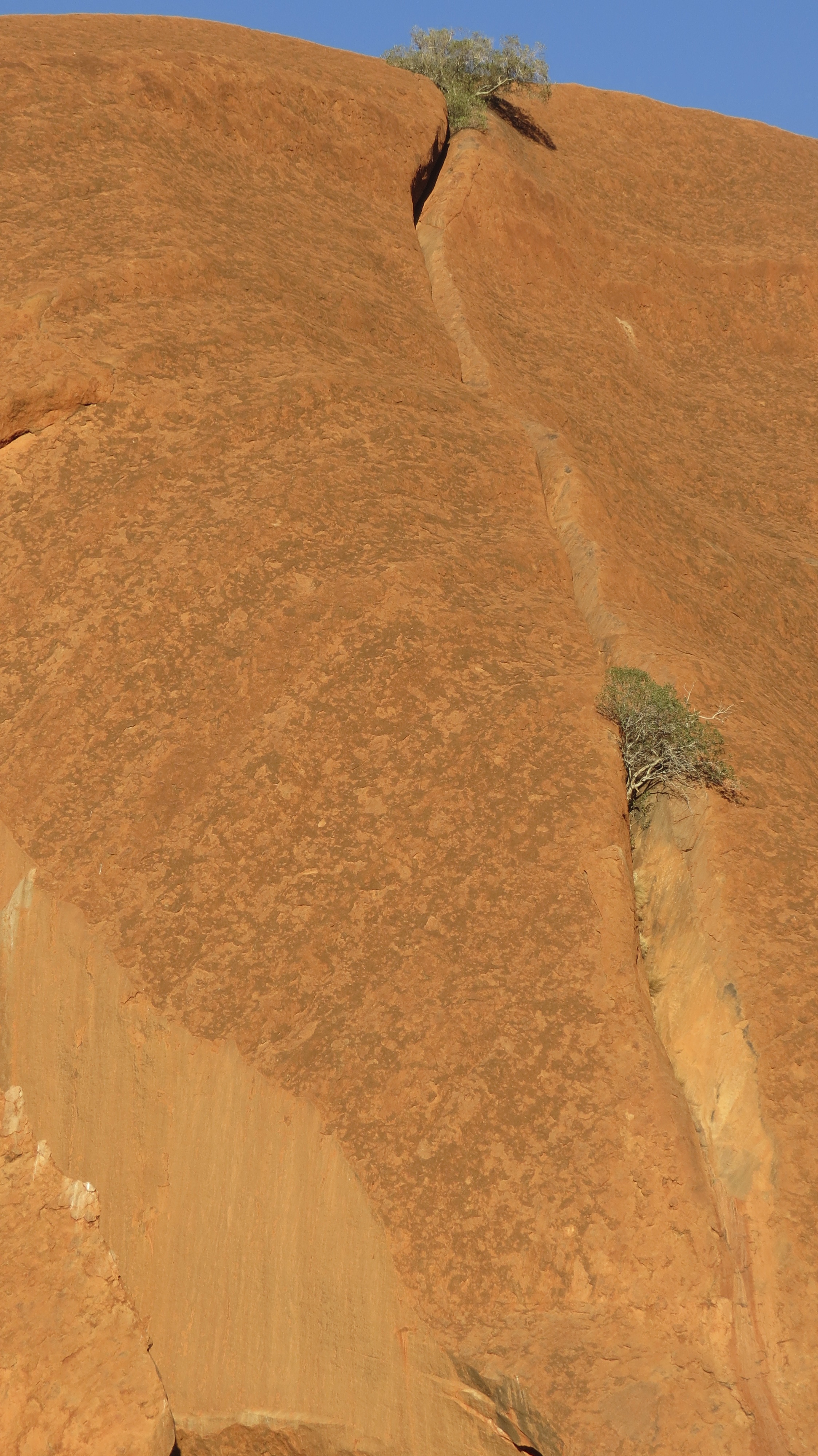
Uluru has been around for 350 million years.  What we see is the tip of a large uplifting, with rock extending about 2 km below the surface.  I didn’t know that, and that was only the beginning of discovering what I did not know.


For example, we visited numerous caves and inlets to the rock.  Uluru is not simply a rock with vertical faces; there are many places where water can collect, places where people can–and have–hidden, lived, and practiced their faith.  The aborigines, who were once shot on sight by the first white men on the continent, have been present in this area for 60,000 years.  That is roughly thirty times the existence of any other major religion on the Earth.  To them, Uluru is sacred.  There are places along the trail where one is not allowed to photograph, just as it is considered insulting and wrong to photograph an aborigine without their permission.  The visitor’s center is off limits to photography as well.

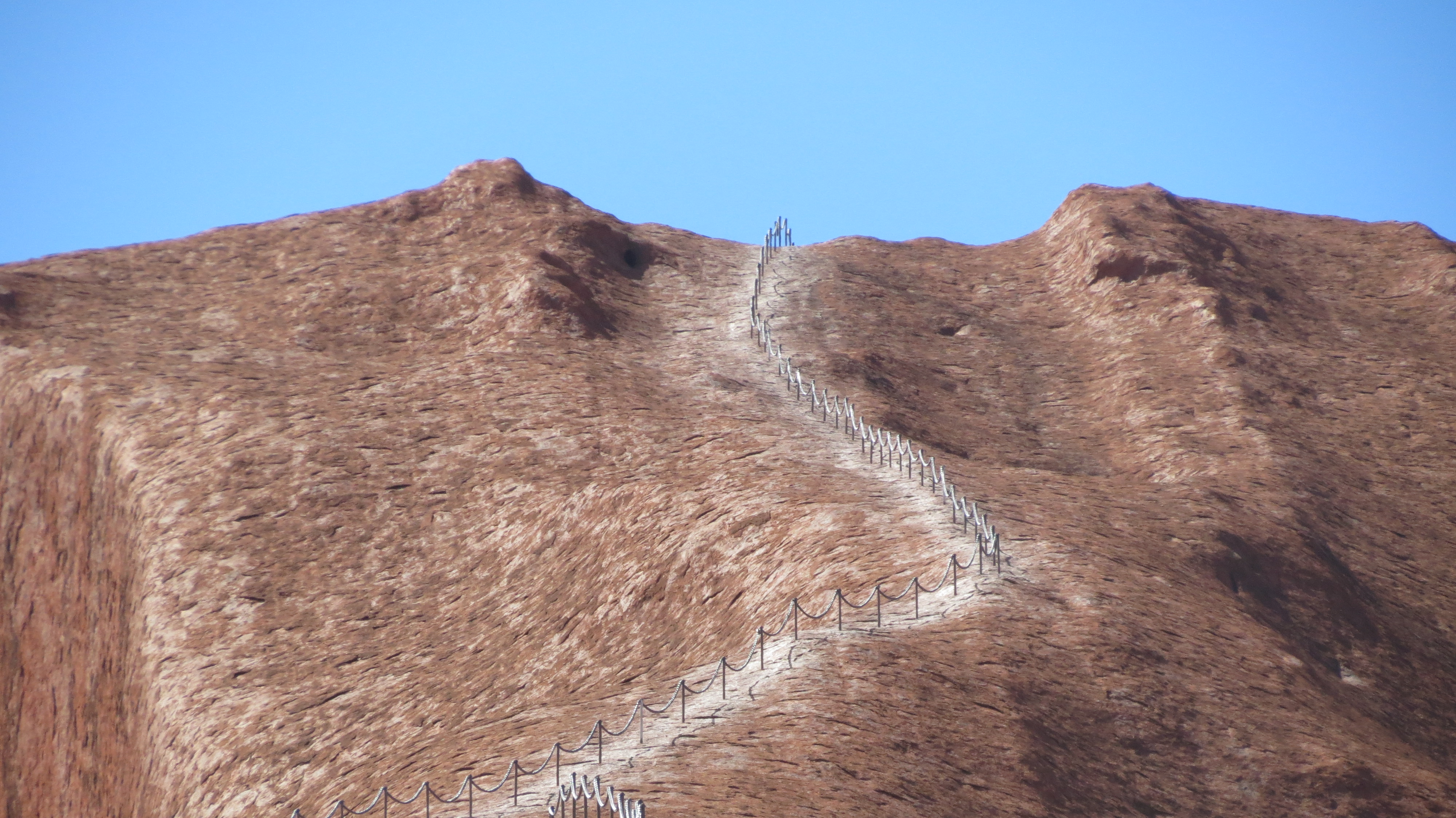
As one leaves the visitor’s center, there is a request–not a requirement, since there are no requirements at Uluru, only requests–not to climb what is considered sacred to the aborigine people, who never climb the rock.  There is a chain that allows people to climb the monolith, but the day I was there, the rock was closed because of high winds.  It didn’t matter to me, since I had not planned to climb it anyway, knowing it was sacred and ought not to be climbed.


Thirty-six people have died on Uluru from climbing, and for each the natives have required a ceremony to help those who died into the afterlife.  There are several memorial plaques that were placed on Uluru as well, although there are no new ones, because that affects the monolith, too.


Frankly, I found it good to go to a place where there were no extreme sports allowed.  There were no races up Uluru, no helicopter rides or hot air balloon rides to the top.  Indeed, the airspace over Uluru is also off limits.  There were no people BASE jumping, or using other conveniences to fly off the mountain.  Other than the chain fence, and the worn path into the Sandstone, there were no marks on Uluru other than a few paintings in the lower caves.

I can only imagine what Uluru would be if left to the white people.  There would be multiple routes to the top, the sandstone would be pockmarked with pitons, there would be ropes hanging off it, old campfires, tents, mountain biking, tours to the top, marathons ending at the top, races around the monolith, human waste and other litter.


I don’t have a problem with any of the above races, so long as they take place where it is appropriate, not one sacred to people who have existed in an incredibly harsh environment for sixty thousand years and have not destroyed it.

Theodore Roosevelt once said about the Grand Canyon, “You cannot improve on it.  Leave it as it is.”  We have not done that.  South Rim Village is large, although it is a relatively small area on the Rim.  There are trails, although they are limited as well, and they require a great deal of effort to walk.  We have, however, filled the airspace with fixed and rotary wing aircraft, creating a great deal of unnecessary noise.  By Uluru, one hears the wind, the birds, and very little else.

That evening, we took a sunset tour, again watching the change of colors that were a function of the Sun, the sandstone, the caves, and the black stripes where water drained off the monolith with each rain.  It was spectacular.  A group of Austrian tourists were nearby, and I practiced my German with them.  I lent them my binoculars so they could see parts of the monolith that I now knew something about.  It was the first time I had taught about nature while speaking only German.  I explained the pools along the rock that collected water and then overflowed to pools below.  I found words that I knew as I needed them.  It wasn’t great, but they understood what I was saying.  In two roles that I was comfortable in, teaching and nature, I was able to relax and speak.  It made the view even more magical.  How many different languages had been spoken at this site during the past six hundred centuries, I cannot imagine.  But one man spoke two that night, and for him, and that was special.


It’s nice for once to see something truly unique, virtually unspoiled, and will stay that way, except for the path to the top, which may some day be closed.  I hope it will be.


I went to Uluru to see the largest monolith in the world.  I came away thinking how nice it was that Australians, most specifically the most maligned ones–the aborigines–have not allowed the large numbers of people who have to show they are the best at whatever sport they decide they must do.  World class is to me an overused term, but at Uluru, the term is deeply appropriate.

What a blessing.


“WHY DON’T POLITICIANS TELL THE TRUTH?”

November 1, 2012

Whoever becomes president must raise taxes.  My opponent won’t tell you, I just did.

Walter Mondale (1984).

“They say, give ‘em hell, Harry.

“I never did give anybody hell. I just told the truth and they thought it was hell.”
Harry S Truman

While waiting for some prescriptions at my doctor’s office, I overheard two men talking about the presidential debates. I wasn’t in the mood for politics, but I didn’t have much choice but to listen.

“Yep,” said one man, “I heard Obama get asked a question about something difficult, and he started talking about education.”

“Yep,” said the other, “they just don’t answer the question.”

That’s right.  We want politicians to tell the truth, except then we won’t vote for them.  I started thinking about the truths that we supposedly want to hear, except we really don’t.  Mondale lost by a huge landslide, and Reagan raised taxes.

With more than 300 million people, we need rules and regulations to keep order, because one person’s right to do something affects another’s right not to have to pay for it.  As a neurologist, I took care of hundreds of people in motorcycle accidents who weren’t wearing helmets.  Where does a person’s right not to wear a helmet infringe upon his family’s right to have him alive and whole?  Or society’s right not to have to pay for preventable damage to an individual, since many of these people have no insurance?  Does his right infringe upon the cost to society of a hospital that can’t buy new equipment, because its unpaid bills are so high–unnecessarily?  Unless you live in the wilds of Alaska, you can’t always do what you want.  Our rules define us as a society.

We need a government that will defend us from harm.  How much defense we need is a matter of question.  So, if we went to war, I’d institute a draft and a war tax.  That might get people thinking how important the war really was.  Only 7% of us are veterans.  Eighty-four per cent of Americans agreed with invading Iraq, nobody was taxed for it, and only a small percentage of Americans served in it.

Many people don’t like government interference until it is convenient for them. A lot of people against big government are going to be really glad big government’s FEMA will be there to help them rebuild after Hurricane Sandy.  I remember Katrina, when FEMA was so watered down–pun-intended–that the news media were present well before the federal aid.

If we want smaller government, then it needs to be too small to interfere with a woman’s control over her body, which is her right, whom we may marry, which is our right, or the way we wish to die, the most fundamental right of all.

I trust government over private enterprise in fighting fires (NIFC), safety in the skies (FAA), the National Weather Service, Hurricane Center, and Severe Storms Center.  We all want something for ourselves, but we don’t want to pay for what others get.  That’s human, but it’s inconsistent.

Lowering taxes and cutting the deficit is akin to dieting by eating more and exercising less.  We need more of us with means to vote against our economic self-interest for the good of the country.  Taxes pay for cleaning up weather disasters, too, which given climate change, are likely to become more common.  Does anybody think we can do this by passing the hat….or by praying?

We need a sensible energy policy that gradually takes us off all carbon based fuels.  It is crazy that Arizona is not in the top 10 states for producing solar energy.  I’d recognize the unmeasurable costs.  Coal is suddenly no longer cheap when we factor in environmental damage; gasoline is not cheap, factoring in the cost of our Middle East policy.

I’d like to see taxes based more on our choices.  Buy a megamansion, and your property taxes should go up exponentially, your mortgage tax deduction capped at $500,000.  That money will help pay down the deficit.  You should pay extra for a car getting <25 mpg, and get a tax break if your car gets >35 mpg.  The money gained would go to pay down the deficit, by people who made choices. I’d end child tax deductions after the second child.  Want more children?  It’s your choice; you just won’t get a tax break for them.  House destroyed by coastal flooding?  You get one chance to rebuild.  If another storm washes it away, you are stuck. Once.  It’s your choice. I have a right not to pay taxes to rebuild houses multiple times in places prone to flooding.  Valmeyer, Illinois moved high above the Mississippi after 1993,  They learned.

The NYSE has roughly a trillion dollars of stock trades per month.  I would tax all 0.1% ($1 per $1000), the money going to pay down the deficit.  You want to invest?  Fine.  That’s your choice. This would raise a $100 billion by 2020.

I’d require mandatory–no choice– secular national service (infrastructure repair, schools, homeless shelters, humane society, Forest Service) by our youth, which would help many grow up and give them time to decide what they want to do.  Many would benefit from their modest stipend, seeing different parts of the country, being told (for once, in many instances) what they must do, and GI benefits.  Cost?  Modest.  Benefits? Cheap labor, this time here at home.

I would ask for retirees to volunteer, using the skills and wisdom they have.  My experience with nine years of volunteering in the schools was that I wasn’t busy enough, and I knew the relevance of math better than the teachers.  Not using retirees is wasting resources.

We must define what basic health care coverage is, then ensure every American has access to it.  From the experience in Oregon, this will cost more in the short term (the long term is not yet clear), because patients will use the medical system more.  This is not bad; increased rates of mammography and cholesterol screening will improve health, and it has been proven there have been fewer bankruptcies.  Moreover, the patients had peace of mind, which I contend has worth. Each of us is a virus, a burst aneurysm, an accident away from bankruptcy.

We need to address climate change, not factored into the cost of a product by economists.  Climate change has barely been mentioned during the campaign; it and firearm regulation are “third rails” of politics–touch them and you die.  Indeed, I predict we will not address climate change until major environmental catastrophes occur that cannot possibly be blamed on any other cause.  Hurricane Sandy may be due to climate change.  “Anomalous” has become common weather parlance.

Firearms?  No assault weapons in the hands of non-military, non-law enforcement people, period.  Everybody who is now less than 16 must later serve in the National Guard, law enforcement, or the military for at least a year, in order to earn the right to own a gun, as part of the “A well regulated militia” which are the amendment’s first words.

Want the truth?  There’s a small portion.  Hell, isn’t it?