Archive for February, 2013

MR. POTTER

February 24, 2013

In the coming months I will visit two places which I will call Potterville, Nebraska and Potterville, Minnesota.  You won’t find these towns in a road atlas; they are first defined as if they actually exist, which they would today had Mr. Potter had his way, which so far he hasn’t.  For those who aren’t aware of Potterville, see the movie “It’s a Wonderful Life” next holiday season.

Potterville, Nebraska is a place where Platte River water is used for solely for recreation, irrigation of crops, and drinking.  Cottonwoods and invasives have turned the river into a treelined thin strip of water, often dry.  There are no longer any Lesser Sandhill Cranes there in March.  I’m not sure where they went.  Maybe they went the way of the now extinct Passenger Pigeon, which like the Sandhill Cranes, once darkened the sky.  But I’m talking birds, and to many, birds don’t matter, not if one believes man owns the Earth and all the resources that can be extracted right now, because now matters, and the future….well, that is Potterville, where the special places like the Platte disappeared, as does its water every summer.

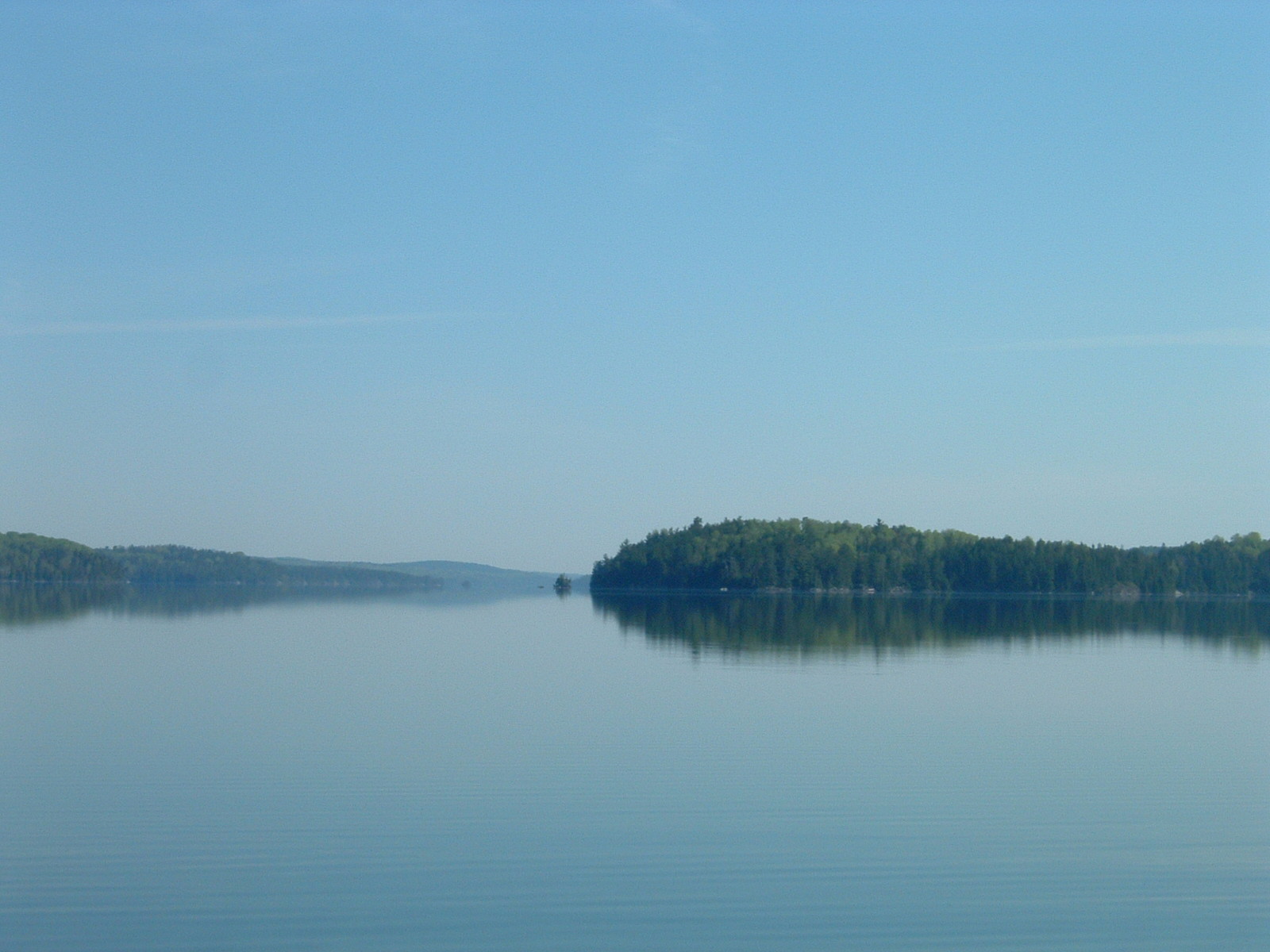
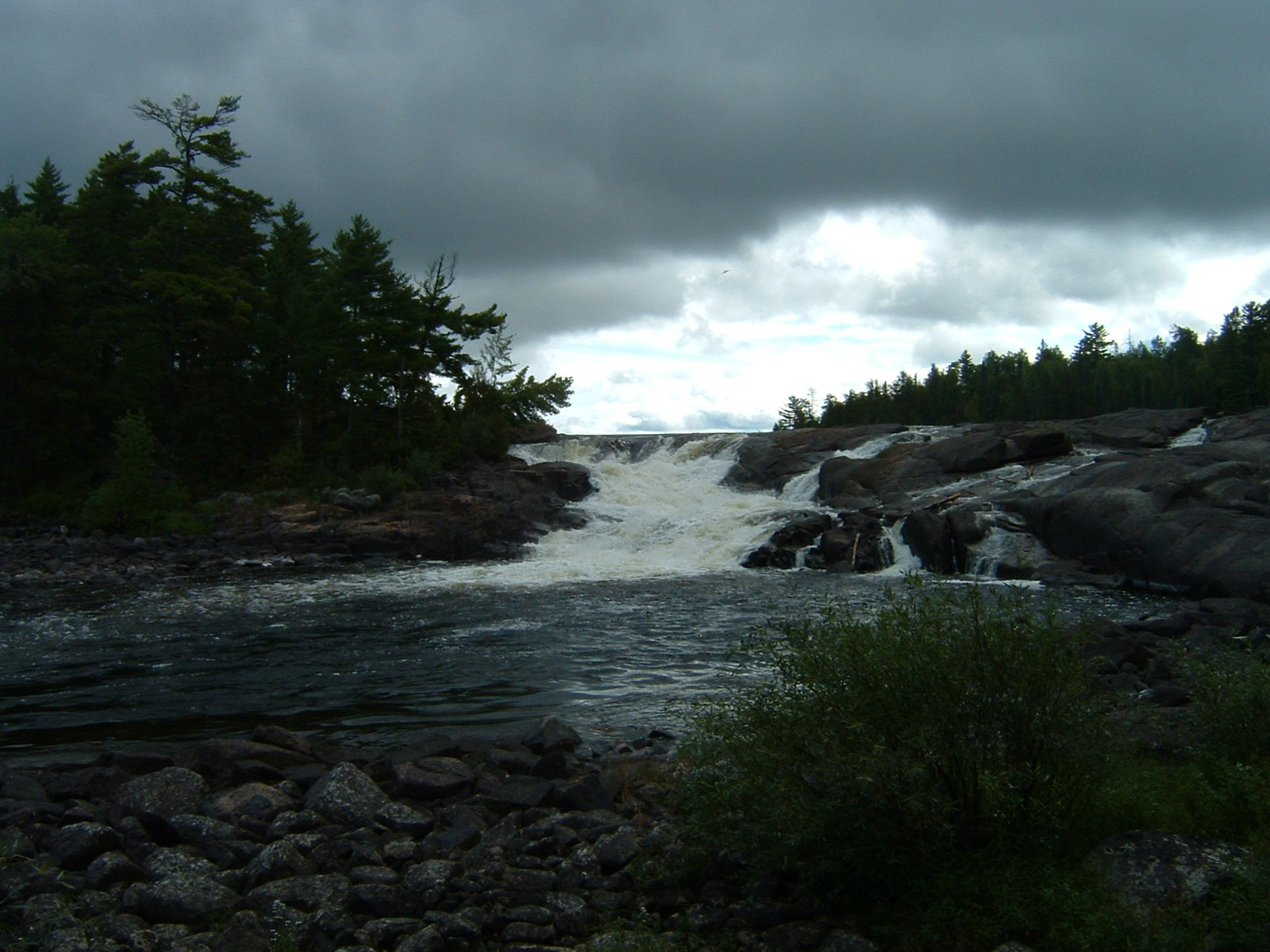
Potterville, Minnesota has many resorts on nearby Basswood Lake, providing guiding and other low paying jobs to those in Ely, Minnesota, where good jobs are scarce.  Crooked Lake is huge, with drowned trees still visible well out from the current shore, the hydroelectric power from Curtain FallsCurtain Falls; Canada on Left, US on right. providing cheap electricity to the mines on the Iron Range.  Two beautiful islands, out in the middle, on the border, are deeply submerged.  I never saw them with the late Mike Manlove.  Nor is there an island near the border, where I would have heard wolves on 25 September 1992, had the island been there.  I never saw Basswood Falls, for it was flooded.   Nor did I see the pictographs that once made Crooked Lake famous, for they were also flooded.  Mr. Potter said 80 years ago we needed jobs at all costs, to support our ever growing population; having smaller families and preserving wilderness just wasn’t–well, an American solution.
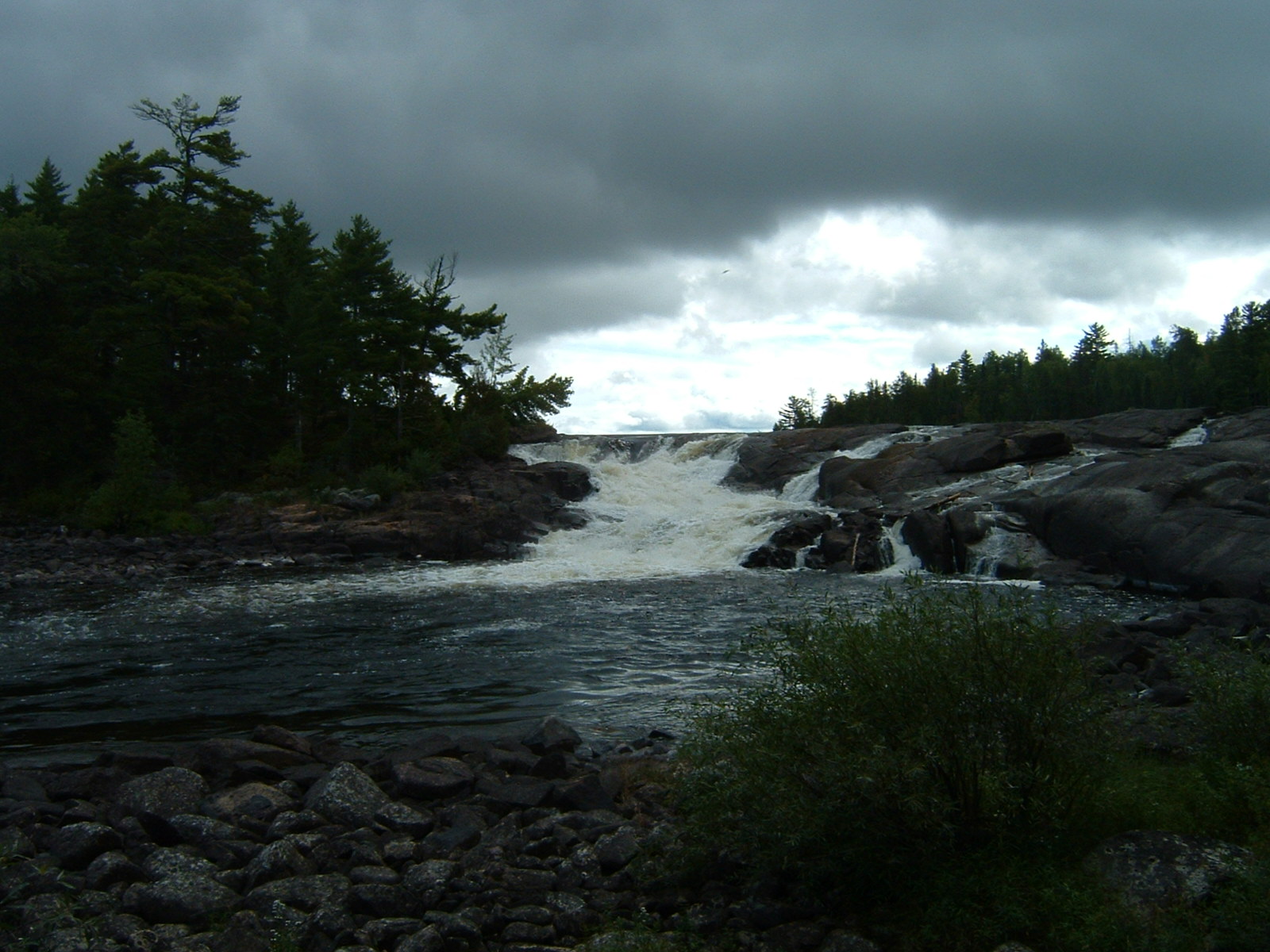
Overhead in Potterville, Minnesota are many aircraft, the noise rivaling that of the Grand Canyon.  No executive order was given by Harry S Truman forbidding flights below 4000 feet over the wilderness, for it had never been done before, and new ways viewing the world and of doing things are not part of Potterville.  In winter, the sound of snowmobiles is heard all through the region.  The last wolf sighting was about 90 years ago.  A sulfide mine has created a lot of jobs, but the water has become extremely polluted, and the mine will close soon.  Unfortunately, the company has gone bankrupt and will not pay for the cost for cleaning up the pollution.  Many said that a mine would pollute and the cost to the environment would not be paid; they were shouted down at town meetings.  Funny how you can’t find anybody in Potterville now who said they were for the mine.    Curtain Falls
But there is no Potterville, Minnesota, thanks in large part to Sigurd F. Olson, one of America’s first wilderness writers, Bill Magie, and many others who fought Potterville tooth and nail, recognizing that the world had changed, and Americans needed wilderness, not to conquer, but to visit, to test themselves, to see sights they couldn’t see anywhere else, and to recover their senses.  Sig Olson knew that we aren’t all that removed from the land, and there are many for whom wilderness is not just an escape, but a requirement for their sanity.  I am one of those.  There aren’t many like me, and most don’t understand us, but we exist.

Sig was once burned in effigy in Ely, Minnesota.  Nevertheless, he persevered until his death in 1982, while snowshoeing near his home, which today is called “Listening Point.”

Because of Sig and others, Curtain Falls is a wilderness cataract, straddling the international border.  Mike Manlove and I saw the lovely two islands, and I heard wolves that September morning out on Crooked Lake.  Basswood River is untouched, and Lower Basswood and Wheelbarrow Falls are beautiful.

Because of a few who fought Mr. Potter in Nebraska, in March there will be a half million Lesser Sandhill Cranes–90% of the world’s population– along a short stretch of the Platte River.  There will be water for the birds, for 4 miles of shoreline are protected by Rowe Sanctuary.  Many thousand people will visit Rowe’s viewing blinds during the 5 week season.  These people will spend several million dollars in Kearney, Nebraska, providing a big boost to the local economy.
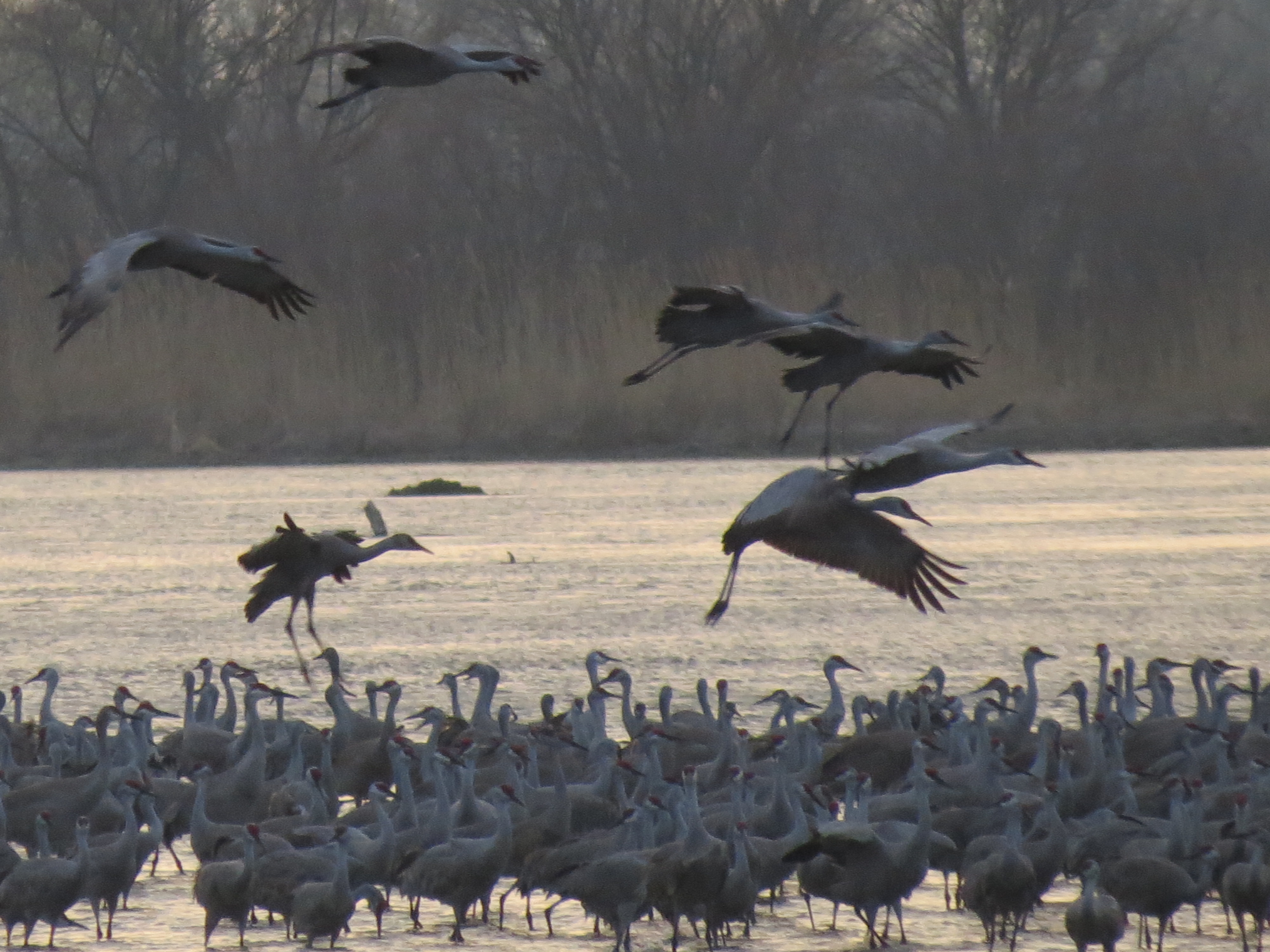
Cranes Landing at sunset, 2012

I will guide about 10% of those people, telling them about the cranes, what they mean to me, and how this is one of two great North American migrations.  I will go to Nebraska, paying my own way, sleep on the floor in the gift shop, so I can hear the cranes at night, and work 17 hour days.  I will come home exhausted but thrilled.  There is not a time in the 70 trips I have taken into the blinds where I have not learned something new or seen an absolutely mind boggling sight.
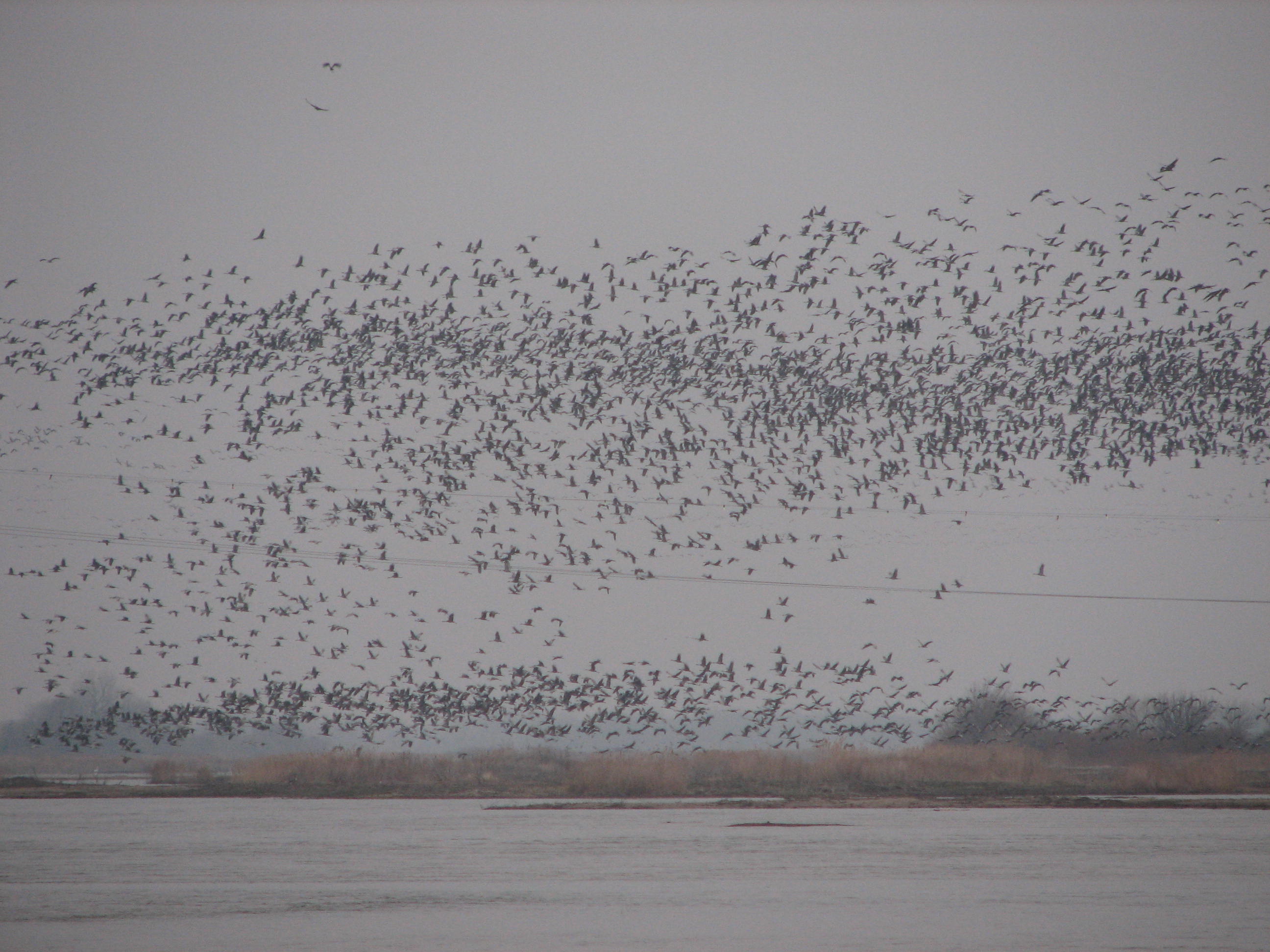
Cranes at sunset, Rowe Sanctuary, 2011

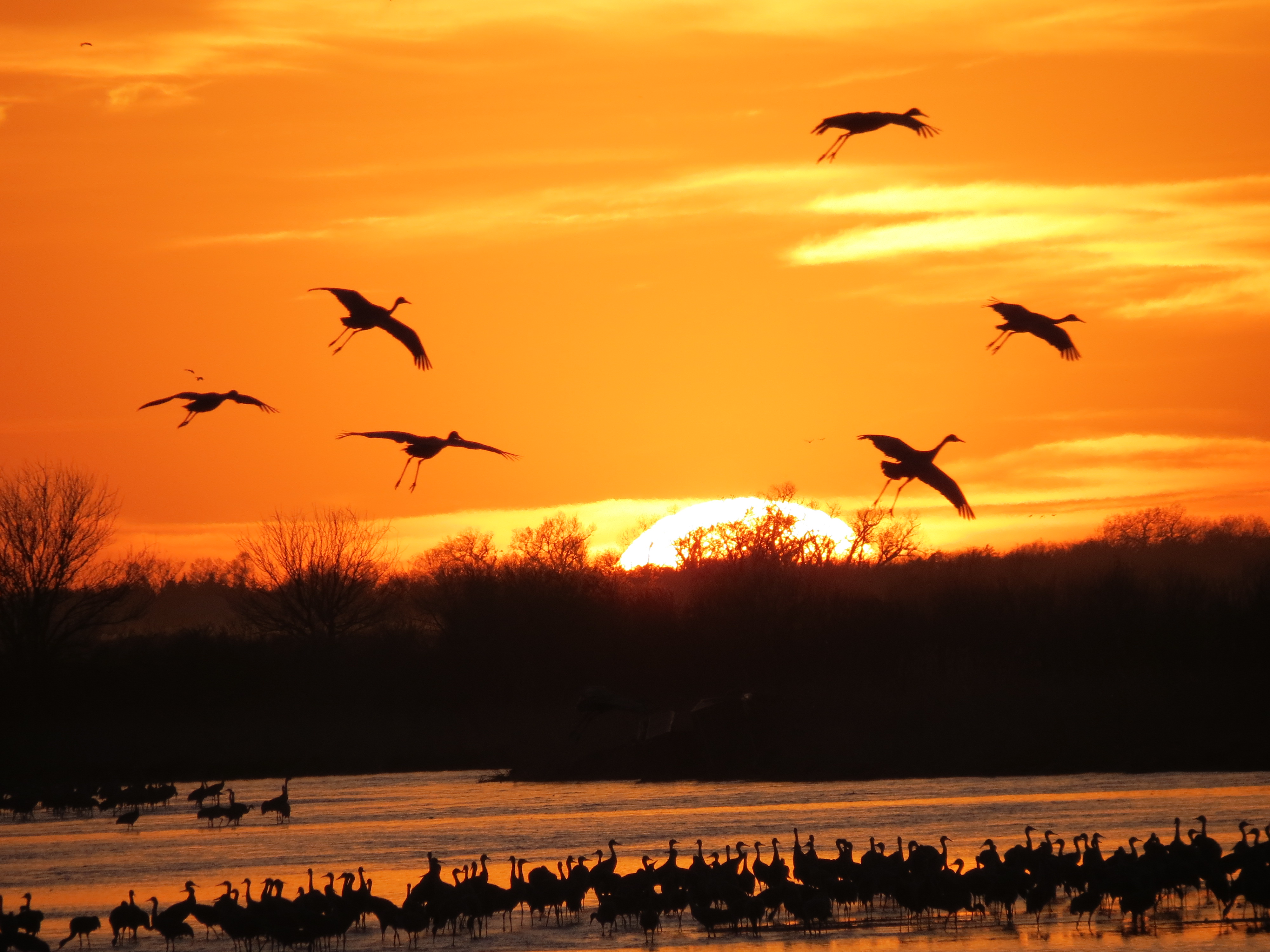
Cranes Landing in Platte, sunset, 2012

Experiences such as mine have no price tag; Mr. Potter thinks everything without a price tag has no value.  He is wrong.  I’m not a hunter, but I think every guy and gal who has sat in a duck blind, gone out in camo on a chilly autumn morning to get a buck thinks that the country they traverse is worth something.  They just can’t put a price tag on it, Mr. Potter.  I can’t put a price tag on seeing 50,000 cranes in the sky at once, watching a crane dancing 100 meters away, hearing the calls at night, watching them kettle, catching the south wind north on their way to perhaps Siberia.  No, I can’t put a price tag on seeing them in Bettles, Alaska, last August, north of the Arctic Circle.

No, Mr. Potter, I can’t put a price tag on making 20 miles in a headwind, hearing wolves at night, sitting by a campfire, not thinking of anything, seeing the Harvest Moon coming up over Lake Insula, hearing the call of a loon at 2 a.m., looking at the darkest skies in the US and being in the largest roadless area in the Lower 49.
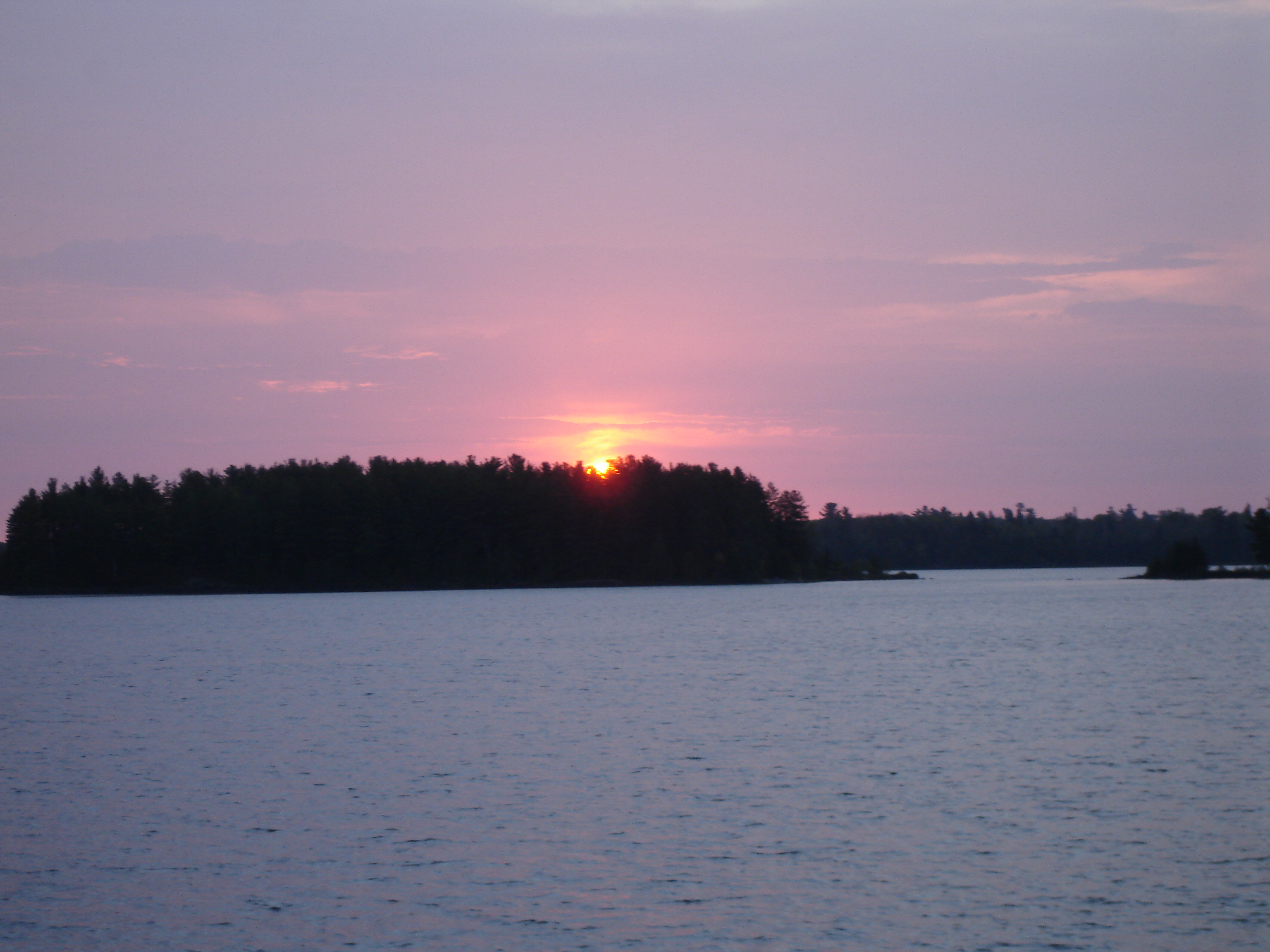
Lake Insula sunset

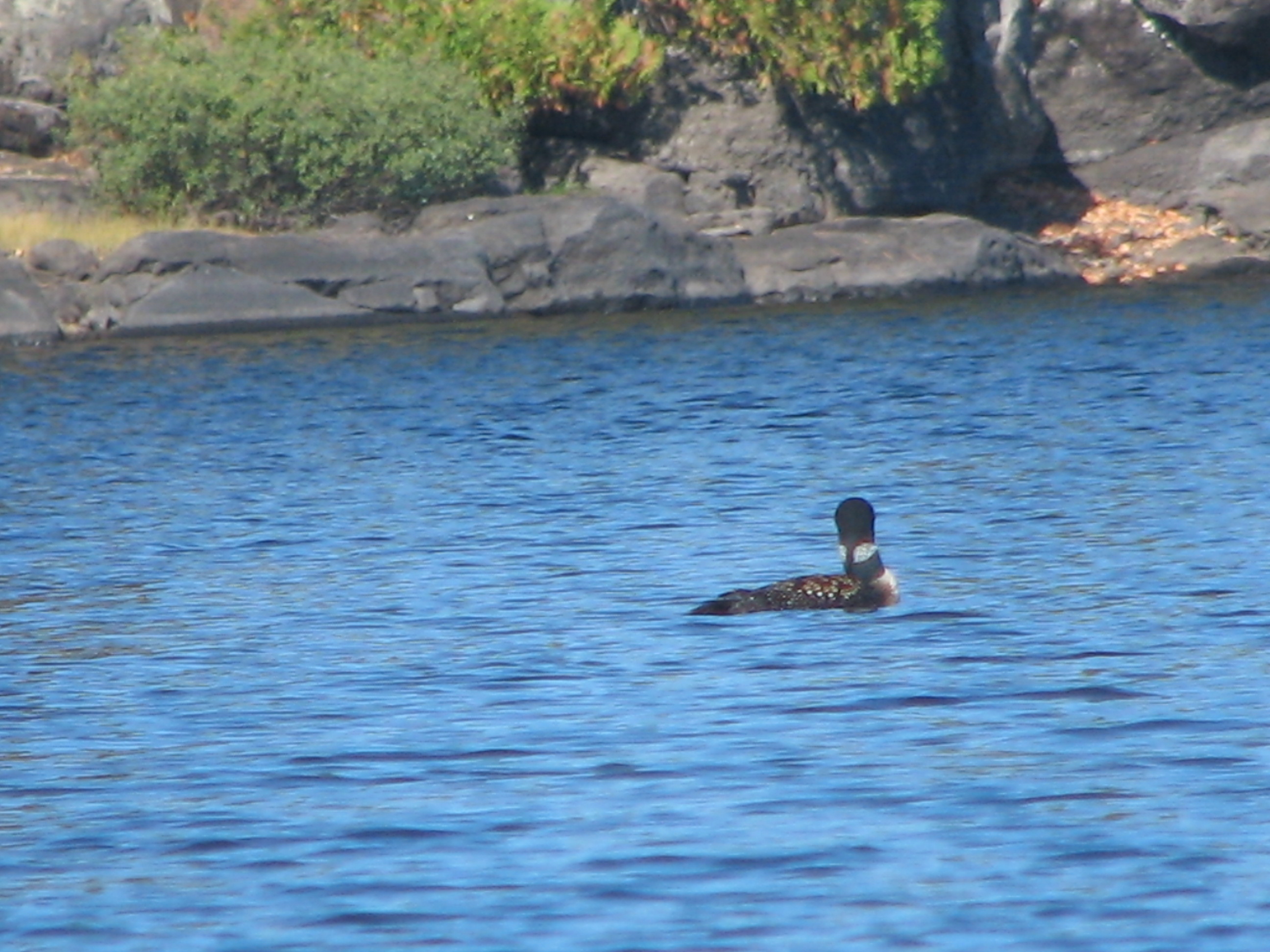
Common Loon

Big Water...vast sweep of Agnes Lake.

Or seeing Curtain Falls, in its natural state.  These things are priceless, Mr. Potter.

In April, I will spend a morning with the Executive Director of the Friends of the Boundary Waters, before going up north to Ely to spend two days on Basswood, not expecting to see anybody, sitting by a campfire, thinking of nothing, and maybe hearing a wolf.  I will be able to drink right out of the lake. I will be by myself, alone in a vast wilderness, which I require visiting periodically to be the person I am.  It’s a birthright of Americans that these places still exist.  But preserving these places must be fought against the Mr. Potters.

The Friends have worked to protect the Boundary Waters, just as Rowe Sanctuary has worked to protect the Platte River.  Both of these organizations, together employing about 8 people, will get about half of whatever estate I leave behind.  After I come out of the woods, I will attend the Vermilion Community College Scholarship Banquet, where I will give 3 scholarships I have created or helped fund.  Supporting VCC means a great deal to me.  It is a special night for many students.  Jobs are scarce, and the father of a young woman who was the second recipient of our scholarships wanted his daughter not to follow him into the mines.  He is not alone.  Money goes a long way in northern Minnesota and rural Nebraska.

It can cause or prevent Pottervilles. I’m trying to prevent them, but the battle can not be lost.

Not even once.
DOING BETTER THAN BIG GOVERNMENT, AND GOVERNMENT IS HAPPY ABOUT IT.

February 18, 2013

Sea Lion Caves is a privately owned business on US 101 north of Florence, Oregon.  In the 130 years since its discovery, there have been several owners, and in 1932 the 3 then-partners sold the property.  One of the buyers has since kept the business in the family.  This was one of the best things to have happened to the Caves.  Indeed, Sea Lion Caves is a model for how we can act without “big government.”

In 1977, a move to have the Oregon State Government take over Sea Lion Caves failed.  The government saw that the owners were protecting the resource–the largest cave known on a mainland for sea lions–and at the same time making a profit and employing many people; indeed, the Caves are one of the major employers on the Oregon Coast.

Were the Caves to be developed today, there would be too many restrictions placed on the owners, and the business would either be abandoned, or else the admission price, $12 for adults, would be much higher.  In order to have a more high tech building, permits would be required from 25 to 30 government agencies, as well as strong restrictions upon sewage disposal, which exist along the coast.  The owners have dealt with these issues successfully, and their goal is to keep the caves for the Sea Lions and not change what is currently working.  There is a lovely walkway to an overlook of dozens of Sea Lions, followed by another walkway to an elevator that takes people down 60 meters to a large cavern, where the Sea Lions can be seen at ocean level, and where there are many exhibits giving information about these large creatures.

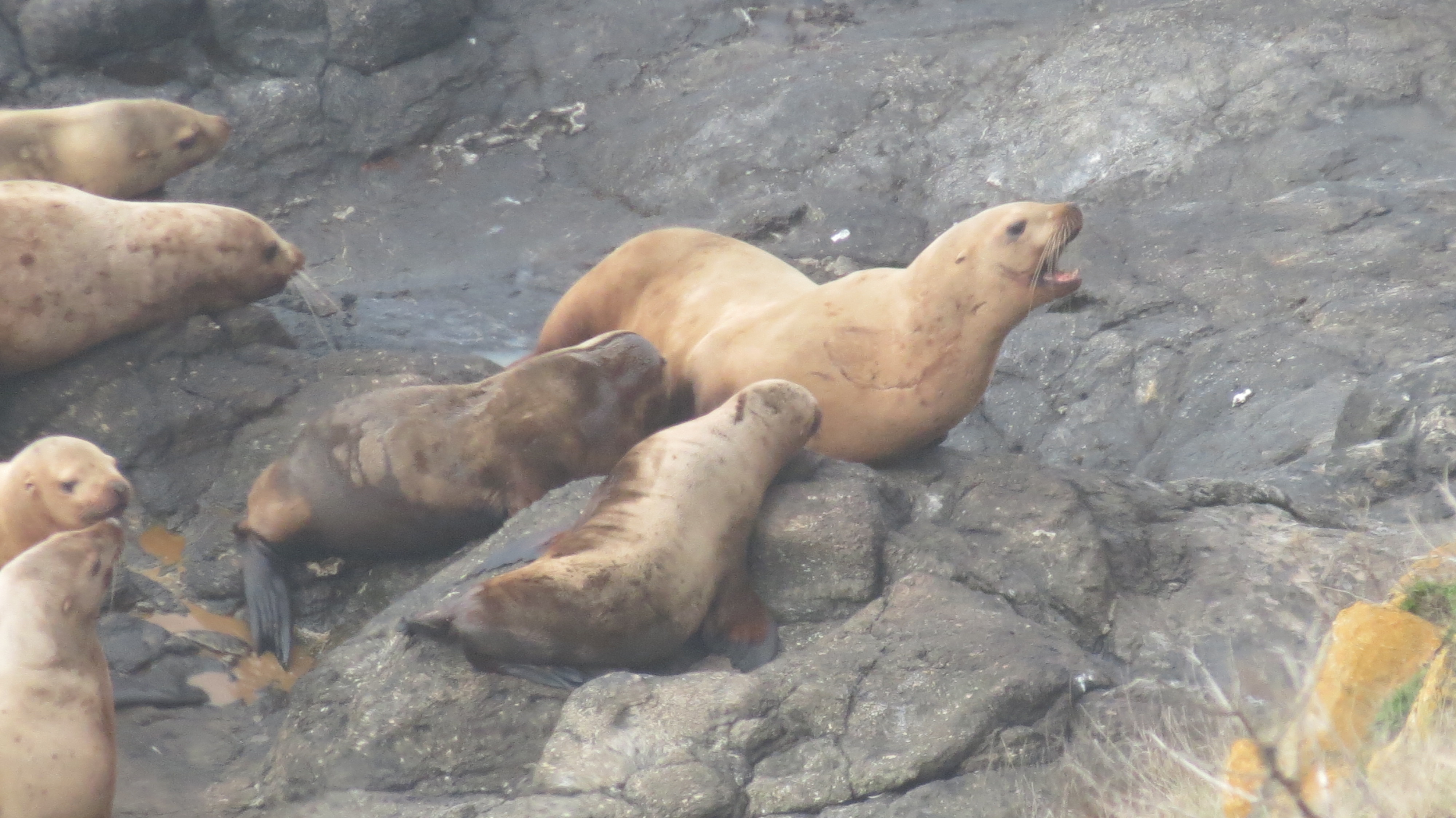
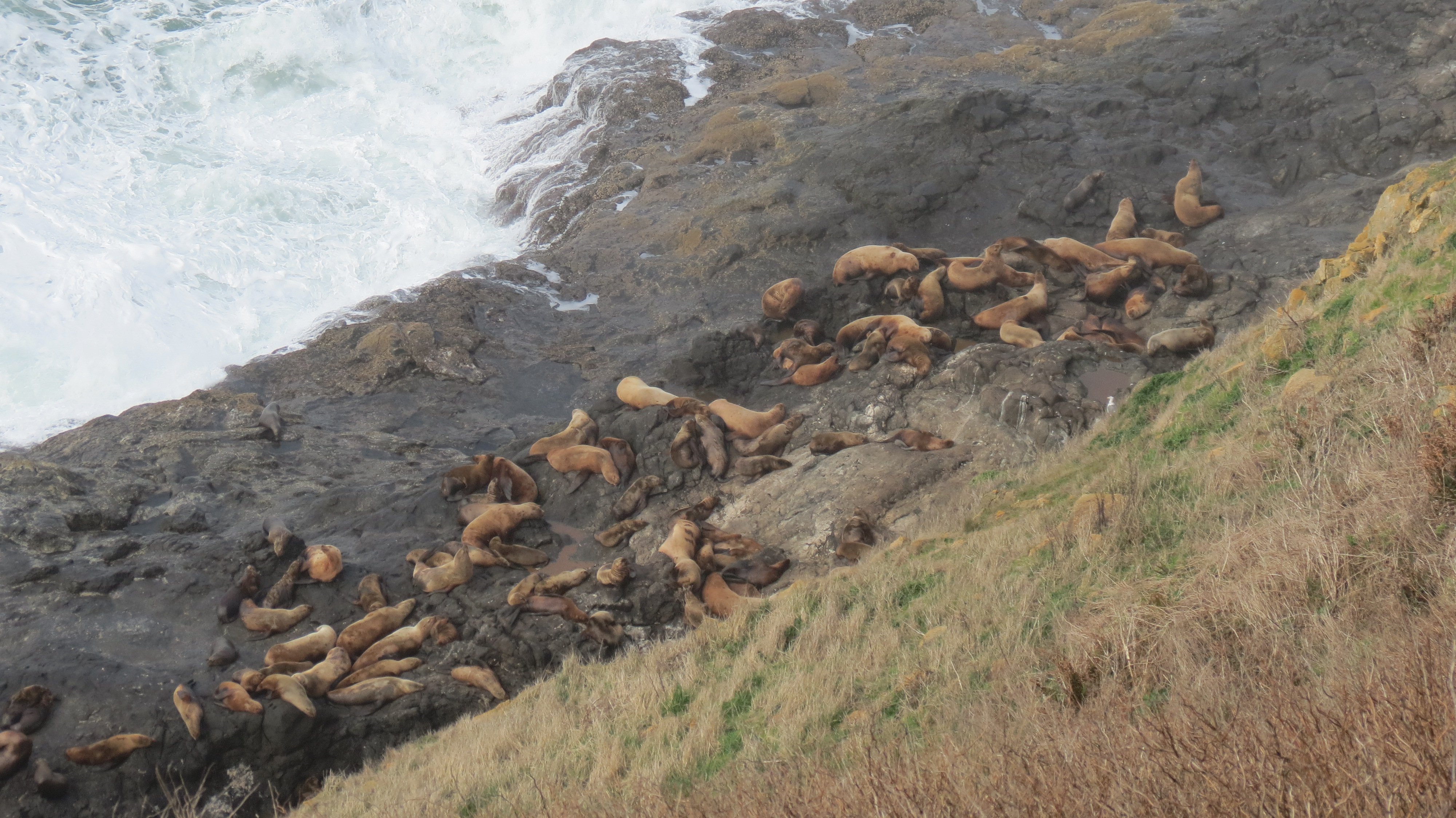
Group of sea lions from walkway.

Sea Lion viewed from 150 meters.

All of this has been done with private business, is in good taste, is not a tourist trap, and generates jobs and profits every year, despite $15,000 in shoplifting expenses annually.  Even the poor creature that was a victim of a gunshot wound–by some individual who should never be allowed to own a firearm–has her skeleton displayed, so at least people can learn something additional about the animals.

In these pages, I have often commented how government regulation is needed, because people are simply unable to regulate themselves. Most of the time, I have been correct.

In the instance of Sea Lion Caves, however, government regulation was considered and declined.  Then governor Robert Straub stated: “I am proud that here in Oregon a private organization has shown that it can . . . develop and protect such a great natural resource and attraction – and still show a profit.”  It isn’t surprising to me that such occurred in Oregon, where so many aspects of the state are ahead of the rest of the country.

If we want less government, we would do well to heed the lessons of Sea Lion Caves.  When people adequately regulate themselves, the need for government to do the job is lessened or eliminated outright.  Had doctors regulated themselves with regards to qualifications and quality, there would be no hassles with Joint Commission or other accreditation, a lot less malpractice, a lot better quality, a lot fewer errors, and problems like HIPAA, or patient privacy, would not be the annoyances they are today.  I would go so far to say that every regulation has a reason, and that reason usually has to do with an individual or a group who failed to act responsibly.  It does not have to be that way, and on a remote stretch of US101, it is not.

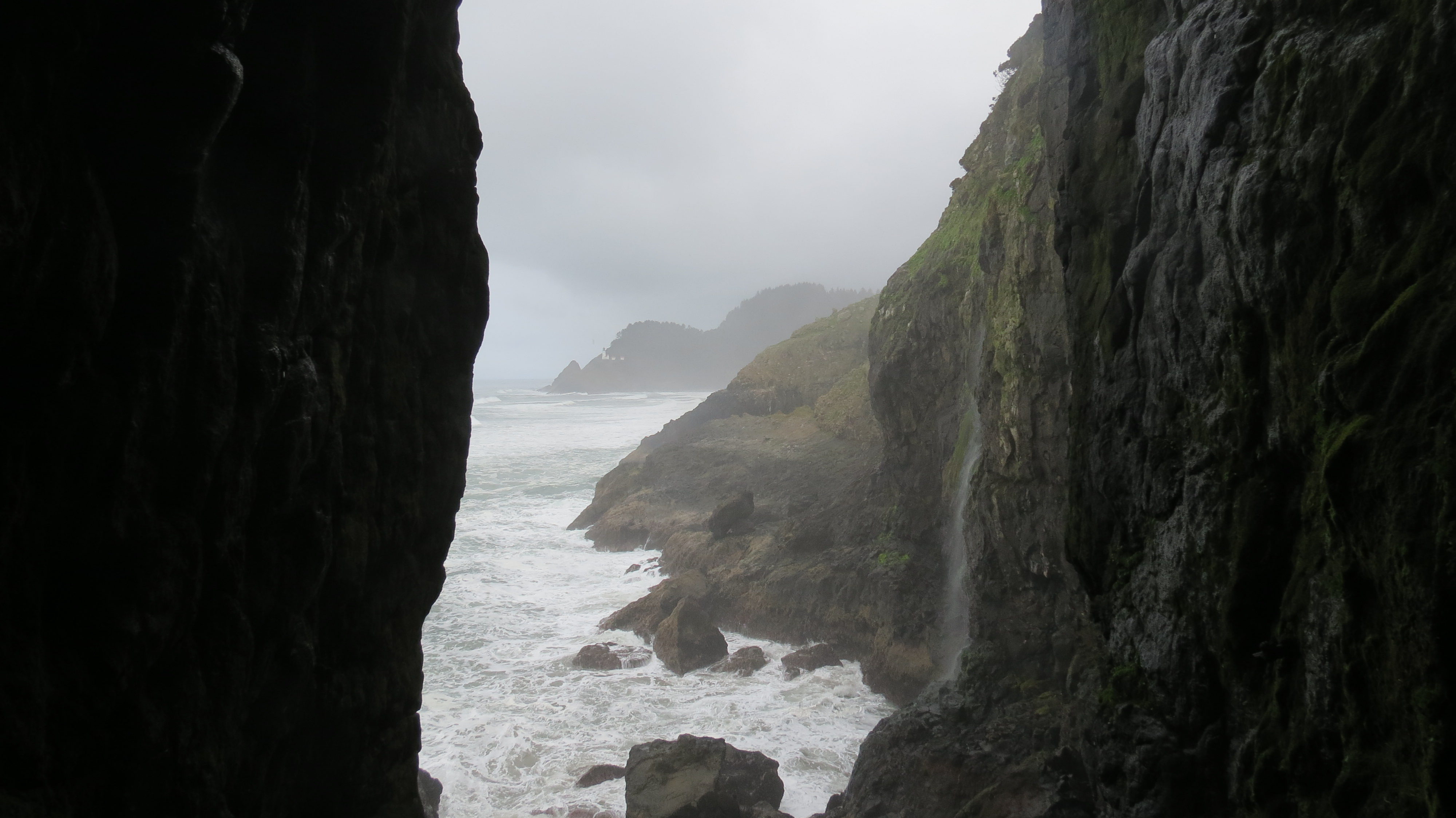
View to north and Hecate Lighthouse Sea Lion bull in cave Bull Group of Sea Lions

Sea Lion viewed from 150 meters.

ONE OF LIFE’S GREATEST GIFTS–LOVING TO READ

February 13, 2013

The other day, while substitute teaching in Math, I had a student in my class whom I had tutored last year in chemistry.  She is a smart, young woman, took AP Stats as a junior and did well in all subjects.  When I tutored her, she was prepared, her thinking was good, and she needed only a little more confidence in trusting her judgment, which was excellent.

She showed me a book, printed in 1902, that she had bought for $6 at a book show.  She was so excited to have the book; I cannot imagine more than a handful of students in the school would have thought an old book was worth buying.  I would have several such books myself, if it were not for the fact that we have limited space in the house and are planning to move.

She then asked me for my favorite book.  That’s a difficult question.  I have been reading since I was 2; my mother, before she died, wrote the story of how I learned words, asked questions, and bothered my father often while he was reading the newspaper, pointing out the words I knew and learning new ones from him.  My mother was an avid reader; I don’t ever remember seeing my mother without a book nearby.

I will never be a technical mountain climber, but there are very few books about mountaineering that I haven’t read.  I almost feel I know the way up Mt. Everest from both sides, because I have read so many books about it.

I learned quickly that books were an escape.  One can go anywhere in the world with a good book, and I have.  One can go to other worlds, to other times, forward and back, and thoroughly enjoy the escape.  One learns vocabulary from books.  For years, I never used a dictionary, learning words by context.  When I scored in the mid 500s on my Verbal PSAT, I started looking up every word I didn’t know.  I improved my score 100 points the following year.  Even when I read books in German, I look up words.  Some say one shouldn’t do that, but learning words by context is a recipe that doesn’t work for me and can become very embarrassing (gift=poison in German).

I love wilderness books, and I have read everything Sig Olson wrote.  I read his book, The Lonely Land, 5 times, a canoe trip in Saskatchewan that he and five others took in the mid ‘50s.  I hope to finally see Saskatchewan this summer and canoe part of the route that they took.  Sam Cook of the Duluth Herald-Tribune is a modern day Sig.

I also have read The Rise and Fall of the Third Reich at least five times, too, and have been astounded at how easy Hitler could have been stopped so many times but wasn’t.  There are lessons today for us to learn, if we will only learn them.  Storms of my Grandchildren, by NASA’s James Hansen, chronicles his attempts to push Americans towards dealing with climate change.  Recently, I read that the Arizona legislature wants teachers to teach the “other side” of both climate change and evolution.  I actually did just that last week, when I talked about confidence intervals, for “the other side” has not shown me their confidence in their contention that there is no man-made climate change.  A statistical colleague of mine, a good friend, once discussed at Georgetown how long Social Security would last in the US.  One of his students worked for a senator and said he had the answer in a “position paper.”  My friend asked whether there was a confidence interval for the data.  When the answer was “no,” my friend declined to look at the paper.

We live in a world full of uncertainty.  Therefore, we must understand and use probabilistic thinking.   It’s all well and good to say what ought not to happen, but to deny reality is magical thinking:  believing if you hope hard enough, good things will happen.  This does not work, any more than what Steve Jobs, a brilliant man, believed about iPhone antennas.  Years ago, Richard Feynmann, even more brilliant, said:  “For a successful technology to work, reality has to take place over public relations, for nature cannot be fooled.”

I live between two worlds in at least three different ways:  cities and wilderness, calculators and fast mental estimation, and electronic and covered books. When I bought my Kindle, I increased my reading dramatically.  I was amazed by how I could listen to an author being interviewed by Moira Gunn, then going to an electronic reader and within a matter of seconds, having the words–the book– in my possession.  But other books, specifically German, are much better when I can look at the pages, go back and forth more quickly, and not worry about a battery.  I use both online and paper dictionaries; both have advantages.  I am not particularly skilled with TI calculators.  I grew up in the slide rule era; I also can do calculations in my head.  I can sketch graphs fairly quickly, and I can do a lot of probability calculations quickly.  Calculators, however, add another dimension to my life, and I use them, not expertly, but for those things where it truly is faster and easier, like determining confidence intervals in a large set of data.

I will look up simple facts on the Internet; more complex explanations I will either print or buy the book.  Thirty years ago, we had only books; thirty years from now, it isn’t clear we will have.  It is quite clear we will have a word’s appearing somewhere, and if we choose properly, we will discover new facts, new worlds, new ideas, and maybe change the order and content of those words, or those equations, and make our world something that is has never been before.

Books offer the power to do that.

QUANTIFYING UNCERTAINTY IN AN UNCERTAIN WORLD

February 10, 2013

In November, 1958, three boy scouts died on Mt. Wrightston, a 2900 meter peak (9453 feet) that rises 1200 meters from the valley floor.  Mt. Wrightston is my favorite hike in southern Arizona.  I have camped on Baldy Saddle (2600 meters) 5 different times, in snow and hot weather, and I have been to the top another dozen times.  On Baldy Saddle, one has simultaneous views below to the western desert, where Green Valley and I-19 are located, and to the eastern valley, where Sonoita and Sierra Vista are visible.  I’ve been on the summit at sunset, alone, with s spectacular 360 degree view and swifts soaring above me.

The scouts died because they hiked in a warm day, and a sudden cold front hit them, with a heavy early season snowfall.  They died from falling and hypothermia.  Today, this would not likely happen.  Weather predictions would have warned against a heavy snowfall, and the warm weather (“the warm before the storm”) would not have changed a winter storm watch, which today would have been posted.  This scenario is playing out in New England as I write.

Weather models showed that a storm would hit New England on the second weekend in February.  On Thursday night, New England was clear.  But every weather model and weather forecaster predicted that two storms, at the time about 1600 km from each other and from New England, would strike New England the next day.  This is exactly what happened.  This is science helping give people time to get emergency supplies and be prepared.  We aren’t praying our way out of this storm:  it is coming, we know where it will be, and we will have a good idea of how much snow will fall.  There will be some differences from what is forecasted, but the major event will take place, and it is science that is used to make this forecast.  I stress science, because members of the House Science Committee included Todd Akin, of “a woman’s body blocking pregnancy from illegitimate rape” fame, and Paul Broun, who, still present, doesn’t believe in climate change, the Big Bang Theory, and evolution.  He does believe in the pit of hell, for which I have no evidence; I have plenty of evidence supporting the other three concepts.  Broun and others would love to defund NOAA and the NWS, hoping, presumably that their states (Missouri and Georgia) would not be devastated by either tornadoes or hurricanes.  Given their location and climatology, this is not likely to occur.

Indeed, this is crazy thinking, and I can’t put it any other way.  We can predict with high confidence major tornado outbreaks and hurricane landfalls and strength.  To stop funding these organizations is akin to being the Taliban in this country, and I know exactly what I am saying.  Both of these men, in fact, are more restrictive on abortion than is the Taliban, and that is also a fact.  But back to science.

When I practiced neurology, I used to anti-coagulate patients with posterior circulation strokes, because at the time, this was felt to be the appropriate treatment.  It became evident that the consequences of anticoagulation were worse than any potential benefits, and I had to stop the practice.  That is science acting.  I did what I thought was best, and when it did not work, I changed what I did.  Many doctors, when faced with evidence that surgery for asymptomatic carotid artery stenois was more risky than no surgery, still operated.  I took a great deal of heat for my beliefs, but I changed my practice.

A while back, I got into a Facebook argument with someone who did not believe that manmade climate change was occurring.  He asked me to make my case without using models.  Why?  Perhaps it was because this individual was a realtor, and we all know what happened to the housing market, when mathematical models failed to include the possibility that prices might actually decline.  The fact that one is a realtor and not a scientist does not a priori make his arguments specious, but his quoting a magazine that was not scientific and had significant right-wing biases in unrelated articles hurt his case.

The Facebook argument occurred for a short while, before I quit, out of respect for the individual’s “wall” on which I was posting.  I let my “opponent” have the last word.  What he used as “proof” was an 8 year trend line, without regression diagnostics, that showed the Earth was cooling.

Let’s discuss trend lines briefly.  They are regression analyses of scatter plots, data points tracked on two axes.  For a regression analysis to be accurate, one has to assume the residuals, the difference between a data point and the line generated, are normally distributed (have a Gaussian distribution or a bell curve) with equal variance.  Regression requires this.  In addition, there are several other diagnostics one should use, looking at outliers and other aspects of the data.  Nowhere in the article that the person quoted was any of this mentioned.

Why would I not use models?  Statisticians use models all the time; most scientists do.  We model the weather using a variety of weather models.  I find some to be very good; the predicted rain and strong cooling that Tucson has as I write was a significant likelihood to me about a week ago.  I could see the jet stream predictions, and when they held up day after day, I became more confident.

We model the Earth’s climate the same way.  The fact that models may be wrong does not make them a bad idea.  The fact that models differ does not negate the whole concept of modeling.  Models may use different initial conditions and handle variables differently.  They change over time, as new data become available.  What we believe in science changes with time as we get more data.  But climate change models are all trending in the same direction; the biggest area of disagreement is that they appear to be underpredicting what is going to happen.

The classic issue of weather modeling occurs with hurricanes, where there are “spaghetti” models–several–each indicating a slightly different track.  Next hurricane season, follow these tracks from the beginning through the end of the hurricane.  Notice how the uncertainty gradually decreases; indeed, the uncertainty in forecasts is far less than it was 25 years ago.  There is not a weatherman discussing these models who does not allude to uncertainty and multiple possibilities.  The fact that there is uncertainty doesn’t mean the models are worthless and that we know little.  The world is uncertain, including the high temperature tomorrow, although we can quantify the uncertainty very well.

Let me quantify uncertainty a little better, using a common example.  If you throw two dice, there are 11 different sums they may show.  To some people, each sum has the same probability.  Anything can happen.  But if I were betting, I would put my money on the sum being 7, and if I were allowed three different sums, I would choose 6, 7, and 8.  These are far more probable then the others: a sum of 2 has a 1/36  probability; a sum of 7 has a 1/6 probability; 6,7,or 8 has a 4/9 probability.  Roll dice 100 times, and you won’t get these exact numbers, but you will be very close to them.  Roll them 1000 times, and you will be very, very close, but probably not exact.

I believe low probability events are poorly understood by many.  The probability of winning Power Ball is about 1 in 110 million.  If we have 220 million players, we would expect 2 winners.  We might, however, have 0,1,2,3,4,5,6,7 or 8 winners.  But 98% of the time there will be 5 or fewer winners, and there is a 1 in 7 chance that nobody will win.  An individual’s chance of winning, however, YOUR chance, is equivalent to picking a random minute I choose between today and the signing of the Declaration of Independence.  Small wonder some call gambling a tax on those who do not understand math or probability.

In Carl Sagan’s book , The Demon-Haunted World, Science as a Candle in the Darkness, he alludes to one problem that really bothers many religious people about science:  science is often right.  We can pray our kids don’t get polio, or we can vaccinate them.  Vaccination has practically eliminated polio in this country–for now.  I am concerned what will happen when a very large cohort of unvaccinated children here are exposed to the virus, which they will be.  Religion and science really aren’t at odds, but when either is misused, it causes a lot of problems.

I am going to Uganda in November, because on the 3rd, in the late afternoon, there will be a 22 second total solar eclipse.  I didn’t pray for this eclipse, I didn’t read it in any religious work, and I’m not wishing and hoping for it, except for clear skies in which to see it, because we cannot yet predict local weather months in advance.  Climatologically, there is a decent probability, but on the given day, it is quite likely I may not see the eclipse, even though it will take place.

I am alive today because scientists found cures for Group A Streptcoccus, which infected me many times, and I got neither rheumatic fever nor acute glomerulonephritis.  From science came the concept of putting a pin in a femoral neck fracture, so when I broke my hip, an orthopedist could put me back together.  So I could walk.  And run.

And hopefully see a total solar eclipse in Uganda.