Archive for December, 2016

MEDICINE BY SCREEN

December 30, 2016

I had been satisfied with my internist.  She once saw me on short notice for a problem, which I really appreciated, but unfortunately left the mega-group to join a smaller local practice.  I decided to stay with the mega-group, since my records were there and I was seeing 3 other specialists there as well. A retired internist told me that a lot of doctors came to the mega-group and didn’t stay long.

On the appointed day, I arrived for what I thought was a Medicare Wellness Exam, taken back to the exam room by the medical assistant.  I gave her my unclothed weight, so as to avoid the issue I had at cardiology, where they took my weight fully clothed and then used that to compute my BMI to two decimal places.  One is plenty; too many feel that adding decimal places improves accuracy.  In some circumstances, it does.  This wasn’t one.

The medical assistant then took my history.  I am a surprised these days how many non-physicians not only have access to my medical information, but take it from me.  There was a time when we physicians actually did all this ourselves.  We didn’t have scribes, we dictated notes, and some of us even read them before signing.  It may have been slower, but all those people have to be paid, too.  I called people in from the waiting room myself, because neurologists learned a lot about a patient by watching how they arose from a chair, walked, spoke, shook hands, and sat down.  I diagnosed many with Parkinson’s before they ever reached the exam room.  I diagnosed myopathies when patients couldn’t get up easily from a chair, foot drops and hemiparesis from their gait.  Now, the exam room has become almost an inner sanctum, given by some of the routes I take to get into one.

Anyway, in these days of extremely busy physicians, I figured I better say whatever was on my mind in a hurry so it got into the record. The assistant then recommended a DEXA scan for my bones, which I thought odd, since I don’t have any risk factors I know of for osteoporosis except age.  But knowledge changes.  She finished and said the doctor would be right in, since the latter was done with the previous patient.

I waited 20 minutes.  That’s a lot in the inner sanctum.  Yeah, I know.  Doctors keep patients waiting.  I seldom did.

The physician came in and introduced herself.  I stood, as I always do, then sat down.  She then placed herself in front of the computer and started reading from the screen, first concern being my diazepam dosage.  I told her I took it for a GU condition where it was the only thing that worked (leaving out the story how I had discovered that, nobody else).  I told her I had tapered the original low dose more than 60%, but she was still bothered, because of federal regulations about this sort of drug.  She barely glanced at me, eyes instead fixed on the computer screen.

Diazepam is quite safe in low doses, yet we allowed Oxycontin to be marketed as a first line drug for musculoskeletal and chronic pain, which anybody with sense knew was a bad idea.  My internist, fixated on Diazepam, couldn’t find it in my records who prescribed it for me.  I finally said who had, but it wasn’t in the computer, and during this time, she continued to be look more at the screen than at me.  This is apparently the new medicine.  Everything is electronic, which can be good.  I get neatly typed records online, which are helpful, except for BMI to 2 decimal places and no comment about the little things in aging, like hearing, vision, sleep, and moods, affect me, and a diagnosis of Chronic Pelvic Pain, when I had no pain, only discomfort, which is a significant difference, trust me.  I almost didn’t get my needed blood work, because she didn’t appreciate that the last I had was in 2015, not this year. At least the DEXA wasn’t necessary.  Nobody asked about dental care.  It matters now, because we know now that periodontal disease affects health a great deal. The human cost of medicine by screen is failure to look at the patient, from whom much information comes.

Additionally, if something is inputted wrong, it tends to stay there. Imagine if you are my age, not a physician, with a lot of medical problems, and aren’t thinking clearly.  What happens to you if something is missing, not noticed, not picked up, not addressed?

At my age, I start answering questions like that with, “You die.”

By now, I felt like a major drug abuser.  I stopped mentioning my other concerns, like what she thought about statins. She dismissed my concerns about weight and waist with “do crunches,” which don’t fix the problem. She felt a little edema in my leg, assured me it wasn’t heart failure, which I knew, and said it was probably venous insufficiency, and I should lift my legs up when sitting. I decided that wearing support hose, like I did when I was an intern, was better.  She quickly listened to my heart and lungs and I was done.  At least I thought I was.  I was told to call a week prior to wanting the nasty drug I was taking, because these things took a week to fill.   Why? This stuff should be done electronically in seconds.  I filled requests the same day when I practiced, and I often called the pharmacy myself.

In her position, I might have moved from the computer to where I was sitting to directly across from the patient, asking about retirement, Medicare, money, meditation, depression, sleep, support systems, what it’s like when your body can’t do what it once did or does what it once didn’t. She would have heard a lot, and that’s the problem, because hearing a lot takes precious minutes that could be used to ….  well, do what, pray tell?  Help a patient?

A few minutes later, yet another medical assistant came in to hand me the papers that were printed.  I certainly get nice notes at the end of my visits, which my patients never did.  Indeed, if I had a question about my BMI to 2 decimal places with my clothes on, I could request a change at my next appointment.  The problem was I wasn’t given any other appointment.  I was told to see her if I needed to.  The appointment time to get into see a new internist in Eugene is 11 months.  Followups? For GI, 5 months.  For Derm, 4 months.  For GU 2 months.

Four days later, I got a call telling me that my doctor wanted me to come in in March—only four months’ distant—for a Medicare Wellness Exam.  I thought that is what I had had.  Did they want it in a new calendar year?  Or was there something else I didn’t know about?  I’m not sure what to do at the moment.

If I only had that screen, it would tell me.

THERE WAS MORE TO BE LEARNED

December 19, 2016

I recently saw a video by the US Forest Service, detailing how six firefighters survived the Pagami Creek fire in the Boundary Waters (BW), their final, fortunately successful stand occurring on Lake Insula, a place my wife and I once knew as well as any person alive.

IMG_1693.JPG

Lake Insula sunset, 2009

IMG_3106.JPG

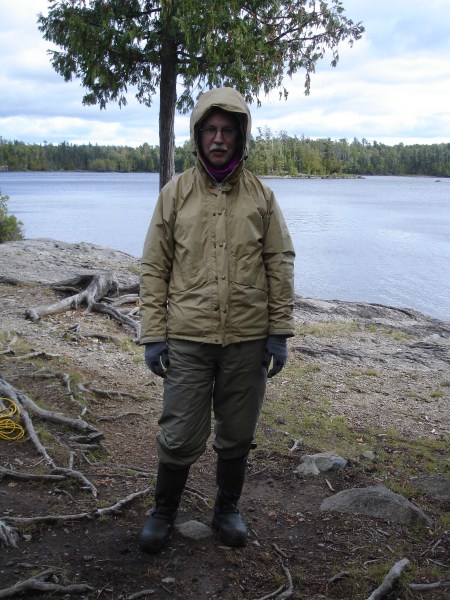
Where the four firefighters were talking, one year almost to the day after this picture was taken. Notice how  narrow the channel is.  September 2010, Insula.

BOUNDARY WATERS_2007106.JPG

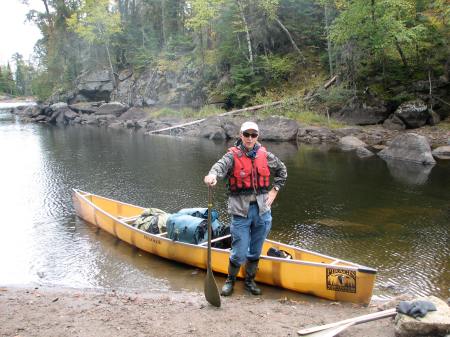
Cold day on Insula, where four years later the four canoeists would paddle for their lives by this site.

The 2011 fire began by a lightning strike in Pagami Creek, a place where canoeists don’t travel.  After being quiescent for a few weeks, being allowed to burn naturally, the fire became more active, and suppression was begun.  The fire made a 12 mile run one day, catching everybody by surprise, including six firefighters, four of whom deployed their shelters on a small island and survived; the other two going into the water by their canoe, surviving first the fire and then hypothermia.  The lessons learned were: “canoeists in the face of a fire may encounter exceedingly strong winds and may swamp,” “shelters degrade when exposed to fire and water,” and “hypothermia is a potential problem for those escaping a fire by jumping into the water.”  Those are all good lessons, but there were far more to be learned.

When the fire became more active, Forest Service personnel in the field were told that the BW would have a “soft closure,” a term that one ranger said she had never heard, meaning, as near as she could tell, people would be asked to leave the woods.  Catchy phrases like “soft closure,” and “tweak the system” are ill-defined and potentially dangerous.  They must be strictly defined.  The woods should be either closed or open.  A campfire ban is clear but if people are told they ought to leave but aren’t required to, there is a mixed message. I have a simple solution: if there is a concern that people would be better off out of the woods, make them leave.

Two men went south, east and downwind of the fire, to check a hiking trail.  They were told the fire wouldn’t be in that area for a few days, but their senses told them that the lighting up of the nearby sky, even if they couldn’t see the fire, was a bad sign.  The wind had changed, and the fire had moved much closer than anybody thought.  Indeed, the two had to run back to their canoes to escape it.  Lesson: fire can move faster than predicted, and in the absence of knowing exactly where the fire is, one should use caution.  

The fact that the men had to go into Horseshoe Lake, unnamed in the video, but clearly the lake referred, in order to help campers close their camp and get back into safer Lake Three, should have been strong evidence to the supervisors that the fire was starting to become far more dangerous.  The campsite was burned; the campers barely escaped.

At one point, a telling comment was made when a firefighter called in and spoke to somebody who was not his supervisor.  The firefighter said that “they” (he and his partner) were uncomfortable with their current supervisor, so for their purposes, they were going to work with the person with whom they were speaking.  Wow.  That is a huge red flag for communication problems.

The next day, the firefighters were told to move further into the wilderness, towards Lake Insula, to move any campers there to the north end of the lake, away from the fire.  They were told they had a few days to do this, and the winds had shifted to the northwest, pushing the fire southeast, away from populated lakes.  I have traveled into Insula over a dozen times.  It is a long paddle with seven portages, and there are no options for safety once one leaves Lake Four heading east, until the middle of Insula.  I was puzzled why people weren’t flown in to do the warning and then picked up later that day.  Again, however, the fire was felt not to be a significant concern.  Lesson: Moving canoeists downwind of an active fire should be done only if there are significant escape routes.

Two women, camped at the last campsite on Hudson Lake, the last lake before Insula, took their  packs across the 105 rod  (525 meter) portage between the two lakes, spending time at the Insula end speaking to their two male counterparts.  All were concerned about the fire, and when some noise was heard, the women went back quickly to get their canoe, basically abandoning their campsite.  It takes thirty minutes to make two trips across the portage, and it was becoming clear to the four that they needed to get on the lake fast, because the first part of the paddle is channels and small islands, shallow water, and offers no protection against fire.  The four were now paddling for their lives, not to close campsites but to get as far east and north as possible.

Two other women moved off Campsite 7 (it was really 8) to escape the fire.  They realized the winds were too high to safely paddle and jumped into the water, using their fire shelter, something to my knowledge has never been done before.

Here are the “10 and 18” (italics are the issues that the firefighters had):

Standard Firefighting Orders

1.  Keep informed on fire weather conditions and forecasts.

2. Know what your fire is doing at all times.

3 . Base all actions on current and expected behavior of the fire.

4.  Identify escape routes and safety zones and make them known.

5. Post lookouts when there is possible danger.

6 . Be alert. Keep calm. Think clearly. Act decisively. (Done right).

7. Maintain prompt communications with your forces, your supervisor, and adjoining forces.

8.  Give clear instructions and insure they are understood.

9.  Maintain control of your forces at all times.

10. Fight fire aggressively, having provided for safety first.

18 Watchout Situations

1.  Fire not scouted and sized up.

2. In country not seen in daylight.

3. Safety zones and escape routes not identified.

4.  Unfamiliar with weather and local factors influencing fire behavior.

5.  Uninformed on strategy, tactics, and hazards.

6.  Instructions and assignments not clear.

7.  No communication link with crewmembers/supervisors.

8. Constructing line without safe anchor point.

9. Building fireline downhill with fire below.

10. Attempting frontal assault on fire.

11.  Unburned fuel between you and the fire.

12.  Cannot see main fire, not in contact with anyone who can.

13. On a hillside where rolling material can ignite fuel below.

14. Weather is getting hotter and drier.

15.  Wind increases and/or changes direction.

16.  Getting frequent spot fires across line.

17.  Terrain and fuels make escape to safety zones difficult.

18. Taking a nap near the fire line.

One of the firefighters said that they were violating nearly all of the 10 and 18.  He was not far wrong.  The bold in the 10 indicate what they did right. For the record, in Arizona’s 19-fatality Yarnell Fire, #1,2 and 4 in the first and #s 1,3,4,11,15 in the second were violated.  Unburned fuel between you and the fire, and cannot see the main fire are big concerns.

The group of four were lucky one of their number had experience on Insula and could navigate the lake, no easy feat. She also had the sense to tape her flashlight to the stern, so the canoe behind her could follow her in the smoke.  The fire traveled faster than canoeists can paddle.  Had the firefighters been a half hour further, had they not stopped to talk, they would have been at the east end, where they could have moved north directly away from the fire.  They of course had no way of knowing that the fire would do what it did.

Other lessons I would offer:

When several things seem to all be going wrong, recognize that you might be on a downward spiral (the words used here), regardless of what you might have been told. In neurology, my field, meningitis was so scary that when I argued with myself or others about whether we needed to do a spinal tap for diagnosis, not a difficult procedure, I did it. Perhaps that analogy could be applied here: when firefighters start arguing pros and cons of shelter deployment, just deploy. When you argue about whether or not to close campsites, just close them. Again, my deepest, deepest respect to these six and for all who put their lives on the line. I loved Insula as it was, but it wasn’t worth putting their lives at risk.

My final lesson here: time is one of the most valuable commodities in the woods. Use it wisely. 


Related

Plus


WEIGHTY TOPIC

December 13, 2016

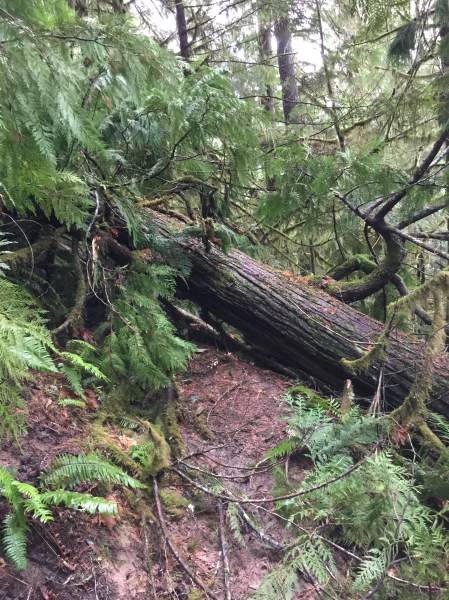
“Hey Mike, you’ve got a little bulge in your stomach,” I heard, as I reached to the base of the final climb to Larison Rock.  At this point, I had climbed 2000’ in 3.5 miles. As hike leader I had bushwhacked around an impassable blowdown, found an alternative route, and made sure everybody got around it without difficulty.  I wasn’t even breathing hard on this hike.

IMG_4828.jpg

Douglas fir blowdown, Larison Rock Trail; November 2016

IMG_2062.jpg

Sun through trees, top of Larison Rock Trail; November 2015

I knew I had a waist bulge.  I have an apple pattern of weight distribution, and while I have never been overweight, and my Body Mass Index (BMI) is about 23 and change, I have a problem.  Turns out that waist circumference is an important risk factor for cardiovascular disease, more than weight itself.  Indeed, the waist:hip circumference ratio is more important than just being overweight. This is relatively new on the obesity scene, but it wasn’t just discovered yesterday.

The realization bothered me.  I looked for all the stats that said I was healthy, and I came up short each time.  I started to lose weight, from 170 to 165 at least.  I did it the way I have controlled my weight in the past— I looked at my diet and started finding how many calories I could easily remove.  In the past, it has been peanut butter, which I love, olive oil, fatty veggie hotdogs, all cookies and cake, and adding low calorie yogurt.  It takes a while, but I’ve always lost weight.  This time around, it was removing evening cheese, substituting dark chocolate for scones at lunch, again stopping the peanut butter, and changing the decaf white chocolate mochas I was having to decaf sugar free.   The last cut out 240 calories right there. My weight started to fall.  I was hungry at night; hell, I was hungry a lot.  It was the holidays, the worst time to lose weight, but each morning I got on the scale, I liked the numbers.

In 3 weeks, I weighed 165.  I don’t know if my waist had changed, because I didn’t measure it originally. My contour looked better, but still not right.  But I had reached my first goal, and I planned to go further.

During this time, I had my annual cardiology appointment.  I was weighed with my clothes on, and because there was freezing rain, I wore a lot, for I took the bus to the clinic.  I weighed 170, which isn’t bad with clothes on, but my BMI was listed as 23.71, which isn’t true.  It’s fine for doctors to weigh patients the same way each time, but if they are going to use that weight for BMI calculations, to two decimal places even, they either have to get rid of the clothes or subtract a few pounds.  That was only my first issue.

Everything had gone reasonably well this past year.  My Afib had recurred, as I knew it would, but I was doing well enough that the doctor didn’t think he needed to see me in a year.  I wondered, however, why he called the echocardiogram of my aortic root, 40 mm, “dilated”.  First, if it is a problem, I need to be seen annually.  Second, many don’t think it is dilated at that figure.  Third, if one looks at the recent literature using height, weight, body surface area, and age, I am below what is considered dilated.  Fourth, while I agreed we needed a second data point to see if anything has changed, he decided I didn’t need another echocardiogram for a year.  Yet, I am labelled as having a dilated aortic root, a big deal if I have a thoracic aortic aneurysm.  I don’t think I do, but I don’t like treating myself.  Nor do I like having my BMI measured to two decimal places with my clothes on and having to look online to learn about normal aortic root size. What do people do without a medical background?

I was told I was doing everything right.  True, I’m active, seldom drink, never smoke, don’t use caffeine, am vegetarian, not diabetic, have good cholesterol, normal weight and BMI (to 2 decimal places), and my systolic blood pressure is 110.  But I am concerned.  My waist-hip ratio is high, 1:1.035, and it should be less, the reciprocal.  My waist-height ratio was 0.538, and it ought to be closer to 0.5, less than at least 0.533.  I asked for a dietitian referral and at this point am waiting for a call back.  It’s the holidays, and maybe they don’t believe anybody is really serious about losing weight during the holidays.  Well, I am.

My weight continued to drop, holding at 165, and I counted all the calories I was consuming daily:  I measured the sunflower seeds on my salad, I was eating more carrots, cauliflower, and broccoli, not corn and peas, I ate apples, blueberries, strawberries, and tomatoes, and I watched the croutons I was putting on my salad, although how one measures a crouton using tablespoons is a mystery.  They are about 3 cal a pop. I used a teaspoon of olive oil on my salad. I found ways to cut calories I had never found before.

I think the cardiologist missed an opportunity.  He was busy.  I knew that as soon as he came in the room and stayed standing.  Bad form.  I always sat when I talked to patients.  Sitting conveys a sense of having time.  I realized I needed to say what I wanted and be quick about it. The waist issue didn’t bother him.  It should have. This stuff should be posted in the cardiology clinic, along with “know your BMI,” “Ready for the ratio test?” “risk factors to try to reduce,” rather than “we care about every mile of your blood vessels.”  Dietitians should be available, and frankly Medicare would do well to cover the cost, instead of only for diabetics and those with kidney disease or transplants.  Health is health.  I now know my Basal Metabolic Rate (1540 calories), how much walking for 3/4 an hour or hiking for an hour burns.  I know how to get a decaf sugar free White Chocolate Mocha and a 120 calorie Peppermint mocha at Starbucks.  I know how many calories many fruits have and that sunflower seeds have 170 calories per 2 tablespoons.  Hell, I should be counseling people.

I’m serious about weight, and it’s important to know what matters and how to count it properly.  BMI is almost always a good predictor of being overweight, but it is not a good predictor for wrong fat, fat in a bad place.  There are other numbers that address that.

I had showed up early for my appointment, but I knew the time was up.  The cardiologist didn’t even have to start walking towards the door. I have become good at reading people’s body language when they don’t want to talk to me.  At that point, I quit, because they likely haven’t been listening to me for some time.

This is now the fourth business day and I haven’t heard from the dietitian yet.  That worries me, because my original referral with the cardiologist got lost. How difficult is it to pick up the phone and take care of scheduling an appointment? If nothing else, a guy whose numbers most people would love to have thinks he should be even healthier.  Wouldn’t that be refreshing to be able to advise him, if you were a dietitian?

Maybe I will have better luck with my internist.  I will have to prepare carefully, however, needing to make sure I have all my ducks in a row and get through all my questions. I’d bring a list, but when I was in practice I hated it when patients brought in lists of things to ask.

Then again, I sat down when I talked to patients.  I listened without interrupting, too.

BMI calculator: 

Waist-hip ratio:

Waist-height ratio, BMR


THE WHOLE TRUTH AND NOTHING BUT THE LIES AND COVERUPS

December 9, 2016

The email was forwarded from the Eugene Astronomical Society:  “Dr. Smith, I need you to call ASAP about a patient of yours.  It is an emergency.”

I left practice 25 years ago.

I had hoped eventually I would be free of my past medical practice, and even being thought about as a doctor, but as late as 2010, I was still ranked as one of the top neurologists in Arizona, 17 years after I last practiced.  In 2012,  I got an occasional call wanting to be seen at “my office.”  I was stunned that data bases had not been updated for so long.  I shouldn’t have been surprised.  I bet my career after medicine on being a medical statistician, and that bombed.  I tried to improve quality in medicine, and instead every member of my family, including me, has suffered from a medical error.  I routinely  diagnose and treat myself. I shouldn’t, but it’s my reality.  It takes too long to get in to see doctors.

I ignored the call.  First, the only neurological emergency I dealt with was status epilepticus, or recurring seizures without waking up in between.  Second, I don’t respond to the term “emergency” unless it involves a family member.  I spent too long in practice treating pseudo-emergencies (“headache, see today”, which was always, and I mean always, tension) and emergency is overused. This letter could only mean trouble, and I wanted to be left alone.

A week later, a call came to the answering machine to call a law firm in Houston about a former patient of mine. They needed me to respond before 7 November, and I ignored that call, too.  The last thing I wanted to deal with was a former patient, and the statute of limitations on my care had long ago run out.  I wasn’t practicing.  Period. Leave me alone.

Two days later, I wasn’t left alone, as I was threatened with a subpoena to appear in court on another voice mail.  That I couldn’t ignore.  I called the woman—a paralegal—since lawyers are too highly paid to talk to a mere doctor.  I let her have it with both barrels about how I didn’t have a practice, I was not seeing patients, and I wanted to be left alone.  The paralegal said that my deposition was necessary as part of a class action suit.

I asked the woman whether I needed a lawyer and got an equivocal response: “Some doctors do, some don’t.”  “But,” she added, “this is not about you.”  I didn’t believe her one bit.  That’s like saying it’s not about the money, which means it is about the money.  It is not about me means it is about me. I took a wild stab and decided to call my malpractice insurance carrier, for I had paid “tail” coverage, which meant they would represent me regarding future claims, even ones that were decades ago.  MICA (Mutual Insurance Company of Arizona) was a well respected, doctor-owned malpractice insurer, and I made sure I bought tail coverage when I left medical practice.

MICA replied immediately, and shortly thereafter the attorney assigned to me and I exchanged e-mails.  She told me what she wanted—to pause before answering questions, to allow myself to think and to allow her to object if necessary.  She looked at the statute of limitations, which is two years or age 21 years for discovery, depending upon the age of the patient.  I was beyond the statute of limitations but still didn’t feel safe.  I have been sued and gone to trial.  I called it Intellectual Rape, and it was a form of PTSD, for I lost sleep over this upcoming deposition, and I was shorter with people than I normally was.  I was unpleasantly surprised but grateful to learn in advance that the defendant’s lawyer might a potential problem; I had thought it would only be the patient’s lawyer.

On deposition day, I put on decent clothes and appeared on time.  All three lawyers had flown in,  each with some form of an upper respiratory infection.  I had a list of notes to remind me: “Stop-Think”, “They are the Enemy, but they are doing their job,” “Don’t volunteer information,” “No small talk,” “I have no independent recollection.”  I used similar notes when I was being sued and at trial.

The reason for the class action suit will not be divulged here.  This in itself is unfortunate, that we have to keep such things silent from the public, when perhaps it might be useful to learn what happened and why.  It was a long day full of questions that were objected to on the basis of form, foundation, lack of evidence, and other reasons.  I still had to answer them. It was 5 grueling hours of questions, and I had to be constantly aware of what the lawyer was trying to do.  At the end, I finally allowed myself to be frustrated enough to say that the only friend I had in the room were my notes, and I was glad I dictated such complete ones.  As my lawyer and I left the room, the other two lawyers said, “We’re your friends. We aren’t trying to get you.”  I didn’t answer.  Had my lawyer not been there, I might well have brought out additional information that would have made the deposition even longer (with more objections, too).

And that is the problem with our approach to class action suits.  In my world, I would be allowed to comment as I saw fit, free from fear of being sued myself, and trying to get to the bottom of when we should have known and what we should have done at the time..

I have no idea whether my former patient will be compensated.  In the world I would like to live in, there would be compensation, not for everything, but enough to make life bearable. Instead, it’s a lottery, and if one knows there is a game, one gets a lawyer and hopes to win big.  Large law firms have web pages devoted to class actions suits currently in progress or in the pipeline.  They advertise for cases.  Their lawyers fly around the country doing depositions from people like me, the going rate for payment being $500-$1000 (or more) per hour.  This sort of behavior encourages professional witnesses (whom we used to call whores).  They do this because of the money: 1/3 or more of the compensation means up to a $2 billion is not going to patients but to lawyers and expenses.  It’s a bad system.  It is a system that wants the whole truth and nothing but the truth, but the truth is often that we often do not know for sure until there is compelling evidence, and that many harmed never get their day in court.

If we were more interested in counting bad outcomes, in order to learn, instead of to sue or to punish, and if we truly were interested in doing what is best for people, rather than padding pockets and hiding the truth, we would develop a system in place that would recognize that bad outcomes occur, that some deserve compensation, even if they aren’t aware of how to get a lawyer, and sadly, some don’t deserve compensation.

I spent a crappy 5 hours, and I probably will get some virus as a result.  But my life is great compared to the plaintiff’s, who in the legal sense probably didn’t have a claim, but in the moral sense ought to be helped, because in the country I served, we help people like that, even if we can’t make them whole.

When I dropped my lawyer off at the hotel, thankful that her presence saved me a pile of grief, she asked what I charged for the deposition.  “Not enough after today,” I said.  “$100 an hour.”

She was stunned.  “Why so little?”

“Because when I heard the going rate, I told the lawyer that was outrageous.  There is too much money in the system, and I can help just a little by not asking for so much.”  I had a crappy day, and I got paid what most people in the country would give a great deal to make.

Nearly five hours, and I got paid $400.  Yeah, the last fifty minutes was free.  Told you it was about the money.