Archive for the ‘MY WRITING’ Category

TICK, TOCK

September 10, 2013

Tick, tock, TICK, TOCK.  In the past year, my internal clock has been ticking louder.  It’s telling me get out in the woods more, do the things I want to do, see the things I want to see, now, soon, this year, maybe next, but not put them off.  The sound is reminding me again there are no guarantees in either longevity or health.

I’ve always had a clock, but I didn’t hear it much for many years, when I had my neurology training.  I saw sudden catastrophic neurological conditions, many times in people who had just retired.  I started to hear the clock again.  Two young colleagues died in accidents within a few weeks of each other back in ’92, and the sound became louder.  An inner voice told me, “There’s a cost to taking a leave of absence to work for the Forest Service in the canoe country, Mike, but there is a cost to waiting. Go now.”  I didn’t wait until was 65, which I will soon be. I went early and never regretted it.

The same time, I made “The List,” years before “bucket lists” and “1000 places to see before you die,” many of which I neither need nor want to see.  The List is for me.  Others don’t need or want one.  That’s fine. I do.

In my 30s, life was busy, too busy.  I practiced medicine, chronically fatigued, interrupted, sued, and hurried until I finally got out at 43.  I had other jobs, went back to school, got a degree, couldn’t make a living at it, and started volunteering, to give my life more meaning.  I tutored math for 9 years, taught a man to read, led birding tours in the neighborhood, and removed buffelgrass.  I published articles.

One day, I happened to see The List, which had languished in a drawer.  The first item was “See the Sandhill Crane Migration in Nebraska.” I had put that one off for a decade. In 2004, I  told my wife and father that I was going, and they were welcome to accompany me, but Nebraska weather in March was unpredictable.  We all went and had a good time; I was transformed.  I am now a volunteer tour guide at Rowe Sanctuary and for 6 years have showed others the migration.  It is one of the top 4 sights I’ve had in nature (total solar eclipse, seeing a wolf in the wild, and Katmai bears are the other three.)

I chased a few eclipses in some unusual places, and indeed, seeing the next total solar eclipse became a permanent member of The List.  In 2005, I added a new item:  see all the national parks.  In December, I drove 550 miles to Guadalupe Mountains NP and climbed Guadalupe Peak the same day.  I was told it would be too windy up there and too dark before I got down.  I went anyway.  For 15 minutes, I was alone and atop Texas.  It was dead calm.  I got down just as it got dark.  Great hike. Eight years later, I have eight parks left to see.  The 19 trips I’ve taken, my odyssey, has been one of the best things I have ever done, carrying me into 13 states and 23 new national parks.

In the winter of 2007, the ticking became really loud, as it does when I fail to get outdoors enough, so I looked at The List and read: “See the Arrigetch Peaks”.  Oh yeah.  That one. These mountains, some of the most unusual in the world, are in the Brooks Range of northern Alaska.  I was 58; I wasn’t going to be backpacking forever.  I have a neck I have to take care of, and anything else could suddenly fail.  I wasn’t expecting problems, but I heard the clock:  GO!!  I  went the next summer.  The hike was the toughest 20 miles I have ever done, but I saw the Arrigetch.  It is one of the top items on my “Outdoor Resume,” which I keep for myself, although others may certainly look at it.  I am not competing with anybody, only fulfilling my dreams.

After that,  I planned my trips on a regular basis.  Hiking the entire Appalachian Trail is on The List, but I don’t plan to do it; there is too much else, and the AT requires too much time.  I’ve walked the southern 528 miles and hiked 20 miles in a day (another list item) 9 times, once 3 days in a row.  Damn, that was fun.  Maybe I should reconsider.
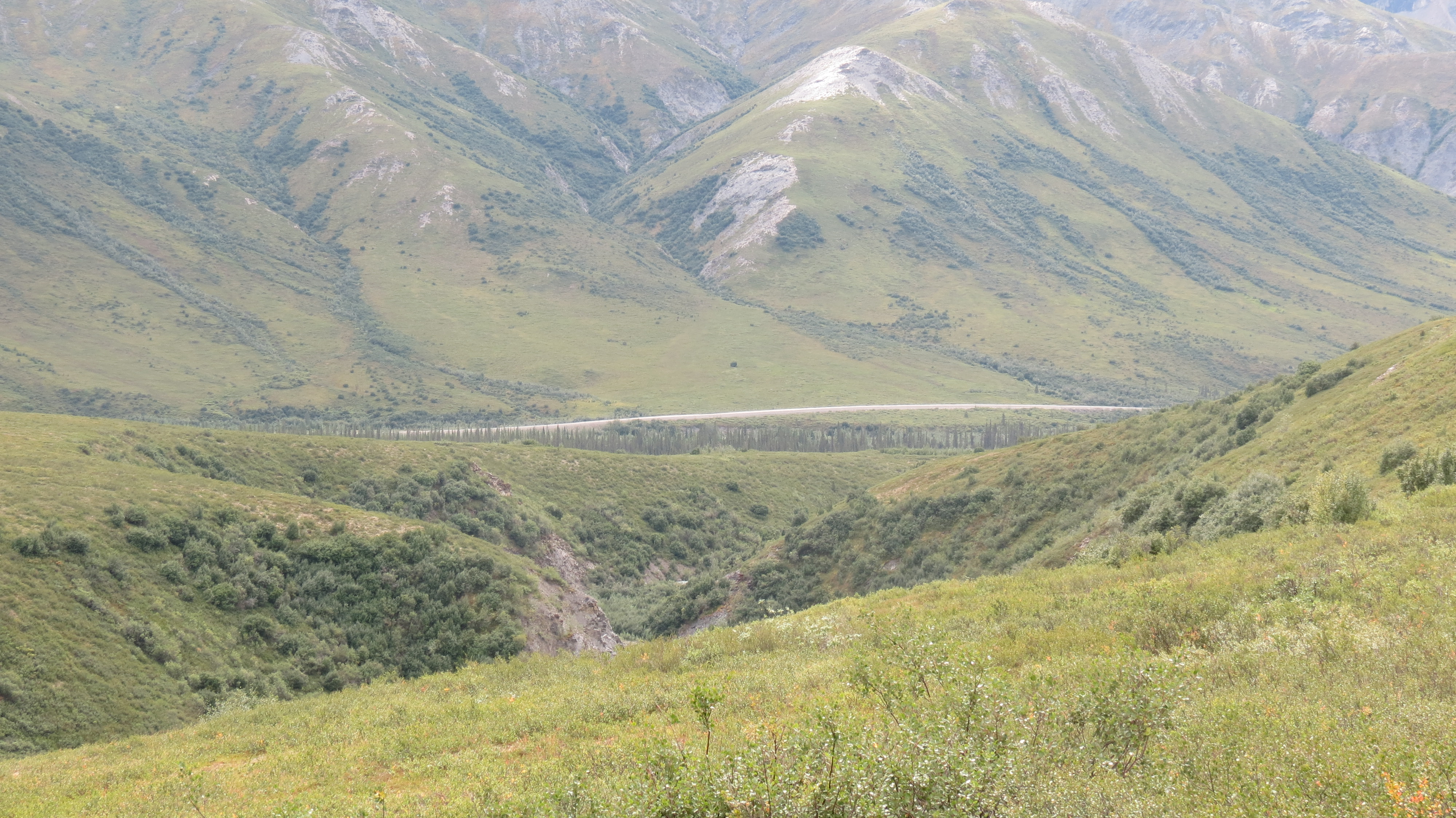
High above the Dalton Highway, just south of Atigun Pass.

Dall Sheep, Aichilik River headwaters, ANWR, Alaska.

TICK TOCK. I wanted to see the eastern “Gates”, Gates of the Arctic NP.  My guide and I bushwhacked in from the Dalton. I carried 75 pounds up a monster hill with a 20% grade, went over Oolah Pass two days later

Oolah Pass and Lake

Oolah Pass and Lake

in a cold, pouring rain, up other steep hills, in rivers,over moraines, through incredible valleys, to Summit Lake.  We got picked up by float plane.  Hiking is better, but to fly over this country is incredible.  We flew between Frigid Crags and Boreal Mountain, the “Gates” of the Arctic”, named by Bob Marshall.
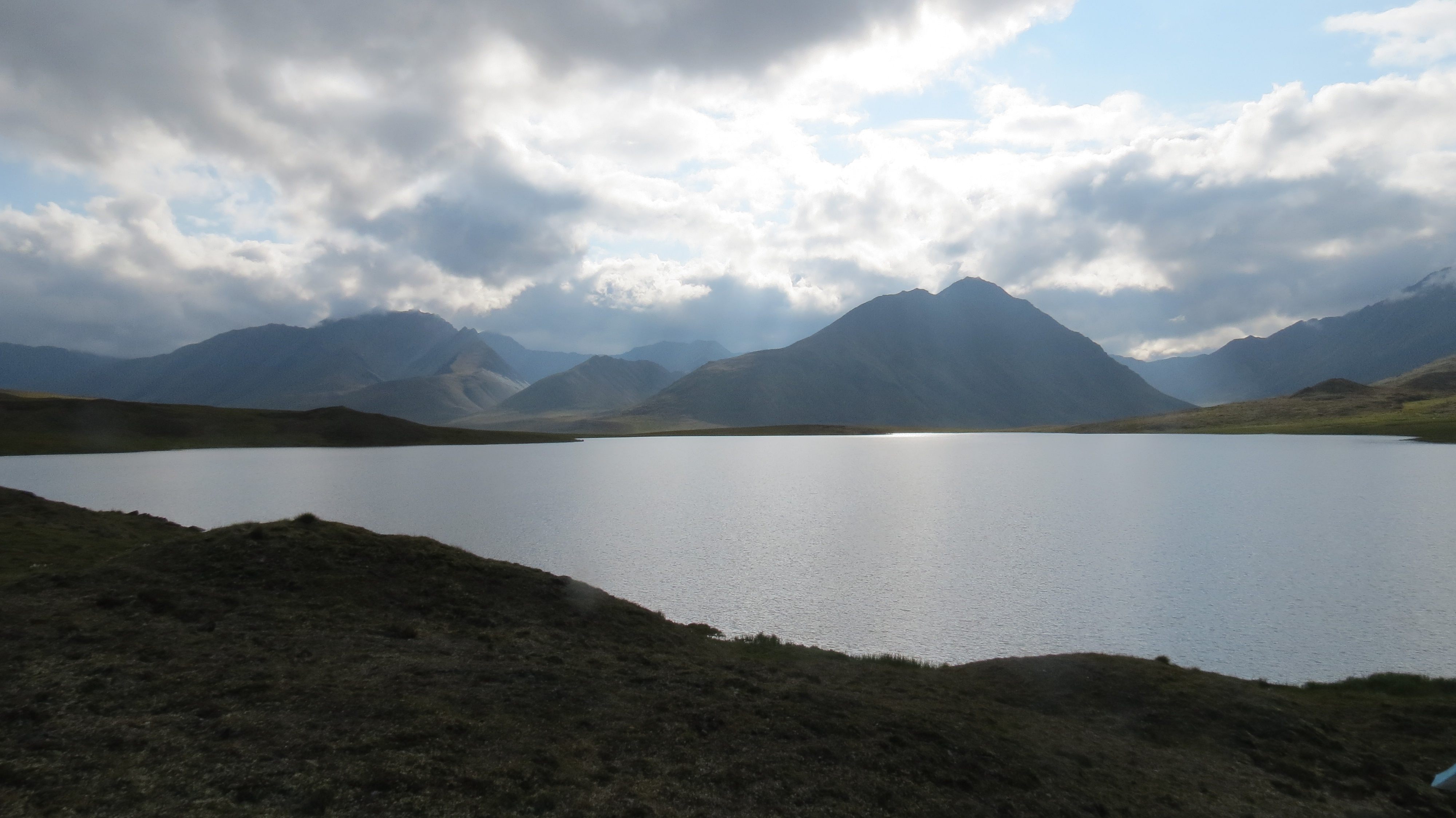
Summit Lake, Gates of the Arctic NP, on the continental divide (1200 m)

Summit Lake, Gates of the Arctic NP, on the continental divide (1200 m)

I now think that perhaps this hike was harder than the Arrigetch.  I thought it would be my last backpacking trip, but my guide told me about doing ANWR again. I remembered the wildlife on the  in 2009, got that faraway look in my eyes that said I needed to go back, know I won’t be happy unless I do, and that is on for 2014.

TICK TOCK.  Mike, you saw Alaska, but you need to see those parks.  This year, I took three week-long road trips.  I love planning these.  They were tough, but I did what I set out to do in each one.  The first one took me to Mammoth Cave, KY; I spent time with the Friends of the Boundary Waters in Minneapolis, went to Ely, winter camped solo, gave three scholarships at Vermilion Community College and came home.  The clock’s ticking was quieter.  I got into the woods.  Alone.  In snow.  And did fine.  It was one of the smartest hikes I had ever done, probably because I knew I had little margin for error.

My footprints in Kobuk Valley NP Sand Dunes (greater)

Noatak River, near the western edge of Gates of the Arctic National Park. Looking east.

Three months later, I saw four Alaska national parks.  I spent three nights after 1 a.m. in the Anchorage airport to do so, but I flew into Kobuk Valley National Park,  drove 7 hours to Wrangell-St. Elias and back, flew to Katmai and later to Lake Clark.  Great trip, but I missed hiking with a pack. Go back to ANWR one more time, Mike, go while you can.  If you’re lucky, you can raft the Killik, Nigu, Hulahula or Kongakut Rivers some day, to add to your paddling the Alatna and the Noatak.  Maybe do all of them.  Tick Tock.

A month later, I flew to Rochester, New York, my home town, to see it one more time.  The next day I was in Cleveland, seeing Cuyahoga Valley National Park.  With a bad case of the GIs that night, and beginning a nasty cold, I drove from there to Algonquin Park, Ontario, for Camp Pathfinder’s 100th anniversary, where I learned to canoe, and did a day loop trip in Algonquin.  Being underway in a red canoe
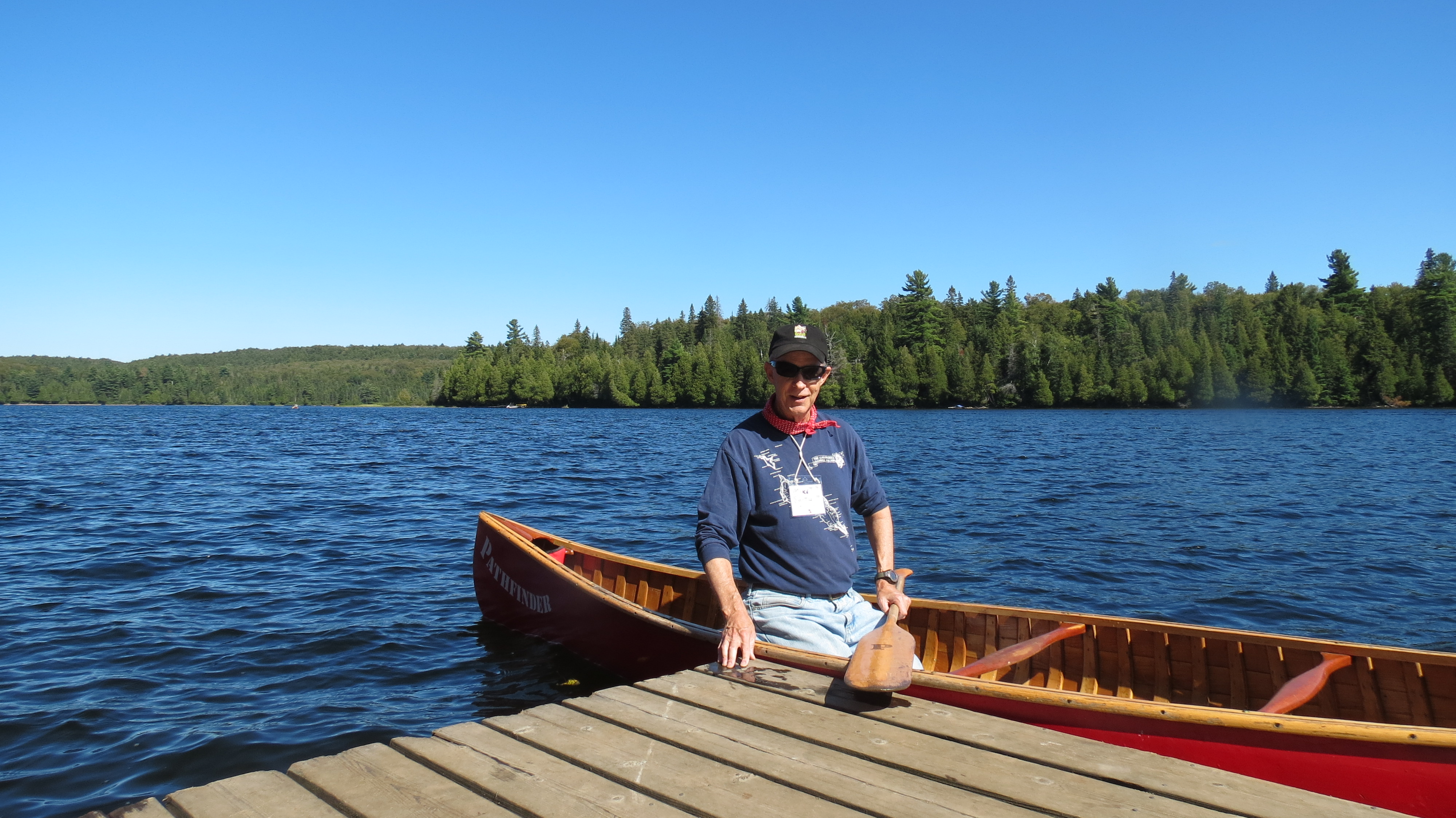
Red canvas canoe that Pathfinder uses.

Red canvas canoe that Pathfinder uses.

that dented my knees  from kneeling on the ribs and planking was part of the thrill.  Pathfinder bowmen didn’t sit in the bow seat.  I even carried the red canoe a mile.  I texted that feat to my wife, and she simply replied, “Why?”  It mattered.

Day trippers at Little Island Lake, Algonquin Provincial Park, Ontario. I camped at this site 50 years earlier. I am in the blue in the back.

I didn’t know if I could get the 90 pounder on my head, but wisdom is more important than strength, and the canoe went right up. Then, of course, I had to carry it the whole way.  It’s not a man thing; it’s a Pathfinder thing.  I wore red there; to wear red and carry again was deeply satisfying. After Pathfinder, I drove to Ottawa to see a good friend.  He took me over the Chilkoot twice, introduced me to the big waters of the Far North, the Yukon and Nahanni Rivers, and we’ve been in the Quetico.  Lot of water under our keel.  He’s got me interested in seeing Western Australia, and he is nearly 70.  Tick tock.

Tick, tock, tick, tock.

I’m trying to learn two languages, too.  Tick, tock.  Will you ever be functionally fluent in German and Spanish, Mike?  Tick tock.  Are you getting out enough?  Tick tock.  Do you notice how easy it is to get stiff and sore?  Tick tock.  Do you remember your miserable illness in 2009, when you almost were housebound for 4 months?  Tick tock.  Are you teaching enough?  Tick tock.  Are you loving your wife enough?  Tick tock.  Are you caring for your animals?  Tick tock.  Do you look at the maps on the wall and wonder how you are ever going to see all that country before you die?  Tick tock.  Does it matter, if you can just get to the places you love again?  Tick tock.  Are you able to say every day, “If I drop dead now, I will have lived, loved, done good, and been worthy of calling myself a human being?”

Tick tock.

ELDERS

September 1, 2013

“We have a Michael Smith booked tonight, but he’s from Washington.  We don’t have a reservation for you.”

It was 11 p.m. in Anchorage, and I had been looking forward to a quick shower and getting to bed, after the flight down from Kotzebue through Nome.  I had a seat mate who kept jabbing me, her husband fell asleep (lucky him) and she didn’t want to leave the row at deplaning.  I got behind two women who were slow going up stairs, and each took one side, together blocking the stairwell.  It had been a long day.

The women were elderly, and I said nothing.  At my hotel, I was stunned at the news, and all other rooms were booked in the city. The night manager had no suggestions.  I looked outside for a place to sleep, but I camp in the woods or tundra, not cities.  I finally thought of one place where people sleep without being arrested–the airport.  I took the shuttle back to the airport, and the young woman driver was a bit sharp with me.  When she spoke, I was slow to respond, because I was tired, trying to solve problems, not create a scene.  Her loud: “Hellooo?” didn’t help.

It was a long, short night.  I heard: “It’s one thirty,” “two thirty,” and “four thirty” on the loudspeaker.  I got up at 5 to the sound behind me of people shuffling in line to check in at a counter.  Embarrassed, I collected my gear and went to the men’s room to clean up.  Fortunately, I slept in my clothes; unfortunately, I really needed a shower.  I called the hotel to send the shuttle, and the same young woman came to pick me up.

“Do you have a room?” she asked.

“Nope.”

“Then why did you call the shuttle?” Her tone was angry.

“Because I felt like it.”  I replied, a little annoyed.  She knew that I had been at the hotel and might have a reason to go back.  I was thrice her age; I didn’t know if this was power over somebody, gender, race, my age, or she was just having a bad day.  I was wise enough to stay silent.  As a 64 year-old guy who just got 1 hour of sleep on the floor in the Anchorage airport, with a 7 hour drive ahead of me, I tried to be polite.  Treating elderly people with respect mattered when I was a kid, and I resent it when young people treat me with disrespect.

I am more than elderly.  I consider myself an elder, and the women at the airport who went up the stairs slowly I considered elders, too, which is why I didn’t yell at them to move faster.  Elders have lived long, have wisdom, listen a lot, and are willing to change their beliefs in the face of new evidence.  I qualify on all counts.  Some call it “being young,” which is fine.

When I got to the hotel, I was given a room, then asked to pay for it–full freight–until check out time 5 hours later.  I almost signed the sheet, not because I would pay for it, but it was going to be billed to the other Michael Smith, the guy from Washington.  But that wouldn’t have been honest. Elders must be honest, too.

The manager of the hotel was present and let me use of the room and shower for free.  I used two towels, leaving the room otherwise untouched. Subsequently, I spent two more nights there, in a nice room with a big discount.  That is why that woman is a manager.  She problem solves and knows that a customer who gets treated well after a bad outcome is likely to choose that place to stay the next time.  Indeed, I shall.

She was an elder, too.

I think the Native Alaskans were on to something.  Not only did the they clearly adapt their lives to the seasons, far better than we do, and existed a lot longer than we; their belief system respected elders.

I grew up told to respect elderly people, not all of whom were elders, but many were.  I was to listen and be polite.  Many elders taught me; I would have learned more if I hadn’t been a know it all kid, although I wasn’t a total loss.

I respected my parents, and my mother, a feminist before the word existed, and against segregation long before most of the country was, told me to treat all people with respect.  Making my parents proud of me was important. I didn’t always succeed. but I did when they began to die, and I had to become a parent to them.  They were not only my parents, but elders, people who taught me, people who deserved respect.  I had to help them exit this world with dignity, which I did, the second best thing I ever did in my life (marrying my wife was the best).

Yes, the Native Alaskans got it right.  The picture below was taken in the Headquarters for Kobuk Valley National Park.  The building is in Kotzebue; the Park 100  air miles east, barely reachable by water, not at all by land or roads, so I went by air.  It is noted for its sand dunes, which came from wind funneling between two glaciers millions of years ago, picking up silt and depositing it. I saw it, my 45th Park, and was thrilled to walk on the dunes.

But what I did not anticipate was far more important: to understand better what an elder is and the responsibility they have to pass their wisdom to the next generation. I needed to see Kobuk Valley, the Visitor’s Center, have a hotel reservation cancelled, and sleep on an airport floor for all this to happen.

Kobuk Valley Visitor’s Center; Kotzebue, Alaska

HITTING ROUGH PATCHES, AND FINDING SMOOTH WATER LATER….

August 27, 2013

“Hey, Rick, good to see you!”

I was at the reunion celebrating 100 years of Camp Pathfinder’s existence, where I learned to canoe trip in the ‘60s, and saw a familiar name tag near me.  I found the face vaguely familiar, as much as a face one hasn’t seen for 46 years can be familiar.

Rick (not his real name) turned and said hi, without nearly the surprise I had.  I told him the college I was fairly certain he had gone to (correct), and reminded him that I stayed at his house on a trip from the camp back to Rochester, New York, to accompany the campers back to the camp in central Ontario the next day.  I even got his street right, remarkable, considering I had not visited Rochester in 45 years.  I then asked what he was doing.

“Teaching math.  And I have authored five textbooks.  Good to see you again after the last reunion.  What do you think of the place?”

I had never been to a reunion.  We had not seen each other in 46 years.  I have taught math, and I certainly can subtract 1967 from 2013.  I haven’t authored much of anything, other than a few articles in several different fields, like neurology, Navy medicine, wilderness.  I certainly haven’t authored any textbooks.

I replied: “The things that changed needed to, and the things that didn’t need to change are the same.”  Rick liked that line, saying that was exactly what he was going to talk about at the “Council Meeting” the next day, where we would all be.  He then saw somebody else and left me, without another word.

I had known Rick really, really well at Pathfinder.  I had worked with him in the camp office, when I wasn’t out canoe tripping, which half the time I was.  I was–in a word–bummed.  I saw him several more times at the reunion, always with a lot of people near him, for he was a prominent person in the camp and a major “player” at the reunion.  I made it a point, however, not to initiate any further conversations.

I’m shy; while at times I can force myself to talk to strangers, if they reply the way Rick did, I shut down.  To an extrovert, that is no big deal; to me, I have put myself on the line and failed badly. I wish I could easily change this behavior, but it has been exceedingly difficult to do so.  I tried to tell myself that probably Rick had a lot of other things on his mind, but I was bummed.  I had no desire then to look for another name tag with a familiar name. Maybe I would the next day. Frankly, I was ready then to leave the reunion.

Instead, later that evening I sat outside the kitchen, away from the many gatherings, next to a couple, enjoying the coolness and the beauty of sunset over Source Lake, which I had not seen for nearly half a century.

“Venus is setting,” I commented, half to the couple, half to the sky.  It is how I start conversations.  If I can teach or get into my comfort zone, I open up.

The woman was interested in my comment, found Venus, and her husband looked, too.  They were from Brooklyn, where seeing stars or planets is often impossible.  Above Venus, I showed them Arcturus; overhead, the Summer Triangle, in the south, Antares.

“Let’s go down on the kitchen dock,” I suggested.  It was a clear, pleasant night.

With the wider view afforded by the dock, I showed them Cygnus the Swan, the Northern Cross, with bright Deneb at one end and dimmer Albireo at the other. With a telescope, I told them Albireo is one of the most beautiful double stars in the sky.

I pointed out the Big Dipper, showing them how it could be used as a clock, running counterclockwise around Polaris every day.  Using the Big Dipper, one can tell time at night, which fascinated them. I showed them Polaris, using my outstretched fists to show our latitude of 45 degrees.  In two minutes, they just had learned how to tell the time and latitude without anything more than their eyes and hands.  That’s heady stuff.

We turned to the south to view Scorpius, the head, Antares, and the tail.  The whole constellation appeared before us, barely clearing the quiet boreal forest across the now lovely, dead calm lake.  I told them how my wife and I once saw Orion rise over a calm lake late one night, perfectly reflected in the water.

It was late, and while the parties were occurring all over the island, I was tired.  As we walked back to where we had been sitting, I mentioned that they could always see the Moon from Brooklyn, and if they started following the Moon’s cycle, they would learn a lot.  The Moon is essential in both the Jewish and Islamic calendars.  If they used the bright stars like Vega, Altair and Deneb like Broadway, Madison Avenue, and Wall Street, they could learn to find their way to the lesser known areas in the sky.  It isn’t difficult, and I suspect perhaps this couple will.  I wrote an astronomy column for a newspaper for two decades without any formal astronomy background.  It takes rocket science to go to the stars, but not to learn them.

I have neither written a textbook, let alone five, nor changed thousands of schoolchildren.  I was not speaking to three hundred people at a reunion; I was only showing the sky to two young adults from Brooklyn.

But that night I like to think I changed a couple of lives. If I didn’t, I certainly changed the course my evening had been taking.  I didn’t whistle when I went to bed, but I felt a lot better about myself.  The reunion would turn out fine, Rick had just been a small rock in the water that my canoe hit.  I was again back on calm water, paddling ahead strongly.

Wilderness and a clear night sky are a wonderful tonic for the blues.

Day trip in Algonquin Park, on Little Island Lake. I camped on this very spot 50 years ago. I am back right.

Back from a paddle around the island….and of course a little more. These red canoes are hand made, still wood and canvas, and weigh about 41 kg (90 lb). On the day trip, I carried it 1400 meters without stopping. To still be able to do that was one of the high points of the trip. My shoulders hurt for several days after.  Notice the red neckerchief. That is the sign of a head man.  I earned that, and I was not the only one at the reunion who wore one.

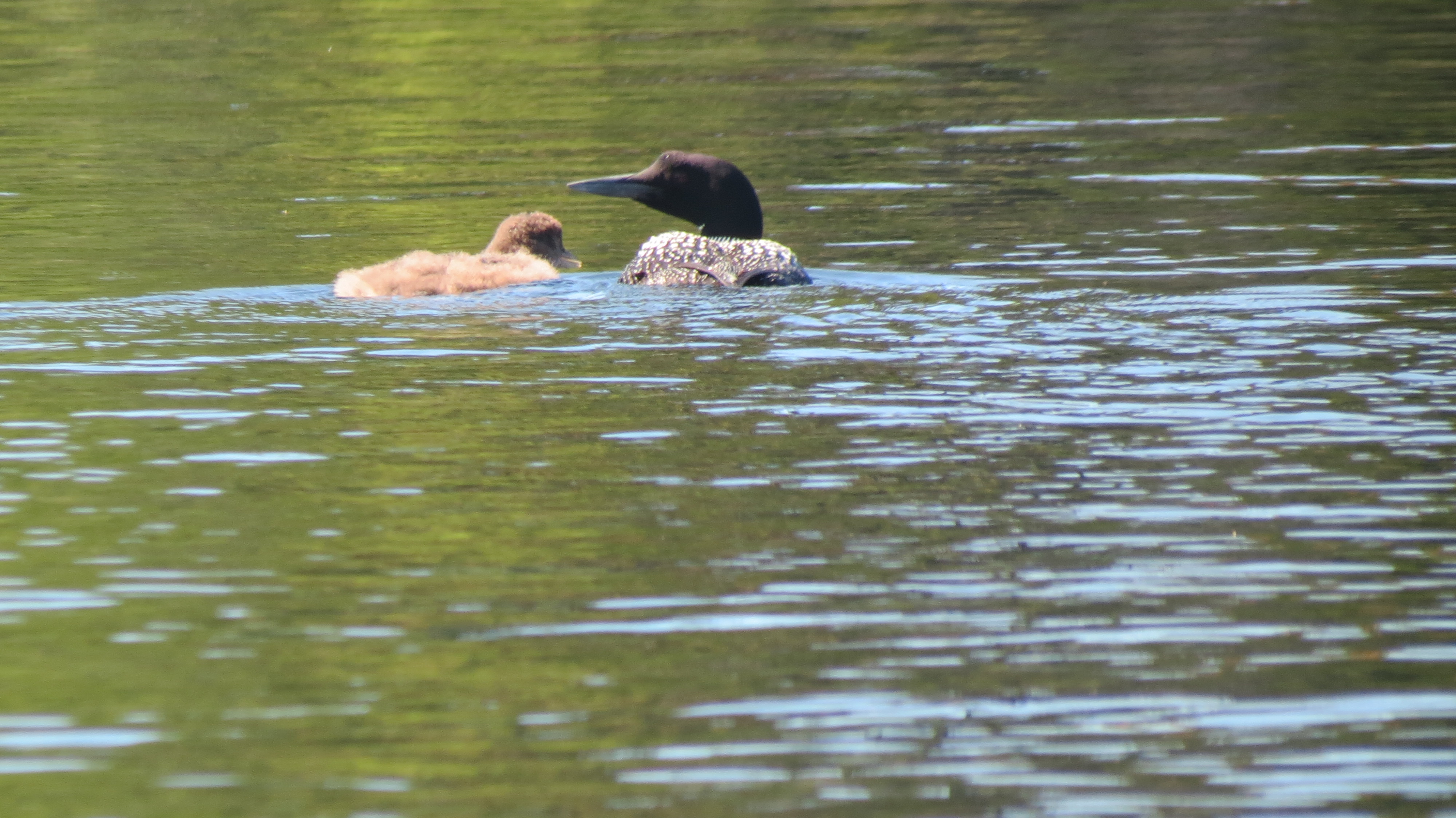
Loon and chick, Source Lake, Algonquin Park.

COMING HOME AT LAST

August 27, 2013

When the plane touched down in Rochester, New York, where I spent my childhood, I expected I would view the city with considerable interest, since I had not been back for 45 years.  I didn’t expect that my immediate view would be blurred, because I was immediately teary-eyed.  That surprised me, for while I certainly cry, I usually have some warning.  I deplaned, telling both the flight attendant and the pilot that this was my first time here in 45 years.  They smiled.  I walked through the airport, far, far different from the last time I had been here, arriving at the rental car counter.  As I was getting checked in, I told the young man it was my first visit here since 1968.

“Welcome home,” he said.

I lost it.  No, it wasn’t just teary-eyed, I started crying, the kind of crying where you simply cannot talk and your face is soaked.  It didn’t last long, but the emotion caught me totally by surprise.  As I write this, I am teary.

I lived in Rochester from shortly after my birth in Berkeley, California, until 1963, when I left, to finish my last three years of high school in Wilmington, Delaware.  Other than working a summer at Eastman Kodak in 1968, where I hardly ever explored, I had not set foot in the city, or even New York, for that matter.  I finished high school in Wilmington, and I had a lot more friends there, but when I returned to Wilmington 42 years later, I did not have those emotions.  I was curious, but I did not cry.

Driving out of town, for that evening, I wanted to see our summer place on the Finger Lakes, I saw names I had not thought about for years–5 and 20 (a well known road my pediatrician told my mother I should play on, which would solve some of her problems), Rush, Henrietta, Conesus, Canandaigua, Lima, Livonia, and Honeoye, the last the lake where we had our cottage.  I was about 6 miles from Honeoye before anything looked familiar.  Even West Lake Road was different.  The numbering system had changed, and only the fact that I went past the cemetery on my right told me I was on the right road.  “California Ranch,” a peninsula, was now “Ranch Road.”  I went by “Poplar Road”, which I remembered immediately as being the last road before the one to our cottage.

Had you asked me any time in the last 40 years where Poplar Road was, I would not have been able to answer.  But I knew it immediately when I saw it.

The cottage was basically the same, but the trees, the new cottages, the whole area was different.  The owner was kind enough to let me in, and I was standing in a room where my feet had trod when I was a young boy, not an old man.

That evening, on the dinner menu, “Texas hot dogs” were advertised.  I hadn’t heard the term in decades.  Rochester is home to red and white hot dogs.  I can still hear the waiters at “Don and Bob’s”, which now exists at Sea Breeze: “Two texas, three white!”  When we left Rochester, that was the end of white hot dogs and Genesee Beer.

The next several days, I visited Cleveland to see my 49th national park, and drove around Lake Ontario to a camp reunion and to visit a good friend in Ottawa. This was a true “Remembrance Trip.” I returned to Rochester from the east, drove down Elmwood Avenue, and again saw street names I hadn’t thought of in decades.  I arrived at 12 Corners, immediately recognized it and the three schools I had attended through the 9th grade.  I was speechless, but I was done with the tears.  I saw the schools, turned down the street I lived on, and saw the house where I grew up.  It looked good.  So did the window from my room.  I looked at the sidewalk and the driveway, where a half century earlier, even almost two-thirds of a century earlier, my feet walked.  It was good.  I needed to see my house.  I was through with the tears now.

I drove to the hotel near the airport, on Chili, which I immediately knew was pronounced CHI lie, not CHILL e, where I was flying out the next day.  I told the counter clerks that it was my first time back in 45 years.  They smiled.  I tried to say that it was the first time I had seen my house and my school in a half century, but I couldn’t speak.

I started to cry.  I absolutely could not get a word out for five minutes.  They smiled and nodded.  I was astounded at my emotions.  For years, I always considered a home town is where somebody currently lives.  That is, after all, literally your home town.

But I had been wrong the whole time.  I have a hometown.  It was so obvious that it perhaps never occurred to me.  It was, and always will be, Rochester, New York.  Had I listened to my heart and eyes, I never would have doubted it.  The brain is smart, but the heart and eyes know things the brain can’t understand.  The mind of the child takes in things that the adult brain simply can’t comprehend.  My heart and eyes knew I was home.

I took the trip, because I wanted to see where I grew up one more time.  I did that.

I just didn’t know that after all these years, I was finally going home, and how important this would be.  I went to school in Rochester for many years.  I learned a great deal in Rochester.  But this beautiful city had one more lesson to teach me, 45 years later.


CUYAHOGA VALLEY NATIONAL PARK

August 21, 2013

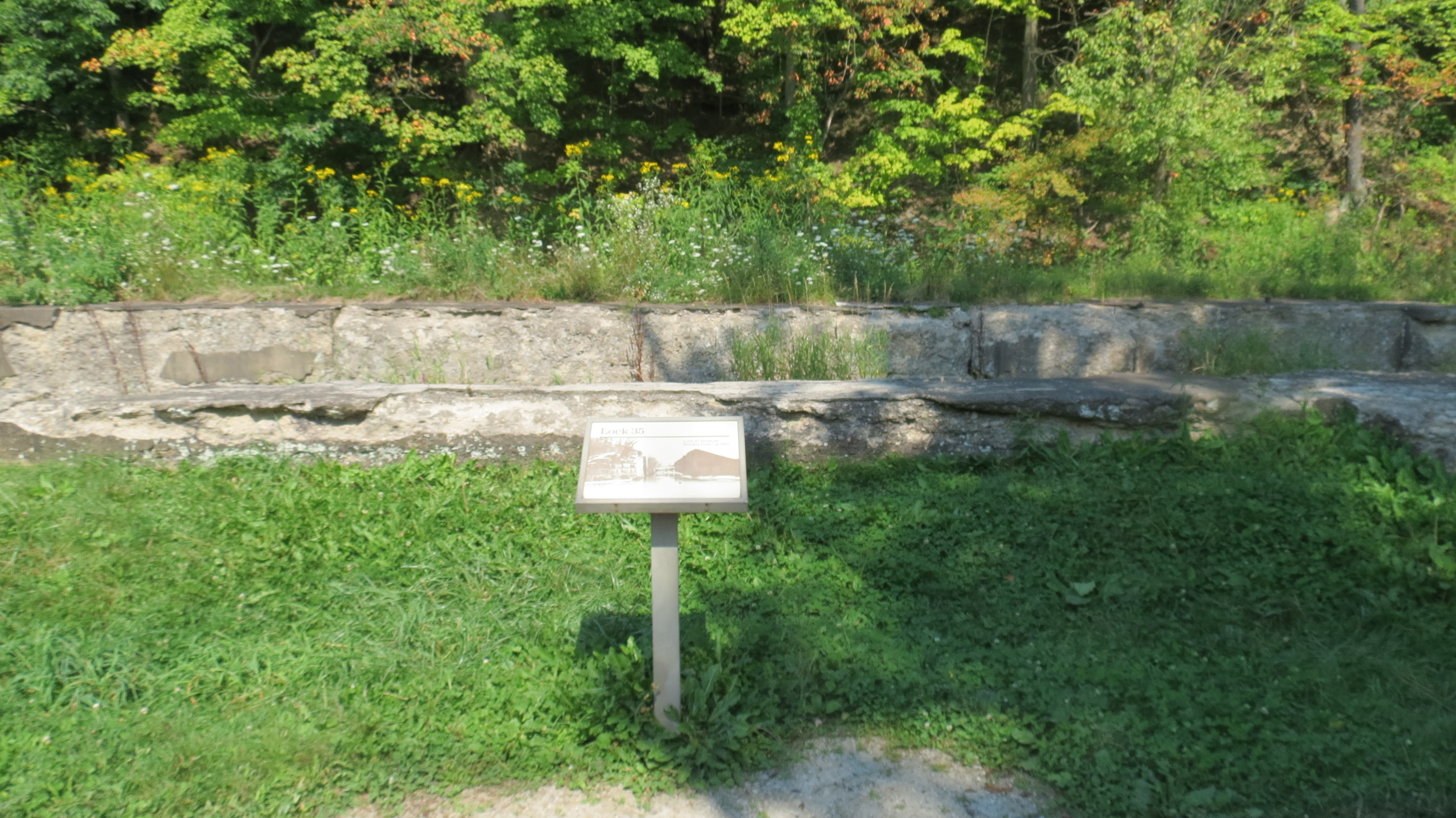
Cuyahoga Valley National Park is just south of Cleveland and close to three interstates.  Despite the proximity to noise and people, the place is quiet, and there are many miles of trails.  I chose the Towpath Trail out of Boston, walking it for about 5 miles and back.  There is a lot of bicycle use, and the trail is popular with runners, too.  There is a river, several large ponds, some marsh, and old locks along the trail.  An old paper mill is there as well.

For those wishing to do a one way hike, shuttle service exists for some of the trails.

There is a small store run by volunteers in Boston; I did not go to other parts, deciding to eat and then walk where I was.  There are many interconnecting trails, and for mountain and even road bikers, this would be a delightful place to be.  For runners, walkers and picnickers, this is a lovely place.

River view and Highway 8 bridge

Typical trail view

IMG_3619 IMG_3618

Footbridge that was removed, sent to Elmira in 1992, restored, sent back, and rebuilt!

FIGHTING BATTLES SILENTLY

August 18, 2013

I was insulted by a friend recently, although he will never know.

I’ve never had a lot of friends; in the past 15 years, I’ve had even fewer.  When I rode the bike, I had several, but after I quit riding, I lost contact with them, for the only connection we had was the bike.

The friend to whom I refer once practiced medicine next door to my office.  He often brought his dogs to the office, and I took an afternoon break from seeing patients to go over and pet them for 10 minutes.  It was relaxing.  He retired just before I went back to graduate school, moving to another part of the country.  He sent Christmas e-cards and generic letters, telling his friends what he was doing.  We weren’t close, but I did consider him a friend.  Until yesterday.

He sent an e-mail to me, probably to everybody in his address book, about how the Senate almost voted to give to the UN the right to take away the right to own a gun.  I haven’t followed this debate closely, but I know enough to know that treaties require 2/3s approval, which this vote wasn’t even close.  If it is not a treaty, it won’t pass the House.  In any case, I fail to see how anybody who is thinking clearly thinks it is physically possible to confiscate three hundred million firearms in this country.

We can’t even pass a law strengthening background checks of who should have a firearm, despite overwhelming (85% of firearm owners in favor is overwhelming) support by the public.  Newtown has been and will be forgotten until December.  I knew it would be.

I have never touched a handgun and don’t plan to.  I shot skeet once, in 1976.  I have no use for firearms.  I also know that in my lifetime, we will never control their use.  Firearm control is like the Middle East peace process:  it comes up from time to time, somebody thinks something good will happen, and nothing ever does.

The e-mail annoyed me.  I started to write the sender, saying that politically hot issues should not be e-mailed to those whose political beliefs you do not know.  It is a good way to destroy a friendship, which he just had.  It was short and to the point.

Then I let the letter sit and deleted it 6 hours later. I have learned to wait before hitting “send”.  I pick and choose my battles.  I will go to the mat on some issues, like the climate, but a wise man doesn’t fight every battle.  I thought perhaps the sender might becoming demented.  He is old, and his recent Christmas cards have become extremely religious compared to prior years.  I haven’t seen him since 1998 and don’t know his current situation. I won’t change his mind and will only annoy or hurt him.  Why do that?

This isn’t the first friend I’ve lost over political issues.  One crossed a line that I considered important, and I decided not to contact her further.  I’m not going to change her mind, and silence is the best option, for it has many meanings.  Silence can hurt, but unlike hateful words, silence can be reversed.

A third individual, from Russia, whom I help learn English, explained Islam to me.  At first, I learned several facts I found interesting.  But later, she told me that I was of course going to go to hell.  I was more than a bit miffed and thought about stating to her my lack of belief in hell, except here on Earth. I could have asked what happens when two people, both believing their religion is “the proper way,” collide. It comprises a good deal of the world’s problems.

I remained silent a few days. She finally wrote me to see if I were upset. Yes, I was very upset, but I replied only that I was ready to teach her English. My silence had been my answer.  Maybe she understood what it meant; I doubt it.  Remaining silent in the face of hurtful comments, or comments that make one livid, is difficult.  I’m getting better at it.

I don’t ask people to read what I write here.  People log on, read my words and decide whether they want to read anything else I write. They choose.  I write, because it is how I discuss difficult or interesting issues. I hope my words will make people think about the world in a different way, I also hope my pictures will show people parts of the world that they are likely never to see.  Perhaps if people see how beautiful this world is, they will be happier and will work to protect it.

What I have learned, which took far too long, is that sometimes it is better to let others have the last word, especially a spouse.  For many, having the last word matters.

My silence makes it impossible for others to know what I think. That’s powerful.  For me, having the last action matters.

Even when it is silence.

MR. STERNER

August 14, 2013

Mr. Sterner might have been a reason I became a doctor.

Walt Sterner lived with his wife Sadie all year at Honeoye Lake, next to our summer cottage in the Finger Lakes.  He was old in 1956, when we bought the cottage, and Sadie was wheelchair-bound from arthritis.  Mr. Sterner loved her.

Mr. Sterner was an elder.  No, he didn’t have a college degree; I doubt he graduated from high school, but he was an elder.  He could fix anything, building and assembling most of the things at his house.  He had a metal track about 50 yards long that he could use to transfer his boat from the boathouse to the lake.  He later built a second ramp for Sadie to easily get in and out of the cottage.  Mr. Sterner had his priorities.  I think Sadie noted that, too.

Mr. Sterner liked dogs, especially ours.  He had a gruff voice, but when Vixie, our dog, was hungry, she didn’t hang around our place, she went next door.  She got something, and Mr. Sterner got to pet her.  I can still hear him one night saying, “Pretty slim pickins’, Vicki.”

Mr. Sterner didn’t suffer fools gladly.  He never showed off his weapons, although I know he had a few somewhere.  One day he walked over to our place with his shuffling gait, blue work overalls, smoking his pipe, and started complaining about the kids down the way making too much noise the prior Saturday night.

“They do that again, and I’m gonna get my goddam thirty thirty.”

Nowadays, you could get arrested for saying that sort of stuff.  Mr. Sterner had no plans to kill anybody.  He was just venting, although I bet if somebody broke in, the muzzle of his “thirty thirty” would have been venting smoke.

My mother baked a cherry pie one week and took it over to the pair.  Mr. Sterner looked at the pie, cut a piece, and said, “Where’d you get the cherries, Ruth?”  For decades, that line was never forgotten at my house, used when something new was made by my mother.  I haven’t seen my brothers in years, but if I quoted that line to them, they would immediately know what I was talking about.

One autumn weekend, my father took me on a trip up into the Bristol Hills near the cottage.  We went to a slaughterhouse, where Mr. Sterner worked.  To most kids, this would have been pretty gross.  I was fascinated by what I saw, when I looked at the carcasses.  I don’t remember much of who said what, but Mr. Sterner and my father gave me a good instruction in anatomy that day.  I was absolutely entranced, and it is probably no coincidence that a quarter a century later, I was teaching neuroanatomy to medical students.

There was nothing false about the man.  What you saw was what you got.  He was an elder, and I always called him Mr. Sterner, as I still do.  I suspect I could have called him Walt.  It wasn’t right, however, and it never once dawned on me to do it.  A half century later, I still can’t call the chairman of neurology, who trained me, by his first name, even though I’m 64, he’s 87, and I’ve known him for 36 years.  I doubt he would care, but it just wouldn’t be right.  That’s one way you know somebody is an elder–at least in my generation.

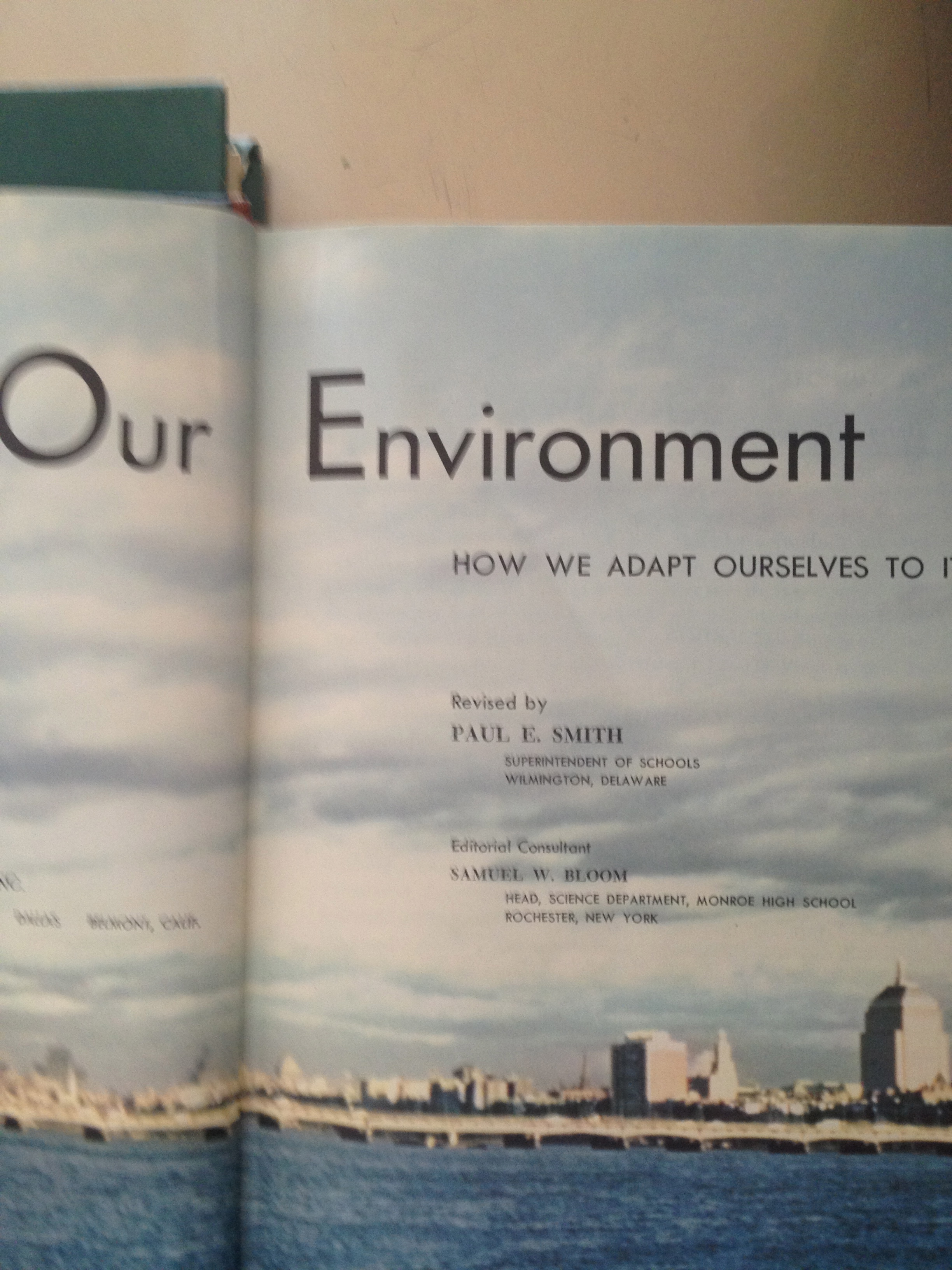
During what was my father’s final illness, at one point he needed a Chest X-Ray.  The technician kept referring to my father as “Buddy.”  I was infuriated but remained silent.  My father, Dr. Paul E. Smith, at the time nearly 92 and mentally sound, wrote two science books that sold more than a million copies each in the 1950s, when a million was a lot, and were the mainstay for science education in many schools. A lot of people would learn a lot if they read those books even today.  Dad worked his way up the educational ladder, from science teacher to principal, assistant superintendent, and superintendent of schools in 3 cities, finishing as an Assistant Dean at a College of Education.  He traveled the world.  He could fix cars and taught me how to change plugs and points.  He raised 3 sons, spent the War in Brazil educating pilots who flew to Dakar, and learned Portuguese. When he was 78, we did a canoe trip together.  Dad still knew the Latin name for a White Pine (pinus strobus).  I was impressed.  He was an elder.  He should have been called Mr. Smith, Dr. Smith, or Sir.

Not “buddy.”

When you are in the presence of an elder, be it a gruff farmer from rural New York State with minimal formal education, or a chairman of neurology at a major university, you call them Mr. or Dr.  Nowadays, many of the young call everybody by their first names.  That’s not only impolite, it is failure to recognize one may be in the presence of an elder.

Elders have seen and done a lot, but they also know what mistakes they’ve made.  In short, they have a great deal to offer to those who will only listen.  If an older person is listening carefully to you and asking questions, you may be talking to an elder.  Be sure to open your ears and close your mouth, too.  Be patient, because many elders think a lot before they speak.  They’ve learned that thinking before speaking is often valuable.  When an elder begins to speak, you will know you are in the presence of somebody special.

I’ve been fortunate over the years to have seen and done many things.  What I don’t know is whether I will become an elder in my society.  I can’t imagine a better way to grow old than to be an elder.

Title Page

This page is as informative today as it was then.

REMEMBERING PRINEVILLE AND 30 MILE

August 1, 2013

The Yarnell Hill fire that killed 19 Granite Mountain Hotshots from Arizona has already been blamed on “enviros”, like the 2011 Pagami Creek Fire in my favorite area of the Boundary Waters.  I don’t like the word “enviros,” and I am deeply disturbed how charged words end up in the vernacular, because the side who opposes my views keeps repeating them.  That’s how we got “Obama Care,” “death panels,” and “activist judges.”  For the record, it is the Affordable Health Care Act, and there is a lot of evidence to support the notion that the conservative side of the Supreme Court is activist, not the liberal.  Repetition does not always increase validity.  But back to Yarnell Hill.

Had the area been logged “appropriately,” some said, there would have been no fire.  Logging=jobs.  Jobs=money.  Money=things and kids.  Lots of kids.  Too many kids for the jobs available and for the carrying capacity of the world.  We think the world won’t change.  But it does. Email and online banking have hurt the post office.  Our big steel and copper industries are now small.  No longer are there well paying jobs for people coming out of high school.  Newspapers are in trouble.  The Grand Banks fisheries collapsed.  What happened to record and book stores?  I could extend the list; all these industries have had to change or disappear.

The world has changed, and the forests have, too; in part, because we put out natural fires, because of insects, and because of climate change, which affects the environment, including parasitic beetles.

Since I am an environmentalist, a so-called tree hugger (which I literally am), I am going to play the “blame game” here, since many of my detractors are not called out on their boorish behavior, counting on the rest of us to have been brought up well by our mothers to remain silent.

How dare you blame me and my beliefs for the deaths of the firefighters!!  We haven’t even had the investigation completed yet, but I will bet any amount of money there will be recommendations made that are going to anger a lot of people.  That is all I will say about my predictions.  I have a decent idea of why this occurred, but the investigation will tell me a lot more, some of which will be consistent with what I think, some of which will not.  But rather than wait for the investigation, some wish to blast the environmentalists, so we can mine, cut, hack, and destroy the Earth in the name of money….perhaps in the name of some sort of Deity, too.

Some of the fault was done in the name of what we once thought was good. The Smokey the Bear mindset convinced at least two generations of people that all fire in wild country is bad. Human caused fires are bad, but if they can be caused by humans, they can be caused by lightning, too.  The media will refer to “land destroyed by fire”.  In 1989, we built in the Sonoita grasslands, south of Tucson.  During the building, a 300 acre grass fire burned over all our property.  The house was scorched but hardly damaged.  When I saw the scorched land, I said to myself, “This will take a long time to come back.”  Six weeks later—SIX WEEKS–there was fresh grass, it was brilliant green, and it was home again to animals.

In 2005, on a solo canoe trip to Canada’s Quetico Provincial Park, I walked on a portage where the Bird Lake Fire burned 10 years previously.  I saw thousands of jack pine trees, all the same age, over this area.  Not all will survive.  Some will, others will die or be stunted.  Jack pine cones need fire to sprout.  This will be a big, shady jack pine forest in 40 years.  I won’t live to see it, but it will be there.  Natural fire clears and cleans the wilderness.  I haven’t been back to Yellowstone since the fires of 1988, but those who have know the positive changes it has had on wildlife and the ecosystem in general.  Remember what we all thought in 1988?

How dare you use the deaths of the firefighters as a reason to log the forests!  What could be logged, where they died?  Why do we allow houses to be built in these fire prone areas?  Why should young men and women put their lives at risk to save property?  If “Prineville” and “30 Mile” don’t ring a bell with you, will “Yarnell Hill” mean anything in 2025?  Prineville, Oregon, was the town where the hotshots came from, who died at South Canyon in 1994.  Thirty miles north of Winthrop, Washington, in 2001, the 30 Mile fire killed four young men and women.  The former had at least 20 rules violated; the latter was a tragedy that could have been prevented by not fighting it in the first place, and a concatenation of mistakes.  Easy in hindsight?  Sure.  Before?  Perhaps.  Listen to the video and draw your own conclusions.

Let the investigation proceed.  Afterwards, I would welcome a national debate on how we should manage our forests, except the boors will shout down everybody else and refuse to consider anything other than their ideas.  Can we debate the known science?  Can we honor the memory of these 37 young men and women and all the others who were killed or maimed by learning what to fight, what not to fight, when to fight it, how to fight it, and when to step back?

THE LADY IN THE STYLISH BOOTS

July 29, 2013

“Oh, those damned government regulations.”

I looked towards the voice, that of a fortyish woman, with stylish boots, dyed blonde hair, and a southern accent, who was talking to a park ranger at Katmai, 400 km southwest from Anchorage, and a long way from any part of the lower 49.

I almost let her have it, because rangers have to be nice, I don’t. I’m an elder in my society, and I was a lot more in my environment than she was.  I was wearing boots that had walked the over peaks in the Brooks Range, in Kobuk Valley’s sand dunes, both above the Arctic Circle, in Alaskan rivers, and on tussocks and ice.  Hers had probably just spent their first time on a dirt trail.

At Katmai, there are two viewing platforms at Brooks Falls, the lower, where one can go as long as one wishes without waiting or time limits, and an upper, where 40 people are limited to one hour, then have to get into line again for another hour, should they wish to see more.

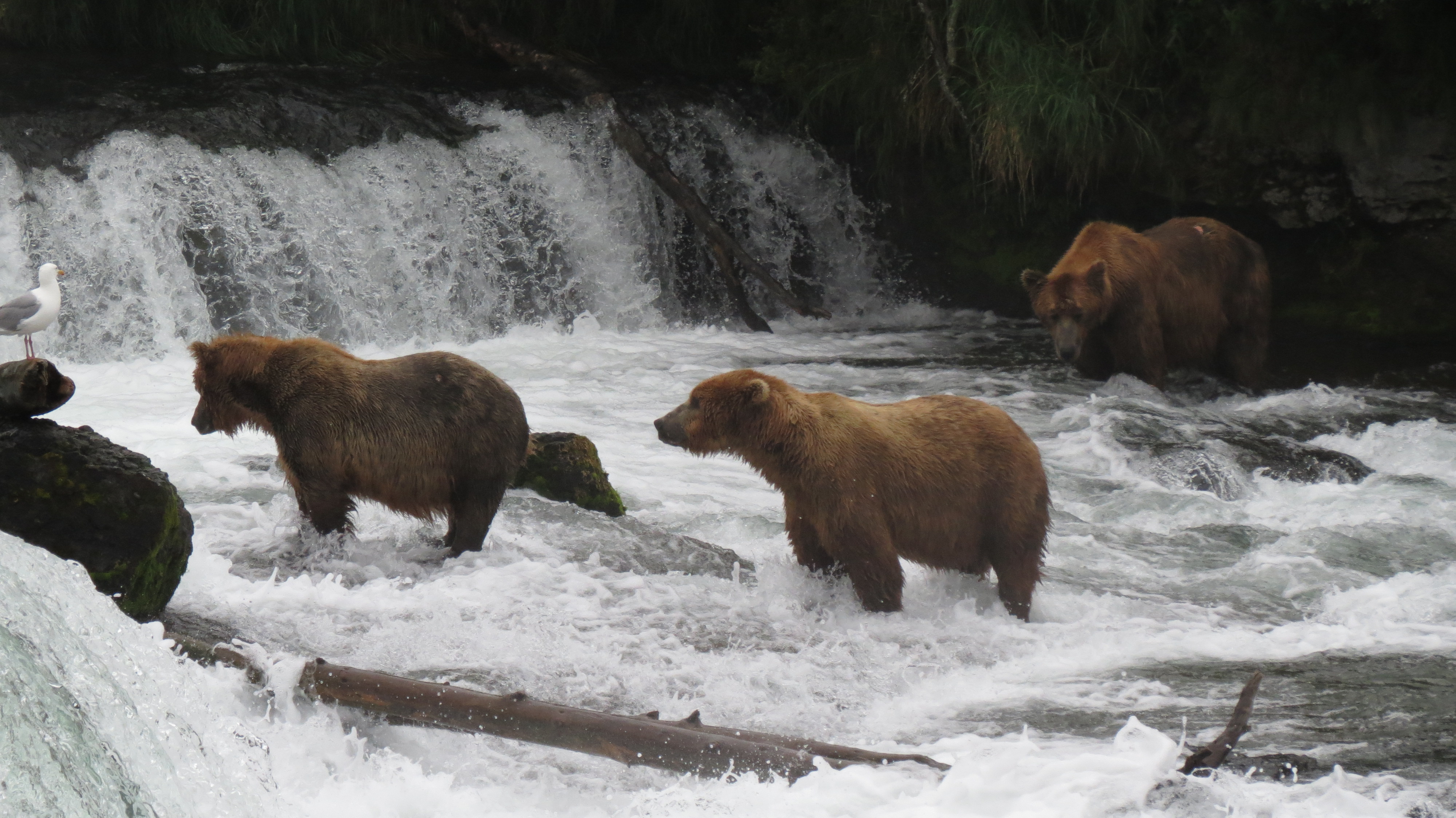
Brown bears at Brooks Falls, Katmai NP, Alaska

There is a question, and I think a good one, whether we should be having people view the bears in the Brooks River feeding on salmon.  We don’t know what effect we are having on the bears.  Perhaps none.  Perhaps a lot.  Katmai is pretty enough without having to see the bears close up, but most go to see the bears.

The upper platform, next to the falls, has more fish, and that is where the males, and the big ones, congregate, so people want to go there.  Forty are plenty.  Put 50 or 60 there, and the last 20 aren’t going to see much.  I waited for 20 minutes when I arrived, spent an hour at the upper falls, left, got back on the list again, went to the downstream viewing area a second time, skipped lunch, and waited my turn to go to the upper falls.

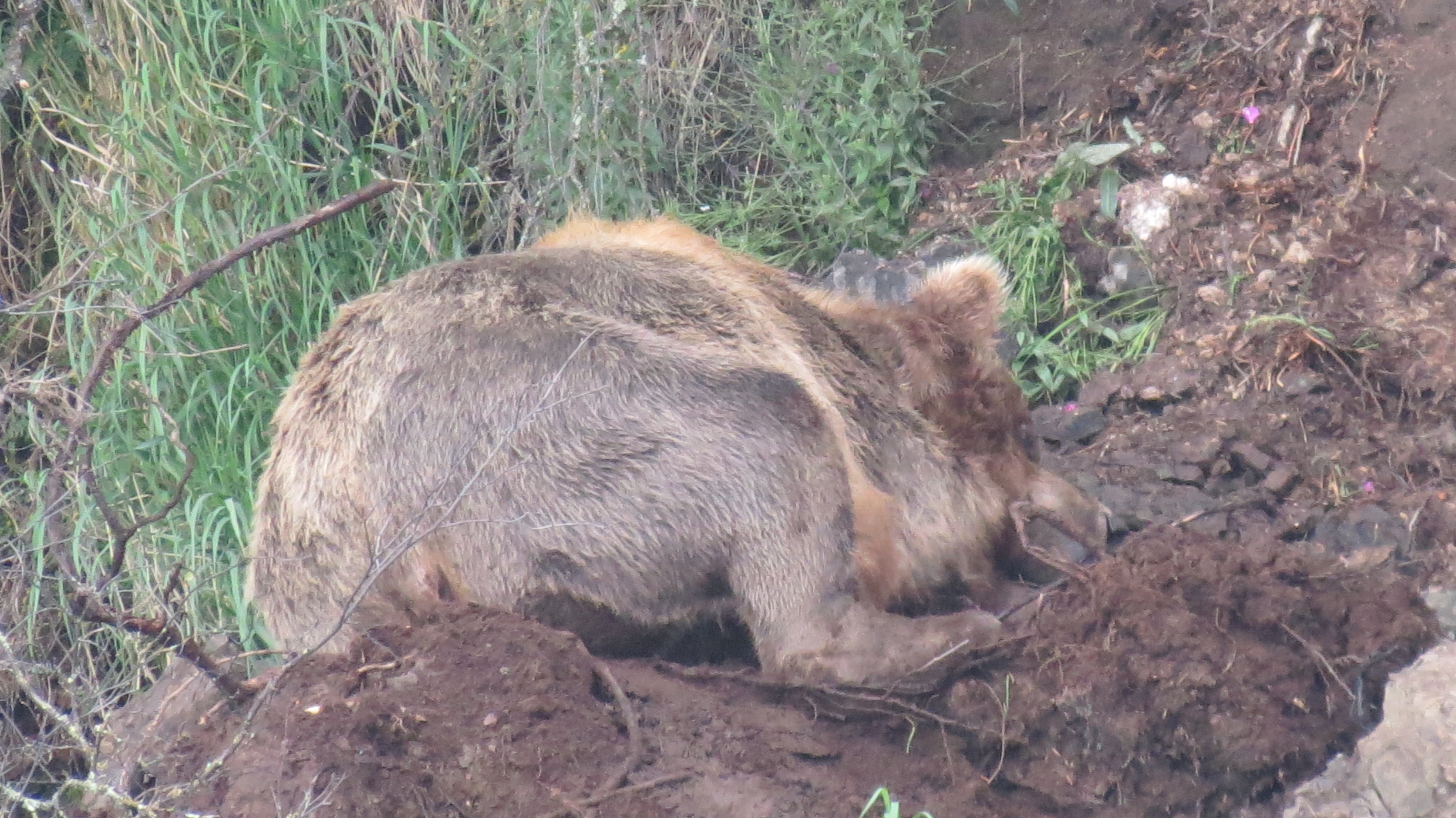
The downstream viewing was great.  I saw a bear sleeping in the mud on the other side of the river and pointed him out to others.  A bear ran right under the walkway with a salmon, off into the woods to eat it.  There weren’t many people talking, and within 45 minutes, I was back at the upper falls.  That wasn’t a long wait.

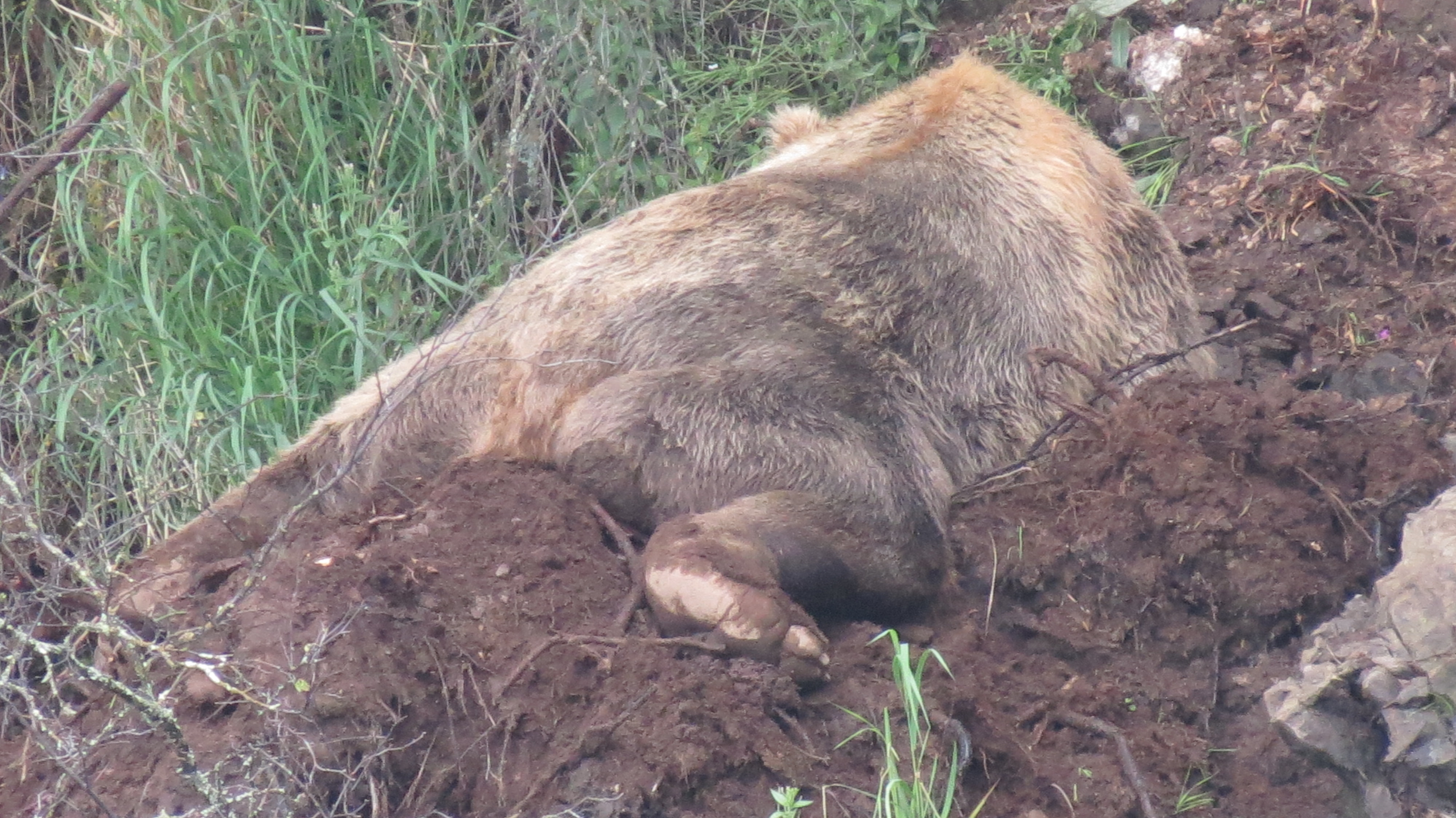
Bear napping in mud, Brooks River, Katmai NP

Bear taking salmon into woods

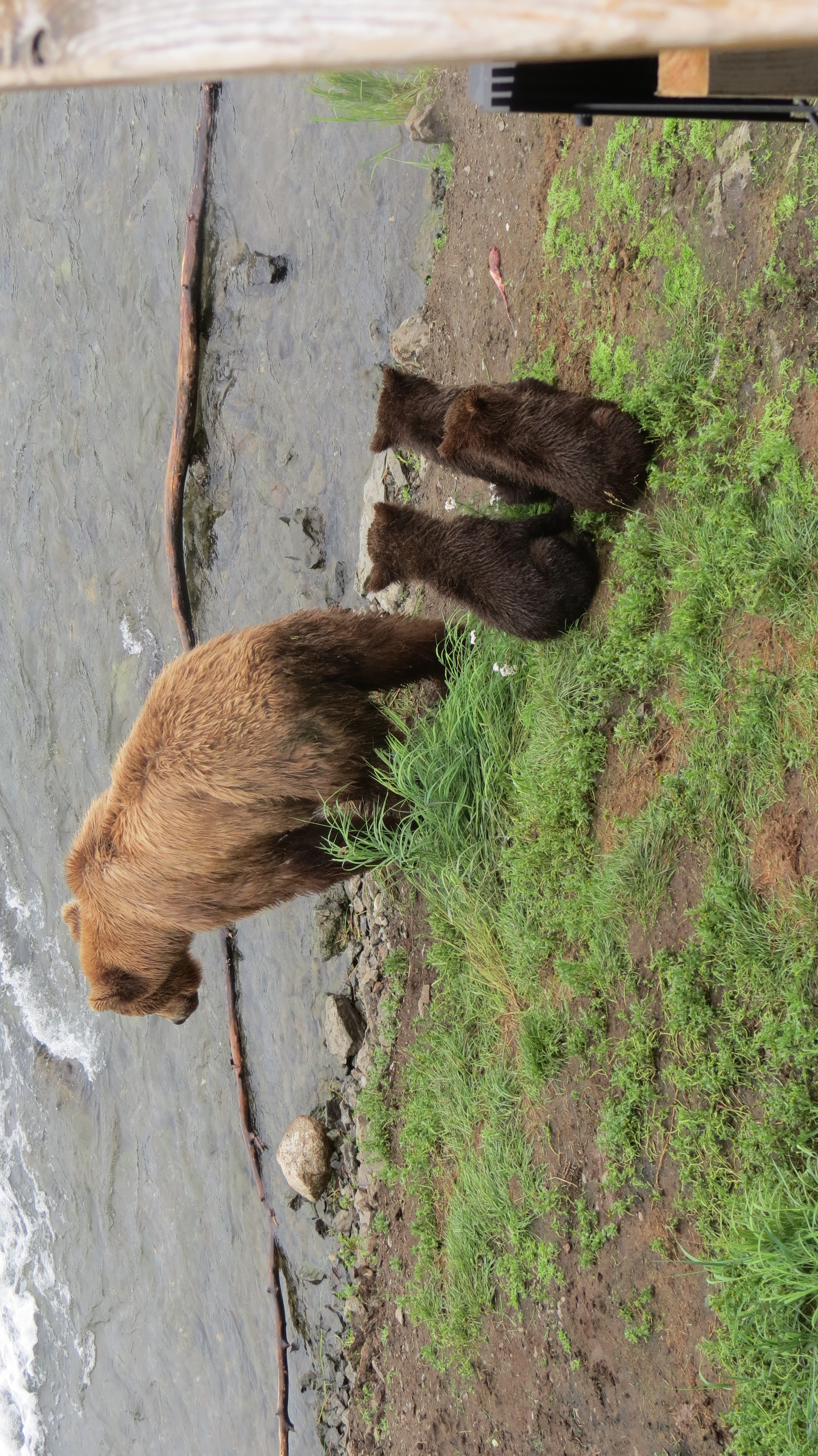
That second time was special.  I saw a boar chase a cub up a tree.  When the boar left, the mother came with two more cubs and soon all 3 cubs were in the tree.  Later, another sow with spring cubs, much smaller, appeared.  The whole time, several bears were fishing the river.  I had a good time and as I left the check-in station, I heard the woman complain.

Sow with her 3 cubs.

I almost let her have it. But being an elder means having wisdom, and I knew I would be more emotional than wise if I said anything to the woman wearing the stylish boots.

I would have started with the failure to properly regulate flights properly over another national park: the Grand Canyon.  On 18 June 1986, a helicopter and a fixed wing collided over Tuna Creek, killing 25, many of whom were Dutch tourists, who likely burned to death before they hit the ground.  The FAA stepped in.

I would then have asked how much better off we might be today had we regulated the financial industry, so that people who almost took down the world’s economy, which is still struggling years later, got bonuses that themselves were in the top 0.5% of US income.

I might have asked her to imagine Katmai as a private park with a bus to the viewing platforms, so people wouldn’t have to walk 1.2 miles, selling tourists a salmon, then putting them on a tram over the falls, so people could look down and drop salmon to the bears, getting that “special” picture to post on their wall.

Ten years ago, during bear hunting season, many people went into Lake Two in the Boundary Waters without permits.  It’s an easy lake to get to, and surprise–people don’t always regulate themselves.  When my wife and I tried to camp there, with a permit, coming the other way, we were tired, disappointed, and angry that the lake was full.  We had to paddle a lot further before camping.  Afterwards, rangers were posted at the entry point to ensure people had permits.  Regulations make it possible for me to have my rights protected, too.  Even with rules, parks get trashed; without them, I shudder to think what would happen.

She probably would have screamed at me if I asked when a person’s right to own a firearm interfered with my right to be safe at my local Safeway, where Gabby Giffords was shot. Yes, I know, guns don’t kill people, people kill people, because if they are angry, it is easy to move a finger without thinking of the consequences.  Using a knife or a fist makes it a lot more personal, risky to the attacker, and requires enough time where maybe somebody can think “I shouldn’t do this,’ which is what I did before telling the woman in stylish boots what I thought of her.

All but forgotten now, the memorial to the 6 killed and 19 wounded in Tucson. Just a question: When was the last time you heard “Newtown”?

I’d like to know what the lady would think of regulating food quality and safety, something a good looking congressional candidate from my district wanted to do away with, since he had never had seen a case of typhoid fever or hepatitis, or a child die of shigella or salmonella.  That candidate scared the daylights out of me and missed winning the seat by 4,000 votes, because people were angry about the Affordable Care Act, many of whom were on Medicare or military retirees, ironically receiving government funded medical care.

No, lady, we regulate our public lands, because if we don’t, they will be lost for all time and be turned into money makers for a few.  The forests will be cut, the land mined, the water ruined, the silence gone, the animals gunned down.  I’d conclude with: “What about my rights and the rights of those who have yet to be born?”

I wonder whether she would kick me with those stylish boots.  Or think.

KATMAI

July 26, 2013

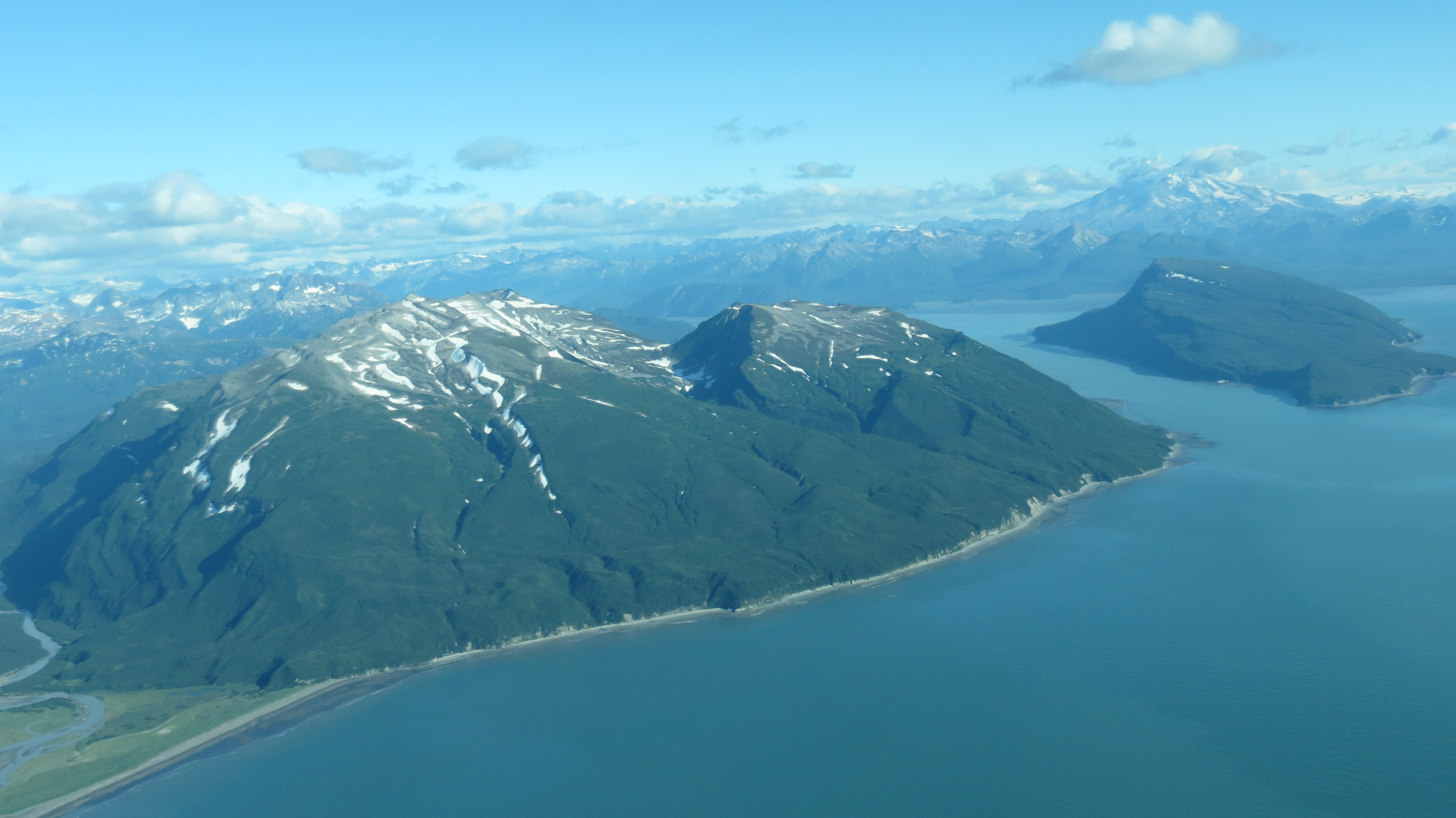
Katmai National Park is for bear viewing and the valley of the 10,000 smokes.  I didn’t see the latter, but I did get to the former, and the bear viewing was spectacular.  Located about 220 nm SW of Anchorage, it is reached by float plane, with about an hour and a half ride over rather spectacular scenery.

Scenery on flight to Katmai

One arrives at Brooks Lake, and gets off the float plane on the floats.  There is a short walk to the visitor center, where the ranger talks, and there is a good 10 minute video on dealing with bears.  These are not the same behaved bears as in the Brooks Range, who have likely never encountered people.  These bears are near people, but so long as people stay on walkways, there shouldn’t be much of a problem.  The bridge over the Brooks River can be closed if there are bears in the vicinity, however, and bears are unpredictable.

The area for viewing has a lower and an upper platform.  The downriver or lower platform is open without waiting, and the smaller bears tend to congregate there.  The upper platform has room for 40, and one may stay no longer than an hour.  However, after one leaves, they may immediately put their name on the list to go back.  I did just that and spent an enjoyable 45 minutes at the lower platform seeing one bear sleeping in mud and another carrying his prize catch back into the woods.

Brown bear sleeping in mud.

Look what I caught!

The upper platform has a great view of the falls and bears will walk under the platform.

Some of the bears at the upper falls viewing area.

Fishing from the top.

The highlight was a cub chased up a tree by a big boar, who barely missed him.  Young bears until 3-4 years of age can climb, but older bears fuse joints necessary to climb and no longer can.  After awhile, the boar left and the sow returned with 2 siblings, sending them up the tree as well.

\ Literally climbing for his life

The reason.

Mom at bottom.

Two.

The third.

Mom with spring cubs.

The three cubs did come down from the tree, Mom got them a salmon from upriver, and they disappeared into the woods.  It is difficult to know how many will survive.  There is a lot of food, but there is also a lot of predation.  The spring cubs got a much later start, and it will be less easy for them.

We don’t know the effect of human visitation has on the bears.  Hopefully, it is not significant.  The day was spectacular, and this is a park I definitely want to see again.