Archive for the ‘MY WRITING’ Category

THE SEASONS OF MY LIFE

October 3, 2010

I recently took my 58th canoe trip into the Boundary Waters, having spent more than 1 month of my life camped on one lake and more than 1 year camped in the lovely country on both sides of the international border.  I’ve paddled on more than 300 different lakes, traveled 3000 miles, cleaned 500 campsites, and even dug 16 latrines in the 30 years I’ve been going there.  I’ve done half as much traveling in Ontario’s Algonquin Park back in the spring and early summer of my life.  I started 50 years ago and feel more comfortable in a canoe than in a car.  Safer, too.

I don’t travel hard any more.  I used to love to do so, glorying in 20 mile days with 15 portages, carrying a pack under a canoe for up to a mile at regular walking pace through the woods.  Oh, I was good in the summer of my life.  I could reach shore, unload and be portaging in under a minute.  When I reached the other side, I would be loaded and on the water in 30 seconds.  I could make camp at night in 30 minutes, break it the following morning in 45.  Now, however, I am happy to base camp with my wife and do short day trips around a lake we can truly say we know better than anybody else alive.  We have been on every one of the 47 campsites (the maps were in error and the Forest Service didn’t know that), and we now spend 5 nights a year on one campsite so remote that we don’t see any other human being during that time.

While I am not as strong as I once was, I am much more savvy in the wilderness.  I don’t waste effort on portages.  I am a superb weatherman in the wilderness, predicting storm onset and ending accurately with nothing more than a barometer on my wrist, reading the sky, and knowing the wind.  I thoroughly enjoy doing that.

Oh, I could do more if I HAD to.  Maybe.  But I don’t want to any more.  It’s been 9 years since I carried a pack and a canoe together.  I have nothing to prove and a lot I could hurt.  As I have gotten older, my desires have changed.  Do I miss the strength I once had, propelling me miles and miles to the next campsite?  A bit.  Do I need to do it again?  No.  For some reason, I revel in the fact that I once could do it but comfortable I don’t need to any more.  I know now that I probably took my last trip into Kawnipi Lake in 2005.  At the time I thought it would be.  Then I figured…maybe one more time.  Now, I’m not so sure I either need to, or more importantly, want to. I still want to see the northern sweep of Agnes Lake again, and a fellow teacher, who desperately wants to go, may be my partner on that trip.  The two of us could do it.  Gee, maybe Kawnipi, too, but nature may have other plans.

I have nothing to prove in the canoe country, although occasionally I still enjoy doing so.  My wife and I paddled 12 miles into our destination lake in 6 hours, with 7 carries, when several people we met, 20 years younger, were unable to get there in 3 days of work.  Neither of us is strong, but our experience, organization and leveraging of our skills, working together, enables us to still accomplish a good day’s work in a few hours.  Neither of us thought it was a difficult day.

Do I miss “roughing it”?  Not really.  I once liked sleeping under the canoe and paddling in a driving rain, but I don’t need to do it any more.  The way we camp is comfortable.  We eat well, stay clean and dry, and sleep better than we do at home.  The midnight bathroom breaks are a chance to look at one of the darkest skies in America and perhaps see an aurora, which we did a few years ago.

I find it interesting that as I have gotten older, my needs have changed, and I get pleasure doing different sorts of trips I once wouldn’t have enjoyed.  The trips I used to do no longer appeal to me.  I am at peace with that.  I expect more changes, and hope I still can paddle and portage for many years to come.  But I expect I will be doing so in a different fashion, and I believe that I will be enjoying it just as much.

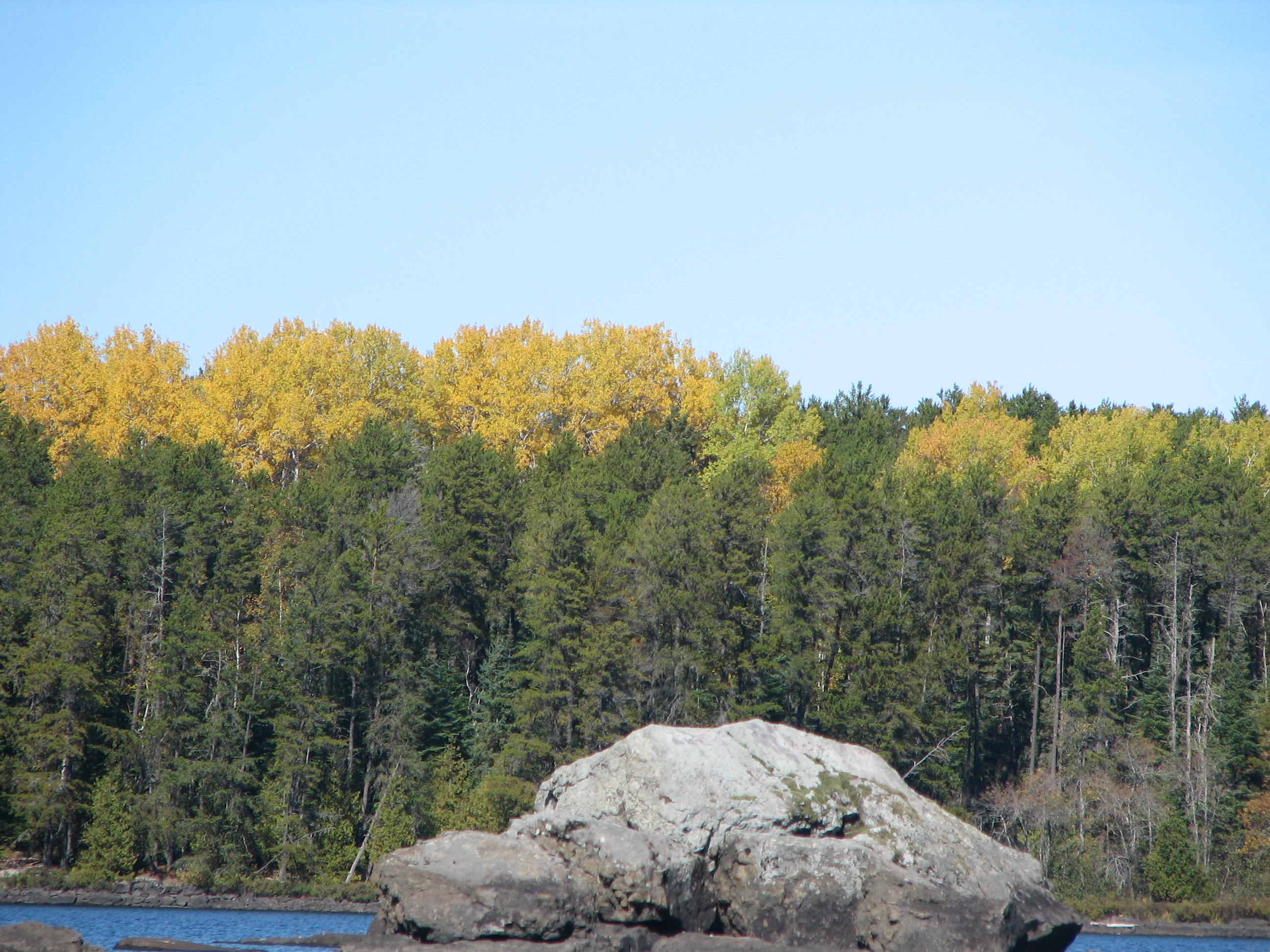
We were in the canoe country in autumn, present when the colors peaked. In the autumn of my life, the colors are starting to peak.  I don’t have the strength and growth I had in the spring and summer of my life, but I have found my own inner beauty that mirrors the external beauty around me.  I still see new country, but I enjoy visiting familiar country the way some like meeting new people but enjoy old friends.
I tell myself I won’t be able to do this forever, but I am glad for the now.  I hope in ten years, in my seventies, I will be still be able to canoe and set up camp.  The gear is getting better, and my knees and shoulders are strong.  Whether my neck holds up is another matter, but I bet I could figure out a way to get a canoe on my head without stressing my neck, should that come to pass.  If not, I can paddle lakes where I don’t portage, because there are many of them, too.  In short, my body is like a well-used Old Town.  It won’t last forever, and it is showing use.  The paint is scraped, there are a few cracked ribs, but it is still sound and seaworthy.

I hope that as the winter of my life approaches, the white in my hair will mirror the brilliance of new fallen snow, untouched, in those areas of Alaska’s Brooks Range that I have been so fortunate to have explored four different times.  Could I canoe into my eighties or even nineties?  I can dream, for this year two very special people, different sex, different countries, different professions, and different beliefs had a profound influence upon me.  From each, and quite by accident, I learned that while I am a scientist and statistician, consider myself a practical person, not far below the surface lies a kid–a deeply emotional, spiritual dreamer.  I’m not planning to mentally ever grow up.  When I arrived in Fairbanks, many my age or younger went to the Princess Cruises sign.  I picked up my backpack.  In Minneapolis, I feel a bit unusual at 61, walking through the airport with my canoe pack on.  The white I want to see is not a golf ball but an eagle’s head.  With luck, I have just started autumn.  May it continue to be as brilliant inside as it was along the Fernberg east of Ely, Minnesota.  May the winter that follows it be as brilliant as the snow that made Mt. Igikpak so beautiful over the Noatak last August, up in Gates of the Arctic.

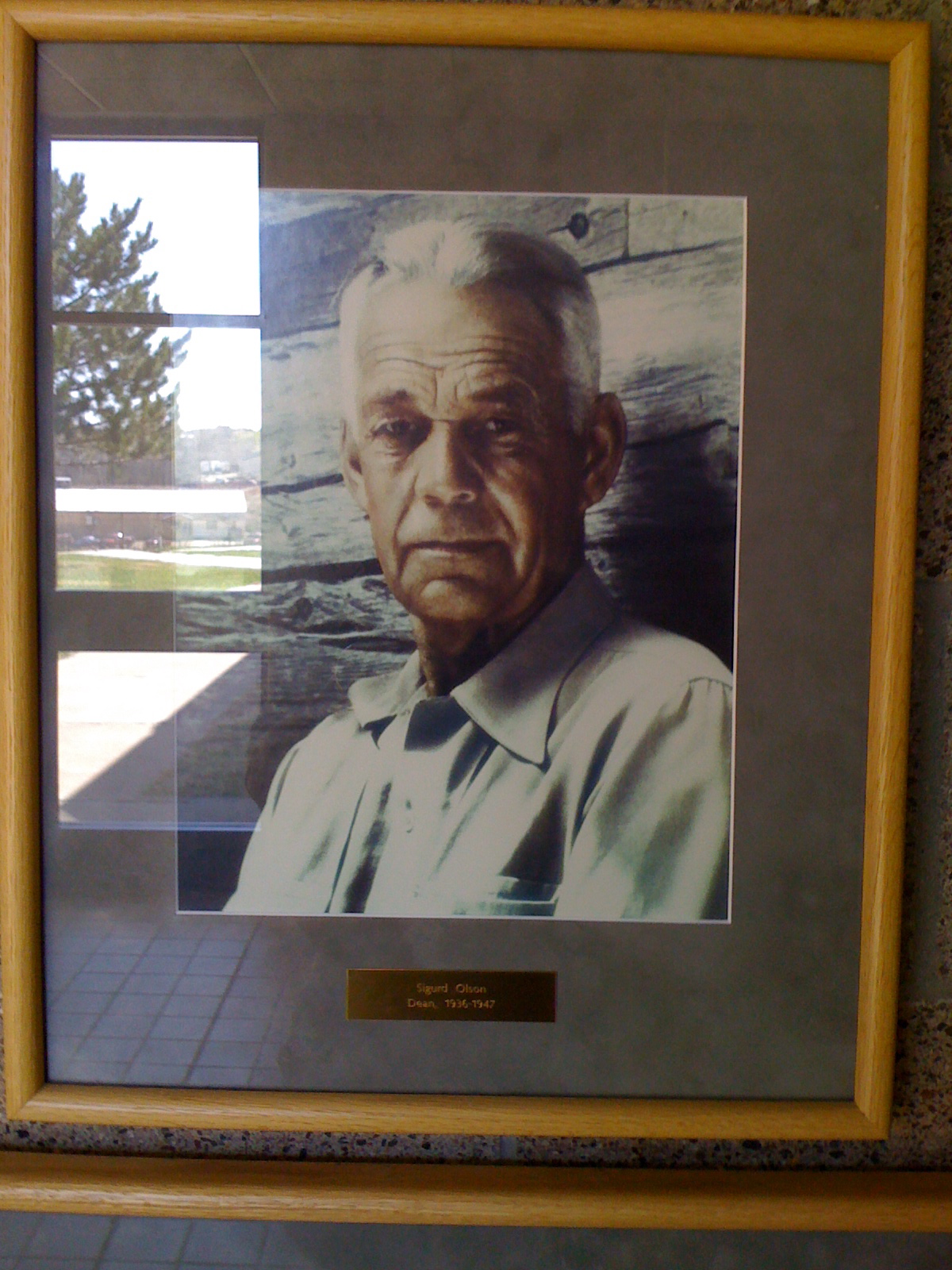
Eventually, of course, my eyes will finally close forever.  I hope at the end I feel the same as Sig Olson, the famous North Country writer, who still had written, in his typewriter, the day he died, snowshoeing, “I am ready for the next stage.  I know it will be a great adventure.”
…AND THAT CHANGED MY LIFE

September 1, 2010

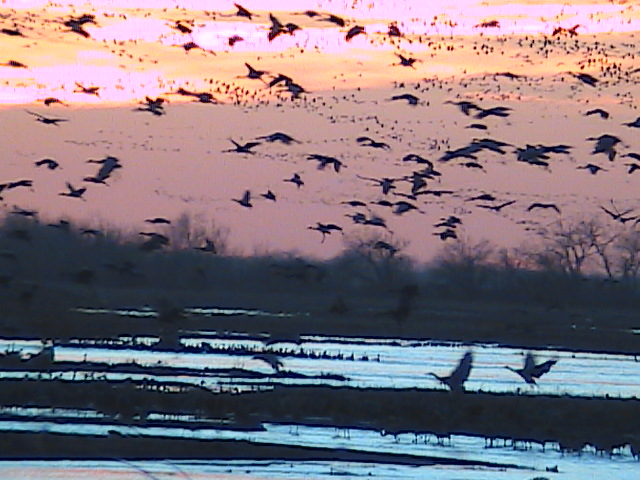
On an early March afternoon this past year, I was on my hands and knees building a large sundial at Rowe Sanctuary in central Nebraska, where people stand on the date and their shadow tells the time.  From the second week in March through the second week in April, Rowe is busy as visitors arrive from all states and a few dozen countries to witness the Lesser Sandhill Crane migration, one of the three greatest natural sights I’ve seen  and one of Jane Goodall’s top ten.  I was working pre-season and decided a nature center like Rowe needed a sundial.

I was using markers, T-squares, a calculator and duct tape when a good looking young man stopped by.  He was friendly,  and I knew him as the Great Plains photographer Michael Forsberg.  Mike was interested in what I was doing with trigonometry and ellipses and then asked if I could find him information for the full Moon azimuth as it rose. He wanted to know exactly where in the eastern sky he would see it rise.

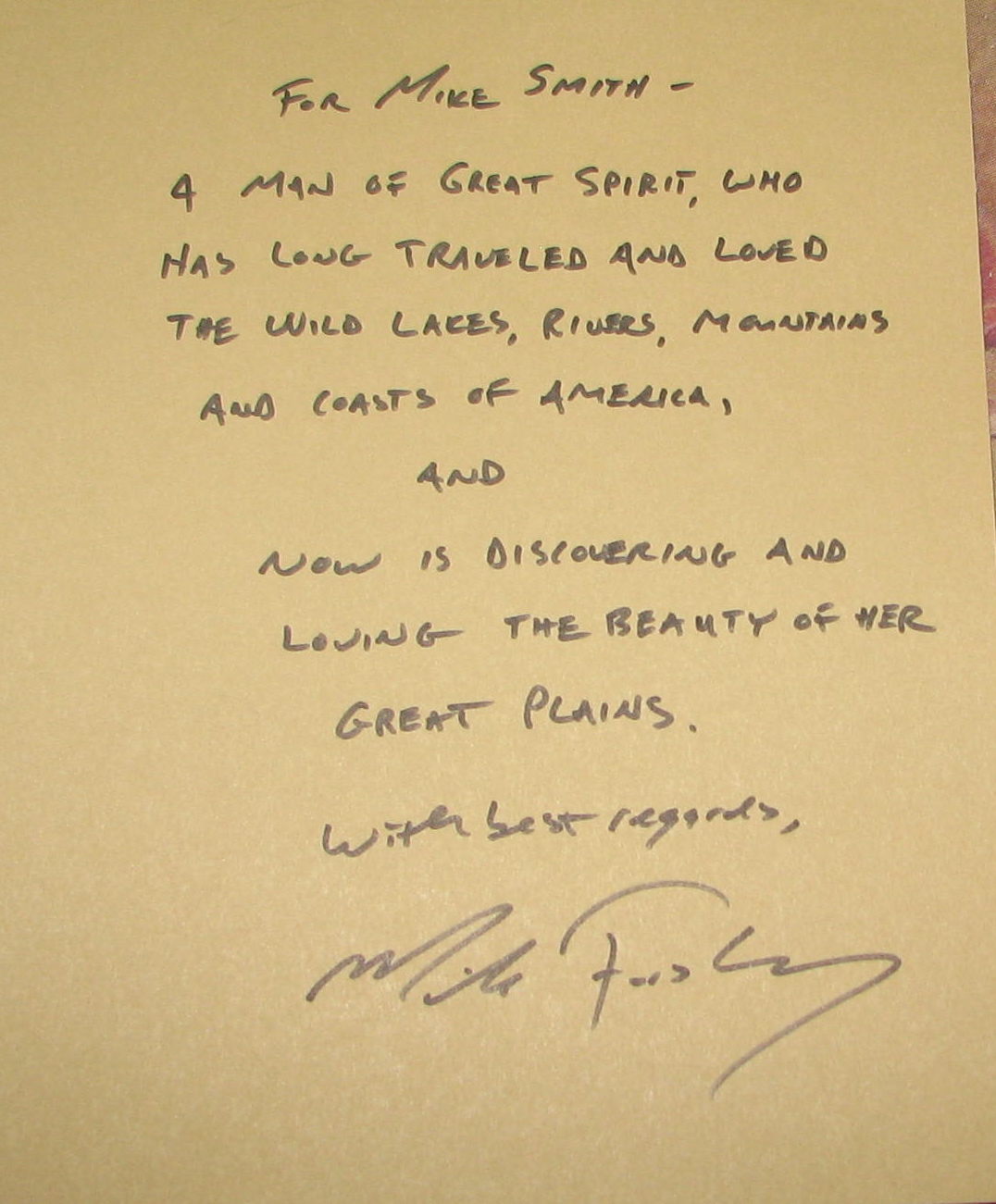
Fulfilling a request from Mike Forsberg suddenly became my top priority, so that evening I sent him the information.  He later e-mailed me pictures he had taken out in the viewing blinds, including an incredible shot of 4 different species of geese flying together.  Imagine, the premier wildlife photographer in the American midwest e-mailing me pictures he took!  Later that week, when I saw Mike again, I had him sign one of his books for me.  I just happened to be making a sundial when he walked by.  He just happened to stop.  And that changed my life. I just didn’t know it at the time.

When I left Nebraska in early March, I felt I had unfinished business.  I had not been there when the migration was in full swing, nor had I led tours to the viewing blinds, which had been a goal–a dream–of mine.  Four weeks later, I flew back to Nebraska, to volunteer at the height of the crane season, when 600,000 birds are on a short stretch of the Platte River, flying in at night to the safety of the braided channels and flying out to the fields in the morning to eat waste corn.  That week, I worked 17 hour days, sleeping on the floor in the visitor center, because local housing was full, listening to the cranes call on the nearby Platte.  The first night I shared a floor with– Mike Forsberg– who now knew me.  We didn’t talk much but I soon learned Mike is modest as he is good.  He deeply respects Rowe volunteers, because we help make some of his photography possible.  His nature photography is the best I’ve ever seen.

I finished my training and became a lead guide, meaning I could take visitors to the viewing blinds.  I got to talk about Lesser Sandhill Cranes; I watched people smile and heard them cry when they saw the cranes land, “dance,” and call before them.  Sandhills are large and loud, their voice primitive and deeply primal, echoing across 3 million years of time.  My enthusiasm outweighed my shyness, and I thoroughly enjoyed guiding.  We volunteers were a cohesive group, all of us working together to do whatever needed to be done, even if it wasn’t our “job.”  That week, I felt alive in a way I seldom have experienced.  So often, I told visitors, “I work 17 hour days, make coffee at 5 a.m., clean toilets, sweep the walk, give “Crane 101 talks,” do odd jobs, get dinner, sleep on the floor and see the cranes morning and night.  Am I lucky or what?”  When I called home, my wife commented my voice sounded different.

Mike stayed in the visitor center a second night:  two Mikes, two nights, too cool, two of his books I bought.  Mike signed the second one, too, adding a stunning phrase, calling me “a man of great spirit,” for he had quickly recognized something in me that I had not fully appreciated:  I have a deep spiritual connection to nature, the outdoors and wilderness. Mike is a man of faith and told me he felt closest to God when he was in the photography blinds, where people are taken in late afternoon and cannot leave for any reason until mid-morning the following day.  He said the experience was beyond comparison.  I’m going to do it next spring.  It has become one of my dreams, and while I, a scientist and a statistician, consider myself a practical person, not far below the surface lies a deeply spiritual, emotional dreamer.  Somehow, Mike knew that and how to help me understand myself better.

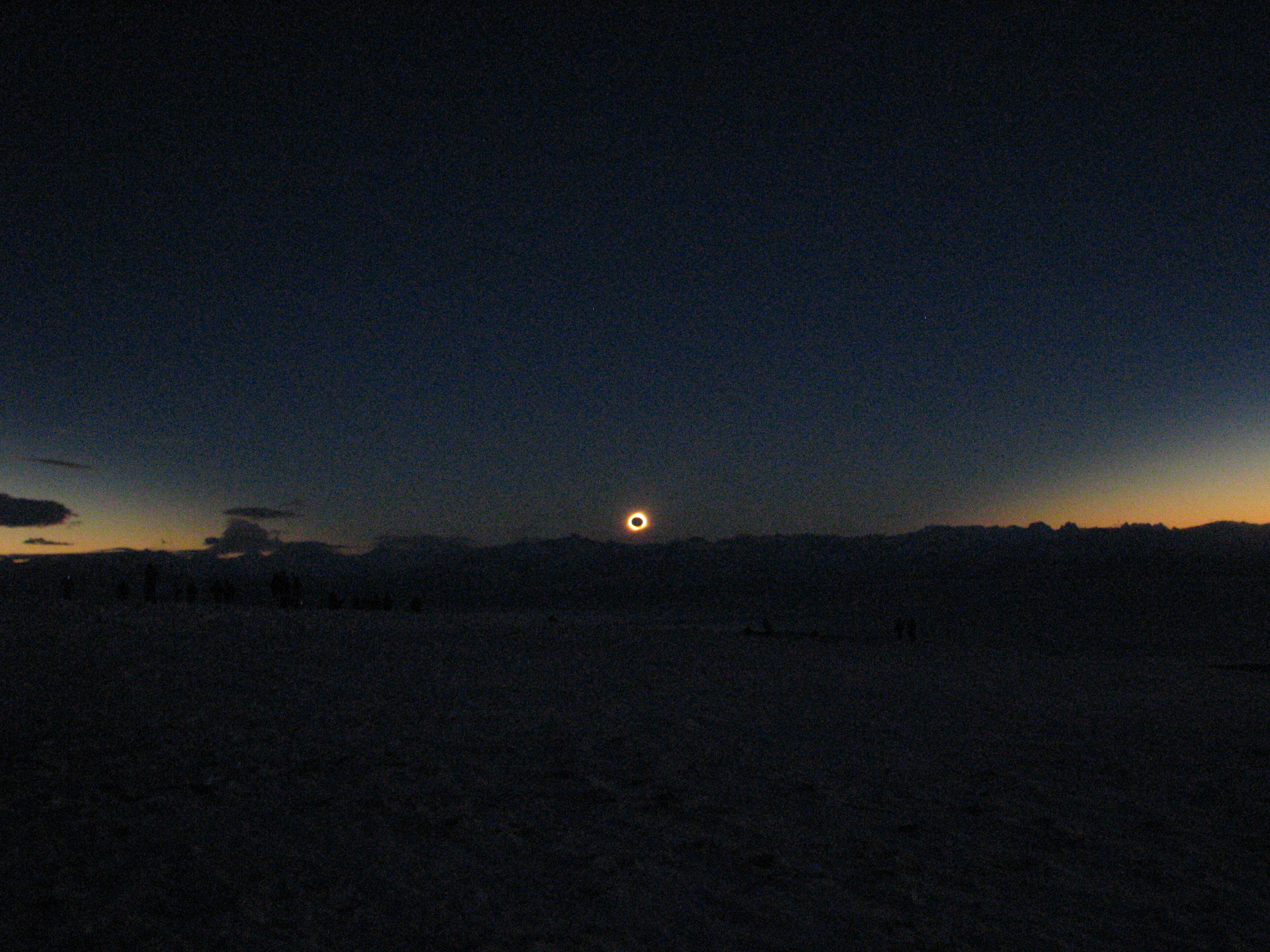
Last July, after the eclipse in El Calafate, Argentina, I sent Mike a picture.  I was a bit embarrassed to be sending a handheld shot to a famous photographer.  Mike, however, immediately replied “very, very cool,” saying I must be the only guy in the world who was going to Patagonia in July and to northern Alaska in August.  I wrote him after I returned from the Brooks Range, 118 degrees north of where I was in South America, telling him I would be ordering one of his pictures as a gift.  I am becoming friends with a special man, because we share a spiritual bond with the outdoors, especially Sandhill Cranes.  If he hadn’t stopped when I was making the sundial, this never would have happened, and my perception of myself and indeed my life wouldn’t have changed.

*                                *                                 *

July 9 is a holiday in Argentina, independence day.  I was in Buenos Aires, appropriately staying on Avenida 9 Julio, the largest street in the world.  That day reminded me of Christmas, for it was a winter holiday at a similar latitude south of the equator as I live north.

I went to a restaurant as part of a tour, going up a narrow set of stairs to a table with other people on the tour.  One of the guides asked me to sit in the middle of the table next to a young German woman.  And that changed my life and hers, especially hers. She and I will never be quite the same again.

The woman, Maria, was a young German scientist on her first trip out of Europe.  She, like me, was in Argentina for the solar eclipse.  Both of us had expected to take a plane to fly over the clouds to see the eclipse, but the flight had been cancelled.  My trip down to Buenos Aires involved barely making a connection; had I missed it, I might have gone home, since the probability of seeing an eclipse in Patagonia in winter is poor.  What kept me going was the idea if I didn’t go, and people saw the eclipse from the ground, I would never forgive myself. I didn’t know at the time the details of Maria’s trip, but it seemed clear we would be “clouded out.”  I later learned she had been at a conference in California, had a car accident on a freeway, and brought no winter clothes with her, since she was also planning to see the eclipse from the air.  To say we were both depressed and having an awful trip was an understatement.

Maria was completely fluent in English.  I asked her what she did, learning of her work in preparing an X-Ray satellite for launch to the LaGrangian point furthest from the Sun.  Fortunately, I knew something about LaGrangian points, where the Earth and Sun’s gravitational pulls are equal, leading to stable orbits for bodies located there.  Because I had studied physics, I was able to ask intelligent questions, soon learning about the LaGrangian point 1.5 million km beyond the Earth where the satellite was going.  Because I knew about conics, the concept of parabolic and hyperbolic mirrors was understandable, and the major and minor axis of the elliptical orbit clear to me.  I listened to Maria for a good 30 minutes.  When she asked me what I did, there wasn’t much to say except I chased eclipses, taught math as a substitute, once practiced neurology, liked cats and was a vegetarian.  She taught math, liked cats and was also a vegetarian.  Naturally, she was most interested about my eclipse experiences.

On the afternoon tour of the city, we spent some time together, Maria convinced she wouldn’t see the eclipse.  This being my 20th eclipse trip, I told her many times:  “Maria, it isn’t over until it is over and we didn’t see it.”  Indeed, a year earlier, in China, a small window opened up through thick clouds right at totality.  We went absolutely nuts.  It was the only eclipse I ever saw while I held an umbrella.

I didn’t see Maria again until the next afternoon in Patagonia, when she was an invited speaker at an eclipse conference.  I asked a question, later going up and telling her she gave a good talk.  She looked like she needed to hear that.  That night, at the hotel, I invited myself to Maria’s table of 4, since I was otherwise going to eat alone.  I was the de facto trip weatherman; I was following several South American weather models, knew the barometer was rising, the streaming moisture into the “cone” of the continent was cutting off, and high pressure was building over the eastern South Pacific.  Maria wanted to know my forecast; I was cautiously more optimistic, telling her to ask me about the barometric pressure the next morning.

That night, the barometer rocketed upward, the sky cleared, and we awoke to a beautiful sight:  the southern hemisphere stars were visible.  Maria had never seen the southern sky before.  I didn’t sit on the bus with her but with Anita, a senior colleague.  When Anita pointed out the Southern Cross on the bus ride to Perito Moreno glacier, I did something quite uncharacteristic for me:  I went to the front of the bus and asked how many wanted to see the Magellanic Clouds under a dark sky.  A lot of sleepy faces raised hands.  Nobody objected.  We stopped for 5 minutes so everybody, including Maria, could view our companion galaxies.

That afternoon, I worried about clouds interfering with the eclipse, but Anita fortunately kept Maria far from me.  When totality was imminent, Maria and Anita joined me, and Maria cried as the Moon completely covered the Sun.  I shouted, as did others, and I stared in awe of the shadow cone of the Moon, which I had never seen so clearly.  But my greatest memory is hearing Maria cry.  It was one of the most moving experiences of my life, and I’ve seen totality 12 times.

The next morning, I said goodby to Maria, and I haven’t seen her since.

But unlike every other eclipse trip I’ve been on, we’ve corresponded.  First it was by Facebook then e-mail and frequent Skype chats.  That has never happened before.  Maria told me that she almost had a panic attack in the restaurant, and my listening to her calmed her down.  Just my listening.  She got so excited from the eclipse that she has cast off shackles that led her from living a full life.  My wife and I invited both Maria and Anita to the May 2012 annular eclipse in northern Arizona, so they can see the Grand Canyon and the eclipse.  Maria will cry at both. I know she will.   Recently, she went skydiving for the first time.  She is learning C++ programming so she can become indispensable on the Australia eclipse in 2012 and get a free trip there.  Maria has been the best correspondent I’ve encountered in my life and we’ve become good friends.  Because of her, I’m learning German, and I plan to visit her next year.  Maybe every year.  And that has changed my life.

Had we not had such bad starts to our trips…Had we not been seated next to each other in Buenos Aires…Had I not known something about LaGrangian points and infrared radiation…Had I not been an amateur meteorologist and in demand…Had I not stopped the bus so people could see the Magellanic Clouds…Had we not seen the eclipse, none of this would have happened. Maria would still be wanting to see her first eclipse, and I would  not be learning the four German cases.  In August, when I returned from northern Alaska, I had a four hour layover from 10 p.m. to 2 a.m. in Anchorage.  Had I not met Maria, I would have been bored, tired and cranky.  Instead, I chatted with her on Skype, passing the time quickly.

The older I get, the more unpredictable my life has become.  If I hadn’t been making a sundial, if Mike Forsberg hadn’t stopped by, if I hadn’t been seated where I was, and if I hadn’t known about LaGrangian points....

A SILVER LINING (IT AIN’T OVER UNTIL IT IS OVER)

August 2, 2010

My 20th eclipse expedition was to the Argentinian Patagonia in austral winter.  We were at the end of the eclipse track, at sunset, when scattered clouds will more easily block the eclipse view.  Worse, the eclipsed Sun would be over the frequently cloudy Andes, increasing the likelihood of blocking clouds.

But we had no worries.  We would be flying through the eclipse track over the South Pacific, having clear skies and an extra minute of totality. But two days before I left, the plane we were to use was taken out of service for major unscheduled maintenance.  There were no other planes available.  We would be ground based.  I thought that we had a small likelihood of seeing it–well under 5%.  On the way down, I almost missed my connection because of thunderstorms and decided if I missed the plane, I would go home.  Two things kept me going:  (1) I don’t like to give up and (2) If I didn’t go and they saw the eclipse, I would never forgive myself.  I made the plane to Buenos Aires with 10 minutes to spare and was in Argentina 10 hours later.

At lunch on the holiday, two days before the eclipse,  I sat next to Maria, a young German astrophysicist.  She discussed her research so clearly that for once I said little, just listened, and learned a great deal.  She was involved in sending a satellite to the L2 LaGrangian point, one of the places where the Earth and Sun’s gravity balance each other.  I thought there were only 2 such points; there are 5.  I learned a lot of other things, too, since I just stayed quiet.  Turned out that my allowing Maria to talk was exactly what she needed.

When we started discussing eclipses, I learned that Maria got under the wrong cloud and missed the 1999 Munich eclipse that went over her home.  To put it mildly, Maria was primed to see this one from the air.  But now there was no plane and she had limited winter gear, because she hadn’t expected to see it from the ground.   Like all of us, she was was emotionally devastated, and 2 days prior to the eclipse, the predictions were not good.

I told her my many close calls and said, “Maria, it isn’t over until the eclipse is over and we didn’t see it.” That afternoon, I talked with her on the tour about eclipses, trips, physics and travel.  She was smart, curious and articulate.

Prior to leaving Buenos Aires, I was online alternately looking at South American weather models and flight delays, since the air traffic controllers had a slowdown.  But, the controllers behaved, we got on the plane and flew to El Calafate the day before the eclipse, for InterSoles, an eclipse conference where Maria and Anita, astrophysical colleagues, were speakers.

During the conference, several noted my constant looking at my watch, which has a barometer.  It was rising, which it had been predicted to do, even though the sky was completely overcast by evening.  Every free moment, I was on the computer, willing the weather models to improve.

The barometer continued to rise.  It remained overcast.  After dinner, I was in my room,  now learning the IR model for South America showed the moisture fetch that had slammed Chile had stopped and shifted north. I was cautiously optimistic.  I don’t sleep well during the night before an eclipse and was up at 4, looking out at a sea of stars.  The barometer had risen a whopping 13 mb overnight.  My optimism increased.

After breakfast, we went outside where Maria saw the Southern Cross for the first time.  The ISS flew over as well.  This was a good start to the day.  On the ride to Perito Moreno glacier,  I got the idea of stopping, since we were well out of town, and allowing the riders to view the Magellanic Clouds under a dark sky, since we couldn’t see them at the hotel.  It is highly out of character for me to stand in front of a bus of many strangers, and ask if they minded if we stopped.  Nobody objected, and everybody got a great look.  I was relieved.  Now Maria had seen the Magellanic Clouds for the first time.

We spent 2 hours at the glacier, listening to icebergs calve, watching sunrise on the mountains.  On the return, I was now in full worry mode.  Still clear skies,  I worried about mountain convection and orographic lifting that comes in the afternoon.  The eclipsed Sun would be a degree above the horizon, so any significant mountain cloudiness would be a problem.

On the way up the single track to a high plateau, over El Calafate and Lago Argentino.  I saw a cloud.  My worry increased.  At the site, I saw a large lenticular cloud sitting on a mountain to the southwest, spewing clouds to the north, but for at least an hour, they dissipated.

Then I noticed more lenticular clouds further north, and the clouds no longer dissipated.  The eclipse was 2 hours away, and I didn’t like the weather.  I willed the Moon to move faster.  The eclipse began, and as the Moon moved during the 65 minutes it would take to cover the Sun, I realized that sunset would be much further north than I had been told.  There were no clouds in that area, and 30 minutes before totality, I knew we were safe.

Maria joined me, used my binoculars, and did what many do during an eclipse–cried.  It WAS beautiful.  She had gotten the perfect end to her day–a dream came true, a total solar eclipse visible in a clear sky.  Had we been on the plane, the view wouldn’t have been nearly as good.

This was one of the most difficult eclipses I’ve gone to.  It was one of the most beautiful ones.  And the reaction from Maria was the strongest emotion I’ve ever witnessed.  All eclipses are memorable; this one is at the top.

It isn’t over until it is over. And sometimes, good things come out of what seems to be bad luck.

YES, I WAS RIGHT, BUT I WISH I HADN’T BEEN

June 17, 2010

When I saw a familiar ship steam into Subic Bay and moor, I decided I ought to visit to check out their sick bay.  It would be the only time in our 8 month WESTPAC deployment my ship and theirs would simultaneously be in the same port.

It was a wise decision.

The other ship had a corpsman, and it had been one of my ancillary duties to ensure their medical readiness for deployment to the Western Pacific.  Before boarding, I had received a list of their deficiencies:  instruments still wrapped in cosmoline, poor record keeping and outdated supplies were the worst.  On my first visit, I additionally discovered their Executive Officer (XO) was a Type I diabetic, who apparently varied his insulin depending upon how he felt (this was before blood glucose monitoring). The ship was a floating medical mess, and I told my shore-based medical boss my concerns about the XO.  He ordered me to ignore the diabetic and do whatever else it took to get them ready.

My adoptee vessel would spend time training at sea when my own was in port, giving me opportunity to ride her and fix deficiencies.  So, the following week, I boarded for three days of steaming 50-100 miles off southern California.  After morning sick call, where the corpsman was thrilled to have me, we got to work cleaning instruments, removing outdated supplies, ordering new ones, re-organizing the department.  We had a lot to do; unfortunately, their ship rode a lot worse at sea than mine.

Later that morning, I took a break to the bridge wing, watching California recede, when the Captain came up beside me.  I saluted, he returned it, promptly ripping me a new one:  “I don’t appreciate your trying to torpedo the career of my XO.”

Stunned, I replied,  “Captain, what are you talking about?”

“Your concerns about his diabetes went to the Commodore, and I had to answer to him.  My XO sees a full Captain at Balboa (the Naval Regional Medical Center), who knows far more about diabetes than you do.  So stay out of this, doctor.”

He walked away, not returning my salute.

The Captain at Balboa did know more about diabetes; I was 3 months out of internship.  But I was a shipboard doctor, and he almost certainly never was.  We had shore based physicians who sent sailors back to the ship with instructions not to climb, when we dealt with ladders dozens of times a day.  Another said a sailor couldn’t return to a ship because of exposure to salt spray, as if we were a catamaran, not a 14,000 ton vessel where I stayed drier on a Pacific crossing than a 5 year-old at the beach.

I felt relaxed that December day in the Philippines when I went to the other ship.  I had made their medical department ready for deployment.  I taught the corpsman everything I knew about diabetes and on a routine physical of a crewman discovered an abdominal mass that was lymphoma.

I asked permission to come aboard, saluting the colors and Officer of the Deck (OOD), saying I could find my way to sick bay.  As I walked down the passageway on the 1 deck, the corpsman practically ran me down.  “Quick,” he said, “The XO.”

Surprise, surprise.

We rocketed up 3 ladders topside to the XO’s stateroom, where I found him sweaty, uncoordinated with slurred speech, a vial of insulin and a glass of orange juice on his desk.  Fortunately, I had ensured the emergency kit had an amp of D50, 50% sugar.  I told the XO to lie down, found a vein, and injected.  Within seconds, he was normal.

We had the OOD call the local Naval Hospital and the Chief Staff Officer, (CSO), the squadron’s troubleshooter.  The CSO was superb; he and I took the XO to the hospital for admission, his sea career finished after 14 years.  He would never command a ship.  Worse, the ship needed a new XO immediately, difficult in mid-deployment.

I had been proven right but felt like hell.  I wish I had been wrong, the XO having no further problems, eventually wearing the 5 pointed star in a circle signifying command at sea.  But I knew he never should have been aboard.  I occasionally wonder why I went over to their ship that day.  Like the lady and the tiger, I wondered had I not been there whether he would have taken/given insulin or orange juice. Not surprisingly, I never heard from the Captain; the CSO, however, thanked me profusely.

We all like being right, dreaming about revenge upon our detractors.  I was right, not because of brilliance, but because common sense, my medical training and probability dictated a brittle diabetic had no business being second in command of a deployed warship.  I’ve been right on many other issues for decades:  climate change, too many carotid endarterctomies, diagnosing depression in patients who thought I was saying they were crazy, chronic pain being highly correlated with not at fault injury, the need for a medical error reporting system.  I wasn’t brilliant; all I did was to observe nature and people, be realistic, use science, probability and tried to avoid magical, irrational, ideological behavior I and all of us are prone to. I often wish my conclusions were different or I was wrong, but I try to follow the facts.

Whenever I want to say “I told you so!” I remember that time in Subic Bay.  Being right often brings no joy; it only means that one’s observations and conclusions are correct.

MIND TRICKS

June 10, 2010

How many people do you need in a room before any two are more likely than not to have the same birthday?

Twenty-three.

I’m sure there are those who disbelieve, saying “I know that can’t be right.”  What is disturbing is that even when a simple proof is delivered, many continue not to believe it.  Our minds can play tricks on us.  That’s normal.  But in the face of a compelling proof, failure to accept the premise borders on stupid.  The proof, by the way, looks at the probability that two people don’t have the same birthday.  Sometimes, looking at what you don’t want makes it easier to find what you do want.  Here’s the proof:

Number of People              Probability 2 have same birthday           Probability 2 don’t

1                                                   0.000                                                          1.000

2                                                   0.003                                                          0.997

3                                                   0.008                                                          0.992

5                                                   0.027                                                          0.973

10                                                 0.117                                                           0.883

15                                                 0.253                                                           0.747

20                                                0.411                                                             0.589

21                                                 0.444                                                           0.556

22                                                 0.476                                                           0.524

23                                                 0.507                                                           0.493

25                                                 0.569                                                            0.431

30                                                 0.706                                                           0.294

35                                                 0.814                                                            0.186

A disease has a prevalence of 1 in 200 (0.5%), a sensitivity and specificity each of 99%, meaning if you have the disease you test positive 98% of the time and if you don’t you test negative 99% of the time.  Not knowing if you have the disease, you test positive.  What is the probability you will have the disease?   The issue here is that having the disease and testing positive is very different from testing positive and wondering if one has the disease.  If the disease is rare, the likelihood of a positive test’s being a false positive is significant.  Here’s why, using 10,000 people and the above percentates:

Test + Test – Total
Disease Positive 49 1 50
Disease Negative 99 9851 9950
Total 148 9852 10000

If you test positive (148), a third of the time (49) you will have the disease.  The others are false positives.  That’s why we don’t do routine HIV blood tests for marriage.  In a randomly selected individual, and that is important, a positive test for something rare has a significant likelihood of being a false positive.

Many mountaineers defend the safety of their sport by saying one can get killed in a car accident.  That’s true.  But nearly all of us drive and a lot.  We all know someone who died in a motor vehicle accident, but relative to the denominator, it is small, 1 in about 5000 to 6000 Americans this year.  Mountaineering is a small community, and number of climbs is an incredibly small fraction of number of auto trips.  Every serious mountaineer has lost several friends to the mountains.  Mountaineering is much more dangerous.  I love reading about it, and I admire those who do it, but it is high risk.

The lottery is a tax on those who don’t understand probability.  The chances of winning the Powerball jackpot are approximately those of randomly picking a minute chosen since the Declaration of Independence was signed, 1 to 110 million.  Yet people continue to tax themselves because “if you don’t play, you can’t win.”  You have far more likelihood of being struck by lightning or dying in a motor vehicle accident than you do winning the lottery.

Too many Americans play another lottery, the I’m sick do I see a doctor? lottery:  I have abdominal pain, and I don’t have insurance.  I can’t afford to see a doctor, so I will bet it goes away.  But it doesn’t; instead, the pain worsens, and I now can’t walk.  I have to call an ambulance, go to an emergency department and am admitted with a ruptured appendix.  The costs have increased and are well in five figures.  I’m bankrupted by the illness, few who are involved in the care get paid, and my productivity is zero for a long time.  I’ll probably never get out of debt.  If I get sick again, I’ll bet again it goes away.  I will have no other choice.

Well, you say, that is just a bad example.  Here’s another:  I have abdominal pain and go to urgent care, because I don’t have a family doctor or it takes weeks to get in.  The workup costs $2000.  I can’t pay it except in $20 increments.  That was my Literacy Volunteer student’s experience.   How many Americans say some morning “I  have a toothache, I can’t afford to take off work.”  They are miserable, and their productivity isn’t very good.  Maybe it will go away, or maybe they will need a root canal, which hurts like hell, because there is already a problem.  That’s about $1200, so they are more in debt.  Sure, they say. if I had the money for dental care, I might have been able to avoid this.  Instead,  I’m betting that my body’s natural healing ability will bail me out.  Maybe it will.  Or maybe it won’t.

We were once the richest country in the world.  Our annual medical costs are far more than a trillion dollars.  A trillion, by the way, is roughly the number of days since the Earth formed.  How many these costs could have been avoided by timely prevention?  How many could have been avoided by universal coverage?  I don’t know.  But I do know that our poor system makes it impossible for at least a sixth of Americans to get decent, timely care and not get bankrupted by it.  This is America, not Zimbabwe, India or Tajikistan.  If you don’t like my solution, you fix it.  And not by going back to the 20th or 19th century, since going backwards never works.  Here are my metrics:  your fix has to show an increase in productivity, a decrease in emergency department overcrowding, a decrease in bankruptcies that are primarily due to medical reasons and a decrease in late diagnosis of disorders like appendicitis, that should all be picked up early–in America, again, not Tajikistan.

If that requires I pay more taxes, I’ll pay them.  I’d rather pay taxes for education and health care than for fighting, and not building schools in Iraq and Afghanistan, which is the fundamental solution to terrorism, not nuking Muslims and letting Allah sort it out.  We stop foreign aid to countries who despise us and bailouts to car makers who built monstrous SUVs, when it was obvious decades ago we needed to retool.

Do I like government as a single payer?  No.  But again, if you disagree, you fix it.  I don’t want reading assignments.  I’m a patient, and I’m tired of waiting weeks to see a physician (I thought only Canadians waited), worrying about medical errors that have affected me and three family members and really tired of the bickering that has stalled any kind of reform.  It is disgusting – and is un-American.

The America I served used to have innovative solutions to tough problems.  Where is that country?

DON’T FORGET THE LITTLE GUYS

May 31, 2010

(The Echo, Sierra Club, Grand Canyon Chapter’s quarterly paper).

I’m deep in a channeled wash for at least the sixtieth time, alone, removing buffelgrass along the concrete berms and anywhere else I find it.  It is nasty, difficult and dangerous work, since rattlers are out.  I duck under a mesquite, noting its thick, luxuriant growth, put the shovel into the deep soil, and lever out another plant, a thorn nailing my arm again.  I will remove between 200 and 300 plants today, bag them, tie the bags, and with great difficulty haul them out of the wash, because there is so little traction on the berms.  Dig, bag, tie and haul.  Over and over again.

Buffelgrass is like Kudzu.  It was imported from Africa to Mexico as cattle forage about 70 years ago, and has spread like wildfire.  And that’s the literal truth.  Buffelgrass grows and burns hot–1500 degrees–and uses the heat to spread seeds.  The Sonoran desert is adapted to fire, but not fire that hot, so if buffelgrass crowds a cactus or a mesquite and burns, the native growth dies.  I don’t know if we can eradicate it from the entire American Southwest–Sonora is a lost cause–but many of us think we can, and in addition to my adopted wash, I help monthly on another section with other people.  I’ve taken out at least 11,000 plants, and as a side benefit, I’m getting a good upper body workout.

In one five day stretch, I dug out 1400 plants, using over 120 bags.  I gained maybe 50 yards up the wash.  Probably less.  In the past six months, I’ve worked my way about a quarter mile, slow going, as I hack, bag, tie and haul.  But I’m noticing changes.  First, if there is no buffelgrass around mesquites, there will be no hot fire if lightning strikes.  That will save a tree.

Second, I’m noticing native vegetation moving in where the buffelgrass stands once were.  We finally got average winter rainfall, and it helped.  Third, I am amazed at the deep soil that has washed down from the mountains; there are shade trees, quail, white-crowned sparrows, pyrrhuloxias, and black-tailed gnatcatchers.  Lately, the black throated sparrows have arrived.  They are difficult to see, but I hear many of them.  This wash with its thick growth is a park; an oasis, with condos, roads, and people just above the fence.  The above walkway is frequently used by joggers, cyclists and dog walkers, all enjoying the quiet, the green, and the lack of people below them.  Maybe it isn’t a greenbelt, but it is a green garter.

I could do without the trash; a sign reads a fine of $2500 for littering, but I wonder if anybody has ever been fined for doing it.  Some of the litter ends up in the trash bags with the buffelgrass.

This wash would need a rain we will likely never see again to flow bank to bank.  But it does get some water coming off the berms and from the west end of the nearby Catalina Mountains.  And even in Arizona, it won’t be developed, so if I can remove the invasive buffelgrass, there can be a dense growth of mesquites and palo verdes, good habitat desperately needed; an island of calm in a noisy sea of stucco and steel.

We must preserve the major rivers in this state–the Colorado, the Verde, the Salt and the San Pedro.  But washes abound, and they are part of the riparian network, too.  Visit one some cool morning, before the snakes wake up, and walk where you can.  Dress appropriately, because the mesquites are thick.  You may find you can’t even go far because of the growth.  That’s just great, because the fewer people disturb the area, the more wildlife can live.

Never thought I would adopt a wash, clean it up, and enjoy it so much.  Never realized how much life was in one.  Remember the little guys.

TIME TO WEIGH IN ON OBESITY

May 26, 2010

We now know the current body mass index (BMI) for all 926 6th graders in 4 different Tucson middle schools: 45% are overweight (BMI above the 85th percentile), 27% obese (above the 95th percentile).  From 926 students we would expect 46 to be obese; the actual number is 250. If these schools are typical, and the four have remarkably similar results, we may have the highest proportion of obese 12 year-olds in the country.  But we don’t know for sure, because we haven’t studied enough middle schools.  National surveys of childhood obesity in 2007 included 44,000 10-17 year-olds; I would expect 9 Tucson 6th graders in those statistics.  Nine.

I find the lack of complete, current local and national data appalling.  We know obesity is a problem; how difficult is it to weigh and measure every 6th grader?   It isn’t, and we can do it here at NO ADDITIONAL COST with current school nurses/health aides, U of A student nurses, volunteers from the Pima County Public Health Department and the Medical Reserve Corps.  All have helped and are willing to continue helping, using a known efficient process to perform health screening in schools.  At no charge, I entered much of the data; I interpreted all of it.

A 12 year-old 5’, 155 pounds, or 5’ 4”, 175 pounds, is obese and will have increased medical problems and costs during a shortened life. Many of the students weigh more than 200 pounds.  More than half, should nothing change, will be unfit for military service, which concerns me as a veteran. We don’t want young people smoking because it is harmful and addicting.  Obesity in young people is harmful, and we know certain foods are addicting.

Here is what we do:

  • Establish a baseline by screening every public school 6th grader (I welcome private schools, too) early in the school year.  Such screening is an excellent math and biology project in its own right, and obesity should be addressed both in the schools and at home.  Each school should know its own and district data; the public should know district and community data.  We don’t want inter-school competition; we want to know the number of overweight students in each school, which determines where and how we act.
  • Perform pilot projects in schools to test efficacy of changing meals or vending machines, mandatory physical education, parental notification and nutritional counseling.  Having a baseline will allow us to evaluate an approach.
  • Recognize this problem will require years to address.  But if we don’t act, it will not vanish; indeed, it will likely worsen, as it has this decade.

We must address child obesity, and we can,  if we have the support of local leaders, superintendents and principals.  Screening all our 6th graders and acting on solid, current data during state penury would put Tucson in the national spotlight and stun the nation–favorably, for a change.


TIME TO MAKE TRAUMA PHYSICIANS AN ENDANGERED SPECIES

May 16, 2010

In early March, a young woman was thrown from her dressage horse during a routine schooling ride.  She was rendered comatose and two months later in a rehab facility with a mild hemiparesis but finally able to swallow.

The woman was a member of the US Equestrian Olympic Team, one of only two sports where men and women compete equally.  I say “was,” because we both know it is unlikely that she will ever be able to compete again at a high level in dressage, one of the most demanding partnerships between man and animal.  She has recovered remarkably well and hopes to teach riding; unfortunately, even her young age was not young enough for better recovery.  She is at higher risk for epilepsy, personality and emotional residuals as well.  In short, she suffered a catastrophe.  Fortunately, she didn’t end up vegetative, especially since the accident occurred in Florida, where adults with 600 gram brains are felt by cardiac surgeons to be conscious and doing well, because they smile even if they can’t comprehend 15 years after the insult.

Florida and the 109th Congress aside, what is finally occurring is a helmet debate in the equestrian community, similar to the helmet debate seven years ago in the cycling community, where 9 years earlier, almost to the day, Andrei Kivilev, a superb Kazakh rider, collided with two other riders on the Paris-Nice race.  The other two were fine; Kivilev, 29, hit his head and died the next day, leaving behind his widow and six month old daughter.  His death was a catalyst for mandatory helmets in major cycling races, which first did not mandate helmets for mountain top finishes, but now do.  Every cyclist in every major event wears a helmet.  Something good came out of Kivilev’s death; hopefully the equestrian community will do the same.  Already, several equestrian riders have stated publicly that they were saved by a helmet they began wearing.

But there is still no mandate.  Dressage riders must dress formally; indeed, proper riding attire is considered appropriate dress anywhere, something I often kid my wife about.  Helmets are not part of dressage riding.  Well, the judges need to get over it and deduct points should someone not be wearing a helmet.  Better yet, it should be cause for immediate disqualification if any rider on a horse at any time at a horse event is not wearing a helmet.

In 1976, Arizona allowed motorcyclists not to wear helmets.  I remember the demonstrations at the Capitol.  I wonder how many have since died or been permanently maimed as a result of not wearing a helmet.  It is time for a helmet debate in this country.  At what point do an individual’s rights conflict with the rights of his loved ones to have him (usually a him) around and whole, and society’s rights to pay for the extra care that going without a helmet and having an accident causes?  It’s a fair debate.  I know where I am on this issue.  I, like many of my former colleagues, bitterly remember coming into an ED at 2 a.m. to take care of another drunken biker who wasn’t wearing a helmet.  In my case, the lack of payment was a minor annoyance.  The sleep I lost was not so minor.  We live in a republic.  We have a government, and by definition, that government has some control over us, even in the hinterlands of Alaska.  We need an honest, factual debate on regulation, without Rush, Bill, Glenn, Sarah, Keith, Jon, Rachel or Steven.  In my view, failure to regulate almost took down the world’s economy and has given us wireless service that is worse than many third world countries.  There is an imperfect but better middle ground out there that we need to find; otherwise, Zappa’s Law about universality has a third part:   hypocrisy, in addition to hydrogen and stupidity.

Growing up, I didn’t know about seat belts; today, even in Arizona, 75% wear them.  I skied for 40 years without wearing a helmet; I didn’t know better.  Or didn’t want to know better.  I knew that ½mv2 =mgh, and a fall at 25 mph was like falling off the roof.  I would wear a helmet today if I skied.  In my three major bicycling accidents, my helmet was significantly damaged, damage my skull didn’t have.  I was not knocked out, even when I could hear the back of the helmet go WHACK! on Moore Road, the day I broke my clavicle.

Physicians need to frame the helmet issue and lead the debate.  And after we deal with helmets, we will have to deal with a hot, extremely difficult issue:  the long term side effects of playing football as the game is currently played, for the data show that the sport is far more dangerous than anybody ever realized.

For now, the equestrian community must recognize the dangers of being 10 feet off the ground on an unpredictable animal, and where a head might hit if the animal bucks.  It won’t be the only buck in the equation.

We will never drive trauma centers out of existence, but every physician should want to.  I hope most trauma physicians would be among the first to agree.

HELPING THE NEXT GENERATION

April 29, 2010

I’m a lucky guy–I’ve canoed the Quetico/Superior since 1981, and while I’ve camped from Alaska to Algonquin, northern Minnesota is my favorite destination.  In 1992, I spent 5 months as a volunteer wilderness ranger in Ely, the most content I have been in my life.  But one of my more memorable trips was a recent solo up and back to Pipestone Bay, lasting barely 5 hours.  It was Earth Day and the first time I ever canoed in April.

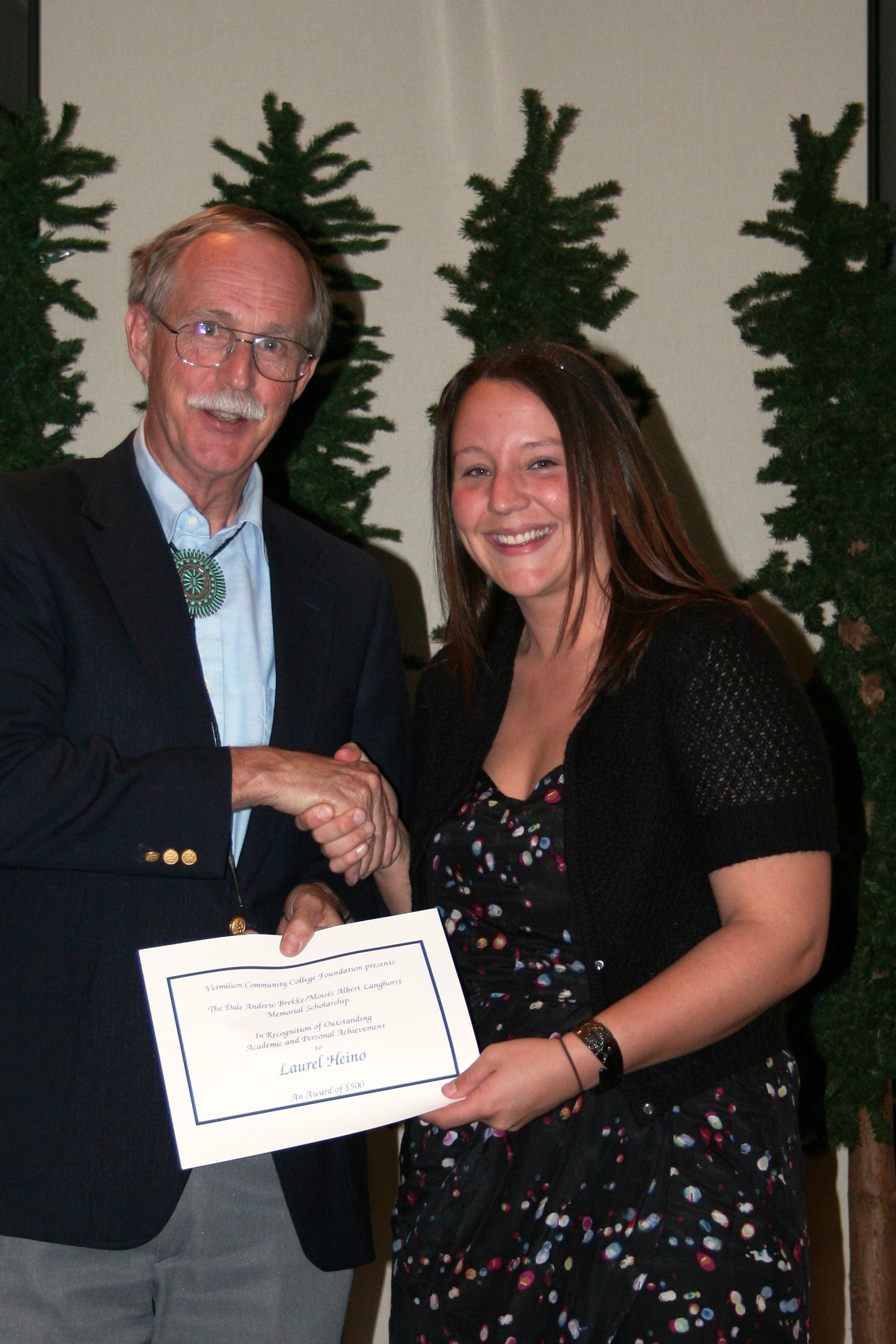
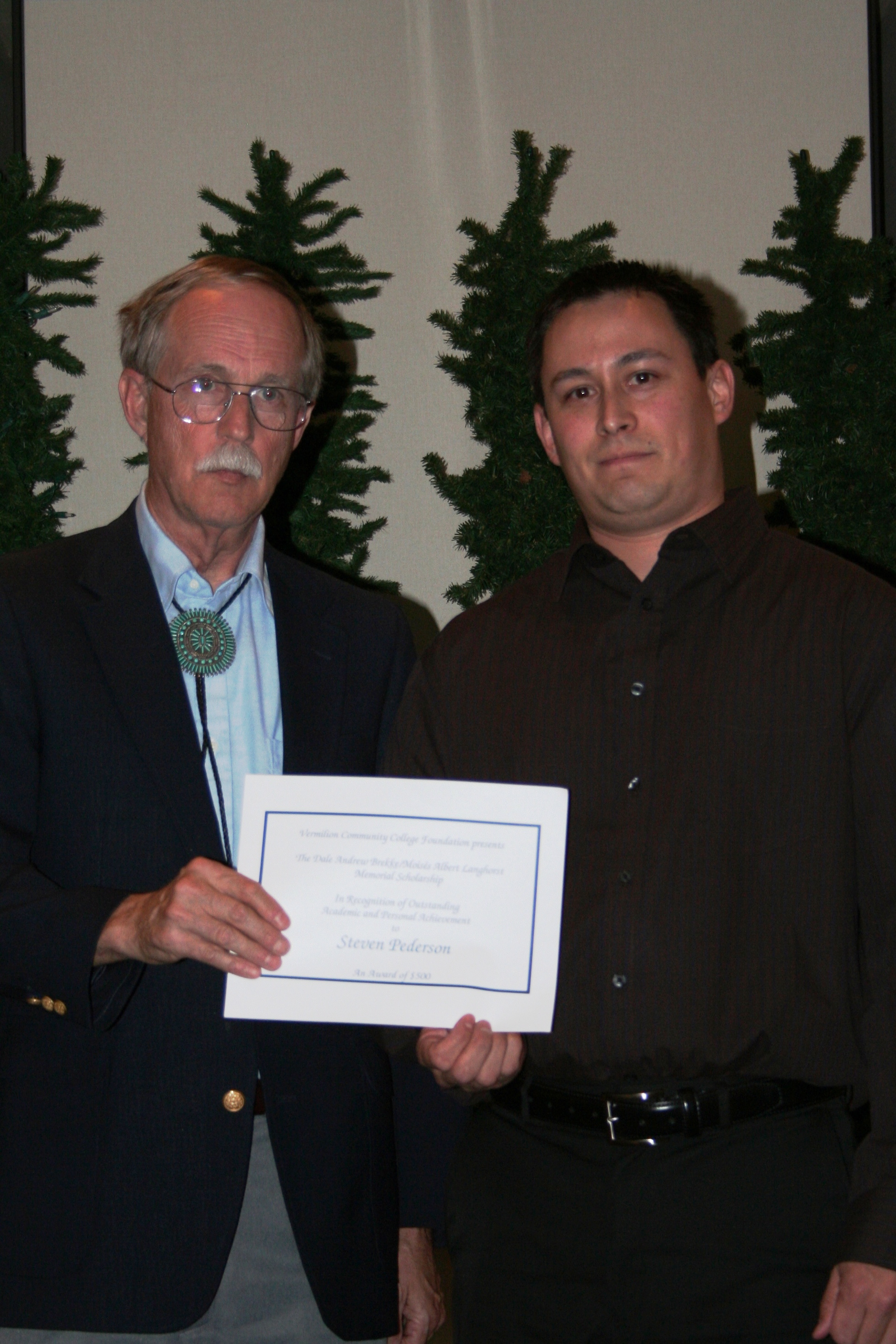
I went to Ely for the annual Vermilion Community College Foundation scholarship banquet.  For 5 years, my wife and I have sponsored a scholarship for a student selected by the College who is studying environmental or wilderness course work leading to a career in those fields.  I try to attend the banquet to present the scholarship.  It’s our legacy to a town and wilderness we deeply love.

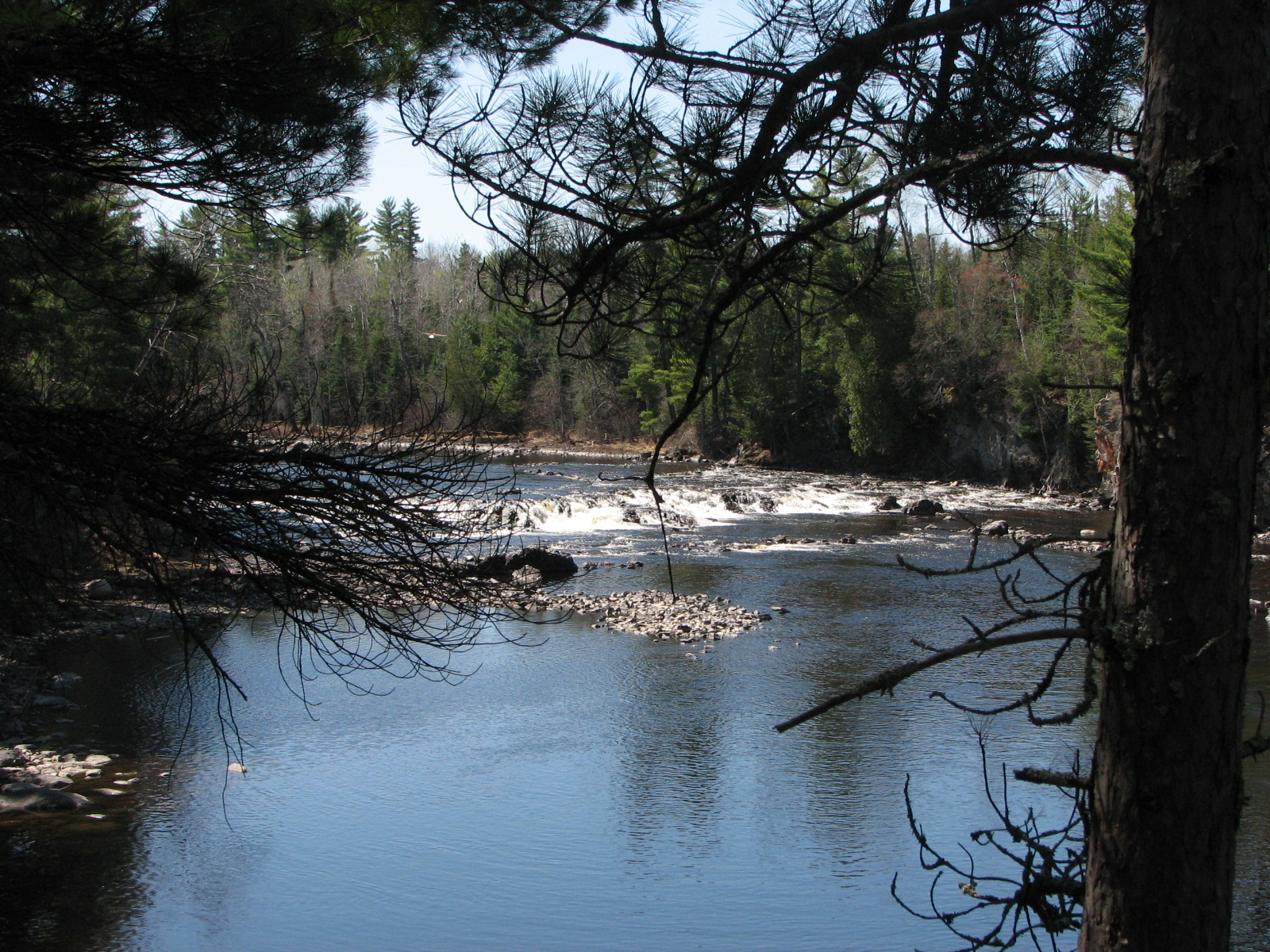
Two days before leaving I realized that if I arrived in Ely early in the day, I could rent a canoe and get on the water.  I was thrilled at the prospect (my wife said, “Why am I not surprised to hear this?”) and made arrangements.  I arrived in Ely at 9 on a perfect traveling day, got the canoe and drove out to Fall Lake.  I quickly shed every layer except for a shirt and PFD, and I could have taken the shirt off as well.  I wore neoprene gloves but really didn’t need them.  I saw nobody, except mergansers, a loon and several immature eagles at the south end of Pipestone Bay. I sat in the sun, enjoying a better view of the falls than I’ve had on the 30-plus times I have hurriedly crossed that portage.  Here’s a video of the falls and a few soaring immature eagles (they are immature because of their lack of a white head and general mottling.)

I contribute to three scholarships:  the amount of money the Foundation annually disburses has doubled since 2005.  I worked with the Friends of the Boundary Waters to create a scholarship in 2008; they and I jointly fund it.  I would also present that scholarship at the banquet, which pleased me no end–an Arizona guy who brought two fine Minnesota organizations together to create something good.

Up on Pipestone, I shot video of immature eagles soaring in a cloudless sky.  After lunch on Newton, I portaged back to Fall, paddling by the campsite where my wife and I stayed on 9/16/2001:  we started that trip on 9/11, unaware of events, heard the next day on Basswood River “the country was shut down,” but had few details and were nervous what we would learn when we exited.  On every trip since, we always note the presence of aircraft.

As a Navy veteran, a shipboard medical officer, I had long wanted to establish a scholarship for veterans, whom I feel should get free education.  Patti Zupancich of the Foundation worked with the Brekke and Langhorst families to allow me to contribute to an existing scholarship in memory of two young Moose Lake cousins who died in Iraq, 6 months apart.  Their aunt would attend the banquet but declined to present the scholarship because she knew how emotionally difficult it would be.  Patti suggested that I present the award, which was met with immediate approval.  I was grateful both families allowed me to contribute; I was deeply moved by their additionally allowing me to present it, one of the greatest honors I’ve ever received.

At 3 p.m., I came off the water, tired, sore and happy to have used muscles that had forgotten what paddling and portaging entailed.  It felt good to do J-strokes, scull, sweep, avoid rocks and portage again.  It felt right to solo in the wilderness.  But it felt odd to know in an hour, I would change from canoe clothes to coat and tie.  I had never done that before.

The banquet is always festive, which must be difficult for those who give memorial scholarships–a gold star family from Wisconsin presents one each year, too.  There is also one in memory of “Jackpine” Bob Cary, given by his daughter.

The recipient of our scholarship was there with his parents.  I enjoyed seeing how happy the three of them were.  The recipient of the Friends scholarship had taken people on tours to Listening Point.  One of the Brekke-Langhorst recipients had spent 4 years in Iraq; his father was also a veteran, and we had an interesting conversation.  The other recipient, a young woman, was ex-Navy; both of us have sailed many tens of thousands of nautical miles on the same seas in different eras.

As expected, presenting the Brekke-Langhorst scholarship was emotional, and I wanted everything to be proper.  The brave young men’s aunt thanked me, but I felt I received more than the recipients.

Every time I give, I seem to receive more.  I’m hoping the Friends get enough support to sponsor a second scholarship.  I hope some of my fellow wilderness travelers will remember those students in Ely, at the edge of the wilderness and on the edge of poverty.  If giving money is not possible, haul out a lot of trash on your next canoe trip.  Do something good for this special wilderness.

In 1938, Sig Olson, Dean of what was then called Ely Junior College, wrote “Why Wilderness?”, stating exactly how I feel on the trail:  the need for “sweat and toil, hunger and thirst, and the fierce satisfaction that comes only with hardship.”   Sig referred to hardship on the trail, not financial hardship.  There’s a scholarship in his name, too, which I want to honor by ensuring hardship stays only where it belongs.

SAVE EDUCATION BEFORE SAVING PAR

April 18, 2010

Last week, I volunteered to teach an adult education course at Heritage Highlands.   Regrettably, few people showed, because a golf tournament occurred simultaneously.

That epitomizes Arizona’s attitude towards education.  Sports matter.  Schools and learning don’t.  Look at the space devoted to each in the media.  Compare salaries of coaches and teachers, then ask who influences more individuals.  Having been both a substitute teacher and a classroom volunteer on successive days in the same school, I know what teachers do.  Rich retirees need to volunteer in the schools, teach reading or otherwise give back to the community, in addition to playing golf.  Make no mistake, nearly all of us receive more from America than we give, Social Security heading the list.  The exceptions are those public servants and military who risk and give their lives.  And only 7% of us are veterans.

If ever a time to prove it takes a community to educate a child, this is the time.  If ever America needed an educated citizenry to compete in a fiercely competitive world, this is the time.  If ever education needed money and volunteers, this is the time.  If ever we needed parents to make education a priority for their children, motivating them to study, dress, speak and write well, this is the time.  The teenage brain matures later than the body.  We must recognize that fact and understand that teachers alone cannot mandate proper behavior.

We need to pay for education with money and time.  An educated society wouldn’t have tolerated keeping Iraq war spending off budget.  I don’t recall the anti-tax crowd, most of whom supported the war in 2003, serving or demanding fiscal honesty and responsibility from the previous administration.  But suddenly they are using precisely that reason to destroy public education.   How many dollars we need for education depends upon how many of us are willing to volunteer.  Regardless, I want my taxes go to education rather than to unwinnable wars and impossible nation building started by old men who never served one single day abroad in uniform.

It’s time to embrace what Horace Mann wrote 172 years ago:  the public should no longer remain ignorant; education should be paid for and controlled by an engaged society; classroom diversity is important; schools should be non-sectarian; children should be taught the values and spirit of a free society; and there must be well trained professional teachers.

Sales tax raise?  Absolutely.  Triple it for luxury items.  Income tax?  We need a marginal tax rate of 90% for income over $3 million, comparable today to the 90% rate over $400,000 under Eisenhower, a Republican.  It might decrease greed.  Saving Arizona and America is more important than saving par.  We must spend whatever required to ensure we graduate students who meet reasonable standards to move to the next level.  Cutting education funding is about as stupid as it gets.  But that’s Arizona.  And that is why we’ll leave.  Enjoy your golf.