
Archive for the ‘MY WRITING’ Category
I HAVE NO PROBLEMS
November 24, 2009A CURIOUS CAT PERSON
November 21, 2009It’s our third night out on Lake Insula, 40 miles from civilization, completely quiet, the weather mild for late September. The barometer is falling and I notice a slight south wind, so change is coming, but for now, we savor Indian summer in Minnesota. We camped on a point with views on three sides and up into Museum Bay, haven’t seen another soul for two days and won’t for three more. On the north shore, a half mile away, is a fine beach that few ever see. We walked it yesterday. After dinner, I head out to ledge rock 20 feet above the water and start scanning with binoculars. I do that when I’m in the woods. I usually see conifers and rocks, but sometimes I strike gold.
This was one of those nights. Within 15 seconds, my hands stop. I see a large bull moose – his antlers catch the last bit of light – in water by the beach, and as I watch, he starts walking the shoreline toward us with alternating clops and splashes. I’ve seen more than sixty moose in the wild, been within 12 feet of several, far too close. One even followed me. But to see one sauntering through the water, unaware of our presence, was one of my more memorable sightings. We watched him 15 minutes in the growing dusk before he disappeared into the woods with the crashing of branches only a moose can produce.
Curiosity is one of the greatest gifts I’ve been given. A while back, I worked with a church group removing buffelgrass in Oro Valley. I’m not willing to cede our part of the Sonoran Desert to an invader. Nor is “Dave,” who manipulates his wheelchair into deep sand of washes to bag it. He is amazing.
Usually, I listen to music or podcasts while hacking, but this group was friendly, not trying to convert me and were living their faith, good stewards of a portion of the Earth. That impressed me. When we finished, a boy started asking questions about invasive species — why it was a problem, how it got there and burned so hot. That impressed me, too. I answered the first two questions, couldn’t answer the third, telling his mother that her son asked great questions. She said he attended a science charter school. Science and religion need not be mutually exclusive, but the anti-science drift and rise of American fundamentalism is disturbing. Fortunately, I’m probably not going to be around when the bill comes due. Perhaps this boy will help keep America competitive in science.
Later, his brother asked why clouds were white and how they formed. They were also great questions, along with why the sky is blue and sunsets red or yellow. More than half of Americans don’t know the astronomical definition of a year. Bet these boys did.
I wish I had told the mother how good she was not quieting her boys. Too many adults think it impolite for children to ask searching questions and drum curiosity out of children. That’s wrong. Perhaps it is a misguided sense of politeness. Or perhaps the adult is embarrassed they don’t know the answer. We need better questions asked, and we need more “I don’t knows.” Maybe then we would be smarter. I have a few questions:
- When you awaken at night, why aren’t you fully dark adapted, but within a minute are?
- What causes us to have annoying, persistent songs in our head?
- What is the neuroscience behind dreaming?
- Why do people with right hemispheric infarcts keep their eyes closed during the acute phase?
- What causes shadow bands just prior to a total solar eclipse?
Instead, we are fed a fare of stupid tweets and non-balloon boys. Another question: What is happening to Tucson’s climate? Colton hunts and sees first hand the desert’s dying. He knows it is changing. The Sonoran desert suffers from 26 consecutive years with above normal temperatures (and “normal” has been raised twice in the interval), 14 of the last 16 years with below normal rainfall, 2 ½ years’ deficit in the last 10; 7 of the 10 warmest years this decade and 1 in 5 days “unseasonable,” more than 10 degrees above normal. Except 20% is no longer unseasonable. It occurs two-thirds as frequently as below normal temperatures.
A snowfall in Baghdad is anecdotal. Tucson’s changes are over decades and worsening. For 20 years I’ve called it climate change, to be more precise, for world-wide rainfall patterns are changing, too. This year, Tucson will be a “minor” 3 degrees above normal. “Minor” is 7 of the first 11 months in the top 10 for warmest, even during the strongest solar minimum in a century, which ought to enhance cooling.
Half the bird species in the annual Christmas bird count have significantly moved north. They don’t think climate change is a hoax. Kutek Lake in Gates of the Arctic NP is disappearing as the permafrost melts. My wife and I will eventually follow the birds, for we see the meteorological and political climate in Arizona both worsening. I still have not heard a counterargument containing a margin of error, no pejorative attacks and no charged language. We may be in an Anasazi drought. I never dreamed I would become a climate refugee.
We can still deal with buffelgrass. Go to www.buffelgrass.org and help out.
FOR THIS I SERVED AMERICA?
November 21, 2009I visited two elementary schools in the Sunnyside District to speak to the nurses about obtaining obesity data on their children. Sunnyside is the only district in Arizona to mandate a nurse in every school. Because of the nurses, fewer children are sent home with medical problems, and the nurses are able to immunize some of the children who haven’t completed their immunizations. I know these days many Americans on both sides of the political spectrum think vaccines are dangerous; the diseases they prevent, like rabies, are still out there in the wild just waiting for us to let our guard down. I find myself wishing they would get a case of measles. Not complicated measles, which is not rare. Just measles. Maybe that would change their perspective.
All districts must check hearing in the 6th grade. But Sunnyside additionally weighs, measures and checks vision of their students pre-K, 2nd, 6th and 9th grade. Nobody else in the Tucson valley is doing this. They don’t have extra money; they just decided it was important.
Because of their work, we have the first step to obtaining obesity data on middle school kids in Tucson. From there, we hope to get the other districts involved and have county-wide data on public school 6th graders, which likely would be some of the best data in the state, if not nationally. I’m pretty excited about the prospect.
It was eye-opening to watch the kids leaving the school going home. There weren’t a line of large SUVs and vans picking the kids up. Many actually walked home. Imagine that. The houses down there aren’t six to seven figure ones up in the Foothills. Their parents aren’t movers and shakers. They can’t home school their kids. They are too busy trying to scrape by. If they don’t have public education, how will these kids get educated? Or is it just too bad and they should just stay in entry level jobs and be house or yard cleaners because they can’t do anything else?
America has given three things to the world — liberty, the national park system, and public education to support a vibrant middle class. None of these has occurred as quickly or as effectively anywhere else. In 1966, I learned what LIONS Club stands for “Liberty, Intelligence. Our Nation’s Safety.” Exactly how are we going to educate millions of children without public education? Who is going to pay for it? Or will volunteers step forward? Why not have volunteers step forward to save public education?
Will this be an America where people don’t vaccinate, and visitors will need vaccinations the way I needed a yellow fever shot to go to Africa? Already, immunocompromised children can’t go to day care centers, because there are too many unvaccinated children. Will this be an America where we end public education, because it is a government program, and all government programs (except defense, of course) are bad? Should people should be free to do whatever they want, including logging the rest of the redwoods and old growth forest, mining the national parks, taking oil out of ANWR, because somebody rich has bought the land and can do whatever they want? Is this why I, among only 7% of Americans, served America in uniform?
If we end education, health care, food stamps, social security and Medicare, we will have people on the streets the way we have stray animals, lots of people, because the fundamentalists would have banned birth control, too. We’d have people dying horrible deaths from treatable conditions, the way stray animals do. Isn’t that a death panel? And I don’t consider a stray animal an “only,” having taken in many. Indeed, I rank companion animals above the Norquists and the Newts of the world. Reread that.
Those who espouse smaller government have not been in these schools, learned nothing from Katrina and have not been down to the county public health department.
I don’t know how big our government should be. But I do know that leaving people unregulated is akin to a fraternity house on a Sunday morning, the economy a year ago, the 60 to 37,000% fold difference in frequency of medical procedures depending upon where you live and worse driving than we already see. How much do we regulate? As much as we need without doing too much. And what would that be? I don’t know, but we better start figuring it out as a country and soon.
In these pages, I have stated that I am not religious. But I think we have a duty as human beings to help make our society better. Sometimes by saying no, we make things better and by saying yes, we make them worse. Sometimes we should leave people alone; other times, we should step in. Those who argue solely from one side are as wrong as they are loud and nasty, and I have never heard an ideologue naturally laugh, not once, nor make fun of themselves, which healthy people do.
Those who read my columns are in general well off in life, probably wealthy. One of my mottos is “Those to whom much is given, much is expected.” Give of your time, your knowledge and your resources to make this country better.
PRHI-ty IMPRESSIVE
November 18, 2009

DEAL WITH DATA OR GET A BAD DEAL
November 18, 2009

COLTON’S CONTINUING ADVENTURES
November 4, 2009Remember Colton? He was the young man who lost his girlfriend and job the same week and was likely to face foreclosure. He now has another problem—a really painful tooth. It hurt so badly he almost went to the ED, but he owed the hospital $2000, so instead he took aspirin and eventually got better. But we know he’s headed for big problems and costs, with no insurance or medical friends who will cut him a break.
Yes, Colton’s life would have been easier had he been better educated. I saw first hand how he and his sister lost ground when they were home schooled, which requires both special students and special parents. As the son of a public school superintendent and a sociology teacher, I admit my bias favoring public education, because with 300 million people, it is the only viable approach – unless, of course, one believes that the poor and people of color shouldn’t be educated. We need volunteers in the schools and the schools need to put them to work. I’m now an on-call volunteer math teacher, math being the biggest need, but I’m only one guy trying to put his money where his mouth is. Congress bickers about the cost of health care, but I’ve heard few discuss the cost of Iraq, for years deliberately hidden from the budget. I don’t buy regime change, otherwise we’d clean out Zimbabwe, Burma, North Korea and Sudan just for starters. Iraq has oil. America has poor and sick people. For 8 years, I heard deficits didn’t matter, when I thought they did. Funny thing how the other side has now decided deficits do matter.
But back to teeth. Dentistry is the forgotten part of medical care and few have dental insurance. I had braces for 8 years. I was so sick of them, I didn’t go to a dentist for decades after, until my wife pointed out my bad breath; I’ve since had a root canal and a couple of cracked teeth needing capping. I’m lucky; I can afford preventive dental care which makes my problems minor.
Yes, Colton should have taken better care of his teeth when he was a teenager. I ask: when you were a teenager, did you brush twice a day, floss at least once and use a Water Pik? I sure didn’t. So, I’m not about to throw the first stone.
There was an excellent article in Slate about the difference between British and American approaches to dental care. In the UK, it is expected one gets dentures early. Here, bad teeth labels one a hillbilly. Don’t believe me? Recall patients or others you’ve seen who had poor dentition. Didn’t you think of them a little differently? I label people differently if they misuse grammar. They label me differently by how I look, dress or the odd things I like to do. We all pre-judge.
But it’s more than prejudice; it’s health, and we know it. SBE and bad teeth. Heart disease and bad teeth. Facial abscesses and bad teeth. Bad breath and bad teeth. Caries give rise to what some call world stopping pain, and if you’ve ever had such pain you can’t function. Poor people tend to eat the wrong food, don’t know much about dental care, can’t afford the time or money to fix their teeth, often lose work and can be miserable. Having suffered from miserable conditions, I counted my blessings I didn’t have to work at the time. How do these people put up with it? Same way Colton did—aspirin, somebody’s codeine and a lot of hope.
Let’s not forget dental care in our discussion of basic medical care, for prevention saves money. A simple root canal is $1100. Aren’t we supposed to help people relieve misery? So why aren’t we doing it? We’re talking teeth here, not Roux-en-y surgery.
Colton needs to get on AHCCCS, but that won’t get his teeth fixed. He’s 22 and headed for dentures before he’s half my age. This was once the richest country in the world, and we could have dealt with these problems if we hadn’t decided upon socialized world policing and socialized nation building with our socialized military. It’s time to admit we can’t afford our overseas commitments. But even the Blue Dogs are silent on that one.
Once again, here are 4 things we could afford that would help:
- Cover all children’s medical and dental care until they are 18.
- Limit the maximal debt people can have for medical/dental conditions. I propose $50K but I’m flexible.
- Put in an error reporting system, which I predict will decrease bad outcomes and malpractice case filing through learning. Make it anonymous and non-discoverable. And get it running in 6 months. I know how to do it.
- Tie any cuts in physician reimbursement to liability reform and a reporting system.
I’ve been saying this for years. Let’s try it. If you disagree, then I recommend Oscar Rogers’ two step approach from Update Thursday. It’s on my blog, under 2009 Reality Check, so you can click the link below:
http://www.hulu.com/watch/38477/saturday-night-live-update-thursday-fix-it
Step 1: Identify the problem. We’ve done that, so we’re half way there.
Step 2: FIX IT!!
GET HER TO THE OR, SHE’S HERNIATING!
October 18, 2009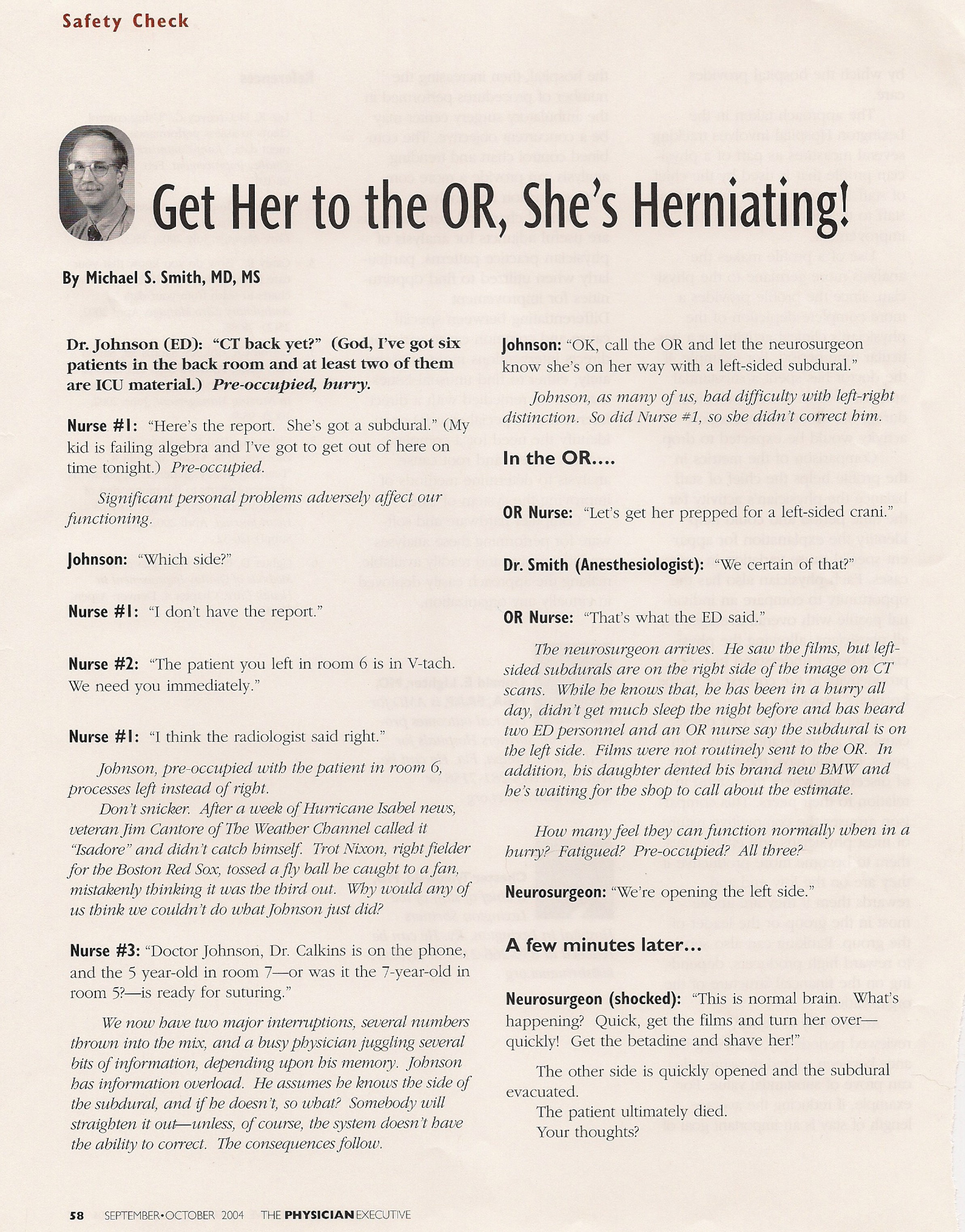


A WEEK AT ROWE SANCTUARY
October 11, 2009(Appeared in Tucson Audubon Society’s Vermilion Flycatcher)
6 a.m. on the Platte. It’s dark and it’s cold.
Upstream, I hear a sound like a jet engine warming up. The high pitched whine gets louder and closer until it reaches me, and I begin to distinguish crane and geese calls among tens of thousands of birds simultaneously lifting off the river. Because it was still early, and because I’m more auditory than visual, the intensity of the sound caught me by surprise.
This was my third trip to see the crane migration and my first year as a volunteer at Rowe Sanctuary. The Iain Nicolson Audubon Center has five permanent staff aided by many volunteers. I’m selfish. I wanted to see Cranes every chance I got, so I forged the following schedule: early morning, while still dark, I snuck into a blind. Trying not to freeze, I watched the birds gradually increase their activity, until the engine noise and the sudden explosion into the air.
During the day I’d paint, dig holes for posts, set up rooms, take down rooms, hang things, fix what I could, try not to break what I couldn’t fix, run errands and wash dishes. My dish washing ability seemed to be appreciated more than anything else. If I got a chance to work outside, I could see flocks of cranes and geese overhead, with an occasional eagle and red-tailed hawk. One day the redwing blackbirds suddenly appeared. In the evening, I’d rush back to the house they put me up in, quickly eat dinner, and then return to one of the blinds where I would see the reverse, with the backdrop of a three or four layered colored sunset. Once, I counted 10,000 cranes in a half hour, from only one direction.
On the drive from the house to Rowe, I got used to seeing thousands of cranes in nearby fields, where they were eating waste corn. Near the end of my stay, I spotted a large flock coming from the east. High overhead they flew, spanning a quarter of the sky, sunlight reflecting off their feathers giving them a grayish-white cast. Acting like a first time viewer, I stopped and got out to watch the flock pass, their primitive-sounding calls easily heard. Cranes do that to me.
Rowe takes good care of their volunteers. Next year, after I tag along four times with certified field trip guides I will become one myself. Am I lucky or what? I will show people cranes and see the birds at the same time. I was even interviewed for the Grand Island Independent: “I love the cranes,” I was quoted. “They’re large and they’re loud. The first time I saw it I was in awe of the experience. And I still am.”
The pictures not only show cranes but some of the most beautiful sunsets I’ve ever encountered. South central Nebraska in March. It’s a must see!
BACK OF BEYOND
October 11, 2009(Appeared in Sky Island Alliance publication)
Wilderness … is real and this they do know; when the pressure becomes more than they can stand, somewhere back of beyond, where roads and steel and towns are still forgotten, they will find release. Sigurd Olson (1938)
You might have seen me at a gathering, standing alone in a corner, periodically looking outside, toward the mountains, wild country where I feel more comfortable than in a crowd of people.
But if you approached me and began a conversation about wilderness, you’d see a dramatic transformation. My eyes would light up and my voice rise, for I love the American backcountry. I’m two-thirds through my odyssey to visit all 57 national parks. These are our crown jewels, our most spectacular places, ranking just behind our experiment in liberty as our great contribution to the world. As a veteran, I served America, but I serve her better by speaking up for these places, remnants of the frontier, often under appreciated and under attack.
I might excitedly tell you about the wolf – a wolf! – in my campsite on Isle Royale, 12 feet away, ten trail miles from the nearest other person. Or Alaska’s Brooks Range, containing the granite spires of the Arrigetch and large rivers with names like Kongakut, Killik, Koyukuk, Sheenjek and Alatna. Traveling this country, by pack and paddle through vast valleys, home to caribou, Dall sheep and grizzly, is life-altering. I’ve been next to a herd of elk at Wind Cave, and the next day seen bighorn in South Dakota’s Badlands. Now a different individual from that guy in the corner, I tell of hearing loons in the Boundary Waters, drinking water directly from a lake and paddling solo by a moose, five days from town, during an October blizzard. I’ve seen moisture laden wind hit cliffs on Big Bend’s South Rim, rise and condense, at eye level, the same orographic lift that produces clouds and rain in our Sky Islands. I might recall the backcountry triad of wilderness, completely dark skies and total quiet, deep down on the Grand Canyon’s Tonto platform. Or how early one morning on Mt. Kimball, I saw the shadow profile of the Catalinas etched out over Oro Valley. I would be released from shyness as I spoke of the release I found back of beyond, still out there, still unspoiled.
If you stuck around, I might wave my arms describing central Nebraska in March, mornings where tens of thousands of Sandhill Cranes simultaneously took off from the Platte in a visual and auditory mélange that nearly defies description. We still see this show because Americans with foresight preserved sixty miles of braided river the way it was before Manifest Destiny. Our wild country: America, still the beautiful.
If you wondered how a loner could talk so much, I would reply it is because I have been fortunate enough to hear what the wild country out there, the back of beyond, had to say.
STARLIGHT, MOONLIGHT AND FIREFLY LIGHT
October 11, 2009“We don’t claim to be sane,” said Spur as he and Silvermoon left the Hogback Ridge Shelter at 9 p.m., heading north on the Appalachian Trail towards Erwin, Tennessee. They arrived at the 3-sided wooden shelter as I finished my macaroni and rice dinner. For the last two hundred miles, we had leapfrogged each other. They were about to jump ahead.
A month earlier, the pair decided to hike the entire 2160-mile AT, as hikers referred to the footpath, in one season — a thru-hike. We didn’t know each other’s names in the outside world, but that didn’t matter on the AT. I had learned they were from Atlanta. Spur, his trail name coming from his spur-of-the-moment thru-hike decision, ran a business. Silvermoon was a florist. I was “Voyageur.” Trail names were accepted social convention on the AT. Every long distance hiker had one; some additionally had creative logos.
Shelters occurred every 8-15 miles along the Trail. While comfortably sleeping a dozen, an adage was “there’s always room for one more,” especially in a cold, driving rain, a frequent occurrence in the mountains. Unfortunately, most shelters harbored large populations of well-fed, pack-smart mice that ran over sleeping hikers. I usually pitched my tent nearby or stayed somewhere else. Indeed, one night near Hot Springs, I camped on the Trail itself — in poison oak as I later discovered — when rain and darkness beat me to the next campsite.
Shelters were a source of Trail news. There was usually a logbook present, left by a hiker, containing instructions to mail it, postage guaranteed, when the book was full. Reading the past three months of entries was a pleasant way to spend an evening and to learn about diversity of hiker goals, opinions, adventures, and equipment. In addition, because of travel in both directions, one heard about upcoming terrain and obtained reviews of the nearest town, emphasizing food, cost, and lodging, in that order.
That evening, I was in the middle of a 300-mile hike from the Great Smoky Mountains to Virginia. The previous year, I had walked from northern Georgia to the Smokies. I was humbled by thru-hikers, who planned to walk seven times my distance. But only one in ten who wrote “GA→ME” in the logbook actually succeeded, able to overcome the frequent physical and mental breakdowns associated with the effort. Still, after several hundred miles of hiking, one’s efficiency increased dramatically. Nothing in a thru-hiker’s pack was superfluous. Extra food was eaten; running out of food was incentive to get to the next town quickly.
I stuck my head outside the small tent to see how well their headlamps worked. Seemed interesting. While the two were hiking under a waxing gibbous Moon, it was often cloudy in the Appalachians, so that bright moons usually weren’t helpful.
Probably more relevant, however, the AT was a green tunnel. A few days earlier, in a large rhododendron patch, I started to remove my sunglasses because of the darkness. I then realized they had been off for some time. I arrived on the Trail with a full body tan. After hiking in just shorts for two weeks, my tan faded.
Hogback was in dense, hardwood forest, dark even by AT standards. Still, the idea of a night hike was intriguing, but not after my long day of climbing. My pack was lighter than the previous year, and I was far more efficient, but high humidity in the South made hiking — especially the climbing — difficult. I soon learned that clothing dried only when worn. One could either wear wet, clean clothing or dry, smelly clothing. Usually, it ended up both wet and smelly.
Nevertheless, I missed out on a real treat. I should have gone with them, even after 21 miles that day and even without a headlamp.
Three days later, I caught up with the two at a restaurant in Erwin. They were staying at Johnny’s hostel near where the Trail emerged from the mountains by the Nolichucky River. At Johnny’s, hikers could shower, sleep in a real bed, obtain food, supplies, and transportation into town. Everybody on the AT in Tennessee knew about Erwin and Johnny’s by reading the logbooks. Word traveled fast on the ridgeline telegraph. Hikers were good listeners in restaurants, since their mouths were used to eat rather than to talk. I was no exception. Sitting down at a table across from Silvermoon, I rapidly spooned a quart of chocolate ice cream into my fat-starved frame, seldom looking up during the process. It was really good. Every long distance hiker did this sooner or later, mostly sooner.
Silvermoon was still excited about their night hike. While speaking, she kept rubbing her long, brown hair, enjoying that it was clean for the first time in about 100 miles. “After we left you,” she said, looking at my rapidly diminishing pile of ice cream with some envy, “we descended into Low Gap and climbed in pitch darkness up to Big Bald.” The AT in the South has numerous descents into gaps and climbs to balds, grassy mountaintops. On a clear day, the views were spectacular from a bald. On a rainy one, the experience and view were comparable to being inside a car wash.
“Once we were on Big Bald, it was just us and fireflies everywhere, with lots of stars and a bright Moon. We didn’t need our headlamps, so we turned them off. It was even better then.” I actually stopped eating, visualizing the scene, having been there hours after they were.
“The miles just slipped by, with little flashes of light everywhere we looked. We finally slept up there in the open, with twinkling lights above, below, and around us. It was magical.” Silvermoon smiled, then delivered the coup de grace: “And so much nicer than that dark hole where you were.”
 Boreal B[l]og