Archive for the ‘MY WRITING’ Category

ROAD WORK

June 9, 2022

My left knee has bothered me off and on for a few months, the problem beginning last winter after a strenuous snowshoe up to Fuji Shelter from Waldo Lake Road. There is an easier way to get to the shelter, but the way I took had fewer people, and yeah, it was more difficult, the way I like it. Anyway, I got better and then snowshoed again, not as far, but apparently far enough to bother the knee again. Three more weeks off snowshoes and I repeated with another snowshoe, not too strenuous, but apparently my knee continued to protest. No change.

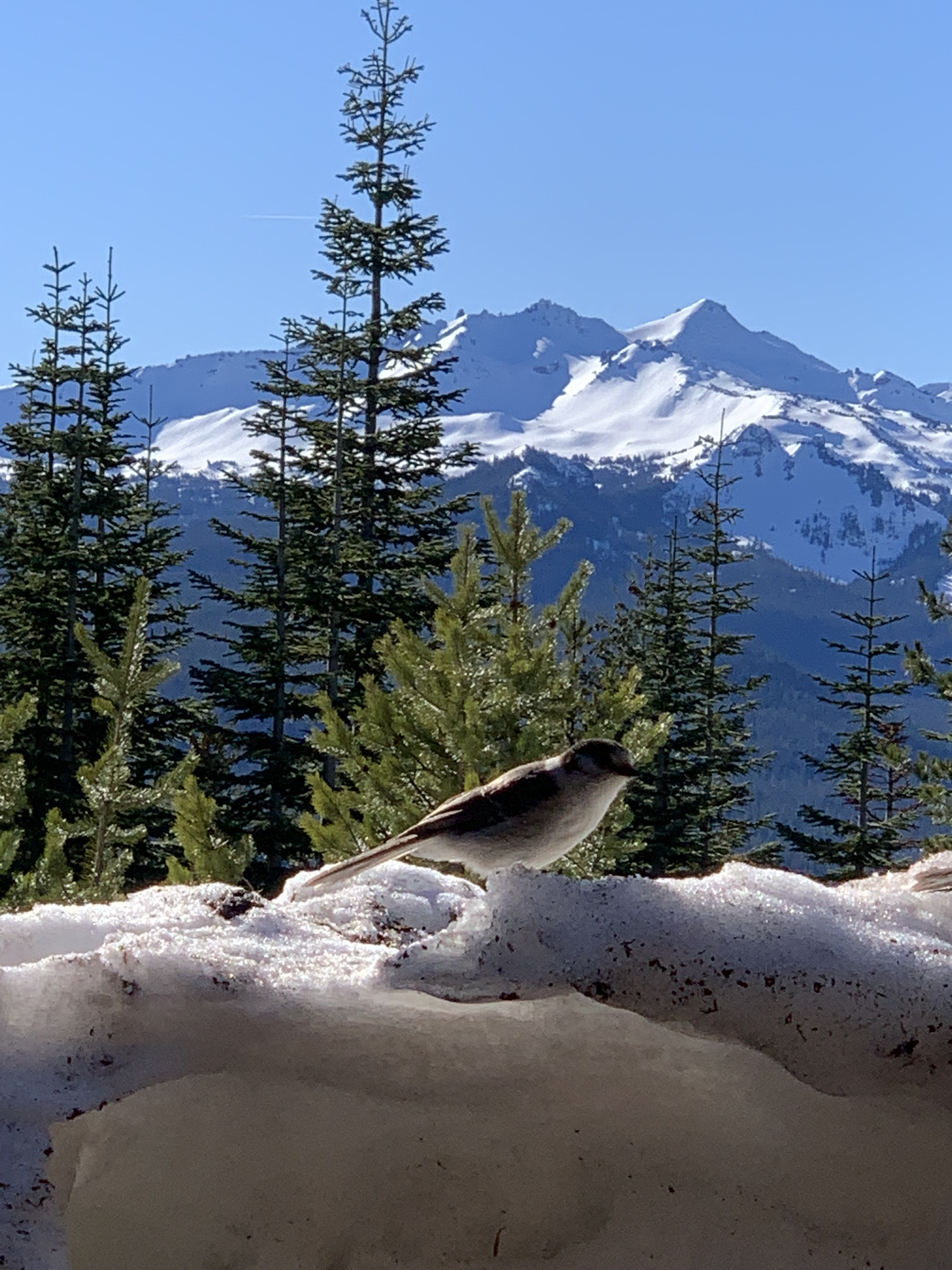
Canada jay with Diamond Peak in the background. Fuji Shelter

I was looking for a hike that I hadn’t done, interesting, and not too strenuous. A friend told me last year about Pool Creek Falls up FS23 out of Oakridge towards Vivian Lake, 19 miles uphill. We actually were driving by the trailhead at the time, but I couldn’t see anything. Turns out that at about mile 13, there is a small grassy pullout, and if one looks carefully, there is a trail. I had been by this a dozen times or more, usually dodging a big depression in the pavement there—AKA “sunken grade.” 

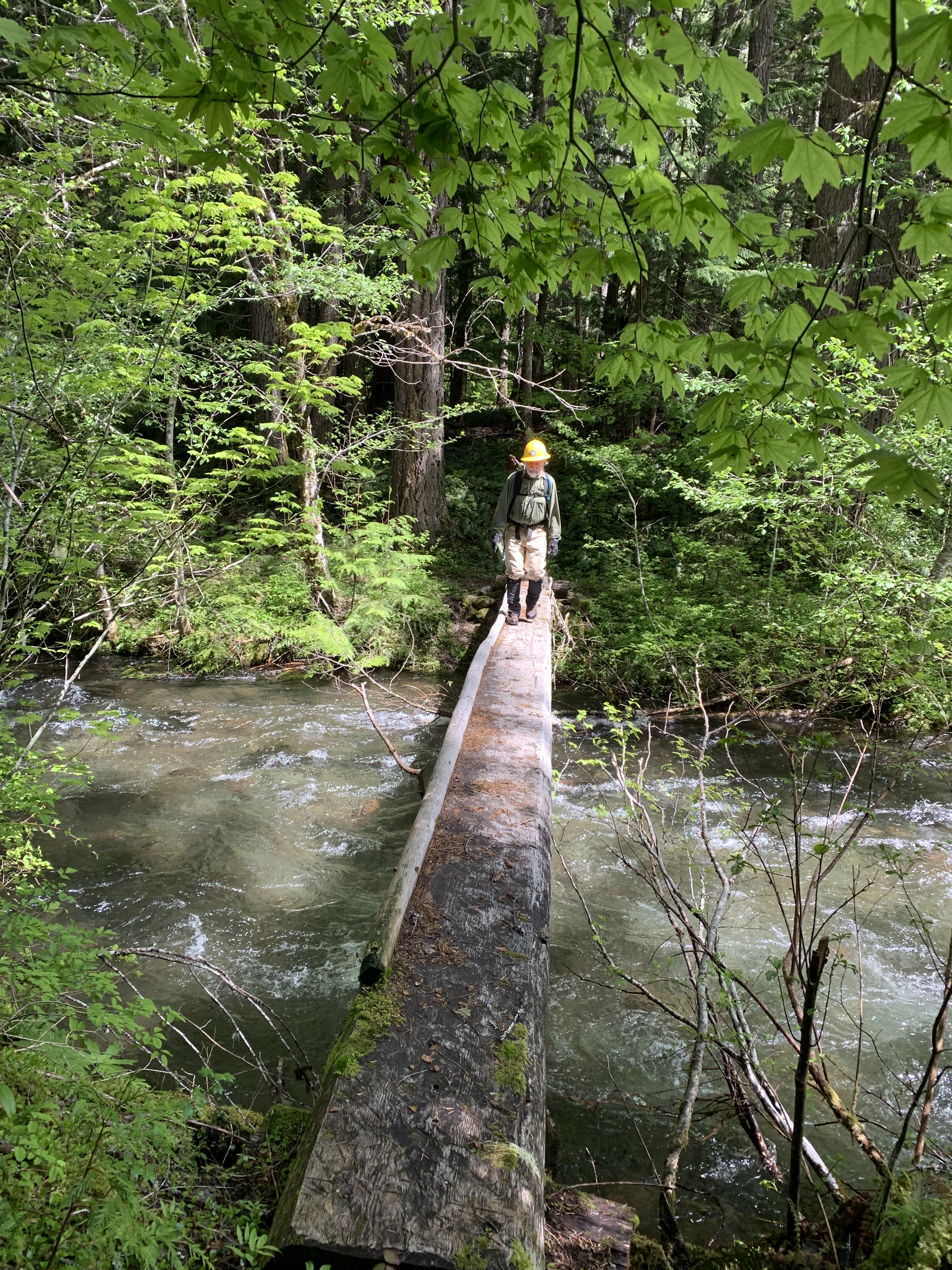
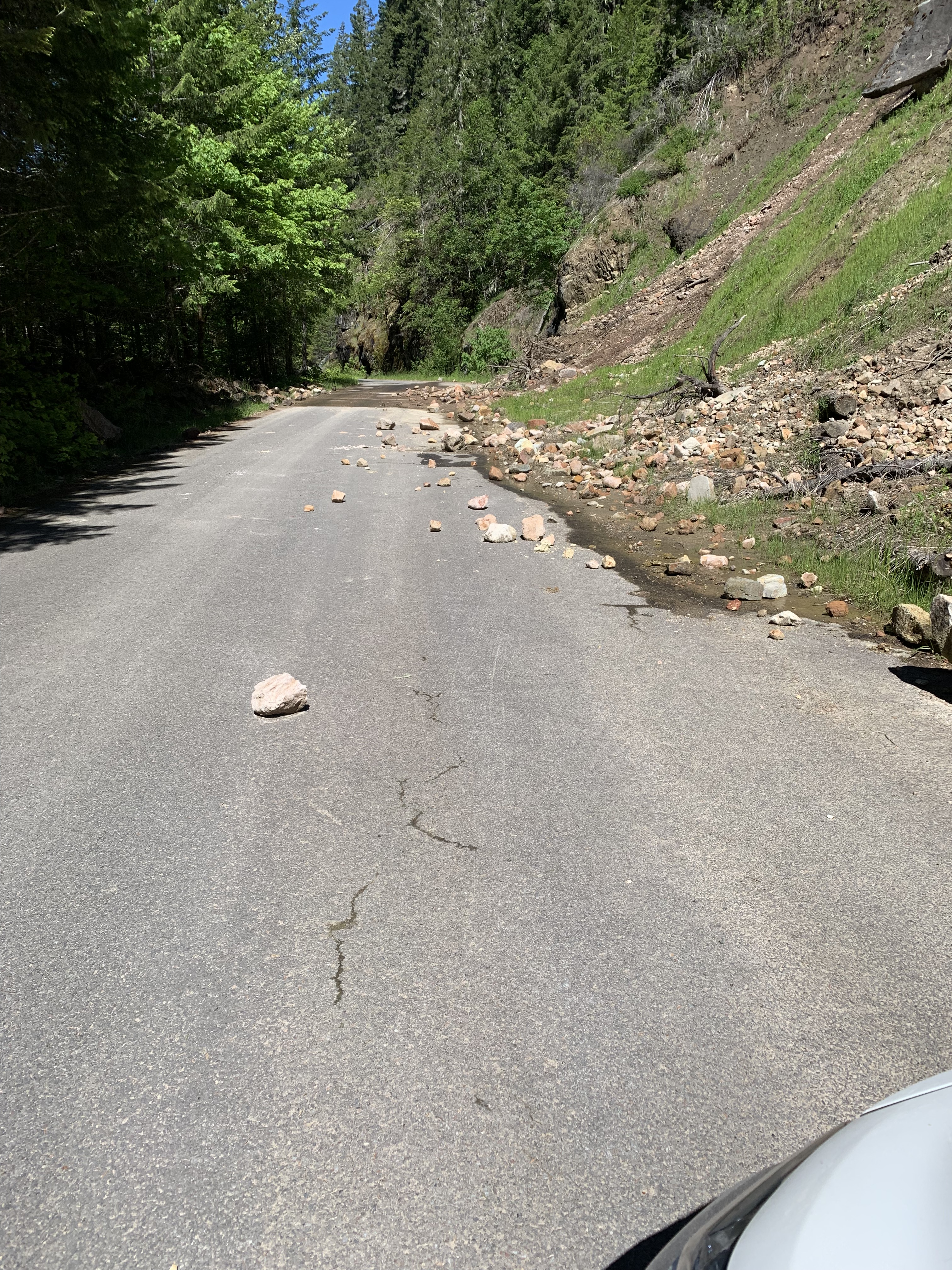
I drove up FS23, dodging a 75-100 yard long pile of rocks in the downhill lane 7 miles up and a few scattered rocks further on.  I stopped at a grassy area,I parked the car, saw the trailhead sign, visible only when one was not on the road. I got my gear on, and started up the trail. When I had gone about 20 yards on the trail, I realized I had to be on the other side of the stream to my left and had to turn around..  Great start.  I crossed Pool Creek on a bare, slippery log that fortunately needed only one foot to briefly touch, then started switchbacking up the muddy path.

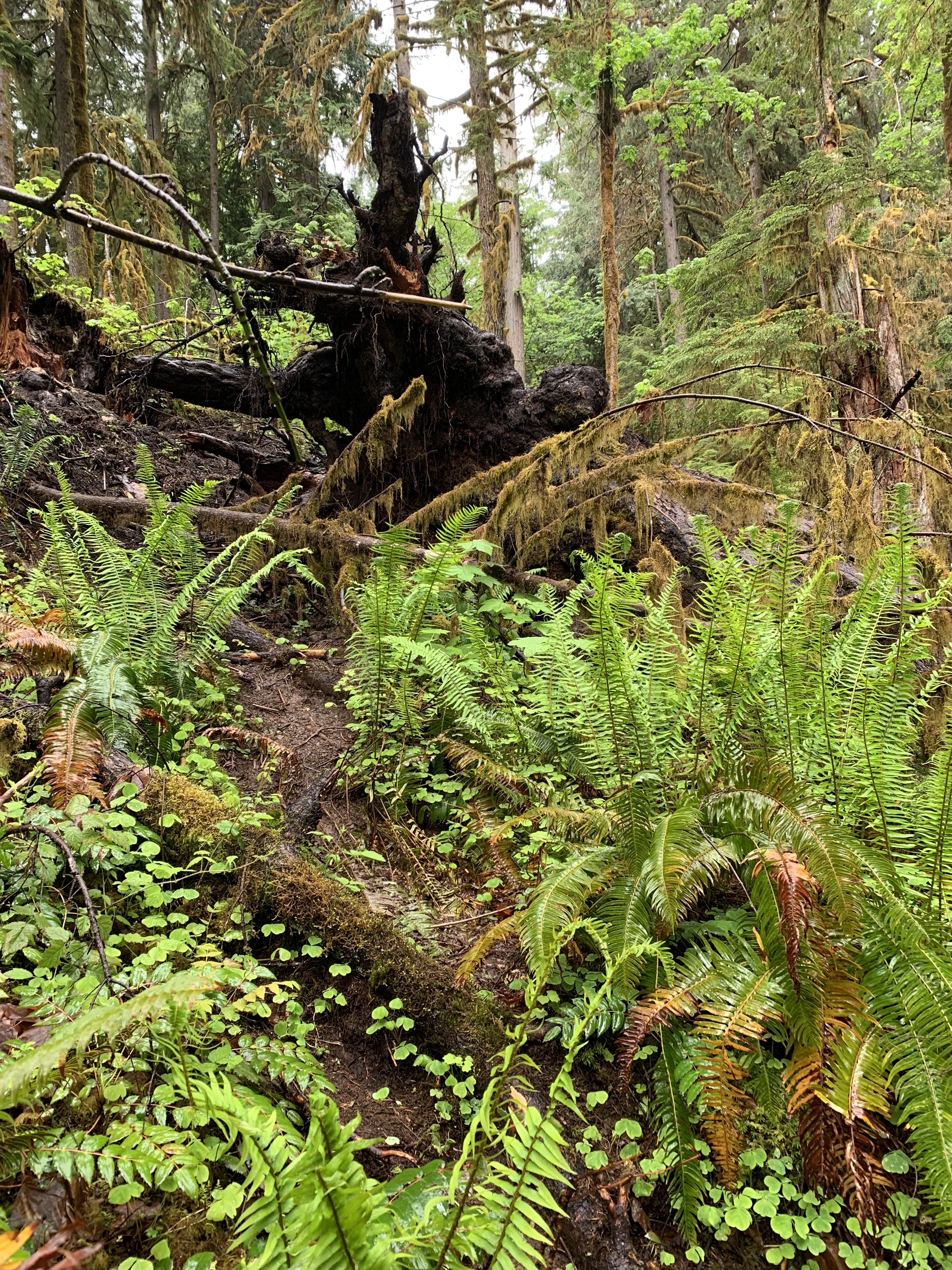
To help my knee, I used trekking poles, rather than my Saguaro walking stick. I like the stick, a veteran of 500 miles of the Appalachian Trail, several national parks, including Gates of the Arctic in Alaska, where it was invaluable in stream and rock pile crossings.  The trekking poles supported my weight better than a single pole, and other than having to cross two close logs, the first by crawling over, the second’s having a notch cut through it, the trail wasn’t too bad; a quarter mile put me right in front of the falls. Simply beautiful.  Close to the road, but not easy to reach. 

Pool Creek Falls

I hiked another quarter of a mile around the falls and uphill, before I decided that I was by myself, there was plenty of mud to slip on, and I didn’t need to be adventurous. I turned around and slid back down. My knee was still fine, and I wanted it to stay that way.

Back at the car, I tried to go further to the Vivian Lake trailhead, going four of the 6 miles before I hit snow, which rapidly deepened. I stopped well before I was going to get stuck and turned around. 

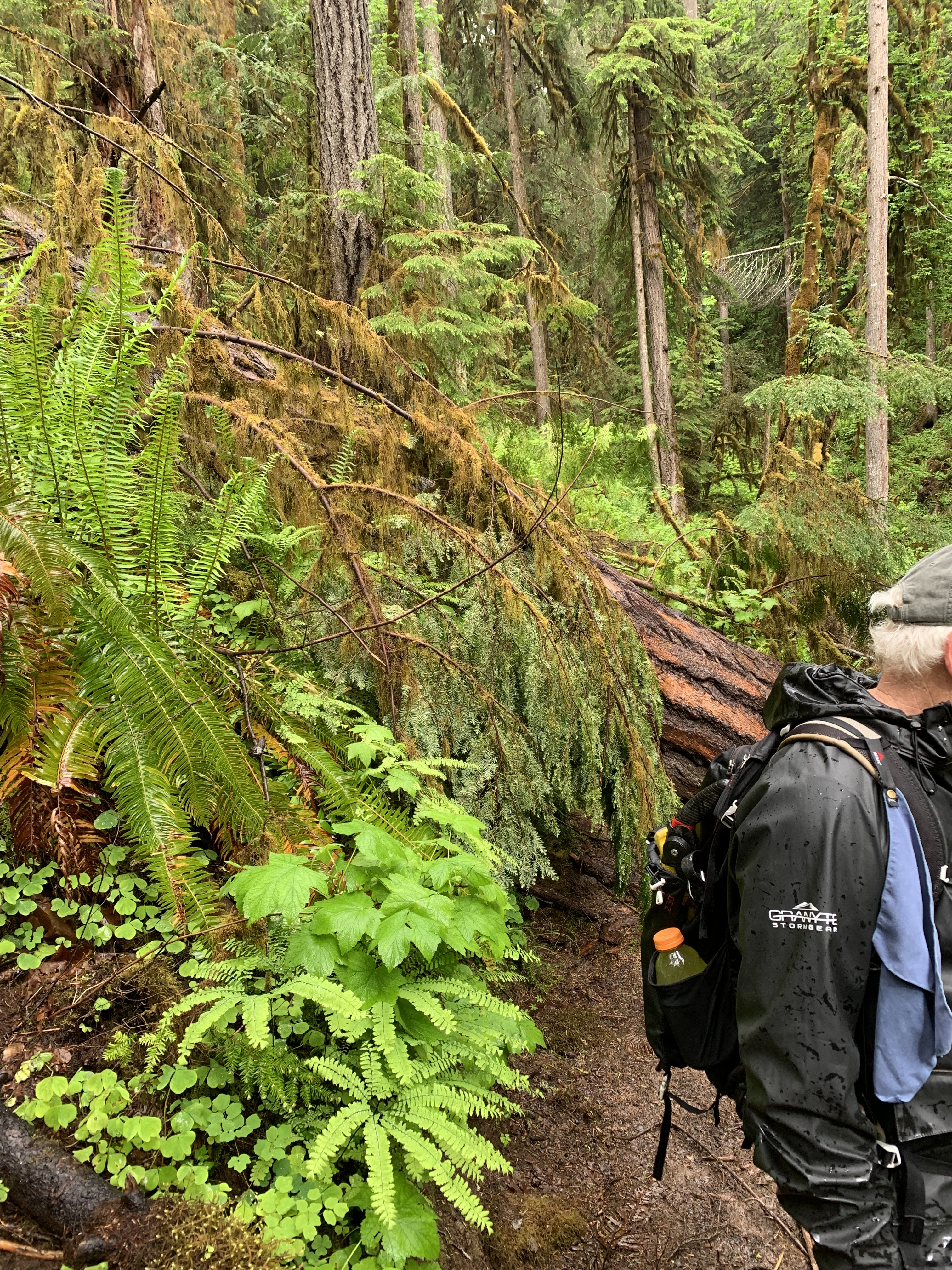
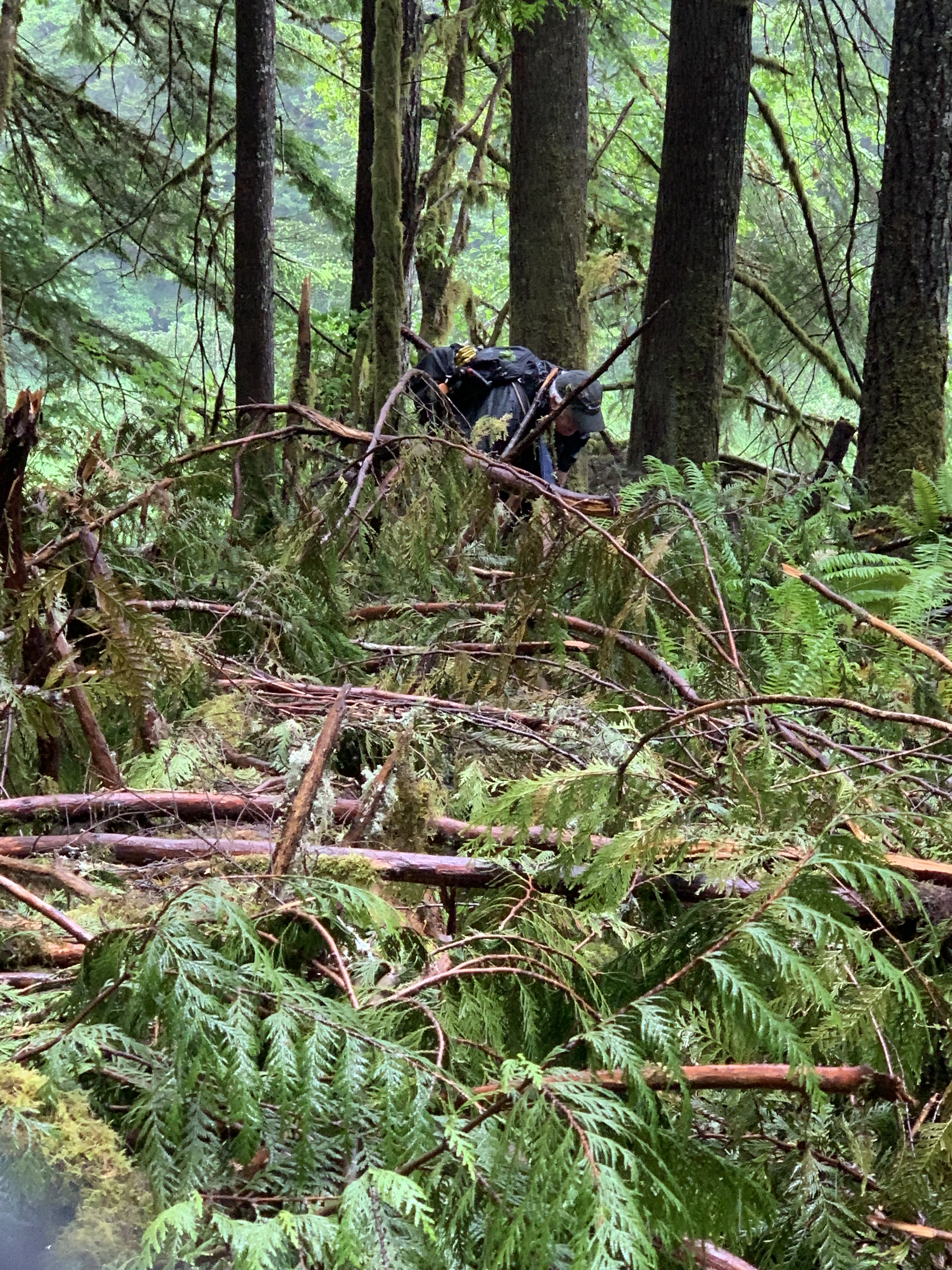
On my way back down 23, I again saw a small tree across the the road.  I had driven over it on the way up, but I don’t like doing that and had time, a saw, and ability to take care of the problem. So I did.  There are several roads into trail heads in spring where there are blowdowns. The Forest Service cuts them out, sometimes with scanty clearance. It’s amazing what people will do on a road to avoid hitting a blowdown or getting out of the vehicle to deal with it. I plead guilty. The drive to Horse Creek Trailhead is a veritable zig zag from one side to the other. On the way in, we want to get started on the trail and don’t want to stop to clear the road. We’ll get it on the way out, except when we drive out, we are all so tired, we don’t. And so nothing changes. The rocks that had fallen on FS23 needed to be removed as well.  One can dodge these rocks, but on a trip to a work site along Hills Creek Reservoir a few weeks earlier, the driver thought his pickup would clear such a rock. A moderately loud scraping noise—the kind that makes you immediately think “oil pan”— told us we hadn’t. Fortunately, there was no damage, and on the way back I got out and removed the offending rock along with a few others. Remembering that day, I decided to clear rocks on this road as well. It was a nice day to work.

As I came down further, there was a tree branch over the opposite lane. Sure, it could be dodged by uphill traffic, but it was better if I cut it out. So I did. My knee was not bothered by road work, and there seemed to be a need for it. I finally reached the long stretch of rocks from where a good chunk of cliff had collapsed from the winter precipitation. There was mud over part of the road and a rock field out in my lane and even part of the other lane. This was a hazard. 

I turned off the engine, put on the flashers, since I was parked in the middle of the road, fortunately on a straightaway, so I would be easily seen in time. Anyway, I hadn’t seen a car since I had left Oakridge. The first two rocks were tossers, but then there were push hard rocks, lift and roll rocks, hike rocks, like a football, and a couple that weren’t going anywhere without a front end loader.  I worked my way down the road, wishing I had brought a shovel and a rake, but I had gloves and I had—uh oh not on—a hard hat. If ever there were a place I needed a hard hat, picking rocks out off a road below a cliff would seem like a good idea. I went back to the car and put on my hardhat. Twenty minutes later, the rocks were clear. The mud might last, or the next rain might wash it off. Then again, the next rain might bring down more rocks. Still, the road looked a lot better. I drove down to the nearly full reservoir and had lunch in the sun. Nice day for a hike and a little road work.

Before
After

This weekend, I am going up FS 24 to one of the Waldo Lake Wilderness trailheads. I don’t expect to do much hiking yet: the trails go well above 5000 feet, and there will be snow. But the roads will be heavily traveled by people this summer, people too busy to stop and clear the road going in and too tired and eager to get home to clear it when they leave. Maybe I can help.

THE BRIDGE

May 22, 2022

One of the competing projects with the Winberry trail restoration was finishing the Indian Creek bridge on the Middle Fork of the Willamette River. The creek flows into the Middle Fork about 8 miles south of the reservoir, 23 miles south of Oakridge. The Forest Service was able to move a pre-built footbridge, with no rails, from a nearby road, through the woods, and install it on both sides of the river. One could cross the river, but with no rails, it was a bit dicey doing it.  Our job was to put in posts to support a thick kick or base log and two hand railings on each side of the length of the 60-odd foot span. We had to get our own wood, finding the right size Western red cedar trees for logs 8-9 inches in diameter and 4 feet long for the 10 posts on each side of the bridge. In addition, we needed 3-4 inch diameter smaller logs to support the posts. Then we needed 4-5 inch logs to put in two sets railings on both sides.  We used red cedar for its tannins which resist rotting.

Bridge with cut and de-barked logs

To access the crossing, we parked on a Forest Service road, bushwhacked 200 yards downhill to the Middle Fork Trail, which runs 30 miles from the reservoir south to Timponagas Lake, then walked another quarter mile to the bridge.  Fortunately, near the site were many cedars we could use. The diameter-appropriate logs were cut to the right length. These were stripped of bark, a process in the right time of spring is easy, for the bark will peel away from the underlying cambium. We were initially a little early, however, and on each log we needed to scrape with more difficulty, about 30 square feet for a 14-foot long, 8-inch diameter log, where each scrape might clear maybe 10-20 sq inches. The debarked trees were then carried to the bridge. A good sized cedar would produce several logs, of which we needed 20, ten on either side. Close by meant within a quarter of a mile, which we had to do with the logs on our shoulder alone, with another, or with a large one, 4 people each pulling on a strap. Many of these logs had to be moved uphill to the trail, then along the rocky trail mostly downhill to the bridge. The old trail went to the river further downstream so when we found logs in that area, we had people on the other side of the stream throw a line across and then pull the logs over. From there, it was about 100 yards to the bridge, saving an immense amount of walking.

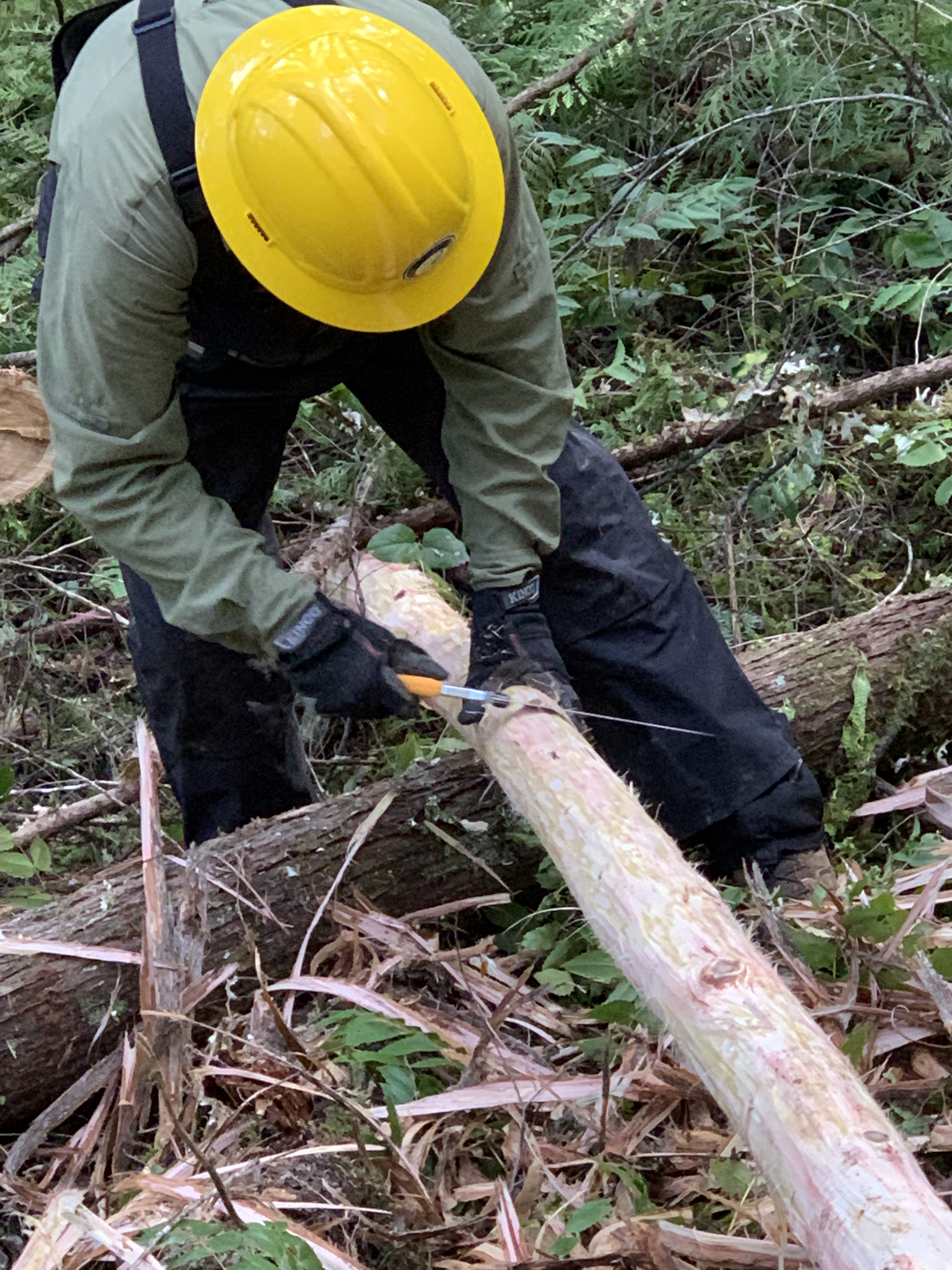
Putting in the posts and the supports was fairly straightforward, and the structure started to appear.  I wasn’t involved with this part, because I was helping find red cedar, trying to distinguish it from incense cedar, which has a more scaly bark, and then obtaining longer 5-6 inch diameter logs to be used for the railings. Cedar grows more conically than firs or maples, so a large log at the base tapers significantly in 20 feet. For debarking, I used a a U-shaped scraper, where one straddles the log and scrapes towards oneself. There were also long scrapers for those who wanted to stand. We scraped the larger diameter logs first, taking at least an hour each. We first scraped in the woods, then we carried the logs to the work site.

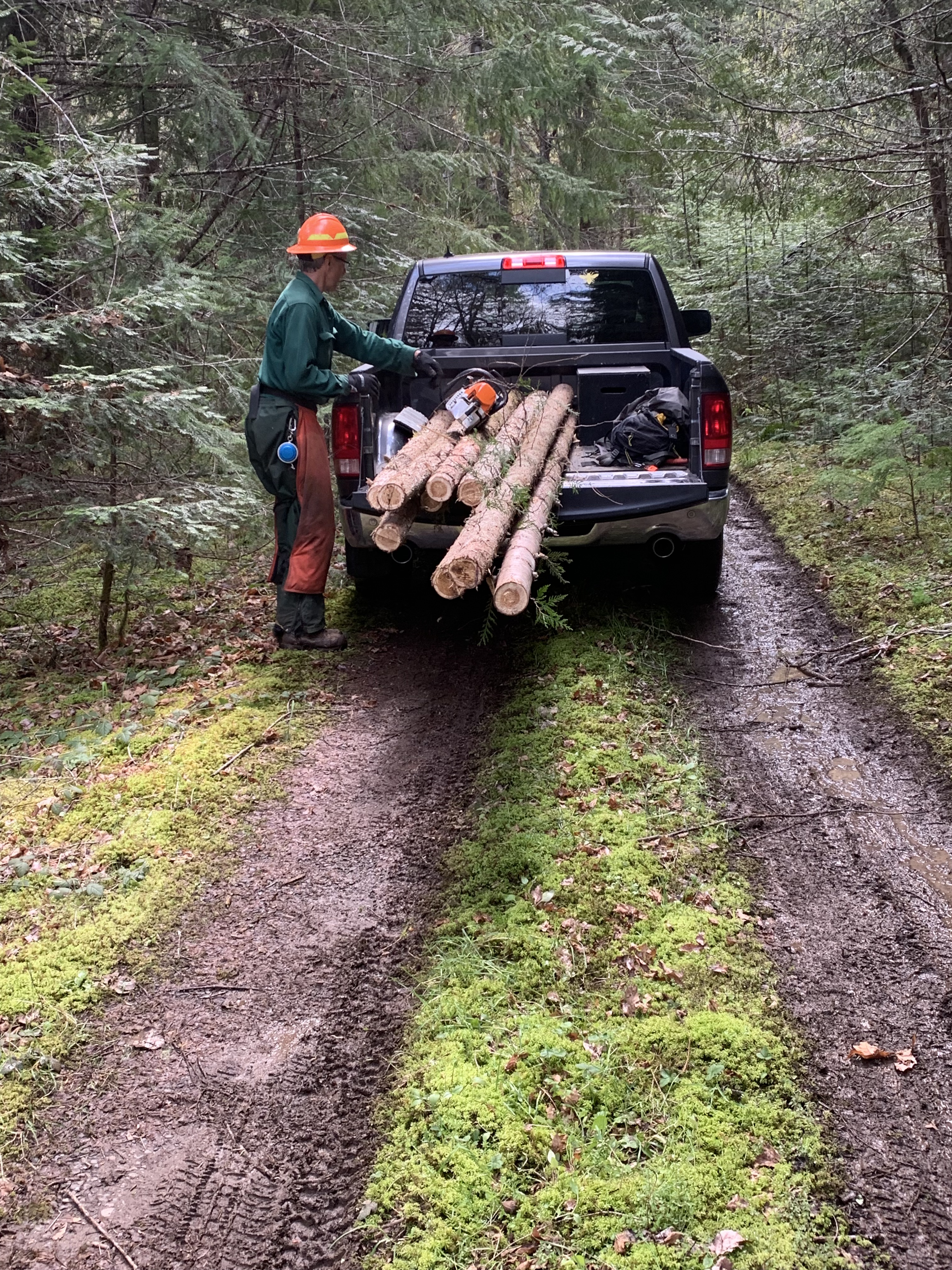
Later, we carried the logs down to the work site, debarked, and when we had enough bare logs, the following week we could send 3 people back to the bridge to work on it, while the rest of us worked on another trail.  One day, when we ran low on logs, two of us left the work area to go further afield to find cedar. We found several three miles away along a small track that barely admitted a vehicle, felled them, stripped the branches, and while the cutter looked for more, I dragged the trees to the truck and put them in the bed. We got six such logs in the afternoon by slogging around the hillside, measuring diameters, either with an appropriate tape measure, or doing the circumference and dividing by pi, my preferred method. I helped the driver back out a half mile on the road to where we could turn around, drive back and dropped off the logs. 

It was clear we needed even more logs to finish than the six we had, so two of us were charged to go out the following Tuesday, not our typical work day, to find at least ten more logs for approximately 150 linear feet.   Because we needed certain lengths of logs to fit together, we would require somewhat more than the linear foot measure.  This time, we backed in a half mile initially and then started looking for trees. It was not a good day for my knee, because I was climbing on uneven, unstable ground. At one point, I slid down a hill part way, taking a large chunk of moss with me, which I did not want to do. Worse, when I tried to put the moss back, I started sliding more. I finally realized the best way to avoid even more damage to the moss and me was just to get off the hill.  The first three hours we were out, we found only 3 trees, but we found 8 more early that afternoon and drove back to the parking area by the bushwhack, took each log out and slid it down the bank with the others. Some poor guy was going to have to carry those logs downhill through the woods to the trail and then to the bridge for debarking.

Two days later, I was one of those guys.  I carried 3 of the shorter ones, 10 feet long, on my shoulder to the bridge. Then I worked with another with the longer logs, carrying on our shoulders for three more trips. He told me, after the first, “I sure am glad these are light.”  I cringed. I thought they were heavy enough, thank you, and was glad when we got to the work area to unload them. He realized he needed a pad for his shoulders. I was involved with carrying at least 9 of the 16 logs, de-barking ten. Fortunately, the sap was running, and the bark came off in long strips. It looked like we would have enough logs.

The logs had to first be placed for the top railing, where there were junctions between them. That was time consuming, cutting the junctions, until Mac joined us with his power tools, including a cute little Makita chain saw, which was like a Stihl or a Husky that hadn’t been fed. That and his large supply of 5 Ma portable batteries, an inverter in his jeep, so he could recharge them, and we could cut out sections with electric hand saws, grind them with a rotary sander, fit them together, and screw them into the posts, all with power tools. Every 15-30 minutes another log was attached to the bridge. We could have finished the bridge that day if we had stayed to sunset, but it was after 2, and we were all tired.

The last week, I worked one more day with Mac and Steve, just the three of us. It was supposed to rain all day, but it was partly cloudy with only a few sprinkles, as we secured the last four logs on the upstream railing. The rain had pushed the stream up a great deal, and the roar drowned out the sound of the electrical equipment. The bridge was finished, after ten visits by the Crew.
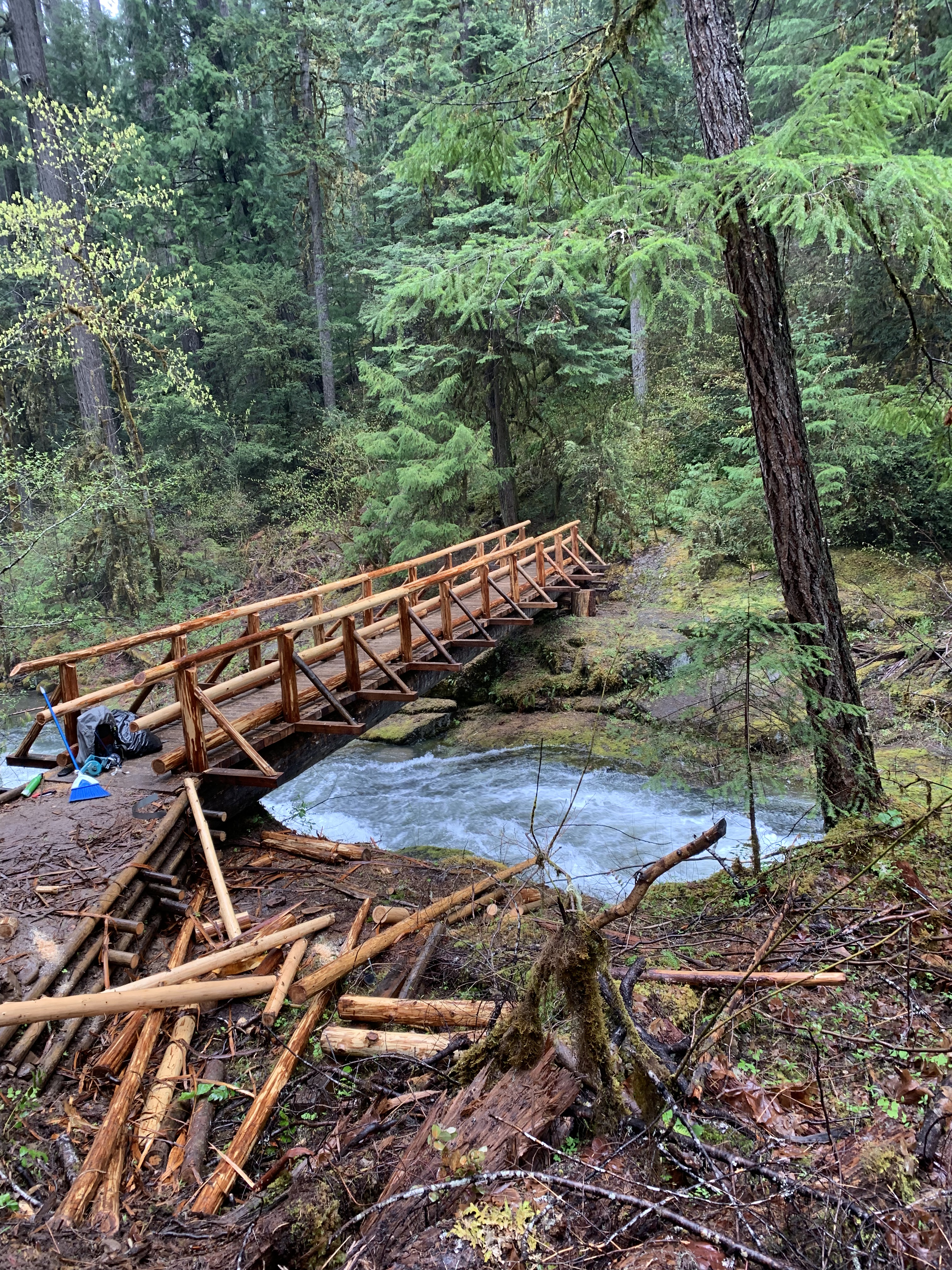
We had to clean up, putting the bark into the woods, where it would decompose, taking the cut pieces of logs and doing the same. We raked up the area, took our pictures, and bade farewell to this part of the Middle Fork River. Then it started to rain hard. The woods recover quickly. The trails we had to the vehicles will be overgrown and not visible in two years. The bridge will outlive me by a lot.

RECOVERING A TRAIL

May 8, 2022

The first time I saw Winberry Divide Trail on a work party, a year ago, it was hot, and we had to start clearing brush in the first ten feet in order to walk any further. I couldn’t imagine why anybody would want to work on this trail or who even knew the trail was out here.  We cut out logs and worked our way up the trail with power brushers to remove growth coming in over the trail,  and about two feet on either side of the trail, slow going in the heat,. We cleared about half a mile and then returned. Not much to see. 

The very beginning of Winberry.

We came back the following week, finished power brushing the mile of the trail to where it crossed the Forest Service road we had parked on down below. We walked back down the road to the cars, rather than taking the trail, so we could cut out the numerous trees that had fallen and were blocking the road, because the next time we came we were going to drive up the road to the second part of the trail.

Opening up the road.

That following week, two of us drove to the top of the passable road, where the second part of the trail ended and where the third part of the trail began.  While we did that, others used power brushers from below and we worked our way down, cutting out logs that some cutters had cut part way through and then had left.  That’s not good form and at the least should be flagged as a hazard with colorful tape, which was not done.

The trail went right through there. Now it does again.

Several weeks later, because in summer our priority is cutting out logs in higher elevation wilderness areas, we started doing some tread work. When fall came, and the high country was getting snow, we continued the tread work on Winberry, removing plant material on the side, throwing the soil well off the trail, and recovering what had once been a well graded path that had had some love years ago.

By December, we were ready to tackle the top part of the trail, 1.2 miles, climbing several hundred vertical feet to a ridge between the Winberry and the Lookout Point reservoir drainages. We had logged it out; we now needed to power brush the whole trail and then do tread work on all six thousand feet of it. We worked in a snow drizzle using multiple pairs of gloves each day, digging, getting on our knees to pull out Salal and some Oregon grape, and we worked the tread more than a yard wide as we moved up the ridge. I was one of two who power brushed the whole trail.  After we finished, we then continued to improve the tread, refurbish some steps that were abandoned in 2007, leaving only at a root wad hole and a spot where the trail needed to be rerouted to be future work. I learned on Wiinberry how important good rain gear is for trail work.

Tailgate session at the bottom of the third part of the trail

At this point, the Crew got a big thanks on social media from a contingent of mountain bikers who were thrilled someone was recovering the trail.  I never mountain biked, but I was a 60K + miler roadie, so I know the importance of having good routes to put spoked wheels on. Winberry would be a beautiful trail to ride.

Steve power brushing the trail
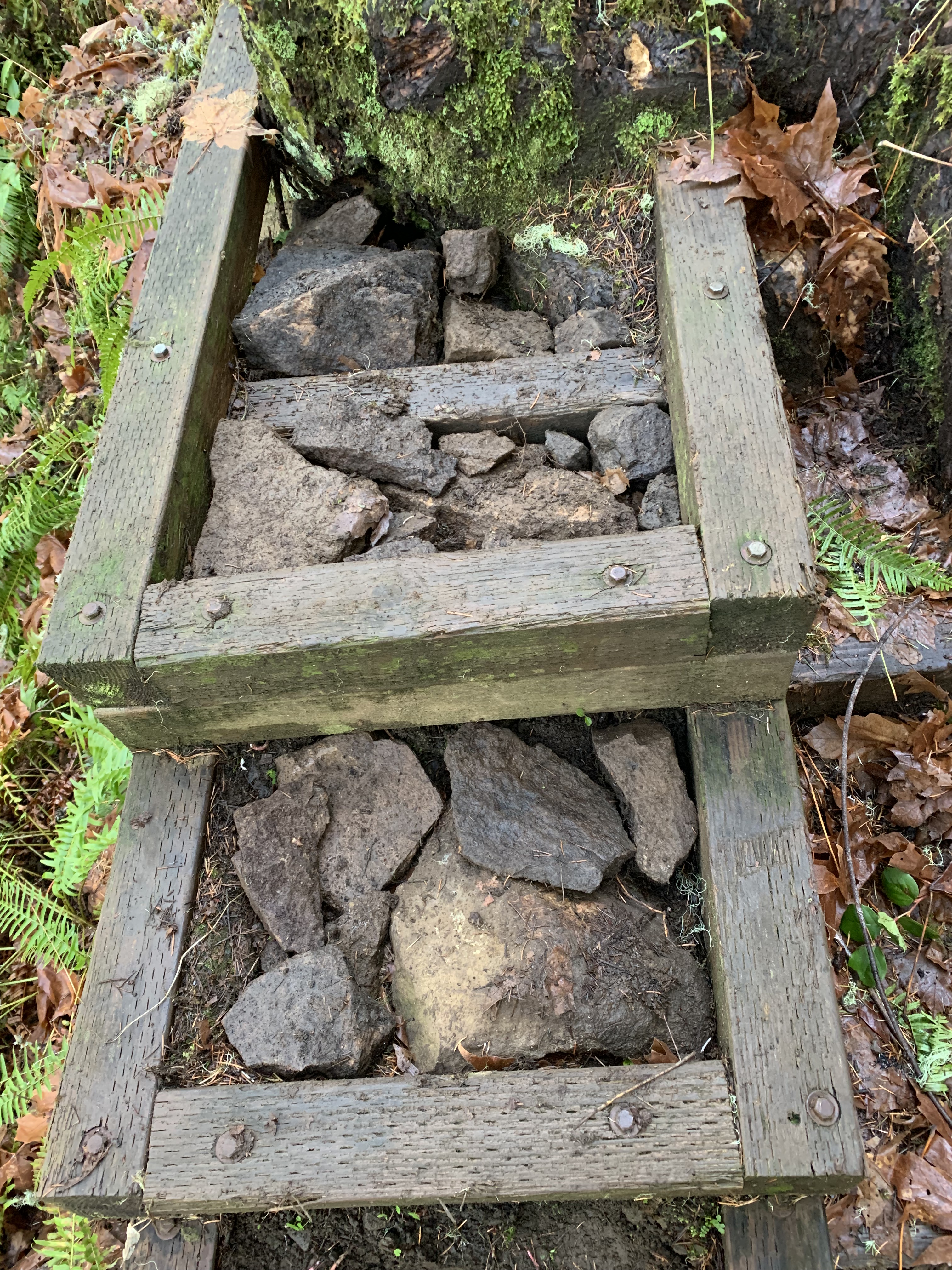
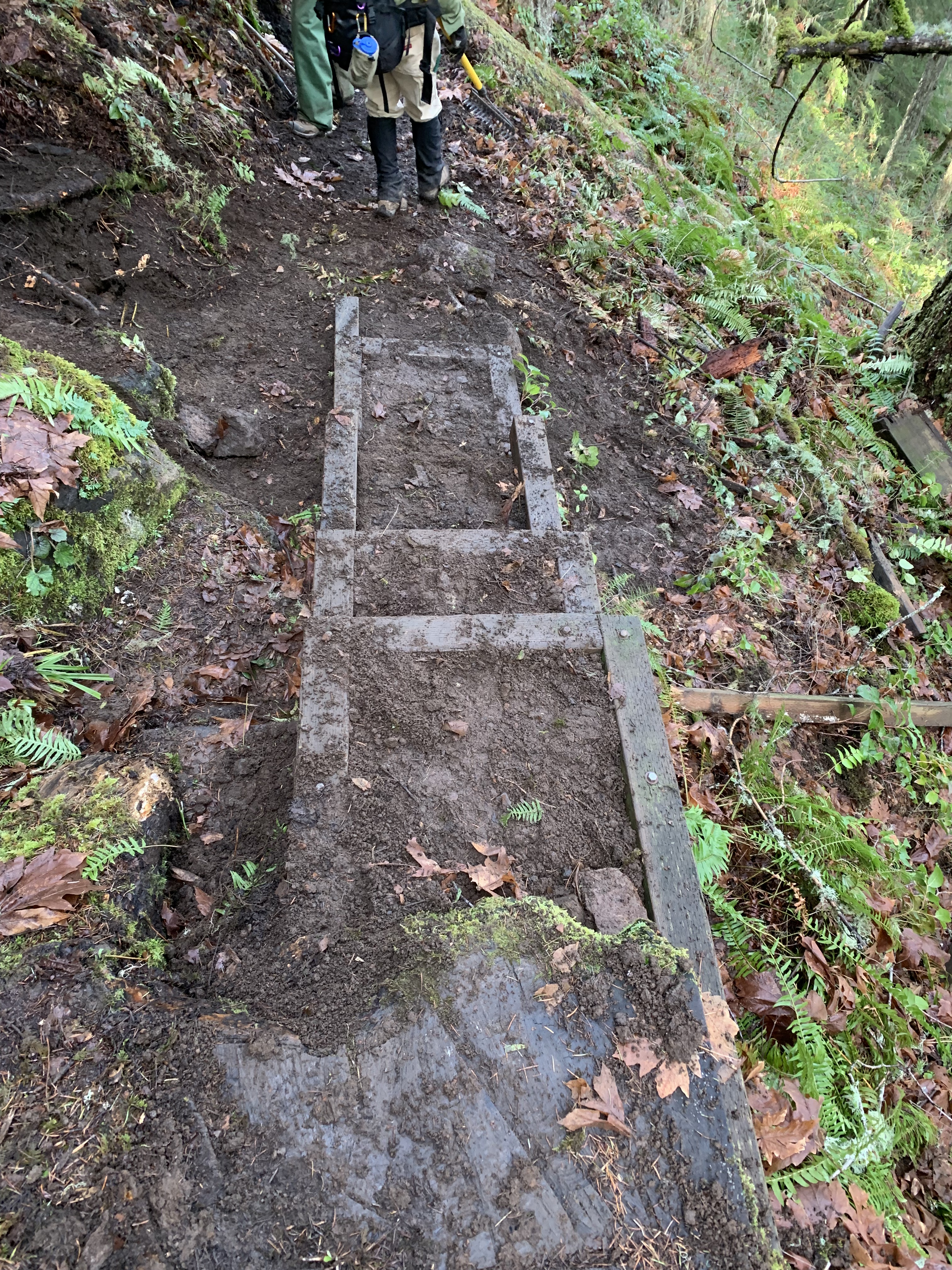
After we put rocks in the holes of the steps that were first placed in 2007
Completion

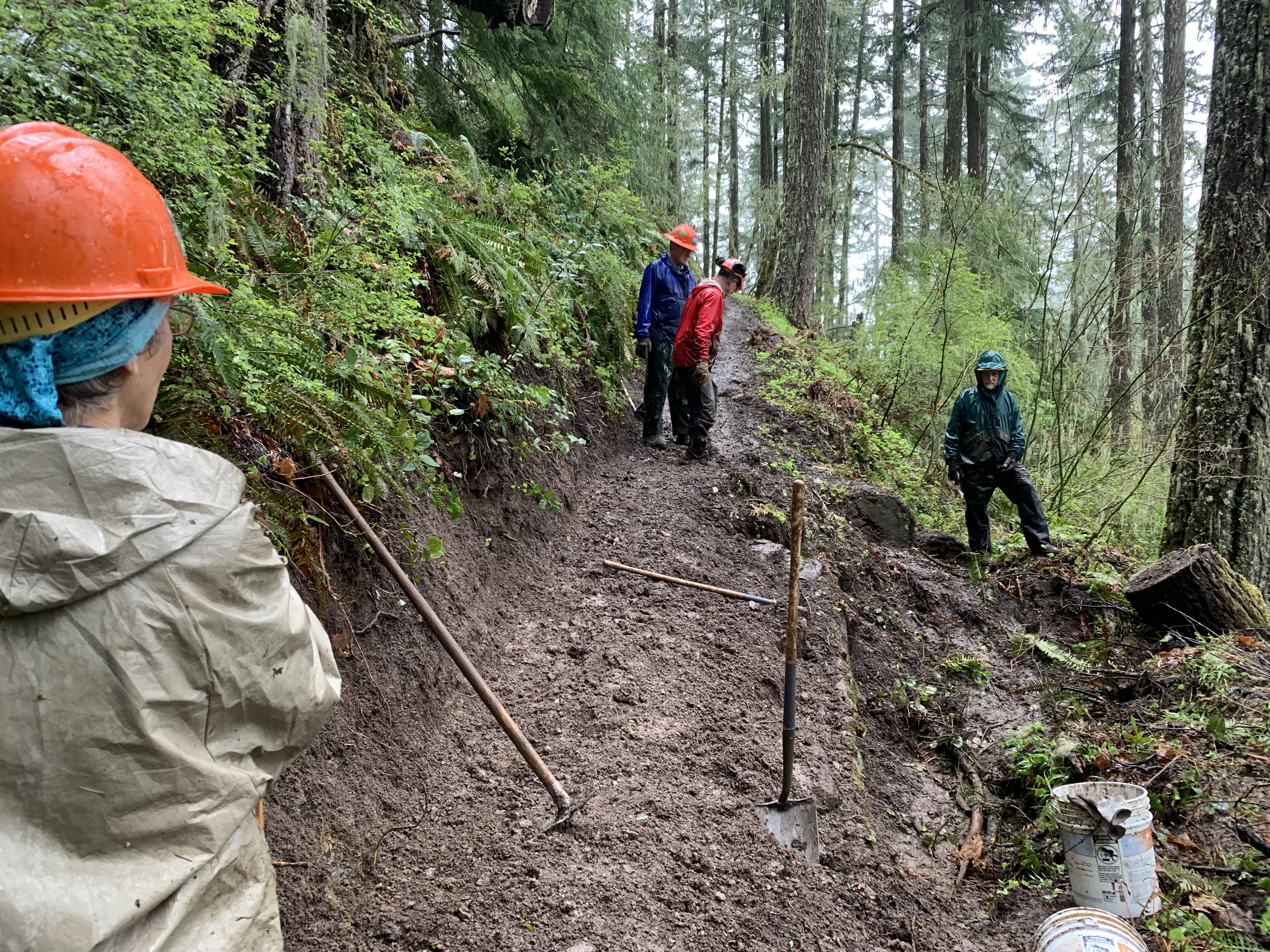
In April, I led a four member crew to the ridge from the reservoir side and we power brushed the mile stretch that formed part of the E2C—Eugene to Pacific Crest Trail.  Two weeks later, I led a hike with the Club to show what 13 visits to a trail (12 of those visits I was on) can do. Hikers occasionally need to see what kind of work goes into a trail, for falling trees and encroaching brush don’t disappear without some work by someone. Four days later and 20 degrees cooler, much wetter, five of us drove up the road, around the bushes that pushed out over the grade, through large puddles, now able to avoid cut stumps that once almost took out one of my headlights, in order to tackle the root wad hole and make the trail safer.  We worked in rain and mud, using cut logs or rounds to support a series of three retaining logs, one we found that used to line the trail but was no longer relevant there; the other two came from a nearby tree.  We filled in the holes with rock that we found 100 yards or more away and had to be towed with a rope to the work area, lowered down a hill in a bucket, or hand carried near the trail and passed off to another. The trail looks great now. We still have work to do, but it is now safe to hike, in a pretty woods, especially higher up, and doesn’t get a lot of use. 

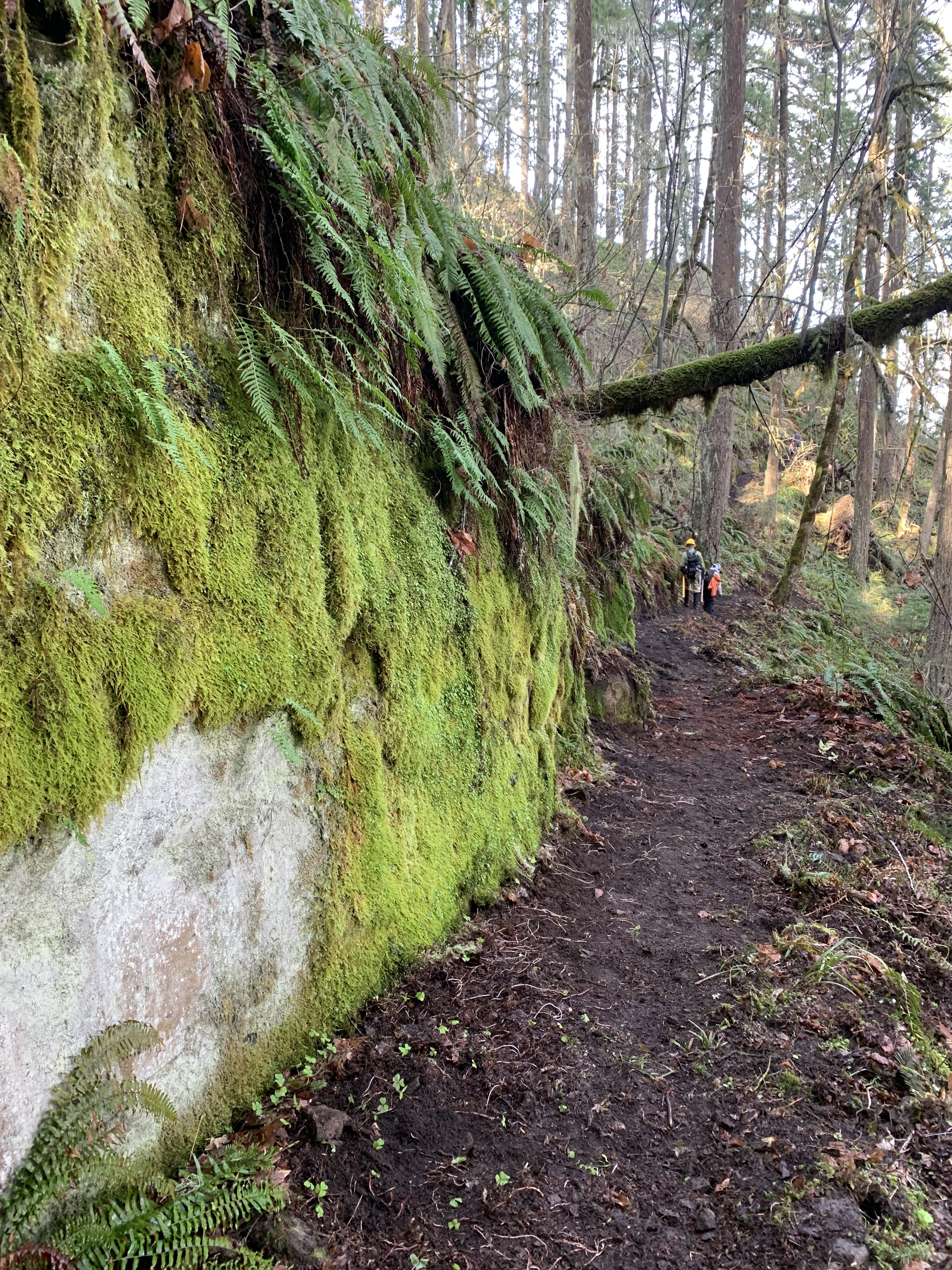
I love the rock wall near the top of the trail, a place that stays cool in summer, has a covering of almost turquoise moss in places, and where the trail is by necessity narrow with a drop off into a small ravine.

The rock wall

I look forward to the time when we can add a switchback to the trail to avoid a steep spot that when wet is difficult to negotiate when wet and will lead to erosion. I went by spots where I ate lunch, lying on my back and looking up at the trees and sky while I rested. And now I can add the root wad repair to my list of places on the trail where I spent hours one day and learned about the trail by seeing, smelling, and touching, and when mud splattered, by tasting.

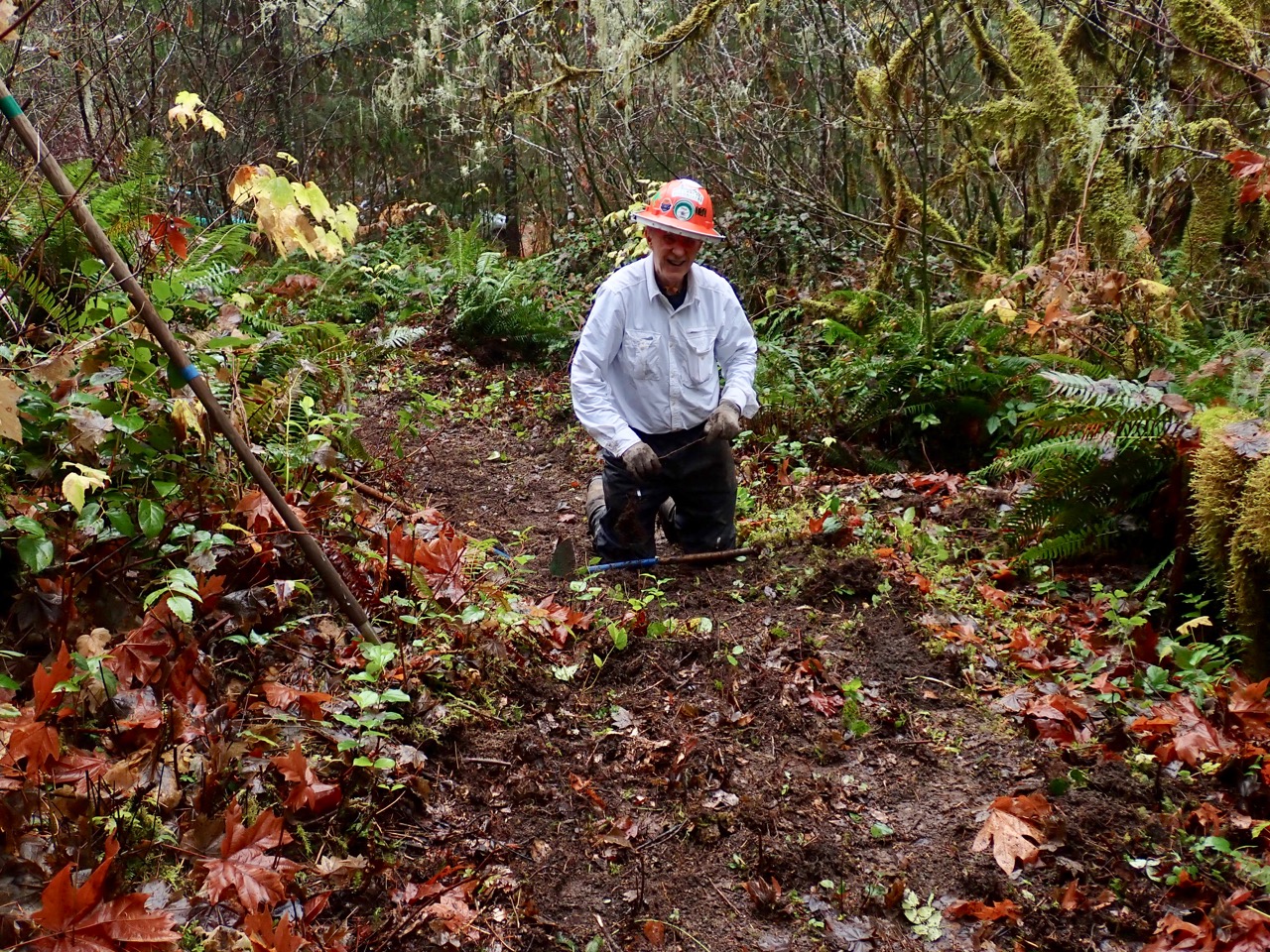
The author on his knees working on the second part of the trail.

THIS IS A GREAT WORLD

April 18, 2022

The campsite had not looked special, on a point along a channel of Basswood Lake, a mile south of the Canadian border in the Boundary Waters.  The site we had set our mind upon in the bay was occupied, and another had a difficult climb up from the water which was fine, if one were having lunch, but not so fine if one wanted to go places and come back. Or just get water for dinner. Long climbs carrying water or packs get old. The site we were on had one good tent spot, all we needed, and had views north to Canada and sunrise views over American Point.

The first night a pair of beavers swam by about 5 yards off shore, on their way to the swampy area right off the east side of the site. This would be repeated every night we were there, and one morning we watched as a beaver felled a tree. Pretty neat. On the second night, we saw an aurora, and while it wasn’t as bright the green curtains I saw hanging in the Canadian sky a half-century earlier, any aurora is worth seeing.

The third day, we saw an otter as we travelled out of the bay on a day trip. He was having a great time going in and out of the water. That night, we heard wolves howling, too far away to try to find—but we wouldn’t have seen them anyway.

The final day, we took a trip to the Canadian border and Basswood Falls, passing a campsite where we had stayed in 2004, a day after a bear on Crooked Lake got our food during a howling storm. Eating our fifth consecutive meal of mash potatoes, I had seen something that looked like a windmill churning water moving across the lake from Canada. I had no idea what it was for about five minutes, then realized it was a moose swimming with a large bush stuck in his antlers. Nice memory. 

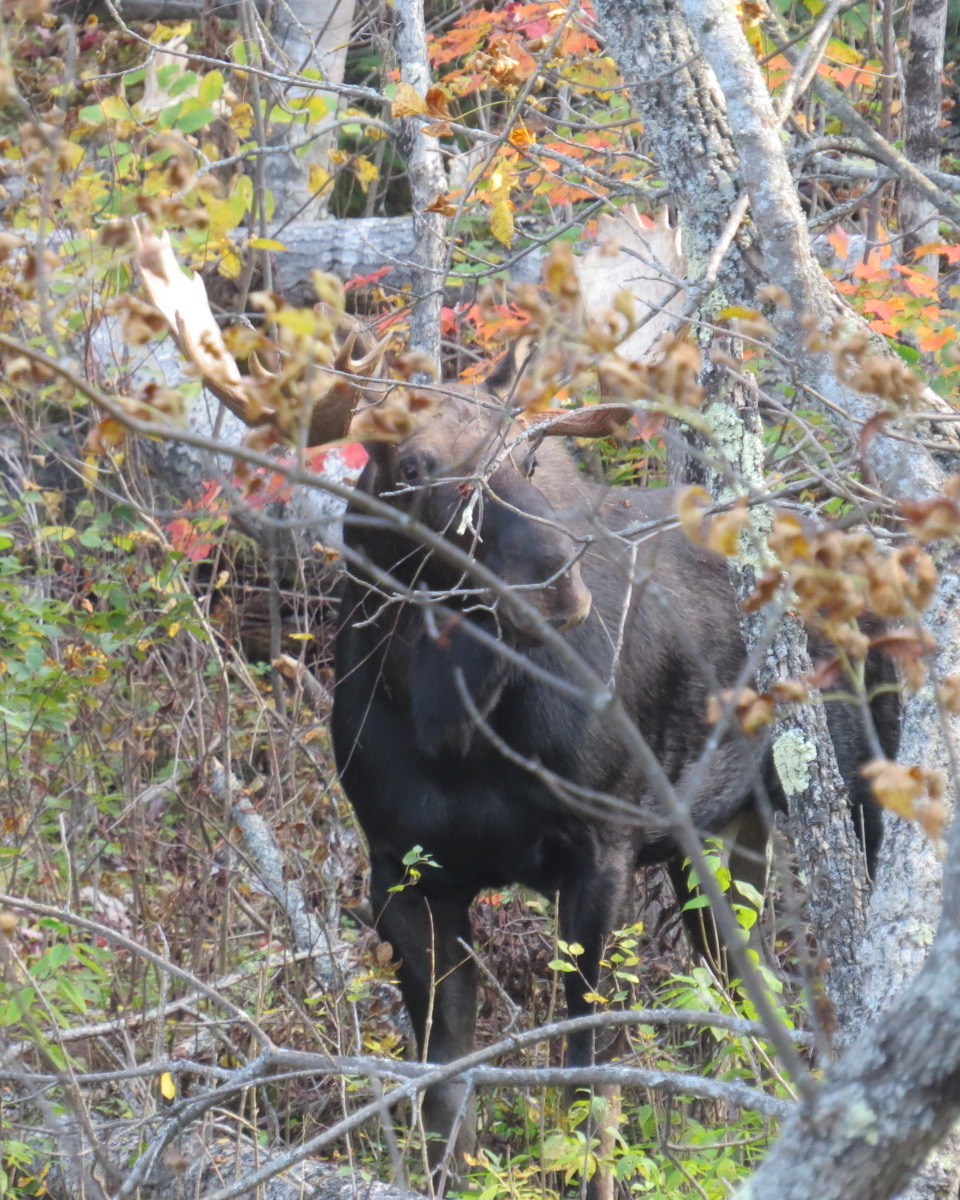
After we returned from the border, I sat in camp and said to myself the only thing we hadn’t seen on this particular trip was a moose. I had no complaints; it was a great trip.  An hour later, I heard a noise in the marsh behind me, turned and there he was, a bull moose, fifty yards away, chewing on a bush. We stayed quiet, and he didn’t leave for a good ten minutes, then disappeared through the back of our campsite.

What a great world we live in!

*********************

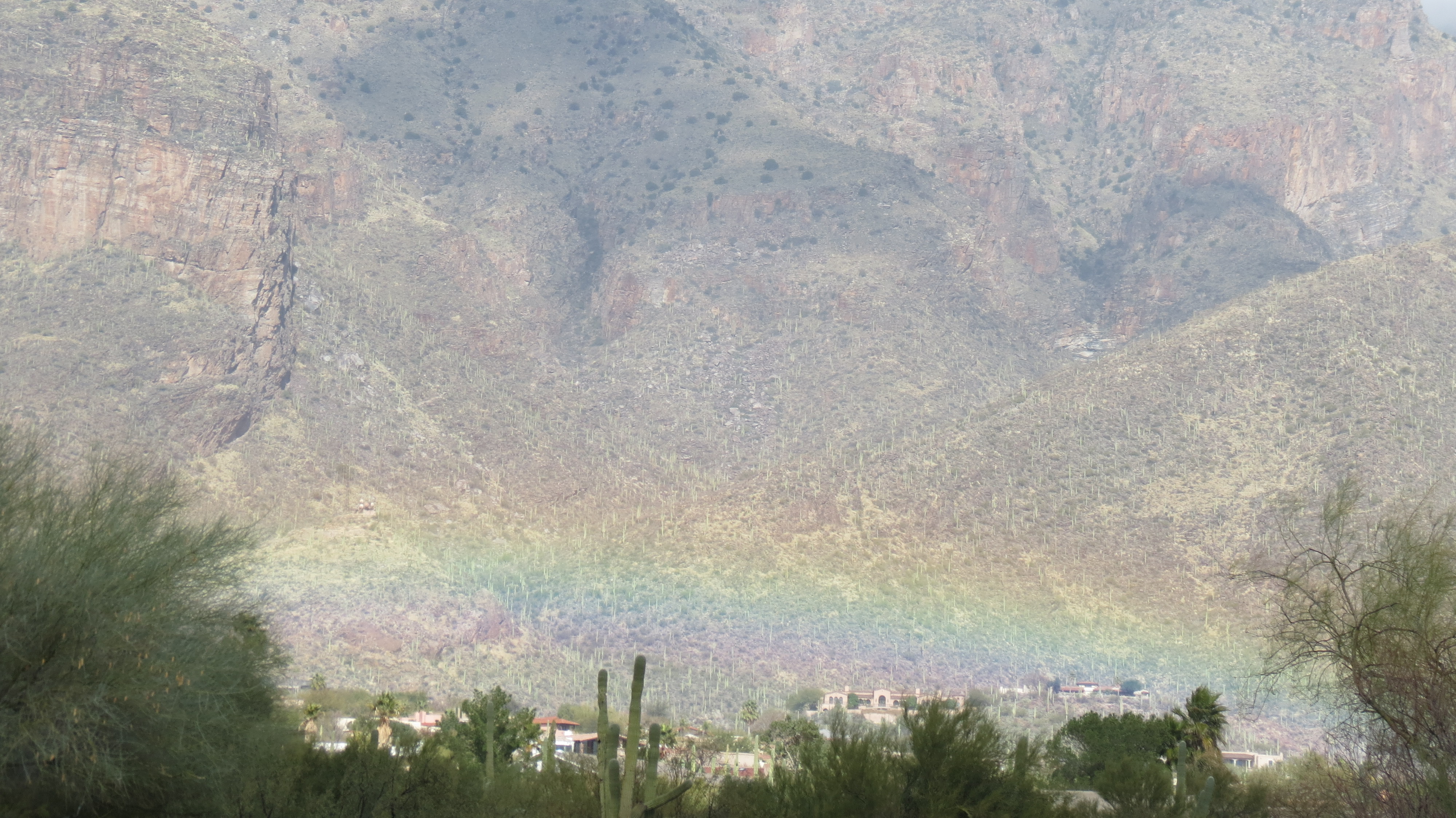
Eight years ago in late January, the 28th according to the picture I have of it, back when I lived in Arizona, there was a brief rain storm, and near noon, the Sun came out.  Recent rain and sunshine mean rainbows, and I love them, both the colors and why they occur, which makes me doubly lucky.  I have seen a rainbow after sunset, when the zenith is still getting sunlight, and the rainbow spans the entire N-S plane of the celestial sphere over us. Astronomer Steven O’Meara has seen them up to I believe 14 minutes after sunset, but he lived in Hawai’l and had a lot of practice. My record is still seeing one 7 minutes after sunset.

The Sun has to be fewer than 42 degrees elevation to see a rainbow. That’s why we usually see them early morning or late afternoon. The sun is usually too high at noon, unless it is winter.  I did the math in my head: In late January, the Sun is at declination (sky latitude) minus 18, or 18 deg. S. The North Star is at 32 elevation in Tucson, so overhead in Tucson is 58 deg N. On the solstice, the Sun was 23.5 deg south latitude, and 23.5 from 58 was 34.5 degrees above the horizon at local noon, which in January is about 12:35-12:40 pm.  Add in the difference of 18 deg S from 23.5 deg S, and the sun would be about 40 deg high at noon. This was going to be close, but I thought it ought to be possible to see it.  I went out to the driveway, looked north towards the top of Catalina mountains but saw no rainbow. Hmmm. Then I thought, silly me, it’s on the ground. I looked down right to where the base of the mountains met the desert.

There it was.

A beautiful rainbow was flowing along the base of the Catalina mountains. That was SO COOL to see. I found something I would have missed otherwise by knowing a simple fact about rainbows then when the time came remembering that I just might see a rainbow at noon.  I did, on the ground against the mountains.

Is this an interesting world, or what?

******************

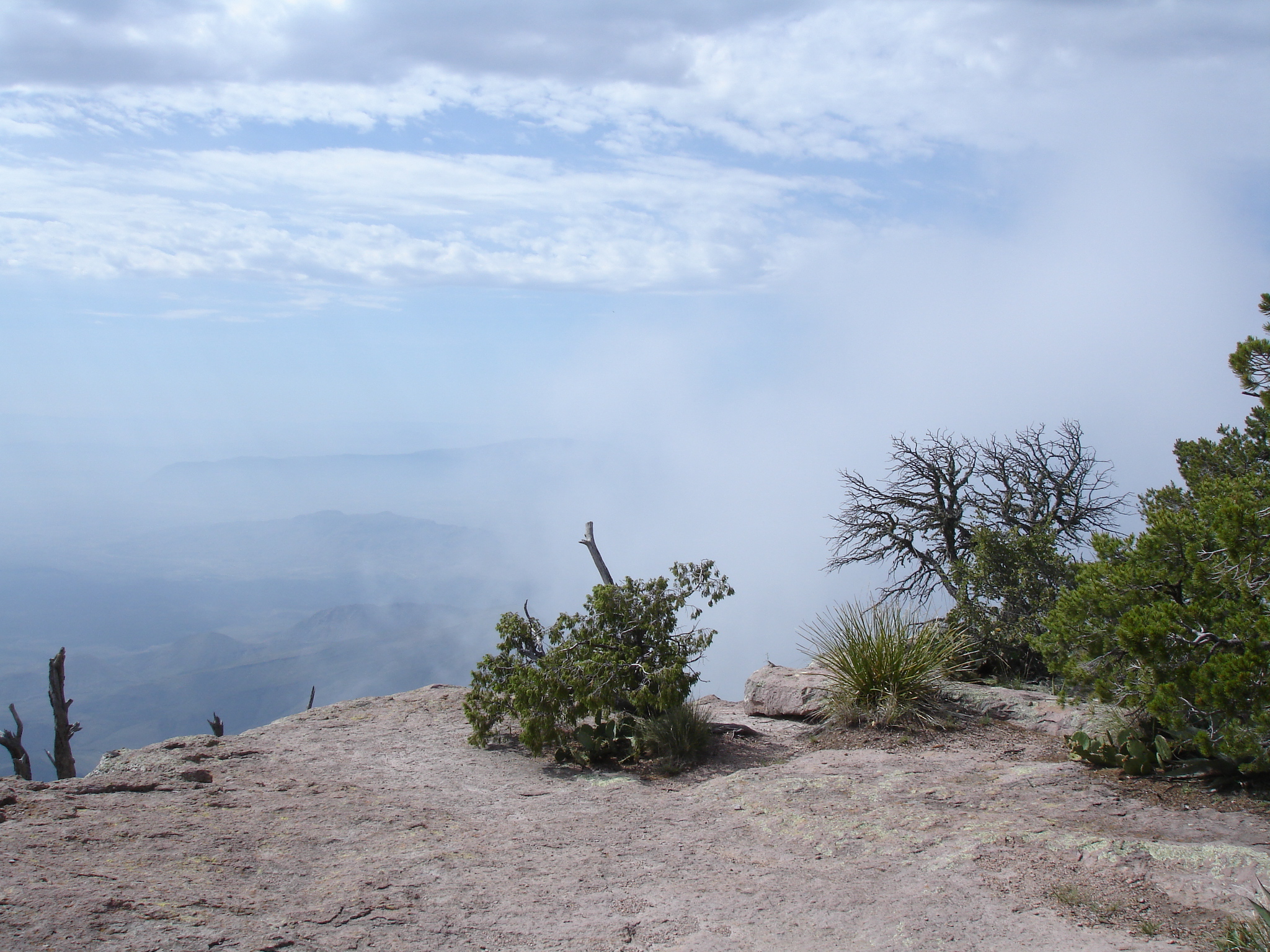
In 2007, I hiked the South Rim Trail in Big Bend National Park, out to where the cliffs drop into the Chihuahua Desert. It was humid, late June, and Big Bend was part of my national park odyssey.  It was an 11 hour drive to get there, during which I saw my first Scissor-tailed flycatcher. You can’t miss them. I left the Chisos Basin early, nobody was out there, and when I reached the cliffs, I could see the desert a couple of thousand feet below me. A south wind was blowing into my face, which was pleasant, after all the climbing.

Up ahead I saw what I first thought was smoke, then realized it was water condensing into a cloud. It’s the same phenomenon I saw 20 miles from Victoria Falls from a train back in 2001 when I went to the Zambia eclipse. I couldn’t figure out what it was until I realized the sheer amount of water formed a cloud.

What I saw at Big Bend that day was a demonstration of orographic lift, the phenomenon that explains why mountains get so much more precipitation than valleys. The water vapor hits the mountains, is forced upward, cools, and condenses when it cools to the dew point. That day in Big Bend, the south wind was ferrying humid air that struck the cliffs, forced upwards, and condensed right in front of me. It was incredible.

It truly is a remarkable world.

Cloud formation, Big Bend National Park, June 2007

******************

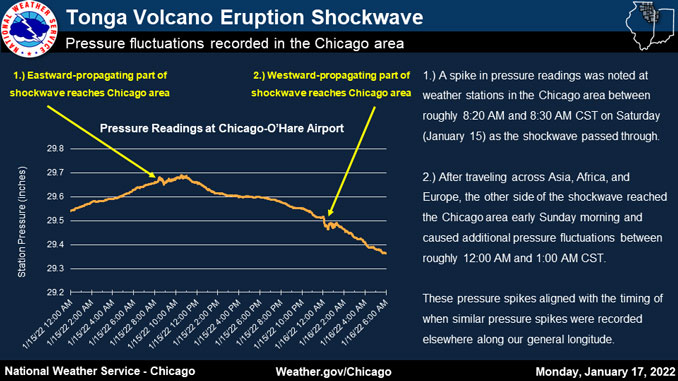
I read last week about the shock wave that went around the world for 2 1/2 days after the Tonga eruption. What I didn’t know was that the wave was measurable, and we have proof of the compression and the expansion of the atmosphere when the wave passed.

The graphics in the New York Times were excellent, and when I read about the barometric pressure changes, a couple of mb or a few hundredths of an inch, I decided to look on my own.  Not every place had a clear brief rise in late morning of 15 January, or a brief clear drop that night, and some places had active weather occurring that would have overwhelmed any small signal from the shock wave. But I was enthralled by barometric pressures in places \that showed a clear brief rise followed by a drop in the late morning and a clear brief drop, followed by a rise around midnight the next day.  This absolutely fascinated me, enough so that I showed my wife, who doesn’t share my rabid enthusiasm for such trivia. She liked it, too. How could you not? 

Moose, wolves, beaver, otter, and an aurora, same trip.  A rainbow practically on the ground at noon in the desert, because that is where it has to be. Orographic lift happening right in front of me.  And barometric pressure showing a change from a shock wave from a south Pacific volcanic eruption many hours earlier.

Tonga Volcano shockwave in Chicagoland (SOURCE: NWS Chicago)

Minneapolis

8:53 AM4 °F-2 °F76 %E6 mph0 mph29.64 in0.0 inFair
9:53 AM5 °F-1 °F76 %VAR3 mph0 mph29.65 in0.0 inFair
10:53 AM7 °F2 °F80 %VAR3 mph0 mph29.64 in0.0 inFair


Eugene

7:54 AM42 °F39 °F89 %ESE6 mph0 mph29.95 in0.0 inCloudy
8:45 AM42 °F40 °F92 %CALM0 mph0 mph29.95 in0.0 inCloudy
8:54 AM42 °F40 °F92 %CALM0 mph0 mph29.96 in0.0 inCloudy
9:14 AM41 °F39 °F93 %ENE5 mph0 mph29.96 in0.0 inMostly Cloudy
9:54 AM41 °F39 °F93 %SE6 mph0 mph29.95 in0.0 inMostly Cloudy
10:25 AM40 °F38 °F93 %SE5 mph0 mph29.95 in0.0 inMostly Cloudy

I VOTE FOR STANDARD TIME

March 20, 2022

I like the axial tilt of the Earth.

It gives us seasons, a gradual change in the amount of sunlight—or darkness—we experience throughout the year. In Arizona, where I lived for 37 years, there were easily noted gradual changes.  In June,  sunrise hovered over the Pontatoc Ridge, viewed from my kitchen, for several weeks, and I could actually notice a few seconds difference each day after June 10th, as the sunrise gradually became later.  Sunrise was later than the official time, because of the horizon, it was about 5:15 am, 45 minutes earlier on the valley floor.  About five days after the solstice, I could just notice that the sunrise was a little further to the south than it had been.  You can’t tell the exact solstice by looking at the horizon each day, but you can be close.

At sunset, the changes weren’t quite as visible since the horizon was neither raised nor sharply defined, but starting in early July, the sunset gradually became earlier, after 11 days in a row at 7:34 pm.  After twilight, it was dark by 9 pm, without the long twilight I was used to in the northerly latitudes where I grew up. Darkness comes earlier in the lower latitudes, even more dramatic near the equator. This is because the ecliptic, or the path of the Sun, Moon, and planets as seen from the Earth, is more vertical at the equator, and has a smaller angle with the horizon the further north or south one goes.  That smaller angle is why twilight lasts longer, because after the Sun sets, it is moving significantly north as well, so much of its motion below the horizon is transferred northward and not westward away from the horizon. That results in long twilights.

Now, with the Senate having passed a bill mandating universal daylight savings time, I wonder why we can’t just have universal standard time. As Brian Brettschneider, Alaskan climatologist, posted, “amount of daylight saved: 0.”  We would be better off using the German term “Sommerzeit,” or “summer time.”  We’d be even better off using standard time. That is why it is called standard. 

Arizona will not likely change from being on MST; I never heard an Arizonan complain that there was no daylight savings time. The last thing anybody in the desert wants in June is sunset at 8:34 pm, or in January sunrise at 8:24 am. One of the few pleasures about living in the desert in summer is that it gets dark by 9. It may still be—and it usually is—hot, but with darkness comes hope for cooler temperatures. I live in a world where sun is generally considered good, rain bad, light good, dark bad, and days with rain are dreary and bad whereas sunny days, even with wildfire smoke, are good. To me, summer in the 21st century is overrated, overheated, “overdry,” and “oversmoked.”

In Arizona, I always knew when GMT was—7 hours ahead of local time. Here in Oregon, I can never remember if it is 8 or 9 hours, and I don’t like the sudden change of more darkness in the morning when it had been slowly getting lighter, and more light in the evening, when it had been getting gradually lighter. It grates. I like the gradual change in light throughout the year, especially the gradual lessening of daylight in summer, for up here, summer is no longer on July 5, which is what people told me when I moved here. It’s a five month stretch between May 1 and October 1, just like Arizona, only drier and a little less hot. Unless we have a heat dome.

In Arizona, I knew June 10 that the Sun was going to rise later for the next 7 months. In 11 more days, the solstice would occur, when the Sun would stop getting higher in the sky.  Two weeks later, the Sun would start setting earlier, and I had the sense at least that summer was moving along astronomically, even if not meteorologically.  

I’m not alone. I commented in the NY Times a couple of years ago about an article written near the winter solstice, looking forward to more daylight, and wrote what became one of my 35 “Times Pick”s.  While I didn’t include the replies, they all agreed with me. I struck a chord.

I will be a contrarian and say I like the rain and the dark days. They belong, too.

I think summer is overrated; last summer came with wildfires, smoke that kept me in the house for 10 days, and a concern of evacuation. Three of the last four years there have been significant west Cascade fires. I led a volunteer crew yesterday into the damp woods to repair a trail, creeks and rivers roaring with the water that finally came.  It was lovely.

Mind you, I counted 65 different species of wildflowers on my spring walks, I am an avid canoeist, and autumn is my favorite season. But leaving the trail yesterday with dark clouds overhead, an early sunset, and rain starting to fall, I was happy.

18 Replies410 Recommend

In Oregon, the end of standard time will mean that for 3 1/2 months a year, from mid-October to the end of January, sunrise will occur on or after 8:30 am. Children will be walking to a school bus with a flashlight. True, sunset will be later, but what is wrong with sunrise at 7:30 and sunset at 4:30? Sen. Sheldon Whitehouse of Rhode Island, whom I otherwise deeply respect, dislikes the 4:30 sunsets in Rhode Island. Well, he lives in a northern state at the eastern end of the Eastern Time Zone. Go to New Brunswick, the next stop east of Maine, and you are on Atlantic Time. That’s why it is dark there early. There is no way you can change the fact that there are 9 hours of daylight. Please stop trying to.

“White man thinks if he cuts off a foot from the top of the blanket and puts it at the bottom of the blanket, that somehow the blanket is longer.”

I take my canoe trips near the autumnal equinox. When I base camp, I can watch the change and time in sunset and sunrise location nightly, weather permitting. It’s interesting to see it, and viewing is an important part of each day on the water.

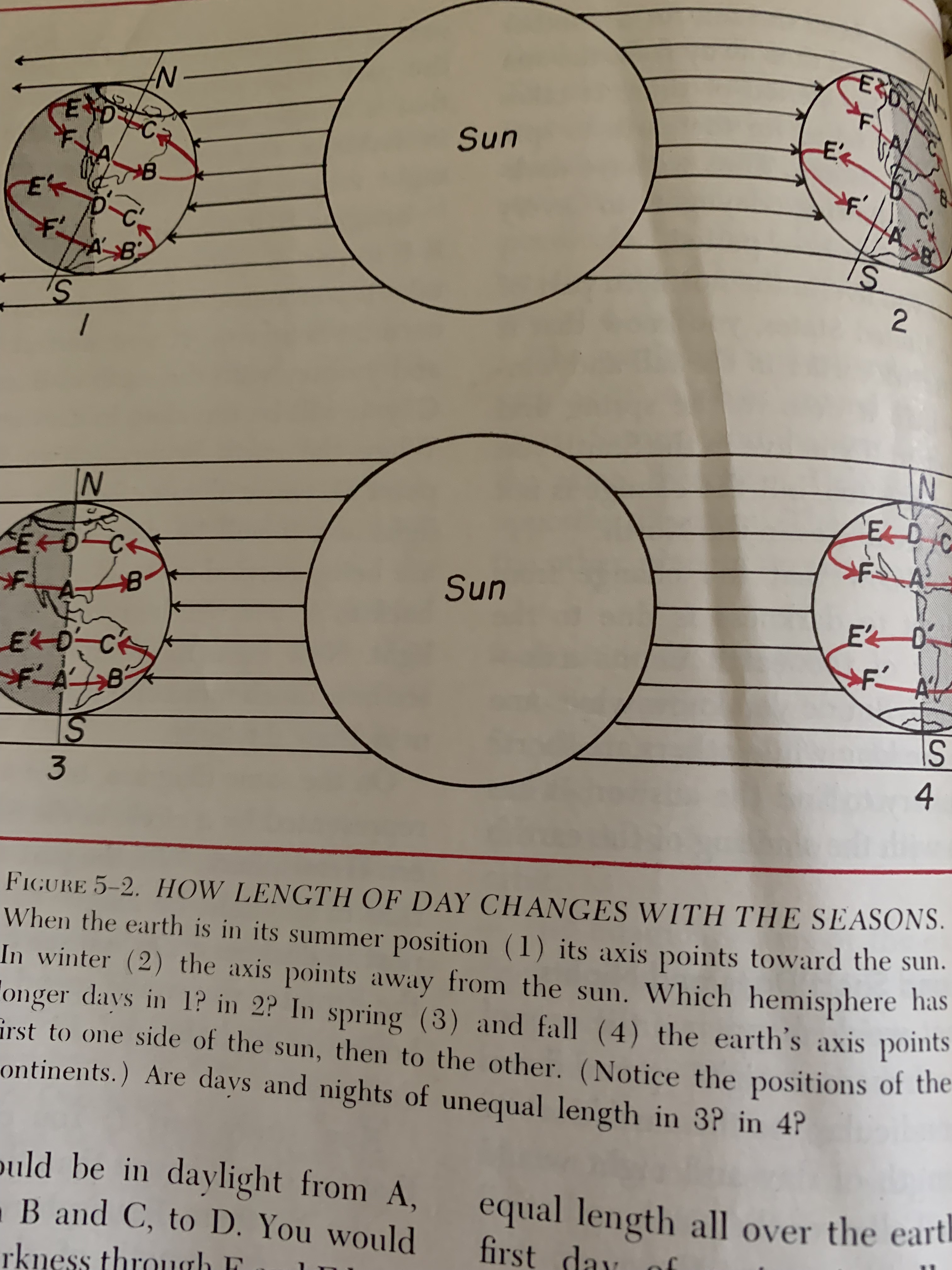
In January, the sun runs slow relative to the clock. That is why sunsets are noticeably later in early January than they were in December. But it is also why sunrise is delayed and it is dark in the morning. Add another hour to this already delayed sunrise, and it is going to look more like night than it will morning.  Not only does the white man think the blanket is longer, he (and probably should be he, here, since women are smarter) thinks sun time and clock time are the same, when they are most definitely not.

From “Our Environment, How We Adapt Ourselves to It,” Revised by my father, Paul E. Smith, Allyn and Bacon, 1964.”

Equation of Time. This shows how the sun time varies relative to clock time throughout the year. When negative, or slow, the sun “appears” to be slower to rise and slower to set, so dark mornings and lighter evenings in January. When strongly positive, like October and early November, the sun “appears” to run faster, and sunset occurs earlier, so hence the suddenly appearing dark evenings in October.

THE MOSS

February 20, 2022

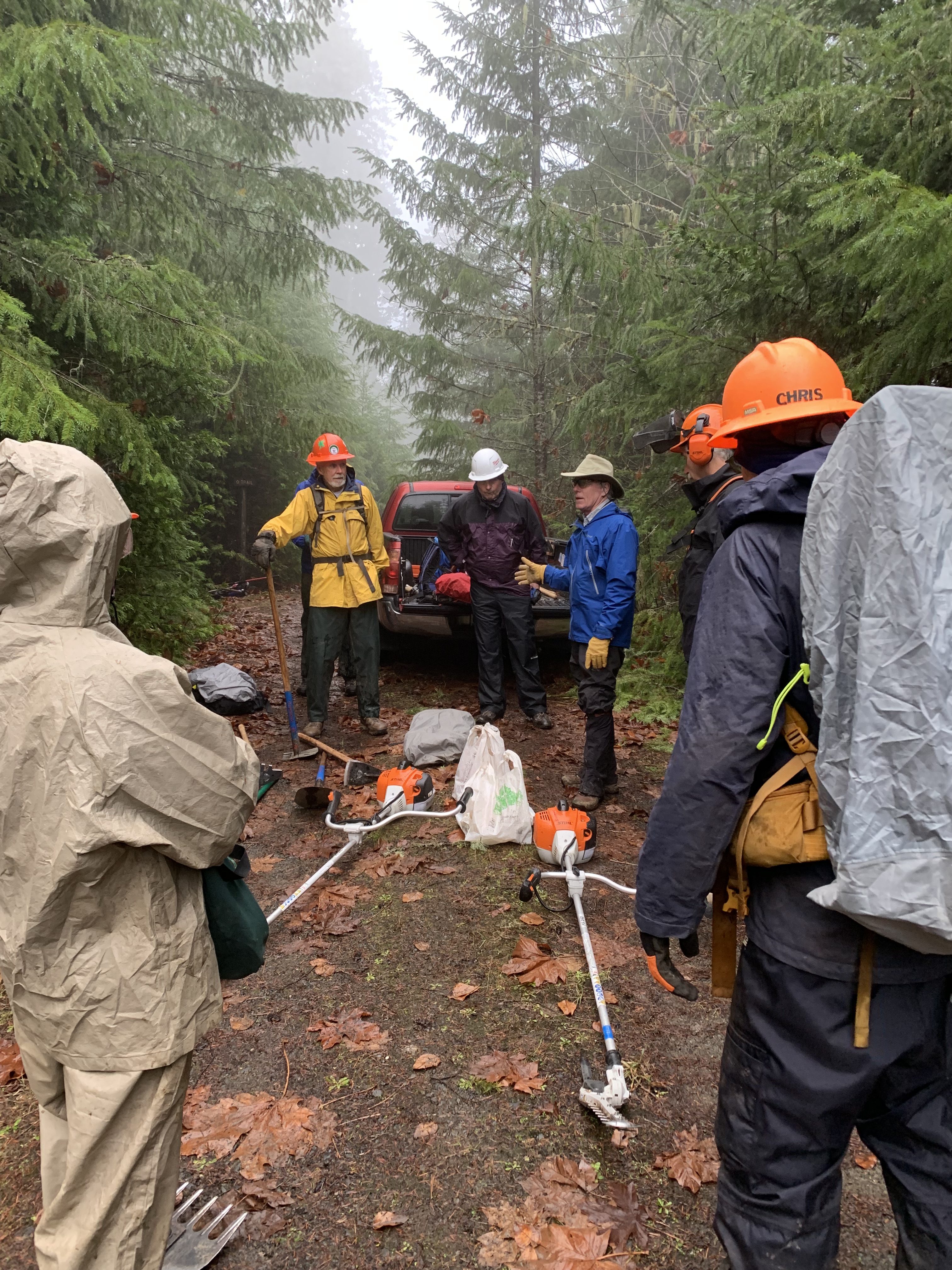
We had had an interesting morning on the Middle Fork Trail of the Willamette River, beginning the job of building a railing for the new bridge over Indian Creek, a free flowing tributary of the Middle Fork. We found our own materials, Red cedar, in the nearby woods, stripped the bark off it and then took the bare logs to the bridge area to eventually place as one of the smaller posts or a larger railing.  

We split into two groups, one to work on the trail tread, the other to search for hopefully nearby cedar, where we could strip and carry them a short distance. Red Cedar is not heavy, about 27 lb per cubic foot dry, a lot more wet, which these were. We had to fell the trees, take the limbs off them, then it was possible to move the definitely heavy log from the woods to the trail, where we made precise measurements, cutting the logs into four foot lengths for posts. Then it was time to start de-barking.

I had at my disposal various types of scrapers, knives, axes, other sharp implements to slice through the bark to the fascia over the cambium layer, then cutting through the fascia to the cambium itself, what we wanted exposed. I didn’t know that trees had fascia like we do.

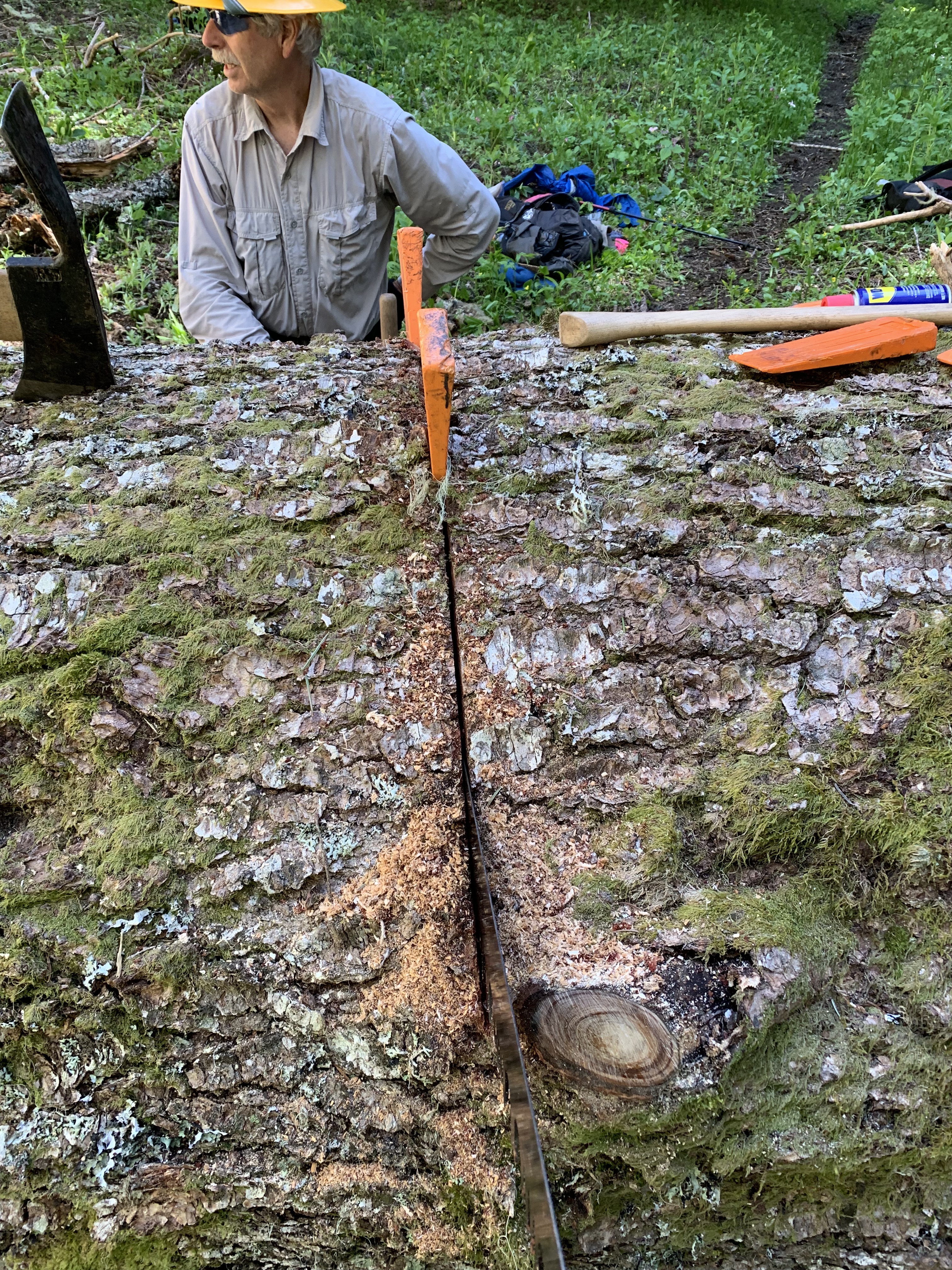
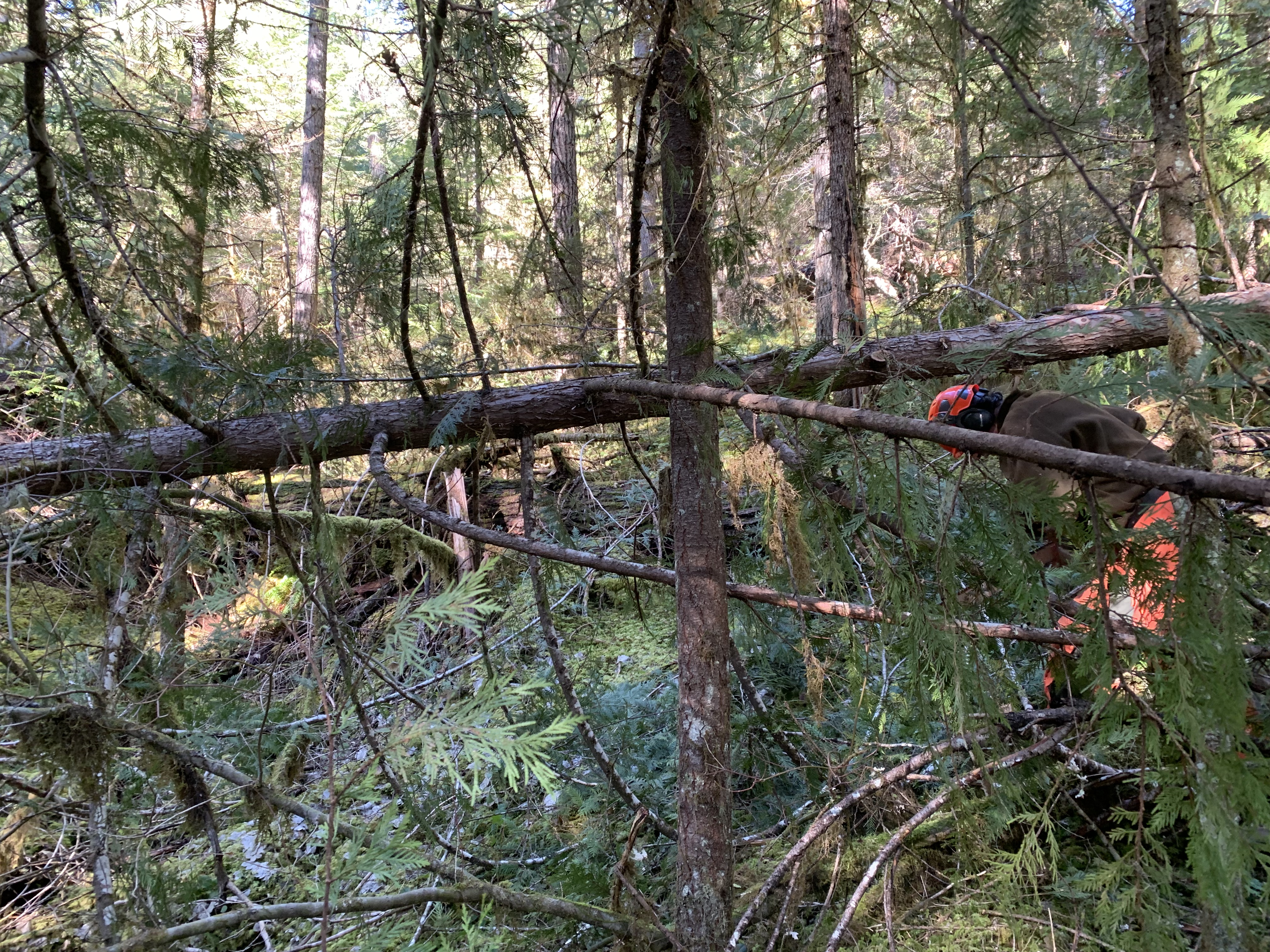
I hadn’t seen tree felling in thirty years, back when I spent a season as a wilderness canoe ranger in the Boundary Waters, and we used crosscut saws to fell trees that were potential dangers to campsites. I remembered to look up at the branches of the tree we were going to fell to see where most of the weight was, so we could predict where it would fall. Fortunately, many of the Crew had backgrounds with the Park Service, Forest Service, or BLM (Bureau of Land Management), and they were certified fellers.  One of us put pink ribbon on cedars we were to cut, we had one sawyer, and I was the swamper, working with the cutter and doing the limbing.  Cutting is a lot different from bucking on the ground. Tree falls, limbing, or removing the limbs is necessary, and instead of pushing logs off the trail, we brought logs to the trail, in order to carry them to the bridge.
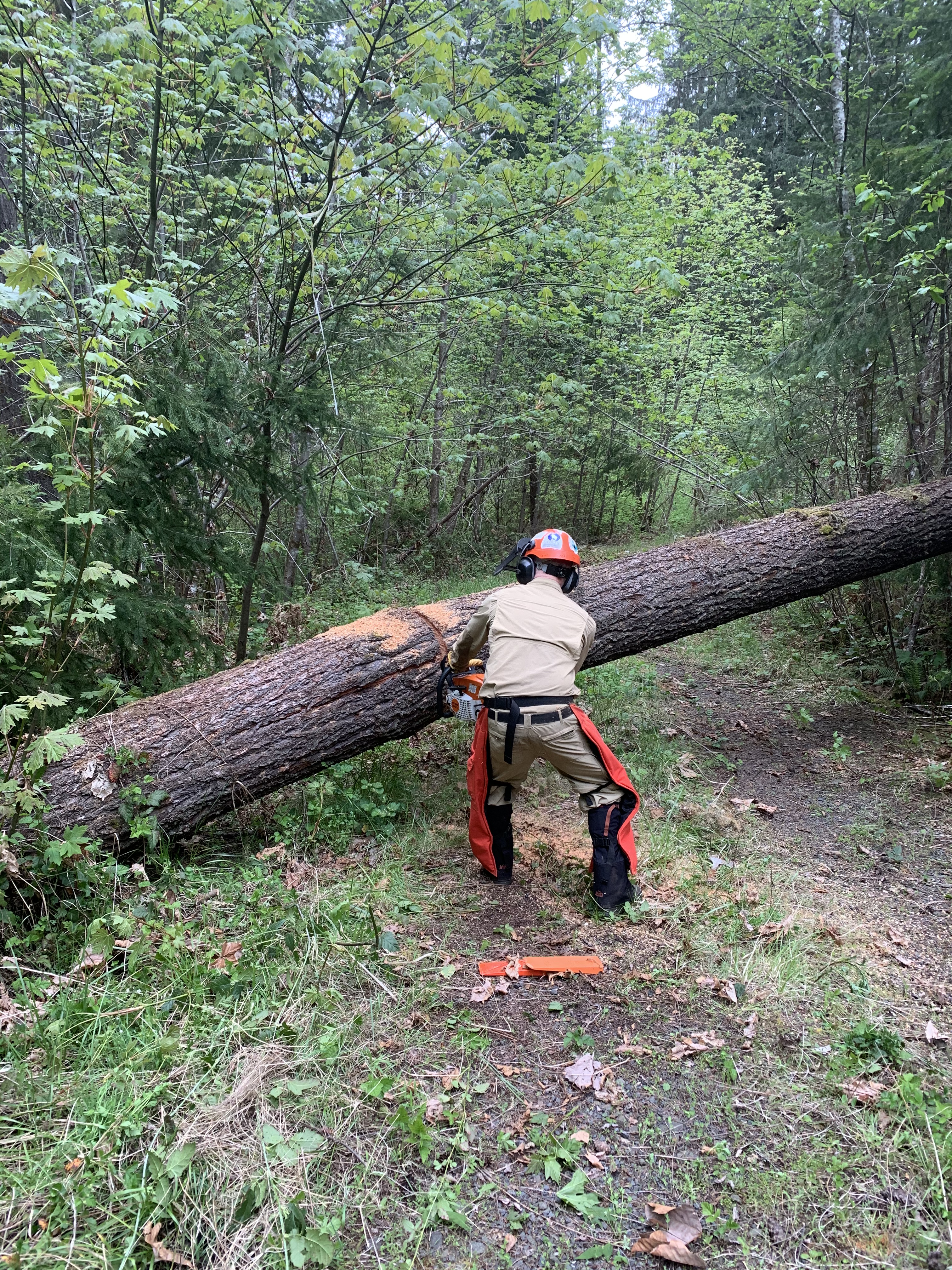
Limbing a fallen Red cedar

It was a busy morning, with several crossings of the incomplete bridge with no rails, fast flowing water 12-15 feet below. I didn’t want to slip, and I was a more afraid than I thought I should be. I certainly did not want to be the person leaning out over the stream putting the posts in.  

Incomplete bridge over Indian Creek. We still need to learn how it got put there.

A little after noon, later than I like, since I have been up since 5, we broke for lunch. I was on the opposite side of the stream from where others were eating, and while I had my lunch in my pack, it was too shady and cool on the side of the stream where I had been working.  I made yet another crossing of the bridge, again watching my footing carefully, and walked up the small rise on the other side. I didn’t see anybody eating until I was about 50 yards from the stream, when I saw three of the Crew near the trail. They were in shade eating their lunch, but a nearby brilliant green area between two logs, in full sunlight, caught my attention. I headed into the woods towards it.
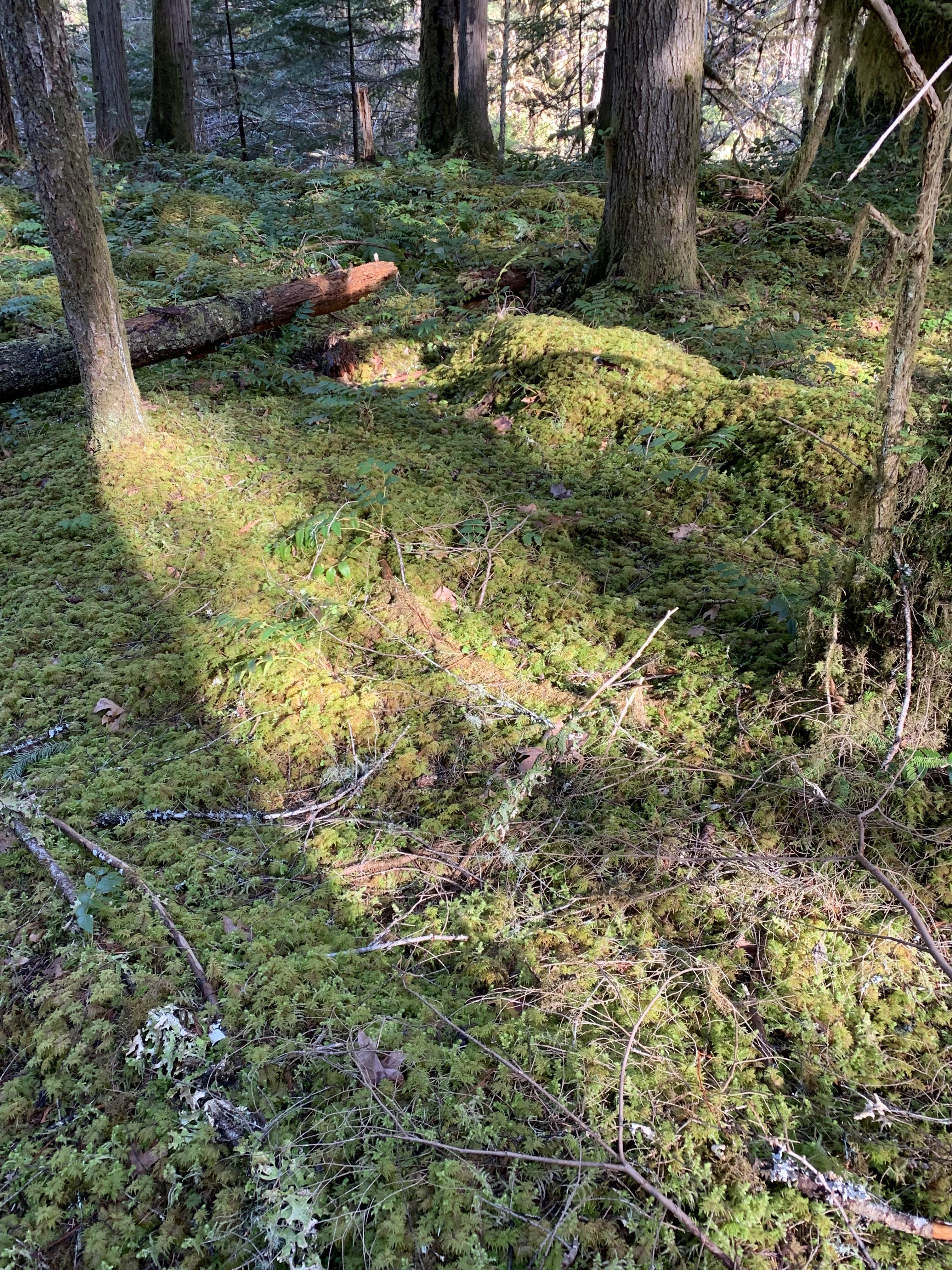
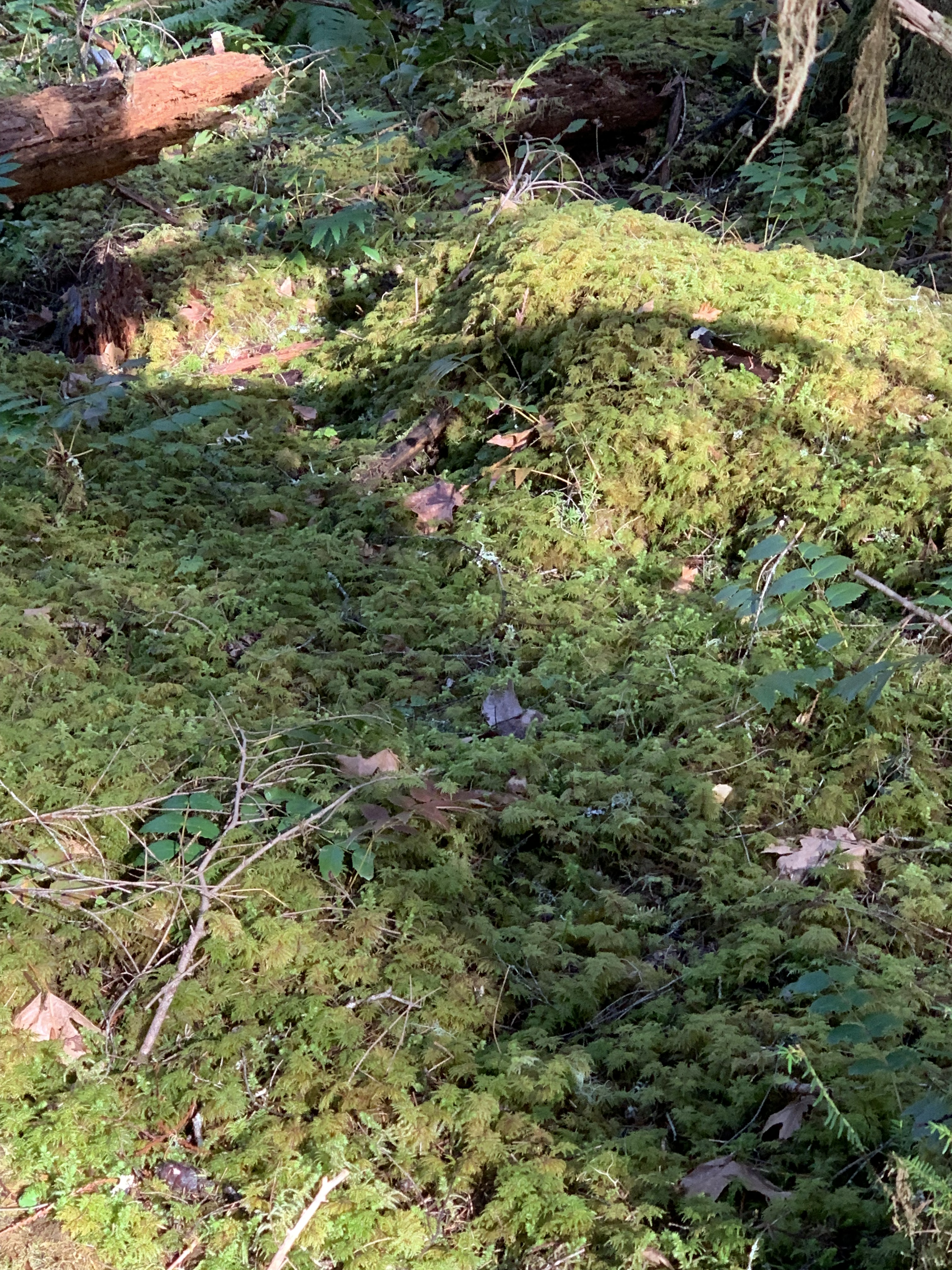
I really should have stayed away and left the area alone, but I told myself I would be careful. This was a 25-50 square foot area of thick moss, a few inches thick.  It was damp, but nothing was going pass through my rubberized work clothes. I put my gray foam pad on the moss against one of the logs and sat down. 

What relief. I sank into the moss, carefully extended my legs, being careful not to kick any of the moss loose, took off my hardhat and leaned back looking up at the sky.  The sun was warm, the stream could be clearly heard, the conversations a few yards away were inaudible, and I took a long drink before beginning my lunch. I have several parts of my lunch, beginning with a sandwich and a half, followed by raisins, some German chocolate a friend sent me, occasionally some Russian chocolate another sends mw for my birthday, some Lindt’s that I buy here, a protein bar, and half an apple I bought from Detering Orchards up in Linn County last October. It takes me a good 20 minutes, emphasis on good, to go through all of this, staring at the sky, the trees, the clouds, even at one plane that went through a small clear gap in the branches, heading to Portland or Seattle.

After putting my lunch bag away and taking another drink, I reversed the sitting down process, carefully lifting my feet and putting them under me.  When I stood up.  I put my hardhat on, carefully lifted the pack and put in on. The moss was compressed, but it would come right back. Nothing was obviously dug up. I took one step on it, and the next step I was off.  It was obvious I had been there, but it looked like it would do fine.

A week later. The other plants are Oregon grape, which is an early bloomer with yellow flowers.

I don’t know what got into me. I am usually much more careful about moss, which takes years to grow and seconds to destroy.  This was a special place.  I bowed my head and apologized to the plants for their putting up with my compression, and slowly walked back to the trail where the others had just finished their lunch.

The following week, we would come back, but I ate lunch by the trail, my back against a tree.  I sat on bare ground. The mossy area looked good, and I left it alone.

Scraping the cedar log

About 17 of the 20 posts we will need.

SAVOR

January 25, 2022

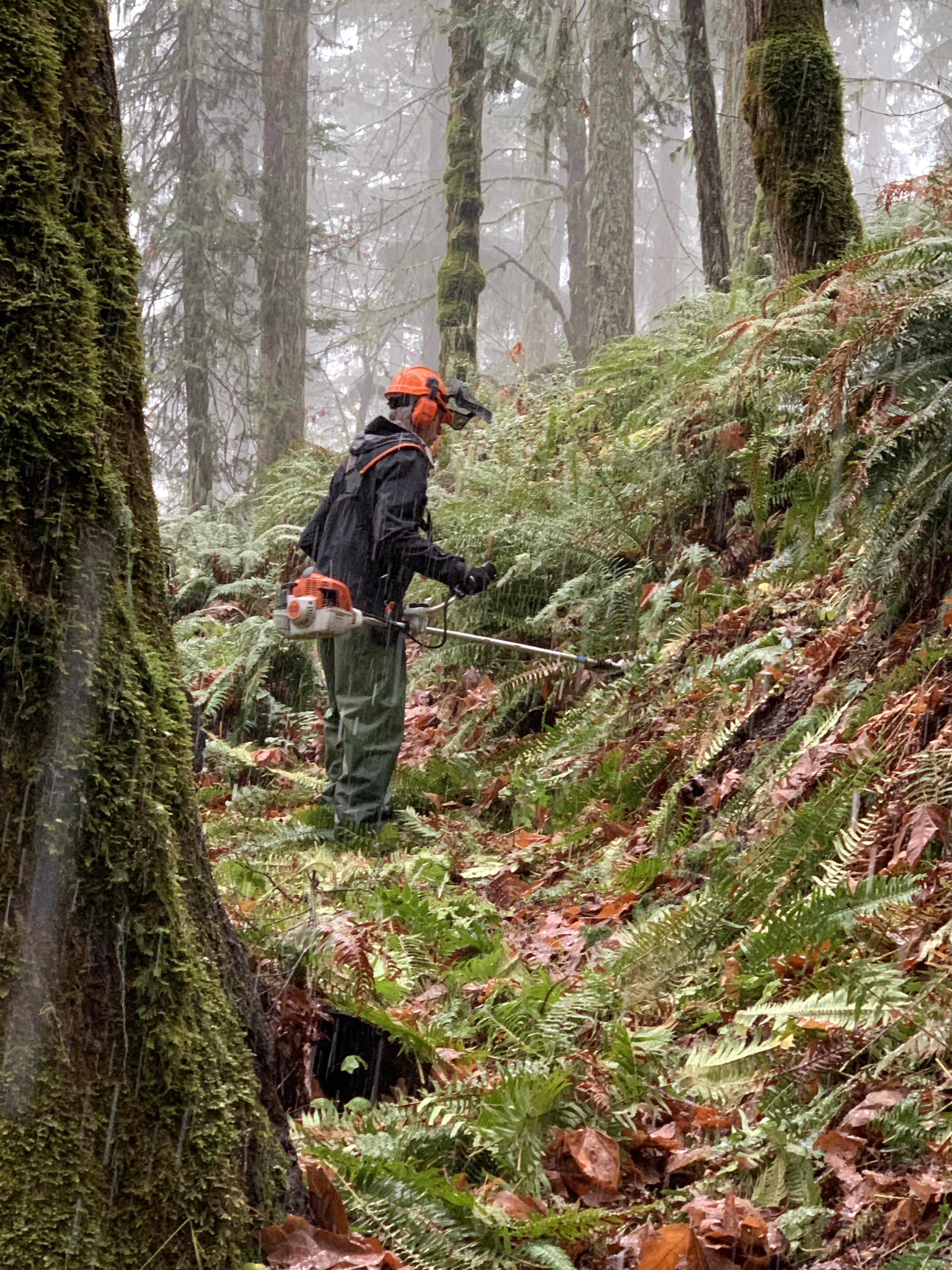
Working nearly a mile up Hardesty Trail, I was amazed that I had fallen in the mud only once, a  slow motion deconstruction of my vertical posture arrested by a nearby bank, and which nobody else fortunately saw. The Stihl Brusher was working fine, the trail was cleared of branches by others in front of me, and it was being raked behind me. There were three brushers at work here and a fourth 3 miles up nearby Eagle’s Rest Trail.  I had a double layer of ear plugs, and when I couldn’t hear myself or others talk, I figured I was well protected.

Hardesty gets a lot of traffic, especially from mountain bikes. Sword ferns and Salal grow over the trail and need to be trimmed. We were doing a purported 5-year trim, but I suspect in 2 years it will need to be redone.

The Crew working Hardesty, January 2022

The brusher quickly shut down. Stihl brushers don’t give any warning when they are low on gas. On the other hand, nobody who does much brushing ever complains when they have to stop. The harness helps, but brushing is hard on the upper back. I gassed up and took a break. What a beautiful woods we were in. The darkness of the stratiform rain had lessened, replaced by mist, and the trees stood like tall sentinels. There are huge trees on Hardesty, three century old ones, already big when the country was born, somehow surviving storms, fire, and saws, although a few didn’t survive last summer’s small 20 acre fire just up the trail. Others had blackened bark but would do fine. The first hike I took up here in 2014, my 19th in Oregon, I said that protecting just one of those big trees would be a good legacy. I had hoped we might make the area wilderness, but there is too much recreational mountain biking and it is too close to main roads, although both the Mt. Jefferson, Mt. Washington, and Menagerie wildernesses abut US 20.

The well-known Oregon trail author William Sullivan discusses Hardesty briefly at the end of his book on the Middle Cascades, barely mentioning it in the Mt. June section with the comment, regarding lack of views on Hardesty, “These hikers obviously don’t know about Mt. June.” I found that quotation in my once-got-it-soaking-wet edition (I have two later editions), the day I hiked Obsidian loop in a heavy November rain seven years ago with no pack cover. This is because while Hardesty trailhead is right off Highway 58, easy to access, climbs a full vertical kilometer to the summit, there are no views at the summit. In the few years I have climbed Hardesty, regrowth has taken away what was at best a limited view of South Sister. If you want high mountain or ocean views, yes, go elsewhere. If you want to get into shape in one day for summer hiking, on the other hand, this is your trail—11 miles round trip with a lot of elevation gain. Drop down Eula Ridge trail near the top for 4 miles, and take the flatter South Willamette, still with a thousand feet cumulative vertical to connect back to Hardesty, and it is a nice 14 mile loop. Trail runners race the Hardesty Hardcore loop, which one has do under 4 hours to be considered a finisher. I hiked it once in four and a half, figured I could probably find thirty minutes somewhere to take off, but then asked myself why I would want to do that.  I never did the race. 

One November, I led a Club hike to Hardesty, over on the Sawtooth Trail to Mt. June and back to Hardesty, an 18 miler with about 5600 feet of elevation gain–“the junk food hike.”  I got to the half way point at Mt. June—no views because of fog—was cramping, probably pre-bonk stage, and as hike leader, l was leading from the back, not letting anybody know that there was no other spot in the group I could lead from at that moment.  I simply could not go any faster. Fortunately, one guy gave away a pack of Cheet-Os at lunch, nutritionally awful, with the salt and the corn syrup, but oh so good for the bonks, and I somehow got my body back to the car. 

Hardesty was only my second time in the Willamette National Forest. I liked the wetness of the first part of the trail, huge trees, constant climbing and the feeling of accomplishment when I reached the concrete ruins at the top. There are some nice views on the way up; one just has to look out and down at Eagles Rest or Lookout Reservoir below.  Hardesty Lookout itself was removed in 1968; the trail has existed since 1910. I learned just recently the parking area was once an informal resting spot for truckers and full of trash. Nice the world changes for the good occasionally.

View of Lookout Point Reservoir from upper Hardesty trail, June 2014

Lunch time for the Crew. As I turned off the brusher, Louise, retired from 32 years in the Forest Service and a newcomer to the group, commented how pretty the trail was. It is. I don’t hear that said much by the Crew, in part while I think we know it, perhaps we forget it in the press of bucking out another log, digging a drain for a trail, or moving rocks. Hardesty is pretty. I hadn’t even reached the section of the huge trees. I like this place.  I picked a log to sit on, then as I usually do at lunch, lay down while I ate in order to be flat and to look up for a change. I don’t look up enough in the forest, although both bucking big logs and eating lunches on the trail are rapidly curing me of that oversight, the first for safety and the second for comfort. I savor my food, my reclining, and my view. The dictionary defines savor as to enjoy something completely, but to me, savor speaks to the second level: we are enjoying the fact that we are enjoying, acknowledging at that moment, not later, that we are happy, a higher level of happiness as well, that we sometimes miss. When we savor, we are grateful for this exceptional moment and good fortune that we are alive, know we are alive, glad we are, savoring life itself, recognizing and appreciating our current feelings right now, not taking them for granted.

Tiger Lilies in spring, near Hardesty summit, June 2020

TRAIL FINDING…LOSING…FINDING…

January 18, 2022

About the fourth time I got off trail on the way to Arrowhead Lake, the trail I was to be on—or given the snow—over, the Pacific Crest Trail, was according to my Gaia app about 200 feet to my right and at least 5 feet below me.  Actually, given the 700 feet elevation gain I had, maybe 6 feet below me.

This was my third time on snowshoes this year, the first two having been from my house into Alton Baker park for a couple of miles, right after we had 6 inches of snow, good to see after such a hot, dry year.

Seasonal pond in Alton Baker Park

I keep telling people summer is overrated, and I think finally a few more now believe me. I can always put on warmer clothes; there is a limit to how much I can take off.  Still, I hear talk about every day there is a little more light, and soon there will be the “blissful days of summer.”  Amazingly, that is still said, forgetting all the days I wear an N95 for smoke, check the nifc.gov daily for fire news, carry my portable air quality indicator, and put up with record heat. The global map for 2021 temperatures shows red blotches all over the world like a bad rash for the top 1,5 and 10 years of warmth. There is not one single blue blotch for cold. 

My second snowshoe was into town to my local Dutch Brothers, where I am still recognized. I bought a decaf white chocolate mocha for only a dollar, so I tipped the barista two, read the Eugene Weekly on the bench, and then continued in a 4.5 mile loop back by Autzen Stadium, and then directly through the park—on no path at all— by a couple of seasonal ponds I had never known were there, and back home. At least I got on snowshoes before the beginning of the year, but I hadn’t yet been up in the mountains.

The day I went up to Gold Lake Sno-Park, 70 miles southeast and a mile up from home, it was 25 and clear at the trailhead when I arrived. I headed south towards Bechtel Shelter, one of two in the park on the south side of Highway 58. Surprisingly, I missed the turn for the usual way I go to the shelter, but that was minor, since the snow covered road-trail led by the shelter as well and climbed more gradually. The snow was hard, and I stayed on top where snowshoe tracks from the day before were oval holes punched below to green branches. 

Bechtel Shelter, 3-sided.

I stopped briefly at Bechtel, noting that unlike past years where I could walk right in from ground level, I now had to go down three feet to go inside, but I wasn’t interested in stopping  there. I climbed back to the road and was happy to see ski tracks head south towards Midnight Lake, about three-quarters of a mile, and Arrowhead Lake, a mile and a half further. 

I had been to Arrowhead twice before, found it pretty, quiet, and a good hike on snowshoes. I was going to go again last March, but the vaccination drive occupied my time, and I never did make it back out there.  

About 100 yards past the Midnight Lake turnoff the ski tracks I was following just stopped. I was now on my own, looking for a slight depression in front of me that showed where the PCT was.  There are blue markers on snowshoe trails in the Sno-Park, but in the Diamond Peak wilderness, nothing is marked. I figured I could remember part of the trail, and the track I had mapped on Gaia two years ago would guide me if I couldn’t. In winter woods many open gaps look like trails, and it is easy to follow them until they suddenly stop. That’s why we mark them with blue diamonds and have Sno-Parks. Within a few minutes, I was off trail. 

First thing I did was admit it. Surprisingly as that may seem, it helps, because it avoids the “let’s go a little further and see,”approach, trying to make trails out of open space that isn’t a trail. I’ve done that with “moving islands” in the Boundary Waters so they could fit the map; I thought it was just fine that there was a road nearby on the Appalachian Trail in North Carolina, even when there shouldn’t have been, and other foolishness.  I stopped and looked at the app.  Gaia showed the trail to my right, so I moved right. I did this twice and still hadn’t closed the gap much, and then I remembered I have a tendency to go 45 degrees right when I want to go 90 degrees right.  Right means hard right, the computer term of which is “force quit.”  Once I force quit and did a right face-forward march I found the trail and was again fine for maybe a half mile, before I again realized again I wasn’t on it.  Two minutes later, I was on trail, repeating that a couple more times. I had hoped to get to Arrowhead Lake for an early lunch, and I began to think I might turn around, and retrace my steps, but I the trail became easier to see, then only three-tenths of a mile from Arrowhead, so I kept going.  At least in the winter, if it is not actively snowing, I can always easily backtrack. I finally was close enough to see a gap to my right, and 50 yards late reached the path going to the lake. 

Arrowhead is well named, with the point of the arrow headed towards the PCT, and the base to the northwest.  I had eaten lunch out on the lake once before; this time I thought about trying to go across the lake in bright sunshine.  It had been cold for a long time in the high country, so while I ventured out slowly, first umping up and down, then pushing my poles in hard, there was no cracking of ice and indeed plain quiet. Snow and trees muffle sound, and nobody was out there.  I knew why I had come back. I had lunch on a shoreline where I could lean up on the bank and look at my footprints coming across, the PCT a little further away, blue sky above me. I had had my rain jacket off for the last 2 hours, but I know at lunch I would cool off and put it on right away. Savor is the right word to describe the actual enjoyment of enjoying something. 

While eating, I thought about what I did last year on the return trip when I headed over to Eagle’s Overlook and then up and over Diamond Peak View back to the car.  But that was another 7 miles, and while I might be able to do it, I doubted I would enjoy the effort. I certainly would not savor it.

Big decision having been made for the day, I was surprised the “far off” shore took me only about 5 minutes on snowshoes. The other two times I had been here, it seemed too far to go. I could probably walk around the lake in a half hour. Maybe next time I will do just that.  In the meantime, I would return almost the way I came. It’s always interesting to see where I got off trail and ask myself how I did that.

“Are you going out the way you came in?” we once asked a pair of travelers in the Boundary Waters, who had told us earlier of the difficulty in getting to Kahshahapiwi Lake, a beautiful place but reachable only with a lot of work on long, muddy, wet, poorly marked portages. There were six entries, and I had been in on five of them, not doing the portage that was listed as, “Avoid at all costs.”

No,” he replied. “We’re going out the way YOU came in.”

SPEWING NONSENSE

January 12, 2022

I was “stuck” with the greeter role at the vaccination clinic, meaning I stood at the entrance, greeted people, told them they needed a second mask, unless they were wearing an N95 or a KN95, then sent them to the registration desk. Sometimes, I got to pick my job, otherwise, I go where assigned. But any volunteer job deserves to be done well.

I am best at looking at a VAR—Vaccine Administration Record—asking the patient to confirm date of birth with the record and their vaccination card, note the usual two prior vaccines dates (occasionally one, rarely none these days), check that with the VAR, make sure the VAR is legible, write in below the date of the booster or first/second shot, make sure the signature is present, with no comments about “duress,” which will require a new form to be filled out, the yes/no questions have been answered and the yes addressed, if I think they need addressing.  

I then say “Moderna-Moderna-Moderna” or “Pfizer-Pfizer-Pfizer” or whatever their three shots consisted of, and tell them they are ready to move to the vaccinator. It takes me less than a minute. I am a mis-matcher, meaning I tend to find what is out of place, what doesn’t fit, rather than what fits. I’ve probably dealt with upwards of three thousand people by now, and I occasionally rewrite the name, change a date, and very rarely make them a new card.  I am slow to grasp new concepts, but once I have them, I hang on to them and get good at doing them.

At the door, there isn’t nearly as much to do. The days of a crowd at the door with different appointment times, walk-ins, and other issues that had to be addressed are no more. But there are still other issues, like one guy’s saying, after I handed him a mask to put on, “the next thing they will require is to shrink wrap my body.”

I wanted to say, “No, only your head.”  As he walked in, I did reply that the omicron variant had an R almost as bad as measles, adding, “for those of us who have had measles and know what being real sick means.” I remember the dark room I was in back in 1956 when I was ill with it. 

In the early afternoon, a tall man accompanied his client, whatever that meant, who was getting his Moderna booster. The tall person, probably late 20s, looked at me and said, “Why are you spewing this nonsense?”

At first I thought he was kidding, but he wasn’t.  He repeated himself. I told him that a second mask was the rule, and he interrupted:

“So, are you in the medical field?”  Bad question.

“Why yes, I am a retired physician.”  Time for him to be taken aback.

“What specialty?”  The guy didn’t quit.

“Neurology.”  I then looked up at the next couple of people who were coming to the door.

“Why are you spewing such nonsense?” I let that one go. Ben Franklin said, “a fanatic is a person who won’t change his mind and won’t change the subject.” My father told me, “Don’t get into a pissing contest with a skunk.”

That encounter is why when my wife worked as greeter the next day, she had a radio for security. We are volunteers and work where we are told, but we shouldn’t have to put up with angry frustrated people who don’t like the pandemic, don’t like masks, shots, rules or regulations, without easy access to security, should we feel threatened. It is part of our job to try to help, but we are not there to get into arguments with those who don’t believe in Covid, masks, vaccines, or that the sun rises because the Earth is turning. I am there to help people get what they came for. My job additionally is to make the experience as good as possible by being friendly, helpful, efficient, and what I try to do every day, problem solve and make their vaccination happen if it is at all possible and legal. I am very pleased that I have discovered several who needed a full shot of Moderna rather than the half shot booster, because they were immunosuppressed and it hadn’t been noticed before they came to me.  If one asks me what booster they should have, I tell them it is their choice, not mine. The mRNA vaccines are really supposed to be a three shot regimen.  If, however, I say to one who is getting their third Moderna that I had three Moderna shots, they often ask me what the third was like. I tell them. The second knocked me flat 24 hours later, and after the third, I waited for the shoe to drop, and it never did. They appreciate hearing that.

Maybe three or four times, I get into a conversation with someone, should I have time. One man brought his bicycle wheel into the clinic, and we talked about cycling. A car from Colorado with USMC on the plates turned out to be a delightful couple who met in the service. There are usually one or two people I see a day whom I think I would enjoy knowing them outside the clinic. I’ve seen a state representative, the son of a prominent person in town, three members of the Crew, a wife of another, three neighbors, and a few members of the Club.  A county supervisor came by, profusely thanking us.

I told one of the vaccinators about my experience as the purported spewer of nonsense. He told me that in one place in the country, someone came in and started throwing punches, sending a person to the hospital. I told him I have worried about other things much worse, and everybody knows what I am talking about. This is America, after all. I try not to think about those other things.

The week after next, Oregon Health Authority takes over, and the public health group will be doing testing. I’m not sure if I will stay for that.  There is a significant risk with a highly infectious virus even with double masking, for those who come to test are far more likely to be infected. I said I would stay for “the duration,” and nearly a year and 74 clinics later, the duration appears to have arrived.

JEANNE

December 4, 2021

I showed up at the drive-in vaccine clinic at 1140, originally not planning to go that day, since I was leading a hike up Spencer Butte for the Club and would not be finished when the clinic started. I checked before I left, however, and discovered that my wife was one of only two people doing registration there, and they needed three.  I couldn’t cancel my hike, but when I got up to the top of the Butte, had a good view of the snowy Cascades, I asked the two who were last to arrive if they could deal with the rest of the hike by themselves. I knew they could, and I said I really needed to help out at the clinic, which had just started.

I hiked back down in an hour, had half my lunch in the car on the way over, and on arrival saw a long line of cars with people waiting for vaccination.  Fortunately, the lead person knew me and that I was coming, and immediately put me to work in lane 3. I knew what I had to do, which was to greet the people coming, confirm their birthdate, confirm that their last shot was more than 6 months prior, check the registration for legibility, confirm what shot they were getting, confirm the signature on the vaccine administration record (VAR), put a sticker containing the lot number and expiration on the form, and tell them what to give to the vaccinator and what to expect back. I then took the clipboard and pen, putting the pen in my back pocket and the clipboard on a nearby table, if I didn’t carry it around with me. Today I had someone expecting a Pfizer booster, and we were only giving Moderna. I discussed the issue, and the person decided to get Moderna, rather than go somewhere else for Pfizer.

I see a lot of interesting people, maybe a dozen or so companion dogs, birthdates that are in December, which mine is, when I say “good month to be born.”  The day before, I had two with my birthday, and the woman who was turning 65 asked me a lot of questions about Medicare. She thought it was cool that we had the same birthday. I also saw one who was born 5-7-57 to go with 6-8-68 and 9-4-94 which I have seen.  

I also do a lot of directing traffic to the three lanes, to keep everything moving and organized. I like directing traffic. I did it for years at the bicycle Tour of the Tucson Mountains. At the clinic, I needed to check to see not just how many vehicles are; note that if there were four in one vehicle, that will slow down a lane; being aware of walk-ins, who go to lane 1, so at times I need to briefly stop putting vehicles there. There isn’t a lot of room where we split into lanes, so I want to get people lined up efficiently.  In addition, I or someone else in the other two lanes needs to collect the clipboards periodically and take them back to checkin for reuse, along with the pens. We were busy, and after hiking more than 6 miles, I was tired. It was 30 minutes before I found time for another part of my lunch.

I approached one vehicle, where what appeared to be a young man was driving. The individual asked me for a new vaccine record card, which we have, and fill it out. 

“I have had a name change.”

That would have stopped me cold, except I was focused on getting the person a new vaccine card, so I did, so it would match his name on his VAR. I left to check on someone behind him in line, and then came back. The name I saw on the record was “Jeanne,”, and while I don’t remember the name the person arrived with, it had clearly been masculine. My assumptions of gender were wrong, and I had refrained from calling or referring to the person by any gender specific pronoun. When I wrote the above, however, I originally used “he,” because “he” looked like a “he.”  But “he” was transitioning to Jeanne. 

I have had some issues with the idea of stating pronouns. In my defense, I did not grow up in an era where people transitioned; men were men, and women were women. About 98% of the time, that is correct.

Today, I saw an example of the two per cent. I wonder how many other times I have missed it. Probably a lot.

Back when I grew up, we assumed men married women, too. Gay was the last word on the poem “Monday’s Child,” stated for the child born on the Sabbath Day (I was), “is glad and wise and good and gay.”  That word transitioned as well. I miss the original, for gay is not just happy but a special carefree, light kind of happy, with youth, flowers, spring, and a lovely world. The language—indeed, the world—changes.

Jeanne reminded me of my learning about Magnus Hirschfeld, a German LGBT pioneer, whose books and research were destroyed by the book burning in Berlin on 10 May 1933.  I stood at that spot on Bebelplatz in 2015, and looked down into the “empty library.” It was there I learned that Dr. Hirschfeld believed that human sexuality was a continuum. I never forgot that. If human sexuality were a mathematical function, it would be a density function, continuous, and not a mass function with two definable points and nothing else.  That was a huge revelation to me. Hirschfeld was easily 100 years ahead of his time, and the loss of his research was devastating to the world.

Jeanne had another lesson. Each day, at the vaccination clinic huddle before we get started, we are told to respect each person and not make any distinction that might be troublesome to that individual.  There should be no assumptions made regarding the person’s gender, color, or background.  Several of the staff members have their pronouns on their name tags.  I now know exactly what that means.

I am still going to be slow in changing, because of decades of thinking of gender as binary. Specifically, I do not want to remove “Sir” from my repertoire, because it is one of the most powerful words in the language and a big part of my life. Sir is a superb word when there is only one “you” for familiar and formal. Sir works well in the military to show junior or senior. Its intonations may show politeness and simultaneously  disagreement or dislike, to which every enlisted man in our military can attest, and if many haven’t served in the military, perhaps they should add it to their bucket lists. When I left the Navy, I have continued with shorter hair, which would remain with me the rest of my life, lining up my buttons on my shirt with my zipper on my pants, and the use of Sir to male strangers, and lawyers who were deposing me. The word flows from me, and I don’t want that to change.

When I am greeting people at the clinic, I frequently use sir. Additionally,  I have an acute awareness of when it is used with me. I noted that every Black football player on the UO football team, months ago when they got vaccinated, called me “Sir.”  That didn’t mean that whites didn’t call me “Sir” (three did today) but the disparity in percentages was large, and many Blacks learn to do it early when dealing with people of authority. It’s safe.

Sir will disappear if, as one of the leads said, we simply call the others “people” or “humans”. “Stand next to the human wearing green over there.”  I’m not ready for that, and I don’t ever want to be ready for that.  “Sir” is a perfect way to address a person who looks like a man, is elderly, and I want to talk to him. I am NOT on a first name basis with him. I can’t use “Du” “tu” “tú” or “Tы”. I need to use Sir.

I learned a huge lesson from Jeanne. I wish her well knowing that life is not easy for those whom Dr. Hirschfeld classified as being neither male nor female as society defined the two, but in 1930, and in most places 2030, too, that definition will remain. I hope we can change.

I need to address ageism. Perhaps I will do that here soon.