Archive for the ‘UNPUBLISHED OUTDOOR WRITING’ Category

NO MORE

May 26, 2011

We don’t learn enough from our mistakes.

Back in 1949, eight months to the day after I was born, 14 smokejumpers died in the Mann Gulch fire in Montana, when the fire suddenly exploded and beat them up a hill.  Fire always wins races uphill. It was a small fire when the jumpers dropped, but it got out of control.

Act of God? I don’t buy it. Study accidents, as I have, and you soon learn that it is seldom one failure but a concatenation of them, as happened here. We fix flawed systems by redesign, not by telling people to be careful.

The famous 1910 fire that killed 86 people brought a change fire management systems. But not enough. Or the lessons learnt were soon forgotten. Proof? About 700 wildland firefighters have died since. Consider this:

* 1994, Colorado: Storm King Fire, Prineville. Ring any bells? Same thing as in 1948. Fourteen dead, caught on a hillside, when a predicted dry cold front caused the wind to shift. A few outran the fire, 14 Prineville hotshots did not. For what? To keep land from being “scorched”, “destroyed” or other jargon which denies that fire changes, not destroys. It is necessary for nature to clear out old growth to allow new. Many trees need fire, either to open seeds or to allow competing species to die.

Both fires were extensively investigated and books were written, one the father of the other. One hoped the mistakes wouldn’t be repeated.  But they were:

* July 2001, Washington State: The smoldering Thirty Mile Fire on a lazy summer day killed four young people, who even a couple of hours before, had no inkling of death. This fire was unimportant, burning where nothing mattered, with plenty of chances to be extinguished. But a pump failed, there were communication breakdowns, the weather changed, safety shelters were deployed wrong….

We talk about firefighting costs in the millions. As a statistician, I count stuff. I learned years ago what is important and countable must be counted. What is important and not countable must be honored. And we need to know the difference.

Deaths in fires can be counted. Not the potential and pain of the lives lost. But we end up counting the money spent and give it the most attention.

“Acts of God” are due to insufficient knowledge or poorly designed systems. We no longer have “Acts of God” deaths from smallpox, measles, polio, rheumatic heart disease, puerperal fever, or infected hangnails. We no longer have commercial aircraft crashes every month.

Deaths from fire are preventable. The firefighters know the rules. We have excellent weather forecasting, every firefighter knows that property destruction is not worth one human life.

The National Interagency Firefighting Center was founded to coordinate firefighting efforts among states, so high priority fires got the most resources. Many gave up turf and power for the greater good. This is almost unheard of in my experience, and those who created the NIFC were remarkable people.

But their job isn’t complete so long as there are purple ribbons.

(Read, edited and improved by Anindita Sanyal of the Hindustan Times, New Delhi, India)

IF YOU WANT TO LEARN, TALK TO THOSE WHO SAY LITTLE

November 26, 2010

In November, I went to the Bosque del Apache National Wildlife Refuge for the Festival of the Cranes.  I got to see fellow volunteer crane guides and took a course in Sandhill Crane behavior, with on site examples.  I also visited the VLA, the Very Large Array of 27 large parabolic radio telescope dishes on movable tracks.

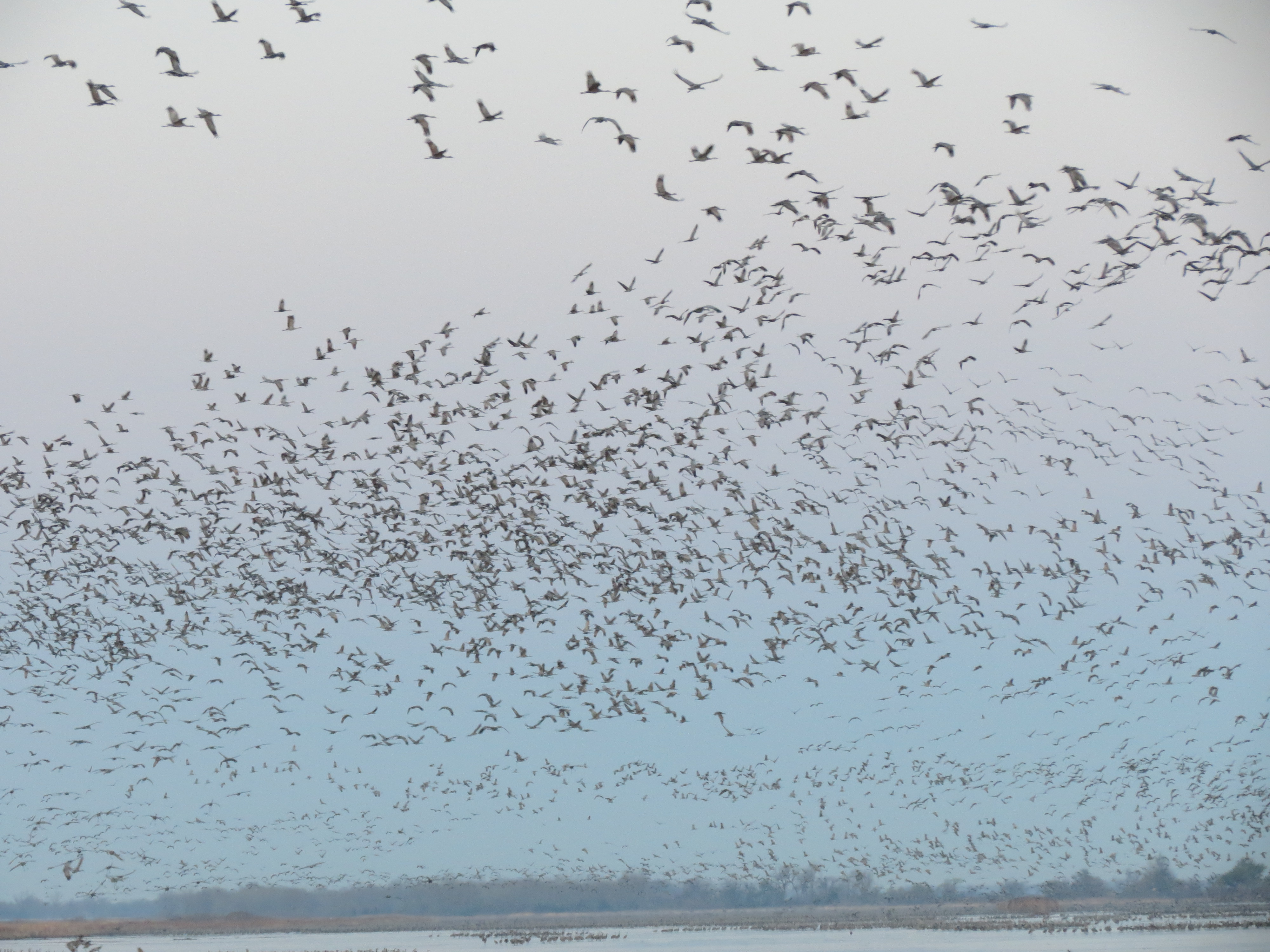
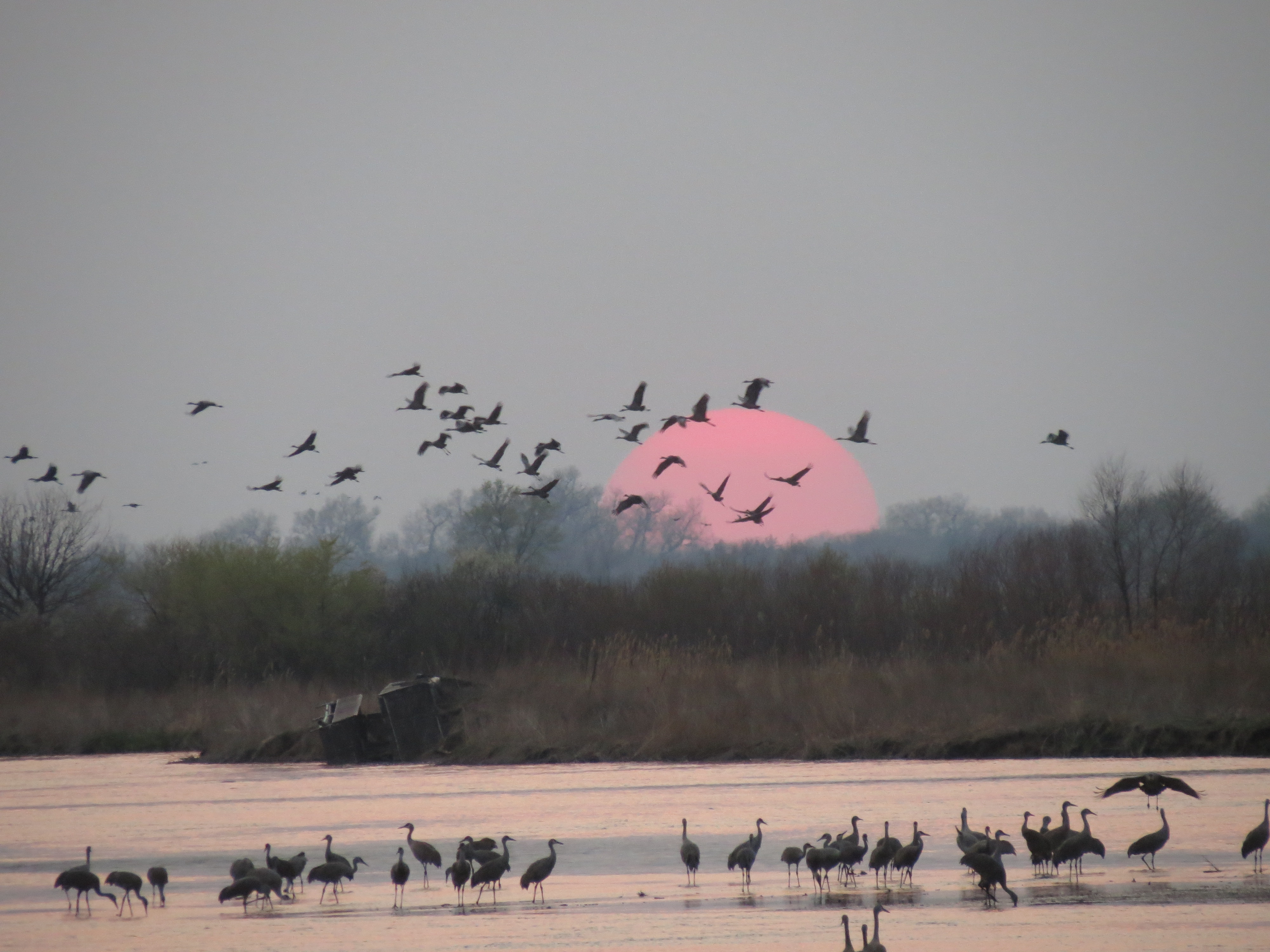
Lesser Sandhill Cranes are remarkable birds, some migrating as far as Siberia.  I now can identify juveniles, males and females by voice.  I can identify their unison calls, see the aggressive behavior they may display afterwards, and describe their dancing.  I was a decent guide last spring; I will be a far better one next year.

I stayed at a house in Socorro while the owners were temporarily living at the Refuge, volunteering.  Erv and Sandra are a remarkable couple; both well into their 60s, they are “professional volunteers,” known in the Fish and Wildlife Service as a couple who will go to a place for a few months, make a big impact, then move to another area.  In 2008, when I first met them, they “followed” the Sandhill Cranes north from their wintering spot in New Mexico, to the magnificent staging of 600,000 on the Platte, to Homer, Alaska, finally ending in Fairbanks.  While I was in New Mexico, they received an offer to go to Coldfoot, Alaska next summer.  They are either going there or to the Columbia River.  They are in demand.  Sandra can do it because she has two artificial joints.  Bravo for science, bravo for Medicare, bravo for Social Security.

My first evening, I went with both to watch the evening fly in of the cranes to a wetland.  Unfortunately, there weren’t many when I was there.  The cranes migrate south later every year, because the Arctic has warmed so much.  Indeed, the dates of the Festival will likely have to change.  One can argue about climate change, but cranes don’t argue; they sense warmth, not politics; 65% of bird species in the Christmas bird count, which I help out in, have moved significantly further north.  Erv and Sandra introduced me to several of their friends in a nearby RV park, and I was invited for dinner.  I was going to drive back to Socorro, grab a sandwich and sleep.  Fortunately, I didn’t.

That evening, I spent time with 6 other couples, all of whom older than I.  The food was good, the conversation better.  They were fascinated with my eclipse chasing and experiences.  Politics stayed out of the discussion, and mostly medical issues, too, a rarity among the elderly.   These people had worked for decades and were enjoying their retirement.  I wonder if they would be if it were not for the science so many disparage or the liberal programs of Social Security or Medicare.  I just wondered, but I kept my mouth shut.

I did open it later, however, to speak to the man who owned the RV and had been quiet most of the evening.  Quiet people often have a lot to say, if one can draw them out.  This man was no exception.  He was a physicist who worked at JPL and was surprised that I knew of it.  Are we so “educationally challenged” these days that we don’t know of the JPL, the place that allowed Americans get to the moon and do all sorts of other wonderful things?

The man was a pioneer in fiber optics.  He told me about silica (SiO2), the stretching and strength properties of the pure substance, which is the best spring we know of.  He told me that he thought it was better than satellite transmission, since it was faster and had fewer delays, so long as it was protected.  Satellites, as we all know, are far from safe, given solar radiation and space junk.  Bouncing signals off satellites leads to longer delays.  They are also more difficult to repair.  Fiber optics have revolutionized society, including medicine, although I learned fiber optics were most helpful was in transatlantic cables.

This man disparaged himself by saying that he was out of date.  But his explanation of fiber optics was by far the best I had ever heard.  Perhaps that is because he mentioned one of his teachers in quantum mechanics:  Richard Feynman, arguably the most brilliant physicist in the 20th century, and who single handedly figured out what happened to Challenger using simple science that even most Americans could understand.

I’ve come full circle.  In July, I met a young physicist from Germany, a woman who is working on an X-Ray telescope that will allow us to learn a great deal about X-Ray radiation sources in the universe.  She represents where we are going–brilliant, part of a large team, well educated, well traveled and articulate.

In November, I met an 80 year-old retired physicist who worked on fiber optic cables and studied under Feynman.  He represents the past and helped me understand how we got to where we are today.   Twice now, I’ve gone to see something and discovered far more.  In July, I went to see an eclipse; in November the Sandhill Cranes.  But my memories of both will be of two different people I met on each trip, young and old, German and American, woman and man, same field, different eras.  Both had a great deal to teach me.  All I had to do was draw them out.  For some reason I really don’t know, I did and was better for it.

…AND THAT CHANGED MY LIFE

September 1, 2010

On an early March afternoon this past year, I was on my hands and knees building a large sundial at Rowe Sanctuary in central Nebraska, where people stand on the date and their shadow tells the time.  From the second week in March through the second week in April, Rowe is busy as visitors arrive from all states and a few dozen countries to witness the Lesser Sandhill Crane migration, one of the three greatest natural sights I’ve seen  and one of Jane Goodall’s top ten.  I was working pre-season and decided a nature center like Rowe needed a sundial.
I was using markers, T-squares, a calculator and duct tape when a good looking young man stopped by.  He was friendly,  and I knew him as the Great Plains photographer Michael Forsberg.  Mike was interested in what I was doing with trigonometry and ellipses and then asked if I could find him information for the full Moon azimuth as it rose. He wanted to know exactly where in the eastern sky he would see it rise.

Fulfilling a request from Mike Forsberg suddenly became my top priority, so that evening I sent him the information.  He later e-mailed me pictures he had taken out in the viewing blinds, including an incredible shot of 4 different species of geese flying together.  Imagine, the premier wildlife photographer in the American midwest e-mailing me pictures he took!  Later that week, when I saw Mike again, I had him sign one of his books for me.  I just happened to be making a sundial when he walked by.  He just happened to stop.  And that changed my life. I just didn’t know it at the time.

When I left Nebraska in early March, I felt I had unfinished business.  I had not been there when the migration was in full swing, nor had I led tours to the viewing blinds, which had been a goal–a dream–of mine.  Four weeks later, I flew back to Nebraska, to volunteer at the height of the crane season, when 600,000 birds are on a short stretch of the Platte River, flying in at night to the safety of the braided channels and flying out to the fields in the morning to eat waste corn.  That week, I worked 17 hour days, sleeping on the floor in the visitor center, because local housing was full, listening to the cranes call on the nearby Platte.  The first night I shared a floor with– Mike Forsberg– who now knew me.  We didn’t talk much but I soon learned Mike is modest as he is good.  He deeply respects Rowe volunteers, because we help make some of his photography possible.  His nature photography is the best I’ve ever seen.

I finished my training and became a lead guide, meaning I could take visitors to the viewing blinds.  I got to talk about Lesser Sandhill Cranes; I watched people smile and heard them cry when they saw the cranes land, “dance,” and call before them.  Sandhills are large and loud, their voice primitive and deeply primal, echoing across 3 million years of time.  My enthusiasm outweighed my shyness, and I thoroughly enjoyed guiding.  We volunteers were a cohesive group, all of us working together to do whatever needed to be done, even if it wasn’t our “job.”  That week, I felt alive in a way I seldom have experienced.  So often, I told visitors, “I work 17 hour days, make coffee at 5 a.m., clean toilets, sweep the walk, give “Crane 101 talks,” do odd jobs, get dinner, sleep on the floor and see the cranes morning and night.  Am I lucky or what?”  When I called home, my wife commented my voice sounded different.

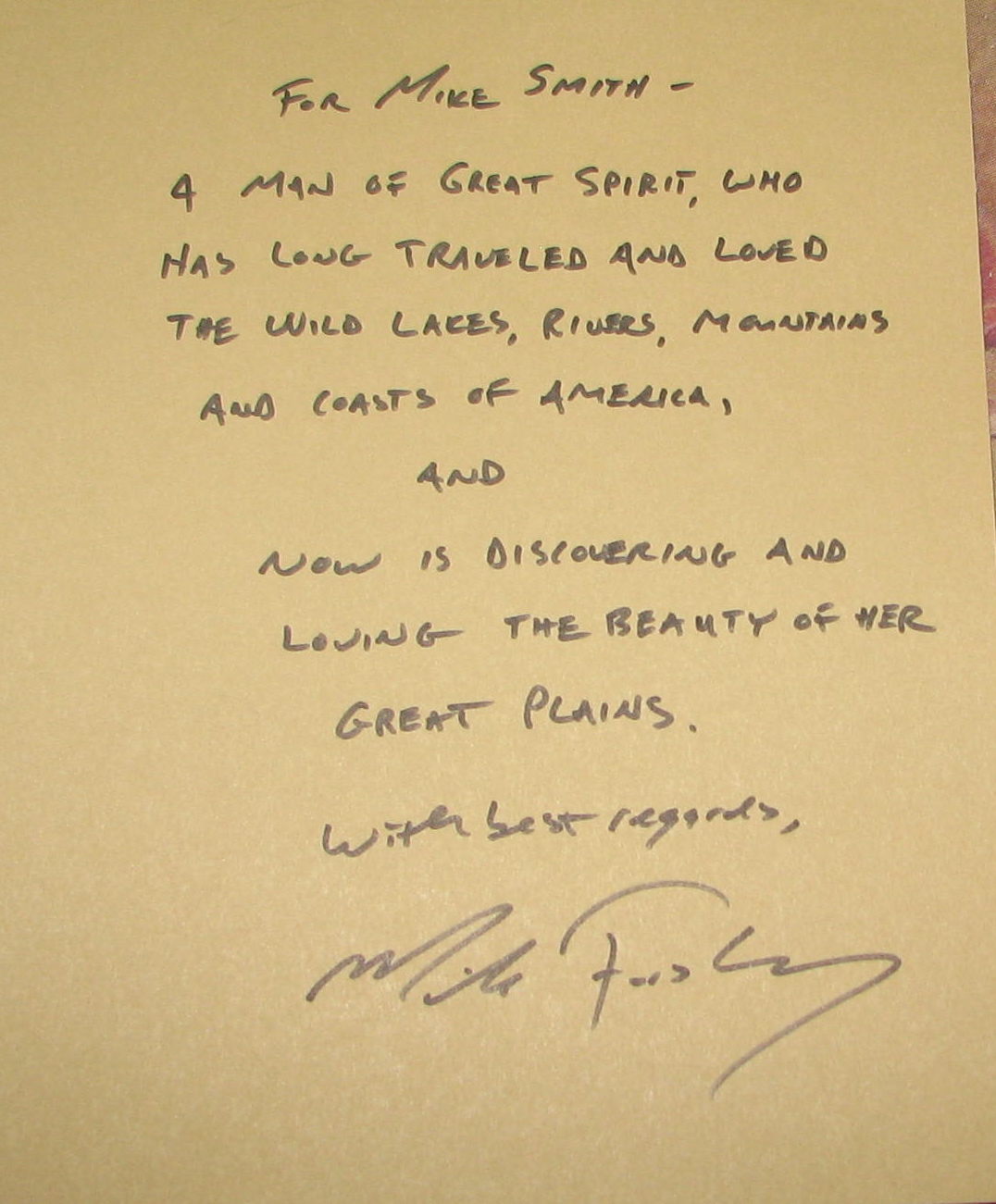
Mike stayed in the visitor center a second night:  two Mikes, two nights, too cool, two of his books I bought.  Mike signed the second one, too, adding a stunning phrase, calling me “a man of great spirit,” for he had quickly recognized something in me that I had not fully appreciated:  I have a deep spiritual connection to nature, the outdoors and wilderness. Mike is a man of faith and told me he felt closest to God when he was in the photography blinds, where people are taken in late afternoon and cannot leave for any reason until mid-morning the following day.  He said the experience was beyond comparison.  I’m going to do it next spring.  It has become one of my dreams, and while I, a scientist and a statistician, consider myself a practical person, not far below the surface lies a deeply spiritual, emotional dreamer.  Somehow, Mike knew that and how to help me understand myself better.

Last July, after the eclipse in El Calafate, Argentina, I sent Mike a picture.  I was a bit embarrassed to be sending a handheld shot to a famous photographer.  Mike, however, immediately replied “very, very cool,” saying I must be the only guy in the world who was going to Patagonia in July and to northern Alaska in August.  I wrote him after I returned from the Brooks Range, 118 degrees north of where I was in South America, telling him I would be ordering one of his pictures as a gift.  I am becoming friends with a special man, because we share a spiritual bond with the outdoors, especially Sandhill Cranes.  If he hadn’t stopped when I was making the sundial, this never would have happened, and my perception of myself and indeed my life wouldn’t have changed.

*                                *                                 *

July 9 is a holiday in Argentina, independence day.  I was in Buenos Aires, appropriately staying on Avenida 9 Julio, the largest street in the world.  That day reminded me of Christmas, for it was a winter holiday at a similar latitude south of the equator as I live north.

I went to a restaurant as part of a tour, going up a narrow set of stairs to a table with other people on the tour.  One of the guides asked me to sit in the middle of the table next to a young German woman.  And that changed my life and hers, especially hers. She and I will never be quite the same again.

The woman, Maria, was a young German scientist on her first trip out of Europe.  She, like me, was in Argentina for the solar eclipse.  Both of us had expected to take a plane to fly over the clouds to see the eclipse, but the flight had been cancelled.  My trip down to Buenos Aires involved barely making a connection; had I missed it, I might have gone home, since the probability of seeing an eclipse in Patagonia in winter is poor.  What kept me going was the idea if I didn’t go, and people saw the eclipse from the ground, I would never forgive myself. I didn’t know at the time the details of Maria’s trip, but it seemed clear we would be “clouded out.”  I later learned she had been at a conference in California, had a car accident on a freeway, and brought no winter clothes with her, since she was also planning to see the eclipse from the air.  To say we were both depressed and having an awful trip was an understatement.

Maria was completely fluent in English.  I asked her what she did, learning of her work in preparing an X-Ray satellite for launch to the LaGrangian point furthest from the Sun.  Fortunately, I knew something about LaGrangian points, where the Earth and Sun’s gravitational pulls are equal, leading to stable orbits for bodies located there.  Because I had studied physics, I was able to ask intelligent questions, soon learning about the LaGrangian point 1.5 million km beyond the Earth where the satellite was going.  Because I knew about conics, the concept of parabolic and hyperbolic mirrors was understandable, and the major and minor axis of the elliptical orbit clear to me.  I listened to Maria for a good 30 minutes.  When she asked me what I did, there wasn’t much to say except I chased eclipses, taught math as a substitute, once practiced neurology, liked cats and was a vegetarian.  She taught math, liked cats and was also a vegetarian.  Naturally, she was most interested about my eclipse experiences.

On the afternoon tour of the city, we spent some time together, Maria convinced she wouldn’t see the eclipse.  This being my 20th eclipse trip, I told her many times:  “Maria, it isn’t over until it is over and we didn’t see it.”  Indeed, a year earlier, in China, a small window opened up through thick clouds right at totality.  We went absolutely nuts.  It was the only eclipse I ever saw while I held an umbrella.

I didn’t see Maria again until the next afternoon in Patagonia, when she was an invited speaker at an eclipse conference.  I asked a question, later going up and telling her she gave a good talk.  She looked like she needed to hear that.  That night, at the hotel, I invited myself to Maria’s table of 4, since I was otherwise going to eat alone.  I was the de facto trip weatherman; I was following several South American weather models, knew the barometer was rising, the streaming moisture into the “cone” of the continent was cutting off, and high pressure was building over the eastern South Pacific.  Maria wanted to know my forecast; I was cautiously more optimistic, telling her to ask me about the barometric pressure the next morning.

That night, the barometer rocketed upward, the sky cleared, and we awoke to a beautiful sight:  the southern hemisphere stars were visible.  Maria had never seen the southern sky before.  I didn’t sit on the bus with her but with Anita, a senior colleague.  When Anita pointed out the Southern Cross on the bus ride to Perito Moreno glacier, I did something quite uncharacteristic for me:  I went to the front of the bus and asked how many wanted to see the Magellanic Clouds under a dark sky.  A lot of sleepy faces raised hands.  Nobody objected.  We stopped for 5 minutes so everybody, including Maria, could view our companion galaxies.

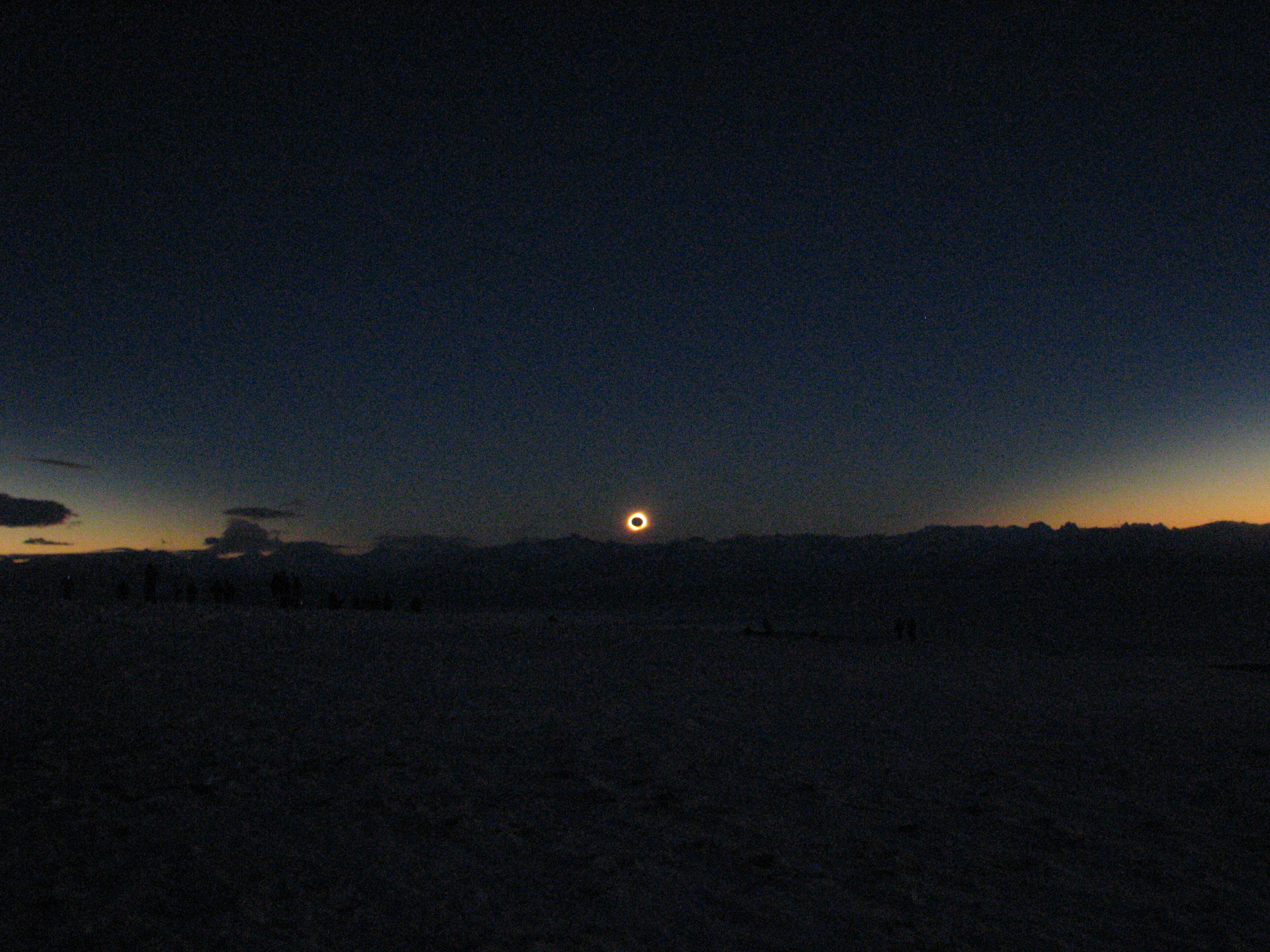
That afternoon, I worried about clouds interfering with the eclipse, but Anita fortunately kept Maria far from me.  When totality was imminent, Maria and Anita joined me, and Maria cried as the Moon completely covered the Sun.  I shouted, as did others, and I stared in awe of the shadow cone of the Moon, which I had never seen so clearly.  But my greatest memory is hearing Maria cry.  It was one of the most moving experiences of my life, and I’ve seen totality 12 times.

The next morning, I said goodby to Maria, and I haven’t seen her since.

But unlike every other eclipse trip I’ve been on, we’ve corresponded.  First it was by Facebook then e-mail and frequent Skype chats.  That has never happened before.  Maria told me that she almost had a panic attack in the restaurant, and my listening to her calmed her down.  Just my listening.  She got so excited from the eclipse that she has cast off shackles that led her from living a full life.  My wife and I invited both Maria and Anita to the May 2012 annular eclipse in northern Arizona, so they can see the Grand Canyon and the eclipse.  Maria will cry at both. I know she will.   Recently, she went skydiving for the first time.  She is learning C++ programming so she can become indispensable on the Australia eclipse in 2012 and get a free trip there.  Maria has been the best correspondent I’ve encountered in my life and we’ve become good friends.  Because of her, I’m learning German, and I plan to visit her next year.  Maybe every year.  And that has changed my life.

Had we not had such bad starts to our trips…Had we not been seated next to each other in Buenos Aires…Had I not known something about LaGrangian points and infrared radiation…Had I not been an amateur meteorologist and in demand…Had I not stopped the bus so people could see the Magellanic Clouds…Had we not seen the eclipse, none of this would have happened. Maria would still be wanting to see her first eclipse, and I would  not be learning the four German cases.  In August, when I returned from northern Alaska, I had a four hour layover from 10 p.m. to 2 a.m. in Anchorage.  Had I not met Maria, I would have been bored, tired and cranky.  Instead, I chatted with her on Skype, passing the time quickly.

The older I get, the more unpredictable my life has become.  If I hadn’t been making a sundial, if Mike Forsberg hadn’t stopped by, if I hadn’t been seated where I was, and if I hadn’t known about LaGrangian points....

A SILVER LINING (IT AIN’T OVER UNTIL IT IS OVER)

August 2, 2010

My 20th eclipse expedition was to the Argentinian Patagonia in austral winter.  We were at the end of the eclipse track, at sunset, when scattered clouds will more easily block the eclipse view.  Worse, the eclipsed Sun would be over the frequently cloudy Andes, increasing the likelihood of blocking clouds.

But we had no worries.  We would be flying through the eclipse track over the South Pacific, having clear skies and an extra minute of totality. But two days before I left, the plane we were to use was taken out of service for major unscheduled maintenance.  There were no other planes available.  We would be ground based.  I thought that we had a small likelihood of seeing it–well under 5%.  On the way down, I almost missed my connection because of thunderstorms and decided if I missed the plane, I would go home.  Two things kept me going:  (1) I don’t like to give up and (2) If I didn’t go and they saw the eclipse, I would never forgive myself.  I made the plane to Buenos Aires with 10 minutes to spare and was in Argentina 10 hours later.

At lunch on the holiday, two days before the eclipse,  I sat next to Maria, a young German astrophysicist.  She discussed her research so clearly that for once I said little, just listened, and learned a great deal.  She was involved in sending a satellite to the L2 LaGrangian point, one of the places where the Earth and Sun’s gravity balance each other.  I thought there were only 2 such points; there are 5.  I learned a lot of other things, too, since I just stayed quiet.  Turned out that my allowing Maria to talk was exactly what she needed.

When we started discussing eclipses, I learned that Maria got under the wrong cloud and missed the 1999 Munich eclipse that went over her home.  To put it mildly, Maria was primed to see this one from the air.  But now there was no plane and she had limited winter gear, because she hadn’t expected to see it from the ground.   Like all of us, she was was emotionally devastated, and 2 days prior to the eclipse, the predictions were not good.

I told her my many close calls and said, “Maria, it isn’t over until the eclipse is over and we didn’t see it.” That afternoon, I talked with her on the tour about eclipses, trips, physics and travel.  She was smart, curious and articulate.

Prior to leaving Buenos Aires, I was online alternately looking at South American weather models and flight delays, since the air traffic controllers had a slowdown.  But, the controllers behaved, we got on the plane and flew to El Calafate the day before the eclipse, for InterSoles, an eclipse conference where Maria and Anita, astrophysical colleagues, were speakers.

During the conference, several noted my constant looking at my watch, which has a barometer.  It was rising, which it had been predicted to do, even though the sky was completely overcast by evening.  Every free moment, I was on the computer, willing the weather models to improve.

The barometer continued to rise.  It remained overcast.  After dinner, I was in my room,  now learning the IR model for South America showed the moisture fetch that had slammed Chile had stopped and shifted north. I was cautiously optimistic.  I don’t sleep well during the night before an eclipse and was up at 4, looking out at a sea of stars.  The barometer had risen a whopping 13 mb overnight.  My optimism increased.

After breakfast, we went outside where Maria saw the Southern Cross for the first time.  The ISS flew over as well.  This was a good start to the day.  On the ride to Perito Moreno glacier,  I got the idea of stopping, since we were well out of town, and allowing the riders to view the Magellanic Clouds under a dark sky, since we couldn’t see them at the hotel.  It is highly out of character for me to stand in front of a bus of many strangers, and ask if they minded if we stopped.  Nobody objected, and everybody got a great look.  I was relieved.  Now Maria had seen the Magellanic Clouds for the first time.

We spent 2 hours at the glacier, listening to icebergs calve, watching sunrise on the mountains.  On the return, I was now in full worry mode.  Still clear skies,  I worried about mountain convection and orographic lifting that comes in the afternoon.  The eclipsed Sun would be a degree above the horizon, so any significant mountain cloudiness would be a problem.

On the way up the single track to a high plateau, over El Calafate and Lago Argentino.  I saw a cloud.  My worry increased.  At the site, I saw a large lenticular cloud sitting on a mountain to the southwest, spewing clouds to the north, but for at least an hour, they dissipated.

Then I noticed more lenticular clouds further north, and the clouds no longer dissipated.  The eclipse was 2 hours away, and I didn’t like the weather.  I willed the Moon to move faster.  The eclipse began, and as the Moon moved during the 65 minutes it would take to cover the Sun, I realized that sunset would be much further north than I had been told.  There were no clouds in that area, and 30 minutes before totality, I knew we were safe.

Maria joined me, used my binoculars, and did what many do during an eclipse–cried.  It WAS beautiful.  She had gotten the perfect end to her day–a dream came true, a total solar eclipse visible in a clear sky.  Had we been on the plane, the view wouldn’t have been nearly as good.

This was one of the most difficult eclipses I’ve gone to.  It was one of the most beautiful ones.  And the reaction from Maria was the strongest emotion I’ve ever witnessed.  All eclipses are memorable; this one is at the top.

It isn’t over until it is over. And sometimes, good things come out of what seems to be bad luck.

HELPING THE NEXT GENERATION

April 29, 2010

I’m a lucky guy–I’ve canoed the Quetico/Superior since 1981, and while I’ve camped from Alaska to Algonquin, northern Minnesota is my favorite destination.  In 1992, I spent 5 months as a volunteer wilderness ranger in Ely, the most content I have been in my life.  But one of my more memorable trips was a recent solo up and back to Pipestone Bay, lasting barely 5 hours.  It was Earth Day and the first time I ever canoed in April.

I went to Ely for the annual Vermilion Community College Foundation scholarship banquet.  For 5 years, my wife and I have sponsored a scholarship for a student selected by the College who is studying environmental or wilderness course work leading to a career in those fields.  I try to attend the banquet to present the scholarship.  It’s our legacy to a town and wilderness we deeply love.

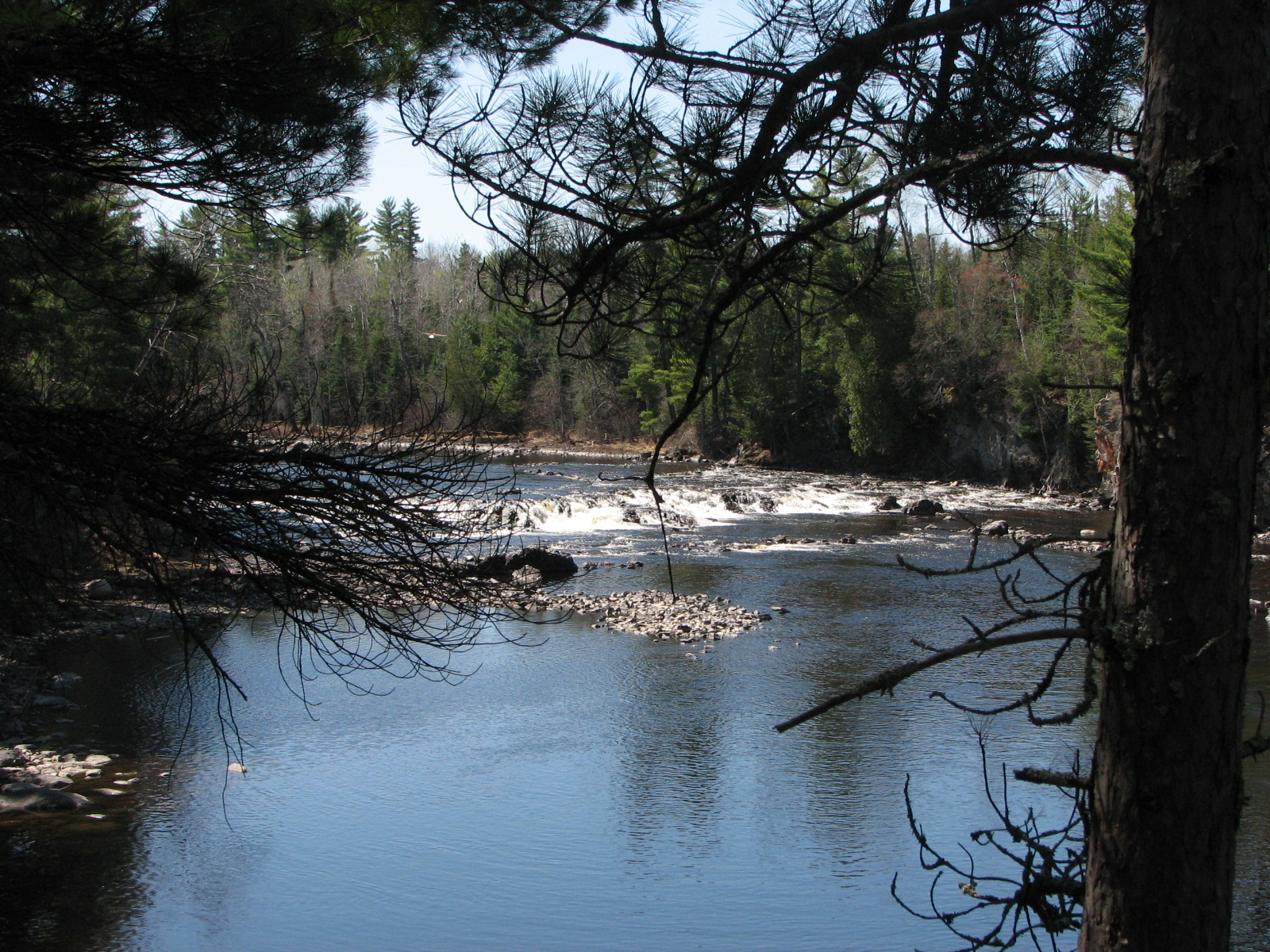
Two days before leaving I realized that if I arrived in Ely early in the day, I could rent a canoe and get on the water.  I was thrilled at the prospect (my wife said, “Why am I not surprised to hear this?”) and made arrangements.  I arrived in Ely at 9 on a perfect traveling day, got the canoe and drove out to Fall Lake.  I quickly shed every layer except for a shirt and PFD, and I could have taken the shirt off as well.  I wore neoprene gloves but really didn’t need them.  I saw nobody, except mergansers, a loon and several immature eagles at the south end of Pipestone Bay. I sat in the sun, enjoying a better view of the falls than I’ve had on the 30-plus times I have hurriedly crossed that portage.  Here’s a video of the falls and a few soaring immature eagles (they are immature because of their lack of a white head and general mottling.)

I contribute to three scholarships:  the amount of money the Foundation annually disburses has doubled since 2005.  I worked with the Friends of the Boundary Waters to create a scholarship in 2008; they and I jointly fund it.  I would also present that scholarship at the banquet, which pleased me no end–an Arizona guy who brought two fine Minnesota organizations together to create something good.

Up on Pipestone, I shot video of immature eagles soaring in a cloudless sky.  After lunch on Newton, I portaged back to Fall, paddling by the campsite where my wife and I stayed on 9/16/2001:  we started that trip on 9/11, unaware of events, heard the next day on Basswood River “the country was shut down,” but had few details and were nervous what we would learn when we exited.  On every trip since, we always note the presence of aircraft.

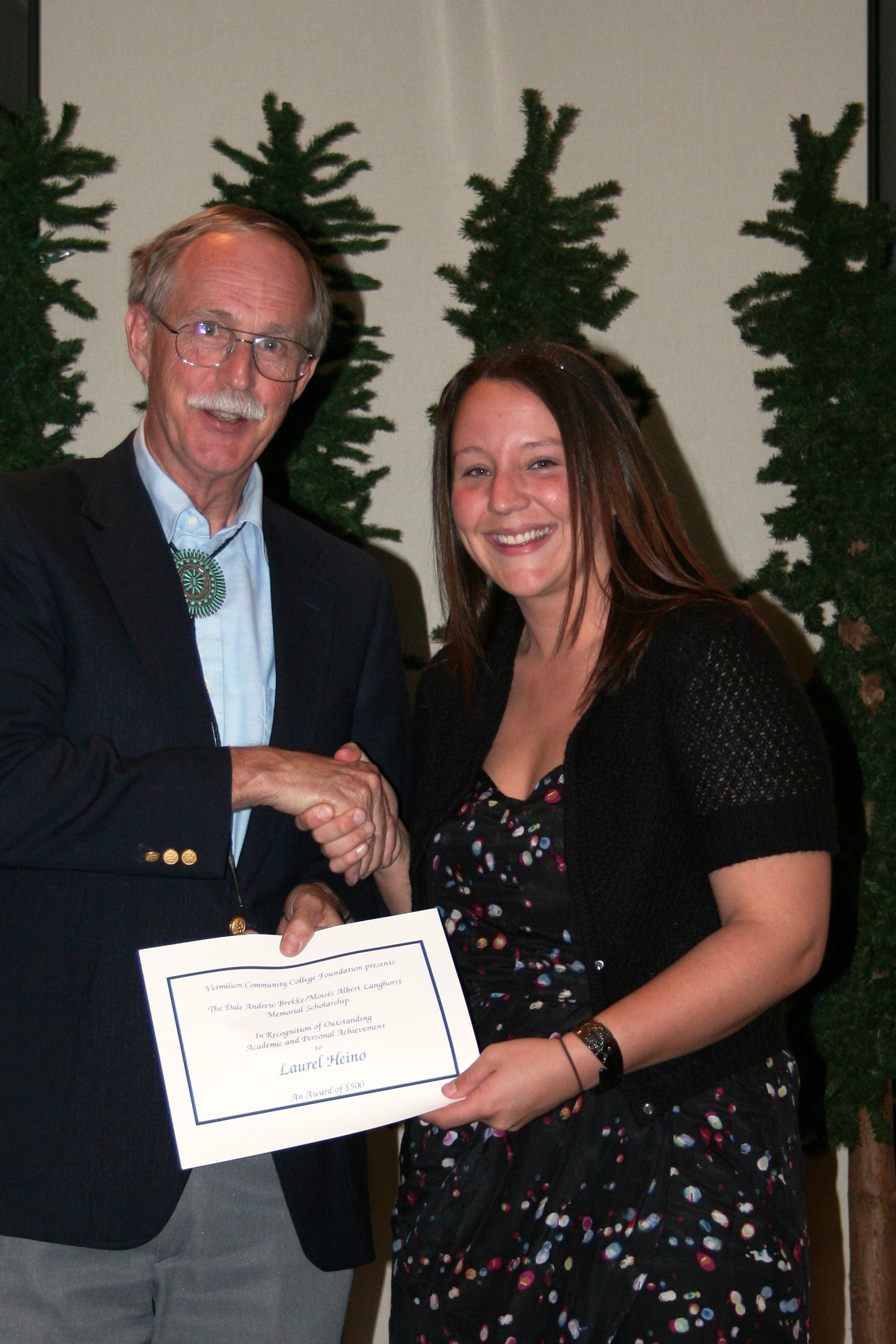
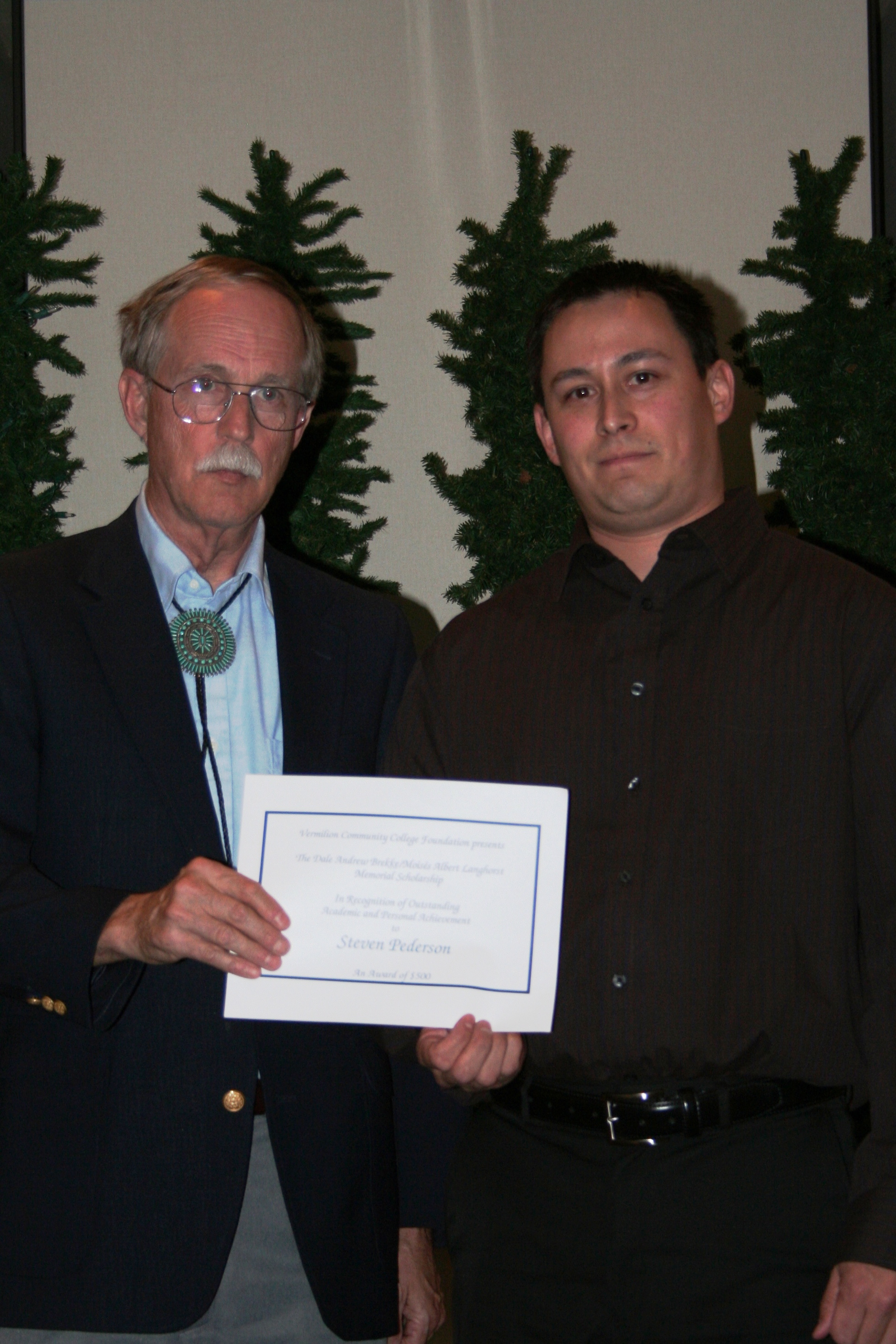
As a Navy veteran, a shipboard medical officer, I had long wanted to establish a scholarship for veterans, whom I feel should get free education.  Patti Zupancich of the Foundation worked with the Brekke and Langhorst families to allow me to contribute to an existing scholarship in memory of two young Moose Lake cousins who died in Iraq, 6 months apart.  Their aunt would attend the banquet but declined to present the scholarship because she knew how emotionally difficult it would be.  Patti suggested that I present the award, which was met with immediate approval.  I was grateful both families allowed me to contribute; I was deeply moved by their additionally allowing me to present it, one of the greatest honors I’ve ever received.

At 3 p.m., I came off the water, tired, sore and happy to have used muscles that had forgotten what paddling and portaging entailed.  It felt good to do J-strokes, scull, sweep, avoid rocks and portage again.  It felt right to solo in the wilderness.  But it felt odd to know in an hour, I would change from canoe clothes to coat and tie.  I had never done that before.

The banquet is always festive, which must be difficult for those who give memorial scholarships–a gold star family from Wisconsin presents one each year, too.  There is also one in memory of “Jackpine” Bob Cary, given by his daughter.

The recipient of our scholarship was there with his parents.  I enjoyed seeing how happy the three of them were.  The recipient of the Friends scholarship had taken people on tours to Listening Point.  One of the Brekke-Langhorst recipients had spent 4 years in Iraq; his father was also a veteran, and we had an interesting conversation.  The other recipient, a young woman, was ex-Navy; both of us have sailed many tens of thousands of nautical miles on the same seas in different eras.

As expected, presenting the Brekke-Langhorst scholarship was emotional, and I wanted everything to be proper.  The brave young men’s aunt thanked me, but I felt I received more than the recipients.

Every time I give, I seem to receive more.  I’m hoping the Friends get enough support to sponsor a second scholarship.  I hope some of my fellow wilderness travelers will remember those students in Ely, at the edge of the wilderness and on the edge of poverty.  If giving money is not possible, haul out a lot of trash on your next canoe trip.  Do something good for this special wilderness.

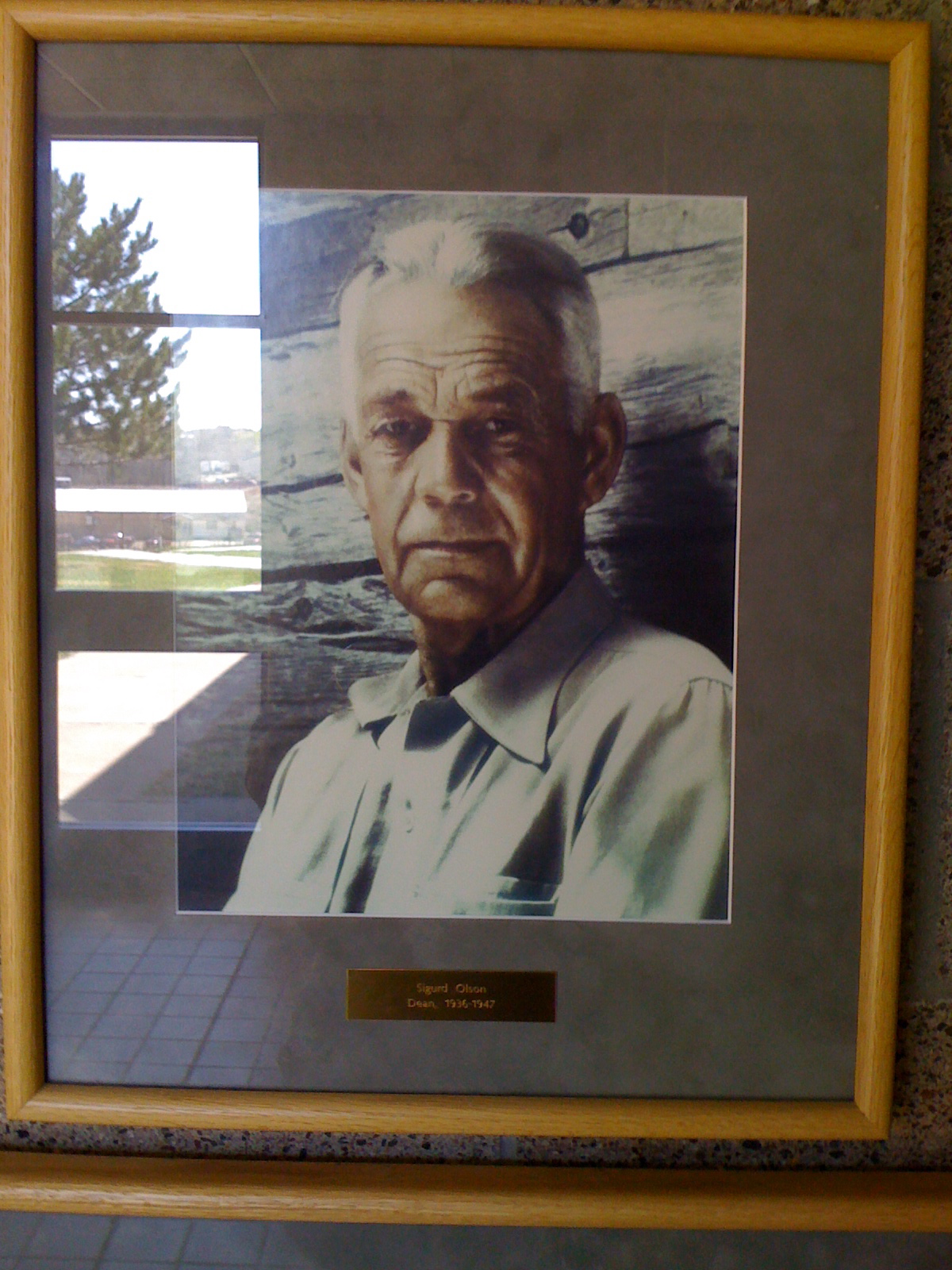
In 1938, Sig Olson, Dean of what was then called Ely Junior College, wrote “Why Wilderness?”, stating exactly how I feel on the trail:  the need for “sweat and toil, hunger and thirst, and the fierce satisfaction that comes only with hardship.”   Sig referred to hardship on the trail, not financial hardship.  There’s a scholarship in his name, too, which I want to honor by ensuring hardship stays only where it belongs.

SANDHILL CRANES+2 WHOOPERS, 2010, PART II

April 7, 2010

This site is still under construction, but the You Tube videos are worth seeing:  the first shows a brief version of a pair dancing.  This is to release stress, to bond and to release hormones.  I can’t help but think it is just pure joy as well.  The second is at http://www.youtube.com/watch?v=vLQTOIt_gBM and shows the first plus about eight more minutes of the birds calling.

I went to Rowe for the beginning of the crane season, but it was a very cold winter and the birds didn’t show up until March 1.  I had a few great views, but left before the season really got going.  I felt like I had unfinished business on the Platte and went back at the end of the month.  I worked 17 hour days, slept on the floor in the gift shop (so I could hear the cranes on the nearby river when I woke up), cleaned toilets, led and assisted on viewing blind tours, washed dishes, and basically did whatever needed to be done at Rowe Sanctuary.  Even ran the Crane cam one night, which is on Rowe’s home page.  I haven’t felt so alive in a long time.  Rowe has a full time staff of only 4; there are many local volunteers and folks like me who come from a long way off to help in any way they can.  I felt blessed and very fortunate.  Also saw two whooping cranes at a long distance, so the pictures aren’t great.  But I saw them.

SANDHILL CRANES, ROWE SANCTUARY, 2010

March 3, 2010

After missing the 2009 season due to illness, I came up here on 25 February.  It was cold, snowy, and the Platte was frozen.  The only cranes I saw was a flock of 20 over Lincoln.  What they were doing over there is anybody’s guess.  Bet they wondered, too.

But the weather has changed, and here are some YouTube videos.  If you go to mrqssm, you will see all the videos I took.  The audio is outstanding, and the last was the best.

http://www.youtube.com/watch?v=inYeOS_Gm6k

What does a volunteer do?  Just about anything!  Rowe is part of Audubon, but they get NO funding from the national.  Everything they spend they must raise.  There are only four staff members–Bill, Kent, Tony and Keanna, and they are all very different people who work very well together.  They are the engine, but the volunteers are the fuel that make the place run.  Rowe needs people in the gift shop, showing people the birds outside during the day, somebody to run errands, to run the crane cam, to give crane lectures, to clean the place, sweep, clean the bathrooms, re-stock, greet people in the parking lot, do maintenance work, etc. etc.!!

I was early season, so there were few visitors.  What did I do?  Hauled a box spring through the upstairs window, since it wouldn’t fit going up the stairs.  I set up camouflage at two blinds, using drills and staple guns.  I re-hung 19 windows in one of the blinds, using drilling and various boy scout knots.  I made beds, cleaned bird poop off the building and the sidewalk, knocked down old nests, which led to the former.  I built an analemmatic sundial by the parking lot.  I got a complaint that it was slow, but that is because the Sun is running slow.  Or our watches are running fast!!

I helped Tony set up the Crane Cam upstream.  I got to play with great power tools, drive a beat up but serviceable pickup through rural Nebraska, saw Sun reflect off snow geese (yes, they are incredible pests, eating their way out of their habitat–like humans, I might add–but they are pretty) and had the blinds to myself morning and evening before season opener.  I hacked down weeds around three blinds with a retired Kearney math teacher, so we could talk math.

Oh yes, I got to meet Mike Forsberg, the renowned wildlife photographer, and was able to give him some information about moonrise azimuth.  I talked to him in a blind one night, just the two of us, the same day he signed a book he authored for me.  He then sent me five lovely pictures he took.  Was that cool or what?

And I got to meet loads of great local Nebraskans who come to volunteer there as well.  They were all great, and while a couple thought I was the Energizer bunny, it was only because I kept forgetting stuff and was running all over the place.  Want to do something good with your time?  Rowe needs volunteers!  Want to contribute to something worthwhile?  Rowe Sanctuary is a place to do so!

Some other pictures:

WEARING RED

January 7, 2010

“For them is sweat and toil, hunger and thirst, and the fierce satisfaction that comes only with hardship.” Sigurd F. Olson (1938)

Forty-five years ago, after three summers at Camp Pathfinder, a canoe tripping camp in Ontario’s Algonquin Park, I became staff, “third man”  on canoe trips.  Being staff was different.  I no longer knelt in the bow, looking for rocks and setting the pace; I was in the stern, responsible for steering, orders and keeping up with the other canoes.  When we reached the portage,  I flipped the 90 pound canoe over my head, carrying it anywhere from a few yards to four miles.

I no longer had to wash dishes, only chop wood and help cook.  But I had difficulty with my new role.  I abused my new power by excessively bossing campers.  So, on my second trip I was third man under a second man who had never been a camper with my experience.  That hurt.  On my third trip, 14 difficult days, I struggled so much that I didn’t ask what my rating was.  Instead, I snuck in the cabin one night where the ratings were kept, and saw mine:  “He needs a LOT more tripping experience.”  I never forgot the pain of seeing those words by flashlight.  They were true.

The next year, I was 17, stronger, and vowed to do better.  I was sent out as second man, paddling and carrying well, kinder to campers.  I realized that my job was to ensure they had a good time on the trip, even as they worked hard, for hard work is what makes a canoe trip so satisfying.  On the first day of one trip, the head man and third man were hung over from a previous day off, and I had to keep telling my two canoe mates to slow down so we wouldn’t lead the trip.  When we reached the dreaded 1 1/2 mile Iris-Alder portage (named for the lakes it connected), I was allowed to go first.  I blasted over the wooded, rocky, swampy, hilly trail in 20 minutes, canoe on my head, well ahead of everybody.  I was second man for 3 more trips that summer.

There was a hierarchy of neckerchiefs worn by the staff.  It was an unwritten rule that nobody but a head man wore red, second men blue.  Pathfinder was and is known for its challenging trips and its red canoes, which today are part of their e-mail address.  That summer in 1966, I wore blue.  To entertain the campers, I thought up games like tree golf (I won’t describe it) and told scary ghost stories around the campfire.  When a camper’s asthma flared up on one trip, the head man and third man took him to help, several hours away.  I was left in charge, nervous, but thrilled to have the responsibility.

My ratings were good, and my last summer, I was promoted to head man on short trips.  I bought my red neckerchief, proudly put it on, and at 18, took 8 other lives under my care into South Tea Lake.  I navigated, carried canoe and a pack together, chose the campsite and cooked the meals.  The trip was only three days, and I was familiar with the area so that navigation wasn’t a problem, but I was in charge of two other staff and six pre-teen boys—no adults anywhere.   Even today, I am amazed that I was given such responsibility at my age.

Command changes one’s perspective.  When the campers swam, I counted heads, over and over again.  If I didn’t see one, I got everybody to stop playing until I was certain.  As head tripper, I had to decide the menu, time the meal right, and make special goodies, like fudge, which was how everybody rated a head man.  And every night in the tent, I listened to every sound, anybody crying out, responsibility weighing heavily on me.

Back in camp, I wore the red proudly, the way an airliner captain wears four stripes, or the commander of a naval vessel wears the five pointed star in a circle on their right chest pocket signifying current command at sea (left pocket for former command).  I took a second trip as head man, the responsibility still weighing heavily on me.  Two days after that trip, I went out as second man on a better trip, just like a pilot of a 737 becoming a co-pilot on a 747.  I put my blue neckerchief back on, helped outfit, did my job well, and made sure the campers had a good time.  I never wore blue again.  In late summer, my fourth trip as guide, I took six men six days on a super trip to Pine River farm and Big Trout Lake.  I didn’t remember all of these trips, but Pathfinder’s Web site lists them going back to my era.  My fondest memory of my final trip was a day a camper couldn’t carry his pack, so I carried it and my canoe—at least 140 pounds—a half mile with no trouble along the slippery shoreline of the Tim River.  To this day, I have worn the red neckerchief on nearly all the 60 additional canoe trips I’ve taken. Occasionally, I put on the blue as a reminder of the days I wasn’t in charge and what I had to do to earn red.  I have no other colors in my collection of neckerchiefs.

I practiced medicine for 20 years, a hierarchy if ever there was one, but I never once thought about the red neckerchief.  I wish I had.  For the past eight years, I have been a volunteer math tutor at two high schools, never being as busy or as in demand as I had hoped.  So this year, I set up a program to be an on-call volunteer substitute math teacher, teaching when the substitute was unable to do so.  I have taught twice, and that is a huge step up from tutoring, like being staff.  But I still felt I was wearing blue, not red.  I wanted to be in charge, to take full responsibility for running a class, even if only for an occasional day.  I got my substitute certificate and waited.  One day my call came from a statistical colleague, wanting me to teach AP statistics, sports statistics and his algebra 1 class.  I looked at his lesson plans, made modifications that I felt might help, and went to school to teach–by myself, no certified substitute in the room.  I put my red neckerchief on the desk beside me.  No student noticed it, but I looked at it frequently.  As expected, I made some mistakes that first day, but one of the students left the class saying, “You’re the best sub we’ve had all year.” I won’t take the neckerchief every time I’m called, but I will take it often, to remind me of what being in charge means—the responsibility, the worry, the challenge, the chance to do well.  Most importantly, I will remember where I have worn red:  on the lakes and rivers of the Canadian Shield, from Algonquin to ANWR, and many places in between.  I will remember the rain and sun, bugs, moose, fish and loons.  I will remember those days at Pathfinder, the eyes of my fellow travelers reflecting the light of campfires from Little Island Lake to Big Trout, my being in charge of the whole trip.  I earned the red once, and I have earned it again, doing different work, once again in charge.

CONTINUING ON IN THE FACE OF SOME REALLY BAD S—

December 10, 2009

Well before the Cessna Grand Caravan cleared the mountains near Fairbanks, Nancy, a vivacious fortyish woman next to me, started talking.  We were traveling to Arctic Village, 235 miles northeast; from there I would fly over the Brooks Range in a smaller plane, landing along the Aichilik River on Alaska’s North Slope, near the Arctic Ocean.

Nancy told me that she and her husband, Jim (both names changed), who was dozing in the single seat on the other side of the aircraft, were going to a different river on the North Slope for their trip.  As she talked, I realized they were as familiar with this country as I was with the Boundary Waters, except “their country” was 20 times bigger and vastly more remote; the last road we would see for two weeks was behind us.

I noted that her husband looked not just older, but his hair was patchy and almost ravaged.  I didn’t say anything, and Nancy soon elicited from me that I had once practiced neurology.  Jim was an exceedingly smart geologist who several years earlier had been diagnosed with a left hemispheric astrocytoma and forced to retire.  These tumors are malignant, and at a young age grow slowly.  But they eventually get nastier and will kill in 5-10 years.  Jim was treated at Duke, which is about as far from Fairbanks as London is from New York.  She was remarkably upbeat for somebody who had gone through a hell I hope I never will, and they were doing the trip while they still could.  I was sitting next to a saint.

“He has some trouble word-finding,” she said, but with a smile that would light up an Arctic winter, added, “he just loves this country, and I do, too.  We’re going as long as we can.”

We talked about Alaska, the time passed quickly, and we soon landed on the dirt strip at Arctic Village.  The weather over the Brooks Range was poor, and many of us to be shuttled in.  Jim and Nancy would go in the mid-afternoon; I was in the last group and wouldn’t depart for 8 hours.  We put all our gear by a small building, new from the previous year, unstaffed and christened “Arctic Village Visitor Center.”  One hour took care of seeing the village; when I returned Jim and Nancy were inside, looking at a large map of the Refuge and nearby Yukon.  Jim was pointing out, with minimal but noticeable dysphasia, some of the areas where he had traveled.   I looked with awe and envy at his travels.  I was never going to see that incredible country and he had.  On the other hand, I’ve seen sixty, and he would likely not see fifty-five.

Later that afternoon, Nancy suggested Jim and I walk across the airport to a nearby lake.  Jim had a quick pace, was able to identify a lot of plants and birds, and soon, like his wife, asked me what I had done.  When he heard I was a neurologist, he said, “I have this s— growing in my brain.”

This was one of those difficult moments where one has to quickly decide whether to lie, tell the truth, change the subject, or just run away.  I knew what Jim had, but he didn’t know I knew.  I didn’t want to act curious; I just wanted to be somewhere else.  God, I thought.  What do I do?  Just then a couple of loons called in the distance, so I took option number 3:  I quickly changed the subject to loons.  I felt like a coward.  Whether Jim noticed, I’ll never know, but during the rest of the walk, we didn’t discuss his medical condition.  We birded, spending about a half hour sitting beside one of the many lakes that surround Arctic Village.  Jim pointed out the plants to me, and I just worked like mad keeping the subject off astrocytomas.  I’ll never know what he thought of me, but I sure learned much about the local flora.

We eventually returned to the airport, and later, Jim and Nancy left for their trip.  At 7 p.m., the guide, Aaron; I; and pilot Kirk Sweetsir, a Rhodes Scholar (in another life, as he puts it), finally departed.  When we saw the wall of black ahead over the Continental Divide, Kirk turned around and set us down in ANWR, along the Sheenjek River, half way to our destination. We had the stove, dinners, breakfasts, and a dry place to camp.  The other group that did get to the North Slope that day had none of those four things.

But all of us had functioning brains and bodies that would get us through eleven tough days in ANWR and hopefully for many, many years after.  But there are no guarantees.  Jim is one of the reasons why I go when I can.  Bad stuff – s—, if you will – happens, and it can happen to anybody, good or bad, young or old.  I’ve had some nasty medical problems, but compared to Jim, I’ve had nothing.  He’s still going while he can, able to carry gear, navigate and love his wife, who copes with a grace I wish to emulate.  Both of them have and will continue to see country that few will ever see.  They are special people, truly living fully while they can, as we all should.

FRUMPY

November 27, 2009

It’s 7 a.m. on a Saturday, and I’m hauling 60 pound jugs of water through thick sand about 100 yards to a picnic area along Sabino Creek.  The water spills on me, and in 50 degree temperatures, the warming I get from carrying quickly dissipates.  In an hour, 80 girl scouts are showing up, and I sure hope there will be a lot of adults with them.  I volunteered to be a birding leader, and I’m wondering what I got myself into. 

The scouts will spend an hour hacking out giant reeds that are a desert invader, sucking up 20 times the water of a cottonwood, an hour learning GPS so that the plants removed can have their root systems identified, an hour at the riparian habitat, since there is a small pool of water still present, and an hour birding with one of us four leaders. 

Everybody shows up, and there is a great deal of singing, energy and all the things young girls do.  I’m now really wondering what I got myself in to.  We start, and the birding is not what it might be, even for early morning.  I’m hearing several species, but hearing birds and seeing them is very different for these girls.  The cool morning and the trails are certainly nice to be out in, the girls are having fun playing with the binoculars, but it would have been nice to be seeing something more than a few nests.  But that’s birding.  Sometimes you see birds, sometimes you don’t.  On the other hand, there is a dead fox near a log, and I am amazed to see how many young girls went up to take a close look at it.  I really expected a very different response.  But, as I was beginning to learn that morning, I was quite prejudiced towards my experience with these girls. 

I had earlier noted a young scout, obviously paraparetic, needing significant assistance to walk.  She came on my third trip, and we didn’t walk too far because of her difficulty moving.  The girl was dysarthric, and looking at her gums, I figured probably took phenytoin as an anti-epileptic.  I diagnosed her in five seconds, and I thought this would be a tough hour, but I was wrong about both the hour and the girl. 

She soon was picking up seeds from the reed, and saying, “Mr. Mike,” look at this.  I didn’t realize where the seeds were in the giant reed.  She had.  Ten minutes later, “Mr. Mike, look at my rocks.”  She showed me a collection of 5 pretty rocks.  “I have one thousand two hundred eighty at home.” 

“One thousand two hundred and eighty-five, now,” replied her mother, as the girl came up and gave me a hug. 

I can count on the past unbroken fingers of my right hand (that would be three), the number of people besides myself who count things just because they can be counted.  I counted the license plate tabs on New York state cars in early 1957.  I know that, because I still have my diary for that year and read it.  I know fairly closely the number of miles I have driven a car.  The night on Isle Royale, when the wolf made it wise for me to leave my campsite and hike 10 miles in the dark, I counted 1000 steps, then every other step 1000 times, every third step 1000 times up to every 9th step 1000 times.  People think this weird.  I do it naturally, just like whenever I hear a four digit number, like a hospital page, I multiply the first two and second two numbers.  I can outdo any calculator multiplying a pair of two digit numbers.  So to know a girl is counting the number of rocks she has was a real treat.  Bet she wouldn’t have thought counting steps weird.  Or seeing a wolf, for that matter.  She taught, too.  One of the other girls wondered if mica came from trees.  My disabled friend, and I use the word disabled cautiously here, told her no, pointing out more of the rock in the wash. 

She made my morning.  At the end of the four sessions, I was putting all the binoculars back in their cases.  I then heard “Mr. Mike!” again.  I looked across the table, and the girl gestured for me to come over.  In a water bottle, with a fern, she had a caterpillar.  I hadn’t seen any ferns or any caterpillars, but obviously she had.  I think I’m a decent observer; after all, I had diagnosed this girl.  Only I had let my prejudice get in the way of seeing what else was inside this girl – a curiosity about the natural world, an ability to see things in the world that many did not, and to collect and categorize them.  I finally admitted to myself that I wasn’t sure what her medical situation was, but that this was an incredibly interesting girl who I hope will have a chance to be fully educated.  My advice to teenage guys is to marry a woman smarter than they are.  Fortunately, I continue, that won’t be difficult.  I hope some guy looks beyond the physical impairments of this girl, because he will find an incredibly fascinating smart brain in her head. 

The caterpillar’s name, by the way, was Frumpy.