Posts Tagged ‘Outdoor writing’

GOOSEBUMPS

April 8, 2016

It’s not every day I get interviewed for Nebraska Life magazine.  Or give the interviewer goosebumps.  Like everything else that had happened in the prior two days, it was a matter of chance.

It was chance that as a Rowe Sanctuary volunteer doing daily cleaning, I decided to take a sweeper over to the viewing blinds, which get sand and small gravel tracked in.  It was chance that led me to stop for a few minutes, delaying my return, because I saw a flicker come out of a cavity nest in a dead cottonwood.  When one is volunteering at a bird sanctuary, things like a flicker’s leaving a nest are important matters.

The delay held me long enough on the trail that I encountered Alan, a little younger than I.  He saw my name tag, recognized me, and introduced himself.  I was a little embarrassed I hadn’t recognized him.  I’m the same way with birds—good auditory memory, terrible visual.  We knew each other from past years, since he also volunteers at Rowe; judging by his shirt, he worked for Nebraska Life magazine as an assistant editor.  I told Alan that I was once an assistant guide with him, and I emulated many of his traits.  Alan smiled, then asked if he could interview me for a story.  Why not?

We talked about why I came to Rowe and what the cranes meant to me.  He then suggested that we go into Jamalee Blind to shoot some pictures of me, while I swept the carpet.  Why not?  And I told him about the story that happened two nights prior, in East Blind.

I didn’t go into all the details, such as my 11 hour trip from Eugene to Kearney, leaving me frazzled when I arrived.  I probably should have gone to bed early and not bothered the public with my mood.  Instead, I went to the viewing blind that evening with Jane, an experienced volunteer ten years my senior.   It is always good to see Jane each year and even better to go out into the blind with her. She’s a solid Nebraskan who knows what’s she’s doing, telling me that while she wanted to talk to the thirty-two visitors first, she thought I should say more, because she learned from me every time I spoke.  I could say the same thing about her.

At that time of day, I wasn’t sure I was capable of meeting her expectations, but said nothing.  We had a good group who asked great questions, and the cranes put on a nice show, flying over several times, as they do in early evening, before they landed on the river.  It was still early, and I quietly strolled back and forth in the blind, making sure people were properly situated.  And then came the the story I related to Alan:

As I reached one end of the blind, a woman asked me, “You said that seeing the cranes were one of your top three sights in nature.  What were the other two?”

I stopped and looked at her: “A total solar eclipse and seeing a wolf in the wild on Isle Royale.”

From behind, I heard, “Did you know there are only two wolves left on Isle Royale?”  I turned around, seeing a tall man with a kind, somewhat concerned face.

“Yes,” I replied.  “I don’t know what is going to happen next.”

“I’m involved in some of that for an environmental group in Minnesota.”

That was interesting.  I told him I was a member of the Friends of the Boundary Waters, a small organization in Minneapolis that leverages a few paid staff members and several thousand members to accomplish good things.

“I was their first liaison to the northern communities.”  That stopped me cold.

“We know each other,” I said, with a little more excitement. “What’s your name?”

“Ian.”

“Mike Smith.”

Ian paused, his eyes briefly questioning, then I saw the sudden change of recognition in his face as he realized who I was and that we indeed had met each other in person in northern Minnesota four years earlier at an annual scholarship banquet for Vermilion Community College.  In 2008, I established a scholarship at Vermilion, splitting the funding with the Friends.  Four years later, the Friends established a liaison for the northern Minnesota communities, Ely especially, and Ian was the person “on the ground.”  We jointly presented the scholarship for two years. We shook each other’s hands, talked for a few minutes, and then it was time for him to look for cranes and for me to walk back down the blind.  As I left, he shook his head in disbelief. I suspect I did the same thing.

Viewing wildlife is a matter of being in the right place at the right time, having all senses open, and being ready for the unexpected.  It’s all about recognizing opportunities when they occur.

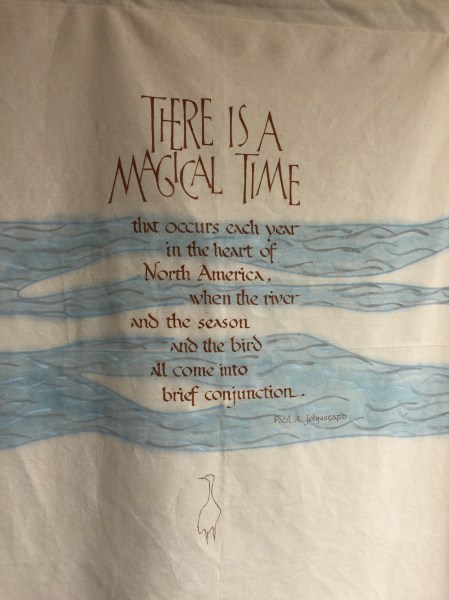
I hadn’t ever imagined I would encounter somebody in a viewing blind whom I knew from somewhere else.  Paul Johnsgard, one of the leading writers about cranes, speaks of the conjunction of spring, a river, and a special bird.  Ian and I had supported a special wilderness 1000 miles away.  By chance, we arrived in the same viewing blind at the same time in another special place.  Several unlikely utterances had to occur for each of us to discover the other’s presence.

Underneath my jacket, not visible, was my shirt, which was “Isle Royale National Park.”  I had never worn that shirt before.  Of all the shirts I could have worn, I chose that one.

I had had a long, unpleasant day.  But again, being among the Sandhill Cranes was magic.  My telling the story gave Alan goosebumps.  I saw them myself.

There was more than one conjunction that night on the Platte.
IMG_3137.jpg

IMG_6532.JPG

THE ASTROPHYSICS GUY

March 13, 2016

It’s easy to get disoriented finding one’s way around the night sky from the Southern Hemisphere.  I’ve been south of the equator 11 times, each time having to relearn the southern night sky.  From our ship in the Java Sea, 4 degrees south of the Equator, almost all the northern hemisphere constellations were visible, but they appeared upside down, although my Down Under friends would disagree.

My wife and I had done a lot of laps walking around the deck during this cruise, never using the elevators.  We were piling up steps, number of feet climbed, in a losing effort to burn off the calories it was so easy to consume on board.  At least we eschewed alcohol, saving both money and calories.

On one evening walk on the third deck, we stopped to look at some of the stars, despite the bright lights aft.  My wife spotted Orion, high overhead, and from there I was able to work my way around familiar stars in both the northern and southern celestial hemispheres.  From the Equator, theoretically the entire sky is visible, although near the horizon faint stars disappear, because we look through many thicknesses of the Earth’s atmosphere to the horizon.  Go outside on a dark night sometime and notice how much brighter a star appears overhead compared to when it was on the horizon.

We did see a bright star to the south, but I couldn’t identify it, needing a darker sky.  The next night, we went looking for a better spot.  The first place we tried was the bow, but some ship workers told us that was off limits.  We weren’t convinced, however, because we had been there in daylight without problems, so we waited until they were gone and snuck back, but found the area dark and full of obstructions.  Chastened, we beat it back to safety and planned another assault to view the dark sky.  My wife suggested seven decks higher, where we finally found an open deck with a small platform that allowed us a view over a plexiglass rail.  The sky was beautiful, the ambient light minimal but enough to keep us from tripping over a bollard or a deck chair.

Now I could see some neat stuff.  Leaving Orion behind, I pointed out the False Cross and then the true Southern Cross, low in the east.  I was speaking softly, when a man approached, asking if he could join us.  We helped him up, since the platform held four or five.  He was either an astrophysicist from Vancouver or was interested in astrophysics, I wasn’t really sure, but he definitely wanted to learn the night sky.

Now I was in my element.  Night sky, interested person, chance to teach, to talk about what the stuff meant, along with what I didn’t know, which is a lot.

I started with Orion:  On the Equator, Orion is a bit hard on the neck, but wow, even the sword was bright, and the Milky Way’s running through Orion and Monoceros was fabulous, although I omitted mentioning the name of the latter.  Keep things simple.  I took us around the stars of the Winter/Summer Hexagon/Heptagon, depending whether one counts Castor and Pollux as one or two.  Following Orion’s belt to the south, I began with Sirius, brightest star in the night sky and closest night star visible to the unaided eye; then Rigel; Aldebaran; and Procyon; P for the next star, Pollux; then Castor; C for the next star, Capella; then back to Sirius.  Red Betelgeuse was in the middle and at the opposite end of Orion from Rigel.  The astrophysics guy was able to appreciate the colors of Betelgeuse, orange Aldebaran and slightly orange Pollux.  He was having fun, I was having a blast. My wife found the Pleiades, one of her favorites, and she was contributing, too.  This was great.  I mentioned the Hyades Cluster around Aldebaran, about a third the distance of the Pleiades.

From Sirius, we looked down to Canopus, the second brightest star, just visible from southern Arizona in the winter, but really bright here on the Equator.  The astrophysics guy loved it.  He had once been to a star party in Nevada’s Great Basin National Park, and was starting to remember a few things. I then took him further south in the sky, to alpha-Centauri and the Southern Cross.  This was new to him, and he was thrilled, saying he wished his wife were up with us.

By now, I was fully dark adapted, and I remembered in March, the Magellanic Clouds are visible, and pointed them out a little south of where we had been looking.  This was amazing, reminding me of the writer Peter Leschak’s words:  “You don’t see this stuff every day.  But you do see it every night, under a clear, dark sky.”  Or something like that.

Not detecting boredom, and not being told by my wife I had said enough, I kept going. I pointed out the three stars of Orion’s belt, Alnitak, Alnilam, and Mintaka, from left to right in the northern hemisphere, and I was totally confused what to call them overhead, laughing.  OK, Mintaka was about overhead, lying on the celestial equator, the projection of our equator on the night sky.  Orion is great.  Want to learn the night sky?  Find Orion, and you can learn to name about 18 stars in a hurry:  Betelgeuse and Bellatrix are at the top, in the Northern Hemisphere, Saiph and Rigel on the bottom.  But top and bottom are different on the equator—different degrees of neck straining.  Betelgeuse is definitely red and the belt goes directly overhead.  At least where we were.  Your results may vary.

So, seven stars in Orion; near Sirius was Murzim to the west; near Procyon, Gomeisa shone to the left or west; near Castor and Pollux was Alhena near Betelgeuse.  I think that’s 16.  Canopus and Alpha-Centauri make 18.  The astrophysicist mentioned that everything we were looking at was part of the Milky Way.  He was doing great.  I pointed to the region where the open star clusters M41,near Sirius, M35 near Alhena were.  We were rolling now.  I talked about the “kids,” three dim stars near Capella, one of which fades in an eclipse every 27 years, although I was damned if I could remember which Greek letter it was (it’s epsilon). The last eclipse was 2010.  I doubt I will see it eclipsed again, but I’ve seen two, and they were fascinating.  I mentioned I was formerly a variable star observer, measuring the light of pulsating intrinsic variables and eclipsing binaries.  Astronomy is such a huge field.

The astrophysicist mentioned that Andromeda was the furthest we could see with the unaided eye and continued that Hubble was one who realized that Andromeda might be beyond our galaxy.  Great.  He was teaching.  That got me talking about the Cepheid variables, whose brightness is a function of their cycle, something that allowed us to determine Andromeda’s distance.  Thank you, Henrietta Leavitt, one of the forgotten—not by me—women of astronomy, who discovered that.*  The astrophysics guy said he was going to try to bring his wife top side.

At that point, my wife was going to try to bring me back to Earth, or at least the lowest deck, where our room was.  Fair enough.

I’ll remember a lot from the cruise, but that night with the astrophysics guy was better than a lot of tours we took.

I bet he’d say the same thing.

*Henrietta Leavitt (1868-1921) proposed the periodicity-luminosity ratio for Cepheid variables in the Magellanic Clouds, discovering that the brighter ones had a longer periodicity.  Assuming correctly that they were all similar distances from the Earth, it was then possible to determine the distances of remote objects.  Hubble used it to determine the distance Andromeda Galaxy was far further from the Earth than we could have imagined, that the universe was expanding,  huge leaps in astronomical knowledge.

SHADOW: THE 2016 ECLIPSE IN INDONESIA

March 13, 2016


My wife and I are dedicated eclipse chasers.  Yes, we are crazy folks (we prefer the adjective “interesting”) who go to the ends of the Earth and take a chance on the weather in order to see the Moon completely cover the Sun, one of my top four sights in nature.  By the ends of the Earth, I mean both poles, Pitcairn Island, all 7 continents, Siberia in March, and five times in Africa.

I have been fortunate enough to have been in many beautiful wilderness areas, and the other top three were a face-to-face encounter with a wolf on Isle Royale, nobody within ten trail miles of me; the annual migration of the Sandhill Cranes; and the closeness I’ve been to grizzlies in Alaska.

IMG_3539.JPG

Bears at Brooks Falls, Katmai

On our last chase, hoping to see my sixteenth total eclipse, we flew to Singapore, boarded the MS Volendam and sailed across the equator (my finally earning at long last “shellback” status) to Indonesia, first south, later east and finally northbound for the eclipse 8 days later.

I wasn’t particularly eager to take the trip. Long flights are difficult, I don’t sleep well, and I’m not a great people person, so cruises and Asia aren’t places I like to be.  Still, I will do what it takes to see an eclipse.  We took a tour in Jakarta, so I trod on the soil of my fiftieth country.  I’ve seen a lot of the Third World, only a few times actually immersing myself in it helping people, time measured in days, not months or years, and it is difficult to see how most of the people in the world live.

We often find special moments in unexpected places.  On Jakarta’s tour, I saw the usual monuments and museums that I guess I should see, although frankly I am not a monument or a museum person.  Maybe I should be, but I don’t judge harshly those who don’t share my love for the wilderness.  In Probblingo, we went into town for the sole reason to find a mall to buy a couple of cotton Indonesian shirts like the ones we had seen in Jakarta.  We found the mall, got the shirts, explored the place, and enjoyed ourselves.  The tour was on our own, lasted two hours, and we have fond memories of the place.

IMG_6222.JPG


National Monument in Jakarta


IMG_6263.JPG

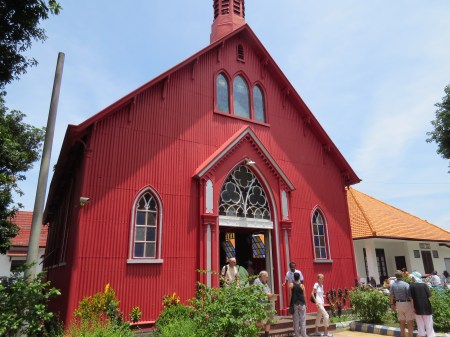
Red Church in Probblingo

Several days later, heading north towards the eclipse track, we stopped in Makassar, a city on the southwest corner of the island of Sulawesi, across the strait from Borneo.  This was a place I never expected to see, a comment I make on every eclipse trip.  We saw Fort Rotterdam, avoided getting run over in traffic, and later returned aboard the ship, a little nervous about next day’s eclipse.

IMG_6278.JPG

Fort Rotterdam in Makassar

Eclipse chasing requires one to be at exactly the right place at the exactly right time, have decent skies, clear where the Sun happens to be.  This is a tall order in the tropics, especially during rainy season.  Sometimes, we have had to explain to a tour guide that “exact time” means to the second, not whenever one happens to arrive.  Exact time for eclipses does not mean mañana.  There is no mañana.  It is be there or miss it.  You can’t see it “some other time.”

With that attitude, I can perhaps be forgiven for not being overly polite to those who dawdle going to the eclipse path, thinking that my visiting one more museum or monument is important.  No, seeing the eclipse will make my trip.  If that means I miss a monument, an elephant ride, a temple, or a church, so be it.  My priority is seeing the eclipse.  I’ve heard stories of ships being 2 hours late to the eclipse track, of vehicles breaking down.

Fortunately, we had a good captain, who along with his bridge crew understood our needs.  He steamed a little further west in the Makassar Strait than originally planned, because cloudiness was less there.  It’s not only a matter of rain that may affect eclipses, but those puffy, pretty cumulus clouds become eclipse killers on eclipse day, and we needed to dodge them.

A good eclipse is directly proportional to the amount of sunscreen one uses.

My wife and I were up at 5 to get a place on the 9th deck on the starboard side at 5:10, where twenty people had already arrived.  Stars were visible, Jupiter dotting in and out of view between clouds to the west.  Well, I thought, there is hope, but I couldn’t yet see the sky well.  We didn’t have much equipment, but we still brought up two chairs from the deck below.  The Sun rose just after 6, and the clouds were not great, not bad.  We knew the Sun would be higher during eclipse, and we waited. Others arrived, bringing more deck chairs from below.

IMG_6314.JPG

People on deck before totality

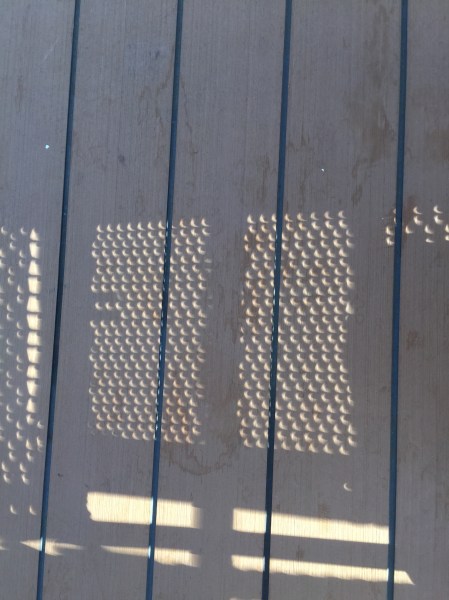
At first contact, where the Moon takes a small bite out of the Sun, it was partly cloudy.  Eclipses last about two and a half hours, totality in the middle, a little less than 3 minutes for this eclipse, 7 minutes and 32 seconds maximum possible.  After first contact, the Sun often disappeared behind a cloud for a few minutes, which is no problem, unless those minutes are during totality.  As the eclipse progressed, weather prospects improved.  The clouds became fewer and thinner.  The Sun’s projection through the weave of our deck chairs showed a multitude of crescents on the deck below, scores of pinhole cameras.  This is one of our favorite times during every eclipse.

IMG_2880.jpg

Crescents made by eclipsed Sun’s shining through tiny holes in a deck chair

As the crescent shrank to nearly nothing, I looked behind me to the west.  I was first to call out the arrival of the Moon’s shadow, a huge, dark mass, approaching at 30 miles a minute, the Moon’s orbital speed.  I turned around in time to see the Diamond Ring, the last bit of sunlight, and then beautiful totality, lasting 2 minutes and 45 seconds, over the calm Makassar Strait.  After the second Diamond Ring, the end of totality, I quickly looked down and east, calling out the rapidly disappearing Moon’s shadow, leaving us at a half mile a second.  For some time now, I have regularly watched the disappearance of the Moon’s shadow.  It’s visible for about 5, maybe 10 seconds.  I don’t know anybody who has ever mentioned it in eclipse talks.

IMG_2881.jpg

Totality

IMG_6320.JPG

Maybe they never looked.  After all, when totality is over, most people leave to celebrate, unfortunately in our instance leaving their chairs on the deck, instead of putting them back where they got them.  That’s kind of rude, even on a cruise ship.

Then a man about my age nudged me.  “Thank you,” he said, with his wife’s standing by him, “for pointing out the shadow’s disappearance.  I saw it, and I had never seen that before.  It was really interesting.”  His wife nodded.

IMG_2887.jpg

Moon’s shadow’s disappearing.  It is subtle, but the darkness on the horizon is the shadow

All total solar eclipses are special.  Sometimes, what I remember best is not the black disk in the sky covering the Sun, but something else, quite unexpected, like a disappearing shadow.  The man’s comments made my day.  I taught him something, and he was glad.

Later, my wife and I picked up about four dozen chairs left behind and helped the crew return them.  Yes, the crew is there to serve the passengers, but put the chairs back.

It appeases the eclipse gods.

OUTSIDE AGITATORS

January 5, 2016

In my youth, I took part in peace rallies, working for Eugene McCarthy in 1968 as part of the “clean for Gene” group.  I was called an “outside agitator” and worse by those who disagreed with my beliefs.  Indeed, back then, “Law and Order” and “outside agitators” were almost always right wing pronouncements.

The recent takeover of an unoccupied building at Malheur National Wildlife Refuge by armed men, from outside Oregon, protesting the jailing of two ranchers, is at the moment at a divide between a non-issue that went away quietly or a major conflict that will be remembered for decades.  Two things are immediately clear.  These are outside agitators and they broke several laws.

The facts are not yet clear, and I may be in error, unlike my detractors, who know everything with complete certainty.  The spark was the jailing (insufficient time) of a rancher and his son, who about a decade ago set fire to about 150 acres to remove invasive plants so that they could graze their cattle—on federal land—where they held a grazing lease.  Apparently one of the fires was set to cover up deer poaching.  The law requires a minimal sentence, much like drug use.  The lack of all the facts has not stopped people on social media from opining about government takeover of land, need to privatize all land, and let “the people” (at least of their political persuasion, not mine) run things. The ranchers themselves voluntarily reported to jail and did not want publicity, according to their lawyer.  That didn’t stop the mob from singing “Amazing Grace” in front of their house, proving Obama’s famous comment about America’s Red Crescent “Their guns and their religion,” which while a political faux pas, was and is dead right. Nevertheless, the insurgents felt this was unfair and occupied a building on the Refuge. Cliven Bundy’s son (Bundy had a standoff against the Feds 2 years ago about failure to pay $1 million in grazing fees.  For fear of bloodshed, the Feds backed down) said they were prepared to stay there for “years.”  .

I’ve been to nearby Burns, Oregon, and I can’t imagine staying for years in Malheur.  Obviously, somebody is supporting these people, since most of us have to make money to take time off, especially to destroy the federal government.  Maybe the money came from the million Bundy’s dad saved on not paying grazing fees for putting his cattle on my land.  Yes, my land.  And that is what I am concerned about.  We lease federal lands so that ranchers can run cattle on it.  Then if anything happens to the cattle, like predation, they want compensation from we the people.  Twenty-five years ago, in Arizona, one of these ranchers trapped and killed bears that were allegedly killing his cattle on federal land.  My wife and I became vegetarian on the spot.  Still are.

Mind you, the ranchers in the Malpai Borderlands Group work well with The Nature Conservancy, and their joint efforts should serve as a model, not Bundy’s Tea Party-no negotiation group, which doesn’t work, because saying no and not yielding one point doesn’t work in a pluralistic society.

More than half the land in America’s West is federally owned, and since I am part of the government, it is partly my land, too.  There is a lot of resentment of land being “locked up” as wilderness when it can be logged, mined, snowmobiled, hunted, jet skied, regular skied, or otherwise used to make money.  People use public lands—my land as much as theirs—to make money, often off people like me.

The idea that we “lock this land up,” is false, but like so much of what my detractors say, it is a catch phrase, to be repeated often enough so it is treated as fact.  We hold this land in reserve for those whose lives have yet to begin.  We hold it in reserve so we will still have it.  Should we auction it all off to the highest bidder, who knows where it will go?  I do know what happens when nearly all the land is privatized.  It’s called Texas, where 2% of the land is federally owned.

When I saw the Hill Country, I was dismayed at all the fencing.  The restrictions aren’t just a Texan issue, however. Here in Oregon, a rancher sold a huge ranch to a Chicago man, who closed all the trails that were once accessible to the public.  That would be you and me.  Lack of access to places that we used to go to are the first result of privatization of public lands.  Those are the people who are locking land away, not the feds.  Privatize the land, and those with money get it. So, unless one is a millionaire, few will get land, certainly not the guy who can barely pay his mortgage, take care of his kids, pay for his F-350 and the ammo he uses. I wonder why that guy hasn’t yet figured out that the Republican party is using him.

Last century, the Boundary Waters Canoe Area Wilderness came close to being privatized.  It would have allowed resorts, dammed waterfalls, logged everything, and one of the great wildernesses in this country—the most visited today—would have been lost.  If we privatize the Grand Canyon, uranium mining will occur, and people will no longer have the experience of total quiet, miles from the nearest person, in a civilization where such quiet is a rarity.  I’ve experienced these wonders and want others to do so as well.

If we privatize Malheur, that will be the end of a special place for wildlife.  Oh, cattle ranchers—some, anyway—will make more money, although not much, because grazing fees are dirt cheap to begin with.  Tell me, Mr. Bundy, what happens when an ORV or a snowmobile cuts a fence containing somebody’s cattle?  Who is going to adjudicate?  If they think that won’t happen, they are too dumb to own a firearm.  They may feel that progressives like me don’t have a right to visit some of these places.  What about future generations?  Do we get booted out of the country?  Is that what America is about?

Answer:  I think so.  The Far Right has money and buys and cheats its way to power.  We are headed for an oligarchy like Russia, with the same results.

I want Malheur under a total, quiet siege.  Keep the media in Burns.  The less coverage, the less these guys can strut on national news. No power, no water, no food, no utilities, no medical care.  Nothing. If one wishes to give up his weapon and leave, he may do so.  He may be subject to a misdemeanor, but I just want him gone.  Nothing else should be allowed in or out, until everybody leaves.  These guys are terrorists, using terror— numbers and their weapons—to take over federal land and push for overthrow of the government.  That is terrorism, regardless of where they come from Algeria or Austin, Libya or Lubbock, Medina or Missoula, Baghdad or Boise, Yemen or Yreka.

Hopefully, this will not be another Waco, which spawned Oklahoma City, just like the Iraq War ultimately helped spawn ISIS. If people bombed your innocent family, killing all of them, might you consider terrorism as a reasonable response?  The “$1.7 billion” war, “Shock and Awe,” and “Mission Accomplished” have finally came home to roost.

It’s time to stand up to right wing terrorism and keep public land public. The government is not a nebulous entity.  It is we.

Finally, language matters.  This is not a militia.  This is terrorism.

HIKING THROUGH THE SOLAR SYSTEM

January 4, 2016

The Obsidians are a hiking club in Eugene sponsoring hikes, climbs, bike trips, snowshoe and cross-country trips, bus trips to distant parks, a summer camp with a week of day hikes and catered meals, and … in town hikes.

I took my first hike with the club about a month after I arrived, after 3 hikes qualifying for membership.  One of the officers wanted me to lead hikes right away, but I insisted I had to know a trail before I organized and took people to an area.  Three months after a summer of exploring  the central Cascade foothills, scores of hikes, I led my first one.

My twenty-eighth hike as a leader wasn’t to Collier Cone, Obsidian Loop, Larison Rock, or Browder Ridge.  It was a hike in town, walking the one to one billion scale model of the solar system.  I got the idea one day while strolling through Alton Baker Park, where the Sun, a 4 foot high model, stood.  Why not do a 7.5 mile hike through the scale model of the solar system?

And so, on a chilly New Years’ Eve Day morning, a dozen people who had signed up for the hike and I began our walk near the duck ponds at the western edge of the park, near the Willamette River.  I had reviewed the facts about the planets: size, day length, orbital period, presence/absence of a magnetic field, temperature, but when I reached the Mars post, the first stop, I put the notes away. I wasn’t sure what I would do, but I wasn’t going to recite facts.

We began at Mars, not Mercury, because the post was nearest where we parked, I wanted to have the hike move in more or less a straight line, and we were parked closest to Mars.

I quickly realized I was at a daylight star party, except the stars were planets, and I didn’t have a telescope.  Everything else was the same.  I was teaching to several interested adults near me.  Earth-Moon was second on the walk, and I discussed the size of the Earth, far smaller than a marble at this scale, and its 150 meter or nearly 500 foot distance from the Sun.  I showed the vast emptiness of the solar system, how far we were from Mars, and how little was in our neighborhood.

Mercury has the day where the Sun rises, gets high in the sky and then sets.  Really must be something to see.  I mentioned while many thought Mercury was difficult to see, there are times it is easy.  Indeed, I saw it from downtown Chicago one night years ago.

I remembered  that Venus has no magnetic field but instead spoke of the resonance between 5 passages of Venus by Earth, 584 days apart, and how that time is almost exactly 8 Earth years.  I told them of the transits of Venus I observed in 2004 and 2012.  I said transits were so rare that in 2012 the grandchildren of a newborn baby, whose mother held him up to the eyepiece, might see the next one if they lived long enough.

IMG_1129.JPG

Transit of Venus, 5 June 2012

When we reached the yellow large ball that marked the Sun, I spoke of how the Sun generated heat through nuclear fusion, producing prodigious amounts of helium every second from fusing hydrogen, yet would still exist for many more billions of years. I talked about fusion of helium into other elements, all the way to iron, in larger stars, where fusion no longer gave off energy, and the star had a problem, because gravity pulling in and heat expanding no longer balanced each other.  The resulting collapse formed all the other elements; the presence of iron in our blood, magnesium in chlorophyll, silicon on the sand we walk on were all parts of nuclear fusion from a star that existed prior to our Sun.

We next crossed the Willamette and walked on the South Bank trail.  Shortly, we reached Jupiter, and I talked about the Galilean Moons, how I once saw them covered by the waning crescent Moon, reappearing one by one as the Moon slowly moved.  I told them about the dark spots caused by the collision of Shoemaker-Levy comet on Jupiter in 1994, and a time I saw Jupiter in daylight.  I forgot to mention the special night I saw Jupiter, a meteor and lightning flash all at the same time, 25 years ago.  When one observes the night sky, there are many such surprising gifts.

Saturn was a little more than a half mile further away. I mentioned the rings, how they could open up part way, viewed from Earth, but could also be edge-on.  I was asked if we could see the rings from directly over Saturn.  Sadly, we cannot.  Twenty years ago, I showed people Saturn with edge-on rings at a non-astronomy conference I attended at Palm Desert, California.  I spent three nights in a parking lot with my telescope, each night having more and more people, until the final night I had a steady line of 40 waiting patiently.  I don’t remember what I learned at the conference, but I never forgot the nights outside.  I suspect many of those who looked through the eyepiece felt the same way.

I also talked about the 28 Sagittarius-Saturn occultation in July 1989, when Saturn passed in front of the star, which appeared to move through the ringlets, only 20 meters wide, but each band clearly discernible as I watched Saturn move—yes, I saw it move—until the star was between Saturn and the innermost ring, a truly once in a lifetime sighting.  I was in my element now.  The temperature had risen, I was not lecturing but rather discussing how the planets affected my life, my observing, and were part of me.

Uranus rolls around the Sun, its axis directly pointing at the star.  I wore a button in 1986, 30 years ago, commemorating the arrival of Voyager 2 at the planet.  Voyager 2 took the Grand Tour, money well spent, NASA arguably at its best, as the craft used the planets as a slingshot, a close fly-by of Jupiter, using Jupiter’s gravity to go to Saturn, using another gravity assist to go to Uranus. I remember the ice rilles on Miranda, one of the moons, and the gas clouds of Uranus itself.

A mile later, we reached Neptune, 2.8 miles from the Sun, its 165 year orbit meaning it moved only 2 feet a day at this scale.  My memory was Neptune All Night, the show on a late August evening in 1989, when I observed Neptune while listening to the discussion of what was being sent back by the spacecraft.  Neptune had a big dark spot and rings.  I also remember the high winds reported on Neptune, the geysers on Triton, completely unexpected, the way all the visits to all the planets revealed the unexpected.

My hike through the solar system was not at all what I expected.  I hope to repeat it annually.

DIGITAL DISTRACTIONS  AND THE KID WITH A SNOW COASTER

July 25, 2015

Thirty years ago, my wife and I camped out under the stars in Sonoita, Arizona, far from Tucson, Sierra Vista, and Nogales, when the nights were incredibly dark.  At 10 p.m., a large cloud appeared in the east.  At least, that is what it looked like, until we realized it was a different type of cloud, one of stars.  We were watching the Milky Way rise, and I never forgot that sight or the rest of that special night, wakening a few times, seeing the Milky Way further across the sky.

Just the other day, I received an email from a friend asking me to check out a picture she had posted on Instagram.  I usually don’t like these requests, believing that going into nature as I do gives me far better appreciation of the world.  The picture from a National Geographic photographer showed the southern Milky Way, from the Southern Hemisphere, with a time lapsed wind turbine in the foreground.

There were many of comments praising the picture.  I wrote, before erasing, “The wind turbine ruined it.” It did, by greatly detracting from the beauty of the Milky Way.  No picture can show the Milky Way as well as I have seen it, from the high grasslands of Arizona, deep in the Grand Canyon, or from the wilderness of the the borderland canoe country.  I didn’t have Instagram then, only a working occipital lobe and hippocampus, so those sights became part of me in a way that a picture cannot.  The beauty of The Great Rift, Vega, Altair, and Sagittarius is sufficient, not enhanced by a wind turbine in the foreground.

While I don’t look at many videos on social media, one about how different generations viewed free time was enlightening.  A man my age said he once used a stop sign for a toboggan.  I can relate to that.  Using a snow coaster as a sail, I once blasted alone on skates down the middle of frozen Honeoye Lake in upstate New York, doing 25.  That’s being a kid.  Parents nearby?  Nah.

Today?  A 6 year-old says she doesn’t know what she would do without her iPad.  Another kid bragged about watching 23 episodes of a TV show in 4 days. I wasn’t surprised.  One wouldn’t eat wild blueberries, because they weren’t wrapped in plastic.  Amazing. I love blueberries, and it reminds me some summer I’ve got to go back to Minnesota just to pick them.

I once posted a picture from northern California’s Redwood National Park,

I didn't lift this from the Internet. Redwood National Park, June 2012

I didn’t lift this from the Internet. Redwood National Park, June 2012

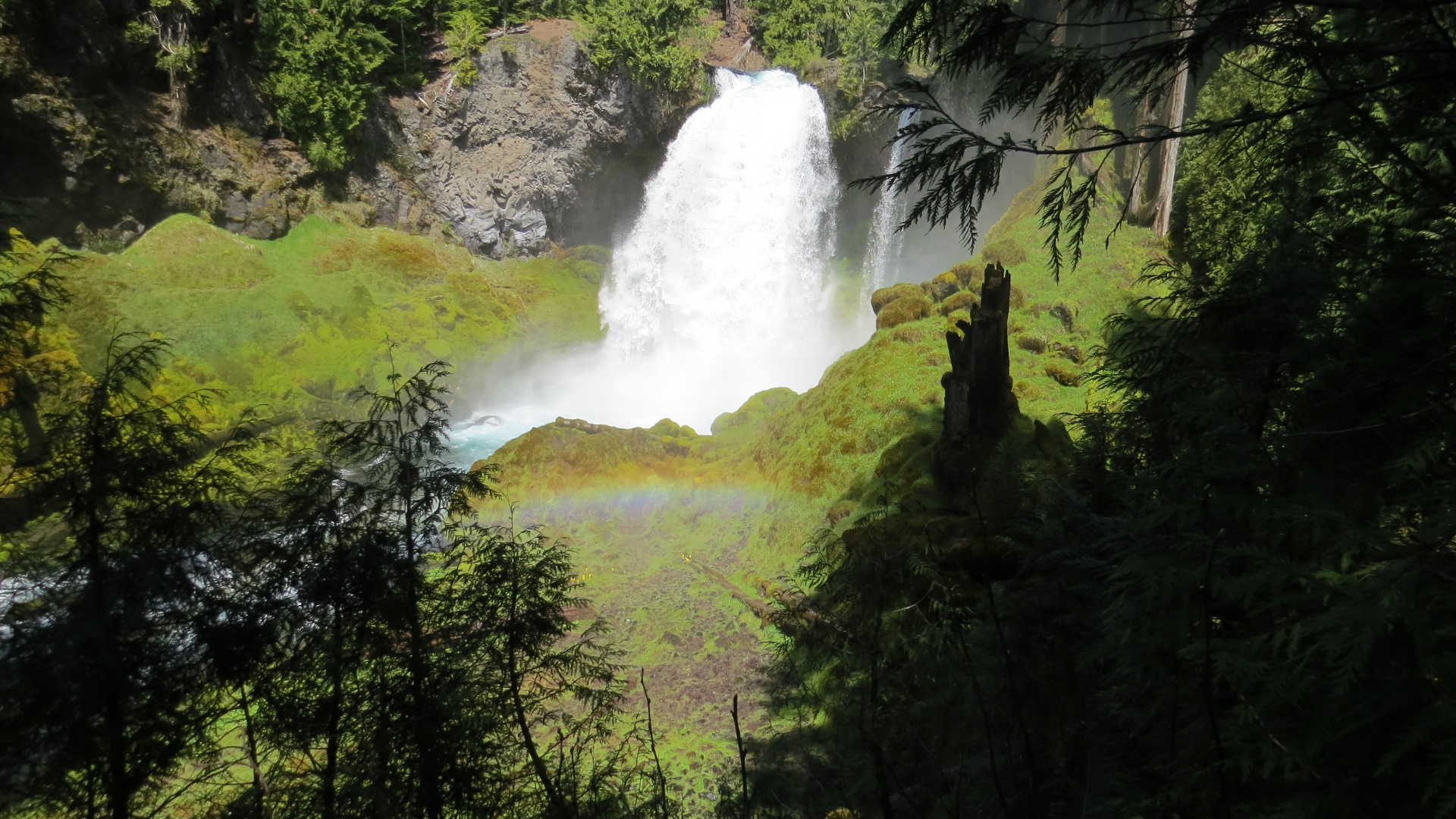
and saw a comment, “Where did you find that on the Internet?”  It never occurred to the writer that there are average folks like me who actually go to these places, where we can point a lens at a tree 120 meters tall and take a picture of its dwarfing a car.  The canopy of a redwood contains an ecosystem with plants and animals found nowhere else. I read it in The New Yorker; nobody sent me a link to “educate” me.  Sahalie Falls, Oregon, got a “Wow, who took that photo?” I replied, “I DID.”

IMG_5577

Sahalie Falls, Oregon, near Santiam Junction.

In the days of posting and sharing, I post rarely, usually views of special places in nature that I have seen, often having had to work hard to get there, an essential part of the picture. It is disheartening to me that so many see nature from a screen, rather than immersing themselves in it.  While I have had good fortune to see these lovely places, I made it happen, too.

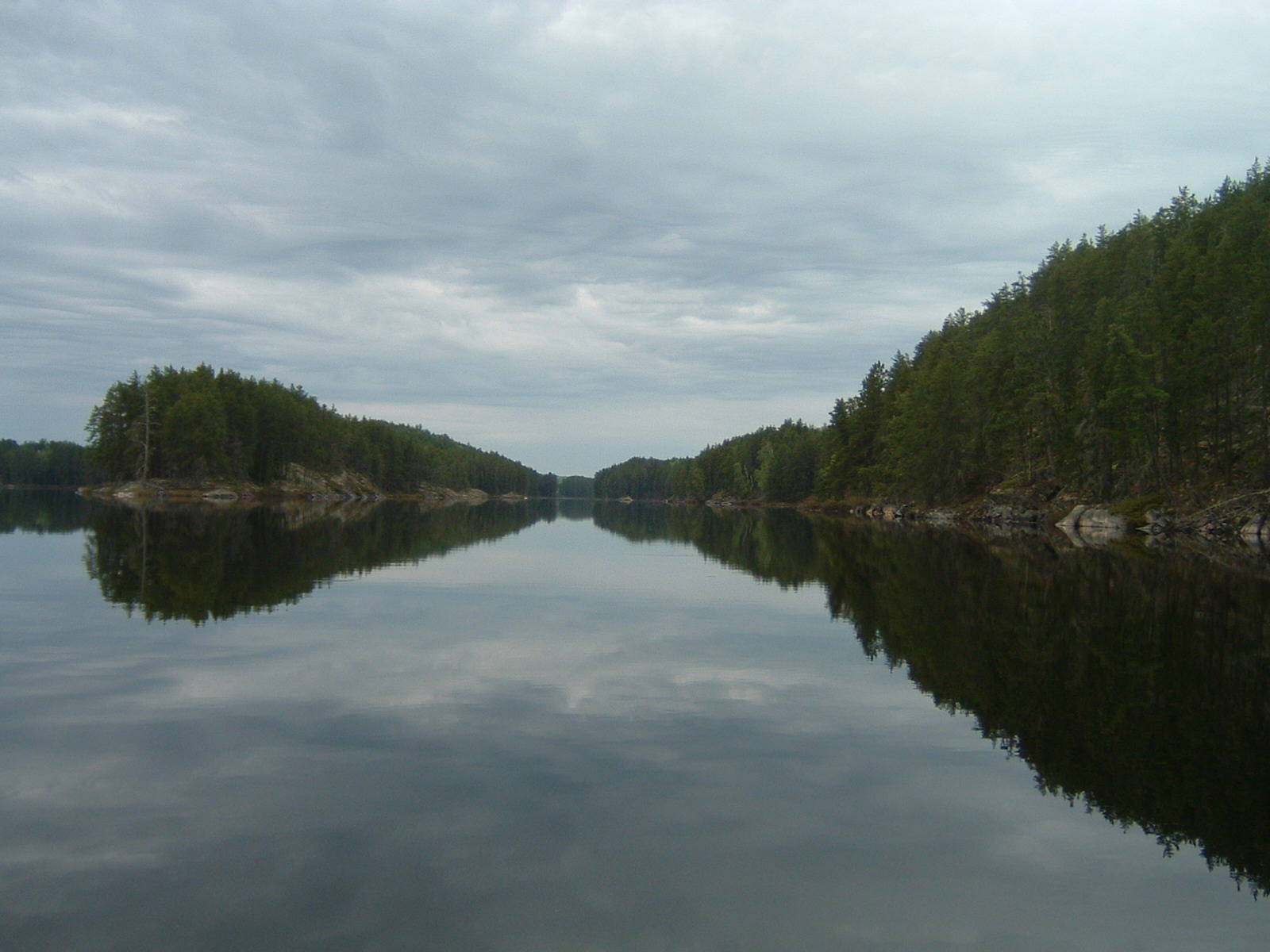
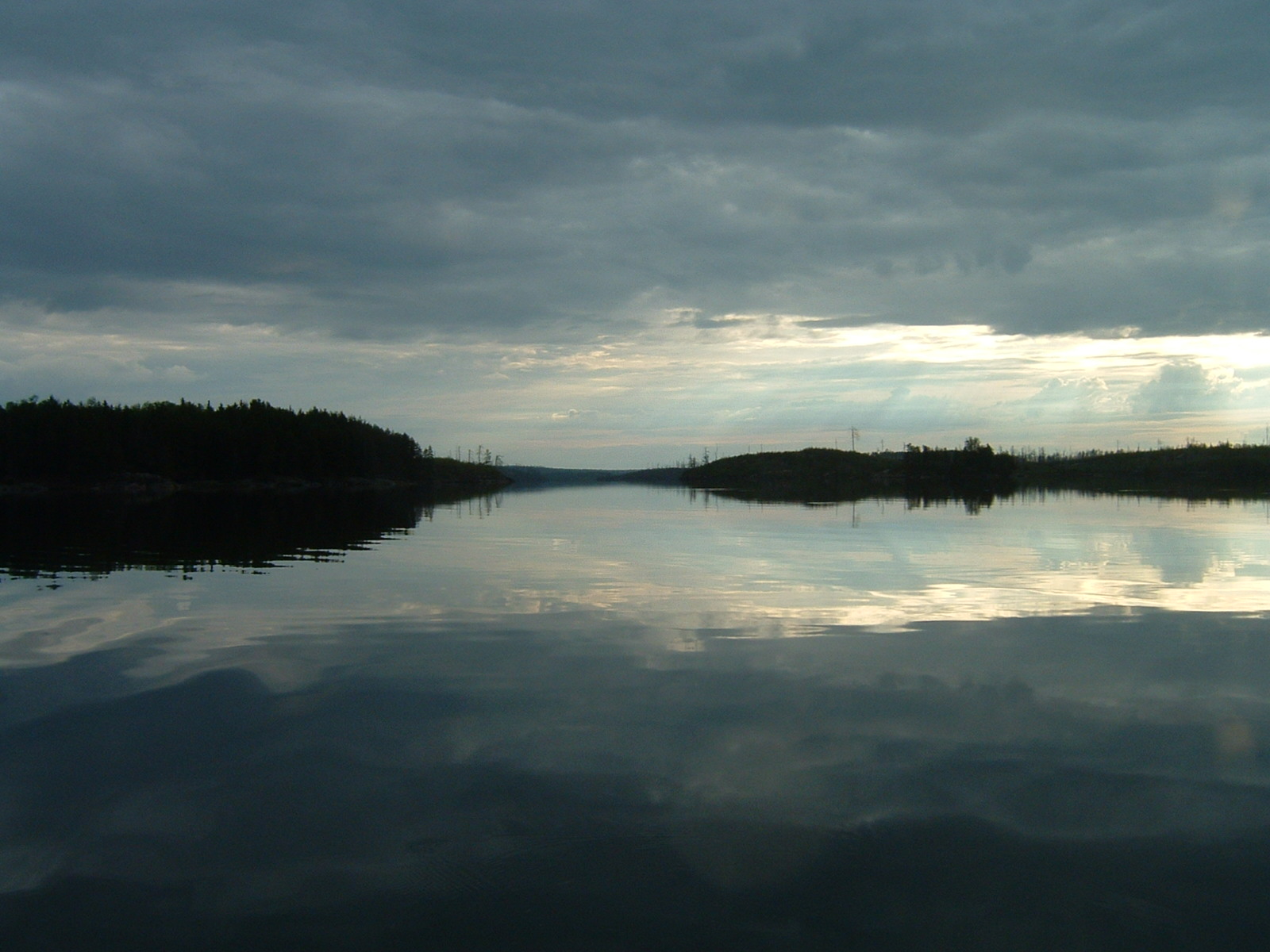
I changed the picture on my profile today to show a 2005 view of Kawnipi Lake in Canada’s Quetico Provincial Park,

"Bowling Alley," Kawnipi Lake, 2005.

“Bowling Alley,” Kawnipi Lake, 2005.

my last trip there.  Some like these pictures, amazed that such places not only exist but can only be reached by canoe, not by car, sailboat, or even hiking.  I was originally going to do that trip with a good friend from Ottawa, who introduced me to Sig Olson’s “Pays d’en haut,” in the Far North, 30 years ago.  We hiked the Chilkoot Trail (Klondike fame) together twice, and paddled the Nahanni, Liard, and Yukon Rivers.  We’ve portaged around Virginia Falls, twice as high as Niagara, and canoe sailed on Lake Laberge.

We had planned to see Kawnipi one last time.  Unfortunately, he had an animal emergency and had to cancel.  He was apologetic but knew I would understand. I did, deciding to do the trip solo.  It was difficult, even though I was a lot younger then, 56. I wanted to go further than 10 miles the first day, but my arms were dead.  The next day, I paddled to the north end of huge Agnes Lake, which was like glass.

Agnes Lake, Quetico Provincial Park, 2005.

Agnes Lake, Quetico Provincial Park, 2005.

On the portage out of it, where I hadn’t been for several years, I met two men, telling them I remembered the carry as a mess, with water and blowdowns. Good memory; there were fallen trees everywhere. It’s canoe tripping.

I spent the night on Kawnipi, content sitting on the ledge rock called the Canadian Shield, then the next morning, under threatening skies, headed south, taking the picture I posted today.  As I left Kawnipi, I turned around one last time and looked. In the back of my mind I thought maybe I could return, but I knew realistically I wouldn’t.  I don’t have to.  I’ve been there six times.  I’ve been on all the major bays of the lake. I’ve caught fish, found trails that cut through narrow peninsulas, had a cow moose charge into the water to protect her calf from me, and camped in lovely places.  That’s not on Instagram.  But wow, it’s in my brain.

I was lucky to have calm water back on Agnes.  I’ve paddled tandem on it in pouring rain and a headwind.  I soloed Agnes to Kawnipi in early ’92, when it snowed, and dealt with headwinds alone.  Nobody was out there.  It was great.  I’ve got print pictures somewhere, but no matter.  The memories are in my brain, where it matters, not on Instagram, where somebody might ask what Web site I found them.

There are many special places in wild country.  Getting there only by pack or paddle is a key ingredient.  I seldom give advice, because people neither want mine nor follow it.  I will simply state that for me the physical effort to go to these beautiful places beats looking on Instagram any day of the week.

Then again, it helped to have been raised a kid, free to rocket down the middle of a lake in mid-winter, using a snow coaster as a sail.  Or to be out in the middle of Agnes, on a beautiful day, looking at the huge sweep to the north.  Or doing the work needed to get to Kawnipi, blowdowns and all.

Because it was Kawnipi.

Heading to the campsite, Kawnipi Lake

Heading to the campsite, Kawnipi Lake

DSCF0039

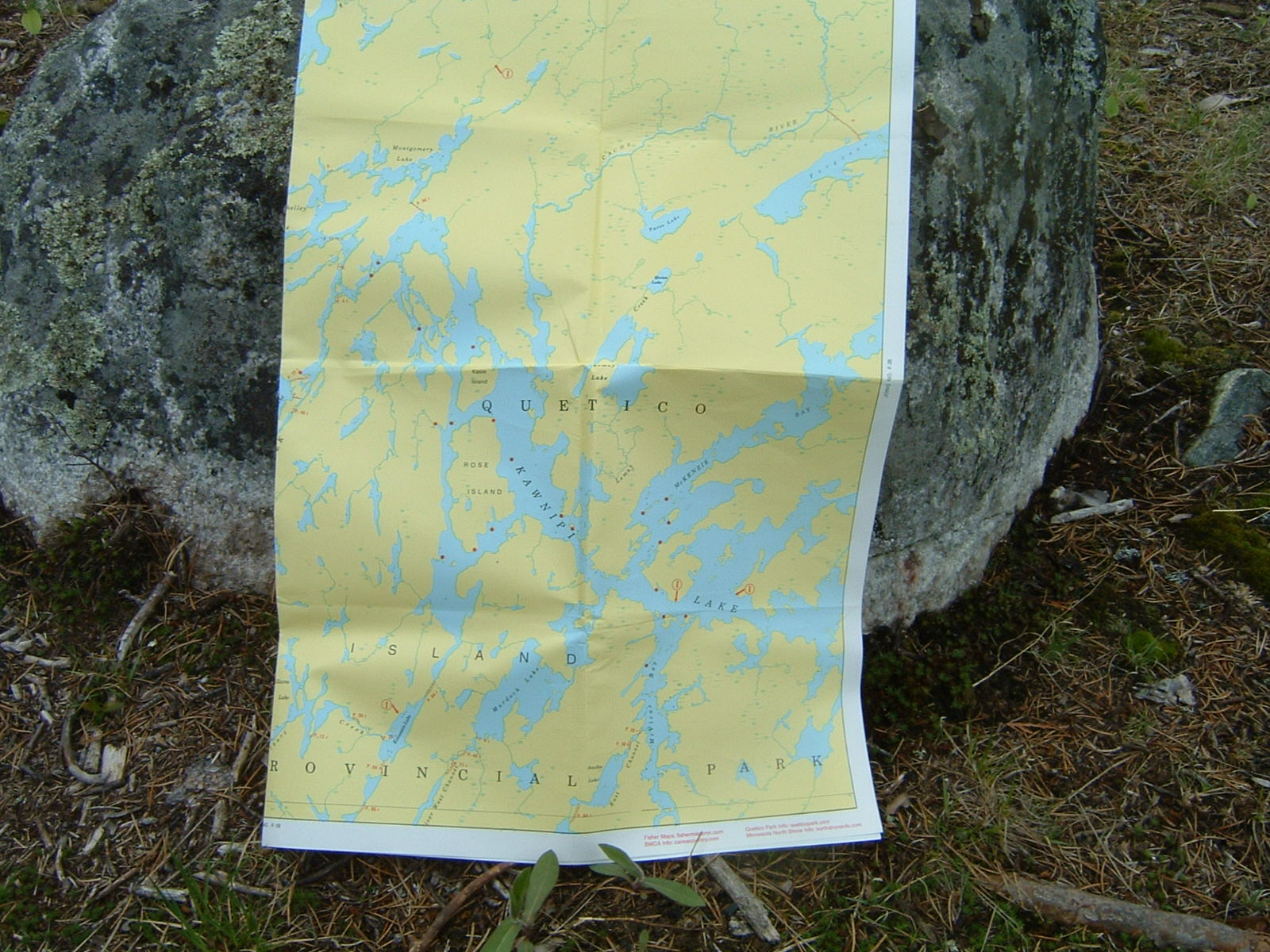
Kawnipi Lake on the map. It is big enough to be seen on road maps, although there is no road within 40 miles of it.

DSCF0047

One of the last pictures I took of Kawnipi, 2005.

SAYING NO IN THE WOODS

July 23, 2015

I remember the date well: it was September 15, 2001, and we were among the few who had no idea what had happened to the country, 4 days earlier.  After portaging our gear around Wheelbarrow Falls, on the Canadian side of Basswood River, we saw two young men, early 20s, getting ready to shoot the rapids, without packs in an aluminum canoe.  They also had wore no helmets, PFDs, hiking boots, and were sitting upright.  This violates five rules of safety.

No, I said, unsuccessfully to these two, you should not do this, because portages up here exist for a reason.  People die in the Quetico-Superior shooting rapids.  Within 10 yards of launch, the canoe shipped water, then swamped, the two fortunately floated down the rapids and survived.  The canoe broached on a log and filled with water, and I later learned it took six hours to right it.  The two were lucky, something one doesn’t want to have to depend upon in the woods, lucky one didn’t get a foot caught under water and drowned.

I got a call the other day from another Obsidian hike leader, wanting to run some things by me.  The Obsidians feature hikes, climbs, bus and bike trips, and last year, after being a member for all of 2 months, I led my first hike.  I’ve now led 18.  I’ve gone on the caller’s hikes; she has gone on mine.  Leading hikes is work.  One has to organize the hike time, meet up place, describe the hike, deal with those who call wanting to know about the hike, but not wanting to register to read about it online, know how to get to the trailhead, know the trail itself, and decide whether a person is capable of doing it.  The online description should be sufficient to tell someone whether this is suitable.  If one wants short walks, a 12 miler of mine with 2500 feet of elevation gain is not suitable.  Don’t laugh, I’ve had people say, “I’m on my feet 10 hours a day,”  as if that helps climb Mt. Hardesty, 3400 feet vertical.  On hiking day, I arrive 30 minutes early, hoping everybody who signed up shows, but invariably, some don’t. We leave no later than 5 minutes past the start time, carpool to the trailhead, and hike.  No shows without cancellation delay departure.  Me generation.  Lots of technology to communicate, yet communication has worsened.

The two of us talked about recent hikes, where I finally added a statement to future hike descriptions stating that “training” was not allowed; I would not allow an individual to carry extra weight on the hike to get into shape.  This rule occurred because of two incidents: on one hike, a lady carried barbells in her pack, holding everybody up for 30 minutes, because the hike had a steep climb at the outset that she could barely manage. I let that go until the next hike, when a man lagged far behind the whole time and fell because of exhaustion.  We divvied up his pack between us.  We hike where cell phone reception is poor, and while we were lucky, depending upon luck in the wilderness is a bad idea.  Perhaps I’ve lost friends by my attitude, but I can’t lead a 12 miler with 2500 feet elevation gain and a 2 hour drive each way, and still return at a decent hour if people photograph everything in sight or need frequent rest stops.

Eventually, the caller asked me about a person on her upcoming weeklong backpack trip who had dislocated his artificial hip on a recent hike but got it back in the socket himself.  Luck.  She told him he couldn’t go; he was very upset with her.  I agreed with her decision.  He has no business hiking until given the green light by an orthopedist.  Maybe nothing will happen.  Those four words are often said before a cascade of bad things concatenate in the Cascades.  Things go wrong on backpacking trips.  We plan for many emergencies.  Hip dislocations are rare, but once somebody has dislocated one, he is at high risk for a second; it doesn’t make sense taking him.

Sometimes, one just has to say no, no to going backpacking with a hip that may cause trouble and no to “training hikes,” where others are inconvenienced.   Most of these “no’s” can be stated quietly: “I’m sorry, but as leader, I can’t take the risk of your hip’s dislocating, which will disrupt the entire trip should you not be able to reduce it.  I am responsible, and in my judgment you should not go.”  “No, please don’t carry extra weight.  This is a difficult enough hike with a day pack.”

No, I said on a November hike last year, we aren’t going to take a detour to see a place where nobody is exactly certain how to get to, because it’s going to snow later today, we will lose valuable time, and if we get into trouble, we are in the high country where early darkness and cold are life threatening concerns.

I wish I had been present to say “No” to a 15 year-old’s leader at the other end of Basswood River, when they decided the portage was too long and they would shoot the rapids.  Six hours later, most of which the leader was holding the 15 year-old’s head above water, because his ankle was wedged on an underwater rock, a helicopter, a Beaver float plane, and a lot of brave men put their lives at risk to rescue him.

I wish I could have said “No” to the 78 year-old who shot Upper Basswood Falls in high water shortly after ice out in 2013.  The river had changed, and he wasn’t wearing a PFD when they found his body well downstream.  His wife barely survived.

No, I told my wife on Lake One in a pouring rain, I do NOT want to camp after only two miles, but we ARE STOPPING ANYWAY to camp here, because we aren’t yet too wet, and we aren’t cold, but if we continue, we will be.  We stayed dry and safe that night.

I say a lot of “Yes” to life.  I say, yes, I am going to hike solo, because I want to see that country this year.  Yes, I said in 2005, I am going to solo into Kawnipi Lake because I know the route and have several backup choices if the winds are high on big water.  Yes, I am going to solo winter camp at 63, because I know the trail, and I just want to get into the woods.  My route and time of exit in all instances was known by my wife.  I don’t ever deviate from it.

Canada’s Kawnipi one last time and my snow camp on the Angleworm Trail, were smart, wonderful trips.

I likely will never see this again, but I saw it many, many times, and loved camping on the lake.

I likely will never see this again, but I saw it many, many times, and loved camping on the lake.

Kawnipi Lake, 2005. Many, including me, say this is the most beautiful lake in Canada’s Quetico. I have been on it six different times and consider myself blessed.

DSCF0049

I call this “bowling alley,” Kawnipi Lake, 2005. I’ve soloed to it twice, and it is 3 days’ paddle from town.

Author on the Angleworm Bridge, late April 2013, BWCA Wilderness

Author on the Angleworm Bridge, late April 2013, BWCA Wilderness

OPIE DILLDOCK

January 26, 2015

OK, I’ll admit it, I am a little competitive about hiking.  But only a little.  I don’t trail run.  I tried to do a fast trail walk once, and it was a killer.  Like many things I do, I am good but not great.  I don’t do anything really well except maybe work with numbers.  That and a couple of bucks will get me coffee.

When I joined the Obsidian hiking group, I wasn’t sure what I was getting into, but on the first hike to Rooster Rock, climbing 2300 feet in a few miles, I stayed with the lead group.  When the other group rejoined, we had a 20-30% grade the rest of the way.  One guy led, and I just stayed behind him.  I let him go first, but I talked all the way up.  I sort of did that on purpose.  It was a nice way to say I was not in the “red zone,” that I could talk and hike up a steep hill at the same time.  I did that once on a bike, too, and I had it done a lot to me.  It’s a bit demoralizing to be completely breathless and have a guy or gal come by you talking away as if they were out for a stroll.

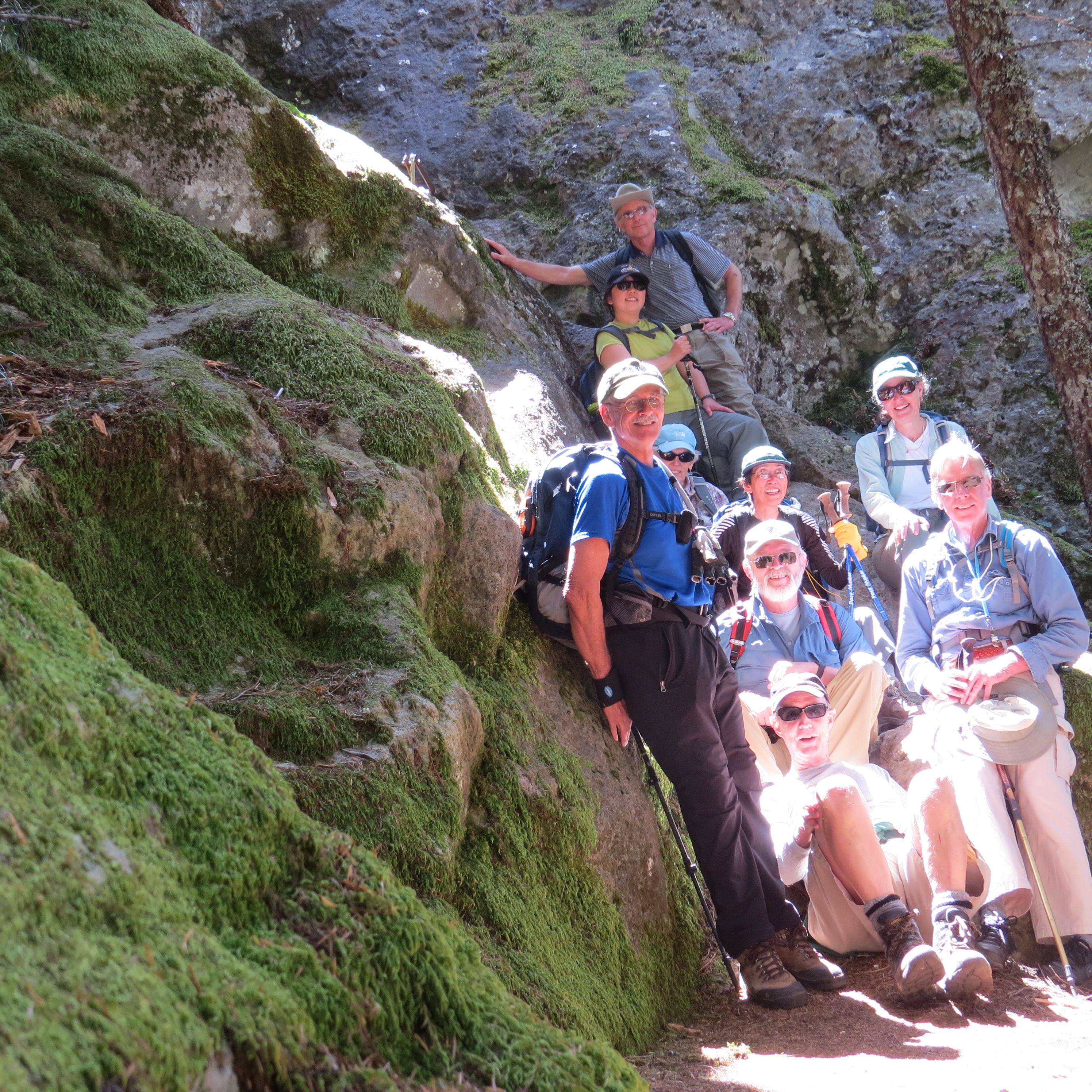
Obsidians at Rooster Rock. I am sitting, front row.

Later in the summer, at Black Crater, just east of McKenzie Pass,  one of the guys came up behind me, when I was leading, and I stepped aside, so he could go up.  He has been known to run up the trail, although this one was steep enough that after he opened a 100 meter gap on me, it stayed there.  I was fine with it. I liked my pace, and I enjoyed the hike up.  I really don’t need to lead, but if I am last, I want to be the “sweep,” the guy who takes care of any problems in the rest of the group.

View from atop Black Crater. Smoke from wildfires.

View of Sisters from Black Crater. Smoke from wildfires.

When it comes to my hiking portfolio, however, I wanted last summer to build my Oregon one quickly.  Still, there are trails that have yet to see my feet.  On that Rooster Rock hike, another hiker told me about some loop hike I needed to do in the summer.  He said it was fantastic, but I couldn’t remember the name.

One week, I did 4 hikes in 5 days, a lot, even by my standards.  I was a bit tired on Monday and Tuesday and took the days off.  I was going to hike Thursday to either Middle Pyramid or Browder Ridge, a couple of good, reasonable tough hikes. The following Sunday, I was going to lead an Obsidian Loop Hike, my first time as a hike leader.  As I was checking on how many had signed up for my hike, I saw the name, and it clicked:  Opie Dilldock, 14 miles, 2800 feet elevation gain, high in the Cascades.  Opie Dilldock is a high pass on the Pacific Crest Trail.

That was the hike I needed to do, except it was on the Monday after my Obsidian Loop Hike, and I was busy.  I can’t hike all the time.

I knew the hike needed a permit, however, so I checked to see if anything was available on the previous Friday or Thursday.  No.  But there were 12 permits available on Wednesday, a lot, considering there are only 30 allotted each day.  I wasn’t sure I wanted to go, but I couldn’t get the idea out of my mind.   I could scout the Obsidian Loop Hike I was going to lead and see Collier Cone.  Wow, what a loop.  Wildflowers would be out, and I didn’t know when I would get another chance.

I couldn’t really go on Wednesday.  It was too soon after all my hiking the previous week.  At 2 p.m. on Tuesday, 10 permits were available.  No problem, I thought, let me wait.  At 6:30, three permits were available.  I signed up online.  This is crazy, but a hiking portfolio is a portfolio, and I was going to hear later how great the hike was and wish I had done it.  My wife was out of town, the errands I had to do Wednesday could wait until Thursday, and I was going.

By 9:10 the next morning, I was on the Obsidian Loop Trail, expecting 16 miles, not 14.  I walked steadily and did the 3 mile wooded part to the volcanic region in 50 minutes.  So far, so good.  I found the trail after that, which had been under snow a month prior, and continued uphill to Obsidian Falls, 1700 feet above where I started.  I was about  6 miles in and had plenty of time.  Ten miles to go.

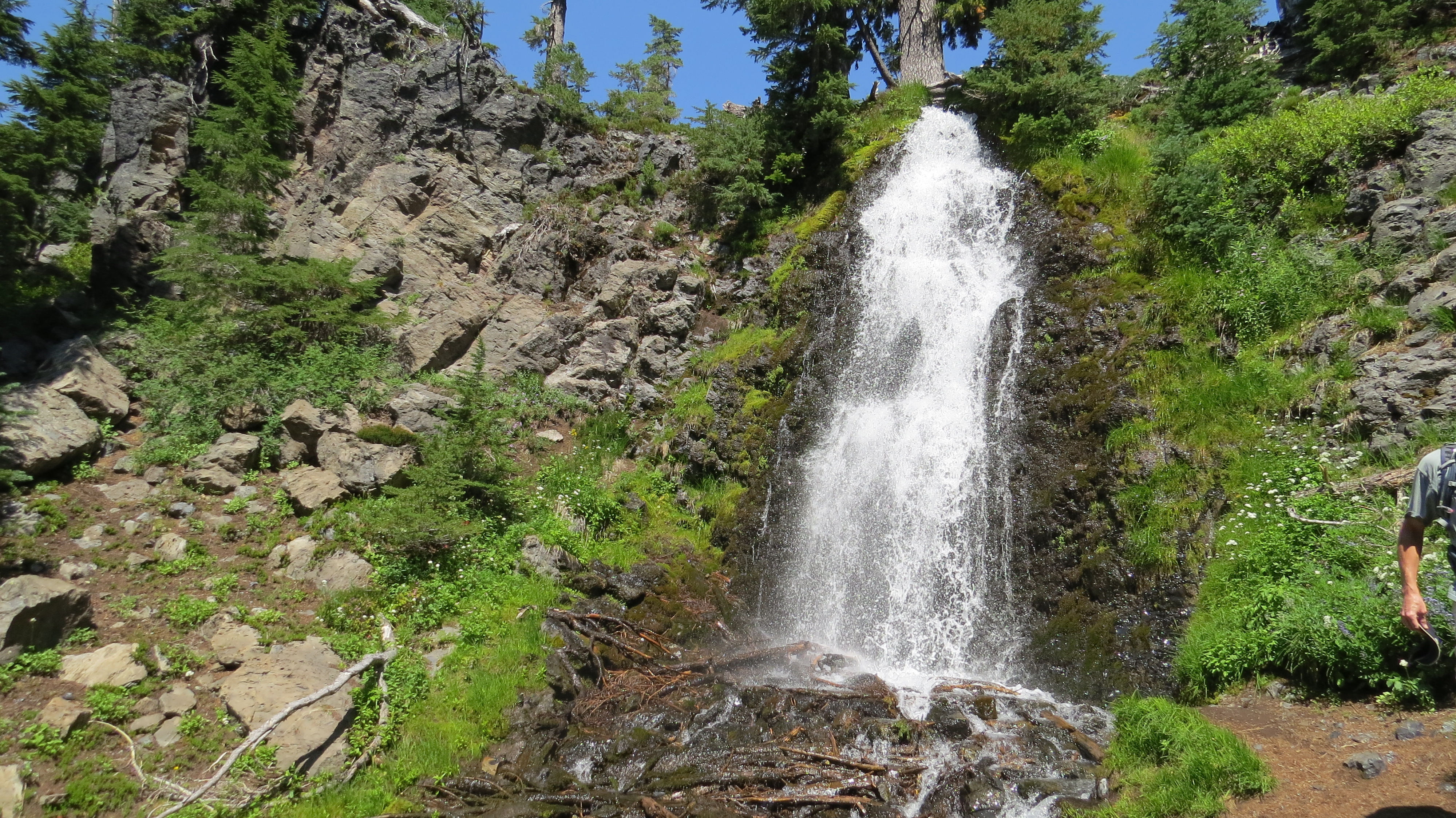
Obsidian Falls

Obsidian Falls

Or so I thought.

The trail dropped about 100 meters, which was a little discouraging, because I knew I would have to climb it and more.  On the other hand, I was seeing alpine lakes that in July were just beginning to thaw.  The place where I climbed in snow was somewhere, but it sure wasn’t on the trail I was on.  I hadn’t seen any of this trail back in early July.

I left the Obsidian Loop portion and headed down more and then upwards, toward Collier Cone.  I was in volcanic area now, soil like rocky ball bearings, slippery, as I started some serious switchbacking up.  It reminded me of the Grand Canyon.  Snow was to my right, and after a long climb, I saw what looked like the top of a ridge. I crested the ridge, and—wowwww— there was Collier Cone, a lake, two glaciers calving ice bergs into it.  I was 10 miles into the hike, had lunch, and figured not only would this hike be more than 14 miles, it would be more than 16.  A lot more.  I still had to get to Four in One Cone, 4 1/2 miles from the road, which led back to the original trailhead.

Collier Cone, 7200 feet (2200 m.). It is 2400 feet above the starting point, and there is a lot of downhill, so the total elevation gain is more than 3000 feet (900 m)

Collier Cone, 7200 feet (2200 m.). It is 2400 feet above the starting point, and there is a lot of downhill, so the total elevation gain is more than 3000 feet (900 m)


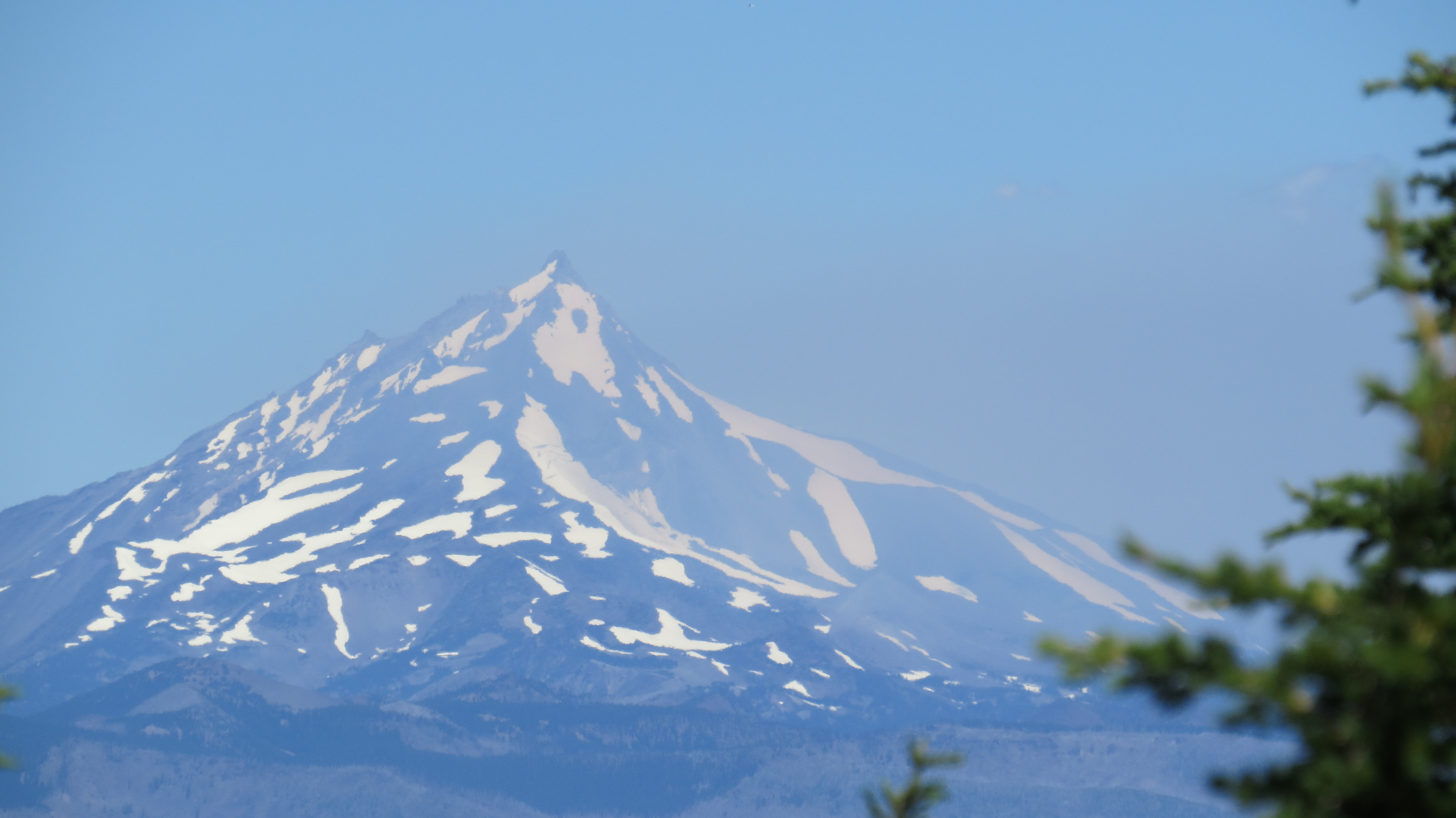
Mt. Jefferson

Smoke clearly visible.

Pacific Crest Trail north of Opie Dilldock pass, looking north.

Pacific Crest Trail north of Opie Dilldock pass, looking north.

Time to get moving.  I was soon on the Pacific Crest Trail, a hiker about 1/2 mile behind me and three ahead of me.  I caught up with the latter at the Scott Trail, my route back to the road.  The PCT hikers had “the look”.  It is hard to describe, but it is the stare of somebody who has been on his or her own for a while, seen things the rest of us won’t, has had a rough time out in the wilderness, but wouldn’t have it any other way, and is doing the hike for a reason, usually private.  I know this, because I have section-hiked the Appalachian Trail, and I’ve had “the look,” too.  I had seen things others never would, been hot, cold, wet, dry, exhausted, exhilarated, happy to see people, happier to be alone, hurting, not hurting, and caring only for my body and my gear, in that order.

Time to get back to the car.  I walked past Four and One Cone, where I had been 4 days earlier, back on familiar trail, found a shortcut to the car, and finished in under 6 hours.  I didn’t care about my speed.  I saw a lot.  It was a tough hike but a good hike.  I would get some junk food on the drive home.

Opie Dilldock is now part of my portfolio.  Really, really good hike.

All nineteen miles of it.

WEATHERING THE STORM

November 6, 2014

“As soon as they started covering over those graves with dirt, the hurricane moved north.  Now, was that a coincidence, or was it due to the desecration of those graves?”

The exact wording was probably a little different, but the meaning was not. This TV show was not on some sci-fi network but rather The Weather Channel (TWC), which formerly discussed the weather throughout the US, not century-old hurricane folklore.  TWC has shows about prospectors mining gems, staying on mountains during thunderstorms, exceedingly unwise.  Storm Chasers shows people outside in the middle of thunderstorms, filming or looking, extremely dangerous; lightning is one of the biggest weather killers in the US.  The towing company series in the Canadian Rockies didn’t belong on TWC but with “Ice Road Truckers,” a good show, when most of the dialogue wasn’t edited out because of profanity.

Weather Co. CEO David Kenny:  “The bottom line is, reality television on TWC needs to be based in science and storytelling.”  How about basing it on current weather and teaching people at the same time?

Science, I like; storytelling to make the supernatural appear “it really could have happened,” I don’t. Storytelling about “It could happen tomorrow,” makes some think that their lives will be snuffed out any second.  We need to inject a little reality, probability, and science into the discussion. We do not have to be afraid of everything every second.  Nature is not out to get us, regardless of what some may think.  There is no right or wrong in nature, only consequences.

Tonight, the discussion was about California prospectors in the 19th century; the only mention of weather being that “storms could form in a moment,” which isn’t true.  Storms give warning.  No mention was made of the historic drought in California, the warmest October on record in parts of Oregon, or snow in Charleston.  The US has more interesting weather than any other place in the world.  Why aren’t they discussing it?

TWC used to be thorough, reporting and discussing national weather.  While there was often unexplained jargon, it was interesting. I could have done without the notion “rain is bad, sun is good,” because I lived in a place with a 20 year drought (not mentioned), where eventually people notice it hasn’t rained for 4 months, plants are dying, reservoirs are drying up, and fires are burning.

Years ago, a local Arizona weatherman gave 5-day forecasts.  He eschewed longer ones, appropriately, because the probability of a 7-day forecast’s being correct was about 50%.  One day, he suddenly started using 7-day forecasts. I wrote him and asked him why he had changed.

“I was at a meeting of TV weathermen,” he replied, “and I learned the public wanted 7-day forecasts.”

So?  The public wants forecasts that have a 50-50 probability of being accurate, and we should give them?  No wonder people complain about forecasts!  Why do we give exact temperatures in forecasts, rather than a range of 5 degrees?  Why are apps telling us what the weather will be at every hour for the next day?  If busy people need to know the weather, have them look at the sky on the way to work and learn something about probability and margin of error.  Both of these need to be taught in the schools, by the way.

“The public wants answers, and they want the bottom line.”  Sometimes, there is no simple answer, and we can’t summarize a complex problem in 30 seconds.  Weather forecasting is one of the great triumphs of technology, but it still is inaccurate.  Cold fronts can stall, the rain-snow line may change a few miles, and models can suddenly change on a new run.

We would do well to remember that the world is subject to natural laws that we understand only partially.  We can predict a few things with certainty and others with some degree of probability less than 100%.  If people don’t like that, then perhaps they should vote for those who will fund science better.  I don’t believe a lot of economic forecasts, because they don’t have probability or confidence intervals.  I’d like to hear that “there is a 35% chance the stock market will reach a new record high in the next 6 months, based upon modeling of investor behavior.”  We don’t have that ability.  Instead, pundits are bullish and bearish about behavior that depend highly upon unpredictable world events.  Slight market changes are explained by behavior other than random noise, which is often the reason.  I would remind people that on 1 January, nobody dreamed two Malaysian airliners would be lost, one not found, and one shot out of the sky.  Nobody predicted there would be Ebola in the US, the Ukraine, the rise of ISIS, or sea stars dying off the US West Coast.  Nobody predicted in 2008 that the unemployment would be almost halved and the Dow would reach a new high by 2014.  At least the Republicans didn’t.  That is a fact.

While 5 day forecasts have unpredictability, we can be much more confident about climatic conditions on Earth.  Indeed, we have a confidence interval greater than 95% that man is changing the Earth’s climate.  That is statistically and realistically important.

Yet, TWC stopped discussing climate change several years ago.  Heidi Cullen, climate scientist at not-profit Climate Central (note the adjective), was on TWC for 2 years, before it was cancelled by NBC, after it bought the channel.  She got a lot of hate mail, and that hurts ratings.

Dr. Cullen didn’t state her message properly, however.  On The Colbert Report, she used examples floods in Pakistan and the coming displacement of Bangladeshis due to ocean rise.  The reality is that most Americans don’t care about those countries.  A high percentage of high school students can’t find Bangladesh on a map and I would bet 95% couldn’t name its capital, and even more don’t know what it was once called.  Why didn’t she talk about the drought in Texas, that was with high confidence due to climate change, or the changing migration pattern of birds in the US?

“It’s business.”  Yep.  It is.  Give the public what they want, and you will get rich.  Give them what they need, and you have a more enlightened society.  How rich do you have to be?  That has an upper bound.  How enlightened should a society be?  There is no upper bound.

I quit watching TWC.  I’ll look at the models myself and make my own forecasts, rather than worrying about what will happen if an asteroid crashes into the Earth.  Sure, the latter may happen, but I’m more concerned about tomorrow’s weather, if I should decide to go hiking and actually see the real, and not virtual world.

I’d rather be enlightened than super rich.

“DEAD AIR” vs. A SINGLE SQUARE INCH: SILENCE

September 20, 2014

Maxwell Butte is a 5 mile hike into the Jefferson Wilderness, climbing 2500 vertical feet to the top, just over 6200 feet.  From the Butte, one can see the high Cascades from Mt. Hood to Broken Top.  On a clear day, one might see Diamond Peak, too.  It is a steady climb, and good trail work by the Obsidian Hiking Club, of which I am a member, has made the big gouge in much of the trail a resting place for downed trees, in an effort to stem erosion.

The best part of the hike came when I least expected it.  That usually happens.  It did not come when I reached the top, nor did it come when I had a great view of Three-fingered Jack right in front of me.  It wasn’t the fact that I was alone, but that was getting close.  It had been windy all the way up, but as I came down, the wind subsided.  Completely.

THREE-FINGERED JACK

THREE-FINGERED JACK

Outside the wilderness, in deep forest, Douglas firs dominant, with a few Silver Firs,  I was still alone.  But, I now, I appreciated something that I had not yet experienced on this hike.

SILENCE.

I mean QUIET.  NO NOISE.

There wasn’t any wind, no sound from a bird, a squirrel, a car, another person, or a plane overhead.  There was NO SOUND.  My ears rang, it was so quiet.

I know my hearing is gradually worsening.  But the silence was not due to my hearing problems.  There was no sound, and in America today, that is a rarity.  True, one can be in a sound-proofed room or wear sound canceling headphones, but silence in the wilderness is special, for there usually is some noise in the woods.  I’ve experienced total silence in the Grand Canyon, the Boundary Waters, and the Brooks Range.  Usually, the lack of sound has come at night, but on the Maxwell Butte trail, it was in daylight.

I sat there and listened….TO NOTHING…and thought, because without sound one starts to think…..about the Silver Fir near me, the name of which I learned only the prior week on Lowder Mountain.  I thought about the soil beneath me, the beauty of the trees, hundreds of years old, the fact that I was here, had trod these woods, and nobody was near me.  I reveled in my good fortune: SILENCE, NO NOISE.

I didn’t think of the dropped cup in the coffee shop earlier that week, where the acoustics made the noise hurt.  Or how somebody moved a cart by me as if they wanted to make as much noise as possible, as often seems the case today.

I enjoy music, but there are times I don’t want to hear it.  I don’t want to hear ANYTHING, not a beep with more information that often clutters my life.  To be outdoors in silence, away from people, is special beyond words. I believe, albeit without proof, that people need this sort of silence, yet we have countered with a barrage of sound, believing constant information is what everybody needs.  It isn’t. Multi-tasking is overload.  Many of our schedules are overloaded.  I believe there is harm from the constant beeping of messages, many unimportant, programmed voices in a car, sports announcers that feel they have to keep talking, or 24 hour a day television, where “dead air” is something to  be avoided and filled with comments, whether valuable or garbage.  Why can’t we shut up for a few minutes?

A man was once separated from a tour  group in Mammoth Cave, Kentucky.  He was found 36 hours later, alive and relieved.  In the cave, there is not one lumen of light.  If the cave is dry, there is no noise at all.  The man said what bothered him the most was the silence.  He cracked rocks together to make noise.  Darkness was a problem, but silence was difficult.   I don’t know if I would feel the same way, but I do label wilderness, total silence, and totally dark skies the “outdoor triad.”  We live less fulfilling lives, I believe, because many people never experience one of these three, let alone all of them together.

Mammoth Cave, Kentucky

Mammoth Cave, Kentucky

Light pollution has been a problem for years, affecting nature and man in nature, too.  We have lost our night sky heritage; the National Parks are trying to deal with light pollution.  Sound pollution is more insidious.  Europe doesn’t have places like the Olympic Peninsula, where the One Square Inch Project is occurring.  Excessive sound damages our hearing.  This is a fact.  It hurts other animals.  That is a fact, too.  It isn’t good for us, and the damage it does to our thinking, the believed necessity to process more information, which I don’t think healthy, is poorly recognized and the consequences not completely understood.

Eventually, a high flying jet broke the spell that I was in.  Jet engines at any altitude can be heard on the ground.

I will eventually live in a silent world, should I remove the hearing aids I will some day need to wear.  What I want now is to periodically spend time in places where there is silence, where no sound is transmitted to my cochleae.

I don’t know why at that particular moment I decided to sit on the log.  Perhaps silence ironically called me.


View from the log.  SILENT

View from the log. SILENT

http://www.utne.com/mind-and-body/search-for-silence-quiet-art.aspx?PageId=7#ArticleContent