Archive for May, 2026

THE QUIET SIDE OF TRAIL ETIQUETTE

May 26, 2026

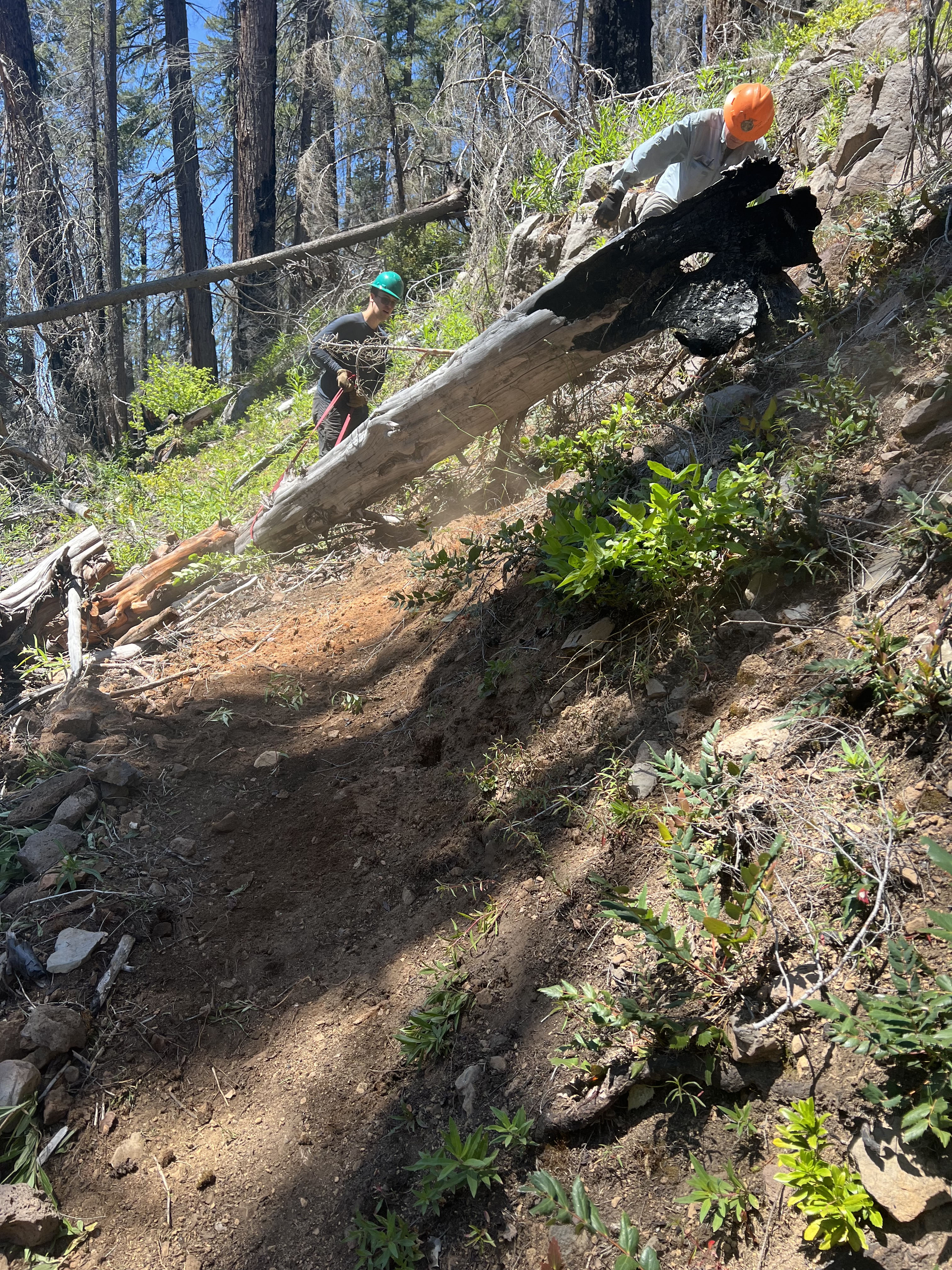
A couple hundred yards after the creek crossing where I left the Waldo Lake Wilderness, I saw a chain saw at the side of the trail. This was left behind by the chain saw pair who logged out the non-wilderness part of the trail so we hand sawyers wouldn’t have to do the work. After finishing the logout, they didn’t bother to cache the saw, since the road to the nearby trailhead was closed to any visitors. 

I picked up the saw to carry it out. I didn’t have to, but moving it was the right thing to do if one is able. I don’t run a chain saw, but I’ve carried plenty in and out of the woods. This carry was only a quarter mile, and yes, I was tired, but I believe in moving tools forward on the trail in the direction the crew is going. I have occasionally left tools up trail where others brought them back, so really I was closing a circle of good: I do good, good is done for me.

It’s important when one does a favor like this to be quiet about it, too. Even writing about this was difficult for me.

Fifteen minutes after I finished, when the owner arrived at the trailhead, I was relaxing on the ground near a vehicle and didn’t say a word. I had forgotten about the saw, now more interested in not moving and cooling down. Several minutes later, the sawyer looked over at me and said, “Thank you!” Surprised, I replied, “You’re welcome!” That was it. As it should be.

There are some jobs we do in the woods that are expected; when you finish, you don’t announce it, unless there is a reason the crew leader needs to know. You don’t tell a partner at home you cleaned your dirty dishes, vacuumed, put away your clothes, or cleaned the toilet. Those chores are expectations. On the other hand, however, giving credit makes a person’s day. You see a vacuumed carpet, you express thanks. I’ve been on both sides of that one. I put my partner’s name first on a scouting report showing where logs needing removal were on an uncleared trail. While she was a newcomer to the crew, she did the same physical work I did, noted issues I missed and did a great job. She deserved top billing. I believe in the adage, “there is no limit for what a person can accomplish if they don’t care who gets the credit.”

Sometimes, I acknowledge later. I worked with another newcomer last winter on a tough trail. That evening, I thanked him for doing a great job. He appreciated it. This particular day with the saw, I congratulated a crew member I’ve known for years for getting saw certified and hauling extra weight out of the woods, more than I did. Additionally, I told her I appreciated her comment on my tread work far up trail when she passed by. It was a tough day and she made the right comment at the right time.  Her response showed both surprise and gratitude. I hit home with my words. Kindness matters.

On Fall Creek, hiking a mile and a half to the work area after a month’s absence, I was first on the trail. There were many new branches present after recent storms. As first person on the trail, it was my job to clear it and stay silent about it. If I get overwhelmed, someone behind me will pass and it will be their turn. I wasn’t overwhelmed, but when I reached the worksite, I was tired. It’s part of the job, and I slowly recovered, but would be significantly fatigued earlier than planned. Stuff happens.

Here are other jobs where one does them and should remain quiet:

  • Cutting out limbs and brush where branches may be hitting hikers.
  • Cutting out the small logs so those sawing can concentrate on the larger ones.
  • Widening tread others ahead of you forgot to do.
  • Sheathing the saw for a sawyer before going to the next log.
  • Putting the handle back on the saw if it was removed.
  • Having a wedge available right away on a cut.
  • Not allowing a saw into the dirt.

Swampers for brushers: you will be thanked for moving the pack forward, but it is your job. It’s one of those few times you get thanked for doing your job. But if you don’t do it, and someone has to walk back a half mile for their lunch, you’ll hear about it.

Swampers for power sawyers: carrying the gas and tools is your job. If you carry the saw, it will usually be noticed, but not always, but you don’t say anything. One hopes your work will be acknowledged, but like all good acknowledgements, it has to come spontaneously, not be requested from a tired, frustrated helper.

Example:In 2023, three of us worked Fall Creek’s east end, for two months. I carried the saw of the senior sawyer in at the beginning of the day and out at the end, often a mile each way, He had a bad ankle and had trouble moving. A year later, riding in the back seat with each other up to a work site, he recognized me and said, “YOU, you were the one who carried my saw for me.” Indeed I was. I appreciated his acknowledgment.

Example: On an outing in the Umpqua NF with four others, I had a spare hard hat for a Sawyer and carried his saw in because he had trouble walking. When that saw later got stuck, I hiked back out a mile for a second saw, bringing it forward. I was an important extra pair of hands. It wasn’t acknowledged and should have been. I let it go. People get tired and miss things, and a forced acknowledgment is worse than a forgotten one. I know I did good that day.

Don’t exclude people who contribute but not on the glamorous part of the job. If you give credit individually to more than half, give credit to everybody.

Example: A post after an outing credited 12 of the 14 people doing the work. My partner and I were not credited, volunteered to do tread work, because nobody else stepped forward. We spent more time on our job than anybody else spent on theirs. It sat poorly with me.

The following are also nice to do:

  • Call out before you pass someone. Thank them afterwards.
  • If you see good work, mention it when you pass. It mattered to me one hot afternoon on the Black Creek trail fire restoration, when I was acknowledged on grubbing a couple hundred feet of trail on a steep uphill.
  • Treat an axe differently from a Pulaski. Axes are not for grubbing.
  • Move tools up the trail.
  • Keep an eye on other crew members. Their look may show more fatigue than their words.
  • Volunteer to do more difficult, less interesting work. Do it quietly. If noticed, great. If not, it builds character.
  • People LOVED to be praised; be appropriate without being lavish.
WASN’T PRETTY BUT IT WORKED OUT

May 19, 2026

Great. But not really. I was at the trailhead, which was fine, but I was the last vehicle that left and the other two vehicles weren’t here. Where were they?

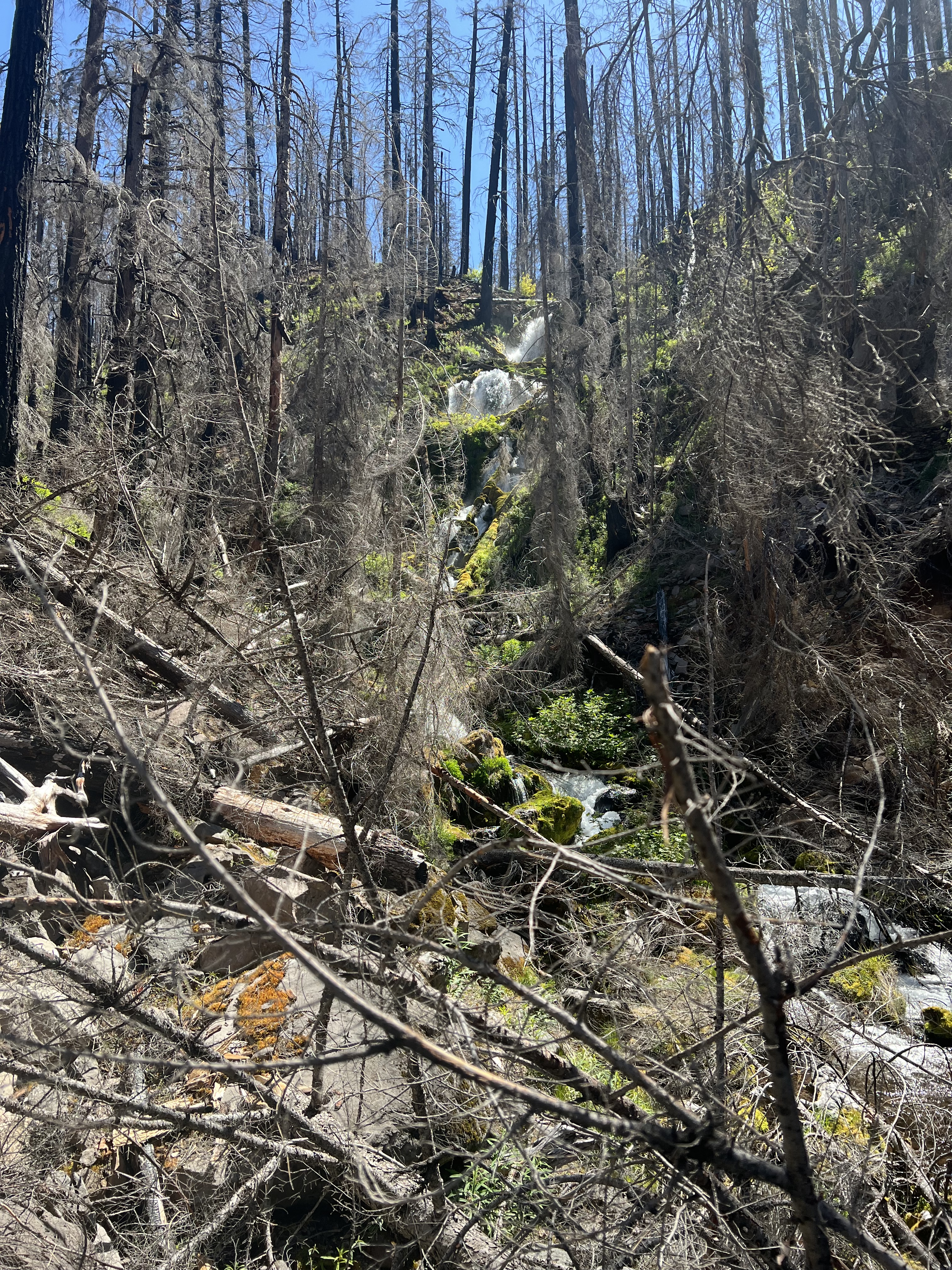
The Crew boss was out of town for a week and hadn’t planned anything unless someone wanted to go out and work, so I came forward with an offer to lead an outing to Chuckle Springs, where a week prior, we had cut out logs blocking the trail for 0.6 miles downstream. This week, we planned to work on the tread and fill in some holes left by the fire and falling trees.

I get called upon by the crew leader to lead when the boss is out of town, chosen not because I am the fastest, the most competent, the most experienced, or the strongest; I am none of these. But I can organize the trip, put it up online, make it clear what we are and are not doing, get what tools or permission is needed, lead the trip, have the right people do the right things, and finish at a reasonable time having done what we needed to do. I have led 37 times; this year, I had five good outings, and was feeling better about what I did, even starting to quietly critique how others led, looking for ways I should adopt or exclude.

This day I would end up strongly critiquing myself. 

We met at Pleasant Hill with three vehicles and nine people. I reminded everybody where we would be turning off Diamond Drive, FS 21, south of Indigo Springs by a mile or two, at FS 404. One of the drivers mentioned 404 specifically, so I was reassured we all knew where we were going.  I left first on the 60 mile drive down there, with the tools, but took a bathroom break, and the others passed me, making me last in the group until I was suddenly first. My partner and I decided to drive back out to 21 and on the way saw one of the vehicles coming in. The driver told us the third vehicle had gone further south. This news was strange, because the third vehicle had the driver who knew 404, on which my tires were presently in contact. I pulled back out on 21 and went further south, eventually seeing headlights in the distance coming towards me, which fortunately belonged to the third driver.

We eventually were all in the same area, although the second driver missed the trailhead by about a hundred yards. I was a bit bothered that both drivers had missed what I considered easy directions to the spot but elected to remain quiet. Close enough. I began to get dressed, tightening my boots, putting on my gaiters. I put my lunch in my pack along with some water and when I looked up from ground level, everybody was standing with pack on, ready to go, as if it were the 12th race of the day at Churchill Downs on the first Saturday in May.

This was unsettling. I had mentioned on the trip description that we were going north or downstream on the Middle Fork Trail (MFT), that it would be an easy day. Instead, I had people lined up as if this were a 6 mile hike to the working area. 

“Hold up, everybody,” I said a little sternly. “We are starting work on the trail right here at the start. We will then work our way down about a quarter mile to Chuckle Springs, opening up one trail to it.”

“Do you just want holes filled or full tread work?”

“Full tread work, and make sure people can see the trail.” Burned over areas are often difficult to scrape off enough surface material to show a trail. “We are not going to go upstream.”

We started downhill working the trail, but by the time I got to Chuckle Springs, the group was breaking up, with some behind me, and a significant number going on ahead. This is not what I had expected, and when I began the part of the trail that paralleled the river for 31 miles, often much higher above it, where we were now, I could barely see hardhats far ahead. I didn’t understand why nobody was working this part of the trail.

Finally giving up trying to catch them, three of us worked a long section of the downhill burnt trail, widening it and making it safe for people, horses, and bikes. When we got near the bottom, I left one of the two tread tools I had and went to look for the others, who had done some work on the downhill trail I had just left, but it was inadequate, which is why three of us were still there.

I reached a stream where a bridge had burnt, with a path through into the small stream, but nobody had trimmed the vegetation through the narrow passage, which certainly was part of our work today. That seemed odd, because we were trying to make the trail passable, meaning trimming any encroaching brush. I went up the hill on the other side and found the missing folks, filling in holes in the trail with rocks. Muttering something like, “Anybody see the leader?” I arrived at an unusually large hole. While there, one person above began rolling a rock downhill… like at me. Yelling, “no, no,” he persisted, and the rock fortunately rolled to my uphill side where I could at least snag it with my tread tool. This was crazy. “Stop!” I yelled.

In this way, we got most of the trail done before lunch. A large log blocked the trail nearby and had to be moved before we could go further, which would not be today, which I had to tell several, as I had mentioned earlier. I told five separately we weren’t going to work upstream. I had placed that information online and repeated it at the outset of the day. I sent a pair to see how far it was to where the trail was cleared from downstream, and the rest of us slowly worked our way back up the trail to Chuckle Springs.

We got the work done, but it was far from a smooth day. The rock coming at me was unsettling, but we got home without further incident. One of the women along later emailed me saying she and the others were in too much of a hurry, and next time she would get a bit more clarification before starting out. Hurry is one of the heuristics that is a common cause of error. I am not sure why so many seemed to hurry, but it appears to be a part of trail crew culture, one that I will try to change if I can. Moving the rock down unsafely was an example of hurrying to get the hole filled, so that we could then……..and I am not sure what comes afterwards.

Other lessons I learned were clearer directions to trailhead with instructions perhaps to stop at a certain place that everybody can find and make sure I am the lead vehicle for the remainder of the drive. I am also thinking of having people take off their packs when I am giving instructions. Finally, if necessary, I may need to tell the group to stay together.

Volunteer trail crew workers need to understand that they are volunteers, not piece workers.