Archive for the ‘UNPUBLISHED OUTDOOR WRITING’ Category

THIS JOB MATTERS

March 2, 2014

 In a Starbucks somewhere at Sea-Tac, I’ve seen an older man, around my age, working the counter. I go through Sea-Tac annually, if I am lucky, because I am on my way to Alaska and to the remotest country I know.  When I come out of the Brooks Range, I take the red eye back to Seattle, get 3 hours’ sleep, and head straight for a bagel and coffee, before the next flight south.  I’m getting a bit old for these trips, but there is a lot of country I still want to see.

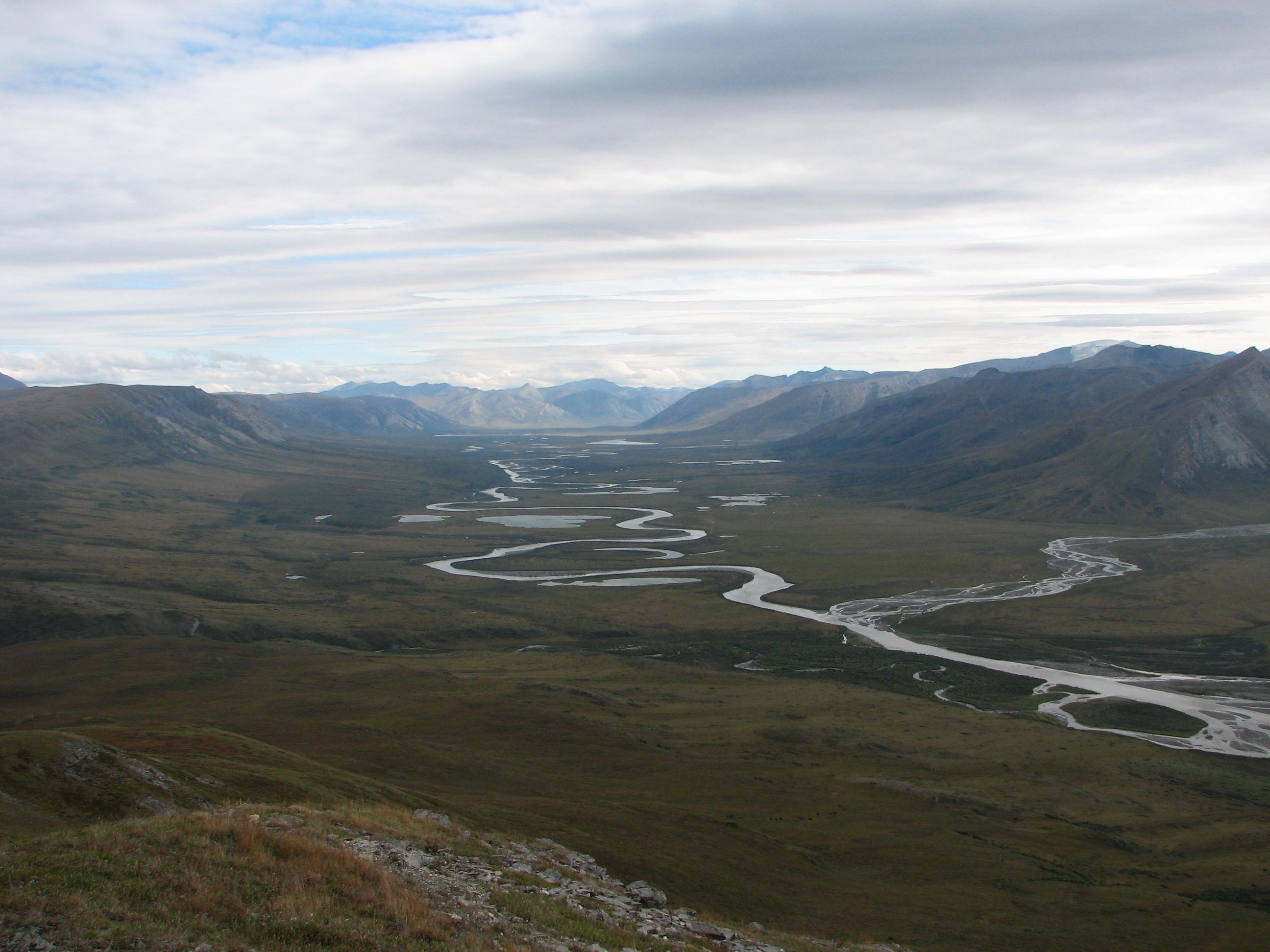
Noatak River, looking east, some of the most remote country in North America.

Noatak River, looking east, some of the most remote country in North America.

Dall Sheep above the headwaters of the Aichilik River.  This was one of the most beautiful areas to hike that I have ever been.

Dall Sheep above the headwaters of the Aichilik River. This was one of the most beautiful areas to hike that I have ever been.  This is in ANWR: to those who say this is a desolate place, I simply reply: “Hike the 120 miles there I have, and see what you think.”


The man works with many younger people.  He could be their grandfather. I know nothing about him: he could be lonely, a millionaire, and wants to be around people. Or he could be lonely, poor, needing every quarter people put in the tip jar.  I put in bills, because the workers divide the tips.  Divisors are fixed, but if the dividend increases, so does the quotient, a dividend in another meaning of the word.

What I do know is the man is dead serious about his job. He takes my order, and I sense I would be doing him a big favor if I were clear what I wanted and paid promptly with little hassle.  He doesn’t say this, of course, but his demeanor is no-nonsense.  He has a job, considered menial by many who walk through Sea-Tac catching a plane, but it is clear that doing the job well matters to him.

When I enter Hirons, a local drug store, I am greeted by a woman who recognizes both me and my wife.  “You back again?” she says, cheerfully.  Hirons is the only drug store I know where I had to ask directions how to find the pharmacy: I once got lost in there, overwhelmed by the inventory.  Just in time inventory doesn’t work in Hirons, and B-school students ought to visit to see how a place ought to run.  You don’t go online, like Amazon, you go there.   You walk in wanting Advil, you come out with it, a pair of lights to make walking at night safer, an Oregon shirt, maybe a mug, a dust pan, and a holder for soap in the shower. That’s how you move inventory, by having it available,  I once asked if they made keys.  That was stupid, but hey, I was new in town.

I called Hirons, because I need to move my Part D drug benefit pharmacy: three guesses what the answer was, the first two not counting.  Stupid call.  Now I can walk over there to buy a lot of other stuff along with the meds I need to pick up. Companies need to value employees who can remember customers.  It has no dollar value, or maybe it does, because people like to be remembered, and they will return.  I will of course use Hirons in the near future, like when I need a Dutch Brothers fix, at the kiosk nearby, at the EMX stop at Walnut.

Yeah, Dutch Brothers, with the red white and blue flags flying.  I don’t know how these places survive.  They do, in all likelihood, because when I arrive, there is music playing I normally wouldn’t listen to but end up liking.  There are two or three college students in there with personalities I wish I had been born with.  They could care less how I look.  They greet me warmly; people like this make me ask how they are, too, which I haven’t done for most of my life.  Not only do I ask them, I get a reply.  I get hot chocolate or coffee, and there are about 10 different kinds of both.  They work quickly and efficiently, their banter is interesting, they stamp my card, which means after 10 trips there, I get a free drink, so I will come again.  Think I tip them well?  Duh.  I go on my way, along the Willamette River, under the tracks, over Knickerbocker Bridge into Alton Baker Park, checking out the birds in the river.  My wife has never seen me so happy.

Autzen Bridge, over the Willamette River.  Hat reads Kobuk Valley, the most remote National Park in North America, and a real gem.

Autzen Bridge, over the Willamette River. Hat reads Kobuk Valley, the most remote National Park in North America, and a real gem.

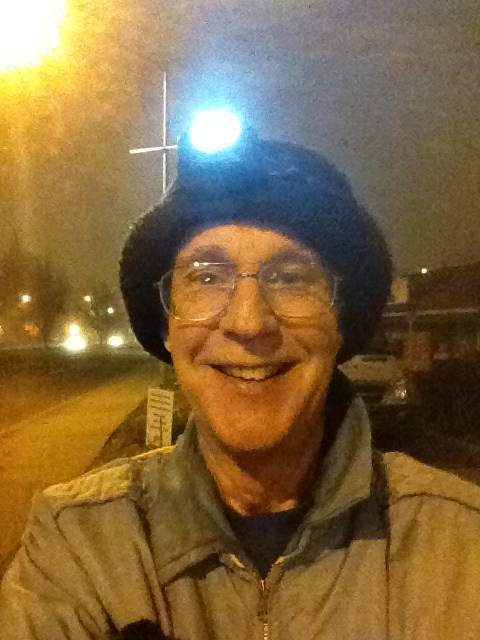
Foggy night; bought the light at Hirons, behind me to my right.  Think it was $7.95.  They should charge more.

Foggy night; bought the light at Hirons, behind me to my right. Think it was $7.95. They should charge more.

Maybe later, I will go to Evergreen’s, where they serve north and south Indian food.  I usually have a Nikasi Beer with dinner.  Yeah, for a dollar more, I get something brewed in Eugene, and I really like it.  A waitress and the owner herself recognize me, both knowing what I want.  I know the owner’s son’s name, birthday and age.  We were once immediately recognized after an absence of 9 months.  That’s impressive.  Think they get good tips from me?

Everybody knows places like the ones I described.  My late father-in-law went to Asquino’s, an East Providence institution with incredible Italian food.  They knew him, and if he had ever forgotten his wallet, I bet he would have eaten for free.  Asquino’s is no longer there. The world and families change.  These businesses are worth a great deal to customers, worth that doesn’t make the bottom line.  That’s the problem with bottom lines: they measure money, which people must make (teachers can’t eat “satisfaction,” my father, an educator, once said) but not customer satisfaction, ability to recognize repeat customers, and to have things the customer doesn’t realize they want.  I would bet much that “happiness” and “ability to recognize faces” is not on ExxonMobil”s bottom line.  Damage to the environment isn’t, which does have a dollar cost.

No money can buy good service and a pleasant person who remembers me, helping me have a better day.  I saw happier people in Ely, Minnesota, who worked half time, than my former partners, who made a half mil a year.  It was a rough life in Ely, but they were a lot nicer.  The average wage at Costco is double that of Wal-Mart.  The net worth of the CEO of Costco is 10% that of the CEO of Wal-Mart.  Throw in the rest of the Walton Family, and it is 1.3%.  The salary ratio between the worker and the CEO is still too large; when I practiced, the ratio was 1:7; 1:3 when hours worked were factored in.  Call me a socialist, but I lived comfortably.

I hope the man at Sea-Tac works to stay busy, but these days, that’s not likely.  I hope the Eugene places stay in business for a long time, along with Track Town Pizza, which hosts German Stammtisch Tuesday evenings. The whole lot are a 30 minute walk from my house.  I wonder how I got so lucky.  

Salary ratios ought to be on the bottom line; important things that can’t be measured ought to be mentioned, too.  Not everything in life has a dollar value.

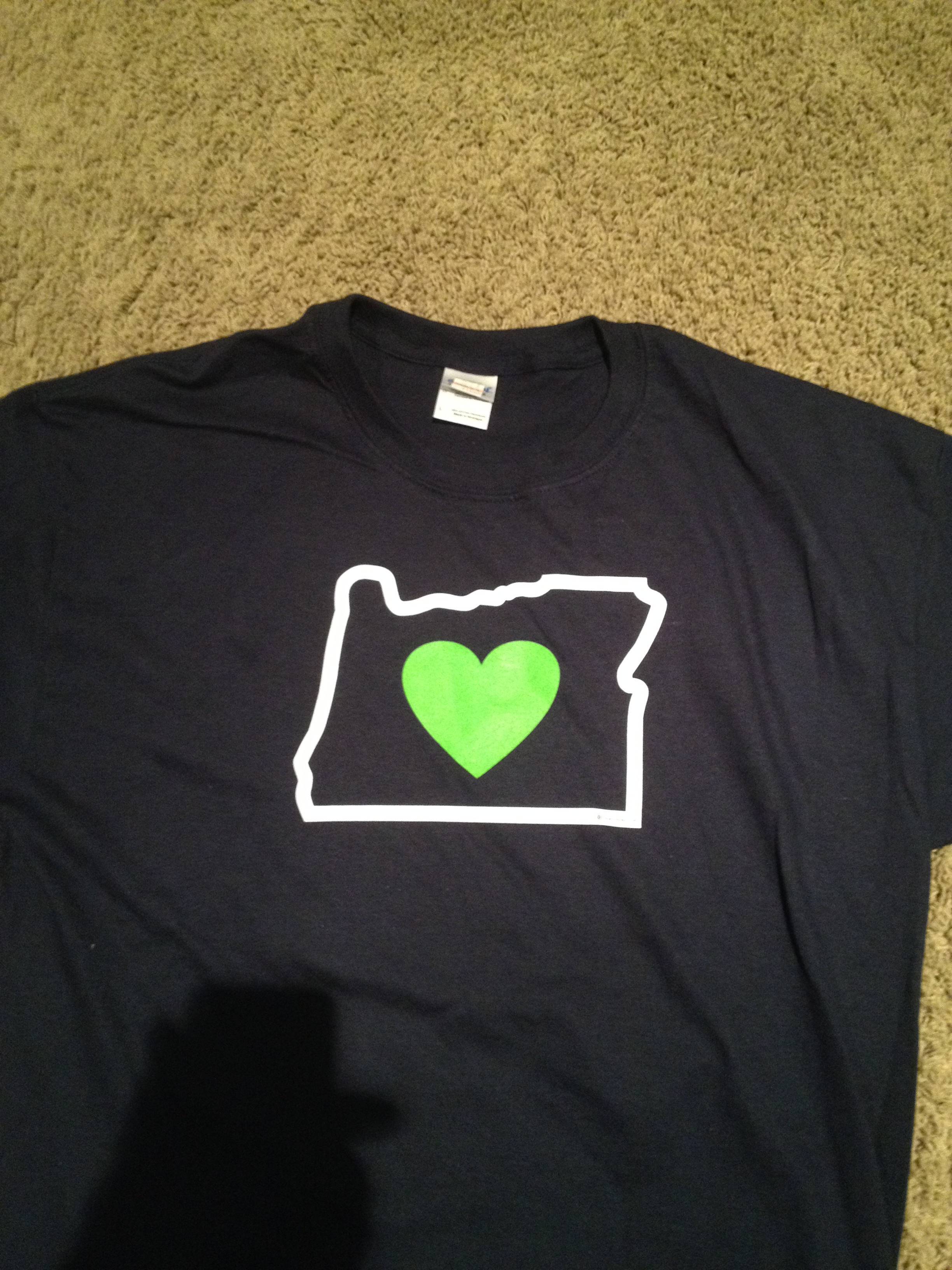
Designed in 2003:  Follow your heart; it will lead you home.  Hirons charges more for this.  I really didn't need it.  No, I really did need it, for I have done what it means.

Designed in 2003: Follow your heart; it will lead you home. Hirons charges more for this. I really didn’t need it. No, I really did need it, for I have done what it means.

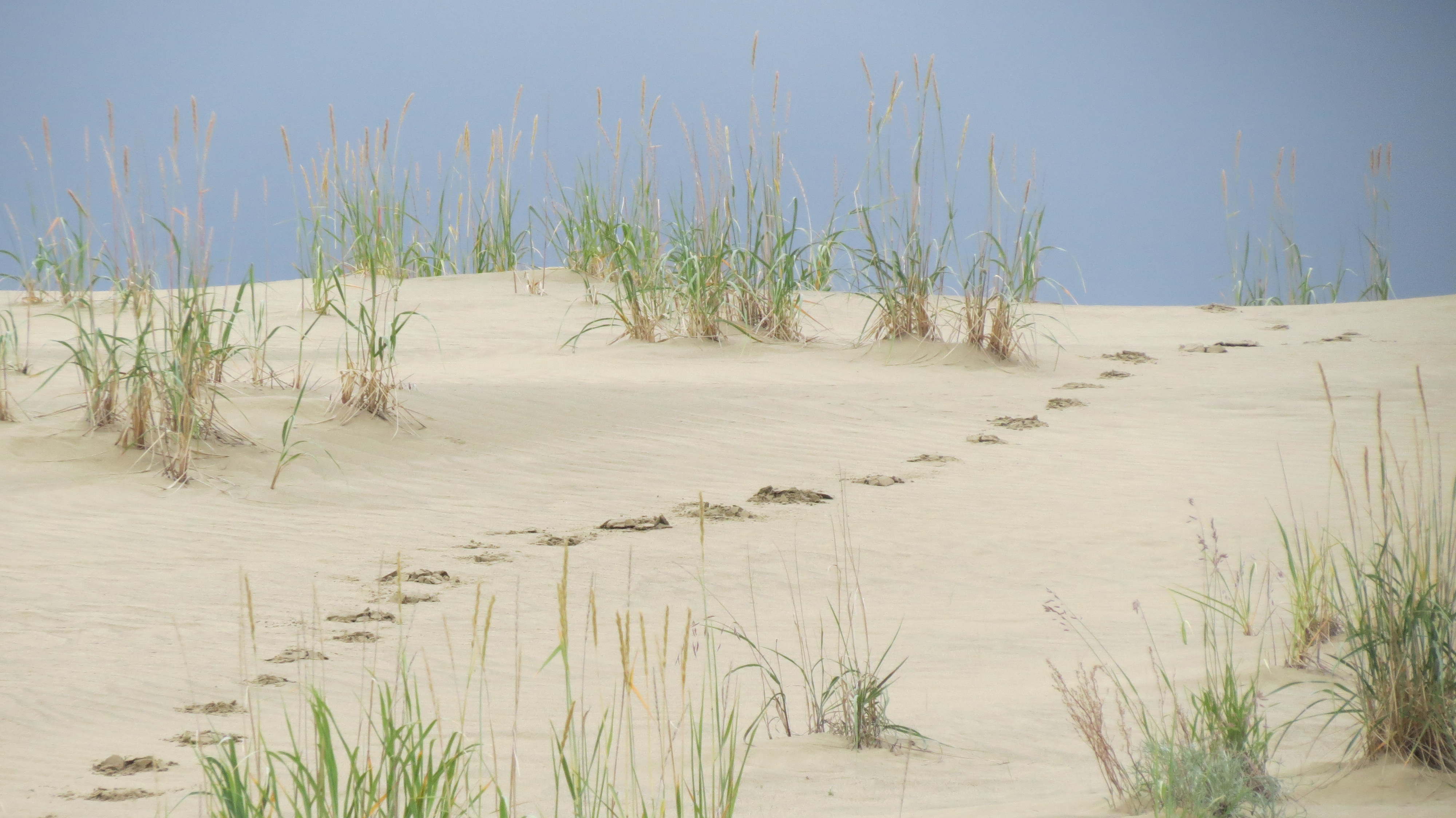
My footprints in the sand dunes at Kobuk Valley NP. It was one of those things that really is too expensive for the time spent, unless one factors in how much it meant to me, which was priceless.  What a lovely, quiet place.

My footprints in the sand dunes at Kobuk Valley NP. It was one of those things that really is too expensive for the time spent, unless one factors in how much it meant to me, which was priceless. What a lovely, quiet place.

LOST

October 17, 2013

This is going to be easy, I thought.  I will drive to the base of a nearby mountain, climb 1.4 miles (2.2 km), 1000 (310 m) feet and come back down 1.4 miles.  I can do this in less than an hour, and I don’t need food or water.  It was afternoon; the Sun was in the southwest.

I arrived at the base, went up in 25 minutes to the summit, and came down another trail that had appeared on the Internet map to take a longer route, 2.4 (4 km) miles to where I had begun.  No problem.  I needed the exercise.  The trailhead where I started was west of me as I started down the trail.  All went well for 15 or 20 minutes, but then I noted by watching the Sun that I was heading south, and I needed to be heading north or at the very least northwest. I should have been walking with the Sun to my left, and it was to my right.

This concerned me a little, and right then I should have stopped and turned around.  The trail was wide and good, however, so I kept going.  When it bent towards the Sun and even a little beyond, I felt better, but I generally had the Sun on my right.  When I got towards the bottom, I saw a parking lot that was clearly different from the one I started at.  I saw a sign saying “west Trailhead 3.3 (5 km) miles.”  That was where I had started.  I was down the mountain but an hour’s walk from where I had started.

I saw a nearby road and thought that maybe the road would take me to the trailhead faster.  That was my second mistake.  I had no map of the road, and my Internet connection was not helpful, either.  But the road headed north.  That was where I wanted to go, until the road headed west and then southwest.  I thought more and more about turning around, and saw a woman walking.  I asked her if this road went near a certain landmark I had passed.

“I don’t know that place, but you’ve walked over the mountain and are on the back side.”

That is not what the Internet maps had shown.  I knew immediately what to do:  turn back. It’s a shame an hour earlier I didn’t do what I knew I needed to have done, for I would now be approaching where I wanted to be. When I reached the trailhead, I had two options:  completely retrace my steps, which was not a bad idea, but I would have to walk up to the summit again, 4.1 miles (6 km) in all, and why didn’t I bring water?  That way had a 100% probability of returning me to where I wanted to go.  Or, I could start on the signed trail that led north 3.3 miles.  The trail had a couple of forks that were not marked.  One led to the summit, which I considered, because that was familiar, but I stayed on the flat trail I had found–the Sun remained on my left, and within forty minutes was back at the car.

I was thirsty when I got back, and I thought what I had done is how people get into trouble.  Step 1, you have a sense of uncertainty., but you ignore it.  Step 2, you start fitting things into place so that you convince yourself you are going in the right direction.  Step 3, things aren’t right, and retracing your route seems too long.  Step 4, you try what turns out to be a shortcut, and it isn’t.  Step 5, you run out of daylight, you injure yourself, you panic, start burning energy and consuming water by running, get more lost, and you are stuck in the woods all night, with no food, water, or shelter.  I’m not young; my reserves are less, and while the young are often the ones who die of hypothermia, I am far from immune.

*************************

Seven years ago, on Isle Royale, I hiked in the dark after a wolf had visited my camp.  My flashlight was good, so I could see the trail, until there was a big blowdown in front of me.  I walked around the blowdown, and it took some time, but soon I was back on the trail.  Something nagged at me, however.  For whatever reason, I wondered if I had turned around. It happened to me once in broad daylight on the Appalachian Trail in 1998.  I stopped.  That was smart.  I took out a compass, which I had never used in the woods before, but always brought with me.  I needed to be going generally northeast, and my direction was southwest.  I had been turned around on the blowdown.  I thought I would come to it again, if I were correct, and I did just that.  I saw what I had done wrong and continued, northeast.  I listened to myself.

**************************

Twenty-one years ago, with nearly 90 days in the woods that summer behind me, I headed out on Burntside Lake for the Crab Lake portage several miles away.  I didn’t have a map for the particular part of Burntside I was on, but I had maps for the rest of the the lake.  My plan was to go due north and eventually reach the part of the lake that I had maps for.

About a mile from shore, I hadn’t arrived at the points listed on the map I had. I tried to “fit” some islands ahead of me into the map I had, and I kept going.  After a second and a third mile, the less certain I was whether I was on the map, or where the Crab Lake portage was.  I could still see the shore behind me, where I had launched.  I stopped paddling.

“You are lost,” I said aloud, to the waves.  “You have no idea where you are.  You don’t want to admit defeat and turn around, but do so.  Nothing good is going to happen if you try to keep going.”  I turned around, quite embarrassed, and two hours later was back in Ely.  The first place I went to was an outfitting store to see where I had been.

I never would have made the portage that night.  The next morning, I launched from a different point and had a good trip into the Burntside Unit of the Boundary Waters.  I didn’t get lost once, and I was comfortable the whole time.

Failure to prepare properly sets the stage for getting lost in the woods.  Take proper gear, even if it is a short hike.  I didn’t on the mountain.  A sprained ankle, a minor issue,  becomes a big issue on a remote trail. Check directions.  I had a compass, but the Sun was more than adequate.  If you can’t tell yourself, “I know where I am, how far it is to a certain point, and how I am going to get to the end,” you should be concerned.  Listen to your concerns.  Sure, it is fine to walk a few more minutes, but start considering turning around and going to the last point where you knew exactly where you are.  Don’t ever look for shortcuts through the woods.  Unless you have a clear line of sight to a distant trail, stay exactly on the trail you are on.

Don’t be afraid to tell yourself you are on the wrong trail.   Don’t be afraid to turn back to familiar surroundings.  Don’t be afraid of saying you don’t know exactly where you are. Don’t be afraid of later having people laugh at your getting lost or having taken the wrong trail.  Later being laughed at means later you are alive.

Be very afraid of being lost, in trouble, alone, and saying, “I can’t believe this is happening to me.”

SOLO

September 30, 2013

For well over a decade, my wife and I have taken an annual canoe trip into the Boundary Waters.  We have everything planned.  Day 1, we stay north of  Minneapolis, where we have drinks at a country bar, dinner, and ice cream afterward.  The next day, we hit the shopping center in Cloquet, get our food, and drive up to Ely.  We pack that night, and the third morning, go across the street to a coffee shop that opens early and serves good scones, too. We drive out to the jumping off point and head in to the woods for a week.

My wife wants a picture of me in that coffee shop this year.  She won’t be there with me.

I knew at some point, circumstances would prevent our going up there.  I just hoped it wouldn’t be “this year”, but “this year” always comes.  Always.  I was under orders to go.  My wife knows the clock in my head.  In 2004, on the river into LaCroix, we saw an old guy paddling and floating downstream, mostly floating.  Mind you, he was about 75, but he was in the woods.  I don’t see many 75 year-olds in the woods.  My wife said, “That’s you in 20 years.”

Nine have now passed.

In 2005, I soloed into Kawnipi Lake for one more look.  I have thought about going back to it, perhaps the most beautiful lake in the Quetico-Superior.  I’ve seen Kawnipi six times, however, I am turning 65 in 9 weeks, and seeing Kawnipi again with high mile days is no longer as important to me as it once was.  Damn, I loved those high mile days.  I can still see myself powering into a nasty headwind on the west side of Agnes, trying to make it to the Silence Lake inlet.  Oh yeah, it was raining like stink, too.

We used to go into Lake Insula, but in 2011, the Pagami Creek Fire burned the whole route in. We could have done it last year, because with decent weather, we can paddle the 7 portage route in as many hours, get to our favorite campsite, not burned, for a late lunch.  Neither of us, however, wanted to see the fire scars.  We both know fire is necessary, and that the area will heal, but we want to remember Insula the way it was, not the way it is now.

We started camping on Basswood Lake, looking for the ideal spot.  The first two years, we found good sites, but they weren’t what we wanted.  Last year, on a day trip, we found one, a little further in.  This was going to be our destination this year.

Except illness and bad crap happen.

I’m going to try to go there solo. I say try, because the intervening nine years at my age is a lot different from intervening nine years thirty years ago.  Last April, I solo hiked into the BW.  I couldn’t make it safely to Angleworm Lake because of deep snow, and the concern that I would get too fatigued or hurt.  I turned back and found a place to camp.  It wasn’t ideal, but it was nice enough.  I was in the woods, alone, and winter camped, which I had not done in 30 years.  Not only was it a good trip, it was the smartest I had camped.  Oh, I got cold at night, and I didn’t do everything right.  But the big decisions were sound–I turned around, I found a good spot, I stayed warm enough, and I ate well.

I’m going in solo again, by canoe.  It will be familiar….  I have soloed more than 20 times.  I talk to myself.  I give myself pep talks, the most important one at the jumping off point, where I tell myself not only to be careful, but to go with the flow.  “It’s just physics,” is one phrase I use, so when I drop food or trip over a root I don’t complain.  I don’t run.  I never deviate from my route that both my wife and outfitter know.  If I am late, I want people to know where I am….and where I am NOT.

I once published an article in a magazine about solo trips.  It was accepted, but the editor added a picture of a waterfall with the caption, “While solo tripping can be good, these sights can’t be shared with one you love.”  That annoyed me.  I wrote that solo trips aren’t for everyone; indeed, only a few of us seek out this solitude.  We do it because we have to.  Maybe we’re selfish, but there are times we want to see things alone and be by ourself.  In society today, that may be strange; I find it nearly sacred.

I won’t go in solo to think about the course of my life, the state of the world, or the next article I will write.  Nope, I will say that, but in the end, I will spend a few hours contemplating a campfire, trying to find that loon that is calling, walking along the shore and see what’s growing on land or in the water, follow a path from the site until it deadends, wondering why it deadends.  I will watch caterpillars, ants, mergansers, not analyzing anything.  If it is nice, I’ll lie on my back and look up at the sky.  I’ll usually watch an eagle soaring and wonder what he’s seeing.

I will return in 4 days to the same place I started.  The canoe, paddles, and PFD will be the same.  The person, however, will be different.  Oh, he will look the same, other than being cut up in a few places, a little stiffer, blisters on his hands, sunburn where he should have been more careful.  But the real difference lies deeper.  He’s been out in the woods and saw whatever it was he needed to see.   He won’t be able to explain it, but those who seek out wilderness and make it part of their life understand.  So will his wife, who will see him and immediately know he went where he needed to.

TICK, TOCK

September 10, 2013

Tick, tock, TICK, TOCK.  In the past year, my internal clock has been ticking louder.  It’s telling me get out in the woods more, do the things I want to do, see the things I want to see, now, soon, this year, maybe next, but not put them off.  The sound is reminding me again there are no guarantees in either longevity or health.

I’ve always had a clock, but I didn’t hear it much for many years, when I had my neurology training.  I saw sudden catastrophic neurological conditions, many times in people who had just retired.  I started to hear the clock again.  Two young colleagues died in accidents within a few weeks of each other back in ’92, and the sound became louder.  An inner voice told me, “There’s a cost to taking a leave of absence to work for the Forest Service in the canoe country, Mike, but there is a cost to waiting. Go now.”  I didn’t wait until was 65, which I will soon be. I went early and never regretted it.

The same time, I made “The List,” years before “bucket lists” and “1000 places to see before you die,” many of which I neither need nor want to see.  The List is for me.  Others don’t need or want one.  That’s fine. I do.

In my 30s, life was busy, too busy.  I practiced medicine, chronically fatigued, interrupted, sued, and hurried until I finally got out at 43.  I had other jobs, went back to school, got a degree, couldn’t make a living at it, and started volunteering, to give my life more meaning.  I tutored math for 9 years, taught a man to read, led birding tours in the neighborhood, and removed buffelgrass.  I published articles.

One day, I happened to see The List, which had languished in a drawer.  The first item was “See the Sandhill Crane Migration in Nebraska.” I had put that one off for a decade. In 2004, I  told my wife and father that I was going, and they were welcome to accompany me, but Nebraska weather in March was unpredictable.  We all went and had a good time; I was transformed.  I am now a volunteer tour guide at Rowe Sanctuary and for 6 years have showed others the migration.  It is one of the top 4 sights I’ve had in nature (total solar eclipse, seeing a wolf in the wild, and Katmai bears are the other three.)

I chased a few eclipses in some unusual places, and indeed, seeing the next total solar eclipse became a permanent member of The List.  In 2005, I added a new item:  see all the national parks.  In December, I drove 550 miles to Guadalupe Mountains NP and climbed Guadalupe Peak the same day.  I was told it would be too windy up there and too dark before I got down.  I went anyway.  For 15 minutes, I was alone and atop Texas.  It was dead calm.  I got down just as it got dark.  Great hike. Eight years later, I have eight parks left to see.  The 19 trips I’ve taken, my odyssey, has been one of the best things I have ever done, carrying me into 13 states and 23 new national parks.

In the winter of 2007, the ticking became really loud, as it does when I fail to get outdoors enough, so I looked at The List and read: “See the Arrigetch Peaks”.  Oh yeah.  That one. These mountains, some of the most unusual in the world, are in the Brooks Range of northern Alaska.  I was 58; I wasn’t going to be backpacking forever.  I have a neck I have to take care of, and anything else could suddenly fail.  I wasn’t expecting problems, but I heard the clock:  GO!!  I  went the next summer.  The hike was the toughest 20 miles I have ever done, but I saw the Arrigetch.  It is one of the top items on my “Outdoor Resume,” which I keep for myself, although others may certainly look at it.  I am not competing with anybody, only fulfilling my dreams.

After that,  I planned my trips on a regular basis.  Hiking the entire Appalachian Trail is on The List, but I don’t plan to do it; there is too much else, and the AT requires too much time.  I’ve walked the southern 528 miles and hiked 20 miles in a day (another list item) 9 times, once 3 days in a row.  Damn, that was fun.  Maybe I should reconsider.

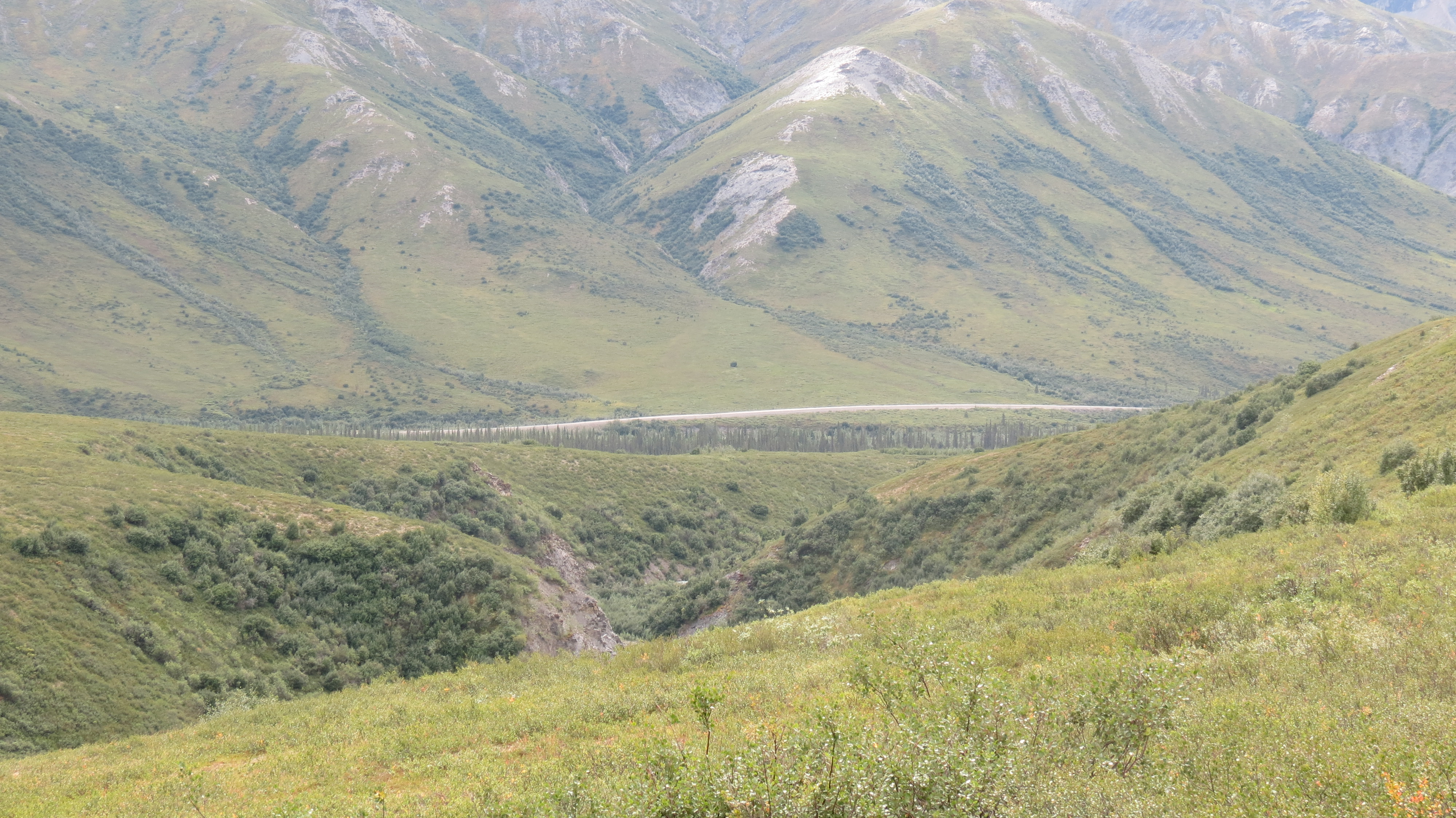
High above the Dalton Highway, just south of Atigun Pass.

Dall Sheep, Aichilik River headwaters, ANWR, Alaska.

TICK TOCK. I wanted to see the eastern “Gates”, Gates of the Arctic NP.  My guide and I bushwhacked in from the Dalton. I carried 75 pounds up a monster hill with a 20% grade, went over Oolah Pass two days later

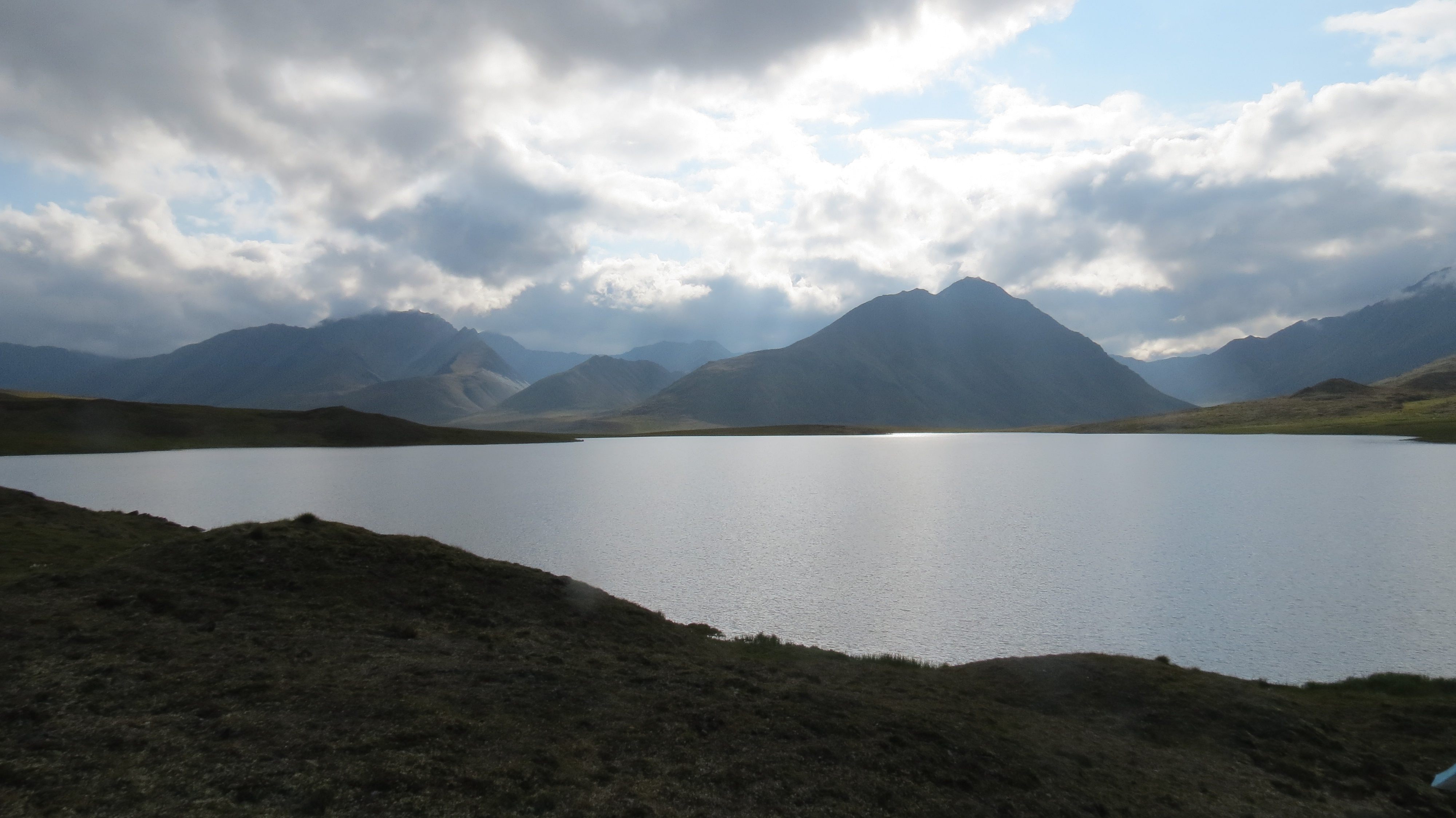
Oolah Pass and Lake

Oolah Pass and Lake

in a cold, pouring rain, up other steep hills, in rivers,over moraines, through incredible valleys, to Summit Lake.  We got picked up by float plane.  Hiking is better, but to fly over this country is incredible.  We flew between Frigid Crags and Boreal Mountain, the “Gates” of the Arctic”, named by Bob Marshall.

Summit Lake, Gates of the Arctic NP, on the continental divide (1200 m)

Summit Lake, Gates of the Arctic NP, on the continental divide (1200 m)

I now think that perhaps this hike was harder than the Arrigetch.  I thought it would be my last backpacking trip, but my guide told me about doing ANWR again. I remembered the wildlife on the  in 2009, got that faraway look in my eyes that said I needed to go back, know I won’t be happy unless I do, and that is on for 2014.

TICK TOCK.  Mike, you saw Alaska, but you need to see those parks.  This year, I took three week-long road trips.  I love planning these.  They were tough, but I did what I set out to do in each one.  The first one took me to Mammoth Cave, KY; I spent time with the Friends of the Boundary Waters in Minneapolis, went to Ely, winter camped solo, gave three scholarships at Vermilion Community College and came home.  The clock’s ticking was quieter.  I got into the woods.  Alone.  In snow.  And did fine.  It was one of the smartest hikes I had ever done, probably because I knew I had little margin for error.

My footprints in Kobuk Valley NP Sand Dunes (greater)

Noatak River, near the western edge of Gates of the Arctic National Park. Looking east.

Three months later, I saw four Alaska national parks.  I spent three nights after 1 a.m. in the Anchorage airport to do so, but I flew into Kobuk Valley National Park,  drove 7 hours to Wrangell-St. Elias and back, flew to Katmai and later to Lake Clark.  Great trip, but I missed hiking with a pack. Go back to ANWR one more time, Mike, go while you can.  If you’re lucky, you can raft the Killik, Nigu, Hulahula or Kongakut Rivers some day, to add to your paddling the Alatna and the Noatak.  Maybe do all of them.  Tick Tock.

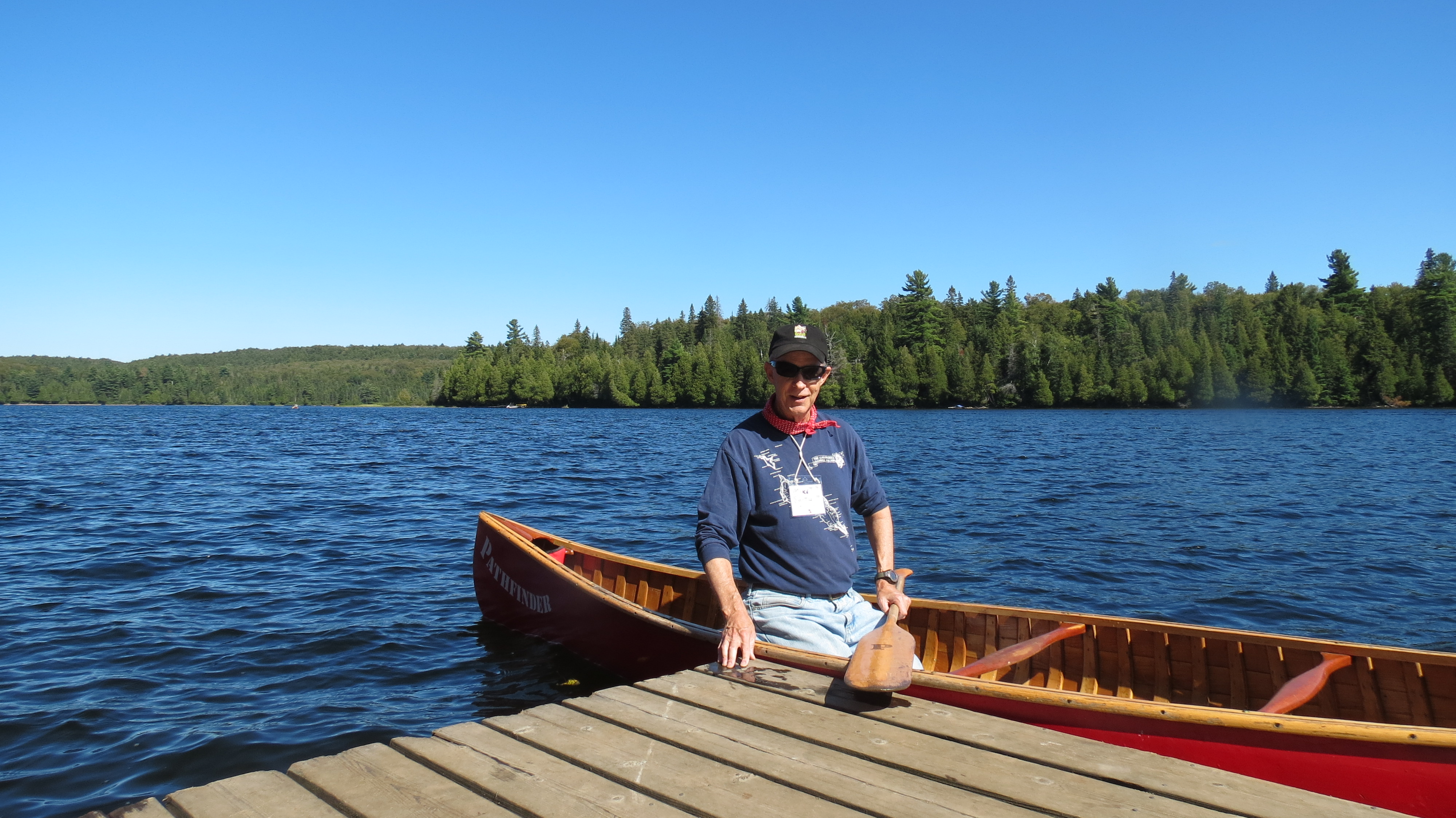
A month later, I flew to Rochester, New York, my home town, to see it one more time.  The next day I was in Cleveland, seeing Cuyahoga Valley National Park.  With a bad case of the GIs that night, and beginning a nasty cold, I drove from there to Algonquin Park, Ontario, for Camp Pathfinder’s 100th anniversary, where I learned to canoe, and did a day loop trip in Algonquin.  Being underway in a red canoe

Red canvas canoe that Pathfinder uses.

Red canvas canoe that Pathfinder uses.

that dented my knees  from kneeling on the ribs and planking was part of the thrill.  Pathfinder bowmen didn’t sit in the bow seat.  I even carried the red canoe a mile.  I texted that feat to my wife, and she simply replied, “Why?”  It mattered.

Day trippers at Little Island Lake, Algonquin Provincial Park, Ontario. I camped at this site 50 years earlier. I am in the blue in the back.

I didn’t know if I could get the 90 pounder on my head, but wisdom is more important than strength, and the canoe went right up. Then, of course, I had to carry it the whole way.  It’s not a man thing; it’s a Pathfinder thing.  I wore red there; to wear red and carry again was deeply satisfying. After Pathfinder, I drove to Ottawa to see a good friend.  He took me over the Chilkoot twice, introduced me to the big waters of the Far North, the Yukon and Nahanni Rivers, and we’ve been in the Quetico.  Lot of water under our keel.  He’s got me interested in seeing Western Australia, and he is nearly 70.  Tick tock.

Tick, tock, tick, tock.

I’m trying to learn two languages, too.  Tick, tock.  Will you ever be functionally fluent in German and Spanish, Mike?  Tick tock.  Are you getting out enough?  Tick tock.  Do you notice how easy it is to get stiff and sore?  Tick tock.  Do you remember your miserable illness in 2009, when you almost were housebound for 4 months?  Tick tock.  Are you teaching enough?  Tick tock.  Are you loving your wife enough?  Tick tock.  Are you caring for your animals?  Tick tock.  Do you look at the maps on the wall and wonder how you are ever going to see all that country before you die?  Tick tock.  Does it matter, if you can just get to the places you love again?  Tick tock.  Are you able to say every day, “If I drop dead now, I will have lived, loved, done good, and been worthy of calling myself a human being?”

Tick tock.

HITTING ROUGH PATCHES, AND FINDING SMOOTH WATER LATER….

August 27, 2013

“Hey, Rick, good to see you!”

I was at the reunion celebrating 100 years of Camp Pathfinder’s existence, where I learned to canoe trip in the ‘60s, and saw a familiar name tag near me.  I found the face vaguely familiar, as much as a face one hasn’t seen for 46 years can be familiar.

Rick (not his real name) turned and said hi, without nearly the surprise I had.  I told him the college I was fairly certain he had gone to (correct), and reminded him that I stayed at his house on a trip from the camp back to Rochester, New York, to accompany the campers back to the camp in central Ontario the next day.  I even got his street right, remarkable, considering I had not visited Rochester in 45 years.  I then asked what he was doing.

“Teaching math.  And I have authored five textbooks.  Good to see you again after the last reunion.  What do you think of the place?”

I had never been to a reunion.  We had not seen each other in 46 years.  I have taught math, and I certainly can subtract 1967 from 2013.  I haven’t authored much of anything, other than a few articles in several different fields, like neurology, Navy medicine, wilderness.  I certainly haven’t authored any textbooks.

I replied: “The things that changed needed to, and the things that didn’t need to change are the same.”  Rick liked that line, saying that was exactly what he was going to talk about at the “Council Meeting” the next day, where we would all be.  He then saw somebody else and left me, without another word.

I had known Rick really, really well at Pathfinder.  I had worked with him in the camp office, when I wasn’t out canoe tripping, which half the time I was.  I was–in a word–bummed.  I saw him several more times at the reunion, always with a lot of people near him, for he was a prominent person in the camp and a major “player” at the reunion.  I made it a point, however, not to initiate any further conversations.

I’m shy; while at times I can force myself to talk to strangers, if they reply the way Rick did, I shut down.  To an extrovert, that is no big deal; to me, I have put myself on the line and failed badly. I wish I could easily change this behavior, but it has been exceedingly difficult to do so.  I tried to tell myself that probably Rick had a lot of other things on his mind, but I was bummed.  I had no desire then to look for another name tag with a familiar name. Maybe I would the next day. Frankly, I was ready then to leave the reunion.

Instead, later that evening I sat outside the kitchen, away from the many gatherings, next to a couple, enjoying the coolness and the beauty of sunset over Source Lake, which I had not seen for nearly half a century.

“Venus is setting,” I commented, half to the couple, half to the sky.  It is how I start conversations.  If I can teach or get into my comfort zone, I open up.

The woman was interested in my comment, found Venus, and her husband looked, too.  They were from Brooklyn, where seeing stars or planets is often impossible.  Above Venus, I showed them Arcturus; overhead, the Summer Triangle, in the south, Antares.

“Let’s go down on the kitchen dock,” I suggested.  It was a clear, pleasant night.

With the wider view afforded by the dock, I showed them Cygnus the Swan, the Northern Cross, with bright Deneb at one end and dimmer Albireo at the other. With a telescope, I told them Albireo is one of the most beautiful double stars in the sky.

I pointed out the Big Dipper, showing them how it could be used as a clock, running counterclockwise around Polaris every day.  Using the Big Dipper, one can tell time at night, which fascinated them. I showed them Polaris, using my outstretched fists to show our latitude of 45 degrees.  In two minutes, they just had learned how to tell the time and latitude without anything more than their eyes and hands.  That’s heady stuff.

We turned to the south to view Scorpius, the head, Antares, and the tail.  The whole constellation appeared before us, barely clearing the quiet boreal forest across the now lovely, dead calm lake.  I told them how my wife and I once saw Orion rise over a calm lake late one night, perfectly reflected in the water.

It was late, and while the parties were occurring all over the island, I was tired.  As we walked back to where we had been sitting, I mentioned that they could always see the Moon from Brooklyn, and if they started following the Moon’s cycle, they would learn a lot.  The Moon is essential in both the Jewish and Islamic calendars.  If they used the bright stars like Vega, Altair and Deneb like Broadway, Madison Avenue, and Wall Street, they could learn to find their way to the lesser known areas in the sky.  It isn’t difficult, and I suspect perhaps this couple will.  I wrote an astronomy column for a newspaper for two decades without any formal astronomy background.  It takes rocket science to go to the stars, but not to learn them.

I have neither written a textbook, let alone five, nor changed thousands of schoolchildren.  I was not speaking to three hundred people at a reunion; I was only showing the sky to two young adults from Brooklyn.

But that night I like to think I changed a couple of lives. If I didn’t, I certainly changed the course my evening had been taking.  I didn’t whistle when I went to bed, but I felt a lot better about myself.  The reunion would turn out fine, Rick had just been a small rock in the water that my canoe hit.  I was again back on calm water, paddling ahead strongly.

Wilderness and a clear night sky are a wonderful tonic for the blues.

Day trip in Algonquin Park, on Little Island Lake. I camped on this very spot 50 years ago. I am back right.

Back from a paddle around the island….and of course a little more. These red canoes are hand made, still wood and canvas, and weigh about 41 kg (90 lb). On the day trip, I carried it 1400 meters without stopping. To still be able to do that was one of the high points of the trip. My shoulders hurt for several days after.  Notice the red neckerchief. That is the sign of a head man.  I earned that, and I was not the only one at the reunion who wore one.

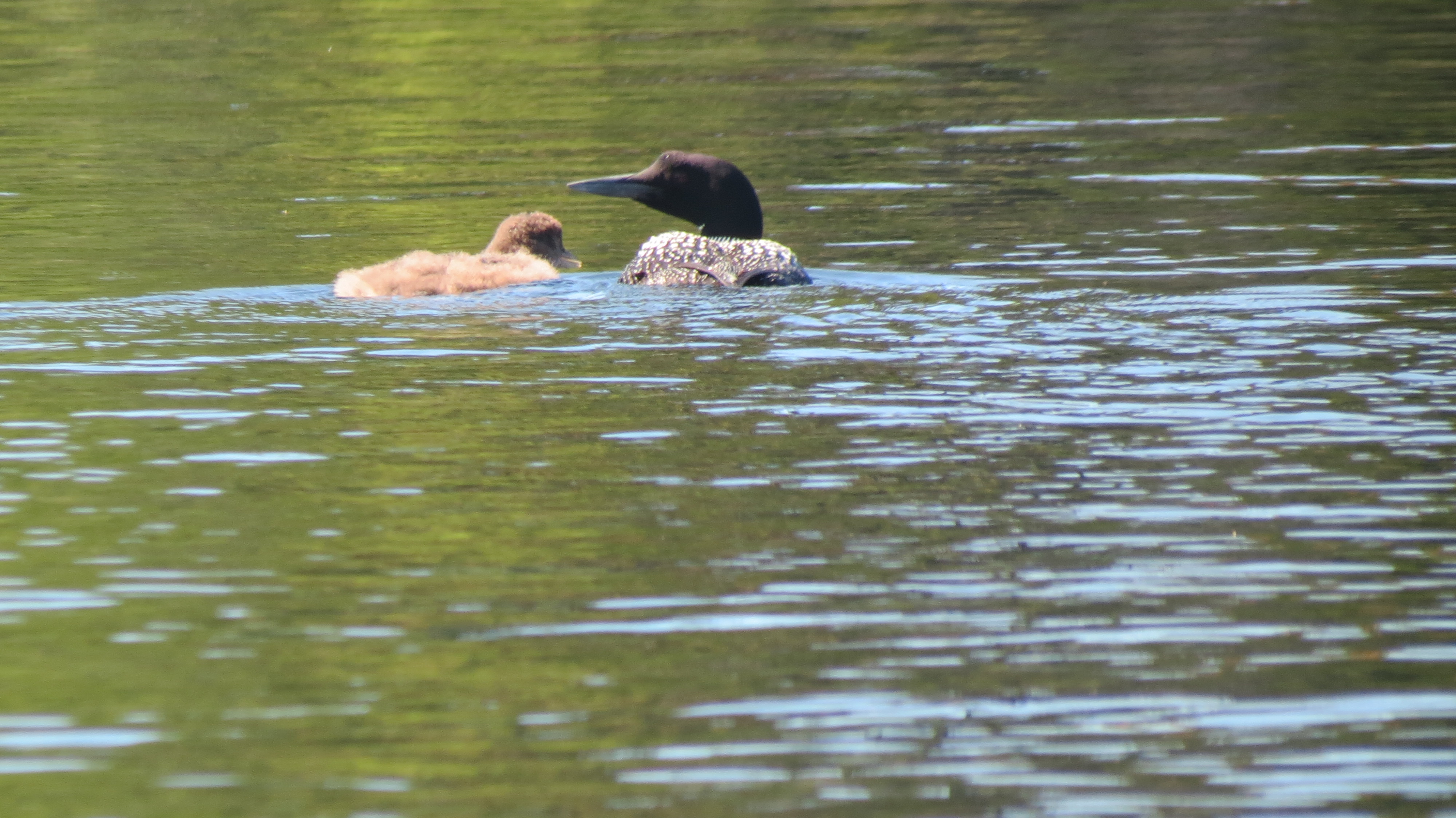
Loon and chick, Source Lake, Algonquin Park.

CUYAHOGA VALLEY NATIONAL PARK

August 21, 2013

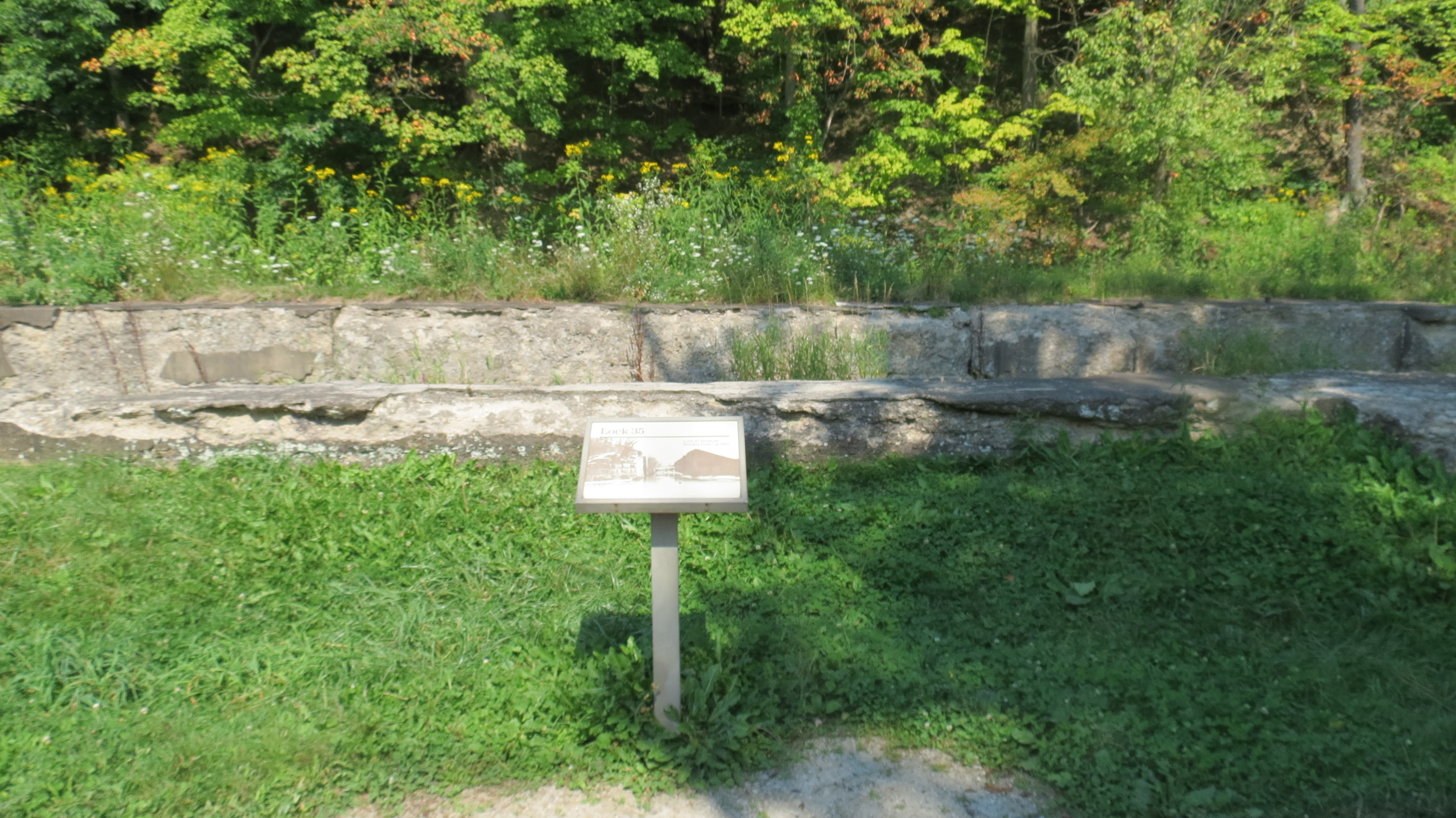
Cuyahoga Valley National Park is just south of Cleveland and close to three interstates.  Despite the proximity to noise and people, the place is quiet, and there are many miles of trails.  I chose the Towpath Trail out of Boston, walking it for about 5 miles and back.  There is a lot of bicycle use, and the trail is popular with runners, too.  There is a river, several large ponds, some marsh, and old locks along the trail.  An old paper mill is there as well.

For those wishing to do a one way hike, shuttle service exists for some of the trails.

There is a small store run by volunteers in Boston; I did not go to other parts, deciding to eat and then walk where I was.  There are many interconnecting trails, and for mountain and even road bikers, this would be a delightful place to be.  For runners, walkers and picnickers, this is a lovely place.

River view and Highway 8 bridge

Typical trail view

IMG_3619 IMG_3618

Footbridge that was removed, sent to Elmira in 1992, restored, sent back, and rebuilt!

REMEMBERING PRINEVILLE AND 30 MILE

August 1, 2013

The Yarnell Hill fire that killed 19 Granite Mountain Hotshots from Arizona has already been blamed on “enviros”, like the 2011 Pagami Creek Fire in my favorite area of the Boundary Waters.  I don’t like the word “enviros,” and I am deeply disturbed how charged words end up in the vernacular, because the side who opposes my views keeps repeating them.  That’s how we got “Obama Care,” “death panels,” and “activist judges.”  For the record, it is the Affordable Health Care Act, and there is a lot of evidence to support the notion that the conservative side of the Supreme Court is activist, not the liberal.  Repetition does not always increase validity.  But back to Yarnell Hill.

Had the area been logged “appropriately,” some said, there would have been no fire.  Logging=jobs.  Jobs=money.  Money=things and kids.  Lots of kids.  Too many kids for the jobs available and for the carrying capacity of the world.  We think the world won’t change.  But it does. Email and online banking have hurt the post office.  Our big steel and copper industries are now small.  No longer are there well paying jobs for people coming out of high school.  Newspapers are in trouble.  The Grand Banks fisheries collapsed.  What happened to record and book stores?  I could extend the list; all these industries have had to change or disappear.

The world has changed, and the forests have, too; in part, because we put out natural fires, because of insects, and because of climate change, which affects the environment, including parasitic beetles.

Since I am an environmentalist, a so-called tree hugger (which I literally am), I am going to play the “blame game” here, since many of my detractors are not called out on their boorish behavior, counting on the rest of us to have been brought up well by our mothers to remain silent.

How dare you blame me and my beliefs for the deaths of the firefighters!!  We haven’t even had the investigation completed yet, but I will bet any amount of money there will be recommendations made that are going to anger a lot of people.  That is all I will say about my predictions.  I have a decent idea of why this occurred, but the investigation will tell me a lot more, some of which will be consistent with what I think, some of which will not.  But rather than wait for the investigation, some wish to blast the environmentalists, so we can mine, cut, hack, and destroy the Earth in the name of money….perhaps in the name of some sort of Deity, too.

Some of the fault was done in the name of what we once thought was good. The Smokey the Bear mindset convinced at least two generations of people that all fire in wild country is bad. Human caused fires are bad, but if they can be caused by humans, they can be caused by lightning, too.  The media will refer to “land destroyed by fire”.  In 1989, we built in the Sonoita grasslands, south of Tucson.  During the building, a 300 acre grass fire burned over all our property.  The house was scorched but hardly damaged.  When I saw the scorched land, I said to myself, “This will take a long time to come back.”  Six weeks later—SIX WEEKS–there was fresh grass, it was brilliant green, and it was home again to animals.

In 2005, on a solo canoe trip to Canada’s Quetico Provincial Park, I walked on a portage where the Bird Lake Fire burned 10 years previously.  I saw thousands of jack pine trees, all the same age, over this area.  Not all will survive.  Some will, others will die or be stunted.  Jack pine cones need fire to sprout.  This will be a big, shady jack pine forest in 40 years.  I won’t live to see it, but it will be there.  Natural fire clears and cleans the wilderness.  I haven’t been back to Yellowstone since the fires of 1988, but those who have know the positive changes it has had on wildlife and the ecosystem in general.  Remember what we all thought in 1988?

How dare you use the deaths of the firefighters as a reason to log the forests!  What could be logged, where they died?  Why do we allow houses to be built in these fire prone areas?  Why should young men and women put their lives at risk to save property?  If “Prineville” and “30 Mile” don’t ring a bell with you, will “Yarnell Hill” mean anything in 2025?  Prineville, Oregon, was the town where the hotshots came from, who died at South Canyon in 1994.  Thirty miles north of Winthrop, Washington, in 2001, the 30 Mile fire killed four young men and women.  The former had at least 20 rules violated; the latter was a tragedy that could have been prevented by not fighting it in the first place, and a concatenation of mistakes.  Easy in hindsight?  Sure.  Before?  Perhaps.  Listen to the video and draw your own conclusions.

Let the investigation proceed.  Afterwards, I would welcome a national debate on how we should manage our forests, except the boors will shout down everybody else and refuse to consider anything other than their ideas.  Can we debate the known science?  Can we honor the memory of these 37 young men and women and all the others who were killed or maimed by learning what to fight, what not to fight, when to fight it, how to fight it, and when to step back?

THE LADY IN THE STYLISH BOOTS

July 29, 2013

“Oh, those damned government regulations.”

I looked towards the voice, that of a fortyish woman, with stylish boots, dyed blonde hair, and a southern accent, who was talking to a park ranger at Katmai, 400 km southwest from Anchorage, and a long way from any part of the lower 49.

I almost let her have it, because rangers have to be nice, I don’t. I’m an elder in my society, and I was a lot more in my environment than she was.  I was wearing boots that had walked the over peaks in the Brooks Range, in Kobuk Valley’s sand dunes, both above the Arctic Circle, in Alaskan rivers, and on tussocks and ice.  Hers had probably just spent their first time on a dirt trail.

At Katmai, there are two viewing platforms at Brooks Falls, the lower, where one can go as long as one wishes without waiting or time limits, and an upper, where 40 people are limited to one hour, then have to get into line again for another hour, should they wish to see more.

Brown bears at Brooks Falls, Katmai NP, Alaska

There is a question, and I think a good one, whether we should be having people view the bears in the Brooks River feeding on salmon.  We don’t know what effect we are having on the bears.  Perhaps none.  Perhaps a lot.  Katmai is pretty enough without having to see the bears close up, but most go to see the bears.

The upper platform, next to the falls, has more fish, and that is where the males, and the big ones, congregate, so people want to go there.  Forty are plenty.  Put 50 or 60 there, and the last 20 aren’t going to see much.  I waited for 20 minutes when I arrived, spent an hour at the upper falls, left, got back on the list again, went to the downstream viewing area a second time, skipped lunch, and waited my turn to go to the upper falls.

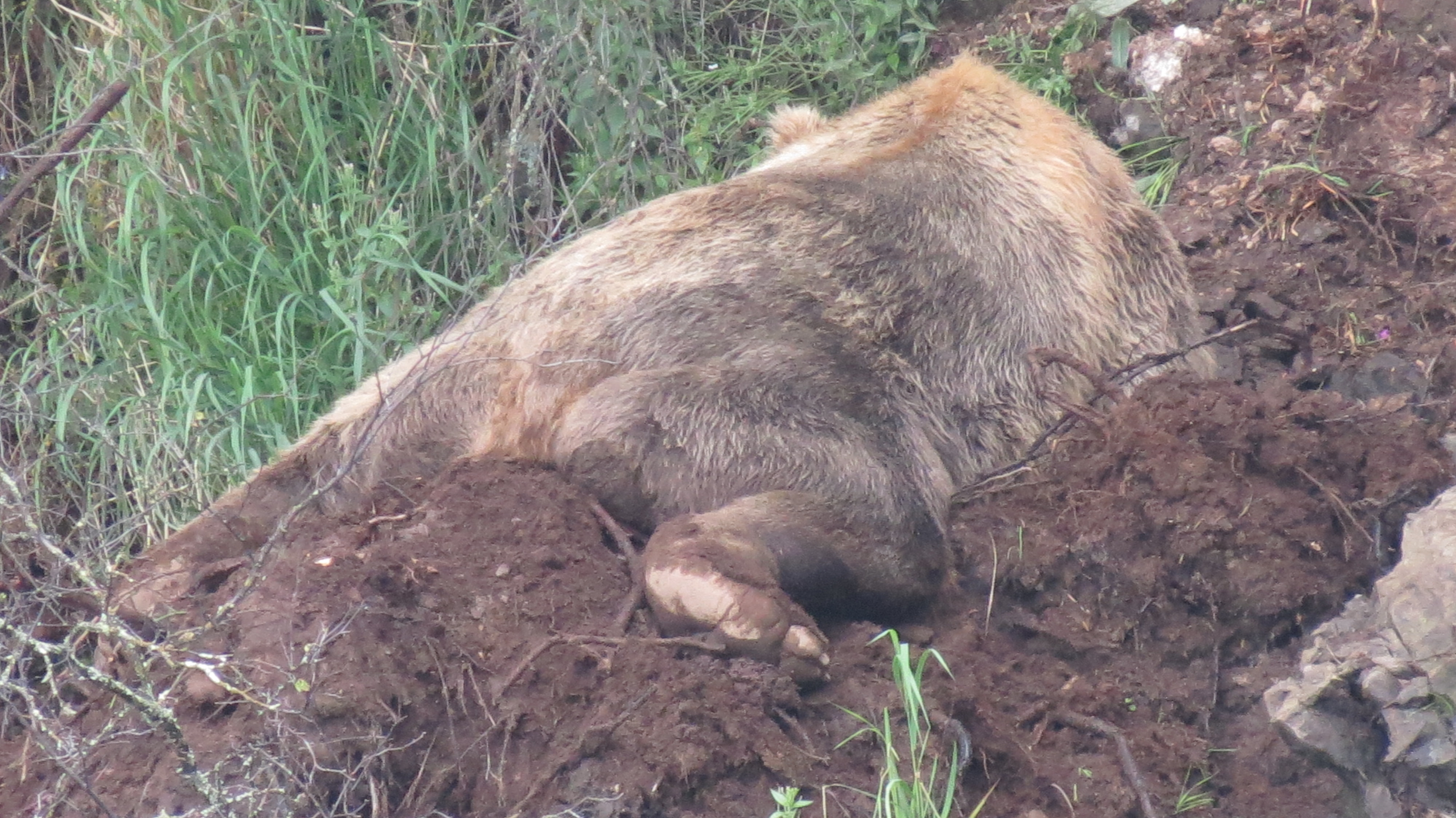
The downstream viewing was great.  I saw a bear sleeping in the mud on the other side of the river and pointed him out to others.  A bear ran right under the walkway with a salmon, off into the woods to eat it.  There weren’t many people talking, and within 45 minutes, I was back at the upper falls.  That wasn’t a long wait.

Bear napping in mud, Brooks River, Katmai NP

Bear taking salmon into woods

That second time was special.  I saw a boar chase a cub up a tree.  When the boar left, the mother came with two more cubs and soon all 3 cubs were in the tree.  Later, another sow with spring cubs, much smaller, appeared.  The whole time, several bears were fishing the river.  I had a good time and as I left the check-in station, I heard the woman complain.

Sow with her 3 cubs.

I almost let her have it. But being an elder means having wisdom, and I knew I would be more emotional than wise if I said anything to the woman wearing the stylish boots.

I would have started with the failure to properly regulate flights properly over another national park: the Grand Canyon.  On 18 June 1986, a helicopter and a fixed wing collided over Tuna Creek, killing 25, many of whom were Dutch tourists, who likely burned to death before they hit the ground.  The FAA stepped in.

I would then have asked how much better off we might be today had we regulated the financial industry, so that people who almost took down the world’s economy, which is still struggling years later, got bonuses that themselves were in the top 0.5% of US income.

I might have asked her to imagine Katmai as a private park with a bus to the viewing platforms, so people wouldn’t have to walk 1.2 miles, selling tourists a salmon, then putting them on a tram over the falls, so people could look down and drop salmon to the bears, getting that “special” picture to post on their wall.

Ten years ago, during bear hunting season, many people went into Lake Two in the Boundary Waters without permits.  It’s an easy lake to get to, and surprise–people don’t always regulate themselves.  When my wife and I tried to camp there, with a permit, coming the other way, we were tired, disappointed, and angry that the lake was full.  We had to paddle a lot further before camping.  Afterwards, rangers were posted at the entry point to ensure people had permits.  Regulations make it possible for me to have my rights protected, too.  Even with rules, parks get trashed; without them, I shudder to think what would happen.

She probably would have screamed at me if I asked when a person’s right to own a firearm interfered with my right to be safe at my local Safeway, where Gabby Giffords was shot. Yes, I know, guns don’t kill people, people kill people, because if they are angry, it is easy to move a finger without thinking of the consequences.  Using a knife or a fist makes it a lot more personal, risky to the attacker, and requires enough time where maybe somebody can think “I shouldn’t do this,’ which is what I did before telling the woman in stylish boots what I thought of her.

All but forgotten now, the memorial to the 6 killed and 19 wounded in Tucson. Just a question: When was the last time you heard “Newtown”?

I’d like to know what the lady would think of regulating food quality and safety, something a good looking congressional candidate from my district wanted to do away with, since he had never had seen a case of typhoid fever or hepatitis, or a child die of shigella or salmonella.  That candidate scared the daylights out of me and missed winning the seat by 4,000 votes, because people were angry about the Affordable Care Act, many of whom were on Medicare or military retirees, ironically receiving government funded medical care.

No, lady, we regulate our public lands, because if we don’t, they will be lost for all time and be turned into money makers for a few.  The forests will be cut, the land mined, the water ruined, the silence gone, the animals gunned down.  I’d conclude with: “What about my rights and the rights of those who have yet to be born?”

I wonder whether she would kick me with those stylish boots.  Or think.

KATMAI

July 26, 2013

Katmai National Park is for bear viewing and the valley of the 10,000 smokes.  I didn’t see the latter, but I did get to the former, and the bear viewing was spectacular.  Located about 220 nm SW of Anchorage, it is reached by float plane, with about an hour and a half ride over rather spectacular scenery.

Scenery on flight to Katmai

One arrives at Brooks Lake, and gets off the float plane on the floats.  There is a short walk to the visitor center, where the ranger talks, and there is a good 10 minute video on dealing with bears.  These are not the same behaved bears as in the Brooks Range, who have likely never encountered people.  These bears are near people, but so long as people stay on walkways, there shouldn’t be much of a problem.  The bridge over the Brooks River can be closed if there are bears in the vicinity, however, and bears are unpredictable.

The area for viewing has a lower and an upper platform.  The downriver or lower platform is open without waiting, and the smaller bears tend to congregate there.  The upper platform has room for 40, and one may stay no longer than an hour.  However, after one leaves, they may immediately put their name on the list to go back.  I did just that and spent an enjoyable 45 minutes at the lower platform seeing one bear sleeping in mud and another carrying his prize catch back into the woods.

Brown bear sleeping in mud.

Look what I caught!

The upper platform has a great view of the falls and bears will walk under the platform.

Some of the bears at the upper falls viewing area.

Fishing from the top.

The highlight was a cub chased up a tree by a big boar, who barely missed him.  Young bears until 3-4 years of age can climb, but older bears fuse joints necessary to climb and no longer can.  After awhile, the boar left and the sow returned with 2 siblings, sending them up the tree as well.

\ Literally climbing for his life

The reason.

Mom at bottom.

Two.

The third.

Mom with spring cubs.

The three cubs did come down from the tree, Mom got them a salmon from upriver, and they disappeared into the woods.  It is difficult to know how many will survive.  There is a lot of food, but there is also a lot of predation.  The spring cubs got a much later start, and it will be less easy for them.

We don’t know the effect of human visitation has on the bears.  Hopefully, it is not significant.  The day was spectacular, and this is a park I definitely want to see again.

DREAMS

July 25, 2013

I was in the Anchorage airport, late one night on my way home from my tenth trip to “The Great Land.” I stopped in the men’s room, and before I saw the pair, I recognized the smell that to me characterizes one thing: “we’ve just come out of the woods.”

It’s a difficult odor to describe.  It is woodsmoke plus something more.  Many people would just say the person needs a bath, and they wouldn’t be wrong.  But in the woods, we neither notice the smell nor particularly want a bath.  I can attest to that with a great deal of experience.  It is when one comes out of the woods that one notices the odor and really wants a shower.

As I washed my hands and turned from the sink, I accidentally brushed the pack one was carrying.  He apologized.

“Been there a lot,” I replied.  While I’m shy, I knew these young men were kindred spirits.  “Where did you guys go?” I asked.  They knew I wasn’t talking about cities but wild country.  I wasn’t going to hear “Juneau” but the Chilkoot, not “Homer” but “The Kenai”.

We started to talk.  The pair was young, at least 35 years younger than I, and this was their first trip to Alaska, where they spent 2 weeks in Denali and the Kenai.  They had wanted to do this trip now, while they could, because their lives were going to be busy in the coming years.  They did it.

Been there, too.  I told them about my 5 trips to the Brooks Range, and their eyes showed a gaze I’ve seen many times, and which I have shown others. It’s a far away gaze of longing, of thinking about wild country, of rivers nobody down here has ever heard of, like Kongakut, Aichilik, Nigu, Itchilik, Kobuk or Noatak.  It’s mountains and remote valleys.  It’s slogging through tussocks, in rivers, in swamps, in bear country.  It’s aufeis hiking and bugs in June, blueberries in July, rain and autumn colors in August.  It’s the most difficult country to hike that anybody can imagine, and it is also the most beautiful.  It is a country that kicks one’s butt, until finally one accepts it with the simple words, “It’s Alaska.”  Everybody up here understands that.

Normally, I don’t talk much to strangers, but when I’ve been out the bush for awhile, I find myself pretty talkative.  These guys were me, 35 years ago.  Then, my dreams took me to the Boundary Waters Canoe Area Wilderness, every year, to get into the backcountry, away from people, civilization, only me and the wild lakes and rivers.  I explored that country until I knew it as well as my home town.  Maybe better.  I sure loved it more.  Always will.

It was much later that I discovered Alaska.  Oh, I did the Chilkoot Trail in ’84, the Nahanni the following year and the Chilkoot and the upper Yukon in ’87, but I didn’t camp above the Arctic Circle until 20 years later.  By then, I knew if I didn’t start to make my dreams come true, they never would.  I hiked to the Arrigetch Peaks in Gates of the Arctic National Park, and then decided I’d come back to see ANWR.  I thought once to ANWR would be enough, but when Christmas came I got a letter from the guide saying he planned a real special ANWR trip the following year.  I had to do that one, of course, because I had the longing in my eyes. I could see the Dall Sheep and Caribou, a river I knew would be special, so I accepted and did the trip.  Tough? Very.  Weather issues?  Plenty.  But we saw wildlife I couldn’t believe, and I came out of there saying I had seen the ANWR I wanted to.

Except I still haven’t.  Probably never will, either.  I did two more trips into the Gates, one combining backpacking with a paddling.  We saw a dozen bears, four of whom walked blithely through our campsite one night. Alaska.

I still want to see the Sheenjek Drainage in ANWR.  I would be 65 if I did it, but I think I can. A guide-friend is willing, and I know a pilot who would get us to the jumping off point.  No question that we could do this trip.  When I think about it, I know I have the look in my eyes those young men had.  Age  doesn’t destroy that look.

I didn’t tell the pair to follow their dreams, as I have tried to follow mine.  They didn’t need me to say anything; they were already dreaming.  I could see it in their eyes.  They didn’t know how they were going to get up here again, where they would go, or what they would do, but they were going to do it.

They will see the Brooks Range, ANWR and deal with all the issues Alaska throws at those who go into the bush.  They will come out of the country filthy again, smelling, but not of woodsmoke, because they will have been north of the treeline, where night doesn’t exist in summer.  They will again take the redeye to Seattle or the Bay Area, where they live, thrilled to have done the trip, and already planning the next one.  They would have had adventures I would be jealous of, but only a little.

No, the two needed no encouragement to come back. Had I shown them my pictures of the Arrigetch, the Aichilik, or the Noatak, they might have cancelled their flight and stayed.  Some people do that.

To the wife of one of them, should either some day be married, I apologize.  I just happened to run into a fellow dreamer, somebody who reminded me of myself, and planted a few more dreams in his head.

Let him go to the Far North.  He has to do it. He will come back better for it.

But he will want to go the following year.

And maybe some day he will be 64, in a men’s room in an airport, talking to a 30 year-old who has just finished his first backpacking trip in Alaska…..

2 year-old griz on the Noatak. Out of focus because my hands were shaking. Distance: 25 meters. Anything between us? Air

Bull caribou, Noatak.

The Maidens, part of the Arrigetch Peaks, Gates of the Arctic National Park.

Dall Sheep, ANWR, Upper Aichilik River drainage.