Archive for the ‘UNPUBLISHED OUTDOOR WRITING’ Category

THIS IS A GREAT WORLD

April 18, 2022

The campsite had not looked special, on a point along a channel of Basswood Lake, a mile south of the Canadian border in the Boundary Waters.  The site we had set our mind upon in the bay was occupied, and another had a difficult climb up from the water which was fine, if one were having lunch, but not so fine if one wanted to go places and come back. Or just get water for dinner. Long climbs carrying water or packs get old. The site we were on had one good tent spot, all we needed, and had views north to Canada and sunrise views over American Point.

The first night a pair of beavers swam by about 5 yards off shore, on their way to the swampy area right off the east side of the site. This would be repeated every night we were there, and one morning we watched as a beaver felled a tree. Pretty neat. On the second night, we saw an aurora, and while it wasn’t as bright the green curtains I saw hanging in the Canadian sky a half-century earlier, any aurora is worth seeing.

The third day, we saw an otter as we travelled out of the bay on a day trip. He was having a great time going in and out of the water. That night, we heard wolves howling, too far away to try to find—but we wouldn’t have seen them anyway.

The final day, we took a trip to the Canadian border and Basswood Falls, passing a campsite where we had stayed in 2004, a day after a bear on Crooked Lake got our food during a howling storm. Eating our fifth consecutive meal of mash potatoes, I had seen something that looked like a windmill churning water moving across the lake from Canada. I had no idea what it was for about five minutes, then realized it was a moose swimming with a large bush stuck in his antlers. Nice memory. 

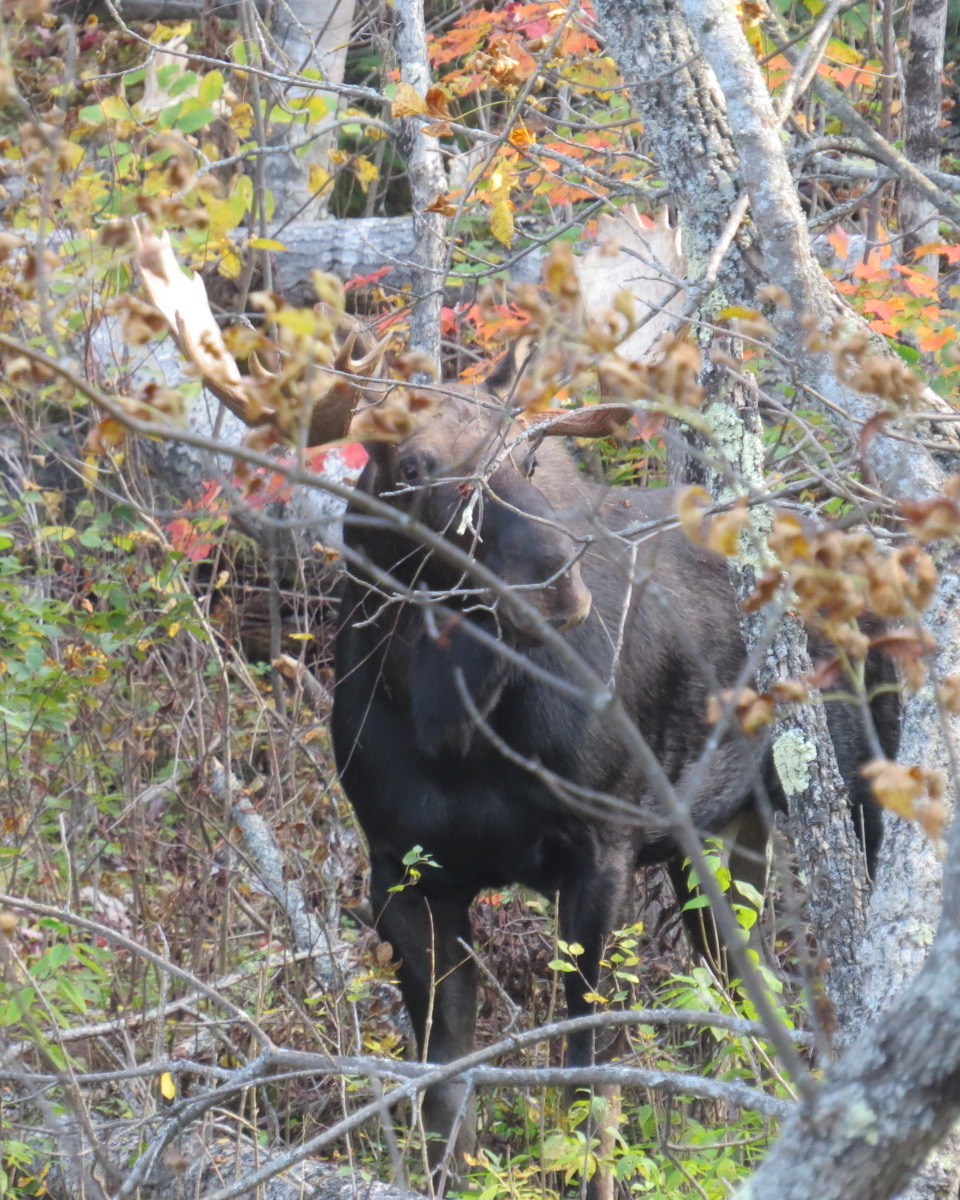
After we returned from the border, I sat in camp and said to myself the only thing we hadn’t seen on this particular trip was a moose. I had no complaints; it was a great trip.  An hour later, I heard a noise in the marsh behind me, turned and there he was, a bull moose, fifty yards away, chewing on a bush. We stayed quiet, and he didn’t leave for a good ten minutes, then disappeared through the back of our campsite.

What a great world we live in!

*********************

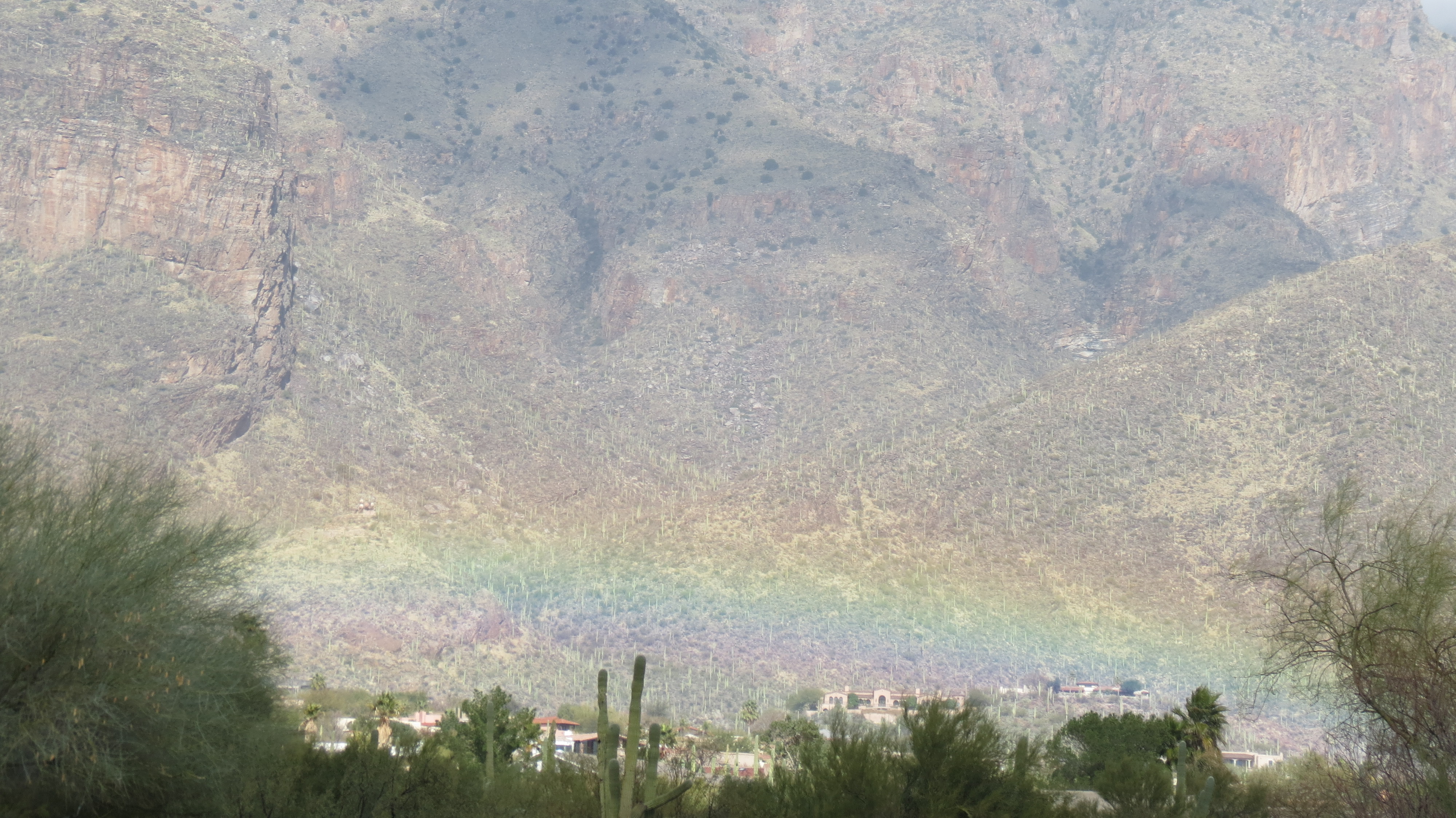
Eight years ago in late January, the 28th according to the picture I have of it, back when I lived in Arizona, there was a brief rain storm, and near noon, the Sun came out.  Recent rain and sunshine mean rainbows, and I love them, both the colors and why they occur, which makes me doubly lucky.  I have seen a rainbow after sunset, when the zenith is still getting sunlight, and the rainbow spans the entire N-S plane of the celestial sphere over us. Astronomer Steven O’Meara has seen them up to I believe 14 minutes after sunset, but he lived in Hawai’l and had a lot of practice. My record is still seeing one 7 minutes after sunset.

The Sun has to be fewer than 42 degrees elevation to see a rainbow. That’s why we usually see them early morning or late afternoon. The sun is usually too high at noon, unless it is winter.  I did the math in my head: In late January, the Sun is at declination (sky latitude) minus 18, or 18 deg. S. The North Star is at 32 elevation in Tucson, so overhead in Tucson is 58 deg N. On the solstice, the Sun was 23.5 deg south latitude, and 23.5 from 58 was 34.5 degrees above the horizon at local noon, which in January is about 12:35-12:40 pm.  Add in the difference of 18 deg S from 23.5 deg S, and the sun would be about 40 deg high at noon. This was going to be close, but I thought it ought to be possible to see it.  I went out to the driveway, looked north towards the top of Catalina mountains but saw no rainbow. Hmmm. Then I thought, silly me, it’s on the ground. I looked down right to where the base of the mountains met the desert.

There it was.

A beautiful rainbow was flowing along the base of the Catalina mountains. That was SO COOL to see. I found something I would have missed otherwise by knowing a simple fact about rainbows then when the time came remembering that I just might see a rainbow at noon.  I did, on the ground against the mountains.

Is this an interesting world, or what?

******************

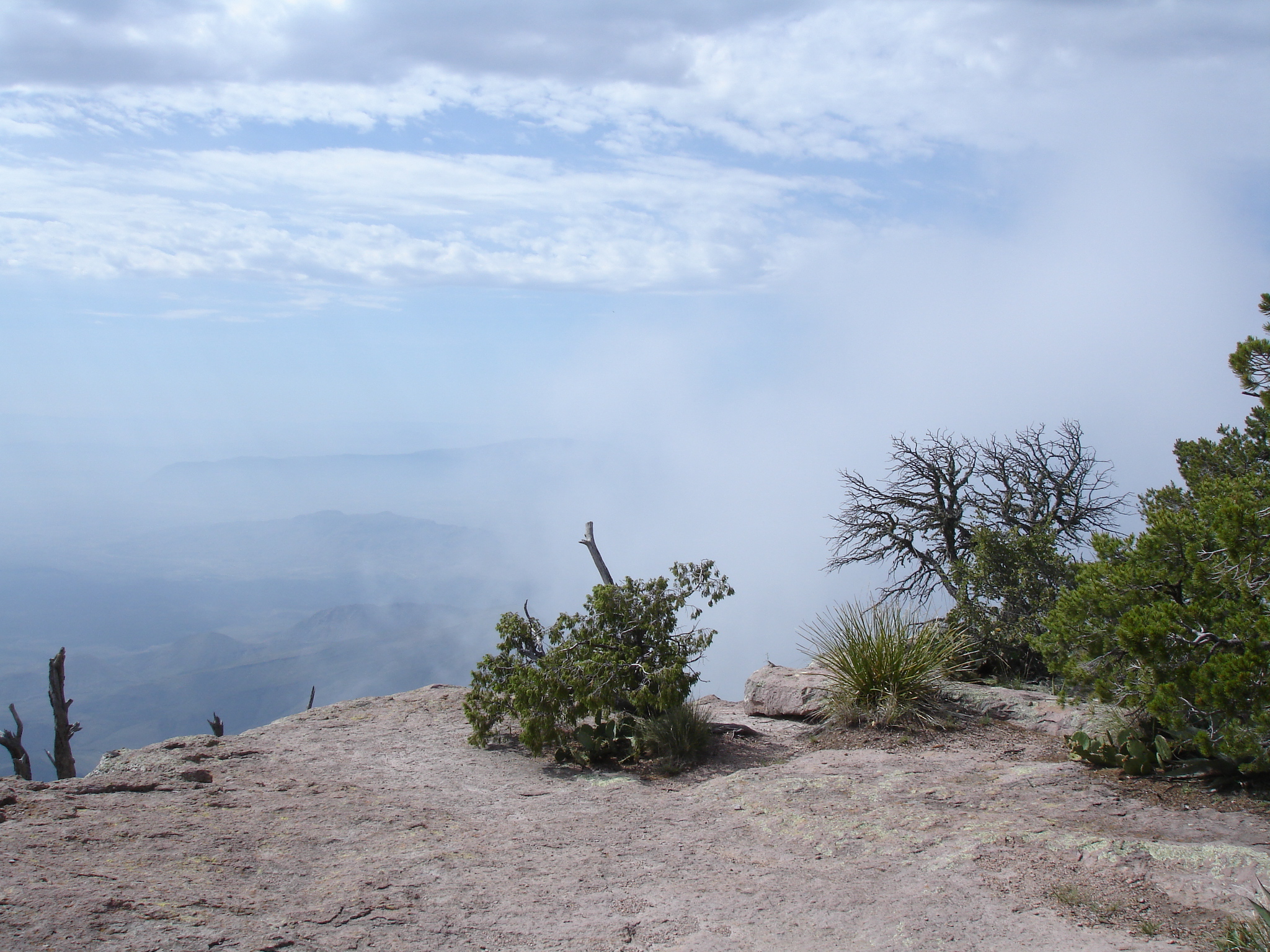
In 2007, I hiked the South Rim Trail in Big Bend National Park, out to where the cliffs drop into the Chihuahua Desert. It was humid, late June, and Big Bend was part of my national park odyssey.  It was an 11 hour drive to get there, during which I saw my first Scissor-tailed flycatcher. You can’t miss them. I left the Chisos Basin early, nobody was out there, and when I reached the cliffs, I could see the desert a couple of thousand feet below me. A south wind was blowing into my face, which was pleasant, after all the climbing.

Up ahead I saw what I first thought was smoke, then realized it was water condensing into a cloud. It’s the same phenomenon I saw 20 miles from Victoria Falls from a train back in 2001 when I went to the Zambia eclipse. I couldn’t figure out what it was until I realized the sheer amount of water formed a cloud.

What I saw at Big Bend that day was a demonstration of orographic lift, the phenomenon that explains why mountains get so much more precipitation than valleys. The water vapor hits the mountains, is forced upward, cools, and condenses when it cools to the dew point. That day in Big Bend, the south wind was ferrying humid air that struck the cliffs, forced upwards, and condensed right in front of me. It was incredible.

It truly is a remarkable world.

Cloud formation, Big Bend National Park, June 2007

******************

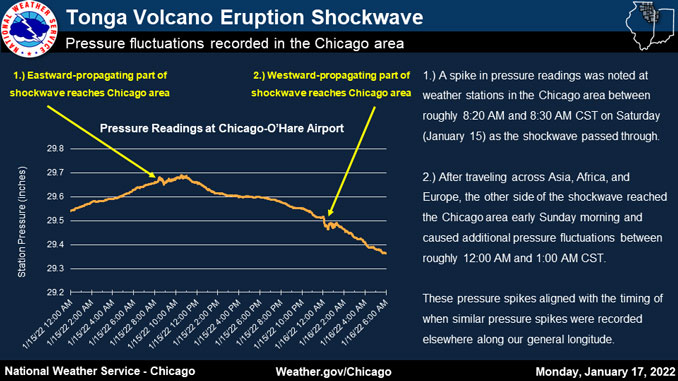
I read last week about the shock wave that went around the world for 2 1/2 days after the Tonga eruption. What I didn’t know was that the wave was measurable, and we have proof of the compression and the expansion of the atmosphere when the wave passed.

The graphics in the New York Times were excellent, and when I read about the barometric pressure changes, a couple of mb or a few hundredths of an inch, I decided to look on my own.  Not every place had a clear brief rise in late morning of 15 January, or a brief clear drop that night, and some places had active weather occurring that would have overwhelmed any small signal from the shock wave. But I was enthralled by barometric pressures in places \that showed a clear brief rise followed by a drop in the late morning and a clear brief drop, followed by a rise around midnight the next day.  This absolutely fascinated me, enough so that I showed my wife, who doesn’t share my rabid enthusiasm for such trivia. She liked it, too. How could you not? 

Moose, wolves, beaver, otter, and an aurora, same trip.  A rainbow practically on the ground at noon in the desert, because that is where it has to be. Orographic lift happening right in front of me.  And barometric pressure showing a change from a shock wave from a south Pacific volcanic eruption many hours earlier.

Tonga Volcano shockwave in Chicagoland (SOURCE: NWS Chicago)

Minneapolis

8:53 AM4 °F-2 °F76 %E6 mph0 mph29.64 in0.0 inFair
9:53 AM5 °F-1 °F76 %VAR3 mph0 mph29.65 in0.0 inFair
10:53 AM7 °F2 °F80 %VAR3 mph0 mph29.64 in0.0 inFair


Eugene

7:54 AM42 °F39 °F89 %ESE6 mph0 mph29.95 in0.0 inCloudy
8:45 AM42 °F40 °F92 %CALM0 mph0 mph29.95 in0.0 inCloudy
8:54 AM42 °F40 °F92 %CALM0 mph0 mph29.96 in0.0 inCloudy
9:14 AM41 °F39 °F93 %ENE5 mph0 mph29.96 in0.0 inMostly Cloudy
9:54 AM41 °F39 °F93 %SE6 mph0 mph29.95 in0.0 inMostly Cloudy
10:25 AM40 °F38 °F93 %SE5 mph0 mph29.95 in0.0 inMostly Cloudy

I VOTE FOR STANDARD TIME

March 20, 2022

I like the axial tilt of the Earth.

It gives us seasons, a gradual change in the amount of sunlight—or darkness—we experience throughout the year. In Arizona, where I lived for 37 years, there were easily noted gradual changes.  In June,  sunrise hovered over the Pontatoc Ridge, viewed from my kitchen, for several weeks, and I could actually notice a few seconds difference each day after June 10th, as the sunrise gradually became later.  Sunrise was later than the official time, because of the horizon, it was about 5:15 am, 45 minutes earlier on the valley floor.  About five days after the solstice, I could just notice that the sunrise was a little further to the south than it had been.  You can’t tell the exact solstice by looking at the horizon each day, but you can be close.

At sunset, the changes weren’t quite as visible since the horizon was neither raised nor sharply defined, but starting in early July, the sunset gradually became earlier, after 11 days in a row at 7:34 pm.  After twilight, it was dark by 9 pm, without the long twilight I was used to in the northerly latitudes where I grew up. Darkness comes earlier in the lower latitudes, even more dramatic near the equator. This is because the ecliptic, or the path of the Sun, Moon, and planets as seen from the Earth, is more vertical at the equator, and has a smaller angle with the horizon the further north or south one goes.  That smaller angle is why twilight lasts longer, because after the Sun sets, it is moving significantly north as well, so much of its motion below the horizon is transferred northward and not westward away from the horizon. That results in long twilights.

Now, with the Senate having passed a bill mandating universal daylight savings time, I wonder why we can’t just have universal standard time. As Brian Brettschneider, Alaskan climatologist, posted, “amount of daylight saved: 0.”  We would be better off using the German term “Sommerzeit,” or “summer time.”  We’d be even better off using standard time. That is why it is called standard. 

Arizona will not likely change from being on MST; I never heard an Arizonan complain that there was no daylight savings time. The last thing anybody in the desert wants in June is sunset at 8:34 pm, or in January sunrise at 8:24 am. One of the few pleasures about living in the desert in summer is that it gets dark by 9. It may still be—and it usually is—hot, but with darkness comes hope for cooler temperatures. I live in a world where sun is generally considered good, rain bad, light good, dark bad, and days with rain are dreary and bad whereas sunny days, even with wildfire smoke, are good. To me, summer in the 21st century is overrated, overheated, “overdry,” and “oversmoked.”

In Arizona, I always knew when GMT was—7 hours ahead of local time. Here in Oregon, I can never remember if it is 8 or 9 hours, and I don’t like the sudden change of more darkness in the morning when it had been slowly getting lighter, and more light in the evening, when it had been getting gradually lighter. It grates. I like the gradual change in light throughout the year, especially the gradual lessening of daylight in summer, for up here, summer is no longer on July 5, which is what people told me when I moved here. It’s a five month stretch between May 1 and October 1, just like Arizona, only drier and a little less hot. Unless we have a heat dome.

In Arizona, I knew June 10 that the Sun was going to rise later for the next 7 months. In 11 more days, the solstice would occur, when the Sun would stop getting higher in the sky.  Two weeks later, the Sun would start setting earlier, and I had the sense at least that summer was moving along astronomically, even if not meteorologically.  

I’m not alone. I commented in the NY Times a couple of years ago about an article written near the winter solstice, looking forward to more daylight, and wrote what became one of my 35 “Times Pick”s.  While I didn’t include the replies, they all agreed with me. I struck a chord.

I will be a contrarian and say I like the rain and the dark days. They belong, too.

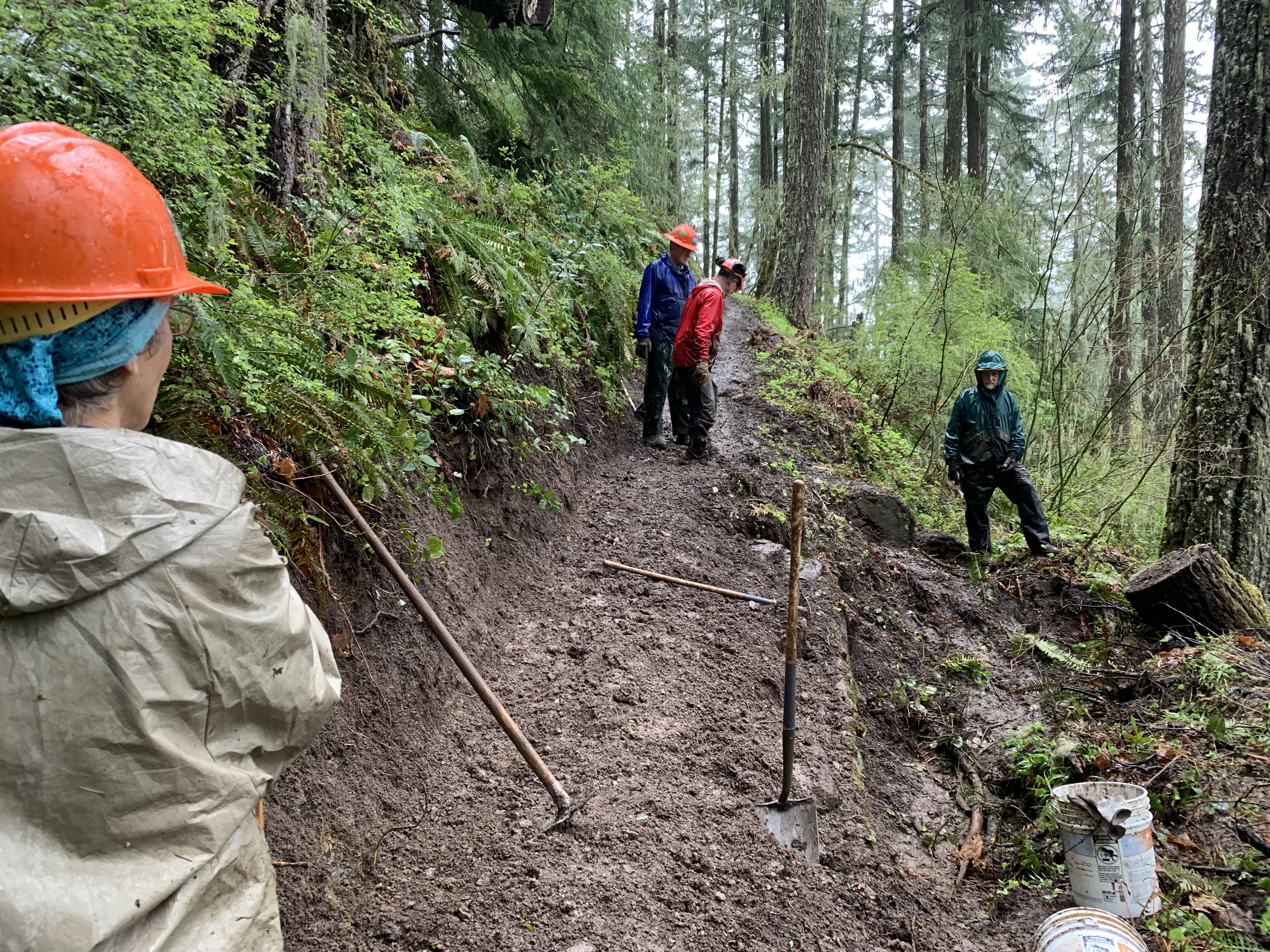
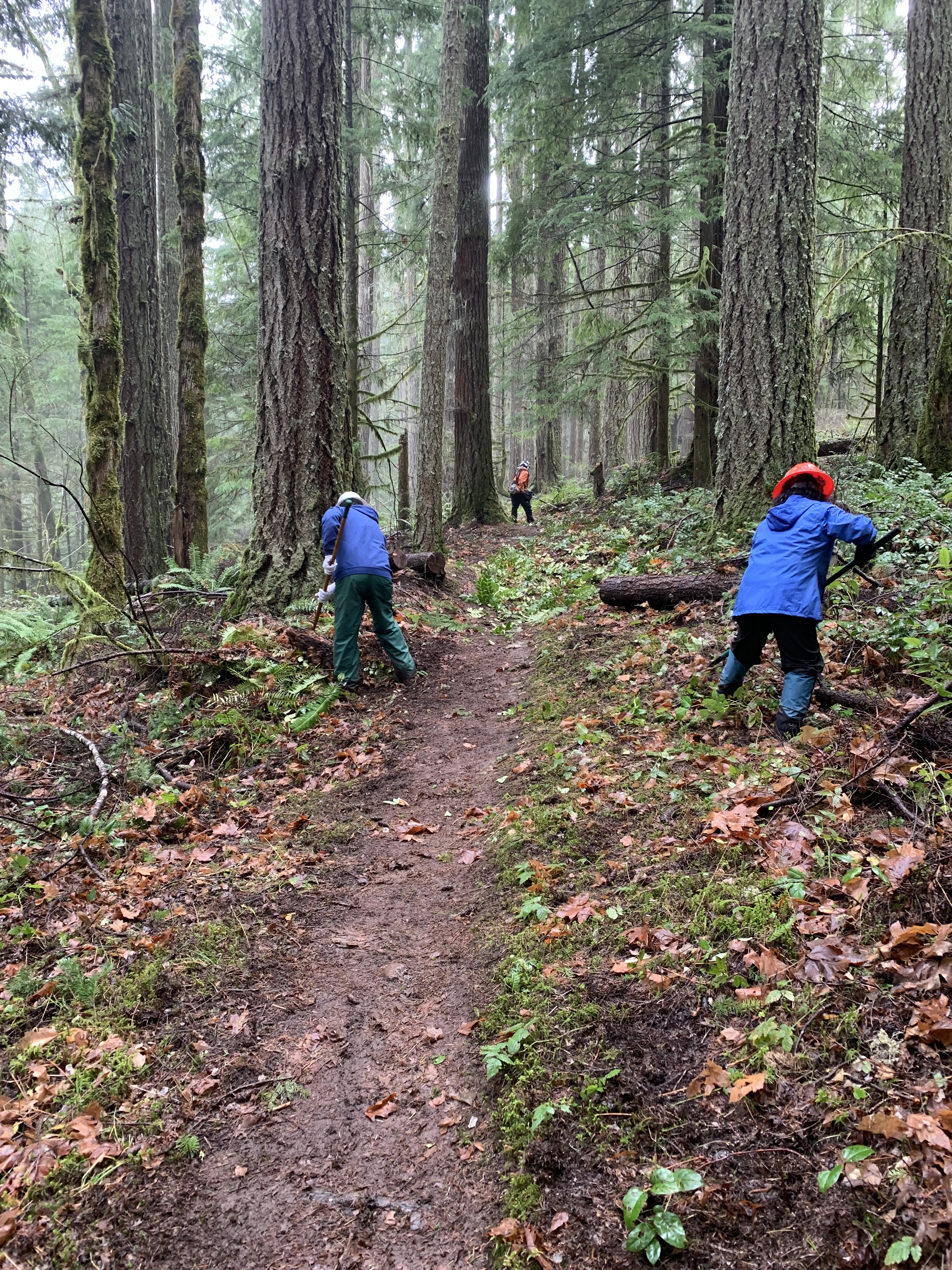
I think summer is overrated; last summer came with wildfires, smoke that kept me in the house for 10 days, and a concern of evacuation. Three of the last four years there have been significant west Cascade fires. I led a volunteer crew yesterday into the damp woods to repair a trail, creeks and rivers roaring with the water that finally came.  It was lovely.

Mind you, I counted 65 different species of wildflowers on my spring walks, I am an avid canoeist, and autumn is my favorite season. But leaving the trail yesterday with dark clouds overhead, an early sunset, and rain starting to fall, I was happy.

18 Replies410 Recommend

In Oregon, the end of standard time will mean that for 3 1/2 months a year, from mid-October to the end of January, sunrise will occur on or after 8:30 am. Children will be walking to a school bus with a flashlight. True, sunset will be later, but what is wrong with sunrise at 7:30 and sunset at 4:30? Sen. Sheldon Whitehouse of Rhode Island, whom I otherwise deeply respect, dislikes the 4:30 sunsets in Rhode Island. Well, he lives in a northern state at the eastern end of the Eastern Time Zone. Go to New Brunswick, the next stop east of Maine, and you are on Atlantic Time. That’s why it is dark there early. There is no way you can change the fact that there are 9 hours of daylight. Please stop trying to.

“White man thinks if he cuts off a foot from the top of the blanket and puts it at the bottom of the blanket, that somehow the blanket is longer.”

I take my canoe trips near the autumnal equinox. When I base camp, I can watch the change and time in sunset and sunrise location nightly, weather permitting. It’s interesting to see it, and viewing is an important part of each day on the water.

In January, the sun runs slow relative to the clock. That is why sunsets are noticeably later in early January than they were in December. But it is also why sunrise is delayed and it is dark in the morning. Add another hour to this already delayed sunrise, and it is going to look more like night than it will morning.  Not only does the white man think the blanket is longer, he (and probably should be he, here, since women are smarter) thinks sun time and clock time are the same, when they are most definitely not.

From “Our Environment, How We Adapt Ourselves to It,” Revised by my father, Paul E. Smith, Allyn and Bacon, 1964.”

Equation of Time. This shows how the sun time varies relative to clock time throughout the year. When negative, or slow, the sun “appears” to be slower to rise and slower to set, so dark mornings and lighter evenings in January. When strongly positive, like October and early November, the sun “appears” to run faster, and sunset occurs earlier, so hence the suddenly appearing dark evenings in October.

THE MOSS

February 20, 2022

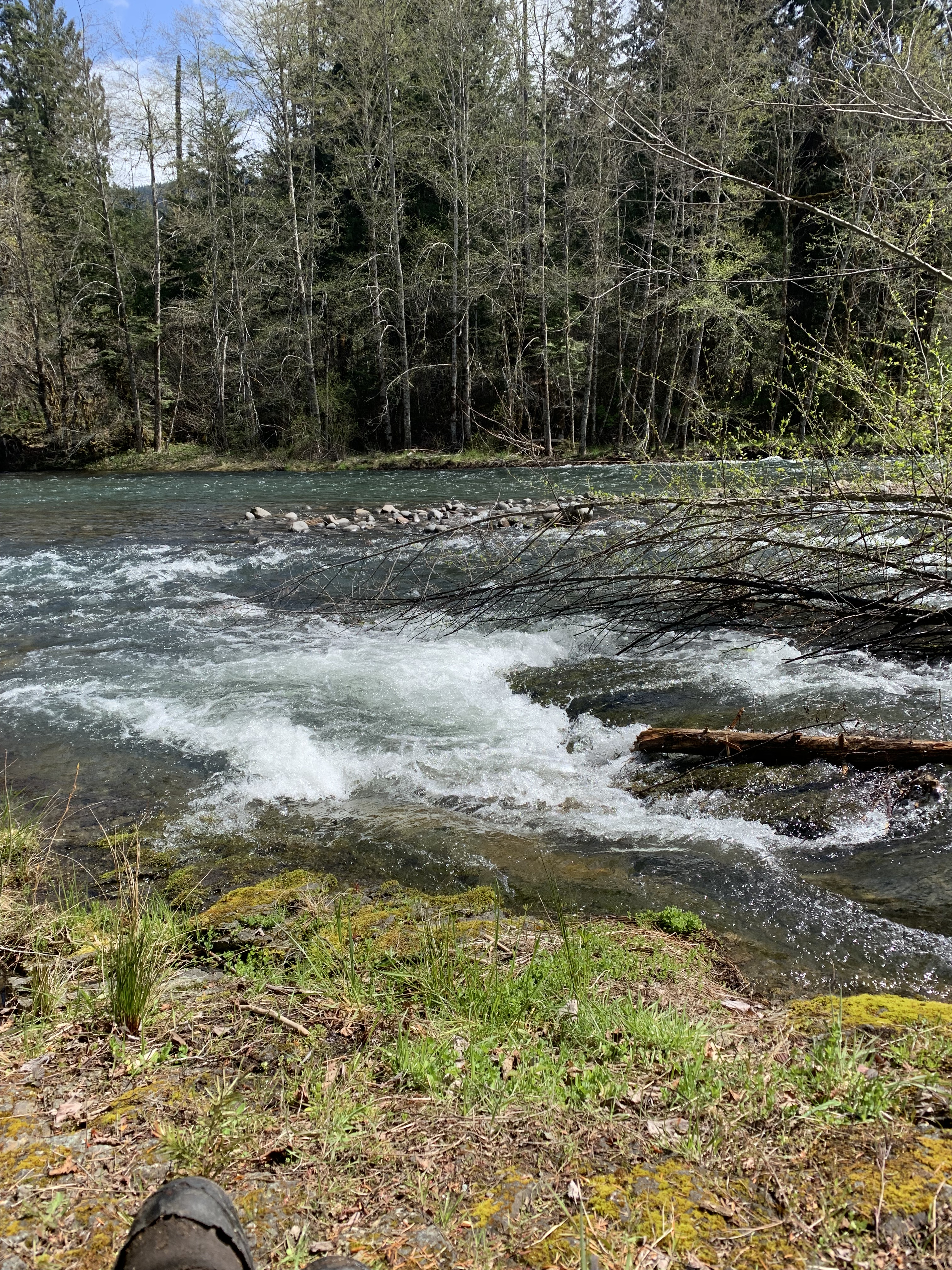
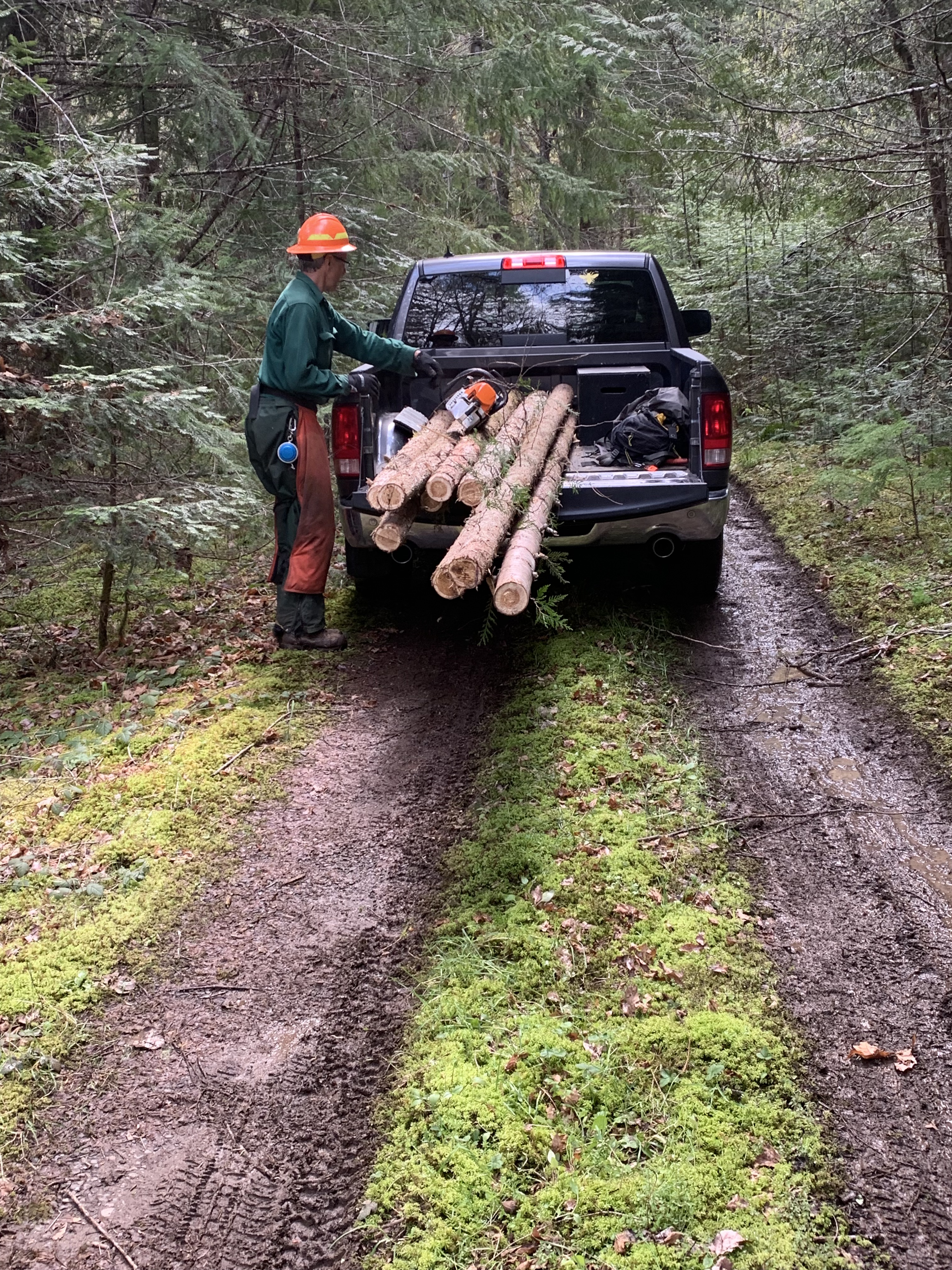
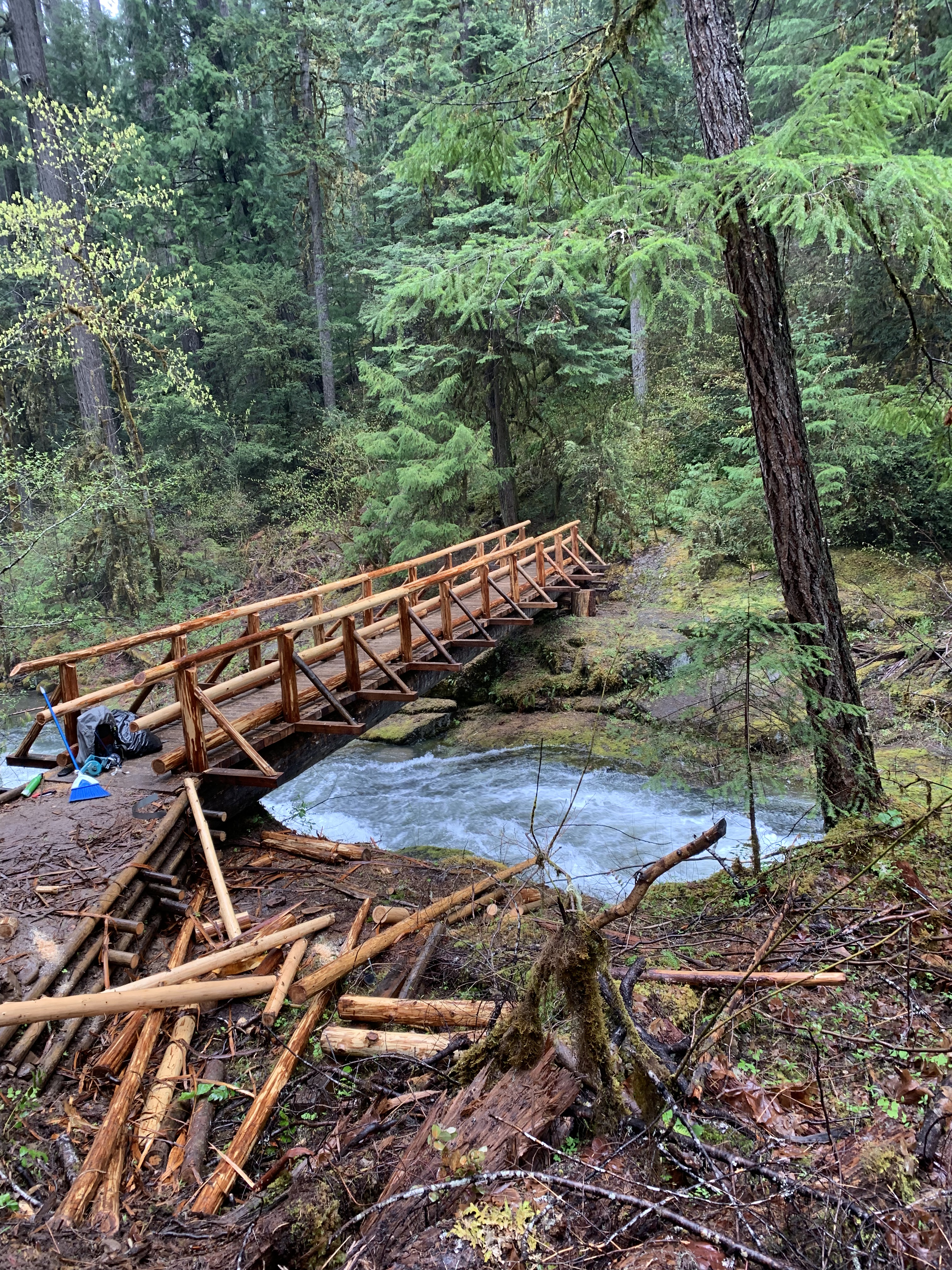
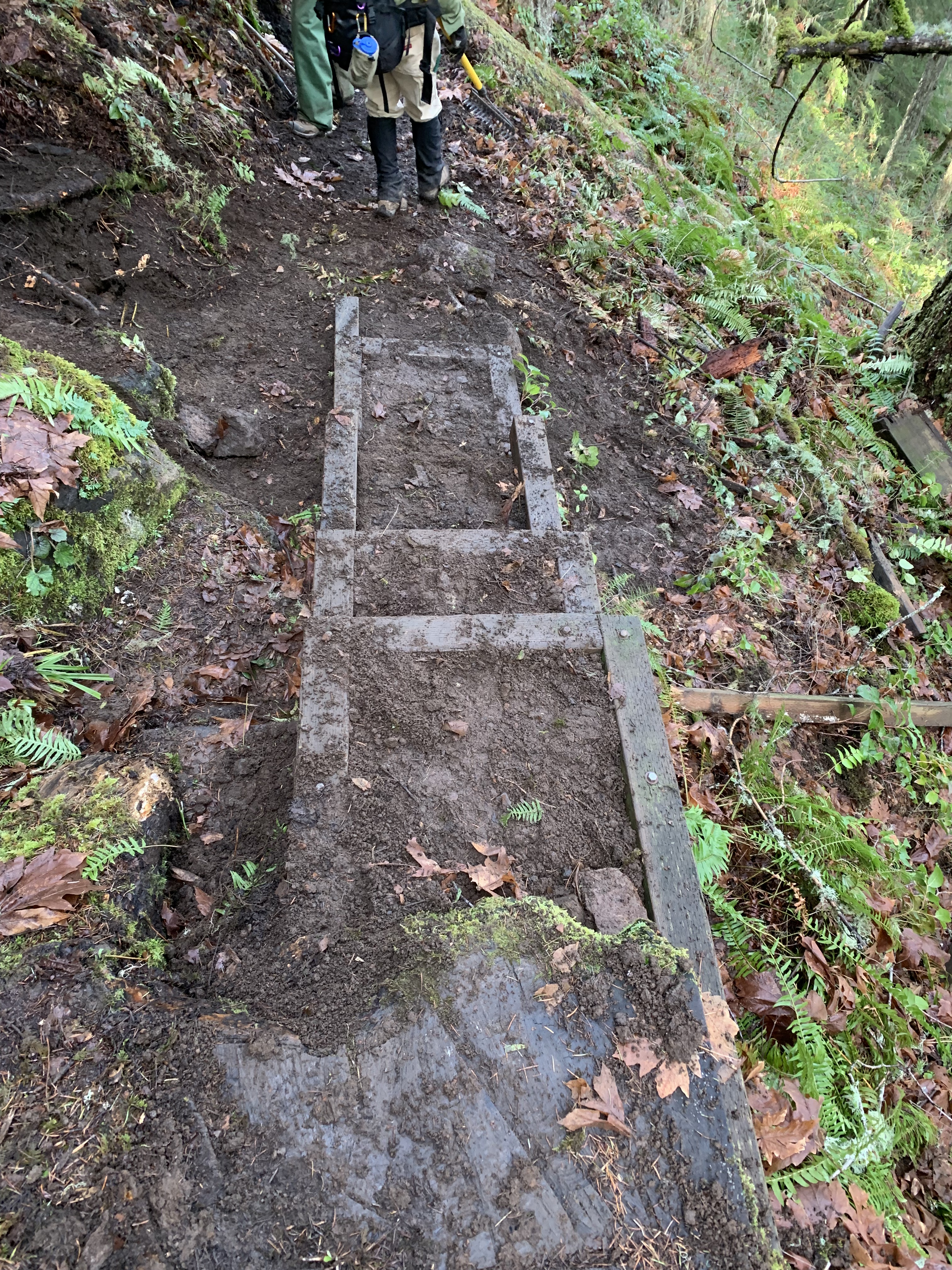
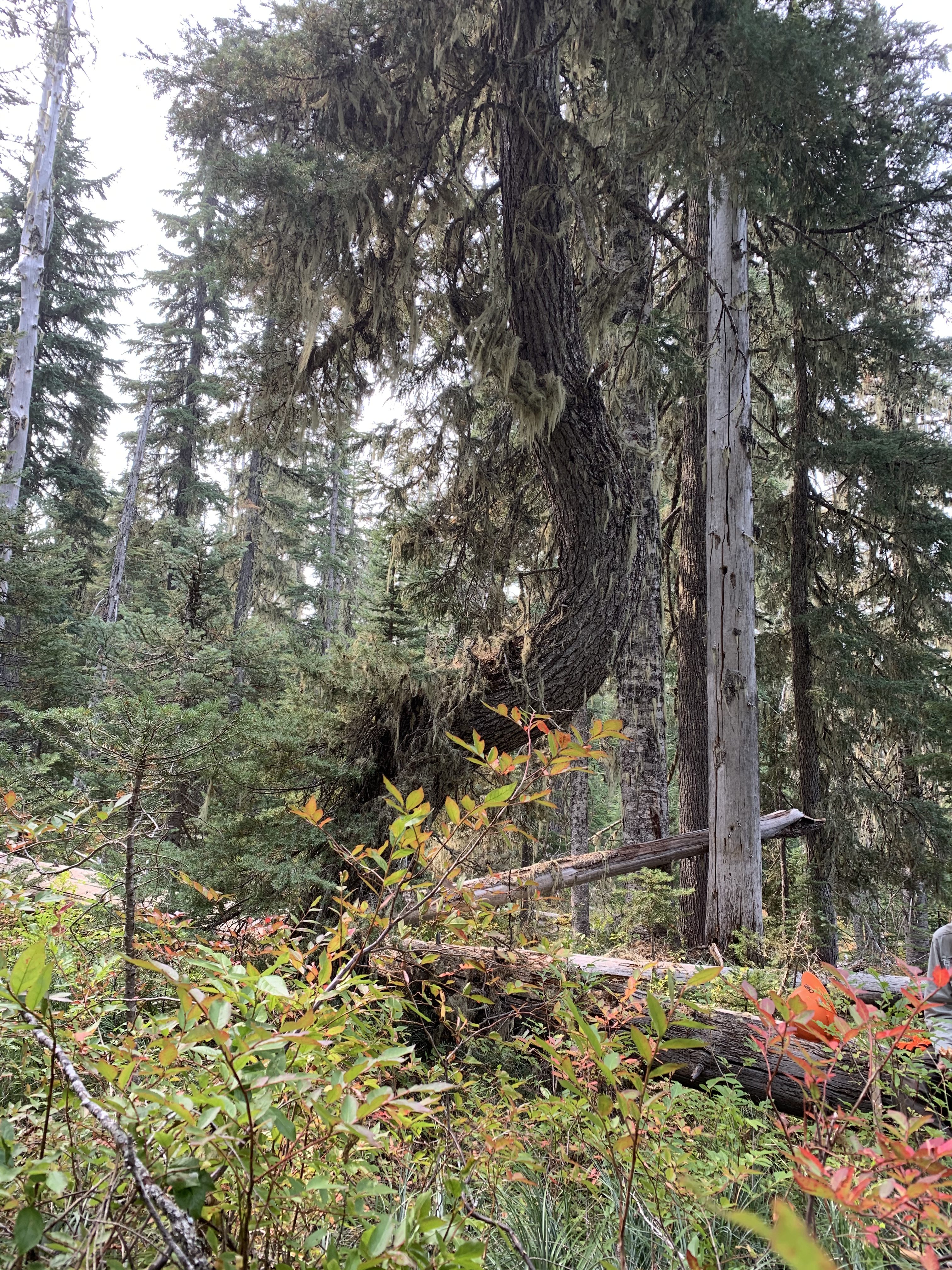
We had had an interesting morning on the Middle Fork Trail of the Willamette River, beginning the job of building a railing for the new bridge over Indian Creek, a free flowing tributary of the Middle Fork. We found our own materials, Red cedar, in the nearby woods, stripped the bark off it and then took the bare logs to the bridge area to eventually place as one of the smaller posts or a larger railing.  

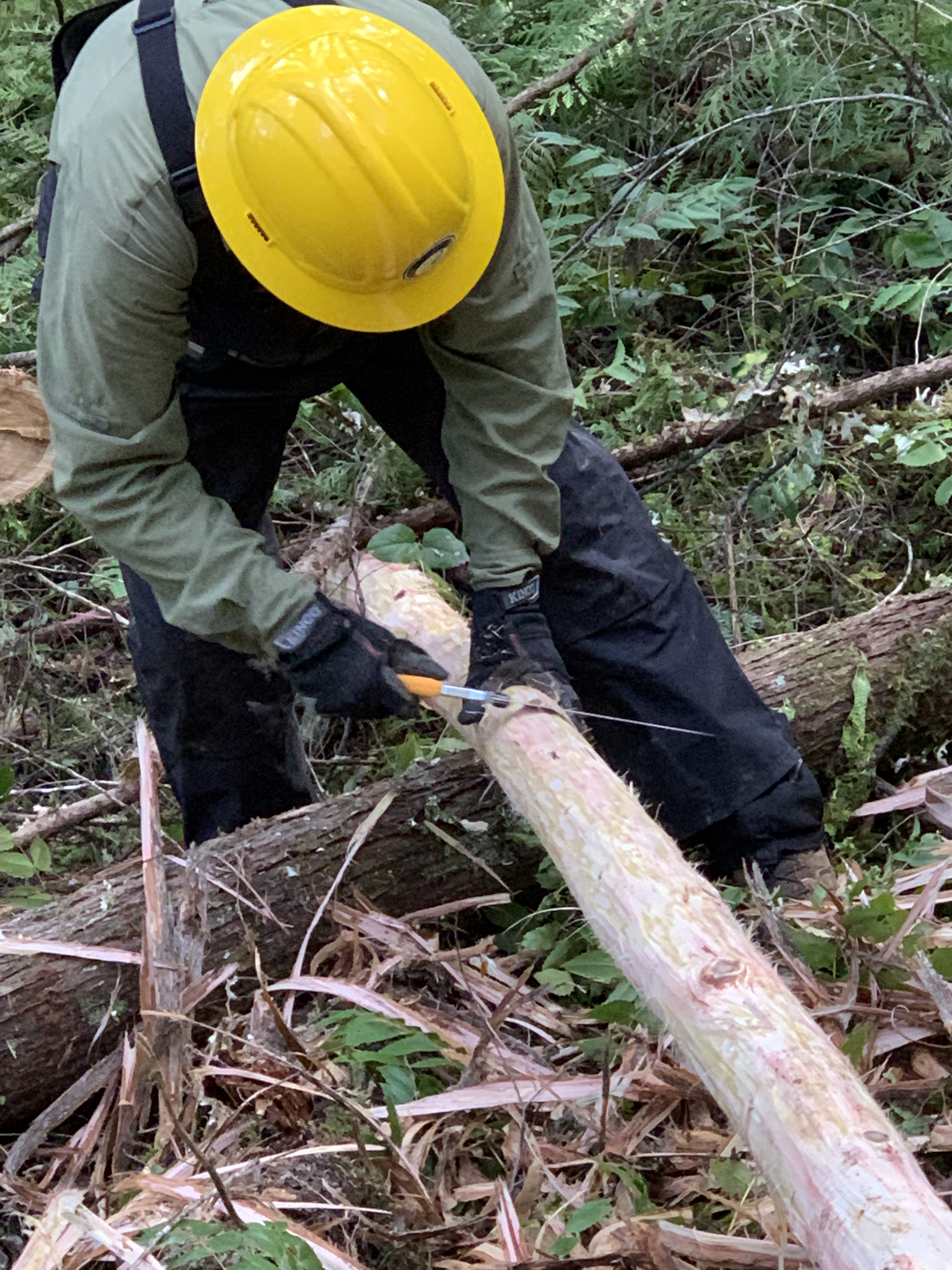
We split into two groups, one to work on the trail tread, the other to search for hopefully nearby cedar, where we could strip and carry them a short distance. Red Cedar is not heavy, about 27 lb per cubic foot dry, a lot more wet, which these were. We had to fell the trees, take the limbs off them, then it was possible to move the definitely heavy log from the woods to the trail, where we made precise measurements, cutting the logs into four foot lengths for posts. Then it was time to start de-barking.

I had at my disposal various types of scrapers, knives, axes, other sharp implements to slice through the bark to the fascia over the cambium layer, then cutting through the fascia to the cambium itself, what we wanted exposed. I didn’t know that trees had fascia like we do.

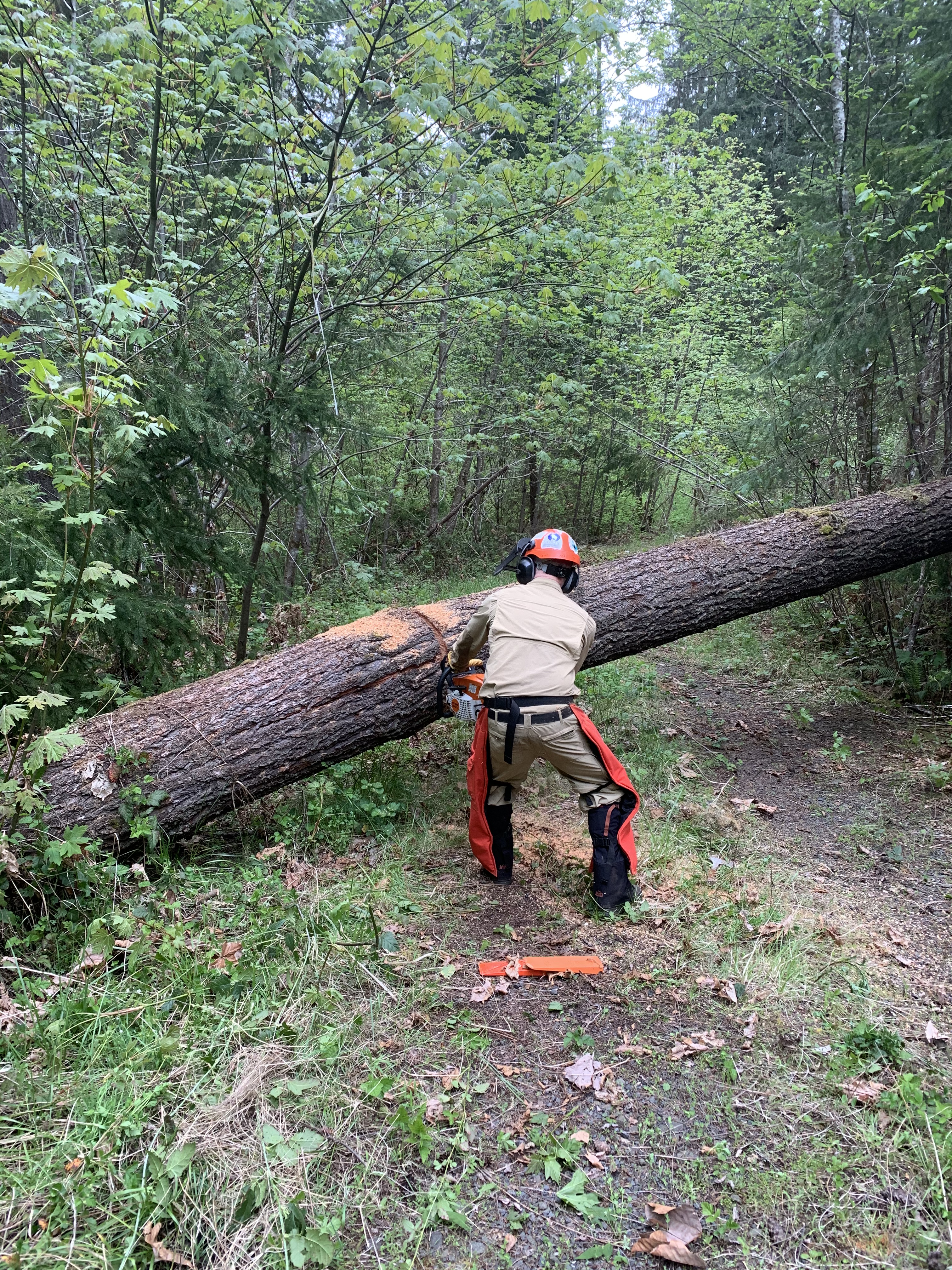
I hadn’t seen tree felling in thirty years, back when I spent a season as a wilderness canoe ranger in the Boundary Waters, and we used crosscut saws to fell trees that were potential dangers to campsites. I remembered to look up at the branches of the tree we were going to fell to see where most of the weight was, so we could predict where it would fall. Fortunately, many of the Crew had backgrounds with the Park Service, Forest Service, or BLM (Bureau of Land Management), and they were certified fellers.  One of us put pink ribbon on cedars we were to cut, we had one sawyer, and I was the swamper, working with the cutter and doing the limbing.  Cutting is a lot different from bucking on the ground. Tree falls, limbing, or removing the limbs is necessary, and instead of pushing logs off the trail, we brought logs to the trail, in order to carry them to the bridge.

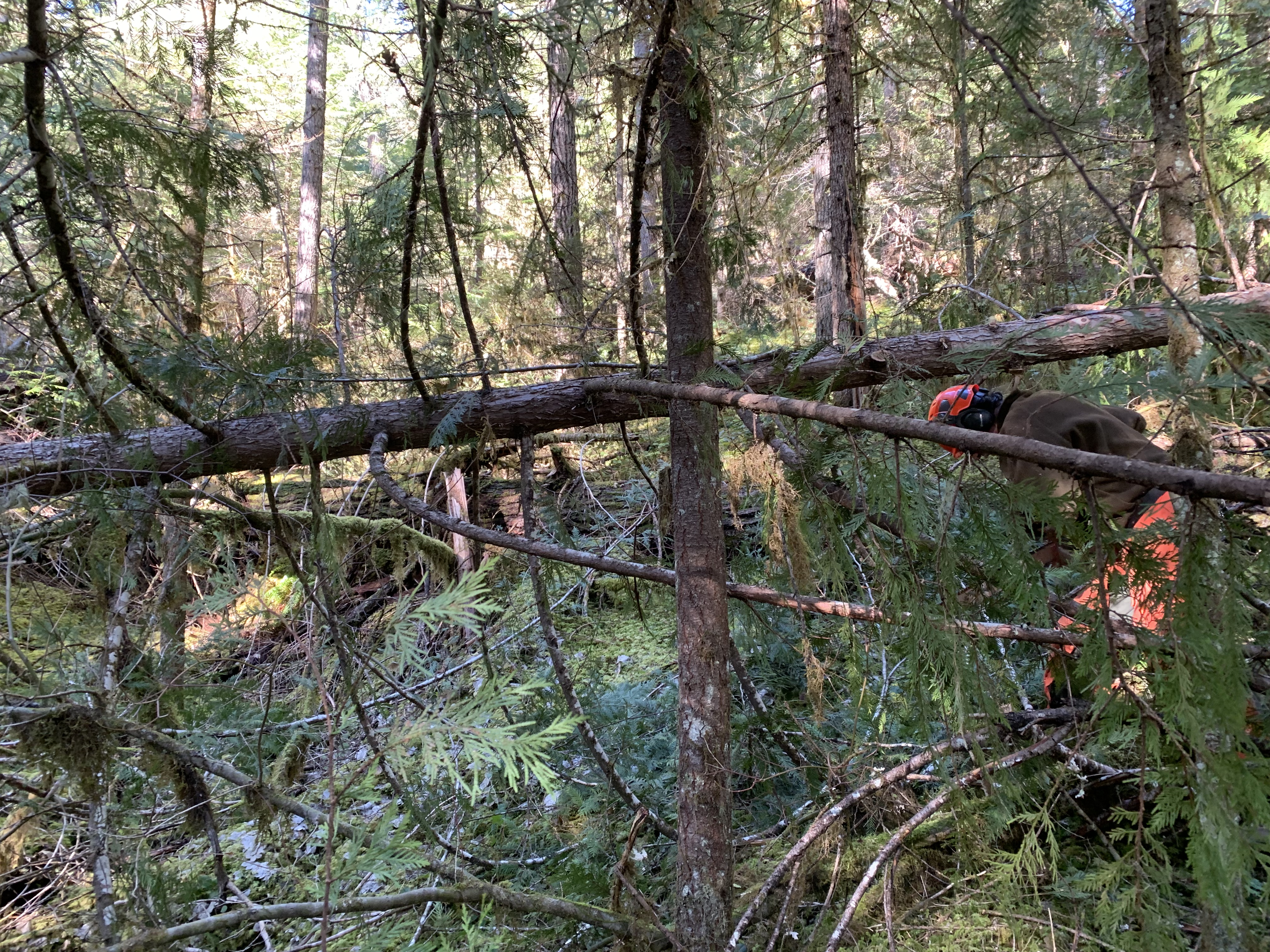
Limbing a fallen Red cedar

It was a busy morning, with several crossings of the incomplete bridge with no rails, fast flowing water 12-15 feet below. I didn’t want to slip, and I was a more afraid than I thought I should be. I certainly did not want to be the person leaning out over the stream putting the posts in.  

Incomplete bridge over Indian Creek. We still need to learn how it got put there.

A little after noon, later than I like, since I have been up since 5, we broke for lunch. I was on the opposite side of the stream from where others were eating, and while I had my lunch in my pack, it was too shady and cool on the side of the stream where I had been working.  I made yet another crossing of the bridge, again watching my footing carefully, and walked up the small rise on the other side. I didn’t see anybody eating until I was about 50 yards from the stream, when I saw three of the Crew near the trail. They were in shade eating their lunch, but a nearby brilliant green area between two logs, in full sunlight, caught my attention. I headed into the woods towards it.

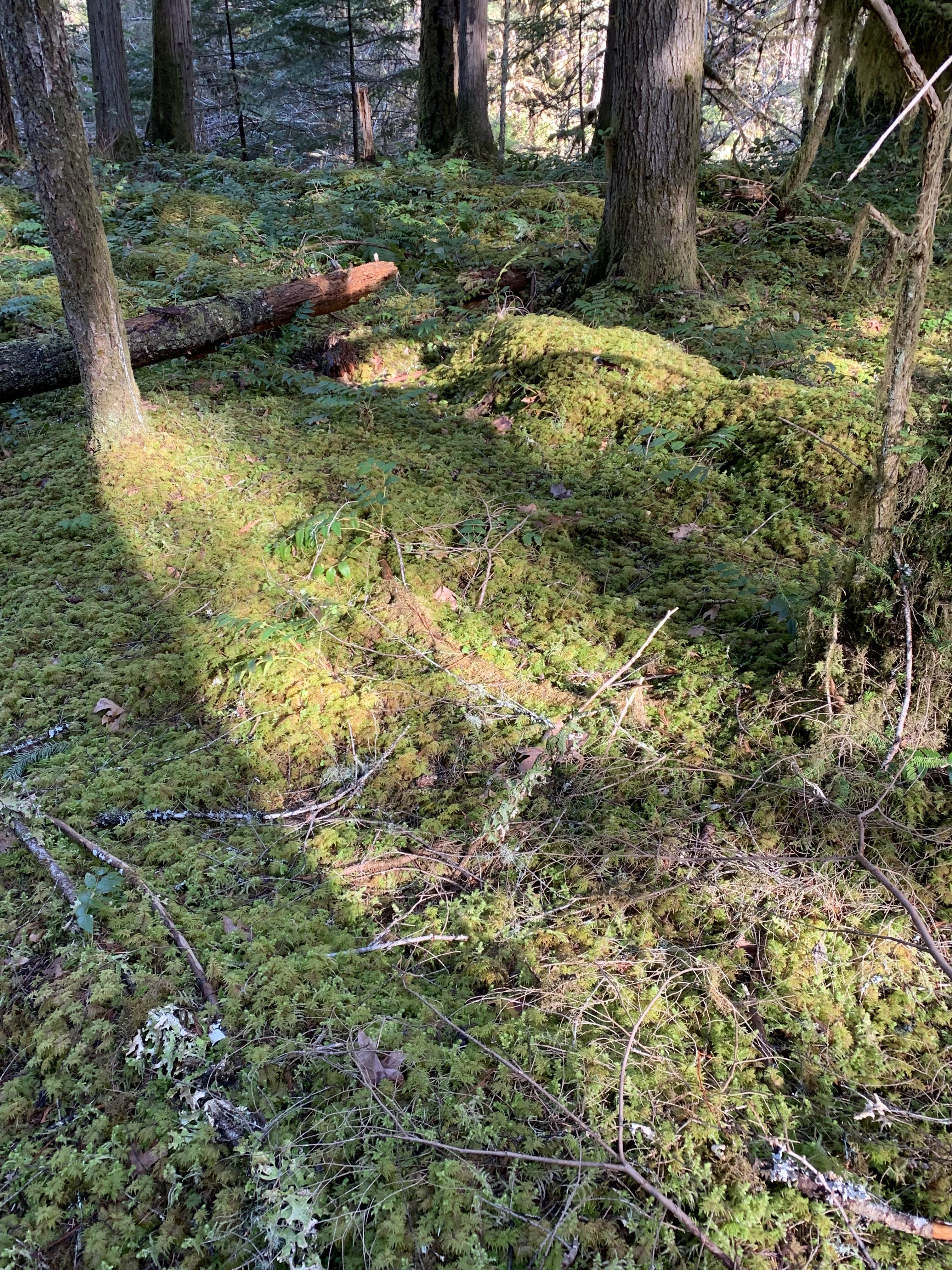
I really should have stayed away and left the area alone, but I told myself I would be careful. This was a 25-50 square foot area of thick moss, a few inches thick.  It was damp, but nothing was going pass through my rubberized work clothes. I put my gray foam pad on the moss against one of the logs and sat down. 

What relief. I sank into the moss, carefully extended my legs, being careful not to kick any of the moss loose, took off my hardhat and leaned back looking up at the sky.  The sun was warm, the stream could be clearly heard, the conversations a few yards away were inaudible, and I took a long drink before beginning my lunch. I have several parts of my lunch, beginning with a sandwich and a half, followed by raisins, some German chocolate a friend sent me, occasionally some Russian chocolate another sends mw for my birthday, some Lindt’s that I buy here, a protein bar, and half an apple I bought from Detering Orchards up in Linn County last October. It takes me a good 20 minutes, emphasis on good, to go through all of this, staring at the sky, the trees, the clouds, even at one plane that went through a small clear gap in the branches, heading to Portland or Seattle.

After putting my lunch bag away and taking another drink, I reversed the sitting down process, carefully lifting my feet and putting them under me.  When I stood up.  I put my hardhat on, carefully lifted the pack and put in on. The moss was compressed, but it would come right back. Nothing was obviously dug up. I took one step on it, and the next step I was off.  It was obvious I had been there, but it looked like it would do fine.

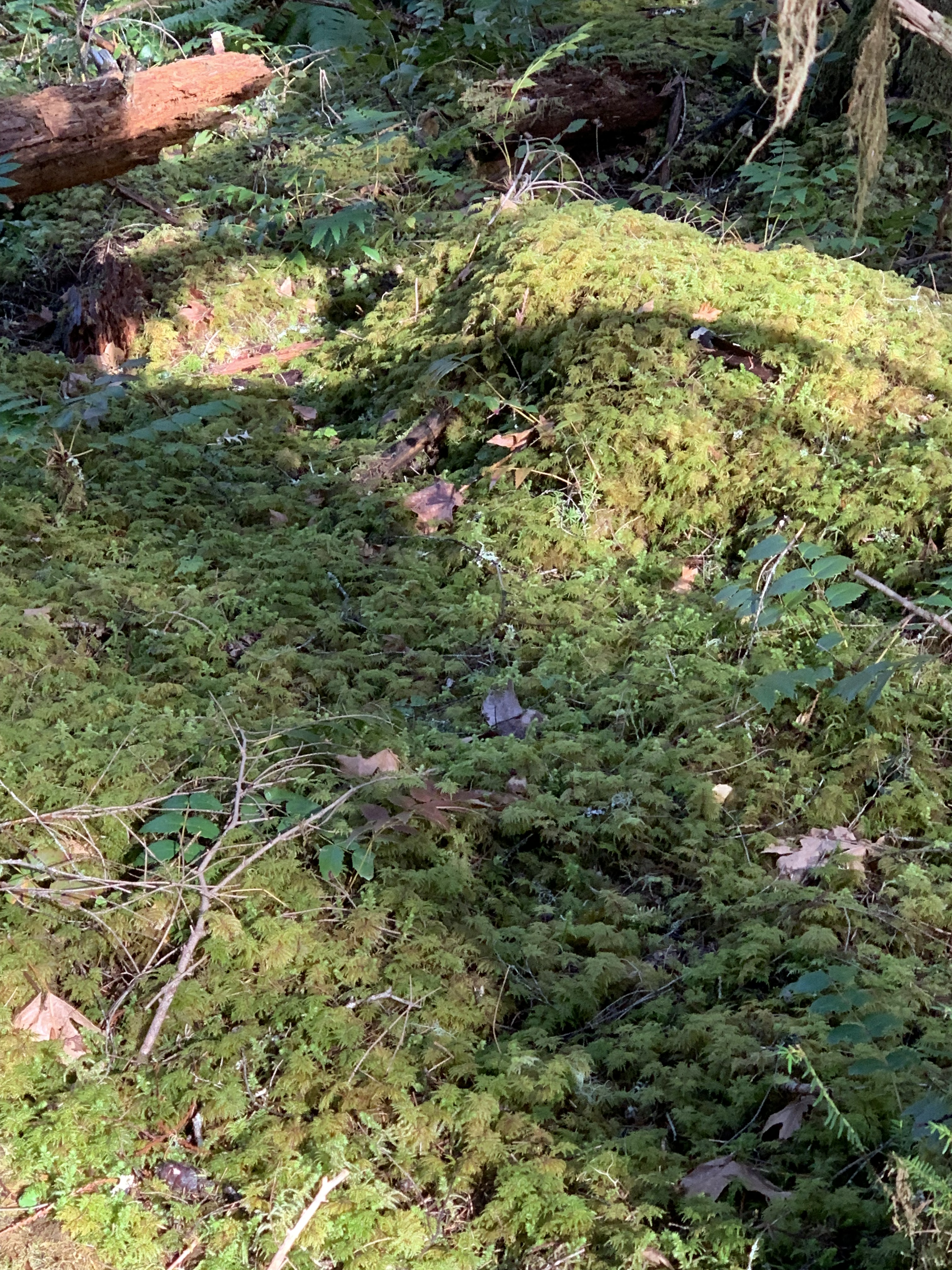
A week later. The other plants are Oregon grape, which is an early bloomer with yellow flowers.

I don’t know what got into me. I am usually much more careful about moss, which takes years to grow and seconds to destroy.  This was a special place.  I bowed my head and apologized to the plants for their putting up with my compression, and slowly walked back to the trail where the others had just finished their lunch.

The following week, we would come back, but I ate lunch by the trail, my back against a tree.  I sat on bare ground. The mossy area looked good, and I left it alone.

Scraping the cedar log

About 17 of the 20 posts we will need.

SAVOR

January 25, 2022

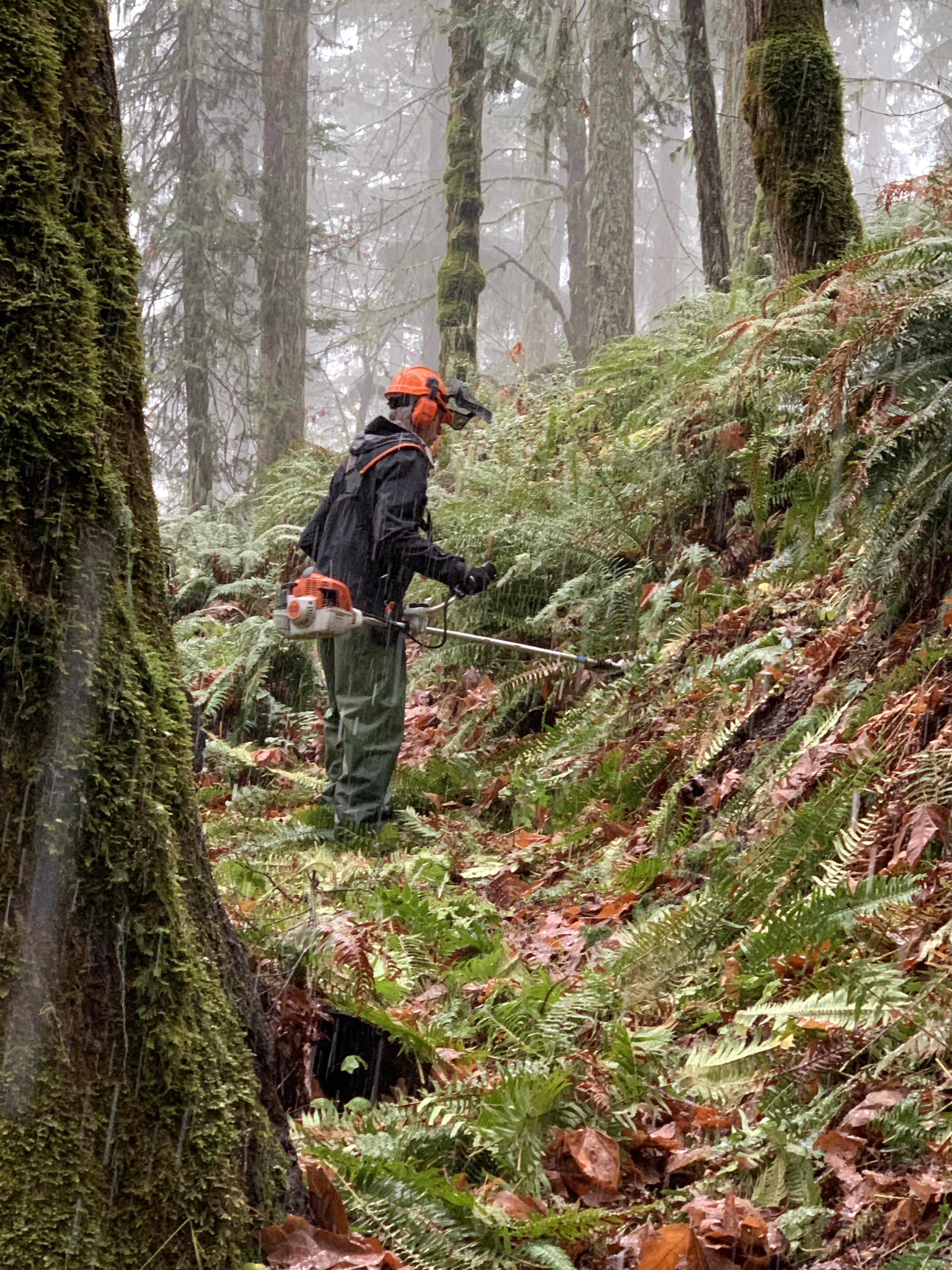
Working nearly a mile up Hardesty Trail, I was amazed that I had fallen in the mud only once, a  slow motion deconstruction of my vertical posture arrested by a nearby bank, and which nobody else fortunately saw. The Stihl Brusher was working fine, the trail was cleared of branches by others in front of me, and it was being raked behind me. There were three brushers at work here and a fourth 3 miles up nearby Eagle’s Rest Trail.  I had a double layer of ear plugs, and when I couldn’t hear myself or others talk, I figured I was well protected.

Hardesty gets a lot of traffic, especially from mountain bikes. Sword ferns and Salal grow over the trail and need to be trimmed. We were doing a purported 5-year trim, but I suspect in 2 years it will need to be redone.

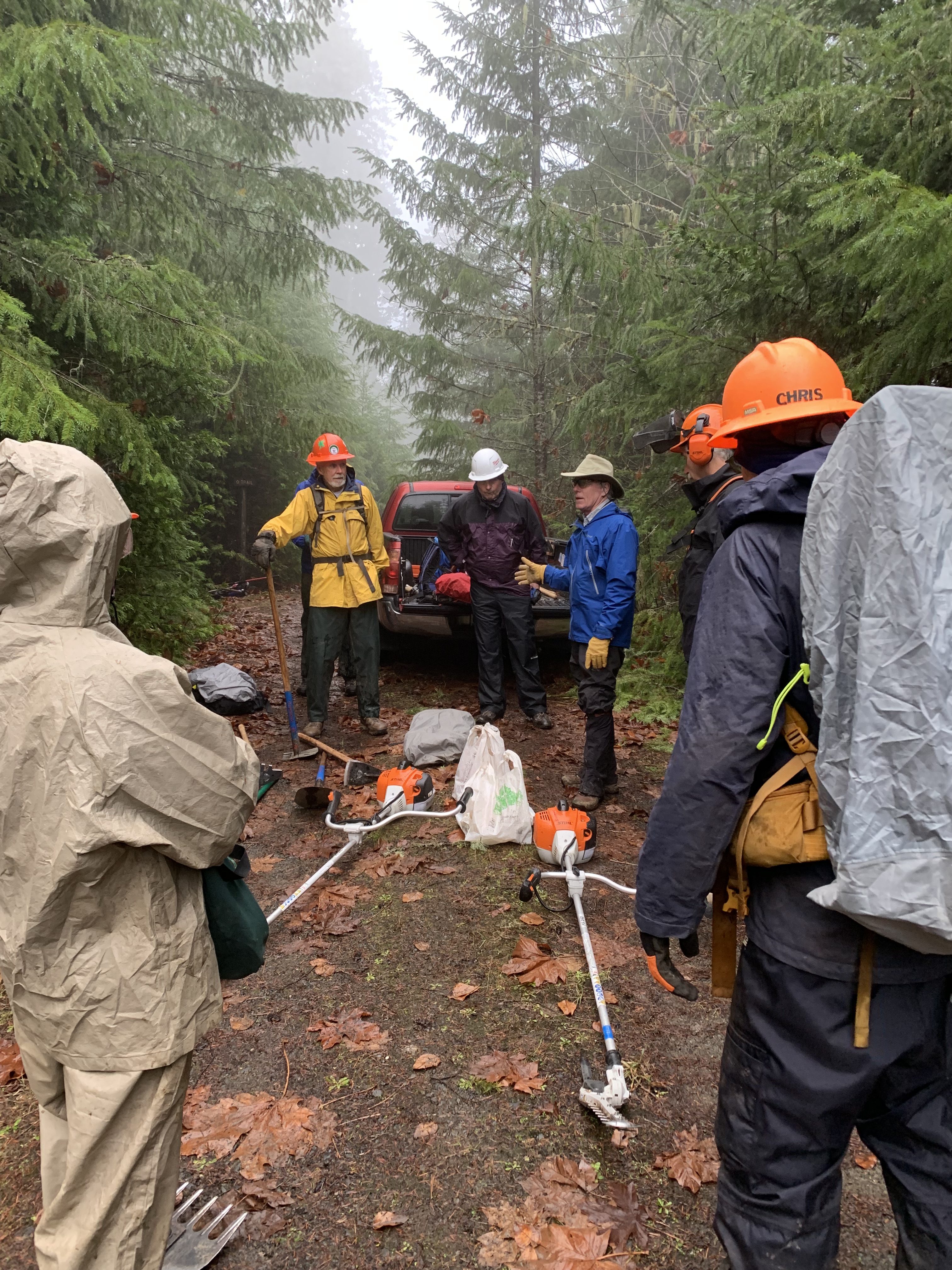
The Crew working Hardesty, January 2022

The brusher quickly shut down. Stihl brushers don’t give any warning when they are low on gas. On the other hand, nobody who does much brushing ever complains when they have to stop. The harness helps, but brushing is hard on the upper back. I gassed up and took a break. What a beautiful woods we were in. The darkness of the stratiform rain had lessened, replaced by mist, and the trees stood like tall sentinels. There are huge trees on Hardesty, three century old ones, already big when the country was born, somehow surviving storms, fire, and saws, although a few didn’t survive last summer’s small 20 acre fire just up the trail. Others had blackened bark but would do fine. The first hike I took up here in 2014, my 19th in Oregon, I said that protecting just one of those big trees would be a good legacy. I had hoped we might make the area wilderness, but there is too much recreational mountain biking and it is too close to main roads, although both the Mt. Jefferson, Mt. Washington, and Menagerie wildernesses abut US 20.

The well-known Oregon trail author William Sullivan discusses Hardesty briefly at the end of his book on the Middle Cascades, barely mentioning it in the Mt. June section with the comment, regarding lack of views on Hardesty, “These hikers obviously don’t know about Mt. June.” I found that quotation in my once-got-it-soaking-wet edition (I have two later editions), the day I hiked Obsidian loop in a heavy November rain seven years ago with no pack cover. This is because while Hardesty trailhead is right off Highway 58, easy to access, climbs a full vertical kilometer to the summit, there are no views at the summit. In the few years I have climbed Hardesty, regrowth has taken away what was at best a limited view of South Sister. If you want high mountain or ocean views, yes, go elsewhere. If you want to get into shape in one day for summer hiking, on the other hand, this is your trail—11 miles round trip with a lot of elevation gain. Drop down Eula Ridge trail near the top for 4 miles, and take the flatter South Willamette, still with a thousand feet cumulative vertical to connect back to Hardesty, and it is a nice 14 mile loop. Trail runners race the Hardesty Hardcore loop, which one has do under 4 hours to be considered a finisher. I hiked it once in four and a half, figured I could probably find thirty minutes somewhere to take off, but then asked myself why I would want to do that.  I never did the race. 

One November, I led a Club hike to Hardesty, over on the Sawtooth Trail to Mt. June and back to Hardesty, an 18 miler with about 5600 feet of elevation gain–“the junk food hike.”  I got to the half way point at Mt. June—no views because of fog—was cramping, probably pre-bonk stage, and as hike leader, l was leading from the back, not letting anybody know that there was no other spot in the group I could lead from at that moment.  I simply could not go any faster. Fortunately, one guy gave away a pack of Cheet-Os at lunch, nutritionally awful, with the salt and the corn syrup, but oh so good for the bonks, and I somehow got my body back to the car. 

Hardesty was only my second time in the Willamette National Forest. I liked the wetness of the first part of the trail, huge trees, constant climbing and the feeling of accomplishment when I reached the concrete ruins at the top. There are some nice views on the way up; one just has to look out and down at Eagles Rest or Lookout Reservoir below.  Hardesty Lookout itself was removed in 1968; the trail has existed since 1910. I learned just recently the parking area was once an informal resting spot for truckers and full of trash. Nice the world changes for the good occasionally.

View of Lookout Point Reservoir from upper Hardesty trail, June 2014

Lunch time for the Crew. As I turned off the brusher, Louise, retired from 32 years in the Forest Service and a newcomer to the group, commented how pretty the trail was. It is. I don’t hear that said much by the Crew, in part while I think we know it, perhaps we forget it in the press of bucking out another log, digging a drain for a trail, or moving rocks. Hardesty is pretty. I hadn’t even reached the section of the huge trees. I like this place.  I picked a log to sit on, then as I usually do at lunch, lay down while I ate in order to be flat and to look up for a change. I don’t look up enough in the forest, although both bucking big logs and eating lunches on the trail are rapidly curing me of that oversight, the first for safety and the second for comfort. I savor my food, my reclining, and my view. The dictionary defines savor as to enjoy something completely, but to me, savor speaks to the second level: we are enjoying the fact that we are enjoying, acknowledging at that moment, not later, that we are happy, a higher level of happiness as well, that we sometimes miss. When we savor, we are grateful for this exceptional moment and good fortune that we are alive, know we are alive, glad we are, savoring life itself, recognizing and appreciating our current feelings right now, not taking them for granted.

Tiger Lilies in spring, near Hardesty summit, June 2020

DIFFERENT PATHS BUT KINDRED SPIRITS

November 16, 2021

I was tired as I drove out of town to a winery for the annual volunteer appreciation night. Earlier that day, I had hiked several miles at Fall Creek, swamper (helper) for two chain sawyers, rebuilt some trail tread, where it was wet and muddy, falling four times on the big leaf maple leaves that hid wet rocks.  

It was dark, raining hard, and a long drive on narrow roads to the winery, but I wasn’t planning to either drink or eat.  I was on the Board and needed to show my face, hopefully clean after the day’s work. The appreciation night was late in the year, because in summer, we are all out working trails and lakes. For introverts like me, especially a tired one, barely out of the shower, and having to work the next day, I just wanted to hide out somewhere among the fifty or so, make sure I was seen by the right people, and then leave. I had to get up early for another day of trail work, and didn’t yet know on the drive home I would be dodging opossums.

I was pleasantly surprised that the room at the winery was large, with high ceilings, a mask rule, with everyone’s complying.  I saw several from the Crew, four of whom I had seen at vaccine clinics when I worked there, advising each the best time to show up.  I saw people from the Club as well, and I figured altogether I knew 20, which for me was remarkable. I got some water and sat down at a table by a wall near the exit, so later I could quietly depart.

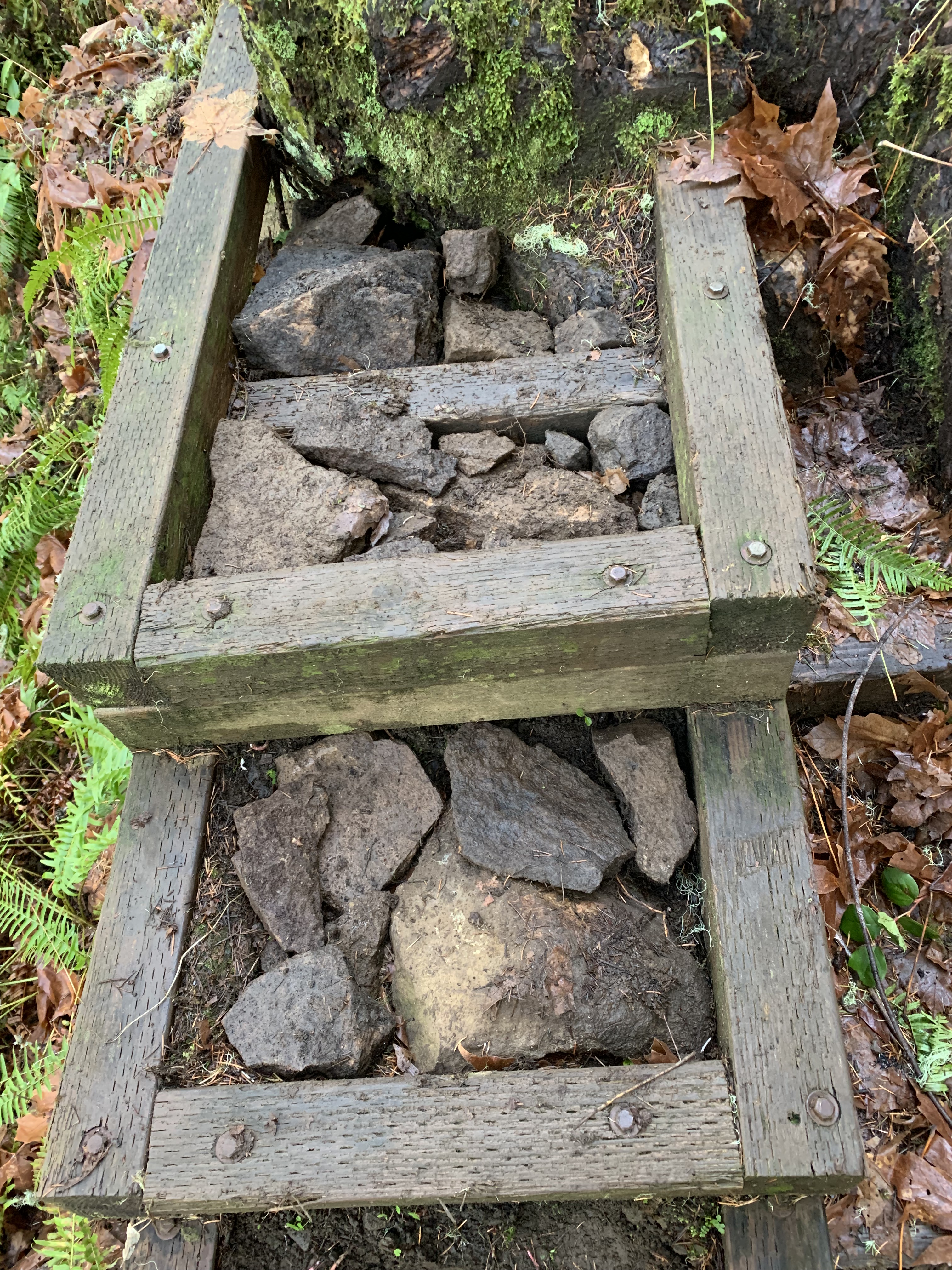
A tall man in his forties, wearing a Forest Service uniform, came by. His name badge read “Erik,” and I apologized for not getting up, telling him I was too tired from the day’s work and just wanted to sit. He laughed and understood, seating himself across from me.  He was from the Detroit Ranger District to our north, where I don’t hike or work often, but he knew enough of my area that we were able to talk about places we both knew. He mentioned that he had done a lot of rock work on a trail near Marion Lake, making a slide area easier to hike through. Rock work means picking up rocks (lift 1), putting them in something (2), carrying that something (3), then taking them out of that something (4), and finally putting them in a new place (5).  If I start moving rocks on a Crew job, my arms are going to feel like lead within 15 minutes. Erik looked like he could hold his own. He added he had hiked in a lot of wilderness areas in the past but didn’t offer any details. 

He asked where I got the carafe of water and cups, and I told him he could have the water, and there were cups at the bar.  While he was up, the trails person in the Middle Fork District came by and I briefly got up to tell him about the day on Fall Creek, his district, where we worked, having to leave six big logs between 20 and 40 inches that were too complex to cut, because of root balls above and the steep drop below. It wasn’t clear what would happen, and I told him we were going to have a well-known C-rated sawyer take a look. 

When I sat back down, Erik had returned, and for some reason, I guess to be social, I asked him whether he had worked in other forests, given his age. To my surprise, he hadn’t. “I was an electrician for 20 years and lost my job in the Great Recession. I didn’t know what I was going to do, so but I knew I liked hiking, so I spent time in the wilderness. I liked it so much that I decided I wanted to spend my life supporting public lands.”

Impressive.  He had changed his career in middle life. Just like I did. Lot more successfully, too, although I have no regrets. That takes guts and the ability to recognize that opportunities may appear in the worst of times (like being unemployed), then realizing that behind door #1, wilderness hiking, lies a chance to reinvent oneself in a completely different career.  Risky? Yep. Ageism rears its wrinkled head everywhere, and failure always looms, although I learned much from failing.

For me, asking more questions seemed to be pressing beyond what I thought proper but I was on a roll and continued: “Where were the wilderness areas you hiked?”

Erik came alive. I could see it in his eyes. “I hiked the PCT, (wow, I knew what was coming next), the Appalachian Trail (yep, exactly), and the Continental Divide Trail (oh my).”

“In other words,” I said, “You’ve done the Triple Crown,” short for seven thousand miles of backpacking across the US on three classic hiking trails that every avid hiker or backpacker in the US knows.  He had hiked through 96 wilderness areas alone on those three trails. Erik also mentioned several long trails in the South, including the Pihnati Trail, 300 miles in Alabama, that I had never heard of, plus 1300 miles hiking in Florida from Key West to the Panhandle. This guy was amazing, the kind of person I’d like to be when I grow up. And I am nearly 73.  All I’ve done is the southern quarter of the AT, and that was 22 years ago. I hoped I would go back, but I won’t. I never was a thru-hiker, let alone a Triple Crown hiker, but I backpacked far enough and long enough to reach the point where I didn’t feel right without a pack on my back. That’s how you really know you’ve been out in the woods. I wonder if he had done a thirty mile day. I should have asked him.  I wonder if he downed a quart of ice cream in one sitting, the way I did in Virginia one night. Damn, that was good. Or walked across the treeless Balds in a pouring rain, the way I did. I bet his adventures were far more, and I briefly contrasted Erik with another guy with whom I worked a few weeks back.

We were hiking out of the Mount Washington Wilderness when he asked me how many trail miles I had that year. The lack of an appropriate past participle made the question unclear, but I guessed correctly he meant trail miles cleared, and I replied about a hundred, which I had been tracking. He then said he had about four hundred and six hundred the prior year. I was annoyed, being sucked into someone’s narcissism in my airspace. For one thing, I counted trail miles cleared, not miles hiked in and out, otherwise my number would have been larger. For another, I probably cleared way more than my share of logs that day. I dislike one-upmanship, especially on the trail. I had had a good day’s work out there and then felt like a slug, listening to this guy brag.  

Erik was different. I felt uplifted when I listened to him, glad I asked him where he had been. I was in the presence of someone special, who rediscovered the outdoors through adversity, experienced places I will never experience, but can still appreciate, and then changed his career to care for these public lands. I, too, changed my career, I have experienced some wonderful things, and in my retirement volunteer a great deal of time to care for public lands. We are kindred spirits who took very different paths in life to end up in the same table that night.

When I left, not sneaking out early after all, I told Erik how impressed I was with what he did, and the look in his eyes showed his appreciation. 

It rained all the way home, but I didn’t hit any opossums. 

GUT FEELINGS

October 25, 2021

“Let’s leave our packs here and go ahead down the trail to get the last one. It isn’t far.”  My crew leader motioned me to go ahead of him.  I left my pack, and I felt strange without it.

Worse than strange.  Not right. 

I walked ahead anyway.  We were doing a simple logout of the Betty Lake Trail, a flat, 2-mile long popular hiking and winter trail that connects the Waldo Lake Road to the trail that goes around Waldo Lake, so this was a power saw job, although earlier I started to remove with my hand saw a small 4 inch log dug into ground, and when that bound up, used my axe. The log ahead was our last log of what was going to be an easy day.  

Small unnamed lake near the Waldo Lake Wilderness

Power saw logouts are easier in some ways for me, harder in others. I have not been sworn at on a crosscut logout. Well, almost. We were pulling a stuck saw up out of a log a couple of months ago, not stuck because of what I did, and my partner, the saw’s owner, freaked out that I was pulling too hard and would break the saw. (It wasn’t too hard and I didn’t break it.)  I have been sworn at and publicly shamed on a power saw logout. Everything there is potentially more dangerous. There is a fast moving chain with teeth, rather than a slow moving piece of steel with teeth. One can damage a power saw faster and easier than a crosscut by hitting a rock or ground, and if a bind is not properly appreciated, one learns very quickly, as opposed to much cracking and splitting that precedes the answer when a crosscut is used.

Staying well back. The ribbon on the axe sheath helps me find it.

But break any log under a great deal of tension with either, and the speed of the released log and its kinetic energy, a function of the mass and the square of the velocity, is unchanged.  A large log can move 15 feet in a split second. I’ve seen it.

I hadn’t swamped for several months with a power sawyer, but the rules were unchanged: I stayed 12 feet back; some sawyers want me back as much as 20. Each has his or her own rules. I checked overhead, looked around. It’s easy to get focused on the cut, but I needed to look where the cutter wasn’t looking to make sure there were no snags that could come down, no hikers coming up the trail, the log being cut wasn’t moving inappropriately from some other log we hadn’t seen.  If wedges are needed, I have them available and the axe to pound them in with. A year earlier, as I went by a log a sawyer was going to cut, I noticed another log on a slight incline perpendicular to to the one we were going to cut. When the cut log fell, the secondary might roll, and if so, there was only safe way to deal with it. The cutter didn’t see the secondary log, which was partially hidden from his view, so I yelled to him to move over to my side. Being a bit gun-shy, I couched my words carefully, “You might want to be on this side when you cut.” The cutter moved over, cut the first log, and immediately the second log, much larger, rolled down over the trail where he had just been.  I got thanked for that one.

As I walked, I became more uncomfortable.  The trail went downhill, and the “short” distance was longer than I expected. I didn’t like being without my pack out here. Eventually, I reached the log in question, forty vertical yards below and five hundred trail yards further from where I started.  The log was cut, and there were no problems.

I was relieved and could not wait to get back up the trail to my pack. I had just made a bad decision and had gotten away with it.  Such a result doesn’t retrospectively make the bad decision good. It wasn’t. The probability was low there would have been a need for my pack, and everything worked out.  But it might not have. That was the second bad decision I made with my pack this year, leaving it to go elsewhere.  I dropped it to power brush, because carrying extra weight plus a power brusher, going uphill, was fatiguing.  A mile later, I had no pack and the group was still ahead of me. I had to go back, retrieve my pack, return, then have lunch. It was a short day, and the group was returning after having eaten, so I had to again return along the trail. Bad decision. I don’t like making bad decisions.

Not having a pack with me meant if my partner had an accident, I had no radio, no pressure bandage, no Pulaski (I did bring my axe), no way to get help. A simple day, a simple log, would have just become a major problem, preventable and frankly inexcusable.  I should have spoken up, or at the least gone back and put my pack on. I know better.  Out there, we all do. The only decision I should make is whether to fasten the belt buckle and the chest strap when I put the pack on or leave them unfastened because the distance to the next log isn’t far.  In either case, I have a pack right near me with everything I need. It’s difficult enough to do first aid in the woods; it’s shameful to have brought everything out then not have had it accessible because one was lazy and didn’t want to carry a small weight a quarter mile further.

So from now on, the pack stays with me. I will listen better to my gut feelings and act upon them.  Yesterday, I had a planned personal “this is a drill, this is a drill, saw accident, saw accident” moment in the driveway at home, where I emptied out the first aid bag from my pack to see what I have and don’t have. I really didn’t know for sure.

Turns out that I was in decent shape, but I had a few things I could add to the bag which would make it better: I didn’t have scissors or a knife, I discovered an ice pack I could use, a tube of antibiotic ointment, and some mole skin.  The clotting powder, splint, dressings, two Israeli bandages, and wraps were all there.

THREE DIMENSIONS

October 2, 2021

First time I ever wore an N95 in the woods, I thought, puffing my way up the steep trail out of Blue Lake in the Diamond Peak Wilderness.  I was carrying a Pulaski, my work pack with 3 liters of water and lunch, three different hand saws, work clothes and heavy boots.  We had to climb 1000’ vertical to the ridgeline, where we were going to log out the central part of the Diamond Peak Trail in both directions from the junction. It was not Covid, but smoke that was the issue; humidity, heat, and exertion made wearing the mask impossible. I finally took it off.

Blue Lake

One of the first logs was 5 feet above the trail, which I wanted to ignore. But the Crew leader wanted to take it out. When he put the saw over it, and I knew I wouldn’t be able to cut that without a step stool.  I looked left, saw a much lower place where the log was resting, and convinced my partner we should cut there first.  We did, and the log eventually dropped.  We then worked on the original part, finally cutting it and moving it off the trail. 

The rest of the day included a great deal of difficulty in cutting out each log, which I learned, only the following week, was due to the saw’s not having been sharpened in 3 years. The issue wasn’t necessarily that I was weak; I certainly was affected by the heat. And using a dull tool.

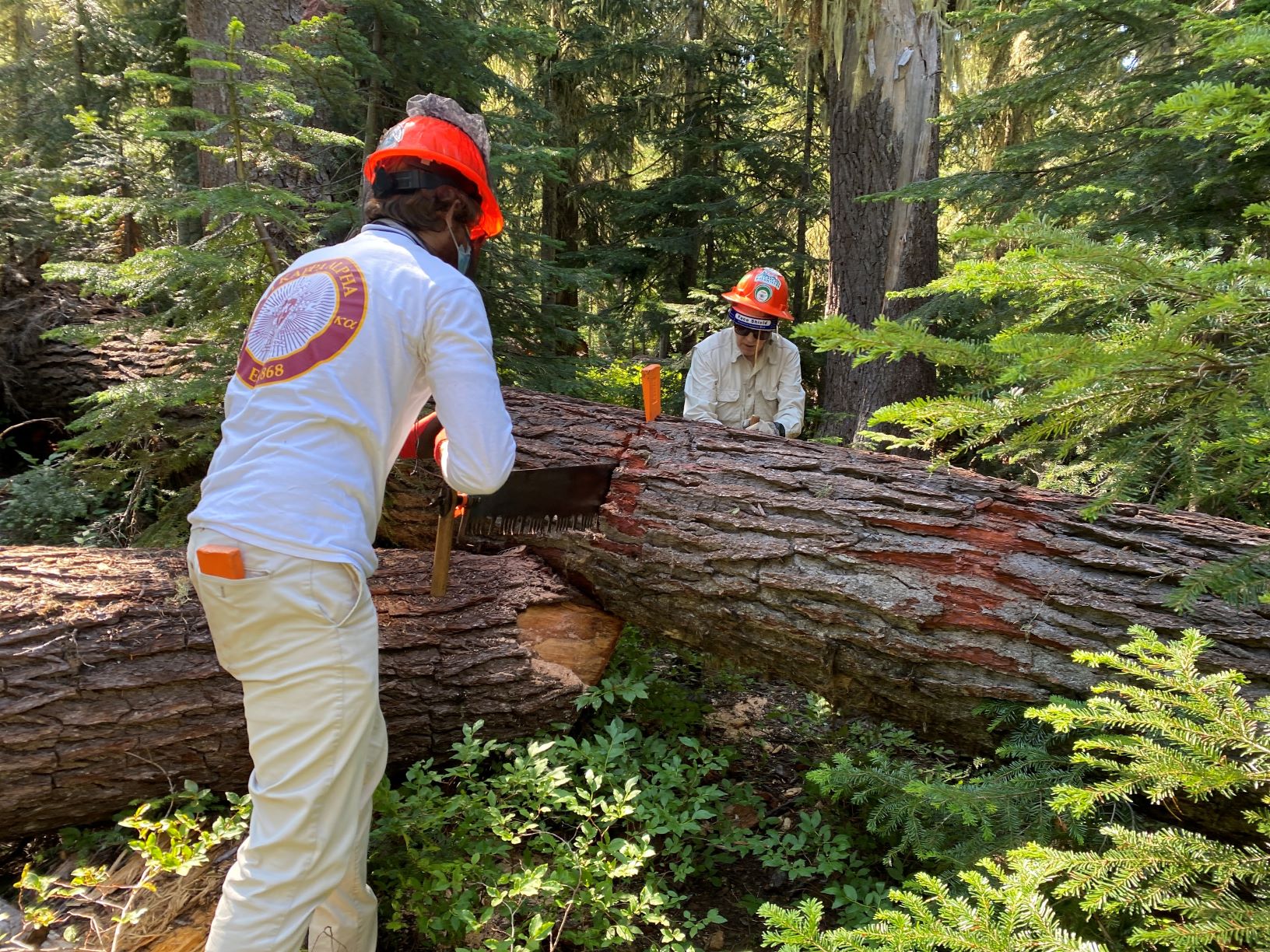
When a 2-man crosscut sawyer bucks (cuts), the blades cut when pulled towards oneself. When the pull is complete, ideally when the opposite handle on the other side is near the log, the sawyer relaxes and lets the partner pull the saw the other way.  Relaxing doesn’t mean letting go but gently guiding the handle back to the log, like the heart in diastole, as the partner pulls. It is important to pull in a straight line, so the saw cuts straight. If one pulls to one side, the saw, being flexible, will bend, but the kerf or cut is narrow, and the saw teeth will no longer cut in the groove made by the rakers or mini-chisels that are on the blade with the teeth.  Used properly, the saw cuts smoothly and sounds better, too. The saw sings when all is right.

The author (back) on the Diamond Peak Trail, 2020

It is easy to pull to one side if one gets tired, the sawing position is sub-optimal, the log is difficult to cut because of bind or type of wood, or the saw itself is not sharp.  Most of the time I cut, it was a good day when nobody commented about my cutting. The most common comment I heard is “you are pulling,” which I took to mean I was pulling right or left. 

I have had a great deal of On the Job Training—OJT—but little teaching, and as a teacher myself, that bothered me. I had no mentor, the logs were plenty, and cutting them out was the priority.  I was then and even now usually the junior member of the Crew. Additionally, I was a newcomer to the state. Oregonians, I learned early from one person in the hiking Club, care about length of time here. In Arizona, where I previously lived, we joked that a native had been there 10 or more years. Nobody cared really how long one had lived there, and I don’t remember anybody’s talking about third or more generation Arizonans, but one hears often about multi-generational Oregonians. For the record, I am a native Californian, when the state was tied with Pennsylvania for second in population, and Kentucky had more people than Florida.  

I did my work, tried not to pull to one side, stayed quiet even when I could see, across the saw, that others were pulling to one side. I thought of mentioning that but stayed quiet, because perhaps I was wrong. Finally, on Diamond Peak Trail last year, I was cutting with my Crew leader while he was trying to carry on a conversation with someone else.  The cutting became more difficult, I saw my partner’s saw pulled far to his right, no question now, and said, quietly, “Hey Boss, you are pulling right.”

“Really?” Oh yeah. He was.

This year, two other issues came to light, both again on the Diamond Peak Trail. The first was dull saw. We proved it the following week when four of us were tackling the same log at the same time, I was on the dull saw, and with a head start, the pair with a good one finished before my partner and I were two-thirds done.

A month later, I was out with a crew member who joined a couple of years before I did, native Oregonian, mentored by one of the most experienced sawyers in the area.  We were cutting a large enough log so we couldn’t see each other, and at one point he told me that I was pulling.  I muttered something, relaxed my stroke slightly, and wondered how he could know I was pulling when he couldn’t see either me or the saw.  It didn’t make sense. I thought about that incident the rest of the day, wondering whether I had reached my maximum level of incompetence for the job, since I seemed to be doing better a year earlier, and 53 days out with the crew on a crosscut event ought to have made me fairly experienced.  

In the middle of the tangle

A week later, we were near the same spot, since there was an enormous tangle of downed trees to remove, along with some 30-inch diameter ones on either side. My group started with a pair of logs, one large and near the ground, a smaller one about 4 feet above the trail. Beginning with the smaller, I thought the cut was too close to the trail, thinking it was obvious if we cut there, when we cut the next log, the first would get in the way. We needed to cut it about 2-3 feet further away from the trail. My partner, an experienced C level sawyer, moved the saw a foot, not enough, I felt. We cut the log. 

Another view of the tangle. Notice the underbuck, cutting from below.

We then began cutting the bottom log on the opposite side of the trail, finished it, and turned to where we had been cutting earlier. It was obvious now to everybody, not just me, that the end of the first log we had cut was blocking the exit for the one we would be cutting. The other two in the saw crew took care of it, cutting it 2 more feet away from the trail.  

Sort of like I had suggested.  It’s like a doctor’s not listening to a nurse. Sometimes, the junior person is right. 

A more significant incident transpired on the following log, 30 inches in diameter. I was sitting as I pulled, and looking back on the incident, the saw was angling slightly towards the ground, rather than horizontal. For some reason, my partner corrected me using a phrasal verb for once: “You are pulling down.”

A light flashed. A voice in my brain, the part that runs mathematics so well, said, “z-axis.”

We were, after all, working in three dimensional space. It’s just that my pulling examples had always meant the xy-plane, left or right, and I equated pulling with that plane.  I was pulling down, and I might do that when cutting if I were sitting. It never seemed to matter. For the rest of the day, and there would be a lot more cutting, whenever I sat or knelt, I let the saw ride horizontally across the kerf, or the cut. Standing, I was fine, automatically.  Sitting or kneeling, I was not. That was the problem I was having.  Maybe there was hope, after all.

Pull is a transitive verb. It has an object that may take an adverbial prepositional phrase.  We live in 3-D space. Wood has three dimensions.  Please give clear directions. I am competent in both English and math.  With time, I may even graduate from an A sawyer to a B one. But I’m old; I can’t keep hiking up hills with a lot of tools and cut out logs many more years, N95 or not.

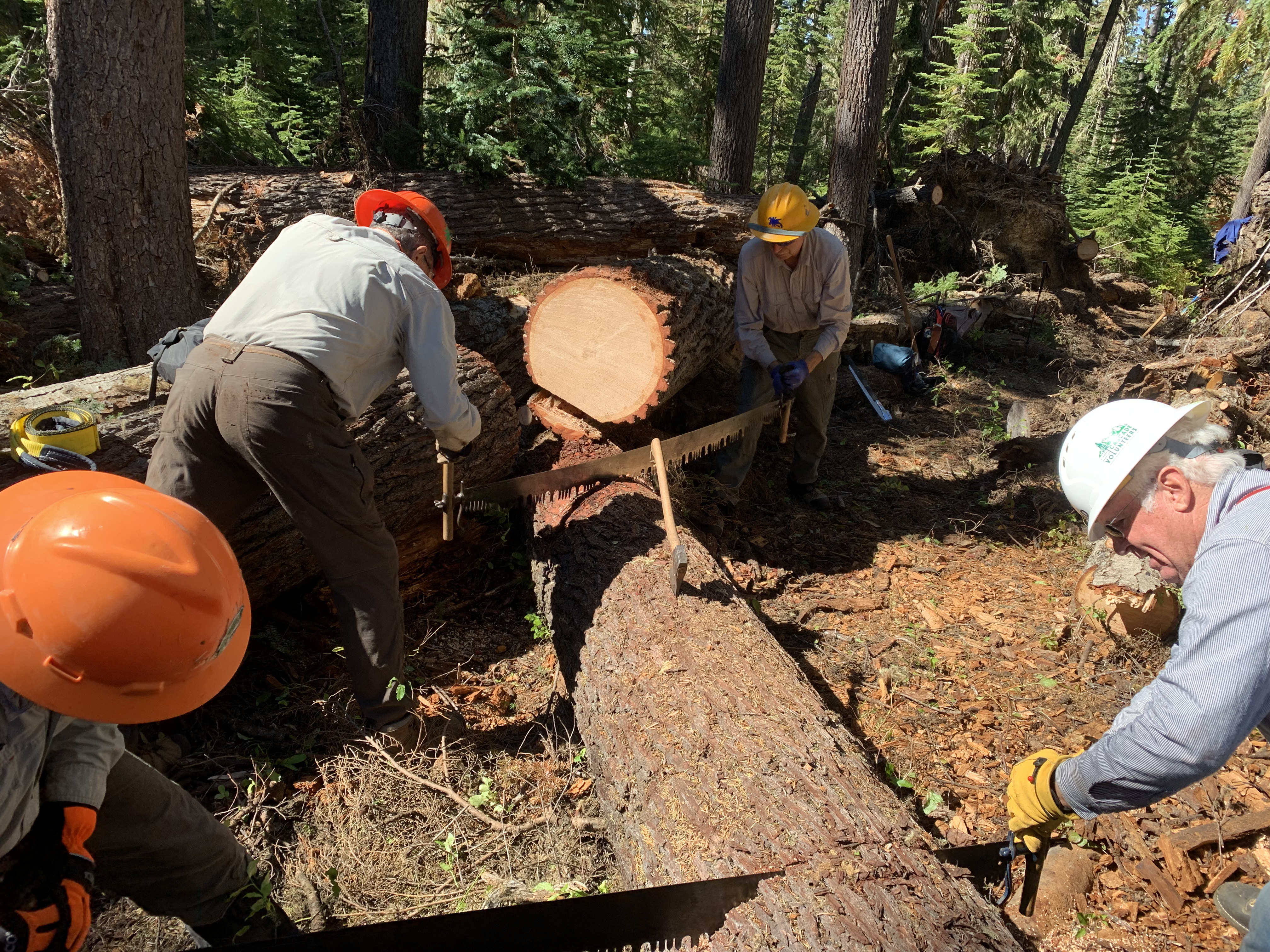
Occasionally it is possible for two pairs to cut on the same log, although driving a wedge in to keep a kerf open for one pair may increase the bind for the other. The top saw is steeply angled to the log in order to allow the cutter on the left to work.(The hypotenuse, however, is always longer than either of the two sides.)

SEE YOU ON THE TRAIL

September 17, 2021

I met Anne quite by accident at one of the 23 drive in max-vax clinics at during the 11 weekends my wife and I worked there. We were at all at Autzen Stadium except for one, when we worked at the community college. Sometime in April, my wife and I were working the car line going to the vaccinators. We were in Lane 1 or 2, the busiest lanes and the last to close. We thrived on the work, the people’s thanking us, and probably the fumes.  We filled out vaccine cards so the vaccinators didn’t have to, spending the process. Our change became standard. Early that day there weren’t as many cars coming through our line, matters were running too slowly for my comfort, and for the comfort  of one of the vaccinators, who never in the time I knew him was ever too busy. I complained to one of the leads who was making the rounds, and he pointed to the first check in spot, near the road leading to the stadium, from which people were sent to us. They looked overwhelmed.

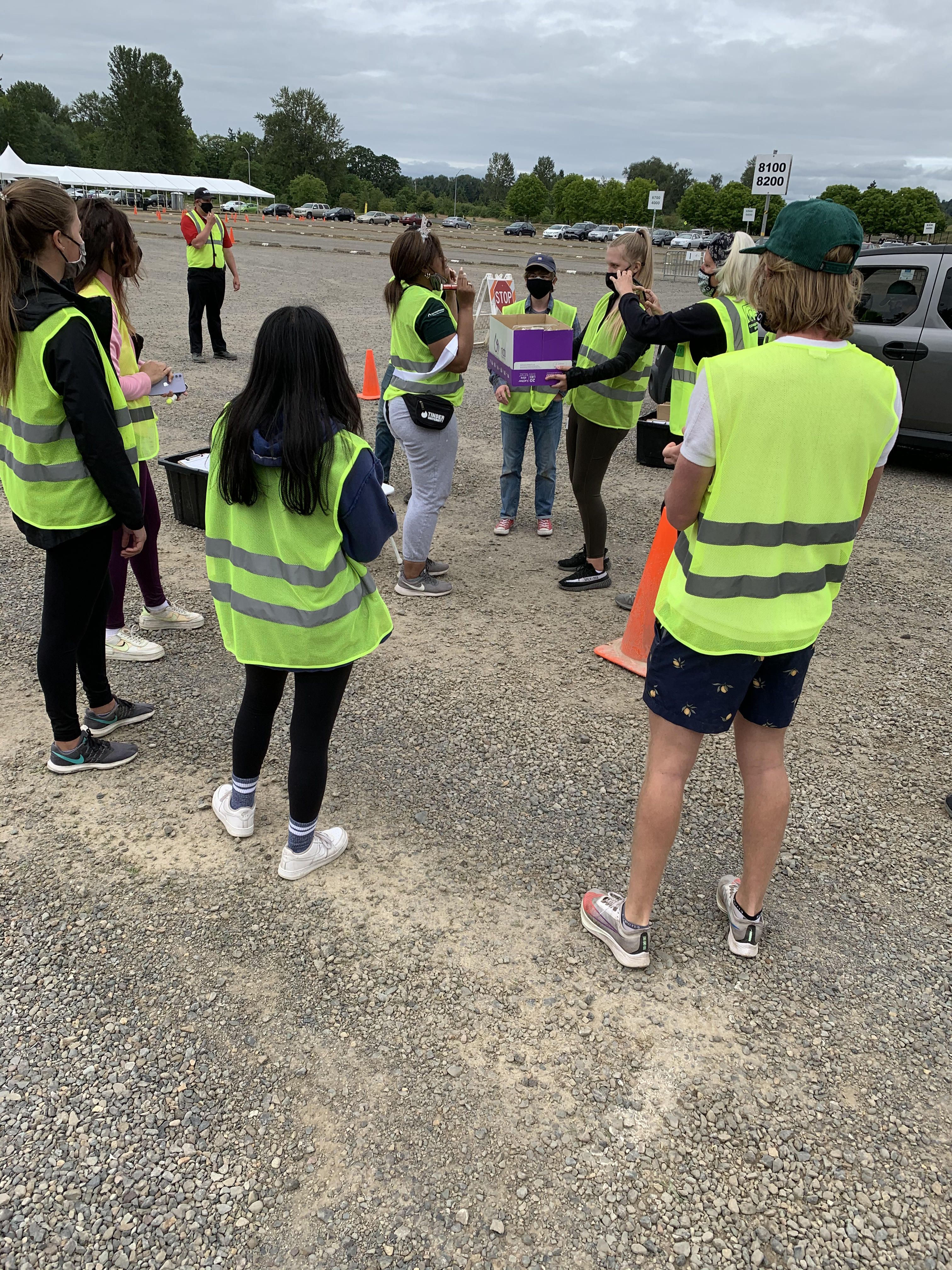
Meeting of the check-in people at the start of the clinic. One was well out of college and had her birthday. She was 1/3 of my age.

I walked over there, learned how the system worked and asked if I wanted to work there. We had enough people taking care of the cars in the line, so that day I worked check in.  This was the initial point of contact, where we had to pass out clipboards, use iPads to check people in, and ensure they didn’t run over the traffic control person on their way to one of 14 lanes. It required a lot of quick moving, dodging cars, and using a touch screen in bright sun or rain.  Anne was one of the leads there, and when the line of cars let up a little we got to talking about life and soon enough about hiking. She was new to it and was curious about Cascade Volunteers and the trails in the Cascades. I wrote down the names of several which I thought she would like.  Some I had just helped log out a few days earlier the week. 

I would work the check-in line three more times, although my preference was to get into the sea of cars, 14 lined up, collecting clipboards, checking information, filling out vaccine cards, giving advice, fielding questions, all in the 6 miles a day and 6 hours I walked from the vaccinators to the check-in point, over and over again.

After the last drive-in clinic in June, the regular volunteers returned a few days later to get T-shirts that celebrated our service. When I arrived to get mine, I met Molly, a hard charger who had run the UO volunteers and a good share of the rest of Autzen.  We both had deep respect for each other.  I didn’t see anybody else I knew. I got the wrong size shirt, as it turned out, so when I returned two days later, the last day to get the shirts, Molly said that Anne had come through right after I had and was upset that she missed me. I figured I probably wouldn’t see  her again or anybody else with whom I had worked, because I thought this experience was final. Still, I am old enough to have seen people I never expected to see again and seen places I never expected to see. 

Sure enough, a month later, at a pop-up clinic vaccine event at a high school, I ran into Anne.  I showed her a couple more pictures of one of our logouts and added a few other trails that were not too difficult but would get her and her husband well into the backcountry. 

My wife and I started doing more vaccine events when the delta variant arrived. Rather than one every couple of weeks, it became two a week. It affected my hiking schedule, just like the main vaccination event affected my snowshoe schedule back in spring, but to me this helping out for the duration is a high priority. I still had trail work on Thursday, and there were trail working events on Tuesday that were not too far out of town where I could work and then get to a clinic.

Besides, this hottest summer on record featured smoke throughout the American West, and we were no exception. I was going to canoe on Waldo Lake and then realized being out there in smoke was not going to be healthy. So I cancelled that, along with many possible weekend hikes I planned, those few weekends I wasn’t recovering from trail work.  Anne and her husband got to Yellowstone and loved the Grand Canyon of the Yellowstone, also my favorite part of a place I haven’t seen in 50 years.

Waldo Lake from Waldo Mountain, before the fires.

Last Friday at the Lane Events Center, we had our usual meeting just before we started vaccinating. It was announced that Anne was leaving after the event to take on another job. Given the workload public health employees have had, there has been turnover. Nobody came on board expecting to deal with a pandemic. At the end of the clinic, I walked up to Anne and wished her well.  I said the appropriate words, “Take good care of yourself, Anne. See you on the trail.”

***

I wrote the following for the Obsidian Bulletin, the Club magazine, asking for Club hikers to send me information about trail conditions so I could update the Web Page for the trail page for the Willamette and Deschutes National Forests:

“Please be careful in dealing with blowdowns. Some are unstable, there may be dangerous sharp branches; it is easy to fall, unsafe to try to climb over some, and trail erosion may have occurred. I’ve been turned around more than once by a log that I felt I could not safely go up, over, around, or under. Turning around sometimes is virtuous. These days I prefer to deal directly with such logs with the right tools, people, training, and protective equipment.Stay safe out there, and always remember that hikes may take longer because of snow or blowdowns that weren’t there the last time you came through. See you on the trail.”

***

Last week, the Crew had to log out the Benson trail on the west side of Scott Mountain in the Mount Washington Wilderness. We were to meet in Springfield where six of us would travel in two vehicles.  I was early, and as I drove in, I saw several familiar people there, but they weren’t part of the Crew; they were Club members, meeting for a hike. The Club has specific meeting points for hikes, and many hikes in the McKenzie Ranger District meet at this place.  I am leading a hike to Four-in-one Cone in three weeks and I will be meeting here, too.

Place on the Benson Trail a third of the way to the Scott Mountain Trail. The red bushes are huckleberry.

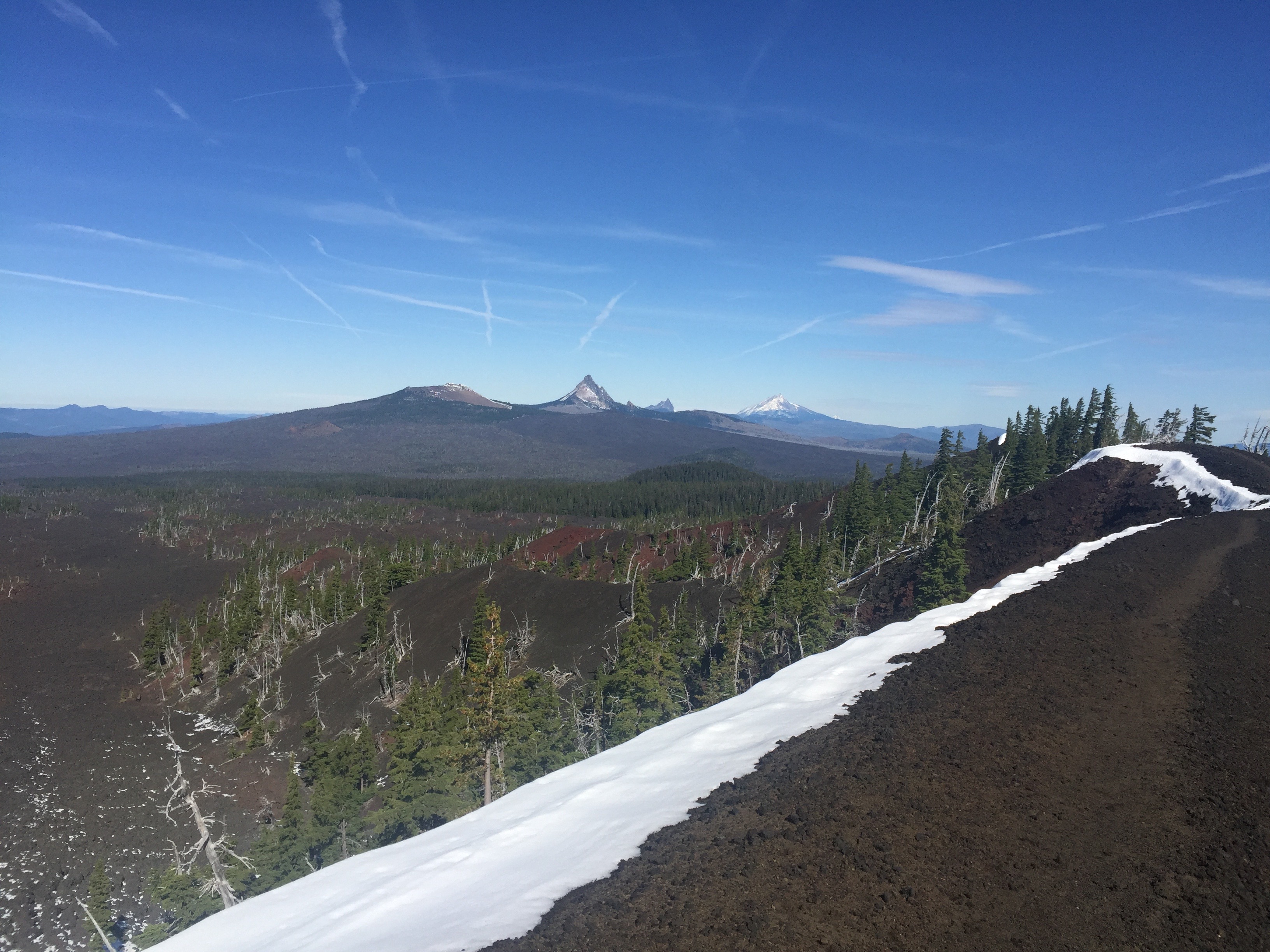
Snow on the rim of Four in one Cone; Mr Washington in center; Mt. Jefferson in distance. Three-fingered Jack is just to the right of Mt. Washington.

I got my gear ready for the logout, since I wouldn’t be driving, and then went over to talk to the group. They were hiking Broken Top, a long drive to a place I haven’t been and really should see. One of the hikers works with the Crew; he and I have almost switched roles—he does a lot more hiking with the Club these days and I don’t. On the other hand, I’ve been out with the Crew about 5 times a month for the last couple of years.  They left a little before we did, and rather than say good-by, I again said, “See you on the trail.”  

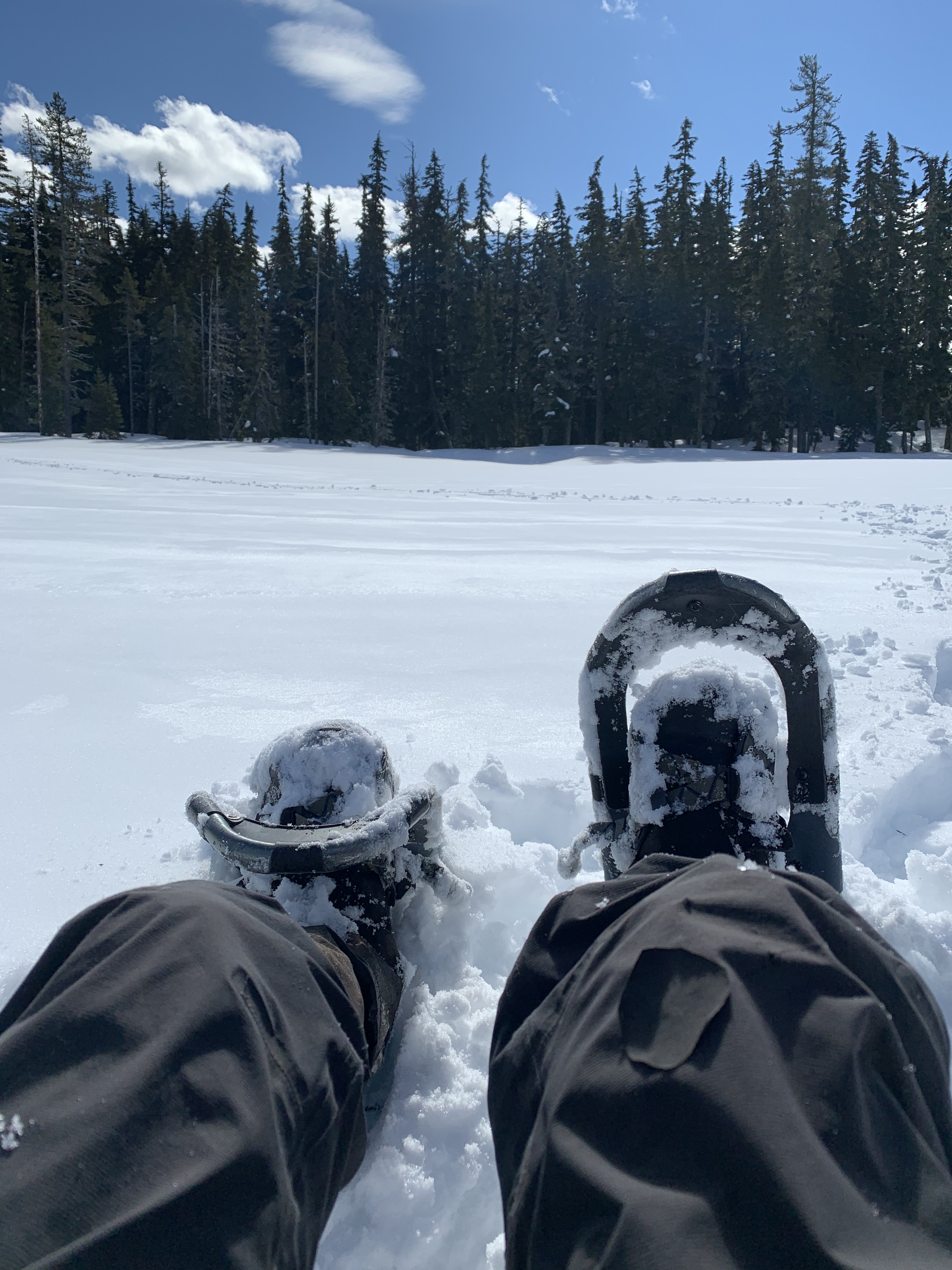
I occasionally do. I saw another Crew member on Waldo Lake Road last winter, going towards Betty Lake on cross-country skis as I was returning on snowshoes.  I have seen Club members on Larison Rock Trail, at Eagle’s Overlook over Odell Lake, while I was leading a snowshoe trip, I saw my barber, a past PCT thru-hiker, while I was clearing Brice Creek trail in the Umpqua National forest. 

Out in the middle of Betty Lake.

“See you on the trail” is goodby to people who know what is out there, in the Cascades, the Coast Range, the Rockies, the Quetico-Superior, the Brooks Range, where there are wild rivers, places where few know.  Or even places where many may go, but they weren’t there when you were. You may have gone on a weekday, when it poured rain, there was deep snow, or had blowdowns that you could get around and get back deep into that special country.  As my years of being on the trail are now limited, the term has new meaning: “See you on the Trail”—Capital T— now means wherever the Trail leads, to the back of beyond in the wilderness…beyond the last jumping off point, last hike, backpack, campsite.

See you on the Trail.

GETTING IT RIGHT

September 5, 2021

I was further behind than I wanted or expected to be and needed to catch up with the rest of the Crew as we worked north from the start of the Diamond Peak Trail, near Emigrant Pass and Summit Lake. We were leapfrogging each other, and I took the first blowdown, four smallish firs across the trail, by myself.  They turned out to be a bit more difficult to remove, having fallen deeply into the ground, and I used my axe and three saws—small hand saw, Corona, and KatanaBoy 500— liberally to where I could cut them, dig them out, and pull them off the trail.

Unnamed Lake, Diamond Peak Wilderness, at the southern end of the Diamond Peak Trail.

At last, everything cleared and I moved on up the trail passing by a nice, small lake, where I saw Josiah checking out a 14-inch log over the trail.  I liked working with him; he had a wealth of experience about cutting and the superb judgment that came with experience.  The log was resting on a stump at one end and supported on the ground a good 10 yards’ distant.  I thought one cut on the opposite side of the trail from the stump would work, and I was half right.  I knew the log would have top bind, but it had been lying there for awhile and looked like it might be easy to cut from the top.

“Let’s underbuck,” said Josiah, quietly. “It will be easier.”  I was a little surprised, but I also realized there should be no binding at all from below, as we would cut through tension. We started working and I watched the kerf open up from below, exactly as it should.  We got almost to the top, pulled the saw out, and Josiah tried stepping on the log with no effect, then I hit it 3 times with the 1.5 kg poll of my axe, and still nothing happened. So, we cut all the way through, held the saw up so the falling log wouldn’t carry it into the ground. I grabbed the cut end and wrestled it off the trail, using the stump as a pivot. 

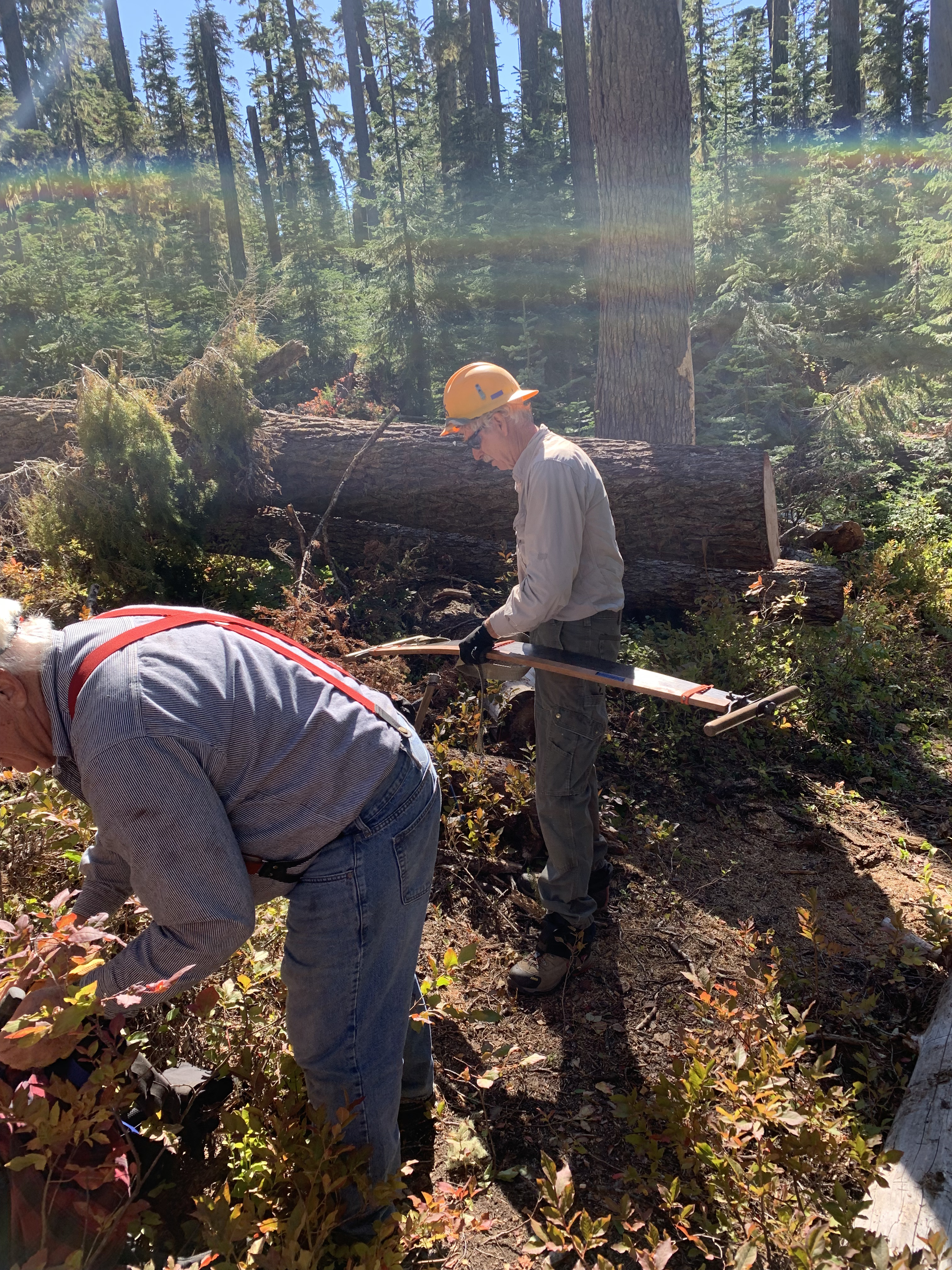
Not all crosscut saw work is cutting from the top through the log. Some is done from underneath, underbucking. While it is easier in principle to buck (or cut) from the top, because gravity pulls the saw into the log, the bind or compression of the wood is a more critical factor. Logs suspended between two points are likely to sag slightly in the middle and have compression of the fibers on the top side or top bind, which will tend to grab and hold the saw. If the top bind is not too extreme, then it is possible to cut through, using hard plastic wedges to keep the kerf or the cut open, assuming enough of the saw is in the cut so that a wedge may be placed, without striking the saw.  

Standard top cut with wedges placed. The poll of the axe in the background (the part without the blade) is used to pound wedges in. Notice the axe is in the log, not lying on the ground.

If there is top bind, then there is tension on the bottom, and cutting there should be easier. Underbucking is one of those tasks that I seem to do right, without knowing exactly why.  I learned that two years ago, out in the field with one of the more experienced sawyers in the region.  We were underbucking a log, and because I was with a good sawyer, I didn’t want to mess up. I was gently guiding the saw upwards, not pulling it up hard against gravity but just enough to let the saw cut. That was the trick. As I did that, the saw cut through well, and the man on the other end gave me the first compliment I had ever received in the then 47 times I had been out with the Crew. He told me I was one of the top three underbuckers he had worked with.  The Crew leader heard that.  It was a good day.

Since then, I have done a lot of underbucking, most of it good, occasionally some not. Having to underbuck a 21 inch green log the entire cut is torture. Some logs are on the ground and can’t be underbucked. Others should be underbucked early in the cut to remove compression and prevent slabbing, or having the log split longitudinally as it is cut in two.  It’s a matter of judgment and art.

There is another reason to underbuck, and that is to keep the saw from striking the ground. Nothing dulls a saw worse than cutting into dirt. When I got my certification last fall, one of the other candidates accidentally let the saw go Into the ground. I was looking elsewhere at the time, but I sure remember hearing the owner/certifier yell at the cutter.  Typically, when we get close to cutting through from the top, we slow down, make the cut shorter and have our hands ready to pull up the saw when the log drops, so as to not carry the saw all the way through to the ground. 

Underbucking.

On my third time out with the Crew, three years ago, I remember instruction being given to one of the members about underbucking after part of the top cut was made. What struck me odd was that coming from below, one does not want to aim for the kerf at the top but slightly off to the side of the log that is not going to drop. I later read about this, understood the reason, and then I did it when I was cutting smaller logs by myself. I didn’t need to underbuck, but I did it anyway, aiming as described.  By doing that, when the saw reaches the top part of the cut, even if a half inch away, the log will likely fall, and the saw is within the safety of the stable part of the log and will stay away from the dropping log. It’s kind of neat.

Last summer, we had a nephew of one of the Crew members for the season, and I worked with him a lot. We bucked out many logs last year, and we underbucked several. I liked working with him. He didn’t have a fast cadence, so I could keep up and work on keeping my end of the saw straight, letting him have enough saw to cut with, two important factors in bucking.

This past week, I found myself with another member of the Crew on an underbuck. We had enough room to get the saw under the log, and as we cut upwards, he kept saying his cut was perfectly aligned. Mine was not, but I noted with some pleasure that it was only about a half-inch offset in the proper direction away from the upper cut.  A little after the two cuts met, the log dropped, and there was the saw, protected inside the half-inch offset that I had made. It’s just slick, doing it right, and having everything turn out according to plan.
Notice how the left end of the saw is protected from the falling log by the offset of the underbuck.

I SHOULD HAVE DONE MORE

August 25, 2021

The young woman knelt down next to the gray squirrel at her feet and opened a bag of peanuts. Oh no, I thought, not this again.

I was at the top of Spencer Butte on the Club’s Wednesday hike, not planning to stay long because I could both smell and see smoke in the valley.  The air quality wasn’t great, and I didn’t bring my N95. A young boy about 2, a young woman in her late teens, and an older woman came up and stopped about 10 yards from where I was sitting.  Disciplining strangers is often unwise. 

I had to say something, or at least I was going to be angry with myself if I didn’t: “Please don’t do that,” I said in a voice that asked, rather than demanded. The woman stopped and looked over at me.

I continued, “They will get fat and die, because that is not their usual food.” I then looked at the young boy. “They also will bite, and I have seen that happen.”  Indeed I had, at the Grand Canyon, years ago, when a young boy screamed bloody murder after being bitten by a squirrel right outside the visitor’s center on the rim.  I think several of us there smiled. Experience is a great teacher….She stopped feeding. Others from the Club arrived on top, and I don’t know what later happened. Unfortunately, the squirrel was already fat and it was quite likely someone would feed it more that day.

I thought later I should have walked over and explained so many reasons why not to feed the wildlife: they won’t look for their natural food, they will spread fleas as well as a risk of diseases like tularemia, Lyme disease, and salmonella.  Feeding squirrels turns them into pests, not pets; the week before, 5 squirrels came at me from the points of a pentagon as I opened a protein bar to eat, after I got to the top. This isn’t good and it isn’t fun. Years ago at the top of Hurricane Ridge in Olympic National Park, we had to move where we ate lunch, because the squirrels were practically walking on us to get food.  We thought then it was ridiculous and sad, and it still is. The outdoors is not a petting zoo.  Feeding squirrels is not leave no trace.

Perhaps my saying only that it will kill the squirrel eventually and that they may bite might be enough.  But I doubt it.

Three years earlier, when 15 of us in the Club were up on top in the same place, one person started feeding a squirrel. I exploded, “Don’t do that!” I yelled. The guy kept feeding, saying “It is organic.”  I was so angry, both at him, as well as the fact that nobody else in the Club said a word, that I hiked down immediately and went home. Even 2 years later, the guy occasionally brought up the squirrel incident in a sotto voce comment similar to what my mother did when she was angry but didn’t want to make a scene. He and I were once friends but haven’t spoken much since.  He doesn’t like rules, doesn’t like being told what to do, although he has told off mountain bikers who had the same right to the trail as he, and thinks he knows what a squirrel should eat. He also sees me as a hiking competitor, although I decided to walk away from the notion of competition, which I find can be toxic.

Don’t feed wildlife: animals should if anything want nothing to do with you. My goal is to observe an animal and then back away without their obviously showing they were aware of me.  They probably were aware, but if they didn’t change their activity, I wasn’t being a pest. I have a fond memory of the August day on Kekakabic Lake in the Boundary Waters in 1986, where I snuck up to a beaver while in a canoe, got within a few feet, then backed off quietly without disturbance. I got my look; today, I would stay further away, but the main thing was that I didn’t disturb the animal enough so that they expended calories or catecholamines moving away.

* * *

The individual above was camped on Basswood Lake with me when after lunch he asked whether it was OK to throw an apple core into the woods.  Excuse me? This is an outdoorsman or a man outdoors?  Really? After all the Boundary Waters instruction campers have about leave no trace, which means no cans or bottles, clean out the fire area when you leave, don’t cut green trees, use only the wood you need, be sure the fire is dead out when you are off the campsite, and carry out your trash, it’s OK to toss an apple core? No, I replied. Here is the garbage bag for the trip. We no longer burn trash, either, which got rid of bulk, but polluted the air. It is the 21st century, not the mid-20th, when while we should have known better, we didn’t. At Crow Lake in Canada, we sunk cans in the middle of the lake every day.  Amazing.

Looking across to the campsite on Basswood Lake where I kept one apple core from littering. This is not pristine wilderness, but that doesn’t mean it should be a dump, either.

Four times at lunch now, when I have been with the Crew in the woods working, someone has tossed an apple core into the woods. I cringe when I see this. Apple trees don’t grow in the wilderness. Apples themselves are food but not natural food for animals. They are litter.  OK, a trail maintenance crew hardly is leave no trace, cutting out blowdowns, hacking away growth near the trail, and digging drains along or in the trail, but the idea is not to leave food scraps around for animals to find.  It is unhealthy for them and nothing degrades the wilderness experience quicker than seeing someone else’s garbage.  I have to figure out now how to deal with the apple cores and not annoy the Crew.  The first step is to watch where the core went and quietly go pick it up, put it in a bag, and carry it out. I am, after all, wearing gloves, and the weight and bulk are non issues.  The next step might be to put the plastic bag in the center of the lunch area and ask people to drop their apple cores there.

After all, if I need to be instructed on the saw occasionally after 50 days going out on 2-man crosscut saw crews, it’s only fair that perhaps I should instruct others who have been going into the woods maybe 50 years about leave no trace ethics. The world has changed.